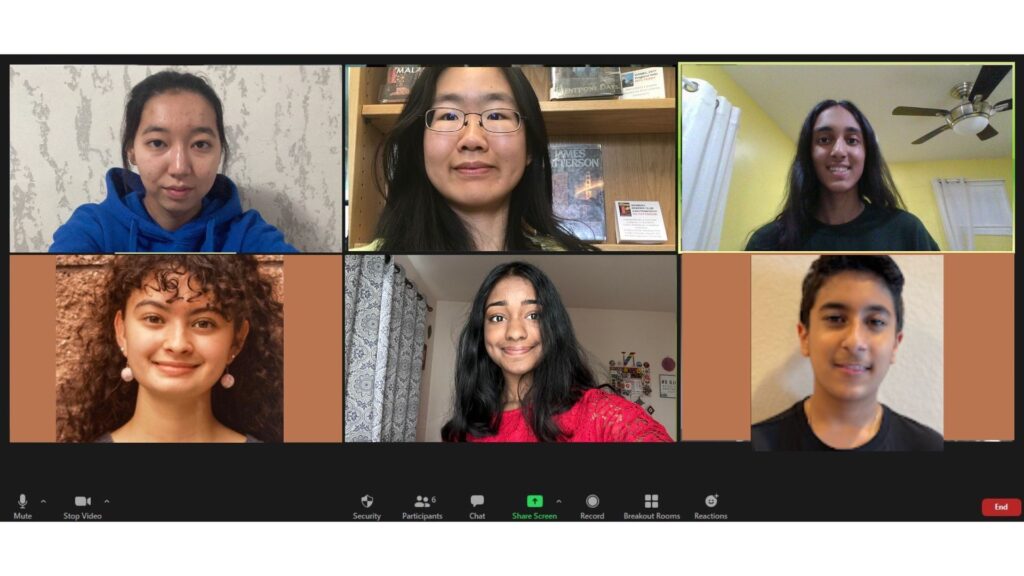
Team Members: Catherine L. (Team Lead) (China), Advika S. (India), Cara C. (United States), Snigdha S. (India), Shruthi D. (United States), Shivani D. (India)
Mentor: Katherine Wert (United States)
Many adolescents struggle with mental health issues and a conflicted relationship with food, brought on by a variety of psychological and social factors–including toxic beauty standards, pressure to be thin, stress and hormones. Eating disorders can have a devastating impact on young people’s mental and physical health.
A six-member international team of science-loving high school students were named the winning team in the Junior Academychallenge “Building Community to Support Student Mental Health” with the creation of Nutribona, a feature-rich app specifically aimed at 13- to 18-year-olds with food concerns.
After consulting with experts and conducting a survey among their peers which revealed a significant prevalence of food-related issues, team members designed this app to help users make better daily nutritional choices. In particular, they wanted to raise awareness of the gut-brain axis, the link between food intake/the consumption of specific nutrients and mood/psychological well-being.
“As I looked into the psychological aspects of Nutribona, I was able to understand the importance of dealing with such disorders at a young age,” says Snigdha. “I realized how big a role an online community has in our daily lives and I believe we were able to create a design that tackles physical and mental health head-on.”
What is Nutribona?
Nutribona offers several innovative features designed to address food-related disorders, such as healthful recipes– alongside several features addressing harmful behaviors such as excessive exercise, episodes of binge/purge, and binge eating. The app also offers access to anonymous chat spaces where users can share their problems with a supportive community and the ability to reach out to psychologists and nutritionists.
Nutribona promotes yoga, a gentle form of exercise that contributes to reducing stress and anxiety and building body strength and flexibility, rather than promoting weight loss. A personal page can be used to track progress. App users can also play games and take part in health-related challenges.
“My favorite part of the challenge is that it offered me a chance to go through a complete design process,” explains Catherine, the Team Lead. “The mindset of design thinking really helps me a lot in building solutions, from research, to interviews, to finally testing.”
Teamwork + Mentorship = Success
This ambitious project was the result of intense teamwork under the guidance of an encouraging mentor.
“Our team was able to work together and divide tasks equally amongst each other,” states Cara. “We collaboratively tested our ideas together and always asked for feedback to improve our work.”
While developing their project, the students felt they learned a lot from each other.
“Even now, as the project is over, I find it hard to believe that I was part of this journey, this incredible experience of learning and discovering and thinking and solving,” says Shivani. “I saw ideas form and evolve and turn into something spectacular.”
The six students are exploring ways to make their app available internationally, and are also considering how to make it commercially viable– eventually deciding that it should be supported by ads carefully selected to prevent a negative impact on users, while considering the necessity of charging a small fee later on.
“Eating difficulties are a major part of mental health. Eating guilt-free is something that everyone should be able to experience,” believes Shruthi. “Looking at our solution, I feel a sense of pride and achievement,” says Advika. “Together we have created a solution that is not only feasible but also viable in the real world.”
Team members:Yuanning (Helen) H. (Team Lead) (United States), Aadi M. (United States), Riya K. (United States), Nachammai A. (United States), Sheila M. (United States), Ayazhan K. (Kazakhstan)
Mentor:Kalyani Neti (India)
As climate change continues to threaten water supplies around the world, the ability to access clean water– a right taken for granted by many people in developed countries– is an ongoing struggle for many populations around the world, particularly in tropical regions. According to the World Health Organization, only 53% of medical facilities in these tropical regions have secure, clean water sources. This results in epidemics of cholera (3 million annually) and diarrhea (1.7 billion cases annually).
Additionally, sepsis from dirty water causes 670,000 infant deaths per year. Six enterprising teens from the United States and Kazakhstan heard the call. The formed Cleaners of Warm Water: Air to Water to Healthcare. They won the Spring 2023 Innovation Challenge on Water Sustainability, sponsored by the Royal Swedish Academy of Engineering Sciences (IVA). The team consisted of Yuanning (Helen) H. (United States. Team Lead), Aadi M. (United States), Riya K. (United States), Nachammai A. (United States), Sheila M. (United States), and Ayazhan K. (Kazakhstan). They worked under the guidance of their mentor, Kalyani Neti (India), to devise an ingenious solution for an acute problem. That problem: Lack of access to sterile, medical-grade water, crucial for healthcare in the tropics.
A Broad Range of Skills
The team began their mission, coordinating across time zones to meet online, swapping ideas, and considering various approaches. The multidisciplinary nature of the challenge meant they had to draw on a broad range of skills.
“I got to use knowledge from biology, chemistry, and physics to devise a coherent plan for our prototype and to identify a legitimate target group,” says Team Lead Yuanning (Helen). “I learned so much from all my teammates whose different personal experiences led to their different approaches to problems. For example, I, who lives in the cold and moist Northeast of the United States, would never have come up with the idea of creating sterile water for tropical regions.”
Dividing and Conquering the Workload Across Time Zones
Eventually, the six students decided to develop an affordable air-to-water generator that uses fans to capture humidity in the air (typically between 77% and 88% in tropical countries) and turn it into water. Drawing on their respective strengths, they divided the tasks among the group and created focused roles.
Sheila took on a research-centered role. “I read multiple reports of the World Health Organization and the United Nations in addition to research papers to gain a deeper understanding of the numbers and the types of people affected. I am passionate about global, equitable healthcare, so I was excited to use our water sustainability project to address both the problems of water insecurity and inadequate healthcare.”
Her teammate Ayazhan gathered and organized statistical data on water issues in the tropics. “I searched a lot for statistics and learned that water pollution is a really big problem in tropical regions, justifying it with metric research results,” she explains.
The team members’ intense online sessions soon generated exciting new ideas. “It is a rewarding experience to meet every week, share ideas, plan our solution and work on implementing our idea in the real world,” says Nachammai. “I worked on data confirmation, conducted interviews, and evaluated the results produced through our surveys. I also did research on future collaborations and on ways we could improve our prototype and solution as a team.”
Designing Blueprints — and 3D Models
Their efforts resulted in the development of an affordable 3D prototype of their machine, which can generate 63 liters, (half a bathtub) of water. By trapping groundwater molecules before they get contaminated by germs, parasites or chemicals, the air-to-water generator reduces the need for filtering and delivers small amounts of clean water cheaply, using sustainable energy sources.
Team member Aadi was in charge of designing and developing the blueprints as well as the 3D model. “I also created the simulation where I demonstrated the construction along with the explanation of each part of our prototype,” he says. To complement their air-to-water generator, the students also developed an app that facilitates the maintenance of the machine and enables users to find the nearest source of sustainable hydropower to fuel it.
During the third phase of their project, the students focused on marketing their invention, building a website that details the technology used and touts its benefits to potential users. “Each team member brought with them a different skill set and perspective,” says Riya, who worked on the website design. “I really loved working with a team of dedicated and passionate individuals interested in STEM fields.”
And it doesn’t end there. The team members plan to use 3D printing to turn their model into a functioning and marketable machine, and seek to take their project even further by collaborating with local governments and non-profit organizations in the targeted countries.
Team members:Tianze H. (Team Lead) (United States), Tianlai H. (United States), Radwa A. (Egypt)
Mentor:Olusola Ladokun (Nigeria)
Urban gardening can be an effective way to provide fresh and healthy food at a low cost, particularly in parts of the world where food security remains elusive. But it involves many variables– climate, soil, location, sun exposure, type of crop– and urban residents often need education and guidance in order to be successful gardeners right from the start.
Three students — Tianze H. (United States, Team Lead), Tianlai H. (United States), Radwa A. (Egypt) — worked under the guidance of their mentor, Olusola Ladokun (Nigeria) to address this knowledge gap, and ultimately won the Spring 2023 Junior Academy Innovation Challenge with their project, “Family Farming: The Ultimate Planting Companion”. The project aims to promote urban gardening around the world by providing useful tips to city dwellers that enables them to supplement their diet with home grown crops.
“After long discussions we finally settled on the current idea,” says Tianlai. “Personally, I contributed creative ideas for our projects, like using deep learning algorithms in our application. I also worked with my teammates on the slides, adding things that they might have missed.” To identify what information would-be gardeners might need, the team conducted a small survey before designing an eco-friendly app called Family Farmers. The app contains a scanner that taps into existing plant and weather databases in order to identify the best potential garden locations based on available amount of space and local climate. The app also provides information about farming methods. It also shows how common household items can help reduce gardening costs.
Adding a Fun Factor to Urban Gardening
Family Farmers is designed to be the ultimate tool for aspiring gardeners, with an AI search engine that can be used to find suitable plants, an option to share progress and tips with a community of like-minded garden enthusiasts, and a calendar to remind users when to water and take care of their plants. The students also added an element of entertainment to their app, with plant-related games that provide fun facts about gardening.
Developing this innovative solution required hard work. The small but mighty team size (just three people) did not deter the committed students– in fact, it helped with the difficult task of coordinating online meetings across time zones.
Strengthening Relationships
“The size of the group does not matter. In fact, it might have even helped everyone strengthen our relationships,” says Team Lead Tianze.
“We were also able to help each other and make up for what we may not be good at. The teammates were willing to cooperate and overcome the time differences that we have,” says Tianze. “We were also able to help each other and make up for what we may not be good at. Helping to solve a real-world problem was a great experience.”
Team member Radwa enjoyed researching the issues surrounding gardening in an urban environment and collaborating with international students. “This was my first time in a program that involves meeting students from different nationalities and working together on new ideas,” he said. “This is a wonderful thing and I’m very glad to have gone through this experience, meeting new friends and learning many things in a field that I’m passionate about. I hope to do something that is related to it one day.”
The Junior Academy was supported by the Stevens Initiative, which is sponsored by the U.S. Department of State, with funding provided by the U.S. Government, and is administered by the Aspen Institute.
With more than 500 participants, the Urban Gardens Innovation Challenge was a great success.
Published March 10, 2023
By David Freeman
With the participation of 547 students in 118 teams, the Urban Gardens Innovation Challenge organized in Rwanda by The New York Academy of Sciences in partnership with Association Mwana Ukundwa (AMU) has been a great success.
Sponsored by the Clifford Chance Cornerstone Initiative, the Spring 2022 competition tasked students aged 13-17 from Kigali, the country’s capital, to use micro-gardening techniques to broaden access to nutritious food sources.
Kigali is considered one of the most food-secure cities in Africa, but the ability to obtain nutritious food remains a concern for many poorer households. Malnutrition and micronutrient deficiencies can result in stunted growth and put children and adults’ health at risk.
Eager to address food scarcity and poor nutrition, which affect their communities, the students took up the challenge with great enthusiasm and came up with a wide range of practical and creative solutions to help people living in crowded urban environments supplement their diet with home-grown vegetables.
Challenge participants dedicated many after-school hours to their projects, spending time researching urban gardening methods and suitable crops, brainstorming with their teammates and developing their projects.
Ten public schools and three charter schools, coordinated by AMU, supported the competition and gave students access to computer labs. Several Rwandan science teachers acted as mentors for participating teams.
After carefully reviewing submissions, the judges selected a winning project and five runner-up projects of distinction. Members of the winning team got a chance to showcase their project at the 2022 Global STEM Alliance Summit, organized by The New York Academy of Sciences.
Winning Team: Growing Vegetables
Team members: Tarah (Team Lead), Emerance, Solange, Emmanuel, Sandrine, Hirwa Mentors: Baseka Didier (in Kigali) and Gaurangkumar Sharma
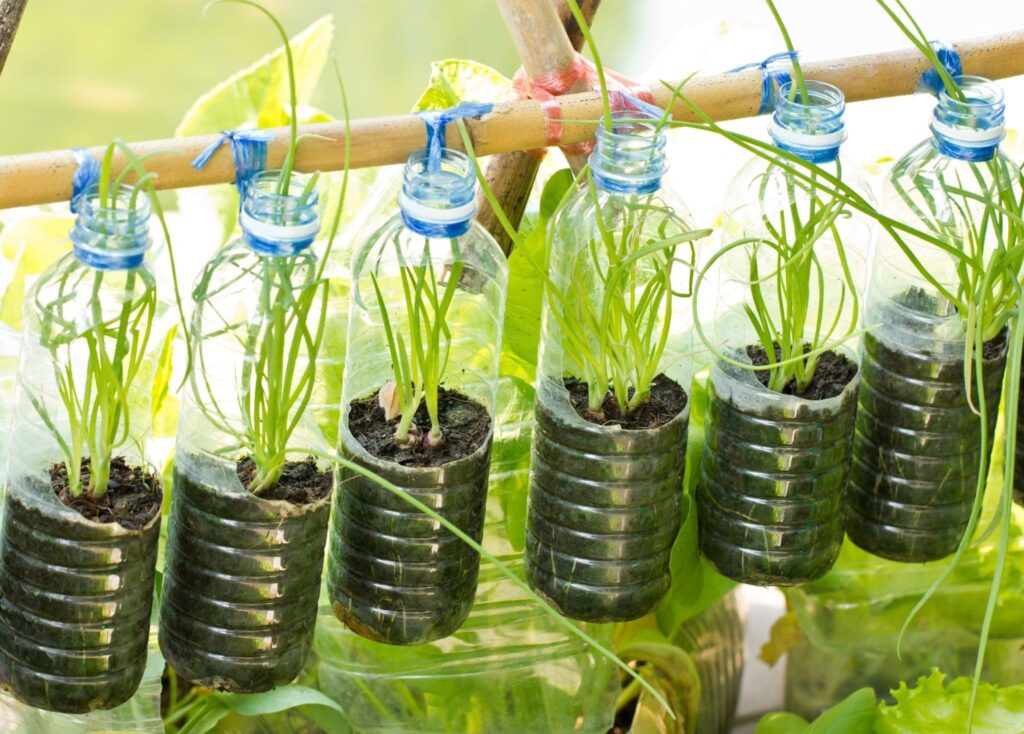
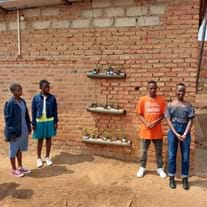
The team came up with an innovative solution to address food scarcity. To enable low-income households living in cramped conditions to grow vegetables, the team hung recycled PVC pipes and old bottles and used them as planters. Because PVC pipes contain toxic chemicals, the team stressed that they need to be cleaned with ashes before use. After careful research, the team opted to grow produce like onions, garlic and green vegetables, which do not grow long roots and can fit into these containers. The students also developed a simple but effective irrigation system consisting of old jerrycans, a tap and small tubes.
“We did the project after class, so the challenge was going home late and tiredness,” says Team Lead Tarah. But developing this project that can improve the lives of their relatives and the community around them was also a powerful experience for the enterprising students. “I learned a lot from my teammates,” says Emmanuel. “This group is very important to me, it helped me to be happy and work together.”
Runner-up Team: Reducing Lack of Vitamin in Urban Settlements
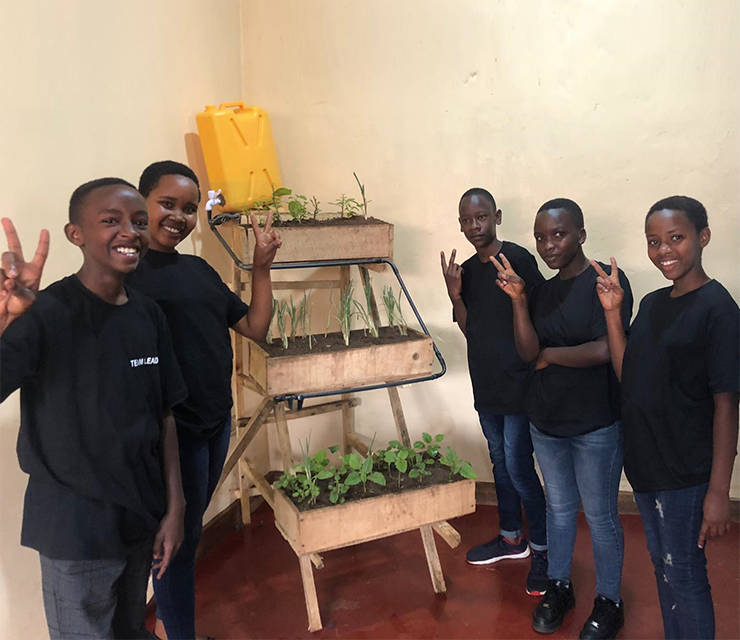
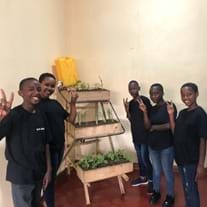
After brainstorming on the best way to encourage urban dwellers to improve their vitamin intake by growing and consuming more fresh vegetables, members of this team considered three key factors: potential users in urban settlements tend to move frequently; they have little space to cultivate vegetables; and they are short of time. As a result, the team focused on creating a vertical, space-saving micro-garden on wheels. With recycled wooden planks, they fashioned a stair-like structure consisting of terraced planters, irrigated with tubing, which can be used to grow fresh vegetables.
Building their prototype required hard work but the team learned a lot in the course of working on this project and enjoyed the process. “In this project, I had a lot of fun and did hard work with the group, brainstorming and searching for a solution,” says Esperance.
Runner-up Team: Growing Vegetables
Team members: Fabrice (Team Lead), Nziza, Teddy, Ally, Djanati, Samuel
This team also focused on portability and created a vertical garden with wheels to cultivate a variety of crops. As planting containers, they used old jerrycans cut in half while wooden sticks provided legs. They then added wheels for easy transportation. Team members explored the nutritional qualities and health benefits of several types of vegetables and consulted experts, and opted to focus on carrots, cabbage, onions and green peppers.
“I thought our project would help the poor who do not have a large farm, as they cultivate small and fertile land,” says Ally. Team Lead Fabrice concurs and says he, too, has benefited from the project. “This project helped me in different ways: it got me thinking and work hard and helps my parents to have our own food garden with a great expense.”
The team conducted a survey in the community and discovered that many people lack knowledge and time to grow vegetables. Team members therefore focused on cultivating fast-growing plants such as lettuce, onions, cabbage that require minimal care. They found that by placing plants in a transparent jar filled with water that is changed every second day, roots would grow within two weeks. By encouraging their community to develop basic gardening skills, the team hope their initiative will have a positive impact on people’s daily lives.
“This project taught me that there are multiple ways to grow plants and that growing plants is actually really interesting if you give it time and attention,” says Ivanka. “It was an enlightening experience,” concurs her teammate Albina. “It has improved my communication ability. I would love to do it again.”
Runner-up Team: Growing Crops at Home by Using Discarded Materials
Team: Cedric (Team Lead), Esther, Jean-Marie, Christian, Kevin, Axelle Mentor: Rubarema Maurice (in Kigali)
Having identified the high cost of vegetables as a root cause of poor nutrition, the team focused on using widely available discarded materials such as plastic bottles, glass and sacks to build a tiny kitchen garden. Using old timber, they constructed a small frame that they lined with sack fabric and filled with soil and manure. They carefully selected the vegetables they planted after researching the amounts of water and manure required for each crop.
“As team leader, I helped my team to find the land where we built our kitchen garden,“ says Cedric. Says team member Arielle: “I helped my team with the irrigation of our crops. I learned why we have to irrigate our crops and put manure in soil for every crop.”
Runner-up Team: Using Different Local Tools to Increase Crop Production
Team: Elias (Team Lead), Samantha Kiara, Englide, Glory, Uwase Mentor: Rubarema Maurice (in Kigali)
To optimize the use of space, water and manure, and increase crop production, this team experimented with different seeds that they planted in a variety of recycled containers. For example, they drilled holes in the sides of plastic tubs to plant green onions. They also discovered that they could accelerate germination by poking small holes in nutrient-rich ripe bananas, planting seeds, then covering them up with soil.
“Working in this challenge helped me to think further and brainstorm. I also got new skills in making kitchen gardens, how to create innovation and transform useless tools into useful things,” says Team Lead Elias.
A broad positive impact
In September 2022, Academy and Clifford Chance staff visited Rwanda’s capital Kigali and discussed the Urban Gardens Innovation Challenge in a series of interviews with local stakeholders. They confirmed that the innovation challenge had left a lasting, positive impact at several levels:
Participating students supplemented their studies about nutrition and urban agriculture by deeply researching the subjects and were then able to apply their extended knowledge to improve soil quality and grow vegetables. In addition to improving their own family’s access to food, the students also gained self-confidence and developed a broad range of skills, including leadership, problem solving, critical thinking, teamwork, computer skills, and design and technology.
Teachers and participating schools expressed great satisfaction with the challenge. The nineteen local science teachers who mentored and supported students during the competition reported that the challenge had improved their own self-confidence. They expressed pride in the students’ contribution to address malnutrition in Rwanda. The challenge brought a new approach to teaching STEM, making it more relevant and rooted in the students’ living experience.
Families and the greater community also benefited from the challenge. Students’ parents followed their children’s progress with great excitement and acknowledged that the Urban Gardens Innovation Challenge had improved food stability in their household. They shared their children’s achievements with neighbors and the wider community.
Policy makers also highlighted the potential for further positive effects, since the Urban Gardens Innovation Challenge reinforced a government policy that encouraged households to grow their own food.
Inspired by her father’s appreciation for education and giving back, Chuhyon Corwin became a high school science teacher.
Published February 17, 2023
By David Freeman
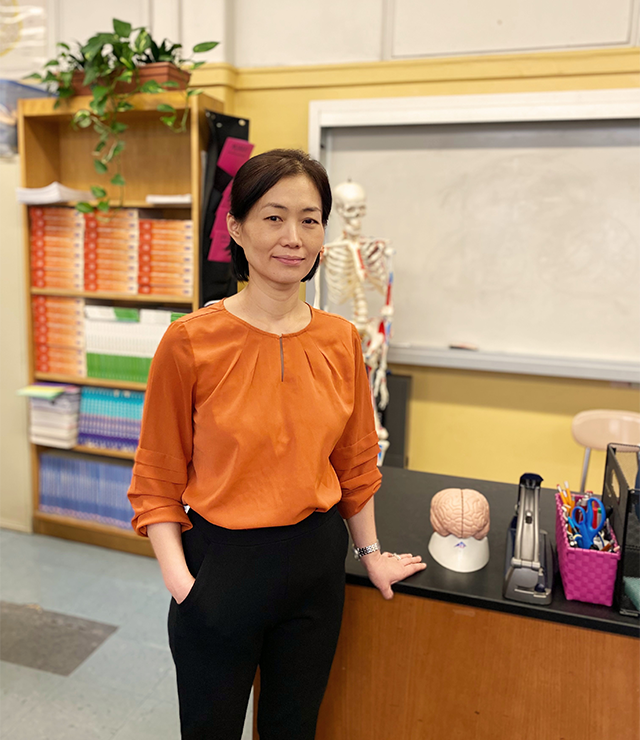
Neuroscience researcher and EnCorps Fellow, Chuhyon Corwin, traded her research lab for the classroom in a New York City public high school where she works as a science teacher.
Thanks to a partnership between The New York Academy of Sciences (NYAS) and the EnCorps STEM Teachers Program, Korean-born Corwin, an accomplished scientist, was able to explore her interest in teaching high school. For 10 weeks, with support from program staff, she was a volunteer guest teacher in the classroom of a skilled high school science teacher while, in parallel, exploring pedagogical techniques through the program’s online learning modules.
The EnCorps Program
Launched in 2007, EnCorps has already helped over 1,360 seasoned STEM professionals transition from industry or academia to public middle or high school education to ease the acute shortage of Science, Technology, Engineering, and Math (STEM) teachers across the United States.
NYAS teamed up with EnCorps to launch the program in New York City in 2022. Corwin was part of the first cohort of New York EnCorps Fellows who had an opportunity to explore becoming a STEM teacher before committing to a career change.
“During my 10-week guest teaching, I fell in love with the students,” explains Corwin. “The joy I experienced gave me the confidence that I was making the right decision in becoming a high school teacher as a long-term career choice.”
Although Corwin had taught university students, she found the work very different in high school. Teachers have to actively engage with their students and ensure they are paying attention. They also have to make sure that students who struggle get the assistance they need to prevent them from falling behind.
Effectively Engaging Students
Maintaining discipline among 30 teenagers and keeping them interested requires a great deal of creativity as well as solid classroom management methods.
“With lab activities, you have to be conscious of their safety and make sure they have enough materials,” says Corwin. “The class itself is short, only 43 minutes, so it has to run like clockwork.”.
While teaching STEM to high schoolers requires dedication and hard work, Corwin finds nurturing young people’s innate curiosity hugely rewarding. She has witnessed the amazement that lights up her students’ faces when their lab experiments succeed. Her own enthusiasm for science and discovery has never abated and she appreciates the opportunity to transmit her passion to the next generation.
“I hadn’t realized how much I would enjoy talking with these students. They come up with good questions,” says Corwin. “At that age, students are so frank. They let you know exactly what they think and I love that.”
After completing her volunteer guest teaching experience with the EnCorps program, with the support and guidance from EnCorps and NYAS, Corwin enrolled in an accelerated program to gain her teaching credentials.
She doesn’t see her move to teaching as a major break in her life.
“I’m simply redirecting my energy to continue my journey as a scientist to make a greater impact by raising more capable future scientists,” she says. “I think a teaching career is very appealing to people who love research. As a scientist, you explore different options, you try things out and reflect to find out what works best.”
Using science fiction novels to engage students with STEM subjects is one of the innovative approaches Corwin discovered while studying for her educational degree.
Inspired by her Father
Corwin sees her father in the students she teaches. While he never had the opportunity to finish high school, he greatly valued education and encouraged her to pursue her studies. He also instilled in her the importance of giving back.
“Hopefully, people who have been in the STEM industry will see the value of giving back,” Corwin says.
Today, Corwin is a science teacher at the High School for Health Professions & Human Services in Manhattan, where she completed her guest teaching as an EnCorps Fellow. Corwin recommends the EnCorps STEM Teachers Program to scientists exploring entering the teaching profession.
“They should try it. Even if in the end you decide not to become a teacher, it’s a valuable experience.”
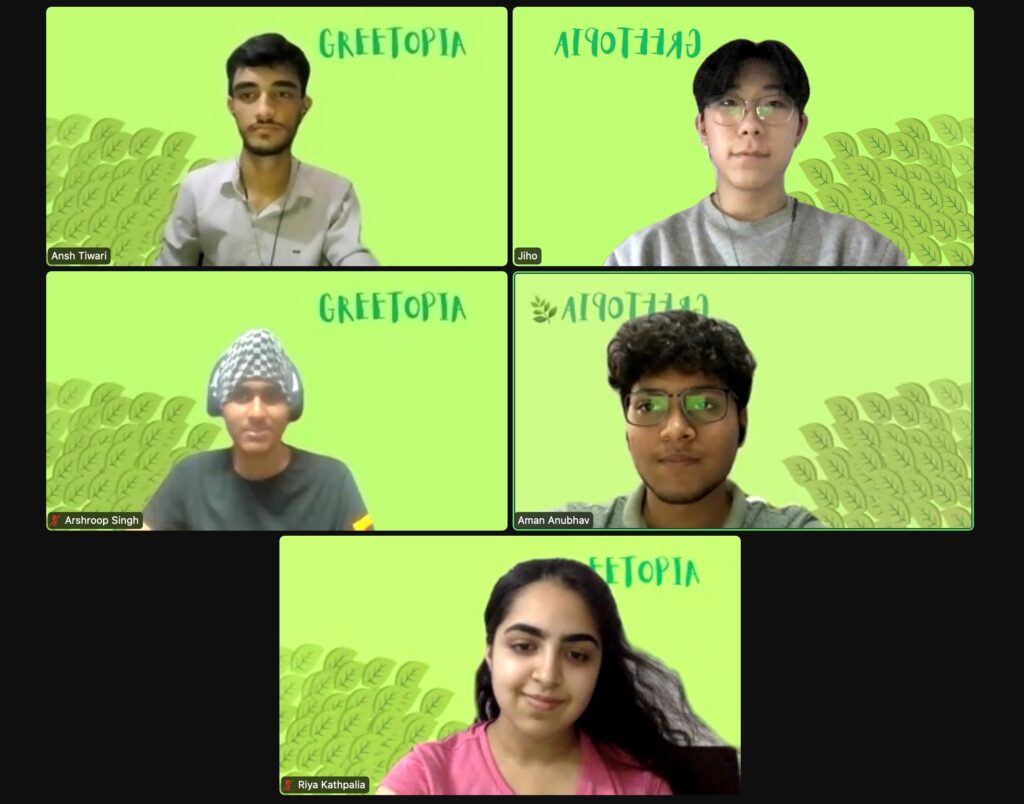
Team Members: Jiho L. (Team Lead) (Republic of Korea), Ansh T. (India), Riya K. (India), Arshroop S. (India), Aman A. (India), Rawnaq A. (Oman)
Mentor: Olusola Ladokun (Nigeria)
Among the 85 teams that embarked on the Green Redesign Challenge in Fall 2022, one team stood out.
By improving irrigation and reducing the waste of resources, Team Greetopia aims to bring innovation to agriculture. They were named the winning project in the challenge.
Based on research and stories shared by numerous farmers, the team identified key issues, illustrated by stark figures: 2 quadrillion gallons of agricultural water are wasted annually[1], and agriculture uses 2.2 quadrillion KJ of energy every year[2], about 5% of world energy demand. They also found that 1.2 billion tons of food[3]– enough to feed the entire US population for 3.64 years– is wasted, never leaving the farm.
Working online, across time zones, created initial difficulties– but the team members found ways of collaborating productively.
“I’m grateful to have experienced the diverse cultures coming together for the betterment of this human society,” says Aman. “Time zones were a hurdle in the smooth performance of the team, but we managed it by distributing the work evenly to be performed by individuals at their time of comfort, alongside holding alternate team meetings at common times.”
Challenges in Agriculture
The Organisation for Economic Co-operation and Development (OECD) has identified lack of innovation as one of the biggest challenges in agriculture. In a world facing multiple challenges such as depleted natural resources, climate change, and pollution, developing more efficient agricultural systems is crucial for our survival.
Through online brainstorming, the team concluded that emerging technologies like the Internet of Things (IoT) and Artificial Intelligence (AI) can address some of these issues and can help farmers who often lack the skill set to optimize agricultural methods. Overuse of fertilizer, for example, can pollute waterways, burn crops, deplete the soil of minerals and increase air pollution.
“It was an amazing experience to have connected with like-minded individuals and research world-changing approaches!” says Riya.
Greetopia team members decided to develop a web application that would tackle the excessive use of non-renewable resources.
“I got to research and learn more about the important crises around the world, such as concrete pollution, irrigation, etc.,” says Arshroop. “The constant communication within the team allowed us to keep up with the information and learn a lot of valuable lessons through the program.”
Utilizing the Internet of Things
In particular, the students opted to use the Internet of Things (IoT) to increase efficiency in irrigation and modernize farming practices that have remained unchanged for centuries.
“As team lead, I worked on planning our work, informing each member of what they have to do until certain target dates, creating documents to make the process efficient, and of course, conducting research about our research topic and filling in the milestones,” explains Team Lead Jiho.
The team devised “Kanad”, a farming application that delivers four main functions. First, it senses soil moisture levels by using a machine-learning component called Long Short-Term Memory Network (LSTM), which gets more accurate with use. Second, farmers can enter information on the Nitrogen, Phosphorus and Potassium (NPK) content in the soil, (also analyzed by sensors) to identify the most optimally adapting crops for these soil characteristics and locations.
Utilizing Machine-Learning
Machine-learning can also recommend the optimal amount of fertilizer based on the same NPK levels in the field. Finally, farmers can enter images of their crop into the web-based application, which will use the Convolutional Neural Network deep learning system to identify potential crop diseases with an accuracy of 95.25%.
Arriving at this successful solution did not prove easy: the team decided to change direction halfway through the Challenge.
“I’m glad that the team members understood the sudden change in our projected target in the middle of the program, which led to a successful ending,” says Ansh. In the end, perseverance paid off and the outcome amply justified the effort involved.
“Despite the obstacles we encountered, we made it till the end,” says Rawnaq. “We did not just complete the challenge but the result was awesome.”
[1] Source: UN Food and Agriculture Organisation [2] Source: US Department of Agriculture [3] Source: World Wildlife Fund (WWF-UK)
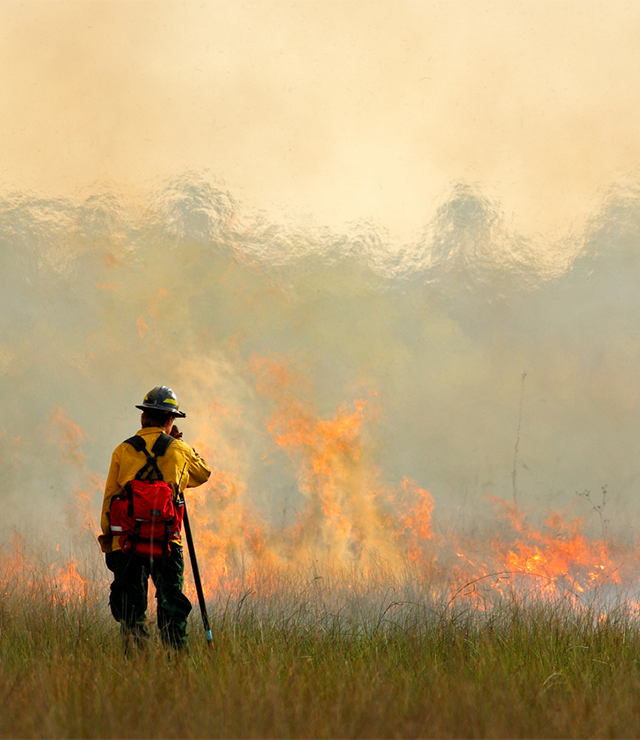
Prolonged droughts, caused by climate change, have amplified the risks of forest fires around the globe– making blazes bigger, more frequent, and more intense.
These fires devastate vast swathes of forests and often spread into residential areas, threatening lives and housing. Research by the University of Maryland suggests that fires cause forests to lose 3 million more hectares annually than in 2001. Furthermore, the UN Environment Program estimates that by 2100, the number of forest fires will increase by 50%.
The team Intelligent Forest — Chinmay R. (India, Team Lead), Rohan S. (India), and Soumik P. (India) — worked under the guidance of their mentor Malarvizhi Arulraj (United States) to tackle this critical issue as part of the “Forestry for a Sustainable Future” Fall 2022 Junior Academy Challenge, sponsored by the Royal Swedish Academy of Engineering Sciences (IVA). Intelligent Forest bested the field among 175 competitors. Their innovative method to predict the risk of fire helped them to win.
“It was great taking on real world problems and using our intellect to solve them. I learned various things throughout the course of the challenge such as AI, weather patterns, machine learning applications and much more,” says Rohan. “We worked hard as a team and came up with a solution in the end together.”
Understanding Forest Fires
Forest fires can be triggered by natural factors, such as lightning, or by human factors, such as the careless dropping of a cigarette or the lighting of an unnecessary fire in severe drought conditions. Crown fires burn the entire length of the trees while surface fires only scorch dried leaves and grass.
In some cases, fire can rage under the ground. As the team discovered over the course of their research, climatic conditions play a critical role– the hotter and drier the weather, the more destructive the fire is likely to be.
Finding ways to mitigate the impact of these now-frequent infernos required hard work, but the team members worked collaboratively to achieve results.
“There were times when I was uncertain as to whether we would even reach the end, but here we are,” says Soumik. “It was a fun experience working with my team members, and I had the opportunity to add and develop my skills. My main contribution was helping with the research side of things and suggesting ideas and edits.”
Utilizing Artificial Intelligence
With support from their mentor, the students decided to focus on harnessing the power of Artificial Intelligence (AI) to analyze forest and temperature data, in the hope that it would be possible to predict the risk of fires.
“I was impressed by the plans and ideas the team put together and was absolutely delighted to mentor the team,” says their mentor, Malarvizhi. “They chose a problem and approach that was hard and challenging. Especially, finding the best dataset and creating working machine-learning algorithms needs a lot of effort.”
Using data on fire alerts and meteorological information (minimal and maximal temperatures, rainfall, solar radiation and daily evaporation) collected in the Brisbane area in Australia between 2012 and 2022, the team tested two different AI approaches: Decision Tree and Random Forest.
The Results
The goal was to create four categories: no risk, low risk, medium risk or high risk of fire. The results provided the proof-of-concept the team expected. With the Decision Tree approach, they were able to predict fire risk with 70% accuracy, while the accuracy was 79% using the Random Forest approach.
These findings demonstrated that with the help of AI, it is possible to predict the risk of forest fires with 70–80% accuracy, which, in turn, allows for increased preparedness and limited impact.
“The project was a great learning experience for me,” says Team Lead Chinmay. “I had taken Artificial Intelligence as a subject in high school and this project taught me how I could apply what I had learned in a real-life situation.”
Winners of the Junior Academy Innovation Challenge Spring 2022: “Flexible Use of Electricity”
Published July 1, 2022
By Roger Torda
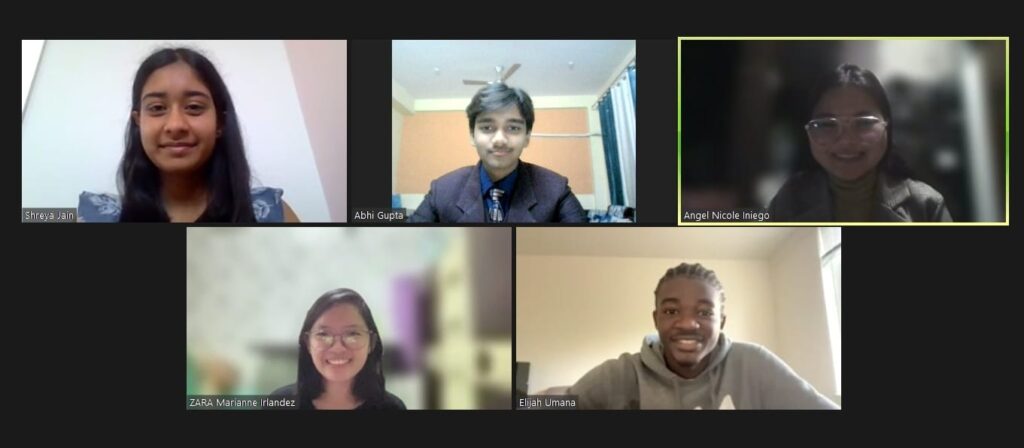
Team Members: Abhi G. (Team Lead) (India), Marianne I. (Philippines), Shreya J. (Canada), Angel I. (Philippines), Elijah U. (Nigeria)
Mentor: Muhammad Mahad Malik (Pakistan)
For this Junior Academy challenge on Flexible Use of Electricity, the five Power On team members chose to address a thorny issue: the energy deficit in the Philippines, where electricity demand is growing rapidly, and supply falls short of demand– leaving close to 30% of the population without electricity or facing significant fluctuations in electricity supply known as brownouts. Constraints on access to power are especially acute in rural areas and on the country’s numerous islands.
“The flexible electricity challenge is one of the most complex research projects I’ve ever worked on as it took quite a while for me to decipher the exact problems that needed to be tackled,” explains Elijah. “However, this pushed me to engage more in extensive readings, and actively be a part of reaching out to and interviewing numerous experts.”
After conducting a survey in nine countries, consulting their mentor and experts, and brainstorming through the Academy’s Launchpad platform, the team members narrowed down potential solutions to focus on three approaches.
“Asking questions and making sure that we understood the concepts fueled me to keep on collecting more knowledge,” says Marianne. “Interviewing different experts from different fields gave us new perspectives when we dealt with this challenge. Because a problem has deep roots, it is important to look at it from different angles.”
Raising Public Awareness
First, based on the results of their survey, the students determined it was important to raise public awareness of electricity issues such as peaks/non-peaks, flexible use of electricity, and supply, storage and distribution. They’ve addressed this need for awareness with an entertaining game designed to educate consumers.
“I had to meet experts from around the globe to hear their perspectives on flexible electricity,” explains Angel. “It made me realize that people may have different geographies and have various living standards, but what we have in common is that we face similar problems, such as balancing the demand and supply of electricity.”
The second pillar of the students’ project is Demaflex, an app to forecast demand and improve the response. The app would analyze data to predict times of high demand and encourage consumers to reduce the pressure on the power grid by scheduling their use of various appliances (such as dishwashers or washing machines) during off-peak periods. By sending recommendations to power users, the app would promote flexible use of electricity.
Finally, the team focused on developing Electrade, an app-based, decentralized, user-friendly energy trading platform that would allow people to buy energy and sell excess electricity back to the grid. The enterprising students will be working with the Department of Science and Technology (DOST) and the Philippine Council for Industry, Energy, and Emerging Technology Research and Development (PCIEERD), which have created a partnership program to grant startup funding towards commercializing their solutions.
An Eye-Opening Experience
Seeing their project take shape has given the team members a great sense of achievement.
“Electricity, in particular, always seemed like an intimidating challenge to tackle, but now, I’ve learned so much,” says Shreya. “I’m proud of the solution that we created and the work we’ve done to create, test, innovate, and communicate our project to the world.”
Participating in the Junior Academy challenge has been an intense learning experience and the students are delighted that their hard work has paid off– winning the challenge is merely the icing on the cake.
“The Flexible Electricity Challenge, for me personally, was quite an eye-opener. From all the research done by everyone on the team, I’ve learned quite a few things about the grid, electricity supply, and the demand response system,” says Team Lead Abhi. “The late nights and the sheer amount of work each and every one put in on our project is something I’ll always remember and be grateful for.”
A young Canadian pays tribute to her older sibling, a nursing student who exemplifies STEM in service to others during the uncertainty of the COVID-19 pandemic.
Published February 28, 2022
By Roger Torda
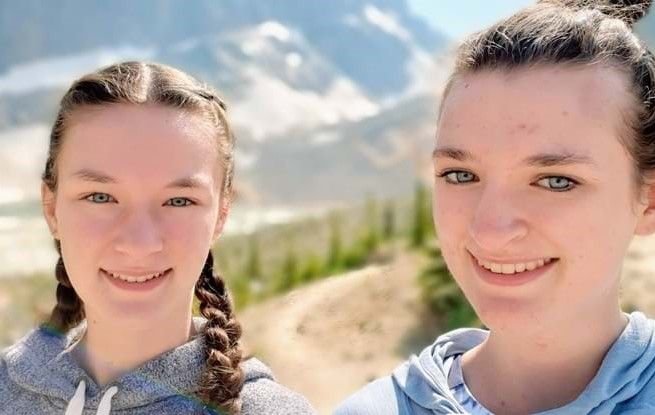
Kelsey and Kaitlyn Holmquist
Sometimes superheroes can be found close to home. For Kelsey Holmquist, the best example of a Super Hero of STEM is her older sister, who “was a first year nursing student when the world began to fall apart at the start of 2020.”
Kelsey, a Canadian high school student, submitted the story of her sister, Kaitlyn, in the “Super Heroes of STEM” essay competition, sponsored by Johnson & Johnson and The New York Academy of Sciences. Kelsey’s entry, one of 74 from around the world, came in first place.
Kelsey wrote that her sister is her superhero because, in the midst of the COVID-19 pandemic, nurses “are the ones ensuring that victims of COVID-19 are given dignity in their recovery or final moments; they are the ones ensuring that humanity is not lost when patients are regarded as little more than a statistic.”
Kelsey is now in grade 12 in Edmonton, Alberta. She’s been accepted into a Bachelor of Commerce program at MacEwan University in Edmonton, the same university where her sister is studying nursing. Kelsey plans to major in legal studies and then pursue a law degree. “I am not entirely sure which specific branch of law I will pursue,” Kelsey told us. “But as of right now I am very interested in exploring the way law applies to those with mental illness, and how we can ensure it is applied justly.”
“The Unnoticed Hero”
Kelsey tells a compelling story in her essay, “The Unnoticed Hero,” about her sister’s decision to study nursing while pressured to become a doctor instead. She had excelled in math and sciences throughout high school, and she faced “backlash from teachers and peers alike aimed to guilt her into choosing a stereotypically more challenging and professionally esteemed program….”
But as Kelsey points out, registered nurses perform important – if sometimes unacknowledged – work, exercising independent thinking, catching errors in physicians’ instructions, and carrying out “life saving measures for the critical first two minutes before a code team can arrive.” Kelsey also writes that nurses are also scientists:
The image of a scientist has expanded throughout the years to include women, but it still remains entrenched in the idea that it must involve a dedicated laboratory and research team. Nurses defy this stereotype. With each patient Holmquist interacts with, she must identify the best approach. Similar to a high stakes hypothesis, she must quickly formulate a plan of action well supported by evidence and research.
Kelsey adds about her sister’s work as a health care aide during her first year in nursing school:
With each and every interaction Holmquist has been involved in, an impact has been made. One smile can make the difference in having an elderly patient get out of bed, which is one step closer to walking, and one step closer to playing with one’s grandchildren. There are no limits to the ripple effect of conviviality.
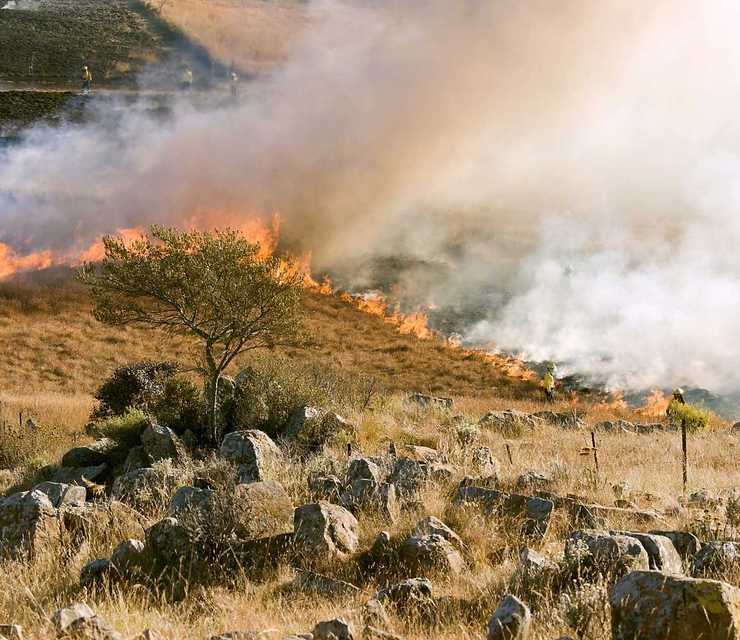
Although wildfires have been ravaging countries around the world for the last decade, many have recently seen their worst blazes in generations.
In 2020, Colorado and California made global headlines for recording their largest wildfires in history, collectively burning through almost 5 million acres of land. In a report from the National Interagency Coordination Center, the amount of land burned by wildfires in the western U.S reached 8.8 million acres—an area larger than the entire state of Maryland. Unfortunately, these disasters are not just occurring in the U.S.
Climate change exacerbates conditions that are favorable for wildfires, including hotter temperatures, longer droughts, and drier vegetation. Today, we’re experiencing these conditions in real-time as record high temperatures now occur twice as often as record lows across the United States.
As wildfires continue to increase in frequency and severity, we must be prepared for the next crisis that threatens to devastate lives.
Scientists are a crucial component of any large-scale response to a global emergency, and the current procedures around wildfire preparedness and prevention are not sufficient enough to successfully mitigate the issue.
Over the last decade, federal investments in wildfire research have been disproportionately lower than the amount spent on wildfire suppression. For example, the U.S. Forest Service spent nearly $2 billion towards putting out wildfires in 2016, yet only received $27 million to fund their National Fire Plan Research and Development Program that same year. More recently, the ongoing health crisis has led to researchers getting reduced financial support from federal and state government agencies to help address the magnitude of fire risk and preparedness.
Outside of the need for increased research investments, there is also a lack of cohesion between industry, academia, and government when it comes to wildfire prevention. Last year’s COVID-19 High-Performance Computing Consortium, an innovative public-private body that provided more than 600 petaflops of free computing power to the COVID-19 research effort, successfully proved that harnessing the power of industry and academia is the best way to flexibly address a future crisis.
This is why we’re recruiting scientists to join the International Science Reserve (ISR), a global network of experts working to accelerate solutions that will help mitigate global crises like wildfires. While there are existing organizations dedicated to crisis response, the ISR is specifically focused on mobilizing scientists to augment existing response organizations. This creates an engaged ‘crisis community’ which regularly participates in preparedness exercises and contributes to a better understanding of the role of science in crisis mitigation. In the long term, this could influence future policy regarding the role of science in crisis preparation and response.
The International Science Reserve will bring together an esteemed network of scientists to accelerate solutions to prepare for — and help mitigate — the impact of wildfires.
To help slow the rapid spread of wildfires, scientists in the International Science Reserve (ISR) will address the issue with a multitude of actions. These actions may include:
Integrating long-term climate modelling into scenario planning so national and international organizations can better prepare for when and where wildfires are likely to be a danger.
Collaborating with international scientists to examine long-term climate trends as well as organizations involved in short- and medium-term weather forecasting, such as the U.S. National Oceanic and Atmospheric Administration.
Partnering with the World Meteorological Organization to ensure that accessible and timely data are made available to determine impacts of smoke and air pollution stemming from the fires.
Conducting in-depth analyses of the responses of various organizations to wildfires, as well as highlighting best practices for actions which are known to be effective to help with future prevention.
If you or your organization are interested in learning more about the International Science Reserve and how you can get involved, please contact us at ISR@nyas.org. We need your partnership in this mission.