Raising Awareness about Water Quality in Ukraine

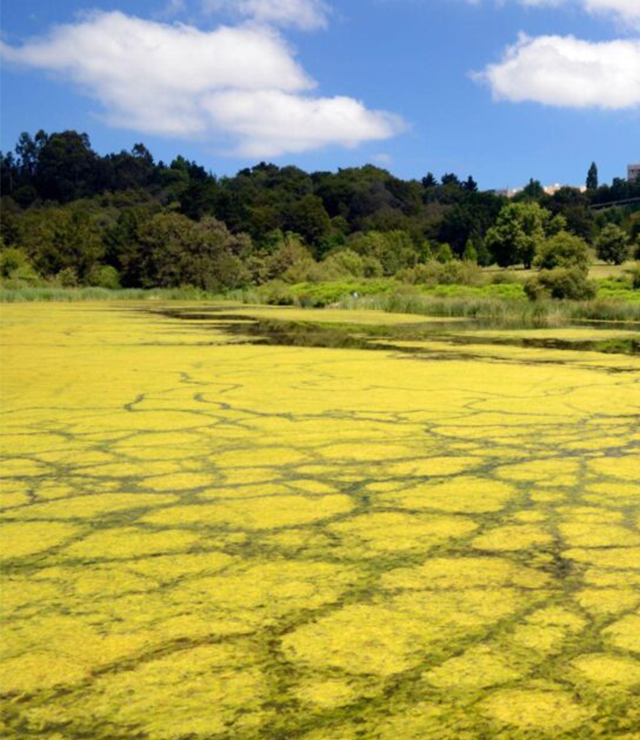
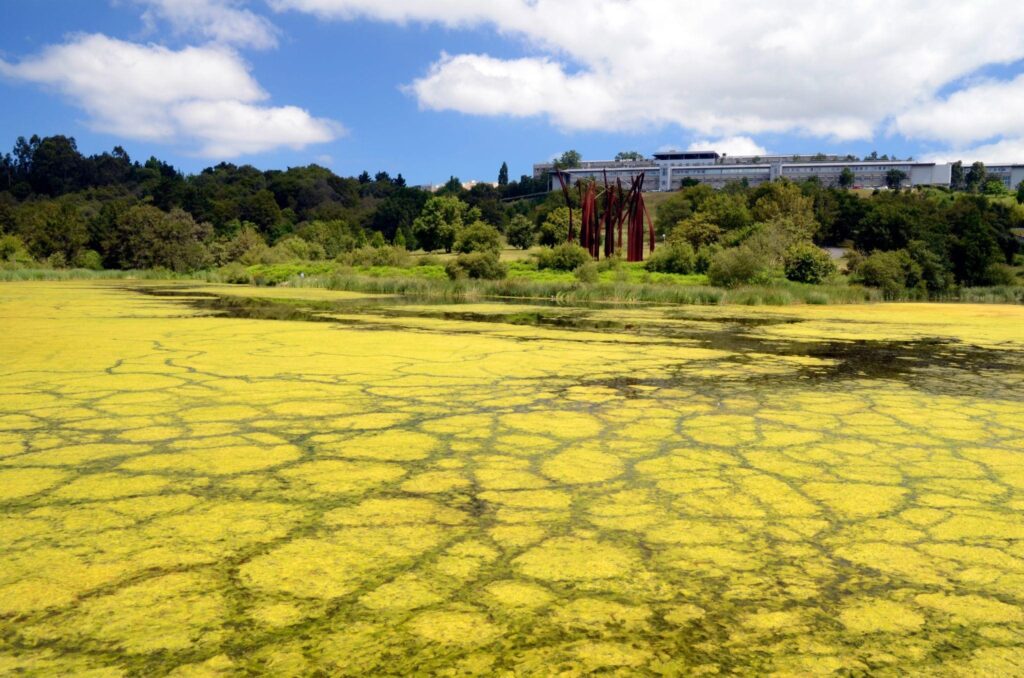
A photo of a polluted body of water.

Meet Sea Saviors, the winning team of the Fall 2021 Junior Academy Challenge “Restoration of Aquatic Ecosystems.”

Published December 15, 2021

By Roger Torda

In the fall of 2021, six budding scientists entered the Junior Academy Challenge and teamed up online to address eutrophication in the Black Sea area and the Dnieper River that runs across Ukraine. Team members were Anzhelika-Mariia H. (Team Lead) (Ukraine), Kusum S. (Nepal), Aman Kumar F. (India), Manan P. (India), Ksheerja S. (India), and Viktoriia L. (Ukraine); the team worked under the mentorship of Pratibha Gupta (India).

Eutrophication is a naturally-occurring process that affects the chemical composition of water bodies. When this process is accelerated by human factors like industrial waste, sewage and fertilizers from farms, it causes excessive growth of algae and phytoplankton, oxygen deficiency, and dead zones – thus threatening ecosystems, biodiversity, and public health.

As a first step, the Challenge participants conducted research to better understand the root causes of the problem in the Dnieper River basin.

“I got tons of insights on eutrophication and how it is destroying our planet’s life,” explains Aman Kumar.

Encouraged by their mentor Pratibha (a.k.a. “Power Girl”), the students also looked at existing solutions before brainstorming new approaches that could improve the aquatic environment.

“Our mentor’s enlightening advice and expertise showed me just how vital the role of mentor is,” says Manan. “Hopefully, some day, I can become a Junior Academy mentor!”

Focusing Ecological Ditches

The team eventually opted to focus on ecological ditches, a traditional drainage system that developed in Ukraine in the 1960s, when the country was still part of the Soviet Union. Located at the edge of fields, eco-ditches allow excess rainwater to be carried away. In their conventional form, the drainage channels are inefficient at filtering unwanted fertilizer or nutrients and the team sought ways to improve them with better engineering.

“The diversity of our group, not only geographical, but also the unique personality that each of us carried added immense value to our work,” says Kusum.

The students identified a potential solution of adding plants with strong filtration capacity to eco-ditches, and looked at hydraulic flow rate control.

“I met hardworking individuals who helped me improve my own skills and taught me many valuable lessons in teamwork and analytical thinking,” says Ksheerja.

Eco-ditches require regular maintenance to remove sediments. While polluting industries can be easily identified, farms are harder to locate – yet farms release nitrogen and phosphorus fertilizers that affect the delicate chemical balance of water bodies. The students saw a potential path to a sustainable solution: by mapping agricultural farms and existing canals, they could be linked into common drainage systems that could be monitored.

Raising Awareness Through Gaming

Raising awareness of the threats posed by eutrophication is also crucial. The Sea Saviors designed a web-based computer game aimed at children aged 8-13 to sensitize them to environmental issues.

“My role was to be a game designer and developer. Because of the Junior Academy, I found out about different ways of creating the video game and practiced one more game developing engine,” says Viktoriia.

In the two-level game, a friendly sea monster tries to make the aquatic environment more habitable for his fish buddies. In the process, Bob the Monster introduces young players to ecological ditches and the cultivation of oyster shells as ways of regulating the aquatic ecosystem.

“My team was tenacious and industrious from the beginning,” says Pratibha, thrilled with her mentees’ achievements. “Each member had faith in the other one to work diligently.”

For the winning team members, the project has been a stimulating learning experience that allowed them to form strong bonds.

“Working on this project boosted my motivation to continue my studies in the hope of becoming a scientist one day,” said Anzhelika-Mariia.

Promoting the Magic of Compost Worms

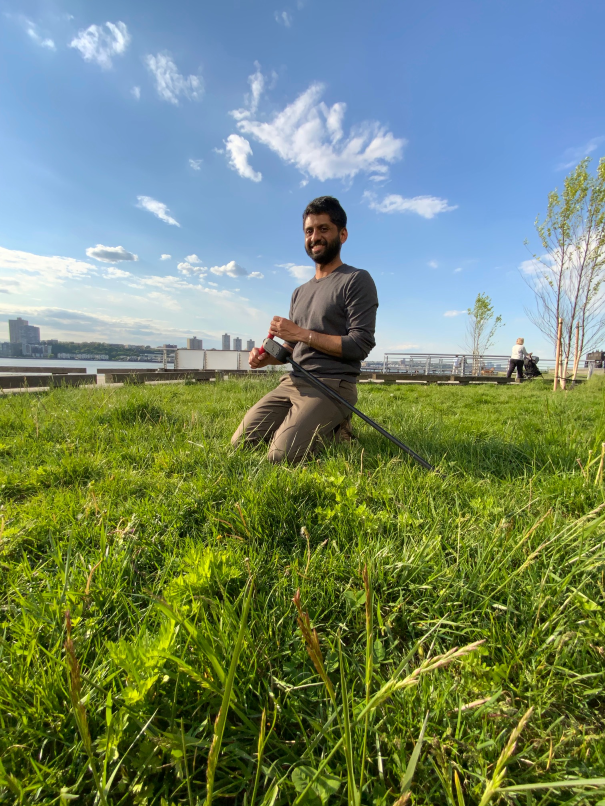
A man smiles for the camera.

Sashti Balasundaram is a soil expert and worm lover who strives to grow better plants, vegetables, and flowers. The educator and entrepreneur shares his stories about composting and microorganisms.

Published December 8, 2021

By Roger Torda

Sashti Balasundaram at work in Manhattan’s Riverside Park.

“It was magical when I saw food scraps break down in a worm bin,” recalls Sashti Balasundaram. “I thought to myself, worms are amazing.”

Sashti is a Master Composter, which means he is an expert at turning organic matter–like banana peels and apple cores and table scraps–into nutrient-rich compost. Mixed into soil, compost improves plant growth, enhances soil fertility, and reduces soil erosion. Results include healthy vegetables and flowers.

Sashti was amazed by worms when he worked in India with an organization that supports recycling. That fascination led to a passion for soil, and the microorganisms that are at the heart of composting. Now he heads an organization called WeRadiate that uses data and technology to improve soil health. He helps others learn how to create great compost, working with community gardens, schools, and urban farms.

The Importance of Compost

Sashti is just one of many experts in science and technology who share their stories in the Chat with a Scientist series of webinars, hosted by The New York Academy of Sciences’ Global STEM Alliance. In the 60 minute programs, scientists share their passion, explain how they got where they are, and take questions from curious students.

Sashti has taught at the Brooklyn Urban Garden School (known, of course, as “BUGS”), helped community gardeners across all five boroughs, and even helped the United Nations start composting at its General Assembly Building in Manhattan.

What does Sashti want kids to know about the importance of compost? “All the nutrients, the vitamins, and minerals that your family, your friends, and all humans consume each day come from soil,” he says. And there’s something else: “The environmental benefit is massive!” Compost helps soil capture carbon from the air and reduces the need for the transportation of organic waste. Composting also creates local jobs and saves communities the cost of moving garbage somewhere else.

There are many different ways to work toward a career in soil science, gardening, or agriculture. Sashti’s route was very indirect, with a background in biology, ecology, and public health. But it is easy to get started. Sashti says there are plenty of volunteer opportunities at botanical and community gardens.

Learn more about the Academy’s educational programming.

Empowering Girls in STEM, Improving Futures for All

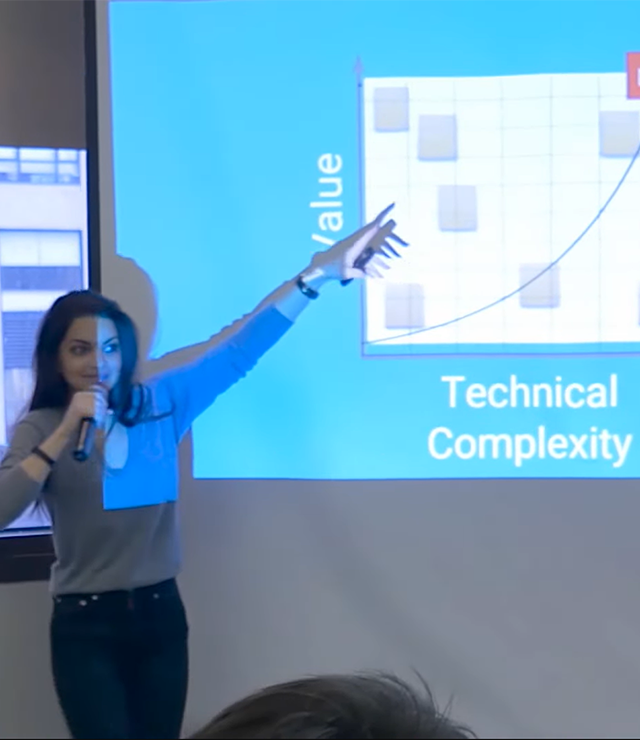
An engineering from Google gives a presentation.

The New York Academy of Sciences empowers young women to pursue STEM-related careers.

Published November 10, 2020

By Roger Torda

The New York Academy of Sciences and its Global STEM Alliance partners want to grow the STEM pipeline, and engage and retain more young women in STEM-related careers. Our programs connect motivated, enthusiastic female mentors with smart, STEM-focused high school girls from around the world to help them develop essential 21st century skills.

In this video meet some of the amazing girls in the 1000 Girls, 1000 Futures program committed to a future in STEM.

Seeking a Sustainable Plant-based Meat Source

An appetizing display of plant-based hamburger patties.

Researchers are coming up with creative new ways to make plant-based meat alternatives more appealing to consumers, but what will it take for the public to embrace this seemingly unknown food source?

Published June 1, 2020

By Sara Donnelly, PhD

Image courtesy of barmalini via stock.adobe.com.

Vegetarianism and even veganism are not new ideas — in fact one of the first mentions of vegetarianism comes from Pythagoras in 500 BCE. Buddhists and other religious groups have long advocated the practice for humane reasons.

The term vegan was coined more recently in 1944, to distinguish those who do not eat any animal-derived products from those who still consume dairy and eggs. Veganism has long been viewed as an extreme lifestyle choice, however, in recent years, the popularity of plant-based diets has been on the rise.

In 2017, six percent of U.S. consumers identified as vegan. While this is still a tiny percentage of the population, it represents a 600 percent increase over the previous three years.

People may choose not to eat meat due to health reasons or concern over animal welfare, but growing awareness of the contribution of food production to climate change has begun to expand the conversation around the need for the broader adoption of a plant-based diet.

According to the Food and Agriculture Organization of the United Nations, food production is responsible for 14.5 percent of worldwide greenhouse gas emissions. It is estimated that if everyone in the U.S. were to give up eating meat and dairy, it would reduce the country’s carbon emissions by 70 percent.

Reducing the prevalence of meat and animal products in the American diet will not be easy, as ideas and preferences about food are deeply rooted in cultural and societal norms. Even with greater understanding of the health and environmental implications, many people struggle with the idea of replacing their Thanksgiving turkey, or their celebratory steak, with a plant-based alternative.

Meat Diets Associated with Higher Standards of Living

Eating meat is also associated with increasing wealth, and as the standard of living has increased over the last 50 years in countries such as China, so too has their meat consumption, despite government policies advocating for lower intake.

A number of new plant-based meat alternatives have recently been developed that aim to ease the transition for those who want to make the switch. Several of these products have garnered significant media attention, but why all the hype? What makes the Impossible Burger “impossible?” and why would you want to go “Beyond Meat”?

While they take different approaches, companies such as Impossible Foods and Beyond Meat aim to create plant-based products that are almost indistinguishable from the real thing, which they believe will lure even the most die-hard meat eaters away from animal-derived products.

According to Principal Scientist, Dr. Laura Kliman, of Impossible Foods, “You can’t just tell people to stop eating meat, so at Impossible we’re not redesigning the product. We’re just redesigning the process to make it, and we’re delivering all the deliciousness, the nutrition, the versatility, that people expect out of meat but we’re making it from plants, which is inherently more sustainable.”

Impossible has a lofty mission to “replace the need for animal farming by the year 2035”. To do that, they take a rigorous scientific approach to replicate the taste and texture of meat. As Kliman says “taste is only a small part of it, flavor is mostly aroma.” In order to identify and recreate the aroma of meat, she uses the Gas Chromatography-Olfactometry technique, in which beef is broken down into its component chemicals and each of those is associated with a particular smell.

Finding Plant-Based Compounds

The scientists then turn their attention to the plant world to find plant-based compounds with the same characteristics. For Impossible this means they now have a “technology platform, or pipeline” that allows them to do the same for other meat products — for example the recently released Impossible Pork. A similar pipeline approach is used to replicate the texture of meat.

For Impossible, their “secret sauce”, what Kliman says provides the “explosion of meaty flavor” is heme, a chemical found in all plants and animals. In humans, it forms part of hemoglobin, the protein complex that carries oxygen around the body in the bloodstream. To replicate the taste of animal heme, Impossible scientists turned to leghemoglobin, a variant that naturally occurs in soy. They then devised a way to produce it in genetically modified yeast, in order to meet production demands and minimize its environmental impact. According to the company, their process uses 87 percent less water, 96 percent less land, and emits 89 percent less greenhouse gases than it takes to produce traditional beef burgers.

Plant-based alternatives to meat are produced from soy, potato, rice, mung bean, or pea protein and also contain fats to give them the appealing sizzle as they hit the pan. While eating a plant-based diet is often viewed as the healthier option, it is important to realize that eating “Beyond Meat” or an “Impossible Burger” is not necessarily beneficial for health.

Less Cholesterol, More Fiber and Sodium

These products have a similar fat content to beef burgers, and while they have less cholesterol and more fiber than a typical meat patty of the same weight, they do contain more sodium. Professor Kent Kirshenbaum is an organic chemist at New York University, and former scientific advisor to Beyond Meat, who is currently on the board of the Good Food Institute, a non-profit that promotes alternatives to animal food products.

“There is no easy way to answer this question,” he says. “Is it potentially beneficial to move to plant-based sources of food rather than animals? Yes, and I could spend a lot of time telling you why, especially moving away from red meat. However, for those people who are concerned about ultra-processed foods as potentially having deleterious health consequences, they’re absolutely right, this could turn out to be a problem. We don’t know what it is about processed foods that gives rise to health problems, so we really don’t know what the long-term effect is going to be.”

At a Restaurant Near You

From restaurants like David Chang’s Nishi, to Burger King and Dunkin’ Donuts, the Impossible Burger and Beyond Meat products are widely available, and Taco Bell recently announced it will offer plant-based fare within a year. However, not all restauranteurs are so enthusiastic. Chef Silvia Barban, former “Top Chef” competitor and current proprietor of LaRina in Brooklyn, N.Y., offers many vegetarian options on her menu, but none of them contain plant-based meat alternatives. Barban prefers to use her culinary skills to turn locally sourced vegetables into a delicious meal. “I want to sustain the local farmers. I want to try to make great dishes with everything that we have around”, says Barban.

However, in her personal life she finds these plant-based products an easy substitute in dishes like tacos or ramen, when she needs a quick and tasty lunch or late meal after work. While Barban thinks that plant-based meat alternatives are a great addition to fast food, or fast casual restaurant menus, she has no plans to incorporate them in her own menu: “I just use vegetables and I treat them the right way and make it super flavorful. For example, I like to do a beet tartar. It’s vegetarian. It looks like meat, but it’s not — it’s beets and it’s delicious!”

Rethinking How We Eat and Produce Food

It is clear that for our health and the environment, we need to rethink what we eat and how we produce our food. A recent report from EAT-Lancet Commission states that achieving a sustainable and healthy diet worldwide is possible by 2050, but will require a dramatic shift in our approach to eating and agriculture as well as require significant effort and investment from all sectors.

While the report suggests that meat consumption should actually increase in parts of the world where malnutrition is prevalent, in North America, there needs to be a substantial decrease in the amount of meat and dairy consumed. Thus, solutions to the problems of developing a sustainable global food supply chain will take many forms. In western nations, hi-tech plant-based meat alternatives, will almost certainly play a major part in this revolution.

“This is here to stay. Even if part of what’s going on is some element of hype, we don’t have any choice but to drastically reform our food systems, it has to happen,” says Kirshenbaum. “The population is just growing too quickly. Economies around the world are expanding and people are becoming wealthier, which has generally been associated with greater consumption of meat. Just from a global sustainability standpoint, this has to happen.”

Also read: Challenges in Food and Nutrition Science
Challenges in Food and Nutrition Science
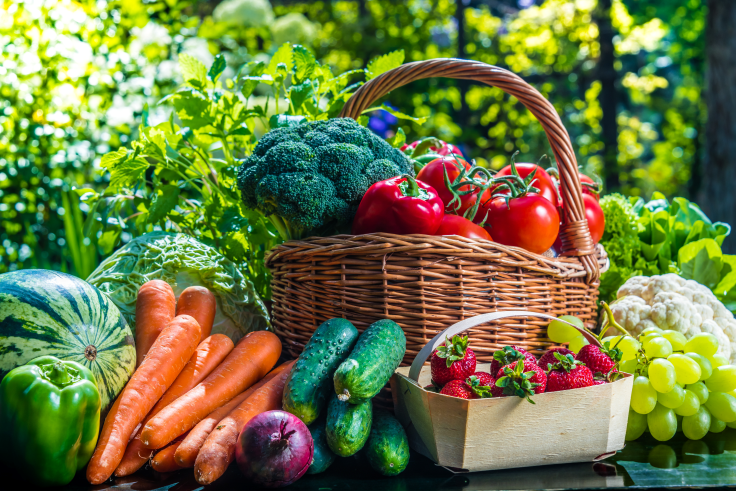
An array of different fruits and vegetables, including watermelon, peppers, carrots, onions, cucumbers, strawberries, broccoli, grapes, lettuce, and cauliflower.

The New York Academy of Sciences’ work in nutrition science aims to address global issues such as food security which affects infants, adolescents and the aging population.

Published June 1, 2020

By Carina Storrs, PhD

According to the United Nations, malnutrition is “a trap from which people cannot easily escape.” And it is a trap that affects every country in the world. In 2015, ending hunger and ensuring access to nutritious food was named one of the U.N.’s 17 Sustainable Development Goals (SDG) for 2030. Efforts to reduce malnutrition stretch back decades and have taken many forms. These include global initiatives that increase access to nutritious foods; government policies that promote healthy diets and set nutrition standards; nonprofit groups that operate food pantries and kitchens; and researchers who study malnutrition and evaluate interventions.

Within the vast landscape of approaches to combat malnutrition, The New York Academy of Sciences Nutrition Science Program has been focusing on where it can make the greatest contributions to nutrition science research. Over the last four years, it has focused on important nutrition science interventions, including the control and prevention of thiamine and micro-nutrient deficiencies and bolstering evidence-based nutrition models.

These activities support a priority for the Academy — addressing global issues such as food security that affect infants, adolescents and the aging population. “Today we can say that the Nutrition Program at the New York Academy of Sciences has become a center of reference on a number of those issues,” said Gilles Bergeron, PhD, Senior Vice President for Nutrition Science at the Academy.

The Academy’s reputation as a neutral convener of experts representing all sides of an issue, makes it the ideal catalyst to assess current scientific evidence writ large. In the case of the Nutrition Program, it also actively evaluates data, and participates in ongoing research needed to design future large-scale programmatic activities.

Filling Knowledge Gaps

For its research on thiamine deficiency, a problem that mainly occurs in low and middle-income countries (LMIC) due to insufficient dietary intake of the B1 vitamin, the Academy’s nutrition science team, together with the Bill & Melinda Gates Foundation, convened a task force in 2017 to take stock of existing data. The team is now collaborating with researchers internationally on several projects to fill in knowledge gaps, determine best solutions to tackle this public health problem, and to assess the prevalence of thiamine deficiency in understudied regions of Africa, such as Madagascar and The Gambia.

Thiamine deficiency can easily go unrecognized, as it did for decades in parts of Asia such as Bhutan and Northern India, because the symptoms are so vague, ranging from the loss of appetite in infants and children, to tingling in hands and feet in adults. But left untreated, thiamine deficiency can rapidly lead to death, and there is increasing evidence that sub-clinical cases — which almost never get detected — can cause long-term cognitive delays and motor skill problems. “We are starting to work on strategies to prevent thiamine deficiency and to raise awareness of its prevalence, which is much, much broader than I think anyone expected,” said Megan Bourassa, PhD, a biochemist and the Academy’s Associate Director of Nutrition Science.

The Academy’s Nutrition Science Program has brought much-needed attention to the issue of thiamine deficiency, according to Frank Wieringa, MD, PhD, senior researcher at the Institut de Recherche pour le Développement (IRD) in Montpellier, France. “In 2012, we knew as much about thiamine deficiency as we did in 1950, there was hardly any progress in those 60, 70 years,” said Wieringa, who served on the Program’s task force and is part of its Scientific Advisory Group.

A High Prevalence of Thiamine Deficiency in Cambodia

Wieringa found a high prevalence of thiamine deficiency in Cambodia, even though the problem has generally been less well recognized by the medical community there than in other parts of Southeast Asia such as Laos. He and his collaborators, including the Academy nutrition team, are currently testing the optimal dose of thiamine to give lactating women in Cambodia. Early data will be available this spring and the hope is to eventually fortify salt with the optimal thiamine dose, much like salt is already iodine-fortified.

On a separate but related front, the Academy has taken on the challenge of trying to improve the myriad of computer models that can guide policy makers, researchers and aid groups in deciding how to tackle malnutrition despite limited resources. The models, which have been developed by academic, governmental and humanitarian groups, can make predictions about important policy questions such as:

  • Which nutrition issue is the most pressing in a particular setting?
  • Should attention be directed at certain micronutrient deficiencies or on bigger issues of stunting and underweight populations?
  • Which intervention(s) would be most cost-effective?
  • What is the best mix of interventions to achieve multiple concurrent objectives?

With competing models, policy makers may only use the tools that are promoted by the donor they work with (be it The World Bank, USAID or other); and not necessarily the one that is most appropriate for their goals. There needs to be a greater recognition of the diversity of needs and the fit-for purpose of specific modeling tools to the specific task.

The Nutrition Modeling Consortium

Over the last three years, the Academy, with funding from the Bill & Melinda Gates Foundation, has brought together various modelers and launched the Nutrition Modeling Consortium to try to increase awareness of the models in LMIC. Such a partnership was developed to foster collaborations and shared experiences between countries regarding the use of models in decision making.

The Consortium has given modelers the “unique opportunity to sit down and really dig into what these models can do,” said Stephen Vosti, PhD, Adjunct Professor at University of California, Davis, and member of the Consortium. Vosti and his colleagues created MINIMOD, a tool to help plan and manage the most cost-effective micronutrient interventions in LMIC.

So far, the researchers have identified strategies for reducing vitamin A deficiency in Cameroon and plan to deploy the tool to look at other micronutrient deficiencies in countries such as Malawi and Nigeria. MINIMOD could also be used to assess the risk of interventions leading to overconsumption of micronutrients, which is a particular concern in the United States and other developed countries, according to Vosti.

Undernourishment Impacts More than 800 million Globally

With more than 800 million people around the world experiencing undernourishment in 2017, the stakes for the Nutrition Science Program, as well as the many other efforts featured in this issue, could not be higher. Ensuring that all the world’s people have access to adequate nutrition achieves multiple societal objectives. Healthy people are productive people who can work and contribute to long-term economic sustainability.

And a proper diet is foundational in enabling people to fight off disease. It is arguably a gender issue as well. In societies where male children are often more valued than females, girls may not receive adequate nutrition in their formative years, which will impact their ability to bear healthy children of their own.

“Access to nutritious food is a common thread to all population segments,” said Bergeron. “What we do at the Academy is not just about starving children in remote parts of the world, although we recognize the need. Obesity, antibiotics in animal food production, adolescent women nutrition as well as nutrition for the aging, are issues that need to be addressed in developed countries as well.

Here in the United States, it is estimated that one in every 10 adults who are 20 years or older has diabetes. For seniors (65 years and older), that figure rises to more than one in four. The cost of diagnosed diabetes is an estimated $245 billion — money that could go to crucial nutrition programs both in the U.S. and around the world for a healthier society at large.”

Good Mentors are Key to Student Interest in STEM

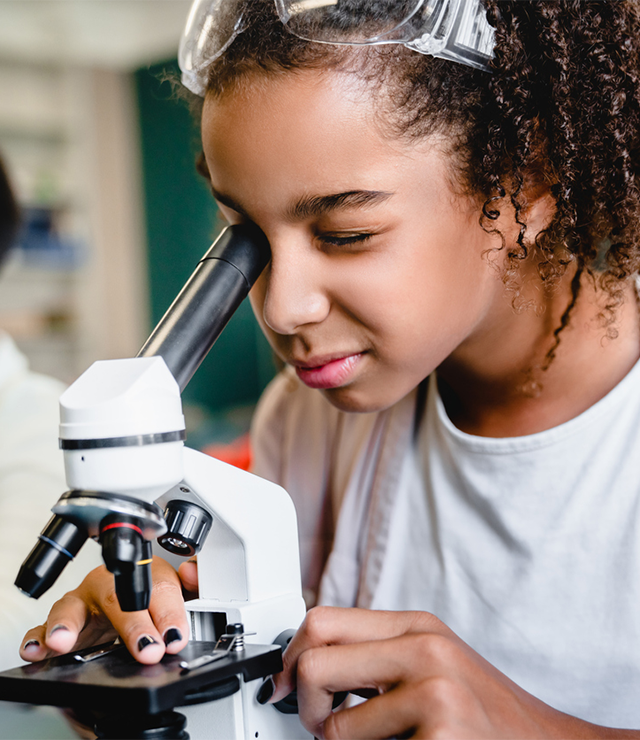
A young woman examines a specimen under a microscope.

The Academy’s Scientists in Residence initiative aims to jumpstart student interest in STEM.

Published May 1, 2020

By Adrienne Umali, M.S.B.S., M.S.Ed.

Kathrin Schilling, Ph.D.
Associate Research Scientist Geochemistry, Columbia University

Regardless of the field you’re in, it is likely that if you looked back at your career path, you could identify at least one person who has helped guide you to where you are today. Whether this person was a teacher, family member, coach, or supervisor, mentorship has always been an incredibly important part of not only exposing individuals to new ideas and opportunities, but in encouraging them to their full potential.

When the 2018 Program for International Student Assessment (PISA) scores in math and science showed the United States ranked 13th, behind several Asian and European nations, it was once again demonstrated that the U.S. needs to raise its investment in science, technology, engineering and math (STEM) to remain globally competitive. These fields are core to almost every industry, but a 2017 poll found that only 38 percent of middle and high school teachers see their students as being “naturally interested” in STEM.

Cultivating a Love of STEM

Most students rarely have the opportunity to meet a working scientist, so developing programs that expose students to science professionals is proving to be a critical way to cultivate a love of STEM in the next generation. It’s what brought Emily Bohonos, a middle school science teacher in Brooklyn, N.Y., to join The New York Academy of Science’s Scientist-in-Residence (SiR) program.

SiR brings together scientists and NYC middle and high school teachers for a year-long collaboration that aims to jumpstart student interest in STEM through real-world projects and the opportunity to “humanize” a scientist.

Emily Bohonos
Science Teacher, Elijah Stroud Middle School, Brooklyn, N.Y.

Bohonos along with her partner Kathrin Schilling, Ph.D., an associate research scientist of Geochemistry from Columbia University, have spent the last few months creating a project focused on something that most students already have an interest in: food. Building off of Schillings’ expertise — she has degrees in geology, soil science and microbiology — the two are challenging students to research diet variations around the world and create experiments that explore the effects of different conditions on plant growth. Their project pushes students to practice thinking critically, creatively, and globally.

Thinking Outside the Box

Schilling loves sharing her passion for science with students and is thrilled when she sees them thinking outside of the box. The benefits of programs like this, however, are not limited to added content expertise — they also provide tangible examples of people who have found success in STEM.

In fact, Schilling notes that many of the questions she gets are far removed from her area of expertise. With the title of “Dr.“, the students see her as an expert in all science-related fields, a factor she recognizes may be one of the reasons that science can seem inaccessible to some students. “It feels like you have to be a genius in every field [to be a scientist] and we are definitely not.” Schilling admits that she herself wasn’t a great student until she was able to start specializing in her post-secondary education.

To this end, Bohonos creates time during each lesson to allow students to interact one-on-one with their Resident Scientist and get to know her on a personal level. In this way, students can hopefully begin to see STEM as a career path not just limited to those who have already been labeled as “smart”. Fostering this type of environment is particularly critical at schools like Bohonos’, where students of color make up almost 90 percent of the student body, a group which still remains significantly underrepresented in the number of individuals receiving undergraduate STEM degrees.

Mentoring takes time and it comes with its own challenges, but despite this, Schilling remains optimistic about her role in fostering a positive outlook regarding STEM. “Even if I can change the mind of just a few [students] it’s more than before the program.

Upskilling Nurses to Handle the Worst of the Pandemic

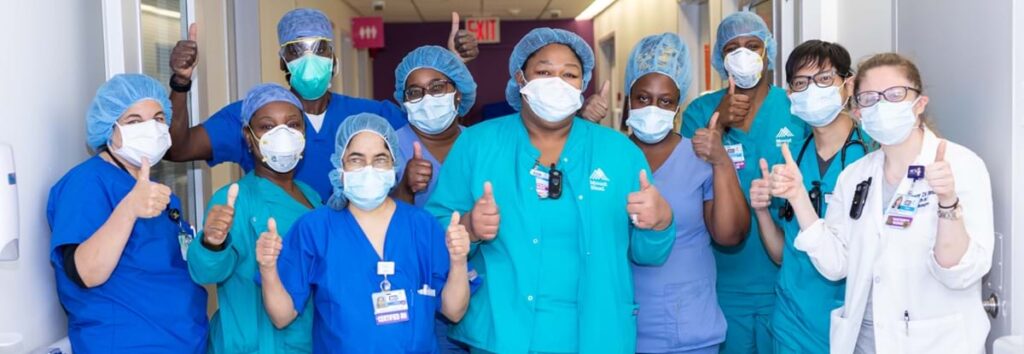
A group of medical professionals give a thumbs up.

The Academy, Mount Sinai and Sweden’s Sana Labs team up to “upskill” nurses volunteering to treat COVID-19 patients in New York City.

Published April 16, 2020

By Roger Torda

The New York Academy of Sciences (the Academy) has helped launch a transformational artificial-intelligence-based online learning program to increase the number of Registered Nurses able to handle the explosion of COVID-19 patients in New York City’s Intensive Care Units (ICUs).

Leveraging its global network of expertise, the Academy identified a cutting-edge online learning company, Sweden’s Sana Labs, that was willing to donate its team pro bono to meet New York’s need. The world-renowned Mount Sinai Health System, one of the largest in New York with eight hospital campuses, jumped at the chance to “upskill” their heroic nurses and provided Sana with curricula drawn from the American Association of Clinical Care Nurses and Mount Sinai itself. In record time, this material was transformed into a 16-hour course that can be taken in short batches during break time or at home on personal computers.

So far, about 100 nurses in a pilot program at Mount Sinai Hospital System have used this innovative learning platform. As many as an additional two thousand Mount Sinai nurses may take the training in weeks ahead, according to Sana Labs.

Says Mt. Sinai’s Jane Maksoud, Senior Vice President and Chief Human Resources Officer for Mount Sinai Health System: “The profound shortage of intensive care healthcare workers and other ICU staff available to operate mechanical ventilators during a pandemic will be one of the most significant hurdles facing U.S. hospitals treating critically ill COVID-19 patients. I cannot express my gratitude enough for the work that this team is doing.”

Expanding the Program

Now that this pilot is up and running, Sana and the New York Academy of Sciences are working to expand the program to other hospitals in the New York City metropolitan area, and across the United States. Ultimately, an even more crucial need may arise if cases of COVID-19 explode in the world’s Developing countries.

“Project Florence is designed to deliver personalized learning at scale and we’re making it available for free to any hospital or emergency care unit in the U.S. in need of quickly upskilling nurses for work in the ICU,” said Joel Hellermark, founder and CEO of Sana Labs. The project honors Florence Nightingale, the nursing pioneer. Sana Labs’ platform uses Artificial Intelligence to customize learning for individuals, improve retention of knowledge, and increase flexibility in training.

The Academy’s Ellis Rubinstein played a central role in bringing Sana and Mt. Sinai together for this initiative. “We recognized the important contribution Sana’s learning platform could make as the healthcare system in New York mobilized against COVID-19,” said Rubinstein. “As healthcare systems throughout the city, country, and world face scarcities of trained talent, we are prepared to use the global network of The New York Academy of Sciences to link the Sana Labs team to those in need.”

“I’m very excited to bring this innovative approach to Mount Sinai hospitals to help advance the skillset of our nurses,” said Diane Adams, Chief Learning Officer at Mount Sinai Health System. “Not only are we advancing learning for our health care system, but we are also meeting the needs of our community during a particularly critical time across New York City, the United States and the rest of the world.”

A Proud History of Advancing Medicine and Healthcare

The Academy has a strong background in rapid response to new developments in medicine and healthcare. As early as the mid-1940s, the Academy held a ground-breaking conference on antibiotics. Events hosted at the Academy as early as the 1960s focused on the carcinogenic threat of asbestos, a popular building material at that time. In 1983, the Academy hosted the world’s first major conference on AIDS, just as the scientific community identified the virus that causes the disease.

When the world became aware of a mysterious pneumonia called SARS in early 2003, the Academy quickly convened the first multi-sectoral meeting of scores of the world’s expert scientists and physicians from academia, government and the pharmaceutical industry. Six years later, in 2009, the Academy mounted a similar response to H1N1, the so-called swine influenza outbreak. In 2012, the Academy used its ability to convene diverse stakeholders to sponsor a conference exploring conflicts between scientists and biosecurity officials over research on the H5N1 influenza virus.

“We are very proud that the Academy can leverage its experience in the Life Sciences to make important contributions to world-wide efforts to address the COVID-19 pandemic,” Rubinstein said, referring to the upskilling initiative as well as the Academy’s robust series of programs for sharing scientific developments on the novel coronavirus.

Also read: Advancing Science for the Public Good thru Nursing

Collaborating Today for a Better Tomorrow

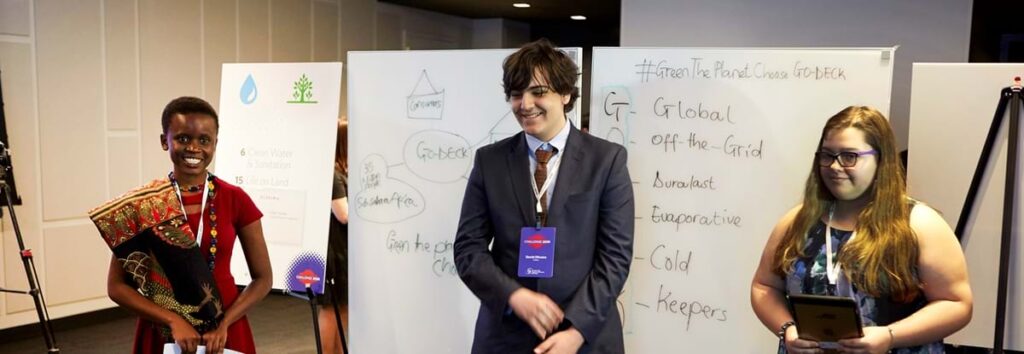
A woman poses with her research poster during an Academy event.

Junior Academy team works together to solve the problem of the lack of refrigeration in rural Tanzania.

Published March 3, 2020

By Marie Gentile and Roger Torda

Belinda Baraka Boniphace, 17, of Tanzania, runs an online market connecting sellers to buyers.

She noticed that high temperatures in her area and a lack of cold storage options were significantly impacting the quality of produce available in her town of Dar es Salaam and nationwide. Vegetables would start to spoil 6-24 hours post-harvest.

Luckily, Belinda is part of the Junior Academy, which brings together teams of students from around the world to collaborate on solutions for real-world problems. Belinda told her fellow teammates about the problem her country was facing, and together they were inspired to do something about it.

Developing a No-Power Fridge

The team developed a no-power fridge, Global Off-the-Grid Duralast Evaporative Cold Keepers (GO-DECK), made locally from landfill-bound materials such styrofoam that reduce temperatures and also regulates humidity during storage and transport. The food transport/storage system uses water instead of electricity to keep vegetables cool.

They experimented with six different models improve upon their refrigeration system, inspired in part by Zeer pot designs. A Zeer pot, also known as a pot-in-pot refrigerator, is used in rural regions that have limited access to electricity. The technology works by cooling through evaporation.

After experimenting, the team landed on an end product that is made from 100 percent recycled materials and can be easily distributed to local farmers. The team believes the system has the potential to save millions of metric tons of food per year, all for a nominal cost.

Building upon the success of their first solution, Belinda and one of her teammates, Talar Terzian, are now developing an online market for farmers. They are expanding on the Go-Deck Unit to offer hand washing machines, and their latest water carrier, to local women in Tanzania.

“I wish to help local farmers and women take advantage of their agriculture and gain the best profit for their hard labor,” Belinda says.

Overcoming Obstacles

However, Belinda has had to overcome many hurdles in order to accomplish her goal. She’s faced technical difficulties with internet and power outages due to weather and flooding in her area.

Also, her local school system is limited and not able to support the research that Belinda wants to pursue. Therefore, Talar and her mother, who live in Gainsville, Fla., helped Belinda prepare for SAT exams and complete scholarship applications so that she can go to university. Belinda says she’s been able to thrive because of the connections she’s made through The Junior Academy.

“By developing global connections like those I made with Talar in the US, I will be able to improve my business and help others,” Belinda adds.

This amazing endeavor is one of many innovative collaborations occurring all over the world through the Junior Academy.

A New Approach to Natural Disaster Preparation

A graphic illustration of people responding to a flooding disaster.

A natural disaster inspired one high school student to use science to help others.

Published October 1, 2019

By Mandy Carr

Luis G. Alvarez
Luis G. Alvarez

Luis G. Alvarez, 17, is a member of the Junior Academy at Colegio Integral Mesoamericano Patzicia in Guatemala; a volatile environment that is subject to earthquakes, tropical storms and volcanic eruptions. And on June 3, 2018, he experienced the eruption of Volcan de Fuego.

“I remember hearing something like rain falling on the leaves,” said Alvarez. “At first, I didn’t recognize what it was, but then I realized it was ashes and sand, not rain. I told my parents, and we quickly got into the car and left.”

According to Reuters, more than 190 people were killed, many of whom died in their homes because they were unable to escape. That prompted Alvarez to do something about it.

“This event had a pretty big impact on me. I wanted to do something so that more people would survive and recover from these traumatic experiences,” he said.

The Junior Academy’s Natural Disasters: Relief & Recovery Challenge

Alvarez came across The Junior Academy’s Natural Disasters: Relief & Recovery Challenge sponsored by the S&P Foundation from a Facebook ad, and saw an opportunity. He promptly completed the application form on Launchpad, the Academy’s collaboration platform and was selected by the project team leader to work on the Challenge with three other students from Hungary, Vietnam and the United States.

Using Hurricane Katrina as their case study, the students noticed that mental health was a serious side effect of the hurricane, and largely went untreated.

To address this deficit in disaster relief, the team created a smartphone-based community survey app to gather critical information in high-risk and disaster-prone areas that would provide a useful baseline for responders during a crisis.

The survey collects information such as residents’ financial and employment status, mindset, living habits and mental health. The information is then used to help tailor recovery efforts when a disaster strikes.

Studying the Physiological Damage

Like his team found in the Hurricane Katrina case study, many residents in Alvarez’s community suffered physiological damage following the volcanic eruption. He also found that his community wasn’t prepared because they underestimated the devastation caused by the eruption and there was a lack of information surrounding the event.

“We had radio service and a cellphone signal,” he said, “yet we were never made aware that the volcano had high levels of activity. All these factors combined to shape my contributions and suggestions during the project.”

According to Alvarez, while the survey solution is based on the Hurricane Katrina situation, its principles can be applied to all natural disaster preparation.

“Natural disasters are often socially and economically disastrous for communities,” said Carolyn C. Cavicchio, Director, Corporate Responsibility; Vice President, S&P Global Foundation.

“The type of solution that these students developed has the potential to reduce valuable time and resources when disasters strike. Moreover, Challenges like this help young people to develop and refine important problem-solving skills that are crucial in today’s workplace,” she says.

Learn more about The New York Academy of Sciences’ Innovation Challenges.

Improving the Diagnosis of Rare Diseases

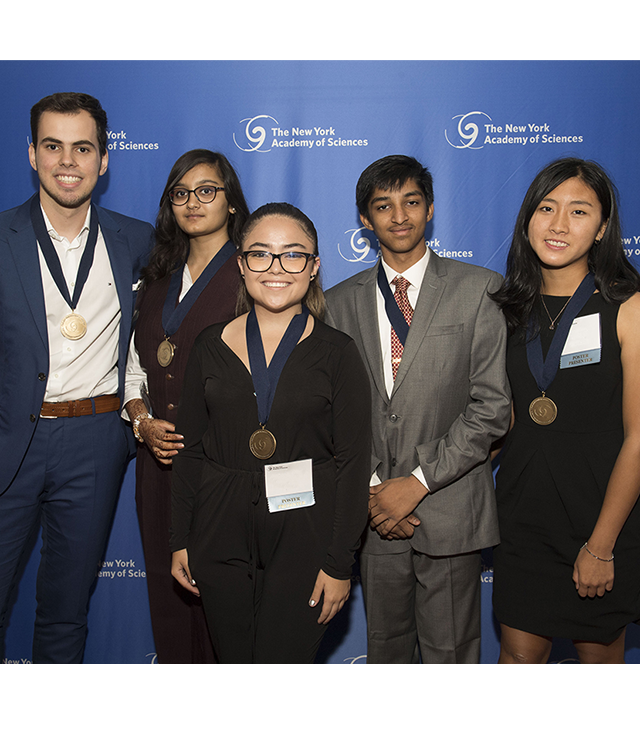
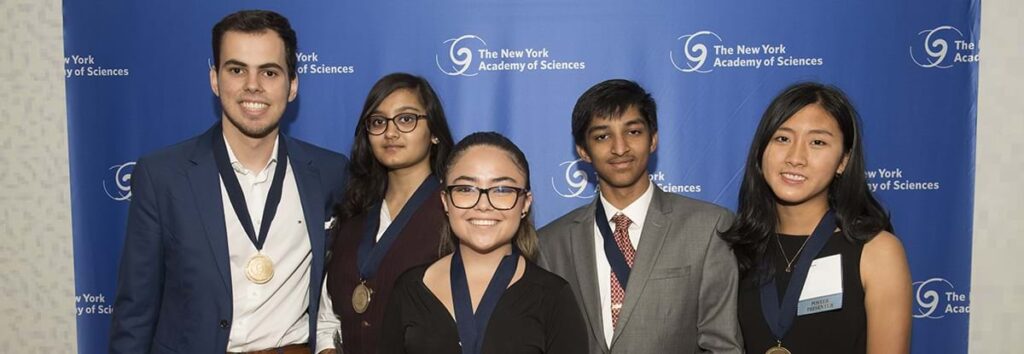
Five high school students pose for the camera.

Meet the winning team of the 2019 Junior Academy Genomics Challenge.

Published October 18, 2019

By Marie Gentile, Richard Birchard, and Mandy Carr

According to the World Health Organization, there are 5,000 to 8,000 rare diseases, most of them with a genetic basis. But errors in diagnosis can delay the implementation of proper treatments, especially for those in poor areas of the world where access to healthcare is limited.

Now, six high school students who participated in the Junior Academy’s Genomics Challenge, sponsored by Regeneron and Medidata, have developed a prototype for a better way to test the genetic code and thereby improve the diagnosis of rare diseases.

The students (Evangelos Kassos, 18, from Karditsa Greece; Ana Stratan, 18, from Bucharest, Romania; Aditi Gupta, 18, from Delhi, India; Monish Singhal, 14, from Bengaluru, India; Athena Yao, 17, from Wantagh, New York, USA; and Ana Bonavides-Aguilar, 17, from Cuernavaca, Morelos, México) impressed the Challenge judges with their comprehensive four-step approach, which addressed rare disease diagnosis, access to consultation, patient privacy, and knowledge distribution.

An Innovative Approach

Their innovative “iDNA Protocol” utilizes blockchain technology to ensure patient privacy, while increasing data sharing across research entities through their Doc2Doc platform model. Better data sharing facilitates collaboration between researchers, doctors, and patients, leading to more efficient and personalized diagnosis and treatment.

A “Prion Detection Kit” will help patients identify neurodegenerative disorders through at-home urine tests. This early detection kit complements the “GenePack” testing and treatment protocol, which tests newborns for genetic diseases and connects people living in isolated areas with research centers.

For their solution, the team received an all-expenses-paid trip to New York City to attend the 2019 Global STEM Alliance Summit.

Here, the students share their thoughts on the project and why they’re excited about its potential impact on medically underserved communities:

“Most of all, we thought about who we could help. We fashioned our project to cater to the needs of underserved communities.”

Ana Stratan

Diverse Perspectives

“I had no idea what was waiting for me when I posted ‘Wanna be the next Watson?’ on Launchpad. Five amazing people from around the world joined me in taking on the Genomics Challenge,” explains Evangelos Kassos. “Along with our mentor, we created a fantastic space full of creativity, where we could all thrive.”

Multidisciplinary Focus

“All of us had a focus—biology, technology, informatics—and we thought about the Challenge through these different lenses. Most of all, we thought about who we could help. We fashioned our project to cater to the needs of underserved communities,” says Ana Stratan. “Periodically we asked for input from people outside of the project to better understand our target audience.”

People Aren’t Numbers

“Our mentor explained to us how dire situations could get. We realized that while everyone was looking at the numbers, no one was realizing that these numbers are people,” laments Aditi Gupta. “I have lived in both a first world country and a third world country. I’m thankful for having access to the American healthcare system because India is still developing theirs.”

A Diagnosis-Focused Solution

”We realized that treatment is a different problem. The mere diagnosis of the disease can be troublesome,” says Monish Singhal. “We spoke with Prasanna Shirol, the co-founder and board director of the Organization for Rare Diseases India (ORDI), whose daughter suffers from Pompe disease. His daughter was diagnosed inaccurately several times. This example led to our diagnosis-focused solution, which emphasizes early identification of a disease.”

“We realized that while everyone was looking at the numbers, no one was realizing that these numbers are people.”

A Unified Approach

“Our solution has the potential to improve lives and be implemented effectively in existing communities globally, in a cost-effective manner,” says Athena Yao. “Our approach involves changes in the rare disease diagnosis and treatment process, addressing the different aspects of the problem. We employed our knowledge, resources, and understanding of global perspectives to create a solution that is viable for various areas.”

Achievable Impact

”The ideas we are proposing are groundbreaking, innovative, and achievable,” concludes Ana Bonavides-Aguilar. “Even though some are more challenging to attain (like creating the iDNA Protocol) there are others that if research begins, they could change the way genetic diseases are being detected, like the Antibody Testing Kit. Therefore, people suffering from rare diseases could—and will—have a chance at a high quality of life.”

Want to tackle global problems like this one? Learn more about the Junior Academy.