The Academy works with partners in industry, academia and government to develop solutions for everyday challenges.
Published October 1, 2019
By Robert Birchard
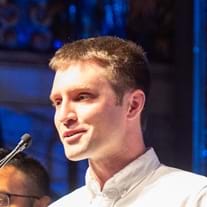
Matthew Friedman
For more than a decade the Academy has worked with partners in industry, academia and government to identify solutions to every day challenges through its innovation challenges.
“These challenges provide a platform for people to hone their STEM skills on a level playing field — no lab, credentials or financial commitment required — and apply them in an interdisciplinary, real world environment,” explains Chenelle Bonavito Martinez, MS, Vice President, STEM Talent Programs.
Challenges are not just about working on a solution to a problem. They also provide an opportunity for students to practice time and project management, as well as communication and presentation skills.
Lessening the Impact of Wildfires
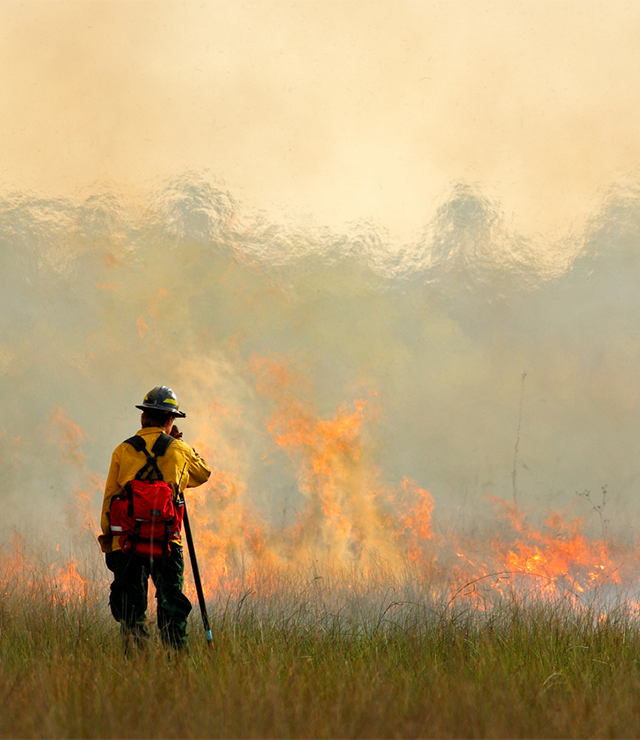
In one such challenge, a team of five students from The Junior Academy in five different countries devised a solution to lessen the impact of wildfires.
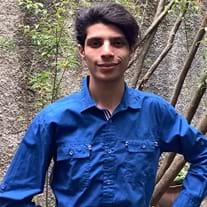
Not only do [wildfires] destroy homes, they also halt local economies, raze whole habitats, injure and kill many, send carcinogens into the air, and so much more,” says Matt Friedman, 16, United States, a member of the winning Wildfire team. “Understanding the factors related to real-world problems can help us solve them.”
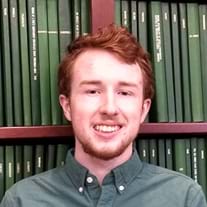
Rubi Lopez
The team looked at how to best counter the wildfire embers and maintain adequate water supply in pumping stations without electricity. In addition to the scientific and engineering questions, the group also grappled with questions of cost-effectiveness and how to implement their solution in already existing communities.
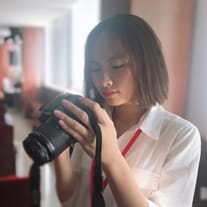
“I think it is really easy to fall into the trap of putting science into neat little boxes where each idea or development belongs in its own discipline,” says Wildfire team member Isabelle Robertson, 18, New Zealand. “But the real world isn’t like that and global problems require us to use collaborative approaches and tie aspects of different disciplines into one solution.”
Devising Healthier Snack Options
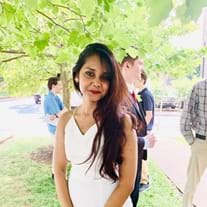
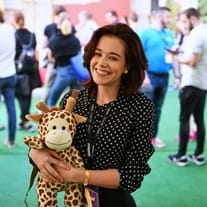
Rubi Lopez, Monterrey Institute of Technology and Higher Education and Bianka Martinez, Technological Institute of Morelia were completing their undergraduate degrees, when they won the Pepsico Healthy Snack Challenge, devising a healthy snack that would appeal to children. Their solution required not just extensive nutrition research, but also thorough market research.
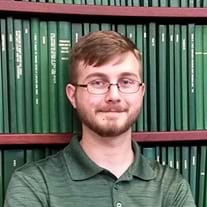
Bianka Martinez
“My experience with this challenge expanded my vision of the food industry and focused my attention on creating bigger impact in the world,” says Martinez, a biochemical engineer who recently finished a Master’s degree in Food Technology and Innovation at the Polytechnic School of Design in Milan, Italy.
“The best way to solve worldwide problems is by applying scientific skills combined with creative and design skills. Science lays the foundations, the procedures and the means to solve problems, while the design thinking helps us create innovative and unique solutions by focusing on people,” says Martinez.
“Scientific skills are like a yellow brick road that lead you to the truth. You don’t know if Oz is near or far, but you know you’re on the right path,” echoes Lopez an international business major. “I participated in this challenge despite it not being directly related to my major. I thought my skills could be useful and that this challenge offered the opportunity to learn new things. It’s not necessary to have a science degree to generate solutions to real problems, but critical thinking and constant curiosity are always necessary to make a positive change.”
Isabelle Robertson
“The tools and techniques of science helps people make breakthrough discoveries in understanding phenomena,” says Bhavna Mehra, General Manager, Infosys Science Foundation. “Therefore, science and its pursuers and practitioners have the responsibility, along with the vision, to solve these problems.”
A Real-World Scenario
This belief in the responsibilities of a scientist led to the development of the Infosys Science Foundation Nutrition Challenge. Originally envisioned as a way to raise awareness about the number of deaths attributed to malnutrition in children under the age of five, the challenge also gave participants a platform to develop.
“The skills of observing, experimenting, data collection and applying a concept in a real-world scenario were all tested as the solvers worked on the nutrition challenge,” explains Mehra.
The top two teams — team Podible and team Nutri-APP — came up with their own hypotheses, collected data and applied the results to come up with executable plans to tackle malnutrition.
“Cultivating an understanding and practice of scientific thinking in all fields will go a long way in helping solve social, economic and civic issues, says Mehra.”
Apps and other digital platforms have become part of our daily lives for everything from social interaction to ordering dinner. These technologies are also providing intriguing opportunities to accelerate the use of science to improve our daily lives.
Published June 1, 2019
By Jennifer L. Costley and Chenelle Bonavito Martinez
According to the Pew Research Center, 77 percent of all Americans own smartphones. For the 18 through 29 set this number increases to 93 percent and continues to rise. According to analysts who track such things, the number of apps downloaded daily across iOS and Google Play has reached 300 million, and the average number of apps downloaded to every iPhone/iPod touch and iPad is more than 60.
So it is safe to say that we are increasingly living in an app-driven world and that digital technology is now an integral part of how most of us manage our time and lives. Science is no exception — digital technologies are providing intriguing opportunities to accelerate the use of science to improve our daily lives.
This exciting trend is underlined by recent 5G announcements from Verizon and AT&T. The impact of 5G (fifth-generation wireless connectivity) has yet to be felt, but with transmission speeds much faster than current capabilities and a capacity for many more devices to connect simultaneously, it is clear that 5G is poised to transform our world.
A Network of “Solvers” from Around the Globe
Here at the Academy, the transformation has already begun. Virtual, cloud-based innovation challenges — sponsored by some of the world’s most dynamic companies — are enabling us to tap into a network of “solvers” from around the globe. Thus far, Academy challenges have generated potentially groundbreaking ideas on topics ranging from future aircraft design, to wildfire management, alternative energy sources and sustainable urban development, just to name a few.
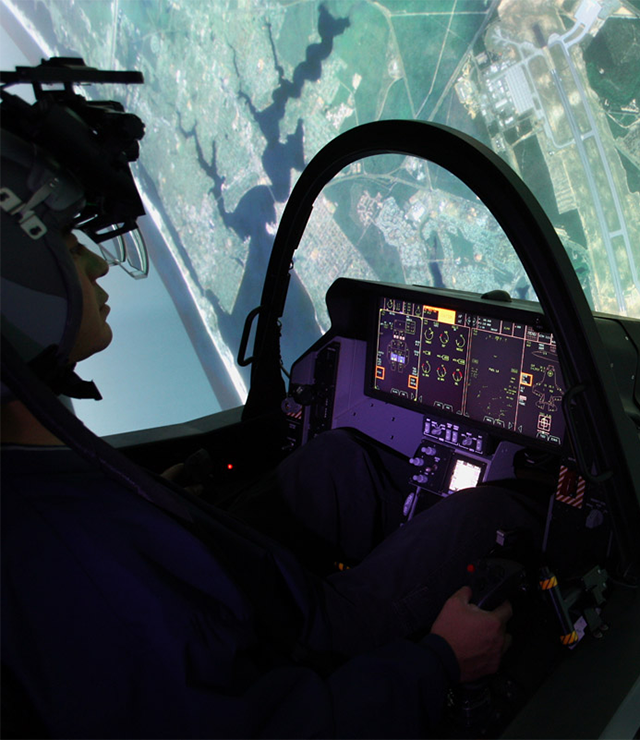
One recent example, sponsored by aerospace giant Lockheed Martin, was “Disruptive Ideas for Aerospace and Security”. In this challenge, researchers were invited to submit ideas for novel innovations utilizing autonomy, human augmentation or block-chain technologies. The entries include an extraordinary range of truly game-changing ideas, some with the potential to upend the aerospace industry.
And researchers are not the only ones getting involved. In the “Future of Buildings and Cities Challenge,” young people from around the world were invited to develop sustainable building concepts for future urban landscapes. The winners, six gifted teens from five countries, collaborated virtually to develop an ingenious “green” building design that incorporated a water recycling system, solar roof panels and “green walls” (a collection of vines, leaf twiners and climbers on a grid-like support to help purify the air and provide additional insulation). The concept also featured an ingenious “home assistant,” leveraging a series of indoor sensors to detect occupancy, light intensity, temperature, humidity and air quality, an idea that 5G connectivity could soon enable.
Artificial Intelligence
But 5G is not the only game-changing technology at play. The field of artificial intelligence (AI) has also made astounding progress over the past decade. Machine learning and natural language are particularly dynamic subfields of AI, with the potential to revolutionize critical elements of the economy, including the media, finance, and healthcare sectors.
That’s why the Academy will be building upon the success of our annual Machine Learning Symposium to launch a new symposium series on natural language, dialog and speech in November of this year. We’re also thrilled that Yann LeCun, Chief AI Scientist at Facebook, and Manuela Veloso, Head of AI Research at J.P. Morgan, have agreed to serve as honorary chairs for the launch of a new initiative on applications of AI to critical sectors of the New York City economy.
We stand at the forefront of a massive shift in how society compiles, shares and learns from massive data sets. But there are serious obstacles to overcome before we can unlock the potential of digital technology, AI, and big data to drive positive change. As advocates of evidence-based policy and decision-making, we in the scientific community must be at the forefront of efforts to ensure these new technologies are used to the benefit of humankind, and the planet upon which we live.
Beneath all the negative noise, science can flourish on social media, but users must be diligent, measured, and ethical with how they use this powerful platform.
Somewhere in between those halcyon days of Facebook as a friendly college social media network and the acrimonious 2016 elections, meme-filled newsfeeds took over, and social media sites like Facebook, Twitter, YouTube and Pinterest transformed into new express lanes for the spread of misinformation. This development feels especially glaring in science.
As the use of social media expanded it also became a major source for news and information. A 2018 Pew Research Center study found that 68 percent of American adults get news through social media sites. That change held not only for politically-themed content, but for science too. Another 2018 Pew study found that most users report seeing science-related posts, and 33 percent view it as a source for science news. Millions follow science-related pages on social media with the most popular pages including National Geographic, IFL Science, NASA, and ScienceAlert.
As news sources become increasingly fractured, it is difficult to dig through the mountains of contradictory articles, especially when we are asked to evaluate highly technical subjects that might be communicated poorly — sometimes intentionally so. The aforementioned list of influential “science-related” pages also includes those whose basis in empirical data is more loosely defined, like that of Dr. Mehmet Oz. In 2014 he was called before Congress for promoting sham supplements, and recently tweeted about the link between astrology and health. His page has over 5.5 million followers.
Flawed information has a way of spreading quickly. Of the 100 most shared health-related articles in 2018, over half of the articles contained misleading or exaggerated statements, or even outright falsehoods. Some of those articles even came from reputable news sources.
The Pervasiveness of False Information
The pervasiveness of false information on social media may translate to an effect on public health. When measles outbreaks increased 30 percent worldwide, vaccine misinformation on the internet took center stage. A recent study in the United Kingdom from the Royal Society for Public Health showthat 50 percent of parents with young children were exposed to negative messages about vaccines on social media.
This did not happen entirely organically. Russian trolls engaged not only in spreading political falsehoods, but they heightened the debate around vaccines too. A study analyzing tweets from 2014 to 2017 revealed that known Russian accounts tweeted about vaccines at higher rates than average users. The content of their tweets presented both pro- and anti-vaccine messages, a known tactic that amplifies a sense of “debate” and therefore propagates a sense of uncertainty.
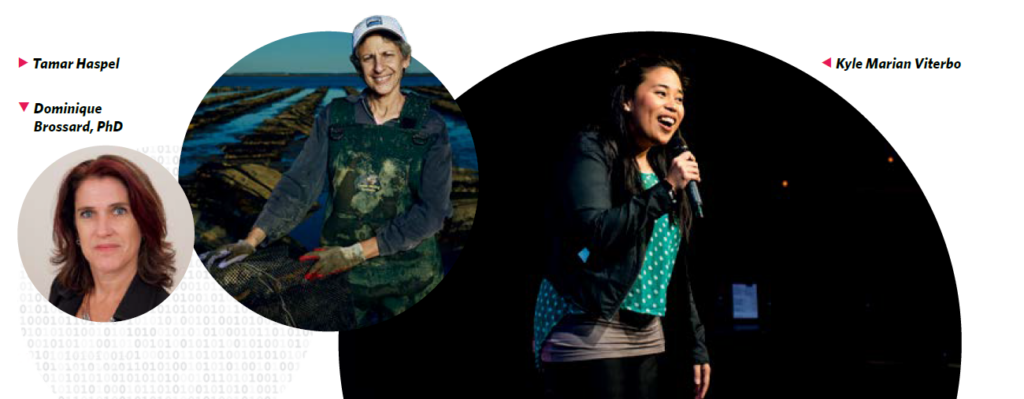
Why are these misleading posts so attractive? Dominique Brossard, professor and chair in the Department of Life Sciences Communication at the University of Wisconsin-Madison, pulls no punches in her assessment, “They’re using all the strategies that unfortunately the scientific community has not been using.” She emphasizes that they exploit the most fundamental driver of whether or not information is accepted: trust. “What are the main things that build trust? Concern, care and honesty.” Or at least the perception of honesty.
The strength of these tactics can be especially heightened when they are insulated from outside influence. Many organizations against vaccines structure their Facebook groups so that they are closed or private, allowing for misinformation to be stated entirely unchecked and out of the public eye.
The Effect on Public Opinion
But, as all good scientists know, correlation does not equal causation. The pervasiveness of false information does not mean that there is a straight line of causality to an effect on public opinion. “It’s hard to quantify the effects of misinformation,” Brossard cautions. That same 2018 Pew study revealing 68 percent of American adults getting news on social media also stated that 57 percent expect the news they see to largely be inaccurate.
The public may also be changing how they’re interacting with social media. After the 2016 elections and the Cambridge Analytica scandal, some users needed a pause. On Facebook, 54 percent of adults modified their use in 2018: adjusting their privacy settings, deleting the app from their cellphone, or even taking extended breaks.
Social media companies are also modifying their approach. Pinterest blocked users from searching for vaccine-related terms. YouTube removed advertisements from anti-vaccine themed videos, and recently pledged to curb the spread of misinformation by modifying its recommendation algorithms — hopefully preventing users from following conspiracy-laden video rabbit holes.
And in spite of all the misleading content, which prompts all scientists to reply #headdesk or #facepalm — that’s social media speak for frustration or exasperation — there are many exciting online communities that may provide some redemption for these platforms.
Recognizing the opportunity to cater to the sci-curious, experts in science outreach jumped online as a way to spread a passion for science. YouTube accounts like AsapSCIENCE and Physics Girl have millions of subscribers, and take the time to break down complex subjects for their audiences.
Scientists and Instagram
On Instagram, science.sam is the account of Samantha Yammine, who uses the platform as a new line of communication with the public. While earning her PhD, she shares her daily life as a researcher through photos and videos both in and outside of the lab, with a humanizing effect. She also contributes to a research study nicknamed #ScientistsWhoSelfie, which is systematically exploring the effects of scientists’ Instagram posts to influence public perception of scientists.
Social media also provides a megaphone to amplify diverse voices in science, and remove hierarchies that exist offline. The accounts belonging to #VanguardSTEM link to live, monthly interviews with both “emerging and established women of color in STEM,” where they cover research, career advice and social commentary.
Kyle Marian Viterbo, social media manager at Guerilla Science and producer of The Symposium: Academic Stand-Up, cites her experience in biological anthropology groups on Facebook as some of the earliest examples of social forums for scientific discussion, where status and titles were stripped away. “We talked about papers and coverage of papers in depth, in a way that only an academic community can. It’s been an amazing experience to see that community grow, and add new scientists who have equal conversation power with folks who are emeritus professors.”
Scientists and Twitter
A 2017 study estimated that over 45,000 scientists use Twitter. From volcanologists, to climate scientists, to evolutionary biologists, they’re all online in a professional capacity. There, they share new papers, announce job openings in their labs, comment on published research and network with other scientists both in and outside of their field.
For science professionals who feel emboldened to get online, but don’t know how, Viterbo advises easing your way in, “My number one advice is to just lurk. You’re silent, you’re observing, it’s almost like an ethnography situation…you don’t have to be active. A lot of it is also getting to know what you want out of that experience, and you don’t really know that until you see other people doing it well, and it resonates.”
Once your field observations are complete, Viterbo says it’s time to experiment with a few posts, “You just have to play in this space, and allow yourself to make a few mistakes.” She reminds scientists that we have the instincts for learning how to do well, but we can also get out of our own way, “Apply the scientific method to communication and social media, but also be more forgiving. We’re not necessarily the most forgiving of ourselves in science, but do it for fun!”
Communication Works Both Ways
If you plan on venturing into social media with an agenda in mind, perhaps take a cue from Tamar Haspel, a science journalist who writes the award-winning Washington Post column Unearthed. She spends much of her time researching controversial topics like pesticides, GMOs and diet recommendations, and cautions scientists to remember that “communication works both ways.”
Haspel makes a point to read thoughtful discussions from all sides, even on Twitter, “I have smart people with wildly different views in my feed, and I pay attention when they post something, because of course when we see something that we don’t want to believe we have a tendency to just scroll down. I try to stop, click through, and listen.” Her own posts are comprehensive explainers on the complex science of agriculture, and she also readily self-corrects and engages politely on divisive topics.
The result has positioned her as a trustworthy source for information. Haspel’s number one piece of advice for scientists who want to achieve the same? “We need to think less about being persuasive, and think more about being persuadable.
The winners of Lockheed Martin’s 2019 Challenge are developing innovative ways to advance national defense.
Published May 15, 2019
By Marie Gentile, Robert Birchard, and Mandy Carr
Big ideas come from the unlikeliest sources. Their only common attributes are the passion and ingenuity of their inventors. Recently, Lockheed Martin sponsored the “Disruptive Ideas for Aerospace and Security” Challenge to find the next big idea. Meet the winners who hope to transform the future with their innovative solutions.
Grand Prize Winner: IRIS
Bryan Knouse
The ability to make decisions can be comprised by cognitive overload, especially during stressful situations, so Bryan Knouse envisioned IRIS — a voice-controlled interface for Patriot Missile Systems — that would help people make better decisions.
“IRIS leverages software automation and speech technology in high pressure scenarios to reduce human cognitive overload and enable the operator to better focus on mission-critical decisions,” explained Mr. Knouse. “I came at this project thinking about using AI and software interfaces to make sophisticated experiences simpler and safer.”
A mechanical engineer by training, but Al software and programing tinkerer by habit, Mr. Knouse believes voice interfaces present the greatest opportunity to make complicated and sophisticated processes simpler. In the aerospace and security field simplicity is valued because complexity can cause poor decision making which loses lives.
“Artificial intelligence excels at not getting overwhelmed with scales of information. Unlike humans, a computer won’t get paranoid, or disturbed, or stressed out after being fed a spreadsheet with millions of rows of data. A computer will process the information.”
“This challenge was an awesome opportunity. Not just because I was able to build a cool project, but also to connect with a company that I’d otherwise not really have an opportunity to interface with,” Mr. Knouse concluded. “These kinds of technology competitions are a great way for the private sector and established companies to interface with innovators.”
Second Place: Improving Urban Situational Awareness
Dan Cornett
Ninety four percent of vehicular accidents in the United States are caused by driver error, but what if assistive technologies could help drivers focus? This is the premise advanced by Garrett Colby and Dan Cornett, two solutions orientated engineering students, from the University of North Carolina at Charlotte.
While no technology can remove modern day distractions, a modular sensor array could collect data about roadside conditions and unobtrusively alert the driver to potential hazards.
The pair plan to combine neural networks, RADAR, LiDAR, and a 360-degree camera, to continuously collect information on roadside conditions. The weakness of one sensor could be compensated for, with the strength of another, while the data provided by each, individually could be compared to ensure accuracy.
Garrett Colby
“Challenges like this are a good illustration for potential engineers that anyone can make a difference,” said Mr. Colby. “This project was different in that the sky was the limit, being a conceptual project you got to really think outside the box,” added Mr. Cornett.
“Challenges like this give young engineers a place to demonstrate their creativity.”
Third Place: Augmented Superluminal Communication
The sense of isolation experienced during space flight could contribute to the degradation of mission performance. Gabriel Bolgenhagen Schöninger, a physics student at the Technical University of Berlin with a communications technology background, believes his proposal could help lonely astronauts focus. The solution is wearable technologies, biometric sensors and augmented reality to simulate conversation.
Gabriel Bolgenhagen Schöninger
The idea came from Mr. Bolgenhagen Schöninger’s own experience with the rigors of living far from his native Brazil.
“My intention was to create an environment where you can simulate a conversation by collecting communications data and then emulating this data in a virtual environment,” he explained.
In advance of space travel, information could be condensed and inserted into intelligent communications platforms. The compressed communications data could then be “reanimated” to respond to the astronaut. While he developed this idea for long distance travel, Mr. Bolgenhagen Schöninger believes it could have implications in the field of education.
“This challenge creates a great opportunity for young people to get feedback on their ideas,” he finished. “It can help motivate young engineers, to display their ideas, while developing more confidence in that idea.”
Junior Academy students develop an app that addresses the immediate mental health needs of those impacted by hurricanes and other traumatic natural crises, much of which is worsened because of the lack of centralized information during crisis scenarios.
Published May 1, 2019
By Mandy Carr
Four high school students from around the globe came together for the Junior Academy‘s Natural Disasters: Relief & Recovery Challenge to create a solution that could help reduce future devastation. The team designed a response model that could be used for many types of disasters, not just hurricane. They used Hurricane Katrina as their case study with a focus on addressing mental health needs for those impacted.
In their analysis, the lack of central information is a common struggle for those responding to disasters. To address that struggle, the team determined that gathering critical information in high-risk and disaster-prone areas before disasters happen would provide a useful baseline for responders. To that end, they created a smartphone-based community survey app that can regularly collect information about residents financial and employment status, mindset, living habits, and mental health. These same survey tools could then also be used after disasters to understand what has shifted. Additionally it might access how to tailor interventions and where critical needs and assets exist.
The team’s winning solution was one of 40 submitted. It garnered them a trip to New York City for the Global STEM Alliance Summit, held July-July 26, 2019.
Meet the students and learn about why they feel passionate about their idea:
Luis G. Alvarez
Luis G. Alvarez
Luis G. Alvarez, 17, is from Colegio Integtral Mesoamericano Patzicia in Guatemala. He has personal experience with natural disasters following the eruption of Volcan de Fuego in 2018. He and his family were required to evacuate.
“I remember getting some tools and hearing something like rain falling on the fallen leaves,” said Alvarez. “At first, I didn’t recognize what it was, but once I put on my raincoat, I realized it was ashes and sand, not rain. I told my parents, and we quickly got into the car and left.”
This inspired him to participate in the Natural Disasters challenge.
Samiksha Raviraja
Samiksha Raviraja
“Looking at the world around, there are events happening constantly,” said Samiksha Raviraja, 17, from Renaissance High School in Charlottesville, VA. “Some of the most haunting ones are those that happen in nature and result in great damage to communities. I wanted to be able to help in some way.”
It scared her to see the disasters that were happening across the globe on TV. The word “disaster” was what drew her to this challenge in particular.
“While procedures exist to help people in the best possible way to save their lives, not many procedures exist that look into the mental health of the patient after a disaster has happened,” said Raviraja. “With PTSD, it is possible for the trauma to be passed down to children.”
Eszter Varga
Eszter Varga
Natural disasters are something Eszter Varga, 19, from Szerb Antal High School in Budapest, Hungary has always wanted to help resolve, especially because they are “becoming an emerging issue with climate change.”
“The part that really touched me and my fellow teammates, was the fact that post-Katrina, PTSD claimed thousands of lives,” said Varga.
“We discovered the mental health aspect of disaster relief is typically an untreated issue.”
Thuy Tran
Thuy Tran, 16, from Le Hong Phong High School for the Gifted in Nam Dinh, Vietnam, echoed the team’s desire to focus on mental health when creating their solution.
“Hurricane Katrina claimed many lives post-disaster because of rushed treatment ideas, poorly planned information flow, as well as lack of education and data gathering,” said Tran.
Sthuthi Satish is exploring her interest in a variety of STEM fields through her participation in the Junior Academy, but her first experience with the wonders of science started very close to home.
Published May 1, 2019
By Mandy Carr
Sthuthi Satish
Sthuthi Satish can’t remember when she started dreaming of being a doctor. What she does remember is being seven years old and looking at her mother’s medical charts showing stage two cancer. Her mom underwent surgery and beat cancer and Sthuthi’s love for surgery began.
The 15 year-old, who attends Bangalore International School in India, admits to not understanding the complications of surgery then, but saw the possibilities of it. Today, she hopes to become a neurosurgeon.
“My love for the brain is rather recent,” she said. “I am fascinated by the fact that the brain controls pretty much all conscious actions in the human body, and yet we know so little about it.”
Building Upon Previous STEM Experience
Sthuthi had few opportunities to join STEM activities before participating in the New York Academy of Sciences’ Junior Academy program. She worked on many challenges focusing on sustainability and aerospace. She worked with other high school students from across the globe as part of the winning team for the Human-Wildlife Challenge.
Sthuthi was concerned that no one was addressing the negative effects of solar panels on wild birds. Her team believes that infrared sensors and speakers producing beeping noises at 3 kHz can deter birds from landing on solar panels.
During her first year in the Junior Academy, she saw a posting on Launchpad, the Academy’s virtual collaboration platform, about getting involved in a Girls in Science panel at the third annual International Day of Women and Girls in Science event at the United Nations Headquarters in New York City. She stayed in touch with one of the organizers, HRH Princess Dr. Nisreen El-Hashemite, Executive Director of the Royal Academy of Science International Trust which lead to an invitation from Dr. El-Hashemite to chair a panel at the 2019 event.
Finding What Drives Her
This is also how she became a Girls in Science Advocate for the Royal Academy of Science. Additionally, Sthuthi is one of the administrators on the Girls in Science 4 SDGs International platform, a program Dr. El-Hashemite made possible. For Sthuthi it’s all about priorities.
“I always believe that if I have enough time to watch Netflix, then I definitely have time to work on something I love,” she said. Sthuthi hopes to attend college either in the United States or Sweden.
Our showcase of the inspiring honorees breaking new ground in life sciences, chemistry and physical sciences.
Published May 1, 2019
By Carina Storrs, PhD
Life Sciences Laureate
Heather J. Lynch, PhD, Stony Brook University
A pursuit of penguins leads to new territories in technology
It may be hard for penguin enthusiasts to believe, yet Heather Lynch PhD says the “most fun part of the entire year” is not the four months a year she and her team spend in Antarctica, but rather the time spent pouring over the reams of data when she returns. Lynch was originally drawn to penguins as a post-doc at the University of Maryland because of the challenge of studying them.
Lynch, now an Associate Professor at Stony Brook University, is tackling the fundamental questions of how many penguins are there and where exactly are they? Those may seem like simple questions, but they are stymied by data shortcomings, such as not having precise location data from on-the-ground surveys of the flightless, tuxedo-donning birds.
To subvert the treacherous Antarctic environment, Lynch turned to the wealth of NASA satellite imagery of the Antarctic that dates back decades. She and a colleague developed algorithms that scan the thousands of coastal images for signs of penguins revealed by their pink-hued guano (bird feces). Then, when they get tipped off to the presence of a large colony of penguins, they bring glacial-ready drones to the areas to take high-resolution pictures for exact headcounts.
The Adélie penguins
One of the biggest finds was a supercolony of about 1.5 million Adélie penguins on the Danger Islands right off the tip of the Antarctic Peninsula, which stretches toward South America. No one knew this colony existed — Lynch didn’t believe the algorithm at first, until she could confirm it with other satellite imagery.
She and her lab have also discovered much smaller colonies of chinstrap and gentoo penguins on the nearby Aitcho Islands. Without Lynch’s mathematical techniques and use of satellite technologies to detect guano, these colonies of penguins may have never been discovered.
Thanks to this multi-pronged approach, Lynch can now pride herself on the ability to locate nearly all of the penguin colonies in the Antarctic and is excited about the possibility of discovering even more colonies. Lynch’s game-changing ability to apply mathematical modeling to ecological data collected from satellites, aerial drones and field work is what earned her the title of 2019 Blavatnik National Awards Laureate in Life Sciences.
Lynch has always had one foot in the technological side. She was close to getting her PhD in physics when she “came up for air,” decided she wanted to apply her problem-solving zest toward environmental issues, and switched to a PhD program in biology.
Developing Skills in Statistics and Programming
However, she thinks the expertise that she acquired in mathematical modeling while working on her physics PhD has been the secret to her success. She advises students interested in pursuing any STEM field to develop some statistical and programming abilities.
“[They] are that all-access pass,” Lynch says. “There is not a lab on the planet that does not need people with those skills.”
Although Lynch’s discoveries have been welcome news for ecologists and penguin lovers alike, they can appear to belie the peril facing these birds due to climate change.
“All of these other populations, even other Adélie penguins, are crashing,” Lynch says.
A big part of her research focuses on developing models to understand why the Danger Island colony is flourishing, while the Adélie penguins on the western side of the Antarctic Peninsula are declining.
Implications for Conservation and the Impact of the Award
It almost goes without saying that Lynch’s research has implications for conservation.
“When we found the Danger Island populations, the first email I sent was to the people who were designing the Marine Protected Area in the region,” Lynch recalls. The Danger Islands had not been considered an important area to protect, but in what Lynch calls a “dream scenario,” policy makers expanded the area to include the islands after she told them about the Adélie supercolony.
Lynch is excited that the Blavatnik Award will bring attention to the recent technological advances in the field of ecology. The synergistic effects of Lynch’s methods will have a wide-ranging and critical impact in the fields of ecology and conservation biology in the face of impending, human-induced mass extinctions. Lynch and her lab have already expanded her methods to evaluate Antarctic seal and whale populations, and scientists can use her methods in the hope of saving other species all over the world.
Chemistry Laureate
Emily Balskus, PhD, Harvard University
Cracking the mysteries of the human microbiome
The first time that Emily Balskus, PhD worked with a microbiome, the term for communities of bacteria that live in our bodies and all around us, she was knee-deep in the salt marshes off the southern coast of Cape Cod, collecting bacteria.
Things got pretty messy, but the experience helped convince Balskus — who was then conducting postdoctoral research in chemical biology at Harvard Medical School — that she wanted to bring her chemistry expertise to bear on the biggest questions about the human microbiome.
Up until those marshy waters, Balskus was doing, as she puts it, “pretty conventional” chemistry. But early on during her postdoctoral training she attended a seminar about the Human Microbiome Project, which would set out to catalogue the microbes living on and within us. It opened her eyes to the shocking fact that scientists knew almost nothing about what these bacteria were actually doing, and how they affected our health.
“I couldn’t believe that we could be living so closely with so many microbes, that we had shared evolutionary history with them, and there was so much we didn’t know about them,” Balskus recalls.
Understanding the Microbiome in our Gut
Much of what we now know about the goings-on of the microbiome in our gut — for example, how certain bacterial residents can increase the risk of heart disease or thwart the activity of the medications we take — is thanks to the research group that Balskus has been leading at Harvard University since 2011.
For her work getting to the bottom of microbial mysteries, Balskus was named the 2019 Blavatnik National Awards Laureate in Chemistry, which Balskus says is “wonderful” and “very humbling.”
One of the most exciting discoveries of the Balskus lab is connecting how bacteria in the gut microbiome may increase the risk of colorectal cancer. It had been known for more than a decade that certain strains of Escherichia coli (E. coli) make a toxic molecule, called colibactin, and that these bacterial strains are more likely to be found in the gut of people with colorectal cancer.
Understanding the Chemical Components
Balskus and her team focused on determining the chemical makeup of the mysterious colibactin molecule, which had been challenging for other chemists to isolate and characterize. The difficulty of studying this molecule using more conventional approaches made her consider whether her unique perspective might provide another path.
Balskus’ team explored how colibactin was produced in the gut without knowing its complete structure. They eventually discovered that the colibactin molecule contains a structure called a cyclopropane ring, which is known to cause DNA damage that can lead to cancer-causing mutations. Importantly, her team showed that exposing human cells in the lab to the toxic E. coli strain led to a specific type of cyclopropane-dependent DNA damage, whereas cells exposed to harmless strains of E. coli showed no signs of similar DNA damage.
In future studies, she hopes to determine whether this type of DNA damage can be seen in cells obtained from biopsies of colorectal cancer patients, to confirm whether this toxic E. coli is indeed responsible for increasing cancer risk.
Balskus credits her postdoctoral advisor, Christopher Walsh, MD, PhD for suggesting she take the fateful trip to the salt marshes, which was part of a summer microbiology course held at the Marine Biological Laboratory in Woods Hole, Mass. This course equipped her with the tools of microbiology and expertise that she continues to use to probe the human microbiome.
Combining Chemistry and Microbiome Research
Today, Balskus is a Professor of Chemistry and Chemical Biology at Harvard University, and a leader in bringing the worlds of chemistry and microbiome research together. This spring she helped organize the first scientific conference on the chemistry of the human and other microbiomes.
“Both [fields] are very excited about this intersection,” Balskus says. She is also venturing into other scientific fields, such as genetics, and exploring how chemistry’s tools can advance other areas of biological research.
Balskus hopes to use the Blavatnik Award funds to promote women and other underrepresented groups in science. She recognizes how much her female science teachers at the all-women’s high school and the small liberal arts college she attended encouraged her and were role models for her. Many young women are not so fortunate.
“It is not one thing that makes it hard, it is a bunch of things that make it difficult for women to feel like they belong in science,” Balskus says.
Physical Sciences & Engineering Laureate
Ana Maria Rey, PhD, University of Colorado Boulder
Building the world’s most precise atomic clock
Ana Maria Rey, PhD fell for physics in high school, the moment she realized she could use mathematical equations to predict how a ball will move. It was an easy love affair, as Rey flew through physics problems for fun.
But at the university she attended in her native Colombia, a professor challenged the students with such long physics exams that students had no time to perform detailed calculations. This professor, who Rey considers her first role model, taught them to rely on intuition instead, which could only be acquired through intensive study of the subject.
It is a lesson that Rey has carried with her throughout her career. Over the course of her PhD studies at the University of Maryland, through two periods of postdoctoral training, and now as a Professor of Physics at the University of Colorado Boulder, Rey has delved deep into the world of quantum mechanics.
Diving into Quantum Mechanics
Quantum mechanics describes the behavior of the smallest particles of matter: the atoms and sub-atomic particles that make up balls and every other material on Earth. Just like her early days with physics, Rey is explaining the behavior of the quantum world using mathematical models. But now she is the one developing the models, in groundbreaking work that earned her the honor of being named the Blavatnik National Awards Laureate in Physical Sciences & Engineering this year.
“Understanding [atomic and sub-atomic] behavior is really, really important because it can lead to technological development,” Rey says.
Although her research is theoretical, its applications are tangible and far-ranging, from creating GPS (global positioning system) that can provide more accurate location data and quantum computers that would be thousands of times faster than today’s machines, to ultimately enabling the direct measurement of gravitational waves, which are ripples in the so-called fabric of the universe.
Building a More Precise Atomic Clock
At the heart of all these possibilities, and the crux of Rey’s models, is the ability to build a more precise atomic clock, which can measure much smaller units of time than modern clocks — as short as one billionth of a billionth of a second. As Rey explains, the pendulum of an atomic clock is laser light, and the thing that measures each swing of the pendulum is atoms.
The problem that scientists have to understand, and ideally control, is how the atomic timekeepers move when they are zipping around and colliding with each other. Because of Rey’s equations, they are getting closer to that goal. She credits the physicists she collaborates closely with at JILA, where she is a Fellow, for conducting the breakthrough experiments with ultra-cold atoms trapped by lasers, making them slower and easier to track, for informing her calculations.
Rey says the funding and recognition that come with the Blavatnik Award will allow her to push farther into what she calls “the most exciting part of the work.” Although her team has already given the world its most precise atomic clock, that is nothing compared to what they could achieve if they could entangle, or link together, atoms in such a way that they behave as one unit.
Entanglement, which has been shown by allowing atoms to interact and then separating them, would eliminate the noise that throws off atomic clocks.
“This is the holy grail,” Rey says, adding that, “we should be able to see what the universe is made of,” such as mysterious dark matter.
Driven By Passion
Rey believes the key to her success in theoretical physics is loving what she does and working hard at it.
“Things are not going to come to you. You might be very smart, but I don’t think it’s enough,” Rey says.
Her other great role model, renowned JILA fellow, Deborah Jin, PhD, who passed away in 2016, showed Rey that it is possible to have a successful scientific career and a happy family life, and generally to be there for people. Rey, who was also selected as a MacArthur Fellow in 2013 and the MOSI Early Career National Hispanic Scientist of the Year in 2014, says “I hope in some way, I can share the same type of help with young women scientists.”
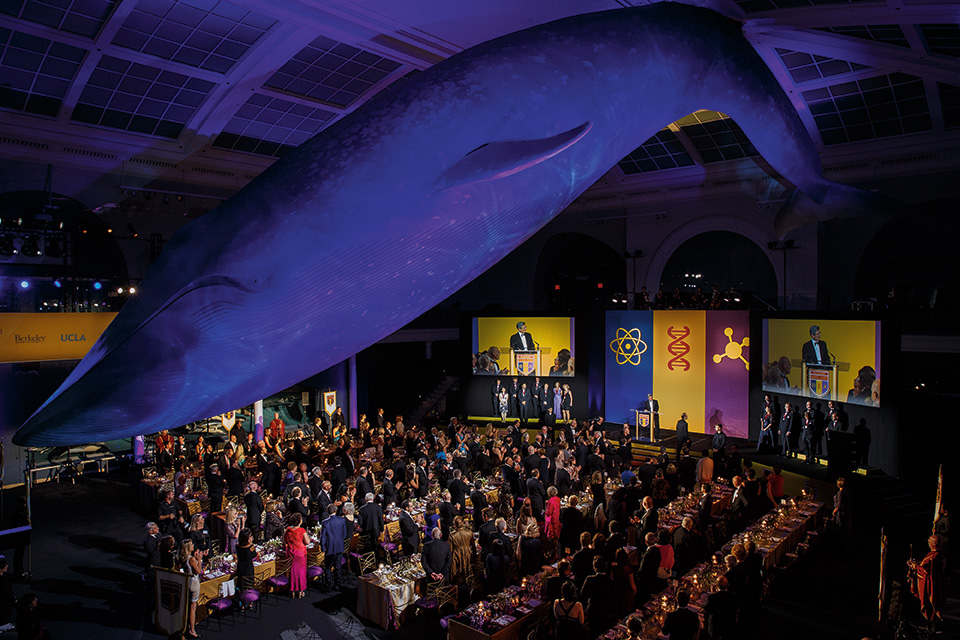
The 2019 Blavatnik National Awards for Young Scientists Ceremony
Michal Rivlin, PhD, Senior Scientist and Sara Lee Schupf Family Chair, Weizmann Institute of Science
Dr. Michal Rivlin is a neuroscientist who has made the paradigm-shifting discovery that cells in the adult retina can exhibit plasticity in their selectivity and computations. One of the first demonstrations of neuronal plasticity outside the brain, this raises fundamental questions about how we see, and has implications for our understanding of the mechanisms underlying computations in neuronal circuits, the treatment of retinal diseases, blindness and development of computer vision technologies.
Chemistry Laureate
Moran Bercovici, PhD, Associate Professor, Faculty of Mechanical Engineering, Technion – Israel Institute of Technology
Dr. Moran Bercovici is an analytical chemist who studies microscale processes coupling fluid mechanics, electric fields, heat transfer and chemical reactions. His studies have potential implications in multiple fields, ranging from the detection of low concentrations of biomolecules for rapid and early disease diagnostics, to the creation of new microscale 3D printing technologies.
Physical Sciences & Engineering Laureate
Erez Berg, PhD, Associate Professor, Weizmann Institute of Science
Dr. Erez Berg is a theoretical condensed matter physicist who develops novel theoretical and computational tools to study long-standing and emerging questions in quantum materials. His research has provided important insights into the physics principles behind a wide variety of exotic phenomena in quantum materials, which will help to speed up the implementation of these materials in next generation electronics including quantum computing, magnetic resonance imaging and superconducting power lines.
Konstantinos Nikolopoulos, PhD, Professor of Physics, University of Birmingham
Experimental particle physicist, Prof. Konstantinos Nikolopoulos led a 100-physicist subgroup in ATLAS, a large scientific collaboration at CERN, which made key contributions to the discovery of the Higgs boson. This discovery, jointly announced by the ATLAS and CMS collaborations at CERN, is regarded as one of the biggest breakthroughs in fundamental physics this century. This discovery completed the experimental verification of the Standard Model of particle physics, the mathematical theory through which we understand nature at the fundamental level, and resulted in the Nobel Prize in Physics being awarded to the physicists who predicted the Higgs boson decades ago. Prof. Nikolopoulos’ work has significantly improved our understanding of the Higgs boson and explored potential new physics beyond the Standard Model.
Physical Sciences & Engineering Finalists
Gustav Holzegel, PhD, Professor of Pure Mathematics, Imperial College London
Prof. Gustav Holzegel is a mathematician, who develops rigorous mathematical proofs of physics questions related to Einstein’s general theory of relativity. He provided the first proof of a decades-old conjecture about the stability of black holes in the case of the simplest form of black holes in the universe, and has made significant progress towards completely proving this conjecture in the cases of more complicated types of black holes. The techniques he developed have also influenced the studies on other open fundamental questions in theoretical physics and astrophysics.
Máire O’Neill, PhD, Professor of Information Security; Principal Investigator, Centre for Secure Information Technologies; Director, UK Research Institute in Secure Hardware and Embedded Systems, Queen’s University Belfast
Prof. Máire O’Neill is an electrical engineer working in the area of cybersecurity. She has proposed novel attack-resilient computer hardware platforms and chip designs that have found immediate applications. Her solutions are orders of magnitude faster than prior security implementations while also being cost effective. Her achievements have already generated an enormous impact on society, which will continue to increase as cyberattacks costing the global economy hundreds of billions of dollars annually, continue to grow at an unprecedented scale.
Chemistry Laureate
Philipp Kukura, PhD, Professor of Chemistry, University of Oxford
Prof. Kukura is a physical chemist who is developing cutting-edge optical methodologies for the visualisation and analysis of molecules such as proteins that exist within the body. To accomplish this task, he takes advantage of the scattering of visible light, which is the universal process through which we see the world around us. On the macro-scale, this scattered light provides information on the size and shape of an object. What Prof. Kukura has shown is that when driven to the extreme by detecting this light scattering from tiny objects in a microscope, this approach not only works with single biomolecules, but can also be used to measure their molecular mass, introducing a new way of weighing objects. The macroscopic equivalent would be to know the mass of a loaf of bread to within a few grams just by looking at it. Prof. Kukura hopes that this approach will be used widely to discover how biomolecules assemble, interact and thus function, as well as understand what goes wrong in disease, and how it can be addressed at a molecular level.
Chemistry Finalists
Igor Larrosa, PhD, Professor of Organic Chemistry, The University of Manchester
Organic chemist, Prof. Igor Larrosa is a world-leader in a sub-field of organic chemistry called carbon-hydrogen bond activation, which is focused on finding ways to make these normally stable bonds reactive. Specifically, he has established new mechanistic insights into how C–H bonds can react with transition metals, and developed novel catalysts for the facile construction of molecules that previously were only accessible through multistep organic transformations.
Rachel O’Reilly, PhD, Chair of Chemistry & Head, School of Chemistry, University of Birmingham
Prof. Rachel O’Reilly is a polymer chemist that has pioneered the use of innovative chemical approaches in the fields of DNA nanotechnology, sequence-controlled synthesis of polymers and precision synthesis to foster the development of novel materials. The novel molecules and structures produced from these methodologies have potential applications in healthcare, energy-related fields and sustainable chemistry.
Life Sciences Laureate
Ewa Paluch, PhD, Chair of Anatomy, University of Cambridge; Professor of Cell Biophysics, MRC Laboratory for Molecular Cell Biology, University College London
Prof. Ewa Paluch’s novel discoveries are at the forefront of cell biology: she has elucidated key biophysical mechanisms of cell division and migration, and has established physiological roles of cellular protrusions known as “blebs.” Previously thought to exist only in sick or dying cells, she established that these protrusions on the cell surface are common in healthy cells, and that blebs have important functions in cell movement and division. Her work will influence treatment for diseases such as cancer, where cell shape and migration are key to disease pathology, and she is leading the field towards a complete understanding of how the laws of physics affect the behavior of cells.
Life Science Finalists
Tim Behrens, DPhil, Deputy Director, Wellcome Centre for Integrative Neuroscience, University of Oxford; Professor of Computational Neuroscience, University of Oxford; Honorary Lecturer, Wellcome Centre for Imaging Neuroscience, University College London
Prof. Timothy Behrens is a neuroscientist whose work has uncovered mechanisms used by the human brain to represent our world, make decisions and control our behavior. An understanding of how our neurons function in networks to control behavior is fundamental to our understanding of the brain, and has implications for neural network computing, artificial intelligence and the treatment of mental and cognitive disorders.
Kathy Niakan, PhD, Group Leader, The Francis Crick Institute
Dr. Kathy Niakan is a developmental biologist conducting pioneering research in human embryonic development, elucidating early cell-fate decisions in embryonic cells. To further these studies, she became the first person in the world to obtain regulatory approval to use genome-editing technologies for research in human embryos. Her research may provide new treatments for infertility and developmental disorders, and her work in scientific policy and advocacy is defining the ethical use of human embryos and stem cells in scientific research.
Learn more about the ceremony that celebrated this year’s Blavatnik Awards for Young Scientists in the United Kingdom.
Published May 1, 2019
By Kamala Murthy
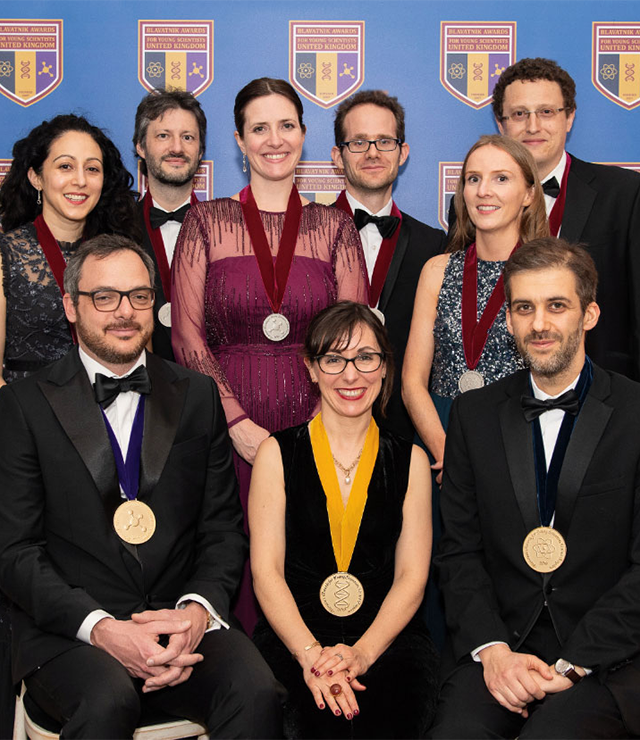
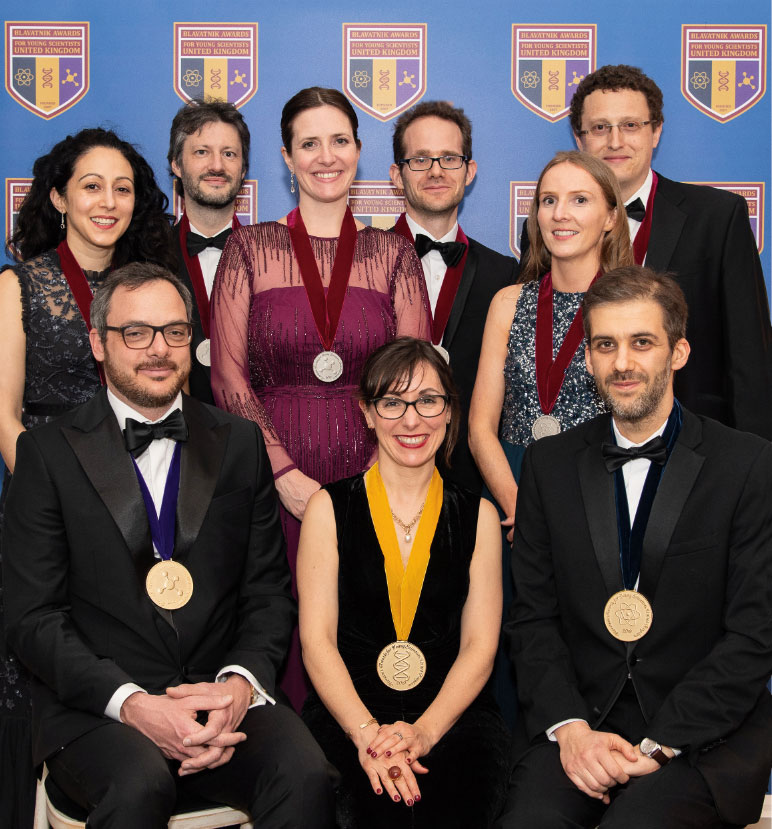
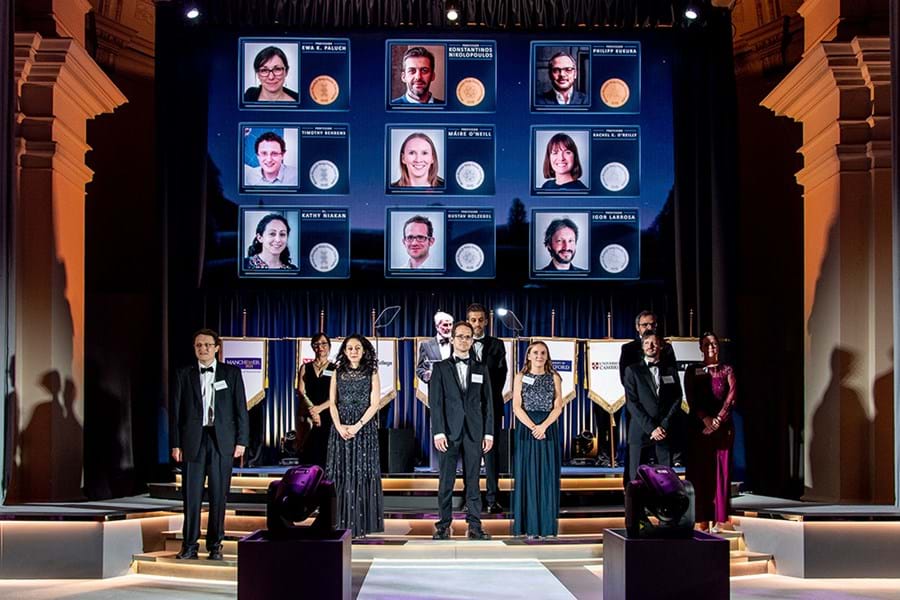
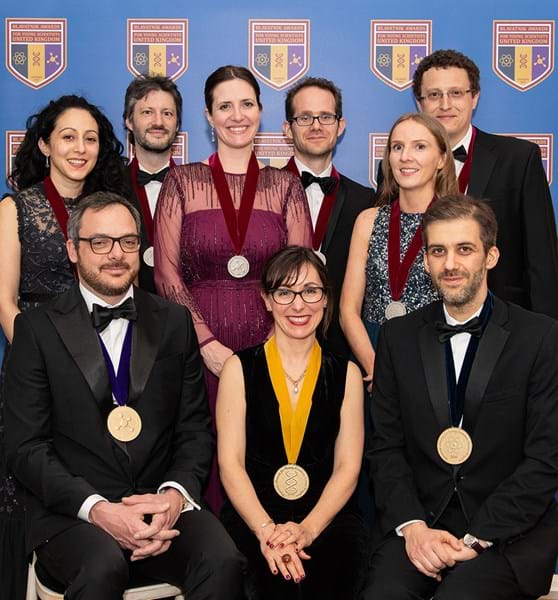
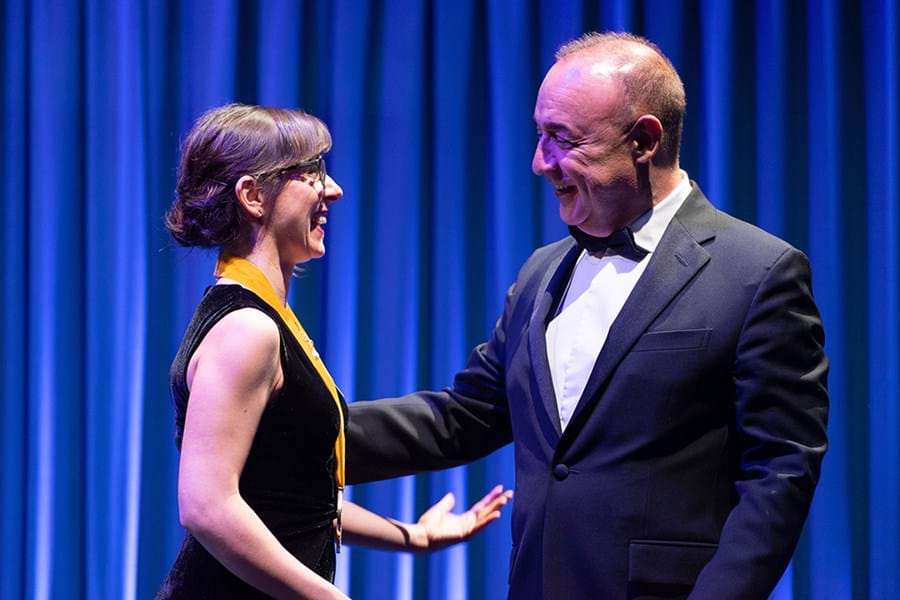
The 2019 honorees of the Blavatnik Awards for Young Scientists in the UK2019 Blavatnik Awards Laureate Professor Konstantinos Nikolopoulos Professor of Physics at the University of BirminghamBack Row (Left to right) The 2019 Finalists: Kathy Niakan, Igor Larrosa, Rachel O’Reilly, Gustav Holzegel, Máire O’Neill, Timothy Behrens; Front Row (Left to right) The 2019 Laureates: Philipp Kukura, Ewa Paluch and Konstantinos Nikolopoulos2019 Blavatnik Awards Laureate in Chemistry, Prof. Philipp Kukura, University of Oxford2019 Blavatnik Awards Laureate in Life Sciences, Prof. Ewa Paluch of UCL and University of Cambridge with Sir Leonard Blavatnik
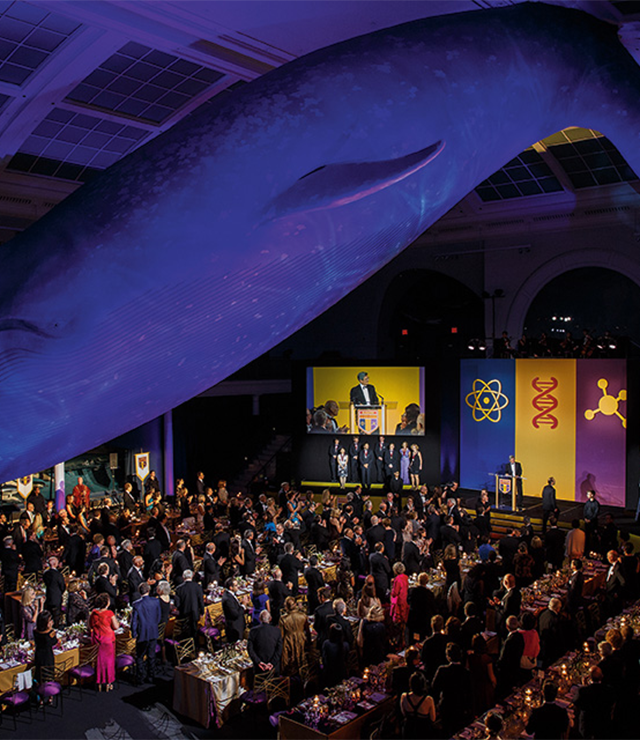
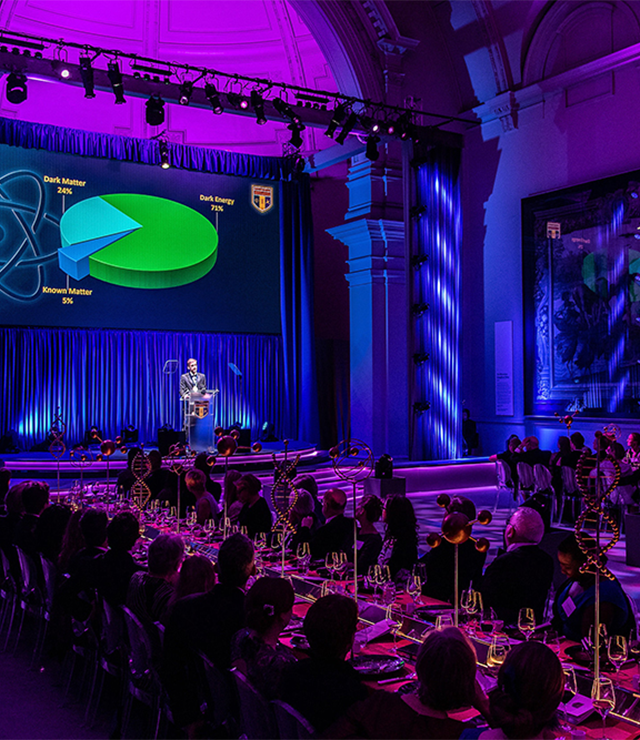
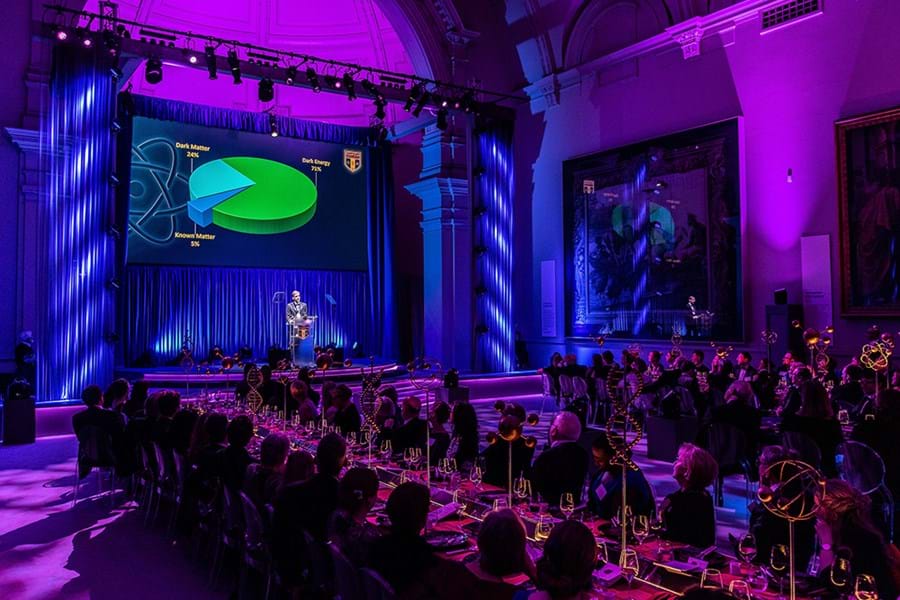
The Blavatnik Family Foundation hosted its annual ceremony celebrating the honorees of the 2019 Blavatnik Awards for Young Scientists in the United Kingdom at the Victoria and Albert Museum (V&A) in London.
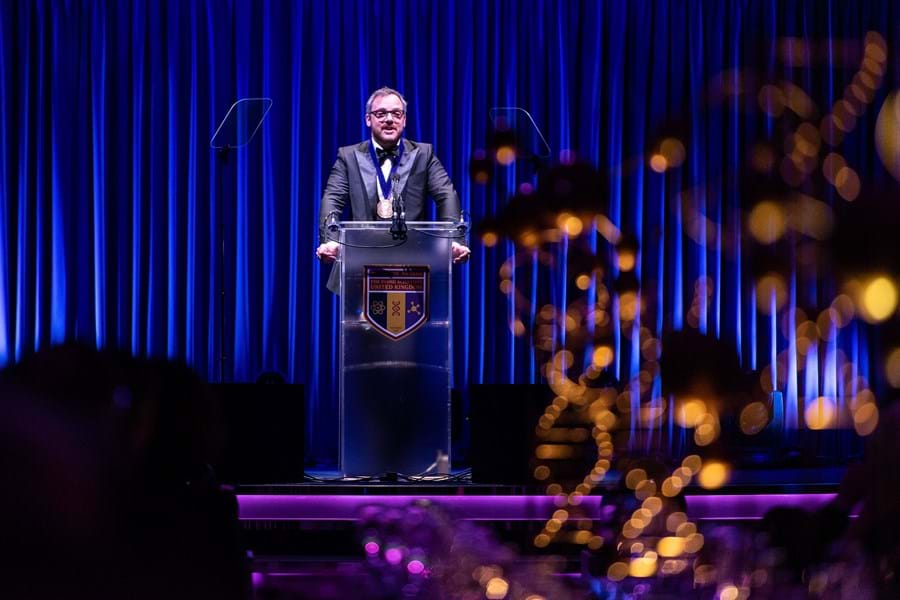
The Ceremony was attended by members of the UK’s scientific elite as well as key figures within the fields of government, academia, business and entertainment. Neuroscientist and 2014 Nobel Laureate Professor John O’Keefe of University College London, served as the Master of Ceremonies for the evening.
“The Blavatnik Awards are given not just for exceptional work already done, but in support of world-changing work that we believe is yet to be done by these young scientists,” says O’Keefe.
Academy President and CEO Ellis Rubinstein also gave remarks thanking the support of the scientific community within the United Kingdom and complimenting the outstanding group of scientists that make up the Blavatnik Awards’ UK Jury and Scientific Advisory Council.
Among the Most Dedicated and Original Thinkers in their Spheres
In commenting on the caliber of the nine honorees, Prof. O’Keefe mentioned “the young scientists and engineers are among the most dedicated and original thinkers in their spheres in the United Kingdom…They are making headlines across medical and tech communities for discoveries and innovations in human development and cognition; from novel ways to synthesize drugs and sustainable polymers, to advances in cybersecurity and radical breakthroughs in fundamental physics.”
In each scientific category (Chemistry, Physical Sciences & Engineering, Life Sciences), two Finalists were each awarded prizes of US$30,000, and one Laureate in each category was awarded US$100,000. The Awards’ founder, Sir Leonard Blavatnik, presented medals to the three Laureates and six Finalists at the ceremony.
Throughout the course of the evening, the audience watched three films featuring the honorees from the three Award categories. The ceremony concluded with a fireside chat and the Blavatnik Awards tradition of making a “Toast to Science.”
Learn more about the 2019 Blavatnik Awards ceremony in the UK here.
Whoever said, “Those who can, do; those who can’t, teach” never ventured into a lab at any American institute of higher education to speak to its graduate students.
Published April 25, 2019
By Marie Gentile, Robert Birchard, and Mandy Carr
Barbara Houtz
They’re not only expected to be research superstars but also teach the next generation of STEM learners. Unfortunately, this second responsibility can be overlooked by their institutions and PIs, who often fail to provide them with teaching support. We recently spoke with Barbara Houtz, a former teacher and current K–20 STEM specialist who runs an online Scientists Teaching Science course, about the challenges facing first-time teachers.
Why should scientists strive to improve their teaching skills?
Our country is losing a large number of people that have the interest and ability to succeed in STEM fields, but they drop out of STEM majors because of poor teaching, and a feeling that they’re unwelcome. This is especially problematic for minority and first-generation students, who come to college excited about a STEM major. They have the energy and the interest, but they’re faced with professors who sometimes think it’s their job to fail half of the class.
They teach in very traditional manners with lectures and very little interactions. ‘Are there any questions?’ is about the only interaction they have with students. This preferentially harms underrepresented minorities and first-generation college students. They need a little bit more support, they need more interaction, they need to feel that they belong in the class instead of just, ‘Here’s the information, learn it or don’t.’
What’s the most common mistake that first-time teachers make?
It’s my experience that when a graduate student get their first teaching position, they harken back to their graduate education and not their undergraduate education. This causes them to have unreasonably high, sometimes irrational, expectations of their students. They forget that they’ll be facing a class with hundreds of undergrads who don’t know anything.
They feel that as long as the lecture is interesting, they’re teaching students. They say, ‘If I have an interesting lecture, then that’s good enough.’ But it isn’t enough. I tell people that lecturing is not teaching. It can be an element of teaching, but just lecturing is not teaching.
Should the lecture be de-emphasized?
The lecture itself is not based on any kind of research on teaching and learning. Quite the opposite. All the research on teaching shows that lectures are a terrible way to teach. However, we persist at it because it’s traditional, even though it harms those students in the demographics that we’re trying to get into STEM fields. I always tell scientists, ’Your whole life is devoted to finding evidence for different ideas. Finding evidence to solve questions, to answer questions, solve problems. Why don’t you use evidence when you’re teaching?’
How do improved teaching skills make better scientists?
It helps them become better communicators. Whenever they’re giving a presentation, delivering a seminar, or going to a conference talk, it can help them organize and deliver the takeaways they want to give their audience. Instead of throwing out information hoping it will stick, they can think about every speaking opportunity as a teaching opportunity.
What’s your advice for scientists looking to improve teaching?
Don’t feel pressured to, ‘Make it fun’ or, ’Make it interesting’ because, that’s an unnecessary bonus. Learning doesn’t have to be fun, and it doesn’t have to be interesting as long as you’re engaging the mind and you’re showing the student the usefulness of this information. Learning is hard work. You can’t say you’re always having fun.
Science is very complex, STEM ideas can be extremely complex. It’s not a simple thing to learn how everything works. I don’t aim to try to teach people how to make learning fun or interesting. I aim to engage students.
Learn more about the Academy’s Educational programming.