The Important Role of Neuroscience in Social Interaction

Innovators in Science Award

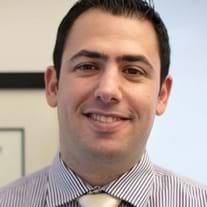
The Innovators in Science Award Honorees are Breaking New Ground in Neuroscience: Dr. Kay Tye has made discoveries between neural networks and social interaction.

Published May 1, 2018

By Anni Griswold

Albert Einstein reportedly once said, “Not everything that can be counted counts, and not everything that counts can be counted.” Though the 2017 honorees of the Innovators in Science Award have plenty of countable achievements, their stories reveal a common thread — creative approaches to their work and the development of disruptive tools that transformed scientific understanding in their discipline.

Bridging Psychology and Neuroscience

As an undergraduate at the Massachusetts Institute of Technology, Kay Tye, PhD, an Early-Career Scientist Finalist, enjoyed taking psychology classes alongside her load of neuroscience coursework. But the contrast revealed each field’s shortcomings. Psychology felt unsatisfying, she says, because it lacked a mechanism to trace thought and emotion back to neural mechanisms. And neuroscience focused on sensory or motor systems without hinting at how these systems give way to thought and emotion.

Eventually, she devised a plan to bridge the fields. She began using optogenetics to tease apart the underpinnings of motivation and reward. “The dream has always been to completely understand on every level how complex social and emotional representations exist in the brain,” says Tye, Assistant Professor at MIT’s Picower Institute for Learning and Memory. Using this approach, Tye has made startling discoveries about the neural networks involved in social interaction, including the finding that loneliness drives social interaction.

Going forward, she aims to explore how social representations are parsed in the brain. This research program, she says, could someday lead to targeted therapeutics for psychiatric conditions that have minimal side effects.

“If we understand the cells and circuits and synapses that give rise to different emotional states,” she says, “then we can understand when there are perturbations and how to fix them.”


Read more about Innovators in Science Award Honorees:

Cognitive Flexibility in Artificial Intelligence

Innovators in Science Award

The Innovators in Science Award Honorees are Breaking New Ground in Neuroscience: Dr. Michael Halassa’s research on AI systems could impact our perception of reality.

Published May 1, 2018

By Anni Griswold

Albert Einstein reportedly once said, “Not everything that can be counted counts, and not everything that counts can be counted.” Though the 2017 honorees of the Innovators in Science Award have plenty of countable achievements, their stories reveal a common thread — creative approaches to their work and the development of disruptive tools that transformed scientific understanding in their discipline.

Biological Underpinnings of the Mind

Michael Halassa

Michael Halassa, MD, PhD, an Early-Career Scientist Finalist, has traced the neural correlates of cognition from the thalamus to the cortex and beyond. But his interests in neurocomputational frameworks trace back even farther — to the first time he watched “The Matrix.”

As he watched the film’s characters grapple with a simulated reality, Halassa began wondering how something as intangible as the mind can perceive reality in the first place. If we were to look inside the brain, he wondered, where would we find the mind? How do we make decisions and solve problems?

“If we can understand how these functions are normally accomplished by the physical device we call the brain, then we’ll have a better understanding of how these functions go awry in conditions such as schizophrenia, autism or ADHD,” says Halassa, an Assistant Professor of Brain and Cognitive Science at Massachusetts Institute of Technology (nominated while at New York University in New York).

Computational Frameworks

Halassa abandoned the traditional tactic of studying the molecular and electrical properties of individual cells. Instead, he assembled computational frameworks that could map physical features, such as synapses, onto abstract processes such as thought. His approach revealed that the thalamus, a brain region long assumed to relay simple sensory input to the cortex, actually streams detailed instructions that allow the cortex to shift between tasks.

“From moment to moment, your brain reconfigures on the fly to perform different types of tasks. That reconfiguration is what defines things like intelligence, productivity and performance.” Glitches in this network configuration may contribute to psychiatric diseases, he says.

His findings could lead to artificial intelligence systems that display similar cognitive flexibility. Such “neuromorphic computing” could lead to a greater understanding of how we perceive reality.


Read more about Innovators in Science Award Honorees:

The Research Behind Neurons and Cell Behavior

Innovators in Science Award

The Innovators in Science Award Honorees are Breaking New Ground in Neuroscience: Dr. Viviana Gradinaru’s research enables scientists to visualize neuron and cell behavior.

Published May 1, 2018

By Anni Griswold

Albert Einstein reportedly once said, “Not everything that can be counted counts, and not everything that counts can be counted.” Though the 2017 honorees of the Innovators in Science Award have plenty of countable achievements, their stories reveal a common thread — creative approaches to their work and the development of disruptive tools that transformed scientific understanding in their discipline.

Illuminating the Brain’s Circuitry

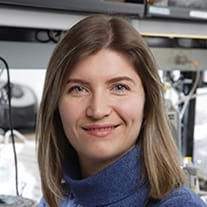
Viviana Gradinaru

As an undergraduate, Viviana Gradinaru, PhD, the Early-Career Scientist Winner, became fascinated with the underpinnings of neurodegeneration. But few tools existed to dissect the phenomenon. Undeterred, she set out to create her own.

During graduate school, Gradinaru borrowed light-sensitive proteins from algae and bacteria and introduced them to mammalian neurons. Her hope was to switch individual cells on or off in response to laser stimulation. Using this strategy, she revealed how specific brain circuits underlie locomotion, reward and sleep. One of Gradinaru’s tools, dubbed “eNpHR3.0,” is now widely used in the field of optogenetics — a field that her work helped launch.

Now an Assistant Professor of Biology and Biological Engineering at Cal Tech, Gradinaru has moved on to other tools and methods. This includes tissue-clearing techniques that render organs transparent. These see-through systems allow scientists to visualize where neurons start and stop. They also study how the cells behave along the way.

Gradinaru’s team was also among the first to introduce vectors that can shuttle genes across the blood-brain barrier with high efficiency. These genes can express colors. This allows scientists to visualize neural pathways, or they can normalize biochemical or electrical properties in a disease model.

“Developing tools and perfecting them to the level where they can work in other people’s hands,” she says, “is key to maximum impact.”

Ultimately, Gradinaru says she hopes these tools will inspire non-invasive therapies that can repair faulty brain circuits and address issues such as neurodegeneration.


Read more about Innovators in Science Award Honorees:

The Role of Glial Cells in Alzheimer’s, Parkinson’s

Innovators in Science Award

The Innovators in Science Award Honorees are Breaking New Ground in Neuroscience: Dr. Ben Barres inspired many with his continued efforts, in the face of his own battle with pancreatic cancer.

Published May 1, 2018

By Anni Griswold

Albert Einstein reportedly once said, “Not everything that can be counted counts, and not everything that counts can be counted.” Though the 2017 honorees of the Innovators in Science Award have plenty of countable achievements, their stories reveal a common thread — creative approaches to their work and the development of disruptive tools that transformed scientific understanding in their discipline.

Uncovering a New Role for Glia Cells: Shaping the Neural Communication Network

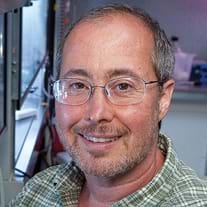
Ben Barres

Before Ben Barres, MD, PhD, began studying glia — cells that safeguard and anchor neurons — they were thought to play a relatively minor role in the nervous system. But Barres’ work revealed that glial cells, which far outnumber neurons, serve a more important function.

“Ben pioneered the idea that glia play a central role in sculpting the wiring diagram of our brain and are integral for maintaining circuit function throughout our lives,” said Thomas Clandinin, PhD, and professor of neurobiology at Stanford in a university press release. Clandinin was a colleague of Barres, who passed away in December 2017.

Dr. Barres inspired many with his continued efforts, in the face of his own battle with pancreatic cancer, to advance therapies for neurodegenerative disease. His obituary outlines more about his accomplished life and career.

Barres, a Senior Scientist Finalist and former Chair of Neurobiology at Stanford, began his career as a clinical neurologist. He eventually became disillusioned by the medical field’s poor understanding of neural degeneration. While reviewing pathology slides, he found that degenerating brain tissue was often surrounded by a high density of unusually shaped glial cells.

He pursued a PhD and eventually characterized three types of glial cells, revealing how they shape electrical signal transmission. He shared the tools and reagents for cloning these cells, sparking widespread interest in glial function.

Barres’ most recent work showed that rogue glial cells drive neurodegenerative disorders such as Alzheimer’s and Parkinson’s diseases, a finding he described as “the most important discovery my lab has ever made.”


Read more about Innovators in Science Award Honorees:

A Molecular Approach to New Pain Drugs

Innovators in Science Award

The Innovators in Science Award Honorees are Breaking New Ground in Neuroscience: Dr. David Julius takes a molecular approach to explore compound structures.

Published May 1, 2018

By Anni Griswold

Albert Einstein reportedly once said, “Not everything that can be counted counts, and not everything that counts can be counted.” Though the 2017 honorees of the Innovators in Science Award have plenty of countable achievements, their stories reveal a common thread — creative approaches to their work and the development of disruptive tools that transformed scientific understanding in their discipline.

Pain Relief Begins with Basic Science

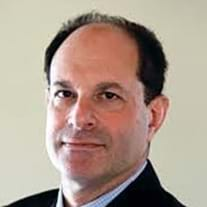
David Julius

In a field as urgent and divisive as pain control, the race to market new drugs often overshadows a slower yet essential expedition: curiosity-driven science. But in David Julius’ lab at the University of California, San Francisco, curiosity has always been king.

As a graduate student in the early 1980s, Julius, a Senior Scientist Finalist, became fascinated with neurotransmitter systems. He read every paper he could find about the effects of psychoactive drugs on the nervous system. This included works by Timothy Leary and Sol Snyder. Eventually his curiosity led him to clone the serotonin receptor, a groundbreaking feat that introduced molecular biology into the field of pain research, long dominated by physiologists, pharmacologists and psychologists.

In the years since, he has taken a molecular approach to explore how plant-derived products such as capsaicin from chili peppers and menthol from mint leaves “tickle the pain pathway.” His findings have shed light on various pain receptors in the brain and uncovered ion channels that regulate sensory neurons in response to thermal or chemical stimuli.

“If any of these lead to a new pain drug, I’ll be incredibly gratified by that,” says Julius, PhD, a professor of physiology. “But in the end, these [new drugs] arise from asking basic questions about somatosensation and pain. It’s important to keep that in mind, because you never know when a basic discovery will transform an area.”


Read more about Innovators in Science Award Honorees:

Tech’s Messy Challenge: Finding the Rx for Global E-Waste

The components that were state-of-the-art two years ago are now obsolete in today’s world.

Published May 1, 2018

By Charles Cooper

In the decade following the debut of the first iPhone in 2007, Apple has released 18 different models of its iconic smartphone, some major, some minor — all designed with the idea of appealing to buyers thirsting for the latest and the greatest technology from Silicon Valley’s most iconic brand.

That’s the way our gadget-addicted economy works. Products rarely remain in their original owners’ hands for longer than a few years. Planned obsolescence is the rule as slick marketing campaigns encourage consumers to trade up to faster, cheaper and smaller devices that roll off assembly lines, because yesterday’s state-of-the-art technology won’t hold a candle to what’s coming tomorrow.

“The problem we run into in the IT industry is profound because the functionality of these devices advances so quickly,” said Dr. Matthew Realff, a professor of chemical and biomolecular engineering at the Georgia Institute of Technology.   “The components that were state-of-the-art two years ago are now obsolete in today’s world. This is not a technological problem but a societal one. Replacing your phones every six months or every year or two, may not, from a sustainability perspective, be needed. The problem is that the industry wants to drive functionality at every step.”

So as digitization transforms how society communicates and does business, there are now billions of smartphones, personal computers and connected devices in use worldwide. But what happens when these and other high-tech appliances — televisions, printers, scanners, fax machines and other technology peripherals — reach the end of their useful lives? That darker side of the digital revolution is having a major impact on the lives of millions of people and their environment every day.

The Fastest-Growing Stream of Municipal Solid Waste

Electronic waste (e-waste) now constitutes the fastest-growing stream of municipal solid waste in the world, according to the National Institute of Environmental Health Sciences. People now generate some 40 million tons of e-waste each year — up 20 percent in just two years, leading the United Nations to warn of a veritable “tsunami of e-waste” inundating the Earth.

The toxic threat to health is so severe that scientists warn of a global safety threat linked to the release of harmful substances such as lead, mercury, cadmium and arsenic, in discarded electrical devices and equipment. The implications are particularly acute for developing nations where older products often get dumped in  landfills. As more e-waste winds up in landfills, the exposure to environmental toxins creates health hazards for workers and residents, including greater risks of cancer and neurological disorders.

Alarm over the public health challenge has forced the issue onto the global agenda. In fact, one of the U.N.’s Sustainable Development Goals (#12) is a pledge to “substantially reduce waste generation through prevention, reduction, recycling and reuse” by 2030. The success of that initiative will be closely intertwined with progress made battling e-waste.

Given the magnitude of the challenge, it’s too early to handicap the outcome. Experts in the field are guardedly optimistic, saying it will take a combination of smart engineering and equally smart public policies to help reverse a years-in-the-making problem paradoxically created by the very technology used to solve so many other societal problems.

Don’t Expect A Quick Fix

“Originally, you had a paradigm in which these products were never considered from an end-of-life cycle perspective,” said Nancy Gillis, Chief Executive Officer of the Green Electronics Council. “In fact, the IT sector was treated no differently from any other products in our consumer society. So when people asked the question, `What do we do with this stuff later on?’ the response was `We know … we’ll stick it all in a hole.’ Then we became aware of the fact that we don’t have enough holes. They’re not big enough and they’re costing us.”

Compounding the challenge, she said, is the incessant churn of new technology into the market. Projections vary, but tens of billions of IoT devices will be online by the end of this decade.

“When you start putting sensors in your shirts and shoes or when toys become as much IT as IT is considered, then we’re ill prepared for that also becoming part of the [e-waste] stream,” Gillis added. “It’d be great if technology just evolved along the same timeline as our understanding of its impact … we wouldn’t have a problem. But it’s not. This is a development cycle made up of many players and it involves an extremely complex supply chain.”

High-Tech Alternatives in Flux

Realff has thought a lot about how supply chain management could make a difference in controlling e-waste. One area where he sees potential is in the application of advanced computational methods, such as machine learning and mathematical programming to improve product tracking as materials flow through supply chains. By adding smart tags to products, companies will soon be able to wirelessly track items flowing through supply chains to customers to get a comprehensive picture.

“We’re getting to the point where our ability to label individual items and keep track of them is about to increase exponentially,” he said. “With the availability of inexpensive embedded sensors and ubiquitous wireless networks, we’ll know how long they are in use and when they eventually get retired.”

Big Data and the Internet of Things

As these and other technologies, including Big Data and IoT improve supply chain visibility, it should also clear the way for companies to do a better job retrieving value from discarded e-waste. There’s money to be made cleaning up e-waste as many products contain valuable materials — including gold, silver, copper and palladium — that can be resold. The International Telecommunication Union put the estimated value of recoverable material generated by e-waste in 2016 at $55 billion.

However, only 20 percent of that e-waste was found to have been collected and recycled despite the presence of those high-value recoverable materials. In other cases, perfectly fine machines still capable of productive service are getting discarded. That’s where better analytical insights into the data can give them a second life.

“We need to figure out how to reuse those systems in ways in which they benefit the less fortunate parts of the world,” said Realff. “We may not need top-of-the-line servers to do certain tasks, but how do we take servers that may not be used in a Google warehouse and use them where they could still have value? It’s less a technology issue, than an organizational issue.”

The Emergence of Nanotechnology and Synthetic Biology

From a sustainable development goal perspective, nanotechnology and synthetic biology are two emerging fields of science and technology that have attracted interest due to their broad applicability and their potential as alternative solutions.

Bart Kolodziejczyk, co-author of a recent paper on recycling standards to handle nanowaste, pointed to the history of polymers and plastic, which were originally hailed as game-changing developments. But they also led to unintended consequences.

“Not only are we surrounded by plastic waste that take decades to decompose in the environment, but only recently have we reached the point when the very first plastic waste finally starts degrading,” he said. “While we should be happy, there is another problem … the degradation of polymeric materials is incomplete; partially degraded plastic nanoparticles can be currently found in 83 percent of the world’s tap water, including most U.S. cities. You can imagine that these plastic fibers are not good for your health, cannot be easily digested and build up in your body.”

Similarly, he said there are still unanswered safety questions around nanowaste and synthetic biology waste.

“We certainly don’t know how to deal with hazards associated with these two very promising technologies. I am even more skeptical when I attend different workshops and conferences organized by international organizations because policy makers simply don’t know how to deal with this type of a threat.”

“Nanowaste disposal will be a big issue because different nanoparticles will require different and tailored waste treatment protocols,” Kolodziejczyk added. “While most organic nanoparticles, such as polymers, can be potentially digested by flame, inorganic nanoparticles, such as oxides known for high thermal stability will require more sophisticated methods.”

Reasons for Optimism

Despite the clear challenges, Gillis says that growing recognition of the e-waste problem is reason enough for optimism that things can improve.

“We’re starting to think seriously about end of life while designing products and there’s also a recognition that there’s money involved in getting those core resources back,” she said. “Companies are leaving money on the table which is foolish.”

As we wait for market forces and new technologies to come to the rescue, the easiest way to reduce the amount of e-waste would be for people and businesses to resist the urge to discard perfectly usable older products just because a newer, more robust version hit the market.

But is it reasonable to expect users to resist the siren call of advertising and change age-old consumption patterns? Maybe that’s asking for too much. For Realff, however, it’s a question that needs to get asked — if only to avoid the inevitable consequences of continuing along the current path.

“Maybe we can’t all have the latest and greatest,” he said. “And I’m not just referring to consumers here in the West but also to the billions of consumers in the rest of the world. We will not be talking about tsunamis of e-waste; we will be talking about a planet full of e-waste — which obviously is not feasible.”

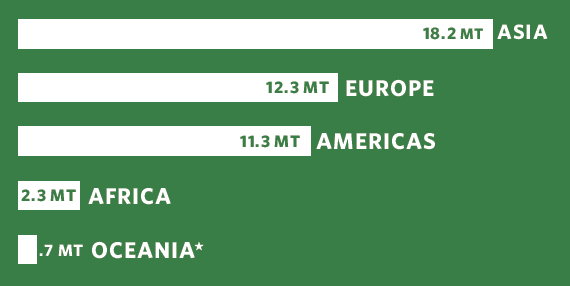
Who Generates the Most E-Waste?

According to The Global E-waste Monitor 2017, a publication produced by the Global E-waste Statistics Partnership, Asia takes the lead followed by Europe and the Americas.

The Global E-waste Partnership is a collaborative effort of the United Nations University (UNU), represented through its Vice-Rectorate in Europe hosted Sustainable Cycles (SCYCLE) Programme, the International Telecommunication Union (ITU) and the International Solid Waste Association (ISWA).


Also see:


Charles Cooper is a Silicon-valley based technology writer and former Executive Editor of CNET.
How to Help Students Embrace and Enjoy Math

A woman in pink smiles for the camera.

It was in part her own upbringing that inspired Chetna Sabharwal’s passion for empowering aspiring STEM professionals to embrace and enjoy math, particularly young women.

Published April 06, 2018

By Chetna Sabharwal

Chetna Sabharwal

My desire to make mathematics fascinating for my students started way back in 2000, when I first experienced the lack of motivation as well as the fear and myths about math amongst the students, especially the girls. The primary observation I made was that most of my students were unaware of the many applications of mathematics around them.

In order to counter those negative beliefs, with a few enthusiastic students, I designed lab activities, comics, and projects for all of the difficult concepts. And in 2007, I began to use online tools such as The Geometer’s Sketchpad to open the avenues to interdisciplinary activities for the students. By training my fellow teachers, as well as the students, the snowball effect of using tools like this continued for many years.

From there, I kept going, publishing books, blogging, writing research papers, articles, and designing an inclusive curriculum. Later, mentoring students became an integral part of my life.

Empowering Girls in STEM

Since then, within my workplace or beyond, my passion lies in creating an environment where each girl is empowered to pursue a career in science, technology, engineering, and math (STEM). I want to give them every possible opportunity to explore the beauty of mathematics, whether it be through art, design, research, or music. This work gives me immense joy.

My latest interest is in peer-to-peer education. With the dwindling population of girls in STEM fields, we need to train our youth as peer educators. Peer-to-peer learning is a very successful endeavor in my experience, because it can easily multiply the effect. In 2015 I founded a company whose goal is to reach out to the semi-urban belt of India and improve their learning. For that purpose, we developed our Mathematics Diagnostic and Improvement Plan (MDIP), which is focused on reducing math phobia among students, and encouraging them towards self-directed learning.

As the global space is shrinking with internet connectivity, I hope that this beautiful journey of helping students continues.

Learn more about educational and mentoring opportunities available through the Academy.


About the Author

Academy member and Junior Academy mentor Chetna Sabharwal has 20 years of experience in education, teacher training, mentoring, and counseling. She is a co-founder and mentor at BassEkRaah.com. In 2016, she won the Women Achievers Award from the Indian Women’s Convention.

How to Foster Impactful Science Support Systems

A woman smiles for the camera.

Science and technology benefit from fostering collaboration and the mental health of our workforce and that requires all of us actively investing in more of these support systems.

Published February 14, 2018

By Jackie Giovanniello

Jackie Giovanniello

Science is designed to be a rigorous discipline; it’s part of what ensures we are doing meaningful work that moves the field forward. Unfortunately, the stakes and the stress can also make it isolating, defeating, and exclusive for students and post-docs in the field. A recent study by the University and College Union in the UK suggests that nearly half of academics show signs of psychological distress.

These effects are multiplied for women and minority groups–populations that are not afforded the advantages of being well-represented in science. This is a striking, and alarming, phenomenon. If we hope to push the boundaries of scientific knowledge, as well as medical and technological advancements, we need to invest in and cultivate a healthy, creative, diverse, and productive workforce. One of the most effective strategies is creating and supporting networks that foster diversity and inclusion, while also addressing mental health issues.

Two years ago, two colleagues and I launched an initiative to empower and advance women in science at our institution. Cold Spring Harbor Laboratory Women in Science & Engineering (CSHL WiSE) is now 100 members strong and has raised over $30,000 to support professional development resources, better mentorship, education and outreach opportunities, and more.

The program has had a strong impact at CSHL–raising awareness of issues affecting women scientists, and driving positive change in the way our institution tackles these issues. However, there’s also been a very significant impact that I underestimated when we began–the power of supportive networks.

Expanding the Definition of “Network”

One of the most transformational aspects of CSHL WiSE has been the support system its members have gained–a non-judgmental, non-competitive, diverse group of colleagues that serve as mentors, collaborators, grant-editors, sounding boards, troubleshooters, therapists, or just friends. This group has fostered not only the professional advancement of each other’s careers, but also the mental health and wellness of those involved, and it has served as a necessary reminder of the importance of community and collaboration in our field.

Scientists are humans, not robots, and far too often we fall victim to burnout, imposter syndrome, and mental health issues. This should be reflected in the ways we, and our institutions, create networks and provide resources.

In addition to CSHL WiSE, I’ve continued working to advance women scientists with organizations like 500 Women Scientists and Scientista Foundation. I’ve seen the positive effects of supportive networks in each of these programs. It’s time we expand the definition of “network” past the idea of talking to an intimidating Principal Investigator at a conference.

Networks can be many things: a group of students gathering each week to troubleshoot each other’s experiments, post-docs volunteering to review each other’s job applications, or a group working to invite more diverse scientists for a lecture series. These networks can be grassroots and start small; they don’t need large amounts of funding or administrative approval, and they don’t need to have lofty goals. If they are inclusive and serve to support colleagues in their personal and professional lives, that is an important mission. Science and technology benefit from fostering collaboration and the mental health of our workforce and that requires all of us actively investing in more of these support systems.

Also read: A Professional Case for Effective Networking


About the Author

Jackie is a PhD candidate in Neuroscience at Cold Spring Harbor Laboratory, President emeritus of CSHL WiSE, and co-founder of STEMpire, an organization working to improve professional development resources for the STEM workforce.

The Crucial Need for Ethics in Space Exploration

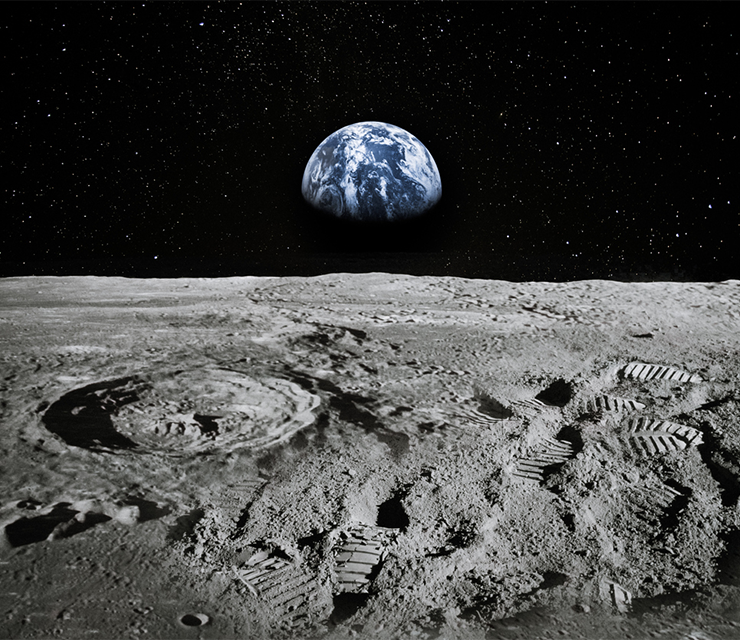
An image taken from the moon looking at planet Earth.

Dr. Lucianne Walkowicz is determining the ethics of exploring Mars.

Published January 19, 2018

By Marie Gentile, Mandy Carr, and Richard Birchard

Lucianne Walkowicz, PhD

While generations of stargazers have dreamt of the fantastic possibilities inherent in space exploration and colonization, few have concerned themselves with the ethics of such endeavors.

Lucianne Walkowicz, PhD, astronomer at the Adler Planetarium and Baruch S. Blumberg NASA/Library of Congress Chair in Astrobiology in the John W. Kluge Center at the Library of Congress, is devoting this year to generating an ethical framework for interplanetary exploration. During her residency at the Library of Congress, her project, titled “Fear of a Green Planet: Inclusive Systems of Thought for Human Exploration of Mars,” will call upon lessons from human colonization on Earth as a foundation for our expeditions into space.

Dr. Walkowicz is adamant that space exploration has much to learn from the spread of humanity. Past mistakes should not be repeated.

“When we look at how we’ve explored this planet and, for example, our treatment of either indigenous people or indigenous species in places that we have explored, we haven’t exactly been exemplars in our treatment of those people or species. That’s resulted in damage to our relationships in new lands, and also to the lands themselves.”

Without current evidence for life on Mars, some view it as open territory, and therefore unencumbered by these considerations. Dr. Walkowicz disagrees, and advocates for the protection of Mars’ environment, living or not.

“In Mars’ case, we know that it used to be a habitable planet in the past, and that doesn’t mean that it had life, but it certainly means that there could’ve been a history of life there, and it is an environment that is sovereign in and of itself,” she said. “I think we can look at some of the behaviors that we have engaged in on Earth, and some of the choices we’ve made in the past that have, for example, compromised the environment, and ask ourselves how we can do that differently on Mars?”

Preserving Other Planets

We can start by ensuring that environments like Mars remain intact, and Dr. Walkowicz clarified who exactly is the “we” in this context, “This is complicated by the changing nature of exploration, which will no longer solely consist of nations, but companies within those nations.” Ensuring that both public and private interests are performing responsibly will be difficult to regulate.

As an example Dr. Walkowicz offered, “We have to determine how we might clean our spacecraft to explore Mars without contaminating it and extending that to not just organizations like NASA, but also private spaceflight companies that are engaging in their own activities on Mars … how do we protect Mars from ourselves?” She added, “If we want to send humans to Mars, then that’s an entirely different and more challenging problem than sending just spacecraft.”

The question of sending humans to other planets is so complex that Dr. Walkowicz believes it should not be left exclusively to members of the scientific community.

“That’s fine if what you’re talking about doing is science experiments on other worlds. But if actually what we are talking about is becoming humans that live on another world, we have to take into account that we have a human culture. And in order for us to think about how we might do that correctly, that requires us to think about how we choose our lives on Earth and what that might mean in its space iteration.” She finished, “Certainly, the history of Earth is full of a lot of mistakes and intentional actions that resulted in the massive inequality and some of the social problems we have today. If we want to live in space, how can we do that without necessarily reproducing a lot of the inequalities and injustices off Earth as well?”

Keeping the Public Engaged

The need for public input is a two-way street and Dr. Walkowicz wants scientists to keep the greater public engaged. Outside of the fact that the public has a right to know about the research they fund,.

“Science is a human undertaking in the same way that literature or art or music is a human undertaking. And I think we have a responsibility to share those scientific discoveries and the benefits that are created by them … People should be able to enjoy [these benefits] and it shouldn’t require being an actual scientist to do so. We certainly don’t tell people they can only enjoy music if they’re musicians. Science is a product of human activity that should be shared with all humanity.”

Whatever we find, and share, from our travels beyond Earth, Dr. Walkowicz sees planetary exploration as an opportunity to move beyond our relatively narrow breadth of experience.

“When we study astrobiology, I think one of the things we’re really limited by is that we only have one example of a planet that has life on it, so being able to study life in other environments is incredibly important scientifically, but can also help us understand what our greater relationship is to the universe,” she said.

5 Reasons Scientific Prizes Are Good for the World

If athletes and celebrities can be recognized for their achievements, why can’t scientists?

Published December 11, 2017

By Brooke Grindlinger, PhD

Every October, the world learns who will be the newest members of a very elite circle known as Nobel Laureates.

Whether or not you agree with the selection committee’s choices, the Nobel Prize is considered a career pinnacle of success and the annual announcement continues to captivate the media and general public in addition to the scientific community. This in part is due to the hefty prize purse, roughly $1.1 million, but also because of the body of work that the winners represent and its contributions to societal advances.

At the New York Academy of Sciences, we believe prizes like the Nobel and others help to advance scientific discovery, which in turn is good for the world. And if athletes and celebrities can be recognized for their achievements why shouldn’t scientists? But we also believe that acknowledgement of early-career work is equally important.

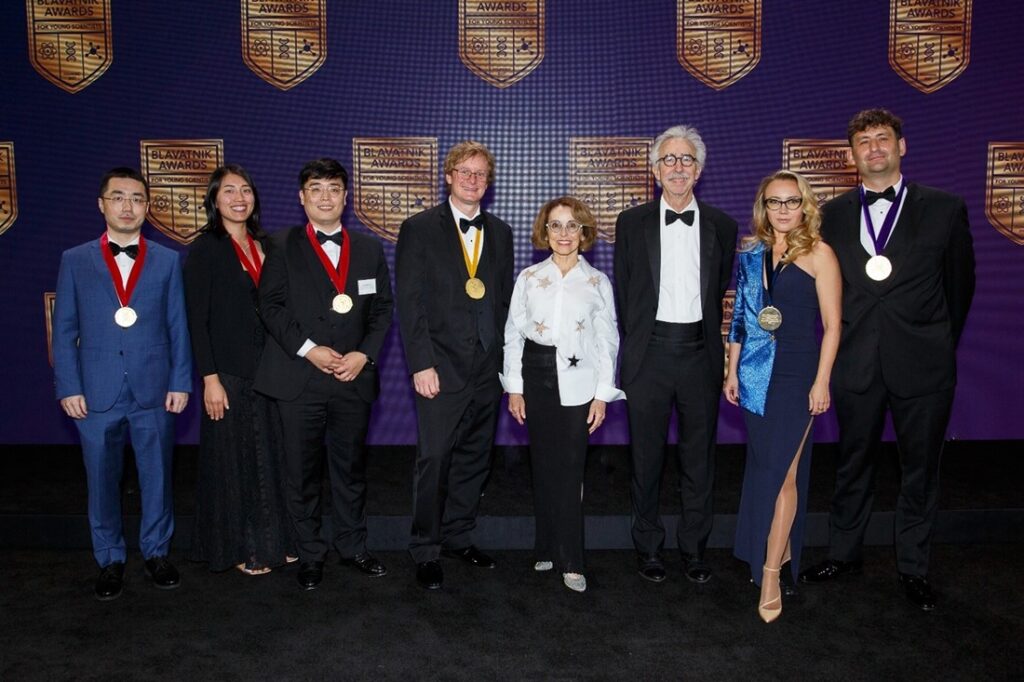
We administer two scientific prizes that in the past 15+ years have helped boost the careers of more than 450 young scientists pursuing unconventional ideas and new directions with the fearlessness and creativity of youth: the Blavatnik Awards for Young Scientists and the Innovators in Science Award. While many people may be familiar with the concept of a science grant, the purpose of a scientific prize—such as the Nobel or the Blavatnik Awards—may be less clear. Here are just a few of the reasons scientific prizes are important to the pursuit of science, the scientific community, and the public, at large.

1. Recognition

In addition to receiving cash and prestige, awardees receive recognition for their instrumental role in making key advances in areas of science in the service of humanity. This type of recognition can lead to acceptance of a paradigm-shifting idea, allocation of funding and resources to a particular area of research, and increased awareness of a research topic. For rising young talent, it can cement the shift from local player to the global stage. And while not every discipline’s importance may be readily understood by lay audiences, such as Astrophysics or Mathematics, the attention drawn from the award can still confirm the importance of the achievement.

2. Platform

Scientists are not always the most proactive advocates for their own work. So a nomination for an award, typically made by nominees’ respective institutions and/or colleagues, is itself a validation of their work. Being one’s own spokesperson also involves flexing a set of communication skills, not often utilized in the lab. Whether it is vying for a nomination, distilling complex ideas for a broader audience or giving TV or radio interviews about the research—these experiences help scientists fine-tune their skills in communicating science, not only to other scientists and stakeholders, but to funders and the general public.

3. Public Awareness and Engagement

Media buzz around awards can boost public awareness and engagement in science. Scientific innovation continues to shape the nature of modern life as we know it: from antibiotics and vaccination to the internet and smartphones. Actively promoting the role of science, and scientists, in the development of the tools and technologies we often take for granted today, reinforces the need for continued public funding of science. The voices of scientists and a scientifically literate public are equally important in the critical ongoing dialogue on science and evidence-based policy-making.

4. Role Models

Awards create positive role models in the scientific community. These men and women, drawn from across the globe, inspire young students to pursue careers in science, and drive current scientists to strive for excellence. Both are key to maintaining a strong pipeline of talent in STEM and essential if America is to remain competitive in a global economy.

5. Flexibility

As the funding climate for scientific research continues to grow increasingly challenging, awards can help ease financial tensions, whether personal or in the lab. More stable funding allows scientists to take on additional or high-risk, high-return projects not otherwise supported by traditional avenues of funding.

By recognizing and honoring those individuals that have made significant contributions to science, through the presentation of scientific awards, we continue to elevate the bar of scientific progress and its positive impact on humanity and promote the breakthroughs in science and tech that will define how our world will look over the next century.

This post was originally published on LinkedIn and has been updated.