The Culture Crosser: The Sciences and Humanities

The Academy’s symposium “The Two Cultures in the 21st Century” considers a now 50-year-old lament that a divide between the sciences and the humanities impedes social progress. Chris Mooney and Sheril Kirshenbaum put C.P. Snow’s famous University of Cambridge Rede Lecture into context.

Published May 1, 2009

By Chris Mooney and Sheril Kirshenbaum

Raffaello Sanzio, The School of Athens, 1511

Born in 1905 in Leicester, Charles Percy Snow grew up in a family that barely clung to the British middle class. His father taught piano lessons and clerked in a shoe factory. The family home didn’t even have a real bathroom.

But Snow would pull himself up through education: A prestigious science scholarship took him to Cambridge and gave him the opportunity to study physics at the famed Cavendish Laboratory alongside Ernest Rutherford, who pioneered our understanding of the atomic nucleus.

Soon Snow launched what would become a highly successful career as a novelist, and then began to serve Her Majesty’s government in a variety of science-related capacities. By 1959 he had already become Sir Charles and was en route to Lord Snow. Soon to leave government service, he began to punditize and pronounce in nonfiction format—to say what he really thought.

And so late in the day on May 7, 1959, Snow rose to a Cambridge lectern to deliver the yearly Rede lecture, a centuries-old affair, and an invitation to pontificate for someone deemed to have earned it.

He was 53 years old and, as a contemporary put it, “a kindly looking, avuncular figure, who beams at the world out of a round face through round glasses in a way which in-spires a belief in man’s better nature and the benevolence of the universe.”

Snow had spent his life up to that point moving among two separate and atomized groups of very smart people: literary intellectuals on the one hand, and scientists on the other. Now he seized the occasion to address a problem that had been “on my mind for some time…a problem I could not avoid just because of the circumstances of my life…By training I was a scientist: by vocation I was a writer.”

This pedigree gave Snow a natural credibility as he went on to describe a disturbing “gulf of mutual incomprehension” between these two intellectual groups. Soon he illustrated the point with a canonical example:

A good many times I have been present at gatherings of people who, by the standards of the traditional culture, are thought highly educated and who have with considerable gusto been expressing their incredulity at the illiteracy of scientists. Once or twice I have been provoked and have asked the company how many of them could describe the Second Law of Thermodynamics. The response was cold: it was also negative. Yet I was asking something which is about the scientific equivalent of: Have you read a work of Shakespeare’s?

This tends to be how we think of Snow today: A man at a cocktail party, trying to broker a peace between warring tribes of eggheads. It’s also how we tend to think about the “two cultures”: A divide between people who do equations, and people who do Shakespeare.

Such interpretations aren’t wrong, they’re merely simplistic. They don’t help us understand why Snow would later express the wish that he had titled his lecture “The Rich and the Poor,” and suggest many had missed its central point. Snow cared a great deal about breakdowns between scientists and writers, but the reasons he cared are what ought to most concern us, because they still resonate across the 50-year remove that separates us from Snow’s immediate circumstances.

Above all, Snow feared a world in which science could grow divorced from politics and culture. Science, he recognized, was becoming too powerful and too important; a society living disconnected from it couldn’t be healthy. You had cause to worry about that society’s future—about its handling of the future.

For this lament about two estranged cultures came from a man who had not only studied physics and written novels, but who had spent much of his life, including the terrifying period of World War II, working to ensure that the British government received the best scientific advice possible.

That included the secret wartime recruitment of physicists and other scientists to work on weapons and defenses, activities which put Snow high up on the Gestapo’s Black List. So, no: Snow’s words weren’t merely about communication breakdowns between humanists and scientists. They were considerably more ambitious than that—and considerably more urgent, and poignant, and pained.

It helps to think of Snow as an early theorist on a critical modern problem: How can we best translate highly complex information, stored in the minds of often eccentric (if well-meaning) scientists, into the process of political decision-making at all levels and in all aspects of government, from military to medical? At best that’s a difficult quandary; there are many ways in which the translation can go wrong, and few in which it can go right. Yet World War II had demonstrated beyond question that the nations that best marshal their scientific resources have the best chance of survival and success, making sound science policy an essential component of modern, advanced democracies.

The oft-told story of the atomic bomb, in which a letter from none other than Albert Einstein helped alert President Roosevelt to the danger, makes this point most profoundly. But in a lecture delivered at Harvard little more than a year after his “Two Cultures” address and entitled “Science and Government,” Snow illustrated the same dilemma through the example of radar.

He argued that if a small group of British government science advisers, operating in conditions of high wartime secrecy, had not spearheaded the development and deployment of this technology in close conjunction with the Air Ministry, the pivotal 1940 Battle of Britain—fought in the skies over his nation—would have gone very differently. And Snow went further, identifying a bad guy in the story: Winston Churchill’s science adviser and ally F.A. Lindemann, who Snow described as having succumbed to the “euphoria of gadgets.”

Rather than recognizing radar as the only hope to bolster British air defenses, Lindemann favored the fantastical idea of dropping parachute bombs and mines in front of enemy aircraft, and tried (unsuccessfully) to derail the other, pro-radar science advisers. Churchill’s rise to power was an extremely good thing for Britain and the world, but as Snow noted, it’s also fortunate that the radar decision came about before Churchill could empower Lindemann as his science czar.

So, no wonder Snow opposed any force that might blunt the beneficial influence of science upon high-level decision-making. That force might be a “solitary scientific overlord”—Snow’s term for Lindemann—or it might be something more nebulous and diffuse, such as an overarching culture that disregards science on anything but the most superficial of levels, and so fails to comprehend how the advancement of knowledge and the progress of technology simultaneously threaten us and yet also offer great hope.

Such a culture is what Snow detected in Great Britain in 1959; such a culture is also, to a great extent, what we find in the United States today—albeit for very different reasons.

With this background in place, we can begin to understand and translate one of the more seemingly antiquated parts of Snow’s lecture: His particular beef with literary intellectuals, who come in for by far the greatest thrashing in the speech. Nowadays, when the profession of academic literary criticism is “losing its will to live” (as one Yale English prof recently put it), it’s hard to imagine a period when literary intellects virtually ran things. Yet that is what Snow claimed to observe around him, and what he was reacting to.

It’s not that bookworms were directly controlling the British government. But Snow felt that his country’s “traditional culture” strongly privileged training in literature and the classics, rather than in the sciences; the assumptions of this traditional culture then greatly influenced society and its institutions. As a consequence, much of the British intelligentsia failed to comprehend science and seemed to abhor its extension in the form of industrialization, technological advancement, and economic growth. For Snow, such an attitude was wrong-headed: Technological advancement held great hope for improving the health and welfare of the poor people of the world.

In a nod toward even-handedness, Snow delineated the faults of both intellectual groups treated in his lecture. But any-one could see he did not regard those faults as entirely equal. His scientists come off as can-do men of great sympathy and optimism, albeit “self-impoverished” because of their inability to see the relevance of literature to their lives. But as for the other camp, the literati who fail to comprehend science, but enjoy sneering at it?

They are impoverished too—perhaps more seriously, because they are vainer about it.” Snow even observed that while scientists have “the future in their bones,” literary types respond “by wishing the future did not exist.” They were, in Snow’s words, “natural Luddites.” Such a quality did not recommend itself at a time when science had begun to transform the world far more rapidly than ever before.

To the “two cultures” problem, Snow saw just one solution. England had the most specialized educational system in the world—one that separated students with scientific talent from those with humanistic leanings at an early age, and then funneled them in different directions—and for Snow it simply had to change.

Otherwise, his country would remain ill-equipped to tackle the leading political problems of the day, especially the gap between the industrialized and developing world—an issue Snow thought the scientists understood best, and could best address by working to spread the benefits of technology abroad. Or as he put it:

For the sake of the intellectual life, for the sake of this country’s special danger, for the sake of the western society living precariously rich among the poor, for the sake of the poor who needn’t be poor if there is intelligence in the world, it is obligatory for us and the Americans and the whole West to look at our education with fresh eyes.

Seen through an adequate lens, then, Snow’s “Two Cultures” lecture, his “Science and Government” speech, and in fact all of his other major addresses reduce to the same point: Let’s align our intellectual resources so science can achieve its full world-changing potential. Let’s not let anything get in the way of the translation of scientific knowledge into social relevance and action—not petty rivalries and egos, not scientific overlords and their pet theories and gadgets, and not disciplinary divides or cultural disconnects. Because it’s simply too important.

Today, Snow’s point is more poignant than ever. Innovative scientific and technological solutions are the key to meet the 21st century’s economic, environmental, public health, and security challenges that transcend political borders. Just 50 years ago, Snow probably could not have foreseen global threats such as climate change, bird flu, or bioterrorism. But his vision of the need to unify the disparate intellectual camps in order to achieve the world-changing potential of science was prescient.

Also read: Building Bridges in the Humanities and Sciences


About the Authors

Chris Mooney is a science and political journalist. Sheril Kirshenbaum is a marine biologist and author at Duke University. Mooney and Kirshenbaum’s forthcoming book, Unscientific America: How Scientific Illiteracy Threatens Our Future, will be published in the summer of 2009.
Green Chemistry? He Invented the Term

“I hope that my work will highlight the power and potential molecular scientists have to help the world even more dramatically than we thought.

Published May 1, 2009

By Paul Anastas, as told to Abigail Jeffries

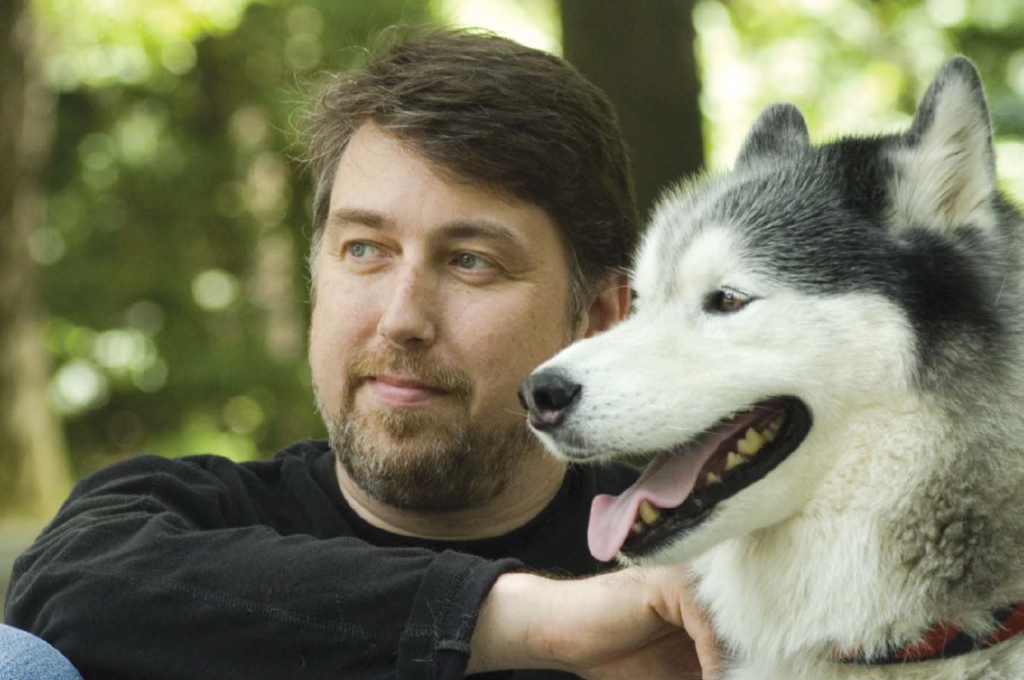
Image courtesy of Jim Harrison/Heinz Awards.

I grew up in the small town of Quincy, Mass., where I lived on a hill overlooking one of the most beautiful coastal wetlands imaginable. When I was ten years old, the bulldozers rolled in. This upset me so much that I tried to fight it in the usual way by circulating petitions around the neighborhood.

Today perhaps two percent of the wetland still exists; the rest is a business park. My father who was a biology teacher said to me at the time that if you really care about something you have to understand it deeply in order to protect it. More than anything else, that set me on track to become a scientist.

After earning a BS in chemistry, I went on to graduate school where I focused on the total synthesis of natural products to make anti-cancer compounds. This research eventually became personally difficult because so many good people I knew were being diagnosed with and dying of cancer.

Roger Garrett, the founding chief of the Environmental Protection Agency’s Industrial Chemistry Branch, had followed my work on structure activity relationships. In 1989 he offered me a position at EPA where, instead of trying to treat or cure cancer by making new molecules, I was able to think about how molecules could be created so that they never cause cancer in the first place.

In 1991 I coined the term “green chemistry” and developed and launched the US EPA Green Chemistry Program. The concept expanded rapidly. Green chemistry wasn’t just about cancer-causing molecules; it was about toxicity from the point of synthesis through all phases of the chemical life cycle.

Meeting Economic and Enivronmental Needs

In 1997 I was awarded the EPA Silver Medal for designing and developing the program, which is currently based in the Office of Pollution Prevention and Toxic Substances and is best known for administering the Presidential Green Chemistry Challenge Awards. The achievements of the award winners, excluding nominees, account for removing or preventing the generation of enough hazardous substances to fill a train of boxcars 200 miles long. And this has occurred while maintaining or increasing commercial profitability. Above all, the field of green chemistry has shown that economic and environmental needs can be met simultaneously.

After establishing the US EPA Green Chemistry Program, I served during the Clinton and Bush administrations as Assistant Director for the Environment in the White House Office of Science and Technology, Policy Chief of the Industrial Chemistry Branch and as the Director of the US Green Chemistry Program. During those years I focused on writing about and promoting green chemistry principles.

I was astonished when Teresa Heinz delivered the news that I had won the Heinz award for environment in 2006. This moved me tremendously. Senator Heinz was a visionary, and Teresa Heinz is an environmental movement legend. When I received the phone call from her, she asked if I was aware of the Heinz awards, and at that moment I was certain she was going to ask me if I would serve on the judging panel. When she delivered the news I was speechless. I was so proud to be in the company of the other winners.

Science-Informed Decisions

Although science will not be the only element in any government decision, it should be a part of every decision. So far President Obama’s administration has demonstrated an early recognition that science is a fundamental building block of policy and that it needs to be a piece of the wide range of policy decisions a government makes.

Many of our attempts at environmental regulation have been mandates for technological bandages that didn’t always foster innovation. Though some accomplished the desired goals, the approaches were often costly and inefficient. The next generation of actions taken by government in concert with NGOs and industry needs to be far more about innovation and thoughtful design.

Green chemistry uses the same talents, creativity, and expertise as traditional chemistry and engineering but from a new perspective. The research I do in my current position at Yale is focused on achieving increased understanding of the molecular basis of sustainability so that chemists—molecular architects—can learn to design substances to have these critical properties. The green chemistry imperative says that because we now understand the molecular basis of hazard, we have an obligation to design molecules so they don’t cause harm to humans or the environment.

A Path for Changemakers

Unfortunately, human and institutional inertia can be obstacles to living by the imperative. For instance, students are intensely eager to learn about and apply the principles of green chemistry but may not have access to instruction until graduate school. We can do a better job of showing students that science and technology offer a path for those who want to change the world.

There is a real understanding that green chemistry is the way people want to go, but we need to figure out how to facilitate the necessary shift in our molecular infrastructure. We are currently getting tremendous performance from chemicals, but at a great cost. The only way to address the overwhelming challenges we face is to address them at the most fundamental level. This means considering feedstocks and the way they are manufactured, and then biodegradability at the end of the product life cycle. I hope that my work will highlight the power and potential molecular scientists have to help the world even more dramatically than we thought.


About the Author

Abigail Jeffries is a freelance health and science reporter based in Tolland, CT.

The Role of Government in Advancing Science

An artistic illustration of the White House with prominent figures like Barack Obama.

As President Obama takes steps to “restore science to its rightful place,” Washington insiders and Academy members weigh in on his challenges and priorities.

Published March 1, 2009

By Adrienne J. Burke

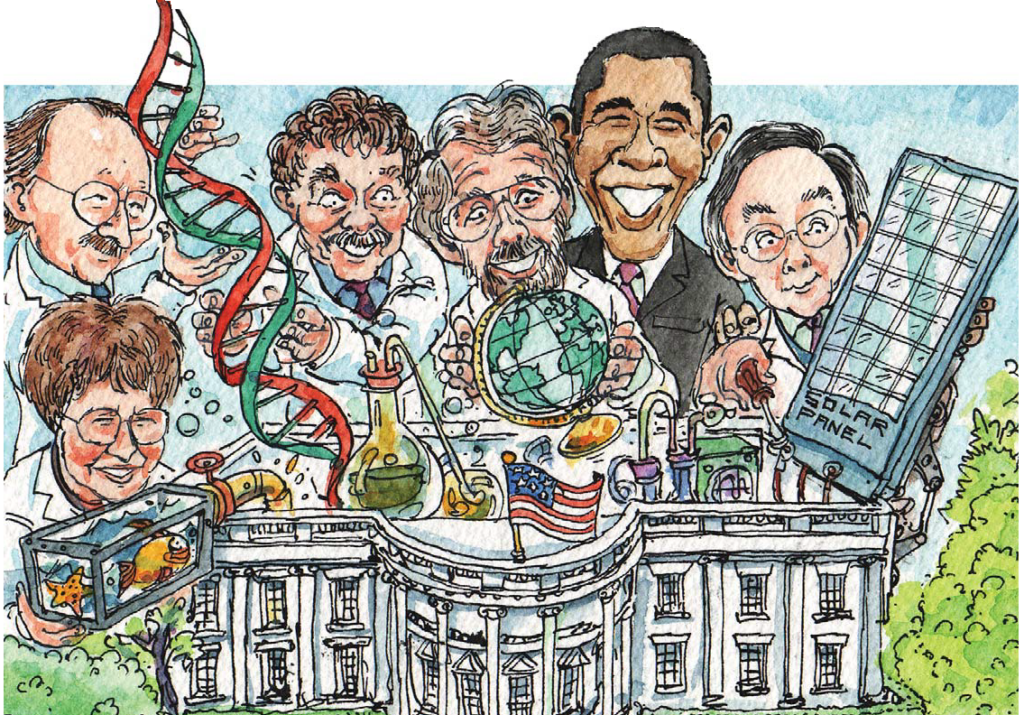
President Obama and his science team, from left, NOAA Chief Jane Lubchenco; President’s Council of Advisers on Science and Technology Co-Chairs Harold Varmus and Eric Lander, Presidential Science Adviser and Director of the White House Office of Science and Technology Policy John Holdren; and Secretary of Energy Steven Chu. Illustration by David Simonds.

It’s no exaggeration to say that applause rang out in the halls of science on January 20 when President Barack Obama pledged during his inaugural address to “restore science to its rightful place.”

“If you heard a faint cheer about 30 rows back when he said those words, that was me,” says physicist and Congressman Rush Holt (D-NJ).

President Obama’s pledge was consistent with his appointments, announced a month earlier, of several distinguished career scientists, including two Nobel Laureates and three members of The New York Academy of Sciences (the Academy), to the top government science posts. And in his first two months in office, he took several more steps toward upholding it.

In February, the President signed off on an unprecedented $24 billion in new funding for science and technology research and development, including more than $10 billion for the National Institutes of Health (NIH) and $3 billion for the National Science Foundation (NSF), as part of the American Recovery and Reinvestment Act. Days later, in his first address to Congress, the President acknowledged the importance of science to an economic recovery, saying that the solutions to America’s recession reside “in our laboratories and our universities.”

Making Good on Campaign Promises

In March, he made good on campaign promises to reverse the Bush administration’s restrictions on federal funding for embryonic stem cell research by directing the NIH to develop new rules within four months. And when Congress, days later, confirmed Harvard physicist John Holdren as Presidential Science Adviser and Director of the White House Office of Science and Technology Policy, Obama had already assigned him the task of developing “a strategy for restoring scientific integrity to government decision making.”

Though it remains to be seen if the federal support for science will be sustained beyond the Administration’s jobs-creation program, to many, the new President’s announcements mark a refreshing departure from eight years of neglect and even rejection of sound science on critical issues by the White House. Some scientists and science advocates see Obama’s recent moves as their payoff for months of hard work aimed at bringing the country’s science crisis to his attention before he took office, or while he was still on the campaign trail.

Shawn Otto, a Minnesota-based screenwriter with a bachelor’s degree in physics and a passion for science policy, began during the November 2007 Hollywood writers’ strike to advocate for discussion of the scientific issues among the contenders for the US presidency. With the help of five other volunteers, Otto established ScienceDebate 2008 with a website and a petition calling for a presidential science policy debate. The movement gained momentum as the American Association for the Advancement of Science (AAAS), National Academies, and Council on Competitiveness became ScienceDebate cosponsors and 38,000 scientists, engineers, and other concerned citizens, including the presidents of more than 100 universities, signed the petition.

Candidates Addressing Science

Although no debate took place, ScienceDebate did succeed in getting the Obama and McCain campaigns to provide written answers to 14 science policy questions on topics including climate change, energy, science education, biosecurity, stem cells, genetics research, and US competitiveness. Says Otto, “It’s the first time we are aware that the endorsed candidates for president have laid out their science policies in advance of the election.”

The Washington-based Union of Concerned Scientists (UCS) also urged the president to take up the cause of science. With input from thousands of scientists, current and former government science advisors, congressional aides, reporters, and public interest organizations, in January the UCS submitted a set of detailed recommendations to President-elect Obama and Congress for restoring scientific integrity to federal policymaking. UCS senior scientist Francesca Grifo saw the Scientific Integrity Presidential Memorandum that Obama issued in March as “proof that the administration had heard the cry” of almost 15,000 scientists who had signed a statement denouncing the politicization of science.

Other groups including the National Academies and the Woodrow Wilson International Center for Scholars issued reports urging the new president to quickly appoint a nationally respected scientist to the position of Presidential Science Adviser. John Edward Porter, a former Republican congressman from Illinois and chair of the committee that wrote the National Academies’ report, says, “The Bush administration largely ignored science and wouldn’t provide ongoing funding increases even at the level of inflation. I believe [the new] president understands the importance of science.” He and others are gratified by the early appointment of Holdren.

Science As Jobs Program

Observers are also pleased to see science being recognized as a crucial contributor to economic growth—in Obama’s speeches and especially in the Recovery and Reinvestment Act. Columbia University Professor and Academy President’s Council member Eric Kandel led 49 Nobel Laureates and several other top American scientists in penning a January 9, 2009, letter to the then President-elect urging him to “consider an immediate increase in funding for scientific research” as part of the economic stimulus package.

“Increased science funding is an ideal stimulus: it creates good jobs across the economy; there is large pent-up need so that money can be spent immediately; and it represents an investment in the infrastructure of scientific research and higher education that are vital to the future,” Kandel and his colleagues wrote in the open letter published as an op-ed in the New York Daily News and the Financial Times in January.

The massive funding for science and technology included in the final bill is “an acknowledgement of the importance of science to economic health,” says Kandel.

A Science-Intensive Approach

Former House Speaker Newt Gingrich says he is “very much in favor of a science-intensive approach to how we think about the future of the country.” Over the next 25 years, he warns, “waves of new knowledge will affect our economy, the environment, health, national security.” Although he considers the bulk of the $787 billion Recovery Act to be “a remarkable waste,” Gingrich says he is pleased with how it treats science.

“Most scientists have been reluctant to present science as a jobs program because it cheapens it,” says Congressman Holt. “But if you get an NIH or NSF grant, that money goes to hire $50,000-a-year lab techs and electricians who will wire the labs. Science funding does indeed make jobs.” In a speech on the House floor in February, Holt urged colleagues to consider that for every $1 billion invested in science, 20,000 US jobs are created.

Nevertheless, many politicians still don’t buy into the importance of investing in science as economic stimulus. Congressman Vernon Ehlers (R-MI), an atomic physicist who sits on the House Science & Technology Committee, says, “I can’t say that the mood toward science in Congress has changed because of the current recession. Very few individuals relate science with stimulus.”

Holt concurs. At the recent annual meeting of the AAAS in Chicago he told an audience, “Most members of Congress avoid science at all costs.”

“It’s really amazing,” says Kandel. “The whole Internet era has exploded and every aspect of industry came out of a few technical institutes throughout the country, yet science has been seen as the underpinning of the intellectual enterprise but not the economic enterprise.”

A Science-Friendly Point of View

Truth be told, even Obama and his team of economic advisors had to be coached to adopt their science-friendly point of view. ScienceDebate CEO Otto says science was simply not on either Obama or McCain’s campaign agenda before the grass roots organization gained critical mass. “I think Obama came to understand through our efforts and the efforts of others during the campaign how passionately people felt that science had been abandoned by the previous administration and substituted with ideology.”

Still, Holt told The New York Times in January that the President’s economic advisors “don’t have a deep appreciation of the role of research and development as a short-term, mid-term, and long-term economic engine.” Holt suggested that the billions contained in the stimulus package for energy research are not enough.

For now, the money is beginning to flow back into the country’s labs. Kandel says the effect of the stimulus bill has been immediate: “I’m speaking to a project officer now to get about $100,000. Everybody and his uncle is doing this, and within four to eight weeks I will be able to create some jobs.”

From agriculture, energy, and IT to oceans, medicine, and space, research of all kinds will indeed benefit from the Recovery and Reinvestment Act. The bill contains at least $24 billion for science and technology research and development. NSF Director Arden Bement announced in March that his organization is working on a plan for quickly disbursing the $3 billion it was awarded. Bement said NSF would award the majority of the $2 billion available for “Research and Related Activities” before September 30 to proposals that were already under review or had been declined since October 2008.

Researching Health, Space, Weather, Energy and More

The NIH, awarded more than $10 billion to be allocated by September 2010, will direct $1 billion to institutions seeking to construct, renovate, or repair biomedical or behavioral research facilities; about $100 million to Biomedical Research Core Centers for multidisciplinary research; and another $200 million for “Research and Research Infrastructure Grand Opportunities.” Acting Director Raynard Kingston told The New York Times in February that the agency would also quickly act to fund some of the 14,000 applications with scientific merit that have been turned down lately due to insufficient funds.

The legislation also includes $1 billion in funding for NASA, of which $400 million will go for science missions; more than $800 million for the National Oceanic and Atmospheric Administration; $1.6 billion for physical sciences research funded  through the Department of Energy (DOE) Office of Science; and another $400 million for the Advanced Research  Project Agency-Energy to support high-risk, high-payoff research into energy sources and energy efficiency in collaboration with private industry and universities. Energy Secretary and Academy member Steven Chu announced that nearly $1.2 billion would go “for major construction, laboratory infrastructure, and research efforts sponsored across the nation by the DOE Office of Science.”

Despite the bounty, scientists and supporters warn that a stimulus package and a presidential memo alone won’t restore science to its “rightful place.”

Maintaining Adequate Funding

Many worry that the jobs-creation funding, much of which must be distributed within two years, will not be sustained. “You can’t support science for two years,” says Kandel. “Science goes on in perpetuity. To solve problems of health and environment, science has to be supported long-term. Obama is aware of this, but he has made no statement about how long [this level of funding] will last.”

“I’m not being critical of the stimulus package, but it’s not clear that things in it will ever see another dime,” says Lewis Shepherd, chief technology officer of the Microsoft Institute for Advanced Technology in Governments and a former senior technology officer at the Defense Intelligence Agency. “It’s not as easy as telling Los Alamos National Laboratory, ‘we’re going to give you a 60 percent budget increase for one year only.’ That’s just not the way science works.”

Congressman Bart Gordon (D-TN), chair of the House Committee on Science & Technology, says it’s legitimate to be concerned that the boost for science will be a flash in the pan. “With difficult economic times you could see how that could happen,” says Gordon. “But when the President called me before his swearing in he said he was a science guy, and when Speaker Pelosi talks to any group about our future and our competitiveness she says there are four things we have to do and that’s ‘science, science, science, and science’.”

Bring Back the OTA

One way some are suggesting that Congress can be kept apprised of the importance of science funding would be to re-establish the Office of Technology Assessment (OTA), the congressional scientific advisory body that was shut down by the 1995 “Contract with America.” With a $22 million annual budget and a staff of 143, the office was known for generating high-level reports on bleeding-edge science and technology issues. Shepherd says, “There’s been a gaping void for 15 years since OTA was disestablished. I suspect, as others do, that much of the last decade’s decline in R&D and scientific programs have occurred at a time when Congress disarmed itself from getting advice.”

Speaking at the AAAS meeting, Holt said, “When OTA was disbanded, Congress gave itself a lobotomy. Our national policies have suffered ever since. The issues have grown more complex, but our tools to evaluate and understand them have not.” Holt intends to submit a formal request for funding and to argue the case for reopening the OTA before the full Appropriations Committee in May.

Pay Attention to P-CAST

How else to ensure that scientists and scientific research get the respect they need from government to contribute to a renewed economy of innovation? The President should consult frequently with Presidential Science Adviser Holdren and the President’s Council of Advisors on Science and Technology (P-CAST), say many observers.

Gingrich notes that “presidential advisers matter as much as presidents listen to them.” P-CAST has been truly influential only three times in history, he says: “When it was created under Eisenhower, when it was a part of the Apollo program under Kennedy, and when the science adviser was indispensable under Reagan in preparing a Strategic Defense Initiative.”

But most agree that the scientists Obama selected to co-chair P-CAST—Nobel Laureate and former NIH director Harold Varmus and Broad Institute Director Eric Lander (both Academy members)—are not the types to go unheard. Further, Porter says he is optimistic that Holdren will not be “ignored” the way he says President Bush’s science adviser John Marburger was. “I hope that Holdren is put at the table for cabinet meetings whenever a matter involving science comes up, that the president will go to him regularly for science advice.”

There’s an urgency for more scientists to involve themselves in policymaking, he says. “In the US, scientists have been aloof from the political process. We need them in policymaking positions where they’re part of the decision-making process.”

The Perfect Climate for Scientists to Get Involved

Porter suggests that scientists call up the campaign of their favorite candidate and ask to join their science advisory committee. “Most of them will say, ‘We don’t have one,’” says Porter. “So, say, ‘OK, I will start one for you!’ Campaigns aren’t in the business of refusing people who want to work for them. We have scientists all across the country who could step up.”

Rush Holt says this is the perfect climate for scientists to get involved. “The essence of science is to ask questions so they can be answered empirically and verifiably, always with the understanding that you may be proven wrong,” he says. “That’s an essential underpinning of science. Obama seems to operate that way.”

Otto, the ScienceDebate CEO, is cautiously optimistic. “We don’t think with one election the world has changed. In order for the president to get some of his aggressive initiatives through, he’s going to need the support of Congress and they of the American people. So, this discussion of science’s role in America is going to have to be ongoing.”

Also read: Isolationism Will Make Science Less Effective

From the Annals Archive: How Darwin Upended the World

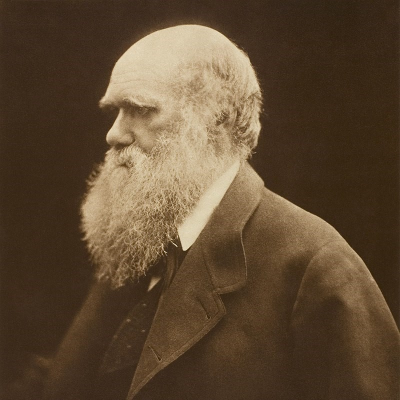
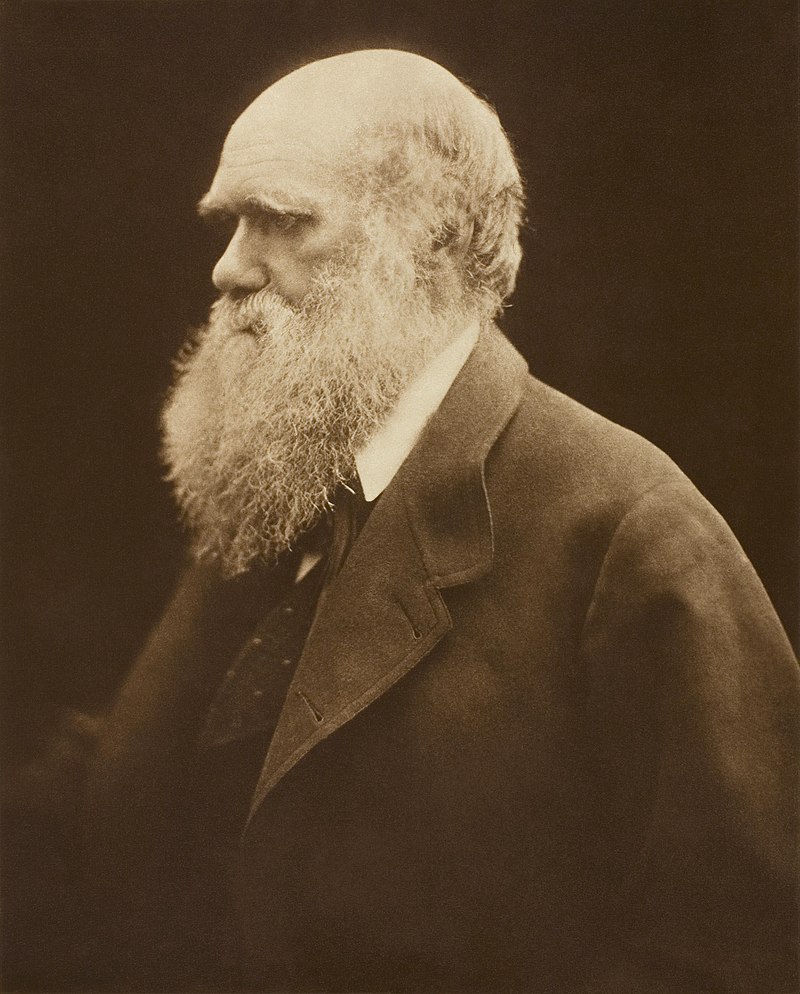
A black and white photo of Charles Darwin.

From the archive of Annals of the New York Academy of Sciences, the 1909 address of Academy President Charles Finney Cox recalls the chilly reception to Darwin’s Origin of Species 50 years earlier.

Published March 1, 2009

Adapted from works by Charles Finney Cox
Academy President (1908-1909)

From the March 1909 issue of Annals of the New York Academy of Sciences.

… It was only when The Origin appeared, in November 1859, that the world awaked to a realization of the fact that the evolution theory had to be reckoned with, and the scientific part of the world aroused itself no more quickly than the rest. August Weismann says, “We who were then the younger men, studying in the fifties, had no idea that a theory of evolution had ever been put forward, for no one spoke of it to us, and it was never mentioned in a lecture.”

He also declares that “Darwin’s book fell like a bolt from the blue; it was eagerly devoured, and while it excited in the minds of the younger students delight and enthusiasm, it aroused among the older naturalists anything from cool aversion to violent opposition.” [1]

Darwin knew that when he should publish his denial of the separate and definitive creation of each particular species, he would have to face a nearly unanimous adverse judgment, among the learned and the unlearned alike.

His feeling in this matter was shown by his half-humorous remark, when announcing to Joseph Hooker, in 1844, his conviction as to the transformation of species, that he felt as if he were confessing to a murder! … It is indicated also by his writing to Asa Gray, in 1856, “As an honest man I must tell you that I have come to the heterodox conclusion that there are no such things as independently created species, that species are only strongly defined varieties. I know this will make you despise me.” [2]

Darwin’s Challengers

Darwin underestimated Gray’s preparedness to receive the new doctrine, but he showed that he did not expect a respectful hearing for his novel ideas by men of science generally, and in this unfavorable prognostication he proved to be right. Hooker, Gray, and Wallace were his only staunch allies at first; Huxley joined the little band soon after the opening of the war, although he never gladdened Darwin’s heart by unreservedly accepting natural selection.

Charles Darwin in 1868. Image courtesy of Wikimedia Commons.

Lyell, of all Darwin’s personal friends, gave him the greatest grief by his hesitation, especially because he seemed in private more favorable than he was willing to appear in public. Worst of all, he confessed to Huxley that he was held back more by his feelings than by his judgment. His final surrender was made in the tenth edition of his Principles of Geology, published in 1869.

For fully 10 years then, Darwin was obliged to plead with his scientific acquaintances to come even a little way with him, assuring them that if they would only admit the mutability of species, he would not urge them to go the length of accepting natural selection, thus proving that the scientific world had by no means been led up to a recognition of the fact of transmutation, much less to the reception of any particular theory of its causation.

Even as late as 1880 we find Huxley apologizing to Darwin for having slighted or ignored natural selection in his lecture, The Coming of Age of the Origin of Species, because, as he argued, it was still essential “to drive the fact of evolution into people’s heads” leaving the exposition of its cause, or modus operandi, to come later.

“Germany took time to consider”

But English men of science were not alone in their reluctance to adopt the evolution theory. As Huxley said, “Germany took time to consider.” Bronn produced a poor translation of The Origin in 1860, but omitted from it, out of deference to popular opinion, numerous supposedly offensive passages (as, for example, the sentence near the end concerning the light likely to be thrown upon the origin of man) and added a critical appendix intended to expose Darwin’s weak points and to soften the effect of some of his scientific heresies.

Although Ernst Krause attributes considerable influence to Häckel’s advocacy of evolution in his Radiolaria published in 1862, he says it was really in 1863, when Häckel championed the cause at the “Versammlung” of naturalists at Stettin, that the Darwinian question could be considered as having been placed “for the first time publicly before the forum of German science.” In France, according to Huxley, the ill-will of powerful members of the Institute “produced for a long time the effect of a conspiracy of silence,” and it was only in 1869 that Hooker was able to say, “the evolution of species must at last be spreading in France.”

Looking at the whole situation a year after the publication of The Origin, Huxley says that the supporters of Mr. Darwin’s views were numerically extremely insignificant and that “there is not the slightest doubt that, if a general council of the Church scientific had been held at that time, we should have been condemned by an overwhelming majority.” [3]

Works Cited

1. The Evolution Theory.” Thomson’s translation, p. 28. 1904

2. “Life and Letters of Charles Darwin.” Vol. 11, p. 79. 1887.

3. On the reception of Origin of Species in “Life and Letters of Charles Darwin.” Vol. 11, p. 186. 1887.

Charles Finney Cox (1846-1912), served as Academy President in 1908 and 1909. A life-long collector of Darwiniana, Cox amassed a nearly complete collection of the great naturalist’s books, papers, photographs, drawings, and other artifacts. This essay is excerpted from his address to the Academy’s Annual Meeting, December 20, 1909. Read more from the Annals of the New York Academy of Sciences archive.

How Science Can Keep America Globally Competitive

A headshot of a woman and man side by side.

A Nobel Laureate, a Blavatnik Award winner, and a major industry scientist chat about what it will take to keep the US science talent pipeline pumping out quality, competitive professionals.

Published March 1, 2009

By Adrienne J. Burke

Toni Hoover, and Garrick Utley

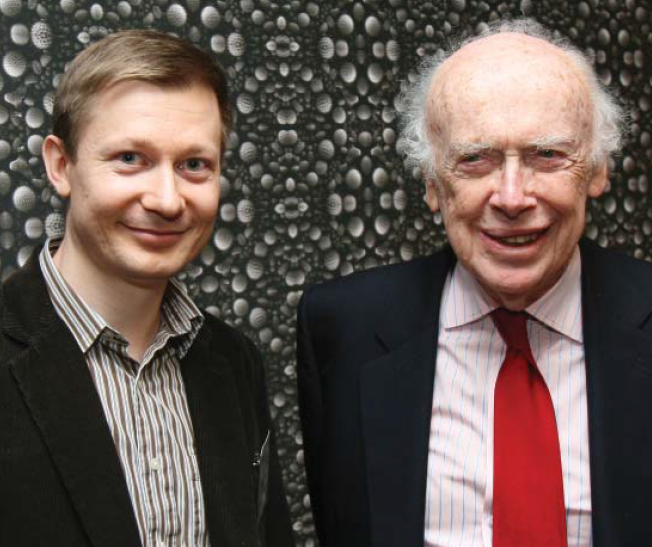
On February 25, The New York Academy of Sciences (the Academy) hosted a screening of the new film, Naturally Obsessed: The Making of a Scientist. The hour-long documentary, directed and produced by Academy President Emeritus Richard Rifkind and his wife Carole, an author and filmmaker, takes viewers inside the protein crystallography laboratory of Larry Shapiro at Columbia University and follows the trials and triumphs of three PhD candidates there. After the screening, broadcast journalist Garrick Utley moderated a conversation among Academy members James Watson, Toni Hoover, and Andrey Pisarev to address the question “What does it take to produce the scientists we need to keep America competitive?”

Watson is a molecular biologist and Nobel Laureate known for solving the structure of DNA with Frances Crick. He is chancellor emeritus at Cold Spring Harbor Laboratory, and has authored several books, most recently Avoid Boring People: Lessons from a Life in Science.

Toni Hoover is Senior Vice President Global Research & Development, and Director of the Groton/New London Laboratories of Pfizer. She received her BA, MA, and PhD degrees in psychology from Harvard University where she trained in experimental psychopathology and neuropsychological assessment.

Andrey Pisarev and James Watson

Andrey Pisarev is a postdoctoral fellow in the Department of Microbiology and Immunology at SUNY Downstate Medical Center.

Utley’s 40-year journalism career has included posts as news anchor for NBC, ABC, and CNN. What follows is an abridged transcript of their conversation.

Garrick Utley

We want to talk about science, about what’s happening or what will be happening to the pipeline. The quality, the quantity of young scientists. How are we going to develop them, nurture them? Where are they going to be coming from? Where is the support for them going to be coming from?

What are you seeing, from your various perspectives, in the younger generation of scientists that are coming through the pipeline, coming into the field? Is this film an accurate reflection of what you are seeing? And what does that mean for the future of the scientific community?

James Watson

I thought it was a very good film. Today, the main question is whether you can get a job after [you earn your PhD] and, always my worry was, was I bright enough? Would I be able to really solve a problem? I worried whether I would ever have an idea. This was my chief concern, and then I was with people who said that if you don’t do anything by 25, your career is over. I was 20, so I had about five years, but crystallography is a pretty scary field because sometimes you just don’t get crystals. It’s very clear when you’ve got a result. In many fields you can sort of fudge it, but you can’t fudge this one.

Garrick Utley

When you look at the young scientists coming today, do you see anything different?

James Watson

My own impression is they are not as bright because the problems are much harder. People are really trying to do much more difficult things and to do them in the face of this unknown competition. When I was there you knew all your competition. Now someone you’ve never heard of could publish a paper. And, you know, there are 500 graduate students in Beijing solving crystal structures. People are scared for different reasons now than we were. We were scared about whether we would rank with the great people. Now it’s much more about “can I get a job?”

Toni Hoover

In our laboratories we go from individuals who are late baby boomers all the way to millennials, so it is a laboratory of various types of scientists in how they do business, how they engage in scientific pursuits, and what types of questions are they asking. I am extremely hopeful about the types of solutions that we are going to be able to come up with through the constant cross-fertilization of the more experienced scientists with the young scientists. Often, I see them asking different types of questions, and working in different ways, with different methods that increase the diversity of the underlying scientific pursuits that we’re embarking upon.

I almost jumped out of my chair last night as I was watching President Obama’s first address to Congress, because about three minutes into his address, he said, “The solutions reside in our laboratories and in our universities.” And he was speaking to the grave challenges that we face, not only in our country but around the world in that the source of those solutions is going to be in science.

And so I continue to be extremely hopeful about our ability to continue to dream big dreams because of the fact that we have the capabilities. We have the greatest educational institutions in the world that can produce the best scientists in the world and we also have a way to link with science all over the world. So we are doing science in a very different type of way. Science has become a very global kind of pursuit. I believe that our scientists today, all over the world, are capable of climbing new heights because of the way that we continue to evolve the way that we embark upon our scientific pursuits.

Garrick Utley

I’d like to come back to the title of the film tonight, “Naturally Obsessed.” In any field you have to have a certain obsession with what you are doing. Do you see any weakening of this obsession in science? Is the supply going to be there of quality scientists? With the choices in the world or the concern over jobs, as Dr. Watson was saying, is there something changing here or are you confident the human supply is going to be there?

Toni Hoover

I would submit to you that there are certain types of scientists and scientific competencies that we probably need more of now, and potentially will in the future. I’m not sure if we’ve identified a way to say, okay, this is where we are going in the future and so we are going to need these types of skill sets and these types of people answering these types of questions.

In the bio-pharmaceutical industry, where we rely upon a great deal of science, collaborations externally as well as within our own walls, you might not be able to find the scientific talent for a specific area. However, what we need to do more of is help to grow the type of scientific talent that we think is required, and that starts very early on.

You have to nurture that type of passion very early on. That passion that you saw in Rob didn’t just start when he was on that ship in the Navy. I would imagine it started very early on and it had to be nurtured. What are we doing to help build that infrastructure, that foundation where the passion for science is embedded in a much larger pool of students?

Garrick Utley

Andrey, you are of a slightly younger generation, maybe a few years closer to the kind of students we saw in the film tonight. What are you seeing in the talent pool that you are working with or in the students coming through?

Andrey Pisarev

What do I think about my generation of young scientists? I think that there is enough supply of good, educated young scientists, and you will find a lot of smart people leave academic science to go to business. Science is under-financed. I am trying to find my own position right now and I have not succeeded yet. I have been selected as one of the best young scientists in the tri-state area, so, what can I say about other people? There are a lot of smart people around!

Garrick Utley

Let’s come back and pick up on something that Dr. Watson mentioned: the globalization impact. In the scientific community and workforce, whether it is 10,000 scientists in China studying crystals or what have you, what is going to be the impact of this? What is the impact on the sheer quantity as well as quality of scientific research? And what is the impact on how information is being shared?

Toni Hoover

We are not building laboratories. Instead, we are working much more virtually and linking up with research institutions and leasing laboratory space, for example, in Shanghai. We have laboratories in Sandwich, UK, outside of London, and then we have our major R&D laboratory in Groton/New London, Connecticut. And we have major laboratories in St. Louis and in La Jolla, California. But we are doing a lot more collaboration with academic institutions and not building a lot of new laboratories. We are a global organization so we go where the science is.

We continue to go after the best talent wherever they are in the world, and when we have to, we bring them to our research centers in the US and UK or wherever. I don’t know specifically what percentage of our researchers are non-US, because we consider ourselves a global organization and we are in a war for talent with our competitors.

Garrick Utley

What do you think the Obama administration needs to do to maintain this competitive advantage the United States has long enjoyed, as well as to continue to be the place where people come for training and hopefully stay on? How much of this is a function of money and funding? And how much of this is something in the culture or just the changing nature in the dynamics of the world we live in today? And why don’t we start with you Andrey. When you talk to the people who are training in the US, and then going back to their home countries, would money solve it?

Andrey Pisarev

I’m sure the money is one thing. But not only the money. I can share with you the story of my country. In the time of the Soviet Union, scientists lived as the most prestigious professionals in the country. They had modern salaries as well as very high, very great respect from society. They had support from government and many advantages. And that really stimulates you to work.

The situation in Russia right now [is that] if you are a scientist, people laugh at you because you have a very, very low salary. You cannot support your family and you struggle with your life. Furthermore, you cannot support your kids, your wife, your parents. You have all these obligations. You stop thinking about science at all.

Garrick Utley

Toni, what do you see happening under the current administration with the people that the President has brought in as his scientific advisors?

Toni Hoover

He obviously has a scientific advisory board, but I think the most important thing he is doing right now is talking about the fact that science is at the core of solving many of the challenges that we are facing. Also in his speech last night, [President Obama said] that he is “committing to the largest investment in research in history.” Well, we obviously have to wait to see how that manifests itself, but just the fact that he’s talking about it is encouraging.

You asked, is it a question of money or culture in terms of where we need to go? I think it’s a combination. Obviously we need to be supporting the scientific enterprise, the NIH. We also recognize that science with government support can partner with other organizations that can provide sources of funding. That will help to continue to provide possible revenue streams and opportunities for funding research within the academic institutions.

But also, we have to create the sense of respect that Andrey talked about in our culture, about the fact that it’s cool to be a scientist, and that this is a noble pursuit, and that you can have a huge impact on society. We have a generation of students growing up in our society who are looking to have big impacts on society. And one way that you can have an impact on society is through science.

Also read: The Role of Government in Advancing Science

A Professor’s Perspective on the Chemistry of Wine

A vineyard in France.

“Wine can of their wits the wise beguile, Make the sage frolic, and the serious smile.”
— Homer, The Odyssey (Alexander Pope translation)

Published June 1, 2007

By James Kennedy

Built in the 14th century, destroyed in the 15th, then rebuilt in the 17th, the tower of Chateau Latour in the Bordeaux region of France is one of the world’s most recognizable landmarks associated with the rich history and longevity of fine red wine. Photo by James Kennedy.

Celebrated for centuries, red wine has extensive historical, cultural, and economic significance in the Western world. Wine connoisseurs become enamored with the “mystique” of a supple Burgundy or an explosive Australian Shiraz. They expound on the taste of black currants and leather coexisting in the same wine. The average wine drinker, by contrast, may be content to distinguish between “dry” and “fruity.” Yet it is unlikely that either consumer fully grasps how dynamic the chemical system is that transforms a simple fruit juice into an ever-evolving synthesis of soil, sun, oxidation, winemaker influence, and age.

The Chemistry of Wine

Wine is a complex liquid. Although water, ethanol, glycerol, and various organic acids comprise the major (nondescript) portion of wine, its distinct identity comes from the aroma compounds (such as terpenes, esters, and alcohols), polysaccharides and phenolics (such as anthocyanins and tannins). Some aroma compounds are present in the grapes from which the wine is made, and some are synthesized as by-products of fermentation by the yeast that turns the sugar in the grape into ethanol. Still others are formed only after wine has been aged and are the result of oxidation and acid-catalyzed reactions.

This constant evolution of the different kinds of aroma compounds is one of the many subtle aspects of wine appreciation. Polysaccharides are polymeric unfermentable sugars that lend body and viscosity to a wine—without them, a wine might seem thin or watery. These compounds are formed during fruit ripening when the grape berry softens. The riper the grape, the more these components are found in the final wine. This explains why wines from warm growing areas (Australia, the Central Valley in California) often have more body than those from cooler climates.

Tannins contribute to the color stability, astringency, and bitterness of wine. This combination of factors is critically important to the age-worthiness and texture of wine, and possibly has health benefits. With regard to texture, tannins can be a positive or negative influence. This duality is a core aspect of red wine quality—the right amount of the right type of tannin yields a blockbuster wine, whereas too much of the wrong type of tannin results in a wine lacking character and suppleness. From a chemical and research standpoint, tannins are probably the most defining component of the quality of red wine.

What Are Tannins?

Tannins (or proanthocyanidins, or condensed tannins) are a class of complex flavonoids that are localized in the grape skin and seed and are extracted into the wine during fermentation. Flavonoids are found in plants—and include several compound classes such as anthocyanins (responsible for the color in many fruits and flowers), catechins (the healthy component of green teas), and flavonoid-based tannins (found in blueberries, apples, cranberries, bananas, and quinces).

Tannins encompass a large molecular weight range and interact strongly with most proteins. This interactive property is the functional role of tannins in nature. For example, many developing fruits contain large amounts of tannins, which interact strongly with salivary proteins. Any creature eating the fruit perceives it as astringent; making tannins effective feeding deterrents. This same property explains why tannins are the component of red wine that makes the taster’s mouth pucker, a distinctive characteristic of red wine.

Although scientists’ understanding of the physiology of taste is incomplete, we do know that tannins can be perceived as “good” or “bad.” Wines with “good” tannins we often describe as “ripe,” “supple,” “lush,” “velvety,” or “round,” whereas a wine with bad tannins we find “unripe,” “hard,” “coarse,” and “bitter.” This is much like how we describe the taste of fruit (think of an underripe versus fully ripened banana).

Eating an underripe fruit is not a pleasant experience for most people, yet the fruit emerges as a succulent and tasty morsel once sufficiently ripe. Where did the tannin go? Through the complex biochemical process of fruit ripening, the tannins, while still in the fruit, have become “inactivated” by the production of sugars, oxidation, and the breakdown of cell-wall material. The fruit becomes a delectable treat. In the case of red wine, changes in the grape during fruit ripening yield wine with increasingly ripe tannins.

Astringency and Texture

The molecular structure of the different tannins is strongly correlated with its sensory property in wine: the lowest-molecular-weight tannins can have a distinct bitterness associated with them, whereas the larger-molecular-weight tannins are regarded as purely astringent. Whether these sensory properties are considered individually or in combination, they are almost universally regarded as negative. Humans have evolved in such a way that we find bitterness and astringency to be repulsive. How can this repugnant taste become something we desire and prize in red wine?

Tannins become palatable in fruit because our ability to perceive tannins is influenced by many things. This combined perception of tannin in the presence of other components is described as texture or mouthfeel in the wine world. In many fruits, organic acids are produced at the same time as tannin and the combination of high organic acid and tannin concentrations yields a very astringent (and sour) experience. During fruit ripening, sugars are produced, and our ability to perceive astringency diminishes as the sweetness increases. Moreover, many fruits soften during fruit ripening, due to cell-wall breakdown. The breakdown of cell-wall material produces soluble polysaccharides which interact with tannins, once again reducing their astringent properties.

In a similar way, red wine contains many components that influence our ability to perceive tannins. The short list of compounds includes organic acids, simple sugars (generally too low in concentration to influence astringency), ethanol, polysaccharides, and anthocyanins. These all combine to modify astringency perception. As many winemakers describe the effect, it is much like flesh covering a skeleton. The tannins provide the structure and support of the red wine, and the other components provide the flesh and appeal.

Tannins and Longevity

Essential as they are to red wine texture, tannins prove just as important to red wine longevity. Several chemical features of tannins give red wine its stability. First, under red wine’s acidic conditions, tannins are continuously recombined through hydrolysis reactions. Through this recombination process the anthocyanins responsible for red wine color become incorporated into the tannin pool and become stabilized. Without tannins, the color of red wine would quickly fade and become orange. Once the anthocyanins join the tannin matrix, the color becomes stable. For age-worthy wines, color that would otherwise last for just a few years lasts for many decades in the presence of tannins.

During wine aging, tannins can also minimize the damaging effects of oxidation. Grape-based tannins possess the ortho-phenol (pyrocatechol) substitution pattern. These pyrocatechol groups are susceptible to oxidation and because of this, they are very effective antioxidants. In general, red wines that are built to age contain large amounts of tannin. The long-term effect of age on tannin structure is that it becomes increasingly pigmented (due to anthocyanins) and oxidized.

These processes “soften” the tannin and make their texture more desirable. Wines that are built to age can often be quite astringent when young, and it is only with time that these wines reveal their innate wonder. Here lies the source of one of the fundamental schisms in the wine-producing world: When should a wine be drunk? On the one side, most wine is consumed within a couple of days of purchase and therefore it should be “ready to drink” when bought. From a winemaking perspective, these wines should contain lower concentrations of tannin. Theoretically, wines meant to be aged should contain lots of tannin.

The Complexity and Unique Taste of Well-aged Wine

Despite the worldwide movement towards the consumption of young wines, consumption of a well-aged wine offers complexity and a unique taste. There are very few people who can experience and appreciate this, due to the limited availability and costliness of aged red wines. This is unfortunate because wine of this caliber is a scientific, philosophic, and culinary wonder. More people should experience it. Wine writers do. While most wine is consumed when young, the most influential wine writers have a studied appreciation of age-worthy wines. These wines get media attention far beyond what their production volume or revenue justifies.

Is it possible to produce a wine that is ready to drink yet will age well? The answer depends on whom you ask. Based upon what we know, the ideal wine should have an abundance of structure (tannin) but with ample flesh to dress the tannins so that they aren’t too astringent. How would this wine age? Must a wine that is made to be age-worthy be unpalatable in its youth? This question was put to the test in the famous Paris wine tasting of 1976 and again in 2006.

In this tasting, first-growth Bordeaux wines were pitted against California Cabernet Sauvignon. These wines represent the stereotypical extremes detailed above: the aggressive and astringent-in-youth Bordelaise against the fat-and-happy, drink-me-when-I’m-young California Cabs. The winner in the 1976 tasting was a California Cabernet Sauvignon (1973 Stag’s Leap Wine Cellars). Thirty years later in 2006, the tasting was repeated and again, the winner was a California Cabernet Sauvignon (1971 Ridge Vineyards Monte Bello). These results suggest that it is indeed possible to produce age-worthy wine in such a way that it can be consumed when young or after a considerable amount of time.

Timing Tannins

The process of optimizing tannin concentration and composition in red wines occurs at all stages of production and in a variety of ways. In the vineyard, research has shown that wines made from increasingly ripe fruit tend to have a more desirable texture. Yet, grapes that are left to ripen too long risk developing so much sugar content that the resulting wine is excessively alcoholic, and is therefore perceived as “hot” in the mouth. During the winemaking process, the fermentation temperature and the contact of the new wine with the skins and seeds influence the extraction of tannins and thus the balance of the wine.

Skill in wine production is knowing when to separate the skins and seeds from the new wine. Premium wines are generally aged in small oak barrels. When they age in barrels the tannins oxidize (and thus soften) at a more rapid rate than they would in the bottle, so cellaring time is another critical factor. This is a significant cost to wineries because of the barrel and time investment. Recent advances in wine production practices have accelerated this process and reduced the cost by incorporating oak in wine stored in stainless steel tanks along with micro-oxygenation.

The Future of Wine Research

The comparatively recent progress in our understanding of grape and wine tannins serves as a good example of how the wine industry is better served when scientists and craftsmen can work side by side to uncover the secrets of a centuries-old tradition. An example of how wine science has contributed immensely to the success of our global wine industry is seen in the emergence of commercial winemaking in parts of the world that have had little in the way of wine history. For example, in Oregon, the wine industry is based upon vineyards that were planted on sites without prior grape production experience.

Moreover, the most significant varietal in Oregon is Pinot noir, a varietal notoriously difficult to produce well.

And Oregon isn’t alone in its achievement. Other wine producers have done as well in Australia, Chile, New Mexico, South Africa, Texas, and many other new and emerging winemaking areas. What took centuries to achieve in well-established lands, new wine-producing regions have achieved in mere decades. Grape and wine scientists of the world: give yourselves a collective pat on the back. Job well done! Where does wine tannin research go from here? Here are some examples of projects that are currently in progress and how they are designed to contribute to the progress of our fine wine industry.

Spatial Variation in Grape and Wine Tannins

In many parts of the world, vineyards are planted in sites that are far from uniform (e.g., soil, aspect, elevation, nutrient availability). This makes the fruit as heterogeneous as the site. Transferring this heterogeneity into a fermentation tank is not desirable because it makes wine quality a guessing game. Using precision agriculture tools, this heterogeneity can be mapped out and the vineyard management practices can either be modified to try to minimize the heterogeneity or the winemaker can use this information to make harvesting decisions. Based upon our research findings, understanding how site variation influences tannin chemistry can have a large impact on the entire winemaking enterprise.

Influence of Grape Cluster Temperature on Composition

The immediate climate around a grape cluster can profoundly affect its composition at harvest. Understanding how specific microclimate factors (e.g., light, temperature, relative humidity) influence grape composition could change grape management practices and our ability to predict effects due to climate change. Working with United States Department of Agriculture micrometeorologist Julie Tarara, the Food Science and Technology department at Oregon State University is investigating how cluster temperature influences grape tannin composition.

Relative Extraction of Skin and Seed Tannins

When tannins are extracted from the grape into new red wine, they generally come from two sources, the skin and seed of the berry. Research has shown that these tannin pools have different compositions. Anecdotally, it is thought that seed and skin tannins have different sensory properties in wine. Winemakers have developed production methods to accentuate the presence of one or the other tannin based upon this anecdotal evidence. The problem: How do you differentiate skin tannin from seed tannin once extracted into wine? This problem was recently solved and we are now studying how specific grape and wine production techniques influence the extraction and presence of these tannin pools in wine, and more importantly, their corresponding sensory properties.

Science and Craftmanship

Wine history predates western civilization itself, and it is not surprising that wine production today is steeped in tradition. Despite the many advances in wine science, from a traditionalist’s perspective, it often seems that the product of wine science is dull and uninteresting. Yet I would argue that at no other time in the history of wine have so many fine age-worthy wines been readily available. Wine science has been instrumental in this progress. So pour yourself a fine wine and toast to the accomplishments of wine science!

Also read: Harmonious: A Quick Course in Wine Chemistry


About the Author

James Kennedy is an assistant professor in the department of Food Science and Technology at Oregon State University. His research focus is on grape and wine chemistry, with much of his current research in the area of red wine phenolics and how they relate to wine quality.

The Role of Nucleic Acids in Plasma, Serum

A colorful illustration of a DNA strand.

Nucleic acids circulating in plasma and serum can be screened for a variety of conditions. Testing fetal DNA found in maternal plasma may become a noninvasive diagnostic approach.

Published February 21, 2007

By Jill Pope

Most ninth-grade biology students can tell us that DNA and RNA are found within cells. But in both healthy and sick people, these nucleic acids can also be found circulating freely in plasma (the fluid in which blood cells are suspended) and serum. Scientists don’t yet understand exactly how and why nucleic acids are released into circulation, but these nucleic acids are proving to be useful as diagnostic tools in prenatal and cancer care.

Today, researchers are working toward noninvasive prenatal diagnosis of several disorders by analyzing fetal DNA in maternal blood. DNA markers can also aid in the diagnosis of cancer or tell doctors whether a person is responding to chemotherapy. Analysis of circulating RNA may also yield tumor markers and ways to detect fetal abnormalities and pregnancy complications.

No Conclusive Proof

At the same time, basic questions remain. Are DNA and RNA deliberately released into body fluids, or are they a byproduct of some other process? How do they enter the circulation? Peter Gahan of the University of London, along with Maurice Stroun and Philippe Anker, two of the field’s pioneers, have shown that there is a spontaneous release of both DNA and RNA from living cells, including tumor cells. This does not preclude other sources for nucleic acids in plasma and serum, however, such as apoptosis (programmed cell death).

“There are theories, and some evidence, but still no conclusive proof” as to the role circulating nucleic acids play in the body, says Ramasamyiyer Swaminathan, who served as editor, along with Peter Gahan and Asif Butt, of Annals of the New York Academy of Sciences Volume 1075, Circulating Nucleic Acids in Plasma and Serum IV. He organized and hosted the most recent conference on the subject, held at King’s College, University of London, in September 2005. More than 200 experts in the field attended, and this volume provides a record of the meeting.

Much of the research is geared toward developing better diagnostic tools. “I think that for things like lung cancer, where early detection is important, and conventional methods are unable to detect it, this will be very useful,” Swaminathan says. He also believes research will soon translate into maternal blood tests to diagnose prenatal disorders.

What Can Fetal DNA Tell Us?

Since the 1990s, scientists have been able to detect fetal DNA in the bloodstream of pregnant women. Circulating fetal DNA can be used diagnostically in two ways. Its quantity can be measured to aid in the detection of preeclampsia (pregnancy-related high blood pressure), risk of early delivery, and Down syndrome. Scientists can also examine the DNA qualitatively to look for the presence of certain genetic factors, such as those that indicate blood disorders such as β-thalassemia (severe anemia) or Rh disease.

Before doctors can tell if a pregnant woman has levels of fetal DNA in her bloodstream that are cause for concern, scientists need to establish a baseline for normal levels of fetal DNA in maternal blood. To do that, Diana Bianchi and her colleagues at Tufts-New England Medical Center investigated whether factors such as maternal age, weight, smoking, ethnic background, and type of conception affected circulating fetal DNA levels in normal pregnancies. They found that maternal weight in the second trimester was the only relevant factor—and that fetal DNA levels were lower in mothers who were heavier, which may have to do with the larger volume of body fluids in the heavier women.

Increased levels of fetal DNA in the mother’s bloodstream can be used to monitor pregnancy complications and may, in the not too distant future, help predict them. Bianchi’s group has found that among women at risk for delivering early, those with high concentrations of fetal DNA in their blood were significantly more likely to deliver before 30 weeks than those with lower levels.

The Role of Preeclampsia

Dennis Lo and colleagues at Prince of Wales Hospital in Hong Kong have found that preeclampsia is associated with a five-fold increase in fetal DNA levels. Both Lo’s group and Bianchi’s group have found that it is possible to detect trisomy 21, the chromosomal triplication that causes Down syndrome, by measuring levels of fetal nucleic acids in maternal plasma.

Adding to the progress in Down syndrome diagnostics, Vincenzo Cirigliano and colleagues at the General Lab in Barcelona, Spain reported that an alternative to karyotyping called quantitative fluorescent PCR could decrease the time needed to confirm the presence of an extra chromosome 21 in fetal DNA from two to three weeks to one or two days. Cirigliano’s group analyzed some 30,000 amniotic fluid samples, and found that the rapid technique was highly accurate in detecting major fetal abnormalities.

The ability to analyze fetal DNA within a maternal blood sample has already led to changes in clinical practice. Dennis Lo and his colleagues demonstrated in the late 1990s that a test of fetal DNA in maternal serum could reliably indicate whether the fetus has Rh-negative or Rh-positive blood. Mothers who are Rh negative need to find out their baby’s Rh status, because the baby may be at risk of developing Rh disease, in which the mother’s immune system attacks the baby’s blood cells. In parts of Europe, noninvasive maternal blood tests for fetal Rh status are now part of standard prenatal care.

Separation Anxiety

About 10 years ago, the discovery of fetal DNA in maternal plasma had many researchers excited about the potential to screen the DNA for genetic diseases and disorders without invasive procedures such as amniocentesis. Since that time, the problem has been how to distinguish fetal DNA from the maternal DNA around it. Until recently, the only reliable way to know the DNA belonged to the fetus was to detect a Y chromosome. Because females have two X chromosomes, if a Y chromosome were present, it would have to be from a male baby. (At-home baby gender tests that look for the Y chromosome are now on the market, but the tests are controversial.)

The picture is changing now, as researchers have reported two different ways to distinguish the baby’s DNA from the mother’s. One promising marker of circulating fetal DNA is its size. Sinuhe Hahn and colleagues at the University Women’s Hospital in Basel, Switzerland, have found that circulating fetal DNA molecules are measurably smaller than circulating maternal DNA molecules. Using gel electrophoresis, they observed that about 70% of cell-free fetal DNA was less than 300 base pairs in length, while about 75% of cell-free maternal DNA was more than 300 base pairs. They were able to separate out the fetal DNA by selecting for and enriching the smaller DNA molecules.

The Role of Methylation

Another technique to identify circulating fetal DNA takes advantage of the difference in the methylation state of maternal and fetal DNA. Methylation is an epigenetic factor, meaning that it influences the expression of genes without changing the actual DNA sequence. The process, which plays a major role in gene silencing, occurs when a cytosine base is modified by the addition of a methyl group. Sites called gene promoter regions can be undermethylated (hypomethylated), which may increase transcription levels, or overmethylated (hypermethylated), which may prevent gene transcription.

Lo’s group looked at the methylation state of placental cell DNA and compared it with the methylation state of DNA in maternal blood cells. They discovered that the maspin gene, a well-known tumor suppressor gene, is hypomethylated in the placenta and hypermethylated in the maternal blood cells. They then detected hypomethylated maspin sequences circulating in the plasma of pregnant women and observed that these sequences were rapidly cleared from the plasma after delivery, indicating that they were fetal DNA. Though the source of fetal DNA in maternal plasma has not been established, many researchers believe it comes from the placenta. Researchers expect that Maspin could be the first of many fetal epigenetic markers.

Improving Cancer Diagnosis

Analysis of circulating nucleic acids is also proving fruitful in cancer care. Investigators are analyzing nucleic acids to help detect cancers early, reduce the need for invasive biopsies, and identify people who are likely to respond to treatment.

Many researchers have focused on lung cancer, the leading cause of cancer death worldwide. Most lung cancers are not found until they are in advanced stages, in part because current measures—chest X rays and cytological sputum tests that look for abnormal cells under a microscope—are not useful for early detection. Research shows that analyzing circulating DNA for methylation of tumor suppressor genes and for genetic instability of microsatellites can improve the diagnosis of lung cancer.

Yi-Ching Wang of National Taiwan Normal University in Taipei and coworkers recently tested a panel of biomarkers for this purpose. They analyzed DNA markers in sputum samples from cancer patients and healthy individuals and compared them with those markers in tumor or normal lung tissue samples from the same people to see whether DNA from sputum pointed to the presence of cancer. Their work yielded seven useful diagnostic markers, including methylation of the tumor suppressor genes p16INK4a and RARβ. The authors suggest that testing for these markers could improve current diagnostic methods, and that markers of DNA methylation could become powerful diagnostic tools.

Predicting Response to Chemotherapy

Doctors who treat lung cancer have more chemotherapy options today than they did 10 years ago. They can try another option if they can determine early on that a drug or drug combination is ineffective, saving the patients precious time and sparing them from unnecessary side effects. The imaging techniques used to assess tumor mass are often not sensitive enough to detect changes until after several rounds of chemotherapy. Stefan Holdenrieder and colleagues at the University of Munich set out to discover whether blood markers could detect the tumor’s response much earlier.

To date, CYFRA 21-1, a serum protein marker, has been the strongest indicator of prognosis in non-small cell lung cancer. Holdenrieder and his group have shown that measuring levels of circulating nucleosomal DNA (the basic unit of packaged DNA, usually found in the nucleus of cells but also found in cell-free form) along with CYFRA 21-1 can identify patients who will respond to the first round of chemotherapy. In their most recent work, they asked whether the same two markers could be used to predict response even earlier—during the first round of treatment.

In a study of more than 300 people with advanced lung cancer, the researchers measured the levels of a number of biomarkers and of nucleosomal DNA to distinguish those patients whose tumors were in remission from those whose tumors were progressing. Higher concentrations of nucleosomal DNA and CYFRA 21-1 identified a subgroup of patients who were unlikely to respond to chemotherapy, and it identified them early—nucleosomal DNA was measured on the eighth day of therapy and CYFRA 21-1 was measured before the start of a second round of therapy.

Detecting Lung Cancer with Circulating Nucleic Acids

Out of a subgroup of 270 patients with good clinical status, 84 had cancers that progressed. The combination of markers correctly identified 30% of these patients as non-responders. If the markers had been used to manage treatment, they could have allowed a change of regimen for the non-responders before the start of the second round. Importantly, the markers did not point to any of the remaining 70% of the patients in this group whose tumors responded well to the initial treatment.

Indeed, research on using circulating nucleic acids to detect lung cancer may be ready to move to the clinic. A literature review in Clinical Chemistry (October 2006) found that based on what is now known, it would be possible to develop “a simple blood test” for screening, staging, prognosis, and evaluating response to treatment. The authors called for large studies “to integrate blood marker-based assays into the clinical setting.”

The next meeting devoted to circulating nucleic acids research will be held in May 2007, in Moscow. But before too long, Swaminathan predicts, this research will simply become part of the disciplines in which it is applied. Its techniques are already being adopted by specialists in fetal medicine, oncology, and other diseases. “I see that in a few years’ time, there will be a subsection of oncology conferences,” he says. “It is more important for oncologists to show other oncologists what is happening.” The research has already become a part of fetal medicine conferences. Wherever they share their findings, researchers in this field will continue to work toward earlier, faster, and more accurate diagnosis and management of disease.

Also read: The Primordial Lab for the Origin of Life


About the Author

Jill Pope writes about science and policy issues. She served as Senior Editor for The Cutting Edge: An Encyclopedia of Advanced Technologies (Oxford University Press, 2000).

Evolution and Intelligent Design in the Classroom

An iguana on a rock, with the ocean in the background.

“I have called this principle, by which each slight variation, if useful, is preserved, by the term of Natural Selection, in order to mark its relation to man’s power of selection.”
-Charles Darwin, The Origin of Species, First edition

Published September 1, 2006

By Mary Crowley

Image courtesy of Camilla via stock.adobe.com.

The past year has certainly been a banner year for evolution. Research in genome sequencing that shed light on the inner workings of evolution was chosen by Science magazine as the top science achievement of the year. Charles Darwin graced the cover of Newsweek magazine to mark the opening of a large exhibit on his life and work at New York’s American Museum of Natural History.

The fossil of a 375-million-year-old fish found in the Arctic was reported to be the missing link in the evolution from fish to land animals. And widespread fear of the potential for the deadly avian flu to evolve into a pandemic-ready human form brought evolution’s less desirable potential to the front pages of newspapers and the front seat of lab benches seeking a vaccine.

Ironically, however, the year also featured a courtroom skirmish over the teaching of evolution between high school parents and proponents of intelligent design (ID), who hold that the natural world is too complex to have been developed by natural selection. U.S. District Judge John E. Jones III, a Republican, ruled for the parents, calling intelligent design “thinly veiled creationism” that is “breathtaking in its inanity.”

As Hessy Taft, an associate professor of chemistry at St. John’s University, explains, “With the publication of his Origin of Species in 1859, Charles Darwin forever changed the way we view the natural world.” Yet the ongoing assault on the teaching of evolution, and of science in general, by proponents of ID convinced her and a team of other scientists and science educators of the need to organize a recent conference of The New York Academy of Sciences (the Academy).

A Boot Camp for Those on the Front lines

Entitled “Teaching Evolution and the Nature of Science,” and held at the City University of New York’s John Jay College of Criminal Justice on April 21-22, 2006, the event—a sort of boot camp for those on the front lines—brought together researchers, philosophers, and teachers to review the nature of science and evolution, how it should be taught, and what strategies are required to keep creationism out of public schools.

The timing for such an event couldn’t be better. The state of the teaching of science in the nation is indeed poor. According to the State of State Science Standards 2005—the first comprehensive study of science academic standards in primary and secondary schools conducted since 2000—22 states received grades of “D” or “F,” and nine states plus the District of Columbia received a “C.”

Conference presenters Gerald Skoog, director of the Center for the Integration of Science Education and Research, Glenn Branch, the deputy director of the National Center for Science Education, and Gerald F. Wheeler, executive director of the National Science Teachers Association, outlined several strategies to raise the quality of science teaching—and the teaching of evolution—in the nation’s schools.

How to teach evolution has become a front line in the American culture war. Nearly two-thirds of Americans say that creationism should be taught along with evolution in public schools, and 42% of Americans are strict creationists who believe that “living things have existed in their present form since the beginning of time,” according to a recent poll by the Pew Forum on Religion and Public Life and the Pew Research Center for the People.

Teaching Intelligent Design Alongside Evolution

On August 2, 2005, President Bush said that intelligent design should be taught along with evolution in schools “so people can understand what the debate is about.” A few weeks later, Senate Majority Leader Bill Frist, a Tennessee Republican said to be considering a 2008 White House run, agreed with the President.

Intelligent design is, indeed, intelligently designed—but as a strategy to derail teaching of true science, not as a true scientific theory. Developed in the wake of a 1987 Supreme Court ruling that teaching creationism in schools violates the separation of church and state, ID veils its creationist roots by avoiding the mention of God. Since 1996, it has been carefully crafted and disseminated by the Discovery Institute, a conservative think tank located in Seattle, whose Center for Science and Culture has been at the forefront of a movement promoting ID and its teaching in schools. “Teach the controversy” is the rallying call that the Institute promotes, which the President seems to endorse.

However, there is no bona fide controversy and the issue cannot be framed as a debate over evolution, because ID is not a competing scientific theory. The definition of a theory in science is that it must be based on observable facts, and it must be testable. Evolution is an example of a theory, as are gravity, relativity, the existence of the atom, and countless other scientific concepts. Over time, of course, as new evidence is obtained, a theory can be either reinforced or modified, or overturned, and debate over theories is at the heart of science.

The Test of Time

Evolution has stood the test of time by countless confirming observations. Put simply, the theory is that natural selection— the process by which individuals (or genes) compete for limited resources—favors those that are best suited to survive and reproduce in a particular environment. Random genetic mutations could either be detrimental or beneficial for an organism, but the latter are those that enhance the organism’s reproductive success. Over eons, such mutations lead certain features in a species to persist—and certain species to proliferate, while others die out.

Uncovering the genetic code has also shown the remarkable commonality of the human genome with those of other mammals and even of yeast, lending further support to the evolutionary premise that living things share a common ancestry. At the conference a host of distinguished scholars—Bruce Alberts, former president of the National Academy of Sciences, Leslie C. Aiello, president of the Wenner-Gren Foundation for Anthropological Research, and Sydel Silverman, professor emerita at the Graduate Center at The City University of New York and a conference organizer—offered detailed presentations on how their work on protein machines, primate fossils, and the culture factor in human evolution demonstrated scientific support for the theory of natural selection.

Intelligent design fails on both basic tenets of a scientific theory: design cannot be observed, and it cannot be tested. Hence, it falls into the realm of philosophy or folklore—no more deserving of attention than the Flat Earth Society. “There is no place for a discussion of intelligent design in a science class,” says Taft. “It’s as ludicrous as it would be to discuss it in gym [class]—it has no relevance to the subject. The only place it might belong would be in a philosophy class.”

Human Life as an Engineering Wonder

ID proponents hold that human life is an engineering wonder that could not possibly have developed in accordance with the accidental, gene-by-gene fits and starts of evolution, hence pointing to a more intelligent “designer.” A common example they offer is the human eye.

In fact, even this prototypical example fails under minimal scientific scrutiny, as conference speaker Wen-Hsiung Li, James Watson professor in the department of ecology and evolution at the University of Chicago, explained in a talk on gene duplication as a force of evolution. The necessary differentiation and fine-tuning of cellular processes required for species to evolve makes absolute sense in light of gene duplication, Li explained.

For example, genetic science traces predecessor ocular genes all the way back to the sightless bacteria at the base of the evolutionary tree. Various intermediate forms of “eyes” can be found in the fossil record and through comparative biology. Gene duplication—“a major force in evolution,” according to Li—is responsible for the development of the highly complex mammalian visual and olfactory senses from a common ancestor.

Philosophy—as well as theology—offers some interesting perspectives on how evolution and divinity need not negate each other—or default to ID. According to John F. Haught, distinguished research professor in the department of theology at Georgetown University, the question “why does life exhibit complex ‘design’?” can be answered in a number of distinct yet correct ways: “Life exhibits complex design because of natural selection. Or, life exhibits complex design because of divine wisdom, love, and humility that endow nature with self-creative capacities essential for the world to become itself,” said Haught.

A Triumph of Education

In this way, evolution and God can coexist. Expanding on evolutionary biologist Theodosius Dobzhansky’s famed aphorism, Haught concluded, “Nothing in theology makes sense except in the light of evolution.”

In summer 2005, The New York Times editorialist Verlyn Klinkenborg wrote:

Accepting the fact of evolution does not necessarily mean discarding a personal faith in God. But accepting intelligent design means discarding science. Much has been made of a 2004 poll showing that some 45 percent of Americans believe that the Earth—and humans with it –was created as described in the book of Genesis, and within the past 10,000 years. This isn’t a triumph of faith. It’s a failure of education.

By contrast, the presenters at “Teaching Evolution and the Nature of Science” provided educators with a veritable arsenal of arguments, tactics, and ideas to take back into their classrooms and rationally discuss with their students and the community what science is and how evolution is a part of it. In an arena that has shaped up to be a pedagogical struggle for survival, Klinkenborg might well agree that this conference was a triumph of education.

Also read: Resolving Evolution’s Greatest Paradox


About the Author

Mary Crowley is a New-York-based writer specializing in medicine, policy, and science. She has contributed many of The New York Academy of Sciences’ eBriefings, particularly in ethics, genomic medicine, neuroscience, and psychology.

An Architectural Historian’s Perspective of NYC

A shot of the downtown Manhattan skyline, with the Freedom Tower at the center of the shot.

Lower Manhattan boasts new work by the world’s foremost landscape designers, as well as timeless vistas of New York Harbor

Published July 1, 2006

By Francis Morrone

Image courtesy of oldmn via stock.adobe.com.

Lower Manhattan was once notorious for its lack of parks and greenery. As the oldest part of New York, it was built up when most of Manhattan Island was still countryside and wilderness. Who needed open spaces when all around was one big open space? As the years went by, the countryside was developed, Downtown’s buildings grew ever larger and its streets ever more congested.

Fortunately for us, the twenty-first century is shaping up as a golden age for open space Downtown. From government-funded baseball fields to the re-landscaped riverside public plaza at privately owned 55 Water Street, a multitude of scenic options beckon those who wish to catch some fresh air and sunshine before or after a meeting. The recently opened 7 World Trade Center, new home of The New York Academy of Sciences (the Academy), is an excellent starting point for a stroll through some of Downtown’s finest outdoor attractions.

Battery Park City and Hudson River Park

Two blocks to the west is Battery Park City, a mixed-use complex under development since the 1980s on Hudson River landfill. (Please bear in mind that this is “Battery Park City,” while “Battery Park” refers to a separate park, which we will visit later, at the very bottom of Manhattan Island.)

It’s a good thing Battery Park City wasn’t built in the 1970s, as was first planned. It would have looked like any gigantic, sterile high-rise housing complex built under the ill-conceived “urban renewal” rubric. In the years of waiting, architects and planners changed their approach to development. They started to stress recreating the charms of traditional cityscapes, with buildings of modulated scale and warm materials along real streets, together with ample outdoor space for recreation and relaxation.

Combining Utility and Aesthetics

New Yorkers are much taken with the waterfront parks and two-mile-long esplanades of Battery Park City, which anchor the southern end of Hudson River Park (and will eventually stretch unbroken all the way north to 59th Street). As you enter from Vesey Street, turn right to see Battery Park City’s northernmost jewel. Nelson A. Rockefeller Park is named for the New York governor (and U.S. vice president) who first conceived of Battery Park City.

This park was designed by a leading landscape architecture firm, Carr, Lynch, Hack & Sandell, as a park for active sports and recreation that was also pleasing to look at—a rare combination. At the northern end a children’s playground sports whimsical bronze sculptures by the popular Tom Otterness. “In this smallish utopia,” says one critic, “safety regs and aesthetics can coexist.” One also sees a gazebo inspired by Greek temples, designed with great care by Demetri Porphyrios, one of the leading classical architects in the world today. Broad lawns slope westward. The park is used for basketball, volleyball, frisbee, and handball, as well as running and biking.

The World Financial Center

Continuing south, one comes to the World Financial Center office complex, at the heart of Battery Park City. Headquarters of American Express, Merrill Lynch, and Dow Jones cluster around the greenhouse-like Winter Garden. Within is a space as big as Grand Central Terminal’s concourse. With its sixteen giant palm trees, benches, and sunlight, the Winter Garden is by day a reposeful haven for office workers.

On nights and weekends, it offers year-round cultural programming and performances. Before September 11, 2001, the grand stairway at the east end led to an aerial bridge over West Street to Six World Trade Center. Not only was that bridge destroyed on that terrible day, so too was the Winter Garden itself. That it was rebuilt and reopened within a year was indescribably heartening to New Yorkers. Today the east end has been redesigned as a viewing platform from which one may look directly down upon Ground Zero.

To the west outside the Winter Garden is World Financial Center Plaza, looking out on a boat basin and the Hudson River. Designed by landscape architect M. Paul Friedberg with artists Scott Burton and Siah Armajani, the plaza overflows with cafe tables and a variety of seating for eating take-out food, making it one of Manhattan’s most pleasant spots for weekday lunch in fine weather.

Beyond Battery Park City

Farther south, beyond Battery Park City’s streets of apartment houses opening off the esplanade, is the unusual South Cove Park, a collaboration of architect Stanton Eckstut, landscape architect Susan Child, and environmental artist Mary Miss. It is in part a recreation of the original 17th- and 18th-century Hudson River shoreline, replete with the rocks, plants, and wooden piers that one might have then encountered. In addition, the artful assemblage of rocks and exotic plantings screens a rear section of the park that is deliciously secluded. It in turn leads south to a curious, freestanding, elevated platform of steel, shaped like the crown of Lady Liberty. From this platform, one can look directly out at the iconic statue itself.

Continue south, past the Museum of Jewish Heritage, which opened in 1997 and was expanded in 2003. Within the museum is an outdoor, contemplative “Garden of Stones” by artist Andy Goldsworthy. Beyond the museum is the southernmost of Battery Park City’s parks, Robert F. Wagner, Jr. Park, named for a three-term mayor of New York. Here are expansive lawns that on warm afternoons are as dense with sunbathers as any spot in Manhattan.

Set among the lawns are granite-rimmed “container gardens” of lavish floral displays created by renowned public gardener Lynden B. Miller, whose designs evoke the shimmering foliage in French impressionist paintings. The large arched structure at the southeast corner of the park has, in its base, a cafe and rest rooms. Climb to the top for splendid views of the gardens, the sunbathers, and the water.

Battery Park

Behind the Wagner Park structure one may follow the sidewalk to the south and east to enter Battery Park. Over the last couple of years, this city park has undergone extensive renovations overseen by the Battery Park Conservancy, a group dedicated to reestablishing it as one of the outdoor treasures of New York. The park has several interesting features. Leading from its northeast entrance (off of Broadway) on a southwest diagonal to the park center is a formal, tree- and bench-lined allée of a kind one seldom sees in New York, where our landscape architecture stems from the British 18th- and 19th-century romantic tradition that hated straight lines.

The French, on the other hand, loved their “Cartesian” straightaways, as did New York master builder Robert Moses when he redesigned Battery Park after World War II. The allée leads to a circular stone structure, Castle Clinton, that was built as a fort just before the War of 1812 to protect the city from a British attack (which never came). When built, the fort was on an island in the water; later the space between it and the Manhattan shoreline was filled in. The fort served for many years as the New York Aquarium, now located in Brooklyn’s Coney Island. Today Castle Clinton serves as the ticket booth for trips to Ellis Island and the Statue of Liberty.

Also at the southwest end of the allée stands the great bronze sphere that sculptor Fritz Koenig designed for the plaza of the World Trade Center in the 1970s. Though badly dam- aged in the terrorist attacks, the sculpture nonetheless was reinstalled in Battery Park, serving as an unofficial 9/11 memo- rial until the memorial park on the World Trade Center site is completed.

The Southern Tip of the Park

At the southern tip of the park, along the water, sprout new fascinating gardens designed by the Dutch gardener Piet Oudolf. Oudolf eschews commonly used flowers like roses and favors a wild and natural look incorporating flowering plants such as sea holly, anemones, and astilbes, as well as wild grasses.

Along the sea wall, a long ribbon of flora is a “Garden of Remembrance”—a tribute to the survivors of 9/11 and a place of solace for all who seek renewal. Wider swirling flower beds surround sitting areas that also include snack kiosks. Oudolf is as famous as a rock star in his native country and, with works by him, Miller, and Child, this stroll showcases some of today’s foremost landscape gardening talent.

Continuing south and east round the waterfront railings, one comes to an austere octet of large granite slabs inscribed with names. Dedicated by President Kennedy in 1963 (his last public speech in New York), the East Coast Memorial honors U.S. servicemen who perished in the Atlantic during World War II.

From Worst to Best

The northeast corner of Battery Park leads to Broadway and Battery Place. A block west on Battery Place, at Greenwich Street, is a noisy, polluting, ugly set of facilities built in the 1950s to serve the Brooklyn-Battery Tunnel: a big ventilation building, a big garage, and a great gash of car access ramps repellent to any walker. That’s why the Lower Manhattan Development Corporation and the New York City Department of City Planning, working with some of the nation’s best designers, plan a complete overhaul of this southernmost part of Greenwich Street—once, unbelievably, the ritziest residential thoroughfare in the city.

Among much else, the gash will be decked over—much as the train yards to the north of Grand Central Terminal were once decked over to create lower Park Avenue. Atop the deck will go a new, two-and-a-half-acre park that promises to transform one of downtown’s worst spots into one of its best. The timetable is uncertain, but will soon come into focus as construction proceeds on other big downtown projects such as the World Trade Center site and the Fulton transit hub.

Up Broadway to City Hall

Broadway is New York’s main street. At its foot stands the majestic edifice of the former U.S. Custom House that in turn faces the city’s oldest public open space, Bowling Green. The compact oval, once the focal point of a neighborhood of mansions and now loomed over by several of the city’s handsomest old office buildings, got its name from the games of lawn bowling that were played on the spot in Dutch colonial times.

In 1776 a mob of New Yorkers, fired with revolutionary zeal, broke through a protective iron fence to topple the equestrian statue of King George III that stood in the center of the green. Our city’s most remarkable relic of revolutionary times is that iron fence, the very one still surrounding Bowling Green. This park itself has also had a recent overhaul that has added to its charm.

Walk north on Broadway to Wall Street. To one’s left is Trinity Church. The church of today, a lovely Gothic revival edifice from the 1840s, is the third Trinity Church on this site. One may step inside at any time during the day for quiet meditation. The surrounding churchyard, with its picturesque gravestones, dates to the 17th century. On the southern end a granite obelisk marks the burial site of Alexander Hamilton.

St. Paul’s Chapel and City Hall Park

Farther north, at Fulton Street, is St. Paul’s Chapel and its surrounding churchyard. Built in the 1760s, it is Manhattan’s oldest standing church. St. Paul’s miraculously survived the Great Fire of 1776, was George Washington’s church when he resided in New York as the first president of the United States, and miraculously survived the destruction of the World Trade Center, which stood directly across Church Street.

In the days after September 11, 2001, the chapel served as a place where rescue workers could take a break, get something to eat, and listen to soothing live chamber music. The chapel then became the magnet for impromptu outpourings of grief and love in the form of banners, signs, flowers, and objects of all kinds, many of them now preserved in exhibits throughout the chapel interior.

City Hall Park is diagonally across Broadway from St. Paul’s. At the park’s north end is the beautiful Louis XV-style City Hall completed in 1811. Prior to its construction, this park was known as the Commons. In the 1990s it was extensively refurbished, with new pavings, plantings, and benches, and the return of an extravagant Victorian 1870s fountain, original to the park, which had spent sixty years in Crotona Park in the Bronx. In addition to being a fine place to relax, the park is a good spot for politician-spotting, as it is a frequent backdrop to Mayor Bloomberg’s photo ops.

After taking in these sights, one may walk west on Vesey Street to the starting point at 7 World Trade Center. Central Park may be more famous, but Downtown’s open spaces are among the most varied and interesting urban spots anywhere.

Also read: Archeological Discoveries Shed Light on Old New York


About the Author

Francis Morrone, an art critic and architectural historian, is the author of five books including An Architectural Guidebook to Brooklyn (Gibbs Smith, 2001).

The Missing Person in Science Inquiry Starts with “I”

A woman examines different photos as part of an art installation.

While art and science are at times seen as diametric opposites, there are also ways in which art can inform the scientific process.

Published May 8, 2006

By Cecily Cannan Selby

Science seldom proceeds in the straightforward logical manner imagined by outsiders. Instead, its steps forward (and sometimes backward) are often very human events in which personalities and cultural traditions play major roles.
– James Watson (1968)

A work of art reflects the perceptions of its creator, while a work of science reflects the characteristics of nature. A work of art is a personal expression of the artist, while a work of science must be a shared expression among scientists. An artist creates an original work and does not want another artist to reproduce it. A scientist gets validation when other scientists reproduce her results. These are useful ways to distinguish between art and science.

But the whole truth must include how art and science can be partners. We recognize this most dramatically when we find beauty in science’s products. Less well recognized is that art can also be a part of science’s processes. [17] Richard Buckminster Fuller described this pithily: “When I’m working on a problem, I never think about beauty. I think only how to solve the problem. But when I have finished, if the solution is not beautiful, I know it is wrong.”

I believe that the public discourse about science has been missing a vital message that, if understood and promoted, could profoundly improve student, adult, and societal engagement with science: Aesthetic and humanistic, as well as scientific, perspectives can legitimately influence the choices made in a scientific inquiry.

Public Perception of Science

Unfortunately, public perceptions of science too often thwart this message. Physicist and historian Gerald Holton has explained that misperceptions of science can arise because the scientist’s “private process of creation” is largely shielded from public view. Only the “public process of validation” is reported in professional journals and monographs. What scientists actually do, their “nascent moment of discovery” and personal scientific activity—what Holton calls “private science”—are not. Francois Jacob, the physiologist and Nobel laureate, captured this difference when he compared his “night” science of private scientific activity to the “day” science of formal public reporting.

The writings of scientists, philosophers, and historians are our partners in the examination of “private” science—what scientists say they do, and how and why they do it. They illuminate how personal and cultural perspectives can influence, and add value to, scientific investigations. [17]

The Process and the Person

The cutting edge of science is not about the completely unknown. It is found where we understand just enough to ask the right question or build the right instrument. [7]
– David Goodstein

Scientists say that their inquiry starts with a question, and their first task is to design an inquiry that makes it soluble. Questioning, observing, experimenting, and hypothesis testing are commonly used to find solutions. None of these processes, however, is unique to science. If, as Albert Einstein wrote, “the whole of science is nothing more than a refinement of everyday thinking,” what refinement is unique to science? The answer is scientific evidence. The refinement that early scientists brought to human problem solving is the evidence to which scientists pay attention.

Evidence. In school, most of us learned that scientific evidence must be verifiable. The 20th-century British philosopher Karl Popper argued that falsifiability is a more appropriate criterion, since there is always the possibility that “some new fact or discovery will come along that does not verify the proposition.” To be scientific, an observation or proposition must be open to disproof.

If scientific evidence must be falsifiable by others, then the processes of a scientist’s inquiry must be transparent to others. This is where “public science” demonstrates its value. If everyone is to agree on scientific evidence, its identification must be independent of everyone’s personal characteristics. Scientific evidence must be testable and relevant to the problem under study. The requirement of falsifiability opens the processes of scientific inquiry to public scrutiny.

The Role of Theology

Theology or faith cannot be proven wrong. A sculpture, a ballet, or a poem is not falsifiable. Each is subject to likes and dislikes, to disagreements of taste and style, to failed technique. The proponents of creationism say it cannot be proven wrong because it is a matter of faith. But if it is not open to disproof, it cannot be science. One can like or dislike intelligent design. However, one cannot like or dislike the evidence supporting Mendel’s laws of inherited characteristics—or age estimates from the carbon dating of ancient trees or bones—until and unless new evidence arises to falsify these data.

Observing

Popper wrote that “to look for a black hat in a black room, you have to believe that it is there.” His wonderful line reminds us that all scientific inquiry is based on the assumption that explanations of natural phenomena are accessible to human minds and senses. Modern scholars now declare that the idea that science proceeds through collecting observations without prejudice is false.

As a former professor of mine, Philipp Frank, explained, without a theory, a question, and a context we do not even know what to observe. He quoted Auguste Comte, writing in 1858: “Chance observations usually do not lend themselves to any generalization.” Contemporary philosophers agree. [8] In a scientific inquiry, it is the inquirer’s input that makes human sense of the observation.

Experimenting

Experimenting can be described as “a form of thinking as well as a practical expression of thought.” [11] The contributions of those with “genius in their fingertips” are too often neglected. Nobel laureate Joshua Lederberg once told me that the high-school subjects most useful to his later work were shop and technical drawing. He could learn the “school” science by himself, but not the skills needed to design and build experiments.

To separate tiny quantities of radium from huge, 20-kg batches of pitchblende, Marie Curie learned that she needed brawn as well as brain to do her work. To attract and retain more students in science, the brawn versus brain dichotomy long separating academic from technical skills needs reevaluation. [16]

In Teaching

I often quote the following, for which I cannot now find the source: “Science is an interrogation of nature, but nature can respond only in the way the question is asked.” Doesn’t this say it all?

Experimental design, technical skill, and a critical spirit are all needed to coax new information and new data out of nature. Nature can only answer questions that are asked or provide observations for experiments designed to reveal them.

Luckily for science, there are astute observers who pay attention when something unexpected appears. Fleming discovered penicillin by noticing that the mold contaminating his culture of Staphylococcus bacteria had left a halo where no bacteria grew. Barbara McClintock discovered wandering genes by noticing “unexpected segregants exhibiting bizarre phenotypes” in her maize seedlings. Margaret Mead wisely emphasized the “position of the experimenter” as the “point of reference from which we define a field of observation.”

In science, “the achievements of one generation represent something won from Nature, which remains as definite gain and definite progress: an experiment properly carried out remains for all time.” [1] Great experiments, like those of Meselson and Stahl are a scientist’s sculpture, symphony, and choreography.

Hypothesis Testing

In business and politics, in architecture and economics, dreaming up hypotheses and figuring out how to test them can be the most fun, and the most creative, part of problem solving. Some years ago, at a Rockefeller University meeting honoring Andrei Sakharov for peace work, I heard Popper say, “When scientists fight, their hypotheses die in their stead.” He recognized scientific hypotheses as scientists’ personal creations and possessions.

Hypotheses are educated guesses about what the answer might be. They can be useful throughout an inquiry and tested in many different ways. Different hypotheses can be posited and tested to address new questions as they arise. If the test validates the guess, the hypothesis becomes a conclusion. If it does not, then the scientist makes the critical decision whether to give up a favorite conviction or go “back to the drawing board.”

During my years in cancer research, while scanning cancer cells with the newly powerful electron microscope, I once saw slices of hexagonally packed particles in cells that my colleague, Charlotte Friend (later president of The New York Academy of Sciences), had given me for technical experiments. This chance observation could not, of course, yield any conclusions until she and I put our prior knowledge and experience together to ask two questions: Are they viruses and, if so, have they any relation to cancer?

Hypothesizing yes answers to these questions, we designed experiments to test them. Finding supporting evidence, we reported that we had discovered “virus-like” particles in some mouse cancer cells. Continuing to study the strain of mice from which the observed cells had come, Friend identified them as mouse leukemic viruses.

Who Does Science and How They Do It

The notion that personal perspectives are embedded in scientific inquiry is not new. In 1934, Albert Einstein wrote: Science as something existing and complete is the most objective thing known to man. But science in the making, as an end to be pursued, is as subjective and psychologically conditioned as any other branch of human endeavor—so much so that the question, “what is the purpose and meaning of science,” receives quite different answers at different times and from different sorts of people.

Human judgment, taste, and style are actively involved throughout a scientific inquiry. Different scientists may sense differently, question differently, and hypothesize differently. Those who love order best will find order, and those intrigued by ambiguity will find it. Michael Polanyi has described “personal knowledge” as the ingredient of scientific inquiry that fuses the personal and objective.

In their autobiographies, scientists tell us that they participate personally, even passionately, in their acts of understanding. In school, we learned that scientists must be objective, but we cannot help notice how our colleagues’ personal characteristics influence their work. Scientific reports reveal again and again that combining the perspectives of different scientists entices more secrets from nature. Should not students be taught early how and why their personal characteristics matter to science—and that science benefits from different people asking and answering questions in their own ways?

What Kind of Science to Do?

His extensive historical studies led Holton to develop categories for the types of science scientists choose to do. (I am extremely grateful to Professor Holton for suggesting that I use this information from his unpublished work.) Some choose to challenge a prevailing scientific model or exemplar, to reach principle-oriented conclusions, or to focus on a synthesis of previously unconnected theories and findings. Some look for areas of basic scientific ignorance in the realm of social or national interest, or want to emphasize the applicability of already known science and engineering to technical and social problems.

Holton also noted how some reject “androcentric” or “western” science and technology and seek alternatives to it. And some are most interested in the potential for wide dissemination, recognition, and reward subsequent to the publication of scientific findings.

Scientists can differ dramatically in how they work. Do they choose to work alone or in groups, in a laboratory, under the ocean, in caves or in spaceships, or at home with a computer? Those choosing fieldwork, whether in the Antarctic or the Amazon, tell of their particular taste for nature and of its emotional and physical, as well as intellectual, challenges. [6]

Choices may be constrained by what a mentor, a professor, or other superior advises. Today, they are increasingly constrained by available resources. In a review of the personnel and productivity of five German chemistry laboratories from 1870 to 1930, the chemist Joseph Fruton discovered a powerful finding about the impact of scientific styles [5]: The scientific productivity of the laboratories led by scientists with broad views of their field, and great interest in encouraging their junior associates, was significantly greater than the output of laboratories with autocratic, dictatorial leaders who treated students as disciples rather than as independent scientists.

Beliefs About Science

Political and economic power influence what science gets done by allocating resources for research and for technological applications. It is important for nonscientists to recognize that not all scientists view science’s potential power the same way.

At a memorable 1978 conference on “The Limits of Scientific Inquiry” [2] [15] natural and social scientists were unable to agree on the topic. Nobel laureate and university president David Baltimore argued that scientific knowledge is humanity’s highest purpose, and thus there should be no attempts to limit or direct the search for knowledge. Sissela Bok articulated an alternative perspective: There are even higher values than the acquisition of knowledge, and thus science should join with other forms of knowledge in supporting such values. The beliefs expressed reflected each scientist’s presumption about science.

Half a century earlier, Popper, too, addressed the presumptions of science, suggesting that the practice of science could be encompassed by three doctrines:

1) The scientist aims at finding a true theory or description of the world which shall also be an explanation of the observable facts.

2) The scientist can succeed in finally establishing the truth of such theories beyond all reasonable doubt.

3) The best, the truly scientific theories, describe the “essences” or the “essential natures” of things—the realities which lie behind appearances.

Science and the “Essence” of Things

Those who believe that science can answer questions not just about phenomena, but also about the “essence” of things (doctrine 3) will value science’s mode of inquiry above all others and believe human reason can solve all problems. Edward Teller and Jonas Salk expressed this view. Those who believe that science’s power is limited to explaining natural phenomena (doctrines 1 and 2) support equal opportunity for all modes of human inquiry and exhibit collaborative rather than autocratic scientific styles. Albert Einstein, Rachel Carson, and most modern scientists whose writings I have cited fit well into this category.

There is ample evidence that most students and adults turn away from science when they perceive it as inaccessible, abstruse, mathematical, impersonal, divorced from the arts and humanities—and only for “brainy” males. Would they not be more attracted, and would not teaching be more effective, if science was understood as first and foremost a process of personal inquiry, usable by and transparent to all?

Scientists, teachers, and professors are well known to get satisfaction from belonging to an “elite” group who can “do science.” This is, too often, conveyed to students. I well remember my pride as a young woman, wearing my white lab coat and carrying my special slide rule (yes, before computers and now found only on eBay). But can we not retain pride in our skills and successes, and still open scientific inquiry to all? Should not understanding the difference between scientific and nonscientific evidence be central to scientific literacy? And would not societal problem solving be improved if problem solvers from the arts, humanities, industry, and government collaboratively combined their different kinds of evidence in addressing complex societal problems?

One Size Does NOT Fit All

Students need to know that one size does not fit all scientists. They need to know that science needs and welcomes inquirers with different personal and cultural interests, styles, and experiences, all united through shared rigorous, objective criteria for scientific evidence. They need to know that different approaches, but shared evidence, can entice more “secrets” from nature. Both science and society need scientists and leaders whose perspectives reflect the diverse needs and interests of the taxpayers supporting and applying their work. It follows that the scientific value added by the participation and leadership of women—as well as members of other groups now underrepresented in science—is essential to an open and democratic society.

Also read: Innovative New Art Exhibit Showcases the Importance of Coral Reefs

References

1. Andrade, E. N. 1952. Classics in Science: A Course of Selected Reading by Authorities. International University Society, Nottingham, U.K.

2. Daedalus. 1978. The Limits of Scientific Inquiry (spring).

3. Einstein, A. 1950. Out of My Later Years. Philosophical Library, New York, p. 256.

4. Einstein, A. 1934. The World as I See It. Covici, Friede, New York, p. 290.

5. Fruton, J. F. 1990. Contrasts in Scientific Style: Research Groups in the Chemical and Biochemical Sciences. Memoirs series, vol. 191, J. Stewart., Ed. American Philosophical Library, Philadelphia, p. 473.

6. Gladfelter, E. 2002. Agassiz’s Legacy: Scientists’ Reflections on the Value of Field Experience. Oxford University Press, New York, p. 437.

7. Goodstein, D. 2001. New York Times Book Review.

8. Hempel, C. 1966. Philosophy of Natural Science. Foundations of Philosophy series, E. & M. Beardsley, Eds. Prentice Hall, Upper Saddle River, NJ.

9. Holton, G. 1978. The Scientific Imagination: Case Studies. Cambridge University Press, Cambridge, U.K, p. 382.

10. Jacob, F. 2001. Of Flies, Mice and Men. Harvard University Press, Cambridge, MA.

11. Medawar, P. 1979. Advice to a Young Scientist. Harper & Row, New York.

12. Polanyi, M. 1958. Personal Knowledge: Towards a Post-Critical Philosophy. University of Chicago Press, Chicago.

13. Popper, K. 1964. Conjectures and Refutations: The Growth of Scientific Knowledge. Routledge & Kegan Paul, London.

14. Popper, K. 1983. Realism and the Aim of Science, Postscript to the Logic of Scientific Discovery. Rowman & Littlefield, Lanham, MD.

15. Root-Bernstein, R. 1988. Setting the stage for discovery: breakthroughs depend on more than luck. The Sciences (May/June) 26-34.

16. Selby, C. C. 1993. Technology: from myths to realities. Phi Delta Kappan (May): 684-689.

17. Selby, C. C. 2006. Journal of College Science Teaching (July/August).


About the Author

Cecily Cannan Selby is an affiliated scholar of the Steinhardt School of Education at New York University and a fellow of the New York Academy of Sciences. Her professional career has spanned more than five decades, including positions as a research biophysicist at MIT, Sloan Kettering, and Weill-Cornell Medical College. As an educator, she has been founding dean of the North Carolina School of Science and Mathematics and chair of the department of mathematics, statistics, and science education at New York University. She is also the founding chair of the Council of the New York Hall of Science.