Minding the Science and Technology Skills Gap

A teacher presents to students inside a high school science lab.

Boosting STEM classes in public schools and retraining adults so they can enter STEM fields are only the first steps to closing the employment skills gap. Long-term solutions are much more complex.

Published October 1, 2019

By Alan Dove, PhD
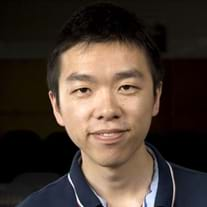
Mark Dembo
Cornell University eCornell

In the 21st century, advances in science and technology drive much of the global economy, employing millions of people while causing fundamental shifts in the nature of work and the distribution of wealth. These changes have led many corporate leaders, academics and policy experts to warn of a widening “skills gap,” in which a lack of workers with the necessary training holds companies back and exacerbates inequity.

Traditional labor markets follow the law of supply and demand, where filling a position requires little more than offering adequate pay and benefits based on the number of workers able to do the job. When the employer pays the market price for a position, someone will take it. In some science and technology fields today, however, companies have trouble finding qualified employees at any price.

Policymakers and educators have offered blanket solutions for the problem, ranging from efforts to boost science, technology, engineering and math (STEM) classes in public schools, to retraining skilled adults looking to change fields. However, discussions with subject experts reveal that the reality of the skills gap is complex, and suffused with thorny geographic, economic and political challenges.

Serfs Up

The U.S. unemployment rate, often cited as a major indicator of economic health, has been falling since 2010 and now hovers below four percent. Beneath that rosy figure hides a troubling reality, with huge swaths of the population in precarious, low-paying jobs.

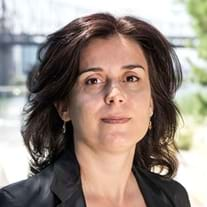
“The people at the bottom of the skills spectrum have experienced wage stagnation and lower mobility, while the people in high skill jobs have seen more job opportunities and … great upward mobility,” says Marcela Escobari, Senior Fellow in Global Economy at the Brookings Institute in Washington, D.C.

The skills gap lies at the core of this bifurcation; educated, skilled workers, especially in science and technology fields, enjoy expanding opportunities and growing wages, while less-skilled individuals see their options narrowing and wages shrinking. Advances in automation promise to make the problem worse, as computers and robots replace mostly low-skilled workers. Geography also influences this trend, with most of the high-skill, high-paying jobs concentrated in a handful of major cities.

Drawing on large databases of employment and social trends, Escobari and her colleagues have identified the factors that could drive a more broad-based form of economic growth. Brookings is now producing a series of reports based on their findings, to help regions address not only the skills gap but the broader social and economic forces that exacerbate it.

“For your low-wage workers to be able to take advantage of opportunities, [they need] affordable housing, accessible transport, [and] childcare,” says Escobari. Most important, “cities need thriving industries that create opportunities for upward mobility” adds Escobari.

CEOs: The Skills Gap is Big Problem

Even with the basic services in place, training and re-training workers for fast-evolving businesses will require a major change in tactics. One recent survey found that the vast majority of CEOs say the skills gap is a big problem for them, but few have invested in training programs to address it.
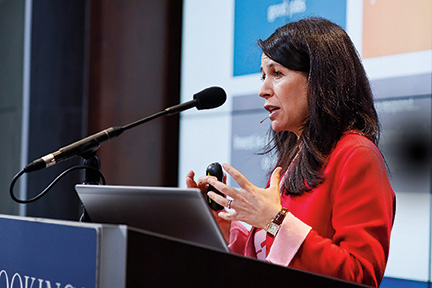
Brookings Center for Universal Education Senior Fellow Marcela Escobari presents her May 2019 report “Growing Cities that Work for All: A Capability-based Approach to Regional Economic Development” at the 2019 Building the Workforce of the Future: Resilient People and Places symposium. Photo: Brookings

Companies that do implement training programs often see their workers poached by competitors who didn’t have to make that investment. Escobari contrasts that with the situation in many European countries, where strong unions and labor regulations encourage companies to collaborate on training and building the pipeline of talent, “then even when people move from company to company, they all benefit from having more highly skilled and technically able people.”

With 44 percent of the American workforce now in low-wage jobs, the problem may be coming to a head.

“People are thinking about this because we are seeing the repercussions not only in increased inequality, and financial precariousness of low wage workers, but also in the political sphere,” says Escobari.

The Express Train

That anger is likely to get worse when the current economic boom reaches its inevitable end. “It’s sort of the calm before the storm, because you have high employment, [but] as in any economic cycle, when that starts to go down you’re going to see a major transformation,” says Art Langer, director of the Columbia University Center for Technology Management in New York, N.Y. Langer, who also founded the job training nonprofit Workforce Opportunity Services (WOS), has been working on multiple fronts to close the skills gap.

Traditionally, students interested in science and technology have been encouraged to get college degrees rather than vocational certifications, but that’s now leaving some industries shorthanded.

“You have advanced manufacturing that is using all different types of scientific and computerized equipment, and there are huge skills gaps there,” says Langer.

Meanwhile, the best-trained white collar workers gravitate to trendy high-tech companies such as Google and Facebook, leaving insurers, banks and other traditional businesses short of skilled labor as they try to adopt more sophisticated technologies. The irony of these skills gaps is that Americans are attending college in record numbers, and racking up massive debts to do so.

Addressing the Skills Gap

Many graduate with degrees that haven’t prepared them for the jobs that are available. While many educators and policymakers focus on public schools and state universities to address the skills gaps, Langer doesn’t have much hope for that approach.

“Public institutions of higher education [are] controlled by political forces,” says Langer, adding that changes in legislatures and governorships often jerk policies and funding in different directions every few years. “This concept that somehow these institutions … are going to change themselves is a dream,” he says.

Instead, Langer advocates transforming the relationship between employers and job training programs. WOS, for example, works directly with companies to identify the skills they need, then finds and trains people for those positions. By focusing on underserved job seekers, including minorities, women and veterans, WOS is able to recruit eager, talented individuals who would otherwise be left out of highly skilled jobs. As that and other collaborative job training programs take off, Langer hopes more traditional educational institutions will adopt similar approaches.
The Gospel According to the Peter Principle

Some major universities are already working to boost their vocational training programs, especially online.

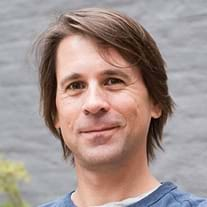
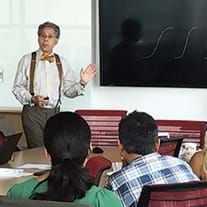
“Our focus is primarily on providing online certificate programs that are really focused on the working professionals [and] online professional development,” says Mark Dembo, director of corporate programs at Cornell University’s eCornell in Ithaca, N.Y. Dembo explains that eCornell works closely with major employers to determine industries’ current needs, and tailors programs to meet those needs.

That perspective reveals two major types of skills gaps. First, companies need increasing numbers of technically trained people to take on entry-level positions, especially jobs requiring data analysis and computer programming capabilities. The second gap, which has received less publicity, comes after those employees have advanced in their fields for a few years.

“What we hear quite often is ‘we’ve got people that have very strong technical backgrounds, [but] now I need them to lead teams,’” says Dembo, adding that many companies have “people that are strong technically, and then they get to a point of failure because they don’t have those softer skills” required to manage people.

More Technical Training

In particular, Dembo distinguishes between leadership and management skills. The former refers to the ability to influence people and unify teams around common goals, while the latter entails an understanding of budgeting, administration and group organization. To meet the growing need, eCornell and other online universities now offer programs to teach both. Conversely, Dembo says he also hears from established managers who need more technical training to be able to understand what their subordinates are doing.

The rising need for continuing education underscores another major trend in the labor market; companies want to hire lifelong learners.

“In today’s world you’re going to have to continue to adapt because the needs are going to change, of what’s needed in the labor market,” says Dembo. Faculty will also need to adapt, keeping ahead of trends in employers’ needs so they can continue teaching relevant knowledge and skills to their students.

With student loan debt in the U.S. now ballooning past $1.5 trillion, employers’ demand for lifelong learners is taking a heavy toll on their future and present employees. Though he declines to comment on the student loan issue, Dembo urges people to take careful stock of their skills and finances, and consider the return they expect to get from their educational investments.

Gaps in the Clouds

The ways technology firms respond to the skills gap reflect their unique needs, as well as a less appreciated aspect of the problem: geography. Companies outside major cities have been hit especially hard.

“We … consistently have to go outside of our area and outside of our state to source sufficient talent, credentials, experiences and diversity,” says Bill Avey, global head of personal systems services at Hewlett-Packard in Boise, Idaho.

As a major employer in Boise and a leading manufacturer of personal computers, HP faces an ongoing struggle to find and develop the skilled workers they need. The problem extends across the educational spectrum.

Almost half of Idaho children need remedial education as early as kindergarten to meet minimum standards, and many fail to thrive academically in later years. In response, Avey and leaders in other local companies have banded together to lobby Idaho’s deeply conservative politicians for solutions.

“Business leaders are the one group of folks that can credibly show up in the legislature and say … something as crazy as ‘we suggest you raise our taxes to spend more on education’” says Avey, adding that “it’s very different than a teacher’s union showing up.”

Expanding Access to Education

Boosting education budgets is only a partial solution, though. Even for companies in major metropolitan areas with access to top university graduates, science and technology businesses are changing and growing so fast that demand for skills vastly outstrips supply.

“The country produces about 60,000 computer scientists every year, whereas we’re seeing more than 700,000 technology jobs open,” says Obed Louissaint, vice president of talent at IBM in Armonk, N.Y.

The drastic expansion of artificial intelligence technology is one of the biggest drivers of the skill gap. Previously the domain of a handful of high-tech companies, AI is now considered indispensable in numerous industries.

“We have financial services firms, retailers and insurance companies who are all looking for people with AI skills or data science capability, (which) puts a strain on the available talent,” says Louissaint.

IBM is attacking the problem aggressively, with multiple initiatives to retrain many of the same groups targeted by Langer’s team: blue collar workers, veterans and women, who the company then places in rapidly expanding fields. Like others confronting the skills gap, Louissaint also emphasizes the need for workers to change their perspectives on education and training: “They should be thinking of learning … as a continuous journey.”

What Happens When Innovative Scientists Embrace Entrepreneurship?

A woman talks with other women.

Deciding to make the leap from research to start-up doesn’t mean you have to leave your passion for science behind.

Published October 1, 2019

By Chenelle Bonavito Martinez

Sean Mehra
Chief Strategy Officer and co-founder, HealthTap

The days of lifetime employment with one employer are long gone. Most people will have at minimum half a dozen jobs over a working lifetime and possibly two or three career paths. And just as many will try their hand at starting their own business. Unfortunately, small business statistics show that by the end of four years more than half of them will be gone.

But being a scientist may have a distinct advantage when deciding to be an entrepreneur. Forbes contributor and STEM consultant Anna Powers writes in a 2018 article titled One Scientific Principal Will Make You A Better Entrepreneur, that “…the process of entrepreneurship mirrors the process of innovation in science. A lot can be learned [about innovation and entrepreneurship] from science, which has formulated certain guidelines about the process of innovation. Perhaps that is why almost 30 percent of Fortune 50 CEOs are scientists.”

The key to easing the transition from employee to “boss” is recognizing how the skills you possess for one job, translate into another. This not only applies to a direct transfer of specific technical knowledge or soft skills like communication and collaboration, but also how certain skills specific to your current career, are the same as those you need to possess to become a successful entrepreneur.

What it Takes

So what does it take for a scientist to become an entrepreneur? Opinions vary, but mostly it starts with a question and a desire to make an impact. However, deciding to make the leap from research to start-up doesn’t mean you are leaving your passion for science behind.

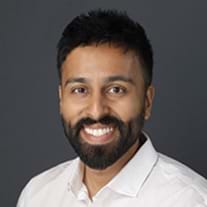
Sean Mehra, Chief Strategy Officer and co-founder of HealthTap, a digital health company that enables convenient access to doctors, says, “People think of the decision to be an entrepreneur as a choice to leave your skills and knowledge as a scientist behind, when that’s not really the case.” Scientists are innovators and they can easily identify as entrepreneurs. Mehra cites several examples of skills developed in the lab that can be applied to starting a business.

“Writing grants to acquire funds for research is not much different than fundraising, corporate development and sales,” he says. “Conducting experiments is product R&D and market fit. If you have recruited postdocs to work in your lab and guided their work, then you have hired talent and managed a team. Publishing and presenting your research at conferences is pretty much like marketing your vision. And networking and connecting with colleagues in your field is no different than prospecting for business connections and talking to your customers.”

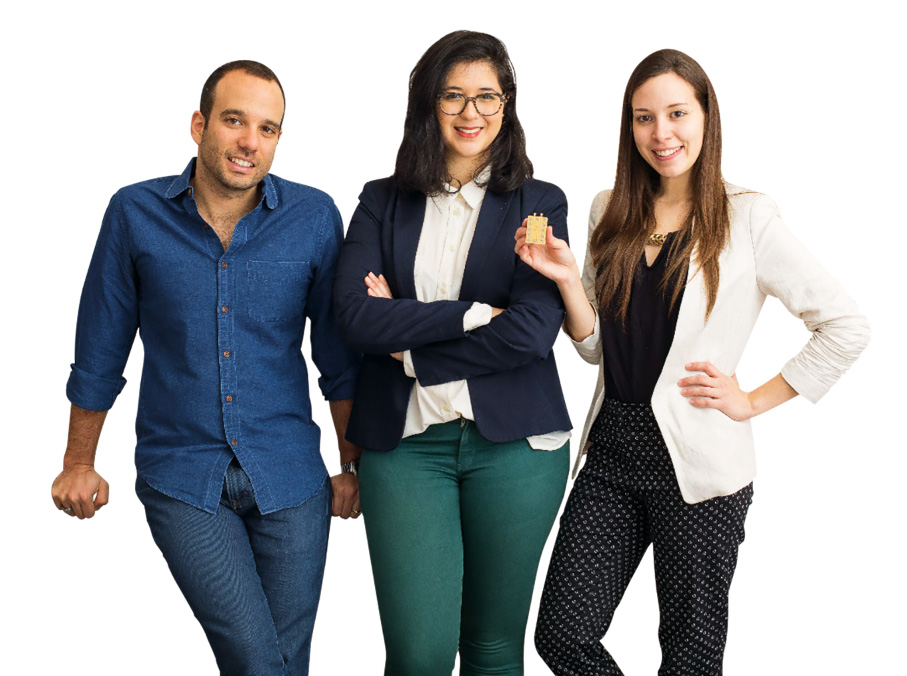
Myriam Sbeiti and Daniela Blanco, Co-founders of Sunthetics, met in school and as graduation approached saw an opportunity to launch a viable business. In 2018 they developed a more efficient and more sustainable electrochemical manufacturing path for a chemical intermediate of Nylon 6,6. The process uses electricity rather than heat to power the reaction in a way that uses 30 percent less raw materials and energy, reducing a variety of harmful emissions in the process.

Suntheics co-founders from left to right: Professor Miguel Modestino, Myriam Sbeiti, Daniela Blanco

Similar to the Scientific Method

In the future, Sbeiti and Blanco are planning to apply this electrochemical process to a variety of reactions, making the chemical industry green, one reaction at a time. Sbeiti reflects that a lot of the research and interviews conducted to figure out if their ideas were viable were very similar to the scientific method and scientific experiments, i.e. they created a hypothesis and then needed to validate it. The major difference was that they did not need to confirm their hypothesis through years of research, instead they needed to talk to potential customers to find the right fit.

As scientists and researchers themselves, both emphasized that failure was the hardest skill to master. “The chemical industry wasn’t really interested in our original idea and the fashion industry didn’t really see value.” After a round of customer interviews, they realized they were designing a product they thought the customer needed instead of the product the customer said they wanted. In addition, efficacy and cost were a customer priority so Sbeiti and Blanco pivoted their idea to develop a product that fit the market. The Sunthetics team is shaping up to make the impact that was envisioned after graduate school. In fact, Blanco continues to pursue her technology as part of her PhD research and “thinks of it like R&D.”

Entrepreneurship is definitely a “higher risk and higher reward” scenario says Mehra. Most traditional researchers typically have a lower risk tolerance than the average innovator or entrepreneur. It can be very uncomfortable for a trained researcher turned entrepreneur to accept failure and pivot away from their original idea. But Mehra says that “even if the original idea isn’t quite right, there is still a lot of good knowledge acquired through the process.”

Unlocking the “Why”

Unlocking the “why” and a desire to create impact at scale are drivers behind making the shift into entrepreneurship. While contemplating his own career path, Mehra reflects that “thinking about my passion for technology, I realized that technology has a way to scale and have a one-to-many impact on the world. I started to think about ways I could use my technology skills to help people on a global scale instead of, for example, treating patients one-at-a-time as a doctor.”

Sbeiti and Blanco also began their journey by observing their surroundings and asking why. These common traits make up what Clayton Christensen, the current Kim B. Clark Professor of Business Administration at the Harvard Business School of Harvard University, and his co-authors, call The Innovators DNA. After six years of studying innovative entrepreneurs, executives and individuals, they agree this common skill set is present in every innovative entrepreneur. Clayton et al. argue that if innovation can be developed through practice, then the first step on the journey to being more innovative is to sharpen the skills.

Studies of identical twins separated at birth indicate that one’s ability to think creatively comes one-third from genetics “that means that roughly two-thirds of our innovation skills come through learning — from first understanding the skill, then practicing it, and ultimately gaining confidence in our capacity to create,” says Clayton. The most important skill to practice is questioning. Asking “why” or “what if” can help strengthen the other skills and allow you to see a problem or opportunity from a different perspective.

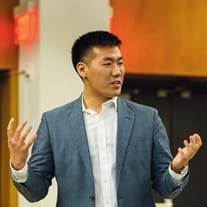
Ted Cho
StartupHoyas MED

A Search for Something That’s Never Been Done

Ted Cho, President of StartupHoyas MED, an organization dedicated to healthcare startups and innovators at Georgetown University, sees that skill in many of the innovators and entrepreneurs who are part of the StartupHoyas community. Like Drs. Jean-Marc Voyadzis and Hakim Morsli who created Amie, a “virtual surgical assistant” to help patients prepare for surgery and recovery, entrepreneurs often create their companies by observing and questioning their surroundings, identifying a problem, and developing a solution.

Cho says that “one of the most common pitfalls for entrepreneurs is building solutions without problems. Often times the most successful startups are those that are rooted in problems that the founders experienced firsthand. However, that doesn’t mean that you necessarily have to be an insider. Some of the most innovative ideas with the greatest potential to create impact have come from outsiders with fresh perspectives who aren’t locked into the conventions that seem to restrict many of the traditional players in the healthcare space.” While all of the innovators and entrepreneurs in the StartupHoyas community are focused on improving healthcare, not all are medical students. In fact, many are students and faculty from other areas of life sciences.

Starting one’s own company is much like scientific research — it’s the search for something that’s never been done before, because there is no product that is exactly like yours. But it’s important for researchers considering a business launch to stay flexible. As Cho says “pick something you love, but be careful not to fall in love with your own science.”


Creative Intelligence

Innovative entrepreneurs have something called “creative intelligence,” which enables discovery, yet differs from other types of intelligence. This means innovators are more than “right-brained individuals.” They engage both sides of the brain and leverage what the authors call the “five discovery skills” to create new ideas.

  • Associating: Connecting seemingly unrelated question, ideas or problems from different areas.
  • Questioning: Challenging the status quo by asking “why,” “why not” and “what if.”
  • Observing: Scrutinizing common phenomena, particularly behavior.
  • Experimenting: Trying new ideas.
  • Networking: Meeting people with different viewpoints, ideas and perspectives to expand your knowledge.

Source: Excerpted from “The Innovators DNA.”

Also read: Advancing Innovation and Entrepreneurship in Clean Energy

Recognizing Breakthrough Scientists in the Tri-State

New breakthroughs in controlling mosquito populations, quantum gravity and reducing chemical byproduct waste are among the cutting edge research being honored by the 2019 Blavatnik Regional Awards for Young Scientists.

Published September 14, 2019

By Kamala Murthy

This year the Blavatnik Regional Awards for Young Scientists received 137 nominations from 20 academic institutions in the tri-state area. A jury of distinguished senior scientists and engineers from leading academic institutions selected three outstanding scientists as Winners who will each receive a $30,000 unrestricted prize, and six Finalists (two from each category) who each will collect a $10,000 unrestricted prize.

Supporting outstanding scientists from academic research institutions across New York, New Jersey, and Connecticut since 2007, the Blavatnik Regional Awards for Young Scientists recognize and honor postdoctoral researchers in three scientific disciplinary categories: Life Sciences, Physical Sciences & Engineering, and Chemistry.

The 2019 Blavatnik Regional Awards Winners are:

Life Sciences: Laura Duvall, PhD, nominated by The Rockefeller University (now at Columbia University). Dr. Duvall’s discovery of two key molecules in mosquitos that inhibit blood-feeding and breeding has worldwide implications for controlling mosquito populations and the spread of diseases such as Dengue and Zika. At the time of nomination, Dr. Duvall was a trainee of the 2007 Blavatnik Regional Awards Faculty Winner, Leslie Vosshall of The Rockefeller University.

Physical Sciences & Engineering: Netta Engelhardt, PhD, nominated by Princeton University (now at Massachusetts Institute of Technology). Dr. Engelhardt’s research at the interface of general relativity and quantum field theory is answering complex questions about the fundamentals of our universe, including the remarkable explanation for the origin of black hole entropy. Her work is integral to the understanding of how the fabric of the universe at large-scale is encoded in quantum gravity.

Chemistry: Juntao Ye, PhD, nominated by Cornell University (now at Shanghai Jiao Tong University in China). Improving synthetic efficiency while lowering the cost of synthesis is a primary goal for pharmaceutical industries. Ye invented several new methods that allow for converting readily available chemicals into value-added and pharmaceutically relevant products in a highly efficient and economical manner, while reducing chemical byproduct waste. These methods could accelerate the pace of drug discovery through improving efficiency in synthesizing complex and bioactive compounds.

The cutting-edge discoveries being recognized this year cover an incredibly disparate breadth of work in quantum gravity, drug discovery, control of mosquito populations and underwater photographic imagery. These are the advances that will change our world.

Ellis Rubinstein

2019 Blavatnik Regional Awards Finalists

Life Sciences

Carla Nasca, PhD, nominated by The Rockefeller University — recognized for the discovery of acetyl-L-carnitine (LAC) as a novel modulator of brain rewiring and a possible new treatment for depression that acts by turning on and off specific genes related to the neurotransmitter glutamate.

Liling Wan, PhD, nominated by The Rockefeller University (currently transitioning to the University of Pennsylvania) — recognized for identifying a previously unknown function of a protein called ENL, which has the ability to read epigenetic information on our chromosomes and activate genes that perpetuate tumor growth. Elucidating the structure and mechanism of ENL has guided ongoing development of drugs to treat cancers.

Physical Sciences & Engineering

Derya Akkaynak, PhD, nominated by Princeton University — recognized for significant breakthroughs in computer vision and underwater imaging technologies, resolving a fundamental technological problem in the computer vision community — the reconstruction of lost colors and contrast in underwater photographic imagery — which will have real implications for oceanographic research.

Matthew Yankowitz, PhD, nominated by Columbia University (now at the University of Washington) — recognized for groundbreaking experimental work modifying the electronic properties of a new class of two-dimensional materials, known as van der Waal materials. van der Waal materials have generated tremendous interest due to their properties and the promise they show for use in next-generation optoelectronic and electronic devices, future computing, and telecommunications technologies. Dr. Yankowitz’s work led to the discovery that applied pressure can be used to induce superconductive properties in multi-layer graphene, and has significantly advanced a new area of research recently coined “twistronics.”

Chemistry

Yaping Zang, PhD, nominated by Columbia University — recognized for innovatively using electrochemistry and electrical fields in conjunction with scanning tunneling microscopy techniques to drive chemical reactions. This work provides a deeper understanding of the reaction mechanisms and opens new avenues for the use of electricity as a catalyst in chemical reactions.

Igor Dikiy, PhD, nominated by the Advanced Science Research Center at The Graduate Center, CUNY — recognized for completing the first study of G-protein–coupled receptor (GPCR) fast sidechain dynamics using NMR (nuclear magnetic resonance) spectroscopy to shed light on the molecular mechanisms of cell signaling. GPCRs control a variety of processes in the human body and are targets for over 30% of all FDA-approved drugs. Elucidating the mechanisms of GPCR signaling will enable researchers to design more effective drugs.

Honoring the Blavatnik Regional Award Winners and Finalists

The 2019 Blavatnik Regional Awards Winners and Finalists will be honored at the New York Academy of Sciences’ Annual Gala at Cipriani 25 Broadway in New York on Monday, November 11, 2019.

To learn more about this year’s Blavatnik Awards honorees, please visit the Blavatnik Awards website and follow us on Facebook and Twitter: @BlavatnikAwards

What are PROTACs and How Do They Treat Diseases?

“Optimized degrader molecules will have fast rates of degradation and relatively short exposure with therapeutic doses that result in complete elimination of the target protein, which can result in a more durable and deeper effect.”

Published July 23, 2019

By Robert Birchard

Eric Fischer, PhD

Around 80% of disease-causing proteins, including key drivers of many cancers and other serious neurological conditions like Alzheimer’s disease, cannot be targeted by currently available therapeutics. These so called “undruggable” proteins lack specific surface areas required for treatments such as small molecule inhibitors or antibodies to bind with disease causing proteins and modulate their function.

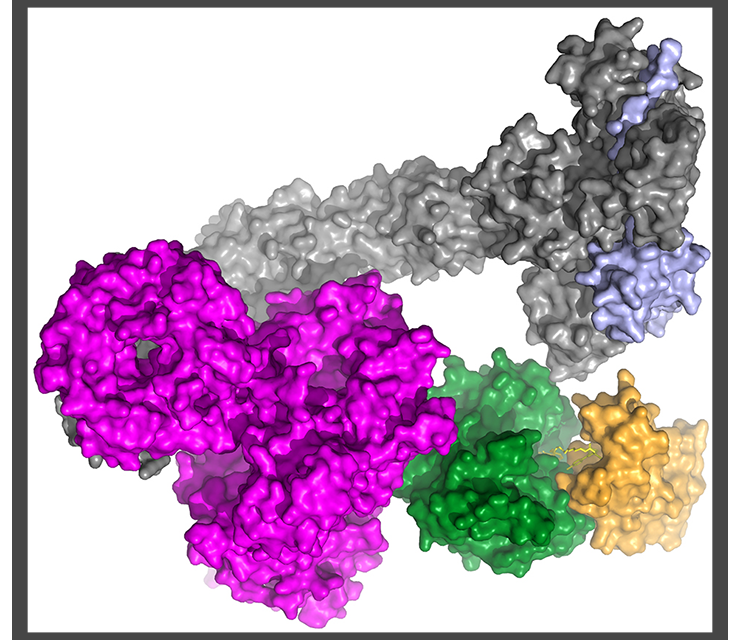
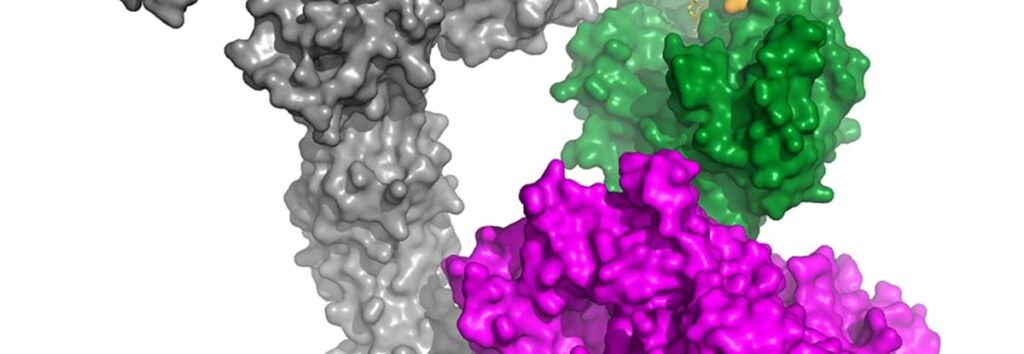
However, an alternative therapeutic strategy known as targeted protein degradation has shown the potential to remedy these “undruggable” proteins. Utilizing small molecules known as PROTACs, this strategy harnesses the cell’s waste disposal system to promote the destruction of disease-causing proteins. Dr. Eric Fischer, Assistant Professor of Biological Chemistry and Molecular Pharmacology at Harvard Medical School, recently sat down with us to help create this primer on PROTACs, and their potential implications for treating disease.

What are PROTACs?

PROteolysis TArgeting Chimeras, or PROTACS for short, are two separate molecules bound together to form a two headed molecule. One end binds to an ubiquitin ligase, while the other end binds to the “undruggable” protein targeted by pharmacologists. In illustrations, PROTACs are often depicted as dumbbells, but it may be more helpful to think of them as flexible harnesses.

How do PROTACs work?

PROTACs are designed to take advantage of the cell’s waste disposal system that removes unneeded proteins. This system, known as the proteasome, is important for the cell to remove unneeded or damaged proteins and recycle their building blocks to make new proteins. The proteasome plays critical roles in cell growth, management of cellular stress, and in the immune system. One end binds to the targeted proteins, while the other end of the molecule binds to the ubiquitin ligase, which then marks the targeted protein for destruction. This lets the cell’s proteasome know that this specific protein can be destroyed. In this way the body’s regularly occurring mechanisms are co-opted to destroy disease-causing proteins.

Optimized degrader molecules will have fast rates of degradation and relatively short exposure with therapeutic doses that result in complete elimination of the target protein, which can result in a more durable and deeper effect.”

Eric Fischer, PhD

What makes PROTACs so unique?

Most therapies are divided between small molecule inhibitors or therapeutic antibodies/biologics. However, “PROTACs are small molecules and as such not restricted to targeting surface proteins, however, in contrast to traditional small molecule inhibitors, PROTACs are fundamentally different,” explained Dr. Fischer, “While inhibitors need to achieve an almost perfect degree of target engagement over an extended period of time to exert their pharmacologic effect, PROTACs follow more of a hit and run strategy.”

“Optimized degrader molecules will have fast rates of degradation and relatively short exposure with therapeutic doses that result in complete elimination of the target protein, which can result in a more durable and deeper effect,” he explained. “More importantly, however, small molecule degraders completely eliminate the disease-causing protein and as such can target the non-catalytic activity of enzymes but also scaffolding proteins, and other non-enzymatic targets.”

When will PROTACs be more widely available?

While researchers have demonstrated the potential of PROTACs in the lab, the first clinical trials are just opening. Still Dr. Fischer is very optimistic, “The technology has rapidly spread, and we can expect to see many more programs entering clinical development. Due to the pioneering work of a growing academic community spearheading this field, the concepts underlying protein degradation are largely public domain and widely available.”

What is the future of PROTACs research?

“I believe the field of targeted protein degradation is here to stay and will significantly expand our repertoire of therapeutic modalities,” said Dr. Fischer. “I also believe it is still in its infancy and many challenges lie ahead of us to broadly deploy this to the more challenging targets.” PROTACs could potentially prove the impossible is possible by allowing scientists to destroy disease-causing proteins that were previously considered beyond their reach.

Also read: Cancer Metabolism and Signaling in the Tumor Microenvironment

Advice for Transitioning from Academia to Policy

A woman in red poses for the camera.

Mentoring had a profound impact on Adriana Bankston, PhD, as she transitioned from academia to a career in science policy. She offers guidance on how to effectively mentor the next generation.

Published May 20, 2019

By Adriana Bankston, PhD

Adriana Bankston, PhD

Mentoring is a necessity, not just during a particular phase in one’s life, but throughout one’s professional progression. And while I know that certain mentors can provide excellent training for academic careers and general skills at specific moments, others may serve as unconventional mentors during career transitions, or in life in general. These individuals could be faculty members or administrators at your university. They may mentor for different purposes or they may just be there to listen—even that can make a large difference.

I’m a former academic who transitioned into a science policy career. During my academic career, and in my transition from the bench, mentors have been critical.

How to Think Like a Scientist

My PhD advisor taught me how to think like a scientist, how to problem-solve and troubleshoot, and how to accomplish projects in a timely manner. She took the time to celebrate small successes and created a positive environment where I felt appreciated. She also chatted with me about personal matters that I felt comfortable sharing, and always had an open door and a listening ear when I needed it. Her mentoring style made all the difference for me, helping me gain confidence in both my personal and professional abilities.

During my transition into policy, and even now, it became clear that mentoring sometimes comes from unexpected places or even from people who may not necessarily be more experienced. We typically think of mentors as academic advisors, but I’ve come to find that sometimes even a friend can be a mentor, and they can help you move forward in your journey by purely being there to listen. Mentoring is less about giving one-directional advice, but more about building a bidirectional relationship in which both parties gain and grow together. In fact, both people can be the mentor and the mentee at different times during the relationship.

The Power of a Supportive Mentor

This distinction is particularly important for early career scientists and, in particular, those in academia, where there is often an imbalance in power dynamics. Having a supportive mentor can make a large difference in your happiness and professional success. Mentors are able to more broadly influence an entire generation of scientists by creating a positive environment in their research groups or labs. The more we focus on developing the person in front of us and building them up, the better the entire research enterprise will be in the long term.

We must also remember that the research enterprise is composed of various groups of scientists at different stages who likely require different types of mentorship. I want to ensure that the next generation of scientists is mentored appropriately for their level, and this includes providing additional support where it is needed. As a woman in science, one of my interests is to ensure that girls with an interest in STEM have role models to look up to who can help them be successful. Just as my PhD advisor did for me, I seek to be a mentor for the next generation of scientists, in particular girls who want to pursue a science career.

Learn more about educational and mentoring opportunities available through the Academy.


About the Author

Adriana Bankston is a Policy & Advocacy Fellow at The Society for Neuroscience (SfN), the Director of Communications & Outreach at the Journal of Science Policy and Governance (JSPG), and a Policy Activist at Future of Research (FoR), a nonprofit organization with a mission to champion, engage and empower early career researchers with evidence-based resources to improve the scientific research endeavor.

Citizen Science in the Digital Age: Eagle Eyes

Science is a tool for combatting disinformation and making informed decisions.

Published May 1, 2019

By Robert Birchard

The term “citizen science” first entered the Oxford English Dictionary in 2014. It describes a long-standing tradition of collaboration between professional and amateur scientists. Perhaps no field is as closely associated with citizen science as astronomy, where amateur stargazers continue to sweep the skies for unidentified heavenly bodies. Today, with the advent of smartphone technology, even more fields of scientific inquiry are open to the curious amateur.

Eagle Eyes

Ana Prieto, GLOBE program volunteer

One of the oldest continuing citizen science projects is the National Audubon Society’s annual Christmas Bird Count (CBC). The CBC was founded in 1900 by Frank Chapman, an ornithologist at the American Museum of Natural History. Conceived as an alternative to traditional hunts, the first CBC included 27 participants at 25 count sites across North America. It has grown to 76,987 participants counting 59,242,067 birds at 2,585 sites. This will be done during the 118th count in the United States, Canada, Latin America, the Caribbean and Pacific Islands.

Documentation and verification of CBC counts has been revolutionized by mobile technologies and digital photography.

“If somebody said they saw a scarlet tanager or an eastern kingbird, which are common in the summer, but which conventional ornithological wisdom says are always in South America during the CBC, those sightings used to be rejected,” explained Geoffrey LeBaron the longtime Audubon Society Christmas Bird Count Director.

Observing the Past, Predicting the Future

“Everything today is 100 percent electronic and no longer published in print. All results are posted online as soon as a compiler checks off that their count is completed. The data then becomes viewable to the public. Once a region is completed, we have a team of expert reviewers that go over every single count. If they feel there’s something that needs documentation, they’ll be in touch with the compiler, who will get in touch with the observer.”

Scientists use the collected CBC data to observe long-term trends. Additionally, they predict future effects of climate change on species at risk.

“When people are analyzing CBC data, they’re not usually looking at year to year variations, because there is too much variability caused by weather and other factors,” explained Mr. LeBaron. “We looked at the center of abundance of the most common and widespread species and how they varied from the 1960s to the present. We found that a lot of species have moved the center of abundance of their range as much as 200 miles northward and inward away from the coasts.”

Keeping Citizens in Science

Citizen science requires enthusiastic participation of the public, but how can researchers keep the public engaged? This question was recently considered in a paper from Maurizio Porfiri, PhD, Dynamical Systems Laboratory at New York University. The paper is titled, Bring them aboard: Rewarding participation in technology-mediated citizen science projects.”

The team hypothesized that monetary rewards and online or social media acknowledgments would increase engagement of participants.

“People contribute to citizen science projects for a variety of different reasons,” said Jeffrey Laut, PhD, a postdoctoral researcher in Dr. Porfiri’s lab. “If you just want to contribute to help out a project, and then you’re suddenly being paid for it, that might undermine the initial motivation.”

“For example, one of the things we point out in the paper is that people donate blood for the sake of helping out another human,” explained Dr. Laut. “Another study found that if you start paying people to donate blood, it might decrease the motivation to donate blood.”

Proper Rewards for Participation

If a citizen science project is suffering from levels of participation, researchers need to carefully choose the level of reward.

“I think with citizen science projects the intrinsic motivation is to contribute to a science project and wanting to further scientific knowledge,” said Dr. Laut. “If you’re designing a citizen science project, it would be helpful to consider incentives to enhance participation and also be careful on the choice of level of reward for participants.”

The technology used and scope of information collected may have changed, but the role remains as important as ever.

“It is important that citizens understand the world in which they live and are capable of making informed decisions,” said Ms. Prieto. “It’s also important that all people understand science, especially to combat disinformation. From this point of view citizen science is vital and a needed contributor to the greater field of science.”


Learn more about citizen science:

How to Improve Your Presentation Skills

A woman gives a presentation.
Jayne Latz

A professional communication coach provides guidance on how you can improve your communication skills.

Published May 1, 2019

By Jayne Latz

You have a major presentation and you work on the perfect PowerPoint and practice reading your notes. But on the big day it feels like your presentation falls flat. Sound familiar?

If public speaking gives you anxiety, you’re not alone. Comedian Jerry Seinfeld once said that “According to most studies, people’s number one fear is public speaking. Number two is death … This means to the average person, if you go to a funeral, you’re better off in the casket than doing the eulogy.”

Unfortunately, such anxiety can interfere with your delivery. It doesn’t matter how strong your presentation is, if you’re unable to speak in a clear, confident manner, your message will suffer. In fact, research has shown that how you say something actually matters twice as much as what you say!

Learning to master the art of public speaking is crucial to professional success. Whether it’s giving a sales presentation, pitching an idea to a committee, or a concept to a potential funder, the ability to speak in an engaging and convincing manner is important. You may only get one chance to make your case, so a polished and dynamic presentation could be a game-changer.

You should develop a style that works best for you, but here are 10 tips that may help you improve your overall presentation skills:

1. Open strong.

Enter with a confident stride and take a moment to make eye contact with the audience. Smile, and take a deep breath. This will help center you and allow you to begin your presentation in a strong, confident way.

2. Own your space.

Be mindful of body language. Don’t fold your arms, stand with your hands on your hips or put your hands in your pockets. Incorporate natural gestures into your speech — but be careful of “talking” with your hands. You will appear more relaxed, confident and in control.

3. Connect with your audience.

Looking into a sea of faces can be intimidating. Focus on connecting with one audience member at a time by making eye contact with individuals rather than just scanning the crowd. If you have a friend or colleague in the audience, focus on that person to start.

4. Tone matters.

When giving a presentation, your vocal quality can make all the difference. Does your tone sound positive or negative? Confident or tentative? The energy in your voice tells your listener a lot about whether what you have to say has value.

5. Be engaging.

Keep your audience involved and invested in your presentation to drive your message home. Ask questions that require a show of hands, have people stand up, or include moments where audience members need to interact.

6. Use strategic pausing to deliver with impact.

Pauses not only make your speech slower and more understandable, it can also be a powerful tool for drawing your audience’s attention to the parts of your message you want to highlight the most.

7. Don’t let your voice “fall into the abyss.”

Be careful not to drop sounds, particularly at the end of words or trail off at the end of a sentence. I refer to this as “falling into the abyss” and your audience may miss your most important point.

8. Let your audience know why your message matters.

Understand your audience and how what you have to say will benefit them. Then, spell it out. Let everyone know what they have to gain up front, and you’ll have a more attentive audience throughout your presentation.

9. Tell stories.

Including a story or specific case study in your presentation that relates to your audience’s interests will help them feel more connected to you and your message.

10. Close strong!

Finish with a quote or a point that illustrates the one takeaway you want the audience to remember. Memorize your closing in advance so that you can concentrate on your delivery and nerves won’t get in the way of a strong ending.

Polishing your public speaking skills will help you to gain confidence and increase your professional credibility. Take the time to focus on your speaking style, and make sure your presentation is doing your message justice. Remember: It’s not just what you say, it’s how you say it!

Jayne Latz is an executive communication coach and President and Founder of Corporate Speech Solutions, LLC.

Are you looking for an expert to present at an upcoming event? Check out our Speaker’s Bureau to find the Academy expert that fits your needs.

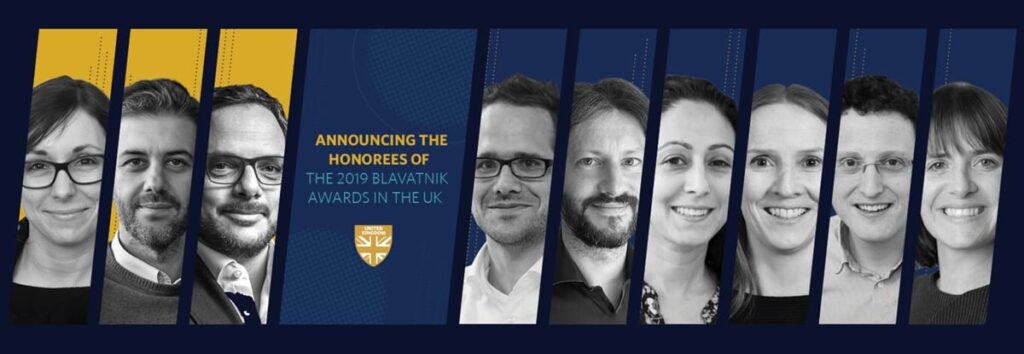
UK Blavatnik Awardees Are Bettering the World

From cybersecurity and genome-editing to unraveling the mysteries of the atom and deciphering the complexities of the human brain, these nine young scientists are making a positive impact on our world.

Published May 1, 2019

By Kamala Murthy

The Laureates and Finalists of the 2019 Blavatnik Awards for Young Scientists in the United Kingdom are shaping the future of science. 

A distinguished jury of leading UK senior scientists and engineers selected the nine 2019 Blavatnik Awards honorees from 83 nominations submitted by 43 academic and research institutions across England, Northern Ireland, Scotland, and Wales, as well as the Awards’ own Scientific Advisory Council.

These young scientists and engineers are already making headlines across the UK’s scientific community for discoveries and innovations in research ranging from the mechanics of human cells to new ways to weigh biomolecules, advances in cyber security and radical breakthroughs in fundamental physics. Their discoveries are transforming our understanding of the world and improving human lives.

One Laureate from each of the three categories of Life Sciences, Physical Sciences & Engineering, and Chemistry will receive an unrestricted prize of $100,000 — one of the largest unrestricted prizes available to early-career scientists in the UK.

2019 Life Sciences Laureate

Prof. Ewa Paluch, University College London (UCL) and University of Cambridge

2019 Chemistry Laureate

Prof. Philipp Kukura, University of Oxford

2019 Physical Sciences & Engineering Laureate

Prof. Konstantinos Nikolopoulos, University of Birmingham

2019 Blavatnik Awards in the UK Finalists

Two Finalists in each of the following categories will receive unrestricted prizes of $30,000 each.

Life Sciences

Prof. Timothy Behrens, University of Oxford; honorary Principal Investigator, University College London (UCL)

Dr. Kathy Niakan, The Francis Crick Institute

Chemistry

Prof. Igor Larrosa, The University of Manchester

Prof. Rachel O’Reilly, University of Birmingham

Physical Sciences & Engineering

Prof. Gustav Holzegel, Imperial College London

Prof. Máire O’Neill, Queen’s University Belfast

“Last year, our first year of administering the Blavatnik Awards for Young Scientists in the United Kingdom, we were touched by the reaction of leaders of the UK’s scientific community who agreed that there is no other prize in the UK that honors the achievements and, most especially, future promise of young scientists,” said Ellis Rubinstein, President and CEO of The New York Academy of Sciences and Chair of the Awards’ Scientific Advisory Council. “On behalf of our global Academy we have been thrilled to see so many institutions recognized through their fantastic honorees. And we are enormously proud to collaborate with the UK’s esteemed jury and Scientific Advisory Council members.”

The 2019 Blavatnik Awards Laureates and Finalists in the UK will be honored at a gala dinner and ceremony at the prestigious Victoria and Albert Museum in London on March 6, 2019. The following day, the honorees will present their research in a symposium open to the public entitled “Cure, Create, Innnovate: 9 Young Scientists Transforming Our World,” to be held at the Science Museum, London—a free event to all Academy Members.

To learn more about the Blavatnik Awards and its cohort of Awards programs in the US, UK and Israel please visit the Blavatnik website here.

Citizen Science in the Digital Age: Get Out the Maps

An over-the-shoulder shot of a person driving, using an iPhone as a dashcam.

Mapillary aims to make the world a smaller place with maps that continually update street-level conditions.

Published May 1, 2019

By Robert Birchard

The term “citizen science” first entered the Oxford English Dictionary in 2014, but it describes a long standing tradition of collaboration between professional and amateur scientists. Perhaps no field is as closely associated with citizen science as astronomy, where amateur stargazers continue to sweep the skies for unidentified heavenly bodies. Today, with the advent of smartphone technology, even more fields of scientific inquiry are open to the curious amateur.

Jan Erik Solem, CEO and Founder of Mapillary

Making the World a Smaller Place

With more than 440 million images from more than 190 countries, the street-level imagery platform Mapillary is trying to make the world a smaller place with maps that continually update street-level conditions.

“Carmakers can use the data to help train their autonomous systems — essentially ‘teaching’ cars to see and understand their surroundings — and mapmakers to populate their maps with up-to-date data. Cities can use it to keep inventories of traffic signs and other street assets among other things,” explained Jan Erik Solem, PhD, CEO and founder of Mapillary.

The data is collected by contributors who upload it onto Mapillary’s platform.

“The traditional approach of mapping places include sending out fleets of cars to map cities and towns, but these places change faster than mapping corporations are able to keep up with,” Solem added.

Simpe Tools Like Mobile Phones and Action Cameras

“Using simple tools like mobile phones or action cameras, anyone can go out, map their town and have data instantly generated from the images to update maps everywhere,” said Dr. Solem. “No one else collects data in this collaborative way.” The data is free for educational and personal use he added. “The company is closely tied to the research community and we recognize how helpful it is for researchers to have access to the kind of data that’s hosted on our platform,” explained Dr. Solem. “Mapillary is a commercial entity, but we are driven by research and this is part of our way of paying it forward.”

The data that Mapillary receives is verified through computer vision technology and GPS coordinates, integrated with the mobile phones and cameras that map the roads. “Our computer vision technology detects and recognizes objects in images including things like traffic signs, fire hydrants, benches and CCTVs. Having diverse imagery from all over the world means we have a rich training dataset that enables us to build some of the world’s best computer vision algorithms for street scenes.”

Mapillary’s mobile app allows for instant updates with the latest road conditions.

Keeping Citizens in Science

Citizen science requires enthusiastic participation of the public, but how can researchers keep the public engaged? This question was recently considered in a paper from Maurizio Porfiri, PhD, Dynamical Systems Laboratory at New York University titled, Bring them aboard: Rewarding participation in technology-mediated citizen science projects.”

The team hypothesized that monetary rewards and online or social media acknowledgments would increase engagement of participants.

“People contribute to citizen science projects for a variety of different reasons,” said Jeffrey Laut, PhD, a postdoctoral researcher in Dr. Porfiri’s lab. “If you just want to contribute to help out a project, and then you’re suddenly being paid for it, that might undermine the initial motivation.”

“For example, one of the things we point out in the paper is that people donate blood for the sake of helping out another human,” explained Dr. Laut. “Another study found that if you start paying people to donate blood, it might decrease the motivation to donate blood.”

Proper Rewards for Participation

If a citizen science project is suffering from levels of participation, researchers need to carefully choose the level of reward.

“I think with citizen science projects the intrinsic motivation is to contribute to a science project and wanting to further scientific knowledge,” said Dr. Laut. “If you’re designing a citizen science project, it would be helpful to consider incentives to enhance participation and also be careful on the choice of level of reward for participants.”

The technology used and scope of information collected may have changed, but the role remains as important as ever.

“It is important that citizens understand the world in which they live and are capable of making informed decisions,” said Ms. Prieto. “It’s also important that all people understand science, especially to combat disinformation. From this point of view citizen science is vital and a needed contributor to the greater field of science.”


Learn more about citizen science:

Citizen Science in the Digital Age: Learning Across the Globe

A shot of planet Earth taken from space.

The GLOBE program aims to understand how the Earth’s spheres interact as a single system.

Published May 1, 2019

By Robert Birchard

The term “citizen science” first entered the Oxford English Dictionary in 2014. It describes a long-standing tradition of collaboration between professional and amateur scientists. Perhaps no field is as closely associated with citizen science as astronomy. Here amateur stargazers continue to sweep the skies for unidentified heavenly bodies. Today, with the advent of smartphone technology, even more fields of scientific inquiry are open to the curious amateur.

Learning Across the Globe

The Global Learning and Observations to Benefit the Environment (GLOBE) program is an environmental science and education program active in over 120 countries. It seeks to understand how the Earth’s atmosphere, biosphere, hydrosphere and pedosphere interact as a single system.

“The data we collect varies depending on our research,” explained Ana Prieto a former high school science teacher and GLOBE program volunteer in Argentina. “We’re currently taking land cover measurements in the field, and in the summer we will start taking hydrology measurements. This provides students with first-hand scientific knowledge.”

Collected data is uploaded to the GLOBE database using their customized app.

“The GLOBE protocols (instructions on how to take measurements) are updated and respond to a range of opportunities for measurement and research,” said Ms. Prieto. “It teaches students to use measuring devices, perform physical-chemical analysis, make estimations, pose questions, make hypotheses and design investigations. In short STEM is applied to real-world problems.” For non-GLOBE members the GLOBE Observer allows any citizen scientist enthusiast to collect and send data from GLOBE countries.

Data with Various Applications

The data is used for a variety of purposes.

“We collaborate with NASA Scientists and Science Missions,” explained Tony Murphy, PhD, GLOBE Implementation Office Director. “One example is the August 2017 North American eclipse. NASA scientists are looking at the temperature data collected. They are examining the impact of the eclipse on air temperature and solar radiation. Another use is data gathered on mosquito larvae detection and identification, which is then used to help local communities combat the spread of mosquito-borne diseases by identifying and eliminating sources of standing water, such as containers and spare tires, in which mosquitoes breed.”

The data collected by GLOBE is verified in their system of checks and balances. “We’re looking primarily for outliers,” explained Dr. Murphy. “There’s a range of acceptability for the data in different protocols. Also, we have had scientists look at particular data sets and they found that the data is, for the most part, accurate.” He concluded, “It’s important to get people involved, get them outside, using technology in a positive way for an educational purpose.”

Keeping Citizens in Science

Citizen science requires enthusiastic participation of the public, but how can researchers keep the public engaged? This question was recently considered in a paper from Maurizio Porfiri, PhD, Dynamical Systems Laboratory at New York University titled, Bring them aboard: Rewarding participation in technology-mediated citizen science projects.”

The team hypothesized that monetary rewards and online or social media acknowledgments would increase engagement of participants.

“People contribute to citizen science projects for a variety of different reasons,” said Jeffrey Laut, PhD, a postdoctoral researcher in Dr. Porfiri’s lab. “If you just want to contribute to help out a project, and then you’re suddenly being paid for it, that might undermine the initial motivation.”

“For example, one of the things we point out in the paper is that people donate blood for the sake of helping out another human,” explained Dr. Laut. “Another study found that if you start paying people to donate blood, it might decrease the motivation to donate blood.”

Proper Rewards for Participation

If a citizen science project is suffering from levels of participation, researchers need to carefully choose the level of reward.

“I think with citizen science projects the intrinsic motivation is to contribute to a science project and wanting to further scientific knowledge,” said Dr. Laut. “If you’re designing a citizen science project, it would be helpful to consider incentives to enhance participation and also be careful on the choice of level of reward for participants.”

The technology used and scope of information collected may have changed, but the role remains as important as ever.

“It is important that citizens understand the world in which they live and are capable of making informed decisions,” said Ms. Prieto. “It’s also important that all people understand science, especially to combat disinformation. From this point of view citizen science is vital and a needed contributor to the greater field of science.”


Learn more about citizen science: