The Mischievousness Early Life of a Nobel Laureate

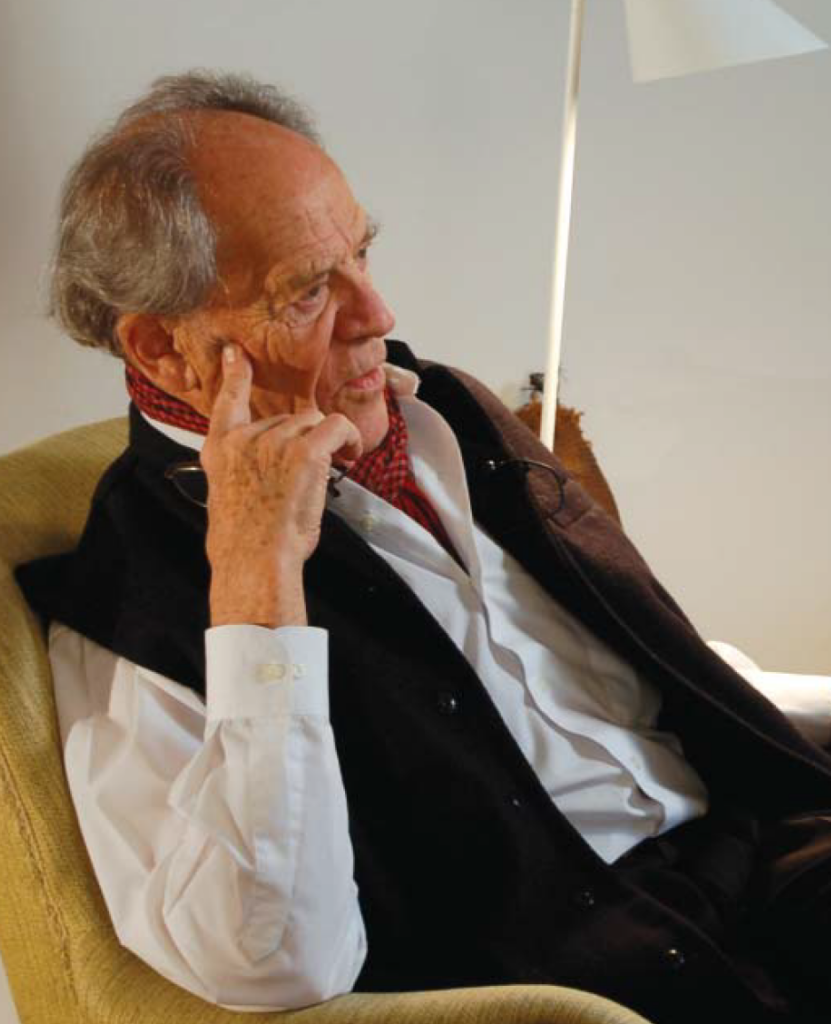
A side shot of a man seated at a chair.

Nobel laureate and Academy Chairman Emeritus Torsten Wiesel maps receptive field properties within the visual cortex, etching a singular vision for his own life.

Published December 1, 2013

By Marci A. Landsmann

Torsten Wiesel

When examining the life of a Nobel laureate, what generally emerge are clear bends in the path: chance situations, meetings, and discoveries that serve as critical signposts to lead an intellectual down the road to greatness. In the same way, our brain provides a complex circuitry of form and function—chemical processes not fully understood, yet acting precisely, as stoplights do, to spark a desired action at just the right time.

Torsten Wiesel’s own fascination with the inner workings of the brain led him to trace the pathways of how the mind “sees” and “perceives” the world. His research, exploring the role of receptive field properties of neurons in the visual cortex, earned him and colleague David Hubel the honor of the 1981 Nobel Prize in Physiology or Medicine (an honor also shared with Roger W. Sperry, for independent research). Their research elucidated how light and patterns move from the retina and organize into neural columns within the cortex. They identified a neural hierarchy within the striate cortex, where images are processed. By blocking the vision of one eye in cats and then monkeys, these investigators also established how gaps in visual stimulation at a critical time period during infancy could lead to permanent and irreversible blindness.

When asked about his early influences, Wiesel points out the often serendipitous nature of life, much the same way a researcher might describe lab work: “It is difficult to say. You often move forward and try to find a way,” he says. “Afterwards, it seems logical what you did, but the process, while you are going through it, is actually much more complex.”

Following in His Father’s Footsteps

Wiesel, the youngest of five children, spent much of his childhood in Beckomberga Hospital, one of the largest psychiatric hospitals in Europe. His father, chief psychiatrist Fritz S. Wiesel, lived with his family on the campus of the large hospital, located on the outskirts of Stockholm, Sweden. While Wiesel went to a private school in Stockholm each day, he was also exposed, from an early age, to different types of people on the hospital campus. Wiesel describes himself as a mischievous child and teenager who was far more interested in sports than his studies. After his parents divorced and his brother became ill, he, at age 17, suddenly took stock of his own life’s direction. “All of these things worked together and made me want to understand human behavior and the mind,” he says.

Despite not having a close relationship with his father, Wiesel followed in his father’s footsteps, and earned a medical degree.

He graduated from Karolinska Institute in Stockholm in 1954. He worked first with adults and then children in psychiatric settings for a year and a half after graduation. During that time, he realized the limiting nature of psychiatric treatments, including electro-shock therapy and insulin shock therapy. “It was before the pharmacologic revolution, you must remember,” he says. “And I became frustrated that there was so little we could do,” Wiesel recalls.

Wiesel turned his efforts to the lab, where he would spend the next 40 years. He returned to his early college mentor, Carl Gustaf Bernhard, a professor of neuroscience at Karolinska Institute, and began doing basic neurophysiologic research.

A Chance Inquiry

At that point, a chance inquiry would change Wiesel’s future path. Stephen Kuffler, now referred to as “the Father of Modern Neuroscience,” asked Bernhard for a promising post-doctorate fellow to work with him at the Wilmer Institute at Johns Hopkins Medical School in Baltimore, MD. When he accepted the position, Wiesel was, first and foremost, looking forward to exploring the culture of the United States. But he became immediately intrigued when he read over Kuffler’s research papers of the receptive field arrangements of cat retinal ganglion cells—research that would eventually spur his own discoveries.

Wiesel never worked in the lab with Kuffler, but he credits the researcher for fueling his career in those early days of his ophthalmology lab fellowship. “Stephen had an informal style. He hated pomposity and could be very critical of facts. But you never felt threatened or not accepted. His style of mentoring certainly affected my way of being,” Wiesel recalls. The two would take long walks and discuss science and life in general, he says.

Kuffler had a hands-off approach. He left his postdocs, Wiesel and David Hubel, another neurobiologist, alone to carry out and explore their findings. Using Kuffler’s research on the retina as a start, the young investigators studied central vision and pinned down its neural beginnings.

Establishing a Department of Neurobiology

When Kuffler was offered a position at the Department of Pharmacology at Harvard Medical School in 1959, he brought four promising investigators, including Wiesel and Hubel, with him. After a few years, these young investigators became part of the faculty of a new Department of Neurobiology, which Kuffler founded. “Neuroscience in those days was pretty much rooted in anatomy and physiology,” Wiesel recalls. But Kuffler’s interests in neurochemistry changed that. Kuffler brought chemists and physiologists together to pursue answers to the brain’s illusive questions—and Harvard’s neurobiology department would soon come to be considered one of the most esteemed in the country.

Wiesel, ironically, never completed his PhD. “It never really occurred to me until people started to ask where I got my PhD [that this was strange],” he recalls. “In some ways, it saved me some time so I could get right to my research. It’s interesting; a formal education is very important, but, at the same time, it is possible to function [without it]. If someone is doing well in research, formalities are less important sometimes.”

At the age of 68, an age when most think of retiring, Wiesel assumed the role of president at The Rockefeller University, a New York-based institution known for allowing independent and self-directed laboratory study. When he became president in 1991, the university was in financial trouble and needed re-direction. Wiesel quickly built up morale and financial backing. “There is nothing like doing an experiment, but to be part of rebuilding an institution was a special challenge,” he says.

From Research to Administration

During his 7-year tenure as president, Wiesel took pride in recruiting 16 bright and forward-thinking faculty members. He also established six interdisciplinary research centers, including the Center for Studies in Physics and Biology. In addition, he formed the University’s collaborative relationship with the Aaron Diamond AIDS Research Center, of which he was chairman.

Wiesel applied these same leadership skills to The New York Academy of Sciences (the Academy) during a difficult time in its history. Wiesel suggested delaying the sale of the Academy’s office building, since the real estate was severely undervalued at the time. This decision led to about an extra $10 million in revenue for the Academy when the building was sold a few years later.

The key to Wiesel’s administrative success at the Academy came, in part, from his ability to shift the Academy’s mission back to scientific discovery and conversation, instead of political activism. “Think-tanks serve an important purpose, but they belong in Washington. We returned to our roots to become part of the scientific community.”

Supporting Scientific Discovery

In recent years, Wiesel’s passion for removing roadblocks to scientific discovery has only grown. In 2000, Wiesel became involved with the Human Frontier Science Program, an organization headquartered in Strasbourg, France, that stresses international and interdisciplinary collaboration, with its focus on life sciences. Wiesel served as secretary general for 9 years and helped to introduce a grant program for young investigators, a career development award for post-doctoral fellows who go back to their home countries, and a post-doctoral program for physicists and chemists who want to study biology.

For 10 years, up until 2004, Wiesel also served as the chair of the Committee of Human Rights, sponsored by the National Academy of Sciences, the National Academy of Engineering, and the Institute of Medicine. The committee writes appeals on behalf of unjustly imprisoned scientists, engineers, and health professionals, as well as personal letters of encouragement.

While he clearly is an advocate for human rights, Wiesel takes issue with the designation of “activist,” despite serving on several activist-oriented boards, including the Pew Center on Global Climate Change. His focus has been, and will always be, science, he says.

“I do think it’s important to keep science and politics separate,” Wiesel says, “But as a member of society, you have a responsibility to ensure that laws and justice are respected. I’ve always believed when people do something wrong, we have a responsibility to tell them and to advocate for justice.”

Breaking Down Boundaries

Wiesel is also interested in breaking down boundaries. He chairs the Board of Governors of the Okinawa Institute of Science and Technology (OIST), an international graduate university offering a 5-year PhD program in science, which is supported by the Japanese government. “One important feature is that there are no departments in physics, chemistry, biology, mathematics, computer science, or engineering, so the scientists and the students are free to explore.” says Wiesel.

“We have a mixture of scientists with different disciplines and different cultures, so it’s a way of trying to create a kind of ‘university of the future’.” The future, and progress, of science is a concept Wiesel embraces—viewing life as a welcome series of challenges and discoveries.

About the Author

Marci A. Landsmann is a medical writer in Philadelphia.
Scientific Community Mourns Fleur L. Strand

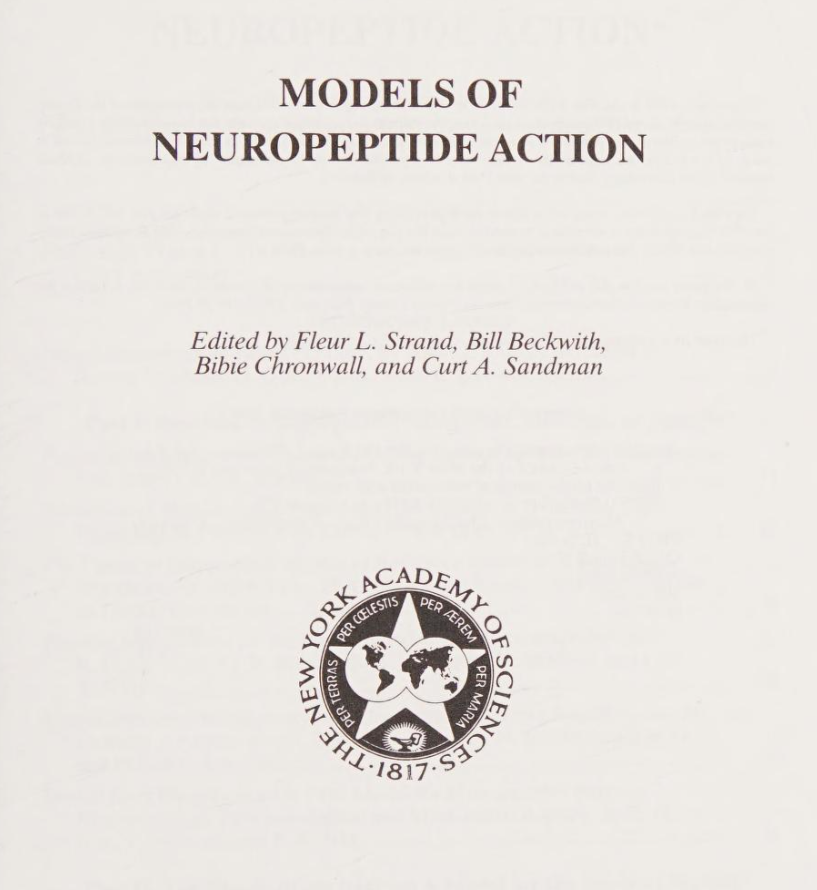
The cover of a science report titled: Models of Neuropeptide Action.

The neuroscientist and former Academy board chair broke scientific and social ground throughout her long career.

Published January 11, 2012

By Diana Friedman

Fleur L. Strand, a physiologist who was a pioneer of the neuropeptide concept, died of cancer on December 23, 2011, in her home in Snowmass Village, Colorado. She was 83.

Strand was actively involved in The New York Academy of Sciences throughout her career, being named a Fellow in 1976 and being elected as chair of the board in 1987. Both her leadership and her friendship will be missed by the Academy community.

Most recently, Strand held the title of Carroll and Milton Petrie Professor of Biology and Professor of Neural Science, Emerita, at New York University (NYU), where she retired in 1997. After her retirement, she was appointed by Governor George Pataki to the New York State Spinal Injury Research Board in 2001 and served as a consultant for several pharmaceutical companies until 2010.

Throughout Strand’s illustrious career, which began at NYU, where she received her BA, MS, and PhD degrees, she broke new ground, both in research and the role of women in science. In 1957, she received a National Institutes of Health postdoctoral fellowship to study at the Physiological Institute of the Free University in Berlin, Germany. During these early years of research, Strand was the first to show that stress-evoked hormones could have a direct effect on the peripheral nervous system, independent of the classical role of the adrenal gland. It took a number of years for the scientific community to accept the concept of neuropeptides.

First Female Department Chair

Following her postdoctoral research in Berlin, Strand returned to NYU in 1961 and was appointed to a faculty position in the Biology Department. In 1980, she became the first female chair of the department. Strand remained an active researcher in the field of neuropeptides, as well as a beloved teacher and mentor, at NYU for 36 years. During this time, Strand sponsored more than 80 graduate student dissertations, authored multiple textbooks and primary research and review articles, and co-founded several professional societies, including the International Neuropeptide Society.

In her personal life, Strand enjoyed a long marriage to her husband of 65 years, Curt Strand. Curt Strand is a retired CEO of Hilton International. The couple enjoyed many years of vacationing in Snowmass Village, Colorado, before moving there full-time in 2004. A memorial celebration for Strand will be held on February 24 at the Snowmass Club.

Also read: Remembering Former Academy Borad Member Jim Simons

To Build an Economic Engine: Overhaul Education

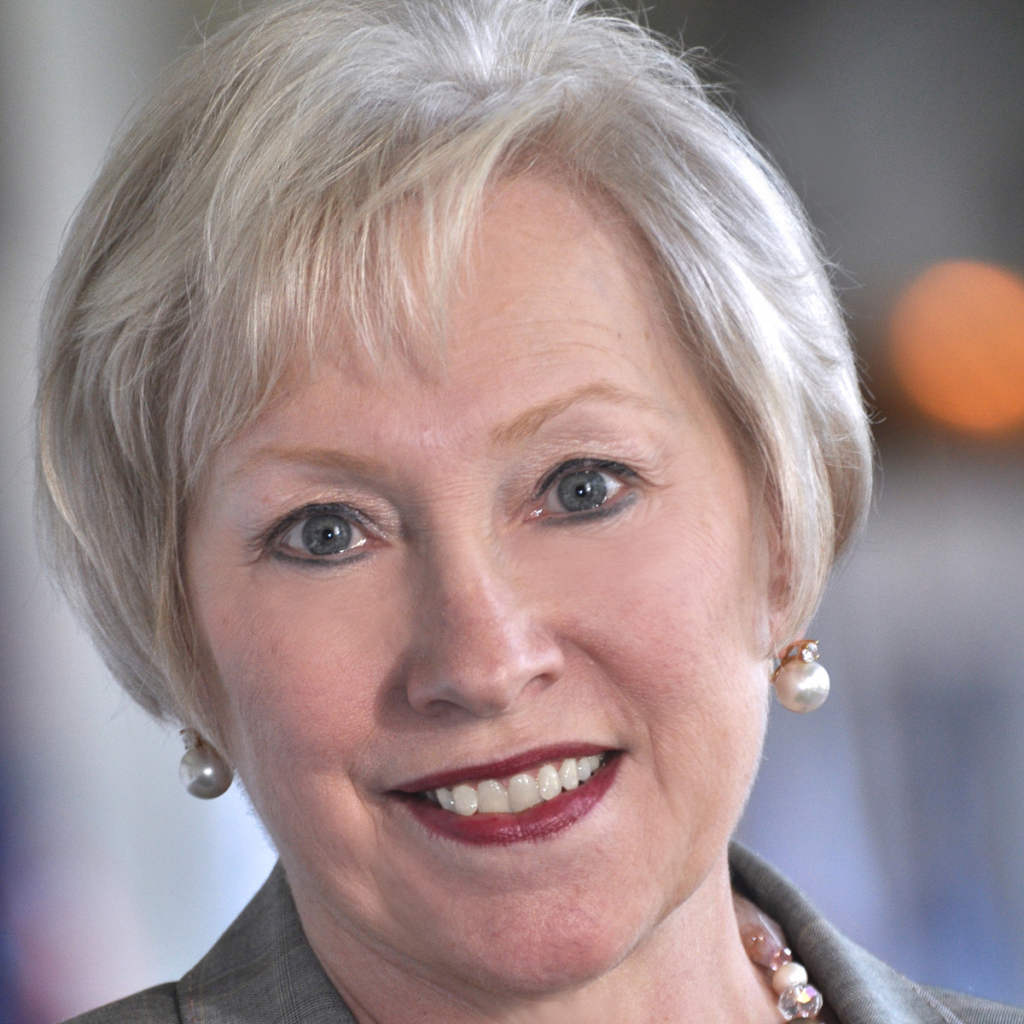
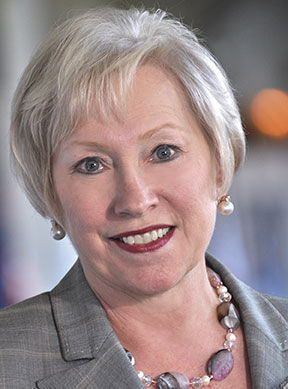
A woman smiles for the camera.

From rural one-room schoolhouse to Chancellor of the State University of New York, Nancy Zimpher has a diverse perspective on education.

Published May 1, 2011

By Marilynn Larkin

When Nancy Zimpher entered the one-room schoolhouse in the foothills of the Ozarks, she knew she was in trouble. “I was the sole teacher for four grades meshed into one classroom. The disconnect between how I had been prepared—as an English teacher—and what I was expected to do in the classroom couldn’t have been clearer,” Zimpher recalls.

“I hadn’t developed the disciplinary skills to stretch across that range of subjects. And I didn’t know as much as I needed to know about managing a classroom. I also didn’t know enough about how young people developed cognitively and emotionally and socially at different grade levels. And I didn’t know how to provide for students the kinds of extracurricular and home life assistance that were required in what we now call a ‘high-needs’ school.”

That experience, in the early 1970s, helped shape Zimpher’s career, which ultimately took her out of the classroom and into the spotlight as a passionate advocate and respected leader in transforming education for students as well as teachers. In her current role as Chancellor of the State University of New York (SUNY), a post she accepted in 2009, Zimpher has continued her efforts to revitalize the educational system, focusing on New York State as a model for the nation.

Education Pipeline

“It’s not unusual for teachers to be teaching out of their depth and out of their discipline, often certified on some emergency basis to teach in some of the most challenging environments. This indicates that the supply chain is quite broken,” Zimpher says. “In terms of solutions, what started as a little ball rolling down the hill has become a huge issue that is coming together at this stage of my professional career through my work at SUNY, where we’re creating models that enable a very different approach to education.”

At the heart of Zimpher’s vision is an “education pipeline” that encompasses “everything people are learning at home and in schools, from the time they’re born through college graduation and as they pursue a career,” she explains. “We need to make a more connected pathway, supporting students not only in the classroom, but outside of school, in their families, in their neighborhoods, and in the whole social structure of our communities,” she says. This systemic approach is exemplified in two recent initiatives she spearheaded: Strive and the National Cradle to Career Network.

Strive, which Zimpher helped launch in Ohio when she was president of the University of Cincinnati, has since been adopted by a number of other cities across the United States, including Houston, Richmond, and Portland, Ore. The initiative brings together, among others, teachers, school district superintendents, college and university presidents, business leaders, and early childhood advocates—experts who usually work in their own “silos,” she says.

Working Across Sectors

By encouraging these individuals to work together across sectors, Strive aims to ensure that children are better prepared for school, supported inside and outside of school, succeed academically, enroll in some form of postsecondary education, graduate and embark on a career. Its most recent “report card” and other data how that in participating cities, Strive implementation has increased academic achievement, kindergarten preparedness, and college graduation rates.

The National Cradle to Career Network, launched in February 2011, is modeled after Strive, bringing together parents, teachers, administrators, and thought leaders from pre-kindergarten through higher education, as well as representatives from industry, community organizations, and government. For the prototype network, which is being developed in and around Albany, SUNY will collaborate with the Albany city school district, several regional SUNY campuses, and local governments and nonprofit organizations. Similar networks will soon be underway in Buffalo and in the borough of Brooklyn, in New York City.

“Clinical” Curriculum

Zimpher emphasizes that teachers “are in a practice-based Profession like doctors, nurses, and clinical psychologists, and they need a whole series of on-campus laboratory experiences, simulations, and video demonstrations to begin to understand the culture of specific schools and classrooms. Even when they’re sent out to a school to observe, they typically don’t know what to look for. Therefore, they cannot see.”

Convinced that clinical preparation should be the “centerpiece” of teacher education, Zimpher agreed to co-chair with former Colorado Commissioner of Education Dwight Jones the Blue Ribbon Panel on Clinical Preparation and Partnerships for Improved Student Learning, convened by the National Council for Accreditation of Teacher Education in November 2010.

In line with Zimpher’s approach, the expert panel called for teacher education to be “turned upside down” and refocused on clinical practice; as in the medical preparation model, “teachers, mentors, and coaches, and teacher interns and residents [will] work together as part of teams.” Stronger oversight by states and accreditation agencies is also recommended to ensure that teacher preparation programs become more accountable.

Thus far, New York, California, Colorado, Louisiana, Maryland, Ohio, Oregon, and Tennessee have agreed to implement the panel’s recommendations.

Power of SUNY…and the Academy

Shortly after she came on board at SUNY, Zimpher launched a strategic plan, called The Power of SUNY, with the goal of making the university system an “economic engine” for New York State. Not surprisingly, a “seamless education pipeline” is a key objective. The plan highlights the increasing need for workers with knowledge and skills in science, technology, engineering, and mathematics (STEM)—the very areas in which performance drops as students move from elementary school through high school.

SUNY is the largest higher education system in the United States, with more than 467,000 students on 64 campuses. Its breadth, scope, and potential are what drew Zimpher to her current post. “Over my 40 years in higher education, I’ve seen a great deal of innovation, but it all had the look of a cottage industry—boutique innovations that are very difficult to take to scale,” she says.

“I saw coming to SUNY as a one-of-a-kind opportunity to take innovation to scale at every level—in education, in the sciences, in art, and in healthcare. My greatest desire for an accomplishment is to realize the power of this complex, diverse system by implementing innovative ideas across multiple campuses.”

That aspiration propelled Zimpher to join The New York Academy of Sciences’ Board of Governors, largely because of the Academy’s “strong commitment to education and, in particular, to the STEM disciplines,” she says. “Linking SUNY’s many scientists, faculty, and graduate students to the Academy’s scientific community has the potential to yield mutual benefits on a huge scale.”

Global Affairs and Outreach

Zimpher also was attracted to the Academy’s international projects and connections. “These dovetail with our desire to better coordinate SUNY’s global affairs and outreach,” she explains. “Many people talk very vehemently about how America’s educational system lags behind those of other countries. Some of what ails our system is being taken care of in other systems.

Nevertheless, as word got out about our cradle-to-career partnerships, people in other countries learned about them on the web, and have begun to solicit our advice. So, I’m thinking that all educational systems around the world get pieces of the comprehensive picture right. But the whole picture—the need to imbue the education process with academic, cultural, and social investments in our future—is something that everybody is challenged with. And that means we have an opportunity to be a model.”

Zimpher’s passion for teaching and revamping the educational system has deep roots. Although her experience in the one-room schoolhouse was a precipitating factor, the foundation was laid much earlier. Her father was a principal in a Herndon, West Virginia, elementary school when he met her mother, who came from Kentucky to teach “commercial” classes in the local high school. “Commercial classes were taken mainly by women who were not college-bound,” Zimpher notes. “Ironically, though, these classes included the one subject that has the most value for us in the 21st century—keyboarding [typing].

“Another irony is that my mother placed students in cooperative internships in local businesses, and years later I learned that the city of Cincinnati was the founder of cooperative education, close to a hundred years ago,” Zimpher says. “And here I am now, working diligently to bring paid internships and cooperative education to scale in New York.”


About the Author

Marilynn Larkin is an independent health, medical, science editor and writer in New York City.