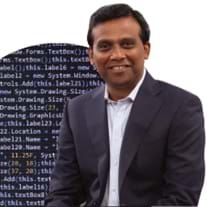
I have great respect and admiration for what talented scientists can do. The brilliance of science is producing solutions to problems and making the world better. Being a Board member for the Academy enables me to assist in that process in any way I can.
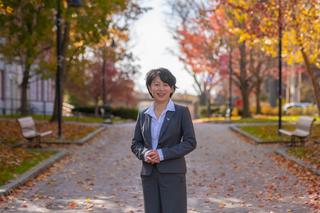
Grace Wangis the President of Worcester Polytechnic Institute and also a member of the Board of Governors for The New York Academy of Sciences. With an extensive background in STEM, she brings a valuable perspective to the Board, helping to guide the Academy in its decision-making. We interviewed her to learn more about her background, what motivates her, and why she chose to get involved with the Academy.
Published February 9, 2024
By Nick Fetty
*some quotes have been edited for length and clarity
What does being a member of the Board of the Academy mean to you?
I’m very proud of my association with The New York Academy of Sciences. I’m an engineer and have spent my whole career in STEM education and research in academia, industry, as well as government. The New York Academy of Sciences is one of the oldest institutions of its kind in the world. It’s had a tremendous legacy and a lasting impact, so I’m very proud to be part of this organization through being a board member. It’s personal and very meaningful to me.
The New York Academy of Sciences looks to the future and continues to empower the next generation of STEM professionals. As the science and technology landscape rapidly evolves, this is particularly an exciting time to be part of the Academy.
How did you first become interested in the Academy’s work?
I became a member in 2018 when I was working at the State University of New York (SUNY), and I’ve been familiar with what the Academy does. My former Chancellor at SUNY, Dr. Nancy Zimpher, was a previous member of the Academy’s Board. I learned some about the Academy’s mission through her — she was very enthusiastic about her involvement.
How did either your professional or your personal background inform your commitment to the Academy?
WPI is a STEM university and focuses on enabling not only the future STEM professionals, but also the future STEM leaders. We are very proud to provide distinctive STEM education through project-based learning. Today, over 85 percent of our students can have off-site project experience – they work on real-world problems in real-world settings – at one of our over 50 global project centers. Through this transformative experience, our students learn to be great team players, communicators, problem solvers, and value creators. They are prepared to be future STEM leaders. The Academy’s mission resonates strongly with what we do at WPI.
Of all the various things that the Academy does and the various programs, is there a particular program or initiative that excites you more than the others? Why is that?
I am excited about the Science Alliance program. It supports emerging STEM leaders and continues cultivating their passion in STEM fields.
I also like the Academy’s awards programs. They not only recognize star researchers, which of course is important; but beyond that, they also inspire the next generation of scientists and engineers to explore research frontiers and pursue their careers in STEM.
“The New York Academy of Sciences is one of the oldest institutions of its kind in the world. It’s had a tremendous legacy and also a lasting impact, so I’m very proud to be part of this organization through being a board member. It’s personal and very meaningful to me.”
DR. GRACE WANG PRESIDENT, WORCHESTER POLYTECHNIC INSTITUTE BOARD MEMBER, THE NEW YORK ACADEMY OF SCIENCES
The New York Academy of Sciences looks to the future and continues to empower the next generation of STEM professionals. As the science and technology landscape rapidly evolves, this is particularly an exciting time to be part of the Academy.
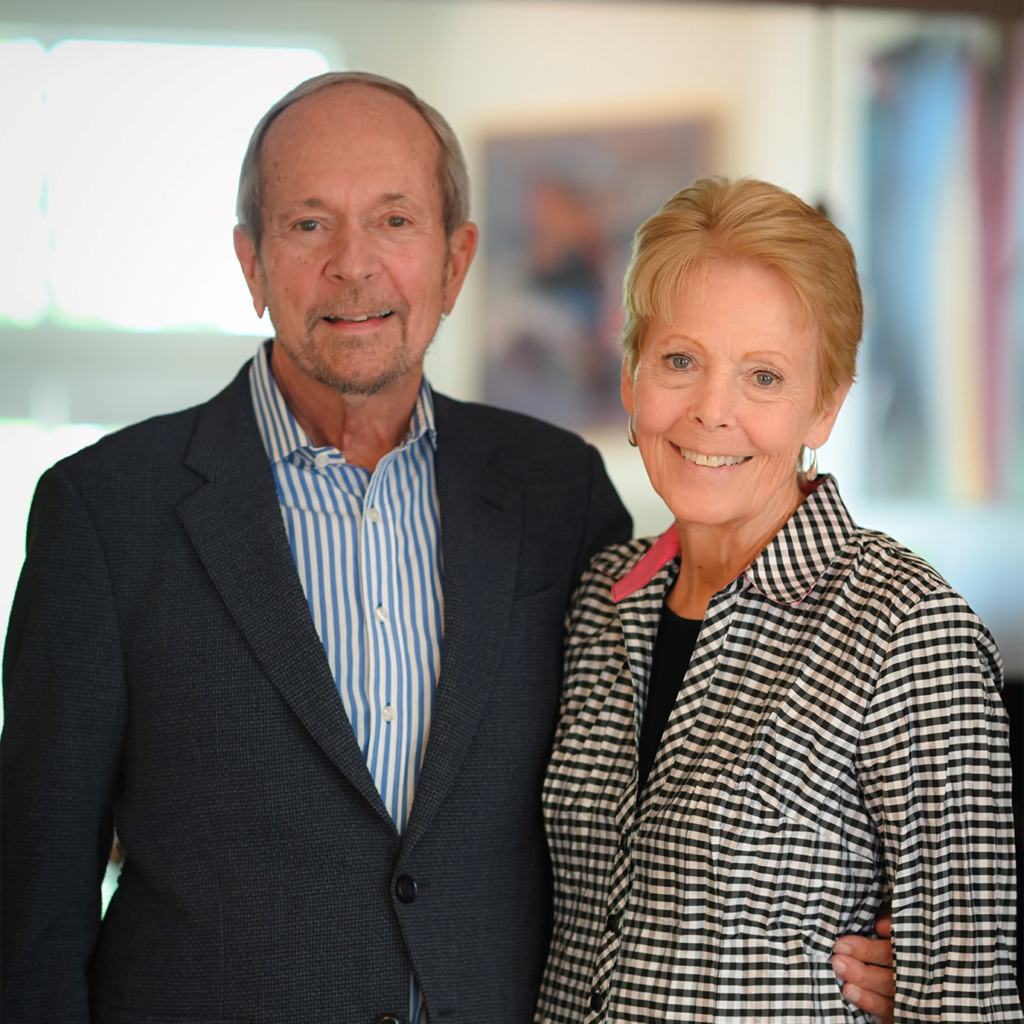
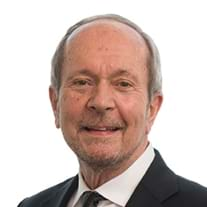
Jill and I are thrilled to support The New York Academy of Sciences’ renewed drive to create a positive impact and encourage science-informed decision-making to address the most challenging problems of our times.
The New York Academy of Sciences’ President and CEO Nicholas Dirks spoke recently with SVP and Director of IBM Research Dario Gil about how science is changing.
Science in 1945 was big science at big labs, with lots of barriers—including the barriers of national borders.
The New York Academy of Sciences (the Academy) has a history that goes back over twice as far. But it is a 200-year-old institution that is not doing old fashioned science. Instead, the Academy is striving to meet the needs of the 21st century.
Academy President and CEO Nicholas Dirks spoke recently with SVP and Director of IBM Research Dario Gil about how science is changing.
The two leaders have been instrumental in the launch the International Science Reserve (ISR), a network designed to help scientists meet many of the big challenges we are facing today. It is an ambitious program to facilitate evidence-based solutions to global crises.
Nick started the conversation by asking Dario to describe what he thinks characterizes the best contemporary science.
Individual Rights and the Public Good
Computer science is at the heart of many of the rapid developments we are witnessing in science, medicine, engineering, and technology. Dario and Nick discussed these achievements, as well as challenges in balancing those against threats to individual rights and the public good.
The pandemic placed many new demands on science and scientists. IBM stepped up in many important ways, including by setting up a system to provide computing resources to scientists, clinical researchers, and drug developers. Those efforts pointed to future opportunities for the sharing of computing and other resources in times of global need. In his conversation with Nick, Dario explained how this experience set the stage for the International Science Reserve.
The ISR recently completed an important milestone, its first “readiness” exercise. This featured three wildfire scenarios–a crown fire in the conifer forests of the Northwestern United States, a rapidly moving brush fire in Greece, and a slow burning peatland fire in Indonesia. The exercise demonstrated success in building an international network of scientists willing and able to contribute their skills to crisis response. The exercise also yielded important information about how to assemble resources those scientists could call upon to support their research when disaster strikes.
Do you want to be part of this impactful network of scientists? Join the ISR today
Developing a strong future workforce starts with training teachers to be confident in their instruction of computer science, starting in students’ early school years.
Published May 1, 2020
By Ravi Kumar S.
Ravi Kumar S President, Infosys Ltd. and Chairperson Infosys Foundation USA
Over the past few years, there has been growing acknowledgment that it is important to make computer science a core component of K-12 education. And how could there not be? With 500,000 jobs currently available in the computing sector and projections that these jobs will grow at twice the rate of others, there is no ignoring that computer science is not just the future of work, but very much the present.
K-12 education should be setting our children up for postsecondary success, but multiple studies show that if students are not meaningfully exposed to STEM subjects by middle school, especially girls, they will never take an interest in them later on. How do we ensure that our children study these subjects early and continue them into their careers?
The answer is training teachers. Too often we bypass these critical members of our workforce, but that is a mistake. The average teacher will reach thousands of students throughout their career so their potential for impact in the classroom is huge. Developing a strong future workforce starts with learning computer science at a young age, and that means training and retaining confident teachers.
Here are five ways to make computer science professional development effective for teachers:
1. Offer multi-day trainings through multiple channels
Computer science can be challenging and intimidating. In order to get teachers more comfortable and familiar with the material, professional development should be sustained for multiple days rather than a one-day meeting or a single intervention seminar so they gain the confidence and competence to stand in front of their classes and teach the subject. Additionally, in-person trainings should be supplemented by online resources and coursework so teachers can continue to develop their skills and increase their facility with these concepts. The Every Student Succeeds Act (ESSA) outlines specific requirements for professional development and underscores the importance of sustained Professional Development (PD).
2. Create a community
Creating a community is key when it comes to teaching computer science, especially for teachers who are new to the subject. Successful PD should foster peer networks through online forums that encourage teachers to connect with one another, ask questions and share best practices so that success is shared across schools and states, and pain points can be worked through collaboratively.
3. Keep it collaborative and hands-on
Computer science is collaborative, so learning how to teach it should be as well. Beyond the hard-technical skills that are gained from the subject, students and teachers alike will benefit from a wide array of soft-skills — creativity, critical thinking, problem solving and collaboration. And these skills are necessary for all disciplines, so the applications are much wider than just the computing space. Furthermore, group learning helps to strengthen the community that teachers will walk away with once the PD is over.
4. Offer variety
Just like math, science or history, computer science covers a multitude of skills and subject areas, so there is no one-size-fits-all course when it comes to PD. In order to successfully integrate computer science principles across grade-levels and skill-levels, there needs to be a diverse offering so every teacher can find something that is relevant to their grade, ability and comfort-level.
5. Make it classroom relevant and contextual
PD should go beyond abstract theories and concepts, and the content should be relevant for the context in which it will be used. This means teachers should receive tools, such as lesson plans, teaching guides and other resources to support classroom instruction, and the materials should be adaptable to real-life scenarios and common core subjects so all students can take interest in what they are learning.
Underinvesting in the PD of teachers hinders the growth of our students. But if we ensure that teachers have the confidence and tools they need to bring the principles of computer science into the classroom, it will reverberate through to their students and help to light a spark in all students and build a healthy pipeline of tech talent for the future.
The Intelligence Revolution raises fundamental questions about what it means to be human.
Published October 1, 2019
By Jerry Hultin
Machine learning. Advanced manufacturing. Autonomous vehicles. Robotics. Drones. Welcome to the rise of smart machines! This revolution — let’s call it the Intelligence Revolution — offers the world benefit and harm at a scale exceeding that of the three earlier Industrial Revolutions. But it also raises fundamental questions about what it means to be human.
Will science and technology of the 21st century make us irrelevant? Will this lead to massive social unrest when smart machines take worker’s jobs? More fundamentally, how will a world operate where everyone may have the luxury of leisure, but not the economic resources to enjoy it?
In 2017, I chaired a study into the impact of artificial intelligence and automation on the Pentagon’s “business processes.” Based on what corporations in America have already achieved, we estimated that the U.S. Department of Defense could save nearly $60 billion a year by using the existing tools of automation and artificial intelligence.
The Growing Role of Automation in the Workplace
In addition, the quality and speed of decision-making in the Pentagon would be quantitatively better. Conversely we cautioned that the job losses and the redistribution of work functions would be huge. Thus the Pentagon would face a major challenge in finding jobs and providing training for the thousands of displaced employees.
According to a recent McKinsey Global Institute report on the growing role of automation in the workplace, at least 30 percent of the predominantly repetitive, routine and physical activities in 60 percent of current jobs can be automated. With efficiency gains and cost reduction of such magnitude the commercial, industrial, healthcare and construction industries will see AI and the automation that springs from AI, as compelling.
So how will the accelerating application of AI play out around the world? Here in the United States, the people most at risk include 14.7 million young workers, 11.5 million workers over age 50 and 11.9 million Hispanic and African-American workers. This accounts for more than 20 percent of the full-time employees in the United States. Amazon, which attributes the success of its one-day shipping to AI, is now committing some $700 million to retrain or up-skill its workers for the increasing technical demands of new jobs that will help them stay ahead of displacement by AI.
Automation Implications in India, Africa
But what about a country like India? With a population over 1.3 billion, nearly 750 million young people under the age of thirty, and an overall literacy rate of 71 percent, India is striving to radically increase jobs and reduce its level of poverty. But India may not get this chance if automated technologies supplant available jobs.
Much the same can be said about the future fate of Africa as its population of approximately 1 billion people grows to 2 billion by 2050. If Africa only has access to the educational and economic tools available today, the likelihood that it can match the growth rates of China and other Asian nations is remote.
The challenges presented by AI require a fundamental reworking of key components of how we learn and live. A recent Atlantic Monthly “conversation” between Henry Kissinger, Eric Schmidt and Dan Huttenlocher about the future of AI concluded with the following:
The three of us differ in the extent to which we are optimists about AI. But we agree that it is changing human knowledge, perception, and reality — and, in so doing, changing the course of human history. We seek to understand it and its consequences, and encourage others across disciplines to do the same.
Looking Ahead
Fortunately, the Academy under Ellis Rubinstein’s leadership has taken seriously the importance of increasing scientific and technological skills among young people around the world. Propelled by his concerns about their future prosperity and security, Ellis enlisted the business community, NGOs and philanthropists, in an unprecedented series of cooperative programs designed to increase skills. Through the collective action of our partners, benefactors and Members, we can lead a global conversation to better understand, develop and employ the power of AI.
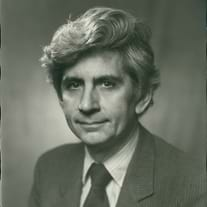
Dr. Salzinger fled Nazi-occupied Austria for NYC as a child. He went on to have a distinguished career as a professor in behavioral psychology.
Published November 13, 2018
By Marie Gentile, Mandy Carr, and Richard Birchard
The New York Academy of Sciences extends its sincerest condolences to the family of Kurt Salzinger, PhD, who was a Member for many decades, and served on our Board of Governors for ten years in the seventies and eighties, including a year as Board Chair (President) in 1985.
A distinguished scholar in the field of behavioral psychology, Dr. Salzinger was professor emeritus in the Department of Psychology at Hofstra University. He also served as a Professor and Director of Training for Hofstra’s graduate program in Combined Clinical and School Psychology.
Supporting the Rights of Oppressed Scientists
At the Academy, in addition to his leadership accomplishments, Dr. Salzinger is best remembered for campaigning tirelessly for the rights of oppressed scientists. He established communications with the Soviet Academy of Sciences during the waning days of the Cold War, and published the work of those scientists whose papers could not be circulated in their own countries. During his tenure, the Academy’s “adoption” program — which put Academy Members in touch with oppressed scientists abroad — led to the creation of a special Human Rights Award, to be given in recognition of service to the human rights of scientists.
During his more than 50-year career, Dr. Salzinger held positions at the New York State Psychiatric Institute, Polytechnic University, the National Science Foundation, and the American Psychological Association. He was also President of the Association of Behavior Analysis and of the Eastern Psychological Association. He authored or co-authored 14 books and more than 120 articles and book chapters, and in 2002 was named a Presidential Scholar for the Association for Behavior Analysis in 2002.
A young immigrant who fled the Nazi occupation of Austria in the 1930’s, Dr. Salzinger settled in New York City and attended the Bronx High School of Science, NYU and Columbia University. He is survived by his wife, four children and two step-children.
The former Academy president jump-started a long-lasting focus on collaboration, setting the organization on a path to success.
Published September 1, 2014
By Hallie Kapner
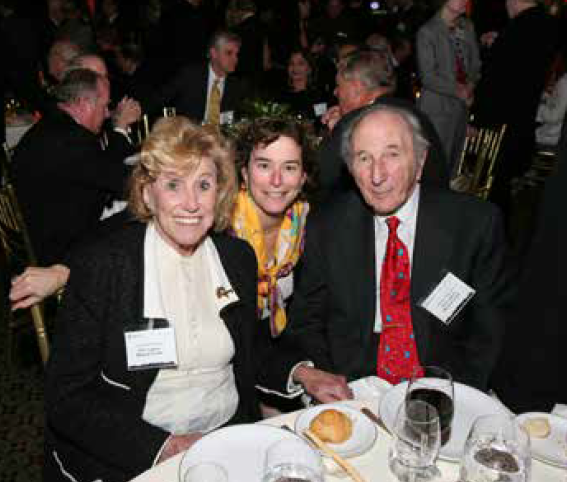
Herbert Kayden (right) with his wife Gabrielle Reem (left) at the Academy’s 2009 Annual Gala.
Reflecting on the circumstances that first brought him to The New York Academy of Sciences, in 1949, Herbert Kayden, MD, once remarked, “I’ve often wondered what would have happened in my future if, instead of bouncing there (to the Academy), the ball had bounced once more and I had been in a different place.” In the 65 years since that fateful day he first attended an Academy meeting, a time during which Kayden ultimately served as Academy Governor and President, it has become truly impossible to envision the organization without his influence—a fact that has become clearer since his passing this summer.
A native New Yorker, Kayden spent nearly all of his life in the city, leaving an indelible mark not only on the Academy, but on the students he taught at New York University School of Medicine and NYU Langone Medical Center, where he was professor emeritus of medicine and a renowned cardiologist and researcher, and on the art world, as an avid collector and generous benefactor.
A Start in the Sciences
The son of immigrant parents, Kayden attended New York City public schools, graduated from Columbia College in 1940 and earned his medical degree from New York University School of Medicine in 1943. Kayden served as a Naval physician in World War II, and his ship, the destroyer escort vessel USS Charles Lawrence, participated in the Battle of Okinawa.
Kayden returned to New York after the war, and was fortunate to secure one of the few coveted residency positions available to military physicians who needed to complete their training. His appointment, as chief resident on a joint research and clinical service on what is now called Roosevelt Island, gave Kayden his first exposure to a scientific research environment and placed him in the fortuitous position of seeing patients alongside medical researchers developing new treatments for disease. At that time, clinicians working in tandem with researchers were fairly unusual—the relationship between the two groups was far more competitive than collaborative, as Kayden remembers it.
He believed that the positive collaboration between the medical doctors and PhDs on his service—he called them “stellar investigators”—uniquely prepared him not only to embark on the research activities that were the hallmark of his career, but to understand the dynamics of The New York Academy of Sciences and to ultimately lead the organization.
Many of the researchers on Kayden’s service during his residency were members of the Academy and encouraged him to join as well. He paid his $40 dues, and “before I knew it, I was plucked out and put on committees,” Kayden recalls, describing how what began as a simple membership in one of the preeminent scientific societies in the country became something far greater.
Taking An Active Role
Almost immediately, Kayden became deeply involved in the Academy’s esteemed conference committee, which was responsible for screening conference proposals and shaping the content, length, and panel of presenters for each event. As they are today, the Academy’s conferences were then viewed as a venue to share breakthrough findings and explore emerging fields of inquiry, and the proceedings were reported in Annals of the New York Academy of Sciences.
The conference committee also counseled sponsors on raising funds to complement the modest budget allotted by the Academy—once again foreshadowing what would eventually become a pivotal part of Kayden’s contributions to the Academy. With time and experience, he rose in rank, ultimately serving as conference committee Chair.
Outside of the Academy, Kayden had joined the faculty at New York University School of Medicine, where he split his time between clinical cardiology practice and a productive research agenda. His studies of arrhythmias in the 1950s led to new treatment protocols, and by 1960 he was devoting his professional efforts exclusively to research on lipoproteins.
Kayden had also married Gabrielle H. Reem, a fellow physician and researcher who spent a decade at Memorial Sloan Kettering hospital as a clinician before joining the New York University School of Medicine as professor of pharmacology, an appointment she held until her death in 2011.
Bridging the Gap
In the 1970s, 20 years after joining the Academy, Kayden was tested with the first of two major hurdles. Both were overcome due in large part to his leadership, and helped vault the Academy to what he believed was its rightful place at the forefront of the scientific community.
Kayden served as Academy Governor from 1972-1974, during which time the leadership of the Academy became increasingly fractious. On one side, Kayden recalled, were the administrators, whom many felt were out of touch with the pace and importance of discovery, and viewed the Academy more as a venue for camaraderie than scientific advancement. On the other side, the physicians and scientists of various disciplines, many of whom worked in New Jersey’s burgeoning pharmaceutical industry.
Kayden’s history of bridging the gap between medical doctors and researchers became a critical asset, as was his commitment to the Academy. He explained that he had two choices: “you either join them and change it from within, or you leave. I ended up doing the former.” He became Academy president in 1977 and quickly made changes that were essential to the organization’s survival.
During his tenure he installed new executive leadership, improved management of the Academy’s finances, and, perhaps most importantly, created at atmosphere of partnership among the membership factions. A physician and bench scientist, Kayden was proof that there was no one path or degree that legitimized a scientist’s work. “I was determined to turn the Academy into a neutral place where these two disparate groups could meet evenly and become friends, become colleagues, do collaborative work,” he said. He succeeded, and in doing so, unified and increased the Academy’s membership while opening new avenues for financial support.
Ongoing Influence
Following his presidency, Kayden maintained strong involvement with the Academy, not only as a committee/board member, but also as editor of more than a dozen volumes of Annals of the New York Academy of Sciences. Many of Kayden’s groundbreaking studies of lipoprotein disorders were published in Annals during the 1970s and ‘80s. In addition to his work on arrhythmias, Kayden identified the genes responsible for abnormal synthesis of Vitamin E, a deficiency of which causes a devastating constellation of neurological symptoms.
Today, the room that houses Academy conferences and events that inspire students, educators, scientists, and leaders from around the globe is aptly named the Herbert and Gabrielle Reem Kayden Auditorium.
Their gifts to the Academy have allowed the organization to truly serve all points along the scientific pipeline, starting with the place where many young students first experience the thrill of discovery: the classroom. Kayden and Reem provided the seed funding for an extraordinary program that turned thousands of New York City public school science teachers into Academy members, providing tools, training, and connections to the scientific community. Kayden believed that “if you have a talented teacher and an eager student of almost any background, you could get wonderful results,” and the program he helped initiate has brought the joy and power of science to thousands of teachers and students in some of New York’s most underserved areas.
Recognized as Life Governor
In 2009, the Academy named Kayden a Life Governor in recognition of his service and generosity.
In August 2014 the worlds of science and humanities lost a brilliant mind and dedicated champion. Toward the end of his life, Kayden said he often reflected on the enormity of today’s problems, especially when it came to the lack of comprehensive science education and its impact on the future of humankind. But he was unguardedly optimistic, and grateful for the many opportunities that enriched his days. “You can look back and say, ‘I wish I had more,’ but I don’t feel that way,” he said. “We had so much. We were so lucky, and so productive. When I go to my maker and they ask, ‘What good have you done?’ I’ll be prepared.”
At today’s White House Science Fair, The New York Academy of Sciences pledges to positively impact the STEM education crisis through innovative, impactful, and inspiring programming.
Published May 27, 2014
By Diana Friedman
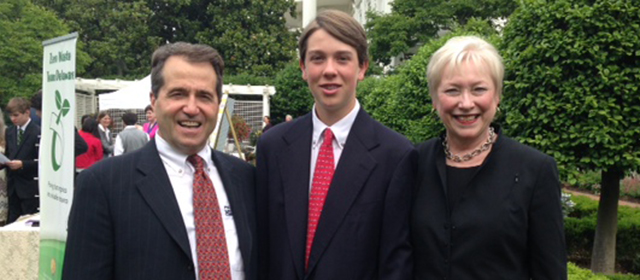
Attending the White House Science Fair, (left to right) Rocket21 CEO Mark Grayson, student Thompson Whiteley, and Academy Board Chair and SUNY Chancellor of Education Nancy Zimpher.
At the White House Science Fair on May 27, 2014, The New York Academy of Sciences (the Academy) pledged to positively impact the STEM education crisis through innovative programming that inspires students to see science as an exciting conduit to solve local and global challenges.
Today’s students are tomorrow’s workforce. Such a fact is not lost on the Academy, which today, along with its partners in The Global STEM Alliance, is tackling the science, technology, engineering, and math (STEM) education crisis head on-by creating opportunities for inter-generational mentoring and engagement in STEM subjects.
By joining the White House in making a formal commitment to STEM education today, the day of the White House Science Fair, the Academy is joining with a group of like-minded organizations, and the federal government.
“It is essential that the nation’s classrooms, from the earliest stages of education through college, utilize technology and critical thinking as we strive to meet increasing demand for STEM graduates in today’s competitive, global economy,” says Nancy L. Zimpher, Academy board chair and State University of New York chancellor, who is attending today’s event. “We are thankful to have the support of the White House as the New York Academy of Sciences’ Global STEM Alliance continues to help educate and train a technologically-savvy, innovative workforce for the future.”
Why Target STEM?
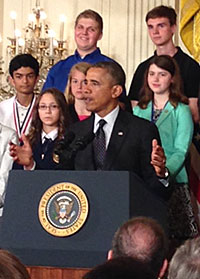
President Obama addresses the audience at the White House Science Fair.
The world needs a workforce of skilled science and technology innovators to address the most pressing global challenges of the coming century-climate change, food shortages, increases in chronic diseases, energy shortages, and more. In the U.S. alone, it is estimated that by 2018, some 75% of occupations will be middle- or high-skilled, with the majority of these jobs requiring an education in STEM subjects. And yet, students are dropping out of STEM at alarming rates, in the U.S. and in countries the world over, from China to South Africa, due to lack of engagement.
How Will We Solve the Crisis?
Enter a new initiative: The Global STEM Alliance, launched by the New York Academy of Sciences and its partners. The Alliance is designed to connect students from around the world with each other and scientific role models, through a mix of site-based programs, a collaborative digital platform, and a social learning network.
The initiative will begin with students in the United States, Malaysia, Australia, and the City of Barcelona, with other countries and regions expected to join. Working with sophisticated Telepresence capabilities and additional tools from fellow founding partner Cisco, the virtual platform allows students to interact and discuss STEM with counterparts in other countries; participate in mentoring relationships with brilliant, young scientists; elect to participate in cutting-edge science courses, challenges, games, and other activities; learn about a day in the life of a scientist; and seek advice and network with science-minded peers for life.
Additional members of the Alliance include GALXYZ, a game-based intergalactic science adventure, and Rocket21, an online youth innovation platform, with more to come.
Connecting Science and Community Service
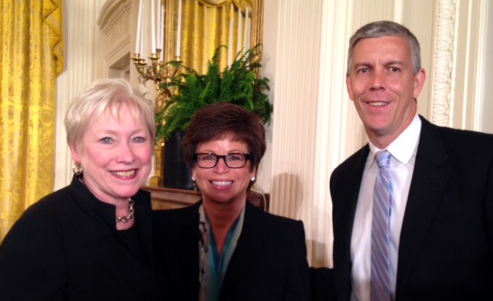
Academy Board Chair and SUNY Chancellor of Education Nancy Zimpher, Senior Advisor to the President of the United States Valerie Bowman Jarrett, and United States Secretary of Education Arne Duncan, at the White House Science Fair.
Rocket21’s Dream Green Innovation Winner, 14-year-old budding environmentalist Thompson Whiteley from Easton, Conn., is attending today’s White House Science Fair. Whiteley created a winning plan to capture and repurpose plastic from The Great Pacific Garbage Patch in the North Pacific.
“Students like Whiteley make clear the connection between engagement in STEM subjects and the ability to solve problems in local communities, and beyond. Such is the premise of the Academy and Rocket21’s Dream Big for the World initiative, which we are excited to launch with the Academy,” says Mark Grayson, CEO of Rocket21.
Dream Big for the World is a series of STEM challenges designed to immerse middle and high school students in the pressing global issues raised in the USAID Grand Challenges. Planned for launch during the 2014-2015 academic year, the challenges will invite students, working independently or in teams, to develop innovative solutions to their choice of Grand Challenges, with opportunities to connect virtually with content experts, as well as provide resources to teachers.
The ultimate goal: The Global STEM Alliance seeks to scale the experience of humanizing science and providing students with real-world STEM role models through technology. By connecting students with the best scientists and engineers, with each other, and with innovative curriculum and educational challenges, the Alliance will foster engagement, mitigate STEM drop-out, and create the next generation of STEM leaders and innovators.