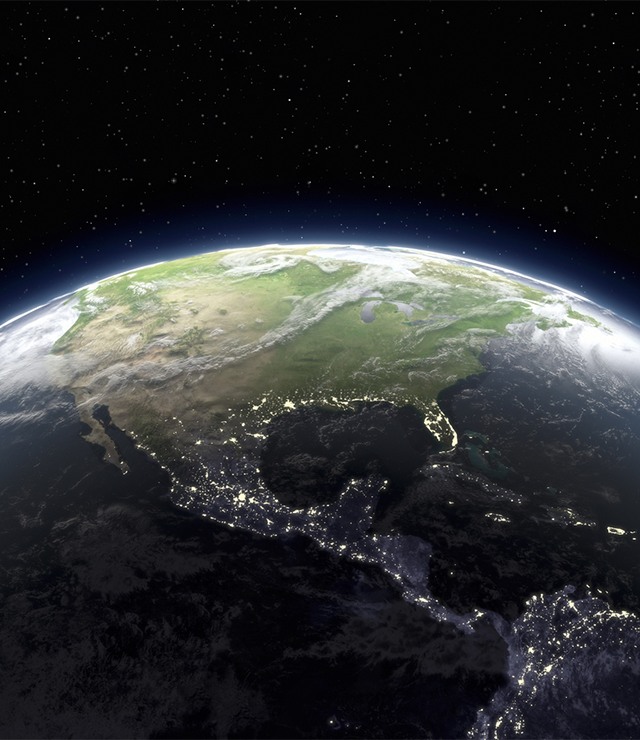
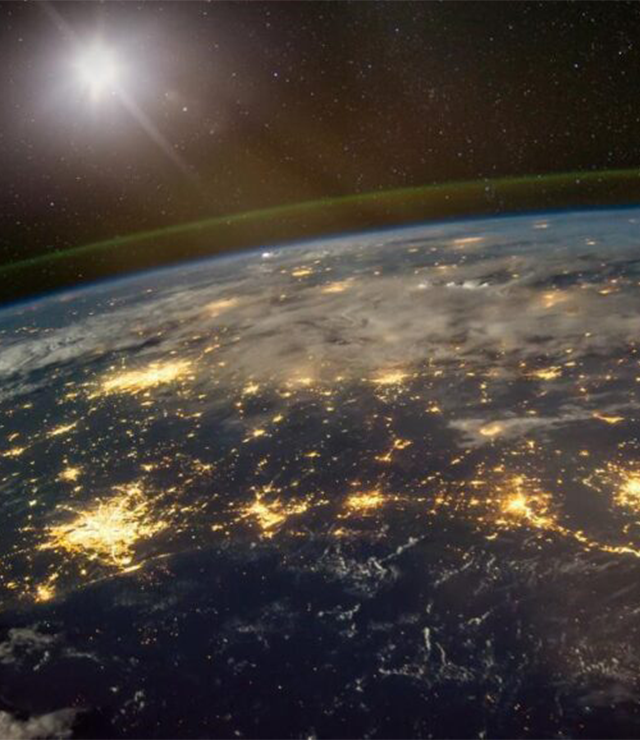
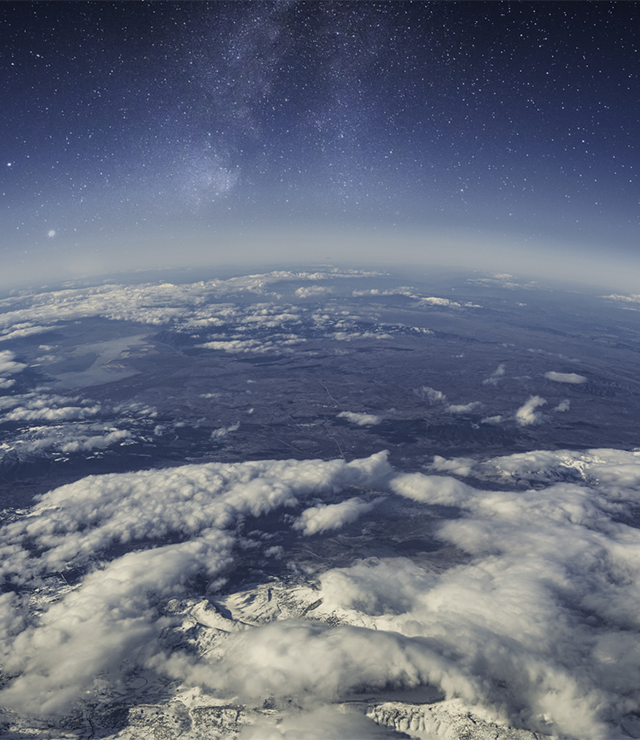
The GLOBE program aims to understand how the Earth’s spheres interact as a single system.
Published May 1, 2019
By Robert Birchard
The term “citizen science” first entered the Oxford English Dictionary in 2014. It describes a long-standing tradition of collaboration between professional and amateur scientists. Perhaps no field is as closely associated with citizen science as astronomy. Here amateur stargazers continue to sweep the skies for unidentified heavenly bodies. Today, with the advent of smartphone technology, even more fields of scientific inquiry are open to the curious amateur.
“The data we collect varies depending on our research,” explained Ana Prieto a former high school science teacher and GLOBE program volunteer in Argentina. “We’re currently taking land cover measurements in the field, and in the summer we will start taking hydrology measurements. This provides students with first-hand scientific knowledge.”
Collected data is uploaded to the GLOBE database using their customized app.
“The GLOBE protocols (instructions on how to take measurements) are updated and respond to a range of opportunities for measurement and research,” said Ms. Prieto. “It teaches students to use measuring devices, perform physical-chemical analysis, make estimations, pose questions, make hypotheses and design investigations. In short STEM is applied to real-world problems.” For non-GLOBE members the GLOBE Observer allows any citizen scientist enthusiast to collect and send data from GLOBE countries.
Data with Various Applications
The data is used for a variety of purposes.
“We collaborate with NASA Scientists and Science Missions,” explained Tony Murphy, PhD, GLOBE Implementation Office Director. “One example is the August 2017 North American eclipse. NASA scientists are looking at the temperature data collected. They are examining the impact of the eclipse on air temperature and solar radiation. Another use is data gathered on mosquito larvae detection and identification, which is then used to help local communities combat the spread of mosquito-borne diseases by identifying and eliminating sources of standing water, such as containers and spare tires, in which mosquitoes breed.”
The data collected by GLOBE is verified in their system of checks and balances. “We’re looking primarily for outliers,” explained Dr. Murphy. “There’s a range of acceptability for the data in different protocols. Also, we have had scientists look at particular data sets and they found that the data is, for the most part, accurate.” He concluded, “It’s important to get people involved, get them outside, using technology in a positive way for an educational purpose.”
The team hypothesized that monetary rewards and online or social media acknowledgments would increase engagement of participants.
“People contribute to citizen science projects for a variety of different reasons,” said Jeffrey Laut, PhD, a postdoctoral researcher in Dr. Porfiri’s lab. “If you just want to contribute to help out a project, and then you’re suddenly being paid for it, that might undermine the initial motivation.”
“For example, one of the things we point out in the paper is that people donate blood for the sake of helping out another human,” explained Dr. Laut. “Another study found that if you start paying people to donate blood, it might decrease the motivation to donate blood.”
Proper Rewards for Participation
If a citizen science project is suffering from levels of participation, researchers need to carefully choose the level of reward.
“I think with citizen science projects the intrinsic motivation is to contribute to a science project and wanting to further scientific knowledge,” said Dr. Laut. “If you’re designing a citizen science project, it would be helpful to consider incentives to enhance participation and also be careful on the choice of level of reward for participants.”
The technology used and scope of information collected may have changed, but the role remains as important as ever.
“It is important that citizens understand the world in which they live and are capable of making informed decisions,” said Ms. Prieto. “It’s also important that all people understand science, especially to combat disinformation. From this point of view citizen science is vital and a needed contributor to the greater field of science.”
With a bit of forethought, researchers can avoid the pitfalls of modern intellectual property management and data security.
Published May 1, 2019
By Alan Dove, PhD
Jim Singer
Google Docs. Open notebooks. The Internet of Things. Open source software. Cloud storage. For researchers, the ever-expanding world of digital data handling tools seems like a theme park built just for them. For intellectual property lawyers, security experts and technology transfer managers, however, it can look more like a house of horrors.
Scientists focused on their projects often set up collaborations, configure networked data-gathering equipment and write software with little thought about patents, copyrights or liability. Those choices can come back to haunt them years later. However, researchers can avoid many of the pitfalls of modern intellectual property management and data security with a bit of forethought.
The Other Kind of IP Address
The original intent of the internet was to facilitate scientific collaborations over a single network for defense department projects at multiple institutions, and it still excels at that, subject to caveats about data security.
“Collaboration has always occurred across research institutions, [but] online collaboration has made it happen more quickly,” says attorney Jim Singer, chair of the intellectual property department at the law firm Fox Rothschild in Pittsburgh, Pa. Singer adds that “often what we see is that the collaboration occurs … before the researchers have considered that they might have some intellectual property that’s worth protecting.”
Even simple online collaborations can lead to legal quagmires. “If you’re collaborating using, say, Google Docs … what you’re left with can be a joint work where it’s not clear what each party owns, and in fact, you end up with a co-ownership situation,” says Jeremy Pomeroy, an intellectual property attorney and founder of the Pomeroy Law Group in New York City. To be clear, that’s not always a good thing. “Often clients like the idea of joint ownership, it sounds friendly, [but] they don’t understand the implications of that,” says Pomeroy.
Joint Ownership of a Copyright
Jeremy Pomeroy
Without an agreement to the contrary, there is joint ownership of a copyright of “a work prepared by two or more authors with the intention that their contributions be merged into inseparable or interdependent parts of a unitary whole.” (17 U.S. Code § 101). Co-inventors on a patent are all considered equal contributors, each able to license or sell the invention however they like. Worse, it may not be up to the scientists to decide who to include on that list.
“Patent law decides who is an inventor in a patent application, and joint inventorship means joint ownership. If you’re claiming something in the patent application and a collaborator contributed anything to those claims, then that collaborator must be named as an inventor,” says Singer. A minor contributor could wield outsized influence over the fate of the invention.
Cloud-based storage and high-speed connections also make it easy to collaborate across continents and sometimes conflicting legal systems. Singer says that the U.S. Patent Act states that if you invent something in the U.S., you must file your patent application first in the U.S. before filing in other countries. That would be simple enough if China, India and other nations didn’t have similar types of requirements. Even if all of the scientists involved work for the same institution or company, “the question becomes ‘where can you file the patent application first?’” Singer says.
The rise of rapid publication platforms, such as preprint servers, has added yet another twist. Singer explains that the U.S. gives inventors a one-year grace period to file a patent after describing an invention in a publication, but most other nations don’t. Once the paper is published, the invention becomes unpatentable. “I’ve seen inventors lose international patent rights because of that,” he warns.
Officers Are Standing By
Andy Bluvas
While explaining the litany of risks inherent in collaboration, intellectual property experts emphasize that effective protection can be as easy as having each collaborator contact their institution’s technology transfer office as soon as the project begins. That office can then ensure appropriate allocation and documentation of collaborators’ respective intellectual property rights. The call will likely be well received. “We routinely have to educate new faculty members, [and] something we harp on is that before you put anything online you should come and talk to us first,” says Andy Bluvas, a technology commercialization officer at the Clemson University Research Foundation (CURF) in Clemson, S.C.
One of the most common collaborative activities online, sharing computer code, involves shifting legal nuances that many researchers don’t know about. In 2014, the U.S. Supreme Court ruling in Alice v. CLS Bank invalidated hundreds of software patent claims and made patenting new code much harder. The expression of ideas in software can still be subject to copyright protection, but it requires a different legal approach.
Scientists and engineers working on technologies for the “Internet of Things” (IoT) are also discovering complex interactions between patents, copyrights and product development cycles. “Usually they release the technology or the products with some sort of software inside, and then what happens is they incrementally improve it,” says Bluvas. He recommends that researchers working on those types of projects bring their attorneys aboard to keep the software and hardware designs aligned with the legal code.
Reusing Source Code
Chris Gesswin
The common programming practice of reusing source code can cause other problems. “We’ll have researchers that borrow from multiple different packages of software, and they may be open source or they may be proprietary,” says Chris Gesswein, executive director of CURF. Open source software allows such borrowing, but different open source licenses place different restrictions on how the borrowed code can be used, and proprietary software has even stricter limits. Also, use of open source code may, under the terms of the license, cause the entire software package to become subject to the license’s open source requirements. The result can be software covered by multiple conflicting licenses, making it difficult or impossible to commercialize.
Academic researchers may be reluctant to involve administrators in their work, but technology transfer officers share the scientists’ priorities. “No matter what, our goal is to get [scientists’ results] out there … in peer-reviewed journals,” says Bluvas. Patent and copyright filings usually proceed faster than research journals’ publication cycles, so scientists don’t have to choose between timely publication and protecting their intellectual property.
Nonetheless, a majority of investigators don’t take advantage of the technology transfer officers’ expertise. Gesswein estimates that only 15 to 25 percent of Clemson’s research faculty interact with his office.
Who Let the Data Out?
Privacy laws present another challenge for many projects, whether researchers want to know about them or not. “I appreciate more than anybody that scientists don’t want to think about stuff like this, they just want to do the science,” says attorney Mark McCreary, chief privacy officer at Fox Rothschild. But ignorance of privacy laws can have serious consequences, especially for multinational collaborations.
Mark McCreary
McCreary points to the European Union’s recent implementation of the General Data Protection Regulation (GDPR) as an example. The law includes a controversial “right to be forgotten,” which allows for medical research exceptions where individuals may rescind their consent for the use of their data. Subjects could retroactively withdraw from a biomedical study, and researchers would have to delete the associated data, but this exception is, as yet, untested and it is unclear if a narrow reading could lead to invalidated studies.
Failure to comply with such rules can be costly; the maximum fine for a GDPR violation is four percent of global revenue from a project, or 20 million Euros, whichever is greater. “You’d have to really be a bad actor [to incur] something like that, but it’s there, it’s a possibility,” says McCreary.
An Obligation to Protect Personal Data
Scientists may also have an obligation to protect the privacy of personal data, and cloud-based tools raise the risk of a breach. Hackers are unlikely to target a single project, but “when you put it into a service provider where they [have] tens of thousands of other organizations’ data, that becomes a lot bigger target, so there’s a lot more risk,” says McCreary.
Researchers developing or collecting data with IoT devices face more diffuse risks, as every device they add to the network is another potential security hole. “When you think about it from an attacker’s perspective, they’re going to go after the weakest links in your system,” says Vyas Sekar, assistant professor of electrical and computer engineering at Carnegie Mellon University in Pittsburgh, Pa.
IoT devices often fit that description. Sekar explains that many networked devices employ shoddy programming practices and receive inconsistent or nonexistent security updates. To combat those problems, he advocates delegating security to professionals in university or corporate technology departments.
While many of the specific legal and security risks of online collaboration and data collection are new, experts in the field agree that the fundamental principles aren’t. “You have security issues that come up, you have privacy issues that come up, but really a lot of the old laws still apply, it’s contract law and it’s intellectual property law, it’s just in a different venue,” says McCreary.
In many ways, the process from paper submission to publication has not changed much in 40 years. However, some changes are underway.
Published May 1, 2019
By Anni Griswold
Douglas Braaten, PhD, Chief Scientific Officer, Scientific Publications Editor-in-Chief, Annals of the New York Academy of Sciences
In the days before artificial intelligence mined obscure gems from the scientific literature; before preprint servers posted study results without pausing for peer review; when social networking meant cocktail conversations at the industry conferences — science publishing looked very different than it does today.
“When I started, authors submitted paper manuscripts produced on a typewriter,” says Douglas Braaten, PhD, chief scientific officer responsible for the Academy’s science journals and books, and editor-in-chief ofAnnals of The New York Academy of Sciences. “Happily, not everything stays the same.” But as technology continues to reshape academic publishing he says, “it’s useful to think about the things that do.”
In many ways, the process from paper submission to publication has not changed much in 40 years. Researchers still submit papers to journals. Papers are peer reviewed. Journal editors share the reviews with authors. Revisions take place. And then submissions are transformed into carefully copy edited, typeset manuscripts. This system has survived because it works, Braaten says.
But critics have long called for change. Some note that the peer review process can stretch on for months or even years. Others point out that the $25 billion academic publishing industry is dominated by a handful of major players who make a profit from the public investment in research.
Braaten and others don’t deny that the system could be improved. But they say the situation is more nuanced than critics suggest.
“I’d love for the industry to be less concerned with profit-making,” he says. “But there are some fundamentally important and useful things about peer review and having vetted, polished papers published in journals with global footprints.”
Gradually Transforming the Business
Still, technologies aimed at tweaking the process have increasingly flooded the market — and are gradually transforming the business. “It’s hard to keep track of these innovations because there are so many of them out there,” says Steven Ottogalli, Publisher, Life & Physical Sciences at Wiley. “Start-ups are coming online and impacting every part of the publication process, affecting every aspect of the value chain that used to lie solely with the publishers or with the academic societies.”
Preprint servers, for example — long a standard in the math and physics communities — are gaining in popularity with biologists. Scholarly collaboration networks are connecting researchers from diverse fields and distant locations, allowing them to share their findings in real time. Artificial intelligence-based search tools are tipping off scientists to papers they might otherwise overlook — creating new synergies. Novel technologies such as blockchain aim to increase accountability and transparency in the review process by encoding each article with a record of its origins, revisions and peer reviews. And younger generations of investigators are replacing static figures with embedded multimedia and interactive data.
A Sociology Surrounding Scientific Publishing
Collectively, these innovations can bring the world to a laboratory’s doorstep. They can also allow siloed projects to spread in new, unexpected directions. But how will these new technologies fundamentally change the traditional model of scientific publishing?
“There’s such a sociology surrounding scientific publishing,” Braaten says. “Think of what it means for grant funding, and tenure evaluations. And for what it means for the careers of young investigators when they publish in a top-tier journal. One would have a very hard time replacing all of these significant benefits with changes just in technology.”
Yet it’s hard to deny that the field is in transition. “I’ve been in this business for almost 20 years, and things have changed so drastically,” says Ottogalli. “Who knows what it will look like in another decade.”
Variations on a Theme
Steven Ottogalli, Publisher, Life & Physical Sciences, Wiley
Most of the innovations Ottogalli mentions are variations on the theme of open access. This business model shifts the financial outlay from academic institutions to authors and funders (such as the Wellcome Trust). This is done by replacing subscription fees and paywalls with open access license fees and free access to published papers.
Critics complain that subscription-based journals restrict access to publicly funded research by creating subscription paywalls. This, they say, forces the very academic institutions that produce the findings to pay for access to the published work. Open access could potentially fix that by providing immediate public access to papers upon publication.
“But this ‘fix’ doesn’t address the whole story,” Braaten says. “If by open access, you mean access to the information, there are a lot of ways now that one can access all published research, publicly funded or not.”
A Huge Amount of Free, Accessible Information
For example, most journals allow authors to post the submitted version of their manuscript on a lab website or, after peer review and acceptance, on the post-publication websites such as PubMed Central. And with the advent of preprint servers, Braaten says, there’s a huge amount of accessible information for free. “If someone wants access to a paper, it’s often available on one of several sites — just in a different format than one finds in a published journal.”
Subscription paywalls don’t keep science from the people, he says. Rather, they provide publishers and journal owners the funds required to produce published peer reviewed and polished papers on websites in HTML and PDF form, and in print journals. “The typeset published version — not the actual science in the article — is the thing that’s owned by a journal or publisher — it’s the product of their work. I think people may not be aware of this distinction,” he says.
Access to Published Science in a Connected World
One upside to all publishing models — including open access and pre- and post-publication servers — is that published papers are available for such things as AI text mining. In turn, this can improve discoverability within disparate disciplines, for example, ecology and economics. “AI will help humans make connections where they didn’t think of making connections before,” Ottogalli says.
The AI tool IBM Watson, for example, can search published content and find papers on climate change that a researcher might be interested in — and then make connections to other papers that might unexpectedly support work on climate change.
AI will help humans make connections where they didn’t think of making connections before,” Ottogalli says.
In the meantime, researchers are finding ways to share their findings outside of the traditional publishing process.
“Scholarly collaboration networks, which are like Facebook for researchers, are providing greater opportunities for working together,” Ottogalli says. ResearchGate and other scholarly collaboration networks (SCNs) build ties among researchers in similar and disparate fields, and can put relatively obscure labs in developing countries in touch with larger, well-funded ones abroad.
“The international collaboration piece is very important,” Ottogalli says. The publishing landscape is dominated by Western Europe, the U.S. and China, so “sites like this open up doors for researchers who may not be known to researchers in Europe or the U.S. At the end of the day, I think SCNs are a valuable tool in advancing science.”
But There’s a Downside, Too
ResearchGate and other SCNs can be aggressive in encouraging authors to upload versions of their published PDFs in violation of copyright. “This is clearly wrong,” Braaten says. Publishers have routinely issued take-down notices, informing the authors and ResearchGate that they must remove the content because it is in violation of publishers’ policies.
Echoing Braaten, there’s another way to provide access to research findings says Ottogalli: “preprint servers.” In a 2016 policy forum, Science lauded the advantages of preprint servers for authors, journals and funders. These sites expedite publication and offer a forum for sharing new tools or negative results, potentially accelerating the pace of research. It’s also possible that preprint servers could help weed out questionable scientific papers in the pre-peer review phase, when other researchers comment publicly on the study. “Some authors may value the feedback before the paper is submitted to a peer-reviewed journal,” Ottogalli says.
The concept is rising in popularity. Some journals have launched their own preprint servers for papers under review. And a few major federally funded programs require their investigators to post preliminary findings to the servers.
“We’ll see really interesting advancements in the next few years,” says Ottogalli. “It’s a time of big change.”
Often cited as the “4th Industrial Revolution” big data has the potential to transform health and healthcare by drawing medical conclusions from new and exciting sources such as electronic health records, genomic databases, and even credit card activity. In this podcast you will hear from tech, healthcare, and regulatory experts on potential paths forward that balance privacy and consumer protections while fostering innovations that could benefit everyone in our society.
This podcast was produced following a conference on this topic held in partnership between the NYU School of Medicine and The New York Academy of Sciences. It was made possible with support from Johnson & Johnson.
We caught up with New York City Panel on Climate Change (NPCC) member Michael Oppenheimer to discuss the importance of sound science informing effective policy.
Published February 22, 2019
By Marie Gentile, Mandy Carr, and Richard Birchard
Michael Oppenheimer, PhD
It will take more than a village — even when that “village” is the size of New York City — to find solutions to climate change, but that hasn’t deterred the New York City Panel on Climate Change (NPCC).
Consisting of leading climate change scientists, policy makers, and private sector practitioners the panel consists of leading climate change scientists, policy makers and private sector practitioners. Together, they are identifying and communicating the impacts of climate change. We recently sat down with NPCC member Michael Oppenheimer — head of Princeton University’s Center for Policy Research on Energy and Environment — to discuss the importance of sound science informing effective policy.
Why should NYC take the lead on identifying the impact of climate change?
Not only does NYC have the financial and intellectual capital to address climate change, it has the ability to deploy this capital to find solutions and consider what the looming risks and the options for dealing with these risks are. Its resources, in that way, are greater than any other city on earth.
Secondly, the city has a very high level of risk along its coast, compared to other places around the world. We are subject to both sea level rise and North Atlantic hurricanes and that’s a one, two punch. When it goes bad, you get Hurricane Sandy. So we have to learn to live in an already risk-laden world. If we can figure out how to deal with current risks and sustain the viability of the city through future, growing risks, that will be an important lesson for other places.
What role does the private sector have in helping to shape and implement NYC’s climate change response?
The private sector can be very helpful in terms of gathering the information we need to design potential options. A lot of the progress that’s been made in places like The Netherlands has been made with heavy private sector involvement. The private sector will have to be deeply involved in capital intensive solutions, like a surge barrier or the Big U, not as investors in the projects but because these will have significant implications for businesses. Their support could be a critical factor in the success of such efforts.
Conversely the private sector can create obstacles to progress by being resistant to the financial arrangements that are needed for adaptation and resilience building. NYC’s real estate industry is very politically influential and its preferences have often been quite visible. Sometimes their proposals are smart, and sometimes they are counterproductive and focused on rather narrow interests rather than the welfare of the city. Instead, I hope the industry provides forward-looking engagement that helps the city to protect its people at an affordable cost.
Why is scientific research critical to the development of good policy?
If we don’t have science, we have nothing. We have no evidence to provide a basis for rational decisions, we have no way to know whether it’s wise to retreat from certain areas of the city, or the effects of surge barriers versus more modest control efforts.
We have to understand these things as best we are able decades in advance, in order to implement cost effective solutions. Policymakers cannot make efficient decisions on any particular type of broad scale adaptation project, unless they have at least a vague idea of how fast the sea level may rise. For example, we won’t know whether to begin certain activities now or defer them for 10 years, without science.
If there was ever a problem where you need cutting edge science, climate change is it. The city has been very wise in engaging scientists in understanding what the risk is through the NPCC. That way, the city is in the position to make the best decisions that can be made today, even given significant uncertainty.
How can scientists more effectively communicate with policymakers to implements their findings in effective policy?
Scientists need to be honest with policymakers about what the uncertainties are, what might happen, and what the risks are of taking certain steps (or not taking them). Scientists have to be willing to engage in a two-way conversation, listening carefully to what policymakers need, so that they can better formulate their responses.
In general scientists are not brilliant communicators, but it isn’t necessarily their fault. It’s also difficult to decipher what politicians are willing to hear. Scientists have to talk to political leaders, as if they’re average people, and not in jargon. They need to understand when they approach politicians and policy makers, that in a democracy everyone involved in the decision process, including scientists, are ultimately responsible to the average citizen.
To learn more on this topic, read the full report published in our Annals Special Issue: Advancing Tools and Methods for Flexible Adaption Pathways and Science Policy Integration: NPCC 2019 Report.
A panel of experts from across sectors discuss possible applications and open questions.
Published November 20, 2018
By Marie Gentile, Mandy Carr, and Richard Birchard
From your smartphone to personal computers. From at-home genetic tests to insurance databases. There is a tremendous amount of data out there that relates to our health. Not all of it is being used yet by those who help manage our healthcare, but it’s only a matter of time before that changes. What influences will this and other data have on our health and the healthcare system at large?
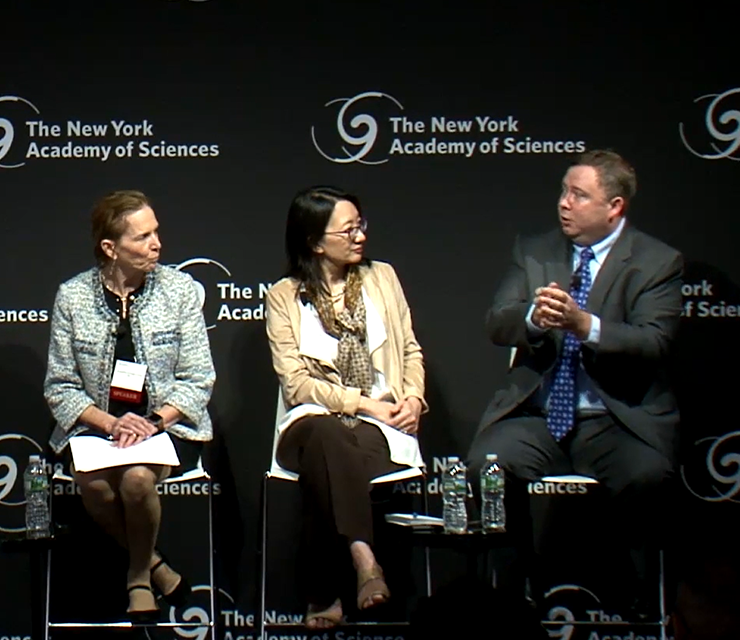
In this video, you’ll hear from Jacqueline Corrigan-Curay, JD, MD (U.S. Food and Drug Administration), Brett Davis (Deloitte), Vivian Lee, MD, PhD, MBA (Verily), and Patrick Ryan, PhD (Janssen & Columbia University), with moderation from Mark Sheehan, PhD (The Ethox Centre, University of Oxford).
They spoke in the first panel at “Healthcare in the Era of Big Data: Opportunities and Challenges,” a collaboration with New York University. This 2-day symposium explored the ethical risks and rewards of incorporating big data into the healthcare landscape.
View other talks and panels from the symposium on our Livestream channel.
The business of space is in fashion again — or at least back in the news. Learn how space exploration today differs from the Sputnik era.
Published October 1, 2018
By Charles Ward
Fifty years ago, 2001: A Space Odyssey thrilled audiences with a vision of space travel, as a Pan Am space shuttle docked and delivered passengers to an international space station, all to the ravishing notes of Josef Strauss’ The Blue Danube.
The station embodied life in space as the futurists of 1968 saw it: all-white physical environs, iconic red Olivier Mourgue lounge chairs, and an international cast of characters devoting themselves equally to science, business and hospitality, while they awaited scheduled departures for other destinations.
The business of space has always been a delicate balancing act, poised between the intense romance of popular imagination and decidedly unglamorous mechanics that it takes to bring vision into reality. The prosaic details include technology, capital outlays, human organization, the marshalling of resources, and legal or policy frameworks.
During the period when Arthur C. Clarke co-wrote 2001: A Space Odyssey with the film’s director Stanley Kubrick, the authors had more than imagination behind them: Peak-year funding for the U.S. Apollo program reached four percent of the American GDP, an extraordinary financial commitment and the tangible tip of a huge mobilization of public enthusiasm.
The Business of Space
Now, the business of space is in fashion again — or at least in the news. In February 2018, the Trump administration announced plans to privatize the International Space Station (ISS) operations beginning in 2025. Three private space companies led by high-profile businessmen — Elon Musk’s SpaceX, Richard Branson’s Virgin Galactic and Jeff Bezos’ Blue Origin — are proclaiming ambitious public goals and even more ambitious timetables.
Derek Webber
Derek Webber, author of The Wright Stuff: The Century of Effort Behind Your Ticket to Space, has been to this rodeo before. In 2010, he was Vice Chair of Judges for the Google Lunar XPRIZE competition, the latest in a line of scientific competitions designed to push the frontier of space travel.
Webber has been a long-time advocate for space tourism, conducting original market research and contributing to the development of regulations via various working groups associated with the regulators such as the FAA’s Office of Commercial Space Travel.
“I was forecasting 2012 as the start date for the sub-orbital space tourism business,” says Webber. “It was particularly exciting in 2004, during the Ansari XPRIZE competition, when commercial sub-orbital space tourism seemed just around the corner, but here we are, some 14 years later, still waiting.”
The re-release of 2001: A Space Odyssey gave Webber the opportunity to compare the vision of 1968 with the realities of 2018. He is well aware of the power of visionary pull — and its practical undercarriage.
“I saw that movie and I loved it. I’m still carrying the torch,” he says.
“But I think in practice things are going to be more nuts and bolts than we saw in ‘2001.’ The reality of things is less exotic,” he added, reflecting on a favorable regulatory environment, ample funding and recurring peaks of interest.
When I look at a television series with a sequence of a space vehicle under repair, with astronauts in pods buzzing around scaffolding,” says Blachman, “I want to know who provided the worker’s comp.”
At the Intersection of Capital and Technology
Amir Blachman
Amir Blachman is well positioned to consider nuts and bolts. As Vice President of Strategic Development at Axiom Space, he leads the financial planning, funding and growth strategy of a company that currently provides astronaut training services and is working towards operation of the world’s first private, international commercial space station when the ISS is decommissioned in 2024. Blachman’s own professional background includes the U.S. Air Force and the investment management industry.
“When I look at a television series with a sequence of a space vehicle under repair, with astronauts in pods buzzing around scaffolding,” says Blachman, “I want to know who provided the worker’s comp.”
Blachman takes the longitudinal view of an evolving industry, marking off key inflection points in an accretive build-up of capital infusions, practices, technologies, processes and infrastructure. One of the most apt historic analogies, Blachman says, comes from Dr. Howard McCurdy’s 2013 research report, The Economics of Innovation: Mountaineering and the American Space Program, which in nearly forensic detail examined the parallel logistical challenges and economic paths of climbing Mount Everest and crewed space flight.
“Climbing Everest and going to space are expensive and have risk,” says Blachman, “and they’re both motivated by science, commerce, national prestige and a personal desire for challenge and exploration. The similarities are uncanny.”
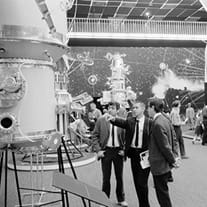
1968 UNISPACE Conference
A Six-Phase Development Model
McCurdy chronicled a ten-fold reduction in the cost of expeditions in the first 90 years of climbing Everest, and parallel falls in mortality rates. Building off his work, Blachman outlines a six-phase development model, in which:
1) Innovation leads to cost reductions;
2) Lower costs encourages entrepreneurs to enter;
3) The promise of profits encourages investors to enter;
4) Profits lead to competition;
5) Competition produces further innovation, cost reduction and scale;
6) Price becomes low enough so ordinary people can afford it.
“In terms of space we are at step three and it will probably be another twenty to thirty years before we get to the point where ordinary people can afford it,” says Blachman. “But it is happening.”
The emerging ecosystem of actors for the business of space, says Blachman, will still include incumbents like governments and their space agencies, as well as traditional “cost-plus” defense and aerospace private contractors such as Boeing.
An additional slice will be made up of an emerging mass of micro-gravity innovators, who are building the companies focused on manufacturing and research in space. Rounding out those segments are “intrapreneurs,” in-house entrepreneurs who are developing the services and technologies used in low Earth orbit, or providers of additive manufacturing sub-platforms.
The Not-So-Hidden Hand
In The Wealth of Nations, Adam Smith coined his “invisible hand of the marketplace” concept as the ultimate guide to economic history. But in space, the highly visible hand of the U.S. government has been and still remains the prime agent for space-related developments.
The government made the massive initial investments in space activity; the ISS alone is reported to have cost $100 billion to build. Some industry observers say NASA’s switch from purely cost-plus contract bidding to fixed-fee bidding, was as significant a financial advance for the industry as SpaceX’s successful reusable launch vehicle was a technological advance.
Peter Martinez
Dr. Peter Martinez is keeping a wary eye on governments and commercial players for their effects on another invisible hand: the treaties and regulations which currently set the rules for all parties. Martinez is the Executive Director of the Secure World Foundation, a private operating foundation that works with governments, industry, international organizations, and civil society to develop and promote ideas and actions to achieve the secure, sustainable, and peaceful uses of outer space. He recently chaired the U.N. Committee on the Peaceful Uses of Outer Space Working Group on the Long-term Sustainability of Outer Space Activities, which was tasked with producing voluntary space sustainability guidelines for States and space actors.
“There are new actors coming into the space arena, people who traditionally don’t have this background,” says Martinez, speaking of the diverse individuals in what some call the New Space movement. “These are people who are personally passionate, like Musk, not content to sit around and wait for national space programs to develop the capabilities to take people to the moon or to Mars or whatever. They’re actually going to go out there and do these things themselves.”
Can Space Resources be Appropriated?
From Martinez’s perspective, the commercialization of space is opening up new questions, including “can space resources be appropriated?” Under the 1967 Outer Space Treaty, the first and most important of the five U.N. treaties that govern space-related law, the moon and asteroids are not subject to the territorial claims of any nation.
Three years ago, however, the U.S. upped the ante, with its “Commercial Space Launch Competitiveness Act of 2015” (“Spurring Private Aerospace and Competitiveness Entrepreneurship Act”), opening the doors for private parties to “engage in the commercial exploration and exploitation of space resources,” excluding biological life. According to Martinez, the Act was careful not to assert U.S. sovereignty over any terrestrial body, but it does allow private entities rights to “extract, own, transfer and sell materials derived from other celestial bodies.”
1967 Outer Space Treaty signing
For now, the legal regime that governs outer space is largely bearing up under the stresses and strains of many new players on the scene, according to Martinez. The Outer Space Treaty, which celebrated its 50th anniversary in October 2017, still provides the international legal foundation for all outer space activities carried out today.
Space Law-Making
Subsequent to the adoption of the Outer Space Treaty in 1967, four other treaties were adopted that address issues such as liability for accidents involving space objects, the registration of space objects, the rescue of astronauts and return of space objects that land on Earth, and the exploration and use of the moon and other celestial bodies. Following this period of space law-making in the 1960s and 1970s, the international community has focused on the implementation of the treaties, supplementing them with additional “soft-law” mechanisms, such as principles and guidelines that address topics such as remote sensing, space debris, and the use of nuclear power sources in outer space.
The field of space law has largely focused on implementation issues arising from the growth of space activities. There are still many open, unaddressed issues, he says, for example the lack of an international agreement on delimitation between airspace and outer space.
“The real danger, of course, is that the reality of development will outpace the ability of regulators to keep up,” he says, outlining scenarios in which commercial entities, looking for the most favorable regulatory environment, could engage in “regulation shopping” and choose to put themselves under the legal auspices of nations with unsophisticated legal systems.
Other legal developments stem from the fact that space is no longer purely the province of science, or even regarded as “somewhere out there,” says Martinez. Citing GPS, he says, “Space is part of the plumbing of everyday life. Most people are unaware of the critical role that space plays in our daily lives. If space were to go down for one day, it would be catastrophic — for stock exchanges, elevators, airports. The glamour is there, but we’re so used to it, we don’t see it anymore.”
The future is always the projection screen on which we throw our plans for today.”
Awareness and Attitudes
While government-sponsored agencies like NASA may be retreating from crewed space activity, government hasn’t entirely abandoned the field. Military imperatives have always played an enormous role in the evolution of the space industry, their public profile whether obvious or not, their under-the-radar initiatives never disappearing entirely. When Vice President Pence announced the formation of the U.S. Space Force, he called it “an idea whose time had come.” The Vice President went on to say, “It is not enough to merely have an American presence. We must have American dominance in space.”
Lucianne Walkowicz
Astronomer Lucianne Walkowicz invites audiences to simply be aware of the underlying attitudes in terms such as “dominance.” Walkowicz, based at the Adler Planetarium in Chicago, straddles the professional worlds of hard science, education, art and philosophy. She’s the author of Fear of a Green Planet: Inclusive Systems of Thought for Human Exploration of Mars, and speaks frequently on the implications of space-related imagination and futurism.
As just one example, she points to magazine illustrations envisioning man in space published in popular American magazines during the 1950s. Those illustrations had outsized impact on the public imagination then, and their influence can still be found in the marketing materials of commercial space companies today. A lot of those images are rooted in the military history of space, notes Walkowicz, with hierarchic organization of missions or crews.
Part of a Larger Ecosystem
“The reason that they are expressed that way visually is that they’re expressions of different philosophies about how human beings should live, not only in space, but here on Earth,” she says. “The future is always the projection screen on which we throw our plans for today.”
Walkowicz does a lot of public communication about the implications of ideas on a day-to-day practical basis. For more specialized audiences, like her astronomy graduate students, she delves into the ethical implications of professional development, and the responsibilities of science and scientists.
Against very real facts such as the discovery of frozen underground bodies of water on Mars, Walkowicz helps peers and generalist audiences alike look differently at grand schemes such as “terraforming” planets like Mars to make them more like Earth and suitable for human colonization.
“If it was possible to do a large-scale global engineering project that transformed Mars into Earth, we wouldn’t have climate change here on Earth,” says Walkowicz.
“Astronomers need to be aware they are part of a larger ecosystem. Technology is not separated from the rest of human endeavor, and it shouldn’t be,” she says. “We can look at our own history and see myriad examples of places where we pushed ahead in areas and did not consider the impact prior to going ahead. That, generally speaking, has turned out badly.”
NASA and research teams around the world are strategizing to meet the needs of astronauts who will embark on deep space explorations beyond the moon.
Published October 1, 2019
By Hallie Kapner
A packet of periwinkle seeds is being prepped for a ride into orbit, tucked into a pouch on a SpaceX rocket bound for the International Space Station (ISS).
The seeds won’t be grown on board — at least not yet. Rather, they’re one part of a broad research effort to probe the ancient botanical pathways that yield some of today’s most widely used medications — including analgesics, antimalarials and powerful chemotherapeutic agents — and to learn what secrets common plants have yet to reveal.
Joseph Chappell
Joseph Chappell, keeper of the periwinkles and chair of the department of pharmaceutical sciences at the University of Kentucky, hatched what he and his collaborators at Space Tango, a Lexington-based startup, admit was a far-fetched plan when they hypothesized that the microgravity environment of space could unlock previously unknown therapeutic pathways in plants.
Much the way that a yearlong stint aboard the ISS altered astronaut Scott Kelly’s patterns of gene expression, Chappell wondered whether the unique stress of microgravity might trigger epigenetic changes in plants that produce medicinal molecules. Uncovering new compounds could be a boon to commercial drug development, but the payoff could be at least a decade and a billion dollars away. Chappell and his collaborators have more immediate goals in mind.
A Source for Food and Medicine
“If we want to support astronauts on Mars missions or other deep space explorations, we have to provide food, fiber and medicine,” Chappell explained, referencing a trifecta of essential needs that NASA and research teams around the world are strategizing to meet as they plan for manned missions beyond the moon.
A round trip to the red planet is chief among their goals, a voyage that would propel one courageous crew farther than humans have ever traveled. A trip to Mars is expected to last at least three years, amid conditions and stresses unimaginable on Earth.
Beyond developing new drugs for terrestrial use, Chappell and his team are studying the potential for stints in space to evoke beneficial epigenetic changes in plants that he claims “offer the whole suite — sources of nutrition, sources of fiber for clothing and other materials, and sources of drugs” — plants that astronaut crews could both grow and utilize on long-term space missions. One plant that piques his interest is hemp, the utilitarian varietal of Cannabis sativa, which has a 10,000-year history as a fiber for rope and fabrics, and a more recent reputation as a source of protein-rich seeds and oil rife with non-intoxicating cannabinoids used to treat maladies ranging from inflammation and insomnia to epileptic seizures.
No Small Feat
The demands placed on the first Mars crew will surpass those of any astronauts in history. Far beyond the traditional roles of pilot, commander, flight engineer or payload specialist, the crew will need to be gardeners, diagnosticians, health care providers and perhaps even settlers, as some projections for a Mars voyage involve the temporary establishment of the first human accommodations on another planet.
Crews will struggle with isolation and confinement, as well as the psychological toll of being separated from family, friends and gravity for years at a stretch. In circumstances where maintaining health, strength and well-being are critical, crews will be reliant on freeze-dried or thermostabilized meals as their primary nutrition source. With no possibility of resupply missions from NASA, a case of menu fatigue will be riskier than ever. Medical care will be millions of miles away, and even a consultation with a flight surgeon will become increasingly impractical as the crew ventures farther into space: a single round trip radio transmission from Mars to Earth takes 40 minutes.
How to keep deep space astronauts healthy, sane, comfortable and collaborative are concerns that require at least as much attention as the technological and engineering developments required to mount a mission to Mars. Balancing the research needs of the mission and the human needs of the crew is no small feat. Accounting for these needs for several years in a profoundly resource-constrained environment requires galactic-scale ingenuity from a team of fiercely optimistic scientists, engineers and entrepreneurs from around the world.
“This is What I Want to Eat”
Periwinkle, the plant from which we get the vinca alkaloids, compounds used to treat a variety of cancers.
Grace Douglas
Chappell’s vision of growing multi-purpose plants in space is far from sci-fi, although zero-gravity farming is still in its infancy. ISS astronauts have already grown several varieties of lettuce and other leafy greens, thanks to an onboard plant growth chamber aptly named Veggie. While some space-grown greens have been eaten in orbit, crews rely heavily on pouched meals meticulously designed by the Space Food Systems group at NASA’s Johnson Space Center.
What space cuisine lacks in presentation it makes up for in ease of preparation and nutrition — in less than 30 minutes, astronauts can reconstitute a meal with (recycled) water, heat it and dine directly from the package. Astronaut fare is created to deliver essential nutrients and calories through meals that may look unusual, but often taste good and, equally important, are familiar and appealing to crews.
Advancing Food Technology
“For a Mars mission, the menu needs to be something that people are content to eat for a long time, and that’s a big challenge,” said Grace Douglas, advanced food technology lead scientist at NASA and leader of a group working to devise a food system for deep space exploration. “If the food isn’t highly acceptable — if crews don’t look at the options and say, ‘this is what I want to eat’ — then they’ll eat enough to get by, but not enough to maintain weight, which can compromise bone and muscle mass and even immune health,” she explained.
In space, as on Earth, food is more than simply fuel, and our associations with what we eat are both emotional and physical. Far from home, we often miss the familiarity of both food and family, craving the meal itself as much as the companionship. Such evocations make Douglas’ job both more difficult and more important. Among all the comforts long-haul astronauts will forego, Douglas believes some comfort from food should remain.
The Perfect Package
Oxygen, temperature, time, moisture: meet the enemies of nutrient-rich food that tastes great for up to five years.
“None of the food we send up now has that kind of shelf-life in terms of stable nutrition and quality,” Douglas said, noting that the stated shelf life for current astronaut food is 18–24 months.
For Mars, five years is the magic number. Weight and space are precious, expensive commodities on a spacecraft, and some food provisions will likely travel in advance of the crew. Those rations need to be safe, appealing, and nutritious from the moment of liftoff until crews consume them on Mars as well as the flight home. This necessitates an ambitious evolution of the space food system and the development of new technologies to sterilize and store meals without compromising appeal, essential nutrients, or adding excess waste or preparation time.
NASA currently packages meals in the same pouches used for military rations, foil-lined sacks that Douglas claims are “the best thing out there” for meeting the strict weight and barrier requirements of space packaging. Yet even the best option can’t touch the five-year mark, as the methods used to sterilize and stabilize meals can jumpstart the processes by which nutrition and quality degrade over time.
New technologies, such as microwave-assisted thermal sterilization, may help extend the life of Mars-bound meals, but will also require the development of a next-generation pouch compatible with such methods. Douglas explained that NASA is also exploring how different environmental conditions — including deep freezing — may be used to preserve nutrients and quality for longer than the current limits.
Ohmic Heating
Meghan Bourassa
Here on Earth, food scientists like Sudhir Sastry, professor of food, agricultural, and biological engineering at Ohio State University, are pioneering techniques for killing pathogenic microbes without compromising nutrition or quality. One such method, ohmic heating, may have some utility for long-haul space travel.
Rather than relying on steam and pressure, ohmic heating uses electrical fields to sterilize or reheat packaged food evenly in seconds, rendering it safe for consumption while retaining many essential nutrients. According to Sastry, about 90 percent of even the most heat labile nutrients, such as vitamin C, remain after sterilization. Dr. Megan Bourassa, a biochemist and an expert in nutrition science at the New York Academy of Sciences, believes finding a way to retain nutrients is crucial.
“Stability and shelf-life of nutrients are definitely huge issues on Earth, especially in fortified foods,” said Bourassa. “For a five-year journey, food would probably have to be over-fortified to account for degradation over time and loss after cooking.”
Greening the Red Planet
Moviegoers will remember Matt Damon’s character in the film The Martian cleverly repurposing human waste as fertilizer to grow potatoes in a makeshift greenhouse on Mars. Douglas confirms that while Damon’s character didn’t have the resources to build such a robust growing operation, Mars travelers will likely have the ability to grow and consume leafy green vegetables during their voyage.
“As we move further from Earth, we are going to need to have systems of growing food,” Douglas said, although the notion of a Martian-style greenhouse remains quite futuristic.
Research teams have simulated the environmental conditions on Mars to determine how crops might someday be grown there — likely hydroponically — safe from the planet’s freezing temperatures, carbon dioxide-rich atmosphere and high levels of galactic cosmic radiation. University of Kentucky’s Joseph Chappell noted that plants grown in deep space as well as in the Martian atmosphere may undergo gene expression changes or mutations that either boost or degrade the nutritional profile of edible plants — another area of research that must be explored before crews could safely rely on Mars-grown food as a source of calories and nutrients.
“To be reliant on a system like that you’d need a surplus to ensure that if you had a loss of crop, it didn’t mean a loss of crew,” Douglas added.
The Issue of Water
Then there is the issue of water. Despite the recent discovery of what appears to be a 12-mile-wide body of water buried under a mile-thick layer of polar ice, there is no known source of fresh water on Mars. Any liquid water found on the planet is likely to contain toxic levels of perchlorates and other chemicals.
If terraforming Mars is to become a reality, settlers will need a source of fresh water for drinking, preparing food and for agricultural purposes. The carbon dioxide that comprises 95 percent of the Martian atmosphere has been eyed as a feedstock for reactions that could produce a steady supply of water for use on the planet, although technologies capable of performing those reactions at scale have yet to be realized.
The Body Weightless
Two hours a day at the gym would qualify anyone as an exercise nut on Earth, but in space, it’s the norm. Without gravity providing resistance for muscles and bones, both can weaken over time.
Today’s ISS astronauts toggle between several different pieces of exercise equipment, all designed to counter the effects of microgravity and minimize bone loss. Mars-bound crews will have a smaller spacecraft, and a new generation of compact exercise devices is already being developed for deep space flights. Despite their workout regimen, today’s ISS crews universally experience muscle weakness upon returning to Earth.
In his book, Endurance, Scott Kelly described the physical sensation of “all my joints and all my muscles protesting the crushing pressure of gravity” after a full year of weightlessness. Mars astronauts will clock at least three times more time in zero or reduced-gravity than Kelly did, making the return to Earth more difficult and highlighting the importance of maintaining muscle strength and cardiovascular stamina on long missions.
Despite the experiences of more than 250 ISS astronauts and more than 350 shuttle astronauts, there is still much to learn about the specific effects of microgravity on the body and its tissues over long periods of time. To accelerate the process, the U.S. Center for the Advancement of Science in Space has partnered with researchers around the world to send human tissue samples into orbit, growing three-dimensional cultures that allow scientists to study the direct effects of microgravity on various organs.
Changes in Gene Expression
Spaceflight is known to induce changes in gene expression, and may also alter the progression of diseases including cancer and cardiovascular disease. Insights derived from organoids in microgravity today may lead to protective mechanisms for tomorrow’s astronauts, and could yield new therapeutics for use on Earth.
Similar research using cell cultures tests the impact of yet another deep space concern on the human body: galactic cosmic radiation. Earth is constantly bombarded by solar radiation and cosmic radiation from within the Milky Way, yet everything on the planet is doubly shielded — first by a geomagnetic field that deflects dangerous rays and particles, then by Earth’s thick atmosphere.
Those who venture beyond the bubble lose these protections. Mitigating the risks of radiation damage is a major challenge for Mars mission planners.
Researchers at the NASA Space Radiation Laboratory at Brookhaven National Laboratory are simulating cosmic radiation by blasting biological samples with ions that mimic the rays Mars travelers will encounter in space. Plans both practical and seemingly outlandish abound for combating space radiation, from a protective vest currently used to protect soldiers and first responders from radiation threats, to an artificial magnetic shield that would restore Mars’ own magnetosphere, lost to solar wind erosion billions of years ago. Solving the radiation problem will require a combination of advances in materials science, physical shielding measures for craft and crew, and potentially even pharmaceuticals that could reduce gene mutations resulting from radiation exposure or accelerate the restoration of radiation depleted cell populations.
It’s Lonely Out in Space
Rocket Man, Elton John’s 1972 anthem of the homesick space traveler, presciently articulated the concerns of many researchers working to realize the dream of a trip beyond our planet.
Humans have long braved extreme isolation and remote environments in the name of discovery, but never without gravity, fresh air, sunrise and sunset. Add loneliness, confinement, boredom, separation from loved ones and a healthy mix of fear and anticipation, and the potential for psychological difficulties among deep space astronauts ranks highly.
Mike Massimino
Nobody has spent more consecutive days in space than Russian cosmonaut Valery Polyakov, who logged a remarkable 438 days on the Mir space station in the 1990s. A Mars mission will last far longer.
In order to better understand the limits of loneliness and the triggers of distress, and to identify factors that promote resilience in tough conditions, teams of researchers in Hawaii, Moscow and Antarctica have studied groups of fellow scientists living in conditions similar to those of a future Mars mission. Complete with field work analogous to the tasks astronauts would need to complete on Mars, time-delayed communication with mission control, pre-packaged and freeze-dried foods, close quarters, and irregular sleep and wake cycles, these simulations have provided valuable insights into human behavior and helped hone in on personality traits that may be desirable in a Mars crew.
‘Til Touchdown Brings Me ‘Round Again
Identifying activities and amenities that boost astronaut morale are also high priorities. Among the wellness-enhancing pursuits that may be reasonably accessible on a Mars mission, tending to green plants ranks high, as does exercise. Virtual reality technologies are also being tested as a method to reconnect astronauts to the sights and sounds of Earth — be it waves crashing on a beach, the green grass of the countryside, or birds soaring over the glass-like surface of a lake.
After completing a series of missions that serve as critical stepping stones to deep space flight, NASA plans to launch a manned mission to Mars in the 2030s. The scientific community’s tireless efforts to realize the day when a human will set foot on Mars throws into stark relief the intricate, perfectly-tuned biological machinery that allows us to thrive effortlessly here, on our blue planet.
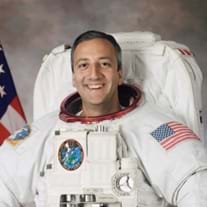
As we prepare to travel farther than ever before, it is impossible not to appreciate how well-suited we are to life at home. Upon his final voyage to repair the Hubble Space Telescope in 2009, shuttle astronaut Mike Massimino, awed at the beauty of the Earth, said it best.
“This is what heaven must look like,” he said. “I think of our planet as a paradise. We are very lucky to be here.”
Mimi Aung of NASA’s Jet Propulsion Laboratory gives a glimpse of what to expect from the launch mission of the Mars Helicopter.
October 1, 2018
By Charles Cooper
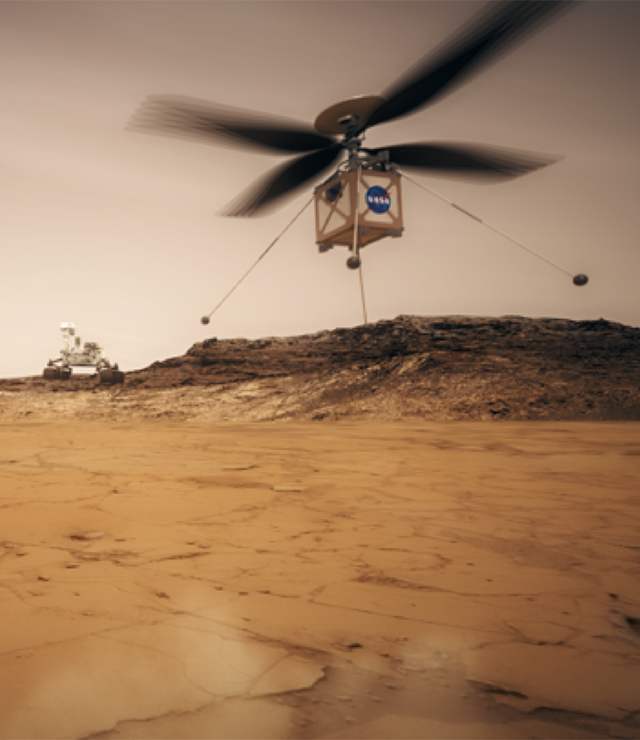
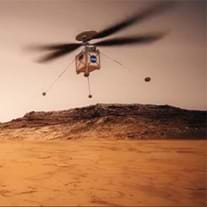
Sometime around February 2021, NASA will drop a new rotorcraft on Mars that will be the first device to fly in the atmosphere of a planet besides Earth.
“In deep space exploration we have never done anything like this before,” said Mimi Aung, the project manager overseeing a team at NASA’s Jet Propulsion Laboratory (JPL) that has labored since 2013 to demonstrate the viability of heavier-than-air flying vehicles on Mars.
The Mars Helicopter, as it’s called, is a technological marvel. Weighing in at slightly less than four pounds, it sports a fuselage that’s about the size of a softball. NASA used off-the-shelf materials, including lightweight avionics, solar cells, high-density batteries and carbon fibers. The flying device is also a completely “green” piece of equipment. It includes solar panels that can collect solar energy to recharge the battery when the helicopter is at rest.
Upon landing, the helicopter will spend most of the day on the Martian surface recharging its lithium-ion batteries as it prepares to venture into the Martian atmosphere during the planned 30-day flight test campaign. The idea is to perform reconnaissance missions of nearby regions that the Rover cannot access due to ground impediments or steep terrain.
The First Flight
In its initial flight, the helicopter will hover three meters above the surface for about 30 seconds. NASA hopes to send the helicopter as high as 40 meters into the atmosphere. The maximum flight distance will extend a few hundred meters from the Rover. The longest it will remain aloft at any one time is 90 seconds.
“When we explore the surface with Rovers we want the ability to see ahead with high-definition images. This is going to allow detailed information about the Martian surface that we’ve never had before,” Aung said.
NASA controllers will send commands to the Rover, which will then relay information to the helicopter. The transmissions will take between four and 12 minutes to arrive. Time lag will vary depending on the relative position of the Earth and Mars.
The helicopter will need to survive on its own through the cold Martian nights. Temperatures can get down to 90 degrees below zero centigrade. The unit includes a heating mechanism controlled by an onboard computer that reads the temperature sensors to prevent freezing. NASA envisions that future generations of aerial vehicles will be equipped with far more robust features, allowing them to travel farther and higher.
Perhaps the greatest challenge of the next century will be to build a space infrastructure that will serve all of humanity, rather than only a privileged few.
Published October 1, 2018
By Marie Gentile
If you are a person of a “certain age,” you may remember a bright summer day nearly 50 years ago when grainy black and white images were beamed down to our television sets from the surface of the moon.
Humankind had achieved what was once thought to be laughably impossible — developed the technology to escape the gravitational pull of our home planet and land on another terrestrial surface. How could anyone feel anything other than the most incredible sense of pride and wonder? And of course, for Americans, it was a defining moment — as a nation we had won the “space race” through a technological achievement by which all others would be measured.
In the decades since, space travel has become relatively commonplace. There were seven subsequent manned moon missions, as well as unmanned missions conducted by the Soviet Union, the European Space Agency, Japan, India and the People’s Republic of China. Later, the Space Shuttle would serve as the world’s first interstellar “work horse,” carrying and fetching loads back and forth from the International Space Station. Such trips barely registered on the news cycle.
The New Space Race
Fast forward to 2018 and we stand on the precipice of a new “space race.” There are billions of dollars in private investment being pumped into various space related start-ups around the world, making the commercial space race — in theory at least — anyone’s to win.
Technology and capital hurdles aside, this is an opportunity for humanity to get something right from the beginning. The UN Sustainable Development Goals, launched in 2015, represent an unprecedented global commitment to addressing global challenges through collective action in science and technology.
But they are also a potent reminder of what is at stake if we fail — combatting hunger, educating children, developing new treatments for disease and new technologies to support sustainable infrastructure and economic development. As we mobilize to address these worthy goals, we must also recognize the lessons to be learned from our past mistakes, and apply them to the sustainable development of space for human use.
Unlike Earth, space has no borders. We cannot rope off a section or build a wall and say to others “this is ours and you may not enter.” Perhaps the greatest challenge of the next century will be to build a space infrastructure that will serve all of humanity, rather than only a privileged few.
A Myriad of Issues to be Addressed
How will we construct buildings in space and where will we put them? How will we grow food? How will space traffic be managed? Who will collect all that space trash? There are already a myriad of issues to be addressed — and these are the ones we know about. It will require collaboration across all of our planet’s governments, and across the global scientific community, to develop answers to these questions and the ones still to be asked.
Much of our work at the New York Academy of Sciences is tied to achieving the UN Sustainable Development Goals because we believe that they can be achieved, and they WILL be achieved, if we work together. As NASA, other space agencies and private sector companies ponder humanity’s future in space, it is incumbent on all of us in the scientific community and the public at large to consider what that future might be.
If we’re smart and are willing to learn from past mistakes, we stand a very good chance of getting it right from the beginning. And maybe as we aim for a sustainable future in space, we’ll succeed in solving the major challenges facing our own planet along the way.