Supporting breakthrough, innovative technologies that address India’s greatest challenges.
By recognizing and supporting the implementation at scale of high-impact research, the Prize drives innovation in scientific disciplines of importance to India’s societal needs and economic competitiveness.
The Tata Transformation Prize leverages the exceptional potential of scientists in India to address critical national challenges in three categories—Food Security, Sustainability, and Healthcare—and generate improved quality-of-life outcomes across India and beyond.
The Tata Transformation Prize recognizes one Winner in each of the three categories, with INR 2 crores (approximately US$230,000).
Important Dates
- Applications open: June 4, 2025
- Applications close: July 4, 2025 (11:59 PM IST)
- Letters of Reference due: July 7, 2025 (11:59 PM IST)
- Ceremony: Late Fall 2025
Bold Innovation for India and Beyond
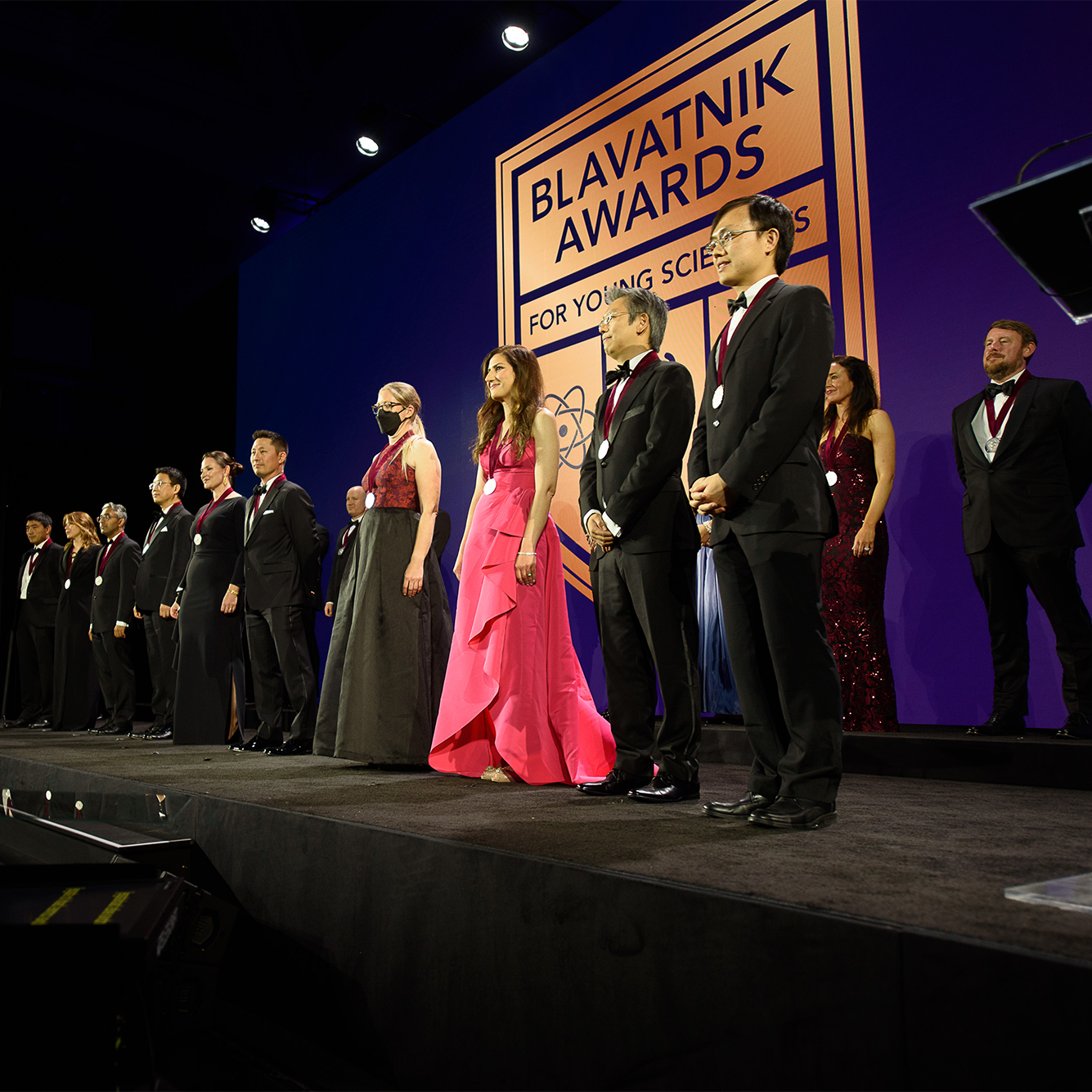
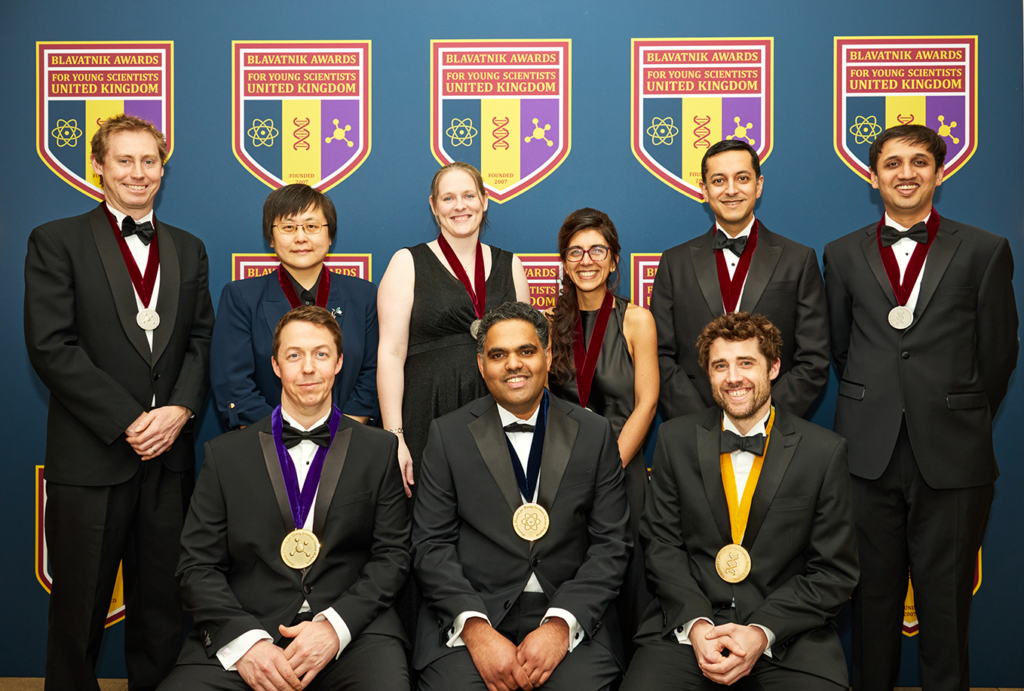
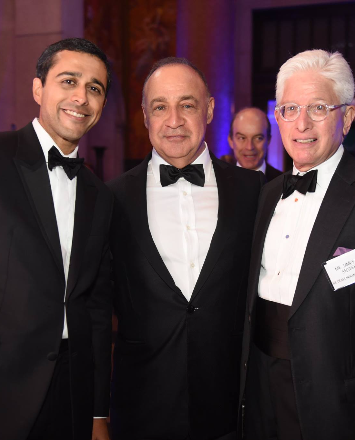
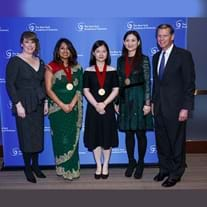
View highlights from the 2024 Tata Transformation Prize Ceremony
“The Tata group has been in the forefront of creating impact in society for more than 150 years. In fact, our founder Jamsetji Tata said that the very purpose of business is the society. The Tata Transformation Prize is one small way in which we will promote science and scientists to solve India’s national problems.”
N. Chandrasekaran
Chairman
Tata Sons
“Pathbreaking research takes place in India, resulting in important advances in science around the world. This prize is focused not only on science, but on innovative discoveries that put science to work for the betterment of society.”
Nicholas B. Dirks
President & CEO
The New York Academy of Sciences
Scientific Advisory Council
Members of the Scientific Advisory Council serve as ambassadors of the Tata Transformation Prize, invited by Tata Sons and The New York Academy of Sciences to reach a broad and diverse pool of applicants and advise on Prize policies.
Winners are selected by a confidential jury, independently chosen by The New York Academy of Sciences, comprising world-leading topical experts from academia, industry, government, and beyond.

Professor, Institute of Chemical Technology
Professor, Cornell University
Chair, ICRISAT Governing Board

Former Head of Cardiology, All India Institute of Medical Sciences
Former President, Public Health Foundation of India

Professor, Yale University

Chairperson, MS Swaminathan Research Foundation
Former Chief Scientist, World Health Organization
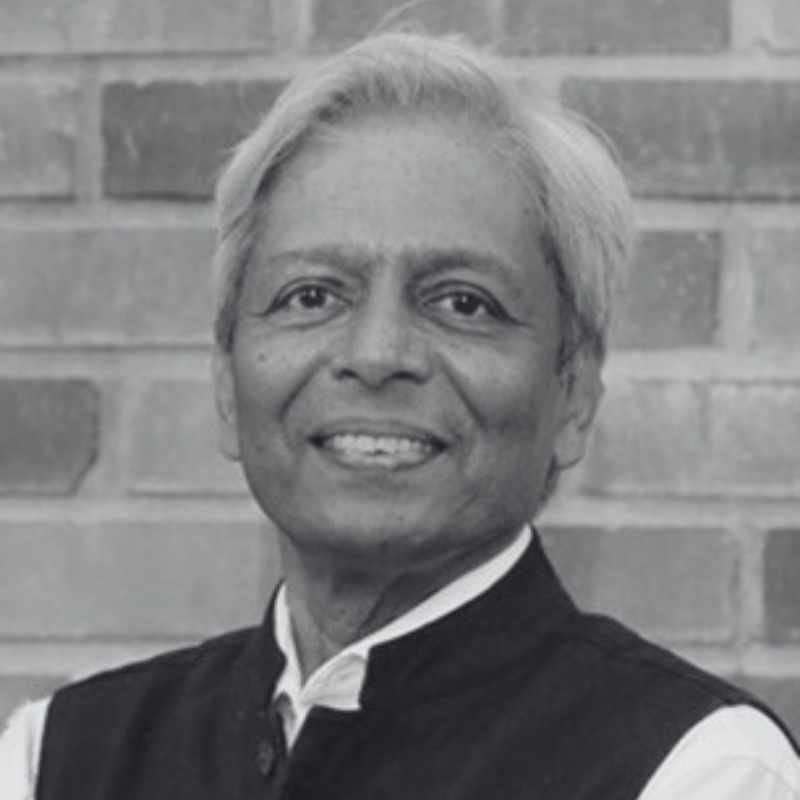
Emeritus Professor, National Centre for Biological Sciences, Tata Institute of Fundamental Research
Former Principal Scientific Adviser, Government of India

Founder & President, Maternova
Program Guidelines
Eligibility
The applicant must:
- Hold a doctoral degree (PhD, DPhil, MD, DDS, DVM, etc.)
- At the time of application, hold a position as a Postdoctoral Researcher, Faculty, or Researcher/Scientist, with at least 50% full-time effort devoted to research, at an eligible institution within India
- Be resident in India or a person of Indian origin residing in India
- Receive pre-approval from their institution, in the form of an Eligibility Verification Form. See below for more details.
- Must not have received research funding from Tata Sons or its subsidiary companies in excess of US$10,000 (or equivalent in local currency) within the past four (4) calendar years (2021-2025).
Applicants may only submit one application per annual Prize cycle.
Eligible Institutions
Applicants must be employed by an eligible university, institute, or other research organization in India at the time of application. Eligible institutions may be found here.
Institutions not listed may contact TataTransformation@nyas.org to request inclusion on the list of eligible institutions.
Eligible Categories
The Tata Transformation Prize recognizes scientists and engineers developing technological innovations that address three challenges of national importance to India: Food Security, Sustainability, and Healthcare.
Applicants must propose technologies that address one of the three categories with a focus on digital and technological transformation: innovations that re-imagine traditional practices and business models, transform technological paradigms, improve public trust, and enable an open and connected world.
Innovation knows no bounds. Technologies that may address these challenges include, but are not limited to:
Food Security
Innovations that improve productivity and efficiency or reduce waste and resource-intensity, such as
- Supply chain management
- Crop sensing
- Genetic modification
- Crop management
- Climate change-resistant agriculture practices
- Food distribution
- Food processing
- Precision agriculture
- Soil health management
- Aquaculture
- Smart irrigation systems
Sustainability
Innovations that enable large-scale reduction, reuse, and recycling of resources or protection of the natural environment, such as:
- Clean energy technologies
- Battery and energy storage technologies
- Green chemistry
- Sustainable materials
- Circular economy technologies
- Environmentally friendly infrastructure
- Recycling and waste disposal technologies
- Climate change modeling and prediction
- Technologies to mitigate the impacts of climate change
- Ecology technology & technologies for conserving biodiversity
- Electric vehicles and other energy-efficient devices
- Technology solutions for water management
- Innovations to estimate, measure, and track emissions
Healthcare
Innovations that improve accessibility, affordability, accountability, and efficacy in healthcare, such as:
- Sensing and wearable technologies
- Telemedicine/telehealth
- Health informatics
- Electronic health records
- Bioprinting
- Augmented reality
- Robotics
- Personalized healthcare technologies
- Medical training strategies
- Biocomputation & bioinformatics
- Public/community health infrastructure
- Drug Development
- Precision Medicine
The eligible technologies listed under each Prize category above are not meant to be exhaustive. If applicants have a question regarding whether or not a particular innovation falls into these categories, please contact the Tata Transformation Prize team at TataTransformation@nyas.org.
Evaluation Criteria
Proposed innovations will be evaluated according to the following criteria:
- Quality: The extent to which the proposed innovation is coherent, credible, and supported by scientifically rigorous design and preliminary data.
- Vision: The extent to which the proposed innovation will 1) challenge existing paradigms or practices and/or pursue an original approach, and 2) generate measurable, lasting, and wide-scale changes that address national needs and societal changes for underserved populations in India.
- Feasibility: The extent to which the applicant 1) offers a realistic approach and implementation plan to achieve tangible, impactful results and 2) is well-positioned and capable of executing the proposed plan, and 3) the extent to which the proposed innovation is scalable in India.
Application Materials & Instructions
Application Form
Required information includes the applicant’s name, title, terminal degree, email address, phone number, and category of submission, as well as the name, title, and contact information for the institutional leadership submitting the Eligibility Verification Form.
Curriculum Vitae
Applicants must use the CV template available for download here and precisely follow the included instructions. Remove all instructions and sample information before finalizing. Please save your CV as a pdf before uploading it to the application portal.
CV must include:
- Applicant name, current institution(s), and position title.
- Education and training: including undergraduate, doctoral and postdoctoral training, with names of previous research advisor(s)/mentor(s).
- Employment history and dates.
- Honors and awards: including granting organizations and years received.
- Peer-reviewed publications from entire research career.
- Include separate sections for primary research and reviews/commentaries.
- Use a citation format that includes the names of all authors, with applicant name in bold and the journal title underlined. Include citation ID if available.
- Do not include manuscripts submitted or in preparation.
- Conference abstracts and proceedings should only be included if they are the primary way of disseminating new results in the applicant’s field, such as in computer science and mathematics.
- Patents and patent applications: include patent title, patent number, 1-2 sentence synopsis and year submitted/approved
- Research Support:
- List funding for ongoing and completed projects on which the applicant is named as either Principal Investigator (PI) or Co-Investigator (co-PI).
- Include funding agency, name of funding mechanism, grant #, title of grant, and 2-3 sentence summary of the aims of the grant.
- Specify whether applicant is PI or co-PI and the total amount (direct cost) of the award. If there are multiple PIs, specify the amount (direct cost) awarded to applicant.
- Scientific leadership (e.g., any significant roles in the greater academic community). This includes major editorial responsibilities, service on external committees, conference organization, technology licensing (or company start-up), public outreach activities, and institutional administrative responsibilities (e.g., departmental or student committees).
- Invited talks and lectures. Include year and inviting organization/institution.
Innovation Proposal
The Innovation Proposal should be accessible to another scientist working in the overarching Prize category (e.g., sustainability). The proposal should be a maximum of five pages (11 or 12 point font and 1 inch margins). References and up to five figures with legends may be included on additional pages.
The proposal should include the following four sections. Page numbers are included as a guide, but do not need to be strictly followed. A strong application will address each component thoroughly.
Background & Significance (~0.5-0.75 page)
The applicant should describe:
- The societal challenge and critical barrier to scientific progress the innovation seeks to address.
- The prior research that serves as the key support for the proposed project.
Please explain any terms or information that may not be obvious to a scientist outside of the applicant’s specialty.
Proof of Concept (~0.75-1 page)
Describe the technology, discovery, or innovation and preliminary work and/or results demonstrating its rigor, credibility and potential. These may constitute a prototype that has undergone testing or a small-scale proof of concept experiment. Clarify if these are published or unpublished findings. Additionally, clarify the roles of other researchers/research groups in these findings. Explain how the innovation is unique in how it addresses the corresponding societal challenge. If the innovation is a physical technology or device, include a schematic of the design and a photo of the prototype as one of the five allowed figures.
Implementation Plan (~3 pages)
Applicants must present a clearly articulated and well-reasoned plan to scale up and implement the innovation. A robust and unbiased plan should identify potential challenges, alternative strategies, clear benchmarks for success, significant goals, and a tentative timeline by which the applicant expects to meet those goals. Early-stage projects should include a strategy to establish feasibility and manage risk.
The timeline should span approximately three years of implementation, over which significant progress is expected to be made.
Provide any necessary context to understand what successful scale-up and implementation would look like.
Identify any resources, such as specialized equipment that is required for the Implementation Plan. Indicate whether the applicant has access and, if not, how and when it will be obtained. Details can be provided in optional Letters of Support (see below).
Future Directions and Impact (~0.5 page)
Describe how the applicant sees the implementation and adoption of the innovation progressing beyond the timeline proposed in the Implementation Plan. Describe the anticipated impact of the technology, discovery, or innovation outlined in your proposal on your scientific field, Indian society, and beyond.
Letters of Support
Applicants may also include Letters of Support to substantiate access to key resources that are needed for the success of the proposed work. The letter should clearly state the commitment of the letter writer to give the applicant access to the reagent, sample, instrumentation, or support to establish techniques described in the proposal. Letters of Support should be on letterhead, signed, combined into a single pdf, and uploaded into the application portal.
Letters of Reference
Applicants are required to nominate two (2) individuals to submit confidential letters of reference.
Applicants will be prompted to provide the names and email addresses of two letter writers during the submission of materials. Letters of reference will be electronically requested and submitted via the web portal to ensure confidentiality.
We encourage applicants to share the Instructions for Letters of Reference with letter writers at the time of request to ensure they have a clear understanding of the expected content. Applicants may download the Instructions for Letter Writers here.
We recommend that applicants petition letters from individuals who are recognized experts in their discipline/field and the societal challenges related to their proposed innovation. Letter writers should be intimately familiar with the applicant’s most significant research contributions and their impact on the applicant’s research field and beyond. Furthermore, we recommend that applicants share a summary of their innovation project with letter writers so that they can comment on the vision and potential of the project to generate wide-scale changes that address the needs of Indian society. They should also be able to describe how the applicant’s background and accomplishments prepare them to lead the implementation and scale-up of the project proposed.
Eligibility Verification Form
The applicant must receive verification of their eligibility from their institution in the form of a completed and signed Eligibility Verification Form. Completion of the form verifies that the applicant is employed by the institution in an eligible research role and has informed the institution of their intent to submit an application. The form must be signed by institutional leadership at the level of Department Head or higher. The signatory must be senior to the applicant.
Applicants and Institutional Leadership can download the Eligibility Verification Form here. Applicants will be asked to submit their completed, signed and stamped (with an institution stamp, if applicable) Eligibility Verification Form with the rest of their application materials in the submission portal.
Prize Benefits and Winner Responsibilities
Award
The Tata Transformation Prize awards one Winner in each of the three categories, with INR 2 crores (approximately US$230,000) for each Winner. Funds will be disbursed directly by Tata Sons upon the conclusion of Prize events in December 2025.
Membership to The New York Academy of Sciences
All Winners will receive a lifetime membership to the Academy. Membership provides Winners with access to our Global Member Directory, a deep archive of digital content, and access to free or significantly discounted registrations for over 100 in-person and virtual symposia, webinars and conferences annually.
Winner Responsibilities
Tata Transformation Prize Winners are expected to:
- Attend the Tata Transformation Prize Ceremony in late Fall 2025.
- Deliver a short presentation on their work at the annual Tata Transformation Prize Ceremony or Symposium in late Fall 2025. Further details will be provided closer to the Prize events.
- Participate in Tata Transformation Prize Symposia in Years 1-3 to present updates on the progress and implementation of their innovation project.
- Participate in Tata Transformation Prize-related media activities and inquiries (e.g., video interviews, magazine profile interviews).
Reporting
Tata Transformation Prize Winners will provide reports on the progress of the innovation implementation at intervals of one and three years after receiving the Prize. Winners are expected to include in their reports:
- Project Activities: Progress according to milestones set in the Implementation Plan.
- Results & Impact:
- Wins: further prototypes or market-ready products developed; product testing undertaken; product effectiveness measured in pilot studies
- Failures: technical or implementation failures and lessons learned
- Challenges: barriers to implementation, scale, or user adoption
- Collaborators: Key stakeholders recruited to project, their roles, and the resources or support they provide.
- Funding: New investors or other funding sources. Summarize terms and valuation.
- Future Plans: Steps to be taken in the next year towards implementation or continuing development, including a timeline to market or to achieve project impact
- Expenditures: Provide CA certified reports on expenditures made after the first and third year of award.
Winners are also expected to provide an updated CV, including post-Prize:
- Patents
- Scientific Publications
- Grants or other research funding
- Prizes or other awards
- Conference presentations or other invited talks
Applicants must be employed by an eligible university, institute, or other research organization in India at the time of application. Eligible institutions are listed below.
Institutions not listed here may contact TataTransformation@nyas.org to request inclusion on the list of eligible institutions.
Expand for the Full List of Eligible Institutions
A | B | C | D | F | G | H | I | J | K | L | M | N | O | P | R | S | T | U | V | W | Y
A
- ABV Medical University, Lucknow
- Academy of Maritime Education and Training
- Academy of Scientific and Innovative Research
- ACE Engineering College
- Acharya Institute of Technology
- Adamas University
- Agartala Government Medical College
- Ahmedabad Textile Industry’s Research Association (All Campuses)
- Ahmedabad University
- Alagappa University
- Aliah University
- Aligarh Muslim University
- All India Institute of Hygiene & Public Health (All Campuses)
- All India Institutes of Medical Sciences
- Amity University
- Amrita Vishwa Vidyapeetham (Amrita University)
- Andhra University
- Anna University
- Annamalai University
- Apex Professional University
- APJ Abdul Kalam Kerala Technological University
- Arunachal University of Studies
- Arunodaya University
- Ashoka Trust for Research in Ecology and Environment
- Ashoka University
- Asian Institute of Public Health
- Assam Don Bosco University
- Assam University
- Azim Premji University
B
- B.S. Abdur Rahman Crescent Institute of Science and Technology
- Babasaheb Bhimrao Ambedkar University
- Banaras Hindu University
- Banasthali University
- Bangabasi Morning College
- Banyan Academy of Leadership in Mental Health
- Bennett University
- Bharathiar University
- Bharathidasan University
- Bihar Engineering University
- Birla Institute of Technology and Science
- Birla Institute of Technology, Mesra
- Birla Vishvakarma Mahavidyalaya (B.V.M) Engineering College, (affiliated with Gujarat Technological University)
- BLDE University
- Borlaug Institute of South Asia
C
- Central Ground Water Board, Department of Water Resources, River Development & Ganga Rejuvenation, Ministry of Jal Shakti
- Central Leprosy Teaching and Research Institute (All Campuses)
- Central Mine Planning and Design Institute (All Campuses)
- Central University of Himachal Pradesh
- Central University of Jammu
- Central University of Jharkhand
- Central University of Karnataka
- Central University of Kerala
- Central University of Punjab Bathinda
- Central University of Rajasthan
- Central University of South Bihar
- Central University of Tamil Nadu
- Centre for Brain Research
- Centre for Public Health Research
- Centurion University of Technology and Management
- Chaitanya Bharathi Institute of Technology
- Chandernagore College
- Chandigarh University
- Chandra Dental College & Hospital
- Charotar University of Science and Technology
- Chaudhary Charan Singh University (Formerly Meerut University)
- Chaudhary Sarwan Kumar Himachal Pradesh Krishi Vishvavidyalaya
- Chennai Mathematical Institute
- Chettinad Academy of Research and Education
- Chhatrapati Shahu Ji Maharaj University
- Chitkara University Punjab
- Christ University
- Christian Medical College and Hospital
- Cluster University Srinagar
- Cochin University of Science and Technology
- Cooch Behar Government Engineering College
- Cooch Behar Panchanan Barma University
- Cotton University
- Council of Scientific and Industrial Research (All Laboratories)
D
- Darjeeling Government College
- Datta Meghe Institute of Medical Sciences
- DAV University
- Dayalbagh Educational Institute
- Dayananda Sagar Institutions
- Deen Dayal Upadhyay Gorakhpur University
- Defence Institute of Advanced Technology
- Defence Research and Development Organization (All Technical Clusters)
- Delhi Technological University
- Department of Agricultural Research and Education (All Affiliated Institutes)
- Department of Atomic Energy (All Research Centres)
- Department of Biotechnology (All Affiliated Institutes)
- Department of Soil and Water Conservation of Bidhan Chandra Krishi Viswavidyalaya
- Devi Ahilya University
- Dharmanand Uniyal Government Degree College Narendranagar
- Dharmsinh Desai University, Gujarat
- Dhirubhai Ambani Institute of Information and Communication Technology
- Doon University
- Dr. A.P.J. Abdul Kalam Technical University
- Dr. APJ Abdul Kalam College
- Dr. B R Ambedkar National Institute of Technology Jalandhar
- Dr. B. Lal Institute of Biotechnology
- Dr. Balasaheb Sawant Konkan Krishi Vidyapeeth
- Dr. D. Y. Patil Vidyapeeth, Pune
- Dr. Harisingh Gour University (Sagar University)
- Dr. Yashwant Singh Parmar University of Horticulture
E
- ESI Medical College and Hospital
- ESIC Medical College
F
- Father Muller Medical College, Mangalore
- Forest Research Institute (Indian Institute of Forest Management)
G
- G D Goenka University
- G.H.G. Khalsa College
- Gandhi Institute of Engineering and Technology
- Gandhi Institute of Technology and Management
- Gandhi Medical College, Bhopal
- Gati Shakti Vishwavidyalaya, Central University
- Gauhati University
- Gautam Buddha University
- GITA Autonomous College
- GLA University
- Global Institute of Public Health
- Goa Institute of Management
- Goa University
- Government College Daman
- Government College for Women, Thiruvananthapuram
- Government General Degree College, Kharagpur-II
- Government General Degree College, Singur
- Government Institute of Forensic Science, Nagpur
- Government Medical College, Kannur
- Govind Ballabh Pant Institute of Postgraduate Medical Education and Research
- Gujarat Technological University
- Guru Angad Dev Veterinary and Animal Sciences University
- Guru Ghasidas Vishwavidyalaya, Bilaspur
- Guru Gobind Singh Indraprastha University
- Guru Nanak Dev University
- Guru Nanak Institute of Pharmaceutical Science and Technology
- Gurukula Kangri Vishwavidyalaya
H
- H.N.B. Garhwal University
- Haffkine Institute (All Campuses)
- HCG Bengaluru
- Heritage Institute of Technology
- Himalayan University
- Hindalco Hospital, Renukoot
- Hindustan Institute of Technology and Science
- Hirabai Cowasji Jehangir Medical Research Institute
- Homi Bhabha National Institute
I
- IIMT University
- Indian Association for the Cultivation of Science
- Indian Council for Research on International Economic Relations
- Indian Council of Agricultural Research (All Affiliated Institutes)
- Indian Council of Medical Research (All Institutes)
- Indian Institute of Engineering Science and Technology, Shibpur
- Indian Institute of Information Technology (All campuses)
- Indian Institute of Management (All Campuses)
- Indian Institute of Public Health, Gandhinagar
- Indian Institute of Science
- Indian Institute of Science Education and Research (All Campuses)
- Indian Institute of Space Science and Technology
- Indian Institute of Sustainable Development
- Indian Institute of Technology (All Campuses)
- Indian Institute of Tropical Meteorology
- Indian Space Research Organization
- Indian Spinal Injuries Centre
- Indian Statistical Institute (All Campuses)
- Indira Gandhi Government General Hospital, Puducherry
- Indira Gandhi Institute of Technology
- Indira Gandhi National Tribal University
- Indraprastha Institute of Information Technology, Delhi
- Indrashil University
- Institut Francais de Pondichery
- Institute for Social and Economic Change (All Campuses)
- Institute of Bioinformatics and Applied Biotechnology
- Institute of Chemical Technology, Mumbai
- Institute of Economic Growth
- Institute of Liver and Biliary Sciences
- Institute of Nano Science and Technology
- Integral University
- Inter-University Accelerator Centre
- International Centre for Genetic Engineering and Biotechnology, New Delhi
- International Crops Research Institute for the Semi-Arid Tropics (All Affiliated Institutes)
- International Institute for Population Sciences
- International Institute of Information Technology – Bangalore
- International Institute of Information Technology, Hyderabad
- International Rice Research Institute
J
- Jadavpur University
- Jain University
- Jaipur National University Institute of Medical Sciences and Research Centre
- Jalpaiguri Government Engineering College
- Jamia Hamdard
- Jamia Millia Islamia
- Jawaharlal Institute of Post-Graduate Medical Education and Research
- Jawaharlal Nehru Centre for Advanced Scientific Research
- Jawaharlal Nehru Technological University (All Campuses)
- Jawaharlal Nehru University
- Jio Institute
- JIS University
- John Snow India Private Limited
- JSS Academy of Higher Education and Research
- JSS Science and Technology University
- Junagadh Agricultural University
K
- Kalam Institute of Health Technology
- Kalinga Institute of Industrial Technology
- Karkinos Foundation
- Karnataka Veterinary Animal and Fisheries Sciences University
- Karpagam College of Engineering
- Kazi Nazrul University
- Kerala Agricultural University
- Kharagpur College
- King Edward Medical College
- King George’s Medical University
- King Institute of Preventive Medicine and Research (All Campuses)
- KL Deemed to be University (KL University)
- Kumaraguru Institutions (All institutions)
- Kumaun University
- Kumbalathu Sankupillai Memorial Devaswom Board College
- Kurukshetra University
L
- LNM Institute of Information Technology
- Lokmanya Tilak Municipal Medical College and General Hospital
- Lovely Professional University
- LV Prasad Eye Institute
M
- M. S. Engineering College
- Magadh University
- Maharaja Agrasen University
- Maharaja Ganga Singh University
- Maharaja Sayajirao University of Baroda
- Maharishi Markandeshwar University
- Maharshi Dayanand University
- Mahatma Gandhi Kashi Vidyapith
- Mahatma Gandhi University (MG University)
- Mahatma Gandhi University of Medical Sciences Technology
- Mahatma Jyotiba Phule Rohilkhand University
- Malaviya National Institute of Technology Jaipur
- Manav Rachna International Institute of Research and Studies
- Mandya University
- Manipal Academy of Higher Education
- Manipal University Jaipur
- Manipur University
- Mathematical Diseases theraReCliNostic Research Institute (MDtRI Foundation)
- Matrivani Institute of Experimental Research and Education
- Maulana Abul Kalam Azad University of Technology, West Bengal
- Ministry of Earth Sciences (All Institutes)
- MIT Group of Institutes, Ujjain
- Mizoram University
- Mysore University
N
- Nagaland University
- NAMO Medical Education & Research Institute
- Narsee Monjee Institute of Management Studies
- National Academy of Agricultural Sciences
- National Brain Research Institute (All Campuses)
- National Centre for Cell Science
- National Innovation Foundation
- National Institute of Advanced Studies
- National Institute of Agricultural Extension Management
- National Institute of Biomedical Genomics
- National Institute of Food Technology
- National Institute of Homeopathy (All Campuses)
- National Institute of Immunology
- National Institute of Medical Sciences
- National Institute of Mental Health and Neurosciences (All Campuses)
- National Institute of Nursing Education
- National Institute of Pharmaceutical Education and Research
- National Institute of Plant Health Management (NIPHM)
- National Institute of Rural Development and Panchayati Raj (All Campuses)
- National Institute of Technology (All Campuses)
- National Institute of Tuberculosis and Respiratory Diseases
- National Institute of Urban Affairs
- National Research Development Corporation (All Outreach Centres)
- National Sugar Institute (All Campuses)
- National Tuberculosis Institute (All Campuses)
- Navrachana University
- Netaji Subhas University of Technology
- Nilgiri College of Arts and Science
- Nirma University
- NITI Aayog
- Nitte University
- Nizam’s Institute of Medical Sciences
- North Eastern Regional Institute of Science and Technology
- North-Eastern Hill University
O
- Oriental University
P
- Pandit Bhagwat Dayal Sharma Postgraduate Institute of Medical Sciences, University of Health Sciences, Rohtak
- Pandit Deendayal Petroleum University
- Panjab University
- Patna University
- Periyar University
- Physical Research Laboratory (All Campuses)
- Plaksha University
- Pondicherry University (All Campuses)
- Post Graduate Institute of Child Health
- Post Graduate Institute of Medical Education and Research (All Campuses)
- Presidency University
- PSG College of Arts & Science
- PSG Institute of Technology and Applied Research (PSG iTech)
- Pt. Ravishankar Shukla University
- Public Health Foundation of India (All Research Centres)
- Punjab Agricultural University
- Punjab Technical University
- Punjabi University
R
- Ragas Dental College and Hospital
- Rajah Serfoji Government College
- Rajarshi Shahu College of Pharmacy
- Rajasthan University for Health Sciences
- Rajendra Prasad Central Agricultural University
- Rajiv Gandhi Centre for Biotechnology
- Rajiv Gandhi Institute of Petroleum Technology
- Rajiv Gandhi University
- Rajiv Gandhi University of Health Sciences
- Rajmata Vijayaraje Scindia Krishi Vishwa Vidyalaya
- Ramaiah Institute of Management
- Ramaiah Institute of Technology
- Ramakrishna Mission Vidyamandira
- Ramakrishna Mission Vivekananda University
- Raman Research Institute (All Campuses)
- Ramananda Centenary College
- Ranchi University
- Rani Lakshmi Bai Central Agricultural University
- Rani Rashmoni Green University
- RECOUP Hospital Pvt Ltd
- Regional Centre for Biotechnology
- REVA University
- Ruxmaniben Deepchand Gardi Medical College
- RV University
S
- Sal Institute of Medical Sciences
- Sangath
- Sanjay Gandhi Postgraduate Institute of Medical Sciences
- Sanskriti University
- Sant Longowal Institute of Engineering and Technology
- Sapthagiri NPS University
- Saraswati Dental College and Hospital
- Sarat Centenary College
- Sardar Patel University
- Sardar Vallabhbhai National Institute of Technology
- SASTRA University
- Sathyabama Institute of Science and Technology
- Saveetha Institute of Medical and Technical Sciences
- Savitribai Phule Pune University
- School of Planning and Architecture (All campuses)
- School of Tropical Medicine (All Campuses)
- Shanmugha Arts Science Technology & Research Academy
- Shiv Nadar University
- Shivaji University
- Shoolini University of Biotechnology and Management Sciences
- Shrestha Eye Institute
- Sidho Kanho Birsha University
- Sikkim Alpine University
- Sikkim Manipal University
- Sikkim Professional University
- Sikkim University
- Siksha O Anusandhan University
- Sir Parashurambhau College
- Sister Nivedita University
- SNS Institutions (All institutions)
- South Asian University
- SR University
- Sri Dharmasthala Manjunatheshwara College of Engineering and Technology
- Sri Karan Narendra Agriculture University, Jobner
- Sri Krishna College of Engineering and Technology
- Sri Ramachandra Institute of Higher Education and Research
- Sri Sathya Sai Institute of Higher Learning
- Srinivas Institute of Dental Sciences
- SRM Institute of Science and Technology
- SRM University, Andhra Pradesh
- St. Anthony’s College
- St. John’s National Academy of Health Sciences
- St. Joseph University
- St. Joseph’s College
- State Forest Research Institute (All Research Centres)
- State Public University Sant Gadge Baba Amravati University
- Suraj Eye Institute
- Sushant University
- Swami Ramanand Teerth Marathwada University
- Symbiosis International University
T
- Tamil Nadu Agricultural University
- Tamil Nadu Dr MGR Medical University
- Tata Institute for Genetics and Society
- Tata Institute of Fundamental Reseach
- Tata Institute of Social Sciences
- Tata Medical Centre, Kolkata
- Tata Memorial Centre (All Research Centres)
- TERI School of Advanced Studies
- Tezpur University
- Thapar Institute of Engineering and Technology
- The Energy and Resources Institute
- The George Institute for Global Health India
- The University of Trans-Disciplinary Health Sciences and Technology
- Thiagarajar College of Engineering
U
- United College of Engineering and Research, Greater Noida
- United Institute of Technology
- University of Agricultural Sciences, Bangalore
- University of Allahabad
- University of Burdwan
- University of Calcutta
- University of Calicut
- University of Delhi
- University of Gour Banga
- University of Hyderabad
- University of Jammu
- University of Kalyani
- University of Kashmir
- University of Kerala
- University of Ladakh
- University of Lucknow
- University of Madras
- University of Mumbai
- University of North Bengal
- University of Petroleum and Energy Studies
- University of Rajasthan
- Uplift
- Utkal University
V
- V. V. Giri National Labour Institute (All Campuses)
- Veer Kunwar Singh University
- Vellore Institute of Technology
- Vidyasagar University
- Vignan University
- Visva-Bharati University
- Visvesvaraya Technological University
- Vittala International Institute of Ophthalmology
- VR Siddhartha Engineering College
W
- Water Resources Investigation & Development Department, Govt. Of West Bengal
- West Bengal State University
- West Bengal University of Health Sciences
- Wockhardt Hospital
Y
- Yashoda Super Specialty Hospital
- Yenepoya University
View the video recording of the Tata Transformation Prize Webinar, which was held on March 28, 2024
Frequently Asked Questions
Can multiple collaborators working on a single project apply for the Tata Transformation Prize?
The Tata Transformation Prize is awarded to individuals. Team submissions are not eligible.
Prize funds may be used to support a collaborative group working to implement the proposed technology. However, they will be awarded directly to the applicant as the Principal Investigator (PI). Applicants may describe the scope of collaborator participation in their Innovation Proposal.
Can 4th year PhD candidates apply (i.e. applicants who have submitted their thesis but are awaiting a response and will receive degree in 2-3 months)?
No, at the time of application the applicant must have received their PhD.
Does the applicant need to hold a doctorate degree from an eligible institution and work at an eligible institution?
Applicants may have received a doctoral degree from any international or Indian institution, however they must currently be working at a listed eligible institution in India. It is not required that an applicant hold a degree from an eligible institution.
After receiving the Tata Transformation Prize, what is the time period for providing reports?
Award-winners will share research progress in intervals of one and three years after receiving the prize.
Do you have to be a certain age to apply for the Tata Transformation Prize?
No, there are no eligibility restrictions for applicants based on age.
What if a required document is not available by the application deadline?
Email TataTransformation@nyas.org for support.
How can Prize funds be spent?
Prize monies must be spent towards the implementation of the proposed innovation; however, Winners have full discretion as to how those funds will be distributed towards that purpose.
Winners bear full responsibility for how they distribute their Prize monies, including the distribution of funds to collaborators in support of the project.
Once received, Winners will be expected to report how their Prize monies are being spent towards the implementation of their innovation in 1- and 3-year Progress Reports, as described in the Prize Details tab.
Is there a downloadable flyer available?
Yes, the downloadable flyer can be accessed at nyas.org/tataflyer.
Contact Us
Mamta Tahiliani, PhD
Program Manager, Awards
tatatransformation@nyas.org
+1 (212) 298-3742 (M–F, 9 AM – 5 PM ET)
Stay Connected
Share your email to receive updates on important dates and announcements from the Tata Transformation Prize team. By subscribing, you’ll also be added to our general marketing mailing list.