Equivalence of Complex Drug Products: Scientific and Regulatory Challenges

Overview

Biotechnology and nanotechnology have given rise to a growing number of innovator-driven complex drug products and their copy versions. Biologics exemplify one category of complex drugs, but there also exist non-biological complex drug products (NBCDs), including many nanomedicines such as iron-carbohydrate complexes, several drug carrying liposomes or emulsions, and glatiramoids. These products are difficult to characterize—often the key features for efficacy and safety are not well understood. These factors pose unique challenges for pharmaceutical companies and regulatory agencies when comparing generic complex drugs to their branded counterparts.

On November 9, 2016, representatives from academia, industry, and regulatory agencies convened at the New York Academy of Sciences for the symposium Equivalence of Complex Drug Products: Scientific and Regulatory Challenges, an opportunity to discuss how to approach complex generics. Regulatory officials described how agencies approach evaluating complex generics for marketing approval, while industry speakers presented several examples that demonstrate the difficulties in characterizing complex drugs.

The symposium was presented by the Non Biological Complex Drugs Working Group, the Nanotechnology Characterization Laboratory, and the New York Academy of Sciences.

Speakers

Keynote Speaker

Lawrence Mayer, PhD

Jazz Pharmaceuticals
website | publications

Lawrence Mayer, senior vice president of discovery at Jazz Pharmaceuticals, has played a lead role in the discovery and development of a number of oncology drugs, several of which eventually achieved market approval. He has also held senior management positions at The Canadian Liposome Company and QLT, Inc. before joining the British Columbia (BC) Cancer Agency, where he established and directed the Health Canada-accredited Investigational Drug Program. Celator Pharmaceuticals, now a subsidiary of Jazz Pharmaceuticals, was formed in 2000 as a spin-out of Mayer’s laboratory at the BC Cancer Agency. Mayer has authored more than 250 scientific publications and has more than 35 patent families awarded or pending. Mayer received his BS in both chemistry and biology, summa cum laude, from Wartburg College and his PhD in biochemistry from the University of Minnesota.

Speakers

Daan J.A. Crommelin, PhD

Utrecht University
website | publications

Daan Crommelin is professor emeritus at the Department of Pharmaceutics at Utrecht University. Until December 2011 he was scientific director of the Dutch Top Institute Pharma in Leiden. He is adjunct professor at the Department of Pharmaceutics and Pharmaceutical Chemistry at the University of Utah. Crommelin is co-founder of OctoPlus, a Leiden based company specialized in the development of pharmaceutical (mainly protein based) product formulations and advanced drug delivery systems. He published extensively and is on the editorial board of 10 peer reviewed journals in the pharmaceutical sciences. He is Editor-in-Chief of the AAPS book series Advances in the Pharmaceutical Sciences. He advises venture capital groups and acts as consultant. He chairs the UCAB Foundation: the Utrecht Center of Excellence for Affordable Biotherapeutics, a WHO supported initiative. He chaired the Board of Pharmaceutical Sciences of the International Pharmaceutical Federation (F.I.P.), was chair of the organizing committee of the Pharmaceutical Sciences World Conference 2007 in Amsterdam. He is past president of the European Federation of Pharmaceutical Sciences (EUFEPS) and past vice-chair of the scientific advisory board of the European Innovative Medicines Initiative (IMI).

Beat Flühmann, PhD

Vifor Pharma Ltd
website | publications

A pharmacist by training, Beat Flühmann holds a PhD in molecular biology. In his current position Flühmann serves as global lead on non-biological complex drugs at Vifor Pharma Ltd Switzerland, with a main interest in regulatory aspects of nanomedicines. Previously, Flühmann led a global multidisciplinary research and development team at Roche/DSM nutritional products developing novel compounds for the prevention and treatment of diabetes. He also is a steering committee member of the Non-Biological Complex Drugs Working Group hosted at the nonprofit Lygature, a group set up to discuss science-based approval and post-approval standards to ensure patient safety and benefit with non-biological complex drugs. The working group engages in activities to publish and discus scientific evidence with authorities, experts, health care providers, and is involved in scientific education and training to relevant stakeholders. Flühmann also sits on the advisory board of the GoNanoBioMat project, a multinational research project in the field of nanomedicine.

Joseph Glajch, PhD

Momenta Pharmaceuticals, Inc.
website | publications

Joseph L. Glajch is director of analytical development at Momenta Pharmaceuticals. He received his AB in chemistry at Cornell University and PhD in analytical chemistry at the University of Georgia under L.B. (Buck) Rogers. He has held technical and R&D management positions at DuPont, Bristol-Myers Squibb, Certus, and Momenta, with an emphasis on HPLC column and method development and pharmaceutical development and analysis. He has served as president and program chairman of the Analytical Division of the American Chemical Society and the Chromatography Forum of the Delaware Valley, as well as program chair of the Gordon Conference on Analytical Chemistry. He has served on the editorial advisory boards of Analytical Chemistry, the Journal of Chromatography, and LC/GC. He is a member of the USP Expert Committee on General Chemical Analysis and has over 40 publications, is co-author of three books, and holds six patents on HPLC column materials and medical imaging agents.

Elwyn Griffiths, PhD, DSc

World Health Organization and Health Canada
publications

Elwyn Griffiths is currently a consultant in vaccines and biotherapeutics to WHO and a member of the WHO Expert Committee on Biological Standardization. He is also a member of the Clinical Trials, Biologicals and Vaccines Expert Advisory Group of the UK Commission on Human Medicines and of the Expert Advisory Group on Biological and Biotechnology products of the British Pharmacopoeia Commission.

In 2011, Griffiths retired as director general, biologics and genetic therapies directorate of Health Canada, an organization he joined in 2003 upon retirement from the World Health Organization. Griffthis holds a PhD and a DSc degree from the University of Wales. In 1980, he became a senior member of staff at the UK National Institute for Biological Standards and Control, and in 1994 was appointed chief of biologicals at WHO. From 1994 until the end of 2002, Griffiths was responsible for WHO’s program for providing international written and physical standards for vaccines, blood products and biotherapeutics.

Iris Grossman, PhD

Teva Pharmaceuticals
website | publications

Iris Grossman, VP, global head of the Personalized & Predictive Medicine (PPM) and Big Data Analytics unit for Teva Global R&D, is currently charged with defining and implementing Teva’s global PMP strategy, covering both discovery and development R&D programs. Israel’s leading financial magazine, Globes Magazine, selected Grossman as one of the country’s top 40 professionals under 40 years of age in 2013.

Prior to joining Teva, Grossman was CEO and president of the pharmacogenetics management consultancy IsraGene Ltd.. This followed several years of spearheading pipeline pharmacogenetic programs for industry and academia as director of pharmacogenetics at Cabernet Pharmaceuticals Inc. Grossman moved into consultancy having been responsible for running large-scale pharmacogenetic programs at GlaxoSmithKline, with an emphasis on infectious and neurological diseases.

Grossman received her PhD from the Technion–Israel Institute of Technology, where her research project, conducted in collaboration with the Weizmann Institute for Science, investigated pharmacogenetic markers of multiple sclerosis treatment response.

Wenlei Jiang, PhD

Office of Research and Standards, Office of Generic Drugs, US Food and Drug Administration
website | publications

Wenlei Jiang is currently a senior science advisor in the Office of Research and Standards (ORS)/Office of Generic Drugs (OGD)/Center for Drug Evaluation and Research (CDER). She is mainly responsible for coordinating post-market generic drug safety investigation, representing ORS on OGD’s new international harmonization activities, and developing opportunities for scientific outreach. Previously, she served as the acting deputy director of ORS, where she provided oversight on Generic Drug User Fee Act (GDUFA) regulatory science research programs. She used to work in the Division of Chemistry, OGD to review the chemistry and manufacturing control (CMC) sections of ANDAs. Prior to joining FDA, she was at Novartis Pharmaceutical Corporation where her responsibilities included formulation development of conventional liquid and solid dosage forms, as well as advanced parenteral drug delivery systems. She received her PhD in pharmaceutics and pharmaceutical chemistry from Ohio State University in 2001.

Scott McNeil, PhD

Nanotechnology Characterization Laboratory
website | publications

Scott McNeil serves as director of the Nanotechnology Characterization Laboratory (NCL) for Leidos Biomedical Research and Frederick National Laboratory for Cancer Research, where he coordinates preclinical characterization of nanotech cancer therapeutics and diagnostics. At the NCL, McNeil leads a team of scientists responsible for testing candidate nanotech drugs and diagnostics, evaluating safety and efficacy, and assisting with product development. McNeil is a member of several working groups on nanomedicine, environmental health and safety, and other nanotechnology issues. He is an invited speaker to numerous nanotechnology-related conferences and has several patents pending related to nanotechnology and biotechnology. He is also a vice president at Leidos Biomedical Research.

McNeil’s professional career includes tenure as an Army officer, with tours as chief of biochemistry at Tripler Army Medical Center, and as a combat arms officer during the Gulf War. He received his bachelor’s degree in chemistry from Portland State University and his doctorate in cell biology from Oregon Health Sciences University.

Kouros Motamed, PhD

NantBioScience, Inc.
website | publications

Kouros Motamed, PhD has been the Director of Drug Development at NantBioScience, Inc. since April 2016. Prior to that, he has served as VP of Strategic Alliances and Clinical Communications and VP of Clinical Development and Nanomedicine at Sorrento Therapeutics from 2013 to 2016. He has also served as a co-founder and CSO/CTO of Igdrasol, Inc. and Biomiga Diagnostics start-up companies from 2011–2013. Dr. Motamed has also served as the MOA and Molecular Biology Group Head at Celgene Corp. and Abraxis BioScience Inc. from 2007–2011. Dr. Motamed held an Assistant Professorship position in the Department of Pathology and Vascular Biology Center at Georgia Health Sciences University from 2002–2007. He has over 30 original publications in peer-reviewed journals, over 50 conference presentations and has 5 issued patents. He has served on the Editorial Board of Journal of Nanomaterials & Molecular Nanotechnology since 2013. Dr. Motamed received a BS degree in Biology from University of San Francisco and a PhD degree from the University of California, Davis in Microbiology.

Stefan Mühlebach, PhD

Vifor Pharma Ltd
website | publications

Stefan Mühlebach, regulatory science lead for non-biological complex drugs at Vifor Pharma–Fresenius Medical Care Renal Pharma Ltd. (Switzerland), chairs the Non-Biological Complex Drugs (NBCDs) Working Group at Lygature, a nonprofit, private-public partnership in the Netherlands. He is a university professor, medical faculty member, and member of the clinical pharmacy & epidemiology unit at the Department of Pharmaceutical Sciences at the Natural Sciences Faculty (Switzerland). Research activities, graduate and postgraduate teaching cover topics in pharmacology, clinical nutrition, hospital pharmacy, and regulatory sciences. He has authored over 100 peer-reviewed papers and several book chapters. From 1980 to 2005, he served as a chief hospital pharmacist in Switzerland. He is an honorary member of the Swiss Association of Public Health Administration and Hospital Pharmacists and a board member of the Swiss Academy of Pharmaceutical Sciences. In 2008, he joined Vifor Pharma Ltd as chief scientific officer.

Chetan Pujara, PhD

Allergan
website | publications

Chetan Pujara is vice president, small molecule product development at Allergan, Plc. His organization is responsible for designing and developing pharmaceutical dosage forms intended for clinical trials and commercialization. SMPD develops topical sterile ophthalmic solutions, suspensions and emulsions, sustained-release ocular biodegradable implants, oral tablets/capsules, topical dermal gels & creams and other locally acting dosage forms. Prior to joining Allergan, Chetan was employed by Abbott Laboratories/Abbvie, where he held various positions in global pharmaceutical R&D, gaining experience in development of solid oral dosage forms and pediatric oral suspensions.

Pujara is also a member of the USP Dosage Forms Expert Committee and serves on the USP <771> Ophthalmic Preparation Expert Panel. He serves as a scientific advisor to the editors of Journal of Pharmaceutical Sciences and an adjunct professor in the Department of Industrial and Physical Pharmacy, Purdue University. Pujara has also contributed to the Physical Properties Working Group of Product Quality Research Institute.

Andre Raw, PhD

Center for Drug Evaluation and Research, US Food and Drug Administration
website | publications

Andre Raw received his BS from the Massachusetts Institute of Technology and his PhD in chemistry from the University of California at Berkeley. He 2001, he joined the FDA as a reviewer within the Office of Generic Drugs, where he is currently acting senior scientific and policy advisor in the Office of Lifecycle Drug Products in the Office of Pharmaceutical Quality. Raw was involved in the development of several FDA initiatives, including the Guidance on Pharmaceutical Solid Polymorphism in Abbreviated New Drug Applications (ANDAs), Regulations on Listing of Polymorph Patents in the “Orange Book,” and Question Based Review – Quality by Design (QbD) Initiative, QbD Example for Generic Modified Release Products, and Guidance for Industry: Pharmaceutical Solid Co-Crystals. He has also been active in addressing scientific and regulatory issues raised in citizen petitions. He was instrumental in FDA’s recent approval of generic versions of complex active ingredients including Lovenox (enoxaparin sodium), and Ferrlecit (sodium ferric gluconate complex in sucrose).

Stephan Stern, PhD, DABT

Nanotechnology Characterization Laboratory
website | publications

Stephan Stern is acting deputy director and senior principal scientist at the National Cancer Institute’s Nanotechnology Characterization Laboratory (NCL), located at the Frederick National Laboratory for Cancer Research in Frederick, Maryland. NCL assists in all phases of the nanomedicine drug development process, from early preclinical to late stage clinical trials, working with academic laboratories and the pharmaceutical industry. At NCL, Stern oversees nanomedicine pharmacology and toxicology. Stern’s research interests include novel drug formulation, bioanalytical method development, and pharmacokinetic modeling. Prior experience includes a postdoctoral fellowship at the University of North Carolina–Chapel Hill in the Division of Drug Delivery and Disposition, and curriculum in toxicology, and work within regulated areas of the pharmaceutical industry. He received his BS in biochemistry from the University of Rochester and his PhD in toxicology from the University of Connecticut at Storrs. Stern is a diplomate of the American Board of Toxicology.

Wyatt Vreeland, PhD

The National Institute of Standards and Technology
publications

Wyatt Vreeland earned his PhD in chemical engineering from Northwestern University, where he developed techniques for the electrophoretic separation of natural and synthetic polymers in microfluidic devices. Later, Vreeland joined National Institute of Standards and Technology as an National Research Council postdoctoral, where Vreeland focused on using liposomes to package chemicals and release those reagents at controlled times and locations in microfluidic systems. Additionally, during his postdoctoral fellowship he undertook the technical development of a field-portable electrophoresis system for forensic DNA analysis for the Department of Justice. Most recently, Vreeland’s research has focused on controlled synthesis and characterization of colloidal protein systems as can be encountered (usually undesirably) in many of today’s complex drug therapeutics. In 2015, Vreeland served as an U.S. State Department Embassy Science Fellow for the U.S. Embassy in Prague, Czech Republic, where he toured the country’s burgeoning biotechnology industry.

Gary West, MD

Azaya Therapeutics
website | publications

Gary West is currently a member of the board of directors of Azaya Therapeutics. A retired radiation oncologist, he graduated from the University of Colorado Medical School and did his radiation oncology residency at the University of New Mexico, where he was affiliated with New Mexico’s Los Alamos Meson Facility (LAMF), before completing his residency at the Joint Center for Radiation Oncology (JCRO), Harvard University. He completed a research fellowship at JCRO, where he investigated chemotherapy drug delivery in human tumor cells. While in the Air Force, he was chief of the radiation oncology department at Wilford Hall USAF Medical Center. He has also served as chief of staff at the University of Texas Health Science Center, Cancer Therapy, and Research Center (CTRC), in San Antonio and as a member of the CTRC board of governors. He is a retired member of the American Society of Clinical Oncologists and the American Society of Therapeutic Radiologists.

Elena Wolff-Holz, MD

Paul Ehrlich Institute
website | publications

Elena Wolff-Holz is medical assessor at the Paul-Ehrlich-Institut and a member of the Biosimilar Working Party (BMWP) of the Committee for Medicinal Products for Human Use (CHMP) and a national expert to the Oncology Working Party (OWP) of the CHMP, where she contributes to scientific advice procedures and the development of guidelines and reflection papers. Wolff-Holz spent 14 years in the biotech industry, where she held various positions in clinical development and medical marketing functions at Centocor Inc (now J&J) and Amgen in the U.S. and in Germany, before joining the German national regulatory agency. In the area of biotherapeutics, she is responsible for advising companies on drug development issues, reviewing applications for marketing authorization in the EU and assessing clinical trial applications. She is also a lecturer covering training of experts and executives from academia, regulatory bodies and biopharmaceutical industry. Wolff-Holz has an MD degree from Heidelberg University and a postdoctoral fellowship at Harvard Medical School.

Gillian Woollett, DPhil, MA

Avalere Health
website | publications

Gillian Woollett, SVP at Avalere, where she leads the FDA Policy and Regulatory Strategy Practice, an advisory services firm she launched in 2012 that supports clients throughout the healthcare system, from patients to biopharma companies and payers/providers. Woollett and her team translate into practical action all aspects of regulatory engagement strategy and policy development relevant to commercial success for multiple multi-national clients. Concurrently, she created the Avalere FDA Fellows Program to enable scientists to transition effectively into the policy environment with over 20 now having used this stepping stone to transition careers. Woollett earned her BA and MA in biochemistry from the University of Cambridge, and her DPhil in immunology from the University of Oxford. She was a postdoc in the Department of Molecular Biology at the University of Edinburgh, and at the Biomedical Research Institute, Rockville, MD funded by USAID.

Jon de Vlieger, PhD

Non Biological Complex Drugs Working Group and Lygature
website | publications

Jon de Vlieger obtained his doctoral degree in bio analytical chemistry from Vrije University (the Netherlands). In 2011, he joined Top Institute Pharma, an independent nonprofit organization based that catalyzes the development of new medical solutions for patients by driving public–private collaboration between academia, industry, and society. Recently, a merger between leading Dutch technology institutes Center for Translational Molecular Medicine and Top Institute Pharma formed Lygature. For Lygature, de Vlieger coordinates several international public private partnerships, including the Non Biological Complex Drugs Working Group, an international network of scientific and clinical experts from academia, industry and regulatory bodies, with expertise in many aspects of the development and evaluation of NBCDs. He is a co-editor of the book on NBCDs in the American Association of Pharmaceutical Scientists’ Advances in the Pharmaceutical Sciences Series.

Organizers

Melanie Brickman Borchard, PhD, MSc
The New York Academy of Sciences

Alison Carley, PhD
The New York Academy of Sciences

Daan J.A. Crommelin, PhD
Utrecht University

Wenlei Jiang, PhD
Office of Research and Standards, Office of Generic Drugs, US Food and Drug Administration

Scott McNeil, PhD
Nanotechnology Characterization Laboratory

Vinod Shah, PhD
Non Biological Complex Drugs Working Group

Jon de Vlieger, PhD
Lygature

Presented by


How to cite this eBriefing

The New York Academy of Sciences. Equivalence of Complex Drug Products: Scientific and Regulatory Challenges. Academy eBriefings. 2016. Available at: www.nyas.org/ComplexDrugs16-eB

Introduction

Speakers

Jon de Vlieger
Non Biological Complex Drugs Working Group

Scott McNeil
Lygature and Nanotechnology Characterization Laboratory

According to the Generic Pharmaceutical Association, almost 90% of prescriptions in the United States in 2015 were for generic drugs. Because generics are considered identical to their branded counterparts, pharmaceutical companies can forgo costly large-scale clinical trials. Instead, companies must demonstrate that a generic has pharmaceutical equivalence and bioequivalence to a licensed product. Pharmaceutical equivalence refers to the active ingredient, dosing, and strength, and can be confirmed via chemical and analytical methods. Bioequivalence refers to how a drug acts in the body and is evaluated via pharmacokinetic and/or pharmacodynamic studies. If these two conditions are met, regulatory agencies consider the generic to be safe and efficacious based on the clinical studies conducted on the branded drug.

Demonstrating the equivalence of generic complex drugs to their branded counterpart has unique challenges not encountered with small molecules.

Despite the success and advantages of generic drugs, users of certain drug categories, such as orally inhaled drugs used to treat asthma, currently have no access to generic counterparts. In addition, less than 50% of ophthalmic products and less than 40% of topical drugs have generic versions. That’s largely because these drugs represent complex drug products. In the newly released Generic Drug User Fee Act (GDUFA) “Regulatory Science Pritories,” the FDA defines complex drugs as those having complex active ingredients, such as peptides, polymers, or complex mixtures; complex formulations and/or dosages, such as liposomes, iron colloids, and long-acting injectables; complex routes of delivery, such as locally acting drugs, ophthalmic drugs, suspensions, emulsions, and gels; and/or complex drug–device combinations, such as nasal sprays and inhalers.

Demonstrating the equivalence of generic complex drugs to their branded counterpart has unique challenges not encountered with small molecules. First, the active components of complex drugs are often unknown, as are the critical attributes, i.e., the physical and chemical characteristics essential for efficacy and safety. Complex drugs are also difficult to fully characterize, and the products are very sensitive to changes in manufacturing, which is often proprietary.

In addition to above mentioned complex drug categories, the symposium also addressed biosimilars, generic versions of biologics, such as monoclonal antibodies, which share several of the hurdles to demonstrating equivalence.

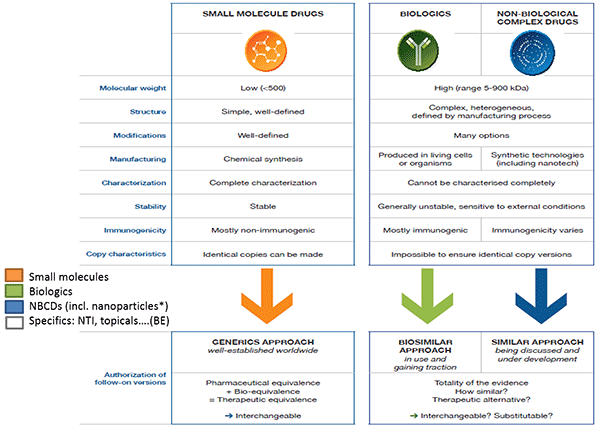
Drugs can be classified into three categories. Small molecules are easy to characterize and to demonstrate equivalence. Biologics and complex drugs are more complicated, and it is difficult to demonstrate equivalence. (Image courtesy of Stefan Mühlebach)

Lawrence Mayer of Jazz Pharmaceuticals gave the keynote address on the development of a liposome-based drug delivery vehicle designed to maintain optimal levels of two cytostatics.

Several speakers spoke about the regulatory issues for biosimilars and complex drugs. Daan Crommelin of Utrecht University and Gillian Woollett of Avalere Health outlined some of the general issues to regulating generic complex drugs. Wenlei Jiang of the US Food and Drug Administration (FDA) and Elena Wolff-Holz of the Paul Ehrlich Institute provided the perspectives of the FDA and European Medicines Agency (EMA), respectively. Elywn Griffiths of the World Health Organization (WHO) outlined the WHO’s perspective.

There were several presentations on the approval of Glatopa (glatiramer acetate injection), a generic version of Copaxone (glatiramer acetate injection) for the treatment of multiple sclerosis. Andre Raw of the FDA outlined the evidence that the FDA required for approval of Glatopa while Joseph Glajch of Momenta Pharmaceuticals described the company’s approach to developing and characterizing it. Iris Grossman of Teva Pharmaceuticals presented data that show differences between the brand name drug and its generic counterpart.

Several generic versions of iron sucrose have been approved throughout the world. Stefan Mühlebach of Vifor Pharma presented evidence that several iron sucrose similars (ISS) are less effective than their branded counterparts. Beat Flühmann, also of Vifor, discussed his work on understanding pharmacists’ perspective on ISS.

Three speakers presented their approaches to evaluating the equivalence of complex drugs. Chetan Pujara of Allergan presented data on analyzing the equivalence of ophthalmic emulsions. Gary West of Azaya Therapeutics discussed regulatory hurdles to developing a generic form of Doxil (doxorubicin HCl liposome injection). Kouros Motamed of NantBioScience discussed the company’s efforts to develop a new drug delivery method for the cytostatic paclitaxel.

Two speakers focused on technical challenges to characterizing complex drugs. Wyatt Vreeland of the National Institute of Standards and Technology (NIST) described the advantages and caveats of several techniques to measure nanoparticle size. Stephan Stern of the Nanotechnology Characterization Laboratory (NCL) described a new technique to more accurately measure nanomedicines in the blood.

Speaker Presentation

Keynote Presentation

Keynote Speaker

Lawrence Mayer
Jazz Pharmaceuticals

Highlights

  • Drug-delivery vehicles can control the pharmacokinetics of drug combinations to maintain a drug ratio that maximizes efficacy while minimizing toxicity.
  • Vyxeos, a nanoscale drug delivery system, was developed to deliver two chemotherapies, daunorubicin and cytarabine, in a 5-to-1 molar ratio.
  • In Phase 3 trials, Vyxeos demonstrated improved overall survival compared to daunorubicin plus cytarabine in patients with acute myeloid leukemia.

Built to scale

Lawrence Mayer described the development of Vyxeos (formerly CPX-351), a drug delivery system in Phase 3 trials for the treatment of acute myeloid leukemia (AML).

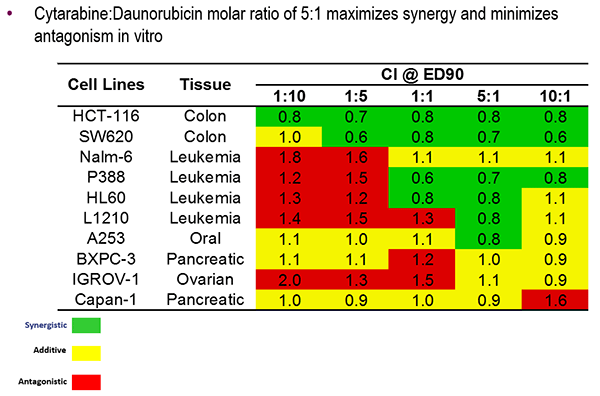
Vyxeos is a liposome-based drug delivery system that delivers the chemotherapies daunorubicin and cytarabine in a 5-to-1 ratio. In various cancer cell lines, this ratio was shown to have either additive or synergistic efficacy. Mayer described several of the technical features that can be altered to achieve the desired drug release rate, including membrane rigidity, charge, cholesterol content, and copper content.

The relative ratios of the chemotherapies cytarabine and daunorubicin can affect the combination’s efficacy. Some ratios are synergistic, while others are additive or antagonistic. (Image courtesy of Lawrence Mayer)

Vyxeos was compared to the current chemotherapy regimen of cytarabine and daunorubicin in two Phase 2 and one Phase 3 clinical studies in patients with AML. In all three trials, patients treated with Vyxeos had a significantly higher overall survival. Other indicators of efficacy, such as response rates and post-transplant survival were also better in patients treated with Vyxeos. Jazz Pharmaceuticals is pursuing FDA approval of Vyxeos. The FDA granted the drug breakthrough status earlier this year.

Mayer stressed the importance of a scalable manufacturing process and biophysical characterization early in drug development. A well-characterized biophysical profile ensures that the product produced in large-scale production is the same as that produced and studied during small-scale testing. It also ensures that the features of the product do not vary considerably from batch to batch.

Speaker Presentation

Video Chapters
00:00 Introduction
06:00 Key to exploiting drug ratio-dependent synergy
12:34 Leukemia cell update of intact liposomes
19:18 A robust commercial-scale nanomedicine
27:00 Conclusions

Regulatory Considerations

Speakers

Daan J.A. Crommelin, PhD
Utrecht University

Elwyn Griffiths
World Health Organization and Health Canada

Wenlei Jiang, PhD
Office of Research and Standards, Office of Generic Drugs, US Food and Drug Administration

Elena Wolff-Holz
Paul Ehrlich Institute

Gillian Woollett
Avalere Health

Panel Discussion Moderator:

Scott McNeil
Nanotechnology Characterization Laboratory

Highlights

  • Regulatory pathways for small molecule generics and biosimilars are well established, while requirements for non-biologic complex drugs are considered on a case-by-case basis.
  • The FDA is continually investigating new pharmacokinetic data and methods to assess the bioequivalence of complex drugs.
  • New guidance was released by the EMA in 2014 that expands the definition of biosimilar and provides additional direction to industry.

Regulatory pathways for generics and biosimilars

Daan Crommelin began by defining some key terms relating to complex drug products and outlining the regulatory pathways for different types of drugs. According to Crommelin, drugs can be divided into three main categories: small molecules; biologics, such as vaccines, blood and blood components, gene therapies, tissues, and recombinant proteins; and non-biologic complex drugs (NBCDs), synthetic drugs that do not have a single, homogeneous active substance and cannot be fully characterized. The composition, quality and in vivo performance of NBCDs are highly dependent on the manufacturing processes of the active ingredient as well as (in most cases) the formulation. They often consist of nanomedicines such as polymeric micelles, liposomes, or peptide-polymers. Crommelin pointed out that regulatory agencies do not always agree on these definitions; while the EMA considers low molecular weight heparin a biologic, the FDA considers it a complex drug.

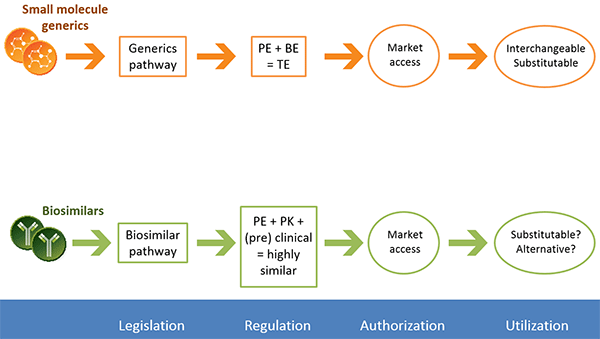
The regulatory pathways for small molecules and biologics are relatively well defined. For small molecules, therapeutic equivalence (TE) is assumed by demonstrating pharmaceutical equivalence (PE) and bioequivalence (BE). For biosimilars, additional data, including pharmacokinetic (PK) and (pre)clinical data are required. Unlike small molecules, biosimilars are not considered identical to the branded agent. (Image courtesy of Daan Crommelin)

The regulatory approval process for generic small molecules is well established, and generics are considered interchangeable with their branded counterpart. A separate process has been created for biologics. Similar to generics, biosimilars can be approved via an abbreviated regulatory process that usually involves pharmaceutical equivalence, pharmacokinetic, and preclinical data. Biosimilars are considered highly similar, but not identical, to the original drug.

The regulatory process for NBCDs is often conducted on a case-by-case basis. Because NBCDs cannot be fully characterized and the critical attributes required for efficacy are often unknown, it is difficult to demonstrate bioequivalence for a generic NBCD. The FDA and EMA release guidance documents for NBCD classes outlining which analyses are needed to demonstrate similarity. These documents are continually reviewed and revised.

Multi-faceted considerations for regulatory approval of biosimilars and complex drugs

Gillian Woollett stressed that the considerations for biosimilars and complex drug similars are not only scientific, but also legal, regulatory, and economic. Regulatory agencies must balance the need for scientific and clinical evidence with the need to provide patients affordable drugs in a timely manner. According to Woollett, too high a standard can be as problematic as too low a standard if it prevents access to drugs. The FDA and EMA have an additional responsibility to set a standard for the rest of the world. A product approved in the EU and US can generally be approved anywhere; however, one approved in emerging markets, such as China, Russia, and Brazil, may not be approved in other markets. In the US, only four biosimilars have been approved; however, several agents have been approved under the definition of generic biologics. In comparison, 23 biosimilars have been approved in the EU.

The considerations for biosimilars and complex drug similars are not only scientific, but also legal, regulatory, and economic.

One issue surrounding biosimilars is that they must be compared to the reference biologic approved in a given market. This can make it difficult for companies to pursue approval globally. Another issue that may need to be addressed is the addition of orphan indications to reference biologics. Because the FDA gives exclusivity for orphan indications, these indications would not be included in the biosimilar’s product label.

The FDA’s perspective on determining the equivalence of complex drugs

Wenlei Jiang described how the FDA assesses the bioequivalence of complex generics. Jiang stressed the FDA’s commitment to complex generics through the abbreviated new drug application (ANDA) approval pathway and GDUFA, which employs regulatory science initiatives for generic drugs. Specifically, Jiang showed research efforts under GDUFA that have developed new bioequivalence methods for complex drugs.

Traditional pharmacokinetic studies to demonstrate the bioequivalence of complex drugs are difficult to conduct. For some drugs, such as long-acting polymeric microspheres, which are commonly used in drug delivery, their long-acting nature would require very long studies, which may be impractical. Based on pharmacokinetic modeling research conducted by Alkermes, the FDA updated its guidance on the bioequivalence requirements for long-acting polymeric microspheres to include drug exposure up to 28 hours.

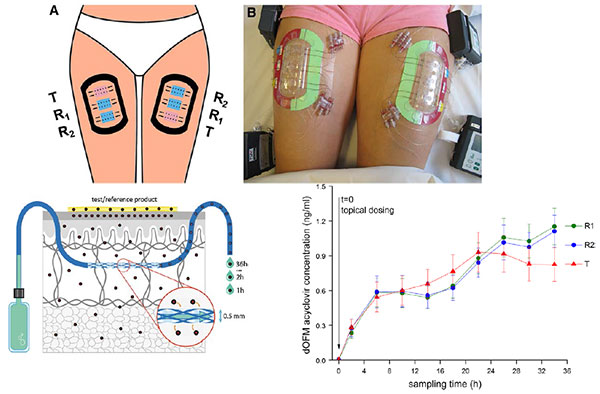
For complex drugs that act locally, such as topical skin products and nasal sprays, conventional studies that monitor drug blood levels may not be relevant. The FDA has sponsored research on new options for dermal pharmacokinetic studies, such as open-flow microperfusion (see slide).

Open-flow microperfusion can be used to monitor drug levels of topical creams in the dermis. (Image courtesy of Wenlei Jiang)

Jiang also presented a new analytic technique, morphology-directed Raman spectroscopy (MDRS), that can determine drug particle size and shape within a nasal suspension. MDRS has supported the recent approval of mometasone nasal suspension.

CHMP/EMA perspective on biosimilars

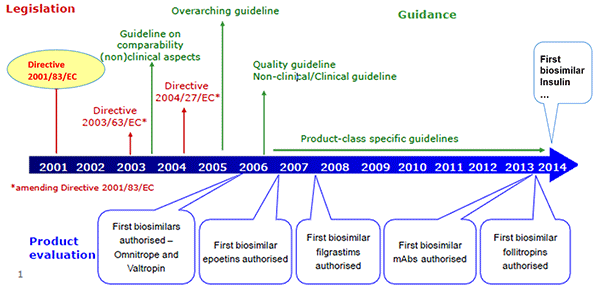
Elena Wolff-Holz described the EMA’s perspective on evaluating biosimilars and how the process has evolved over time. The EMA releases several overarching and product-specific guidelines, which are continually reviewed and revised. In a recent update to the overarching guidance (CHMP/437/04 Rev. 1), the EMA expanded the concept of a biosimilar to any biological medicinal product, including vaccines, allergens, and cell and tissue therapies, which were previously excluded. It also stressed that a biosimilar contains “a version of the active substance of an already authorized original biological medicinal product,” implying that biosimilars should not be used as reference products. In the new guidance, the goal of clinical data is to address slight differences in product characteristics, and safety and efficacy do not need to be re-established. Finally, if the reference biologic receives a new indication, the indication of the biosimilar may also be extended without the need for additional studies, if scientifically justified.

The evolution of biosimilars in the EU. New legislation is shown in red; new EMA guidelines are shown in green, and new authorizations are shown below the blue arrow. (Image courtesy of Elena Wolff-Holz)

Wolff-Holz noted that the approval process for biosimilars, which emphasizes physicochemical properties, can be difficult for clinicians, who want to know the clinical information for a drug, to accept. While clinical data for biosimilars are not included in the product’s Summary of Product Characteristics (SmPC), they are in the European Public Assessment Reports (EPAR), which clinicians are not as familiar with.

The WHO’s role in biosimilars and complex generics

Elwyn Griffiths described WHO’s role and position on biosimilars. While WHO is not a regulatory agency, it sets global standards for safety and quality. The WHO Expert Committee on Biological Standardization meets annually to establish recommendations and guidance on the quality, safety, and efficacy of biologics.

There are three major WHO guidance documents pertaining to biologics and biosimilars: Guidelines on the quality, safety and efficacy of biotherapeutic protein products prepared by recombinant DNA technology, published in 2013, Recommendations for the evaluation of animal cell cultures as substrates for the manufacture of biological medicinal products and for the characterization of cell banks, published in 2010, and Guidelines on the evaluation of similar biotherapeutic products, published in 2009.

The 2009 guidelines on similar biotherapeutics define similar biotherapeutic products (SBPs) as similar in terms of quality, safety, and efficacy to a licensed reference biological product (RBP). Similarity is established by characterizing the SBP and comparing it to the RBP in head-to-head studies. Comparison trials should be designed to detect differences in safety and efficacy between the SBP and RBP, not to establish the efficacy of the SBP. The guidelines also state that if an RBP has more than one indication, the indication of the SBP may also be expanded if scientifically warranted. One subject the WHO guidelines leave up to national regulatory agencies is whether SBPs should be considered interchangeable with RBPs.

Speaker Presentations

Video Chapters
00:00 Introduction
01:52 Complex drug products definitions
07:47 Three drug classes
13:16 What is the issue?
17:47 No access to biosimilar pathway for NBCD-similars
Video Chapters
00:00 Introduction
03:35 WHO biological standards
09:29 Regulatory oversight of biotherapeutics
15:13 WHO guidelines on evaluation of similar biotherapeutic product
23:38 Summary WHO standards
Video Chapters
00:00 Introduction
02:32 NDA versus ANDA
07:12 Consideration on PLGA sameness
13:24 Challenges for therapeutic equivalence of nasal spray products
15:13 Scientific rationale for weight-of-evidence approach
20:54 Summary
Video Chapters
00:00 Introduction
03:03 Scope includes next generation biosimilars
10:43 Manufacturing changes authorized by EMA
18:09 What if PK similarity is not convincingly demonstrated?
Video Chapters
00:00 Introduction
01:38 Working definitions for biologics
05:51 Biologic approvals have increased and are expected to rise
10:27 Biosimilars approvals across the world
18:58 Biosimilars represent a new and different business
Video Chapters
00:00 Introduction
00:50 Thoughts on the definition of the API and does it need to be updated
05:48 Measuring release of drugs
07:40 Critical factors, quality attributes for complex drugs
17:51 Looking forward to how further complexity affects biological responses
21:49 IP and open data review in a profit-driven industry

Comparisons of Copaxone (glatiramer acetate injection) with Its Generic Glatopa (glatiramer acetate injection)

Speakers

Joseph Glajch
Momenta Pharmaceuticals

Iris Grossman
Teva Pharmaceuticals

Andre Raw
U.S. Food and Drug Administration

Highlights

  • Glatopa (glatiramer acetate injection), an FDA-approved generic of Copaxone(glatiramer acetate injection) is considered similar to the branded product based on the tests required by the FDA.
  • Additional comparisons have revealed differences between the drugs that may affect safety and efficacy.

Glatopa: a complex generic drug for multiple sclerosis

Glatopa was approved by the FDA in 1996 as a generic version of Copaxone for the treatment of multiple sclerosis. These drugs consist of glatiramer acetate, a complex mixture of polypeptides produced by polymerizing four amino acids and then partially depolymerizing the resulting peptides.

Scientific considerations to approaching complex generics

Andre Raw discussed the scientific considerations to approaching generic versions of Copaxone (glatiramer acetate) and Lovenox (enoxaparin sodium) injections, two of the complex active ingredients recently approved in generic versions by the FDA. Raw argued that understanding the nature of the complexity of these drugs is key to evaluating generic similars. For instance, the complexity of Copaxone comes from the polymerization of activated amino acids, which determines the sequences of the polypeptides, and the subsequent partial depolymerization.

To ensure similarity of Copaxone and Lovenox similars, the FDA drafted guidance listing four criteria that generic products must meet. First, the pharmaceutical company must demonstrate equivalence in its reaction scheme. Second, the FDA places constraints on several physicochemical properties, such as molecular weight distribution and amino acid composition. This also means that the structural signatures, which reflect the polymerization and depolymerization processes, and biological assays will be similar as well.

The third criterion requires that generic manufacturers identify “process signatures;” equivalence in these signatures ensures that the generic active ingredient is manufactured with effectively the same polymerization kinetic and cleavage biases as the brand name. Finally, the fourth criterion relies on the equivalence of biochemical and/or biological markers for activity to ensure sameness. Unlike the previous three criteria, which in their aggregate ensure equivalency of molecular diversity, this criterion serves as a confirmatory test to ensure equivalency in functional biochemical or biological markers.

Comparison of Copaxone and Glatopa for FDA approval

Joseph Glajch described the tests that Sandoz conducted to demonstrate the equivalence of Glatopa and Copaxone. In approximately 50 physiochemical and 10 biological tests, Glatopa fell within an acceptable range considered to be equivalent to Copaxone. Glajch stressed that these analyses must be conducted on dozens of lots to understand the diversity and variability within the drug. He showed the data from some of these analyses, including molecular weight distribution, amino acid composition, and structural signatures. He also showed that the drugs have similar effects on disease intensity in a model of autoimmune encephalomyelitis and similar results on histamine release from cells.

Additional comparisons of Copaxone and Glatopa

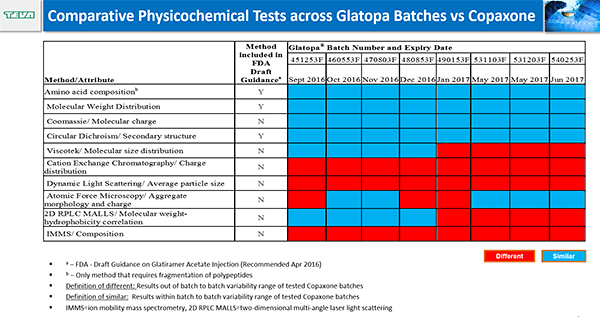
While Raw and Glajch showed that Glatopa and Copaxone are similar according to the methods required by the FDA, Iris Grossman described studies using higher-resolution techniques conducted by Teva Pharmaceuticals that reveal differences in surface charge and molecular weight density and distribution. In addition, Glatopa had greater batch-to-batch variability in these characteristics than Copaxone.

Copaxone and Glatopa are similar based on the physicochemical tests required by the FDA (rows 1, 2, and 4). However, other, higher-resolution methods demonstrate differences. (Image courtesy of Iris Grossman)

These differences may have consequences on efficacy and safety. In mice, of the thousands of genes affected by Glatopa and Copaxone, approximately 10% were different between the two drugs. The genes that differed were involved in pathways important for efficacy, including inflammation and immune response.

Based on these results, Teva has submitted comments on the draft FDA guidance on glatiramer acetate injections.

Speaker Presentation

Video Chapters
00:00 Introduction
02:37 Physicochemical differences relevant to mode of action
10:22 Relevance of differences to function and safety
13:50 Immunological triad
17:25 Functional effects summary and conclusions

Issues with Iron Carbohydrate Similars

Speakers

Beat Flühmann
Vifor Pharma Ltd

Stefan Mühlebach, PhD
Vifor Pharma Ltd

Panel Discussion Moderator:


Daan J.A. Crommelin
Utrecht Universit

Highlights

  • Several approved generics of iron carbohydrate complexes are not as effective as their branded counterparts.
  • Hospital pharmacists are not aware of the differences between iron carbohydrate products and often substitute these products without informing a patient’s physician.

Iron carbohydrate similars

Iron carbohydrate products are used to treat anemia in patients with chronic kidney disease. Several iron carbohydrate generics were approved in Europe in the mid-2000s. According to Stefan Mühlebach, there was no regulatory process for complex similars at this time, and the drugs were approved via the small molecule generic route. Researchers and regulators were not aware that the active pharmaceutical ingredient was not fully characterized, and iron carbohydrate similars were deemed identical to and interchangeable with the original drugs without additional efficacy or safety studies. Since then, real-life clinical studies have shown that show the approved iron carbohydrate similars are not clinically identical to the original formulations.

The EMA and FDA have reacted to these data and have published several guidance papers on iron carbohydrate similars.

The hospital pharmacist’s approach to iron complex carbohydrates

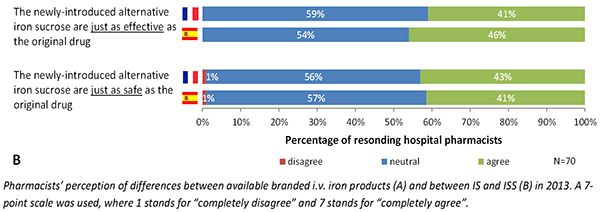
Beat Flühmann of Vifor Pharma described the pharmacist’s perspective of complex generics using iron sucrose, a type of iron carbohydrate, as an example. In a survey hospital pharmacists in France and Spain, Flühmann found that pharmacists substitute 30% to 50% of branded iron sucrose prescriptions with a generic version. Approximately 40% of pharmacists believed that the products have the same efficacy and safety, while the remaining 60% had no opinion. In addition, many pharmacists did not inform the physician that they had dispensed the generic version.

Despite clinical data that show significant differences in efficacy and safety among iron sucrose similars, most pharmacists are not aware of these differences. (Image courtesy of Beat Flühmann)

Flühmann stressed the importance of educating pharmacists on the differences in biosimilars and complex generics. Vifor conducted a roundtable discussion earlier this year with leading hospital pharmacists throughout Europe to discuss how to select nanosimilars for hospital formularies. The roundtable added several criteria for hospital formulary committees to consider when selecting a nanosimilar, including particle size and size distribution, pharmacokinetics, and stability of ready-to-use formulations.

Speaker Presentations

Video Chapters
00:00 Introduction
04:40 Therapeutic equivalence from manufacturing to efficacy and safety
09:32 Current situation for follow-on approval
14:48 NBCD product evaluation
18:32 Landscape of drugs follow-ons
Video Chapters
00:00 Introduction
03:11 Making biosimilars available globally
08:25 The unbound drug vs release and release mechanisms
12:11 Interchangeability and acceptability in the market
16:27 Proposed systems for biosimilars and for currently approved biologics
20:12 Concluding thoughts

Other Case Studies of Complex Generics

Speakers

Kouros Motamed
NantBioScience, Inc.

Chetan Pujara
Allergan

Gary West
Azaya Therapeutics

Highlights

  • The bioequivalence of Cynviloq, a polymeric micelle formulation of the chemotherapy paclitaxel, and Abraxane (paclitaxel protein-bound particles for injectable suspension), an approved albumin-bound paclitaxel, is being investigated in the study TRIBECA.
  • Robust criteria are needed to ensure the equivalence of different ophthalmic emulsions.
  • Greater harmony between the FDA and EMA could streamline the approval of a generic version of Doxil (doxorubicin HCl liposome injection).

Cynviloq: a new formulation of paclitaxel

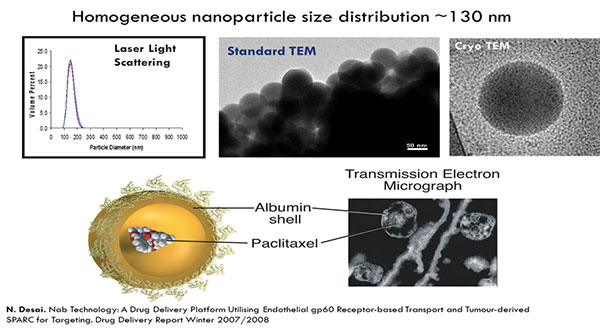
Kouros Motamed discussed a polymeric micelle formulation of the chemotherapy paclitaxel, Cynviloq, which is approved in several Asian countries for breast and lung cancer under the brand name Genexol-PM. These approvals were based on comparisons to Taxol (paclitaxel), a formulation of paclitaxel containing the excipient Cremophor EL. In the US and EU, approval requires comparison to Abraxane, an albumin-bound formulation of paclitaxel approved for breast, lung, and pancreatic cancer.

Evolution of paclitaxel therapies. (Image courtesy of Kouros Motamed)

In in vitro studies, Abraxane and Cynviloq had similar pharmacokinetic properties at therapeutic doses. At higher doses, the Abraxane concentration sharply increased, resulting in increased toxicity. The concentration of Cynviloq, however, did not increase as quickly, and therefore may be less toxic at higher doses.

A pharmacokinetic bioequivalence study, TRIBECA, was conducted in patients with metastatic breast cancer. Sorrento Therapeutics issued a press release stating that TRIBECA demonstrated bioequivalence of Abraxane and Cynviloq. In 2015, Cynviloq was acquired by NantWorks and has been renamed Nant-paclitaxel.

Demonstrating equivalence of ophthalmic emulsions

In 2013, the FDA released draft guidance on cyclosporine emulsions. To test whether this guidance was sufficient, Allergan tweaked its manufacturing process to make nine cyclosporine emulsions similar to Restasis (cyclosporine ophthalmic emulsion). Chetan Pujara showed that although these emulsions met the FDA criteria for similarity, there were key physicochemical and biological differences. For example, the cyclosporine distribution between the phases of the emulsion varied between the drugs. This corresponded with differences in the drug’s ability to permeate human corneal cells. Allergan also saw variability in the amount of cyclosporine in tears in rabbits.

The updated FDA guidance, released in 2016, incorporates suggestions by Allergan based on these data. However, Pujara stressed that further research on linking in vitro results to in vivo performance and on robust methods to characterize emulsions is still needed.

Regulatory barriers to a generic version of Doxil

Gary West called for harmony between regulatory authorities, citing the recent difficulties that Azaya Therapeutics has had in gaining approval for its generic doxorubicin. Doxorubicin, a treatment for ovarian cancer, is marketed by Janssen in the US under the brand name Doxil and in the EU under the brand name Caelyx (pegylated liposomal doxorubicin hydrochloride for injection).

Can international regulatory agencies work together to remove barriers facing approval of generic drugs?

Currently, Caelyx is the reference drug for doxorubicin in the EU. In the US, the FDA established a generic version of doxorubicin, ANDA 203263, as the reference drug for doxorubicin due manufacturing concerns with Doxil. However, the FDA discovered that the plant manufacturing the generic version was not complying with several guidelines, which led to contamination. West argued that due to these issues, the FDA-approved doxorubicin generic may not be the best comparator. He showed certificates of analysis from the sole manufacturer that made both Caelyx and Doxil in 2013 that demonstrate that, at that time, the two drugs were the same product with a different label and argued that they should therefore be considered interchangeable by regulatory agencies.

Azaya Therapeutics’ investigational doxorubicin generic, dubbed ATI-0918, was shown to be bioequivalent to Caelyx. However, because the EMA requires that Caelyx be sourced within the EU, and the FDA requires generics to be compared against the reference standard ANDA 203263, the company faced regulatory hurdles from both agencies. West called upon the agencies to work together to remove the barriers facing approval of generic drugs.

Speaker Presentation

Video Chapters
00:00 Introduction
03:21 A triple-down, unintended, regulatory catch 22
09:52 Lipodox versus Sun product
18:28 Regulatory barriers
22:29 Conclusions

Analytical Techniques for Characterizing Complex Drugs

Speakers

Stephan Stern
Nanotechnology Characterization Laboratory

Wyatt Vreeland
The National Institute of Standards and Technology

Highlights

  • Choosing the right analytical method is important when measuring the size of nanoparticles.
  • A new method to measure plasma drug concentration for nanomedicines is being validated by the NCL.

Techniques to measure nanoparticle size

Wyatt Vreeland described the advantages and disadvantages of several techniques to measure nanoparticles size.

The most common technique for measuring nanoparticle size is batch light scattering. In this method, the particle size is determined based on their ability to scatter light waves. This method is quick, simple, and nondestructive. However, because larger particles scatter light much more than smaller particles, a small amount of large particles can drown out the signal due to smaller particles, resulting in significant errors.

To avoid this complication, mixtures can be separated by size by either size-exclusion chromatography (SEC) or field flow fractionation (FFF) and then measured by light scattering. One advantage of FFF over SEC is that it can separate delicate or soft colloidal particles, which are often components of complex drugs. FFF can be used to separate particles of a few nanometers to 1000 nanometers.

Vreeland also discussed several new techniques that measure particle size by monitoring individual particles. In nanoparticle tracking analysis (NTA), particles are imaged directly with a laser, and their size is determined by tracking the extent of diffusion over time. While NTA is a robust tool to measure particle size, it is only effective within a narrow concentration range. A second technique, resonant mass measurement measures the change in frequency a particle causes as it flows through a vibrating cantilever. In addition to size, this technique, unlike others, can also measure buoyant density; however the cantilever is prone to clogging and cannot be used to measure liposomes. Finally, electrical sensing zone measures the change in electrical conductivity as a particle travels through a pore between two electrodes. This technique is similar to Coulter counter, which is used to measure bacteria and viruses. This is a very new technique for nanoscale particles.

A new method to measure nanomedicine plasma levels

The concentration of drugs administered via nanoparticles can be divided into three forms: the nanoparticle-encapsulated form, the unencapsulated free form, and the unencapsulated protein-bound form. Current methods to separate the encapsulated from unencapsulated drug promote un-encapsulation and do not differentiate protein-bound from encapsulated drug.

In two pharmacokinetic studies of Caelyx, the measured levels of unencapsulated drug differed by 6-fold, while the levels of unencapsulated drug differed by almost 12-fold, likely due to problems in fractionation methods.

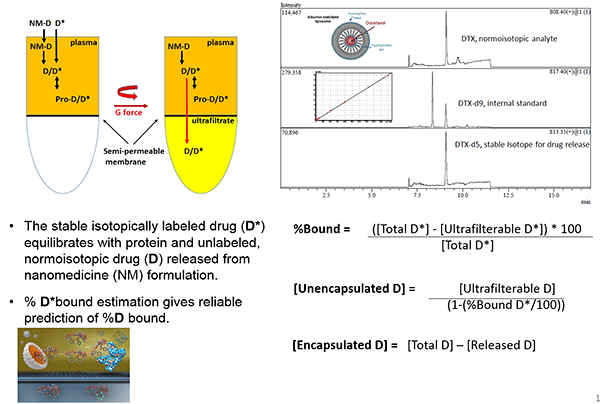
Stephan Stern presented a new stable isotope tracer technique being developed by the NCL to separate and measure nanomedicine drug fractions. NCL is working with the FDA to evaluate this method for determining the bioequivalence of generic nanomedicines. As part of this effort, the NCL is conducting in vitro bioanalytical studies as well as bioequivalence studies in rats of Abraxane and Genexol-PM, discussed by Motamed, and doxorubicin HCl and Doxil, discussed by West.

In the stable isotope tracer method, an isotopically-labeled drug is added to the blood sample. The free and bound drug forms are then separated through a semi-permeable membrane. The percentage of labeled drug that does not pass through the membrane is used to determine the percent of bound drug, which can then be used to calculate the concentrations of bound and unbound drugs. (Image courtesy of Stephan Stern)

Speaker Presentations

Video Chapters
00:00 Introduction
03:48 Nanomedicine pharmacokinetics
08:39 Sources of intra-subject variability
13:43 Novel stable isotope tracer method
19:26 Measuring unbound drug in evaluating nanomedicine pharmacokinetics
Video Chapters
00:00 Introduction
02:50 Batch light scattering
08:11 How laminar flow works in FFF
13:18 Dynamic light scattering
17:52 Resonant mass measurement
20:18 Future directions

Open Questions

  • How can researchers determine the critical attributes for complex drugs?
  • What are the best methods to characterize complex drugs?
  • What are the most appropriate pharmacokinetic methods to evaluate bioequivalence of complex drugs?
  • Should biosimilars and complex generics be considered interchangeable with their branded counterparts? What criteria are necessary to demonstrate interchangeability?
  • How can regulatory agencies balance the need for robust scientific and clinical evidence with the need for affordable medications when evaluating complex generics?
  • How can regulatory agencies reach agreements on how to evaluate complex drugs?
  • How can companies and regulatory agencies communicate the potential clinical differences between original and generic complex drugs?

Resources

Websites

Generic Drug User Fees Act (GDUFA) of 2012
Information from the FDA on GDUFA 2012 as well as a webinar held in October, 2016 on GDUFA II

GDUFA II Fee Structure Summary
Summary of changes under GDUFA II

GDUFA regulatory science
News and information on GDUFA from the FDA

Generic Pharmaceutical Association
Trade association for manufacturers and distributors of generic drugs

Generics and Biosimilars Initiative
Initiative to promote the scientific status of generics and biosimilars to foster the use of affordable medicines

WHO biologics site
Biological standardization website

Daan Crommelin

Borchard G, Fluhmann B, Muhlebach S. Nanoparticle iron medicinal products — Requirements for approval of intended copies of non-biological complex drugs (NBCD) and the importance of clinical comparative studies. Regul Toxicol Pharmacol. 2012;64:324-328.

Crommelin DJ, de Vlieger JS, Weinstein V, Muhlebach S, Shah VP, Schellekens H. Different pharmaceutical products need similar terminology. AAPS J. 2014;16:11-14.

Crommelin DJ, Shah VP, Klebovich I, et al. The similarity question for biologicals and non-biological complex drugs. Eur J Pharm Sci. 2015;76:10-17.

Ebbers HC, Crow SA, Vulto AG, Schellekens H. Interchangeability, immunogenicity and biosimilars. Nat Biotechnol. 2012;30:1186-1190.

Halim LA, Brinks V, Jiskoot W, et al. Quality and batch-to-batch consistency of original and biosimilar Epoetin products. J Pharm Sci. 2016;105:542-550.

Praditpornsilpa K, Tiranathanagul K, Kupatawintu P, et al. Biosimilar recombinant human erythropoietin induces the production of neutralizing antibodies. Kidney Int. 2011;80:88-92.

Beat Flühmann

Fluhmann B, de Vlieger JSB, Vulta AG, et al. The authorization of non-biological complex drugs (NBCDs) follow-on versions: specific regulatory and interchangeability rules ahead? GaBI J. 2013;2:204-207.

Joseph Glajch

FDA draft guidance document on glatiramer acetate injection

Glatopa website

Elwyn Griffiths

WHO Expert Committee on Biological Standardization

WHO. Guidelines on the quality, safety and efficacy of biotherapeutic protein products prepared by recombinant DNA technology. 2013.

WHO. Recommendations for the evaluation of animal cell cultures as substrates for the manufacture of biological medicinal products and for the characterization of cell banks. 2010.

WHO. Guidelines on the evaluation of similar biotherapeutic products. 2009.

Case studies and publications from implementation workshops for BTP/SBP guidelines:

Evaluation of similar biotherapeutic products: scientific and regulatory challenges. Biologicals [special issue]. 2011;39:5.

Knezevic I, Kang HN, Thorpe R. Immunogenicity assessment of monoclonal antibody products: A simulated case study correlating antibody induction with clinical outcomes. Biologicals. 2015;43:307-317.

Kudrin A, Knezevic I, Joung J, Kang HN. Case studies on clinical evaluation of biosimilar monoclonal antibody: scientific considerations for regulatory approval. Biologicals. 2015;43:1-10.

Njue C. Statistical considerations for confirmatory clinical trials for similar biotherapeutic products. Biologicals. 2011;39:266-269.

Schiestl M, Li J, Abas A, et al. The role of the quality assessment in the determination of overall biosimilarity: a simulated case study exercise. Biologicals. 2014;42:128-132.

Wadhwa M, Knezevic I, Kang HN, Thorpe R. Immunogenicity assessment of biotherapeutic products: an overview of assays and their utility. Biologicals. 2015;43:298-306.

Iris Grossman

Hasson T, Kolitz S, Towfic F, et al. Functional effects of the antigen glatiramer acetate are complex and tightly associated with its composition. J Neuroimmunol. 2016;290:84-95.

Kolitz S, Hasson T, Towfic F, et al. Gene expression studies of a human monocyte cell line identify dissimilarities between differently manufactured glatiramoids. Sci Rep. 2015;5:10191.

Varkony H, Weinstein V, Klinger E, et al. The glatiramoid class of immunomodulator drugs. Expert Opin Pharmacother. 2009;10:657-668.

Teva Pharmaceuticals Industries Ltd. [press release] Teva Files Citizen Petition with the U.S. Food and Drug Administration (FDA) Regarding the Complexity of COPAXONE® (glatiramer acetate) Following the Agency’s Guidance. July 3, 2014.

Wenlei Jiang

Babiskin A et al. Pharmacokinetic modeling and simulation of naltrexone for extended-release injectable suspension to derive alternative BE metrics. ACoP. 2015.

Bodenlenz M, Tiffner KI, Raml R, et al. Open flow microperfusion as a dermal pharmacokinetic approach to evaluate topical bioequivalence. Clin Pharmacokinet. 2016. Epub ahead of print.

Garner J, Skidmore S, Park H, Park K, Choi S, Wang Y. A protocol for assay of poly(lactide-co-glycolide) in clinical products. Int J Pharm. 2015;495:87-92.

Li BV, Jin F, Lee SL, et al. Bioequivalence for locally acting nasal spray and nasal aerosol products: standard development and generic approval. AAPS J. 2013;15:875-883.

Lawrence Mayer

Jazz Pharmaceuticals pipeline

Phase 3 clinical study of Vyxeos in AML

Carol H, Fan MM, Harasym TO, et al. Efficacy of CPX-351, (cytarabine:daunorubicin) liposome injection, against acute lymphoblastic leukemia (ALL) xenograft models of the Pediatric Preclinical Testing Program. Pediatr Blood Cancer. 2015;62:65-71.

Cortes JE, Goldberg SL, Feldman EJ, et al. Phase II, multicenter, randomized trial of CPX-351 (cytarabine:daunorubicin) liposome injection versus intensive salvage therapy in adults with first relapse AML. Cancer. 2015;121:234-242.

Lancet JE, Cortes JE, Hogge DE, et al. Phase 2 trial of CPX-351, a fixed 5:1 molar ratio of cytarabine/daunorubicin, vs cytarabine/daunorubicin in older adults with untreated AML. Blood. 2014;123:3239-3246.

Lim WA, Tardi PG, Dos Santos N, et al. Leukemia-selective uptake and cytotoxicity of CPX-351, a synergistic fixed-ratio cytarabine: daunorubicin formulation, in bone marrow xenografts. Leuk Res. 2010;34:1214-1223.

Kouros Motamed

Kamaly N, Xiao Z, Valencia PM, Radovic-Moreno AF, Farokhzad OC. Targeted polymeric therapeutic nanoparticles: design, development and clinical translation. Chem Soc Rev. 2012;41:2971-3010.

Motamed K, Goodman Y, Hwang L, Hsiao C, Trieu V. IG-001 — a non-biologic nanoparticle paclitaxel for the treatment of solid tumors. J Nanomater Mol Nanotechnol. 2014;3:1.

Nehate C, Jain S, Saneja A, et al. Paclitaxel formulations: challenges and novel delivery options. Curr Drug Deliv. 2014;11:666-686.

Sorrento Therapeutics, Inc. Sorrento Announces Positive TRIBECA™ Registrational Study Results. [press release.] May 4, 2015.

Stefan Mühlebach

Aguera ML, Martin-Malo A, Alvarez-Lara MA, et al. Efficiency of original versus generic intravenous iron formulations in patients on haemodialysis. PLoS One. 2015;10:e0135967.

Muhlebach S, Borchard G, Yildiz S. Regulatory challenges and approached to characterize nanomedicines and their follow-on similars. Nanomedicine. 2015;10:659-674.

Munoz M, Martin-Montanez E. Ferric carboxymaltose for the treatment of iron-deficiency anemia. Exp Opin Pharmacother. 2012;13:907-921.

Toblli JE, Cao G, Angerosa M. Nitrosative stress and apoptosis in non-anemic healthy rats induced by intravenous iron sucrose similars versus iron sucrose originator. Biometals. 2015;28:279-292.

Toblli JE, Di Gennaro F. Switching patients with non-dialysis chronic kidney disease from oral iron to intravenous ferric carboxymaltose: effects on erythropoiesis-stimulating agent requirements, costs, hemoglobin and iron status. PLoS One. 2015;10:e0125528.

Chetan Pujara

Restasis website

FDA. Draft guidance on cyclosporine. Revised October, 2016.

Kompella Uday. Approval of Generic Ophthalmic Suspensions/Emulsions: Current Status and Challenges. Regulatory Science Initiatives Part 15 Public Meeting.

Lionberger R. Complex Generic Drugs. GPhA Fall Technical Meeting, October 29, 2013.

Andre Raw

Department of Health and Human Services. FDA Letter to Covington and Burling (Docket FDA-2003-P-0273). July 23, 2010.

Department of Health and Human Services. Requests That FDA Consider New Scientific Information and Refrain From Approving Any Abbreviated New Drug Application Referencing Copaxone (glatiramer acetate injection) Until Certain Conditions Are Met (Docket FDA-2015-P-1050). April 16, 2015.

Grampp G, Bonafede M, Felix T, Li E, Malecki M, Sprafka JM. Active and passive surveillance of enoxaparin generics: a case study relevant to biosimilars. Expert Opin Drug Saf. 2015;14:349-360.

Lee S, Raw A, Yu L, et al. Scientific considerations in the review and approval of generic enoxaparin in the United States. Nat Biotechnol. 2013;31:220-226.

Stefan Stern

Ambardekar and Stern. NBCD Pharmacokinetics and Bioanalytical Methods to Measure Drug Release. In Daan Crommelin D and de Vlieger J (ed) Non-Biological Complex Drugs; the Science and Regulatory Landscape. Springer, New York, NY; 2015: In-press.

Bekersky I, Fielding RM, Dressler DE, Lee JW, Buell DN, Walsh TJ. Plasma protein binding of amphotericin B and pharmacokinetics of bound versus unbound amphotericin B after administration of intravenous liposomal amphotericin B (AmBisome) and amphotericin B deoxycholate. Antimicrob Agents Chemother. 2002;46:834-840.

Davit BM, Conner DP, Fabian-Fritsch B, et al. Highly variable drugs: observations from bioequivalence data submitted to the FDA for new generic drug applications. AAPS J. 2008;10:148-156.

Skoczen S, McNeil SE, Stern ST. Stable isotope method to measure drug release from nanomedicines. J Control Release. 2015;220:169-174.

Stern ST, Martinez MN, Stevens DM. When is it important to measure unbound drug in evaluating nanomedicine pharmacokinetics? Drug Metab Dispos. 2016;44:1934-1939.

Wyatt Vreeland

Galyean AA, Filliben JJ, Holbrook RD, Vreeland WN, Weinberg HS. Asymmetric flow field flow fractionation with light scattering detection — an orthogonal sensitivity analysis. J Chromatogr A. 2016;1473:122-132.

Galyean AA, Vreeland WN, Filliben JJ, Holbrook RD, Ripple DC, Weinberg HS. Using light scattering to evaluate the separation of polydisperse nanopartciles. Anal Chim Acta. 2015;886:207-213.

Gary West

Zerhouni E, Hamburg M. The need for global regulatory harmonization: a public health imperative. Sci Transl Med. 2016;8:338ed6.

Elena Wolff-Holz

EMA. Guideline on similar biological medicinal products. CHMP/437/04 Rev 1. 23 October 2014.

McCamish M, Woollett G. The state of the art in the development of biosimilars. Clin Pharmacol Ther. 2012;91:405-417.

Ramanan S, Grampp G. Drift, evolution, and divergence in biologics and biosimilars manufacturing. BioDrugs. 2014;28:363-372.

Schiestl M, Stangler T, Torella C, Cepeljnik T, Toll H, Grau R. Acceptable changes in quality attributes of glycosylated biopharmaceuticals. Nature Biotechnol. 2011;29:310-312.

Vezer B, Buzas A, Sebeszta M, Zrubka Z. Authorized manufacturing changes for therapeutic monoclonal antibodies (mAbs) in European Public Assessment Report (EPAR) documents. Curr Med Res Opin. 2016;32:829-834.

Gillian Woollett

McCamish M, Woollett, G. Worldwide experience with biosimilar development. MAbs. 2011;3:209-217.

McCamish, M, Pakulski, J, Sattler C, Woollett G. Toward interchangeable biologics. Clin Pharmacol Ther. 2015;97:215-217.

Biosimilar guidances:

CHMP. Guideline on similar biological medicinal products. CHMP/437/04. 30 October 2005.

FDA. Information on biosimilars.

Health Canada. Guidance for sponsors: information and submission requirements for subsequent entry biologics (SEBs). March 2010.

WHO. Guidelines on evaluation of similar biotherapeutic products (SBPs). October 2009.

Disease Drivers of Aging: The 2016 Advances in Geroscience Summit

Overview

The processes associated with aging may be risk factors for age-related diseases. Conversely, many age-related chronic diseases accelerate aging. However, because most research is focused on specific diseases, the broad mechanisms of disease as a driver of aging have not been well studied. Understanding how disease drives aging could not only help people live longer but also improve health and quality of life during old age.

On April 13–14, 2016, researchers studying aging and three disease areas—HIV/AIDS, oncology, and diabetes—met at the New York Academy of Sciences for the Disease Drivers in Aging: 2016 Advances in Geroscience Summit. The meeting expanded on the National Institutes of Health’s 2013 Advances in Geroscience Summit, examining how chronic diseases and their treatments affect aging. The meeting also aimed to stimulate collaboration between researchers studying aging and researchers studying disease. The summit was presented by the Gerontological Society of America, the American Federation for Aging Research, the Trans-NIH GeroScience Interest Group, and the New York Academy of Sciences.

The meeting opened with four keynote presentations from geroscience researchers, followed by a series of short talks and panel discussions featuring researchers focused on HIV/AIDS, diabetes, and cancer. This eBriefing reviews the panel discussions on each disease area and the overarching discussion on common themes and ideas for collaboration between researchers studying aging and disease.

Presentations available from:

Timothy Ahles, PhD (Memorial Sloan Kettering Cancer Center)
Kathryn Anastos, MD (Albert Einstein College of Medicine)
Steven Austad, PhD (University of Alabama at Birmingham)
James Becker, PhD (University of Pittsburgh)
Caroline Blaum, MD (New York University)
Judith Campisi, PhD (Buck Institute for Research on Aging)
Harvey J. Cohen, MD (Duke University)
Wendy Demark-Wahnefried, PhD (University of Alabama at Birmingham)
Jan van Deursen, PhD (Mayo Clinic)
Elissa Epel, MD (University of California, San Francisco)
Kristine Erlandson, MD (University of Colorado)
Brooke Grindlinger, PhD (The New York Academy of Sciences)
Jeffrey Halter, MD (University of Michigan)
Richard Hodes, MD (National Institute on Aging, NIH)
Peter Hunt, MD (University of California, San Francisco)
Beth Jamieson, PhD (University of California, Los Angeles)
C. Ronald Kahn, MD (Joslin Diabetes Center)
Balakuntalam Kasinath, MD (University of Texas Health Science Center)
Gretchen Neigh, PhD (Virginia Commonwealth University)
Rosario Scalia, MD, PhD (Temple University)
Marissa Schafer, PhD (Robert and Arlene Kogod Center on Aging)
Felipe Sierra, PhD (National Institute on Aging, NIH)
Mary Sehl, MD, PhD (University of California, Los Angeles)
Christopher Wiley, PhD (Buck Institute for Research on Aging)
Panel Discussions

Presented by

The logo for The New York Academy of Sciences.

How to cite this eBriefing

The New York Academy of Sciences. Disease Drivers of Aging: The 2016 Advances in Geroscience Summit. Academy eBriefings. 2016. Available at: www.nyas.org/Geroscience2016-eB

Media

00:01 1. Introduction and overview
04:25 2. What we know from basic research
11:58 3. Progress made; What we want to know; Conclusion
00:01 1. Introduction and overview
08:20 2. Chronic stress and cell aging
13:04 3. Telomeres and disease risk
15:55 4. Disease drivers; Conclusion
00:01 1. Presentation by Beth Jamieson
10:20 2. Presentation by James Becker
19:52 3. Presentation by Gretchen Neig
00:01 1. Presentation by Kathryn Anastos
10:16 2. Presentaton by Peter Hunt
20:23 3. Presentation by Kristine Erlandson
00:01 1. Introduction; HIV and aging
08:25 2. HIV and macrophages; Primate studies; Where to intervene
16:21 3. Maximizing control group resources; Biomarkers for stress
23:48 4. Regarding Alzheimer’s; Mitochondrial dysfunction; Aging and viral dormancy; Data set creation
28:56 5. Supressor mutations; Cognitive dysfunction; Conclusion
00:01 1. Presentation by Marissa Schafer
11:07 2. Presentation by Christopher Wiley
22:09 3. Presentaton by Mary Sehl
00:01 1. Presentation by C. Ronald Kahn
10:29 2. Presentation by Balakuntalam Kasinath
20:47 3. Presentation by Rosario Scalia
00:01 1. Presentation by Caroline Blaum
10:35 2. Presentation by Jeffrey Halter
00:01 1. Treatment with CDK4 inhibitors; What is accelerated aging?
09:03 2. Increased phosphorylation; Obesity, asthma, and diabetes
13:55 3. Amino acids and insulin secretion; More on accelerated aging
18:52 4. Regarding astroglial cells; The blood-brain barrier
26:40 5. Treatment with metformin; Diabetes and immunodeficiency; Rapamycin; Conclusion
00:01 1. Introduction; Choosing the right journal
04:20 2. General manuscript preparation; Discussion and introduction
11:44 3. The abstract; The title
14:38 4. Authorship; The cover letter
21:44 5. Referees; Peer review
27:44 6. Decisions; Common reasons for rejection; Revision and resubmission
34:35 7. Preparing a response; Appealing a negative decision
39:12 8. Parting thoughts; Conclusion
00:01 1. Presentation by Jan van Deursen
11:48 2. Presentation by Harvey Jay Cohen
22:09 3. Presentation by Judith Campisi
00:01 1. Presentation by Wendy Denmark-Wahnefried
10:29 2. Presentation by Timothy Ahles
00:01 1. Introduction
07:48 2. Synergy between aging and cancer research models; Aging in animal models
17:30 3. Disease interplay across disciplines; Dietary restriction; Senescent T-cells
24:12 4. Computational and systems biology; Chemotherapy and senescence; Funding
31:11 5. Anti-depressants before chemo; Intervention
40:15 6. Regarding exosomes and evolution; Conclusion
00:01 1. Panelists’ opening remarks
13:17 2. Disease treatment and lifespan extension; Targeting senescenct cells
21:06 3. Embracing complexity; Developmental manipulation in aging research; Inflammation
33:20 4. Review and funding
41:00 5. Metabolic reprogramming; Healthspan vs. lifespan; Regarding data sets
48:18 6. Mitochondrial dysfunction; Going forward; Common tools
61:28 7. Aging as disease; Stress and trauma; Drug discovery; Influence of local environment
69:28 8. Exercise; Incentivizing collaboration; Policy and funding
82:06 9. Focus on gene expression; Big data; Public perceptions
87:27 10. Cohort development; Conclusion

Resources

General aging resources: websites

Frontiers in Geroscience. J Gerontol. 2014;69 Suppl 1
Supplemental issue of the Journals of Gerontology containing articles related to the first Geroscience Summit.

NIH Geroscience Interest Group
Trans-NIH organization to raise awareness of the role of aging in disease.

Sierra F, Kohanski R (eds). Advances in Geroscience. Springer International Publishing. 2016. [Ebook]
Provides a comprehensive overview of geroscience.

General aging resources: journal articles

National Institute on Aging (NIA)
NIA, one of the 27 Institutes and Centers of NIH, leads a broad scientific effort to understand the nature of aging and to extend the healthy, active years of life.

Bansal A, Zhu LF, Yen K, Tissenbaum HA. Uncoupling lifespan and healthspan in Caenorhabditis elegans longevity mutants. Proc Natl Acad Sci U S A. 2015;112:E277-E286.

Kennedy BK, Berger SL, Brunet A, et al. Geroscience: linking aging to chronic disease. Cell. 2014;159:709-713.

Lopez-Otin C, Blasco MA, Partridge L, et al. The hallmarks of aging. Cell. 2013;153:1192-1217.

Lunney JR, Lynn J, Foley DJ, et al. Patterns of functional decline at end of life. JAMA. 2003;289:2387-2392.

St Sauver JL, Boyd CM, Grossardt BR, et al. Risk of developing multimorbidity across all ages in an historical cohort study: differences by sex and ethnicity. BMJ Open. 2015;5:e006413.

Research and funding opportunities: websites

Impact of Aging on Currently Employed Animal Models of Disease and Chronic Conditions
Recent NIA request for applications.

NIA Interventions Testing Program
Multi-site study that investigates the potential for treatments to extend life span and delay dysfunction in mice.

HIV and aging resources: journal articles

Becker JT, Lopez OL, Dew MA, Aizenstein HJ. Prevalence of cognitive disorders differs as a function of age in HIV virus infection. AIDS. 2004;18 Suppl 1:S11-S8.

Cohen MH, Hotton AL, Hershow RC, et al. Gender-related risk factors improve mortality predictive ability of VACS Index among HIV-infected women. J Acquir Immune Defic Syndr. 2015;70:538-544.

Deeks SG, Tracy R, Douek DC. Systemic effects of inflammation on health during chronic HIV infection. Immunity. 2013;39:633-645.

Lee SA, Sinclair E, Hatano H, et al. Impact of HIV on CD8+ T cell CD57 expression is distinct from that of CMV and aging. PLoS One. 2014;9:e89444.

Rickabaugh TM, Baxter RM, Sehl M, et al. Acceleration of age-associated methylation patterns in HIV-1-infected adults. PLoS One. 2015;10:e0119201.

Schrack JA, Althoff KN, Jacobson LP, et al. Accelerated longitudinal gait speed decline in HIV-infected older men. J Acquir Immune Defic Syndr. 2015;70:370-376.

Diabetes and aging resources: journal articles

Chang AM, Smith MJ, Galecki AT, et al. Impaired beta-cell function in human aging: response to nicotinic acid-induced insulin resistance. J Clin Endocrinol Metab. 2006;91:3303-3309.

Cheng Z, Jiang X, Pansuria M, et al. Hyperhomocysteinemia and hyperglycemia induce and potentiate endothelial dysfunction via µ-calpain activation. Diabetes. 2015;64:947-959.

Han BH, Blaum CS, Ferris RE, et al. Older adults reporting more diabetes mellitus care have greater 9-year survival. J Am Geriatr Soc. 2015;63:2455-2462.

Kleinridders A, Cai W, Cappellucci L, et al. Insulin resistance in brain alters dopamine turnover and causes behavioral disorders. Proc Natl Acad Sci U S A. 2015;112:3463-3468.

Mariappan MM, Prasad S, D’Silva K, et al. Activation of glycogen synthase kinase 3β ameliorates diabetes-induced kidney injury. J Biol Chem. 2014;289:53563-35375.

Cancer and aging resources: journal articles

Bouchlaka MN, Sckisel GD, Chen M, et al. Aging predisposes to acute inflammatory induced pathology after tumor immunotherapy. J Exp Med. 2013;210:2223-2237.

Dale W, Mohile SG, Eldadah BA, et al. Biological, clinical, and psychosocial correlates at the interface of cancer and aging research. J Natl Cancer Inst. 2012;104:581-589.

Lecot P, Alimirah R, Desprez PY, et al. Context-dependent effects of cellular senescence in cancer development. Br J Cancer. 2016. [Epub]

Mandelblatt JS, Jacobsen PB, Ahles T. Cognitive effects of cancer systemic therapy: implications for the care of older patients and survivors. J Clin Oncol. 2014;32:2617-2626.

Mohile SG, Hurria A, Cohen HJ, et al. Improving the quality of survivorship for older adults with cancer. Cancer. 2016.

Van Deursen JM. The role of senescent cells in ageing. Nature. 2014;509:439-446.

Speakers

Organizers

James Appleby, RPh, MPH

The Gerontological Society of America
website

Steven Austad, PhD

University of Alabama at Birmingham
website | publications

Rita Effros, PhD

University of California, Los Angeles
website | publications

Rebecca Fuldner, PhD

National Institute on Aging, NIH
website | publications

Paige Green, PhD, MPH

National Cancer Institute, NIH
website | publications

Robin Huebner, PhD, MPH

National Institute of Allergy and Infectious Diseases, NIH

Ronald Kohanski, PhD

National Institute on Aging, NIH
website | publications

Stephanie Lederman, EdM

American Federation for Aging Research
website | publications

Kevin J. Lee, PhD

The Lawrence Ellison Foundation; American Federation for Aging Research
website

Judie Lieu

The Gerontological Society of America
website

Francesca Macchiarini, PhD

National Institute of Allergy and Infectious Diseases, NIH
website | publications

Susan McCarthy, PhD

National Cancer Institute, NIH
website | publications

Aaron Pawlyk, PhD

National Institute of Diabetes and Digestive and Kidney Diseases, NIH
website | publications

Felipe Sierra, PhD

National Institute on Aging, NIH
website | publications

Luke Stoeckel, PhD

National Institute of Diabetes and Digestive and Kidney Diseases, NIH
website | publications

Odette van der Willik

American Federation for Aging Research
website | publications

Siobhan Addie, PhD

Formerly at the New York Academy of Sciences

Brooke Grindlinger, PhD

The New York Academy of Sciences

Speakers

Timothy Ahles, MD

Memorial Sloan Kettering Cancer Center
website | publications

Kathryn Anastos, MD

Albert Einstein College of Medicine
website | publications

Nir Barzilai, MD

Albert Einstein College of Medicine
website | publications

James Becker, PhD

University of Pittsburgh
website | publications

Caroline Blaum, MD

New York University
website | publications

Judith Campisi, PhD

Buck Institute for Research on Aging
website | publications

Harvey J. Cohen, MD

Duke University
website | publications

Steven Deeks, MD

AIDS Research Institute; University of California, San Francisco
website | publications

Wendy Demark-Wahnefried, PhD, RD

University of Alabama at Birmingham
website | publications

Jan van Deursen, PhD

Mayo Clinic
website | publications

Elissa Epel, MD

University of California, San Francisco
website | publications

Kristine Erlandson, MD

University of Colorado
website | publications

Claudia Gravekamp, PhD

Albert Einstein College of Medicine
website | publications

Jeffrey Halter, MD

University of Michigan
website | publications

Kevin High, MD

Wake Forest University
website | publications

Richard Hodes, MD

National Institute on Aging, National Institutes of Health
website | publications

Peter Hunt, MD

University of California, San Francisco
website | publications

Arti Hurria, MD

City of Hope National Medical Center
website | publications

Beth Jamieson, PhD

University of California, Los Angeles
website | publications

C. Ronald Kahn, PhD

Joslin Diabetes Center
website | publications

Balakuntalam Kasinath, MD

University of Texas Health Science Center
website | publications

Gretchen Neigh, PhD

Virginia Commonwealth University
website | publications

Marissa Schafer, PhD

Mayo Clinic College of Medicine
publications

Rosario Scalia, MD, PhD

Temple University
website | publications

Reported by:

Jennifer Cable

Jennifer Cable lives in New York City, where she experiments with different outlets to communicate science. She enjoys bringing science to scientists and nonscientists alike. She writes for Nature Structural and Molecular Biology, Bitesize Bio, Under the Microscope, and the Nature New York blog. She received a PhD from the University of North Carolina at Chapel Hill for her research in investigating the structure/function relationship of proteins.

Sponsors

Silver Sponsor

Academy Friends

Alliance for Aging Research

American Federation for Aging Research

American Geriatrics Society

The Gerontological Society of America

Novartis

Grant Support

Funding for the eBriefing of this conference was made possible, in part, by 1 R13 AG 053043-01 from the National Institute on Aging. Co-funding has been provided by the National Institute of Diabetes and Digestive and Kidney Diseases, and the National Cancer Institute. The views expressed in written conference materials or publications and by speakers and moderators do not necessarily reflect the official policies of the Department of Health and Human Services; nor does mention by trade names, commercial practices, or organizations imply endorsement by the U.S. Government.

This activity is supported by an educational grant from Lilly. For further information concerning Lilly grant funding visit www.lillygrantoffice.com

Gilead Sciences, Inc.

Regeneron Pharmaceuticals, Inc.

Presented by

The logo for The New York Academy of Sciences.

Keynote Presentations

Keynote Speakers

Richard Hodes

National Institute on Aging, NIH

Felipe Sierra

National Institute on Aging, NIH

Steven Austad

University of Alabama at Birmingham

Elissa Epel

University of California, San Francisco

Highlights

  • Although age is an important variable in clinical research, the effects of aging are often understudied.
  • Improving the quality of life during aging is as important as increasing longevity.
  • Short-term stress can promote resilience to aging; however, chronic stress accelerates aging.

Introduction

Aging is often accompanied by chronic diseases including heart disease, cancer, diabetes, and Alzheimer’s disease, to name a few. Many processes associated with aging may be risk factors for these diseases. While aging occurs in the absence of disease—a steady decline in health is expected as a person ages—chronic diseases also accelerate aging, exacerbating normal physical and cognitive decline.

As people age, a steady decline in health is expected (red line). Some diseases cause a temporary decrease in health followed by full recovery (first black dip). However, other diseases can change the trajectory of aging, leading to a faster decline in health (fuchsia line). (Image courtesy of Felipe Sierra)

The field of geroscience has focused on how aging affects disease, and this topic was the theme of the first geroscience summit, “Advances in Geroscience: Impact on Healthspan and Chronic Disease,” which took place in October, 2013, in Bethesda, Maryland. Papers related to that summit were published in a supplement to the Journals of Gerontology in June, 2014. However, the reverse question—how disease affects aging—has gone largely unstudied, and this topic was the theme of this 2016 meeting.

The 2016 summit examined how three diseases—HIV/AIDS, diabetes, and cancer—affect the major pillars of aging established at the first Geroscience Summit: macromolecular damage, stress response, epigenetics, stem cells, proteostasis, inflammation, and metabolism.

The meeting opened with four keynote presentations from geroscience researchers who described successful interventions to delay aging and increase life span in animal models. They also noted the need for multidisciplinary research, challenging attendees to work across disease states. Understanding common mechanisms in aging and chronic diseases could help people live not only longer but also healthier lives.The keynote presentations were followed by a series of short talks and panel discussions featuring researchers focused on HIV/AIDS, diabetes, and cancer. This eBriefing reviews the panel discussions on each disease area and the overarching discussion on common themes and ideas for collaboration between researchers studying aging and disease.

The seven pillars of aging. (Image: Kennedy BK et al., Cell 159: 709-713 [2014])

A multidisciplinary approach to aging

Richard Hodes of the National Institute of Aging (NIA) outlined the multidisciplinary structure at the NIA and National Institutes of Health (NIH) to raise awareness of the role of aging in disease and to fund aging-based research. Targeting aging may reduce the incidence of age-related diseases. The divisions of the NIA span basic biology to clinical and behavioral studies. Because aging touches so many fields, the NIH also created the Geroscience Interest Group (GSIG), with members from 21 institutes. Hodes called on researchers to step outside the silos of their specialties and to study features of aging common to disparate disciplines and diseases.

Hodes also presented evidence of the importance of considering age when choosing treatments for patients, and highlighted the need to include elderly subjects in preclinical and clinical studies. In the Diabetes Prevention Program, both medication and lifestyle changes reduced the risk of developing diabetes in at-risk patients younger than 60 years. However, in subjects older than 60, only lifestyle changes were effective. In a pre-clinical study, elderly mice with cancer died sooner when given immunotherapy than those who did not receive treatment.

Felipe Sierra, also from the NIA, pointed to the need to re-examine our approach to disease. The elderly often present with several comorbidities. Instead of considering each disease individually, researchers should consider interactions between diseases, and between disease and aging.

The keynote speakers also described efforts to promote aging research. In late 2015, the NIA released a request for applications to test whether the age of laboratory animals affects outcomes in studies investigating disease. In the NIA’s Interventions Testing Program (ITP), researchers can submit compounds to be tested for an effect on extending life span in mice.

Increasing health span as well as life span

Steven Austad of the University of Alabama at Birmingham emphasized that increasing longevity is not the same as improving health. Several interventions can extend life span in animals. In some cases, such as the use of rapamycin in mice, health span is also improved. Indeed, rapamycin extends life and delays Alzheimer’s disease, cancer, atherosclerosis, and heart dysfunction in mice. However, genetic mutations that increase life span in the worm Caenorhabditis elegans do not extend the period of good health. Furthermore, life-extending interventions are not without side effects. In mice, dietary restriction and rapamycin have been linked to low bone density, immunosuppression, cataracts, diabetes, and hyperlipidemia.

Life expectancy (gray) and health expectancy (blue) of men and women at age 65. An increase in life span does not always correlate with improved health. (Image: Kennedy BK et al., Cell 159: 709-713 [2014])

Longer human life expectancy with improved treatments for fatal diseases often comes at the cost of declining quality of life and increased disability—Alzheimer’s disease, dementia, frailty, vision loss, pain, joint replacement, and other conditions. Treating the underlying causes of aging may prevent this deterioration in quality of life.

Telomere length as a marker of aging

Elissa Epel of the University of California, San Francisco, discussed the relationship between stress and cell aging. Epel uses telomere length—stretches of repeat DNA at the end of chromosomes—as an indicator of aging. Chronic disease can accelerate telomere attrition; while there are myriad biochemical alterations in each disease, many diseases of aging feature the triad of oxidative stress, inflammation, and hyperglycemia / insulin resistance. For example, in diabetes the disease processes of impaired β-cell function, and resulting higher levels of biochemical stressors, further shorten telomeres.

Psychiatric diseases, particularly major depression and anxiety disorders, are also associated with shortened telomeres. Given the high comorbidity of medical and psychiatric conditions, Epel noted, it is important to consider that depression may affect aging biology, not just the physical disease condition. Treatments for diseases may further affect the rate of telomere attrition, either speeding it up or slowing it down. For example, statins and possibly metformin, used in diabetes treatment, may prevent telomere attrition, while HAART therapy in HIV may accelerate telomere attrition. Chemotherapy can work through telomere damage of cancerous as well as healthy cells. Childhood traumas followed by chronic stressors in adulthood result in shortened telomeres, which correlate with several diseases of aging, including diabetes, cardiovascular disease, stroke, and cancer. Shortened telomeres might be both a cause and a consequence of chronic disease, although this has yet to be fully confirmed.

Disease Drivers of Aging: HIV, Diabetes, and Cancer

Chairs

Ronald Kohanski

National Institutes on Aging and Geroscience Interest Group, NIH

Steven Deeks

AIDS Research Institute; University of California, San Francisco

Claudia Gravekamp

Albert Einstein College of Medicine

Arti Hurria

City of Hope National Medical Center

Jeffrey Halter

University of Michigan

Kevin High

Wake Forest University

Nir Barzilai

Albert Einstein College of Medicine

Highlights

  • Each person has a unique fingerprint of chronic viral infections—HIV is one example.
  • HIV treatment normalizes some markers of aging.
  • Some manifestations of diabetes are relevant to aging, others are not.
  • Insulin resistance in the brain may accelerate age-related cognitive impairment.
  • Both cancer and cancer therapies promote cellular senescence and inflammation, which contribute to aging and disease.
  • Cancer treatment affects areas of the brain that are also changed by aging; these treatments can promote cognitive decline.

Aging with HIV

Despite the success of antiretroviral (ARV) therapy in improving health and increasing life span, people living with HIV are at an increased risk for many age-related diseases, such as cardiovascular disease, cancer, osteoporosis, liver disease, and cognitive impairment. Several panelists stressed the need for a multidimensional approach to investigate HIV and aging, saying that researchers should consider interactions between the seven pillars of aging described during the keynote presentations and focus on possible root causes driving aging.

Although the molecular pathways of aging in people living with HIV are well understood, the field lacks high-quality biomarkers to assess the effectiveness of interventions in clinical trials. The panelists advised aging researchers to make use of the large cohorts established in HIV, particularly MACS, WIHS, and VACS. Researchers have been following both infected and uninfected subjects in these cohorts for up to 30 years, and several types of samples, including serum, DNA, plasma, and urine, are available for study.

Many factors associated with HIV infection and treatment affect pathways involved in aging. (Image courtesy of Steven Deeks)

Gretchen Neigh of Virginia Commonwealth University discussed social stress and HIV. Her work in a rhesus monkey model, used to mimic human infection, showed that previous social stress increased the viral load of simian immunodeficiency virus (SIV) and delayed ARV response. The audience was curious as to whether this effect was attributable to the virus itself or to the illness that SIV causes. This question is difficult to answer in current animal models. Neigh added that the rhesus monkey model could be useful for studying the psychosocial aspects of HIV infection and for studying how social stressors affect viral reservoirs.

Beth Jamieson of the University of California, Los Angeles, showed that ARV therapy can partially normalize DNA methylation patterns, a hallmark of aging. She would like to explore this area further to find out how factors such as duration of infection and early treatment influence this effect. One attendee suggested targeting mitochondrial dysfunction to mitigate the effects of HIV on aging. The panelists pointed to the dearth of studies linking mitochondrial dysfunction to end-organ disease and noted that several older ARVs are mitochondrial toxins, complicating such analyses. Another area of investigation is infection of macrophages by HIV. While most of the panelists focused on infection of T cells, HIV infects macrophages during later stages of disease and could be a source of persistent inflammation.

The effects of type 2 diabetes on aging

It is difficult to establish which complications of type 2 diabetes accelerate age-related effects and which are specific to hyperglycemia, unrelated to aging. For example, patients with diabetes may experience vascular complications, such as neuropathy and nephropathy. However, these effects do not occur with normal aging and are likely a specific consequence of hyperglycemia. However, as Nir Barzilai of the Albert Einstein College of Medicine reminded attendees, researchers are not starting from scratch. Metformin, a common diabetes medication, also prevents several age-related diseases. Understanding this mechanism could be a starting point from which to investigate the effect of diabetes on age-related diseases.

Several audience members asked about the role of insulin resistance in the brain. During his presentation, C. Ronald Kahn of the Joslin Diabetes Center showed that knocking out the insulin receptor in the brain increased measures of anxiety in elderly mice but not in young mice. Kahn’s data also showed the importance of astroglia in insulin signaling. Attendees asked whether there were different families or subsets of astroglia in terms of insulin receptor expression or whether the cells had increased epigenetic variance with age. Kahn replied that he has not seen either effect, but added that he had not specifically looked for them.

One attendee questioned whether a homozygous knockout, which eliminates insulin signaling, is the best model for diabetes, noting that patients with diabetes retain some insulin signaling. Kahn replied that a heterozygous model may better recapitulate the biology of insulin resistance and that it may be worthwhile to use such a model.

There are many pathways and sites through which insulin resistance can affect aging in the brain. (Image courtesy of C. Ronald Kahn)

Another attendee asked about the use of CDK4 inhibitors, which are approved to treat some types of cancer. Jeffrey Halter of the University of Michigan showed that knocking out CDK4 in mice destroys β cells, which are responsible for producing insulin. Halter suggested that oncologists monitor for signs of β-cell dysfunction in patients taking CDK4 inhibitors for cancer. In addition, data from clinical trials of CDK4 inhibitors could be assessed retrospectively to evaluate whether these drugs have negative effects on β-cell function in humans.

One attendee asked the panel about the effects of asthma and decreased oxygen in obese people with diabetes and asthma. While no one on the panel has specifically investigated this relationship, the panelists cited studies in obese diabetics in which sleep apnea was shown to exacerbate insulin resistance. Improving sleep apnea decreased insulin resistance and diabetes.

Diabetes causes a subtle immunodeficiency. In other immunodeficiency models, such as HIV and transplant, cytomegalovirus (CMV) has been shown to play a role in driving vascular disease. One attendee postulated that CMV infection could be a good model to study the interaction between diabetes and aging in terms of vasculature, leukocytes, and endothelial function.

Premature aging caused by cancer and chemotherapy

Jan van Deursen of the Mayo Clinic explained that, in addition to apoptosis, chemotherapy can also induce cellular senescence in tumor cells. The panelists further explained that senescent tumor cells can be cleared by the immune system and that their ability to persist depends on the type of chemotherapy administered.

In patients with cancer, cellular senescence can occur as a consequence of normal aging or as a consequence of disease or treatment-related factors. (Image courtesy of Jan van Deursen)

Timothy Ahles of Memorial Sloan Kettering Cancer Center described how cancer and its treatment result in cognitive decline. One attendee remarked on how brain imaging in normal aging has evolved to not only monitor damage but also to look at compensatory mechanisms that may result from more serious brain damage. Ahles explained that cancer researchers have learned a lot from imaging studies of both normal aging and cognitive impairment because many of the systems affected by normal aging are also affected by cancer treatment. Wendy Demark-Wahnefried of the University of Alabama at Birmingham presented data on accelerated adverse body composition changes that occur as a result of cancer treatment, with chemotherapy inducing gains in fat and losses in muscle in the year following diagnosis that are comparable to 10 years of normal aging.

There are many good mouse models of cancer, but the disease is often studied in young animals, and studies using these models cannot investigate how aging affects cancer. The panelists noted that there has been a push in the research community to use models that develop cancers more slowly, and for researchers using models to induce cancer in older animals. However, achieving these goals can be difficult because it is time consuming and costly to maintain elderly animals. To defray some of these costs, the trans-NIH Geroscience Interest Group (GSIG) put out an RFA, joined by several other Institutes including NCI, to age animal models of disease. Funding for these research projects will be provided jointly by NIA and other relevant NIH institutes. The panelists encouraged researchers to look outside mouse models; a recent review described studies of naturally occurring cancers in pet dogs. The panelists also suggested studying cancer in nonhuman primates.

Several attendees asked about how to mitigate the effects of chemotherapy. Some patients undergo short-term fasting before chemotherapy, which has been shown to promote tumor shrinkage in mice. However, researchers have not studied whether this strategy promotes longevity, similar to the effect of dietary restriction in mice. Similarly, researchers have not systematically studied the effects of antidepressant use before chemotherapy, which has been shown to prevent negative cognitive outcomes of chemotherapy in animal models.

The panelists recommended early interventions, such as exercise during chemotherapy, to prevent or reverse decline in physical function in cancer patients. However, they also noted that later interventions can be effective. In the RENEW trial, an international sample of 641 older, long-term cancer survivors at least 5 years out from diagnosis who received materials and counseling on good dietary and exercise habits had a slower decrease in physical function than those who did not. In another initiative, cancer survivors paired with a gardener had healthier habits, improved function, and improved biomarkers of aging after one year of gardening.

The Way Forward

Moderator

Felipe Sierra

National Institute on Aging, NIH

Highlights

  • There is a need for a uniform definition of accelerated aging and standardized biomarkers to monitor aging.
  • Researchers should identify and focus on the root causes that drive aging instead of downstream effects.
  • Funding agencies should ensure that suitable aging-related experiments are included in grant proposals.

A call for uniformity

The meeting ended with a panel discussion on common themes and open research questions to advance therapies for chronic diseases and aging. Several attendees mentioned the need for a uniform definition of accelerated aging. There are many ways to define aging, ranging from molecular and cellular processes to functional ability and population age. In many animal models of aging, life span is the primary outcome for aging. However, this outcome would not be informative for clinicians; it does not reveal whether a patient is experiencing accelerated or normal aging or whether a treatment is improving the effects of aging. One attendee suggested creating an NIH toolbox of biological markers of aging to provide a common vocabulary for researchers. Currently, the best biomarkers of aging are composite measures that usually include function. The panelists recommended that studies measuring aging should include data representing at least two pillars of aging, such as DNA methylation and resistance to a stressor.

Several attendees also suggested that the research community create a single database, such as those housed at WikiPathways, to organize the biological pathways involved in aging and disease. Websites that currently house this information for aging do not include information on the relationships between aging and disease.

The big picture

Several panelists noted the importance of interactions between the seven pillars of aging. However, they cautioned against focusing on any single pillar and advised that the pillars be used as a guide and not as rigid categories for aging research. It is nonetheless clear that cellular senescence and inflammation are among the most important features of aging common to the three diseases discussed at this meeting. Cellular senescence has many forms, and targeting one form may not prevent others. Several attendees pointed out that therapeutic targeting of any one marker of inflammation or cellular senescence may not remedy their underlying cause(s) and their subsequent effects on aging and disease.

Funding and resources

The panelists also noted the need for more aging studies in general. One reason that investigators are hesitant to study aging is the time and expense of using aged animal models. While some larger centers, such as the Pepper Institute at Florida State University and the Shock Center at the University of Washington, have the infrastructure to do so, smaller institutions do not. Audience members recommended that the facilities at these centers be made available to researchers, particularly junior faculty, to help recruit more people to the aging field. The panelists also noted that datasets of relevance to aging are available on the NIA website.

Another reason for the lack of aging studies is the difficulty of acquiring funding for long-term, complex studies. The panelists remarked that grant reviewers sometimes ask that aging-related experiments be removed from proposals. Instead, aging experts on review committees should ensure that such complexity is included in proposals and confirm that an appropriate model system is being used so that studies on diseases that affect the elderly are not conducted in young mice. One audience member suggested supplements to existing grants be made available to fund extra samples for aging research. For example, ancillary studies could make use of specimens collected in clinical trials to analyze predictors of aging.

Open Questions

General

How can we best bring together those who study disease and those who study aging?

How should clinicians define aging and accelerated aging?

What biomarkers can be used to evaluate accelerated aging in the presence of chronic diseases and to assess the effects of interventions?

What are the best animal models to study accelerated aging in the presence of chronic disease?

Are life-extending therapies that work in animal models relevant to humans, and will they also extend health?

How can funding agencies, such as the NIA, encourage investigators to consider the effects of aging in their model systems?

Effects of HIV on aging

What is the role of senescent T cells in age-related diseases?

What can epigenetic changes in T cells tell us about the link between these cells and diseases of aging?

How does psychosocial stress affect HIV pathogenesis and response to treatment in humans?

What information can be gleaned from established HIV cohorts with respect to HIV and aging?

Future research questions for HIV and aging

How do disease factors, such as duration of infection and time of treatment, influence the effects of ARV therapy on markers of aging?

What can primate models of HIV infection tell us about psychosocial aspects of disease and how social stressors affect disease reservoirs?

What role might mitochondrial dysfunction play in HIV’s effect on aging?

How does infection of macrophages contribute to inflammation?

Effects of diabetes on aging

How do some diabetes therapies (eg, metformin and acarbose) increase longevity?

Which complications of diabetes are relevant to aging, and which are specific to increased blood glucose?

Could insulin resistance be a protective mechanism against accelerated aging?

Future research questions for diabetes and aging

How do CDK4 inhibitors affect β-cell function?

How do conditions that decrease the supply of oxygen, such as asthma and sleep apnea, influence insulin resistance?

What role might the immunodeficiency caused by diabetes play in driving vascular dysfunction?

Effects of cancer on aging

What are the different signs of, effects of, and treatments for cancer-related and chemotherapy-related senescence?

How can we definitively show that inflammation and coagulation affect function and survival?

Future research questions for cancer and aging

Can lifestyle changes improve cognitive function in older cancer patients?

How might short-term fasting prior to chemotherapy affect aging?

Can taking antidepressants before initiating chemotherapy mitigate cognitive decline?

Grantsmanship for Postdocs: Navigating the K99/R00 Award

Overview

According to the NIH, less than a quarter of U.S.-trained biomedical PhD graduates obtain tenure or tenure-track academic positions. The number of postdocs in the sciences continues to grow—in the U.S. there were 2.5 times more postdocs in 2012 than in 2000—while the number of tenure and other full-time faculty positions has plateaued.

Not surprisingly, postdocs who have independent funding are more competitive in the academic job market. On November 3, 2015, the Academy’s Science Alliance presented a seminar on grant writing, specifically applied to the NIH K99/R00 career transition award for postdocs. This year’s Grantsmanship for Postdocs event featured a presentation by Jaime S. Rubin from Columbia University and a panel of postdoctoral fellows and junior faculty who have successfully applied for K99/R00 funding. The information Rubin provided on the K99/R00 funding mechanism is one component of the material she discusses in her Columbia University graduate-level course, “Funding and Grantsmanship for Research and Career Development Activities.”

Rubin described the K99/R00 award, and other similar funding from organizations such as the Burroughs Wellcome Fund and the American Heart Association, which helps PhDs and physician-scientists with MD, DDS, and DVM degrees successfully transition to tenure-track academic positions. She outlined the K99/R00 application and review process, discussed common mistakes applicants make, and offered tips for writing a competitive application.

The K99/R00, “a very unique—and growing—funding mechanism,” is broken into two stages: researchers mentored by a more senior faculty member are funded at the K99 stage for 1–2 years before moving to the independent investigator R00 stage, funded for up to 3 years. Rubin and the panelists stressed the importance of starting the application early, seeking advice from past awardees, and working closely with a postdoc mentor and grant writing advisors during the application process.

Rubin described the growing availability of the K9/R00 award as “a very good trend [that] shows the feeling at the [NIH] Institutes that this is an important and successful funding mechanism.”

The NIH K99/R00 grant, introduced in 2007, is growing faster than any other NIH career development award. (Image presented by Jaime S. Rubin courtesy of NIH)

The K99/R00 award has no citizenship requirements but applicants must hold a PhD, MD, or similar degree and must have completed less than 4 years of post-degree research (excluding time off for family responsibilities, military service, and other such activities). The award requires that at least 75% of professional time during the award period be devoted to research and career development activities, and the institutional commitment letter should explicitly commit to this. The remaining time can be used, for example, for teaching or clinical activities.

Candidates apply for K99/R00 funding as a whole, but it is expected that the K99 part is described in more detail. During transition to the independent R00 stage, the applicant needs to find a research-focused position as an assistant professor (or similar), usually at another institution. The new position and institution have to be approved by the NIH—administratively, not competitively.

“If you have a K99/R00, things will be different on the job market: first, you come with your own money, and second, you demonstrate to possible employers that you have already been successful in a very competitive grant review process,” Rubin said.

Rubin explained that the K99/R00 funding mechanism is different from that of many other research grants, such as the R01, because the candidate and the plan to transition to independence are almost as important as the proposed research plan. Gabrielle Fredman, a K99/R00 awardee who is now an assistant professor at Albany Medical College, agreed: “I was shocked to see how seriously they took the candidate background and the career development plan,” she said.

The purpose of the K99/R00 award is to support the transition from a mentored to an independent research career, and a plan to do so should be the focus of every part of the application. Konstantinos Drosatos, an assistant professor at Temple University, explained that “science needs to shine, but you also have to convince the reviewers that you will be a leader in your field, which is the second part—career development.”

In the K99/R00 application, the candidate background, career goals and objectives, career development and training activities, and research strategy sections are counted together and cannot exceed 12 pages. Therefore, it is up to the applicant to decide how many pages to devote to each section.

Rubin recommended that the first three sections fill about 4 pages and the research section fill about 8 pages. The candidate description should include prior research and training experiences as well as career goals and objectives, particularly current skills and areas for development.

“If you don’t have any lacking skills, then you don’t need this award,” Rubin pointed out. “You have to be really honest about why you need another two years of mentored experience—because you need to learn X, Y, and Z.”

The learning objectives should not list technical skills but scientific areas, such as how to formulate a hypothesis and answer research questions: “These are not awards for technicians; these are awards for scientists.” The idea is that “when the reviewer reads [the candidate] sections, he or she will know you, will know about your enthusiasm and dedication to science, and all your wishes and plans going forward for the next 3 to 4 years. It all comes through in those four pages, and if it doesn’t then there is a problem,” Rubin said.

Rubin recommended organizing proposed training activities in a timeline table. For example, obtaining preliminary data could be the goal for years 1 and 2, publishing manuscripts for years 3 and 4, and submitting an R01 application for year 5.

Fredman used this strategy: “The table with X’s on years 1 to 5 was the thing that they liked the most, because they didn’t have to read it, they just saw it,” she said. Such a table should include research-related training, such as a course in statistics or a workshop on a specific technique, as well as training in so-called soft skills, which include grant and manuscript writing, mentoring, and responsible conduct of research. An application might be more competitive with stronger preliminary data or with a multi- or interdisciplinary focus.

The grant application should be a coherent document, with cross-referencing between sections. Rubin pointed to the facilities and resources section, which has no page limit, as a good place to include supporting information, such as institutional career development resources, that can be referenced elsewhere.

A checklist and firm timeline for completing tasks, with “an absolute deadline for the final compilation,” keeps the grant writing process on track. Some components of the application can be delegated to others; for example, an administrator could help draft the budget.

Winning applications usually have not only a strong candidate and strong mentors but also an advisory committee and research consultants and collaborators. Consultants and collaborators help candidates build technical skills; an advisory committee helps with career advancement, including future grant submissions.

The committee could also help, as Drosatos pointed out, with the search for an assistant professorship position for the independent R00 stage. Robin Clugston from Columbia University, who is about to make the transition to the R00 stage, encouraged candidates to cast a wide net.

“There is no harm in contacting people that you recognize as being leaders in your field or in techniques that you want to work with,” he said. “Generally, you’d be surprised to get a quite positive response.”

Applications are usually scored by three reviewers according to five criteria: candidate, career development plan, research plan, mentors and consultants, and environment and institutional commitment to the candidate. Each category is scored from 1 (exceptional) to 9 (poor), and these initial scores are used to decide whether an application will be discussed at the NIH Institute’s study section. About half the applications are discussed by reviewers at a study section, where applications receive an overall impact score that reflects “the likelihood that the proposed career development and research plan will enhance the candidate’s potential for an independent scientific research career.”

The overall impact score can go up or down after discussion, depending on the consensus of the study section and how well the application matches both the mission of the institute and the K99/R00 purpose. A common mistake is to “pay attention to the research and [not] give a lot of attention to the career development part,” Rubin warned. “The research plan is only one of five review criteria.” Rubin also provided tips for writing a competitive K99/R00 application.

“Remember two things,” she said. “The competition is huge, and there are human beings on the other end reviewing your grants.” It is important to use a legible font, to use concise sentences, and to include well-designed tables and images, because reviewers “are reading page after page after page—they are looking for something to break up the text.” As Rubin noted, “Maybe technically a sentence can be a full paragraph, but can a human being really follow it if it’s that long?”

The panelists advised candidates to start preparing an application more than 6 months before the deadline. They agreed that it is helpful to consult colleagues who have received K99/R00 awards and to review past funded applications, if possible.

Rubin explained that the application should match the funding opportunity announcement (FOA) and the mission of the particular NIH Institute. If a proposal fits more than one institute, Rubin suggested choosing either the institute that most closely matches the scientific interests or career aspirations of the candidate or the institute with the higher success rate. This information is available on the NIH Research Portfolio Online Reporting Tools (RePORT) website, which has resources for preparing an application.

“If you want reviewers to know something, tell them, don’t [ask them to] infer it. And if it’s important, tell them more than once in your grant application,” Rubin said.

She also advised candidates to openly discuss possible challenges and alternative approaches to the proposed experiments and to refer to literature thoroughly and thoughtfully. As “a new investigator, you want to prove to them that you know exactly where the field is and how your research is moving the field forward,” she said. It is useful to ask several people to review the grant application, leaving plenty of time to make changes.

The most common problems with K99/R00 applications. (Image courtesy of Jaime S. Rubin)

Common problems with K99/R00 applications include overly ambitious or not-hypothesis-driven research plans. After being told his proposal was too ambitious, Clugston removed one of his three research aims.

“Get a feel for what’s the right amount of research to propose,” he advised.

Furthermore, “one should clearly state the rationale of the proposed study,” Rubin said. “Don’t make them fish around for the hypothesis.”

Another common problem is a failure among applicants to sufficiently separate the proposed project from a mentor’s research. As Fredman put it, “There is probably nothing more important to the reviewer than how you distinguish yourself, what you can take with you. Having these conversations [with your mentor] upfront can be a little uncomfortable and is probably the most challenging; you have to think years and years in advance.”

Choosing a mentor is also important. If a mentor is too junior or has too many other responsibilities, one option is to ask a more senior or a less busy researcher to serve as a co-mentor.

Remember, Rubin concluded, “[reviewers] are overloaded with grant applications, and somehow they have to differentiate them—and pick yours.” Reviewers tend to sort through applications by finding something wrong, such as lack of statistical analysis, or poorly described career development plans, or illegible font in figure legends. “They don’t realize how exciting that figure is, because they cannot read the caption,” she said. These issues can lead to unfavorable scores.

“All components of the application [should be] as strong as possible. In the end, you want to be, at least, the one with the grant where they weren’t able to find something wrong, so you get to be moved into a funding situation.”

Presentation available from Jaime S. Rubin, PhD (Columbia University)
Panel moderator: Peter Hare, PhD (NYU School of Medicine)


How to cite this eBriefing

The New York Academy of Sciences. Grantsmanship for Postdocs: Navigating the K99/R00 Award. Academy eBriefings. 2016.

Media

Panel Discussion


Moderator: Peter Hare (NYU School of Medicine)

Resources

  • American Heart Association Postdoctoral Fellowship.
    The AHA aims to help trainees initiate careers in cardiovascular and stroke research while obtaining significant research results under the supervision of a sponsor or mentor; the fellowship supports researchers before they are ready for some stage of independent research.
  • Burroughs Wellcome Fund
    An independent private foundation that aims to help scientists early in their careers develop as independent investigators and to advance fields in the basic biomedical sciences that are undervalued or in need of encouragement.
  • Grants.gov
    A common website for federal agencies to post discretionary funding opportunities and for students to find and apply for grants.

Speakers

Jaime S. Rubin, PhD
Columbia University

Jaime S. Rubin holds MSc and PhD degrees from the University of Toronto, Canada. Her PhD thesis, published in Nature, described the first molecular identification and characterization of a human DNA repair gene. Since 1985, she has held several senior positions at the Columbia University Medical Center, where she is now the vice chair for investigator development in the Department of Medicine. She founded and teaches the graduate course Funding and Grantsmanship for Research and Career Development Activities and started and codirects the Medical Center’s course Responsible Conduct of Research and Related Policy Issues. She has served as the associate program director for the Doris Duke Clinical Research Fellowship Program and as associate director for career development on a number of NIH-funded pre- and postdoctoral training grants. She has also served on the advisory boards of Columbia’s Patient-Oriented Research (POR) Master of Science Program and Clinical and Translational Science Award (Education).

Moderator

Peter Hare, PhD
NYU School of Medicine

Peter Hare is the associate director of Research Mission Programs at New York University School of Medicine. He edits the scientific components of grant proposals and helps faculty members identify appropriate funding opportunities. He also develops initiatives to support the faculty and promote their visibility. Before joining NYU School of Medicine, Hare worked for Nature Publishing Group, where he was a senior editor at Nature Biotechnology and editorial lead for its Digital First program. He was a research associate at the Rockefeller University after completing his PhD at the University of KwaZulu-Natal in South Africa.

Panelists

Robin Clugston, PhD
Columbia University Medical Center

Konstantinos Drosatos, PhD
Temple University

Gabrielle Fredman, PhD
Albany Medical College

Reported by: Evguenia Alexandrova

Evguenia Alexandrova is a postdoctoral associate working at the intersection of cancer and stem cell biology at Stony Brook University. She is also an aspiring writer, passionate about disseminating scientific knowledge to the general public.

Vitamin D: Beyond Bone

Overview

First identified nearly a century ago for its essential role in maintaining bone health, vitamin D has recently undergone a renaissance of interest due to the resurgence of vitamin D deficiency and the identification of vitamin D receptors in tissues and cells outside the skeletal system. Indeed, a growing body of evidence indicates that vitamin D has several extraskeletal functions and plays a key role in the immune, cardiovascular, and nervous systems. Furthermore, a growing body of research links vitamin D status to health and vitamin D deficiency to the risk of developing certain diseases, including cancers, multiple sclerosis, type 1 diabetes, rheumatoid arthritis, hypertension, and cardiovascular disease. On September 21, 2012, basic science and clinical researchers gathered to discuss non-classical effects at the Vitamin D: Beyond Bone conference presented by the Abbott Nutrition Health Institute and The New York Academy of Sciences.

Speakers

Daniel D. Bikle, MD, PhD
University of California, San Francisco and VA Medical Center

Ricardo Boland, PhD
Universidad Nacional del Sur, Argentina

Sylvia Christakos, PhD
UMDNJ–New Jersey Medical School

Luigi Ferrucci, MD, PhD
National Institute on Aging

David G. Gardner, MD
University of California, San Francisco

Martin Hewison, PhD
University of California, Los Angeles

Lily Li
Mount Sinai School of Medicine

Anastassios G. Pittas, MD
Tufts Medical Center

Erica Rutten, PhD
Ciro +, Centre of Expertise for Chronic Organ Failure

Igor N. Sergeev, PhD, DSc
South Dakota State University

Carol L. Wagner, MD
Medical University of South Carolina

Sponsors

This event was sponsored by an unrestricted educational grant from Abbott Nutrition Health Institute.

Introduction

Keynote Speaker

Daniel D. Bikle
University of California, San Francisco and VA Medical Center

Highlights

  • Two major forms of vitamin D are important for human health: vitamin D3, which is synthesized in sun-exposed skin, and vitamin D2, which is synthesized in certain plants.
  • Vitamin D is obtained through diet and sun exposure in the form of inactive precursors. The biologically active form of vitamin D, 1,25-dihydroxyvitamin D, is produced via a two-step enzymatic process, predominantly in the liver and kidneys.
  • The classical function of vitamin D is to maintain the integrity of the skeleton by modulating calcium homeostasis, but recent studies have uncovered several extraskeletal functions.
  • The current recommended dietary reference values for vitamin D may be inadequate, especially for those at risk for vitamin D deficiency.

Synthesis and metabolism of vitamin D

Vitamin D was first identified early in the 20th century as an essential nutrient. It is now recognized to comprise a group of fat-soluble prohormones, substances that are precursors to hormones but have minimal hormonal activity. Two major forms of vitamin D are important to human health—vitamin D2 (ergocalciferol) and vitamin D3 (cholecalciferol)—which differ chemically only in the structures of their side chains. Vitamin D3 is produced in the skin through the action of sunlight (in particular, UVB radiation) on 7-dehydrocholesterol; analogously, vitamin D2 is synthesized in some plants and fungi via photoconversion of ergosterol.

Although sunlight exposure is our main source of vitamin D, it can also be obtained through diet or dietary supplements. Very few foods, however, naturally contain meaningful amounts of vitamin D. Good sources include cod liver oil, salmon, tuna, and other fatty fish, as well as fortified foods, such as milk, yogurt, and orange juice.

Vitamin D metabolism. (Image courtesy of Sylvia Christakos)

Vitamin D obtained through diet, supplements, or sun exposure is biologically inactive and must undergo metabolism to become active. Vitamin D2 and D3 are transported in the blood by vitamin D-binding protein to the liver and enzymatically hydroxylated at carbon 25 to form 25-hydroxyvitamin D (25(OH)D). Although 25(OH)D is still biologically inert, it represents the major circulating form that is measured to assess vitamin D status. The active form of vitamin D, 1,25-dihydroxyvitamin D (1,25(OH)2D), is produced predominantly in the kidney but can also form in a variety of other tissues, including the skin and bone, and in immune cells. Compared with 25(OH)D, 1,25(OH)2D is generally not a reliable indicator of vitamin D status because it has a shorter half-life and its serum level changes in response to calcium, phosphate, and parathyroid hormone (PTH).

Vitamin D mechanism of action

The classical function of the active form of vitamin D is to maintain the integrity of the skeleton by regulating calcium and phosphorus homeostasis. In response to low blood calcium levels, the parathyroid gland secretes PTH, which induces expression of CYP27B1, the enzyme that catalyzes formation of 1,25(OH)2D. This active form binds to the vitamin D receptor (VDR)—which regulates gene expression by binding predominantly to vitamin D-responsive elements in the promoter regions of target genes—stimulating intestinal absorption of calcium and phosphate, the release of calcium from bone, and calcium re-absorption in the kidney.

Classical and non-classical actions of vitamin D: mechanism of action. (Image courtesy of Martin Hewison)

Keynote address: Vitamin D dietary reference intakes

In 2010 the Institute of Medicine (IOM) evaluated health outcomes associated with vitamin D and calcium and proposed updated Dietary Reference Intake (DRI) values reflecting new data on optimal levels of these minerals. The IOM recommended a 25(OH)D serum level of at least 20 ng/mL (50 nM) but considered levels up to 50 ng/mL (125 nM) safe. A 600 IU daily intake of vitamin D is deemed adequate for most people but up to 4000 IU is considered safe. The IOM concluded that 97.5% of the U.S. population have 25(OH)D levels greater than 20 ng/mL and therefore do not need vitamin D supplementation.

Daniel Bikle from the University of California, San Francisco and VA Medical Center gave his perspective on these recommendations in his keynote address. He pointed out that the recommendations are for the general population, not patients, and are based only on studies of vitamin D’s classical effects on bone. Moreover, the IOM based its conclusion that nearly everyone in the U.S. population is vitamin D sufficient on data from National Health and Nutrition Examination Surveys (NHANES), which were weighted toward healthy Caucasians and excluded the population living in the northern part of the country in the winter. Bikle surveyed additional studies that question the adequacy of the vitamin D status in many populations, concluding, “I question the IOM conclusion that 97.5% of the population in the U.S. maintain 25(OH)D levels above 20 ng/ml.”

Bikle also questioned whether the IOM recommendations meet the needs of the elderly, a population that is particularly vulnerable to vitamin D deficiency due to age-related decreases in cutaneous vitamin D production, dietary intake, intestinal absorption, 1,25(OH)2D production, and intestinal response to 1,25(OH)2D. He surveyed data on the relationship between vitamin D status and bone density, mobility, fall rates, and fracture risk and concluded that, “50 nM or 20 ng/ml [may not be optimal] for the elderly individual who’s at the greatest risk of vitamin D deficiency on the one hand and of fractures on the other.”

Bikle recommended that particular subsets of the population be tested for vitamin D deficiency, including women and men over age 65 and 70, respectively; those who are institutionalized; those with dark complexions living in temperate latitudes; those who avoid the sun or dairy products; those with osteoporotic fractures; those with malabsorption; those undergoing bariatric surgery; those with chronic kidney disease; and those taking certain drugs that alter metabolism.

In recent decades researchers have uncovered several non-classical extraskeletal functions of vitamin D. The Vitamin D: Beyond Bone conference explored these, presenting vitamin D’s multifunctional role in immunity, cardiovascular health, cancer, pregnancy, infection, diabetes, cognitive function, and muscle function; its molecular mechanisms of action; and recent changes to nutritional guidelines. The conference encouraged cross-disciplinary dialogue, identified research gaps, and helped to build communities, develop partnerships, and translate basic research findings and epidemiological data into strategies that may promote public health.

Video Chapters
00:01 1. Introduction; The IOM recommendations
16:23 2. Vitamin D deficieny in the elderly
22:07 3. Recommendation adequacy
30:00 4. Who should be tested?
38:58 5. Therapeutic considerations
43:00 6. Summary and conclusions

Non-classical Roles of Vitamin D, Part 1

Speakers

Sylvia Christakos
University of Medicine and Dentistry New Jersey (UMDNJ)–New Jersey Medical School

Martin Hewison
University of California, Los Angeles

David G. Gardner
University of California, San Francisco

Carol L. Wagner
Medical University of South Carolina

Highlights

  • Vitamin D inhibits the growth of breast cancer cells in vitro.
  • Vitamin D reverses paralysis in a mouse model of multiple sclerosis.
  • Vitamin D modulates, directly or indirectly, the function of several immune system cells.
  • Vitamin D may exert a protective effect on the cardiovascular system.
  • Supplementation with 4000 IU of vitamin D per day appears to be safe and effective for pregnant women.

Vitamin D’s impacts on cancer and multiple sclerosis

In addition to its principal role in the regulation of calcium homeostasis, recent in vitro and animal studies suggest that vitamin D inhibits the growth of breast, colon, and prostate cancer cells and may provide protection against certain immune-mediated disorders, such as type 1 diabetes and multiple sclerosis (MS). Sylvia Christakos from UMDNJ opened the meeting by discussing her research into the molecular mechanisms that underlie its impact on breast cancer and the immune system. Her studies have revealed that 1,25(OH)2D3 inhibits the growth of breast cancer cells in culture, in part by inducing the transcription factor and potential tumor suppressor protein C/EBPα (providing evidence that C/EBPα may be a candidate target for breast cancer treatment).

Christakos also described research demonstrating that vitamin D suppresses the development of experimental allergic encephalitis (EAE), the mouse model of MS. She investigated vitamin D’s effects on a class of helper T cells that produce the inflammatory cytokine IL-17, which has been reported to play a critical role in mediating inflammatory responses and autoimmune diseases, including MS. 1,25(OH)2D3 inhibited the transcription of IL-17 in human CD4+ T cells in vitro and, in in vivo studies in EAE mice, down-regulated IL-17 levels in CD4+ T cells and reversed the onset of paralysis. These findings suggest that inhibition of IL-17 transcription may be one mechanism by which 1,25(OH)2D3 exerts its immunosuppressive effects. “Many of the same genes are present in humans and mice, and they act similarly, so minimally the findings … may suggest mechanisms involving similar pathways in humans that could lead to the identification of new therapies,” Christakos concluded.

Video Chapters
00:01 1. Introduction and overview
04:12 2. Vitamin D’s impact beyond the skeletal system
11:24 3. Vitamin D and breast cancer
18:11 4. Vitamin D and multiple sclerosis
25:32 5. Summary, acknowledgements, and conclusions

Vitamin D in immune function and disease prevention

Martin Hewison from the University of California, Los Angeles expanded the discussion of vitamin D’s potent immunomodulatory effects, focusing on cellular machinery that mediates the activities of the adaptive and innate immune systems. Nearly all immune system cells express the vitamin D receptor (VDR); cells of the innate immune system, including macrophages and dendritic cells, also express the enzyme CYP27B1, and thus can activate 25(OH)D locally. Hewison’s research has shown that locally-activated vitamin D in macrophages can trigger the up-regulation of antibacterial proteins, such as LL37 (also known as cathelicidin), and can enhance the killing of bacterial pathogens. Ex vivo studies of human innate immune cells revealed that LL37 expression levels vary with vitamin D status, suggesting that vitamin D deficiency may potentially impair the LL37-mediated response to infection. Cytokines produced by other immune system cells enhance or suppress this vitamin D-mediated immune response by modulating vitamin D metabolism within innate immune cells.

Hewison’s group also discovered a similar intracrine vitamin D system in dendritic cells (DCs)—innate immune cells that primarily deliver bacterial antigen to cells of the adaptive immune system. In this case, locally-activated vitamin D inhibits DC maturation, thereby suppressing antigen presentation and indirectly modulating helper T-cell function. Hewison noted that the active vitamin D produced by DCs, as well as by macrophages, can also act in a paracrine fashion to directly regulate the function of all the various T-cell types by modulating the expression of key T-cell genes. Thus, vitamin D appears to promote immune tolerance and to suppress inflammation and autoimmunity.

Vitamin D affects the activity of macrophages and DCs to modulate adaptive and innate immunity. (Image courtesy of Martin Hewison)

Investigating the link between vitamin D status and autoimmune diseases, such as inflammatory bowel disease (IBD), Hewison’s lab found that inducing short-term vitamin D-deficiency in mice increased the severity of experimentally-induced IBD. Vitamin D-deficient mice exhibited decreased expression of an antibacterial protein in the gastrointestinal tract and increased levels of bacteria in the colon, suggesting an additional antibacterial function for vitamin D and a potential interaction between IBD and the microbiota.

Hewison ended his talk with a look at vitamin D’s immunomodulatory function during pregnancy. Pregnant women tend to be vitamin D deficient. Hewison’s research has uncovered antibacterial and anti-inflammatory actions of vitamin D in placental trophoblast cells, suggesting that vitamin D deficiency may have implications for fetal development, preterm birth, fetal programming of adult disease, and maternal blood pressure. Hewison concluded by suggesting that vitamin D deficiency might impact a wide range of immune-related disorders.

Video Chapters
00:01 1. Introduction
03:00 2. Vitamin D and bacterial killing; Tuberculosis and other disease studies
12:55 3. CYP27B1/VDR interactions; Inflammatory bowel disease and the microbiota
20:18 4. Vitamin D and pregnancy
26:12 5. Summary, acknowledgements, and conclusions

Vitamin D during pregnancy and lactation

Carol L. Wagner from the Medical University of South Carolina continued the theme of vitamin D action during pregnancy and lactation, focusing on the results of her recent vitamin D supplementation trials in pregnant women. Wagner and colleagues have found striking evidence of global vitamin D deficiency during pregnancy, particularly among darker pigmented individuals. Epidemiological studies have revealed that vitamin D deficiency is linked with a higher risk of maternal preeclampsia, an increased risk of gingivitis and periodontal disease in the mother, impaired fetal growth, impaired childhood dentition, and an increased risk of infection by respiratory syncytial virus (RSV).

To determine the most effective safe dose of vitamin D for pregnant women, Wagner and colleagues conducted studies with two different populations of pregnant women, each split into groups receiving 400IU, 2000IU, or 4000 IU of vitamin D3 per day until delivery. The studies found that 4000 IU/day is needed to achieve vitamin D sufficiency (the IOM currently recommends a daily dose of 600 IU/day for the general population). Perhaps more surprisingly, 25(OH)D levels had a direct and positive influence on 1,25(OH)2D levels throughout pregnancy, which has not been observed at any other time in life. No adverse events were attributed to supplementation; in fact, Wagner noted a trend towards lower rates of pregnancy complications in the 2000 IU and 4000 IU groups, compared with the 400 IU group, and towards lower rates of comorbidities during pregnancy with increasing 25(OH)D levels. She concluded that 4000 IU/day is safe and achieves vitamin D sufficiency in pregnant women.

Wagner is now investigating how vitamin D status affects immune function in the mother and her developing fetus and whether maternal D supplementation meets the requirements of both the mother and her nursing infant.

Video Chapters
00:01 1. Introduction; Earlier studies
05:50 2. Epidemiological data; The NICHD supplementation study
11:23 3. The Thrasher Study; Combined study datasets
18:25 4. The Kellogg Project; Supplementation and mother’s milk
23:23 5. Summary and conclusions

Vitamin D and the cardiovascular system

Recent studies suggest that vitamin D may have a protective effect on the cardiovascular system: vitamin D deficiency is associated with high blood pressure and heart enlargement in rats; patients with congestive heart failure have reduced levels of circulating vitamin D; and vitamin D and VDR activation inhibits heart enlargement in rodents. David Gardner from the University of California, San Francisco investigated the molecular mechanisms underlying vitamin D’s cardiovascular effects using mouse models with VDR selectively deleted in either cardiac myocytes or endothelial cells.

Deletion of VDR in myocytes resulted in myocyte enlargement and in expression of genes involved in hypertrophy. Deletion of VDR in mice genetically engineered to accumulate excess fat in myocytes—a condition known as cardiac steatosis that is associated with obesity and diabetes in humans—amplified the pathological effects of cardiac steatosis, suggesting that VDR deletion, and possibly vitamin D deficiency, may sensitize the heart to pathological stimuli. VDR deletion in endothelial cells in vitro impaired the vasorelaxation that normally occurs in response to acetylcholine neurotransmitter. Furthermore, VDR deletion in endothelial cells in vivo resulted in a greater increase in blood pressure in response to the vasoconstricting hormone angiotensin. Taken together, Gardner’s findings suggest that vitamin D and vitamin D analogues may be useful in the management of heart disorders that involve cardiac hypertrophy.

Video Chapters
00:01 1. Introduction
03:21 2. VDR activators and hypertrophy; Liganded VDR and the cardiac myocyte
12:25 3. VDR deficiency and cardiomyophathic stimuli
20:28 4. VDR deletion in murine endothelial cells
25:37 5. Summary, acknowledgements, and conclusions

Non-classical Roles of Vitamin D, Part 2

Speakers

Igor N. Sergeev, South Dakota State University

Erica Rutten, Ciro +, Centre of Expertise for Chronic Organ Failure

Lily Li, Mount Sinai School of Medicine

Highlights

  • Vitamin D induces apoptosis in fat cells, suggesting that it may one day be useful in the treatment and prevention of obesity.
  • Vitamin D may help to preserve lung function in patients with chronic obstructive pulmonary disorder.
  • Vitamin D reduces the erythropoietin requirements of hemodialysis patients with end-stage renal disease.

Vitamin D and apoptosis in obesity

The discussion of the non-classical roles of vitamin D continued with a series of short talks by early career investigators. Epidemiological studies have associated low vitamin D status with an increased risk of obesity. Igor N. Sergeev from South Dakota State University has found that 1,25(OH)2D3 triggers programmed cell death in fat cells by inducing a sustained increase in calcium and by activating calcium-dependent proteases. He noted that inducing apoptosis in fat cells is emerging as a potential strategy for treating and preventing obesity. Using a mouse model of diet-induced obesity, Sergeev showed that supplementation with calcium and vitamin D reduced body fat and weight gain and improved biomarkers of adiposity. Sergeev suggested that vitamin D and calcium might prove useful in the treatment and prevention of obesity.

Vitamin D and calcium supplementation decrease body weight gain in diet-induced obese mice. (Image courtesy of Igor Sergeev)

Vitamin D and lung function

Recent studies have found that vitamin D deficiency is prevalent among people with chronic obstructive pulmonary disease (COPD), an irreversible lung condition that includes chronic bronchitis and emphysema and is primarily caused by smoking. The prevalence of vitamin D deficiency increases with the severity of COPD. Erica Rutten from the Ciro +, Centre of Expertise for Chronic Organ Failure conducted a cross-sectional study of patients with moderate to very severe COPD: 58% were vitamin D deficient. She observed that lung function was positively associated with plasma vitamin D levels, even after correcting for age, gender, and body mass index, and concluded that vitamin D may play a role in lung pathology in patients with COPD.

Vitamin D deficiency may play a role in lung pathology in chronic obstructive pulmonary disease (COPD). (Image courtesy of Erica Rutten)

Vitamin D and chronic kidney disease

Vitamin D deficiency is also common in hemodialysis patients with end-stage renal disease. Lily Li and colleagues from Mount Sinai School of Medicine are conducting an ongoing randomized controlled trial to determine whether correcting vitamin D deficiency decreases vitamin D-deficient hemodialysis patients’ requirements for erythropoietin, a hormone produced by the kidneys that is essential for red blood cell production. The group hypothesized that vitamin D deficiency causes dysregulation of innate immunity, leading to inflammation and altered iron metabolism and contributing to erythropoietin resistance. To date, vitamin D supplementation for 3 or 6 months has safely and effectively increased patients’ 25(OH)D levels and has reduced their requirements for erythropoietin. Ongoing studies aim to determine the immunologic effects of vitamin D repletion in these patients.

Policy and Clinical Applications

Speakers

Anastassios G. Pittas
Tufts Medical Center

Ricardo Boland
Universidad Nacional del Sur, Argentina

Luigi Ferrucci
National Institute on Aging

Highlights

  • Low vitamin D status is associated with type 2 diabetes, but it remains unclear whether there is a causal relationship between vitamin D and diabetes.
  • Vitamin D regulates skeletal muscle cell proliferation and function via classical and non-classical molecular mechanisms.
  • Vitamin D status is associated with several aspects of physical and cognitive function in the elderly.

Vitamin D and type 2 diabetes

Vitamin D supplementation has emerged as a potential strategy for the prevention and management of type 2 diabetes. In his talk, Anastassios Pittas from Tufts Medical Center evaluated whether the available evidence supports a scientifically valid causal association between vitamin D and type 2 diabetes. Using observational data from the Nurses Health Study, Pittas has investigated the association between vitamin D and calcium intake and the development of type 2 diabetes. He found that women who reported the highest levels of calcium and vitamin D intake had a 33% lower risk of developing diabetes compared to those with the lowest intakes of both nutrients. He also observed an inverse relationship between plasma 25(OH)D concentration and risk of incident type 2 diabetes, such that women with higher levels of 25(OH)D had a lower risk of developing diabetes. Moreover, after repeatedly assessing vitamin D status over time in patients at risk for diabetes, he found that progression from pre-diabetes to diabetes declined with increasing concentrations of 25(OH)D.

These and other data suggest that vitamin D is associated with diabetes, but before accepting that a causal relationship exists, “we need to consider alternative explanations,” says Pittas. Because dietary intake of vitamin D and cutaneous synthesis of vitamin D are associated with healthy diets and behaviors, it is difficult to distinguish these potentially confounding factors from the effect of vitamin D itself, says Pittas. Furthermore, vitamin D status is associated with a variety of other factors, many of which are independently associated with diabetes, including physical inactivity, obesity, and dietary patterns. “So, is vitamin D simply a marker of increased risk for type 2 diabetes?” Pittas asked. “In other words, the strong association that we see with type 2 diabetes does not necessarily mean that supplementation would be beneficial.” Therefore, he says, randomized clinical trials are needed to test the hypothesis that vitamin D can modify diabetes risk.

Pittas’s randomized controlled trial—aimed to determine whether vitamin D supplementation would improve glucose homeostasis in patients at high risk for diabetes—showed that short-term vitamin D supplementation improved beta-cell function and attenuated the rise in glycated hemoglobin, a biomarker for diabetes. “In my mind, [vitamin D supplementation] for type 2 diabetes is a promising idea, but is yet unproven,” Pittas concluded.

Video Chapters
00:01 1. Introduction
03:14 2. Biological plausibility; Specificity
05:58 3. Temporal relationship, association strength, dose response, and coherence
11:00 4. Experimental evidence and alternative explanations; Studies
19:40 5. Vitamin D, diabetes, and ethnicity
23:38 6. Summary and conclusions

Vitamin D and muscle function

Multiple lines of evidence suggest that vitamin D plays a role in muscle function: muscle weakness and atrophy are common symptoms of vitamin D deficiency; 1,25(OH)2D3 stimulates muscle synthesis in vitamin D-deficient rats; and cellular studies have revealed the presence of the VDR in skeletal muscle. Ricardo Boland from Universidad Nacional del Sur, Argentina reviewed the molecular mechanisms by which 1,25(OH)2D3 regulates skeletal muscle cell proliferation and differentiation. In skeletal muscle cells, vitamin D can function via a classical genomic mechanism, triggering VDR-mediated changes in the expression of genes involved in muscle cell proliferation and differentiation.

Boland has discovered that vitamin D can also function in skeletal muscle cells via a non-classical mechanism involving the activation of transmembrane second messenger systems, calcium influx, and the growth-regulating signaling pathway known as the mitogen-activated protein kinase (MAPK) cascade. 1,25(OH)2D3 stimulates the translocation of VDR from the nucleus to the membrane, where it complexes with a calcium channel protein. At the cell membrane, VDR also forms a complex with the protein Src, which signals upstream of the MAPK cascade. These molecular mechanisms help to clarify how vitamin D regulates skeletal muscle cell growth and contractility and may aid the development of treatments for skeletal muscle disorders.

An overview of the genomic and non-genomic modes of action of 1,25OH2D3 in skeletal muscle cells. (Image courtesy of Ricardo Boland)
Video Chapters
00:01 1. Introduction and background
05:45 2. Calcium influx; Capacitative calcium entry; SOC, TRP, and VDR
13:30 3. INAD-scaffold protein; Src tyrosine kinase; The ERK1/2 pathway
26:20 4. Akt activation; 1,25-dependent Src activation
33:12 5. Summary and conclusions

Vitamin D and Physical and Cognitive Function in Older Persons

Luigi Ferrucci from the National Institute on Aging reviewed the connections between vitamin D and aging. He and others have demonstrated that low 25(OH)D status is associated with mobility limitation and disability in older adults. He explored the basic pathways that may mediate these effects on physical and cognitive function in older persons, focusing on four major aging phenotypes that are related to the biological functions of vitamin D: changes in body composition, imbalances in energy production and utilization, homeostatic dysregulation, and neurodegeneration.

Ferrucci addressed changes in body composition first, showing that low serum levels of 25(OH)D are associated with a higher incidence of obesity and a higher probability of developing obesity, although the mechanisms remain unclear. In muscle tissue, expression of the VDR declines with age, and epidemiological studies have linked low vitamin D levels with loss of muscle strength and mass. These studies reveal some of the ways in which vitamin D may influence body composition.

Next, Ferrucci addressed energy homeostasis. High vitamin D levels are strongly correlated with higher levels of aerobic fitness and peak aerobic capacity, suggesting that low vitamin D levels may give rise to imbalances in energy production and utilization. Furthermore, VDR appears to localize in mitochondria in human blood cells, suggesting that vitamin D may influence energy homeostasis by regulating mitochondrial function.

In terms of homeostatic dysregulation, Ferrucci focused on vitamin D’s anti-cancer and anti-inflammatory actions. At the molecular level, 1,25(OH)2D3 may reduce inflammation by blocking the synthesis and action of prostaglandins and pro-inflammatory cytokines. A systematic review of 219 cross-sectional studies in the literature—designed to evaluate whether vitamin D levels are associated with the risk for autoimmune diseases and whether vitamin D supplementation can modify the course of the diseases—revealed that supplementation with vitamin D may reduce the risk of autoimmune disease. However, randomized controlled trials are needed to establish the clinical efficacy of vitamin D supplementation.

Finally, in terms of neurodegeneration, Ferrucci showed that low levels of vitamin D are associated with an accelerated decline in cognitive function, while higher levels of vitamin D intake are associated with a lower risk of Alzheimer’s disease. Ferrucci has also identified an association between low serum levels of 25(OH)D and symptoms of depression in older men and women.

Ferrucci ended by calling for randomized, controlled intervention studies of vitamin D to determine whether it can slow the development of physical and cognitive disability.

Video Chapters
00:01 1. Introduction
06:02 2. Pathways to cognitive and physical frailty; Changes in body composition
16:24 3. Energy imbalance; Homeostatic dysregulation
20:15 4. Neurodegeneration; Going forward; Conclusions

Panel Discussion

Moderator

Mandana Arabi
The Sackler Institute for Nutrition Science

Video Chapters
00:01 1. Does one size fit all?
09:22 2. Sun avoidance; Categorization; Interpreting study data
21:24 3. Prescribing dosage; Fortified foods; Vitamin D2 vs. D3
35:30 4. Vitamin K2; Serum 25-hydroxyvitamin

Open Questions

  • How do the extraskeletal biological responses observed in vitro and in animal models relate to human disease?
  • Does the adjustment of vitamin D status correct vitamin D-mediated immune dysfunction?
  • Does vitamin D status affect the composition of the gut microbiota?
  • What are the circulating biomarkers of vitamin D-related immune function?
  • What vitamin D supplementation level should be recommended for pregnant and lactating women?
  • Is vitamin D supplementation beneficial to vitamin D-deficient patients with chronic obstructive pulmonary disease?
  • Does vitamin D modify the risk of diabetes?
  • Can vitamin D supplementation slow down the development of physical and cognitive disability in the elderly?
  • When measuring vitamin D status, is it more meaningful to measure total 25(OH)D levels or only the fraction of 25(OH)D that is not bound to protein?
  • Does vitamin D supplementation provide any clinical benefit other than its well-documented effects on bone?

Speakers

Organizers

Heike Bischoff-Ferrari, MD, MPH

University of Zurich, Switzerland
website | publications

Heike Bischoff-Ferrari is an MD and clinical researcher with specialty board certifications in general medicine, geriatrics, and physical medicine and rehabilitation at the University of Zurich, Switzerland. After her clinical training at the University of Basel, she was a fellow at the Department of Rheumatology, Immunology, and Allergy at the Brigham and Women’s Hospital in Boston and was appointed to the faculty at Harvard Medical School. Bischoff-Ferrari holds an MPH from Harvard School of Public Health and a Doctor of Public Health from the Department of Nutrition at Harvard School of Public Health. Bischoff-Ferrari has an ongoing appointment as a visiting scientist at the Human Research Center on Nutrition and Aging at Tufts University. She holds a primary faculty appointment at the Department of Rheumatology at the University Hospital in Zurich, Switzerland and received a Swiss National Foundations professorship in 2007. In 2008, she became the director of the Center on Aging and Mobility at the University of Zurich. Bischoff-Ferrari’s research focus is improving musculoskeletal health among the senior population with a focus on falls, fractures, and osteoarthritis. One particular interest is to define the role of vitamin D in the context of aging and musculoskeletal health.

Martin Hewison, PhD

University of California, Los Angeles
e-mail | website | publications

Martin Hewison is currently a professor in residence at the David Geffen School of Medicine at the University of California, Los Angeles (UCLA), where his group has an established interest in the role of vitamin D in human physiology, and in particular the interaction between vitamin D and the immune system. Hewison gained his PhD in biochemistry from Guy’s Hospital Medical School, London and spent nine years at University College London. After moving to the University of Birmingham he established the UK’s major vitamin D research group, leading to an appointment as a professor in molecular endocrinology in 2004. In 2005 he joined Cedars-Sinai Medical Center, Los Angeles and moved to neighboring UCLA at the end of 2007. Hewison has published over 160 peer-reviewed manuscripts focused on various facets of steroid hormone endocrinology.

Nabeeha Mujeeb Kazi, MIA, MPH

Humanitas Global Development
e-mail | website

Nabeeha Mujeeb Kazi is managing director of Humanitas Global Development (HGD). She has directed high-profile global food-security initiatives and designed advocacy, public–private partnership, community mobilization, behavior change, and stakeholder engagement programs. Kazi’s team has collaborated with numerous high-profile international organizations including Global Alliance for Improved Nutrition, World Bank, World Health Organization, Save the Children, and UNICEF, among others. Kazi served as Senior Vice President and Partner at Fleishman-Hillard, a global communications firm, and has worked for the Clinton Foundation’s HIV/AIDS Initiative, focusing on Caribbean and African countries, and for the International Maize and Wheat Improvement Center (CIMMYT) in Mexico. Kazi serves on the boards of FINCA International and United Neighborhood Centers of America and has served on several taskforces and committees with partners like Scaling Up Nutrition, Millennium Villages, Feed the Future, and the New York Academy of Sciences. Kazi has dual Master’s degrees in public health and international affairs from Columbia University.

Hawley K. Linke, PhD

Abbott Nutrition
e-mail | website | publications

Hawley K. Linke is a senior scientist in the Global Discovery Group at Abbott Nutrition. Her early expertise arose from postdoctoral studies in mitochondrial gene identification at Stanford University Medical School and from her study of human viral gene expression for her PhD from UCLA’s Molecular Biology Institute. She joined Abbott Laboratories Diagnostics Division, Hepatitis-AIDS investigation group, before transferring to Abbott Nutrition. Her contributions to nutrition research include the development and exploitation of industrial-scale expression technologies producing genetically modified and unmodified human proteins for nutritional applications and clinical studies demonstrating therapeutic innovations in infant formula. As an expert in vitamin D, she advises the division on nutritional products to optimize its pleiotropic health benefits. She focuses on technologies for women’s health, neurogastroenterology, and manipulation of the microbiome.

Rosemary E. Riley, PhD, LD

Abbott Nutrition Health Institute
e-mail | website | publications

Rosemary E. Riley is senior manager for science programs at the Abbott Nutrition Health Institute, where she is responsible for developing and directing programs that educate health care professionals throughout the world on the importance of nutrition as therapy to improve patient outcomes. While at Abbott, Riley has worked on a variety of nutrition initiatives, including a comprehensive, multidisciplinary medically supervised weight management program, geriatric nutrition, sports nutrition, women’s health—with a focus on bone health—and diabetes. She also has experience in strategic discovery and evaluation of ingredients and technology to address these conditions.

Carol L. Wagner, MD

Medical University of South Carolina
e-mail | website | publications

As an academic neonatologist for more than 20 years, Carol L. Wagner has been involved in basic science, translational, and clinical studies. She holds an MD from Boston School of Medicine. She completed both her pediatric residency and neonatalñperinatal fellowship at the University of Rochester. She is a professor of pediatrics and the associate director of the Clinical and Translational Research Center at the Medical University of South Carolina. Wagner’s current research interests are vitamin D requirements during pregnancy and lactation and human milk bioactivity and its effect on gut maturation.

Mandana Arabi, MD, PhD

The Sackler Institute for Nutrition Science

Brooke Grindlinger, PhD

The New York Academy of Sciences

Keynote Speaker

Daniel D. Bikle, MD, PhD

University of California, San Francisco and VA Medical Center
e-mail | website | publications

Daniel D. Bikle is a professor of medicine and dermatology at the University of California, San Francisco and co-director of the Special Diagnostic and Treatment Unit of the San Francisco VA Medical Center. He has a long history in the area of vitamin D, performing a number of the initial studies in its metabolism in the kidney and more recently its extrarenal metabolism in the skin. Much of Bikle’s recent research has focused on the molecular mechanisms by which 1,25(OH)2D and its receptor (VDR) regulate gene expression, in particular during normal epidermal differentiation, wound healing, and hair follicle cycling and on the pathologic changes underlying epidermal carcinogenesis. Bikle is also a practicing endocrinologist with particular interest in metabolic bone disease and has written extensively on the interface between the laboratory and clinic with respect to the implications of the recent research in vitamin D function and its impact on patient care.

Speakers

Ricardo Boland, PhD

Universidad Nacional del Sur, Argentina
e-mail | website | publications

Ricardo Boland is superior investigator of the National Research Council (CONICET) and director of the Biological Chemistry Laboratories at the Universidad Nacional del Sur, Argentina. Boland obtained his PhD in biochemistry at the University of Missouri–Columbia. He completed postdoctoral training at St. Louis University School of Medicine and the Max-Planck Institute for Medical Research. He served as president of the Argentinean Societies for Biochemistry and Molecular Biology and Bone and Mineral Research. Boland’s research career has been mainly focused on the actions of vitamin D3 on skeletal muscle functions. His major contributions are the identification of the vitamin D receptor (VDR) in this tissue; the characterization of signal transduction pathways involved in the regulation of the Ca2+ messenger system and myogenesis by 1,25(OH)2-vitamin D3; and the demonstration of a functional role of the VDR in these events.

Sylvia Christakos, PhD

UMDNJ–New Jersey Medical School
e-mail | website | publications

Sylvia Christakos is a professor of biochemistry and molecular biology and at the University of Medicine and Dentistry of New Jersey (UMDNJ)–New Jersey Medical School. Christakos received her PhD from the State University of New York (SUNY) at Buffalo School of Medicine. She completed her postdoctoral training at the Roswell Park Memorial Institute, SUNY Buffalo School of Medicine, Department of Biochemistry and at the University of California at Riverside, California, Department of Biochemistry. Christakos has received continuous funding from the National Institutes of Health (NIH) and National Science Foundation (NSF) for the past 30 years. Her laboratory combines studies related to the functional significance of vitamin D target proteins using animal models with studies related to the molecular mechanism of 1,25(OH)2D3 action.

Luigi Ferrucci, MD, PhD

National Institute on Aging
e-mail | website | publications

Luigi Ferrucci is a geriatrician and an epidemiologist who conducts research on the causal pathways leading to progressive physical and cognitive decline in older persons. Ferrucci has made major contributions in the design of many epidemiological studies conducted in the U.S. and in Europe, including the European Longitudinal Study on Aging, the “ICareDicomano Study,” the AKEA study of Centenarians in Sardinia, and the Women’s Health and Aging Study. He was also the principal investigator of the InCHIANTI study, a longitudinal study conducted in the Chianti geographical area (Tuscany, Italy), which looked at risk factors for mobility disability in older persons. Ferrucci has refined the design of the Baltimore Longitudinal Study of Aging to focus more on normal aging, age-associated frailty, and factors associated with exceptionally healthy aging and longevity.

David G. Gardner, MD

University of California, San Francisco
e-mail | website | publications

David G. Gardner received an MS in biochemistry and an MD from the University of Rochester. He completed his residency training in Internal Medicine at the Massachusetts General Hospital before moving to the NIH to complete his fellowship in the Combined Endocrinology Training Program. He is the Mount Zion Health Fund Distinguished Professor of Medicine and chief of the Division of Endocrinology and Metabolism at the University of California, San Francisco. His research interests are concentrated in cardiovascular endocrinology, particularly on the regulation of cardiovascular and renal function by vitamin D.

Martin Hewison, PhD

University of California, Los Angeles
e-mail | website | publications

Lily Li

Mount Sinai School of Medicine

Lily Li is a third-year medical student at the Cleveland Clinic Lerner College of Medicine at Case Western Reserve University. Li completed a one-year post-baccalaureate Intramural Research Training Award Program in immunology at the National Institutes of Health. She is currently pursuing a one-year Doris Duke Clinical Research Fellowship at the Mount Sinai School of Medicine.

Anastassios G. Pittas, MD

Tufts Medical Center
e-mail | website | publications

Anastassios G. Pittas is an associate professor of medicine at Tufts University School of Medicine, an adjunct associate professor of nutrition and policy at Tufts University Friedman School of Nutrition, Science, and Policy, and a center scientist at the Jean Mayer USDA Human Nutrition Research Center on Aging at Tufts University. He received his MD from Cornell University Medical College, completed his residency at the New York Presbyterian Hospital, and completed a fellowship in endocrinology at Tufts Medical Center before joining the Division of Endocrinology, Diabetes, and Metabolism at Tufts Medical Center. Pittas is the co-director of the Gerald J. and Dorothy R. Friedman New York Foundation for Medical Research Diabetes Self-education Program and the associate director of the Endocrinology Fellowship program. Pittas also holds an MS in clinical research from Sackler School of Biomedical Sciences at Tufts University.

Erica Rutten, PhD

Ciro +, Centre of Expertise for Chronic Organ Failure
e-mail | website | publications

Erica Rutten holds a PhD from Maastricht University in Maastricht, the Netherlands, where she studied amino acid metabolism in patients with chronic obstructive pulmonary disease (COPD). At the Center of Expertise for Chronic Organ Failure (CIRO+) in Horn, the Netherlands, she leads research on body composition, nutrition, and metabolism. Rutten received a research grant from the Dutch Asthma Foundation in 2008. Her interests include malnutrition in COPD, obesity, osteoporosis, vitamin D, and nutritional intake in patients with chronic disease.

Igor N. Sergeev, PhD, DSc

South Dakota State University
e-mail | website | publications

Igor N. Sergeev has over 25 years of experience in academic research in biochemistry and nutrition. Sergeev received his PhD from the Institute of Biomedical Problems and a DSc from the Institute of Nutrition, both in Moscow, Russia. As professor of nutritional sciences at South Dakota State University, he directs research program in nutritional biochemistry and molecular nutrition. Sergeev achieved international acclaim for his work on vitamin D metabolism, vitamin D receptors, and calcium signaling. In the last decade, he has been recognized for his research on the role of cellular calcium and vitamin D in the regulation of apoptosis.

Carol L. Wagner, MD

Medical University of South Carolina
e-mail | website | publications

Nicholette Zeliadt

Nicholette Zeliadt resides Washington, D.C., where she writes about science for scientists and non-scientists alike. She has a background in biochemistry and nutrition, and a PhD in environmental health sciences from the University of Minnesota. In pursuit of science, she has traveled by ship to the South Pacific Gyre, traversed the Willamette Valley by bike, and encountered 12 of the planet’s 13 climatic zones. She has written for Scientific AmericanProceedings of the National Academy of SciencesBioTechniques, and About.com.

Resources

Sylvia Christakos

Raghuwanshi A, Soshi SS, Christakos S. Vitamin D and multiple sclerosis. J Cell Biochem. 2008;105(2):338-43.

Dhawan P, Wieder R, Christakos S. CCAAT enhancer-binding protein alpha is a molecular target of 1,25dihydroxyvitamin D3 in MCF-7 breast cancer cells. J Biol Chem. 2009;284(5):3086-95.

Christakos S, Ajibade DV, Dhawan P, et al. Vitamin D: metabolism. Endocrinol Metab Clin North Am. 2010;39(2):243-53.

Christakos S, DeLuca HF. Minireview: Vitamin D: is there a role in extraskeletal health? Endocrinology. 2011;152(8):2930-6.

Joshi S, Pantalena LC, Liu XK, et al. 1,25-dihydroxyvitamin D(3) ameliorates Th17 autoimmunity via transcriptional modulation of interleukin-17A. Mol Cell Biol. 2011;31(17):3653-69.

Martin Hewison

Hewison M, Freeman L, Hughes SV, et al. Differential regulation of vitamin D receptor and its ligand in human monocyte-derived dendritic cells. J Immunol. 2003;170(11):5382-90.

Liu NQ, Hewison M. Vitamin D, the placenta and pregnancy. Arch Biochem Biophys. 2012;523(1):37-47.

Liu PT, Stenger S, Li H, et al. Toll-like receptor triggering of a vitamin D-mediated human antimicrobial response. Science. 2006;311(5768):1770-3.

Liu N, Nguyen L, Chun RF, et al. Altered endocrine and autocrine metabolism of vitamin D in a mouse model of gastrointestinal inflammation. Endocrinology. 2008;149(10):4799-808.

Fabri M, Stenger S, Shin DM, et al. Vitamin D is required for IFN-gamma-mediated antimicrobial activity of human macrophages. Sci Transl Med. 2011;3(104):104ra102.

Hewison M. An update on vitamin D and human immunity. Clin Endocrinol (Oxf). 2012;76(3):315-25.

David G. Gardner

Chen S, Gardner, DG. Liganded vitamin D receptor displays anti-hypertrophic activity in the murine heart [published online ahead of print Sep 16 2012]. J Steroid Biochem Mol Biol. 2012.

Chen S, Law CS, Grigsby CL, et al. Cardiomyocyte-specific deletion of the vitamin D receptor gene results in cardiac hypertrophy. Circulation. 2011;124(17):1838-47.

Glenn DJ, Wang F, Nishimoto M, et al. A murine model of isolated cardiac steatosis leads to cardiomyopathy. Hypertension. 2011;57(2):216-22.

Chen S, Glenn DJ, Ni W, et al. Expression of the vitamin D receptor is increased in the hypertrophic heart. Hypertension. 2008;52(6):1106-12.

Carol L. Wagner

Hollis BW, Wagner CL. Vitamin D and pregnancy: skeletal effects, nonskeletal effects, and birth outcomes Study [published online ahead of print May 24 2012]. Calcif Tissue Int. 2012.

Wagner CL, Taylor SN, Dawodu A, et al. Vitamin D and its role during pregnancy in attaining optimal health of mother and fetus. Nutrients. 2012;4(3):208-30.

Hollis BW, Johnson D, Hulsey TC, et al. Vitamin D supplementation during pregnancy: double-blind, randomized clinical trial of safety and effectiveness. J Bone Miner Res. 2011;26(10):2341-57.

Johnson DD, Wagner CL, Hulsey TC, et al. Vitamin D deficiency and insufficiency is common during pregnancy. Am J Perinatal. 2011;28(1):7-12.

Hamilton SA, McNeil R, Hollis BW, et al. Profound vitamin D deficiency in a diverse group of women during pregnancy living in a sun-rich environment at latitude 32°N. Int J Endocrinol. 2010;2010:917428.

Igor N. Sergeev

Song Q, Sergeev IN. Calcium and vitamin D in obesity. Nutr Res Rev. 2012;25(1):130-41.

Sergeev IN. 1,25-dihydroxyvitamin D3 induces Ca2+-mediated apoptosis in adipocytes via activation of calpain and caspase-12. Biochem Biophys Res Commun. 2009;384(1):18-21.

Sergeev IN. Calcium as a mediator of 1,25-dihydroxyvitamin D3-induced apoptosis. J Steroid Biochem Mol Biol. 2004;89-90(1-5):419-25.

Erica Rutten

Romme EA, Rutten EP, Smeenk FW, et al. Vitamin D status is associated with bone mineral density and functional exercise capacity in patients with chronic obstructive pulmonary disease [published online ahead of print Apr 2 2012]. Ann Med. 2012.

Persson LJP, Aanerud M, Hiemstra PS, et al. Chronic obstructive pulmonary disease is associated with low levels of vitamin D. PLoS One. 2012;7(6):e38934.

Janssens W, Mathieu C, Boonen S, Decramer M. Vitamin D deficiency and chronic obstructive pulmonary disease: a vicious circle. Vitam Horm. 2011;86:379-99.

Black PN, Scragg R. Relationship between serum 25-hydroxyvitamin D and pulmonary function in the third national health and nutrition examination survey. Chest. 2005;128(6):3792-8.

Lily Li

Kiss Z, Ambrus C, Almasi C, et al. Serum 25(OH)-cholecalciferol concentration is associated with hemoglobin level and erythropoietin resistance in patients on maintenance hemodialysis. Nephron Clin Pract. 2011;117(4):c378-8.

Matias P, Jorge C, Ferreira C. Cholecalciferol supplementation in hemodialysis patients: effects on mineral metabolism, inflammation, and cardiac dimension parameters. Clin J Am Soc Nephrol. 2010;5(5)905-11.

Anastassios G. Pittas

Pittas AG, Nelson J, Mitri J, et al. Plasma 25-hydroxyvitamin D and progression to diabetes in patients at risk for diabetes: an ancillary analysis in the Diabetes Prevention Program. Diabetes Care. 2012;35(3):565-73.

Mitri J, Dawson-Hughes B, Hu FB, Pittas AG. Effects of vitamin D and calcium supplementation on pancreatic b cell function, insulin sensitivity, and glycemia in adults at high risk of diabetes: the calcium and vitamin D for diabetes mellitus (CaDDM) randomized controlled trial. Am J Clin Nutr. 2011;94(2):486-94.

Osei K. 25-OH vitamin D: is it the universal panacea for metabolic syndrome and type 2 diabetes. J Clin Endocrinol Metab. 2010;95(9):4220-2.

Pittas AG, Sun Q, Manson JE, et al. Plasma 25-hydroxyvitamin D concentration and risk of incident type 2 diabetes in women. Diabetes Care. 2010;33(9):2021-3.

Pittas AG, Dawson-Hughes B, Li T, et al. Vitamin D and calcium intake in relation to type 2 diabetes in women. Diabetes Care. 2006;29(3):650-6.

Ricardo Boland

Boland RL. VDR activation of intracellular signaling pathways in skeletal muscle. Mol Cell Endocrinol. 2011;347(1-2):11-6.

Buitrago C, Costabel M, Boland R. PKC and PTPα participate in Src activation by 1α,25OH2 vitamin D3 in C2C12 skeletal muscle cells. Mol Cell Endocrinol. 2011;339(1-2):81-9.

Buitrago C, Boland R. Calveolae and caveolin-1 are implicated in 1alpha,25(OH)2-vitamin D3-dependent modulation of Src, MAPK cascades and VDR localization in skeletal muscle cells. J Steroid Biochem Mol Biol. 2010;121(1-2):169-75.

Luigi Ferrucci

Mai X-M, Chen Y, Camargo CA Jr, Langhammer A. Cross-sectional and prospective cohort study of serum 25-hydroxyvitamin D level and obesity in adults: the HUNT study. Am J Epidemiol. 2012;175(10):1029-36.

Shardell M, D’Adamo C, Alley DE, et al. Serum 25-hydroxyvitamin D, transitions between frailty states, and mortality in older adults: the Invecchiare in Chianti Study. J Am Geriatr Soc. 2012;60(2):256-64.

Semba RD Chang SS, Sun K, et al. Serum 25-hydroxyvitamin D and pulmonary function in older disabled community-dwelling women. J Gerontol A Biol Sci Med Sci. 2012;67(6):683-9.

Ferrucci L, Studenski S. Clinical Problems of Aging. In: Longo D, Fauci A, Kasper D, Hauser S, Jameson J, Loscalzo J, eds. Harrison’s Principles of Internal Medicine, 18th ed. New York, NY: McGraw-Hill; 2011:570-588.

Llewellyn DJ, Lang IA, Langa KM, et al. Vitamin D and risk of cognitive decline in elderly persons. Arch Intern Med. 2010;170(13):1135-41.

Visser M, Deeg DJ, Lips P, et al. Low vitamin D and high parathyroid hormone levels as determinants of loss of muscle mass (sarcopenia): the Longitudinal Aging Study Amsterdam. J Clin Endocrinol Metab. 2003;88(12):5766-72.

Daniel D. Bikle

Rosen CJ, Adams JS, Bikle DD, et al. The nonskeletal effects of vitamin D: an Endocrine Society scientific statement. Endocr Rev. 2012;33(3):456-92.

Ross AC, Taylor CL, Yaktine AL, Del Valle HB, eds., Committee to Review Dietary Reference Intakes for Vitamin D and Calcium, Institute of Medicine. Dietary Reference Intakes for Calcium and Vitamin D. Washington, DC: The National Academies Press; 2010.

Bikle D. Nonclassic actions of vitamin D. J Clin Endocrinol Metab. 2009;94(1):26-34.

Newhook LA, Sloka S, Grant M, et al. Vitamin D insufficiency common in newborns, children and pregnant women living in Newfoundland and Labrador, Canada. Matern Child Nutr. 2009;5(2):186-91.

Bischoff-Ferrari HA, Willett WC, Wong JB, et al. Prevention of nonvertebral fractures with oral vitamin D and dose dependency: a meta-analysis of randomized controlled trials. Arch Intern Med. 2009;169(6):551-61.

What Makes Science of Interest to the Public?

A stack of newspapers.

Mariette DiChristina reviews the vast expanse of science, technology, engineering, and math (STEM) news and decides not only what is newsworthy but also what is of interest to the general public and, more importantly, to the magazine’s readership.

Image credit: Modified from March Mosaic 3, created by Darcy Gill using the collage tools on flickr.com. Original images (left to right, from top row to bottom) by Solar ikon, Hamed Saber, [Zenat El3ain]TM, rutlo, Alex Barth, booleansplit, Duchamp, flequi.

Published April 18, 2011

By Meghan Groome, PhD

Scientific American is one of the oldest scientific magazines in the United States, and its mission is to give readers “the science beyond the headlines.” As the magazine’s editor-in-chief, Mariette DiChristina reviews the vast expanse of science, technology, engineering, and math (STEM) news and decides not only what is newsworthy but also what is of interest to the general public and, more importantly, to the magazine’s readership.

DiChristina is the eighth person and the first woman to hold the title editor-in-chief at Scientific American. She joined the staff in 2001 as executive editor after a 14-year stint at Popular Science. She served as the president of the National Science Writers Association for 2009 and 2010 and has been an adjunct professor in the graduate Science, Health, and Environmental Reporting program at New York University for the past few years.

On March 16, 2011, DiChristina, spoke to The New York Academy of Sciences membership of K-12 teachers about her selection of the top science stories of 2011. The event was slightly modified to provide teachers with information about the March 11, 2011, earthquake and tsunami that hit Japan, information which they could use in their classes. She divided the content by topics: life science, chemistry, energy, earth science, and space science.

Life sciences

According to DiChristina, the life sciences are set for some big breakthroughs emerging from stem cell research, including FDA trials for treatments of macular degeneration. DiChristina also commented that there will be news on adult skin cell-derived pluripotent stem cells, as they begin to be used as models for studying medical conditions, especially those conditions without good animal models. Using adult stem cells side steps many of the ethical issues associated with embryonic stem cells.

In addition to more applications of stem cells, this may be the year we finally get a way to sequence a genome cheaply (for less than $1000) because of new, cheaper, table-top sequencers coming on the market. Such inexpensive sequencers could improve, among other functions, our ability to diagnose infections by sequencing bacterial genomes and to investigate the biochemical associations between genomes and diseases.

DiChristina then introduced the audience to the science of optogenetics. This technique offers less invasive ways of treating certain neurological conditions. Genes that respond to specific frequencies of light will be inserted into and expressed by certain neurons in the brain, and then a small fiber optic cable can be inserted to stimulate the protein products of those genes and to activate or silence the particular neurons. While still an invasive treatment this method is significantly less invasive that some current therapies.

Chemistry

Through NBCLearns, the education arm of the NBC broadcast network, Scientific American is involved in a year-long celebration of chemistry known as the International Year of Chemistry (IcY). This initiative provides teachers with great resources about the chemistry of everyday experiences. Among them are resources about the chemistry of water and about how making a cheeseburger involves chemistry, to name a few.

DiChristina also predicted that we will see breakthroughs that allow us to understand how life began on this planet. While DNA and RNA can form spontaneously, they don’t do so easily. Scientists are working to replicate the right chemistry and environment to figure out how to give life a little kick. All the individual steps for spontaneous life have been performed, and she thinks that this year they may find just the right spark for the whole process.

Energy

By far the biggest story of the year will be energy, and while DiChristina spoke about the specifics of nuclear power in Japan, she emphasized that there are dangers associated with all our methods of getting energy. The Deepwater Horizon oil spill, mountain top removal and the collapse of coal mines, and the hazards to birds by wind farms all serve as reminders that energy never comes without a price.

The big news in energy this year (aside from the dangers associated with obtaining it) is that scientists are very close to completing a fusion reactor that creates more energy than it expends. DiChristina was quick to joke that scientists always promise that fusion is 20 years in the future, but she noted that the National Ignition Facility may be up and running much sooner than expected. She warned, however, that some steep engineering challenges stand in the way of successful fusion: creating a structure that can withstand the heat, the complex process of making tritium (the radioactive isotope that forms part of the reactor’s fuel), and the need to improve the reliability of lasers needed for the reactor.

Earth science

One of the most fascinating topics discussed involved a shift in the way scientists and the public view minerals. Traditionally, the general public has not viewed the study of minerals as a dynamic and important field. According to DiChristina, a shift in thinking has allowed them to be cast in a new light, as artifacts of an evolving planet in a geologic timeframe.

While all the matter in the universe is made of the same basic building blocks, it takes time for a planet’s processes to mold these elements into the different chemical combinations needed for the earth’s minerals. As we search for habitable planets, mineral composition can help us learn the characteristics of a foreign planet and understand the history of our own.

Space science

The MESSENGER satellite, whose descent to Mercury coincided with this event, is another big story of 2011. In a parallel to the changing perception of minerals, new scientific tools and theories have changed how the public thinks about Mercury. Once thought geologically dead, the MESSENGER mission has shown the planet to be volcanically active and magnetically dynamic because of its proximity to the Sun. By early April, 2011 NASA will have learned a tremendous amount about the planet from this satellite.

One of the reasons that science is so popular and energized right now is that a technology-aided movement called Citizen Science has made it possible for anyone to participate in research, DiChristina remarked. Some programs, such as Cornell University’s BirdSleuth and the Great Sunflower Project from San Francisco State University allow anyone to gather data for large scale projects. Others like Galaxy Zoo from Zooniverse and SETI@Home from the University of California, Berkeley take advantage of people’s amazing ability to detect patterns in images. These projects enlist members of the public to help look for galaxies and planets.

As DiChristina’s presentation highlighted, 2011 is shaping up to be an amazing time in science. Publications like Scientific American have embraced their capacity to provide the public with “the science behind the headlines,” and technology has expanded the ways these publications can deliver content and interact with readers and science enthusiasts.