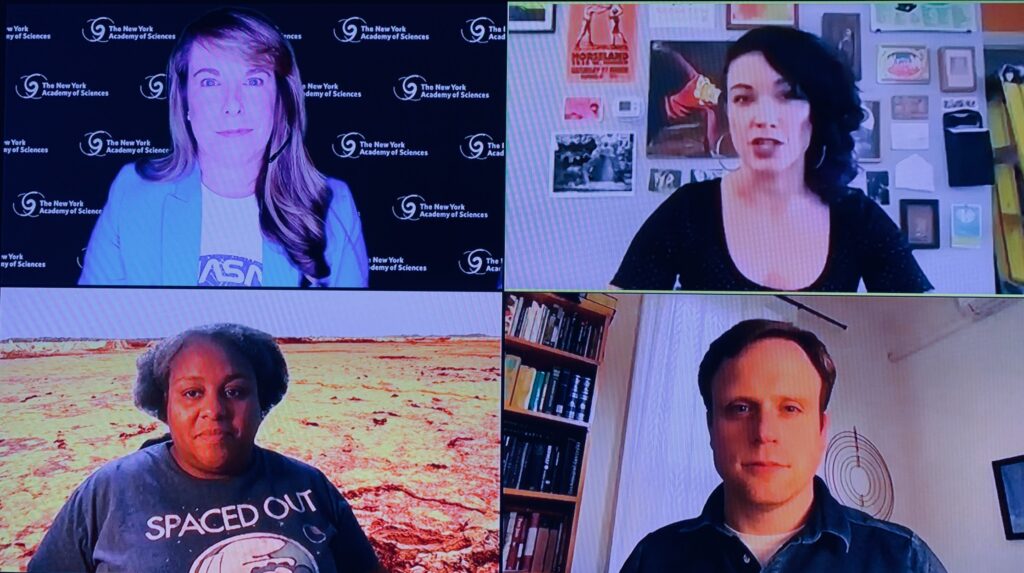
Educational leaders, policymakers, teachers, and parents have deliberated over the return to school amid the COVID-19 pandemic. But few conversations include the voices of those at the center of it all—the students. As many schools have transitioned to virtual classrooms, students have adapted to their continuously changing learning environments. On August 25, 2020, the New York Academy of Sciences hosted a panel of high school and college students from GSA programs to discuss the transition to online learning, obstacles with adjusting to new technology, and suggestions for improving the virtual classroom experience.
Highlights
To adjust to online learning and avoid low motivation, students should establish a new routine by creating schedules.
Virtual learning in small groups, such as breakout rooms or during professor office hours, can encourage more participation and discussion among students.
Plans for successful distance learning must address the digital divide that prevents some students from accessing online classes and assignments and ensure that teachers have the resources they need to create engaging new lesson plans.
Speakers
Sthuthi Satish Bangalore International School
Tina Sindwani Arizona State University
Athena Yao Duke University
Student Perspectives on Back to School
Transition to Online Learning
TinaSindwani, a first-year student at Arizona State University (ASU), had a relatively easy transition to online learning when the university switched to virtual classes in the spring. ASU used Canvas, an online learning platform, for courses before the pandemic, and students were already using iPads in class. She praised the university for being organized—all course links are in one place—and hosting programs to help people shift to online courses. However, full-time virtual courses still required Sindwani to stay motivated and organize her virtual commitments on a calendar. While at home, she shared her class schedule with her family and set reminders to take breaks, exercise, and eat meals.
Sthuthi Satish, a high school senior at the Bangalore International School in India, also had a fluid transition to online learning because the school already used Google Classroom. After a few months of online learning, she now feels well-equipped to manage her classes. It took a bit of trial and error to figure out what worked for her, but a calendar and a to-do list have helped.
AthenaYao, a high school senior at the start of school shut-downs, could not participate in end-of-the-year activities like prom or graduation. Instead, like so many of her peers, she ended her senior year using Google Classroom and taking quizzes online. However, when she matriculated at Duke University this fall, Yao found the start of the online learning process—with multiple platforms, logins, and websites—a bit difficult. “I have had some confusion. The university expected me to know how to use the online programs,” said Yao. “So eventually, I started to get it, but I had to explore the website on my own and look for the resources.” Clear, streamlined instructions can lessen the learning curve with new platforms needed to access materials for virtual classes. Yao is one of the limited number of first and second-year students in campus housing this semester, as all juniors and seniors are off campus. To ensure safety, the university tested all students returning to campus and is performing randomized COVID-19 testing each week.
The panelists compared how much time they previously spent in school to how many hours they were expected to allocate per day for distance learning. For Sindwani, this meant attending online lectures and assemblies, averaging out to about 4-5 hours per day. Satish estimated that she spends 5-6 hours a day in online classes, but with homework assignments and studying, school takes up 8-9 hours of her day. Yao averaged a similar number of hours per day, although she felt preparation for lectures and labs added additional time to her school day. However, now, she doesn’t have to rush out of bed to get to school and has more flexibility throughout her day.
Challenges with Distance Learning
The panelists adamantly stated that they have all experienced “Zoom burnout.” Students have had to adjust to a full day in front of the computer screen, where Zoom meetings blend together one after the other. A virtual school day involves attending live sessions, completing homework, and studying for exams. The long hours are tiring and repetitive, which can wear on personal motivation.
One subject area that has been particularly difficult to teach virtually is science labs. Most students are completing simulations online. In some cases, labs are opening back up with half the class at a time. In other schools, teachers are handing out kits so students can do the labs at home.
Motivation from Teachers
The panelists shed light on what teachers have done to engage students and help them avoid “Zoom burnout.” Some classes can be up to three hours, so designating breaks is essential to maintaining student focus. Additionally, using breakout rooms to talk in smaller groups has been extremely helpful. In fact, Sindwani said she has gotten more out of the small breakout room discussions than being in class in-person. Students are more likely to turn on their video feed and converse with other students in these smaller settings. “The discussions in a smaller group are more conducive to learning than being in a room with 100 people and not being able to talk to everyone.”
Satish’s average class size is only five people, so she thrives on a lot of interactions. The teachers are also very open to feedback and learning about new ways to teach. Yao utilizes office hours to ask questions, because it is easier for her to talk one-on-one with a professor or teaching assistant. Having access to online meetings with an advisor or guidance counselor can also be helpful. Large recorded lecture videos are also useful, since the viewer can easily speed up, replay, or pause videos if needed.
Fostering collaboration between students has also been a component of successful online learning. For example, Kami has been a highlight of remote learning for Yao. With this online tool, students can all write on the board at the same time. Some of Yao’s memorable moments from her senior year of high school included teachers showing their pets on their videos and personally dropping off goodie bags for students before AP exams. Satish’s teachers have been very understanding about how monotonous this process can be for students. Kahoot has been a great game-based platform for multiple-choice quizzes. In her Spanish class, Satish and her classmates recorded themselves on Google Docs and made presentations together. They also talked about their favorite songs and played them during class. Incorporating games, breaks, and creative ways to facilitate participation and collaboration into the virtual classroom can be very effective. Incentives, such as bonus points, are highly motivating as well.
Updated Technology Platforms
Although all three panelists are fortunate to have personal laptops for distance learning, they mentioned that many colleges offer laptops, Wi-Fi hotspots, and internet for students who don’t have their own. Access, or lack thereof, has been a common issue for many families, especially those with multiple children at home, where there are not enough devices for everyone to work at the same time.
Sindwani mentioned a novel idea recently implemented in Mexico where students were able to use the television instead of laptops for their online learning. Many people have TVs in their homes, but may not have access to Wi-Fi or laptops. So using the television may help ensure that more children have access to education while at home. Students can tune in for live broadcasts on their televisions, however families with multiple children will still have the problem of not having enough screens.
When asked about the government’s involvement in education during the pandemic, the panelists all agreed that the government could be more involved. They believe the government should work to bridge the disparities between different socioeconomic groups so that everyone has access to the same online platforms and teachers have the necessary supplies for teaching. The students were aware of charitable organizations and nonprofits working to provide meals to students who usually get them from school.
Virtual Social Connections
While the COVID-19 pandemic may mean spending more time at home, some students have come up with creative ways to interact with their peers. Sindwani has widened her social circle using Slack, a communication platform. Yao has been doing workout videos with her friends and meeting her incoming Duke classmates over social media platforms. She also emphasized the importance of virtual connections around the globe. Now that most internships and non-profit work is online, students can connect with people all around the world, a unique opportunity that didn’t exist before the pandemic.
Safely Reopening Schools
The panelists shared optimistic visions for when students return to in-person classes after the pandemic. “The information hasn’t necessarily been different, but the way I learn it and my satisfaction with how I’ve learned it is definitely very different,” said Sindwani. “I would prefer to have in-person classes because that allows for more interaction with the professor and my peers.”
Yao also prefers in-person learning. She sees the pandemic as an opportunity to learn more about our society and take note that some of our current teaching methods might be outdated.
Satish agreed that one takeaway from the pandemic is that many meetings that would have been held in-person before the pandemic can be done virtually. Online education is an opportunity for her to look at different learning techniques and find what works best. However, she too prefers being in a physical environmental with her peers. “School is a lot more holistic than just the education itself,” said Satish. “The experience of living in a dorm room and [enjoying] take-away food from dining halls. Those are experiences I want to be able to have.”
Another important aspect of reinstituting in-person classes involves students feeling comfortable with returning to school. At the college level, many schools are requiring all students to get tested upon arrival on campus. After that, randomized testing will occur. While on campus, students are required to wear masks inside the buildings and to maintain social distancing at all times. Universities have put many additional provisions in place, including hand sanitizer stations throughout campus, a daily symptom self-check on an app, and take-out dining options. However, all these measures will only work if the students agree to and follow the guidelines. Schools are also are performing a great deal of contact tracing. Any student who tests positive or has come into contact with someone who tested positive, may be asked to self-quarantine. . The panelists agree that students have a responsibility to follow the rules that schools put in place to ensure a safe and comfortable learning environment. If at any point you don’t feel comfortable in an in-person situation with other students, the panelists suggest politely reminding people of the social distancing rules, and being open about why you’re concerned. Sometimes it’s necessary to share a bit of your personal situation for others to understand your concerns.
Climate change has had catastrophic effects on ecosystems throughout the world and has created long lasting and potentially irreversible damage. In this eBriefing, experts discuss how rising temperatures have increased the number and intensity of forest fires and expedited global ice sheet melting.
In this eBriefing, You’ll Learn:
How climate change can cause an increase in droughts and forest fires while also accelerating ice sheet melting and sea level rise;
How climate change affects tree physiology, which may contribute to droughts and forest fires;
The latest technological advances in measuring climate change impact on ice sheet melting and sea level rise
Potential solutions to improve forest health and reduce forest fire damage
The public’s changing views on climate change, scientific trust, and environmental racism.
Speakers
William Anderegg, PhD The University of Utah
Eric Rignot, PhD University of California, Irvine
Fire and Ice: The Impact of Climate Change on Environmental Ecosystems
Eric Rignot, PhD
University of California, Irvine
Eric Rignot, PhD, combines satellite remote sensing, geophysical surveys, and numerical modeling to understand the impact of climate change on ice sheets and its repercussions on global sea levels. Dr. Rignot is a Donald Bren Professor at University of California, Irvine, a Senior Research Scientist at NASA’s Jet Propulsion Laboratory, and a Member of the National Academy of Sciences. He received his Engineer Degree at Ecole Centrale Paris and PhD at University of Southern California. He joined University of California, Irvine in 2007.
William Anderegg, PhD
The University of Utah
William Anderegg, PhD, centers his research around the intersection of ecosystems and climate change. In particular, his research focuses on how drought and climate change affect forest ecosystems, including tree physiology, species interactions, carbon cycling, and biosphere-atmosphere feedbacks. He is an Assistant Professor at the University of Utah. He received his BA and PhD at Stanford University and his postdoc at Princeton University. He joined the University of Utah in 2016.
The brain is affected by bodily changes—including microbiome composition—that influence cognition and behavior. This eBriefing will explore the interaction between the brain, gut & microbiome, with a focus on how the microbiome influences developmental, neuropsychiatric, and immune-related disorders, including socioaffective processing disorders such as autism.
In this eBriefing, You’ll Learn:
How the microbiome is seeded and maintained throughout life
How stress effects health of the microbiome
How changes in microbiome composition result in changes in behavior
The latest research in therapies targeting microbiome
Speakers
John Cryan, PhD University College Cork
Kirsten Tillisch, MD University of California, Los Angeles
Microbiome and Mental Health
John Cryan, PhD
University College Cork
John Cryan, PhD, is focused on understanding the interaction between brain, gut, and microbiome and how it applies to stress and immune-related disorders, including irritable bowel syndrome and obesity and neurodevelopmental disorders such as autism. Dr. Cryan is a Professor & Chair of the Department of Anatomy & Neuroscience at the University College Cork in Ireland. He spent four years at the Novartis Institutes for BioMedical Research in Basel Switzerland, as a LabHead, Behavioural Pharmacology prior to joining UCC and is a Senior Editor of Neuropharmacology and Nutritional Neuroscience and an Editor of British Journal of Pharmacology.
Kirsten Tillisch, MD
University of California, Los Angeles
Kirsten Tillisch, MD, was the first to demonstrate an effect of gut microbial manipulation with probiotics on emotional brain responses. Her ongoing research is focused on the role of the mind-body connection in chronic pain syndromes as well as the effects of mindfulness, hypnotherapy, and other non-drug therapies for irritable bowel syndrome. She is the Chief of Integrative Medicine at the Greater Los Angeles VA and a Professor of Medicine at the David Geffen School of Medicine at UCLA.
Newborns have a limited ability to fight infectious pathogens. As a result, morbidity and mortality are high during the first few months of life, particularly in low- and middle-income countries. Active research is taking place, and great strides have been made to identify the factors that influence the risk of infection and disease in pregnant women and newborns. One promising approach—maternal, neonatal, and early infancy vaccines—has the potential to protect the health of mothers and children worldwide. Although several existing vaccines are safe and effective for use during pregnancy, no vaccines have been formally approved or licensed specifically for use in pregnant women.
On June 23, 2020, the New York Academy of Sciences hosted a symposium to explore challenges and achievements in the development and licensure of maternal vaccines. In a series of keynote and plenary presentations, the symposium covered recent findings regarding the maternal-to-newborn transfer of antibodies, lessons learned from the use of licensed vaccines during pregnancy, new targets for maternal immunization and contextual factors that influence the vaccination of pregnant women and their offspring.
Symposium Highlights:
Infectious disease is one of the leading causes of stillbirth and newborn death around the world.
Because antibodies can be transferred from the mother to the baby, boosting maternal antibodies can help protect the newborn against respiratory or invasive diseases.
Certain vaccines that are routinely used in the general population (e.g., influenza, pertussis), are also recommended for pregnant women to protect both mother and child.
Several pregnancy-specific vaccines, such as Group B Streptococcus, Respiratory Syncytial Virus, and Human Cytomegalovirus, are currently in different stages of development.
Contextual factors, like access to health care during pregnancy and after birth, are important determinants in the success of maternal and neonatal immunization worldwide.
Speakers
Stephen L. Brusatte The University of Edinburgh
Sinéad Farrington The University of Edinburgh
John Marioni European Bioinformatics Institute and University of Cambridge
Keynote: Protecting Infants with Maternal Vaccination
Speaker
Shabir Madhi University Witwatersrand
Prospects of Maternal Vaccination to Protect Young Infants
One of the United Nations’ Sustainable Development Goals is to reduce the global maternal mortality rate and eradicate preventable deaths in newborns and children under five by 2030. “Of all children under the age of five who die, roughly two thirds will in fact die within the first six months of life” explained vaccinologist Shabir Madhi. Hence, shielding newborns can really advance the fight against child mortality. Maternal and neonatal vaccines could prevent lethal infections at this vulnerable stage of life. However, to develop those vaccines, we need to understand the biological causes of early-life mortality.
Unfortunately, the quality of epidemiological and clinical data regarding child mortality is poor. Neonatal and fetal deaths are underreported and under-investigated, particularly in countries with the highest rates of early-life mortality. In low- and middle-income countries, autopsies of children are rare. As a result, our understanding of early-life mortality is still limited.
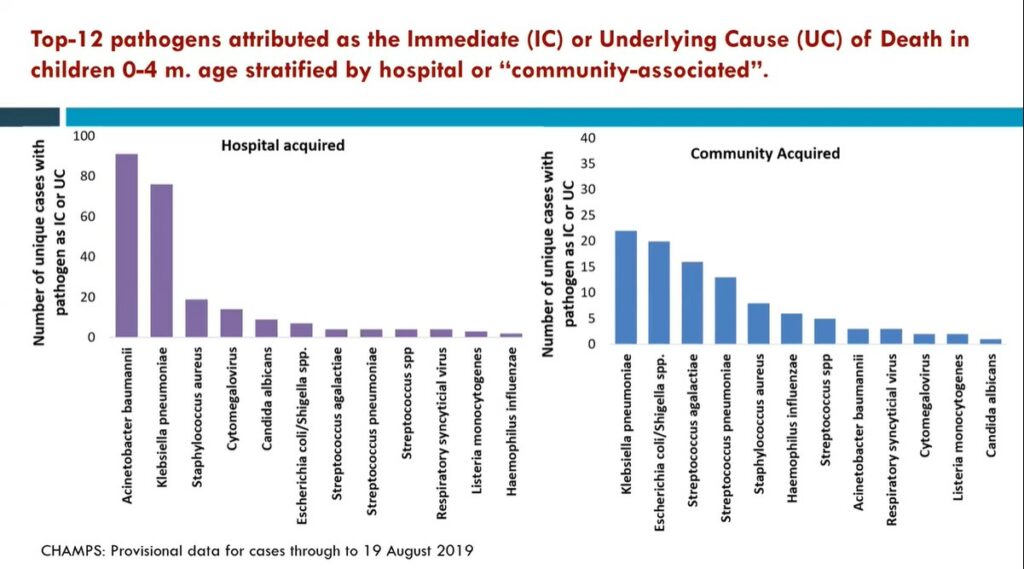
Top pathogens identified as the cause of death in newborns in a multi-country study conducted by the Child Health and Mortality Prevention Surveillance (CHAMPS) Network.
Madhi and his team are trying to fill this research gap. In a large study, Madhi and his colleagues collected tissue samples and clinical records of deceased children across seven countries in Africa and Southeast Asia. This diagnostic approach was sufficient to establish the chain of factors that may have ultimately caused the deaths of these infants. Madhi and his team also sought to ascertain the biological causes of stillbirth. Together, these studies revealed that infections accounted for about 20% of stillbirths and 54% of newborn deaths. Furthermore, the investigators were able to identify the top pathogens behind those infections, like K. pneumoniae, or E. coli. These findings can help inform the strategic development of maternal vaccines, a promising intervention in the fight against child mortality.
Pat Furlong, Panelist Parent Project Muscular Distrophy
Roman J. Giger University of Michigan School of Medicine
Altered Mother-To-Newborn Transmission of Pioneering Microbiota and Child Health
The human body is host to a large number of microbes, such as bacteria and fungi. This community of microorganisms, or microbiota, occupies the gut, skin, and cavities. It plays a role in essential functions, like the promotion of immune responses and the production of vitamins. So it’s not surprising that changes to the composition of the microbiota are associated with various diseases. In his research, epidemiologist Noel Mueller studies how the gut microbiota affects metabolic health during early development.
The first exposure to these microbes occurs in the birth canal. This mom-to-newborn transfer of microbiota provides the baby with a healthy collection of microorganisms. Mueller and his team have found that babies delivered by cesarean section (CS) have less of these protective microbes. Instead, opportunistic pathogens are more likely to colonize these babies’ microbiota. The proportion of cesarean-delivered babies continues to increase worldwide. As a result, “even if [CS] poses a small relative risk in health outcomes, it can have a large impact at the population level,” Mueller explained.
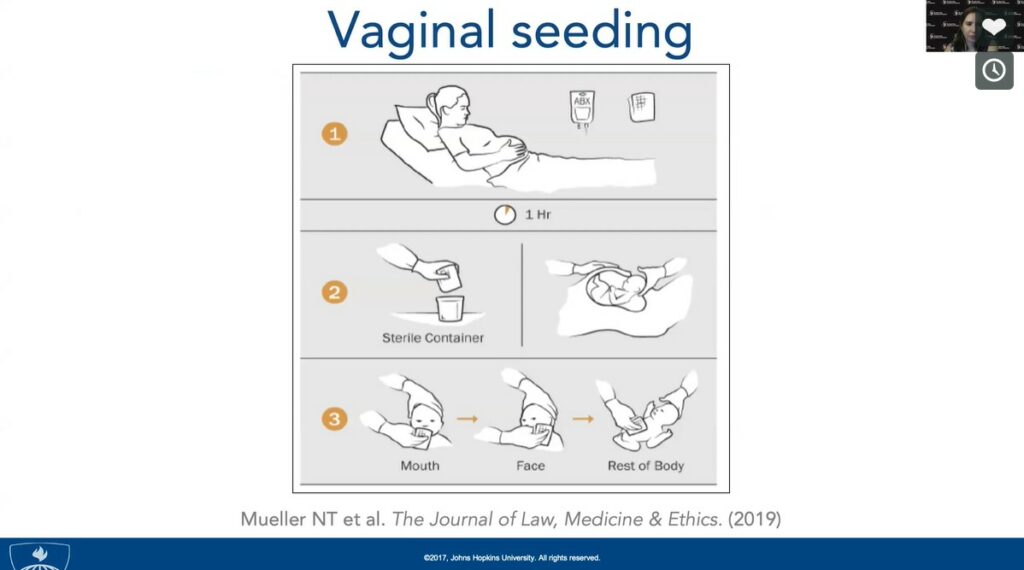
During “vaginal seeding,” cesarean-delivered babies are inoculated with their mothers’ microbiota.
CS is associated with a higher risk of developing allergies, obesity, and asthma. Lack of exposure to the mother’s microbiota in the birth canal may be at the root of some of these disorders. Mueller and his collaborators investigated a simple intervention called “vaginal seeding,” which consists of inoculating cesarean-delivered babies with their mother’s microbiota. In this “bacterial baptism,” maternal vaginal microbiota is wiped in the neonate’s face, mouth, and body. Preliminary data suggest that vaginal seeding can restore some beneficial microbes that may otherwise be lacking in these babies. A large randomized controlled trial assessing the efficiency and safety of this technique is currently underway.
Antibody Transfer From Mother To Infant: The Physiology of Breast Milk
For Kirsty Le Doare, an expert in pediatric infectious disease, breast milk is like your grandmother’s chicken soup. “It contains all the nutrients that a baby needs to grow and thrive,” she said. In addition, breast milk also protects infants from infections. Hence, breastfed infants are less vulnerable to gastrointestinal and respiratory tract infections than formula-fed infants. However, it is still unclear how breast milk modulates the infant immune response.
Le Doare wants to change that through her research on age-related immune response to infectious diseases. She, along with her team, conducted a study with Gambian mother/infant pairs. They found that IgA antibodies for Group B Streptococcus (GBS) in breast milk reduced the likelihood of GBS colonization days after birth and increased the likelihood of GBS clearance later in life. Interventions like maternal vaccines can harness this form of neonatal protection against pathogens.
After some forms of maternal immunization, antibodies against certain pathogens persist in the breast milk for at least six months, protecting the neonate. Le Doare and her team are using novel culture models to understand how these antibodies fight pathogens. Although breast milk antibodies are a critical protective agent for the neonate, oligosaccharides in breast milk have also been found to lower the risk of infection. For instance, these sugar molecules can act as a decoy for pathogens, which bind to them and stay away from intestinal cells. A better understanding of these mechanisms could be leveraged to develop therapies to protect neonates against invasive diseases.
The Structure of the Human Placenta Enables Humoral and Cellular Immune Defense
According to virologist Lenore Pereira, 1%-3% of infants are infected with Human Cytomegalovirus (HCMV) every year. In about 25% of infected babies, HCMV can cause congenital disorders such as cerebral palsy, microcephaly, and deafness. Mothers that have strong neutralizing antibodies due to prior HCMV infection are less likely to transmit the infection to the baby, and most infants born of seropositive mothers are asymptomatic. However, the immune mechanisms that help prevent infection are not well understood.
HCMV infects the developing baby by crossing the uterine-placental interface and replicating in the placenta. Using ex vivo explants of first-trimester placentas, Pereira and her team have been able to identify the mechanisms of infection as well as the protective potential of some antibodies. Neutralizing antibodies, namely those that target a specific complex of glycoproteins in the surface of HCMV, reduce viral spread, infection, and cell death in early-gestation placentas.
The investigators also demonstrated that, in the maternal component of the placenta, HCMV infection induces an increase in effector-memory T cells. These cells may confer protection to the babies of seropositive mothers. These findings could lead to the development of antibody treatments that restrict HCMV infection and associated pregnancy complications from congenital infection.
Lessons from Current Vaccines & New Targets for Immunization
Speakers
Janet Englund, MD Seattle Children’s Hospital
Stanley Plotkin, MD Vaxconsult LLC, University of Pennsylvania
Ajoke Sobanjo-ter Meulen, MD, MSc Bill & Melinda Gates Foundation
Maternal Vaccines Licensed for Adults: What Can Be Learned from Recent Experiences with Influenza, Pertussis and Tetanus Vaccines
Maternal immunization is not a new strategy, said pediatrician and infectious disease expert, Janet Englund. Englund discussed the history of maternal vaccines, whose popularity has ebbed and flowed throughout the years. As early as 1879, maternal immunization was used to confer protection from smallpox in infants.
For centuries, tetanus toxoid was one of the leading causes of neonatal death. A landmark study in New Guinea demonstrated that maternal immunization with tetanus toxoid protects newborns. As a result, this vaccine has been routinely administered to pregnant women for years. Thanks to this, Englund said, 45 countries have been able to eradicate maternal and neonatal tetanus, a testament to the potential of maternal immunization to fight global epidemics.
In 2012, an outbreak of pertussis was observed in the US and other developed countries, including the UK. In October of that year, the UK introduced the maternal pertussis vaccine, which was associated with a dramatic decrease in the rate of neonatal pertussis. While most health authorities recommend that pregnant women get this vaccine during the third trimester, recent studies have shown that earlier is better; maternal immunization during the second trimester maximizes pertussis antibody transfer to the infant.
Pregnant women, Englund explained, are at a higher risk of severe influenza infections than non-pregnant women. Influenza infection during pregnancy is associated with preterm birth and low birth weight infants. Maternal influenza immunization is safe and it effectively protects the mother and the newborn. However, less than 50% of pregnant mothers in the US get vaccinated. Along with issues of insufficient insurance coverage, “vaccine hesitancy plays a very important role”, Englund lamented.
Human Cytomegalovirus Vaccines
Physician and vaccinologist Stanley Plotkin gave another presentation on cytomegalovirus (CMV). While co-speaker Lenore Pereira focused on the mechanisms of transplacental CMV transmission, Plotkin looked at the factors involved in CMV infection during pregnancy, immunity, and the status of CMV vaccine development status.
Many people, particularly in developing countries, become infected with cytomegalovirus (CMV) at some point in their lives. CMV infection does not cause obvious disease in most healthy individuals. However, in pregnant women, CMV can cross the placenta and infect the fetus. This can lead to congenital disorders such as microcephaly or deafness. CMV infection is also more serious for adults with weakened immune systems.
Plotkin explained that CMV infection during pregnancy usually occurs when mothers are exposed to toddlers carrying the virus. In developing countries, CMV infects most women before they become pregnant, and newborns are less likely to suffer from congenital disorders upon their mothers’ CMV infection. “We think that natural immunity is protective,” said Plotkin. In a pioneering study, his team found that vaccinating kidney transplant recipients with a weak strain of CMV protected them from contracting severe disease.
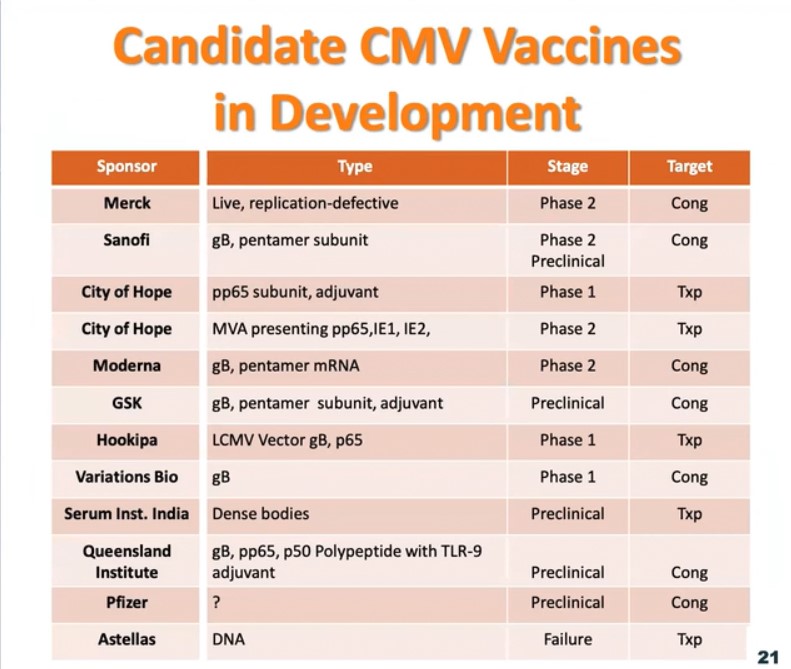
Candidate vaccines that are currently being developed to combat human cytomegalovirus infection.
One of the most promising vaccine candidates is the glycoprotein-B (gB) with MF59 adjuvant. This vaccine induces a strong antibody response, and these antibodies protect against CMV infection. Other CMV vaccines are also in the research and development phase. As these vaccines become approved and licensed, some of the first populations to be vaccinated will probably be transplant patients, young girls, and women of child-bearing age who have not been previously infected by CMV.
Updates on Group B Streptococcus (GBS) Vaccine Development
Ajoke Sobanjo-ter Meulen, infectious disease and global health expert, shed light on the current state of Group B Streptococcus (GBS) vaccine development. GBS is a pathogen commonly found in the gut or lower vaginal tract. Because it can cause life-threatening infections in pregnant women, newborns, and immunocompromised adults, it is associated with maternal and neonatal morbidity and mortality, preterm births, and stillbirths. Fatality rates due to GBS infection are higher in low- and middle-income countries.
If pregnant women in the US test positive for GBS colonization, they are treated with antibiotic prophylaxis, which significantly reduces disease during the first hours of life. However, a vaccine has a higher protective potential and it would be a much more feasible approach in low- and middle- income countries, where the diagnostic and therapeutic infrastructure required for that kind of treatment may not be available.
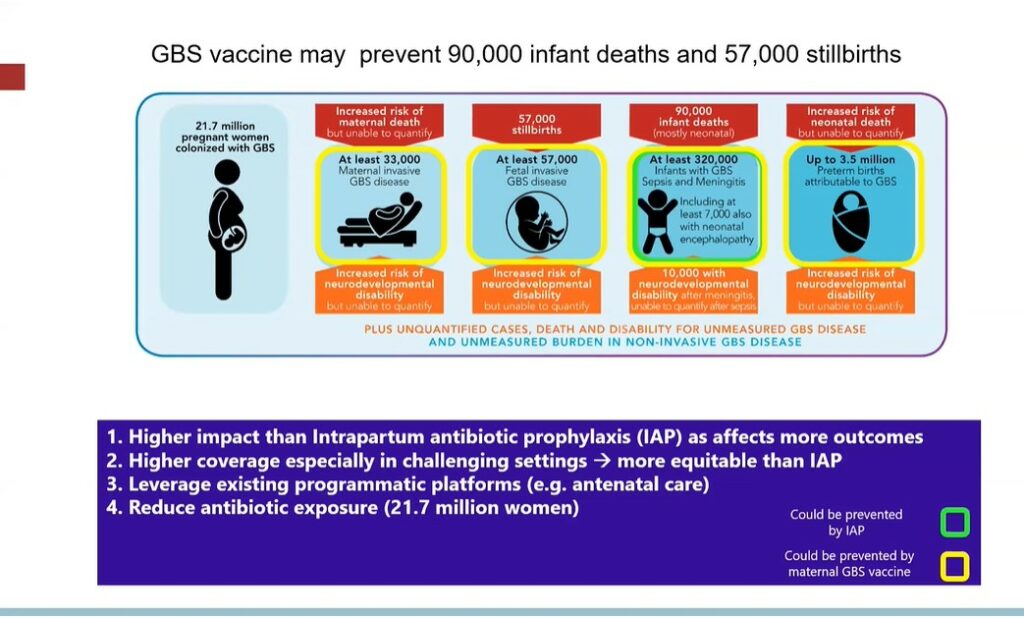
Burden of GBS disease around the world and the advantages of maternal GBS immunization over intrapartum antibiotic prophylactic (IAP) treatment
GBS vaccines given to women during pregnancy can significantly reduce maternal GBS colonization and disease, stillbirths and neonatal sepsis, and meningitis. In a modelling study, Sobanjo-ter Meulen and colleagues estimated that, by improving all of these health outcomes, a maternal GBS vaccine could prevent 90,000 infant deaths and 57,000 stillbirths worldwide. Several vaccine candidates are currently being developed. One challenge facing licensure trials is that, due to the low incidence, a sample size of about 40,000-60,000 pregnant women would be required to ascertain the efficacy of a maternal GBS vaccine.
According to Sobanjo-ter Meulen, public oversight and private investment could help overcome these challenges. That kind of partnership has helped advance the GBS6 vaccine, which demonstrated high safety and immunogenicity levels in healthy adults and is currently being evaluated in a phase-II trial in pregnant women in South Africa.
Infant Vaccination and Barriers to Maternal Immunization
Speakers
Barney Graham, MD, PhD National Institute of Allergy and Infectious Diseases (NIAID), NIH
Ruth Karron, MD Johns Hopkins Bloomberg School of Public Health
Approaches to Infant Vaccination for Respiratory Syncytial Virus
The Respiratory Syncytial Virus (RSV) is a common cause of respiratory tract infections. In newborns, RSV infection can lead to severe disease, usually due to obstruction of small airways. One of the key goals in RSV vaccine development, said immunologist and virologist Barney Graham, is to protect children younger than six months of age from RSV infection.
A failed vaccine trial in the 1960s stalled RSV vaccine development. In the study, vaccinated children became more vulnerable to RSV infection and were more likely to experience severe illness than control groups. According to Graham, the field of RSV vaccine development has only regained speed within the last 10-15 years.
Graham’s work in the structure of RSV fusion protein (F) has been critical in recent advances in RSV vaccine development. This glycoprotein on the surface of RSV mediates viral entry into host cells. During cell entry, the structure of F proteins undergoes a conformational change. The prefusion and postfusion forms of F proteins have different properties as vaccine antigens. Graham and his collaborators led a phase-I clinical trial using a stabilized prefusion F protein. In young adults, this vaccine elicited a potent neutralizing activity, and it is currently being tested in phase-II maternal immunization trials.
A similar strategy can be generalized across other virus families, including coronaviruses. In fact, his work in structure-based immunogen design allowed Graham and colleagues to rapidly solve the structure of the new coronavirus and has greatly contributed to the current efforts to develop a candidate vaccine.
Maternal Immunization: Overcoming Barriers to Uptake and Access
Vaccine research and development is not the only obstacle in maternal and neonatal immunization. “In the end, vaccines are only useful if they can be delivered,” said global health expert Ruth Karron, before discussing contextual factors that influence the successful implementation of maternal vaccines.
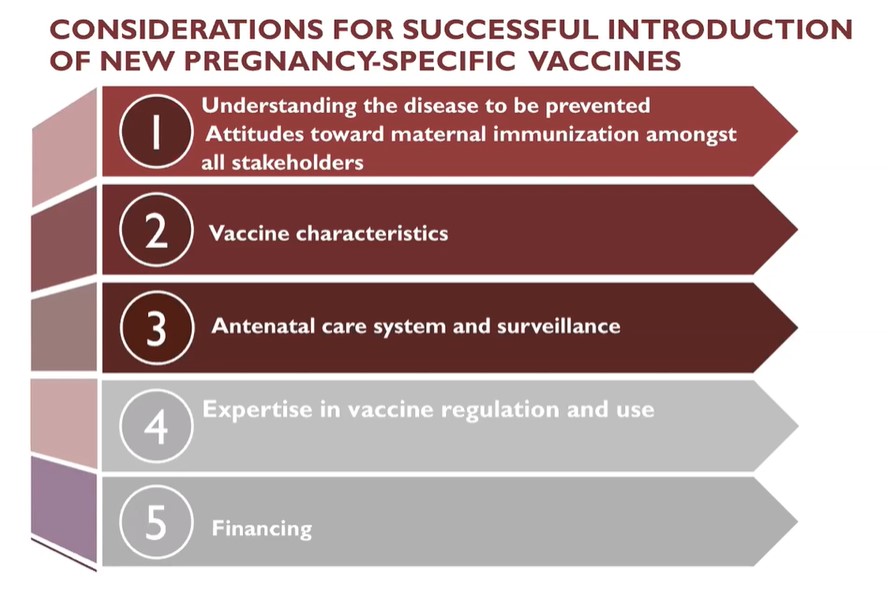
When it comes to pregnancy-specific vaccines, medical, social, and economic considerations are paramount. These vaccines are usually administered in the context of antenatal care. Without a robust antenatal care system, implementing an effective maternal immunization program can be challenging. For instance, vaccines that can be administered with some flexibility throughout the second or third trimester will be more likely to lead to successful outcomes in cases when pregnant women have limited opportunities to go to the doctor. Also, attitudes surrounding maternal immunization need to be considered. Vaccine hesitancy can be particularly acute when it comes to pregnancy, as some believe it can be harmful for the child or negatively affect fertility in the future. Failing to understand the effects or the burden of a specific disease can also be an obstacle. These issues have to be addressed broadly with all stakeholders, which include the pregnant women but also other community members, healthcare providers, and policymakers.
Factors that influence the successful deployment of pregnancy-specific vaccines. Slide: Ruth Karron.
Karron and her collaborators created ethical guidelines to include the interests of pregnant women and their offspring in the development of vaccines . Some of these guidelines are very relevant in the context of epidemics. As the current COVID-19 pandemic has revealed, pregnant women and their offspring are among the most severely affected by outbreaks. They are more vulnerable to infections, but they are also disproportionately affected by an overburdened health care system. In her work, Karron advocates for the inclusion of women of childbearing age and pregnant women at every stage of vaccine development and deployment.
Screens were ubiquitous before, but during the COVID-19 pandemic they became a lifeline for everyone’s professional and personal lives. Children spend more time on electronic devices than ever before—with virtual school, video streaming, social media, and multiplayer games. Many parents are concerned about the impact excessive screen time might have on the developing brain. In this e-Briefing experts discuss the pros and cons of screen time as well as its effects on the developing brain, and give practical tips for parents navigating the digital world with their children during the COVID-19 pandemic.
In this eBriefing, You’ll Learn:
The content of digital media matters; parents should differentiate between types of screen time.
Shared engagement with digital media is important.
There are resources available to help parents navigate the digital world.
“Real-world” parenting strategies can and should be extended into the digital world.
Speakers
Sonia Livingstone, DPhil London School of Economics and Political Science
Michael Preston, PhD Sesame Workshop
Jenny Radesky, MD Department of Pediatrics, University of Michigan Medical School
Michael Robb, PhD Common Sense Media
COVID-19: Screen Time and the Developing Brain
Sonia Livingstone, DPhil
London School of Economics and Political Science
Dr. Livingstone is a Professor of Social Psychology in the Department of Media and Communications at the London School of Economics and Political Science. She received her DPhil in Psychology from the University of Oxford. She has published 20 books on media, especially children’s rights, risks, and opportunities in the digital world and media literacy, including “The Class: Living and Learning in the Digital Age” (New York University Press, with Julian Sefton-Green) and most recently “Parenting for a Digital Future: How hopes and fears about technology shape children’s lives” (Oxford University Press, with Alicia Blum-Ross). Recipient of many honors, she has advised the UK and European government and the United Nations on children’s internet safety and rights in the digital environment. Dr. Livingstone currently directs the Digital Futures Commission (with the 5Rights Foundation) and the Global Kids Online project (with UNICEF). She is Deputy Director of the UKRI-funded Nurture Network and leads work packages for two European H2020-funded projects: ySKILLS (Youth Skills) and CO:RE (Children Online: Research and Evidence). Founder of the EC-funded 33 country EU Kids Online research network, she is a #SaferInternet4EU Ambassador for the European Commission.
Michael Preston, PhD
Joan Ganz Cooney Center at Sesame Workshop
Michael Preston is the Executive Director of the Joan Ganz Cooney Center at Sesame Workshop, a research and innovation lab that focuses on the challenges of educating children in a rapidly changing media landscape. The Cooney Center conducts original research on emerging education technologies and collaborates across sectors to put this research into action. Prior to joining Sesame Workshop, Michael’s work focused on using technology to improve teaching and learning, drive student agency and interest, and create models for systemic change in K-12 and university contexts. He is a co-founder of CSforALL, the hub for the national Computer Science for All movement. He designed and led digital learning initiatives at the NYC Department of Education and at Columbia University’s Center for Teaching and Learning. He earned a PhD in Cognitive Science in Education from Teachers College, Columbia University and a BA in East Asian Studies from Harvard University.
Jenny Radesky, MD
University of Michigan
Dr. Radesky is a Developmental Behavioral Pediatrician and Assistant Professor of Pediatrics at the University of Michigan Medical School. She received her M.D. from Harvard Medical School, trained at Seattle Children’s Hospital and Boston Medical Center, and her clinical work focuses on developmental and behavioral conditions in low-income and underserved populations. Her NIH-funded research focuses on the use of mobile/interactive technology by parents and young children and how this relates to child self-regulation and parent-child interaction. She was the lead author of the American Academy of Pediatrics (AAP) policy statements Media and Young Minds in 2016 and Digital Advertising to Children in 2020.
Michael Robb, PhD
Common Sense Media
Michael Robb is senior director of research at Common Sense, overseeing the research program, evaluation of organization impact, and program development research. Dr. Robb has been involved in issues involving media and children for over 20 years. He has published research on the impact of electronic media on young children’s language development, early literacy outcomes, and problem-solving abilities in a variety of academic journals. He also has supervised community educational outreach efforts, helping parents and teachers make the most of quality children’s programming. His work has been featured in the New York Times, Washington Post, Wall Street Journal, Huffington Post, and many other news outlets. Dr. Robb received his B.A. from Tufts University and M.A. and Ph.D. in psychology from UC Riverside
Immunotherapy, which harnesses the immune system to target and attack cancer cells, has emerged as a revolutionary approach to cancer treatment. Despite its effectiveness for a wide range of cancers, eligibility for treatment is dependent on the patient’s immune system, age, and genetic profile, as well as how advanced the cancer is and whether it has responded to prior treatment. Current research aims to improve treatment strategies and better predict patient outcomes. On May 11-12, 2020, the New York Academy of Sciences hosted the annual Frontiers in Cancer Immunotherapy symposium. Experts in tumor immunology, cancer genetics, and computational biology discussed novel therapeutic targets, tumor evolution, and the mechanisms driving resistance to current treatment. Learn about the latest research advances in cancer immunotherapy in this summary.
Symposium Highlights
Computational neoantigen model predicts cancer patient outcomes.
Combination immunotherapy produces new T cells that extend patient survival.
Personalized cancer vaccines demonstrate therapeutic benefits.
New computational genomics tools provide pediatric cancer insight.
Immune checkpoint inhibitor associated toxicity yields new clinical syndrome.
Macrophage reprogramming can halt metastatic cancer progression.
Immune cell “neighborhoods” are altered during cancer progression.
Multi-specific CAR T cell therapy may reduce immunotherapy resistance.
Speakers
James Allison, PhD MD Anderson Cancer Center
Mikala Egeblad, PhD Cold Spring Harbor Laboratory
Benjamin Greenbaum, PhD Memorial Sloan Kettering Cancer Center
Crystal Mackall, MD Stanford University
Elaine Mardis, PhD Nationwide Children’s Hospital
Garry Nolan, PhD Stanford University
Jeffrey Sosman, PhD Feinberg School of Medicine, Northwestern University
Catherine Wu, MD Dana-Farber Cancer Institute and Harvard Medical School
Benjamin Greenbaum, PhD Memorial Sloan Kettering Cancer Center
Modeling Immune-Mediated Evolution
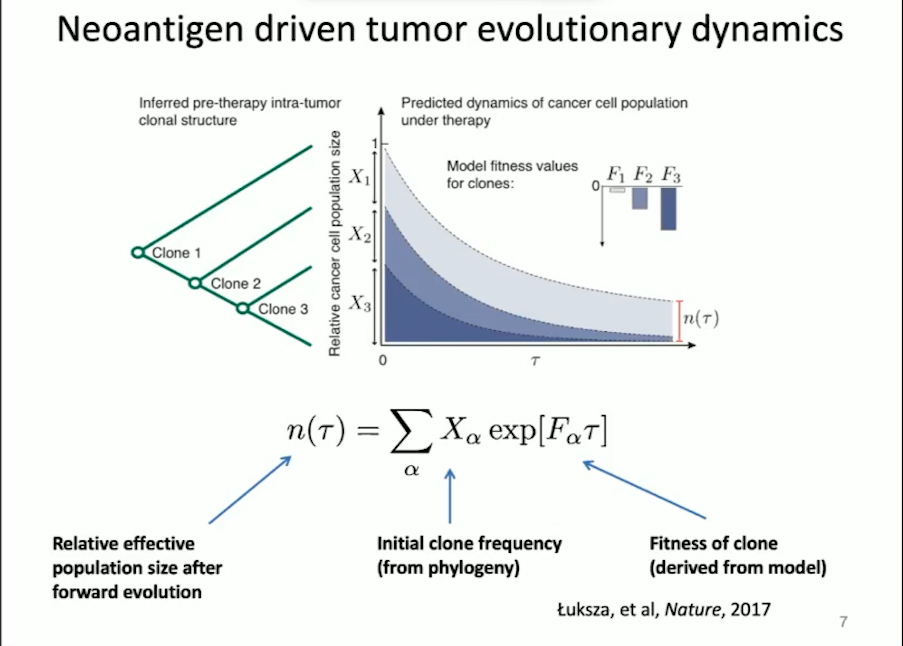
Benjamin Greenbaum examines immune interactions that contribute to cancer progression. His lab uses statistical physics and computational biology to study the role of neoantigens in tumor evolution. Neoantigens are mutated peptides present on the surface of cancer cells that have the potential to be immunogenic, meaning T cell receptors can recognize them for an immune response. The Greenbaum lab developed a mathematical model to understand the role of neoantigens. “The goal of this framework is to try to quantify the immunogenicity of neoantigens in an evolutionary model to better predict response to therapy,” said Greenbaum.
Mathematical model predicts whether or not a patient is likely to have immunogenic neoantigens.
In this model, the tumor is characterized by the presence of neoantigens that are likely to provoke an immune response as well as the likeliness of that neoantigen progressing in forward evolution. Using this approach, the Greenbaum lab was able to separate patients who responded to treatment versus those who did not for both melanoma and small-cell lung cancer. The team will apply this model to predict patient outcomes in the clinic.
Immune Checkpoint Blockade in Cancer Therapy: Historical Perspective, New Opportunities
A pioneer in the field of cancer immunotherapy, James Allison has devoted his career to studying T cell response regulation and developing strategies for cancer treatment. In 2018, he was awarded the Nobel Prize in Physiology or Medicine jointly with Tasuku Honjo “for their discovery of cancer therapy inhibition of negative immune regulation,” as well as the Dr. Paul Janssen Award for Biomedical Research. One of Allison’s primary research areas is the role of immune checkpoint molecules, which help prevent the immune system from attacking healthy tissue. Early work in the Allison lab found that blocking a major immune checkpoint protein, cytotoxic T-lymphocyte-associated protein 4 (CTLA-4), allows T cells to target and destroy tumors. The FDA approved anti-CTLA-4 therapy, which demonstrated success in clinical trials. The effects have been significant: in metastatic melanoma, a disease with a median survival of seven months, anti-CTLA-4 therapy extended the survival of approximately 20% of patients by ten years after a single round of treatment.
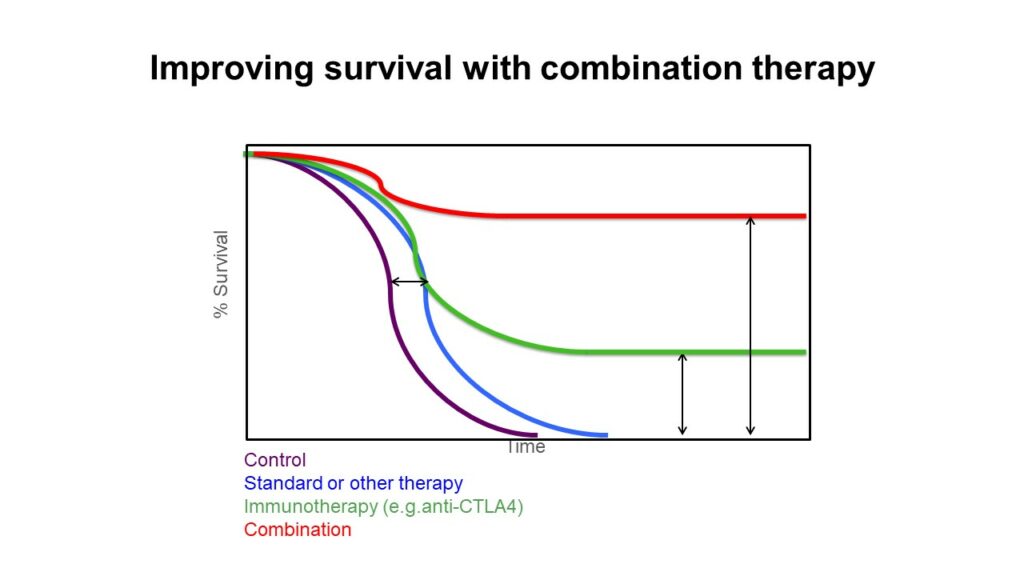
Combination immunotherapy aims to extend the lives of a greater percentage of patients compared to mono-immunotherapies.
However, Allison wondered why this treatment wasn’t successful for all patients. After the discovery of another checkpoint inhibitor protein, programmed cell death protein 1 (PD1), Allison’s lab decided to use mass spectrometry to examine T cell populations before and after anti-CTLA-4 therapy, anti-PD1 therapy, and therapy combining both of these treatments. Although new T cell phenotypes arise following all three treatments, the combination therapy produces a synergistic effect that leads to the greatest increase in particular T cells that help target tumors. “It seems to be this that is responsible for the increase in efficacy, not just the combination of the effects of the monotherapies alone,” said Allison. His future work aims to enhance our understanding of combination checkpoint blockade therapy to extend the lives of more patients.
Catherine Wu, MD Dana-Farber Cancer Institute and Harvard Medical School
Driving T cells into Tumors: A Role for Personal Cancer Vaccines
Catherine Wu works to enable more specific tumor targeting. She explained that one critical challenge is increasing the number of patients—right now, approximately 30%—with lasting responses to immunotherapies. Therapeutic vaccines may provide a solution. Wu said that these vaccines would, “stimulate antigen-specific immunity against determinants that are expressed in the cancer, and in doing so, increase the breadth and diversity of tumor-specific T cells.” Toward this goal, her lab has developed personalized vaccines for patients. The process begins with identifying specific mutations in a patient’s tumor using DNA and RNA sequencing. Next, human leukocyte antigen (HLA) typing is performed, and then personalized HLA-binding peptides are predicted. Excitingly, these vaccines, in combination with checkpoint blockade therapy, have demonstrated success in high-risk melanoma and glioblastoma patients. To improve HLA predictions, her lab has also developed an approach using mass spectrometry to examine antigen processing. To date, they have expanded from 16 to 95 HLA alleles that cover different racial groups such that they have 95% global coverage. This work represents an unprecedented advancement in distinguishing tumor-presenting epitopes.
Immunogenomics and the TME in Pediatric CNS Cancers
Elaine Mardis uses genomics to understand cancer progression and advance immunotherapeutic treatments. Specifically, her work focuses on understanding pediatric cancers. Unlike adult cancers, pediatric cancers have few druggable targets and are generally less well understood. By using and innovating computational approaches to characterize the tumor microenvironment and cancer progression, the Mardis lab provides unprecedented insight into pediatric cancers. For example, patient tumors are analyzed using exome sequencing and RNA sequencing with multiple analyses. Mardis has also developed a platform for neoantigen prediction called pVACtools, which aims to identify neoantigens from genomic fusion breakpoints. This work led to the discovery that recurrent pediatric central nervous system cancers contain immune cells in the tumor microenvironment that have been recruited from the periphery. This likely provides an immune-suppressive context based on checkpoint blockade, but neoantigen alterations may allow for the immune system to be engaged. However, new approaches may be required to extend immunotherapy to pediatric cancers because there are significant differences in the immune system based on age.
Jeffrey Sosman, PhD Feinberg School of Medicine, Northwestern University
Immune Related Toxicities: Mechanisms and Disease Outcome
Jeffrey A. Sosman is an oncologist and cancer immunotherapy researcher studying immunotherapy toxicity. Although cancer immunotherapies have transformed the therapeutic landscape, these treatments have a variety of toxic effects that limit treatment potential. Fairly common toxicities include rashes, joint and tissue diseases, colitis and hepatitis, while more rare toxicities include encephalitis and myocarditis. Dr. Sosman presented a case study on a patient that developed immune checkpoint inhibitor (ICI) associated myocarditis, which he defined as a new clinical syndrome. Immune checkpoint inhibitors prevent natural “brakes” in the immune system so that T cells can attack cancer cells. Although myocarditis is rare in ICI-treated patients (less than 0.1%), this toxicity has a 50% mortality rate. Sosman shared that onset of ICI-associated myocarditis is highly unpredictable, though it can occur early on in treatment. He also noted that patients treated with combinations of immune checkpoint therapies are at higher risk for developing this toxicity. Future work aims to better predict serious toxicity and to understand the relationship between toxicity and tumor response.
Regulation of Cancer Progression by the Tumor Microenvironment
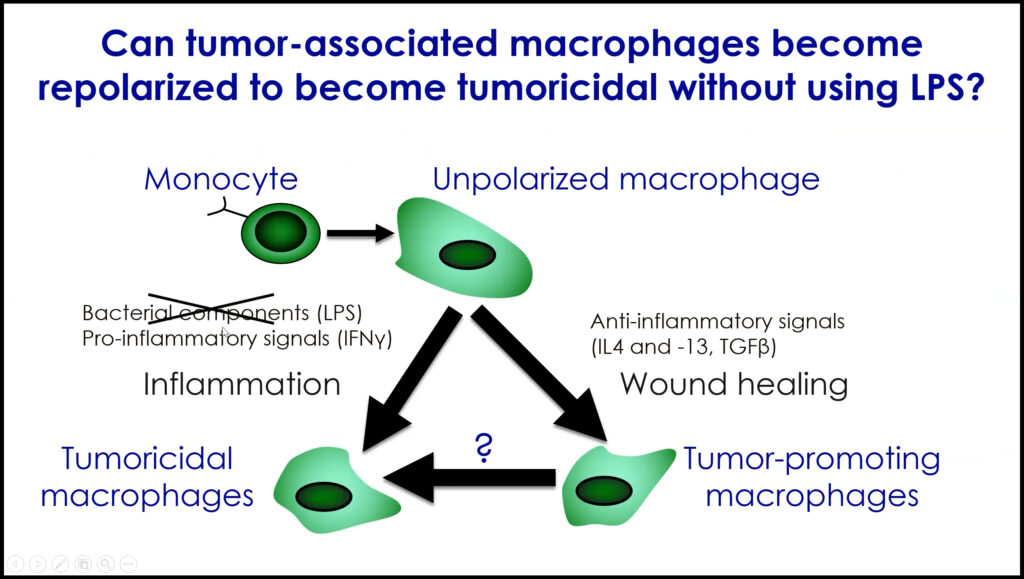
Mikala Egeblad studies the tumor microenvironment in cancer. Her lab has examined the role of bacterially derived lipopolysaccharides (LPS) in cancer progression, which is understood to influence macrophages within the tumor phenotypically. Specifically, the effect of LPS depends on the presence of either pro-inflammatory signals (IFNγ), which create tumoricidal macrophages, or anti-inflammatory signals (IL-4 and -13, TGFβ), which produce tumor-promoting macrophages. However, LPS cannot be used to treat cancer because of its toxicity in humans. Considering a novel therapeutic approach, Egeblad said, “we wanted to see if we could take tumor-promoting macrophages and reprogram them to become tumoricidal.” Their approach involved the use of monophosphoryl lipid A (MPLA), an LPS derivative that is already used as a vaccine adjuvant.
Macrophages can be programmed to become tumoricidal or tumor-promoting.
They hypothesized that if they delivered MPLA and IFNγ to tumors, macrophages would become tumoricidal. The lab observed that tumors from both mice and patients with breast cancer contained anti-tumor macrophages following treatment, which stopped metastatic progression. Egeblad and her team plan to elucidate how long lasting the responses are and whether they can be further improved by combining this treatment with checkpoint blockade immunotherapy.
Garry Nolan has developed multiple technologies to improve our understanding of both normal immune function and immunopathologies. One such tool termed CODEX (CO-Detection by indexing) modifies traditional fluorescent microscopes for high-dimensional imaging so that users can obtain spatial and quantitative insight into cells within complex tissues. As a multiplexed imaging platform, CODEX allows users to stain tissue with 50-120 antibodies that have unique barcodes that can be annealed to fluorophores for visualization. Interestingly, Nolan’s lab has used this technology to identify specific “neighborhoods” of immune cells, defined as tissue regions within each cell that have a similar surrounding of cell types. They have also discovered that cellular neighborhoods communicate with each other and can change during various stages of cancer. This information provides critical insight into disease progression that may inform clinical outcomes in the future.
Next Generation CAR T Cells
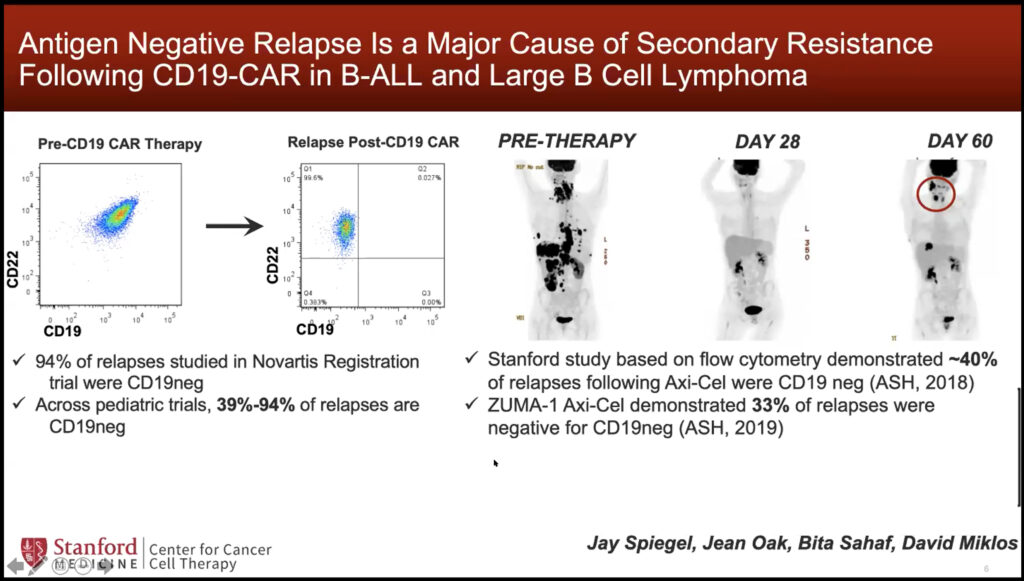
Crystal Mackall studies the basis of tumor-immune interactions to develop new cancer immunotherapies. Specifically, her lab works to improve chimeric antigen receptor T cell (CAR T cell) therapy, in which a patient’s T cells are engineered to express a synthetic receptor that recognizes an antigen on their tumor. Despite its effectiveness, some patients become unresponsive to this treatment over time. “As we think about the future of this field, we need to talk about the issue of resistance,” said Mackall, “we need to unpack it and identify where and how these cells are failing.” The loss of specific antigen expression has been identified as a significant contributor to resistance, as it can eliminate the ability of CAR T cells to recognize the tumor.
Challenges such as the loss of antigen expression can lead to immunotherapy resistance.
To address this problem, Mackall’s lab engineered a “multi-specific CAR” to simultaneously target two antigens. Even if one antigen’s expression is lost over time, the other will still be targeted which may reduce resistance. In a clinical trial, she found that this therapeutic strategy was well tolerated in both children and adults with leukemia and lymphoma. Mackall’s lab will further optimize the engineering of other multi-specific CARs to overcome resistance.
With his newly released book The World According to Physics as a point of reference, Jim Al-Khalili offers an illuminating look at what physics reveals about the world. Shining a light on the most profound insights revealed by modern physics, he invites us to reflect on what this crucially important science can tell us about the universe and the nature of reality itself. Educational and enlightening, this talk illustrates why physics is indispensable to understanding the world around us and invites us all to share in the profound adventure of seeking truth.
In This eBriefing, You’ll Learn:
How the three pillars of modern physics ― quantum theory, relativity, and thermodynamics ― must come together if we are ever to have a full understanding of reality
Relatable examples and thought-provoking analogies that elucidate the speculative frontiers of the field, and the physics that underpin our everyday experiences and technologies
Jim Al-Khalili, PhD
University of Surrey
Jim Al-Khalili is a British theoretical physicist, author and broadcaster. He is Professor of Theoretical Physics at the University of Surrey, a regular broadcaster and presenter of science programs on BBC radio and television, and the author of numerous books, including The World According to Physics,Quantum: A Guide for the Perplexed; and Life on the Edge: The Coming of Age of Quantum Biology.
He received his PhD in theoretical nuclear physics in 1989 and has published over a hundred research papers on quantum physics. He is a recipient of the Royal Michael Faraday medal and the Institute of Physics Kelvin Medal. In 2016 he received the inaugural Stephen Hawking Medal for Science Communication. He is a fellow of the Royal Society and lives in Southsea, England.
Beyond Spacesuits and Pain Relievers: Could we Genetically Protect Astronaut Health on the Mission to Mars? On May 12, 2020, I hosted a virtual conversation for the New York Academy of Sciences with astrobiologist Kennda Lynch, PhD (Lunar and Planetary Institute), geneticist Christopher Mason, PhD (Weill Cornell Medicine), and planetary scientist Lucianne Walkowicz, PhD (The JustSpace Alliance; Adler Plantarium) exploring some of the physical—and ethical—obstacles to be surmounted for a successful human mission to Mars.
Much has been written about finding the next Earth—a planetary body to serve as future outpost for the human race as Earth’s life-sustaining natural resources dwindle. But Mars won’t exactly offer a warm welcome to unshielded humans: an average temperature of -80°F/-62°C, an atmosphere of 96% toxic carbon dioxide, a surface covered in fine red dust, and a hefty dose of radiation constantly tearing through your DNA. Hostile welcome aside, we first have to get there safely.
Are We There Yet?
With current jet propulsion technologies, and depending on the position of the red planet in its orbit, the shortest journey from Earth to Mars is estimated to take 6 months. As revealed by NASA’s study of identical twins Scott and Mark Kelly—undertaken before, during, and after Scott embarked on his one-year mission on the International Space Station—long-term space flight can exact a multitude of transient and permanent effects on the human body: from loss of muscle tone and bone density to changes in vision and the body’s ability to repair itself.
A round trip is expected to eclipse the lifetime maximum recommended dosage of radiation. We humans are hardy, but are we tough enough for the mission to Mars?
Beyond the Whims of Evolution
While we don’t yet know if there is life on Mars, or if it had life in the past, a peek at the vast diversity of life right here on Earth reveals lifeforms that can survive in harsh environments that resemble the Martian surface. Some extremophiles—organisms that thrive in high radiation or very dry, salty, acidic, hot or cold settings—may be better equipped than Homo sapiens for life on Mars. Could they serve as a genetic reservoir in which to fish for talents and traits that if introduced into humans would make us more resilient?
The gene editing technique CRISPR, or the synthetic redesign of organisms to engineer new abilities, could propel astronaut preparation forward through strategic genetic enhancement of the human body or the custom design of microbes that support daily life on Mars. Imagine a designer microbe that secretes materials that catalyze concrete production from Mars soil, or supports water production, waste disposal, or plant growth. Genes taken from the humble tardigrade—a microscopic creature genetically resistant to radiation damage—when inserted into human cells, have been shown to provide protection against radiation. Along with physical and pharmacological protections—from spacesuits to pain relievers—could we safely genetically protect astronaut heath? And if so, should we?
The Big Experiment
When human medical studies are conducted, patients must be fully apprised of the risks and willingly give their consent to participate. If at any time the patient wishes to leave the study, they can withdraw their consent and go home. No such U-turns will be available to astronauts when months into their journey to Mars. The risks associated with space travel are carefully calculated, and many regulations in place to protect astronaut health.
However, as we push the human body to, and perhaps beyond, reasonable limits, this begs the question: are the health risks so high that extreme methods of protection like gene editing or synthetic biology would be justified? Are we in fact ethically bound to pursue these methods of protection because the risk of not pursuing them is too great? While these technologies are still in exploratory stages today, it’s intriguing to think of the future possibilities, and ethical quandaries, that may be realized on the fourth or fifth generation missions to Mars.
Mars may only be half the size of Earth, but it will pack one heck of a sensory punch for the astronauts anticipated to touch down on the red planet by 2035. As the fantastic future of human space travel continues to unfold before us, the challenges of sustaining human life in space should, in parallel, drive us to live more sustainably here on Earth in the here and now.
Inflammation in the nervous system plays a key role in many acute health problems including Alzheimer’s disease and chronic pain — both of which affect millions of people globally and lack effective treatments. This eBriefing will explore how the body’s failure to resolve chronic neuro-inflammation contributes to disease, as well as highlight opportunities to develop pro-resolving compounds as novel therapies.
In This Webinar, You’ll Learn:
The role of neuro-inflammation as a key component of severe global health problems including Alzheimer’s disease and chronic pain conditions.
How new research suggests that the failure to resolve neuro-inflammation may be a major contributor to the pathology of these diseases.
The latest advances in targeting resolution pathways to develop effective drugs for neurological diseases of high unmet need.
Resolving Neuro-Inflammation to Treat Alzheimer’s Disease and Pain
Speakers
Ru-Rong Ji, PhD Duke University School of Medicine
Marianne Schultzberg, PhD Karolinska Institutet
Video Chapters 04:38 Marianne Schultzberg, PhD 28:13 Ru-Rong Ji, PhD
Marianne Schultzberg, PhD
Karolinska Institutet
Marianne Schultzberg has been Professor of Clinical Neuroscience at the Department of Neurobiology, Care Sciences and Society at the Karolinska Institutet since 2005. Her research focuses on the role of neuroinflammation in neurodegenerative disorders such as Alzheimer’s disease (AD) and in recent years has focused on the potential roles of pro-resolving mediators in AD pathogenesis. She received her PhD in 1980, carried out post-doctoral research at Liverpool University and became Docent (Associate Professor) at the Karolinska Institutet in 1983.
Ru-Rong Ji, PhD
Duke University School of Medicine
Ru-Rong Ji is the chief of pain research within Duke Anesthesiology, co-director of the Center for Translational Pain Medicine, and a professor of anesthesiology and neurobiology. He research focuses on understanding the molecular and cellular mechanisms of chronic pain, such as inflammatory pain, neuropathic pain, and cancer pain. He earned a PhD in neurobiology at Shanghai Institute of Physiology and completed postdoctoral training at Peking (Beijing) University Medical School, Karolinska Institute, and Johns Hopkins University School of Medicine. He was associate professor at Harvard Medical School, before joining the Duke faculty in 2012.
Mammalian cells can make up to 20,000 different proteins, which are responsible for a wide range of cellular functions, including structure, catalysis, transport, and signaling. Proteins are synthesized as linear chains, but to carry out their myriad roles, they must then fold into complex three-dimensional configurations.
Franz-Ulrich Hartl, MD, of the Max Planck Institute of Biochemistry and Arthur Horwich, MD, of Yale School of Medicine and Howard Hughes Medical Institute, have dedicated their careers to better understanding the molecular machinery that drives protein folding, and the implications when a protein misfolds. In doing so, they discovered a new class of proteins, part of the chaperone family, responsible for protein folding.
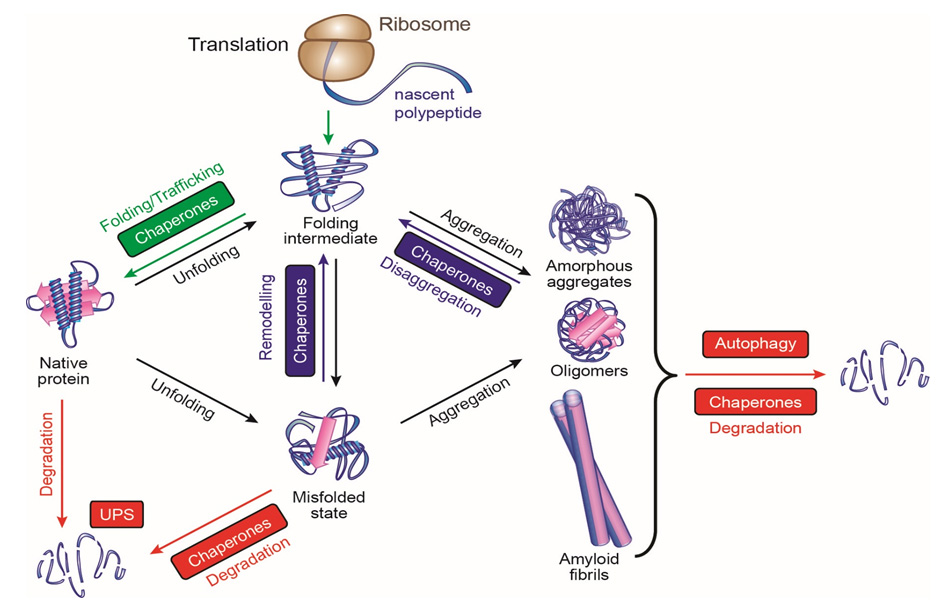
Chaperones bind to peptide chains as they are being transcribed to prevent them from aggregating and to give them an isolated, quiet space, shielded from the hubbub of the crowded cytoplasm, in which to fold properly. This process is essential to human biology and health, because misfolded proteins are associated with aging and diseases including Alzheimer’s disease, Parkinson’s disease, Huntington’s disease, and prion disease.
On October 4, 2019, prominent scientists gathered at the New York Academy of Sciences to grant the 2019 Dr. Paul Janssen Award to Hartl and Horwich for their groundbreaking insights into chaperone-mediated protein folding. The symposium included award lectures from the honorees, as well as presentations on several aspects of protein folding, from basic biology to the implications for human disease.
Symposium Highlights
While studying mitochondrial protein import, Horwich and Hartl hypothesized that the process may not be spontaneous but dependent on cellular machinery. They discovered a new class of proteins responsible for protein folding.
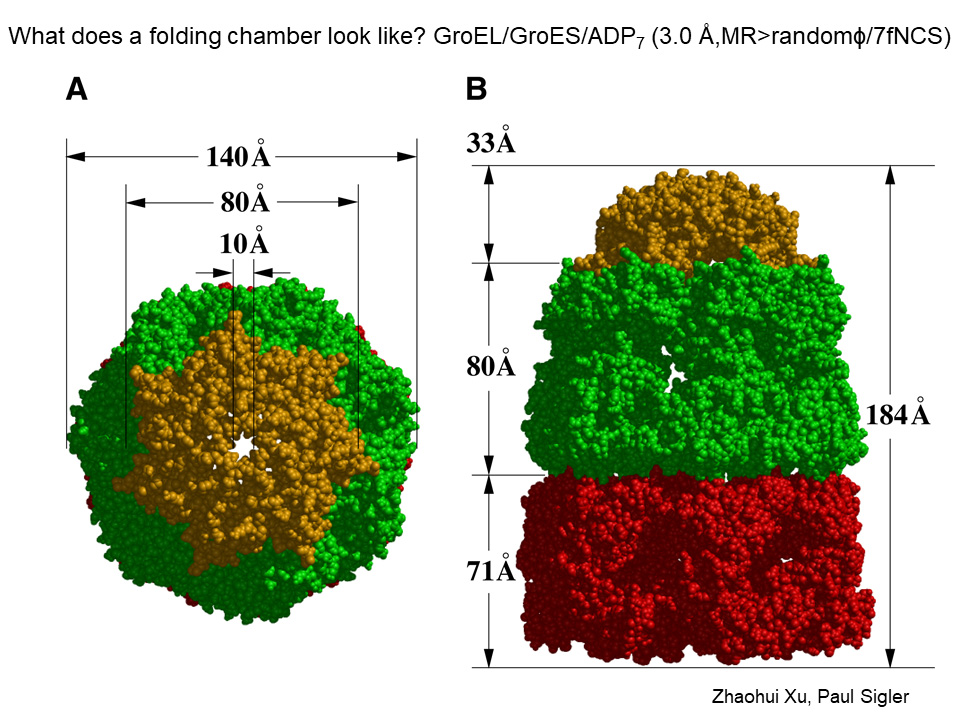
Hsp60, its bacterial homolog GroEL, and its eukaryotic homolog TRiC have a double ring structure that forms a chamber in which a peptide substrate can fold into its proper shape.
The unfolded protein response of the endoplasmic reticulum responds to the presence of misfolded proteins, which accrue with age. The response itself declines with age.
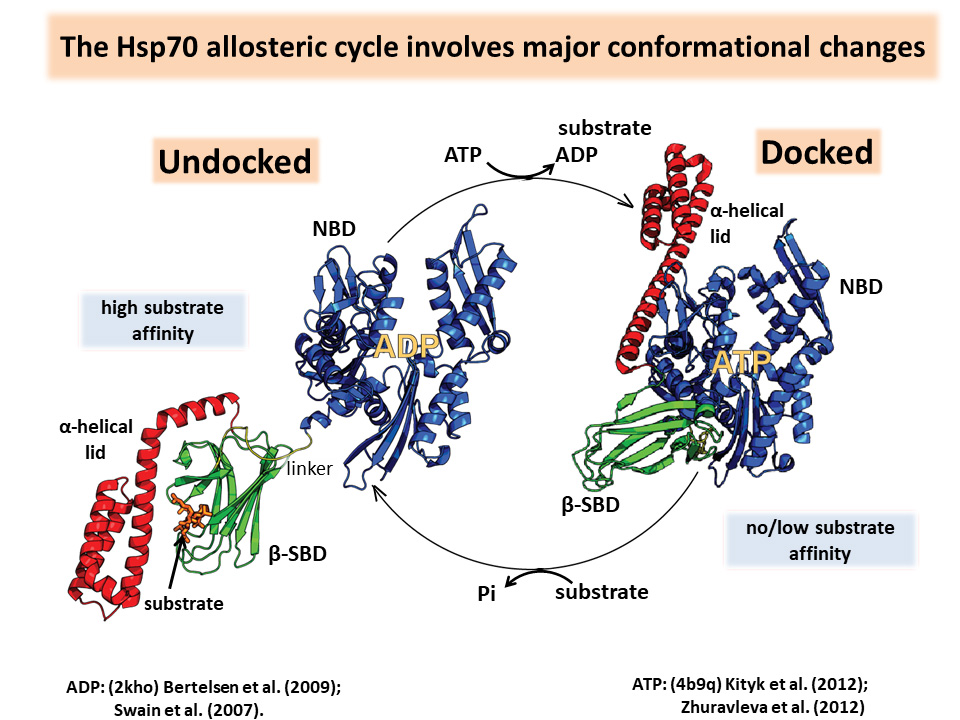
Hsp70 is a diverse family of monomeric chaperones that binds to polypeptide chains as they’re being translated or when they misfold from mutation or stress and prevents them from collapsing into aggregates.
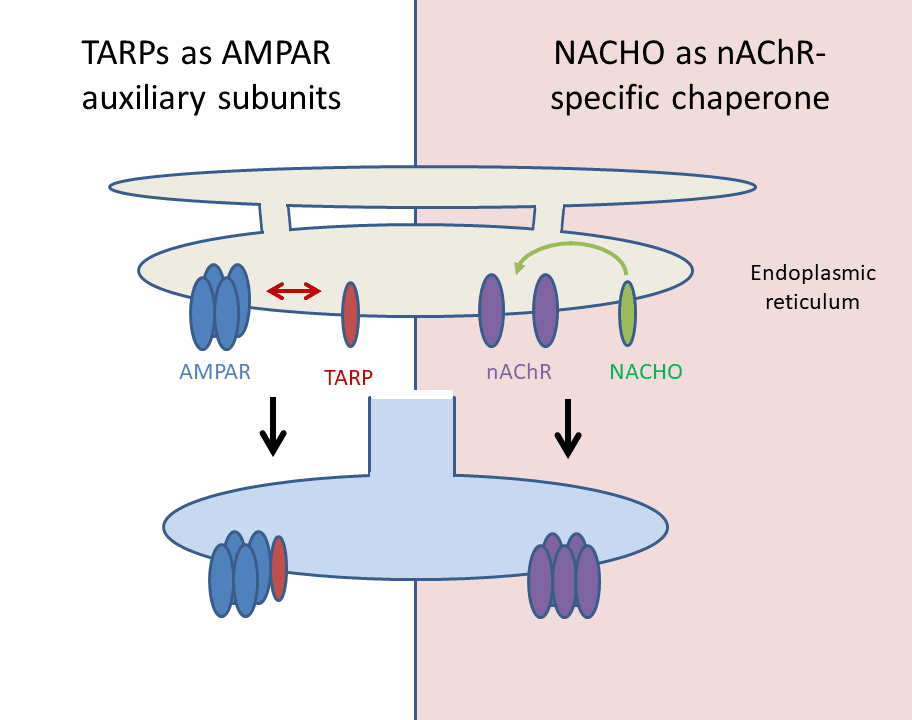
Clinically relevant receptors that have been difficult to treat require specific chaperones that may provide more easily druggable targets for neurological and psychiatric disorders.
Honorees
Franz-Ulrich Hartl, MD Max Planck Institute of Biochemistry
Arthur Horwich, MD Yale School of Medicine and Howard Hughes Medical Institute
Speakers
David S. Bredt, MD, PhD Janssen Pharmaceutical Companies of Johnson & Johnson
Andrew Dillin, PhD University of California, Berkeley and Howard Hughes Medical Institute
Judith Frydman, PhD Stanford University
Lila M. Gierasch, PhD University of Massachusetts Amherst
Event Sponsors
This symposium was made possible with support from:
Dr. Paul Janssen Award Lectures
Speakers
Franz-Ulrich Hartl Max Planck Institute of Biochemistry
Arthur Horwich Yale School of Medicine and Howard Hughes Medical Institute
Highlights
Chaperones prevent the formation of toxic protein aggregates, and failure of the chaperone system is associated with numerous age-dependent proteopathies and neurodegenerative diseases.
GroEL mediates two key actions on a substrate polypeptide: binding in the open ring forestalls aggregation and can exert unfolding, while binding in the closed ring holds the polypeptide in “solitary confinement,” giving it a chance to fold on its own and alleviating the risk of aggregation.
Molecular Chaperones — Central Players of the Proteostasis Network
“Protein folding is the final step in the information transfer from gene to functional protein, and as such is of fundamental biological importance,” began Franz-Ulrich Hartl.
In the 1950s, biochemist Christian Anfinsen showed that denatured proteins could refold spontaneously in vitro, thus revealing that all of the information required for a protein to attain its final structure is contained in its amino acid sequence. The study was somewhat misleading, however, as it only used small proteins — under 100 amino acids long — and it started with a completely synthesized amino acid chain. This hardly recapitulates the conditions under which proteins must fold in the cell, where many proteins are large, have multiple domains, fold as they are being synthesized on the ribosome, and are in the very crowded cytoplasm.
In the late 1980s, growing evidence showed that cellular machines were required to help proteins fold “at biologically relevant timescales.” These machines were deemed molecular chaperones, as they help proteins achieve their final active conformations but are not themselves part of the final structure. Hartl and Horwich initially discovered chaperones using mitochondria as a model system.
Mitochondria import about 1,000 proteins from the cytoplasm, and these proteins must be unfolded to get across the mitochondrial membranes. Based on Anfinsen’s experiments, it was thought that they would then spontaneously fold properly once inside the mitochondria. But proteins in yeast with mutant Hsp60 got into the mitochondria but failed to fold, identifying Hsp60 as a required chaperone.
Chaperones like Hsp60 prevent the formation of protein aggregates. Aggregation can occur in the intermediate stages of multidomain protein folding when hydrophobic regions might become exposed; chaperones protect these hydrophobic regions through multiple rounds of binding and releasing the partially folded proteins.
ATP binding and hydrolysis often mediate these bind-and-release cycles. The chaperones provide a safe space for the proteins to fold, sequestered away from the hubbub of the cytoplasm. Proteins revisit the quiet chambers that chaperones provide throughout their lifetimes, not only as they are being synthesized.
In the current model, while an amino acid chain is being translated, it interacts with a nascent-chain-binding protein like Hsp70, a type of chaperone that binds to hydrophobic peptide segments. Hsp70 prevents premature misfolding, only allowing the protein to fold when enough structural information for productive folding becomes available — when the protein chain gets long enough.
Most proteins only require this type of chaperone to fold efficiently. But some have more complicated structures and need to fold in the isolated, constrained cage of a cylindrical chaperonin complex like Hsp60, the chaperone that Hartl and Horwich first isolated from mitochondria. Bacterial GroEL and its cofactor GroES are the most well-studied of this class of chaperones; the eukaryotic cytoplasmic versions are called TRiC or CCT.
Chaperones are only one facet of cellular regulation of proteostasis, or protein quality control. They prevent proteins from misfolding, and the degradation machinery eliminates proteins that do not misfold.
There is an age-dependent decline in chaperone function, though. Since chaperones are required for protein maintenance, this decline can lead to a buildup of protein aggregates — which then further strains the already declining chaperones.
These protein aggregates lead to neurodegenerative diseases like Alzheimer’s disease and Huntington’s disease. Aggregates of different disease proteins have the same amyloid fibrillar structure, which suggests that a basic pathological mechanism may underlie all of these diseases. Hartl found that the aggregates interfere with almost every aspect of cellular machinery — transcription, translation, nuclear translocation, DNA maintenance, protein degradation, cytoskeletal organization, and vesicle transport —not only chaperones. But as they overwhelm the chaperone system, toxic aggregates build up until they cause cell death.
Thus, he suggests that rebalancing the proteostasis network may be a means of treating these neurodegenerative diseases.
Chaperonin-mediated Protein Folding
Arthur Horwich described how, in a classic bedside-to-bench approach, he discovered that chaperonin ring machines function to mediate protein folding. He studied the lethal X linked inherited metabolic disease caused by the mutant mitochondrial enzyme OTC. OTC is the second step in the urea cycle; when it is defective, cells can’t clear urea.
Since it is X linked, baby boys with nonfunctional OTC die. Horwich isolated the OTC cDNA and found its mitochondrial transport signal, then looked for a yeast mutant that could transport unfolded human OTC into the mitochondria but in which the transported OTC would not then fold. The yeast mutant he found lacked Hsp60.
Mitochondrial Hsp60, and its bacterial counterpart GroEL, performs two vital functions: they bind to polypeptides to prevent the formation of protein aggregates, and they help polypeptides achieve their functional state. In 1994 and 1997, the X-ray structures of both GroEL alone and in complex with its cochaperonin single ring GroES were presented along with structure-function studies in collaborative work with the late Paul Sigler, providing insight into how the machinery works.
The Binding of GroES to one end of the GroEL cylinder widely expands the folding chamber, giving the substrate space to fold in isolation from the busy cytosolic environment.
GroEL is a cylinder made of 14 identical subunits arranged into two back-to-back 7-membered rings. Each of the subunits is folded into: an equatorial domain, at the waistline of the cylinder, the collective of which hold the assembly together via side-by-side contacts within a ring and contacts of subunits between the two rings; a hinge like “intermediate” domain interconnecting the equatorial and apical domain; and a terminal “apical” domain at an end of the cylinder.
The equatorial domains each house an ATP binding pocket at the inside aspect and the cooperative binding of 7 ATP’s in a GroEL ring causes the terminal GroEL apical domains, attached to the equatorial domains through the slender intermediate domains, to open up like flower petals. In their “unopened” position the apical domains surround an open central cavity of 45 Angstrom diameter and each apical domain proffers sticky “hydrophobic” surface at its cavity-facing aspect.
The continuous hydrophobic surface around the ring specifically captures an unfolded protein species via its own exposed hydrophobic surface (that will become buried to the interior in the final folded “native” form). Thus the binding of a non-native protein by an open GroEL ring serves to capture the protein’s sticky hydrophobic surfaces, masking them, and preventing them from interacting with other unfolded proteins which can lead to aggregation.
When a polypeptide-bound ring of GroEL binds the cochaperonin ring, GroES, a smaller 7-membered single ring of identical subunits, in the presence of ATP, now a large movement of the apical domains occurs, both clockwise rotation and further elevation (see Figure; GroES is colored gold and the GroEL ring undergoing large movements is green). The large movements remove the hydrophobic polypeptide binding surface from facing the cavity, and the lining of the now GroES-encapsulated GroEL cavity becomes watery (hydrophilic) in character.
The large twisting apical domain movements strip the polypeptide off of the cavity wall into the now encapsulated and watery (hydrophilic) cavity where the protein folds in “solitary confinement,” as Horwich phrased it, without any chance of aggregation. Subsequently, after this longest step of the reaction cycle (~10 sec), ATP hydrolyzes, GroES releases, and out from the cavity comes the polypeptide whether properly folded or not. If it has not reached native form, it can make another try at proper folding, either by entering another GroEL cavity, or becoming bound to a different chaperone.
Andrew Dillin University of California, Berkeley and Howard Hughes Medical Institute
Highlights
There are a considerable variety of chaperones that are structurally and functionally different from recognizing and binding nonnative proteins in all of their various stages and processes.
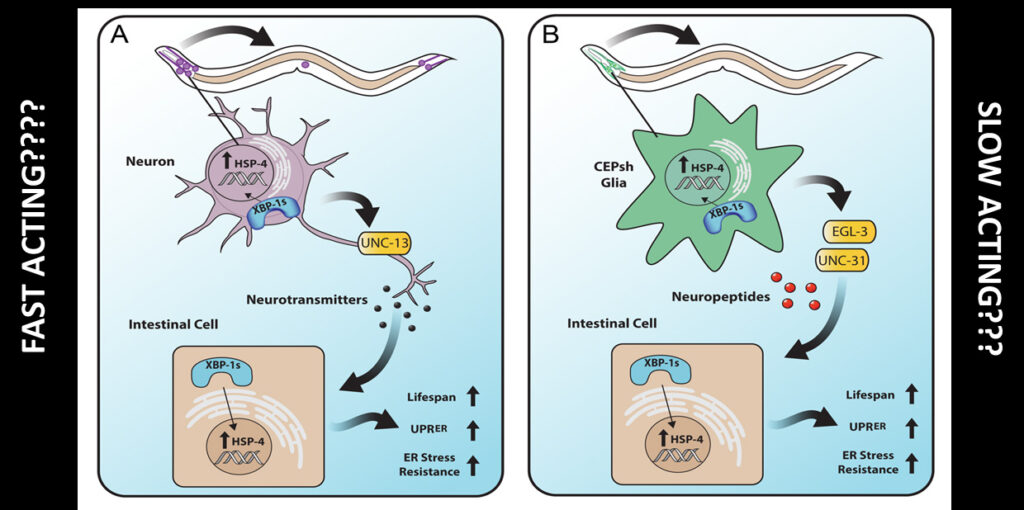
The endoplasmic reticulum unfolded protein response evolved to protect the organism from infection. In the nervous system, it can act in a non-autonomous manner to promote transcription in response to stress.
The TRiCKy Business of Folding Proteins in the Cell
“Proteins are astoundingly complex,” said Judith Frydman. As an example, she pointed to the mammalian respiratory complex I, the 45-subunit complex that drives protons across the inner mitochondrial membrane. Thus, the potential problems with protein folding are not limited to the folding process.
Chaperones bind unfolded polypeptides to help them achieve their native state. Still, much more than that, they engage polypeptides at every stage of their existence in the cell, waiting to receive them as they’re translated and monitoring for damage throughout their lifespans.
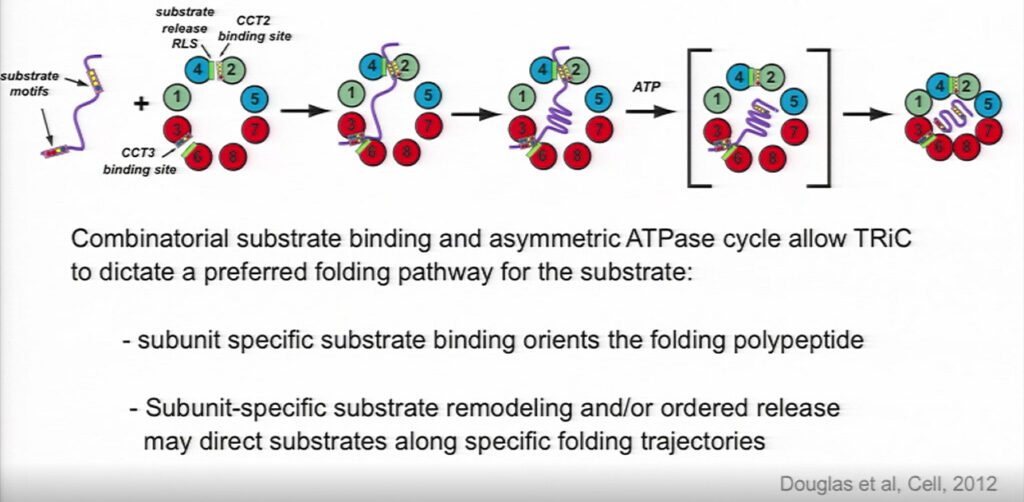
TRiC, or CCT, is the stacked chaperone in eukaryotic cells — the equivalent of GroEL. However, unlike GroEL, it does not have a separate cap. It requires ATP hydrolysis, which closes the lid to allow folding; but ATP binding is not sufficient. TRiC binds nascent chains when they are almost complete, while they are still on the ribosome but after they have interacted with Hsp70.
The complex only binds precise types of folding intermediates — notably those with complex topologies like p53, tubulin, actin, telomerase, F box proteins, and others — and then comes off once that folding intermediate has resolved into its properly folded domain. It also suppresses amyloid aggregation, but is overexpressed in many cancers and has been linked to poor prognosis in lung and breast cancer.
Subunit diversity confers unique molecular features to TRiC-mediated folding.
TRiC descends from the chaperone in archaea, which only has one type of subunit. The heteromeric nature of eukaryotic TRiC allows it to form an asymmetrical complex. TRiC has eight subunits, and each subunit has a different affinity for ATP; these subunits are arranged with high-affinity subunits around one side of the ring and low-affinity subunits around the other side.
The subunits have varying degrees of affinity for substrates as well, with each subunit’s binding site presenting a distinct and evolutionarily conserved surface of polar and hydrophobic residues. Their combination thus broadens TRiC’s binding specificity.
Once the binding chamber is closed, one hemisphere is positively charged and the other is negatively charged, further orienting how the substrate can bind and influencing its folding trajectory. Frydman called it a “chaperone with an opinion,” rather than a cage, “that guides the substrate where it needs to go.”
Prefoldin is a cofactor for TRiC, so named because it was thought to facilitate substrate transfer to TRiC before the substrate folded. It binds to TRiC in TRiC’s open state, and, like TRiC, it has a charge asymmetry and a specific pattern of polar and hydrophobic residues that contribute to the inner surface of TRiC’s binding chamber. Prefoldin seems to enhance both the yield and the rate of folding. In vivo, it must bind to TRiC, or else massive protein aggregation builds up in the cell.
Perceiving ER Stress
As many as thirteen million proteins fold and mature in the endoplasmic reticulum (ER) every minute. It is no wonder then that defects in ER function are strongly associated with metabolic and age-related disorders. The unfolded protein response in the ER (UPRER) responds to the presence of unfolded proteins by inducing the transcription of chaperones, and it declines with age. Andrew Dillin wondered how this UPRER works in multicellular organisms.
Are unfolded proteins detected in each individual cell by its own machinery, in a stochastic manner? Or might there be a higher order of regulation, coordinating protein folding mechanisms across the whole system? He turned to C. elegans to figure it out. Since all of the cells in the adult C. elegans are post mitotic, the worm provides a great model system for studying proteome maintenance.
The Dillin lab demonstrated that the neuronal transcription factor XBP-1 could rescue the age-dependent decline in ER proteostasis. Overexpression of XBP-1 extends the worm’s life. XBP-1 — which has the very unusual property that its mRNA is spliced in the cytoplasm instead of the nucleus — senses unfolded proteins and induces the UPRER in nerve cells. These nerves then send signals to peripheral and distal cells, causing them to activate their own UPRER.
Only neuronal cells, both neurons and glia, respond to XBP by inducing the UPR. The peripheral cells don’t sense the unfolded proteins and respond to them; they respond to the signal from the brain. Neurons require small, clear vesicles to send this signal, indicating that neurotransmitters are involved. Unlike neurons, glia need dense core vesicles, suggesting that they signal through neuropeptides or biologic amines rather than neurotransmitters. The neuronal and glial effects are synergistic, and the mechanism is conserved in mice.
XBP-1 induces the UPR from both neurons and glia, but uses different pathways to signal from the different cell types.
The UPRER “only deals with the challenge after the damage has occurred” said Dillin. Wouldn’t a protective system be preferable?
Thus, he conducted a CRISPR screen to find such a system, of UPRER regulators that would identify and protect the organism from ER stress instead of just responding after it happens. In doing so, Dillin found TMEM2, a transmembrane hyaluronidase that had not been previously implicated in ER stress. It does not activate the UPRER, which can induce apoptosis. Rather, it acts through the MAP kinase pathway to promote stress resistance in the ER and survival of the organism.
By breaking down extracellular hyaluronan, it generates a smaller product that increases ER stress resistance. TMEM2 is conserved from worms all the way through humans; it senses the stress from outside the plasma membrane of brain cells, before the stress hits, and then sends the signal to the periphery. Dillin does not yet know how TMEM protects the ER from stress, but he knows that it is not through chaperones.
Franz-Ulrich Hartl Max Planck Institute of Biochemistry
Arthur Horwich Yale School of Medicine and Howard Hughes Medical Institute
Lila M. Gierasch University of Massachusetts Amherst
David S. Bredt Janssen Pharmaceutical Companies of Johnson & Johnson
Seema Kumar (Moderator) Johnson & Johnson
Highlights
The Hsp70 allosteric cycle involves major conformational changes, alternating between a docked state with bound ATP and low affinity for unfolded protein substrates and an undocked state in which the α-helical lid rotates out of the way to allow substrate binding and ATP hydrolysis.
Receptors implicated in neuronal and psychiatric disorders often require specific chaperones to help them fold; these chaperones are often expressed only in specific areas of the brain, and thus may provide appropriate drug targets.
The Versatile Hsp70 Molecular Chaperones Machine
Lila Gierasch introduced Hsp70 as the “early greeting committee” for nascent polypeptide chains. It can maintain the chains in an unfolded state for transport across membranes and meet them on the other side. Hsp70 can also give them a second chance to fold if things don’t go right the first time around. Like all chaperones, it prevents aggregation. It acts as a monomer, but that hardly makes it simple.
Hsp70 activities depend on intramolecular allostery controlled by ligand modulation of an energy landscape. The C-terminal substrate-binding domain (SBD) binds to short hydrophobic stretches of a polypeptide chain. ATP binding to the N-terminal nucleotide-binding domain (NBD) reorients the NBD actin fold. It decreases the affinity of the SBD for the substrate, and the substrate activates the NBD ATPase activity. The α-helical lid can rotate, allowing access to either the SBD or the NBD.
Hsp70 shifts between a docked, ATP bound state with low substrate affinity and an undocked, ADP bound state with high substrate affinity.
Hsp70 allosteric landscapes can be shaped by the strength of interdomain interfaces and as well as ligand binding, making them “tunable molecular machines.” They must have promiscuous selectivity because they bind an immense number of substrates with varying affinities.
There are Hsp70 molecules bound approximately every 40 amino acids throughout the proteome, and there is evidence that more than one Hsp70 molecule can bind to one substrate, mainly to keep it unfolded as it is translocated. And there are many isoforms of eukaryotic Hsp70 with different allosteries. These could have evolved through interactions with co-chaperones, post-translational modifications like phosphorylation, and even the sequence of the substrate.
Gierasch suggested that tweaking its allostery might modulate Hsp70 activity, or one class of Hsp70 could be targeted over another to treat particular diseases. It is tempting to think of activating the chaperone network to prevent neurodegeneration, but it is risky, too, since cancer cells often rely on mutant chaperones.
Getting a Handle on Neuropharmacology by Targeting Receptor Chaperones
Abnormalities in psychiatric diseases are heterogeneous across brain regions, with increased activity in some areas and decreased activity in others. It has been very difficult to find small molecules that can affect synaptic transmission in these different regions.
Stargazer mutant mice, that constantly look up because they have epilepsy, don’t have functional AMPARs (a type of glutamate receptor) on their cerebellar granule cells. David Brendt found that the receptors didn’t work because the mice lacked a chaperone he named stargazin. Stargazin is a Transmembrane AMPAR Regulatory Protein, or TARP, a family of proteins that Bredt said, “act more like escorts than chaperones.”
TARPs take the AMPARs from the endoplasmic reticulum to the cell surface at the synapse of cerebellar granule cells. Different TARPs are distributed to different brain regions, making them attractive drug targets. A molecule that disrupts the interaction between TARP-γ8 and AMPAR has been shown to inhibit neurotransmission in the hippocampus.
Thus, TARPs could be key to treating epilepsy without the terrible side effects of current anticonvulsants, and could possibly be used to treat bipolar disorder, schizophrenia, and anxiety.
Clinically relevant receptors that have been difficult to treat pharmacologically, like AMPAR and nAChRs, have specific required chaperones — TARPS and NACHO, in this case — that may provide more easily druggable targets.
Acetylcholine receptors are the site of action for a number of Alzheimer’s drugs that induce modest but reproducible improvements in cognition. These pentameric receptors have been very difficult to study in the lab, though, because they only fold properly in neuronal cells.
Bredt recognized this as an opportunity in addition to a challenge. His lab cotransfected a library of 4,000 transmembrane proteins along with the acetylcholine receptor into HEK cells and screened for any that would help the receptors fold. Only one did, a novel transmembrane protein with no homology to anything, found in one copy in mammals and Drosophila and not found in worms or yeast at all. They named it NACHO. It resides in the membrane of the endoplasmic reticulum in neuronal cells, and it mediates the folding of nicotinic acetylcholine receptors.
Panel Discussion
Highlights
We don’t know why protein aggregates are toxic, or why chaperones’ ability to prevent their formation wanes with age.
Future research should focus on understanding the proteostasis network in a physiological context and figuring out if, and how, it is an appropriate clinical target.
The day ended with a panel discussion in which Hartl and Horwich fielded questions. Many of them focused on the role misfolded proteins play in disease, why they accumulate with age, and if, when, and how the proteostasis machinery can be targeted therapeutically.
Moderator Seema Kumar began the panel by asking about the greatest challenges and limitations in the field. Horwich replied that we don’t understand the toxicity of misfolded proteins; we don’t even know if they themselves are toxic, or if they are recruiting other toxic mediators. He speculated that it would be great if we could monitor single polypeptide chains as they fold, to see which ones go astray and how that makes them toxic.
Since antibodies against amyloid plaques have been ineffective in Alzheimer’s disease, enhancing multiple parts of the proteostasis network might be a better strategy than targeting specific misfolded proteins or chaperones. Horwich also pointed out that we don’t know why aging thwarts chaperones: does their ability to handle their task decline, or are there genomic or proteomic issues? Hartl added that we don’t understand neurodegenerative diseases nearly well enough to know the role that protein folding plays in their development; Parkinson’s disease, for instance, is likely more than one monolithic disease.
As for how the field will unfold in the future, Horwich noted that most of what we know about protein folding mechanisms comes from in vitro studies with purified components. So we need to know more about how the cellular milieu affects binding affinities and folding. It would be helpful to determine how many times a particular ligand comes back to a particular chaperone. Hartl explained the importance of figuring out who the first responders are, who the next responders are, and if we can develop small molecules to affect the proteostasis machinery.