New Developments in Human Healthspan and Longevity

Overview

Although advances made in health and safety have more than doubled life expectancy throughout much of the world since 1900, it hasn’t been without consequence. Disease, disability, and frailty have all impacted the quality of life associated with these later years. This unfortunate reality was recently illuminated by the COVID-19 pandemic, which severely affected this population, likely due to physiological changes and preexisting conditions. Fortunately, a primary goal of geroscience researchers is to attenuate age-related health issues so that older people not only enjoy an improved quality of life, but also maintain the resilience to survive severe diseases and infections.

While it’s irrefutable that we cannot avoid aging, it’s no longer within the realm of science fiction for us to temper and even reverse the aging process. On May 19, 2021, the New York Academy of Sciences hosted a virtual symposium that brought together geroscience experts spanning various disciplines, including genetics, endocrinology, gerontology, clinical psychology, and more. Speakers discussed targeting the key hallmarks of aging, developing biomarkers for geriatric therapies, and translating findings that extend healthspan and lifespan to the clinic.

Symposium Highlights

  • The Target Aging with Metformin study uses the FDA approved anti-diabetic metformin, which targets the hallmarks of aging, to investigate the prevention of age-related diseases.
  • Precluding the age-associated decline of chaperon-mediated autophagy restrains the aggregating effects of Alzheimer’s disease and extends lifespan in murine models.
  • Lower IGF-1 levels in older adults are associated with decreased cognitive impairment, age-related diseases, and mortality.
  • Epigenetic clocks can be applied to study biological aging differences, with accelerated epigenetic aging correlating with the prevalence and incidence of morbidity and mortality.
  • The metabolome is a powerful locus of opportunity to bridge the gap between genotype and age.
  • Alternative splicing is upregulated in response to declining mitochondrial function and increasing age.
  • Senescent cells upregulate pro-survival pathways, and their elimination alleviates diverse age-related conditions.
  • The mitochondrial-derived peptides humanin and MOTS-c are associated with increased longevity in animal models and humans.

Speakers

Nir Barzilai, MD
Albert Einstein College of Medicine

Ana Maria Cuervo, MD, PhD
Albert Einstein College of Medicine

Sofiya Milman, MD
Albert Einstein College of Medicine

Morgan Levine, PhD
Yale School of Medicine

Daniel Promislow, PhD
University of Washington

Luigi Ferrucci, MD, PhD
National Institute on Aging, National Institutes of Health

James Kirkland, MD, PhD
Mayo Clinic

Pinchas Cohen, MD
USC Leonard Davis School of Gerontology

Targetable Aging Processes

Speakers

Nir Barzilai, MD
Albert Einstein College of Medicine

Ana Maria Cuervo, MD, PhD
Albert Einstein College of Medicine

Keynote: Age Later: Translational Geroscience

Aging is the strongest risk factor for all age-related diseases, with diverse maladies accumulating during the later years of life. Hence, to abate or avert the relevant disorders, it’s critical to target the central driver—aging itself. Physician Nir Barzilai, the founding director of the Institute for Aging Research, investigates the genetics of longevity by studying centenarians and their offspring, interrogating the hypothesis that these individuals have genes that prolong aging and protect against age-related diseases.

Using Slow Off-Rate Modified Aptamer, Barzilai’s team assessed 5,000 proteins in a population of 1,000 individuals between the ages of 65-95, a period during which aging accelerates. Results demonstrated a significant change in the level of hundreds of proteins as a function of age. Among the top hits were proteins from collagen breakdown of tissue and cellular products, highlighting the pivotal role this process plays in aging, and suggesting that deterring disintegration may be a universal biomarker for geroprotection.
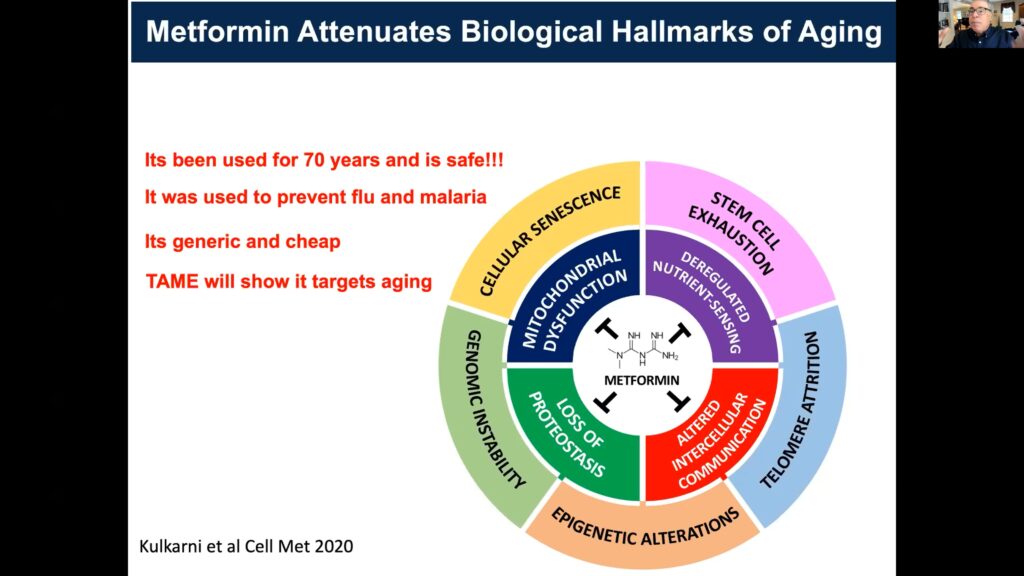
Metformin, a long-standing FDA approved anti-diabetic, targets the complement of aging indications.

A predominant challenge to translating advances made in geroscience from animal models to humans is the FDA, which currently doesn’t consider aging a disease indication or preventable condition. Barzilai and others are utilizing metformin, an FDA-approved anti-diabetic, to refute this contention. Various groups have shown that metformin has substantial effects on human healthspan, including delaying type-2 diabetes mellitus (T2DM). In this patient subset, metformin also impedes cardiovascular disease, cognitive decline, and Alzheimer’s and is associated with decreased cancer incidence, with population effects approaching 30% in all cases.

Barzilai’s team designed the Target Aging with Metformin, or TAME, study to investigate whether or not there’s a shift in the timeline of disease occurrence between a cohort receiving metformin versus a control cohort. Various biomarkers of aging and age-related diseases will be used to provide convergent evidence of broad, age-related effects, while also establishing a resource for innovation and discovery of emergent biomarkers.

“The most important thing for us is to develop biomarkers that will change when we use a gerotherapuetic,” Barzilai asserted, as this will expedite therapeutic prospects.

Targeting Selective Autophagy in Aging and Age-related Diseases

Physician-scientist Ana Maria Cuervo’s research seeks to understand the molecular basis of autophagy dysfunction with age and the contribution of defects in this cellular pathway to diseases such as neurodegeneration, metabolic disorders, and cancer. Autophagy belongs to the proteostasis network, which regulates protein content and quality control.

Chaperon-mediated autophagy (CMA) is a subset of the mammalian autophagy program that directly targets proteins to the lysosome for degradation. CMA has been shown to decrease with age in human and animal models. Cuervo’s lab developed a fluorescent murine reporter construct to visualize CMA and track the kinetics of its activity in different organs.

Blocking this pathway in neurons resulted in the aggregation of proteins like α-synuclein (α-syn), tau, and others that are causal in Alzheimer’s Disease (AD). Additionally, CMA reporter mice crossed with a mouse model of AD revealed that CMA activity dramatically decreases in the neurons of AD mice.

Leveraging these findings, Cuervo’s group generated a mouse model to restore CMA activity conditionally. Mice with preserved CMA exhibited an extended median and maximal lifespan compared to controls. Evaluation of the proteostasis network in mice with and without CMA restoration revealed major changes in the proteome. Mice in which CMA was preserved more closely resembled younger animals than their age-matched controls.

“By acting in one of these pathways, we can have an impact in the other hallmarks of aging… because of this interconnection among [them],” Cuervo emphasized.

A compound to selectively activate CMA was developed and tested in an AD model, with results illustrating a reduction in tau pathology and microglial activation in the presence of this agent.

Further Readings

Barzilai

Ismail K, Nussbaum L, Sebastiani P, et al.

Compression of Morbidity Is Observed Across Cohorts with Exceptional Longevity.

J Am Geriatr Soc. 2016 Aug;64(8):1583-91.

Sathyan S, Ayers E, Gao T, et al.

Plasma proteomic profile of age, health span, and all-cause mortality in older adults.

Aging Cell. 2020 Nov;19(11):e13250.

Lehallier B, Gate D, Schaum N, et al.

Undulating changes in human plasma proteome profiles across the lifespan. 

Nat Med. 2019 Dec;25(12):1843-1850.

Kulkarni AS, Gubbi S, Barzilai N.

Benefits of Metformin in Attenuating the Hallmarks of Aging.

Cell Metab. 2020 Jul 7;32(1):15-30.

Zhang ZD, Milman S, Lin JR, et al.

Genetics of extreme human longevity to guide drug discovery for healthy ageing.

Nat Metab. 2020 Aug;2(8):663-672.

Cuervo

Kaushik S, Cuervo AM.

Proteostasis and aging.

Nat Med. 2015 Dec;21(12):1406-1415.

Bourdenx M, Martín-Segura A, Scrivo A, et al.

Chaperone-mediated autophagy prevents collapse of the neuronal metastable proteome.

Cell. 2021 May 13;184(10):2696-2714.e25.

Kaushik S, Cuervo AM.

The coming of age chaperone-mediated autophagy.

Nat Rev Mol Cell Biol. 2018 Jun;19(6):365-381.

Dong S, Aguirre-Hernandez C, Scrivo A, et al. 

Monitoring spatiotemporal changes in chaperone-mediated autophagy in vivo. 

Nat Commun. 2020 Jan 31;11(1):645.

Dong S, Wang Q, Kao Y-R, et al.

Chaperone-mediated autophagy sustains haematopoietic stem-cell function.

Nature. 2021 Mar;591(7848):117-123.

Biomarkers for Therapies

Speakers

Sofiya Milman, MD
Albert Einstein College of Medicine

Morgan Levine, PhD
Yale School of Medicine

Translational Geroscience: Role of IGF-1 in Human Healthspan and Lifespan

Physician Sofiya Milman conducts translational research to uncover the genomic mechanisms regulating the endocrine and metabolic pathways involved in age-related conditions like diabetes, cardiovascular disorders, and Alzheimer’s.

“The goal of geroscience is really to extend healthspan, and not necessarily lifespan,” Milman opened. “What we’re really trying to do is to compress the period of morbidity.”

To discover the biological pathways that allow humans to live long, healthy lives, Milman’s team focused on IGF-1: a reduction of this factor has been consistently shown to extend healthspan and lifespan in models. IGF-1 levels peak during the teenage years before gradually declining. If the reduction of IGF-1 protects from aging, Milman reasoned that lower IGF-1 levels would delay aging and prevent age-related diseases.

Examining a cohort of centenarians expressing lower levels of IGF-1 revealed a 50% reduction in cognitive impairment compared to higher IGF-1 level controls. Genetic studies demonstrated that centenarians were enriched for rare mutations in the IGF-1 receptor that diminished signaling. Additionally, individuals 65+ with low IGF-1 had less cognitive impairment, and delayed onset of cognitive impairment, multi-morbidities, and mortality.

Milman’s team also addressed the link between IGF-1 and age. Younger individuals with lower levels of IGF-1 were at an increased risk for mortality and age-related diseases compared to older individuals, while higher levels of IGF-1 in older adults were associated with increased risk. This suggests that the IGF-1 network aligns with the concept of antagonistic pleiotropy, wherein a factor that’s beneficial to individuals when they’re younger may become harmful when they’re older. It’s advantageous to maintain functionality of proteostasis and resilience as an individual gets older, but IFG-1 inhibits programs involved in these processes.

“So from this, we think it would be wise to maintain IGF-1 levels in youth, but to reduce them with aging,” Milman concluded.

Epigenetic Biomarker of Aging for Lifespan and Healthspan

Biological age is defined by changes or alterations in a living system that renders it more vulnerable to failure and is behind the age-related increase in susceptibility to chronic diseases. Unlike chronological age, it is very difficult to measure because it’s unobservable.

Morgan Levine integrates theories and methods from statistical genetics, computational biology, and mathematical demography to develop biomarkers of aging for humans and animal models. Among this work are efforts to establish systems-level outcome measures of aging to facilitate evaluation for gero-protective interventions.

“There’s some disagreement on how we actually quantify [biological age],” Levine started. “But I would argue that it’s really important to try and do so, because quantifying [this] will really help us in a number of endeavors in the field.”

Levin’s lab is particularly interested in epigenetic aging, as aging drastically remodels the DNA methylation landscape, with widespread increases and decreases as a function of age.
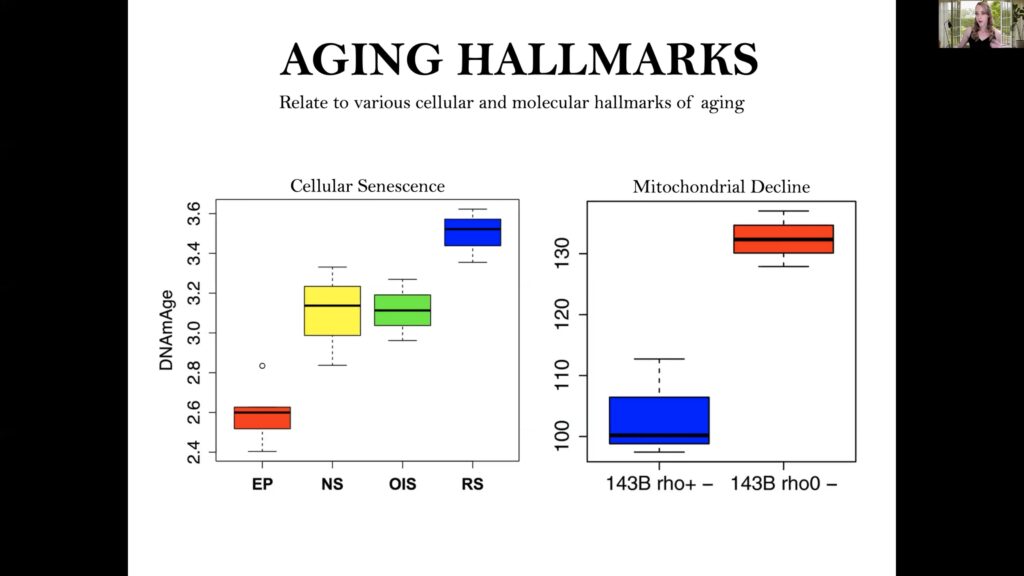
Senescent cells and cells with disrupted energy production show accelerated epigenetic aging.

Epigenetic clocks estimate DNA methylation across the genome and combine supervised machine-learning approaches to develop predictors of biological age.

“We think people who have a predicted [epigenetic] age that’s younger than their chronological age should be actually aging slower, whereas the opposite is true for people that have a genetic age that is predicted higher,” said Levine.

Applying these measures to diseased states yielded several pertinent findings. For example, individuals who have pathologically diagnosed Alzheimer’s post-mortem show accelerated epigenetic aging in their brain relative to their chronological age. Tissue differences were also captured, revealing that tissues seem to age asynchronously, with highly proliferative tissues and tumor cells having accelerated aging compared to slower aging brain tissue.

Levine’s group also evaluated cellular senescence and energy disruption, with results revealing that near senescent, HRAS oncogene induced senescent, and replicative stress senescent cells have an acceleration in epigenetic age compared to early parental control cells. Additionally, deletion of mitochondrial DNA accelerated epigenetic aging, while caloric restriction in mice stalled their epigenetic clocks.

Further Readings

Milman

Argente J, Chowen JA, Pérez-Jurado LA, et al.

One level up: abnormal proteolytic regulation of IGF activity plays a role in human pathophysiology.

EMBO Mol Med. 2017 Oct;9(10):1338-1345.

Gubbi S, Quipildor GF, Barzilai N, et al.

40 YEARS of IGF1: IGF1: the Jekyll and Hyde of the aging brain.

J Mol Endocrinol. 2018 Jul;61(1):T171-T185.

Levine

Hannum G, Guinney J, Zhao L, et al.

Genome-wide methylation profiles reveal quantitative views of human aging rates.

Mol Cell. 2013 Jan 24;49(2):359-367.

Levine M, McDevitt RA, Meer M, et al.

A rat epigenetic clock recapitulates phenotypic aging and co-localizes with heterochromatin.

Elife. 2020 Nov 12;9.

Horvath S.

DNA methylation age of human tissues and cell types.

Genome Biol. 2013;14(10):R115.

Levine ME, Lu AT, Quach A, et al.

An epigenetic biomarker of aging for lifespan and healthspan.

Aging. 2018 Apr 18;10(4):573-591.

Liu Z, Leung D, Thrush K et al.

Underlying features of epigenetic aging clocks in vivo and in vitro.

Aging Cell. 2020 Oct;19(10):e13229.

Omics for Therapies

Speakers

Daniel Promislow
University of Washington

Luigi Ferrucci
National Institute on Aging, National Institutes of Health

Metabolomics in the Search for Biomarkers and Mechanisms of Aging

Daniel Promislow applies metabolomics and systems biology approaches to study aging, with a focus on understanding the evolutionary and molecular traits that shape fitness in the natural human population. Although genome-wide association studies have allowed researchers to identify thousands of polymorphisms associated with the complement of measurable traits, including aging, the disparities identified explain less than half of 1% of the phenotypic variations.

Many genes interacting with each other ultimately influence phenotypes, and the biological distance between the two is astronomical. To bridge this gap, researchers use endophenotypes—from the epigenome, transcriptome, proteome, metabolome, and microbiome—along with various omics approaches. Promislow’s lab focuses on the metabolome, which integrates information from the environment and genotype to ultimately affect aging.

Promislow’s team utilizes translational metabolomics in various insect and animal models to understand and translate aging patterns to human populations. Applying this approach to Drosophila demonstrated that the metabolome could predict stress resistance, completely separating groups of sensitive or resistant flies to a metabolic stressor by principal component analysis. These effects could not be recapitulated with a whole fly genome sequence dataset. Evaluating response to diet restriction (DR) also revealed changes in metabolite levels with age. Among nearly 200 different inbred strains, roughly 75% showed a benefit to DR.

“Interestingly, the effect of specific genetic variants on the lifespan response was very weak,” Promislow began. “But we did find genes that were associated with metabolites, which were associated with the lifespan response, reinforcing this idea…that the metabolite profile can be a kind of bridge between genotype and phenotype.”

Promislow’s group also demonstrated that the metabolome could serve as a biological clock, revealing that shorter-lived genotypes appeared to have a higher biological age than expected for their chronological age.

Translational Potential of the Biology of Aging

As individuals age, the incidence of chronic disease increase, and disease progression quickens. Physician-scientist Luigi Ferrucci aims to interrogate the causal pathways that lead to progressive physical and cognitive decline in aging.

Cellular damage is accumulated during a person’s life, eventually reaching a pathology threshold that becomes clinically relevant when the damage presents as a disorder. Conventionally, the disease is often only addressed once it reaches this stage. The problem with this approach is that the present disease is often a marker of a more profound and invasive disorder to come.

“[Instead], we need to measure the underlying force that determines the emergence of diseases and their consequences,” Ferrucci argued.

By interfering with the basic mechanisms of aging to curtail it, broader effects of abating multiple chronic disorders can be achieved.
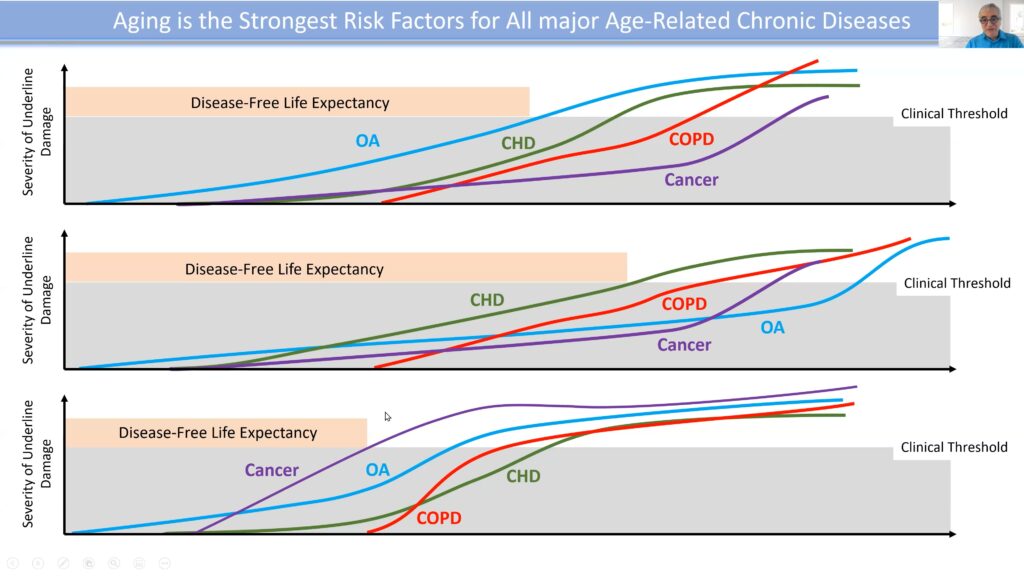
Cellular damage is accumulated over the course of an individual’s lifetime, with disease presenting once the clinical threshold for a given disorder is reached.

The rate of biological aging can be defined by the ratio of cellular damage accumulation to repair capacity. If the rate of damage accretion is fast, but the repair capacity is high, there won’t be an accumulation of damage, and aging will be slowed. However, when damage outpaces repair, aging accelerates.

Repair pathways require energy to operate effectively, and mitochondrial function declines dramatically with age. Ferrucci’s team discovered that this decline is associated with an upregulation of alternative splicing of mitochondrial proteins. Delving deeper into this mechanism, they applied gene set enrichment analysis to 5,325 RNAs with at least one splice variant significantly altered in response to changing mitochondrial function, as measured by AMPK and aging.

Among the top hits were GLUT4, VEGFA, IRS2, mTOR, PI3K, ULK1, ACC1, NRF2, and PGC1-α. Of note, the splice A variant of the topmost hit, VEGFA, appeared to be geronic, while the B variant appeared to be anti-geronic, with the ratio of these variants declining with age. Thus, alternative splicing is a method by which the body copes with energy decline due to mitochondrial dysfunction.

Further Readings

Promislow

Laye MJ, Tran V, Jones DP, et al.

The effects of age and dietary restriction on the tissue-specific metabolome of Drosophila.

Aging Cell. 2015 Oct;14(5):797-808.

Hoffman JM, Ross C, Tran V, et al.

The metabolome as a biomarker of mortality risk in the common marmoset.

Am J Primatol. 2019 Feb;81(2):e22944.

Nelson PG, Promislow DEL, Masel J.

Biomarkers for Aging Identified in Cross-sectional Studies Tend to Be Non-causative.

J Gerontol A Biol Sci Med Sci. 2020 Feb 14;75(3):466-472.

Ferrucci

Fabbri E, An Y, Zoli M, et al.

Aging and the burden of multimorbidity: associations with inflammatory and anabolic hormonal biomarkers.

J Gerontol A Biol Sci Med Sci. 2015 Jan;70(1):63-70.

Choi S, Reiter DA, Shardell M, et al.

31P Magnetic Resonance Spectroscopy Assessment of Muscle Bioenergetics as a Predictor of Gait Speed in the Baltimore Longitudinal Study of Aging.

J Gerontol A Biol Sci Med Sci. 2016 Dec;71(12):1638-1645.

Translational Research for Healthspan and Lifespan

Speakers

Pat Furlong, Panelist
Parent Project Muscular Distrophy

Roman J. Giger
University of Michigan School of Medicine

Senolytics: The Path to Translation

Physician-scientist James Kirkland studies the impact of cellular aging, specifically senescence, on age-related dysfunction and chronic diseases to develop methods for removing these cells and attenuating their deleterious effects. Senescent cells accumulate with aging and diseases, eliminating cells around them due to their senescence-associated secretory phenotype (SASP), which 30%-70% of senescent cells exhibit under most conditions.

Kirkland’s team applied a bioinformatics-based approach to analyze SASP proteomic databases, revealing that pro-survival networks are upregulated, with diverse senescent cells relying on different pathways. Several agents, termed senolytics, were identified that could target multiple nodes of these cascades.

“We’re moving away from the one drug, one target, one disease approach here,” said Kirkland,  “to try and use agents that have multiple targets, or combinations of agents, to go after networks, and to go after senescent cells by doing this, and thereby improve…multiple conditions.”

Dasatinib (D), a SRC kinase inhibitor, preferentially killed senescent preadipocytes, which relied on survival pathways that signal through this kinase. Quercetin (Q) eliminated senescent human umbilical endothelial cells (HUVECs), which partly act through the Bcl-2 family and others that this cell type is susceptible to.

In an in vivo experiment, combining Dasatinib with Quercetin (D+Q) cleared transplanted luciferase-expressing senescent preadipocytes from mice, explicitly targeting those cells with a SASP. A single dose of senolytics also alleviated radiation-induced gait disturbance in mice, with the effects persisting long-term. Bi-weekly dosing reduced physical dysfunction in older mice, as measured by parameters of maximal speed, including treadmill and hanging endurance, grip strength, and daily activity, with D+Q significantly increasing performance across the board.

Many conditions have now been shown to be alleviated by various senolytics in a range of mouse models, with D+Q delaying death from all causes, and increasing healthspan and median lifespan.

Keynote: Mitochondrial-derived Peptides (MDPs) and the Regulation of Aging Processes

The discovery of mitochondrial peptides (MDPs), encoded from small genes less than 100 codons in length, established the birth and advancement of the microprotein subfield. Physician Pinchas Cohen works to understand mitochondrial biology and characterize MDPs, exploiting findings to target aging. MDPs are secreted from cells and circulate within the body.

“Overall, they serve as protective factors, or hormones if you will, that act in the brain, the heart, the liver, the muscle, and other organs,” Cohen stated.

Among these MDPs, Cohen’s lab identified humanin, encoded from the 16S region of mtDNA, and MOTS-c, encoded from the 12S region.

Humanin has a strong protective effect on neurons and against atherosclerosis, mitigates the side effects of chemotherapy while enhancing its benefit, and is related to longevity in model organisms and humans. Cohen’s lab employs mitochondrial-wide association studies (MiWAS) to link the dysfunction of MDPs to disease. MiWAS identified a single-nucleotide polymorphism (SNPs) in the humanin gene (rs2854128) associated with reduced levels and cognitive decline in humans and mice. Supplementing humanin in mice carrying this SNP improved their cognition.

MOTS-c is a novel exercise mimetic that has potential utility in numerous age-related diseases. Mice on a high fat diet receiving MOTS-c had dramatically lower weight compared to controls. MOTS-c treatment also improved exercise tolerance and performance in middle-aged and old mice, with older mice displaying the most dramatic improvement.
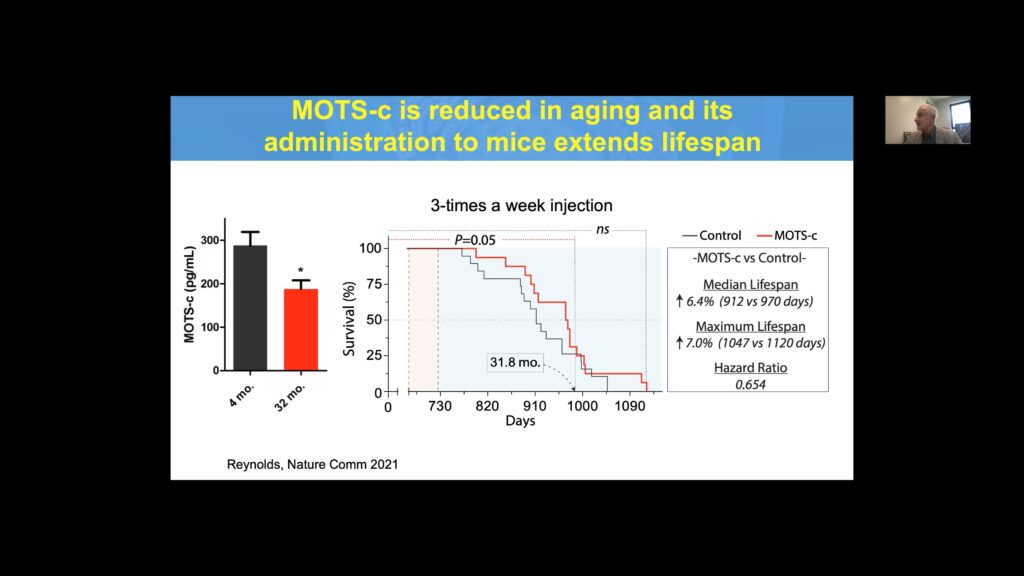
MOTS-c levels are diminished in older mice, and supplementation of MOTS-c in this cohort increases both median and maximum lifespan compared to controls.

Cohen’s group also identified a link between a SNP in MOTS-c–K14Q–which nullifies MOTS-c activity and the risk of diabetes in males of the Asian population. Evaluating Japanese males from three cohorts revealed a 50% increase in the risk of diabetes for carriers, with almost double the risk seen exclusively in men who were sedentary. Like other MDPs, MOTS-c is reduced with age, and its administration to mice significantly extends lifespan.

“I think that everything we do in the aging field can be reduced to trying to simulate the beneficial effects of a healthy lifestyle, particularly diet…and exercise,” Cohen said. “We think that…mitochondria are the main source of action [here] by inducing the production of peptides such as MOTS-c, humanin, and others.”

Further Readings

Kirkland

Zhu Y, Tchkonia T, Pirtskhalava T, et al.

The Achilles’ heel of senescent cells: from transcriptome to senolytic drugs.

Aging Cell. 2015 Aug;14(4):644-58.

Kirkland JL, Tchkonia T.

Senolytic drugs: from discovery to translation.

J Intern Med. 2020 Nov;288(5):518-536.

Ogrodnik M, Miwa S, Tchkonia T, et al.

Cellular senescence drives age-dependent hepatic steatosis.

Nat Commun. 2017 Jun 13;8:15691.

Xu M, Pirtskhalava T, Farr JN, et al.

Senolytics improve physical function and increase lifespan in old age.

Nat Med. 2018 Aug;24(8):1246-1256.

Justice JN, Nambiar AM, Tchkonia T, et al.

Senolytics in idiopathic pulmonary fibrosis: Results from a first-in-human, open-label, pilot study.

EBioMedicine. 2019 Feb;40:554-563.

Cohen

Mehta HH, Xiao J, Ramirez R, et al.

Metabolomic profile of diet-induced obesity mice in response to humanin and small humanin-like peptide 2 treatment.

Metabolomics. 2019 Jun 6;15(6):88.

Zempo H, Kim SJ, Fuku N, et al.

A pro-diabetogenic mtDNA polymorphism in the mitochondrial-derived peptide, MOTS-c.

Aging. 2021 Jan 19;13(2):1692-1717.

Yen K, Mehta HH, Kim SJ, et al.

The mitochondrial derived peptide humanin is a regulator of lifespan and healthspan.

Aging. 2020 Jun 23;12(12):11185-11199.

Miller B, Kim SJ, Kumagai H, et al.

Peptides derived from small mitochondrial open reading frames: Genomic, biological, and therapeutic implications.

Exp Cell Res. 2020 Aug 15;393(2):112056.

Zempo H, Kim SJ, Fuku N, et al.

A pro-diabetogenic mtDNA polymorphism in the mitochondrial-derived peptide, MOTS-c.

Aging. 2021 Jan 19;13(2):1692-1717.
STEM Supreme: Elizabeth Blackburn

Overview

In this pilot episode of the webinar series STEM Supremes: Conversations with Women in Science, the Academy’s Chief Scientific Officer, Dr. Brooke Grindlinger, interviewed the ‘queen of telomeres,’ Australian-American scientist Dr. Elizabeth Blackburn. Light years on from her early work sequencing the DNA of the pond scum protozoan Tetrahymena, Blackburn unraveled our understanding of the function of telomeres—the protective caps on the ends of chromosomes—and the role they play in aging and diseases such as cancer. She has pioneered a path for women scientists, and received the pinnacle of scientific achievement—the Nobel Prize—for unlocking secrets about how we age at a fundamental level. The conversation spanned Blackburn’s teenage fascinations with science, the anxieties of transitioning from student to independent investigator, cultural and gender barriers she navigated along the way, and what excites her on the horizon of aging research.

In this eBriefing, You’ll Learn:

  • How sleep quality, exercise, diet, and chronic stress impact the length of human telomeres and, in turn, our genetic heritage
  • Studies underway to understand the effect of severe stress on how individuals will respond, long-term, to COVID-19 vaccination
  • Tactics for managing the transition from PhD student to post-doctoral fellow, and from post-doc to junior faculty member
  • Tangible actions academic leaders can take to better support parents, particularly women, as they navigate the competing demands of family and a research career
  • Goals of the Lindau Declaration 2020 on Sustainable Cooperative Open Science

Moderator

Brooke Grindlinger, PhD
The New York Academy of Sciences

In Conversation with Elizabeth Blackburn

Speaker

Elizabeth Blackburn
University of California San Francisco

A full transcript of this conversation is available for download here.


Elizabeth Blackburn, PhD

University of California San Francisco

Dr. Blackburn earned her BSc and MSc degrees from the University of Melbourne, and her PhD from the University of Cambridge in England. She was a postdoctoral fellow in the Molecular and Cellular Biology Department at Yale University, and later joined the faculty at the University of California at Berkeley in the Department of Molecular Biology. She was Chair of the Department of Microbiology and Immunology at UC San Francisco, and later served as the first female president of the Salk Institute for Biological Sciences. Among her many career honors, Blackburn shared the 2009 Nobel Prize in Physiology or Medicine with collaborators Carol Greider and Jack Szostak for the discovery of how chromosomes are protected by telomeres and the enzyme telomerase. Blackburn is currently Professor Emerita, Biochemistry and Biophysics, UC San Francisco.

Brooke Grindlinger, PhD

New York Academy of Sciences

Read more about Dr. Grindlinger, the Academy’s Chief Scientific Officer, here.

Further Readings

Psychedelics to Treat Depression and Psychiatric Disorders

The logo for The New York Academy of Sciences.

Overview

Currently the FDA categorizes psychedelics such as LSD and psilocybin as Schedule I drugs, indicating that these substances have no medical value. Despite this classification, a resurgence of research in approved labs has demonstrated therapeutic benefits of psychedelics for treatment of psychiatric disorders.

Of note, a recent trial on the effects of MDMA-assisted therapy for post-traumatic stress disorder (PTSD) showed a reduction in the severity of patient symptoms compared with the placebo arm of the trial, providing hope for the future approval of MDMA for therapeutic use.  The exciting findings from this study as well as and investigations into other psychedelics are instigating a paradigm shift for treatment-resistant psychiatric conditions, along with increased public interest and efforts to legalize psychedelics for medicinal use.

The New York Academy of Sciences hosted a panel discussion bringing together leading scientists in the fields of pharmacology, neuroscience, and psychiatry to discuss how psychedelics work in the brain to produce therapeutic benefits for depression and other mood disorders.  The conversation commenced a description of the socio-political context of psychedelics research, spanning the rise of psychedelics research in the 1950s, restrictions in the 1960s, renewed interest in the 1990s, and present day clinical trials for patients with depression and various other mood disorders. 

The program continued by spotlighting the different types of classical and non-traditional psychedelics that are currently being investigated (e.g., psilocybin, MDMA, and ketamine) and how they work to produce therapeutic effects. Panelists concluded the conversation by sharing insights into the use of psychedelics in treatment settings, including explaining the process of facilitated treatment and the role of the therapist/guide during the psychedelic experience (including preparatory therapy, peak effects, and integration).

In this eBriefing, you will learn:

  • The socio-political history of psychedelic research for human health
  • The difference between classic and non-traditional psychedelics
  • The effects of psychedelics on the brain and targets
  • The role of the hallucinogenic experience
  • The role of psychological support during the psychedelic experience

Event Sponsors

Gold

Bronze

Psychedelics for the Treatment of Depression and Psychiatric Disorders

Moderator

John Krystal, MD
Yale School of Medicine

Speakers

Roland Griffiths, PhD
Johns Hopkins University School of Medicine

David E. Nichols, PhD
Heffter Research Institute

Rachel Yehuda, PhD
Icahn School of Medicine at Mt. Sinai

John Krystal, MD
Yale School of Medicine

Dr. John Krystal is the Robert L. McNeil, Jr., Professor of Translational Research; Professor of Psychiatry, Neuroscience, and Psychology; and Chair of the Department of Psychiatry at the Yale University. He is also Chief of Psychiatry and Behavioral Health at Yale-New Haven Hospital.  He is a graduate of the University of Chicago, Yale University School of Medicine, and the Yale Psychiatry Residency Training Program.

Dr. Krystal has published extensively on the neurobiology and treatment of schizophrenia, alcoholism, PTSD, and depression. Notably, his laboratory discovered the rapid antidepressant effects of ketamine in humans. He is the Director of the NIAAA Center for the Translational Neuroscience of Alcoholism and the Clinical Neuroscience Division of the VA National Center for PTSD. Dr. Krystal is a member of the U.S. National Academy of Medicine and a Fellow of the American Association for the Advancement of Science. Currently, he is co-director of the Neuroscience Forum of the U.S. National Academies of Sciences, Engineering, and Medicine; and editor of Biological Psychiatry (IF=12.1).

He has chaired the NIMH Board of Scientific Counselors and served on the national advisory councils for both NIMH and NIAAA. Also, he is past president of the American College of Neuropsychopharmacology (ACNP) and International College of Neuropsychopharmacology (CINP).

Roland Griffiths, PhD
Johns Hopkins University School of Medicine

Roland Griffiths is Professor in the Departments of Psychiatry and Neurosciences and Director of the Center for Psychedelic and Consciousness Research at the Johns Hopkins University School of Medicine.  His principal research focus in both clinical and preclinical laboratories has been on the behavioral and subjective effects of mood-altering drugs and he is author of over 400 scientific publications.  He has conducted extensive research with sedative-hypnotics, caffeine, and novel mood-altering drugs.

About 20 years ago, he initiated a research program at Johns Hopkins investigating effects of the classic psychedelic substance psilocybin, the active component in “magic mushrooms.” Remarkably, many research participants rate their experience of psilocybin as among the most personally meaningful of their lives, and they attribute enduring positive changes in moods, attitudes and behavior months to years after the experience.  Completed and ongoing studies include those in healthy volunteers, in beginning and long-term meditators, and in religious leaders.

Therapeutic studies with psilocybin include treatment of psychological distress in cancer patients, major depressive disorder, nicotine addiction, anorexia nervosa, and various other psychiatric disorders. Related studies of brain imaging and drug interactions are examining pharmacological and neural mechanisms of action.  His research group has also conducted a series of survey studies characterizing various naturally-occurring and psychedelic-occasioned transformative experiences including mystical experiences, entity and God-encounter experiences, Near Death experiences, and experiences claimed to reduce depression, anxiety, and substance use disorders.

David E. Nichols, PhD
Heffter Research Institute

David E. Nichols previously held the Robert C. and Charlotte P. Anderson Distinguished Chair in Pharmacology and in addition was a Distinguished Professor of Medicinal Chemistry and Molecular Pharmacology at the Purdue University College of Pharmacy.  He was continuously funded by the NIH for nearly three decades and served on numerous government review panels.  His two principal research areas focused on drugs that affect serotonin and dopamine transmission in the CNS.

He began medicinal chemistry research on hallucinogens in 1969 and has been internationally recognized as a top expert on the medicinal chemistry of psychedelics (hallucinogens).  He has published more than 300 scientific articles, book chapters, and monographs.  In 1993 he founded the Heffter Research Institute, which has supported and funded clinical research with psilocybin and led the so-called “renaissance in psychedelic research.”

Rachel Yehuda, PhD
Icahn School of Medicine at Mt. Sinai

Rachel Yehuda, Ph.D. is the Director of the Center for the Study of Psychedelic Psychotherapy and Trauma, Vice Chair for Veterans Affairs for the Psychiatry Department and a Professor of Psychiatry and Neuroscience at the Icahn School of Medicine at Mount Sinai as well as the Director of Mental Health at the Bronx Veterans Affairs Medical Center and the Director of the Traumatic Stress Studies Division.

Throughout her career her research has focused on the study of the enduring effects of trauma exposure, particularly PTSD, as well as associations between biological and psychological measures. She has investigated novel treatment approaches for PTSD and the biological factors that may contribute to differing treatment outcomes for the purpose of developing personalized medicine strategies for treatment matching in PTSD. This work has resulted in an approved US patent for a PTSD blood test.

Recently, Dr. Yehuda’s laboratory has used advances in stem cell technology to examine PTSD gene expression networks in induced neurons.  The Center for Psychedelic Psychotherapy and Trauma integrates sophisticated brain imaging and molecular neuroscience in PTSD with clinical trials using MDMA assisted psychotherapy and other related medicines. She has authored more than 450 published papers, chapters, and books in the field of trauma and resilience, focusing on topics such as PTSD prevention and treatment, molecular biomarkers of stress vulnerability and resilience, and intergenerational effects of trauma and PTSD.

Further Readings

John Krystal

Abdallah CG and Krystal JH

Ketamine and Rapid Acting Antidepressants: Are We Ready to Cure, Rather Than Treat Depression?

Behavioral Brain Research. 2020 July 15;(30): 112628

Charney D and Duman R

A New Rapid-Acting Antidepressant

Cell. 2020 April 2;1(181): 7

Abdallah CG, Sanacora G, Charney DS, and Duman R

Ketamine: A Paradigm Shift for Depression Research and Treatment

Neuron. 2019 Mar 6;101(5):774-778

Roland Griffiths

Scharper J

Crash Course in the Nature of Mind

Johns Hopkins University Magazine. Fall 2017

Griffiths RG, Johnson MW, and Carducci MA, et al

Psilocybin produces substantial and sustained decreases in depression and anxiety in patients with life-threatening cancer: A randomized double-blind trial

Journal of Psychopharmacology. 2016 Dec; 30(12):1181-1197

David E. Nichols

Nichols DE

How Does One Go About Performing Research with Psychedelics?

Multidisciplinary Association for Psychedelic Studies Bulletin. Fall 1997

Nichols DE

Psychedelics

Pharmacological Reviews. 2016 April;68(2):264-255

Nichols DE

Studies of the Relationship between Molecular Structure And Hallucinogenic Activity

Pharmacology, Biochemistry, and Behavior. 1986 Feb;2:335-340

Nichols DE

Psilocybin: From Ancient Magic to Modern Medicine

The Journal of Antibiotics. 2020 May 12;73:679-686

Nichols DE, Johnson MW, and Nichols CD

Psychedelics as Medicines: An Emerging New Paradigm

Clinical Pharmacology and Therapeutics. 2016 Nov 4;101(2):209-219

Rachel Yehuda

Vermetten E and Yehuda R

MDMA-assisted Psychotherapy for Posttraumatic Stress Disorder: A Promising Novel Approach to Treatment

Neuropsychopharmacology. 2020 Jan;45(1):231-232

Yehuda R

Mount Sinai: Five Things to Know About MDMA-Assisted Psychotherapy for PTSD

Multidisciplinary Association for Psychedelic Studies (MAPS) in the Media. 2020 Feb 20

Making STEM Education Accessible for All

Two young students participate in a simple science experiment.

STEM education is more important than ever. In our ever-changing, technology-driven world, students must be equipped with the knowledge and skills afforded by STEM learning—problem solving, critical thinking, curiosity, and persistence, among many others. STEM expertise is also desperately needed to address the many challenges facing our world, particularly those identified by the UN Sustainable Development Goals. Yet in many places throughout the world—in developed and developing countries alike—students lack access to meaningful STEM learning.

On February 23, 2021, The New York Academy of Sciences hosted a discussion between Chief Learning Officer Hank Nourse and Mmantsetsa Marope, Executive Director of the World Heritage Group. They explored the impacts of STEM education on individual, national, and global development.

In this eBriefing, you will learn:

  • What high-quality STEM education looks like
  • How STEM learning benefits individuals
  • The importance of STEM education to national and global development
  • How we might ensure equitable access to STEM learning, particularly in the face of growing inequities exacerbated by the COVID-19 pandemic

Advancing STEM Education for All

Speakers

Mmantsetsa Marope
World Heritage Group

Hank Nourse
The New York Academy of Sciences

Mmantsetsa Marope, PhD
World Heritage Group

Mmantsetsa Marope is widely regarded as a thought leader on education, the future of education and work, and learning systems capable of preparing students for rapidly changing and unpredictable futures. She is Executive Director of the World Heritage Group, an organization dedicated to building resilient, agile, and future-forward education systems. She is Honorary President of the Indian Ocean Comparative and International Education Societies and Lead Global Advisor for China’s Education and Innovation for Development EXPO.

Prior to founding the World Heritage Group, Dr. Marope spent four decades in the civil service and the nonprofit sectors, including senior roles at the World Bank and, most recently, UNESCO, where she served as Director of the International Bureau of Education. Dr. Marope holds a PhD in education from the University of Chicago, an MEd from Penn State University, and BA and CDE degrees from the University of Botswana and Swaziland.

Hank Nourse
The New York Academy of Sciences

Hank Nourse leads the Academy’s Global STEM Alliance (GSA), a bold initiative to advance science, technology, engineering, and mathematics education worldwide. With hundreds of partners, and reaching participants in over 100 countries, the GSA directly engages tens of thousands of students and teachers annually, providing mentorship, skill building, and professional development spanning K-12 and higher education.

Prior to joining the Academy in 2015, Hank spent more than 15 years developing online learning and assessment programs for the K–12 market, primarily at Scholastic, a global children’s publishing and media company. He holds a Master’s degree in International Educational Development from Teachers College, Columbia University, and a Bachelor’s degree from Gonzaga University.

Promising Immunotherapies over Toxic Chemotherapies

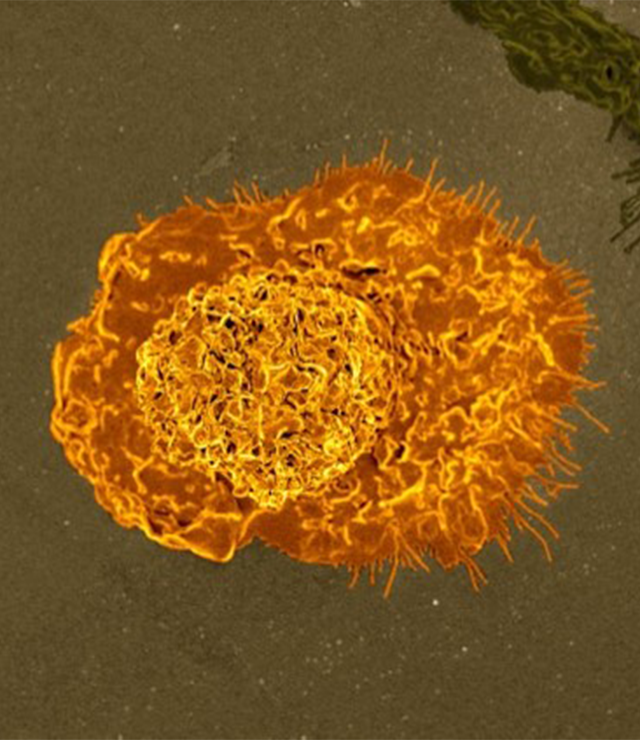
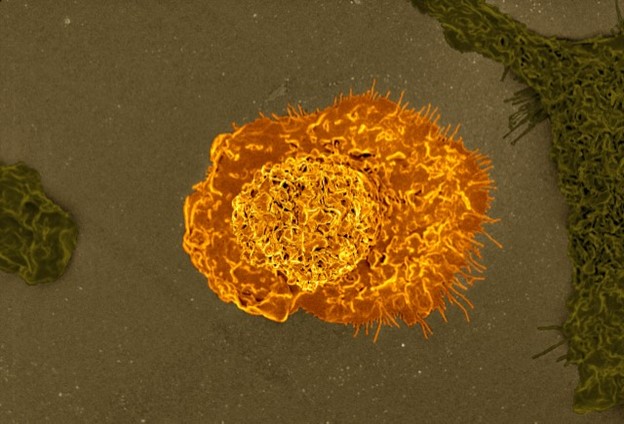
Macrophages can eat leukemia cancer cells when the cells are exposed to anti-CD47 antibodies.

Cancer immunotherapies utilize an individual’s immune system, providing alternatives to toxic chemotherapies.

Published April 22, 2021

By Ben Ragen, PhD

Cancer immunotherapies utilize an individual’s immune system to fight off or even prevent cancers— shifting the paradigm for cancer treatment and providing alternatives to toxic chemotherapies. Since the first immunotherapy cancer treatment was approved by the US Food and Drug Administration in the mid-1980s, scientists have continued to explore the potential of drugs and other biomedical technologies to manipulate cytokines, neoantigens, immune cells, and stem cells to treat and even vaccinate against cancer.

Irving Weissman, MD, is a Virginia & D.K. Ludwig Professor of Clinical Investigation in Cancer Research at Stanford University and the Director of the Stanford Institute for Stem Cell Biology and Regenerative Medicine. He has been studying cancer since 1957 and is a leader in the field of stem cell biology. Dr. Weissman will give the Keynote address at the upcoming 8th annual Frontiers in Cancer Immunotherapy conference, to be held by The New York Academy of Sciences on May 12-14, 2021.

The Academy recently spoke with Dr. Weissman about his entrance into the field of cancer immunotherapy and the advances he has made in treating leukemia by utilizing his groundbreaking findings of the link between cancer and the CD47 protein.

This interview has been condensed and edited for clarity.

You have been researching stem cells and cancer for decades. What was your introduction to these fields?

I actually started in high school in a pathology laboratory in Montana where I was learning about immunogenetics in the context of normal tissue transplants and tumor transplants. So, from the age of 16 on, I’ve been thinking about the field.

My interest in stem cell biology came out of the idea that if you had immune rejection of a transplant, it turned out that it was the thymus, and T cells derived from the thymus, that were the main effectors of rejection.

My interest then shifted from T cells to bone marrow. I set up several experiments to find cells within the bone marrow and was able to isolate blood-forming stem cells from mice. Within two years of starting SyStemix, Inc., a company which I co-founded, we isolated the human blood-forming stem cell.

How did your stem cell research lead you to study cancer?

By 1996 we were treating cancer patients by giving them lethal doses of a combination chemotherapy and were then saving them by rejuvenating their blood-forming system with their own cancer-free stem cells. These treatments were done in women with metastatic breast cancer, which made me think more and more about cancer and how we could understand which cells might become malignant in acute myelogenous leukemia.

We had gotten samples from the Hiroshima Hospital Atomic Bomb Casualty Commission, which has frozen banks of live bone marrow cells belonging to people who developed leukemia after the atomic bomb. Reseachers found we could isolate the human leukemia stem cell from those samples.

We could then look at the gene expression differences between two types of purified cells: the leukemia stem cells and then either the same stage cells from normal bone marrow or from hematopoietic stem cells. It wasn’t until we had completed all of that work that we could say, for the first time, which genes leukemia stem cells were overexpressed and which ones were underexpressed.

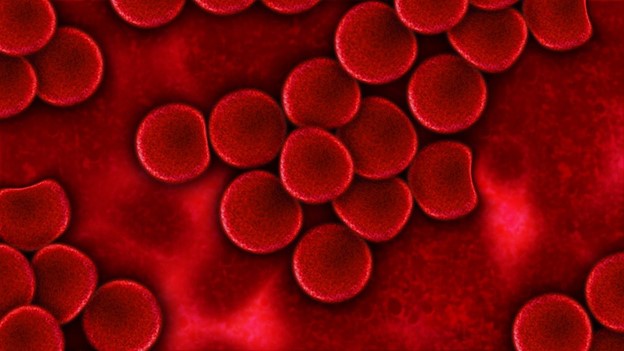
Red blood cells express CD47 on their surface to prevent macrophages from eating them.

Were there any specific genes that warranted further investigation?

One of the first genes we observed was called CD47. So, I looked it up in the literature, and it said that CD47 was an integrin-associated protein. But CD47 is not only associated with integrin in the cell membrane. When another research group knocked out the Cd47 gene in mice, they could keep the mice alive, but when they looked at their red blood cells and transfused the red cells into healthy animals of the same antigenic type, those red blood cells had a two-hour lifespan instead of having a normal two- to three-week lifespan. This discovery showed that immune cells—called macrophages—found in the bone marrow, the spleen, and liver were “eating”, or destroying, these red cells prematurely.

How did the discovery of CD47 and its role in red blood cell lifespan extend to your research on cancer?

CD47 is a “don’t eat me” signal on red blood cells—that’s how it extends red blood cell lifespan—but when the expression of CD47 normally fades, then the red blood cells can be eaten. So, we said, “well, if it is a ‘don’t eat me’ signal for red blood cells by blocking macrophages from eating them, why does every mouse leukemia and every human leukemia that we study have upregulated expression levels of CD47?”

So, we obtained and then made anti-CD47 antibodies. We showed that we could incubate the anti-CD47 antibodies with the human patient leukemia stem cells that we had isolated, along with human macrophages. The anti-CD47 antibodies relieved the blockade, and the macrophages started to eat.

Within two hours, each macrophage that ate was stuffed full of five to ten leukemia cells; you let it go two days, and there’s no leukemia cells left on the dish. So, it was pretty clear that we were dealing with a system of macrophage recognition and that we had developed an immunotherapy.

Macrophages can eat leukemia cancer cells when the cells are exposed to anti-CD47 antibodies.

How close are we to seeing anti-CD47 antibodies as an available cancer treatment?

We have finished a Phase 1 and a late Phase 2 trial for acute myelogenous leukemia and myelodysplastic syndrome, which is a disease that will often turn into acute myelogenous leukemia. We found that the anti-CD47 antibody alone didn’t eliminate the tumor.

When we added azacytidine—the drug used to hold myelodysplastic syndrome and some acute myelogenous leukemias at bay for a short time—we found that tumors regress in nearly 100% of patients with elderly-onset acute myelogenous leukemia and high-risk myelodysplastic syndrome. So far, we see over 50% complete regression, and it’s been two years.

Also read: Advancing Vaccines and Cancer Immunotherapy.

Inside the Quest for a COVID-19 Vaccine

Overview

When SARS-CoV-2—the respiratory virus that causes COVID-19—first emerged, most people did not anticipate that it would result in a global public health disaster. COVID-19 rapidly spread from person to person across all borders, bringing hospitals to the brink of collapse, causing a devastating loss of life, and shutting down global economies. Scientific researchers, biotechnology companies, and government agencies quickly mobilized to develop vaccines—which prevent disease in inoculated individuals and, in some cases, also block a pathogen’s transmission from person to person—against SARS-CoV-2. The unprecedented speed of SARS-CoV-2 vaccine development reflects decades of previous research on similar coronaviruses and faster manufacturing techniques. Just over a year into the pandemic, there are already candidate vaccines for SARS-CoV-2, several of which are being rolled out worldwide. Many other vaccine candidates are currently being investigated and will hopefully become part of the toolkit in the fight against COVID-19.

On February 2-3, 2021, the New York Academy of Sciences hosted a historic symposium that brought together top virologists and vaccinologists, public health officials, and industry leaders. They reflected on the factors that contributed to the record-breaking speed of COVID-19 vaccine development, gave updates on vaccine candidates, reviewed strategies to stay ahead of future outbreaks, and discussed the many unanswered questions and challenges that lie ahead.

Symposium Highlights:

  • Decades of previous research in virology and vaccinology sped up COVID-19 vaccine development. Productive public-private coordination was also critical. >
  • Various vaccines using a range of technology platforms are currently being developed. >
  • Several COVID-19 vaccines have proven to be safe and immunogenic in Phase 1 and 2 clinical trials. Some of them have met safety and efficacy standards in Phase 3 trials and are already in the market in several countries. >
  • The emergence of new variants of SARS-CoV-2 is a source of concern for vaccine experts, but they remain optimistic. More data is still needed, but the vaccines that are already being rolled out or close to it seem to confer some degree of protection against the known variants. >
  • Many questions remain unclear, such as the duration of the protective effects of vaccines or the effects of COVID-19 vaccines in children. >
  • Investing in research and prevention strategies to bridge the pandemic preparedness gap is essential in the effort to stay ahead of future outbreaks. >

Keynote Speakers

Anthony S. Fauci, MD
National Institute of Allergy and Infectious Diseases (NIAID), NIH

Moncef Slaoui, PhD
Operation Warp Speed

Speakers

Sara Gilbert, PhD
University of Oxford

Gregory Glenn, MD
Novavax

Kathrin Jansen, PhD
Pfizer

Kevin Olival, PhD
EcoHealth Alliance

Stanley Plotkin, MD
University of Pennsylvania

Melanie Saville, MD
CEPI

Hanneke Schuitemaker, PhD
Janssen Vaccines and Prevention B.V.

Xuefeng Yu, PhD
CanSino Biologics

Tal Zaks, MD, PhD
Moderna

Sponsors

Gold Sponsors

Pfizer logo

Bronze Sponsor

Latham BioPharm Group

Promotional Partners

Keynote Address – Slaoui

Speakers

Moncef Slaoui
Operation Warp Speed

Operation Warp Speed (OWS) and the Quest for a COVID-19 Vaccine

The Operation Warp Speed (OWS) program, initiated by the federal government, was designed to accelerate the development and distribution of COVID-19 vaccines. Moncef Slaoui, former chief scientific officer of OWS offered a broad overview of the program, the status of candidate vaccines, and key lessons from the vaccine development process.

He declared the success of the ambitious mission, which allowed for the delivery of tens of millions of vaccines in the US by February 2021. “It is remarkable that we are at that level twelve months and a few days after the virus was described,” said Slaoui. He credited this success in part to the collaborative efforts of researchers around the world, as well as the cooperation between the various government agencies and private sector partners. “This level of coordination under one leadership was unprecedented,” remarked Slaoui.

The program’s “portfolio approach,” which supported simultaneous research for 6-8 candidate vaccines, was also critical to its effectiveness. This allowed for a high level of attrition and increased capacity of manufacturing doses. Under Slaoui’s leadership, OWS also maximized speed by enabling the development, clinical trial, and manufacturing processes to proceed in parallel. Typically, manufacturing plans are not decided until after conducting the clinical trials. This strategy proved to be worth the risk when the first Phase 3 trial results from the mRNA vaccines revealed an efficacy of 95%. Likewise, OWS facilitated rapid clinical testing with little lag time between the different trial stages, and it helped private companies develop the needed manufacturing capabilities.

Slaoui, who emphasized the need for better pandemic preparedness, pointed to the spread of misinformation on vaccines and public mistrust as an “extremely disappointing dimension” that can be blamed on the politicization of the pandemic. Although the veteran vaccinologist noted OWS’s inability to effectively manage the public’s expectations and anticipate problems with distribution and delivery of the vaccine at the state level, he believes the development of multiple candidate vaccines is a monumental success.

Further Readings

Slaoui

Slaoui M, Hepburn M.

Developing Safe and Effective Covid Vaccines – Operation Warp Speed’s Strategy and Approach

N Engl J Med. 29 Oct 2020;393(18):1701-1703.

Slaoui M, Greene SE, Woodcock J.

Bridging the Gap at Warp Speed – Delivering Options for Preventing and Treating Covid-19

N Engl J Med. vol. 383,20 (2020): 1899-1901.

Keynote Address – Fauci

Speakers

Anthony S. Fauci, MD
National Institute of Allergy and Infectious Diseases (NIAID), NIH

This Year in Review: A Vaccinologist’s Perspective

Anthony Fauci, director of the National Institutes of Allergy and Infectious Diseases (NIAID), explained how it was possible to develop COVID-19 vaccines in months, when the time to develop other vaccines “had historically been measured in years.” The groundwork laid by decades of vaccine research deserves much of the credit. He traced the COVID-19 vaccine origin to 1996, when a conversation about HIV vaccine research he had with President Clinton led to the start of the NIAID Vaccine Research Center. The center—whose mission eventually grew to include other pathogens—started as an interdisciplinary effort for scientists to collaborate on research and clinical trials for an HIV vaccine.

Fauci discussed research by his colleague Peter Kwong, a structural biologist who, in 2014, mapped the envelope protein that could serve as a suitable target for a HIV-1 structure-based vaccine design. Kwong’s techniques were adapted for the development of a vaccine against other respiratory viruses. Thanks to his work, when SARS-CoV-2 appeared, researchers were able to quickly elucidate that a specially modified version of the coronavirus’ spike protein was the best antigen candidate for a vaccine.

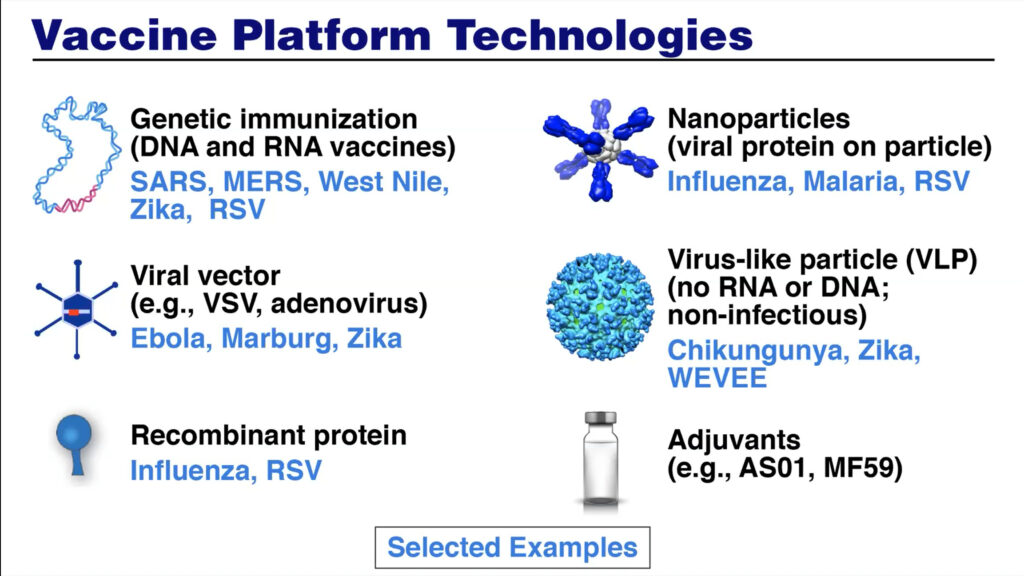
Vaccine technologies that are being used in the COVID-19 vaccine had already been developed for other vaccines, allowing for ultrarapid COVID-19 vaccine development.

Additional platforms—including mRNA, recombinant proteins, genetically engineered viral vectors— currently used for COVID-19 vaccines were previously investigated and developed for other vaccines at the NIAID Vaccine Research Center. This scientific foundation, combined with the coordination of resources and agencies and a “harmonization of goals,” allowed for rapid vaccine development. To speed up clinical trials, “the extraordinary investments that were made decades ago in putting together the HIV clinical trial network were immediately adapted,” said Fauci.

Although Fauci recognizes the challenges of distribution, he remains optimistic. “The hope is that, when we get to the end of the spring and into the summer,” said Fauci, “we can have the overwhelming majority of people vaccinated.” He estimated that “75-80% need to be vaccinated and/or protected by previous infection” for herd immunity to be achieved. He also expressed concerns about the significant proportion of Americans that are hesitant about getting the vaccine.  “We need to respect that, but we need to try and convince them of the importance, for their own safety and the safety of their family and the American public, to get vaccinated,” he added. Fauci is confident that the techniques developed will allow for easy adaptions of the current vaccines to protect against SARS-CoV-2 mutations. The development of universal coronavirus vaccines, which is necessary to stay ahead of new coronaviruses, will hopefully be the next step.

Further Readings

Fauci

Pancera M, Zhou T, Druz A, et al.

Structure and immune recognition of trimeric pre-fusion HIV-1 Env

Nature. 2014;514(7523):455-461.

Wrapp D,  Wang N, Corbett KS, et al.

Cryo-EM structure of the 2019-nCoV spike in the prefusion conformation

Science. 2020;367(6483):1260-1263.

Corey L, Mascola JR, Fauci AS, Collins FS.

A strategic approach to COVID-19 vaccine R&D

Science. 29 2020 May; 368(6494):948-950.

Giurgea LT, Han A, Memoli MJ.

Universal coronavirus vaccines: the time to start is now

NPJ vaccines. 28 May 2020;5(43).

Efficacy Studies, Part One

Speakers

Gregory Glenn, MD
Novavax

Kathrin Jansen, PhD
Pfizer

Tal Zaks, MD, PhD
Moderna

Efficacy Data Updates from Moderna’s mRNA Vaccine Candidate

Tal Zaks, chief medical officer of Moderna, gave an overview of the company’s efforts to create and distribute a COVID-19 vaccine and ensure protection against new virus variants.

Zaks pointed to three factors he believes led to the creation of a vaccine in only 11 months. First, the science already existed. The mRNA platform’s central concept, which is that “you can teach a cell how to make a protein by providing it with mRNA,” was proven and shown to create neutralizing antibodies against SARS-CoV-2. Secondly, a sense of urgency due to the pandemic’s severity allowed the clinical trials to proceed quickly but, Zaks assured, “without cutting corners.” It is an unfortunate “paradox of vaccine development” Zaks explained, that the more cases occur, “the faster you will know if a vaccine works.” Finally, he credited the speed of development to Moderna’s government stakeholders. “The unsung heroes are the FDA,” he said.

Zaks then highlighted the Phase 3 clinical trial results. The trial, which was representative of minorities and included mostly frontline workers, showed 94.1% efficacy of the vaccine. He described the adverse vaccine effects as non-severe and expected. Anaphylaxis, a life-threatening allergic reaction to injectable drugs, is of concern with all vaccines. The reaction occurs at the rate of 2.5 per one million doses of the Moderna COVID-19 vaccine administered.

Zaks also discussed new Covid-19 variants. Of most concern are viruses with mutations on the receptor binding domain or the N-terminal domain, which may “improve the virus ability to escape the immune response.” Researchers saw a drop in robustness of the vaccine in the B.1.351 variant, but the vaccine remained effective. Moderna will continue to monitor mutations over time while they research booster shots to combat new variants.

Efficacy Data Updates from the Pfizer-BioNTech mRNA Vaccine Candidate

According to Kathrin Jansen, senior vice president of vaccine research and development at Pfizer, a vaccine that relies on an mRNA platform has many advantages. For example, mRNA vaccines do not use viral foreign proteins, making them safe and easy to produce at scale. Also, they generate a broad immune response, which is helpful because our knowledge of what immune responses best correlate with protection is still limited. Jansen presented data indicating that the breakthrough Pfizer-BioNTech mRNA vaccine is extremely safe and 95% effective, but she also highlighted the many challenges that lie ahead.

For instance, while the clinical trials conducted in Germany and the US captured a diverse sample from a range of ages and ethnicities, critical segments of the population were excluded due to age or clinical conditions. Clinical trials with children 12-15 are currently underway, but trials with younger children will have to wait. Pfizer-BioNTech’s vaccine needs to be kept between -80°C and -60°C, complicating storage and distribution. Jansen noted they are “making progress in a vaccine formulation that won’t require such cold temperatures.”

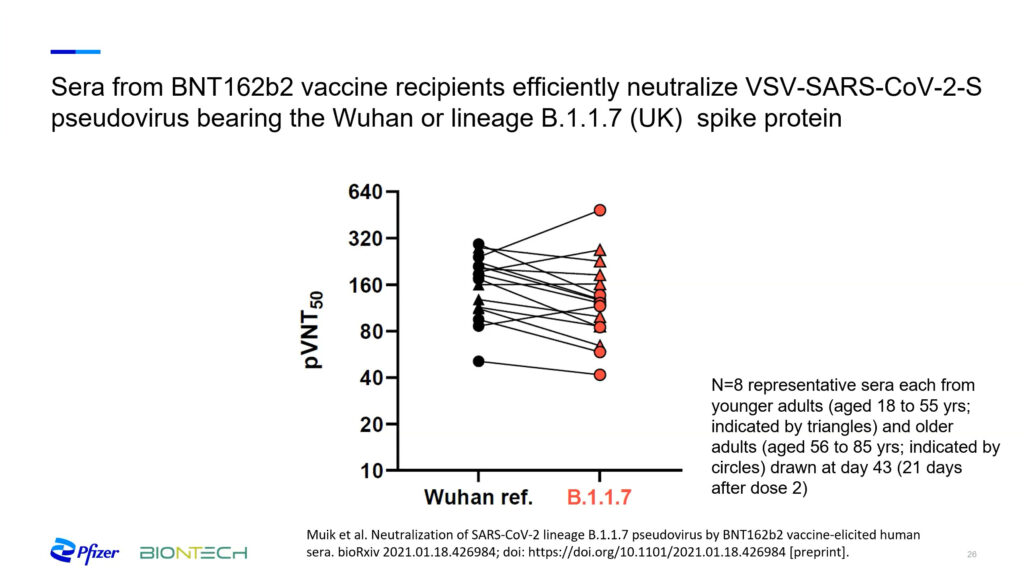
Data from a pseudovirus neutralization assay suggesting that sera from participants treated with the Pfizer-BioNTech vaccine can efficiently neutralize SARS-CoV-2 lineage B.1.1.7 (the variant first detected in the UK).

Highly transmissible variants that have emerged in the United Kingdom and South Africa pose what is perhaps the biggest challenge. These variants include mutations in the spike protein that Pfizer-BioNTech’s vaccine uses as a target. One of the approaches they use to research efficacy against the new variants involves creating synthetic viruses that express the mutations of interest. Then, they examine the neutralizing potential of blood sera extracted from vaccinated participants. Jansen said that data from these studies suggests that “this vaccine will continue to perform well against at least the variants that have appeared here.” However, she cautioned that this data “needs backing up by vaccine efficacy surveillance as well as animal models.”

Further Readings

Jansen

Walsh EE, Frenck RW Jr, Falsey AR, et al.

Safety and Immunogenicity of Two RNA-Based Covid-19 Vaccine Candidates

N Engl J Med. 17 Dec 2020;383(25):2439-2450.

Polack FP, Thomas SJ, Kitchin N, et al.

Safety and Efficacy of the BNT162b2 mRNA Covid-19 Vaccine

N Engl J Med. 31 Dec 2020;383(27):2603-2615.

Xie, Xuping et al.

Neutralization of N501Y mutant SARS-CoV-2 by BNT162b2 vaccine-elicited sera

bioRxiv. 7 Jan. 2021, Preprint.

Efficacy Data Updates from Novavax’s Protein-based Vaccine Candidate

Gregory Glenn gave an update on the progress of Novavax’s protein-based COVID-19 vaccine, which was not available to the public at the time of his presentation. Novavax’s recombinant nanoparticle technology produces a full-length prefusion spike protein. The protein is combined with a saponin-based Matrix-M™ adjuvant and encoded with the Sars Cov-2 spike, and produced in insect cells. Similar techniques have proven successful in Novavax influenza vaccines. Importantly, the vaccine can remain stable in a refrigerator for up to three months, lowering distribution and storage costs.

Glenn, the president of research and development at Novavax, explained that in the pre-clinical package, researchers showed protection in the lower and upper airways of Rhesus Monkeys and produced an antibody response in a trial with 131 clinically ill convalescent subjects. At the time of the presentation, Novavax was conducting its Phase 3 US/Mexico trial and did not have results. However, Glenn was able to report the results of trials in the UK and South Africa. In the UK, researchers found that the vaccine was effective at 94% for the ancestral Covid-19 strain, but decreased to 86% for the UK strain. In South Africa, where the new strain became dominant during the trial, the efficacy decreased but remained around 60%.

Based on these results, Novavax has started developing vaccines for the new variants. Glenn predicts that booster and bivalent vaccines “may become part of the annual influenza immunization regime.” The vaccines are even more important and urgent, Glenn argued, because their South African data showed that “herd immunity from previous infection is not working to protect against the new variant strain.” Glenn expressed optimism about their ability to scale up production, saying that “over the past year, we went from nothing to having eight manufacturing sites in seven countries.”

Further Readings

Glenn

Bangaru S, Ozorowski G, Turner HL, et al.

Structural analysis of full-length SARS-CoV-2 spike protein from an advanced vaccine candidate

Science. 27 Nov 2020;370(6520): 1089-1094.

Keech C,  Albert G, Cho I, et al.

Phase 1-2 Trial of a SARS-CoV-2 Recombinant Spike Protein Nanoparticle Vaccine

N Engl J Med. 2020;383(24):2320-2332.

Efficacy Studies, Part Two

Speakers

Sara Gilbert, PhD
University of Oxford

Hanneke Schuitemaker, PhD
Janssen Vaccines and Prevention B.V.

Xuefeng Yu, PhD
CanSino Biologics

Update on ChAdOx1 nCoV-19/AZD1222

The Oxford-AstraZeneca adenovirus vaccine has an important advantage that distinguishes it from other vaccines currently on the market: it can be stored in a regular refrigerator for up to six months. Sarah Gilbert, professor at the University of Oxford and head of the team that developed the vaccine, emphasized the vaccine’s affordability, explaining that her team envisioned it as “a vaccine for the world.” The Oxford-AstraZeneca vaccine is being tested in clinical trials in many countries. “It was important to us to get the information on how the vaccine behaves in different populations across the world,” she said.

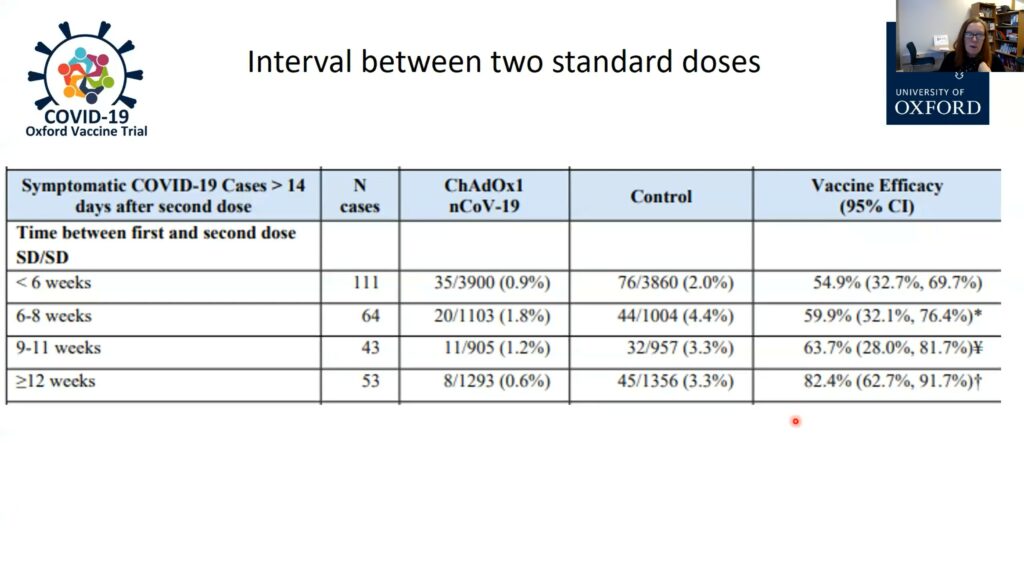
An early report indicated that the two-dose Oxford-AstraZeneca vaccine was about 70% efficacious at preventing COVID-19. Closer examination of the data, however, led Gilbert and her team to realize that the timing of the second dose was critical: efficacy was only 50%-60% when doses were administered less than two months apart, but waiting three months boosted efficacy levels up to 82.4%. Waiting three months to give the second dose is now the policy in the UK, the first country to grant emergency authorization for the vaccine. Gilbert and her team also found that the first dose alone is highly efficacious (76%) at protecting against COVID-19, but only for the first three months. This is enough time to reduce the risk of people contracting the disease while they wait for the booster dose.

The interval between the first dose and the booster dose of the Oxford-AstraZeneca vaccine critically determines its efficacy.

Gilbert also suggested the Oxford-AstraZeneca vaccine may be able to help curb the transmission of the virus. During clinical trials in the UK, nasal swabs of all participants were collected weekly. The scientists found 67% fewer positive samples in the vaccinated group compared to the placebo group, and that this included asymptomatic cases. The Oxford-AstraZeneca vaccine has obtained emergency approval in 23 countries so far, and the plan is to manufacture 3 billion doses by the end of 2021.

Further Readings

Efficacy Data Updates from CanSino Biologics’ Viral-Vector Vaccine Candidate

Xuefeng Yu, chairman of CanSino Biologics, provided an overview of their COVID-19 vaccine and described the China-based company’s efficacy and safety research. The CanSino Biologics’ Ad5-nCov vaccine is built on an adenovirus-based viral vector platform, a mechanism similar to the one used in the Oxford-AstraZeneca and Johnson & Johnson vaccines. Yu announced that, pending final analysis of its Phase 3 clinical trial, the company plans to file for emergency authorization in several countries soon.

The Ad5-nCov vaccine was approved for limited use by the Chinese military in June 2020. Phase 1 and 2 clinical trials conducted in Wuhan indicated the vaccine is safe and induced significant immune responses after a single dose. Over 150,000 members of the Chinese military have received a dose of the vaccine. “We haven’t had any severe adverse events in that population,” said Yu before explaining that efficacy is difficult to assess in China because “there are really no cases right now.”

CanSino Biologic’s Phase 3 clinical trial for the vaccine has been taking place in five countries since September, with Pakistan and Mexico providing the majority of the 40,000 participants. Yu explained the clinical trial results are not available to the company, which is still blinded to the treatment groups. However, recent data analyses by an independent committee has declared the vaccine meets primary safety and efficacy criteria.

The Phase 3 clinical trial for the Ad5-nCov vaccine differs from others in two critical ways. First, the vaccine’s long-term efficacy will be tested by tracking a subset of participants for one year. They are also testing a two-dose trial that includes children as young as six years old, but that data is not yet available.

Further Readings

Janssen’s Effort in the Development of an Ad26 Based COVID-19 Vaccine

The COVID-19 vaccine developed by Janssen, a pharmaceutical division of Johnson & Johnson, has just been authorized for emergency use in the US. Hanneke Shuitemaker, head of Viral Vaccine Discovery at Janssen Vaccines & Prevention B.V., explained that their Ad26.COV2.S vaccine relies on a proprietary adenovirus technology that the European Commission first approved in July 2020, in the context of an Ebola vaccine.

Phase 1 and 2a clinical trials recruited adults of all ages, including 375 participants over 65 years old. These trials revealed that the Ad26.COV2.S vaccine is safe, and most side effects were mild or moderate. The participants who were more likely to experience adverse events were younger participants and those who received the higher dose of the vaccine. Notably, both dose levels demonstrated similar immunogenicity in all age groups. Hence, Shuitemaker and her team decided to test the lower dose of their Ad26.COV2.S vaccine in Phase 3 clinical trials.

Last September, Janssen launched a Phase 3 clinical trial called ENSEMBLE, which tested the efficacy of a single dose regimen across the US, South Africa, and Latin American countries. The ENSEMBLE trial revealed that a single-dose of the Ad26.COV2.S vaccine had a 66% overall efficacy at preventing moderate to severe COVID-19. The vaccine was highly efficacious against severe disease (85%), and it provided 100% protection against COVID-19-related hospitalization and death. In the South African trial, where 97% of the infections from which SARS-CoV-2 sequence data was available, involved the new B.1.351 variant, the vaccine showed the same efficacy levels against severe disease and hospitalizations.

Although Janssen’s vaccine is not quite as efficacious against moderate COVID-19 as other vaccines already on the market, it is highly efficacious against severe COVID-19, hospitalization, and death. In addition, the one-dose vaccine does not need to be stored in ultracold temperatures and confers protection against new variants. “Overall, we are very happy with this outcome,” Shuitemaker said. “At the beginning of this journey, we had established that a single-dose vaccine with 70% efficacy would be a tremendous tool in the fight against this pandemic,” she added. A second Phase 3 clinical trial (ENSEMBLE 2), which tests the efficacy of a two-dose vaccine regimen, is currently underway.

Further Readings

Schuitemaker

Mercado NB, Zahn R, Wegmann F, et al.

Single-shot Ad26 vaccine protects against SARS-CoV-2 in rhesus macaques

Nature. 2020; 586(7830):583-588.

Sadoff J, Le Gars M, Shukarev G, et al.

Interim Results of a Phase 1-2a Trial of Ad26.COV2.S Covid-19 Vaccine

N Engl J Med. 13 Jan2021 NEJMoa2034201.

Outbreak Predictions and Future Considerations

Speakers

Kevin Olival, PhD
EcoHealth Alliance

Stanley Plotkin, MD
University of Pennsylvania

Melanie Saville, MD
CEPI

Challenges to Prediction and Prevention of the Next Pandemic Zoonosis

According to Kevin Olival, vice president of research at EcoHealth Alliance, the threat of emerging infectious diseases has been rising for the last 70 years. Most of these infectious diseases are viral and linked to interactions between humans and wildlife. He explained that wild animals may host a diversity of viruses and that some of these viruses have the potential to infect human cells, inducing what is known as zoonotic diseases. Identifying the viruses that are more likely to jump from other species to humans and interrupting interactions between humans and the animals that carry those viruses is a challenging yet promising strategy to prevent future pandemics. In fact, two years before the COVID-19 pandemic emerged, Olival and his team published a study warning about villagers in the Yunnan province (China) being highly exposed to bats that carried SARS-related coronaviruses.

Not surprisingly, predicting where a novel infectious disease will emerge is very difficult. For instance, cataloguing all the viruses that can potentially infect each animal species involves intensive fieldwork. “Often people make the analogy with weather prediction, which was very coarse 50 years ago and we couldn’t see hurricanes coming weeks in advance,” Olival said of this nascent and complex science.

Given the multi-disciplinary and global nature of this kind of research, a centralized data platform to allow researchers to share and combine their findings will be critical. “These disparate data sets need to be put together,” said Olival.

Finally, he advocated for the need to shift policy towards pandemic prevention. It’s critical to get “policymakers to realize that there are other ways to deal with emerging infectious diseases than waiting for them to emerge and then responding,” said Olival. Once a high-risk hotspot has been identified, low-tech behavioral interventions to prevent human-animal contact may be all that is need to prevent a potentially devastating global pandemic.

Further Readings

Olival

Wang N, Li S-Y, Yang X-L, et al.

Serological Evidence of Bat SARS-Related Coronavirus Infection in Humans, China

Virologica Sinica. 2018 Feb;33(1):104-107.

Allen T, Murray KA, Zambrana-Torrelio C, et al.

Global hotspots and correlates of emerging zoonotic diseases

Nature communications. 24 Oct 2017;8(1):1124.

Latinne A, Hu B, Olival KJ, et al.

Origin and cross-species transmission of bat coronaviruses in China

Nature communications. 25 Aug 2020;11(1):4235.

United Nations Environment Programme and International Livestock Research Institute.

Preventing the Next Pandemic: Zoonotic diseases and how to break the chain of transmission

6 Jul 2020.

Lessons Learned from COVID-19 Vaccine Development for Future Pandemic Preparedness

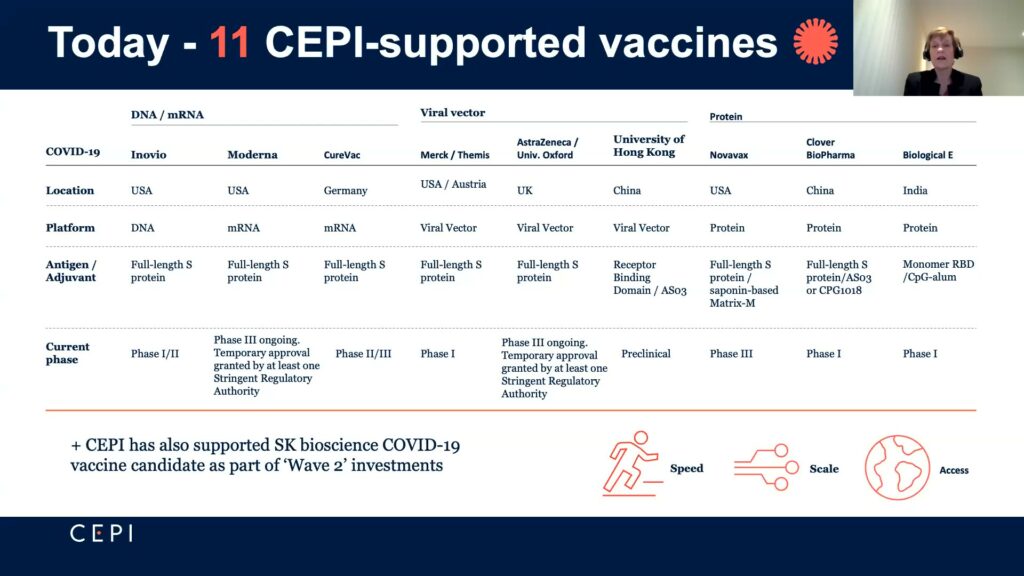
Melanie Saville, director of vaccine research and development at the Coalition for Epidemic Preparedness Innovations (CEPI), outlined the organization’s journey through COVID-19 vaccine development and lessons learned. Created in 2017 in response to the Ebola outbreak in West Africa, CEPI seeks to “accelerate vaccines for emerging infectious diseases and ensure equitable access to the vaccines,” said Saville. Prior to COVID-19, CEPI focused mainly on MERS and rapid response platforms like mRNA. This put CEPI on good footing when they shifted focus to COVID-19 at the start of January 2020.

By April of 2020, CEPI had raised over $1.5 billion in funding and entered partnerships with nine entities using varied strategies to develop COVID-19 vaccines. “Speed, scale and access,” the career virologist said, were the main criteria in determining investments. For speed, they carefully chose their partners and made early investments to ensure manufacturing capabilities to meet their accessibility goals of 2 billion vaccine doses worldwide by the end of 2021. That they invested in a portfolio of vaccines meant that if a vaccine failed, facilities could then be used for another vaccine. This manufacturing investment also helped with scalability, which is a problem particularly for smaller companies that have to resolve supply chain issues with sufficient materials and facilities.

CEPI joined the ACT Accelerator, established by the World Health Organization, to speed-up development of vaccines, diagnostics, and therapeutics and launched their taskforce, “Agility,” to better track variants. Saville sees these coalitions and organizations as a model and foundation for future pandemic responses. Overall, she’s optimistic. The pandemic has created a global desire for countries to invest and work together. “We have seen a revolution in vaccinology,” said Saville.

The Coalition for Epidemic Preparedness Innovations (CEPI) adopted a portfolio approach to vaccine development, supporting the development of many different vaccine types summarized in this slide.

Further Readings

Saville

Lurie N,  Saville M, Hatchett R, Halton J.

Developing Covid-19 Vaccines at Pandemic Speed

N Engl J Med. 2020;382(21): 1969-1973.

Thanh Le T, Andreadakis Z, Kumar A, et al.

The COVID-19 vaccine development landscape

Nat Rev Drug Discov. 2020 May;19(5): 305-306.

The Plague Year of 2020 and Its Effect on Vaccinology

In the final talk of the symposium, vaccinologist Stanley Plotkin reflected on how SARS-CoV-2 has impacted vaccinology. He praised the “all hands on deck” approach that we witnessed in 2020, with experts around the world getting involved and collaborating to develop multiple highly effective vaccines. Plotkin was also optimistic about the effect that the pandemic has had on vaccine acceptance. “Now, most people in all countries are pleading for vaccines, and to me that is a positive thing,” he said.

He also highlighted the importance of virology and other basic sciences. He explained that a handful of coronavirus researchers did the work that became the cornerstone of COVID-19 vaccines. According to Plotkin, “we need to support all those basic sciences, so that when we need something practical, we have the information we need to start working on a solution.”

Plotkin also listed a series of unknowns that researchers will need to figure out going forward. For example, the issue of mucosal responses to the vaccine. SARS-CoV-2 is a mucosal pathogen that takes hold in the nasal pharynx before spreading to the lungs and other organs. It is still unclear to what extent the current vaccines prevent mucosal replication. “Understanding how well they [prevent mucosal replication] has terribly important epidemiological implications regarding herd immunity and the spread of the disease,” he said.

Due to the tendency of SARS-CoV-2 to mutate, Plotkin said we have to face the possibility of a yearly vaccination. He advocated for the creation of regional labs that can monitor and quickly report on mutations across the world, something that is done with influenza. He also emphasized that we need to learn more about veterinary viruses, as they “have caused problems, are causing problems, and will cause problems.”

Further Readings

Plotkin

WHO Ad Hoc Expert Group on the Next Steps for Covid-19 Vaccine Evaluation, et al.

Placebo-Controlled Trials of Covid-19 Vaccines – Why We Still Need Them

N Engl J Med. 2021 Jan 14;384(2):e2.

Plotkin SA.

Vaccination Against Severe Acute Respiratory Syndrome Coronavirus 2

J Pediatric Infect Dis Soc. 10 Nov 2020;9(5): 517-518.

Plotkin SA, Halsey N.

Accelerate COVID-19 Vaccine Rollout by Delaying the Second Dose of mRNA Vaccines

Clin Infect Dis. 27 Jan 2021;ciab068.

Plotkin S.

History of vaccination

Proc Natl Acad Sci U S A. 2014 Aug 26;111(34):12283-7. Epub 2014 Aug 18.

A Closer Look at the Next Moon Landing

Overview

We’re going to the Moon—again! In the next decade, NASA’s Artemis program will first orbit and then land on the lunar surface. What may seem like a rerun from the 1960s is designed to establish a more permanent human presence on the Moon. This will be used for both scientific and private aims, and it may serve as a stepping-stone to Mars. In this eBriefing, we’ll learn more about what’s planned, what we gain from human space exploration, and how we establish international agreements off-planet.

In this eBriefing, You’ll Learn:

  • NASA’s plans for the Artemis mission
  • Open research questions that will be addressed through exploration in deep space
  • Which international agreements are currently in place to help navigate governance in space
  • How space exploration affects life on Earth

Speakers

Timiebi Aganaba-Jeanty, PhD, LLM
Arizona State University

Dina Contella
NASA

Dorit Donoviel, PhD
Translational Research Institute for Space Health, Baylor College of Medicine

Moderator:

Kari Fischer, PhD
The New York Academy of Sciences

Our Lunar Future

Timiebi Aganaba-Jeanty, PhD, LLM

Arizona State University

Timiebi Aganaba, PhD, LLM, is an assistant professor in the School for the Future of Innovation in Society with a courtesy appointment at the Sandra Day O’Connor College of Law. She is a fellow at the Centre for International Governance Innovation (CIGI) based in Waterloo, Ontario, Canada. Dr. Aganaba was previously executive director of the World Space Week Association, coordinating the global response to the United Nations 1999 declaration that World Space Week should be celebrated from Oct 4-10 annually. Dr. Aganaba was a space industry consultant for the leading space analyst firm in Montreal, Canada, a teaching associate at the International Space University in France, an associate at the Nigerian law firm Kayode Sofola and Associates, and a trainee legal officer at the Nigerian Space Research and Development Agency. In 2017, Dr. Aganaba was the recipient of a Space Leaders Award from the International Astronautical Federation (IAF). Her doctorate received the George and Ann Robinson Award for advanced research capabilities.

Dina Contella

NASA

Dina Contella’s tenure at NASA began while she was still in school through the cooperative education program in 1990. After graduating from Texas A&M University, Contella worked as an astronaut instructor specializing in the Shuttle onboard computers and software, as well as entry and landing navigation aids. Beginning in 1995, she served as a space shuttle and space station flight controller and instructor responsible for planning, training, and executing spacewalks. She subsequently served as the lead Extravehicular Activity Officer (EVA) liaison to Russia during early station construction. After the Columbia accident, she was instrumental in developing shuttle Thermal Protection System (TPS) repair tools and techniques. And in her nine years as Mission Control Flight Director, Contella oversaw the well-being of the International Space Station, space shuttles, and their crews for a host of missions, leading teams of people operating vehicle systems and guiding astronauts building the space station, performing research, and maintaining it both inside and out. Now the Gateway Program’s manager for operations integration and utilization, she uses her experience in operational leadership and risk management to develop how to best use the Gateway’s capabilities and plan for astronaut missions on the Moon.

Dorit Donoviel, PhD

Translational Research Institute for Space Health
Baylor College of Medicine

As director for the Translational Research Institute for Space Health (TRISH), Dorit Donoviel, PhD, leads a $0.25B NASA-funded innovation R&D program that finds, funds, and facilitates disruptive human health and performance solutions for astronauts traveling in deep space. In her previous role as deputy chief scientist of the National Space Biomedical Research Institute (NSBRI), Dr. Donoviel led both domestic and international research programs that bridged academic, industry, and government resources to deliver fast and cost-effective tangible results. She is the recipient of multiple honors, including recognition from NASA and the NSBRI Pioneer Award. A published research scientist and invited speaker, Dr. Donoviel is Associate Professor in the Department of Pharmacology and Chemical Biology and the Center for Space Medicine at Baylor College of Medicine (BCM). Before joining BCM, she led metabolism drug discovery programs at Lexicon Pharmaceuticals for eight years. Dr. Donoviel completed a Human Frontiers postdoctoral fellowship at Mount Sinai Hospital in Toronto, Canada; holds a Biochemistry doctorate from the University of Washington in Seattle, WA; and received her baccalaureate degree in Biochemistry and Cell Biology from the University of California, San Diego in La Jolla, CA.

Kari Fischer, PhD

New York Academy of Sciences

Kari Fischer, PhD, is a Senior Program Manager for Life Sciences at the Academy, facilitating the planning and execution of both scientific symposia and programming for the general public. Her portfolio of programming spans biomedicine—from microsatellite DNA expansions to hearing restoration to cancer metabolism. Kari has also led several events on the interface between science and society, including a series of bioethics colloquia on randomized controlled trials, big data in healthcare, and conflict of interest; and several programs on science misinformation and science engagement with the public. Her contributions were featured at South by Southwest 2019 in the panel, “Preventing the Cambridge Analytica of Health Data.” Her science writing has appeared in The Washington Post, The Scientist, and The New York Academy of Sciences Magazine. Dr. Fischer joined the Academy in 2016 after completing her PhD in Cell and Developmental Biology at Weill Cornell Medicine, where she studied breast cancer metastasis and the lung tumor microenvironment. For her work in lung cancer, she was awarded the Ruth L. Kirchstein National Research Service Award Individual Predoctoral Fellowship by the National Institutes of Health. She received the Julian R. Rachele Prize for Outstanding Graduate Student Research for her breast cancer metastasis study in Nature, an article with over 500 citations since its publication. Dr. Fischer’s undergraduate degree in Biochemistry and Molecular Biology is from the University of Massachusetts, Amherst.

Further Readings

Solutions to Reduce Systemic Inequities in Academia

Overview

According to the National Center for Education Statistics, white males made up 53% of all full-time professors in 2018. And while the “STEM pipeline” is becoming more diverse–more than 40% of women and roughly 15% of people of color receive their PhDs in STEM fields–colleges and universities need to implement inclusive policies to initiate change on a large scale.

On October 9, 2020, the New York Academy of Sciences hosted a webinar with Georgetown University Medical Center affiliates to share their progressive efforts to decrease systemic inequities and improve workplace culture at their institution. In 2019, the university launched the Bias Reduction and Improvement Coaching (BRIC) program to raise awareness of unconscious bias and attenuate systemic barriers at institutions with the hope of promoting diversity and inclusion in STEM.

Highlights

  • Bias impacts application, hiring, and promotion processes, as people make decisions based on shortcuts, unconscious preferences, and assumptions.
  • The Bias Reduction and Improvement Coaching (BRIC) program brings together a group of individuals from various demographic backgrounds for training in the skills and language needed to raise awareness of bias.
  • This “train the trainer” model empowers people to feel confident starting conversations about prejudice and how to mitigate bias in their respective departments and workplaces.

Speakers

Susan Cheng, EdLD, MPP
Georgetown University Medical Center

Kristi Graves, PhD
Georgetown University Medical Center

Caleb McKinney, PhD, MPS
Georgetown University Medical Center

Reducing Systemic Inequities in Academia

Unconscious Bias in STEM

Search committees looking to fill a job should be as objective as possible, especially when studies have shown that teams made up of diverse people are more innovative and high-performing. However, people rely on mental shortcuts and assumptions when making hiring decisions. They often use reflexive habits and exhibit unconscious preferences without realizing it.

Caleb McKinney, who trained as a microbiologist, transitioned to science education, and is now an Assistant Professor and Assistant Dean for Graduate and Postdoctoral Training and Development, related this phenomenon of reflexive habits to a “hot pot.” You learn from previous experience to pull your hand away when a stove is hot. With the same mindset, you can use your prior knowledge to make quick assumptions and form preferences about someone. He urged everyone to take an Implicit Association Test online to learn more about unconscious bias.

But how does conscious and unconscious bias impact STEM community development? Assistant Professor and Senior Associate Dean for Diversity, Equity, and Inclusion, Susan Cheng, noted one example. STEM emphasizes innate intelligence over hard work, but in letters of recommendation, professors are more likely to refer to male scientists as “brilliant,” whereas female scientists are “productive.” The way a job description is written says a lot about what admissions may be looking for in a student or what faculty may desire during recruitment. Search committees may deem a person “not a good fit” for the institution. The only way to combat this is to use checkboxes to ensure job description criteria are followed systematically. “Implicit biases are always in the background, and you need to manage them actively,” said Cheng.

Kristi Graves, a clinical health psychologist and Associate Professor of Oncology, explained that bias also affects STEM professionals’ upward trajectories. For instance, scholarly productivity metrics are very numeric and usually include the number of papers published, impact factor for the journal in which you’ve published, and the amount of grant funding you’ve obtained. But faculty members don’t have access to the same opportunities. A male professor going to another male for a collaboration (because he is like him) is an example of similarity bias.

It’s critical to note that Black, Indigenous, People of Color (BIPOC) make up a small percentage of faculty members. BIPOC faculty members often act as the representative BIPOC for diversity panels and mentoring groups, which takes time away from work and research. And the amount of time spent on essential work and research affects prospects for promotions. Graves believes that hiring committees should have explicit discussions about implicit bias throughout the year to increase faculty diversity. “Everyone has bias,” said Graves. “The trick is to try to become aware of the bias, and then when you notice it, you do something about it so the negative impact that flows from that bias is not sustained or perpetuated.”

Although many colleges and universities have increased awareness and implemented more inclusive policies, the culture has not shifted enough to facilitate a more diverse institutional community. Even representative images on posters and brochures should indicate that a university values different types of people in STEM and that the depicted individuals can serve as role models for scientists who want to know what the institution values.

Understanding the BRIC Program

All three panelists have been heavily involved in the Bias Reduction and Improvement Coaching (BRIC) program at Georgetown University. The program leaders selected people from different backgrounds in various departments across the university for the program. Supervisor or departmental approval was required to participate since the program would take away hours spent on “numeric success metrics.” The inaugural group of 27 coaches—five of whom are coach leads—went through four, three-hour immersive sessions held quarterly. During these meetings, which covered the science of bias and its impact on hiring, promotions, retention, and overall workplace culture, participants learned evidence-based strategies to raise awareness and reduce discrimination. Participants led presentations and department talks on what they learned and received feedback from the coach leads.

The program’s goal is to have many people who can confidently initiate conversations about bias in their workplace. It is designed to establish training across the medical center by providing a faculty learning environment, explained Cheng. The messenger is so important because having the information come from a colleague you know and trust to understand the institutional context you work in is invaluable.

Figure 1. The BRIC program schedule included three-hour sessions, with smaller pod meetings in between, and presentation feedback for the participants before disseminating the information to colleagues.

McKinney participated in the BRIC program and pinpointed three main attributes of the initiative. The training provided self-knowledge to reflect upon one’s personal bias, leadership skills to feel equipped to speak up about bias when necessary, and the ability to communicate these strategies when training others. Participants were asked to reflect on their time in the program and took surveys to assess its impact.  Additionally, audience members from BRIC coaches’ presentations were surveyed to see if it was scaled to the department, and follow-ups were conducted to see if departments made any significant changes.

Program Outcomes

Although the initial training was geared toward faculty and staff, post-docs and graduate students organized bias reduction workshops and helped create presentations for their departments. Cheng believes that many students have already developed these skills, while faculty and staff are trying to catch up by participating in the available programs. In addition, departments are asking for workshops on microaggressions, anti-racism, and bias. Graves explained that the program built tremendous confidence for those presenting the material in a safe and confidential space. She also shared a reflection from a participant in the program who felt BRIC was “an effective approach to raise awareness about unconscious beliefs and attitudes and to discover biases in a non-confrontational manner.”

By bringing in participants from different sections of the medical center, the BRIC program facilitated collaboration between faculty and staff from various departments who would not typically work together. This teamwork increased cognitive diversity and allowed participants to build on each other’s thoughts in a broad group discussion. McKinney emphasized that BRIC fostered peer mentorship and feedback, and helped strengthen a sense of community throughout Georgetown University Medical Center.

He was impressed with how much he learned about himself while participating in the program. “To be truly empathetic, you have to be self-aware. You have to recognize and challenge the assumptions you may have about people and situations,” McKinney said. “The BRIC programs allows you to put yourself in other people’s shoes. You learn from each other how people’s experiences and backgrounds shape their individual context, and that’s so important for building empathy.”

Metrics for Success

The panelists shared an essential set of standards that needed to be met for the BRIC program to be successful. Most importantly, improving diversity requires commitment from everyone. That commitment starts with raising awareness and then addressing the issues to create a sense of belonging in the workplace. “Once people are more aware of these biases and start to engage in mechanisms to reduce those biases, you can really [assess an] environment that’s hostile and not welcoming,” said Cheng.

Graves sought feedback from leadership at Georgetown before starting the program. “Until you enact specific behaviors and policy changes, it doesn’t mean a lot,” she said.  The institution is responsible for creating an inclusive environment for trainees, post-docs, and faculty and ensuring that people have equal opportunities to succeed. Establishing an inclusive environment doesn’t have to be a top-down method; valuable feedback can come from anyone.

Cheng also highlighted the importance of decisions and transparency. Critical decision making, which includes communicating news and defining expectations and limitations, should be collaborative. For example, department chairs should define a clear set of expectations, goals, and values before a selection process, and the selection committee should routinely review those criteria. “In STEM, we should be really good at creating objective definitions of how we know when we’ve made our goal,” said Graves.

In addition, all employees should periodically revisit training on inclusion and bias, not just at the onset of the job. McKinney advocated for structured mentorship for minority groups, including cross-cultural mentoring relationships. “Mentors from majority backgrounds have an opportunity to shape retention by fostering these welcoming environments for junior individuals to succeed,” he said. Mentorship also includes facilitating career identities for graduate students and post-docs.  While it is critical to have support and map out your trajectory on an academic career path, mentors can also highlight opportunities in industry and focus on broad career paths.

The Future of BRIC

Bias awareness is critical now, when many interviews and meetings are being held virtually due to the pandemic. Graves saw this as a positive because it allows institutions to create new networks and reach students early on in their academic trajectories. They can reach a wider talent pool, and recruit candidates from various backgrounds who were not previously reached. Companies should also reassess their open opportunities because the way job descriptions are written and where they are posted plays an essential role in who applies. Equal opportunity statements at the end of job descriptions show candidates that a company values diversity and inclusion.

Georgetown University is not the only institution spearheading programs for systemic inequity awareness. Cheng praised numerous universities, such as UCLA, UCSF, and The Ohio State University, who have been at the forefront of implicit bias research and training. All three panelists are eager to continue the BRIC program. They hope that by scaling this bias awareness across Georgetown, there will always be individuals on committees who have been trained and can challenge their colleagues’ assumptions.

Further Readings

Misc

Dutt K, Pfaff DL, Bernstein AF, et al.

Gender differences in recommendation letters for postdoctoral fellowships in geoscience

Nat Geosci. 2016; 9(11):805-808.

Banaji, M. R., & Greenwald, A. G.

Blindspot: Hidden biases of good people.

Delacorte Press. 2013

Harvard University.

https://implicit.harvard.edu/implicit/

Implicit Association Test. Project Implicit.

Walker L, Sabin JA.

http://kirwaninstitute.osu.edu/research

Understanding Implicit Bias. 2015.

Unconscious Bias in Interviewing and Letters of Recommendation

https://som.georgetown.edu/diversityandinclusion/knowyourbias/biasintheworkplace/

Georgetown University School of Medicine

Know Your Bias

https://som.georgetown.edu/diversityandinclusion/knowyourbias/

Georgetown University School of Medicine.

Cobb J, Ali W.

https://www.aspenideas.org/podcasts/how-to-talk-about-race-and-racism

How to talk about Race and Racism. Aspen Ideas.

Advances in AI for Materials

Overview

Previous conferences and workshops covering artificial intelligence (AI) for Materials Science have mainly focused on introducing AI into materials simulations, which is only the first step in new materials discovery. These efforts have largely ignored AI’s promise for materials synthesis and translating research into high-volume industrial production.

On October 6-7, 2020, the New York Academy of Sciences hosted the AI for Materials symposium to provide a broader perspective on leveraging the benefits of AI in material simulations, experiments, and development efforts for high volume production. The symposium brought together materials scientists, industry experts, and AI researchers to cover the application of AI throughout the entire life cycle of new materials, from lab discovery to industrial production. These leaders also shape future research directions, identify urgent issues in this rising field, and foster interdisciplinary collaboration opportunities.

In This eBriefing, You’ll Learn

  • How machine learning is being applied to understand the physical processes behind materials science
  • Approaches to improve the data infrastructures used in materials science research to facilitate easier integration and promote a better data sharing environment
  • How AI is being applied to address industry-related issues in materials science, including the scalability of materials production from the lab to the factory and the synthetic and catalytic routes of new materials

Speakers

Muratahan Aykol, PhD
Toyota Research Institute

Léon Bottou, PhD
Facebook AI Research

Carla Gomes, PhD
Cornell University

Philipp Harbach, PhD
Merck KGaA

Michael Helander, PhD
OTI Lumionics

Phillip M. Maffettone, DPhil
Brookhaven National Laboratory

Nobuyuki N. Matsuzawa, PhD
Panasonic Corporation

Greg Mulholland
Citrine Informatics

Elsa Olivetti
MIT

Rampi Ramprasad, PhD
Georgia Institute of Technology

Tim Robertson, PhD
Schrödinger, Inc.

Sam Samdani, PhD
McKinsey & Company

Matthias Scheffler, PhD
The Fritz Haber Institute

Rama Vasudevan, PhD
Oak Ridge National Laboratory

James Warren, PhD
National Institute of Standards and Technology

Event Sponsors

AI Initiative Program Sponsor

Additional Sponsor

Promotional Partners

Physics and Causality in Machine Learning

Speakers

Léon Bottou, PhD
Facebook AI Research

Carla Gomes, PhD
Cornell University

Rama Vasudevan, PhD
Oak Ridge National Laboratory

Léon Bottou, PhD

Facebook AI Research

Léon received a Ph.D. in Computer Science from Université de Paris-Sud. His research career has taken him to AT&T Bell Laboratories, AT&T Labs Research, NEC Labs America, Microsoft, and now Facebook AI Research. The long-term goal of Léon’s research is to understand and replicate human-level intelligence. Because this goal requires conceptual advances that cannot be anticipated, Léon’s research has followed many practical and theoretical turns, including neural networks applications, stochastic gradient learning algorithms, statistical properties of learning systems, computer vision applications with structured outputs, and theory of large-scale learning. Léon’s research aims to clarify the relation between learning and reasoning, with focus on the many aspects of causation.

Carla Gomes, PhD

Cornell University

Carla is the Ronald C. and Antonia V. Nielsen Professor of Computing and Information Science and the Director of the Institute for Computational Sustainability at Cornell University. She received a Ph.D. from the University of Edinburgh. Her research area is artificial intelligence with a focus on Computational Sustainability. Computational Sustainability aims to develop computational methods to help solve some of the key challenges concerning environmental, economic, and societal issues to help put us on a path towards a sustainable future. Carla is a Fellow of the Association for the Advancement of Artificial Intelligence (AAAI), a Fellow of the Association for Computing Machinery (ACM), and a Fellow of the American Association for the Advancement of Science (AAAS).

Rama Vasudevan, PhD

Oak Ridge National Laboratory

Rama is the Research and Development Associate at the Center for Nanophase Materials Sciences, Oak Ridge National Laboratory. His research focuses on utilizing scanning probe microscopy (SPM) at the mesoscopic and atomic level to unearth structure-property relations in various systems, including ferroics, manganites, and others. In parallel, as vast amounts of imaging and spectroscopic data are gathered, he develops and implements tools from existing computational science literature towards tackling materials science problems and unearthing physics from deep data analysis of SPM-acquired datasets. Rama received his PhD in Materials Science from the University of New South Wales.

Further Readings

General

Hill J, Mulholland G, Persson K, et al.

Materials science with large-scale data and informatics: Unlocking new opportunities

MRS Bulletin. 2016 May;41(5):399-409.

Bottou

Chen Z, Zhang J, Arjovsky M, Bottou L.

Symplectic Recurrent Neural Networks

arXiv. 2019 Sep 29;1909.13334.

Gomes

Gomes CP, Bai J, Xue Y, et al.

CRYSTAL: a multi-agent AI system for automated mapping of materials’ crystal structures

MRS Communications. 2019 Apr;9(02):1-9.

Data Infrastructures for Materials Science

Speakers

Rampi Ramprasad, PhD
Georgia Institute of Technology

Matthias Scheffler, PhD
The Fritz Haber Institute

Elsa Olivetti
MIT

Muratahan Aykol, PhD
Toyota Research Institute

Rampi Ramprasad, PhD

Georgia Institute of Technology

Rampi is the Michael E. Tennenbaum Family Chair and Georgia Research Alliance Eminent Scholar in Energy Sustainability at Georgia Tech. His area of expertise is developing and utilizing computational and data-driven (machine learning) methods to design and discover new materials. Materials classes under study include polymers, metals, and ceramics (mainly dielectrics and catalysts), and application areas include energy production and energy storage. Rampi received his B Tech in Metallurgical Engineering at the Indian Institute of Technology, Madras, India, and a PhD in Materials Science & Engineering at the University of Illinois, Urbana-Champaign.

Matthias Scheffler, PhD

The Fritz Haber Institute

Matthias is Director of the NOMAD Laboratory at the Fritz Haber Institute of the Max Planck Society. His research focuses on understanding fundamental aspects of physical and chemical properties of surfaces, interfaces, clusters, nanostructures, and bulk based on electronic-structure theory. In recent years, Matthias developed neural-network and compressed-sensing methods to detect structure and patterns in “big data of materials,” to create “maps of materials properties,” and identify “materials genes” that affect or even actuate materials properties. His “big-data” activities also include creating a FAIR data infrastructure (data are findable and AI-ready) and the largest data store for computational materials science data.

Elsa Olivetti, PhD

Massachusetts Institute of Technology

Elsa is the Esther and Harold E. Edgerton Associate Professor in Materials Science and Engineering at MIT. She received her PhD from the same department in 2007. Elsa’s research focuses on improving the environmental and economic sustainability of materials in the context of rapid-expanding global demand. Her research addresses two major problems where solutions could yield significant environmental benefit: first, improving the sustainability of materials through increased use of recycled and renewable materials, recycling-friendly material design, and intelligent waste disposition; and second, understanding the implications of substitution, dematerialization, and waste mining on materials markets.  Her research spans three levels of materials production: operational-level, industrial network-level, and market-level strategies.

Muratahan Aykol, PhD

Toyota Research Institute

Muratahan is a Senior Research Scientist in Accelerated Materials Design and Discovery at the Toyota Research Institute. Before that, he was a postdoctoral research fellow at Lawrence Berkeley National Laboratory, working on materials informatics and infrastructure. He received his BS and MS degrees from the Middle East Technical University and a PhD in Materials Science from Northwestern University. His research focuses on machine-learning, material computations, and network science for materials discovery.

Further Readings

Ramprasad

Kim C, Chandrasekaran A, Huan TD, et al.

Polymer Genome: A Data-Powered Polymer Informatics Platform for Property Predictions

J Phys Chem C . 2018 Jul 18;122:17575.

Scheffler

Ghiringhelli LM, Vybiral J, Levchenko SV, et al.

Big Data of Materials Science: Critical Role of the Descriptor

Phys Rev Lett. 2015 Mar 13;114(10):105503.

Goldsmith BR, Boley M, Vreeken J, et al.

Uncovering structure-property relationships of materials by subgroup discovery

New J Phys. 2017 Jan;19:013031.

Sutton C, Boley M, Ghiringhelli LM, et al.

Identifying domains of applicability of machine learning models for materials science

Nat. Commun. 2020;11:4428.

Olivetti

Kim E, Huang K, Saunders A, et al.

Materials Synthesis Insights from Scientific Literature via Text Extraction and Machine Learning

Chem Mater. 2017;29(21):9436.

Aykol

Aykol M, Herring P, Anapolsky A.

Machine learning for continuous innovation in battery technologies

Nat Rev Mater. 2020 June 15;5:725-727.

Montoya JH, Winther KT, Flores RA, et al.

Autonomous intelligent agents for accelerated materials discovery

Chem Sci. 2020 July 30;11:8517.

Aykol M, Hedge VI, Hung L, et al.

Network analysis of synthesizable materials discovery

Nat Commun. 2019 May 1;10:2018.

AI in Materials Production and Industry

Nobuyuki N. Matsuzawa, PhD
Panasonic Corporation

Michael Helander, PhD
OTI Lumionics

Phillip M. Maffettone, DPhil
Brookhaven National Laboratory

Nobuyuki N. Matsuzawa, PhD

Panasonic Corporation

Nobu obtained his PhD in computational materials science in 1994 from The University of Tokyo.  He started his career at Sony in 1987, developing various organic materials for electronic devices and lithography processes for semiconductor manufacturing. He served as a visiting research scientist at DuPont Central Research and Development in Wilmington, Delaware, and was the Senior Manager of Material Science Laboratories of Sony Europe from 2001-2004. In 2005, Nobu was named a Distinguished Engineer at Sony. Since 2016, he has been working for Panasonic, designing materials used in various electronic devices produced by Panasonic.

Michael Helander, PhD

OTI Lumionics

Michael is co-founder and CEO of OTI Lumionics, an advanced materials company he co-founded while pursuing his PhD at the University of Toronto in 2011. The company commercializes disruptive materials and process technology for OLED displays from headquarters in Toronto and offices in Asia. OLED is the leading display technology used in virtually all high-end consumer electronics and is the next generation of design-driven lighting. Dr. Helander received a BSc in Engineering Science and a PhD in Materials Science & Engineering from the University of Toronto. He has over 100 patents and peer-reviewed publications related to OLED materials, process, equipment, and displays.

Phillip M. Maffettone, DPhil

Brookhaven National Laboratory

Phil is currently a Research Associate in Computational Science at Brookhaven National Laboratory, where he focuses on developing the laboratory of the future using artificial intelligence to combine simulation and autonomous experimentation. During his career, Phil has developed a healthy disregard for disciplinary boundaries by working at the intersection of physical and computational sciences. He earned a BS in Chemical Engineering at the University at Buffalo (2014), researching silicon nanoparticle synthesis and applications. After receiving a Marshall Scholarship, he completed his DPhil in Inorganic Chemistry at the University of Oxford (2018), focused on simulating disorder in diffraction where Bragg’s law breaks down in hard and soft matter. Phil recently returned home to New York from a role at the University of Liverpool, where he developed the AI for an autonomous mobile robotic scientist searching for new photocatalytic materials.

Further Readings

Matsuzawa
Maffettone

Burger B, Maffettone PM, Gusev VV, et al.

A mobile robotic chemist

Nature. 2020 Jul 8;583:237-241.

Automating Production from Lab to Factory

Moderator

Sam Samdani, PhD
McKinsey & Company

Speakers

Philipp Harbach, PhD
Merck KGaA

James Warren, PhD
National Institute of Standards and Technology

Greg Mulholland
Citrine Informatics

Tim Robertson, PhD
Schrödinger, Inc.

Sam Samdani, PhD

McKinsey & Company

Sam is a senior industry expert in the Global Chemicals & Agriculture Practice at McKinsey & Company, a global management consulting firm. His responsibilities include providing thought leadership across a range of complex knowledge domains in advanced/engineered materials, pharmaceutical ingredients, and specialty chemicals for the top management of many multinational chemical, pharmaceutical, and petroleum companies as well as government agencies and NGOs worldwide.  Before joining McKinsey, Sam worked at McGraw-Hill as an Associate Editor with Chemical Engineering, a monthly technical publication. He received his BS in chemical engineering from Yale University and his PhD in chemical engineering from the University of Rochester.

Philipp Harbach, PhD

Merck KGaA

Philipp is the Head of In Silico Research in the Digital Organization of Merck KGaA. There he focuses on the digitalization of chemical and experimental processes in R&D, production, and analytics with the help of modern computational modeling and data analytics methods. He is specifically interested in applying quantum mechanical methods to industrial problems and is leading first initiatives to adapt these algorithms to noisy intermediate-scale quantum computers as part of the Merck Quantum Computing Task Force.

James Warren, PhD

National Institute of Standards and Technology

Since 2010,  Jim has been focusing his energies on the US Materials Genome Initiative, a multi-agency initiative designed to create a new era of policy, resources, and infrastructure that supports US institutions to discover, manufacture, and deploy advanced materials twice as fast a fraction of the cost. As Director of the NIST Materials Genome Program, he works with a government-wide team to build out the materials innovation infrastructure need to realize the initiative’s goals.   He is also one of the co-founders and the current Director of the NIST Center for Theoretical and Computational Materials Science. Jim has a PhD in physics from the University of California, Santa Barbara.

Greg Mulholland

Founder and CEO, Citrine Informatics

Greg is the co-founder and CEO of Citrine Informatics and a recognized leader in the use of digital tools and digitization practices in the development of next-generation materials and chemicals products and the creation of next-generation business models. Under his leadership, Citrine has been recognized as a WEF Technology Pioneer, a member of the Cleantech 100, the World Materials Forum Startup of the Year, and CB Insights AI 100 in 2017 and 2020. Greg holds a BS in Electrical Engineering and a BS in Computer Engineering from NC State University, an MPhil in Materials Science from Cambridge University, and an MBA from Stanford University.

Tim Robertson, PhD

Schrödinger, Inc.

Tim is a full-stack software engineer with a doctorate in computational biology and extensive experience in applied machine learning.  He worked as a data scientist for companies such as Twitch and Yelp and founded two YCombinator-funded startups. Currently, Tim is Principal Scientist at Schrödinger, where he works in a hybrid scientist/engineer role, developing and applying deep learning and other AI techniques to problems in rational drug design.  He has a PhD in Computational Biology (Biochemistry) from the University of Washington.

Further Readings

Fostering Diversity and Inclusion in STEM

Overview

Diverse top leaders and problem-solvers are critical to fostering and accelerating creativity and innovation in STEM. This diversity is impossible unless we invest in making the STEM workforce more inclusive for women and those from underrepresented populations.

To achieve this, we need to promote diversity at all stages of the STEM pipeline and increase the number of people participating in scientific endeavors, inside and outside academia, as well as those who will help address the most pressing challenges of the 21st century.

This panel discussion, presented by the New York Academy of Sciences and Hudson River Park, features diverse STEM experts as they discuss their career paths and the importance of supporting diversity in the STEM workforce.

In this eBriefing, You’ll Learn:

  • The traditional and non-traditional routes panelists took into STEM and the nature of their work
  • The importance of mentorship and how to best leverage these relationships throughout your career
  • How individuals, especially people of color and members of other minority groups, can find and cultivate supportive communities
  • Why conversations about diversity and inclusion are meaningful in STEM
  • How both individuals and large organizations can address systemic inequality to create work environments where everyone can succeed

Speakers

Moderator:

Wanjiku “Wawa” Gatheru
Environmental Justice Advocate, Writer, and Rhodes Scholar

Mandë Holford, PhD
Hunter College/AMNH/Killer Snails, LLC

Ronald E. Hunter, Jr, PhD
Mérieux NutriSciences

Megan Lung
NYS DEC Hudson River Estuary Program & NEIWPCC

Tepring Piquado, PhD
RAND Corporation

Diversity and Inclusion in STEM: Leveraging Your Network and Skills

Wanjiku “Wawa” Gatheru

Wanjiku “Wawa” Gatheru is a 21-year-old environmental justice advocate passionate about creating a more inclusive environmental movement. As an emerging climate writer, she has bylines in VICE News and Glamour magazine. Wawa is also the first Black person in history to receive the Rhodes, Truman, and Udall Scholarships.

Megan Lung

NYS DEC Hudson River Estuary Program & NEIWPCC

Megan Lung is an Environmental Analyst at NEIWPCC serving the The New York State Department of Environmental Conservation Hudson River Estuary Program in stream restoration. Megan coordinates the Culvert Prioritization Project, which seeks to restore stream habitat for migratory fishes and reduce localized flooding through field work, community engagement, and implementation.

Megan hails from the Great Lakes of Michigan and earned a BS in History and Ecology and Evolutionary Biology from the University of Michigan.

Ronald E. Hunter, Jr, PhD

Mérieux NutriSciences 

Dr. Ronald E. Hunter, Jr. is the Technical Director of Chemistry for North America at Mérieux NutriSciences. In this role, he directs quality control and technical functions of chemistry labs throughout North America to ensure performance meets corporate standards. Previously, Dr. Hunter was a scientist at The Coca-Cola Company, where he served as a subject-matter expert in beverage analyses, method development, and mass spectrometry.  He has over ten years of experience as an analytical chemist in the public, private, and academic sectors.

Dr. Hunter holds BAs in chemistry and Spanish from Mercer University and a PhD in analytical chemistry from Emory University.

Tepring Piquado, PhD

RAND Corporation

Dr. Piquado is a senior policy researcher at RAND Corporation, professor at Pardee RAND Graduate School, chief policy director at California Issues Forum, and CEO of The TMP Group.  Through her work, she leads complex, multi-site and multi-disciplinary projects to provide evidence-based guidance to federal, state and local decision-makers; provides advisory guidance and analysis on active bills and major issues being considered by state legislators; and works with institutional leaders to provide outcome-based solutions that advance diversity, equity, and inclusion.

Dr. Piquado earned her MS and PhD in neuroscience from Brandeis University and BS in computer science from Georgetown University.

Mandë Holford, PhD

Hunter College/AMNH/Killer Snails, LLC

Dr. Mandë Holford is an Associate Professor in Chemistry at Hunter College and CUNY-Graduate Center.  Her laboratory investigates the power of venom to transform lives when it is adapted to create novel therapeutics for treating human diseases and disorders. Dr. Holford is also actively involved in science education, advancing the public understanding of science, and science diplomacy. She is co-founder of KillerSnails.com, an award-winning EdTech company that uses tabletop, digital, and XR games about extreme creatures in nature to advance scientific learning in K-12 classrooms.

Dr. Holford received her PhD in Synthetic Protein Chemistry from The Rockefeller University.

Resources

Gibbs K Jr.

Diversity in STEM: What It Is and Why It Matters

Scientific American. 2014 Sept 10.

Forrester N.

Diversity in science: next steps for research group leaders

Nature. 2020 Sep 23;585: S65-S67.

Urbina-Blanco CA, Jilani SZ, Speight IR, et al.

A diverse view of science to catalyse change

Nat Chem. 2020 Sep;12(9):773-776.