According to the NIH, less than a quarter of U.S.-trained biomedical PhD graduates obtain tenure or tenure-track academic positions. The number of postdocs in the sciences continues to grow—in the U.S. there were 2.5 times more postdocs in 2012 than in 2000—while the number of tenure and other full-time faculty positions has plateaued.
Not surprisingly, postdocs who have independent funding are more competitive in the academic job market. On November 3, 2015, the Academy’s Science Alliance presented a seminar on grant writing, specifically applied to the NIH K99/R00 career transition award for postdocs. This year’s Grantsmanship for Postdocs event featured a presentation by Jaime S. Rubin from Columbia University and a panel of postdoctoral fellows and junior faculty who have successfully applied for K99/R00 funding. The information Rubin provided on the K99/R00 funding mechanism is one component of the material she discusses in her Columbia University graduate-level course, “Funding and Grantsmanship for Research and Career Development Activities.”
Rubin described the K99/R00 award, and other similar funding from organizations such as the Burroughs Wellcome Fund and the American Heart Association, which helps PhDs and physician-scientists with MD, DDS, and DVM degrees successfully transition to tenure-track academic positions. She outlined the K99/R00 application and review process, discussed common mistakes applicants make, and offered tips for writing a competitive application.
The K99/R00, “a very unique—and growing—funding mechanism,” is broken into two stages: researchers mentored by a more senior faculty member are funded at the K99 stage for 1–2 years before moving to the independent investigator R00 stage, funded for up to 3 years. Rubin and the panelists stressed the importance of starting the application early, seeking advice from past awardees, and working closely with a postdoc mentor and grant writing advisors during the application process.
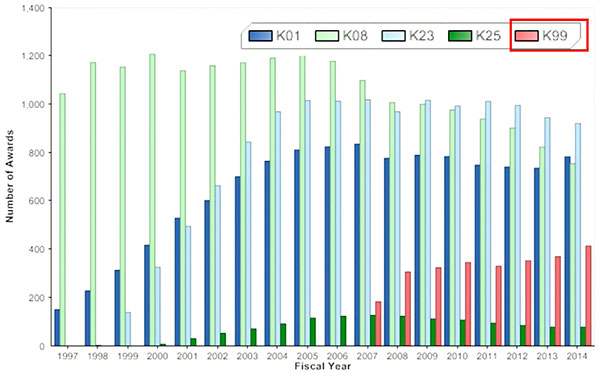
Rubin described the growing availability of the K9/R00 award as “a very good trend [that] shows the feeling at the [NIH] Institutes that this is an important and successful funding mechanism.”
The NIH K99/R00 grant, introduced in 2007, is growing faster than any other NIH career development award. (Image presented by Jaime S. Rubin courtesy of NIH)
The K99/R00 award has no citizenship requirements but applicants must hold a PhD, MD, or similar degree and must have completed less than 4 years of post-degree research (excluding time off for family responsibilities, military service, and other such activities). The award requires that at least 75% of professional time during the award period be devoted to research and career development activities, and the institutional commitment letter should explicitly commit to this. The remaining time can be used, for example, for teaching or clinical activities.
Candidates apply for K99/R00 funding as a whole, but it is expected that the K99 part is described in more detail. During transition to the independent R00 stage, the applicant needs to find a research-focused position as an assistant professor (or similar), usually at another institution. The new position and institution have to be approved by the NIH—administratively, not competitively.
“If you have a K99/R00, things will be different on the job market: first, you come with your own money, and second, you demonstrate to possible employers that you have already been successful in a very competitive grant review process,” Rubin said.
Rubin explained that the K99/R00 funding mechanism is different from that of many other research grants, such as the R01, because the candidate and the plan to transition to independence are almost as important as the proposed research plan. Gabrielle Fredman, a K99/R00 awardee who is now an assistant professor at Albany Medical College, agreed: “I was shocked to see how seriously they took the candidate background and the career development plan,” she said.
The purpose of the K99/R00 award is to support the transition from a mentored to an independent research career, and a plan to do so should be the focus of every part of the application. Konstantinos Drosatos, an assistant professor at Temple University, explained that “science needs to shine, but you also have to convince the reviewers that you will be a leader in your field, which is the second part—career development.”
In the K99/R00 application, the candidate background, career goals and objectives, career development and training activities, and research strategy sections are counted together and cannot exceed 12 pages. Therefore, it is up to the applicant to decide how many pages to devote to each section.
Rubin recommended that the first three sections fill about 4 pages and the research section fill about 8 pages. The candidate description should include prior research and training experiences as well as career goals and objectives, particularly current skills and areas for development.
“If you don’t have any lacking skills, then you don’t need this award,” Rubin pointed out. “You have to be really honest about why you need another two years of mentored experience—because you need to learn X, Y, and Z.”
The learning objectives should not list technical skills but scientific areas, such as how to formulate a hypothesis and answer research questions: “These are not awards for technicians; these are awards for scientists.” The idea is that “when the reviewer reads [the candidate] sections, he or she will know you, will know about your enthusiasm and dedication to science, and all your wishes and plans going forward for the next 3 to 4 years. It all comes through in those four pages, and if it doesn’t then there is a problem,” Rubin said.
Rubin recommended organizing proposed training activities in a timeline table. For example, obtaining preliminary data could be the goal for years 1 and 2, publishing manuscripts for years 3 and 4, and submitting an R01 application for year 5.
Fredman used this strategy: “The table with X’s on years 1 to 5 was the thing that they liked the most, because they didn’t have to read it, they just saw it,” she said. Such a table should include research-related training, such as a course in statistics or a workshop on a specific technique, as well as training in so-called soft skills, which include grant and manuscript writing, mentoring, and responsible conduct of research. An application might be more competitive with stronger preliminary data or with a multi- or interdisciplinary focus.
The grant application should be a coherent document, with cross-referencing between sections. Rubin pointed to the facilities and resources section, which has no page limit, as a good place to include supporting information, such as institutional career development resources, that can be referenced elsewhere.
A checklist and firm timeline for completing tasks, with “an absolute deadline for the final compilation,” keeps the grant writing process on track. Some components of the application can be delegated to others; for example, an administrator could help draft the budget.
Winning applications usually have not only a strong candidate and strong mentors but also an advisory committee and research consultants and collaborators. Consultants and collaborators help candidates build technical skills; an advisory committee helps with career advancement, including future grant submissions.
The committee could also help, as Drosatos pointed out, with the search for an assistant professorship position for the independent R00 stage. Robin Clugston from Columbia University, who is about to make the transition to the R00 stage, encouraged candidates to cast a wide net.
“There is no harm in contacting people that you recognize as being leaders in your field or in techniques that you want to work with,” he said. “Generally, you’d be surprised to get a quite positive response.”
Applications are usually scored by three reviewers according to five criteria: candidate, career development plan, research plan, mentors and consultants, and environment and institutional commitment to the candidate. Each category is scored from 1 (exceptional) to 9 (poor), and these initial scores are used to decide whether an application will be discussed at the NIH Institute’s study section. About half the applications are discussed by reviewers at a study section, where applications receive an overall impact score that reflects “the likelihood that the proposed career development and research plan will enhance the candidate’s potential for an independent scientific research career.”
The overall impact score can go up or down after discussion, depending on the consensus of the study section and how well the application matches both the mission of the institute and the K99/R00 purpose. A common mistake is to “pay attention to the research and [not] give a lot of attention to the career development part,” Rubin warned. “The research plan is only one of five review criteria.” Rubin also provided tips for writing a competitive K99/R00 application.
“Remember two things,” she said. “The competition is huge, and there are human beings on the other end reviewing your grants.” It is important to use a legible font, to use concise sentences, and to include well-designed tables and images, because reviewers “are reading page after page after page—they are looking for something to break up the text.” As Rubin noted, “Maybe technically a sentence can be a full paragraph, but can a human being really follow it if it’s that long?”
The panelists advised candidates to start preparing an application more than 6 months before the deadline. They agreed that it is helpful to consult colleagues who have received K99/R00 awards and to review past funded applications, if possible.
Rubin explained that the application should match the funding opportunity announcement (FOA) and the mission of the particular NIH Institute. If a proposal fits more than one institute, Rubin suggested choosing either the institute that most closely matches the scientific interests or career aspirations of the candidate or the institute with the higher success rate. This information is available on the NIH Research Portfolio Online Reporting Tools (RePORT) website, which has resources for preparing an application.
“If you want reviewers to know something, tell them, don’t [ask them to] infer it. And if it’s important, tell them more than once in your grant application,” Rubin said.
She also advised candidates to openly discuss possible challenges and alternative approaches to the proposed experiments and to refer to literature thoroughly and thoughtfully. As “a new investigator, you want to prove to them that you know exactly where the field is and how your research is moving the field forward,” she said. It is useful to ask several people to review the grant application, leaving plenty of time to make changes.
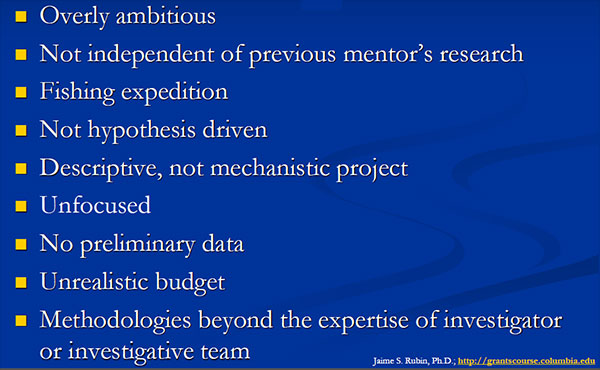
The most common problems with K99/R00 applications. (Image courtesy of Jaime S. Rubin)
Common problems with K99/R00 applications include overly ambitious or not-hypothesis-driven research plans. After being told his proposal was too ambitious, Clugston removed one of his three research aims.
“Get a feel for what’s the right amount of research to propose,” he advised.
Furthermore, “one should clearly state the rationale of the proposed study,” Rubin said. “Don’t make them fish around for the hypothesis.”
Another common problem is a failure among applicants to sufficiently separate the proposed project from a mentor’s research. As Fredman put it, “There is probably nothing more important to the reviewer than how you distinguish yourself, what you can take with you. Having these conversations [with your mentor] upfront can be a little uncomfortable and is probably the most challenging; you have to think years and years in advance.”
Choosing a mentor is also important. If a mentor is too junior or has too many other responsibilities, one option is to ask a more senior or a less busy researcher to serve as a co-mentor.
Remember, Rubin concluded, “[reviewers] are overloaded with grant applications, and somehow they have to differentiate them—and pick yours.” Reviewers tend to sort through applications by finding something wrong, such as lack of statistical analysis, or poorly described career development plans, or illegible font in figure legends. “They don’t realize how exciting that figure is, because they cannot read the caption,” she said. These issues can lead to unfavorable scores.
“All components of the application [should be] as strong as possible. In the end, you want to be, at least, the one with the grant where they weren’t able to find something wrong, so you get to be moved into a funding situation.”
Presentation available from Jaime S. Rubin, PhD (Columbia University) Panel moderator: Peter Hare, PhD (NYU School of Medicine)
How to cite this eBriefing
The New York Academy of Sciences. Grantsmanship for Postdocs: Navigating the K99/R00 Award. Academy eBriefings. 2016.
Media
Panel Discussion
Moderator: Peter Hare (NYU School of Medicine)
Resources
American Heart Association Postdoctoral Fellowship. The AHA aims to help trainees initiate careers in cardiovascular and stroke research while obtaining significant research results under the supervision of a sponsor or mentor; the fellowship supports researchers before they are ready for some stage of independent research.
Burroughs Wellcome Fund An independent private foundation that aims to help scientists early in their careers develop as independent investigators and to advance fields in the basic biomedical sciences that are undervalued or in need of encouragement.
National Institutes of Health. Office of Extramural Research. Grants & Funding. The Office of Extramural Research provides the corporate framework for NIH research administration, ensuring scientific integrity, public accountability, and effective stewardship of the NIH extramural research portfolio.
NIH Research Portfolio Online Reporting Tools (RePORT). NIH RePORTER. The RePORTER website provides access to reports, data, and analyses of NIH research activities, including information on NIH expenditures and the results of NIH-supported research.
NIH Research Portfolio Online Reporting Tools (RePORT). Funding Facts.
Jaime S. Rubin holds MSc and PhD degrees from the University of Toronto, Canada. Her PhD thesis, published in Nature, described the first molecular identification and characterization of a human DNA repair gene. Since 1985, she has held several senior positions at the Columbia University Medical Center, where she is now the vice chair for investigator development in the Department of Medicine. She founded and teaches the graduate course Funding and Grantsmanship for Research and Career Development Activities and started and codirects the Medical Center’s course Responsible Conduct of Research and Related Policy Issues. She has served as the associate program director for the Doris Duke Clinical Research Fellowship Program and as associate director for career development on a number of NIH-funded pre- and postdoctoral training grants. She has also served on the advisory boards of Columbia’s Patient-Oriented Research (POR) Master of Science Program and Clinical and Translational Science Award (Education).
Moderator
Peter Hare, PhD NYU School of Medicine
Peter Hare is the associate director of Research Mission Programs at New York University School of Medicine. He edits the scientific components of grant proposals and helps faculty members identify appropriate funding opportunities. He also develops initiatives to support the faculty and promote their visibility. Before joining NYU School of Medicine, Hare worked for Nature Publishing Group, where he was a senior editor at Nature Biotechnology and editorial lead for its Digital First program. He was a research associate at the Rockefeller University after completing his PhD at the University of KwaZulu-Natal in South Africa.
Panelists
Robin Clugston, PhD Columbia University Medical Center
Konstantinos Drosatos, PhD Temple University
Gabrielle Fredman, PhD Albany Medical College
Reported by: Evguenia Alexandrova
Evguenia Alexandrova is a postdoctoral associate working at the intersection of cancer and stem cell biology at Stony Brook University. She is also an aspiring writer, passionate about disseminating scientific knowledge to the general public.
First identified nearly a century ago for its essential role in maintaining bone health, vitamin D has recently undergone a renaissance of interest due to the resurgence of vitamin D deficiency and the identification of vitamin D receptors in tissues and cells outside the skeletal system. Indeed, a growing body of evidence indicates that vitamin D has several extraskeletal functions and plays a key role in the immune, cardiovascular, and nervous systems. Furthermore, a growing body of research links vitamin D status to health and vitamin D deficiency to the risk of developing certain diseases, including cancers, multiple sclerosis, type 1 diabetes, rheumatoid arthritis, hypertension, and cardiovascular disease. On September 21, 2012, basic science and clinical researchers gathered to discuss non-classical effects at the Vitamin D: Beyond Bone conference presented by the Abbott Nutrition Health Institute and The New York Academy of Sciences.
Speakers
Daniel D. Bikle, MD, PhD University of California, San Francisco and VA Medical Center
Ricardo Boland, PhD Universidad Nacional del Sur, Argentina
Sylvia Christakos, PhD UMDNJ–New Jersey Medical School
Luigi Ferrucci, MD, PhD National Institute on Aging
David G. Gardner, MD University of California, San Francisco
Martin Hewison, PhD University of California, Los Angeles
Lily Li Mount Sinai School of Medicine
Anastassios G. Pittas, MD Tufts Medical Center
Erica Rutten, PhD Ciro +, Centre of Expertise for Chronic Organ Failure
Igor N. Sergeev, PhD, DSc South Dakota State University
Carol L. Wagner, MD Medical University of South Carolina
Daniel D. Bikle University of California, San Francisco and VA Medical Center
Highlights
Two major forms of vitamin D are important for human health: vitamin D3, which is synthesized in sun-exposed skin, and vitamin D2, which is synthesized in certain plants.
Vitamin D is obtained through diet and sun exposure in the form of inactive precursors. The biologically active form of vitamin D, 1,25-dihydroxyvitamin D, is produced via a two-step enzymatic process, predominantly in the liver and kidneys.
The classical function of vitamin D is to maintain the integrity of the skeleton by modulating calcium homeostasis, but recent studies have uncovered several extraskeletal functions.
The current recommended dietary reference values for vitamin D may be inadequate, especially for those at risk for vitamin D deficiency.
Synthesis and metabolism of vitamin D
Vitamin D was first identified early in the 20th century as an essential nutrient. It is now recognized to comprise a group of fat-soluble prohormones, substances that are precursors to hormones but have minimal hormonal activity. Two major forms of vitamin D are important to human health—vitamin D2 (ergocalciferol) and vitamin D3 (cholecalciferol)—which differ chemically only in the structures of their side chains. Vitamin D3 is produced in the skin through the action of sunlight (in particular, UVB radiation) on 7-dehydrocholesterol; analogously, vitamin D2 is synthesized in some plants and fungi via photoconversion of ergosterol.
Although sunlight exposure is our main source of vitamin D, it can also be obtained through diet or dietary supplements. Very few foods, however, naturally contain meaningful amounts of vitamin D. Good sources include cod liver oil, salmon, tuna, and other fatty fish, as well as fortified foods, such as milk, yogurt, and orange juice.
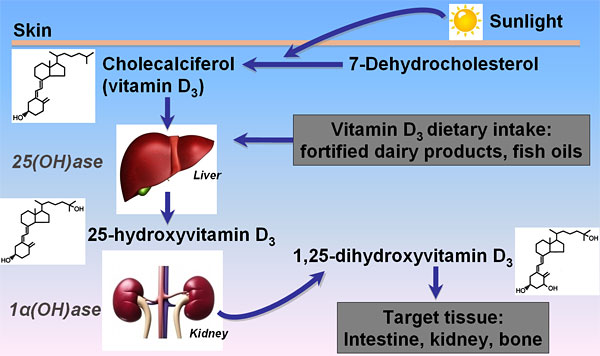
Vitamin D metabolism. (Image courtesy of Sylvia Christakos)
Vitamin D obtained through diet, supplements, or sun exposure is biologically inactive and must undergo metabolism to become active. Vitamin D2 and D3 are transported in the blood by vitamin D-binding protein to the liver and enzymatically hydroxylated at carbon 25 to form 25-hydroxyvitamin D (25(OH)D). Although 25(OH)D is still biologically inert, it represents the major circulating form that is measured to assess vitamin D status. The active form of vitamin D, 1,25-dihydroxyvitamin D (1,25(OH)2D), is produced predominantly in the kidney but can also form in a variety of other tissues, including the skin and bone, and in immune cells. Compared with 25(OH)D, 1,25(OH)2D is generally not a reliable indicator of vitamin D status because it has a shorter half-life and its serum level changes in response to calcium, phosphate, and parathyroid hormone (PTH).
Vitamin D mechanism of action
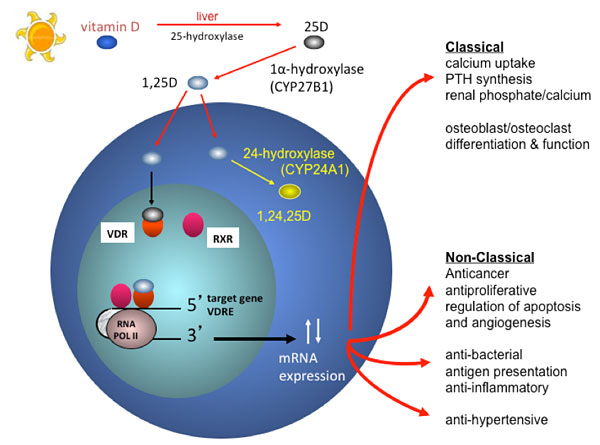
The classical function of the active form of vitamin D is to maintain the integrity of the skeleton by regulating calcium and phosphorus homeostasis. In response to low blood calcium levels, the parathyroid gland secretes PTH, which induces expression of CYP27B1, the enzyme that catalyzes formation of 1,25(OH)2D. This active form binds to the vitamin D receptor (VDR)—which regulates gene expression by binding predominantly to vitamin D-responsive elements in the promoter regions of target genes—stimulating intestinal absorption of calcium and phosphate, the release of calcium from bone, and calcium re-absorption in the kidney.
Classical and non-classical actions of vitamin D: mechanism of action. (Image courtesy of Martin Hewison)
Keynote address: Vitamin D dietary reference intakes
In 2010 the Institute of Medicine (IOM) evaluated health outcomes associated with vitamin D and calcium and proposed updated Dietary Reference Intake (DRI) values reflecting new data on optimal levels of these minerals. The IOM recommended a 25(OH)D serum level of at least 20 ng/mL (50 nM) but considered levels up to 50 ng/mL (125 nM) safe. A 600 IU daily intake of vitamin D is deemed adequate for most people but up to 4000 IU is considered safe. The IOM concluded that 97.5% of the U.S. population have 25(OH)D levels greater than 20 ng/mL and therefore do not need vitamin D supplementation.
Daniel Bikle from the University of California, San Francisco and VA Medical Center gave his perspective on these recommendations in his keynote address. He pointed out that the recommendations are for the general population, not patients, and are based only on studies of vitamin D’s classical effects on bone. Moreover, the IOM based its conclusion that nearly everyone in the U.S. population is vitamin D sufficient on data from National Health and Nutrition Examination Surveys (NHANES), which were weighted toward healthy Caucasians and excluded the population living in the northern part of the country in the winter. Bikle surveyed additional studies that question the adequacy of the vitamin D status in many populations, concluding, “I question the IOM conclusion that 97.5% of the population in the U.S. maintain 25(OH)D levels above 20 ng/ml.”
Bikle also questioned whether the IOM recommendations meet the needs of the elderly, a population that is particularly vulnerable to vitamin D deficiency due to age-related decreases in cutaneous vitamin D production, dietary intake, intestinal absorption, 1,25(OH)2D production, and intestinal response to 1,25(OH)2D. He surveyed data on the relationship between vitamin D status and bone density, mobility, fall rates, and fracture risk and concluded that, “50 nM or 20 ng/ml [may not be optimal] for the elderly individual who’s at the greatest risk of vitamin D deficiency on the one hand and of fractures on the other.”
Bikle recommended that particular subsets of the population be tested for vitamin D deficiency, including women and men over age 65 and 70, respectively; those who are institutionalized; those with dark complexions living in temperate latitudes; those who avoid the sun or dairy products; those with osteoporotic fractures; those with malabsorption; those undergoing bariatric surgery; those with chronic kidney disease; and those taking certain drugs that alter metabolism.
In recent decades researchers have uncovered several non-classical extraskeletal functions of vitamin D. The Vitamin D: Beyond Bone conference explored these, presenting vitamin D’s multifunctional role in immunity, cardiovascular health, cancer, pregnancy, infection, diabetes, cognitive function, and muscle function; its molecular mechanisms of action; and recent changes to nutritional guidelines. The conference encouraged cross-disciplinary dialogue, identified research gaps, and helped to build communities, develop partnerships, and translate basic research findings and epidemiological data into strategies that may promote public health.
Video Chapters 00:01 1. Introduction; The IOM recommendations 16:23 2. Vitamin D deficieny in the elderly 22:07 3. Recommendation adequacy 30:00 4. Who should be tested? 38:58 5. Therapeutic considerations 43:00 6. Summary and conclusions
Non-classical Roles of Vitamin D, Part 1
Speakers
Sylvia Christakos University of Medicine and Dentistry New Jersey (UMDNJ)–New Jersey Medical School
Martin Hewison University of California, Los Angeles
David G. Gardner University of California, San Francisco
Carol L. Wagner Medical University of South Carolina
Highlights
Vitamin D inhibits the growth of breast cancer cells in vitro.
Vitamin D reverses paralysis in a mouse model of multiple sclerosis.
Vitamin D modulates, directly or indirectly, the function of several immune system cells.
Vitamin D may exert a protective effect on the cardiovascular system.
Supplementation with 4000 IU of vitamin D per day appears to be safe and effective for pregnant women.
Vitamin D’s impacts on cancer and multiple sclerosis
In addition to its principal role in the regulation of calcium homeostasis, recent in vitro and animal studies suggest that vitamin D inhibits the growth of breast, colon, and prostate cancer cells and may provide protection against certain immune-mediated disorders, such as type 1 diabetes and multiple sclerosis (MS). Sylvia Christakos from UMDNJ opened the meeting by discussing her research into the molecular mechanisms that underlie its impact on breast cancer and the immune system. Her studies have revealed that 1,25(OH)2D3 inhibits the growth of breast cancer cells in culture, in part by inducing the transcription factor and potential tumor suppressor protein C/EBPα (providing evidence that C/EBPα may be a candidate target for breast cancer treatment).
Christakos also described research demonstrating that vitamin D suppresses the development of experimental allergic encephalitis (EAE), the mouse model of MS. She investigated vitamin D’s effects on a class of helper T cells that produce the inflammatory cytokine IL-17, which has been reported to play a critical role in mediating inflammatory responses and autoimmune diseases, including MS. 1,25(OH)2D3 inhibited the transcription of IL-17 in human CD4+ T cells in vitro and, in in vivo studies in EAE mice, down-regulated IL-17 levels in CD4+ T cells and reversed the onset of paralysis. These findings suggest that inhibition of IL-17 transcription may be one mechanism by which 1,25(OH)2D3 exerts its immunosuppressive effects. “Many of the same genes are present in humans and mice, and they act similarly, so minimally the findings … may suggest mechanisms involving similar pathways in humans that could lead to the identification of new therapies,” Christakos concluded.
Video Chapters 00:01 1. Introduction and overview 04:12 2. Vitamin D’s impact beyond the skeletal system 11:24 3. Vitamin D and breast cancer 18:11 4. Vitamin D and multiple sclerosis 25:32 5. Summary, acknowledgements, and conclusions
Vitamin D in immune function and disease prevention
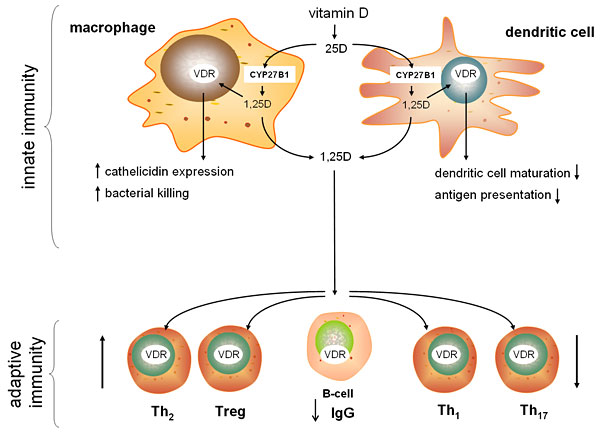
Martin Hewison from the University of California, Los Angeles expanded the discussion of vitamin D’s potent immunomodulatory effects, focusing on cellular machinery that mediates the activities of the adaptive and innate immune systems. Nearly all immune system cells express the vitamin D receptor (VDR); cells of the innate immune system, including macrophages and dendritic cells, also express the enzyme CYP27B1, and thus can activate 25(OH)D locally. Hewison’s research has shown that locally-activated vitamin D in macrophages can trigger the up-regulation of antibacterial proteins, such as LL37 (also known as cathelicidin), and can enhance the killing of bacterial pathogens. Ex vivo studies of human innate immune cells revealed that LL37 expression levels vary with vitamin D status, suggesting that vitamin D deficiency may potentially impair the LL37-mediated response to infection. Cytokines produced by other immune system cells enhance or suppress this vitamin D-mediated immune response by modulating vitamin D metabolism within innate immune cells.
Hewison’s group also discovered a similar intracrine vitamin D system in dendritic cells (DCs)—innate immune cells that primarily deliver bacterial antigen to cells of the adaptive immune system. In this case, locally-activated vitamin D inhibits DC maturation, thereby suppressing antigen presentation and indirectly modulating helper T-cell function. Hewison noted that the active vitamin D produced by DCs, as well as by macrophages, can also act in a paracrine fashion to directly regulate the function of all the various T-cell types by modulating the expression of key T-cell genes. Thus, vitamin D appears to promote immune tolerance and to suppress inflammation and autoimmunity.
Vitamin D affects the activity of macrophages and DCs to modulate adaptive and innate immunity. (Image courtesy of Martin Hewison)
Investigating the link between vitamin D status and autoimmune diseases, such as inflammatory bowel disease (IBD), Hewison’s lab found that inducing short-term vitamin D-deficiency in mice increased the severity of experimentally-induced IBD. Vitamin D-deficient mice exhibited decreased expression of an antibacterial protein in the gastrointestinal tract and increased levels of bacteria in the colon, suggesting an additional antibacterial function for vitamin D and a potential interaction between IBD and the microbiota.
Hewison ended his talk with a look at vitamin D’s immunomodulatory function during pregnancy. Pregnant women tend to be vitamin D deficient. Hewison’s research has uncovered antibacterial and anti-inflammatory actions of vitamin D in placental trophoblast cells, suggesting that vitamin D deficiency may have implications for fetal development, preterm birth, fetal programming of adult disease, and maternal blood pressure. Hewison concluded by suggesting that vitamin D deficiency might impact a wide range of immune-related disorders.
Video Chapters 00:01 1. Introduction 03:00 2. Vitamin D and bacterial killing; Tuberculosis and other disease studies 12:55 3. CYP27B1/VDR interactions; Inflammatory bowel disease and the microbiota 20:18 4. Vitamin D and pregnancy 26:12 5. Summary, acknowledgements, and conclusions
Vitamin D during pregnancy and lactation
Carol L. Wagner from the Medical University of South Carolina continued the theme of vitamin D action during pregnancy and lactation, focusing on the results of her recent vitamin D supplementation trials in pregnant women. Wagner and colleagues have found striking evidence of global vitamin D deficiency during pregnancy, particularly among darker pigmented individuals. Epidemiological studies have revealed that vitamin D deficiency is linked with a higher risk of maternal preeclampsia, an increased risk of gingivitis and periodontal disease in the mother, impaired fetal growth, impaired childhood dentition, and an increased risk of infection by respiratory syncytial virus (RSV).
To determine the most effective safe dose of vitamin D for pregnant women, Wagner and colleagues conducted studies with two different populations of pregnant women, each split into groups receiving 400IU, 2000IU, or 4000 IU of vitamin D3 per day until delivery. The studies found that 4000 IU/day is needed to achieve vitamin D sufficiency (the IOM currently recommends a daily dose of 600 IU/day for the general population). Perhaps more surprisingly, 25(OH)D levels had a direct and positive influence on 1,25(OH)2D levels throughout pregnancy, which has not been observed at any other time in life. No adverse events were attributed to supplementation; in fact, Wagner noted a trend towards lower rates of pregnancy complications in the 2000 IU and 4000 IU groups, compared with the 400 IU group, and towards lower rates of comorbidities during pregnancy with increasing 25(OH)D levels. She concluded that 4000 IU/day is safe and achieves vitamin D sufficiency in pregnant women.
Wagner is now investigating how vitamin D status affects immune function in the mother and her developing fetus and whether maternal D supplementation meets the requirements of both the mother and her nursing infant.
Video Chapters 00:01 1. Introduction; Earlier studies 05:50 2. Epidemiological data; The NICHD supplementation study 11:23 3. The Thrasher Study; Combined study datasets 18:25 4. The Kellogg Project; Supplementation and mother’s milk 23:23 5. Summary and conclusions
Vitamin D and the cardiovascular system
Recent studies suggest that vitamin D may have a protective effect on the cardiovascular system: vitamin D deficiency is associated with high blood pressure and heart enlargement in rats; patients with congestive heart failure have reduced levels of circulating vitamin D; and vitamin D and VDR activation inhibits heart enlargement in rodents. David Gardner from the University of California, San Francisco investigated the molecular mechanisms underlying vitamin D’s cardiovascular effects using mouse models with VDR selectively deleted in either cardiac myocytes or endothelial cells.
Deletion of VDR in myocytes resulted in myocyte enlargement and in expression of genes involved in hypertrophy. Deletion of VDR in mice genetically engineered to accumulate excess fat in myocytes—a condition known as cardiac steatosis that is associated with obesity and diabetes in humans—amplified the pathological effects of cardiac steatosis, suggesting that VDR deletion, and possibly vitamin D deficiency, may sensitize the heart to pathological stimuli. VDR deletion in endothelial cells in vitro impaired the vasorelaxation that normally occurs in response to acetylcholine neurotransmitter. Furthermore, VDR deletion in endothelial cells in vivo resulted in a greater increase in blood pressure in response to the vasoconstricting hormone angiotensin. Taken together, Gardner’s findings suggest that vitamin D and vitamin D analogues may be useful in the management of heart disorders that involve cardiac hypertrophy.
Video Chapters 00:01 1. Introduction 03:21 2. VDR activators and hypertrophy; Liganded VDR and the cardiac myocyte 12:25 3. VDR deficiency and cardiomyophathic stimuli 20:28 4. VDR deletion in murine endothelial cells 25:37 5. Summary, acknowledgements, and conclusions
Non-classical Roles of Vitamin D, Part 2
Speakers
Igor N. Sergeev, South Dakota State University
Erica Rutten, Ciro +, Centre of Expertise for Chronic Organ Failure
Lily Li, Mount Sinai School of Medicine
Highlights
Vitamin D induces apoptosis in fat cells, suggesting that it may one day be useful in the treatment and prevention of obesity.
Vitamin D may help to preserve lung function in patients with chronic obstructive pulmonary disorder.
Vitamin D reduces the erythropoietin requirements of hemodialysis patients with end-stage renal disease.
Vitamin D and apoptosis in obesity
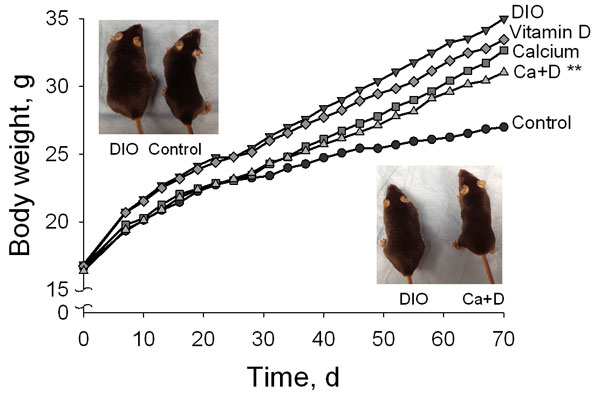
The discussion of the non-classical roles of vitamin D continued with a series of short talks by early career investigators. Epidemiological studies have associated low vitamin D status with an increased risk of obesity. Igor N. Sergeev from South Dakota State University has found that 1,25(OH)2D3 triggers programmed cell death in fat cells by inducing a sustained increase in calcium and by activating calcium-dependent proteases. He noted that inducing apoptosis in fat cells is emerging as a potential strategy for treating and preventing obesity. Using a mouse model of diet-induced obesity, Sergeev showed that supplementation with calcium and vitamin D reduced body fat and weight gain and improved biomarkers of adiposity. Sergeev suggested that vitamin D and calcium might prove useful in the treatment and prevention of obesity.
Vitamin D and calcium supplementation decrease body weight gain in diet-induced obese mice. (Image courtesy of Igor Sergeev)
Vitamin D and lung function
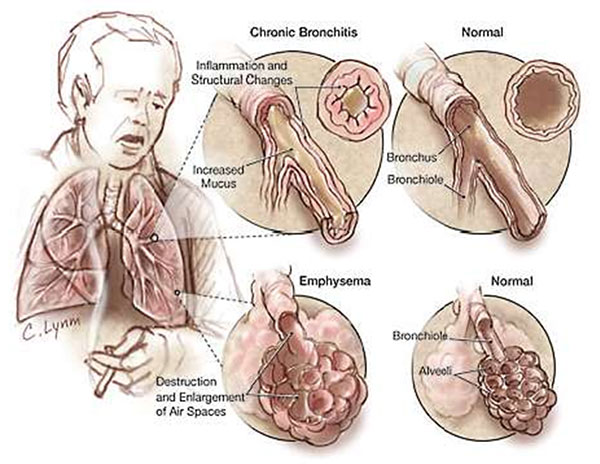
Recent studies have found that vitamin D deficiency is prevalent among people with chronic obstructive pulmonary disease (COPD), an irreversible lung condition that includes chronic bronchitis and emphysema and is primarily caused by smoking. The prevalence of vitamin D deficiency increases with the severity of COPD. Erica Rutten from the Ciro +, Centre of Expertise for Chronic Organ Failure conducted a cross-sectional study of patients with moderate to very severe COPD: 58% were vitamin D deficient. She observed that lung function was positively associated with plasma vitamin D levels, even after correcting for age, gender, and body mass index, and concluded that vitamin D may play a role in lung pathology in patients with COPD.
Vitamin D deficiency may play a role in lung pathology in chronic obstructive pulmonary disease (COPD). (Image courtesy of Erica Rutten)
Vitamin D and chronic kidney disease
Vitamin D deficiency is also common in hemodialysis patients with end-stage renal disease. Lily Li and colleagues from Mount Sinai School of Medicine are conducting an ongoing randomized controlled trial to determine whether correcting vitamin D deficiency decreases vitamin D-deficient hemodialysis patients’ requirements for erythropoietin, a hormone produced by the kidneys that is essential for red blood cell production. The group hypothesized that vitamin D deficiency causes dysregulation of innate immunity, leading to inflammation and altered iron metabolism and contributing to erythropoietin resistance. To date, vitamin D supplementation for 3 or 6 months has safely and effectively increased patients’ 25(OH)D levels and has reduced their requirements for erythropoietin. Ongoing studies aim to determine the immunologic effects of vitamin D repletion in these patients.
Policy and Clinical Applications
Speakers
Anastassios G. Pittas Tufts Medical Center
Ricardo Boland Universidad Nacional del Sur, Argentina
Luigi Ferrucci National Institute on Aging
Highlights
Low vitamin D status is associated with type 2 diabetes, but it remains unclear whether there is a causal relationship between vitamin D and diabetes.
Vitamin D regulates skeletal muscle cell proliferation and function via classical and non-classical molecular mechanisms.
Vitamin D status is associated with several aspects of physical and cognitive function in the elderly.
Vitamin D and type 2 diabetes
Vitamin D supplementation has emerged as a potential strategy for the prevention and management of type 2 diabetes. In his talk, Anastassios Pittas from Tufts Medical Center evaluated whether the available evidence supports a scientifically valid causal association between vitamin D and type 2 diabetes. Using observational data from the Nurses Health Study, Pittas has investigated the association between vitamin D and calcium intake and the development of type 2 diabetes. He found that women who reported the highest levels of calcium and vitamin D intake had a 33% lower risk of developing diabetes compared to those with the lowest intakes of both nutrients. He also observed an inverse relationship between plasma 25(OH)D concentration and risk of incident type 2 diabetes, such that women with higher levels of 25(OH)D had a lower risk of developing diabetes. Moreover, after repeatedly assessing vitamin D status over time in patients at risk for diabetes, he found that progression from pre-diabetes to diabetes declined with increasing concentrations of 25(OH)D.
These and other data suggest that vitamin D is associated with diabetes, but before accepting that a causal relationship exists, “we need to consider alternative explanations,” says Pittas. Because dietary intake of vitamin D and cutaneous synthesis of vitamin D are associated with healthy diets and behaviors, it is difficult to distinguish these potentially confounding factors from the effect of vitamin D itself, says Pittas. Furthermore, vitamin D status is associated with a variety of other factors, many of which are independently associated with diabetes, including physical inactivity, obesity, and dietary patterns. “So, is vitamin D simply a marker of increased risk for type 2 diabetes?” Pittas asked. “In other words, the strong association that we see with type 2 diabetes does not necessarily mean that supplementation would be beneficial.” Therefore, he says, randomized clinical trials are needed to test the hypothesis that vitamin D can modify diabetes risk.
Pittas’s randomized controlled trial—aimed to determine whether vitamin D supplementation would improve glucose homeostasis in patients at high risk for diabetes—showed that short-term vitamin D supplementation improved beta-cell function and attenuated the rise in glycated hemoglobin, a biomarker for diabetes. “In my mind, [vitamin D supplementation] for type 2 diabetes is a promising idea, but is yet unproven,” Pittas concluded.
Video Chapters 00:01 1. Introduction 03:14 2. Biological plausibility; Specificity 05:58 3. Temporal relationship, association strength, dose response, and coherence 11:00 4. Experimental evidence and alternative explanations; Studies 19:40 5. Vitamin D, diabetes, and ethnicity 23:38 6. Summary and conclusions
Vitamin D and muscle function
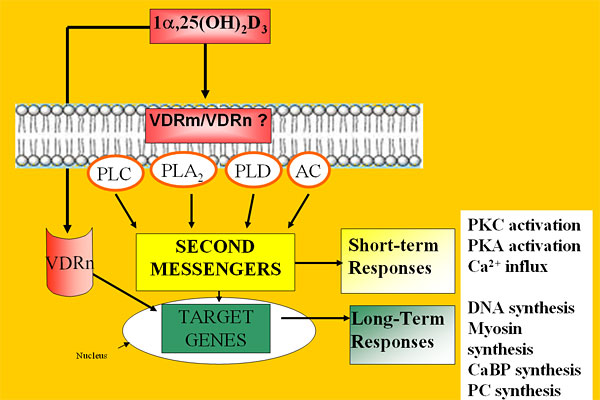
Multiple lines of evidence suggest that vitamin D plays a role in muscle function: muscle weakness and atrophy are common symptoms of vitamin D deficiency; 1,25(OH)2D3 stimulates muscle synthesis in vitamin D-deficient rats; and cellular studies have revealed the presence of the VDR in skeletal muscle. Ricardo Boland from Universidad Nacional del Sur, Argentina reviewed the molecular mechanisms by which 1,25(OH)2D3 regulates skeletal muscle cell proliferation and differentiation. In skeletal muscle cells, vitamin D can function via a classical genomic mechanism, triggering VDR-mediated changes in the expression of genes involved in muscle cell proliferation and differentiation.
Boland has discovered that vitamin D can also function in skeletal muscle cells via a non-classical mechanism involving the activation of transmembrane second messenger systems, calcium influx, and the growth-regulating signaling pathway known as the mitogen-activated protein kinase (MAPK) cascade. 1,25(OH)2D3 stimulates the translocation of VDR from the nucleus to the membrane, where it complexes with a calcium channel protein. At the cell membrane, VDR also forms a complex with the protein Src, which signals upstream of the MAPK cascade. These molecular mechanisms help to clarify how vitamin D regulates skeletal muscle cell growth and contractility and may aid the development of treatments for skeletal muscle disorders.
An overview of the genomic and non-genomic modes of action of 1,25OH2D3 in skeletal muscle cells. (Image courtesy of Ricardo Boland)
Video Chapters 00:01 1. Introduction and background 05:45 2. Calcium influx; Capacitative calcium entry; SOC, TRP, and VDR 13:30 3. INAD-scaffold protein; Src tyrosine kinase; The ERK1/2 pathway 26:20 4. Akt activation; 1,25-dependent Src activation 33:12 5. Summary and conclusions
Vitamin D and Physical and Cognitive Function in Older Persons
Luigi Ferrucci from the National Institute on Aging reviewed the connections between vitamin D and aging. He and others have demonstrated that low 25(OH)D status is associated with mobility limitation and disability in older adults. He explored the basic pathways that may mediate these effects on physical and cognitive function in older persons, focusing on four major aging phenotypes that are related to the biological functions of vitamin D: changes in body composition, imbalances in energy production and utilization, homeostatic dysregulation, and neurodegeneration.
Ferrucci addressed changes in body composition first, showing that low serum levels of 25(OH)D are associated with a higher incidence of obesity and a higher probability of developing obesity, although the mechanisms remain unclear. In muscle tissue, expression of the VDR declines with age, and epidemiological studies have linked low vitamin D levels with loss of muscle strength and mass. These studies reveal some of the ways in which vitamin D may influence body composition.
Next, Ferrucci addressed energy homeostasis. High vitamin D levels are strongly correlated with higher levels of aerobic fitness and peak aerobic capacity, suggesting that low vitamin D levels may give rise to imbalances in energy production and utilization. Furthermore, VDR appears to localize in mitochondria in human blood cells, suggesting that vitamin D may influence energy homeostasis by regulating mitochondrial function.
In terms of homeostatic dysregulation, Ferrucci focused on vitamin D’s anti-cancer and anti-inflammatory actions. At the molecular level, 1,25(OH)2D3 may reduce inflammation by blocking the synthesis and action of prostaglandins and pro-inflammatory cytokines. A systematic review of 219 cross-sectional studies in the literature—designed to evaluate whether vitamin D levels are associated with the risk for autoimmune diseases and whether vitamin D supplementation can modify the course of the diseases—revealed that supplementation with vitamin D may reduce the risk of autoimmune disease. However, randomized controlled trials are needed to establish the clinical efficacy of vitamin D supplementation.
Finally, in terms of neurodegeneration, Ferrucci showed that low levels of vitamin D are associated with an accelerated decline in cognitive function, while higher levels of vitamin D intake are associated with a lower risk of Alzheimer’s disease. Ferrucci has also identified an association between low serum levels of 25(OH)D and symptoms of depression in older men and women.
Ferrucci ended by calling for randomized, controlled intervention studies of vitamin D to determine whether it can slow the development of physical and cognitive disability.
Video Chapters 00:01 1. Introduction 06:02 2. Pathways to cognitive and physical frailty; Changes in body composition 16:24 3. Energy imbalance; Homeostatic dysregulation 20:15 4. Neurodegeneration; Going forward; Conclusions
Panel Discussion
Moderator
Mandana Arabi The Sackler Institute for Nutrition Science
Video Chapters 00:01 1. Does one size fit all? 09:22 2. Sun avoidance; Categorization; Interpreting study data 21:24 3. Prescribing dosage; Fortified foods; Vitamin D2 vs. D3 35:30 4. Vitamin K2; Serum 25-hydroxyvitamin
Open Questions
How do the extraskeletal biological responses observed in vitro and in animal models relate to human disease?
Does the adjustment of vitamin D status correct vitamin D-mediated immune dysfunction?
Does vitamin D status affect the composition of the gut microbiota?
What are the circulating biomarkers of vitamin D-related immune function?
What vitamin D supplementation level should be recommended for pregnant and lactating women?
Is vitamin D supplementation beneficial to vitamin D-deficient patients with chronic obstructive pulmonary disease?
Does vitamin D modify the risk of diabetes?
Can vitamin D supplementation slow down the development of physical and cognitive disability in the elderly?
When measuring vitamin D status, is it more meaningful to measure total 25(OH)D levels or only the fraction of 25(OH)D that is not bound to protein?
Does vitamin D supplementation provide any clinical benefit other than its well-documented effects on bone?
Heike Bischoff-Ferrari is an MD and clinical researcher with specialty board certifications in general medicine, geriatrics, and physical medicine and rehabilitation at the University of Zurich, Switzerland. After her clinical training at the University of Basel, she was a fellow at the Department of Rheumatology, Immunology, and Allergy at the Brigham and Women’s Hospital in Boston and was appointed to the faculty at Harvard Medical School. Bischoff-Ferrari holds an MPH from Harvard School of Public Health and a Doctor of Public Health from the Department of Nutrition at Harvard School of Public Health. Bischoff-Ferrari has an ongoing appointment as a visiting scientist at the Human Research Center on Nutrition and Aging at Tufts University. She holds a primary faculty appointment at the Department of Rheumatology at the University Hospital in Zurich, Switzerland and received a Swiss National Foundations professorship in 2007. In 2008, she became the director of the Center on Aging and Mobility at the University of Zurich. Bischoff-Ferrari’s research focus is improving musculoskeletal health among the senior population with a focus on falls, fractures, and osteoarthritis. One particular interest is to define the role of vitamin D in the context of aging and musculoskeletal health.
Martin Hewison is currently a professor in residence at the David Geffen School of Medicine at the University of California, Los Angeles (UCLA), where his group has an established interest in the role of vitamin D in human physiology, and in particular the interaction between vitamin D and the immune system. Hewison gained his PhD in biochemistry from Guy’s Hospital Medical School, London and spent nine years at University College London. After moving to the University of Birmingham he established the UK’s major vitamin D research group, leading to an appointment as a professor in molecular endocrinology in 2004. In 2005 he joined Cedars-Sinai Medical Center, Los Angeles and moved to neighboring UCLA at the end of 2007. Hewison has published over 160 peer-reviewed manuscripts focused on various facets of steroid hormone endocrinology.
Nabeeha Mujeeb Kazi is managing director of Humanitas Global Development (HGD). She has directed high-profile global food-security initiatives and designed advocacy, public–private partnership, community mobilization, behavior change, and stakeholder engagement programs. Kazi’s team has collaborated with numerous high-profile international organizations including Global Alliance for Improved Nutrition, World Bank, World Health Organization, Save the Children, and UNICEF, among others. Kazi served as Senior Vice President and Partner at Fleishman-Hillard, a global communications firm, and has worked for the Clinton Foundation’s HIV/AIDS Initiative, focusing on Caribbean and African countries, and for the International Maize and Wheat Improvement Center (CIMMYT) in Mexico. Kazi serves on the boards of FINCA International and United Neighborhood Centers of America and has served on several taskforces and committees with partners like Scaling Up Nutrition, Millennium Villages, Feed the Future, and the New York Academy of Sciences. Kazi has dual Master’s degrees in public health and international affairs from Columbia University.
Hawley K. Linke is a senior scientist in the Global Discovery Group at Abbott Nutrition. Her early expertise arose from postdoctoral studies in mitochondrial gene identification at Stanford University Medical School and from her study of human viral gene expression for her PhD from UCLA’s Molecular Biology Institute. She joined Abbott Laboratories Diagnostics Division, Hepatitis-AIDS investigation group, before transferring to Abbott Nutrition. Her contributions to nutrition research include the development and exploitation of industrial-scale expression technologies producing genetically modified and unmodified human proteins for nutritional applications and clinical studies demonstrating therapeutic innovations in infant formula. As an expert in vitamin D, she advises the division on nutritional products to optimize its pleiotropic health benefits. She focuses on technologies for women’s health, neurogastroenterology, and manipulation of the microbiome.
Rosemary E. Riley is senior manager for science programs at the Abbott Nutrition Health Institute, where she is responsible for developing and directing programs that educate health care professionals throughout the world on the importance of nutrition as therapy to improve patient outcomes. While at Abbott, Riley has worked on a variety of nutrition initiatives, including a comprehensive, multidisciplinary medically supervised weight management program, geriatric nutrition, sports nutrition, women’s health—with a focus on bone health—and diabetes. She also has experience in strategic discovery and evaluation of ingredients and technology to address these conditions.
As an academic neonatologist for more than 20 years, Carol L. Wagner has been involved in basic science, translational, and clinical studies. She holds an MD from Boston School of Medicine. She completed both her pediatric residency and neonatalñperinatal fellowship at the University of Rochester. She is a professor of pediatrics and the associate director of the Clinical and Translational Research Center at the Medical University of South Carolina. Wagner’s current research interests are vitamin D requirements during pregnancy and lactation and human milk bioactivity and its effect on gut maturation.
Daniel D. Bikle is a professor of medicine and dermatology at the University of California, San Francisco and co-director of the Special Diagnostic and Treatment Unit of the San Francisco VA Medical Center. He has a long history in the area of vitamin D, performing a number of the initial studies in its metabolism in the kidney and more recently its extrarenal metabolism in the skin. Much of Bikle’s recent research has focused on the molecular mechanisms by which 1,25(OH)2D and its receptor (VDR) regulate gene expression, in particular during normal epidermal differentiation, wound healing, and hair follicle cycling and on the pathologic changes underlying epidermal carcinogenesis. Bikle is also a practicing endocrinologist with particular interest in metabolic bone disease and has written extensively on the interface between the laboratory and clinic with respect to the implications of the recent research in vitamin D function and its impact on patient care.
Ricardo Boland is superior investigator of the National Research Council (CONICET) and director of the Biological Chemistry Laboratories at the Universidad Nacional del Sur, Argentina. Boland obtained his PhD in biochemistry at the University of Missouri–Columbia. He completed postdoctoral training at St. Louis University School of Medicine and the Max-Planck Institute for Medical Research. He served as president of the Argentinean Societies for Biochemistry and Molecular Biology and Bone and Mineral Research. Boland’s research career has been mainly focused on the actions of vitamin D3 on skeletal muscle functions. His major contributions are the identification of the vitamin D receptor (VDR) in this tissue; the characterization of signal transduction pathways involved in the regulation of the Ca2+ messenger system and myogenesis by 1,25(OH)2-vitamin D3; and the demonstration of a functional role of the VDR in these events.
Sylvia Christakos is a professor of biochemistry and molecular biology and at the University of Medicine and Dentistry of New Jersey (UMDNJ)–New Jersey Medical School. Christakos received her PhD from the State University of New York (SUNY) at Buffalo School of Medicine. She completed her postdoctoral training at the Roswell Park Memorial Institute, SUNY Buffalo School of Medicine, Department of Biochemistry and at the University of California at Riverside, California, Department of Biochemistry. Christakos has received continuous funding from the National Institutes of Health (NIH) and National Science Foundation (NSF) for the past 30 years. Her laboratory combines studies related to the functional significance of vitamin D target proteins using animal models with studies related to the molecular mechanism of 1,25(OH)2D3 action.
Luigi Ferrucci is a geriatrician and an epidemiologist who conducts research on the causal pathways leading to progressive physical and cognitive decline in older persons. Ferrucci has made major contributions in the design of many epidemiological studies conducted in the U.S. and in Europe, including the European Longitudinal Study on Aging, the “ICareDicomano Study,” the AKEA study of Centenarians in Sardinia, and the Women’s Health and Aging Study. He was also the principal investigator of the InCHIANTI study, a longitudinal study conducted in the Chianti geographical area (Tuscany, Italy), which looked at risk factors for mobility disability in older persons. Ferrucci has refined the design of the Baltimore Longitudinal Study of Aging to focus more on normal aging, age-associated frailty, and factors associated with exceptionally healthy aging and longevity.
David G. Gardner received an MS in biochemistry and an MD from the University of Rochester. He completed his residency training in Internal Medicine at the Massachusetts General Hospital before moving to the NIH to complete his fellowship in the Combined Endocrinology Training Program. He is the Mount Zion Health Fund Distinguished Professor of Medicine and chief of the Division of Endocrinology and Metabolism at the University of California, San Francisco. His research interests are concentrated in cardiovascular endocrinology, particularly on the regulation of cardiovascular and renal function by vitamin D.
Lily Li is a third-year medical student at the Cleveland Clinic Lerner College of Medicine at Case Western Reserve University. Li completed a one-year post-baccalaureate Intramural Research Training Award Program in immunology at the National Institutes of Health. She is currently pursuing a one-year Doris Duke Clinical Research Fellowship at the Mount Sinai School of Medicine.
Anastassios G. Pittas is an associate professor of medicine at Tufts University School of Medicine, an adjunct associate professor of nutrition and policy at Tufts University Friedman School of Nutrition, Science, and Policy, and a center scientist at the Jean Mayer USDA Human Nutrition Research Center on Aging at Tufts University. He received his MD from Cornell University Medical College, completed his residency at the New York Presbyterian Hospital, and completed a fellowship in endocrinology at Tufts Medical Center before joining the Division of Endocrinology, Diabetes, and Metabolism at Tufts Medical Center. Pittas is the co-director of the Gerald J. and Dorothy R. Friedman New York Foundation for Medical Research Diabetes Self-education Program and the associate director of the Endocrinology Fellowship program. Pittas also holds an MS in clinical research from Sackler School of Biomedical Sciences at Tufts University.
Erica Rutten holds a PhD from Maastricht University in Maastricht, the Netherlands, where she studied amino acid metabolism in patients with chronic obstructive pulmonary disease (COPD). At the Center of Expertise for Chronic Organ Failure (CIRO+) in Horn, the Netherlands, she leads research on body composition, nutrition, and metabolism. Rutten received a research grant from the Dutch Asthma Foundation in 2008. Her interests include malnutrition in COPD, obesity, osteoporosis, vitamin D, and nutritional intake in patients with chronic disease.
Igor N. Sergeev has over 25 years of experience in academic research in biochemistry and nutrition. Sergeev received his PhD from the Institute of Biomedical Problems and a DSc from the Institute of Nutrition, both in Moscow, Russia. As professor of nutritional sciences at South Dakota State University, he directs research program in nutritional biochemistry and molecular nutrition. Sergeev achieved international acclaim for his work on vitamin D metabolism, vitamin D receptors, and calcium signaling. In the last decade, he has been recognized for his research on the role of cellular calcium and vitamin D in the regulation of apoptosis.
Nicholette Zeliadt resides Washington, D.C., where she writes about science for scientists and non-scientists alike. She has a background in biochemistry and nutrition, and a PhD in environmental health sciences from the University of Minnesota. In pursuit of science, she has traveled by ship to the South Pacific Gyre, traversed the Willamette Valley by bike, and encountered 12 of the planet’s 13 climatic zones. She has written for Scientific American, Proceedings of the National Academy of Sciences, BioTechniques, and About.com.
Ferrucci L, Studenski S. Clinical Problems of Aging. In: Longo D, Fauci A, Kasper D, Hauser S, Jameson J, Loscalzo J, eds. Harrison’s Principles of Internal Medicine, 18th ed. New York, NY: McGraw-Hill; 2011:570-588.
Ross AC, Taylor CL, Yaktine AL, Del Valle HB, eds., Committee to Review Dietary Reference Intakes for Vitamin D and Calcium, Institute of Medicine. Dietary Reference Intakes for Calcium and Vitamin D. Washington, DC: The National Academies Press; 2010.
Mariette DiChristina reviews the vast expanse of science, technology, engineering, and math (STEM) news and decides not only what is newsworthy but also what is of interest to the general public and, more importantly, to the magazine’s readership.
Image credit: Modified from March Mosaic 3, created by Darcy Gill using the collage tools on flickr.com. Original images (left to right, from top row to bottom) by Solar ikon, Hamed Saber, [Zenat El3ain]TM, rutlo, Alex Barth, booleansplit, Duchamp, flequi.
Published April 18, 2011
By Meghan Groome, PhD
Scientific American is one of the oldest scientific magazines in the United States, and its mission is to give readers “the science beyond the headlines.” As the magazine’s editor-in-chief, Mariette DiChristina reviews the vast expanse of science, technology, engineering, and math (STEM) news and decides not only what is newsworthy but also what is of interest to the general public and, more importantly, to the magazine’s readership.
DiChristina is the eighth person and the first woman to hold the title editor-in-chief at Scientific American. She joined the staff in 2001 as executive editor after a 14-year stint at Popular Science. She served as the president of the National Science Writers Association for 2009 and 2010 and has been an adjunct professor in the graduate Science, Health, and Environmental Reporting program at New York University for the past few years.
On March 16, 2011, DiChristina, spoke to The New York Academy of Sciences membership of K-12 teachers about her selection of the top science stories of 2011. The event was slightly modified to provide teachers with information about the March 11, 2011, earthquake and tsunami that hit Japan, information which they could use in their classes. She divided the content by topics: life science, chemistry, energy, earth science, and space science.
Life sciences
According to DiChristina, the life sciences are set for some big breakthroughs emerging from stem cell research, including FDA trials for treatments of macular degeneration. DiChristina also commented that there will be news on adult skin cell-derived pluripotent stem cells, as they begin to be used as models for studying medical conditions, especially those conditions without good animal models. Using adult stem cells side steps many of the ethical issues associated with embryonic stem cells.
In addition to more applications of stem cells, this may be the year we finally get a way to sequence a genome cheaply (for less than $1000) because of new, cheaper, table-top sequencers coming on the market. Such inexpensive sequencers could improve, among other functions, our ability to diagnose infections by sequencing bacterial genomes and to investigate the biochemical associations between genomes and diseases.
DiChristina then introduced the audience to the science of optogenetics. This technique offers less invasive ways of treating certain neurological conditions. Genes that respond to specific frequencies of light will be inserted into and expressed by certain neurons in the brain, and then a small fiber optic cable can be inserted to stimulate the protein products of those genes and to activate or silence the particular neurons. While still an invasive treatment this method is significantly less invasive that some current therapies.
Chemistry
Through NBCLearns, the education arm of the NBC broadcast network, Scientific American is involved in a year-long celebration of chemistry known as the International Year of Chemistry (IcY). This initiative provides teachers with great resources about the chemistry of everyday experiences. Among them are resources about the chemistry of water and about how making a cheeseburger involves chemistry, to name a few.
DiChristina also predicted that we will see breakthroughs that allow us to understand how life began on this planet. While DNA and RNA can form spontaneously, they don’t do so easily. Scientists are working to replicate the right chemistry and environment to figure out how to give life a little kick. All the individual steps for spontaneous life have been performed, and she thinks that this year they may find just the right spark for the whole process.
Energy
By far the biggest story of the year will be energy, and while DiChristina spoke about the specifics of nuclear power in Japan, she emphasized that there are dangers associated with all our methods of getting energy. The Deepwater Horizon oil spill, mountain top removal and the collapse of coal mines, and the hazards to birds by wind farms all serve as reminders that energy never comes without a price.
The big news in energy this year (aside from the dangers associated with obtaining it) is that scientists are very close to completing a fusion reactor that creates more energy than it expends. DiChristina was quick to joke that scientists always promise that fusion is 20 years in the future, but she noted that the National Ignition Facility may be up and running much sooner than expected. She warned, however, that some steep engineering challenges stand in the way of successful fusion: creating a structure that can withstand the heat, the complex process of making tritium (the radioactive isotope that forms part of the reactor’s fuel), and the need to improve the reliability of lasers needed for the reactor.
Earth science
One of the most fascinating topics discussed involved a shift in the way scientists and the public view minerals. Traditionally, the general public has not viewed the study of minerals as a dynamic and important field. According to DiChristina, a shift in thinking has allowed them to be cast in a new light, as artifacts of an evolving planet in a geologic timeframe.
While all the matter in the universe is made of the same basic building blocks, it takes time for a planet’s processes to mold these elements into the different chemical combinations needed for the earth’s minerals. As we search for habitable planets, mineral composition can help us learn the characteristics of a foreign planet and understand the history of our own.
Space science
The MESSENGER satellite, whose descent to Mercury coincided with this event, is another big story of 2011. In a parallel to the changing perception of minerals, new scientific tools and theories have changed how the public thinks about Mercury. Once thought geologically dead, the MESSENGER mission has shown the planet to be volcanically active and magnetically dynamic because of its proximity to the Sun. By early April, 2011 NASA will have learned a tremendous amount about the planet from this satellite.
One of the reasons that science is so popular and energized right now is that a technology-aided movement called Citizen Science has made it possible for anyone to participate in research, DiChristina remarked. Some programs, such as Cornell University’s BirdSleuth and the Great Sunflower Project from San Francisco State University allow anyone to gather data for large scale projects. Others like Galaxy Zoo from Zooniverse and SETI@Home from the University of California, Berkeley take advantage of people’s amazing ability to detect patterns in images. These projects enlist members of the public to help look for galaxies and planets.
As DiChristina’s presentation highlighted, 2011 is shaping up to be an amazing time in science. Publications like Scientific American have embraced their capacity to provide the public with “the science behind the headlines,” and technology has expanded the ways these publications can deliver content and interact with readers and science enthusiasts.