We invite our members to join us at the 206th Annual Meeting of The New York Academy of Sciences, where Academy Chair of the Board Jerry Hultin and Academy Vice President Chenelle Bonavito Martinez will kick off the event with a welcome address, and Academy President and CEO Nicholas Dirks will share updates about new Academy initiatives.
The ability to write successful research grants is a crucial skill that requires guidance and training. As university budgets are shrinking and external funding sources are becoming increasingly competitive, it is even more imperative for graduate students, postdoctoral fellows, and scientists to finesse their grant writing skills early in their careers by applying for extramural funding, especially individual fellowships.
Join The New York Academy of Sciences for “Transition to Research Independence: Funding and Grantsmanship” to learn strategies for concise and persuasive writing that are vital in academia and essential for any career path. Dr. Jaime S. Rubin, Vice Chair for Investigator Development at Columbia University Irving Medical Center and an expert in this field with decades of experience, will teach this hybrid course.
During this program, you will learn about:
Types of funding agencies (government and private)
Types of private agencies (e.g., voluntary health organizations, professional societies, private foundations)
Review criteria for fellowship applications
Key components of fellowship applications
Strategic approaches for competitive applications
Common but overlooked mistakes made by new investigators
Tips to increase your chances for success
We encourage you to join us in person at our space on 115 Broadway, 8th Floor, New York, NY 10006, to take full advantage of the event. You also have the option to attend virtually, follow along, and submit questions online.
Speaker
Jamie S. Rubin, PhD Columbia University Irving Medical Center
Did you know that one in five adults in the United States is experiencing a mental health challenge? Almost half of all adults living in the United States will experience a mental health challenge at some point in their lifetime. This makes it more critical than ever for individuals to receive training to help build skills that will help them identify, understand, and respond to signs of mental health issues in adults. Mental Health First Aid (MHFA) is an interactive full-day training program designed to help individuals identify, understand, and respond to signs of mental health issues and substance use disorders in adults.
Similar to First Aid and CPR training, MHFA is a key set of skills that can allow STEM students, educators, and professionals to assist their students, peers, and colleagues who may be experiencing an acute mental health issue. Join The New York Academy of Sciences for a full-day in-person interactive MHFA training customized for people in the STEM field.
Learn how to:
Recognize common signs and symptoms of mental health and substance use challenges.
Interact with a person in crisis and connect them with help
Prioritize self-care and care for their mental health.
MHFA is an internationally recognized program that originated in Australia and taught in more than 25 countries worldwide.
The program follows evidence-based fidelity standards. In addition to a physical manual, each participant will receive an online certificate valid for three years upon course completion, which can be added to their LinkedIn profile.
Please note that two hours of preparatory work are required. Participants will receive a link to this material shortly after registering for the course.
Space is limited. Register to secure your spot today!
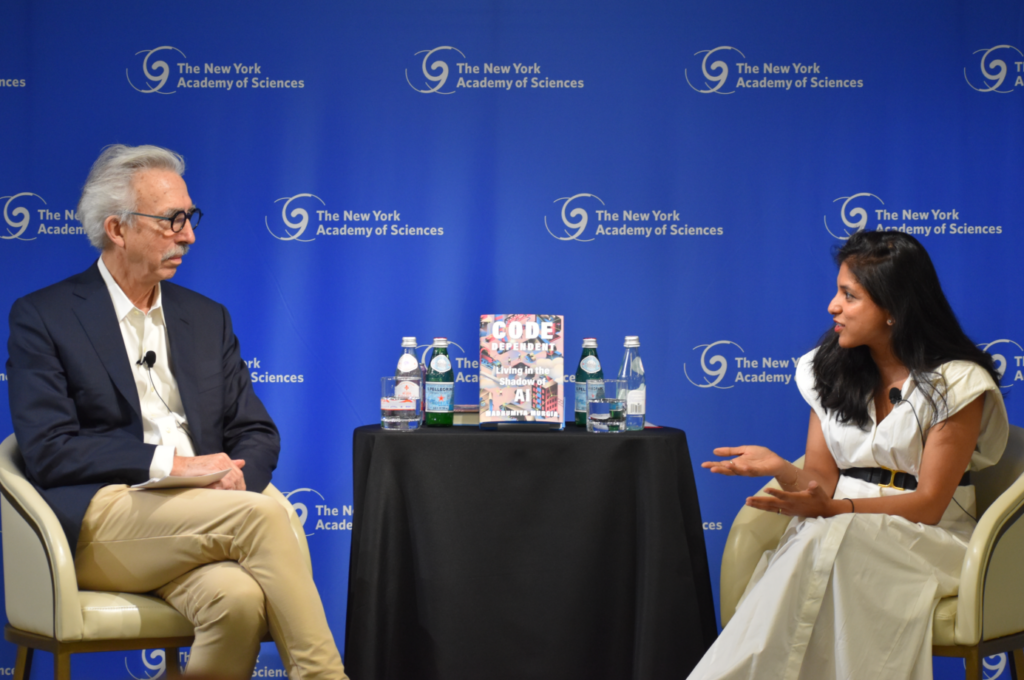
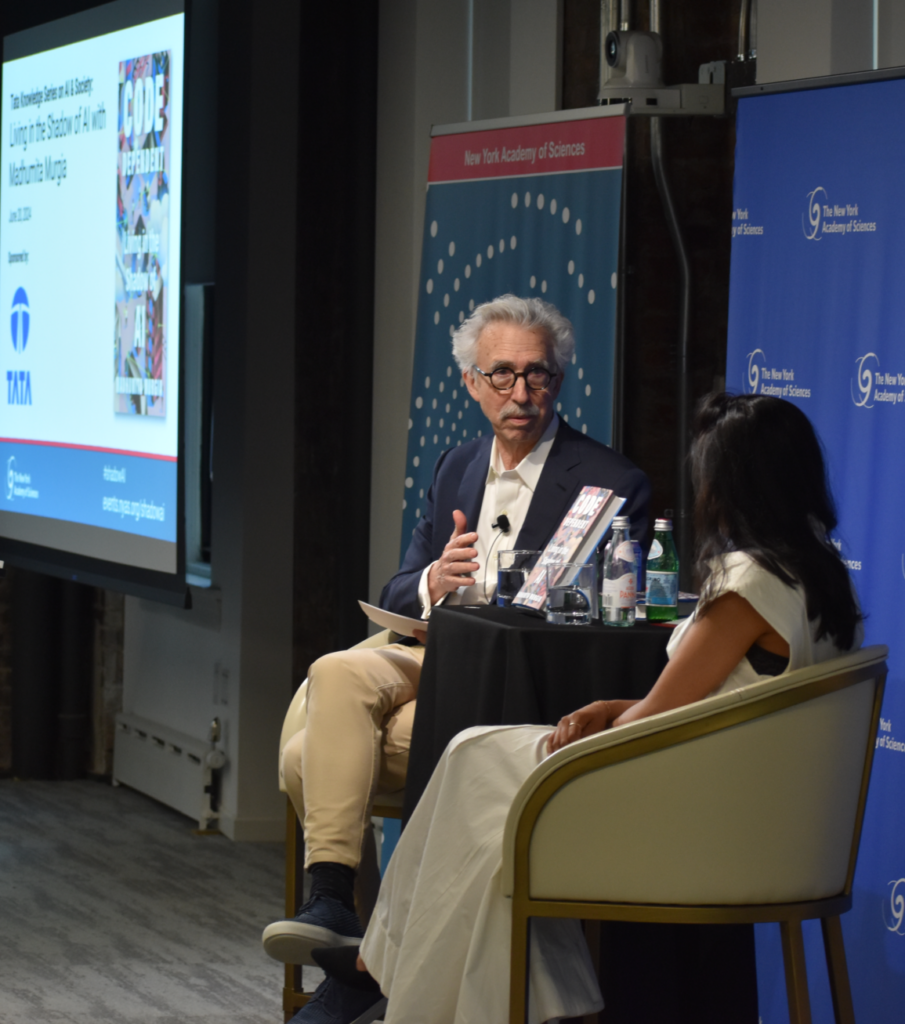
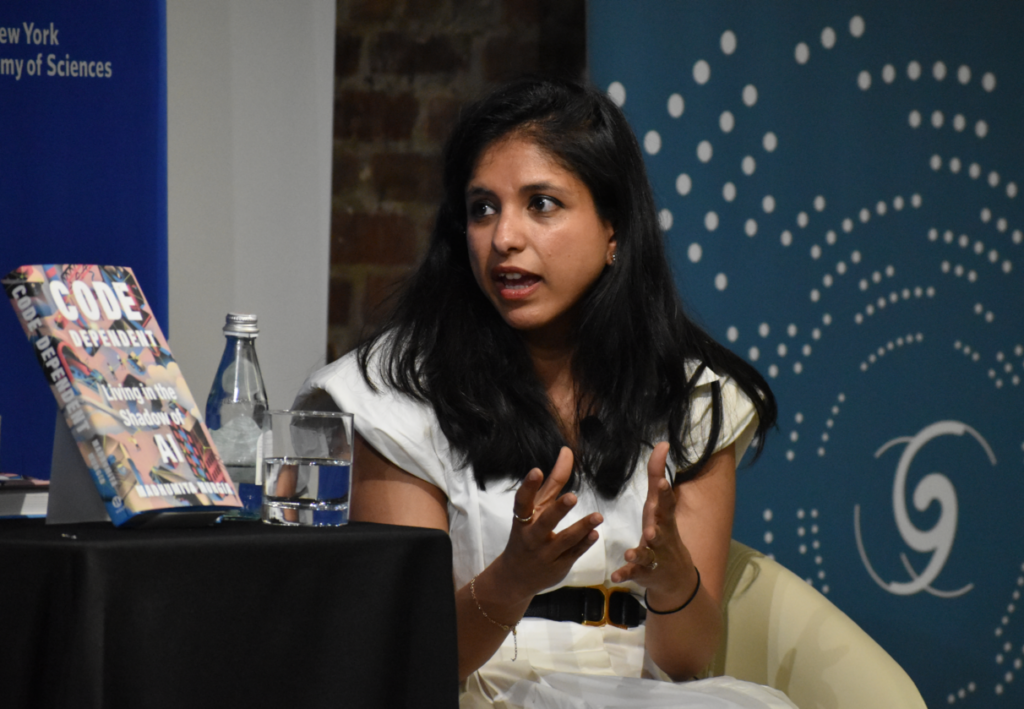
Journalist Madhumita Murgia discusses the potential impact of AI particularly on disenfranchised populations, in her new book Code Dependent: Living in the Shadow of AI.
Published July 16, 2024
By Nick Fetty
Photo by Nick Fetty/The New York Academy of Sciences
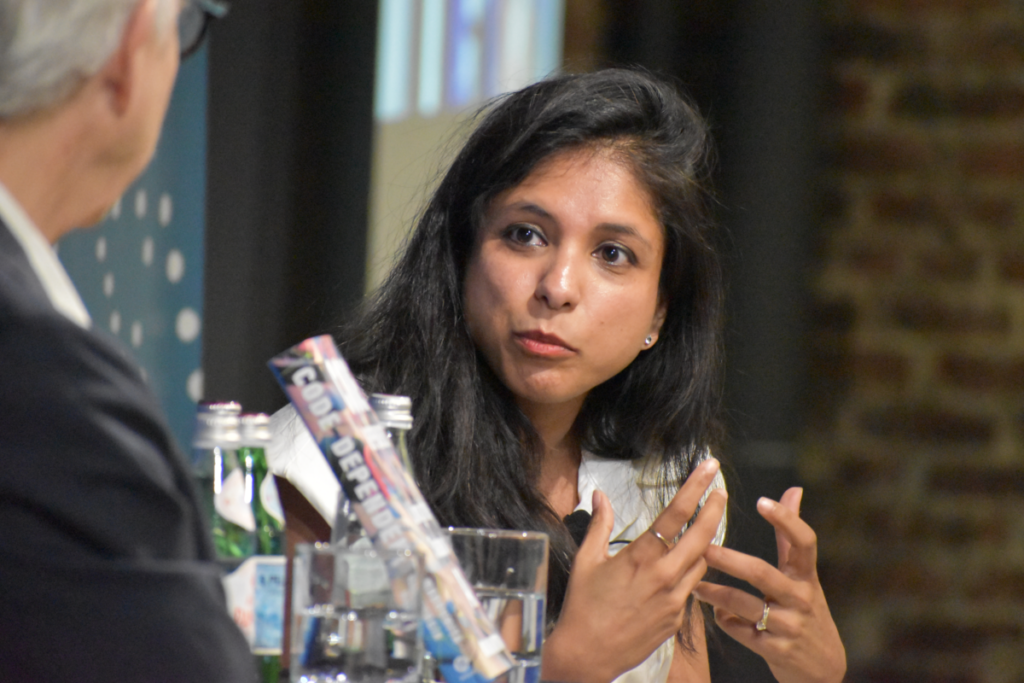
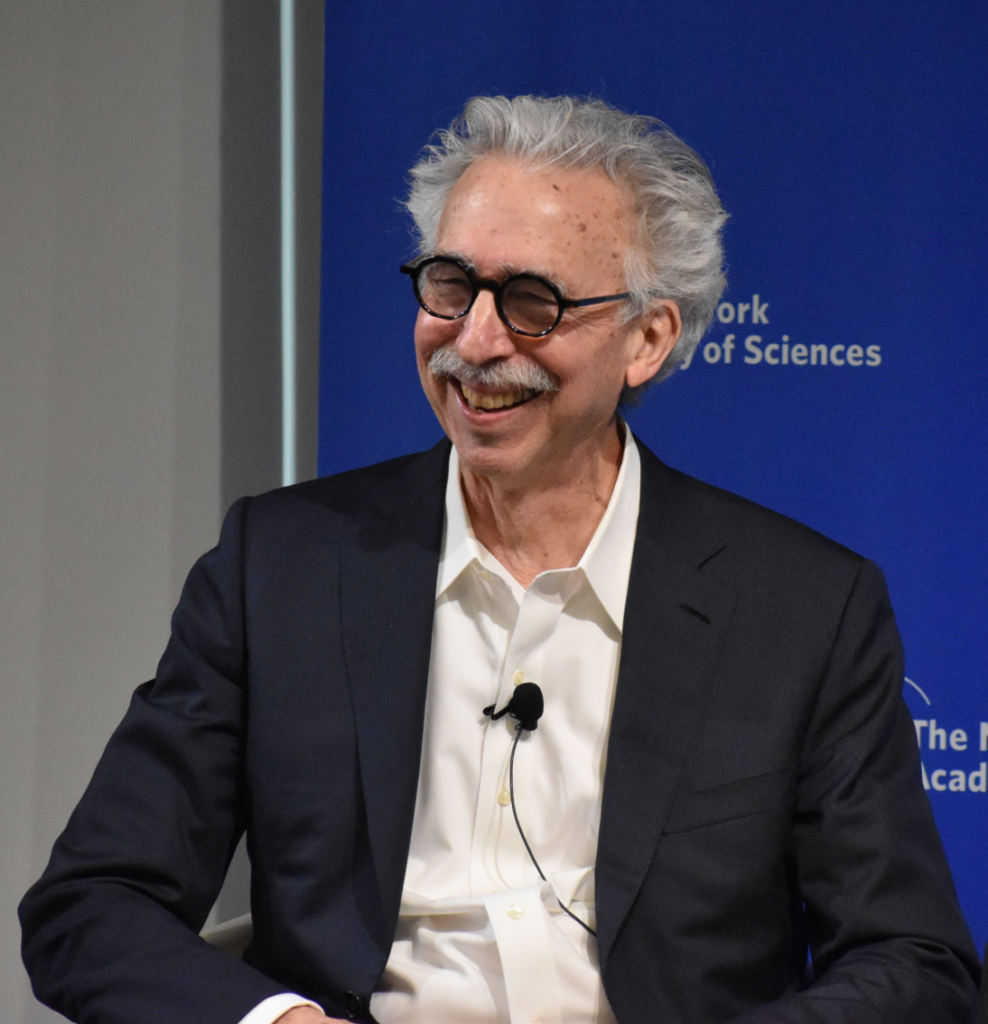
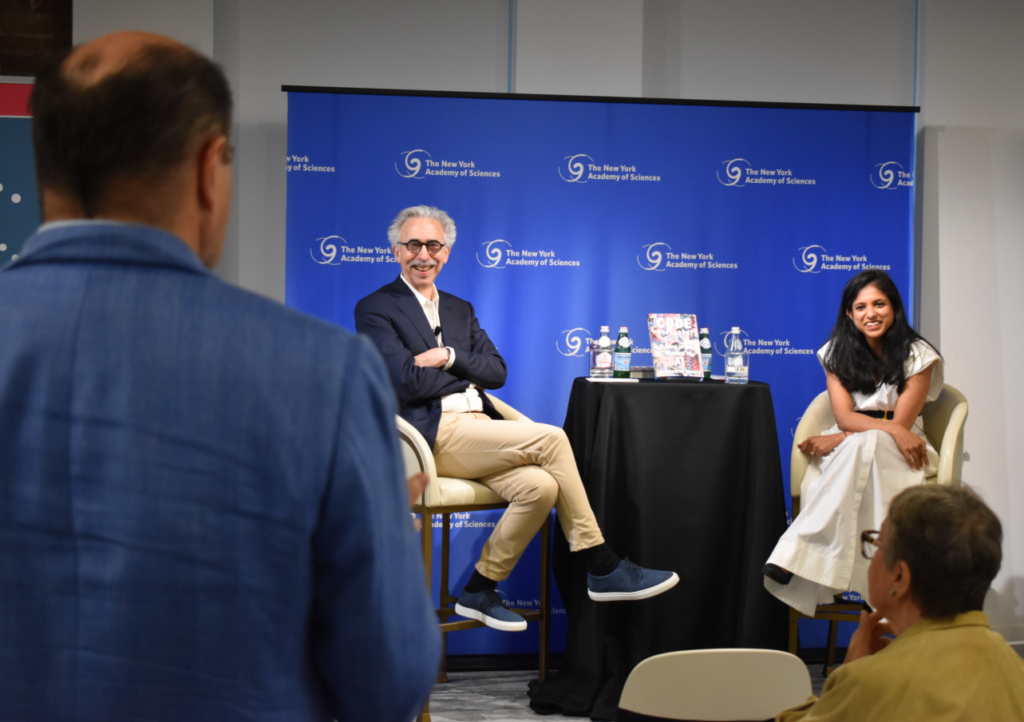
Nicholas Dirks, President and CEO of The New York Academy of Sciences, recently sat down with journalist and author Madhumita Murgia to talk about her new book, as the latest installment of the Tata Knowledge Series on AI & Society, sponsored by Tata and Sons.
Photo by Nick Fetty/The New York Academy of Sciences
From Scientist to Journalist
The discussion kicked off with Murgia talking about her own journey, which began in Mumbai, India. When considering her major at the University of Oxford, she had to decide whether she’d pursue studies in a scientific field or English. She chose the former.
“I think I made the right choice,” said Murgia. “I learned about the scientific method, more than the facts and the research. [I developed] a deep respect for how science is done and how to analyze data.”
After graduating with her undergraduate degree in biological sciences, she remained at Oxford where she completed her master’s in clinical immunology. She was part of a team that worked on an AIDS vaccine prior to earning a M.A. in science journalism from NYU and transitioning to media. Murgia joined the staff of the Financial Times in 2016, serving as the European technology correspondent, and in 2023 was named the newspaper’s first Artificial Intelligence Editor.
“[Journalism is about] understanding complex subjects by talking to the experts, but then distilling that and communicating it to the rest of the world,” said Murgia. “[I want to] bring these complex ideas to people to show them why it matters.”
This basis in science and journalism helped to inform Murgia’s book, which was released in June by Macmillan Publishers.
AI’s Potential in Healthcare
Photo by Nick Fetty/The New York Academy of Sciences
While much of Murgia’s book focuses on societal concerns associated with AI, she highlights healthcare as an area where AI shows positive potential. Murgia discusses an app called Qure.ai, which analyzes chest x-rays to predict the likelihood of tuberculosis (TB), a growing health issue in India. The TB infection burden impacted more than 30 percent of those over the age of 15 between 2019 and 2021, according to the National Prevalence Survey of India.
But Murgia knows that stories about people and their experiences are the most compelling way to make a point. She used the example of patients and doctors, both of whom are dependent on these emerging technologies but in different ways.
“For me, the most optimistic I ever feel about AI is when I think about it in relation to science and health,” said Murgia.
Murgia writes about Ashita Singh, MD, a physician who practices in rural western India, often serving tribal populations. According to Murgia, Dr. Singh described medicine as “an art rather than a science.”
The doctor focuses on making human connections when treating patients knowing that resources in her area are extremely limited. AI has shown potential to fill these resource shortfalls, in part because of Dr. Singh’s willingness to train, test, and implement AI technologies within her medical practice.
“TB is a curable disease. People shouldn’t be dying from it,” said Murgia. “In places where there aren’t many [medical professionals], this is the next best option.”
The Global Infrastructure Training the AI
Photo by Nick Fetty/The New York Academy of Sciences
A consistent theme throughout the book is AI’s at-times exploitative nature on laborers, particularly those at the lower rungs of the socioeconomic ladder. Murgia tells the disturbing story of workers in Africa who are tasked with moderating content for Meta, which owns the popular social media platforms Facebook and Instagram.
While this started out as a way to empower workers, enabling them to develop tech skills while earning a paycheck, it eventually turned exploitative. Workers became traumatized because of the often sexual and violent nature of the content they were forced to view then manually decide whether it violated the platform’s terms of service.
“The more I dug into it, it became apparent that there were huge limitations in how this industry operates,” said Murgia. “The biggest one being the amount of agency these workers are allowed to exercise.”
Murgia cautioned against the technological deterministic take, which can over emphasize the societal benefits of AI. She compared it to colonialism in that the disenfranchised populations are given a small amount of power, but not enough to fight back in a meaningful way.
Empowering Agency Through AI
Photo by Nick Fetty/The New York Academy of Sciences
Murgia said the public may feel a lack of control when using AI because of its complex and fast-moving nature. Typically, the individuals building the systems have the most say.
She added that this is further complicated by the fact that the majority of research and development is done by part-time scientists within corporate environments. These scientists, some of whom continue to hold on to academic appointments, are often bound by financial obligations alongside their ethical responsibilities.
Murgia argues that independent scientists, not bound by corporate obligations, are crucial in areas like evaluation and alignment. Experts in fields like science, medicine, and education provide valuable input when developing these systems, particularly in pinpointing weak points and limitations.
One example of effective, non-corporate work within the realm of scientific research on AI is with the AI Safety Institutes in the United States and the United Kingdom. Murgia feels that these agencies are effective because they are run by computer scientists and machine learning experts rather than regulators and policymakers.
Photo by Nick Fetty/The New York Academy of Sciences
“That gives you a sense of accountability,” said Murgia. “And I think that’s how we can all contribute as it gets implemented into the education system, into hospitals, into workplaces.”
Murgia raised numerous other ethical concerns about AI such as apps underestimating (and therefore underpaying) distances for couriers and the legal gray area of facial recognition software. She also points out threats posed by AI-manipulated video, which often target and sexualize women. AI is also serving as a replacement for romantic human companionship, as illustrated by a Chinese company that has generated half a million AI girlfriends for lonely men.
In his closing remarks, Nicholas Dirks, thanked Murgia and set the stage for future collaboration.
“I heard a lot of encouragement for the projects and initiatives we’re doing here from you, so hopefully we can continue to get advice on how we can be a player in this incredibly complex ecosystem that we’re all now part of, whether we know it or not,” he said.
A recent Associated Press poll reveals that 58% of US adults across both political parties believe that AI will amplify the spread of misinformation in the 2024 presidential election. Despite this widespread distrust, some political candidates have already leveraged deepfake ads in elections, utilizing AI-generated images and text-to-voice converters to craft highly realistic visuals that blur the line between truth and deception.
Beyond influencing public opinion with such deepfakes, AI can also skew election outcomes by deploying chatbots on a massive scale to target millions of voters with tailored political messages.While AI-enabled technologies present significant risks to elections’ integrity and societal cohesion, they also potentially enhance our democratic institutions. This technology can boost civic engagement and strengthen the electoral system by increasing accessibility and mitigating existing biases.
Join us on September 17th for a conversation alongside a panel of experts from political consulting, social neuroscience, and deepfake technologies to explore AI’s dual potential to bolster and undermine the political system. This program is available in person and virtually, with member tickets as low as $10.
The Academy strongly recommends in-person participation to network with fellow participants and be prioritized throughout the Q+A session.
Machine Learning, a subfield of computer science, involves the development of mathematical algorithms that discover knowledge from specific data sets, and then “learn” from the data in an iterative fashion that allows predictions to be made. Today, Machine Learning has a wide range of applications, including natural language processing, search engine optimization, medical diagnosis and treatment, financial fraud detection, and stock market analysis.
This Symposium, the fifteenth in an ongoing series presented by the Machine Learning Discussion Group at The New York Academy of Sciences, will feature:
Keynote Presentations from leading researchers in both applied and theoretical Machine Learning
Spotlight Talks: A series of short, early-career investigator podium presentations across a variety of topics at the frontier of Machine Learning; and
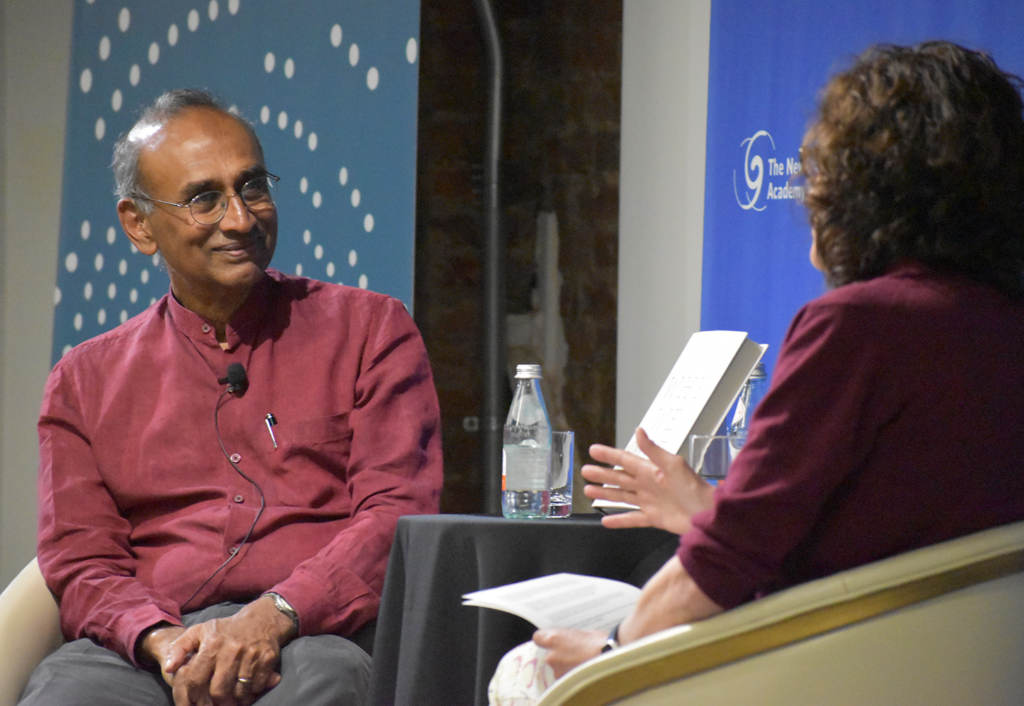
Nobel Laureate Venki Ramakrishnan, world-renowned molecular biologist, presents the science about why humans die.
Published May 7, 2024
By Nick Fetty
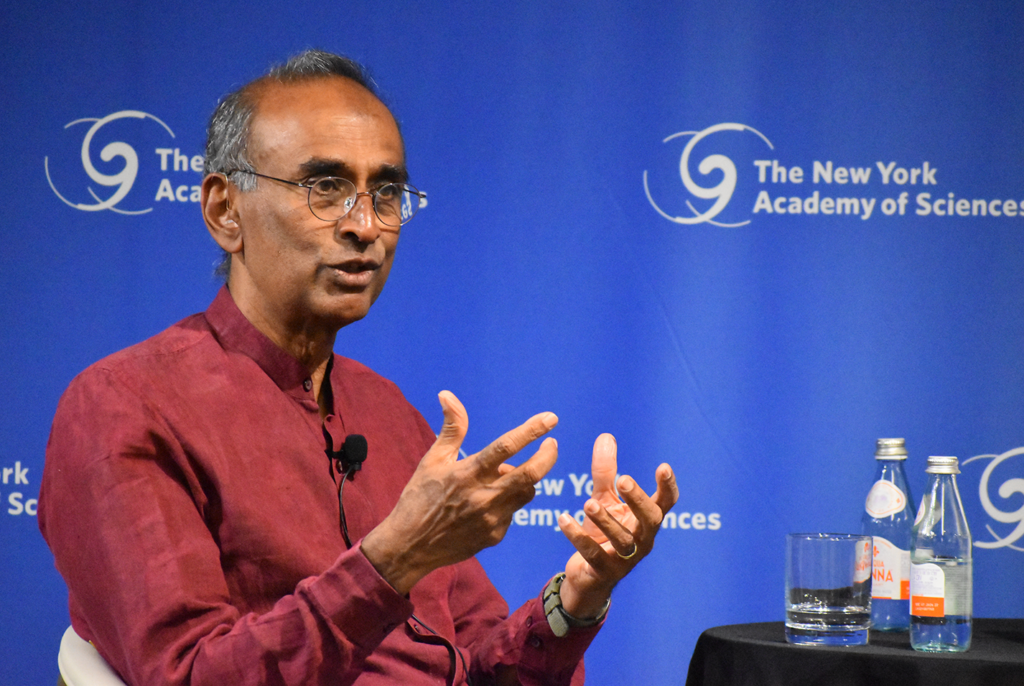
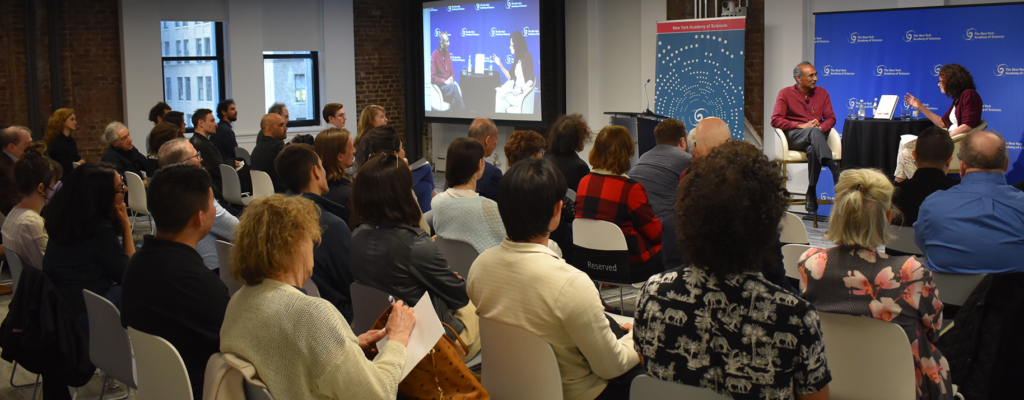
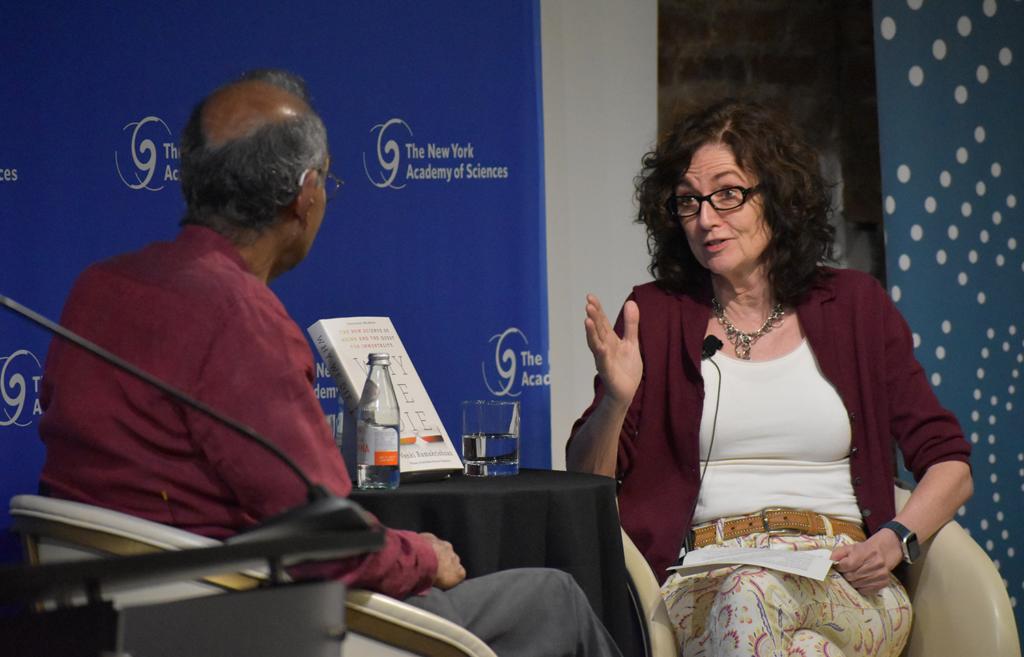
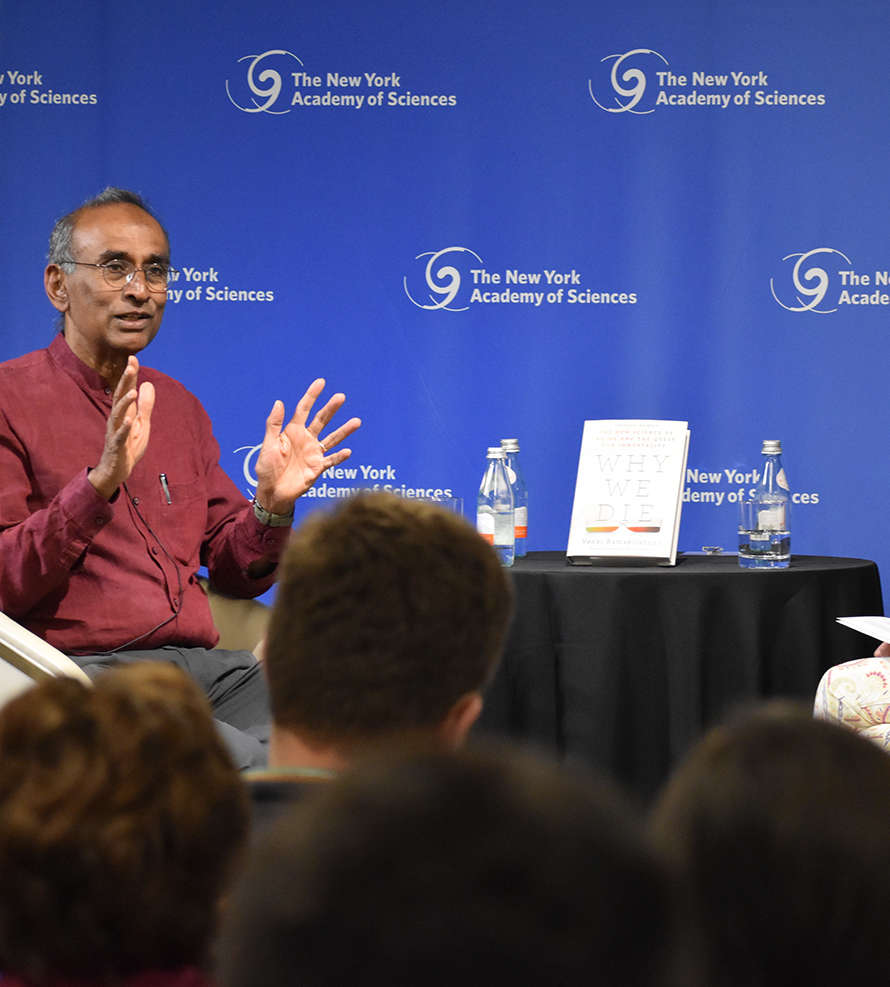
Nobel Prize winner Venki Ramakrishnan is interviewed by Titia de Lange, Director of The Rockefeller University’s Anderson Center for Cancer Research, at The New York Academy of Sciences on April 16, 2024. Photo by Nick Fetty/The New York Academy of Sciences
Photo by Nick Fetty/The New York Academy of Sciences
Ramakrishnan discussed his new book with Titia de Lange, Director of The Rockefeller University’s Anderson Center for Cancer Research, during the “Authors at the Academy” event at The New York Academy of Sciences on April 16, 2024. He began by suggesting that humans may be the only species aware of its own mortality.
While societies have long focused on both the philosophical and the scientific dimensions of mortality, Ramakrishnan pointed out that aging research was considered “something of a backwater in molecular biology for a long time.” It’s only been over the past half-century that this field of research has become more mainstream.
“[While there have been advances in the research], because this is an area that people are concerned about, and they’re anxious about, there’s also a lot of hype,” said Ramakrishnan, who is also a member of the Academy’s President’s Council.
As a molecular biologist, Ramakrishnan avoided speculation, focusing instead on researching an objective, scientifically-based case about aging and mortality.
Evolution and Mortality
Ramakrishnan said there is a wide range in lifecycles of different creatures, from a mayfly which can live for just a day, to certain species of sharks and whales that may live for more than a century.
“A giant tortoise might be around today that could have encountered [Charles] Darwin,” Ramakrishnan said, with a nod to the renowned evolutionary biologist who was an honorary member of the Academy more than a century ago.
Photo by Nick Fetty/The New York Academy of Sciences
Researchers believe that evolution is largely focused on fitness, which, in this context, Ramakrishnan defined as “maximizing the ability to successfully pass on your genes.” Part of this fitness is tied to physical size. He pointed out that creatures like mice tend to have shorter lifespans than an elephant or a whale.
“You might ask, why is that?” Ramakrishnan said. “Well, aging is an accumulation of chemical damage which manifests itself from the molecular level all the way to the entire organism. To repair such damage takes lots of resources and lots of energy. So, this has a cost because animals are always trying to get energy.”
From an evolutionary standpoint, to maximize fitness it’s more advantageous for a creature like a mouse to allocate its resources to features such as rapid growth, rapid maturation, and producing many offspring. Conversely, larger animals allocate resources to repairing and maintaining natural chemical damage because such creatures need to live longer to raise their offspring to full maturity, Ramakrishnan argued.
This is what evolutionary biologists call the Antagonistic Pleiotropy theory. Based on this theory, genes that involve rapid growth or rapid maturation often turn out to be detrimental later in life and contribute to aging.
Photo by Nick Fetty/The New York Academy of Sciences
The Metabolic Rate Theory of Aging
According to Ramakrishnan, the metabolic rate theory states that “if you have increased metabolism then you’re generating byproducts…like free radicals and reactive species which can cause damage. So, the faster your metabolism is, the more likely the higher the rate at which you’re going to age.”
Generally, a faster metabolism means a shorter lifespan, but Ramakrishnan said this is not always the case. He used the example of some species of smaller bats, that are similar in size to mice, but because of the bat’s ability to fly, are less likely to be targets of predators, and can live for as long as 40 years.
“I think biologists would say it’s really about evolutionary choice and how each species has been selected for optimizing that choice,” said Ramakrishnan. “That choice could be, yes there’s damage but you can also repair the damage, so how much do you spend on repairing the damage?”
Researchers who study aging are divided about the potential maximum lifespan of humans. Some believe that 115 is the top of the range, while others feel that the first person to live to 150 has already been born. Ramakrishnan said he thinks the current natural limit is around 120 years, citing the fact that the number of centenarians (those who live to the age of 100) has increased in recent decades, but the number of people who live past the age of 110 has not.
“That suggests that those people who reach 110, are hitting some natural limit of our biology, of our species,” said Ramakrishnan, adding that he feels that those who think the upper limit is 150 are being “excessively optimistic.”
Societal Impacts of Expanded Lifespans
Photo by Nick Fetty/The New York Academy of Sciences
Science aside, what are the societal impacts of expanded lifespans? Several private sector tech billionaires have shown interest in extending lifespans. As Ramakrishnan points out, the issue has also been on the radar of government agencies such as NIH’s National Institute on Aging in the US or the Medical Research Council in the UK.
“So, the question is how do we keep people healthy for as long as possible so people can stay productive?” asked Ramakrishnan.
The answer may well lie with the next generation of scientists who will bring in innovative ideas and fresh perspectives. While Ramakrishnan remains productive, he concedes it may be time to retire next year.
“I think there are lots of roles we can play without taking away resources from the younger people,” said Ramakrishnan, citing examples like serving on editorial boards or as mentors. “Generational turnover is good for society and good for science.”
For on-demand video access to the full event, click here.
Check out the other events from our 2024 Authors at the Academy Series
In a world that often highlights only outcomes and successes, we tend to overlook the invaluable lessons and growth opportunities that failure can offer. This panel seeks to challenge that narrative by shining a spotlight on the importance of embracing missteps and mistakes as an essential part of the journey toward personal and professional fulfillment.
Please join The New York Academy of Sciences and Hudson River Park in this candid conversation, featuring a diverse panel of STEM professionals, where we delve into the often taboo notion of failure in STEM. Explore failure not as a final verdict, but as a natural and necessary part of a never ending learning process, and celebrate the beauty that comes with imperfection.
During this event, we will cover a variety of topics, including:
How to challenge conventional notions of failure and perfectionism, and understanding how setbacks can be stepping stones toward innovation
What it means to uncover the hidden opportunities for growth and self-discovery within moments of failure, and strategies to bounce back from failures, adapt to challenges, and persevere in the face of adversity
Discovering how embracing imperfection can fuel creativity, spark innovation, and lead to groundbreaking discoveries and unexpected solutions
This event is targeted toward high school and college students interested in STEM careers, but is open to anyone seeking to redefine failure as essential in creating a culture of learning, innovation, and resilience that empowers individuals to take risks and discover new parts of themselves and the world.
Immediately following our panel discussion, in-person attendees are invited to join in a networking session, where they can share their own experiences of failure and connect with panelists and fellow audience members in a supportive and non-judgmental environment.
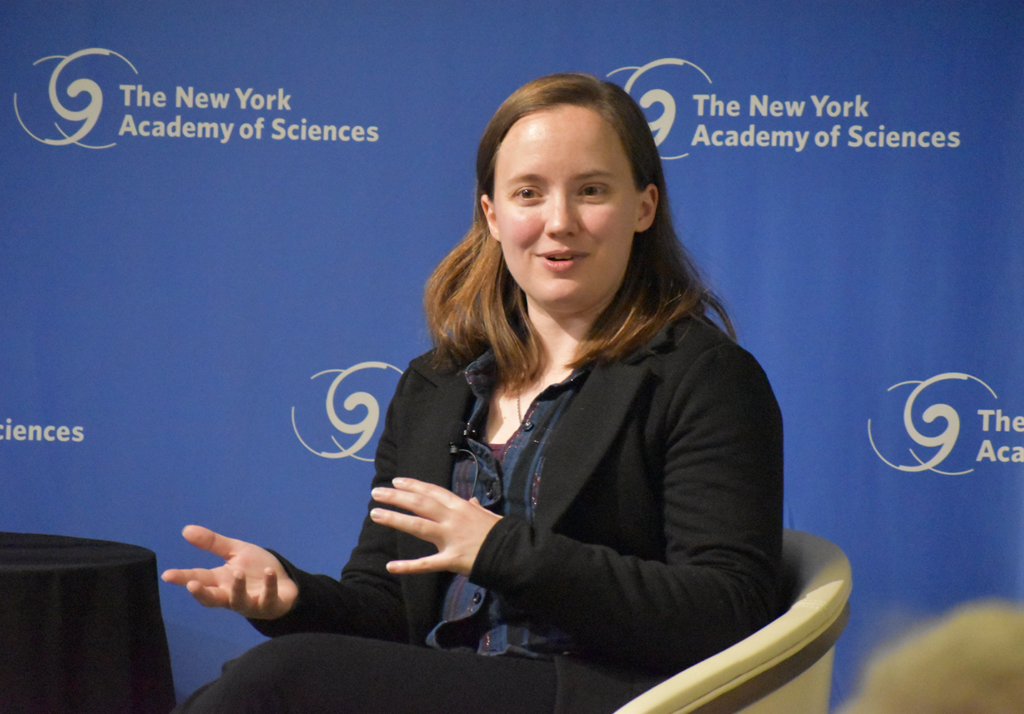
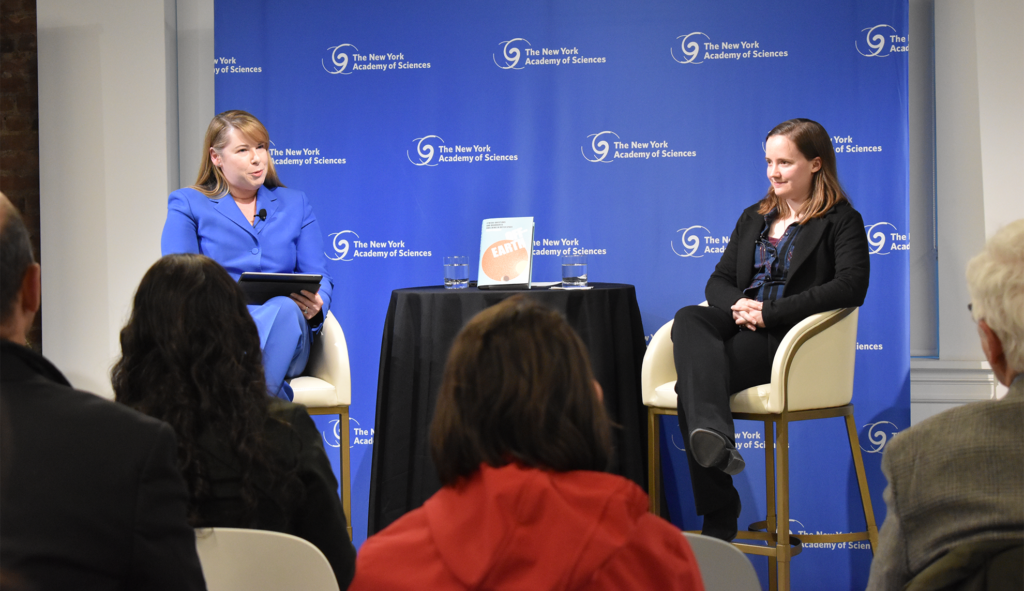
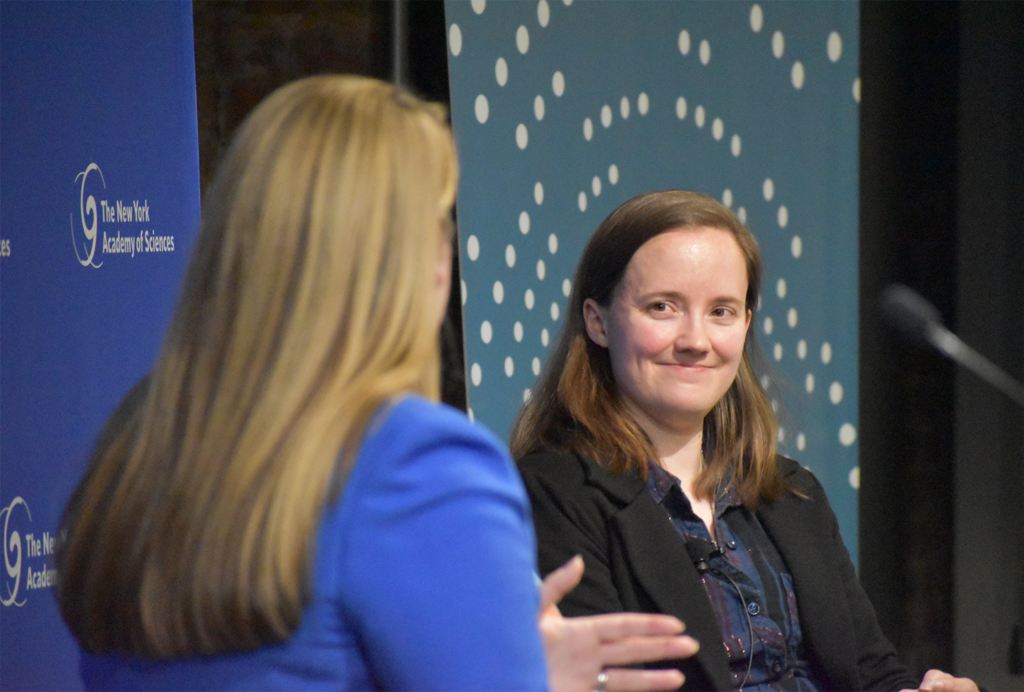
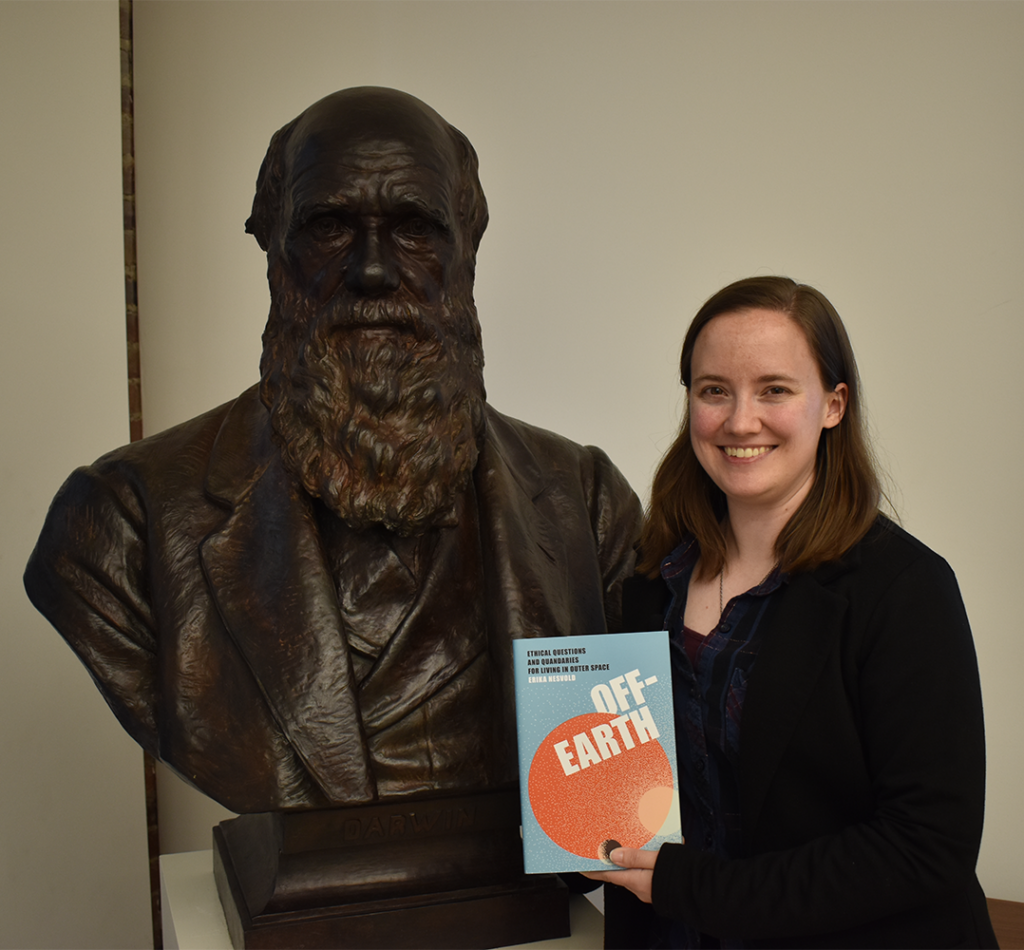
While there are many scientific and engineering considerations that need to be applied to the human settlement of outer space, author Erika Nesvold argues in her new book that we mustn’t forget about the ethical and social justice dimensions.
Published April 15, 2024
By Nick Fetty
Photo by Nick Fetty/The New York Academy of Sciences
Nesvold, who holds a PhD in physics from the University of Maryland Baltimore County and is cofounder of the JustSpace Alliance, began the event by discussing what motivated her to write a book focused on space ethics. While working at the Carnegie Institute of Science in Washington D.C. she traveled to Silicon Valley to do a six-week research program for NASA, focused on planetary defense, or as she put it “defending the earth from asteroids.” Through this, she met representatives from several prominent organizations in the emerging private sector space industry.
Photo by Nick Fetty/The New York Academy of Sciences
“I was excited because I’ve always been very interested in human space travel and the idea of humans living in space, and a lot of these companies said their goal was to get humans living in space,” said Nesvold. “But then when I talked to these entrepreneurs, I actually found I was kind of disappointed. I asked them questions about things that I thought were going to be a big deal [but they didn’t really have answers].”
Nesvold said she was concerned with issues like how explorers will make sure their mining equipment doesn’t contaminate the landscape and how labor rights will be regulated. She said the answer she often got was “We’ll worry about that later” and she felt this was not the proper approach.
As an astrophysicist she knew she didn’t have the background to answer these questions herself so she decided to launch a podcast to explore some of her ethical ponderings. The podcast was “moderately successful,” and with a new network of experts ranging from labor rights activists to historians to space lawyers, Nesvold turned her podcast miniseries into a book.
“I intentionally put questions in the title because it’s really more questions than answers, but we have to start somewhere,” said Nesvold.
Who Gets to Go?
Another element Nesvold addresses in her book is determining who gets to be part of the crews that go into space. Much like in broader society, Nesvold said diversity of experiences and backgrounds will be an important consideration when determining who goes.
She pointed out that the current criteria NASA uses for determining who goes into space is “extremely strict” and joked that she’s applied three times now and “never gets past the first stage.” The number of people who want to go into space exceeds the supply of vehicles that will get them there, and this was demonstrated when the majority of the event’s attendees raised their hands when asked if they’d be interested in traveling to space.
“There’s more people in this room [right now] who want to go to space than what they hired in the last round of astronaut hires,” she said with a smile.
Once the settlement of space becomes more feasible, Nesvold said many factors will need to be considered to determine who gets to be part of that initial cohort. Making certain this cohort has the proper expertise from engineers and doctors to plumbers and technicians will be essential, she said.
Photo by Nick Fetty/The New York Academy of Sciences
Additionally, Nesvold argues that the first cohort should properly reflect humanity. This would likely include individuals from all over the world. Gender balance will be important and perhaps even certain genetic issues will need to be considered if this cohort will be producing the next generation, but Nesvold cautions they don’t want to wade into eugenics. She said these early space settlers will need to find the middle ground between the utilitarian (“…if the settlement collapses, then none of this matters…”) and societal values like equity and accessibility.
Who Owns Space?
The Outer Space Treaty of 1967 was established during the height of the Cold War and Nesvold called it “miraculous” that both the United States and the Soviet Union signed it, considering the political hostilities between the two countries. The treaty itself aimed to establish guidelines that forbade nations from acts like appropriating territory or detonating a nuclear weapon in space. The intent was to avoid the wars and other conflicts seen during previous eras of human migration and settlement.
“I think that was good foresight,” said Nesvold. “What they didn’t think too far ahead about was what private companies would want to do.”
With the rise of the private sector space industry, this issue has been brought back to the forefront. Nesvold said that based on many current interpretations of the treaty, issues such as individual or even company appropriation of territory would still be forbidden. She said this can be problematic in capitalistic economies where private property rights are key to driving growth and innovation.
Various countries, including the US, have passed national laws that state while companies cannot own land in space, they can own resources they extract in processes such as space mining. She compared this to international fishing regulations that forbid individuals or companies from claiming territory in international waters, but they do own the fish they catch in those waters.
The Birds and the Bees
Eventually the settlement of outer space will require humans reproducing to maintain the population. However, given reduced gravity and other elements of the environment, scientists need to think about both the technical and the ethical dimensions of reproduction.
Photo by Nick Fetty/The New York Academy of Sciences
“Part of the reason this is still a big open question is because we don’t even know how to figure that out scientifically in an ethical way because almost every medical researcher and bioethicist you talk to will say it’s not a good idea to do medical experiments with pregnant people and fetuses,” Nesvold said.
Once the reproduction question is figured out, Nesvold said they’ll need to study if these children will be physically able to handle gravity if they return to earth. Additionally, given the scarce resources during the early missions, overpopulation can become an issue if not regulated. She pointed out that this will then lead to additional ethical issues around government overreach, bodily autonomy and eugenics.
Conversely, underpopulation can also become problematic if illness or another accident takes out part of the settlement. Reproduction could become necessary to sustain the population, which becomes ethically concerning if people are forced to procreate.
“This comes down to questions about an individual’s right to say what happens to their own body versus the society’s demands on them, which are all questions we face on earth as well,” Nesvold said.
For on-demand video access to the full event, click here.
Check out the other events from our 2024 Authors at the Academy Series
The renowned Chief AI Scientist of Meta, Yann LeCun, discussed everything from his foundational research in neural networks to his optimistic outlook on the future of AI technology at a sold-out Tata Knowledge Series on AI & Society event with the Academy’s President & CEO Nick Dirks while highlighting the importance of the open-source model.
Published April 8, 2024
By Nick Fetty
Photo by Nick Fetty/The New York Academy of Sciences
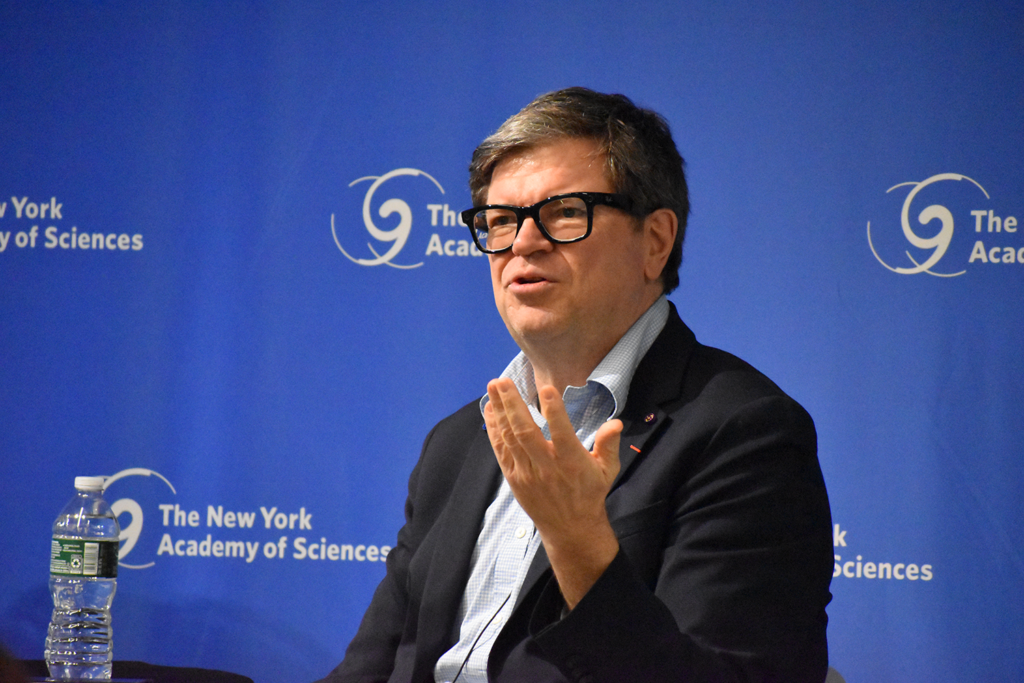
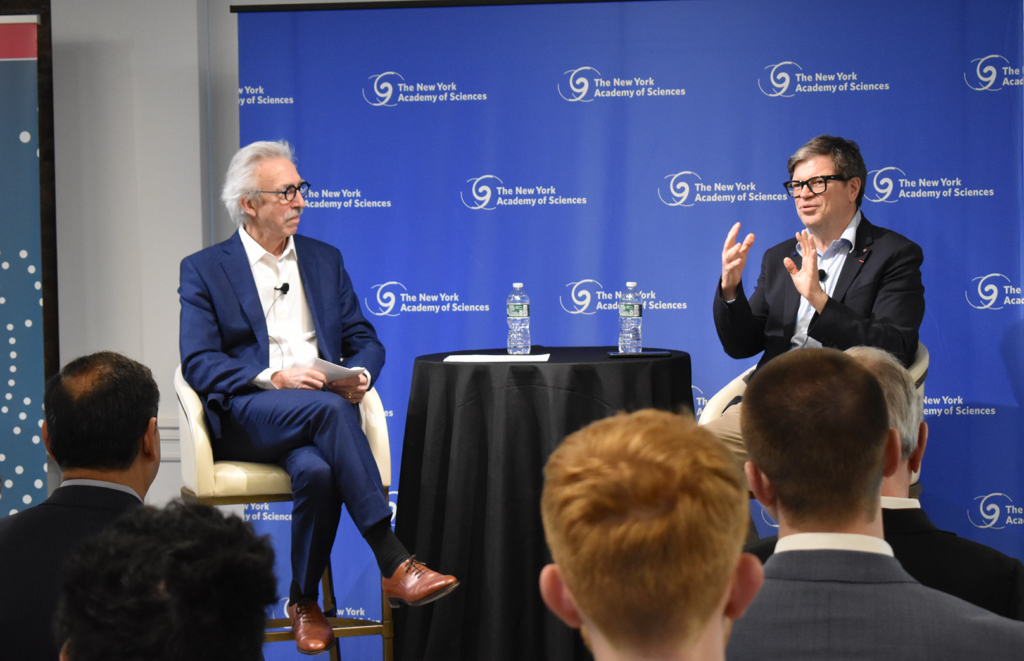
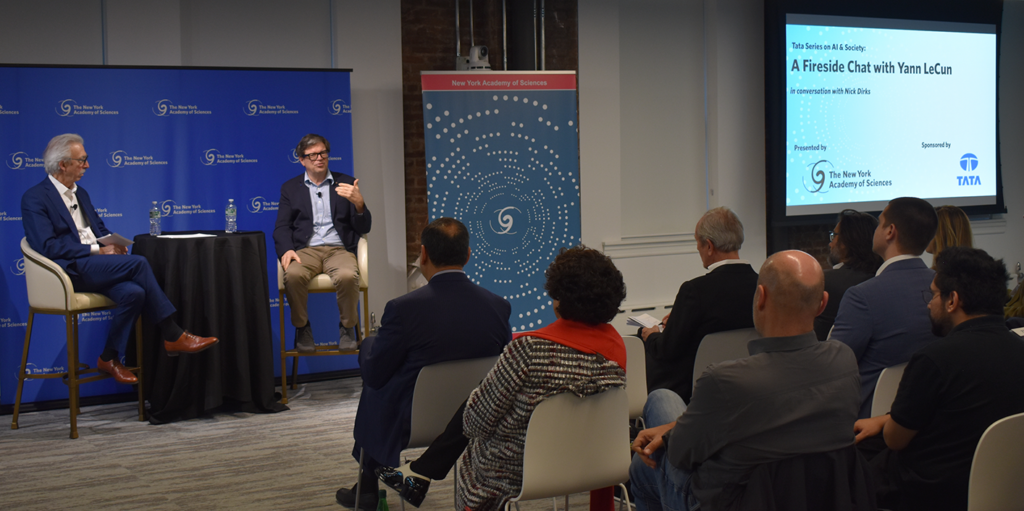
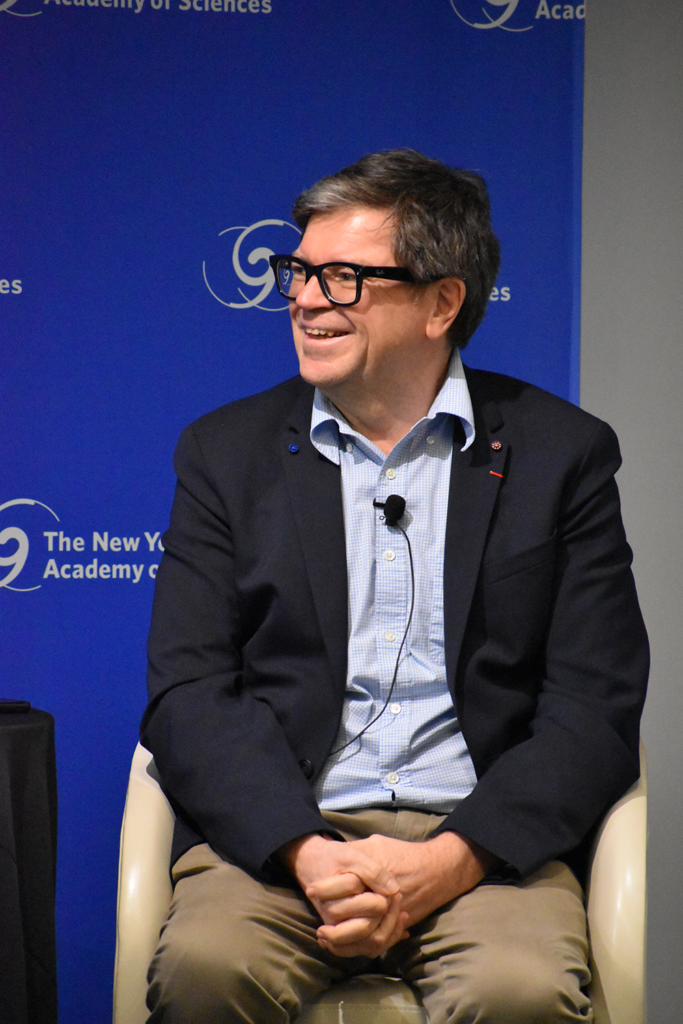
Yann LeCun, a Turing Award winning computer scientist, had a wide-ranging discussion about artificial intelligence (AI) with Nicholas Dirks, President and CEO of The New York Academy of Sciences, as part of the first installment of the Tata Series on AI & Society on March 14, 2024.
LeCun is the Vice President and Chief AI Scientist at Meta, as well as the Silver Professor for the Courant Institute of Mathematical Sciences at New York University. A leading researcher in machine learning, computer vision, mobile robotics, and computational neuroscience, LeCun has long been associated with the Academy, serving as a featured speaker during past machine learning conferences and also as a juror for the Blavatnik Awards for Young Scientists.
Advancing Neural Network Research
Photo by Nick Fetty/The New York Academy of Sciences
As a postdoc at the University of Toronto, LeCun worked alongside Geoffrey Hinton, who’s been dubbed the “godfather of AI,” conducting early research in neural networks. Some of this early work would later be applied to the field of generative AI. At this time, many of the field’s foremost experts cautioned against pursuing such endeavors. He shared with the audience what drove him to pursue this work, despite the reservations some had.
“Everything that lives can adapt but everything that has a brain can learn,” said LeCun. “The idea was that learning was going to be critical to make machines more intelligent, which I think was completely obvious, but I noticed that nobody was really working on this at the time.”
LeCun joked that because of the field’s relative infancy, he struggled at first to find a doctoral advisor, but he eventually pursued a PhD in computer science at the Université Pierre et Marie Curie where he studied under Maurice Milgram. He recalled some of the limitations, such as the lack of large-scale training data and limited processing power in computers, during those early years in the late 1980s and 1990s. By the early 2000s, he and his colleagues began developing a research community to revive and advance work in neural networks and machine learning.
Work in the field really started taking off in the late 2000s, LeCun said. Advances in speech and image recognition software were just a couple of the instances LeCun cited that used neural networks in deep learning applications. LeCun said he had no doubt about the potential of neural networks once the data sets and computing power was sufficient.
Limitations of Large Language Models
Large language models (LLMs), such as ChatGPT or autocomplete, use machine learning to “predict and generate plausible language.” While some have expressed concerns about machines surpassing human intelligence, LeCun admits that he takes an unpopular opinion in thinking that he doesn’t think LLMs are as intelligent as they may seem.
LLMs are developed using a finite number of words, or more specifically tokens which are roughly three-quarters of a word on average, according to LeCun. He said that many LLMs are developed using as many as 10 trillion tokens.
While much consideration goes into deciding what tunable parameters will be used to develop these systems, LeCun points out that “they’re not trained for any particular task, they’re basically trained to fill in the blanks.” He said that more than just language needs to be considered to develop an intelligent system.
Photo by Nick Fetty/The New York Academy of Sciences
“That’s pretty much why those LLMs are subject to hallucinations, which really you should call confabulations. They can’t really reason. They can’t really plan. They basically just produce one word after the other, without really thinking in advance about what they’re going to say,” LeCun said, adding that “we have a lot of work to do to get machines to the level of human intelligence, we’re nowhere near that.”
A More Efficient AI
LeCun argued that to have a smarter AI, these technologies should be informed by sensory input (observations and interactions) instead of language inputs. He pointed to orangutans, which are highly intelligent creatures that survive without using language.
Part of LeCun’s argument for why sensory inputs would lead to better AI systems is because the brain processes these inputs much faster. While reading text or digesting language, the human brain processes information at about 12 bytes per second, compared to sensory inputs from observations and interactions, which the brain processes at about 20 megabytes per second.
“To build truly intelligent systems, they’d need to understand the physical world, be able to reason, plan, remember and retrieve. The architecture of future systems that will be capable of doing this will be very different from current large language models,” he said.
AI and Social Media
As part of his work with Meta, LeCun uses and develops AI tools to detect content that violates the terms of services on social media platforms like Facebook and Instagram, though he is not directly involved with the moderation of content itself. Roughly 88 percent of content removed is initially flagged by AI, which helps his team in taking down roughly 10 million items every three months. Despite these efforts, misinformation, disinformation, deep fakes, and other manipulated content continue to be problematic, though the means for detecting this content automatically has vastly improved.
Photo by Nick Fetty/The New York Academy of Sciences
LeCun referenced statistics stating that in late 2017, roughly 20 to 25 percent of hate speech content was flagged by AI tools. This number climbed to 96 percent just five years later. LeCun said this difference can be attributed to two things: first the emergence of self-supervised, language-based AI systems (which predated the existence of ChatGPT); and second, is the “transformer architecture” present in LLMs and other systems. He added that these systems can not only detect hate speech, but also violent speech, terrorist propaganda, bullying, fake news and deep fakes.
“The best countermeasure against these [concerns] is AI. AI is not really the problem here, it’s actually the solution,” said LeCun.
He said this will require a combination of better technological systems, “The AI of the good guys have to stay ahead of the AI of the bad guys,” as well as non-technological, societal input to easily detect content produced or adapted by AI. He added that an ideal standard would involve a watermark-like tool that verifies legitimate content, as opposed to a technology tasked with flagging inauthentic material.
Open Sourcing AI
LeCun pointed to a study by researchers at New York University which found that audiences over the age of 65 are most likely to be tricked by false or manipulated content. Younger audiences, particularly those who grew up with the internet, are less likely to be fooled, according to the research.
One element that separates Meta from its contemporaries is the former’s ability to control the AI algorithms that oversee much of its platforms’ content. Part of this is attributed to LeCun’s insistence on open sourcing their AI code, which is a sentiment shared by the company and part of the reason he ended up at Meta.
“I told [Meta executives] that if we create a research lab we’ll have to publish everything we do, and open source our code, because we don’t have a monopoly on good ideas,” said LeCun. “The best way I know, which I learned from working at Bell Labs and in academia, of making progress as quickly as possible is to get as many people as possible contributing to a particular problem.”
LeCun added that part of the reason AI has made the advances it has in recent years is because many in the industry have embraced the importance of open publication, open sourcing and collaboration.
“It’s an ecosystem and we build on each other’s ideas,” LeCun said.
Avoiding AI Monopolies
Photo by Nick Fetty/The New York Academy of Sciences
Another advantage is that open sourcing lessens the likelihood of a single company developing a monopoly over a particular technology. LeCun said a single company simply does not have the ability to finetune an AI system that will adequately serve the entire population of the world.
Many of the early systems have been developed using English, where data is abundant, but, for example, different inputs will need to be considered in a country such as India, where 22 different official languages are spoken. These inputs can be utilized in a way that a contributor doesn’t need to be literate – simply having the ability to speak a language would be enough to create a baseline for AI systems that serve diverse audiences. He said that freedom and diversity in AI is important in the same way that freedom and diversity is vital to having an independent press.
“The risk of slowing AI is much greater than the risk of disseminating it,” LeCun said.
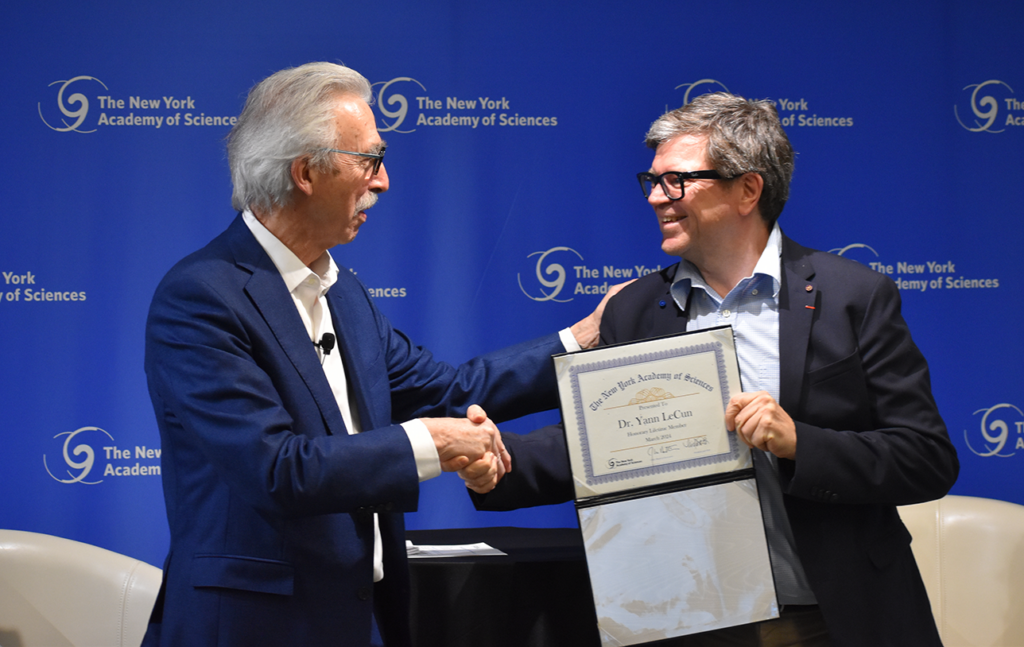
Following a brief question and answer session, LeCun was presented with an Honorary Life Membership by the Academy’s President and CEO, Nick Dirks.
“This means that you’ll be coming back often to speak with us and we can all get our questions answered,” Dirks said with a smile to wrap up the event. “Thank you so much.”