How to Get Motivated Kids Invested in Science

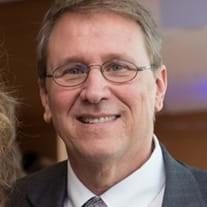
A man poses for the camera.

“I think the key thing here is that these kids are in a class by themselves. World class. Not just smart, but motivated, eager, and most important invested.

Published June 9, 2017

By Marie Gentile and Robert Birchard

Ron Fritz, PhD

Ron Fritz, PhD, works for PepsiCo and also serves as a mentor for the Junior Academy at The New York Academy of Sciences. He talks about his experience mentoring and the encouraging growth he sees from his students.

What are your students working on?

Food Loss and Waste: Transportation and Logistics. Specifically, they came up with an ingenious use of evaporative cooling; designing, building, and testing a non-electric ‘fridge’ (based on ‘zeer pot’ technology) made of recycled materials.

What surprised you about your students?

I knew they would be smart and clever, but what surprised me was their incredible focus and tenacity in going after solutions to design problems encountered. They didn’t back off or quit when a challenge emerged but rather relished the opportunity to overcome it.

What surprised you about your mentoring experience?

The student’s ‘relentless’ engagement made it great fun for me and I think for the team as a whole. There’s nothing better than being part of a team working like failure is not an option. It was exhilarating because of the awesome work ethic the students employed and the leadership that evolved among them. To be honest, just prior to the kickoff of the challenge I was considering dropping out due to increased business demands on my schedule. I am so glad I didn’t. Even though those demands did not diminish, these kids’ efforts were inspiring and kept me going.

What kind of growth did you see in your students?

With some of the students it was leadership, in others “followership” – with all it was ‘hey, we’ve got a great team, great ideas and great talents that can make a difference!’ That attitude energized everyone, including myself. Perhaps the correct word is ‘devoted’ to finishing the team’s mission. I think the type of camaraderie experienced was a first for some of the students. Also, the level of talent brought together. As a youth sports coach over the years, this was like realizing you have something really special going on with a particular collection of kids.

Anything else you’d like to share?

Yes. I think the key thing here is that these kids are in a class by themselves. World class. Not just smart, but motivated, eager, and most important invested. This makes mentoring in this venue a unique experience, truly providing an opportunity to accomplish something of significance with ‘no holds barred’, ‘blue sky’ thinkers.

Learn more about the Junior Academy!

Life in the Junior Academy in the 1970s

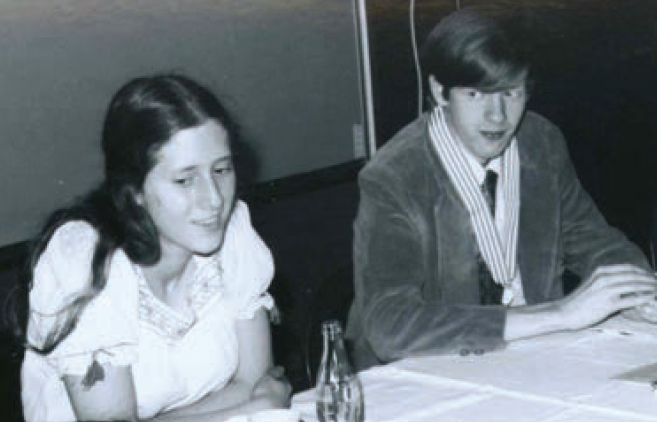
A black and white shot of two teenagers in the 1970s.

A member of The New York Academy of Sciences’ Junior Academy reminisces about her involvement in the program, including as president, during the 1970s.

Published September 1, 2016

By W.M. Akers

Junior Academy president Paul Sullivan passes the torch to Joy Hecht.

An environmental economist, Joy Hecht, PhD, has studied the economic impact of environmental damage everywhere from Lebanon to Malawi. But in 1974, she spent most of her free time somewhere less exciting: the Xerox room of The New York Academy of Sciences (the Academy). As president of the Junior Academy, Hecht oversaw an entirely student-run operation with members all over New York. We spoke to her recently to ask about her memories of the Junior Academy, and the special bond she and the other students formed.

How did you get involved with the Junior Academy?

I went to Hunter High School, which at that time was an all-girls school. My mother told me, “You should get involved with the Junior Academy of Sciences. You can meet boys that way.” I got involved with it, initially as a way to meet boys, and it became a part of my life.

I think a great deal of what made the Junior Academy awesome is that it was run by high school kids. We did all the work. No one else was telling us what to do.

What was the Junior Academy like then?

It was a place to hang out. The Junior Academy had its files at the Xerox room, so we all hung out at the Xerox machine. We were organizing events, we were doing mailings, we would get kids in after school to stuff envelopes. We always had a group of kids who were hanging around. It was very social.

We were often there after five o’clock, and we had free run of the place. I distinctly remember wandering in and out of the president’s conference room after everyone went home. These were really nerdy kids—a lot of big Trekkies—so we weren’t the type who were going to demolish the building, even though we did snoop around the place.

When you became president, how did you change things?

I started out doing the same stuff the Academy had been doing all along. That fall, my mother took me and my sister out to San Francisco, and I looked up the California Academy of Sciences, and I spent a bunch of time talking to the guy who ran their Junior Academy.

He asked me, “When you look back on this experience, what do you want to have accomplished? Do you want to feel like you did something new, or do you want to have just kept the Junior Academy what it was?”

So I went home, and I told the group: “We organize lectures, and we do field trips, but it doesn’t really make any difference. What we need to do is get these kids working in science, to see if they like it.”

We started calling up the Academy members who had labs, and asked if they were willing to take on high school kids during the summer. We put together what we called the summer opportunities booklet—we published it and distributed it. I assume there were kids who ended up working in labs because of it. That was the most important thing, to actually get kids doing stuff in science, instead of just going to lectures.

And did you meet boys?

Oh, yes. Paul Sullivan ended up being my first boyfriend. Mind you, I hated Paul at the beginning. He was the president the year before me, and I couldn’t wait for him to leave so I could take over, but then the summer before my senior year of high school, he called to tell me the Academy had hired him as the Junior Academy advisor. I was madder than hell, but I got over it.

Every June, one of the field trips would be a trip up to Mohonk. There was a trail there we always hiked, and it’s something my cohort at the Academy kept doing every summer for four or five years after high school. When Paul died in 1999, we all found each other again, and we went on the same trail at Mohonk, and we planted a tree in his memory. We didn’t stay boyfriend and girlfriend very long, but we stayed good friends throughout his life.

Security, Justice, and Sustenance for Those in Need

A logo with the text #IAmNYAS

The Academy community represents one of the most dynamic and diverse groups of STEM professionals and science enthusiasts and supporters around the world, with more than 16,000 Members across 100 countries.

Published May 1, 2016

By Diana Friedman

The Academy community represents one of the most dynamic and diverse groups of STEM professionals and science enthusiasts and supporters around the world. Academy members are building STEM careers, overcoming the challenges associated with cutting-edge research, putting science into practice, influencing policy and supporting future generations of science leaders.

Fredda Weinberg

Fredda Weinberg, a graduate of the original Junior Academy program, returned to the Academy as a member while pursuing her Master’s in Information Systems. A programmer for Reliable Health Systems, Fredda is passionate about “connecting the needy to sources of security, justice, and sustenance.”

How did you get hooked on a STEM career?
The ability to reproduce results was enough to convert me from superstitious to scientific.

Was there someone who helped encourage you to pursue a career in STEM?
My chemistry teacher at Sheepshead Bay High School [in Brooklyn, NY], in 1977, showed me my first programming language and suggested that one day, it could be a career.

What has been one of the most rewarding moments of your career?
There’s nothing like having your work profiled on the local evening news. A little technology, leveraged properly, changed countless lives for kids who previously did not imagine they had a future.

Expand Your Network!

Inspired by the passion, expertise, and unique perspectives of your fellow Members? Tap in to the incredible network the Academy offers through our mentoring programs.

We’re thrilled to offer you access to a new opportunity to get involved and interact: Member-to-Member Mentoring. The program matches you with a mentor—or a mentee—who is a fellow STEM professional and Academy Member. Depending upon your experience level and needs, you can request a mentor, become a mentor, or both.

Interested in mentoring students? We also offer incredible mentorship opportunities through the Academy’s Global STEM Alliance, which delivers education programs that can help you develop your teaching and communication skills, while paying it forward to the next generation of scientific innovators.


Peruse our mentorship opportunities, and sign up today!