School & Community Programs

You can give the feeling of scientific curiosity and exploration to middle school students around New York City by conducting engaging extracurricular activities with them throughout the school year.

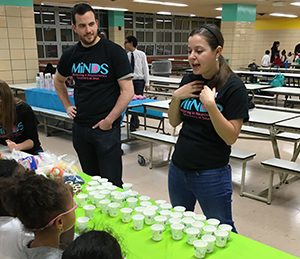
Family Science Nights are an opportunity for elementary and middle school students and their families to participate in interactive, hands-on activities led by Academy Members, grad students, postdocs, and other STEM professionals.

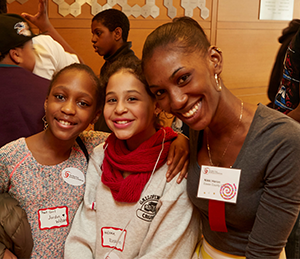
A mentor poses with her two students.

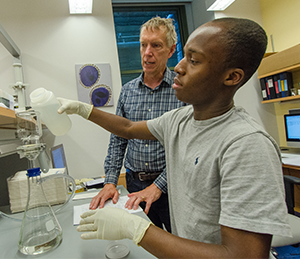
The Scientist-in-Residence program matches scientists with New York City public school teachers to bring scientific inquiry to life in the classroom. By combining content and pedagogical expertise, each scientist-teacher pair develops and implements a yearlong project that engages students in authentic research and sparks their interest in STEM learning.

Professional Learning

The Academy’s Skill Building Programs are designed to empower early-career researchers and STEM professionals by providing essential skills for career growth and innovation. Through partnerships with universities, teaching hospitals, and research facilities, the Academy offers a variety of professional development opportunities focused on key areas such as grant-writing, leadership, science communication, and career planning.

The Interstellar Initiative connects Early Career Investigators (ECIs) with peers, in related but distinct disciplines, under the guidance of mentors who are established scientists at the forefront of their respective academic fields.

The Academy’s STEM Certification Program is a service the Academy provides to educators to help them adhere to a standard of quality for STEM teaching. Our Education Team reviews educational materials submitted by external organizations against a framework of research-based best practices. Educational materials that meet our rigorous standards receive official STEM Certification status.

Science Alliance Leadership Training (SALT) is a free, 5-day program that provides exceptional graduate students with the opportunity to build the skills they need to become leaders in their careers. Through team-building exercises and workshops, SALT Fellows learn leadership skills, communication skills, conflict resolution, and team dynamics. They emerge from the program as part of an elite network of SALT alumni.

Learning

As an organization, we are dedicated to forging new pathways in STEM. We live up to this promise by cultivating an inclusive community where students and professionals from around the world feel a sense of belonging and a shared commitment to harnessing the power of science for the good of humanity.

High School Research Programs

We believe high school students aren’t just the future, they are the present. Empower them with permission and a platform, and they enthusiastically take the lead. Through unique student-oriented programs like the Junior Academy, we provide civics-focused high school students the opportunity leverage STEM to tackle problems in their communities and the world.

Learn more >

Professional Learning

We meet scientists wherever they are in their career, providing programming, workshops, and other skill-building opportunities to give them the tools they need to succeed throughout every stage of their working lives. Additionally, we encourage early career scientists to mentor, teach, and effectively communicate science to inspire the next generation of innovators.   

Learn more >

School & Community Programs  

We believe the job of scientists is a blend of research and community engagement. To help scientists foster curiosity and understanding among diverse audiences, we offer community programs whereby STEM professionals have the opportunity to make science both educational and engaging for students, parents and teachers alike.

Learn more >

The Academy Learning Difference 

Through our Learning programs, we actively narrow opportunity gaps. We offer students around the globe the unique opportunity to collaborate directly with scientists in solving real-world problems.

Simultaneously, we empower scientists with leadership and communication skills to help them navigate and thrive in an ever-changing work landscape, as well as effectively communicate their work for public education and to foster trust in science. 

From the Academy Blog

Combining Science and Entrepreneurship to Help Others

A young woman wearing a green dress poses for the camera.

Junior Academy participant Sebsa wants to pursue a career that enables her to combine science and entrepreneurship.

Published September 7, 2023

By Nicole Pope

For Sebsa, a 14-year-old student living in Amman, Jordan, it all began with an ad on social media via the Royal Health Awareness Society, urging teens interested in science and innovation to apply for the Junior Academy Challenge.

Sebsa’s curiosity was triggered, but she hesitated at first. Few of her schoolmates shared her passion for science and she had never embarked on a virtual collaborative project.

Yet taking this first step has launched the teen on an exciting new path. Accepted as a Challenge participant, Sebsa teamed up with four other students (one from Jordan, three from the U.S.) to address The Impact of COVID-19 on Non-Communicable Diseases.

“We were all a bit nervous when we first met online,” Sebsa says, adding that it took no time for their initial shyness to evaporate. “I immediately realized: this is the type of people I want to connect with.”

For three months, the teenagers collaborated closely via the online Launchpad platform. They chose to focus on diabetes, a condition that affects millions around the world. First, they had to gain better knowledge of the disease. Sebsa’s primary role was to collect data on diabetes in the Middle East.

“Our mentor helped us identify good resources,” she says.

Mitigating the Impact of COVID

The team then discussed innovative ways to mitigate the negative impact of COVID-related lockdowns and restrictions on the treatment of diabetes, eventually opting to create an application that would enable doctors to monitor their diabetic patients remotely. App development was a new field for Sebsa, who feels she learned a lot from the interaction with her teammates.

Completing the challenge required hard work and pressure felt intense at times, Sebsa says. One of four sisters, she enjoyed strong support at home from her family. The end result justified all her efforts.

“I am very proud of what we have achieved,” Sebsa says, delighted that her team’s project was named one of the finalists with their contribution. “But the proudest person was my mom, because she works in healthcare, and is my science teacher.”

Submitting the Junior Academy project marked the completion of Sebsa’s first international collaboration, but the teen’s journey into science and innovation is just beginning. At school, she was invited to create a 45-minute presentation about her team’s project and talk about her Junior Academy experience with her classmates, who were impressed with her spirit of initiative and newfound knowledge.

Many expressed a wish to follow in her footsteps. Working across borders with like-minded students has boosted Sebsa’s self-confidence.

“She is reaching for the stars and the moon,” jokes her 19-year-old sister Sina.

Building Upon Past Success

Inspired by this first success, Sebsa is constantly seeking new opportunities to learn and shine. In partnership with her 17-year-old sister Simaza and four other participants, she entered a National Competition for Young Entrepreneurship, organized by Entro Gate, and won first place.

After enrolling in a robotics and technology course, Sebsa decided to test her new teamwork skills in a nationwide tournament in Jordan, coming in third in the competition. She has signed up for yet another science program with Jordan’s Abdul Hameed Shoman Foundation that focuses on applying science to real-life problem solving.

The Junior Academy Challenge has taught Sebsa important skills such as organization, efficiency, and teamwork. Above all, the experience has fueled her desire to keep pushing her personal boundaries and explore the wide world of science.

“I want to study science, but also entrepreneurship,” says the teenager. “I want a career that links the two and doesn’t just benefit me but enables me to help others.”

The Junior Academy was supported by the Stevens Initiative, which is sponsored by the U.S. Department of State, with funding provided by the U.S. Government, and is administered by the Aspen Institute. A version of this story was originally published on the Stevens Initiative’s website here.

Better Diets Mean Better Mental Health

Students interact between a piece of clear plastic during the COVID-19 era.

Winners of the Junior Academy Innovation Challenge Spring 2022: “Building Community to Support Student Mental Health”

Published August 21, 2023

By Nicole Pope

Sponsored by S&P Global

Team Members: Catherine L. (Team Lead) (China), Advika S. (India), Cara C. (United States), Snigdha S. (India), Shruthi D. (United States), Shivani D. (India)

Mentor: Katherine Wert (United States)

Many adolescents struggle with mental health issues and a conflicted relationship with food, brought on by a variety of psychological and social factors–including toxic beauty standards, pressure to be thin, stress and hormones. Eating disorders can have a devastating impact on young people’s mental and physical health.

A six-member international team of science-loving high school students were named the winning team in the Junior Academy challenge “Building Community to Support Student Mental Health” with the creation of Nutribona, a feature-rich app specifically aimed at 13- to 18-year-olds with food concerns.

After consulting with experts and conducting a survey among their peers which revealed a significant prevalence of food-related issues, team members designed this app to help users make better daily nutritional choices. In particular, they wanted to raise awareness of the gut-brain axis, the link between food intake/the consumption of specific nutrients and mood/psychological well-being.

“As I looked into the psychological aspects of Nutribona, I was able to understand the importance of dealing with such disorders at a young age,” says Snigdha. “I realized how big a role an online community has in our daily lives and I believe we were able to create a design that tackles physical and mental health head-on.”

What is Nutribona?

Nutribona offers several innovative features designed to address food-related disorders, such as healthful recipes– alongside several features addressing harmful behaviors such as excessive exercise, episodes of binge/purge, and binge eating. The app also offers access to anonymous chat spaces where users can share their problems with a supportive community and the ability to reach out to psychologists and nutritionists.

Nutribona promotes yoga, a gentle form of exercise that contributes to reducing stress and anxiety and building body strength and flexibility, rather than promoting weight loss. A personal page can be used to track progress. App users can also play games and take part in health-related challenges.

“My favorite part of the challenge is that it offered me a chance to go through a complete design process,” explains Catherine, the Team Lead. “The mindset of design thinking really helps me a lot in building solutions, from research, to interviews, to finally testing.”

Teamwork + Mentorship = Success

This ambitious project was the result of intense teamwork under the guidance of an encouraging mentor.

“Our team was able to work together and divide tasks equally amongst each other,” states Cara. “We collaboratively tested our ideas together and always asked for feedback to improve our work.”

While developing their project, the students felt they learned a lot from each other.

“Even now, as the project is over, I find it hard to believe that I was part of this journey, this incredible experience of learning and discovering and thinking and solving,” says Shivani. “I saw ideas form and evolve and turn into something spectacular.”

The six students are exploring ways to make their app available internationally, and are also considering how to make it commercially viable– eventually deciding that it should be supported by ads carefully selected to prevent a negative impact on users, while considering the necessity of charging a small fee later on.

“Eating difficulties are a major part of mental health. Eating guilt-free is something that everyone should be able to experience,” believes Shruthi. “Looking at our solution, I feel a sense of pride and achievement,” says Advika. “Together we have created a solution that is not only feasible but also viable in the real world.”

Fresh New Methods for Clean Air and Water

A drop of water splashes into a large puddle.

Winners of the Junior Academy Innovation Challenge Spring 2023: “Water Sustainability”

Published July 1, 2023

By Nicole Pope

Sponsored by the Royal Swedish Academy of Engineering Sciences (IVA)

Team members: Yuanning (Helen) H. (Team Lead) (United States), Aadi M. (United States), Riya K. (United States), Nachammai A. (United States), Sheila M. (United States), Ayazhan K. (Kazakhstan)

Mentor: Kalyani Neti (India)

As climate change continues to threaten water supplies around the world, the ability to access clean water– a right taken for granted by many people in developed countries– is an ongoing struggle for many populations around the world, particularly in tropical regions. According to the World Health Organization, only 53% of medical facilities in these tropical regions have secure, clean water sources. This results in epidemics of cholera (3 million annually) and diarrhea (1.7 billion cases annually).

Additionally, sepsis from dirty water causes 670,000 infant deaths per year. Six enterprising teens from the United States and Kazakhstan heard the call. The formed Cleaners of Warm Water: Air to Water to Healthcare. They won the Spring 2023 Innovation Challenge on Water Sustainability, sponsored by the Royal Swedish Academy of Engineering Sciences (IVA). The team consisted of Yuanning (Helen) H. (United States. Team Lead), Aadi M. (United States), Riya K. (United States), Nachammai A. (United States), Sheila M. (United States), and Ayazhan K. (Kazakhstan). They worked under the guidance of their mentor, Kalyani Neti (India), to devise an ingenious solution for an acute problem. That problem: Lack of access to sterile, medical-grade water, crucial for healthcare in the tropics.

A Broad Range of Skills

The team began their mission, coordinating across time zones to meet online, swapping ideas, and considering various approaches. The multidisciplinary nature of the challenge meant they had to draw on a broad range of skills.

“I got to use knowledge from biology, chemistry, and physics to devise a coherent plan for our prototype and to identify a legitimate target group,” says Team Lead Yuanning (Helen). “I learned so much from all my teammates whose different personal experiences led to their different approaches to problems. For example, I, who lives in the cold and moist Northeast of the United States, would never have come up with the idea of creating sterile water for tropical regions.”

Dividing and Conquering the Workload Across Time Zones

Eventually, the six students decided to develop an affordable air-to-water generator that uses fans to capture humidity in the air (typically between 77% and 88% in tropical countries) and turn it into water. Drawing on their respective strengths, they divided the tasks among the group and created focused roles.

Sheila took on a research-centered role. “I read multiple reports of the World Health Organization and the United Nations in addition to research papers to gain a deeper understanding of the numbers and the types of people affected. I am passionate about global, equitable healthcare, so I was excited to use our water sustainability project to address both the problems of water insecurity and inadequate healthcare.”

Her teammate Ayazhan gathered and organized statistical data on water issues in the tropics. “I searched a lot for statistics and learned that water pollution is a really big problem in tropical regions, justifying it with metric research results,” she explains.

The team members’ intense online sessions soon generated exciting new ideas. “It is a rewarding experience to meet every week, share ideas, plan our solution and work on implementing our idea in the real world,” says Nachammai. “I worked on data confirmation, conducted interviews, and evaluated the results produced through our surveys. I also did research on future collaborations and on ways we could improve our prototype and solution as a team.”

Designing Blueprints — and 3D Models

Their efforts resulted in the development of an affordable 3D prototype of their machine, which can generate 63 liters, (half a bathtub) of water. By trapping groundwater molecules before they get contaminated by germs, parasites or chemicals, the air-to-water generator reduces the need for filtering and delivers small amounts of clean water cheaply, using sustainable energy sources.

Team member Aadi was in charge of designing and developing the blueprints as well as the 3D model. “I also created the simulation where I demonstrated the construction along with the explanation of each part of our prototype,” he says. To complement their air-to-water generator, the students also developed an app that facilitates the maintenance of the machine and enables users to find the nearest source of sustainable hydropower to fuel it.

During the third phase of their project, the students focused on marketing their invention, building a website that details the technology used and touts its benefits to potential users. “Each team member brought with them a different skill set and perspective,” says Riya, who worked on the website design. “I really loved working with a team of dedicated and passionate individuals interested in STEM fields.”

And it doesn’t end there. The team members plan to use 3D printing to turn their model into a functioning and marketable machine, and seek to take their project even further by collaborating with local governments and non-profit organizations in the targeted countries.

Developing a New App to Empower Urban Farmers

Winners of the Junior Academy Innovation Challenge Spring 2023 “Urban Gardens”

Published July 1, 2023

By Nicole Pope

Team members: Tianze H. (Team Lead) (United States), Tianlai H. (United States), Radwa A. (Egypt)

Mentor: Olusola Ladokun (Nigeria)

Urban gardening can be an effective way to provide fresh and healthy food at a low cost, particularly in parts of the world where food security remains elusive. But it involves many variables– climate, soil, location, sun exposure, type of crop– and urban residents often need education and guidance in order to be successful gardeners right from the start.

Three students — Tianze H. (United States, Team Lead), Tianlai H. (United States), Radwa A. (Egypt) — worked under the guidance of their mentor, Olusola Ladokun (Nigeria) to address this knowledge gap, and ultimately won the Spring 2023 Junior Academy Innovation Challenge with their project, “Family Farming: The Ultimate Planting Companion”. The project aims to promote urban gardening around the world by providing useful tips to city dwellers that enables them to supplement their diet with home grown crops.

“After long discussions we finally settled on the current idea,” says Tianlai. “Personally, I contributed creative ideas for our projects, like using deep learning algorithms in our application. I also worked with my teammates on the slides, adding things that they might have missed.” To identify what information would-be gardeners might need, the team conducted a small survey before designing an eco-friendly app called Family Farmers. The app contains a scanner that taps into existing plant and weather databases in order to identify the best potential garden locations based on available amount of space and local climate. The app also provides information about farming methods. It also shows how common household items can help reduce gardening costs.

Adding a Fun Factor to Urban Gardening

Family Farmers is designed to be the ultimate tool for aspiring gardeners, with an AI search engine that can be used to find suitable plants, an option to share progress and tips with a community of like-minded garden enthusiasts, and a calendar to remind users when to water and take care of their plants. The students also added an element of entertainment to their app, with plant-related games that provide fun facts about gardening.

Developing this innovative solution required hard work. The small but mighty team size (just three people) did not deter the committed students– in fact, it helped with the difficult task of coordinating online meetings across time zones.

Strengthening Relationships

“The size of the group does not matter. In fact, it might have even helped everyone strengthen our relationships,” says Team Lead Tianze.

“We were also able to help each other and make up for what we may not be good at. The teammates were willing to cooperate and overcome the time differences that we have,” says Tianze. “We were also able to help each other and make up for what we may not be good at. Helping to solve a real-world problem was a great experience.”

Team member Radwa enjoyed researching the issues surrounding gardening in an urban environment and collaborating with international students. “This was my first time in a program that involves meeting students from different nationalities and working together on new ideas,” he said. “This is a wonderful thing and I’m very glad to have gone through this experience, meeting new friends and learning many things in a field that I’m passionate about. I hope to do something that is related to it one day.”


The Junior Academy was supported by the Stevens Initiative, which is sponsored by the U.S. Department of State, with funding provided by the U.S. Government, and is administered by the Aspen Institute.

Collaboration is Key to Solving Global Issues

The New York Academy of Sciences works in partnership with New York City high schools to promote interest in STEM subjects among students. Many high school students from New York have taken part in Junior Academy challenges, which enable them to team up with peers from various countries around the world to devise innovative solutions to real-life issues.

Published June 29, 2023

By Nicole Pope

We interviewed Angela, and a group of students from around NYC, who recently participated in the Junior Academy about their experiences.

Newfound Confidence and a Broader Understanding of Science

When we catch up with Angela, she has just embarked on her second Junior Academy challenge. Her team is still at the beginning of the three-month process to find a solution. The high school student is excited about making new connections and learning about a new topic. “I’m doing the public health and climate change challenge,” Angela says. “Some of my current team members are from Egypt and although we still have a language barrier, we’ve been communicating really well.”

This time, she is familiar with the process and what it entails. Angela first signed up for a Junior Academy challenge (designed by the Royal Academy of Engineering in Sweden) on the Restoration of Aquatic Ecosystems in 2021, encouraged by her older sister who had taken part in an earlier competition. For their project, Angela’s team focused on tackling overgrown algae in the Yellow Sea.

When she enrolled, Angela wasn’t sure how much she would benefit from working online with other students. The experience, it turns out, “far exceeded my expectations,” she says. “It’s been amazing.”

Global Collaboration

Angela enjoyed introducing herself to her teammates and getting to know them better through their regular interactions over the Launchpad platform. “This program was one of my first experiences meeting people from different U.S. states. I’ve really grown my network. I was able to bond with people from different places, different schools,” she says. “We still talk to each other. It’s cool. I can say I have a friend in Texas.”

Working collaboratively with her teammates and mentor has increased Angela’s self-confidence. “I used to be more on the quiet side, sometimes afraid of sharing because I was afraid I would be wrong,” she explains. “But everyone makes mistakes and we work off them, and it helps build the final product in the project. Being able to answer questions with the mistakes we made in the past has been great.”

Angela also credits her teammates for encouraging her to express her views. “At the start, seeing everyone so open was a shock for me. Everyone was sharing their ideas,” she explains. Initially, she was more reticent. “Over time, my teammates understood and they would bring me into the conversation and ask, ‘Do you have something to add?’”

Empowering Shy Participants

Enabling shy participants and giving them space to be heard in a collective environment is a lesson from the challenge that Angela is now applying to other areas of her life.

Her communication skills have improved. In class, she no longer hesitates to speak up. “Whenever I raise my hand, I have more confidence in what I’m going to say – even if it comes out wrong and you cause some laughter in class. I’m learning, they’re learning.”

The Junior Academy has changed Angela’s understanding of science and she has a broader understanding of the arduous but exhilarating path to scientific progress. “When I was younger, I thought research meant you just google something and it’s over. But now I see everything we do is shaped by a very long process,” she says. “Even if you find a solution, you can continue and share it with the scientific community. This has really shaped me as a person.”

Applying What They Learn

When Angela recently attended a Model U.N. conference on climate change, she was proud to discuss her work and her team’s achievements on the aquatic ecosystems project. With the knowledge she had acquired, she was even able to provide input for the conference resolution.

Angela loves the student-led, hands-on collaboration with her teammates (very different from the science classes at school, she points out) but also highlights the contribution of the team mentors, who guide them through the project.

“I think my favorite part, aside from collaborating with people, was the final product: creating something. One of my teammates was able to create a 3D model on an app on the computer. Some of us didn’t know how to do that,” she says. “This is something I want to continue to work on and develop my skills.”

Prior to joining the Junior Academy, Angela was mainly interested in computer science and political science. “Working with mentors has opened me to possibilities that are out there – so many majors I didn’t know of when I started, in 10th grade,” she says.

The Junior Academy has revealed new areas of interest for Angela. “Being able to do research in different fields, such as biology and biomedical, has really changed what I want to do, and now I’m focusing more on working toward that field.” Whatever subject of study she eventually chooses, Angela hopes to have a transformative impact and to contribute to the solution of pressing issues. “I hope I can do that and apply in the future what I learn now and in college.”

Student Interviewed

  • Angela, High School for Dual Language and Asian Studies
    Challenge: Restoration of Aquatic Ecosystems (Fall 2021)
    Project: Prevention of Algae

Interviews from Junior Academy Participants from New York City Schools

What did you learn from engaging with students from around the world?

Joseph: Coming from New York, I was already exposed to a multitude of cultures and perspectives, but my past experiences were nowhere near the scope of this project. I felt like the country that my team’s project focused on, Egypt, was gradually becoming a part of me.  Conversing with Bashar and Noor, my [Egyptian] teammates, has taught me the importance of open mindedness– from coordinating early morning meetings across time zones to listening intently to their findings as they knew their community on a much deeper level.

Courtney: This was my first time working on a Junior Academy challenge. I had so much fun and I really enjoyed being able to bring in my coding skills to contribute to the team. It was also really insightful to be able to work with people of different backgrounds because it gave me new perspectives and ideas I never would have thought of alone.

Demetra: My team’s varied perspectives were needed in order to come up with our solution. I do not think we would have had the same process or results if we all lived in the same place and had the same experiences.

Jocelyn: A significant part of this challenge that made it enjoyable was working in a group. If I had worked alone, I wouldn’t have been able to come up with some of the solutions and research that we came up with. We were able to work harmoniously as a team. Because everyone had different skill sets, we were able to split up the work to best complement each of our background knowledge and experiences. We also helped each other out whenever needed, allowing our work to be done thoroughly and effectively.

Ethan: I was surprised that I could collaborate with students around the world to brainstorm and develop solutions for contemporary problems. Initially, I expected this process to be difficult since I only had a few skills. However, working collaboratively in a group made the process significantly easier and approachable since my group members were extremely talented and diligent.

What have you learned about science and how it works? What skills have you gained?

Jocelyn: Throughout this challenge, I’ve not only improved in my collaborative and communication skills, but I’ve also grown as a researcher and creative thinker. The challenge definitely prompted me to think outside of the box to come up with my own creative solutions to various issues. In order to devise these solutions, I had to look through countless research journals and papers, allowing me to refine my research skills as I carefully selected pieces of information to include in our deliverables. I’m extremely grateful for having the opportunity to participate in The Junior Academy due to the innumerable knowledge and teamwork, collaboration, communication, and research skills that I walked away with.

Yewon: Despite several setbacks and hurdles we’ve had to overcome along the way, I’m glad to have learned valuable lessons through trials and errors.

Qing Yi: While it was a smooth process overall, we had our set of obstacles that we had to overcome, such as our schedule, and what exactly our main goal was by the end of the project as there were so many factors and ideas, and we had to solve them. But of course, we overcame them over time and especially with the help of our mentor, Renee.

How important was it to have a mentor?

Yewon: Dr. Mails has been a wonderful mentor and guide to us, offering her timely advice and aiding us in producing work that we could all be proud of, consistently.

Joseph: The project was one of the first instances I have worked with such a passionate mentor, Ms. Janice Havasy. Her extensive knowledge and profound experience in this field proved essential to the progression of our challenge from time to time.

Ethan: Our mentor considerably assisted our group by thoroughly reviewing our brainstorming and development stages, including our deliverables, to identify flaws and ways to make our solution more explicit and effective. Throughout this program, I learned and incorporated graphic design, and I hope to learn web-development or programming in the future since they are critical skills to create virtual solutions. Ultimately, all our group demonstrated a collective effort to create multiple effective solutions to combat misinformation in the public health sector.

Courtney: Working with a mentor was also really helpful as she was able to point out aspects of our project we may have overlooked. Overall, I think I was able to grow personally and professionally through this project.

Demetra: The Junior Academy has been a unique experience because it is largely student led. I have had few opportunities to participate in entirely student run projects outside of clubs at my school, and it was really enjoyable to be able to work out issues and bounce ideas off of my peers rather than an adult with more experience and education. Our mentor helped to guide us and provided advice, but she also let us make our own decisions and choose which direction our project went in. I think that my team had the right balance of guidance from our mentor and leadership from the student participants.

Jocelyn: Our mentor provided extremely valuable feedback that prompted us to consider additional ideas and solutions that we didn’t previously look into. He also consistently communicated with us to ensure that we stayed on track and remained organized.

What was the broader impact of your participation in the Junior Academy Challenge?

Joseph: The Junior Academy has served as a bridge for me to make meaningful connections – combining medicine and social sciences in my research and bonding with teammates from all walks of life. I am beyond grateful for being able to grow and communicate with my peers and mentor, and would love to do it again!

Demetra: I learned about a topic I knew almost nothing about before I started this program, and I was able to do it with people I would never have met without this program, as well. I will use my experience in the Junior Academy to inform my future experiences in STEM, leadership, and teamwork, and I hope to join the program again in the future!

Qing Yi: Everyone did a great job working together, with the short deadlines, the long calls, and our perseverance we made it so far. It wasn’t easy but it was an amazing effort and involvement of each and every single team member.

Ethan: This program gave me a foundation in STEM, and I hope to partake in other future challenges to develop more skills to develop more effective projects.

Students Interviewed

  • Ethan, Queens High School for the Sciences at York College
    Challenge: Combating Misinformation in the Public Sector (Spring 2022)
    Project: Misinformation Management
  • Jocelyn, Townsend Harris High School
    Challenge: Healthcare on Demand: The Future of Telemedicine (Fall 2020)
    Project: Telehealth Technology Meets Healthcare
  • Yewon, The High School for Math, Science and Engineering
    Challenge: Restoration of Aquatic Ecosystems (Fall 2021)
    Project:  De-Eutrophying Lakes
  • Joseph, Stuyvesant High School
    Challenge: The Impact of COVID-19 on Non-Communicable Diseases (Fall 2021)
    Project: Coronavirus Controllers
  • Courtney, Stuyvesant High School
    Challenge: The Impact of COVID-19 on Non-Communicable Diseases (Fall 2021)
    Project: Data Innovate
  • Demetra, Dominican Academy
    Challenge: Restoration of Aquatic Ecosystems (Fall 2021)
    Project: Prevention of Algae
  • Quing Yi, Stuyvesant High School
    Challenge: Restoration of Aquatic Ecosystems (Fall 2021)
    Project: Algae Geostrainer – The Restorative Buffer

Urban Gardens Innovation Challenge in Rwanda, sponsored by Clifford Chance

Rwandan students stand around a garden planter they designed and fabricated.

With more than 500 participants, the Urban Gardens Innovation Challenge was a great success.

Published March 10, 2023

By David Freeman

With the participation of 547 students in 118 teams, the Urban Gardens Innovation Challenge organized in Rwanda by The New York Academy of Sciences in partnership with Association Mwana Ukundwa (AMU) has been a great success.

Sponsored by the Clifford Chance Cornerstone Initiative, the Spring 2022 competition tasked students aged 13-17 from Kigali, the country’s capital, to use micro-gardening techniques to broaden access to nutritious food sources.

Kigali is considered one of the most food-secure cities in Africa, but the ability to obtain nutritious food remains a concern for many poorer households. Malnutrition and micronutrient deficiencies can result in stunted growth and put children and adults’ health at risk.

Eager to address food scarcity and poor nutrition, which affect their communities, the students took up the challenge with great enthusiasm and came up with a wide range of practical and creative solutions to help people living in crowded urban environments supplement their diet with home-grown vegetables.

Challenge participants dedicated many after-school hours to their projects, spending time researching urban gardening methods and suitable crops, brainstorming with their teammates and developing their projects.

Ten public schools and three charter schools, coordinated by AMU, supported the competition and gave students access to computer labs. Several Rwandan science teachers acted as mentors for participating teams.

After carefully reviewing submissions, the judges selected a winning project and five runner-up projects of distinction. Members of the winning team got a chance to showcase their project at the 2022 Global STEM Alliance Summit, organized by The New York Academy of Sciences.

Winning Team: Growing Vegetables

Team members: Tarah (Team Lead), Emerance, Solange, Emmanuel, Sandrine, Hirwa 
Mentors: Baseka Didier (in Kigali) and Gaurangkumar Sharma

The team came up with an innovative solution to address food scarcity. To enable low-income households living in cramped conditions to grow vegetables, the team hung recycled PVC pipes and old bottles and used them as planters. Because PVC pipes contain toxic chemicals, the team stressed that they need to be cleaned with ashes before use. After careful research, the team opted to grow produce like onions, garlic and green vegetables, which do not grow long roots and can fit into these containers. The students also developed a simple but effective irrigation system consisting of old jerrycans, a tap and small tubes.

“We did the project after class, so the challenge was going home late and tiredness,” says Team Lead Tarah. But developing this project that can improve the lives of their relatives and the community around them was also a powerful experience for the enterprising students. “I learned a lot from my teammates,” says Emmanuel. “This group is very important to me, it helped me to be happy and work together.”

Runner-up Team: Reducing Lack of Vitamin in Urban Settlements

Team members: Landry (Team Lead), Marthe, Esperance, Sandra, Prince, Christine 
Mentor: Rajit Sahu

After brainstorming on the best way to encourage urban dwellers to improve their vitamin intake by growing and consuming more fresh vegetables, members of this team considered three key factors: potential users in urban settlements tend to move frequently; they have little space to cultivate vegetables; and they are short of time. As a result, the team focused on creating a vertical, space-saving micro-garden on wheels. With recycled wooden planks, they fashioned a stair-like structure consisting of terraced planters, irrigated with tubing, which can be used to grow fresh vegetables.

Building their prototype required hard work but the team learned a lot in the course of working on this project and enjoyed the process. “In this project, I had a lot of fun and did hard work with the group, brainstorming and searching for a solution,” says Esperance.

Runner-up Team: Growing Vegetables

Team members: Fabrice (Team Lead), Nziza, Teddy, Ally, Djanati, Samuel

This team also focused on portability and created a vertical garden with wheels to cultivate a variety of crops. As planting containers, they used old jerrycans cut in half while wooden sticks provided legs. They then added wheels for easy transportation. Team members explored the nutritional qualities and health benefits of several types of vegetables and consulted experts, and opted to focus on carrots, cabbage, onions and green peppers.

“I thought our project would help the poor who do not have a large farm, as they cultivate small and fertile land,” says Ally. Team Lead Fabrice concurs and says he, too, has benefited from the project. “This project helped me in different ways: it got me thinking and work hard and helps my parents to have our own food garden with a great expense.”

Runner-up Team: Urban Garden

Team Members: Kamana (Team Lead), Aziz, Kamana, Ivanka
Mentor: Idowu Obisesan 

The team conducted a survey in the community and discovered that many people lack knowledge and time to grow vegetables. Team members therefore focused on cultivating fast-growing plants such as lettuce, onions, cabbage that require minimal care. They found that by placing plants in a transparent jar filled with water that is changed every second day, roots would grow within two weeks. By encouraging their community to develop basic gardening skills, the team hope their initiative will have a positive impact on people’s daily lives.

“This project taught me that there are multiple ways to grow plants and that growing plants is actually really interesting if you give it time and attention,” says Ivanka. “It was an enlightening experience,” concurs her teammate Albina. “It has improved my communication ability. I would love to do it again.”

Runner-up Team: Growing Crops at Home by Using Discarded Materials

Team: Cedric (Team Lead), Esther, Jean-Marie, Christian, Kevin, Axelle
Mentor: Rubarema Maurice (in Kigali)

Having identified the high cost of vegetables as a root cause of poor nutrition, the team focused on using widely available discarded materials such as plastic bottles, glass and sacks to build a tiny kitchen garden. Using old timber, they constructed a small frame that they lined with sack fabric and filled with soil and manure. They carefully selected the vegetables they planted after researching the amounts of water and manure required for each crop.

“As team leader, I helped my team to find the land where we built our kitchen garden,“ says Cedric. Says team member Arielle: “I helped my team with the irrigation of our crops. I learned why we have to irrigate our crops and put manure in soil for every crop.”

Runner-up Team: Using Different Local Tools to Increase Crop Production

Team: Elias (Team Lead), Samantha Kiara, Englide, Glory, Uwase
Mentor: Rubarema Maurice (in Kigali)

To optimize the use of space, water and manure, and increase crop production, this team experimented with different seeds that they planted in a variety of recycled containers. For example, they drilled holes in the sides of plastic tubs to plant green onions. They also discovered that they could accelerate germination by poking small holes in nutrient-rich ripe bananas, planting seeds, then covering them up with soil.

“Working in this challenge helped me to think further and brainstorm. I also got new skills in making kitchen gardens, how to create innovation and transform useless tools into useful things,” says Team Lead Elias.


A broad positive impact

In September 2022, Academy and Clifford Chance staff visited Rwanda’s capital Kigali and discussed the Urban Gardens Innovation Challenge in a series of interviews with local stakeholders. They confirmed that the innovation challenge had left a lasting, positive impact at several levels:

  • Participating students supplemented their studies about nutrition and urban agriculture by deeply researching the subjects and were then able to apply their extended knowledge to improve soil quality and grow vegetables. In addition to improving their own family’s access to food, the students also gained self-confidence and developed a broad range of skills, including leadership, problem solving, critical thinking, teamwork, computer skills, and design and technology.
  • Teachers and participating schools expressed great satisfaction with the challenge. The nineteen local science teachers who mentored and supported students during the competition reported that the challenge had improved their own self-confidence. They expressed pride in the students’ contribution to address malnutrition in Rwanda. The challenge brought a new approach to teaching STEM, making it more relevant and rooted in the students’ living experience.
  • Families and the greater community also benefited from the challenge. Students’ parents followed their children’s progress with great excitement and acknowledged that the Urban Gardens Innovation Challenge had improved food stability in their household. They shared their children’s achievements with neighbors and the wider community.
  • Policy makers also highlighted the potential for further positive effects, since the Urban Gardens Innovation Challenge reinforced a government policy that encouraged households to grow their own food.

From the Lab to the Classroom

A high school teacher poses for the camera inside her science lab classroom.

Inspired by her father’s appreciation for education and giving back, Chuhyon Corwin became a high school science teacher.

Published February 17, 2023

By David Freeman

Neuroscience researcher and EnCorps Fellow, Chuhyon Corwin, traded her research lab for the classroom in a New York City public high school where she works as a science teacher.

Thanks to a partnership between The New York Academy of Sciences (NYAS) and the EnCorps STEM Teachers Program, Korean-born Corwin, an accomplished scientist, was able to explore her interest in teaching high school. For 10 weeks, with support from program staff, she was a volunteer guest teacher in the classroom of a skilled high school science teacher while, in parallel, exploring pedagogical techniques through the program’s online learning modules.

The EnCorps Program

Launched in 2007, EnCorps has already helped over 1,360 seasoned STEM professionals transition from industry or academia to public middle or high school education to ease the acute shortage of Science, Technology, Engineering, and Math (STEM) teachers across the United States.

NYAS teamed up with EnCorps to launch the program in New York City in 2022. Corwin was part of the first cohort of New York EnCorps Fellows who had an opportunity to explore becoming a STEM teacher before committing to a career change.

“During my 10-week guest teaching, I fell in love with the students,” explains Corwin. “The joy I experienced gave me the confidence that I was making the right decision in becoming a high school teacher as a long-term career choice.”

Although Corwin had taught university students, she found the work very different in high school. Teachers have to actively engage with their students and ensure they are paying attention. They also have to make sure that students who struggle get the assistance they need to prevent them from falling behind.

Effectively Engaging Students

Maintaining discipline among 30 teenagers and keeping them interested requires a great deal of creativity as well as solid classroom management methods.

“With lab activities, you have to be conscious of their safety and make sure they have enough materials,” says Corwin. “The class itself is short, only 43 minutes, so it has to run like clockwork.”.

While teaching STEM to high schoolers requires dedication and hard work, Corwin finds nurturing young people’s innate curiosity hugely rewarding. She has witnessed the amazement that lights up her students’ faces when their lab experiments succeed. Her own enthusiasm for science and discovery has never abated and she appreciates the opportunity to transmit her passion to the next generation.

“I hadn’t realized how much I would enjoy talking with these students. They come up with good questions,” says Corwin. “At that age, students are so frank. They let you know exactly what they think and I love that.”

After completing her volunteer guest teaching experience with the EnCorps program, with the support and guidance from EnCorps and NYAS, Corwin enrolled in an accelerated program to gain her teaching credentials.

She doesn’t see her move to teaching as a major break in her life.

“I’m simply redirecting my energy to continue my journey as a scientist to make a greater impact by raising more capable future scientists,” she says. “I think a teaching career is very appealing to people who love research. As a scientist, you explore different options, you try things out and reflect to find out what works best.”

Using science fiction novels to engage students with STEM subjects is one of the innovative approaches Corwin discovered while studying for her educational degree.

Inspired by her Father

Corwin sees her father in the students she teaches. While he never had the opportunity to finish high school, he greatly valued education and encouraged her to pursue her studies. He also instilled in her the importance of giving back.

“Hopefully, people who have been in the STEM industry will see the value of giving back,” Corwin says.

Today, Corwin is a science teacher at the High School for Health Professions & Human Services in Manhattan, where she completed her guest teaching as an EnCorps Fellow. Corwin recommends the EnCorps STEM Teachers Program to scientists exploring entering the teaching profession.

“They should try it. Even if in the end you decide not to become a teacher, it’s a valuable experience.”

Learn more about the Academy’s School & Community Programs.