Security, Justice, and Sustenance for Those in Need

A logo with the text #IAmNYAS

The Academy community represents one of the most dynamic and diverse groups of STEM professionals and science enthusiasts and supporters around the world, with more than 16,000 Members across 100 countries.

Published May 1, 2016

By Diana Friedman

The Academy community represents one of the most dynamic and diverse groups of STEM professionals and science enthusiasts and supporters around the world. Academy members are building STEM careers, overcoming the challenges associated with cutting-edge research, putting science into practice, influencing policy and supporting future generations of science leaders.

Fredda Weinberg

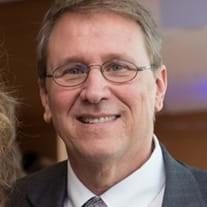
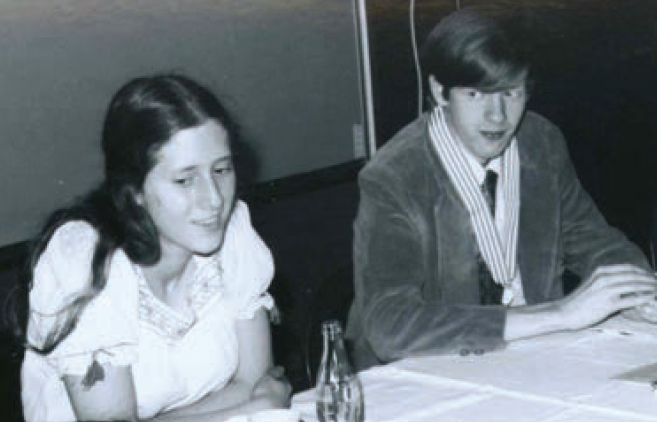
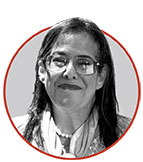
Fredda Weinberg, a graduate of the original Junior Academy program, returned to the Academy as a member while pursuing her Master’s in Information Systems. A programmer for Reliable Health Systems, Fredda is passionate about “connecting the needy to sources of security, justice, and sustenance.”

How did you get hooked on a STEM career?
The ability to reproduce results was enough to convert me from superstitious to scientific.

Was there someone who helped encourage you to pursue a career in STEM?
My chemistry teacher at Sheepshead Bay High School [in Brooklyn, NY], in 1977, showed me my first programming language and suggested that one day, it could be a career.

What has been one of the most rewarding moments of your career?
There’s nothing like having your work profiled on the local evening news. A little technology, leveraged properly, changed countless lives for kids who previously did not imagine they had a future.

Expand Your Network!

Inspired by the passion, expertise, and unique perspectives of your fellow Members? Tap in to the incredible network the Academy offers through our mentoring programs.

We’re thrilled to offer you access to a new opportunity to get involved and interact: Member-to-Member Mentoring. The program matches you with a mentor—or a mentee—who is a fellow STEM professional and Academy Member. Depending upon your experience level and needs, you can request a mentor, become a mentor, or both.

Interested in mentoring students? We also offer incredible mentorship opportunities through the Academy’s Global STEM Alliance, which delivers education programs that can help you develop your teaching and communication skills, while paying it forward to the next generation of scientific innovators.


Peruse our mentorship opportunities, and sign up today!

Providing the Best Role Models for STEM Students

A mentor works with two young students.

A new grant will help expand the Academy’s Afterschool STEM Mentoring Program, enabling members to have a greater impact on the next generation of scientists.

Published April 13, 2016

By Diana Friedman

As Ellis Rubinstein, President and CEO of The New York Academy of Sciences, said in his keynote earlier this week at the World Strategic Forum, “If all of us work together, we can better prepare today’s students to become tomorrow’s STEM innovators.”

In addition to bringing industry, academia, government, and philanthropy together, one of the key strategies that the Academy has focused on in its STEM education programs is bringing science professionals and students together. By providing young people with the chance to meet role models face-to-face and learn directly from those working in STEM, students get the chance to imagine new possibilities for pursuing lifelong careers in science, technology, engineering and math. This is particularly important for young people living in some of the poorest areas of New York, who particularly benefit from meeting younger scientists who look like them and with whom they can build friendships.

That’s why the Academy is so excited to announce the expansion of the Afterschool STEM Mentoring Program thanks to a grant from the Corporation for National and Community Service (CNCS). This grant, mentioned today in the White House’s annual Science Fair Fact Sheet, will build the capacity of our afterschool programming in New York and Newark, New Jersey.

A Flood of Applications

When the Academy first put out a call for mentors to members, the applications flooded in. And in the six years since the program started, interest has only grown. Many members have returned to the program year after year, demonstrating their deep desire to have an impact beyond their research by volunteering to serve as afterschool mentors.

“We would like to thank the Corporation for National and Community Service and are excited to be part of the AmeriCorps VISTA expansion,” said Rubinstein. “Over 1,000 Academy members have already volunteered to teach and mentor kids through the Afterschool STEM Mentoring Program. This generous grant from CNCS will build our capacity to bring this experience to thousands more.”

Learn more about our Afterschool STEM Mentoring Program:

A New Report On the “Global STEM Paradox”

This comprehensive report answers the recent paradoxical question: if we’re graduating record numbers of STEM students, why are STEM jobs still unfilled?

Published January 26, 2015

By Stacy-Ann Ashley

Today the New York Academy of Sciences (the Academy) released a new report, “The Global STEM Paradox,” in an effort to better define the state of science, technology, engineering and math (STEM) education and careers worldwide.

The report paints a shocking picture of the state of STEM education across the world: 67% of manufacturing employers in the United States report that they are unable to fill technical jobs for mid-skilled employees, while women represent less than 30% of the world’s science researchers. Furthermore, in the United States, people of color represent only 10% of STEM employees.

The Academy’s report demonstrates that while there are sufficient numbers of graduates in STEM, employers still report difficulty in filling STEM jobs – the global STEM paradox. The report identifies areas of concern that contribute to employers’ challenges: low numbers of graduates who have the skills needed to match actual job requirements, “brain drain” from developing countries, and the lack of women and people of color in STEM fields. The report also highlights a global disconnect between the developed and developing worlds, with mid and high-skill STEM jobs available in the Global South, but most of the candidates available to fill them living in the West.

“If we want to solve the global STEM paradox, we need to change the way we think about STEM education and careers worldwide, ” says Meghan Groome, PhD, Executive Director of Education at the Academy. “It’s not enough to churn out a small army of PhDs from our top institutions. We need a new class of skilled technicians, we need home-grown scientists in the developing world, and we need to make women and people of color feel welcome in STEM fields.”

Combatting the STEM Paradox

To combat the STEM paradox, the Academy recently launched the Global STEM Alliance of The New York Academy of Sciences (GSA), a worldwide partnership with governments, companies, NGOs, universities and schools to improve student access to STEM mentors and tools. At the UN in September, the GSA announced that it is investing millions of dollars in order to inspire over 1,000,000 children worldwide to become STEM leaders in more than 100 countries by 2020.

At the UN event, members of the Alliance proposed a solution to the STEM paradox: an ecosystem of government policies, strategic business incentives, and innovative Web-based and one-to-one and one-to-many mentoring approaches that, together, create the necessary incentives for students to seek, acquire, and employ STEM skills.

“In order to place STEM graduates in areas where they’ll be most effective, we need a global STEM ecosystem that can educate the next generation of STEM leaders to confront the biggest challenges of our time-climate change, malnutrition, global epidemics-through cross-generational, transnational collaboration,” says Groome.

The GSA launched with several Founding Partners: ARM, Cisco, and the Global Sustainability Foundation, as well as a group of Founding Nations and Regions, including Barcelona, Benin, Croatia, Malaysia, New York State, Rwanda, and the United States.

“We’re proud to have the support of esteemed dignitaries and business leaders on board with the Global STEM Alliance,” says Celina Morgan-Standard, Senior Vice President, Global Business Development, Global STEM Alliance. “With a ready and willing base of partners dedicated to building STEM skills and supporting global economic development, I have no doubt we can achieve our goals and solve the STEM paradox.”

Learn more about educational programming at the Academy.

Opportunities for Inter-Generational STEM Engagement

At today’s White House Science Fair, The New York Academy of Sciences pledges to positively impact the STEM education crisis through innovative, impactful, and inspiring programming.

Published May 27, 2014

By Diana Friedman

Attending the White House Science Fair, (left to right) Rocket21 CEO Mark Grayson, student Thompson Whiteley, and Academy Board Chair and SUNY Chancellor of Education Nancy Zimpher.

At the White House Science Fair on May 27, 2014, The New York Academy of Sciences (the Academy) pledged to positively impact the STEM education crisis through innovative programming that inspires students to see science as an exciting conduit to solve local and global challenges.

Today’s students are tomorrow’s workforce. Such a fact is not lost on the Academy, which today, along with its partners in The Global STEM Alliance, is tackling the science, technology, engineering, and math (STEM) education crisis head on-by creating opportunities for inter-generational mentoring and engagement in STEM subjects.

By joining the White House in making a formal commitment to STEM education today, the day of the White House Science Fair, the Academy is joining with a group of like-minded organizations, and the federal government. 

“It is essential that the nation’s classrooms, from the earliest stages of education through college, utilize technology and critical thinking as we strive to meet increasing demand for STEM graduates in today’s competitive, global economy,” says Nancy L. Zimpher, Academy board chair and State University of New York chancellor, who is attending today’s event. “We are thankful to have the support of the White House as the New York Academy of Sciences’ Global STEM Alliance continues to help educate and train a technologically-savvy, innovative workforce for the future.”

Why Target STEM?

President Obama addresses the audience at the White House Science Fair.

The world needs a workforce of skilled science and technology innovators to address the most pressing global challenges of the coming century-climate change, food shortages, increases in chronic diseases, energy shortages, and more. In the U.S. alone, it is estimated that by 2018, some 75% of occupations will be middle- or high-skilled, with the majority of these jobs requiring an education in STEM subjects. And yet, students are dropping out of STEM at alarming rates, in the U.S. and in countries the world over, from China to South Africa, due to lack of engagement.

How Will We Solve the Crisis?

Enter a new initiative: The Global STEM Alliance, launched by the New York Academy of Sciences and its partners. The Alliance is designed to connect students from around the world with each other and scientific role models, through a mix of site-based programs, a collaborative digital platform, and a social learning network.

The initiative will begin with students in the United States, Malaysia, Australia, and the City of Barcelona, with other countries and regions expected to join. Working with sophisticated Telepresence capabilities and additional tools from fellow founding partner Cisco, the virtual platform allows students to interact and discuss STEM with counterparts in other countries; participate in mentoring relationships with brilliant, young scientists; elect to participate in cutting-edge science courses, challenges, games, and other activities; learn about a day in the life of a scientist; and seek advice and network with science-minded peers for life.

Additional members of the Alliance include GALXYZ, a game-based intergalactic science adventure, and Rocket21, an online youth innovation platform, with more to come.

Connecting Science and Community Service

Academy Board Chair and SUNY Chancellor of Education Nancy Zimpher, Senior Advisor to the President of the United States Valerie Bowman Jarrett, and United States Secretary of Education Arne Duncan, at the White House Science Fair.

Rocket21’s Dream Green Innovation Winner, 14-year-old budding environmentalist Thompson Whiteley from Easton, Conn., is attending today’s White House Science Fair. Whiteley created a winning plan to capture and repurpose plastic from The Great Pacific Garbage Patch in the North Pacific.

“Students like Whiteley make clear the connection between engagement in STEM subjects and the ability to solve problems in local communities, and beyond. Such is the premise of the Academy and Rocket21’s Dream Big for the World initiative, which we are excited to launch with the Academy,” says Mark Grayson, CEO of Rocket21.

Dream Big for the World is a series of STEM challenges designed to immerse middle and high school students in the pressing global issues raised in the USAID Grand Challenges. Planned for launch during the 2014-2015 academic year, the challenges will invite students, working independently or in teams, to develop innovative solutions to their choice of Grand Challenges, with opportunities to connect virtually with content experts, as well as provide resources to teachers.

The ultimate goal: The Global STEM Alliance seeks to scale the experience of humanizing science and providing students with real-world STEM role models through technology. By connecting students with the best scientists and engineers, with each other, and with innovative curriculum and educational challenges, the Alliance will foster engagement, mitigate STEM drop-out, and create the next generation of STEM leaders and innovators.

Learn more about educational programming at the Academy.

The Need for Afterschool STEM Opportunities

A young student shares his research project.

Dr. Meghan Groome was recently asked to provide City Council testimony on the success of the Academy’s Afterschool STEM Mentoring Program.

Published October 19, 2012

By Meghan Groome, PhD

Meghan Groome, PhD

On Tuesday, October 16, 2012, Meghan Groome, PhD, was asked to provide testimony for the New York City Council on the topic of STEM (science, technology, engineering, and math) opportunities in afterschool programs. Dr. Groome runs the Academy’s Afterschool STEM Mentoring Program, which aims to create a replicable, scalable program model that can be instituted in communities near and far. Below is a transcript of Dr. Groome’s testimony.

Testimony Transcript:

Good afternoon and thank you for inviting me to testify before the Committee on Youth Services. My name is Meghan Groome and I am the director of K12 Education and Science & the City at the New York Academy of Sciences. For nearly 200 years the New York Academy of Sciences (or the Academy) has brought together extraordinary people working at the frontiers of discovery and has promoted vital links between science and society. The Academy has a history of building new scientific communities, constructing innovative connections among an extensive scientific network, and driving path-breaking initiatives for scientific, social, and economic benefit.

Since the 1940s, the Academy has made investments in K-12 (Kindergarten through 12th grade) science education, with programs like the New York City Science & Engineering Fair, capacity-building programs to support outreach in other institutions, and mentoring programs for top performing students in New York City. As a result of these investments, the Academy has increased the City’s ability to nurture top scientific talent.

In recent years, the Academy has redoubled its efforts to bring New York’s wealth of scientific resources to bear on the needs of the City’s schools, with a focus on improving science education for all students, especially those traditionally underrepresented in the STEM (science, technology, engineering, and math) fields. The New York City Science Education Initiative has a simple mission:  to identify high-impact, scalable pathways for scientists to directly improve the number of children who are STEM-literate. Our theory of change relies heavily on the core competencies of the Academy – to serve as a connector between the well-resourced scientific community and the under-resourced education community (including high-need students and teachers).

The Academy’s Afterschool STEM Mentoring Program

In 2010, a group of Deans and Faculty affiliated with the City’s research and medical universities asked the Academy to create a program to provide their top young scientists with an opportunity to learn how to teach science/STEM.  At the same time, The Department of Youth and Community Development (DYCD) approached the Academy to find a partnership opportunity to provide more STEM education in the OST and Beacon Programs. 

Launched in Fall 2010, the Afterschool STEM Mentoring Program was designed to satisfy both requests by recruiting graduate students and postdoctoral fellows from the Academy’s Science Alliance[i] program to volunteer to teach in DYCD funded afterschool programs.  When hired, I myself had a hard time understanding why a young scientist, mathematician, or engineer would take an afternoon a week to volunteer to teach 4th through 8th graders, but it becomes easier to understand when you learn that this generation of young people believe it is their obligation to serve as role models and mentors. They have grown up in a culture of service learning. They also face a tough job market where teaching, interpersonal, and mentoring skills are at a premium and can result in increased job opportunities. 

Now, as we begin our 6th semester of mentors, we’ve worked with nearly 400 young scientists, 7,000 children, and delivered more than 80,000 hours of instruction in all 5 boroughs (Exhibit 1). In Fall 2011, we expanded to Newark, NJ, and recently received a $2.95 million grant from the National Science Foundation to scale this program through the State University of New York system which will serve close to 200 young scientists and 3,000 children.

The Misconceptions of What a Scientist Is

For the students in the programs, the benefits are obvious. As one of our mentors recently wrote, “Learning comes pretty easily when people enjoy what you’re asking them to learn!” Moreover, our mentors deliver high quality, inquiry-based math, science, and robotics courses while serving as role models and demonstrating to the students that scientists aren’t at all stereotypes.

For example, all of the mentors do the same activity on the first day:  they ask the students to “draw a scientist”[ii]. It’s a research protocol that allows the mentors to understand that most kids hold the same misconception of a scientist; invariably the students almost all draw an older white man with crazy hair, a bowtie, and often an evil glint in his eye. It doesn’t take long after the students meet their mentors to understand that today’s scientists used to look just like them. This realization is the beginning of the development of a scientific identity. When students are again asked to draw a scientist on the last day of class, they often draw their mentors or themselves in a lab coat.

In addition to attitudinal changes, children in our program receive at least 12-15 hours of enrichment programming over the course of a semester. While this may not sound like a lot of time, consider that the average student receives 2.3 hours of science instruction a week[iii] and that many of our mentors report that they are the sole source of science in a child’s day.

Serving the Needs of Young Scientists

We are often asked why we don’t work directly with schools and the answer is that we do – we have nearly 1,400 public school teachers engaged in programming designed for them.  However, through the STEM Mentoring Program we realized that we had a great opportunity to serve the need of our young scientists to learn in an environment where the children’s social, emotional, and educational well being were top priority while hewing to the hands-on, activity learning spirit of afterschool programs.

  Afterschool programs typically offer smaller class sizes, freedom from state and local academic standards, reduced anxiety over tests and performance indicators, and more fluid uses of time free from the traditional school day structure. The Afterschool STEM Mentoring Program takes advantage of the existing infrastructure of OST programs, which include hundreds of community-based organizations charged with the safekeeping and, increasingly, the academic enrichment of the children in their care. 

As science continues to be marginalized in formal classrooms, the role of afterschool programs is increasingly viewed as an important arena for academic enrichment[iv]. Expanding the school day through afterschool programs offers the opportunity to increase a student’s exposure to high-quality STEM education by providing three elements that lead to an individual’s persistence into a STEM career: engagement, continuity, and capacity[v].

The Importance of Engagement

While continuity and capacity are important factors, there is evidence that engagement is potentially more important than achievement or course enrollment[vi]. By infusing STEM into existing community-based afterschool programs with strong curriculum partners, the proposed program can bypass the constraints of the formal classroom structure by providing relevant, hands-on curriculum; opportunities to interact with young, diverse scientific role models; and additional content knowledge and resources[vii]. Afterschool programs reach large swaths of urban students and provide safe and structured informal learning environments that allow for creative and enriching STEM programming[viii].

As a result of the success we’ve had with the current Afterschool STEM Mentoring Program, the Academy will pilot this program with the State University of New York (SUNY) in six communities, including an expanded partnership with SUNY Downstate in Brooklyn. Additionally, we have a partnership with the Girl Scouts of the USA to scale this program through their council system.

With the generous and sustained support of our funders and the Department of Youth and Community Development, we aim to deepen our commitment to the students of New York and create a model by which any region with an abundance of scientists and students with an enthusiasm for STEM can adopt this new model for delivering high quality STEM education via afterschool programs.


Sources:

[i] www.nyas.org/sciencealliance

[ii] http://www.ecu.edu/ncspacegrant/docs/RESTEPdocs/DASTRatingRubric.pdf

[iii] http://www.csss-science.org/downloads/NAEPElemScienceData.pdf

[iv] http://afterschoolscience.org/pdf/coalition_publications/afterschool%20advantage.pdf

[v] http://www.smm.org/static/about/ecc_paper.pdf

[vi] Maltese, A. V. and Tai, R. H. (2011), Pipeline persistence: Examining the association of educational experiences with earned degrees in STEM among U.S. students. Science Education, 95: 877-907. doi: 10.1002/sce.20441

[vii] Coalition for Science After School. (2007). Science in after-school: A blueprint for Action. Retrieved from http://www.greatscienceforgirls.org/files/Science-in-Afterschool.pdf

[viii] Center for Advancement of Informal Science Education. (2010). Out of school time STEM: Building experiences, building bridges. B. Bevan, V. Michalchik, R. Bhanot, N. Rauch, J. Remold, R. Semper, & P. Shields (Eds.). San Francisco, CA: Exploratorium.

The Intersection of Sports and STEM

Piquing kids’ interest in science, technology, engineering, and math may be as easy as picking up a ball.

Published August 1, 2012

By Adedeji B. Badiru

Much has been said about the need to find new strategies to spark the interest of kids in STEM education. This is essential for preserving the nation’s technological superiority and ensuring economic advancement. The key is to find the right “hook and bait” to get youngsters interested in technical and scientific fields.

Recent studies have concluded that physical activities can enhance the learning potential of kids. Why not, then, channel that connection toward enhancing STEM education through a structured sports and STEM curriculum?

Ball-based sports (soccer, basketball, tennis, softball, racquetball, etc.) are particularly well-suited for translation into engaging STEM lessons. After all, all balls are not created equal. The STEM properties of sports balls are different based on their intended purposes. Kids can study the properties of individual balls or do a comparative analysis of different types of balls.

Sparking Curiosity

On a recent visit to the Air Force Institute of Technology, Astronaut Mike Fossum, a 1981 graduate of the institute, showed a video where a colleague of his on the International Space Station played baseball all by himself. He would pitch the ball and then let himself float ahead of the ball so that he could bat, then catch the ball at the other end, eventually throwing it to himself again. This is an exciting illustration of how the lack of gravity in space can be exploited for a self-played game.

I do not know many young kids who will see such a demonstration and not ask further questions. With questions comes inquisitiveness and with inquisitiveness comes interest. Teachers can use this interest to explain, engage, and retain attention for STEM principles.

A specific example of using ball sports to teach STEM subjects is provided by the education-oriented website, www.physicsofsoccer.com. This resource presents an engaging connection between physics and soccer. Issues addressed by the website include what makes a ball bounce, how gravity affects the flight path of a soccer ball, and how friction and moisture impede a ball’s path.

These are issues that inquiring young minds would be delighted to explore in a fun, relational way. For example, the flight path of a kicked soccer ball can be modeled to provide engaging simulation experiments to teach kids new concepts about gravity, lift, and drag, without the intimidation that can often accompany these subjects.

Soccer Ball Dissection

Analogous to the way kids learn biology by dissecting a frog, the “dissection” of a soccer ball, both literally and figuratively, can reveal learning opportunities for the STEM properties embodied in the ball. The image to the right illustrates where and how STEM elements fit into the overall integrity of the soccer ball in terms of mathematical description of the shape, surface properties, and shape design of the ball.

The shape of a soccer ball is an example of a solid spherical polyhedron, also known as truncated icosahedrons, which has 12 black pentagons, 20 white hexagons, 60 vertices, and 90 edges.

This example of dissecting a soccer ball to illustrate STEM applications is not in itself the goal here, but rather provides an example of the ways that parents and teachers can leverage whatever is at hand (e.g., sports equipment or other props) to explain and spark interest in STEM subjects.

Every sports opportunity can be leveraged as a science learning opportunity. The key is to recognize and exploit the available opportunity. If we do this, STEM may spread more sustainably than we ever imagined.


About the Author

Adedeji B. Badiru is professor and head of Systems and Engineering Management at the Air Force Institute of Technology in Dayton, OH.

Advancing Science Education in New York City

With support from donors as well as public entities, The New York Academy of Sciences is launching a new initiative to improve science education in the city, and beyond.

Published December 1, 2010

By Adrienne J. Burke

Image courtesy of Drazen via stock.adobe.com.

With the support of several generous and committed members and in partnership with the New York City Department of Education, The New York Academy of Sciences (the Academy) in November launched an initiative to serve science teachers in New York and beyond.

The Academy’s New York City Science Education Initiative was unveiled on the heels of President Obama’s announcement of a federal campaign to improve the participation and performance of America’s students in science, technology, engineering, and mathematics (STEM). The Academy initiative aims to forge a community of science education professionals and provide a forum where they can convene, learn, and collaborate about science education policy, curriculum, and classroom best practices.

The initiative will also facilitate connections between education professionals and Academy members from the broader scientific research community. Seed funding of $130,000 from the Pamela B. and Thomas C. Jackson Fund and from Drs. Gabrielle Reem and Herbert Kayden will underwrite Academy memberships for as many as 1,300 high school teachers and cover the expenses for the Academy to host science educators’ events. Another $20,000 from the Alfred P. Sloan Foundation will support development of a dedicated educators’ Website and underwrite Academy memberships for teachers in schools recognized for educational excellence by the Sloan Foundation.

“It’s critical that science teachers have access to up-to-date resources and research in order to inform and inspire their students,” says Kiryn Hoffman, the Academy’s director of development who spearheaded fundraising for the new initiative. “They are challenged to stay at the forefront not only of scientific trends and breakthroughs, but also of the best methods to shape learning goals and strategies to actively engage students.”

Serving the Needs of New York Teachers and Students

In September 2009, 28 New York City science education stakeholders gathered in the Academy’s boardroom. Among the group was New York’s Deputy Mayor for Education, Dennis Walcott. From the lively discussion emerged a proposal for how the Academy could serve the needs of New York’s teachers and students.

Fernand Brunschwig

Fernand Brunschwig, a professor of science education at Empire State College, SUNY, is chairing the new initiative. Brunschwig says that from the time he was first introduced to the Academy many years ago by Don Cook, professor of science education at Bank Street College and a past chair of the Academy’s Science Education Section, he has seen great potential for advancing science education through the Academy. The stakeholders’ meeting presented a diversity of ideas, and, he adds “all in attendance agreed that it’s a good time to make this effort.”

Benefits of Academy Membership for Educators

Brunschwig led a steering committee meeting in November that brought several science educators together. The group agreed that science teachers could best be served by events that address classroom teaching issues specific to science teachers. “We’re going to be guided by teachers—by those on the committee and others, as well as by the Department of Education, in trying to make events valuable and attractive,” Brunschwig says. By virtue of being members of the Academy, teachers will also gain free admission throughout the year to more than 100 professional events in various scientific disciplines where they can build relationships with practicing research scientists.

The new initiative will also produce webinars and eBriefings targeted at science teachers, as well as online social networking and an online calendar that tracks events, workshops, and other programs elsewhere in the New York region specifically of interest to science education professionals. Brunschwig envisions the initiative providing unique opportunities for educators to meet, interact, and collaborate with others from outside their school, institution, or region.

Also read: Science Education: The Why Behind the What

Academy Inspires Future with Young Einsteins Program

This summer, the program tackled the energy crisis, terrorism, and how pigeon waste can be used as a biological weapon.

Published July 28, 2006

By Jennifer Tang

Image courtesy of Sensay via stock.adobe.com.

Can pigeon waste be used to spread a dangerous fungus affecting millions of people? How can carbon dioxide, the greenhouse gas linked to global warming, be used to extract a natural gas, methane, to help curb our energy crisis? How can we protect New Yorks computers from hackers and terrorism?

These are just some of the cutting-edge scientific topics being tackled by 55 students in the Academy’s Science Research Training Program (SRTP). Now in its 30th year, the eight-week summer program has prepared thousands of high school students for careers in the sciences by training them to do hands-on, scientific research with leading scientists from institutions such as Columbia University, Burke Rehabilitation Center, New York Medical College, NYU School of Medicine, and Cold Spring Harbor Laboratory.

Each spring, hundreds of students from public and private schools located in New York City, Westchester, Long Island, New Jersey and Connecticut apply to get into this competitive program, which is open only to newcomers. Students choose their favorite category (i.e., biology, chemistry, computer science) and are assigned a mentor. After working Monday to Thursday, students supplement their lab experiences by attending special Friday workshops held at the Academy.

The workshops examine the responsibilities of a scientist from a multiplicity of perspectives and discuss issues such as writing and presenting scientific papers. Last week, the Academy held a panel discussion on alterative science careers featuring The New York Times reporter Andrew Revkin, astrophysicist Garret Schneider and lawyer and chemist Mary Jane O’Connell.

Cell Phones and Pigeons

Working with her mentor, Dr. Jason Nieh from Columbia University, Janice Escobar, a fifteen-year-old student from Manhattan’s Chapin School, has embarked on a project not likely to be found in a typical high school science textbook – mapping cell phone networks in order to prevent new acts of terrorism. “Recently, terrorists in Iraq have been using cell phones to detonate bombs,” she observed. “Perhaps our research could ultimately help prevent events like that from happening in Manhattan. We’re also mapping out the number of open access points in the city. Where there is an open access point, Internet hackers could do a number of harmful things: break into private files, download illegal programs, and create viruses.”

Another student, Steven Mieses from the Bronx’s High School of American Studies at Lehman College, is spending his summer studying pigeons but from the perspective of a lab bench rather than that of a park. “Cryptoccoccus neoformansis a fungus commonly found in pigeon waste and affects people who are immunocompromised,” he says. “New York City is heavily populated with pigeons, putting people with HIV, or people who have undergone immuno-suppressive therapy such as chemotherapy, at risk of contracting this deadly pathogenic fungus.”

Working with his mentor, Dr. Arturo Casadevall at the Albert Einstein College of Medicine, Steven studies Crypotoccoccus neoformans cells under a microscope and tests for antibodies. “By helping to make these antibodies for GalXM, we can possibly eliminate one of the many opportunistic infections in the world and save thousands of lives,” he says. “This is why science is my favorite subject – in the lab, I never know if the day will end in failure or success. What I do know is that the day is going to have many surprises.”

Excitement of the Unknown

Unexpected discoveries and surprising results are true to the experience of real scientists, says Matthew Kelly, the Program’s Coordinator. “The purpose of the program is to give students a taste of what real-life scientific research is all about,” he says.

Students thrive on satisfying their curiosity. Yena Jun, a student from New Jersey’s Academy for the Advancement of Science and Technology, stresses that’s why she became a SRTP student.

“At my school, the results of the lab experiments are often known before the experiments actually take place,” she says. “In the SRTP, we don’t know what the results will be.”

Yena and Zeke Miller, a student from Davis Renov Stahler Yeshiva High School for Boys in Woodmere, New York, are studying how methane gas might be extracted and used as an alterative fuel, a project that would help today’s energy crisis.

“Gas hydrates, which are found in huge quantities in marine and Arctic sediments, contain twice the amount of carbon found in all other fossil fuels and make them a significant energy source in the future,” she observes. “However, extracting methane hydrates from sediments in the ocean floor may cause landslides or lead to further climate change. We’re looking at how carbon dioxide might be used to replace methane, an intriguing concept that would kill two birds with one stone – use methane as a fuel and reduce the level of carbon dioxide in the atmosphere, a cause of global warming.”

Hooked on Science

It’s challenging subjects like these and their potential to make an impact on today’s society that has SRTP students hooked on science. “I hope that my research will help speed up progress in curbing dependence upon foreign oil – with methane in such abundant supply, this would be a potential solution to the world’s energy problems,” Zeke says.

Despite the hot weather, most SRTP students say they don’t regret spending their summers in labs or libraries rather than tossing volleyballs on the beach. “Being in the program makes you more aware of the roles politics, economics, ethics and society play in scientific findings, and overall you become aware of the issues that we are faced with now,” says Janice.

Steven adds, “Unlike a vacation that ends once the summer is over, the information I learn here will be with me forever, and I can take it wherever I go.”

Do you know a young, inspiring scientist? Encourage them to check out the Academy’s educational programming.

A Laboratory for Science Education in NYC

With an alumni association reads like a dream science team from Fantasy University, Stuyvesant High School proves itself as one of the best in the nation.

Published July 1, 2006

By David Cohn

Image courtesy of Emi Suzuki

The principal’s office at Stuyvesant High School is lined with trophies of many shapes, but only one size: big. A few of the prizes are for sports, such as swimming, but most are for cerebral pursuits such as science, math, and chess. In one corner of the room looms a giant check from the Intel Science Talent Search, which awards $1000 to a school when its student is chosen as one of 300 semifinalists in the annual nationwide contest. Stuyvesant’s check for this year is made out for $8000, but that’s nothing unusual.

With a strong focus in math and science, Stuyvesant, located on the Hudson River at Chambers Street in Battery Park City, is recognized as one of the best public high schools in the country. The school has produced four Nobel laureates, and the membership of the 30,000-strong alumni association reads like a dream science team for a game of Fantasy University.

Members of The New York Academy of Sciences (the Academy) who are Stuyvesant grads are too numerous to list here, but they include Brian Greene of Columbia University, a leading authority on superstring theory; Eric Lander of MIT, the genomics pioneer; and physicist Nicholas Samios, director of the Brookhaven National Laboratory. Joshua Lederberg, who won the Nobel Prize for Medicine in 1958 for discovering the mechanisms of genetic recombination in bacteria, is a Stuyvesant grad, class of 1941. He recalls bright young students bouncing ideas off each other and “arguing the merits of going into science,” an atmosphere not too different from today’s.

The Top Achievers

Image courtesy of Emi Suzuki

Stuyvesant’s 800 incoming students represent the top achievers from the 25,000 children who take the Specialized High School Admissions Test, the SAT-like exam that determines who can attend one of New York’s special science and technology public high schools. “If I walked into the 9th grade assembly and said ‘Will everyone who was valedictorian and salutatorian last year in their junior high please stand up,’ about two-thirds would stand,” says principal Stanley Teitel.

Once accepted, students can choose from a varied curriculum that includes ten language choices, tough basic science classes, and advanced science courses in fields including oceanography, molecular biology, and psychology. Students leave Stuyvesant “prepared for the next level,” says Teitel, which is often a top-tier college or Ivy League university. In fact, Stuyvesant has limited the number of colleges to which students can apply to seven, to reduce overlap.

From All-Male to All-Star

The formerly all-male school became coed in 1969, and moved in 1992 from East 15th St. to its new campus in Lower Manhattan, a stone’s throw away from Rockefeller and other Battery Park City parks where students go to relax, eat, and take in majestic Hudson River views. The school’s remarkable labs, which specialize in everything from earth sciences to robotics engineering, “really capture the energy and enthusiasm of the school,” says Robert Sherwood, president of the Alumni Association, which donates most of the money to fund the facilities.

Image courtesy of Emi Suzuki

The location, only a few blocks from most major subway lines, makes it convenient for students who come from all five boroughs. The location also opens young minds. “Coming from Queens, I didn’t have much interaction with Manhattan,” says Emi Suzuki, president of ARISTA, a national honors society and Stuyvesant’s largest club. “So when I started at Stuyvesant, commuting really exposed me to all kinds of different people.”

Suzuki, like many of her classmates, has already had time in a professional lab. With the help of an internship advisor, she was able to spend last summer at the Memorial Sloan-Kettering Cancer Center under the mentorship of Dr. Harold Varmus, 1989 recipient of the Nobel Prize. Suzuki cultured cells, and produced and purified immunoadhesion-marker proteins. Others in her class interned at prestigious laboratories at Columbia, NYU, or Cornell.

“Stuyvesant absolutely does not give us internships on a silver platter,” Suzuki says, “but I do think that our school’s reputation helps.”

Learn more about educational programming at the Academy.