Two New York Startup Companies Envision a Waste-Free Future

A shot of the New York City skyline.

Bringing bold, transformative technologies from the lab into the world.

Published October 1, 2017

By Hallie Kapner

Small companies throughout New York State are bringing bold, transformative technologies from the lab into the world thanks to support from the New York State Energy Research and Development Authority (NYSERDA).

Together with The New York Academy of Sciences, NYSERDA is supporting visionary early-stage startups through proof-of-concept centers that foster the growth and development of clean tech businesses. The two centers, PowerBridgeNY and Nexus-NY, have provided critical financial support, mentorship, and guidance for dozens of startups that are shaping the future of clean energy. Two companies, Allied Microbiota and Dimensional Energy, are tackling waste remediation and reuse with novel techniques that are being tested and proven today.

Tackling Toxic Waste with Nature’s Warriors

Amid some of the most expensive real estate in the world, on the waterfronts of Manhattan and Brooklyn, lay the remnants of disaster.
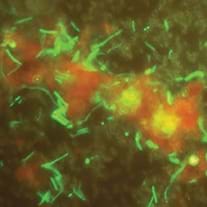
Epifluorescent photomicrograph of bacteria (green rods) on soil (orange-red particles). Particles were stained with a fluorescent dye.

The waters of the East River, Newtown Creek and the Gowanus Canal are among the local sites where benzene and oil residues mingle with persistent pollutants, such as polychlorinated biphenyls (PCBs), to form a stubbornly toxic soup that resists remediation. For environmental microbiologist Ray Sambrotto, Lamont Associate Professor at the Lamont–Doherty Earth Observatory at Columbia University, the solution for cleaning up such sites may be as simple as a common soil bacterium isolated from a compost pile in the 1990s.

Allied Microbiota, the company Sambrotto and a cohort of Columbia colleagues founded in 2017, is commercializing the use of this bacterial strain, aiming to reclaim polluted areas by simply allowing the microbes to do what they do best: break down environmental contaminants. The scientific community has long been aware that common microbes can degrade some pollutants — indeed, dozens of bacterial species are credited with dispatching of much of the oil dumped into the Gulf of Mexico during the Deepwater Horizon explosion.

The class of contaminants that includes PCBs, polyaromatic hydrocarbons and dioxins are less susceptible to natural attenuation, however, and these so-called recalcitrant pollutants require expensive, logistically challenging remediation techniques.

“The idea of using bacteria for bioremediation of recalcitrant pollutants isn’t a new one,” said Sambrotto, noting that research interest has waxed and waned over several decades.

Advances in Biotechnology

As advances in biotechnology have moved into the environmental field, the notion of deploying nature’s soldiers against a decidedly unnatural group of pollutants has gained momentum. Sambrotto and his Allied Microbiota co-founder Frana James describe their approach as “augmentation,” as it uses specialized bacteria to amplify the work of native microbes, a process they believe can be done safely and at low cost.

“Our bacteria are thermophiles, and they only reproduce when conditions are ideal,” Sambrotto said, adding that if temperatures drop below 40 degrees Celsius, the bacteria enter a dormant state.

When active, they are powerhouses of bioremediation, eliminating recalcitrant pollutants at breakneck speeds relative to other bacterial breakdown methods. Sambrotto credits this speed to the fact that the microbes are aerobic, rather than anaerobic, like most strains used in remediation.

“Aerobic enzymes have much more rapid degradation rates,” he said. “Oxygen is just a better hammer to hit these things with.”

Testing Their Technique

With support from PowerBridgeNY, a proof-of-concept center that commercializes cleantech spinning out of universities, Sambrotto and James are pilot testing their technique on polluted soil and sediment samples from the Hudson River and other sites.

“People are more than happy to send us samples, and they’re especially interested in hearing about the speed of remediation, as that’s what drives costs,” he said. Experiments on samples containing a mix of PCBs and chlorobenzene reveal breakdown rates of 25–40 percent per day under optimal conditions, versus 1 percent with anaerobic bioremediation. “When we hit that sweet spot to maintain optimum growth of the organism, breakdown rates are orders of magnitude faster than anything we’ve seen,” said Sambrotto.

While more pilot tests are needed — and the company is on the lookout for such projects — the promising early results have inspired the team to think about the future. Sambrotto described his vision of eliminating the financial barriers to remediating desirable but toxic spots along the Hudson River and restoring their utility.

“Hopefully, we can bring the cost down enough to address these areas,” he said. “Rather than digging up sediments and moving them elsewhere for treatment, I can envision a portable system that allows us to bring bacteria to the site and treat it right there. It’s incredible to think that we could reclaim properties that have been fallow for decades.”

Turning Carbon Dioxide Emissions into Tomorrow’s Fuels

Most people don’t often think about combustion — the fundamental chemical reaction that converts a fuel source into energy, leaving water and carbon dioxide as waste products. Jason Salfi is the opposite. As CEO and co-founder of Dimensional Energy, along with David Erickson, Tobias Hanrath and Clayton Poppe, he spends his days talking about ways to reverse combustion, which may sound like a tall order, “but it’s what plants do all the time,” Salfi said, describing the process his company is working to commercialize: a form of artificial photosynthesis that uses sunlight, water and waste carbon dioxide to create fuel.

Dimensional Energy was born from serendipity, when Erickson and Hanrath, two faculty scientists from Cornell University, unknowingly submitted complimentary applications to NEXUS-NY, a clean energy business accelerator for which Salfi serves as an advisor. Noting the ties between the professors’ technologies, which tapped sunlight and catalytic materials to convert waste carbon dioxide (CO2) into hydrocarbon fuels, the NEXUS-NY team played matchmaker, suggesting the two join forces with Salfi to form a company.

Since 2016, the team has refined their core technology and begun laying plans for an industrial partnership to test their capabilities at increasingly larger scales. Although the technology is still in its early stages, the team envisions a scalable reactor that uses sunlight as an energy source, along with novel nanocatalysts and fiber optic waveguides developed in Hanrath and Erickson’s labs, to convert waste CO2 into methanol or syngas for use in a broad range of industrial processes.

“We’re not just sequestering carbon dioxide, we’re creating something useful,” said Erickson.
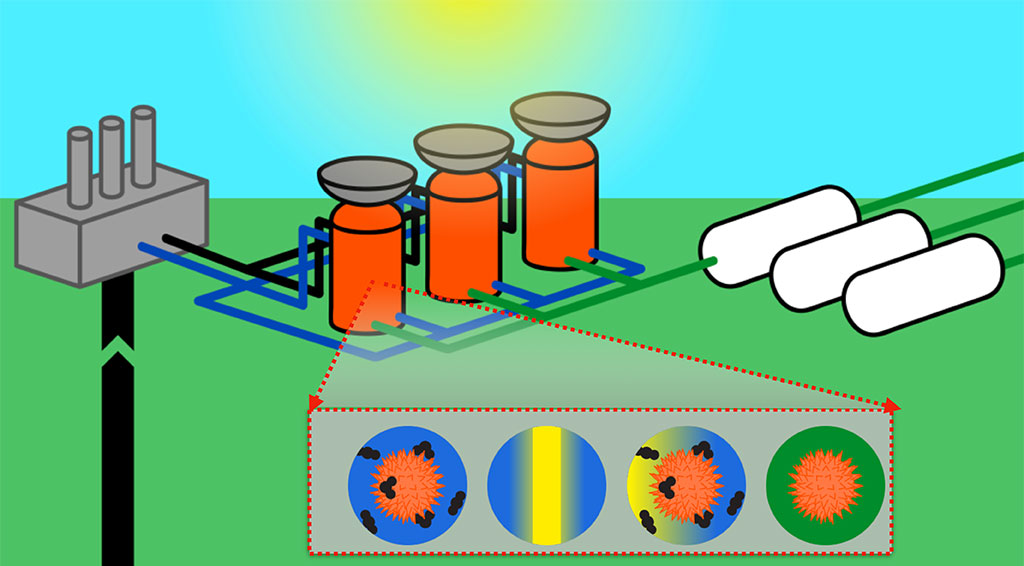
The Dimensional Energy technology is “plug-in” compatible with established carbon capture systems. The schematic illustrates how waveguide and catalyst concepts are integrated to enhance light exposure to the surface of nanostructured catalysts.

Carbon Conversion Technologies

As a semi-finalist in the Carbon X-PRIZE, a $20 million competition accelerating the development of carbon conversion technologies, the Dimensional Energy team is testing the feasibility of situating their reactor at point sources of CO2 emissions, such as natural gas or coal-fired power plants, although Salfi says such co-location isn’t crucial for the system to be successful at scale.

“Ultimately, it’s up to the industrial customer whether we capture the carbon on site or use sequestered carbon,” he said. “For now, we’re just aiming to create a reactor that fits within the current industrial infrastructure, with a few novel modifications.”

This level of attention to design schemes that work well in industrial settings is a distinguishing factor of Dimensional Energy’s approach to tackling what is, by all measures, a challenging end goal. Carbon conversion technologies are viewed as a critical component of efforts to rebalance the carbon landscape, but the field is still relatively new and most technologies are early-stage.

CO2 Sequestration and Transportation

At present, the cost of sequestering and transporting CO2 makes many potential applications cost-prohibitive at scale, and new sequestration technologies, including those that capture CO2 directly from the air, are not fully commercialized. Erickson believes the company’s pragmatic approach to design and functionality will ease the process toward scalability.

“We’re pursuing traditional methods of building small prototypes and learning how to optimize and grow,” said Erickson, “But since day one we have looked at major chemical plants to understand what works in that setting, and we’ve modeled our reactors on proven designs that we know can scale.”

Salfi and his team are realistic about the timeline for carbon conversion to have a measurable impact — easily 30 years by many estimates — but they, like most others working in the renewable energy field, are undeterred by the long time horizon.

“This is hard work, and I can tell you that there are easier ways to make money,” Salfi said. “But there are so many pioneers and passionate people excited to build businesses around these technologies, and our mission to make a difference drives what we’re doing and how we approach the challenges we face.”


Also see:
This Scientist’s Key is to Never Stop Learning

A shot of a syringe and a vaccine.

From research in the biophysics of RNA to advances in cancer immunotherapy and vaccine antibodies.

Published October 1, 2017

By Kari Fischer, PhD

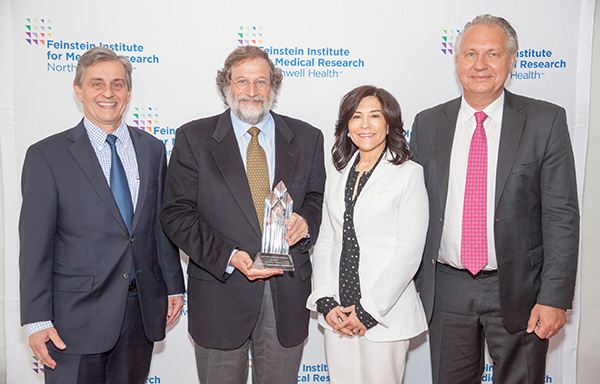
Jeffrey V. Ravetch, MD, PhD, Theresa and Eugene M. Lang Professor and head of the Leonard Wagner Laboratory of Molecular Genetics and Immunology at The Rockefeller University, received the 2017 Ross Prize in Molecular Medicine — established in conjunction with the Feinstein Institute for Medical Research and Molecular Medicine — for his discovery of how antibodies generate a wide range of immune responses: through Fc receptors.

The path to this accolade was a hard won fight. Ravetch’s work challenged a dogma of immunology, and consequently he spent his first 20 years as an independent investigator in relative isolation. When asked how he would encourage other researchers to drive through such a period, his response was emblematic of his career.

“I think the point of science is that you never stop learning. You have to continually push yourself to be uncomfortable in a new field, and potentially get up there and say something that’s wrong,” Ravetch says.

From left to right: Kevin J. Tracey, MD, President and CEO, The Feinstein Institute for Medical Research; Jeffrey V. Ravetch, MD, PhD, Theresa and Eugene M. Lang Professor, The Rockefeller University; Robin Ross, Board of Directors, The Feinstein Institute for Medical Research; Klass Kärre, MD, PhD, Professor, Karolinska Institutet.

Raised in the Sputnik Age, Inspired by Scientists

Raised in the age of Sputnik, a young Ravetch elected scientists instead of sportsman as his heroes — absorbing the biographies of Louis Pasteur and Albert Einstein. Recounting his first experiments in his high school basement, without any guidance, Ravetch laughed, “It’s remarkable how naïve I was.” He studied the embryonic development of zebrafish, using a homemade frame to collect the embryos and a borrowed microscope.

Transitioning into more formative research, Ravetch delved into the biophysics of RNA folding as an undergraduate. He subsequently earned an MD so he could apply his findings to human disease, a PhD in bacterial genetics and a postdoc employing molecular biology to study antibody recombination. Ravetch had no one love in science, except for science itself.

When first pursuing antibody receptors that may mediate inflammatory responses, he encountered either indifference or bewilderment as the mechanism for this process already existed: through the complement system. But Ravetch had the benefit of not yet being an immunologist — he lacked the tunnel vision that can form when studying one field — and instead was driven by a basic interest in the structure and function of Fc receptors.

Groundbreaking Work in the Role of Antibodies in Vaccine Development

His group eventually demonstrated that the Fc region of antibodies can either induce or suppress an immune response by binding to the activating or inhibitory versions of Fc receptors on immune cells — without complement. This was groundbreaking, and opened many questions on how antibodies can fine tune immune activation or suppression.

Ravetch found one answer through a bit of serendipity: he was invited to the right conference. Knowing little about intravenous gamma globulin (IVIG) therapy, he flew to California to attend a clinical meeting on the topic. IVIG is the administration of antibodies isolated from donated blood, and is given as an anti-inflammatory.

How IVIG worked was unknown, and Ravetch heard an abundance of theories at the conference. None were satisfying, and Ravetch had a new question to chase.

He returned to the lab, and found that IVIG’s therapeutic effects occurred through the inhibitory Fc receptor. Moreover, the antibodies’ ability to induce an inhibitory response, and dampen inflammation, resulted from the presence of specific carbohydrates attached to their Fc region. The presence and structure of those carbohydrates dictates the type of Fc receptor with which they can bind. Reigniting his undergraduate training on intricate molecular relationships, Ravetch went back to “school.”

“Nothing prepared us for this kind of interaction, and it was fascinating. It was one of those wonderful Christmas vacations where, for two weeks, I just sat and read up on carbohydrates,” he says.

Extending into Cancer Immunotherapy, Improved Vaccine Design

Beyond scholarly pursuits, these discoveries influence therapy. Ravetch’s findings on Fc receptors had not yet gained traction at the advent of therapeutic antibodies, and pharmaceutical companies focused on the antigen-binding variable region, not the Fc.

This carried into the pioneering field of cancer immunotherapy, where many promising agents were successful in mice, but then failed in the clinic. There, Ravetch cites a lack of attention to the Fc, and he now collaborates with companies to share his expertise and develop better therapeutic antibodies for the treatment of cancer, inflammation and infectious diseases.

Lately, Ravetch is branching into a new area with vaccines, exploring how antibodies offer protection upon vaccination, and how that knowledge could improve vaccine design — perhaps yielding a universal flu vaccine. Beyond that, Ravetch does not have a plan, but this is true to his style.

“I don’t really know what’s going to happen in the next weeks or months. There’s a certain expectation based on what you’re doing, but if you don’t see unexpected observations, the fun is gone,” he says. “I’m looking forward to the unknowns.”


Read more about the Ross Prize and past awardees:

Sustainable Development for a Better Tomorrow

The logo for the UN.

The New York Academy of Sciences supports the United Nations’ Sustainable Development Goals, focused on issues like poverty, human rights and sustainability.

Published May 1, 2017

By Hallie Kapner

United Nations Secretary General Ban Ki-moon gives the opening remarks at the Sustainable Development Goals Summit

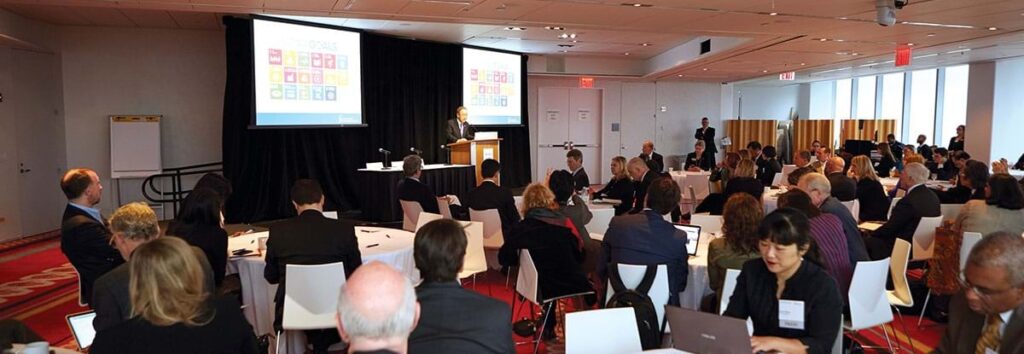
As Ban Ki-moon stepped up to a podium at the New York Academy of Sciences Summit on Science and Technology Enablement for the Sustainable Development Goals on November 29, he joked that back in school, science had never been his strong point.

But as the UN Secretary General kicked off a day-long deep dive into how innovation could transform life for billions across the globe, Ban’s admiration for those in the sciences was clearly evident. Indeed, he was there to ask scientists and representatives from industry, UN agencies, NGOs and intergovernmental organizations for their help in achieving the most ambitious to-do list ever created by humans for the sake of humankind—the United Nations Sustainable Development Goals (SDGs).

Jumpstarting an Unprecedented Collaboration

The Goals are a monumental undertaking, calling for unprecedented collaboration. To jump start the necessary teamwork, UN Deputy Secretary-General Jan Eliasson and Academy President Ellis Rubinstein came up with the idea to convene this first gathering of representatives from the science and technology communities at the Academy headquarters, in hopes of spurring action and innovation on behalf of the SDGs.

“The Academy has brought people together to address global issues since the beginning of our 200-year history,” Rubinstein told the packed auditorium. “There is no task more global than the work of fulfilling the Sustainable Development Goals. We felt it right to host this important meeting.”

Focused on Poverty, Human Rights, Sustainability and Peace

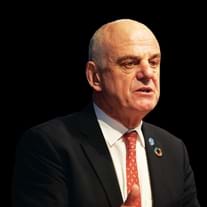
David Nabarro, UN Special Adviser on the 2030 Agenda for Sustainable Development and Climate Change

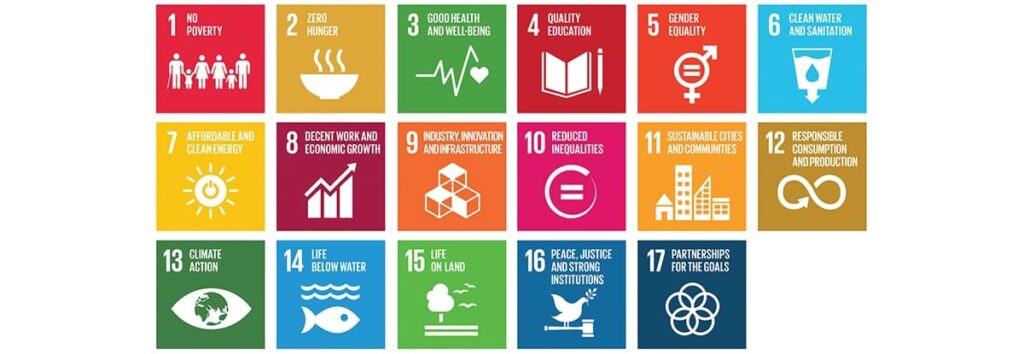
Adopted by the UN’s 193 member states in 2015 as the centerpiece of the 2030 Agenda for Sustainable Development, the 17 SDGs are a plan of action for the planet, comprising 169 targets for eradicating poverty and hunger, realizing human rights for all, embracing sustainability to protect the planet and fostering peaceful societies. Building on the framework established over the past 15 years by the Millennium Development Goals, which mostly focused on developing countries, the SDGs aim for global engagement and global cooperation.

As the declaration announcing the Agenda stated, the SDGs are “universal goals and targets which involve…developed and developing countries alike. They are integrated and indivisible, and balance the three dimensions of sustainable development: the economic, social and environmental.” “The SDG’s are universal goals…and balance the three dimensions of sustainable development: the economic, social and environmental.”

When the SDGs were adopted, UN officials realized it was crucial to “mobilize the scientists,” Ban said, remarking on how that community has long paved the way for global transformation.

“You aren’t daunted by ambition, and you’re quite at home with big goals and new ways of thinking,” he told the Academy audience.

Developing a “Common Language” Among Scientists

Further, he noted that the common language of scientists is a powerful diplomatic asset in times when cooperation among nations is critical. History supports this assertion, as recently as 2015, when scientists aided in the negotiations that led to the Iran nuclear deal, and as far back as the famous U.S.–Soviet “handshake in space” in 1975, scientists have succeeded where others have struggled.

“When extremist groups and politicians strive to push people into groups of ‘us’ and ‘them,’ the scientific community is an example of problem-solving across lines that may otherwise divide us,” Ban said.

One Summit, Four Streams

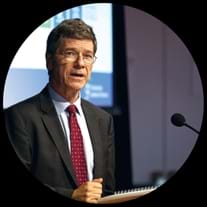
Jeffrey Sachs, Special Advisor to United Nations Secretary-General Ban Ki-moon on the Sustainable Development Goals

A crowd of over 100 VIPs filled the Academy’s auditorium in lower Manhattan for the Academy Summit. Surrounded by panoramic views of one of the world’s great cities, participants came together from the United Kingdom, China, Japan, Korea, India, Africa and states across the United States to join one of four working groups, or “streams” tasked with plotting a roadmap to advance the SDGs through science and technology.

The four streams—Early Childhood Development, People in Crisis, Sustainable Consumption and Production and Urbanization—were designed to encompass several SDGs.

For example, in Urbanization, participants explored interlinked concepts of resilient infrastructure, sustainable cities and clean energy, while Early Childhood Development brought together goals advocating good health and well-being, quality education and gender equality. In this way, the stream approach encouraged participants to think holistically, and to identify problems and potential solutions capable of satisfying multiple goals.

Developing a Framework for Achieving Goals

To ensure the feasibility of these solutions, each group began by listing the key research and data gaps that must be filled in order to lay out a framework for achieving the SDGs, before brainstorming potential partnerships—particularly between the public and private sectors—required for financing, implementation and monitoring. They were then encouraged to discuss proofs of concept within their fields that could be brought to scale in service of the SDGs.

Throughout the day, speakers presented brief case studies of partnerships that are utilizing existing technologies in new ways in the fields of health, education, disease management and nutrition. Jeffrey Sachs, Special Advisor to the United Nations Secretary-General on the Sustainable Development Goals, offered particularly salient advice for tapping promising but underdeveloped technologies, and described how the progression from basic idea to mass uptake of a new technology is often stymied not by a lack of need, but by a lack of planning.

“When extremist groups and politicians strive to push people into groups of ‘us’ and ‘them,’ the scientific community is an example of problem-solving across lines that may otherwise divide us,” Ban said.

“We have to plan for the whole value chain, and that means planning for diffusion,” he said, noting that the SDGs 15-year timeline calls for quick mobilization. “Otherwise, we have wonderful technologies sitting on the shelf, not deployed.”

To help achieve the SDGs, the scientific community will be relied upon to think about innovations that can be globally implemented by the year 2030. Sachs reminded the groups of the seemingly impossible tasks humans have tackled throughout history.

“We didn’t go to the moon because it was easy, we did it because it was hard. This too is hard, but it couldn’t be more exciting,” said Sachs, recalling John F. Kennedy’s famous “moonshot” remarks.

More than 100 leaders from industry, academia, government and philanthropy participated in a series of discussions on how best to achieve the Sustainable Development Goals.

The Hope Factors

After a day of brainstorming, debate and discussion, the working groups presented their first set of recommendations to the Summit at large. Ideas ran the gamut, from rough sketches of how to use mobile apps to collect data on early childhood development interventions to suggestions for making cities more sustainable as well as more livable through technology. But a common thread emerged from all four groups: the desire to meet again, to continue the conversation and to collectively commit to the work ahead.

Many attendees echoed the sentiments of David Nabarro, UN Special Adviser on the 2030 Agenda for Sustainable Development and Climate Change, who described the Summit as a “landmark day” and hoped that the activism sparked would drive change over the next 15 years.

Along the way, “in every Goal, science has a role to play,” said Jan Eliasson, UN Deputy Secretary-General, as he offered the Summit’s closing remarks.

He explained that even before the SDGs were finalized, the Science Advisory Board of the UN Secretary-General advocated an integrated, scientific approach to achieving them, noting the universality of science and its reliance on empirical facts as a force to broker the kind of global cooperation on which the SDGs depend.

“To solve problems in real life, you need a cross-cutting approach that helps coalesce people around a problem—the scientific community has perfected that model,” Eliasson said. Acknowledging the titanic scope of the SDGs and the dire circumstances of the people the Goals seek to aid, he emphasized the vast potential to create a brighter, healthier future. “The people in this room lift our hopes,” he said. “The future depends on women, youth and science—these are the hope factors.”

Laying the Scientific Foundation in New York City

A black and white headshot of Samual L Mitchell

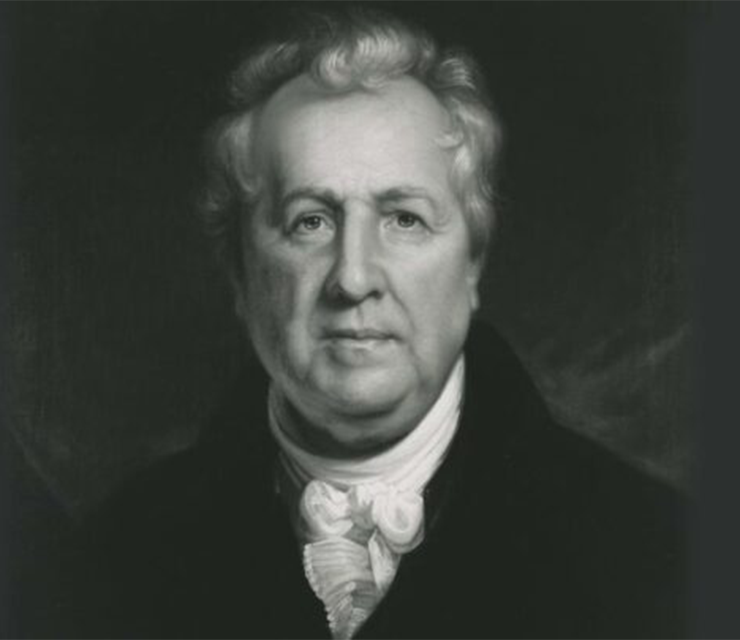
Described by his contemporaries as a “chaos of knowledge,” a “living encyclopedia,” and a “stalking library,” first Academy President Samuel L. Mitchill dabbled in a variety of disciplines, building a unique level of scientific proficiency that was very rare at the time.

Published May 1, 2017

By Douglas Braaten, PhD

Samuel Latham Mitchill was a rare polymath for his time.

Born in North Hempstead, New York, in 1764, he had remarkably varied interests, which ranged from medicine to geology, botany and mineralogy. A farmer’s son, Mitchill exhibited great interest in the natural sciences early in life. After studying the foundations of medicine with his uncle, doctor Samuel Latham, Mitchill went to the University of Edinburgh to earn his medical degree in 1786 and then returned to New York, where he received a license to practice medicine. The route he chose, however, was far from a typical doctor’s path.

Because of his boundless thirst for knowledge, Mitchill couldn’t fully settle on pursuing any one scientific field. His contemporaries described him as a “chaos of knowledge,” a “living encyclopedia,” and a “stalking library.”

He kept dabbling in a variety of disciplines, building a unique level of scientific proficiency, which was very rare at the time. It wasn’t surprising that his wide array of interests and expertise earned him an appointment as a Chair of Natural History at Columbia University, at the age of 28. At Columbia, Mitchill’s scientific career truly flourished. He taught chemistry and botany, and expanded his work into other areas of science.

Promoting Geology, Agriculture, Chemistry

Mitchill was a prolific publisher and produced a variety of works, once again on a wide variety of topics. He prompted the geological survey of the New York State. He contributed to the development of agriculture by surveying the mineralogy of the Hudson River Valley. His chemistry studies led to improved detergents and disinfectants, and even better gunpowder. For 23 years, Mitchill served as a chief editor of the Medical Repository, one of the top scientific publications of the time.

It would only make sense then, that an erudite man like Mitchill would lay the foundation for the New York Academy of Sciences. In 1817, he organized the first meeting of the Lyceum of Natural History (the Academy’s early name), which took place at the College of Physicians and Surgeons in Lower Manhattan. Later elected as the Lyceum’s first President, Mitchill remained in that post until 1823.

Under his supervision, the Lyceum hosted lectures, preserved samples of natural artifacts, and established a library. Seven years after the Lyceum’s commencement, it began publishing The Annals of the Lyceum of Natural History of New York — one of the first American journals of natural history and science. The Annals published articles on myriad topics, from research on swallows by its Member John James Audubon, to descriptions of newly found species.

As the years progressed, the organization started by Mitchill continued to grow, adding more activities to its list. New York State commissioned the Lyceum to do a survey of its mineralogy, botany, and zoology. The Lyceum also became instrumental in launching organizations dedicated to scientific research and literacy, including New York University in 1831, and the Museum of Natural History in 1868.

Science and Politics

Like many other great scholars who sought to educate societies about science, Mitchill worked to emphasize the importance of scientific progress in the American legislature and politics. In 1801, he resigned his Columbia appointment and took a seat in the U.S. House of Representatives. Later, he served a term in the Senate, and then once again in the House. He was an advocate of quarantine laws, and an avid proponent of the Library of Congress.

Mitchill was also instrumental in the creation of educational institutions including Rutgers Medical College, where he served as Vice President during the college’s first four years. Despite being preoccupied with his political efforts and other endeavors, Mitchill never stopped working on his scientific pursuits, and remained very productive in his research publications throughout his life.

As historian Alan Aberbach once wrote, “To Mitchill it was axiomatic that with diligence and empirical practices, developing systematically and organically, one could come to grips with and resolve the historical plagues of mankind’s ills.”

Out of the Lab and Onto the Market

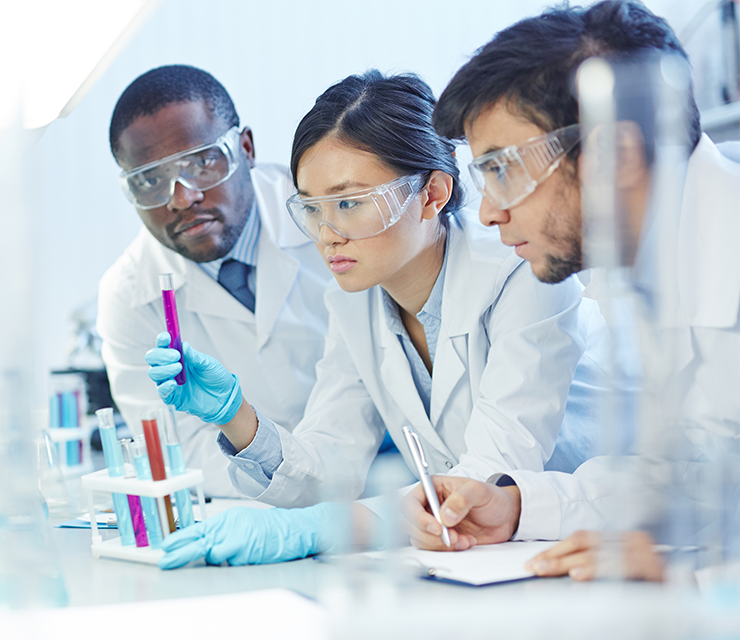
Researchers peer at a test tube inside a science lab.

A look inside an innovative program that encourages new business start-ups.

Published May 1, 2017

By Carina Storrs, PhD

Jessica Akemi of Cornell presents on plans to commercialize CO2 conversion technologies at the NEXUS-NY demo day in Rochester, NY. Photo courtesy of doerrphoto.com

New York State policy makers and business leaders looking to encourage new business start-ups should take a look at an innovative program developed by New York State Energy Research & Development Authority (NYSERDA), an Academy program partner for nearly a decade.

NYSERDA’s mission is to identify next generation clean energy technology, and bring the best of those ideas out of the lab and into the marketplace through Proof of Concept Centers (POCC). POCCs work with research teams that have promising ideas, inventions and intellectual property. The teams gain access to business expertise that provides a market validation process to determine whether they are ready to create a viable business model.

Jeff Peterson, NYSERDA’s Program Manager, sees this as a viable way to encourage new business start-ups.

“Visualize a funnel. At the wide end of the funnel you have a lot of people with interesting ideas for prospective business enterprises. At the small end of the funnel you have a commercially viable scalable business,” he said. “The POCC programs are designed to help entrepreneurs with ideas around clean energy technology negotiate the funnel to success.”

Establishing Proof of Concept Centers

Four years ago, NYSERDA selected three outstanding groups and awarded them funding to start POCCs: a Columbia University-led group that includes Cornell Tech, Stony Brook University and Brookhaven National Laboratory; a joint NYU and CUNY group; and High Tech Rochester, a nonprofit business incubator.

The first two groups operate as a single POCC known as PowerBridgeNY (PBNY), while the High Tech Rochester POCC is called NEXUS-NY. The inclusion of NEXUS-NY helps cast an even wider net in the search for potentially game changing ideas. Although POCCs tend to focus on academic research Peterson said, “you hate to shut the door on people when they have an interesting idea, so that’s where the NEXUS-NY program came into play.”​

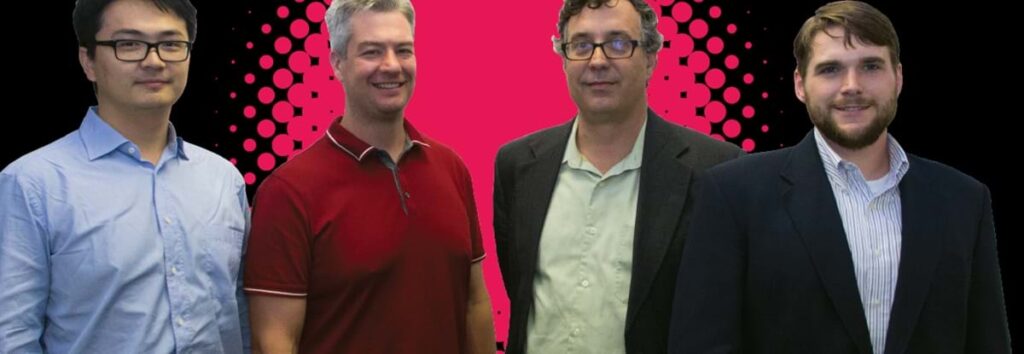
From left to right: Xiaozheng, Co-Principal Investigator Scott Banta, Co-Principal Investigator Alan West, Entrepreneurial Lead Tim Kernan

An Enviable Network of Innovation

Research universities have always been at the center of new technologies and New York State has one of the most enviable networks of innovation centers in the country. POCCs have been centers of innovations for several years. Similar to PBNY and NEXUS-NY, their aim has been to fund groups with promising early-stage research and advice about how to develop their research for commercialization. All of these efforts support Governor Andrew M. Cuomo’s energy goals to have 50 percent of the state’s energy come from renewable resources by 2030.

“Unlike the NYSERDA POCCs, many of these centers promote a range of technologies rather than focusing specifically on clean energy. However, clean energy technology, as compared with software technology for example, is particularly poised to benefit from the POCC model,” Peterson said.

For one, it is relatively capital inefficient to build and test multiple iterations of complex clean energy hardware, such as a transformer or wind turbine, requiring both more upfront market research and funding. In addition, the market for clean energy technology is constantly evolving so it may be more difficult to project the demand for a certain type of product.

To date, 52 teams have participated in the first three cycles of the program. These teams have gone on to start nearly 30 companies between them, many of which have also attracted private investment as well as grant funding from competitive state and federal programs.

Potential for Commercialization

During their time in the POCC, the teams tap into myriad business resources that many academic groups and groups conducting early-stage research, find critical for commercialization. As part of the application process for PBNY, teams participate in a two-day boot camp, during which they hear about lessons learned from previous PBNY classes.

They pitch their idea to a panel of judges from industry who provide guidance and feedback. Once teams are accepted into PBNY, they meet regularly with an assigned industry mentor, who helps them prepare to talk with potential customers, many of whom they connect with through PBNY networking events. In addition, the teams have monthly meetings with PBNY leadership to determine how well they are meeting the business and technical milestones they established at the beginning of the program.

A Two-Phase Process

The NEXUS-NY program involves two phases: In the first 12-week phase, teams make the case to the POCC leadership that their technology lends itself to creating a startup. If they advance, they spend the rest of the program working to demonstrate that their technology works in a way that is useful to potential customers, such as through building prototypes and developing investor presentations. Throughout the program, participants meet weekly with teaching teams, either virtually or in person, which help train them to have conversations with potential customers. The mentor network at NEXUS-NY is invaluable for introducing teams to key industry players.

Both NEXUS-NY and PBNY award research money to teams accepted into their program, but by the time they finish the program, teams usually say the most helpful part was everything else.

Christopher Schauerman, co-director of the Battery Prototyping Center at Rochester Institute of Technology, is part of a NEXUS-NY team that formed a company, called Cellec, for its technology, which involves using nanomaterials to build smaller and more energy dense batteries. The batteries have potential applications in drones and satellites and the Cellec team, which graduated last year, already has contracts lined up with customers in the aerospace and defense community.

“Through the NEXUS-NY program, we were able to talk to enough customers and get enough customer feedback that motivated us to form a company,” Schauerman said.

The Impact of the Program

For some teams, feedback from potential investors led them to substantially pivot their plan. Tim Kernan, GM of Ironic Chemicals and his partners at Columbia University were accepted into the first cohort of PBNY with the plan to use their genetically engineered bacteria to convert solar energy to liquid fuel. The negative response from investors, who questioned the need for this technology because fuel was so cheap, combined with input from a PBNY business mentor, led the team to instead develop the bacteria to break down sulfide waste from copper mining.

“Academics are not always experienced or familiar with the commercialization process,” Kernan said about the company he and his partners formed based on their technology. “Up until the existence of PBNY and similar types of centers, there was no support, you had to figure it out on your own or be lucky enough to have a technology that a company already wanted to buy. But with clean energy you’re creating technology that doesn’t have a market yet,” Kernan said.

Ironic Chemicals currently has a partner in the mining industry and a federal small business grant that will hopefully allow them to start testing bacterial tank reactors at a mining site by early 2018.

A Strong Advisory Board

Another important component to the program is the advisory board organized by the Academy. National thought leaders from academia, government and industry meet regularly to provide strategic advice to the POCC leadership.

“After a relatively short time, there have been many interesting success stories. Many companies have been formed. Some have raised private capital. A few have sold products. Even more have been awarded additional grant funding,” Peterson said. “The truly exciting part of the program, however, is that many of the research teams have become excited about entrepreneurship. NYSERDA committed to funding the POCCs for a five-year term. The hope is that the program will gain enough momentum and interest that grant and investment money will step in and NYSERDA and state funds would not be necessary at the scale they are at now.”

The New York Academy of Sciences – A Concise History

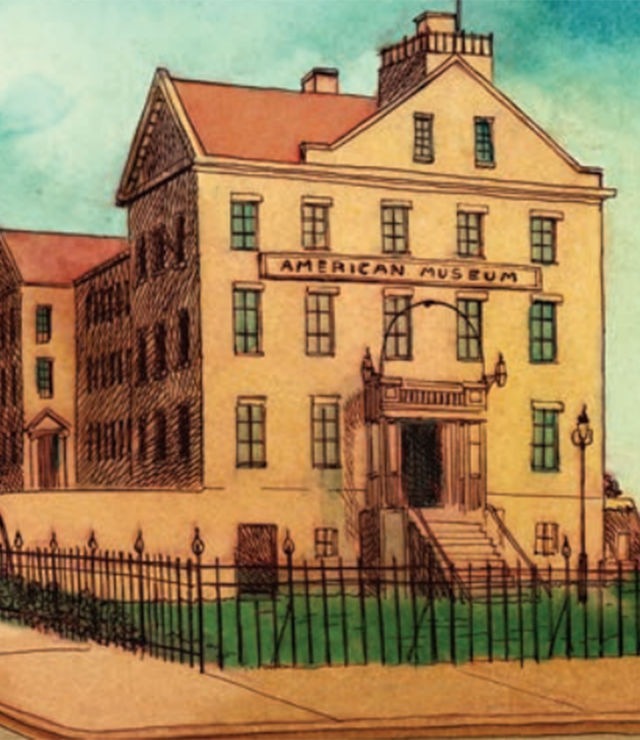
An illustration of the Academy's original home in 1817.

Published May 1, 2017

By Douglas Braaten, PhD

Founded in 1817 as the “Lyceum of Natural History in the City of New York,” by a small group of science enthusiasts, led by Samuel Latham Mitchill, a polymath and prominent politician who represented New York in the U.S. Congress, determined to create an organization that anyone interested in natural science could join in order to learn from experts, and that provided a venue for public consumption of scientific ideas and advances of the time.

For the next 100 years, the trials and tribulations of the Academy were in many respects the trials and tribulations of progress of science in New York and other states of the new American republic. In March 1817, James Monroe became the fifth American president. That same year he was elected an honorary member of the Lyceum, along with the third American president, Thomas Jefferson.

The intentionally anti-patrician nature of the Lyceum not only distinguished it from other institutions of the day, it served as the basis for a new type of democratic institution that later was instrumental in the progress of science, especially in the New York City area, though this was also felt throughout New York State and beyond.

On the national scene, Philadelphia, originally owing to its centrality as the first American capital and birthplace of major figures in politics and science—e.g., Benjamin Franklin—was home to the first science societies in the nascent country, although with the exception of Franklin’s Academy of Natural History the societies were aristocratic and elitist. They were institutions largely, if not exclusively, for men of wealth who were not themselves scientists; nor probably even much interested in science. Membership was a symbol of status, indicating, among other things, that a person had the financial means to support these 19th century social clubs.

Even by name—Lyceum: an institution for popular education providing discussions, lectures, concerts, etc.—the first incarnation of the Academy was fundamentally different from other societies. Its raison d’être was not social climbing and show, but the dissemination of science, and bringing people who were keenly interested in science, together.

This fundamental democratic principle determined the course of the Academy’s history, and with it the development of key institutions of science and learning in New York City today, including Central Park, the American Museum of Natural History, the New York Botanical Garden and New York University. It was by inclusion of people on the basis of only their interest in science that the Academy could bring together so many different stakeholders—indeed so many key individuals at just the right moments—to influence, if not forge the development of many New York City institutions.

The founding meeting of the Academy, then the Lyceum, occurred on January 29, 1817. To tell the history of the Academy’s accomplishments since then is to tell the history of science in New York State and America, and beyond. It is the history of an institution, but more importantly of the tens of thousands of individuals who have been Academy Members since 1817, from around the globe and from many diverse institutions, cultures and walks of life.

Indeed the history of the Academy would not have been possible without the devotion, energy and creativity of its Members. This collective engagement—today we refer to this as the Academy’s network—has enabled and driven fundamental changes in the landscape of science and science-based institutions in New York City and throughout the world. This is history worth telling, and re-telling.

Two centuries later, on January 29 2017, the Academy unveiled a permanent 200th Anniversary Exhibition in the lobby of its headquarters at 7 World Trade Center in New York City (see photos below). The folded timeline insert in this issue of the magazine provides a concise history of key Academy events, members and accomplishments since 1817. A prominent feature of the physical exhibition is a 17-foot-long timeline with images and text that tells the story of some of the enormous challenges and successes over the Academy’s 200 years.

In addition, as part of the 200th anniversary celebration, the Academy is publishing a revised edition of a critically acclaimed history of the Academy and of science in New York City and the early United States, Knowledge, Culture, and Science in the Metropolis: The New York Academy of Sciences, 1817–2017 by historian and professor Simon Baatz (John Jay College).

Originally published as special issue of Annals (Ann NY Acad Sci 584: 1–269) in 1990, professor Baatz’s book provides an, “engrossing account of the role of the sciences within the great American metropolis”… “this masterly account of science in its social context will be of the greatest interest to everyone who cares about New York, about the growth of knowledge, and about the importance of voluntary associations in our national life.” The revised edition, published in January 2017, contains a new chapter on the Academy’s history from 1970 to 2017.

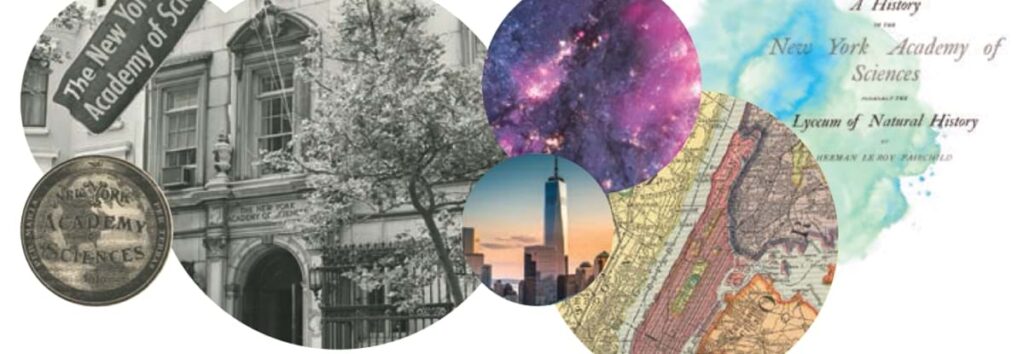
An even earlier account, A History of the New York Academy of Sciences, formerly the Lyceum of Natural History, published in 1887 by Herman Le Roy Fairchild, is also available in electronic form by contacting the Academy at annals@nyas.org. Fairchild’s account is a detailed discussion of many facets of the Lyceum’s early days, including biographical sketches of many of the important founders, lists of all of the first Lyceum officers and administrators, dates and addresses of locations of the Academy during its early peripatetic days, copies of the original constitution, by-laws and other legal documents.

Finally, a very brief history, “The Founding of the Lyceum of Nature History,” by historian Kenneth R. Nodyne, was published in 1970 (Ann NY Acad Sci 172: 141–149).

Some Prominent Members of the Academy

From its inception, the Academy has been a member-driven organization. And while it was a democratic organization that welcomed anyone, the Academy, for its first 100 years or so, proposed and voted on bestowing memberships.

As specified in the original constitution of 1817, admittance to the Lyceum was by three categories of membership. Resident members were from NYC and “its immediate vicinity” and thus could take part in Academy meetings, while Corresponding members, largely on account of travel times in the early 19th century—it took a day and a half to travel to Boston!—were less involved; Honorary members were selected on the basis of “attainment in Natural History,” no matter where they resided.

Categories of membership changed over the years. In the 1980s there were eight: Active, Life, Student, Junior, Institutional, Certificate, Honorary Life and Fellows. The total number of members had reached its highest, 48,000 from all 50 states and over 80 countries around the world. This membership apogee was in large part the result of two factors. One was the enormous influence of the Academy’s executive director from 1935 to 1965, Eunice Miner, whose zeal and “stubbornness” increased membership from 750 in 1938 to over 25,000 by 1967! The other influence was a membership policy in the 1980s of mailing out membership certificates to people worldwide.

Today’s Academy membership of 20,000 is composed of Professional, Student and Postdoctoral, Supporting and Patron, and—continuing a long tradition—Honorary Members. Over the course of our history there have been well over 200 Honorary Members, including 110 Nobel Laureates. Below are profiles of just a few of the Honorary Members.

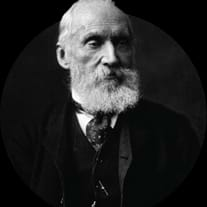
Lord Kelvin (1824–1907)
Elected Honorary Member 1876

William Thomson, 1st Baron Kelvin, a Scots-Irish mathematical physicist and engineer who did important work on electricity and thermodynamics. Absolute temperatures are stated in units of Kelvin in his honor.

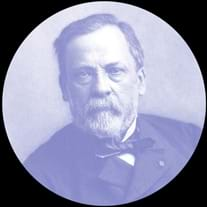
Louis Pasteur (1822–1895)
Elected Honorary Member 1889

A French chemist and microbiologist known worldwide for his work on understanding vaccination, microbial fermentation, and pasteurization. He was director of the Pasteur Institute, established in 1887, until his death. He was made a Chevalier of the Legion of Honour in 1853, promoted to Commander in 1868, to Grand Officer in 1878 and made a Grand Cross of the Legion of Honor—one of only 75 in all of France.

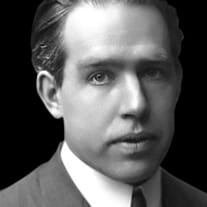
Niels Bohr (1885–1962)
Elected Honorary Member 1958

A Danish physicist who won the Nobel Prize in Physics in 1922 for making fundamental contributions to the studies of atomic structure and quantum theory. He spent much of his life and worked in Denmark, where he founded the Institute of Theoretical Physics at the University of Copenhagen.

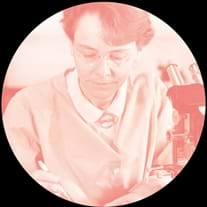
Barbara McClintock (1902–1992)
Elected Honorary Member 1985

An American cytogeneticist who won the Nobel Prize in Physiology or Medicine in 1983 for her discovery of genetic transposition. Her work concentrated on studies of maize, for which she developed techniques for visualizing the chromosomes; she produced the first genetic map for maize and demonstrated the important roles of telomeres and centromeres. McClintock spent her entire professional career in her own laboratory at Cold Spring Harbor Laboratory.

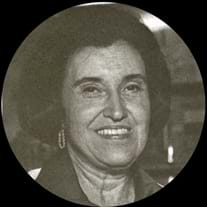
Rosalyn S. Yalow (1921–2011)
Elected Honorary Member 2006

Born in New York City, Yalow was a medical physicist and co-winner of the Nobel Prize in Physiology or Medicine for the development of the radioimmunoassay (RIA), an in vitro technique used to measure concentrations of immune proteins called antigens. This revolutionary technique helped to marshal in the modern era of immunological research. Yalow also won the prestigious Albert Lasker Award for Basic Medical Research (1976) and the National Medal of Science (1988).

How a Small Redesign Can Lead to Big Savings

A photo with solar panels in the foreground, wind turbines in the middle ground, and the sun in the background.

With the help of PowerBridgeNY, the HIGHEST Transformers company aims for cleaner, safer electrical technology that could save billions of dollars a year.

Published March 29, 2017

By Marie Gentile and Robert Birchard

What if one component of the electrical grid could be redesigned to be safer and more environmentally-friendly, plus save the United States billions of dollars each year?

Engineers-turned-entrepreneurs Saeed Jazebi, PhD, and Francisco de Leon, PhD, from the New York University Tandon School of Engineering, are bringing their clean-tech to the marketplace to accomplish exactly this task. The product, HIGH Efficiency Shielded Toroidal (HIGHEST) Transformers, is designed to be a reliable and cost-efficient clean-energy alternative to traditional transformers for use by electric utilities. With new energy efficiency standards from the U.S. Department of Energy that went into effect in January 2016, the timing is deal for HIGHEST Transformers to enter the field of electrical engineering with a unique green technology.

Jazebi and de Leon honed their product and started their company as part of a proof-of-concept center program called PowerBridgeNY, which provides early-stage investments and services to help inventors and scientists turn their high-tech, clean-energy ideas into successful businesses. The POCC, for which the Academy serves in an advisory capacity, is funded through a grant from the New York State Energy Research and Development Authority (NYSERDA).

Typically, transformers transfer electrical energy between two or more circuits via electromagnetic induction; because it’s not efficient to transmit electricity at a low voltage across long distances, transformers increase or decrease the alternating voltages in electric power applications. Ideally these transformers would operate at 100% efficiency, but energy losses linked to transformer inefficiencies are estimated at 60-80 billion kilowatt hours (kWh), carrying a cost of approximately $4 billion per year.

Developing Environmentally Friendly, Safe Transformers

In addition, the coils of toroidal transformers are often insulated and cooled with mineral oil that can have a risk of leaking, or even exploding. As part of their work with PowerBridgeNY, Jazebi and de Leon set out to develop a more reliable dry (non-oil) toroidal transformer that is environmentally friendly and has a lower risk of explosions.

With the technology developed during their participation in the POCC program, HIGHEST Transformers are capable of significantly reducing energy losses and thus cutting energy costs.

“HIGHEST Transformers are comprised of a continuous steel strip that is wound into a doughnut shape (toroidal iron core) and then wrapped entirely in coils. The core has a gapless construction with extremely low no-load losses,” Jazebi explains.

A specialty designed electrostatic shield, new winding strategy, and amorphous iron cores allow the smaller transformers to be comparable in price and efficiency to larger transformers that use oil.

Built with Business Expertise

PowerBridgeNY also helped to provide HIGHEST Transformers with the business expertise and knowledge that is extremely beneficial-but not always accessible-to startups.

“The resources that they provide such as workshops and hourly meetings with lawyers and accountants are invaluable for startup companies,” Jazebi emphasized. “The conferences and networking events assisted us in connecting with national labs, large manufacturing companies, and electric utilities to test the product as well as understand the market.”

With this aid, HIGHEST Transformers achieved two extremely valuable milestones:  the company became an incorporated business, and received a National Science Foundation Small Business Technology Transfer Research grant to further develop their ideas and research.

Innovation for the Next Generation

Next steps for HIGHEST Transformers include manufacturing up to five prototypes to be tested according to the Institute of Electrical and Electronics Engineers Standards Association standard test codes and then implement pilot programs with utility companies and work with large transformer manufacturers or venture capitalists. Because of the new energy efficiency standards are poised to save 3.63 quadrillion BTUs of energy for equipment sold over the next 30 years, it is an ideal time for HIGHEST Transformers to enter the marketplace since there will be a greater demand than ever for this cleantech.

More than anything, the potential impact of this technology drives the research and development of HIGHEST Transformers.

“We owe the environment to future generations; we have to maintain it. This is the prime factor of our progress,” stated Jazebi. “Providing U.S. residents a better place to live with innovative engineering and design motivates us to innovate on this path.”


Learn more about NYSERDA‘s energy-focused Proof of Concept Centers in this podcast from the Academy.

A New Approach to Alternative Therapies

A healthcare works comforts an elderly patient.

Two publications from The New York Academy of Sciences examine pre-approval access to investigational drugs from a range of stakeholders and perspectives.

Published March 29, 2017

By Marie Gentile and Robert Birchard

The Food and Drug Administration (FDA) has granted the use of investigational drugs outside of clinical trials for decades, but in the past several years this practice has attracted significant attention in the news and on social media.

Under expanded access (also called compassionate use), patients who suffer from serious or immediately life-threatening diseases for whom no comparable or satisfactory alternative therapy is available can access drugs and medical devices that are not approved by the FDA and are currently being tested in clinical trials. A total of 29 states have also passed “right-to-try” laws allowing terminally ill patients to access experimental therapies, but there are many questions about the safety and efficacy of such treatments that are not FDA-approved.

Recently the FDA announced significant changes to shorten and simplify the application process used by physicians to request expanded access to investigational drugs for individual patients. Some are predicting that the FDA may not approve a drug to treat Duchenne muscular dystrophy that is currently under review, but will allow compassionate use while additional studies are conducted.

Regardless of the FDA decision, the debate over compassionate use will continue and evolve as additional treatments are brought to the forefront of experimental medicine and research.

Podcast

Bioethics Meets R&D: The Ethics of Pre-approval Access

June 2, 2016
Patients with life-threatening illnesses face challenges in accessing potential therapies at the cutting-edge of R&D which have not yet been proven in a clinical trial. This podcast will explore the provocative and emotional stories of patients, family members, advocates, researchers, physicians, and the regulators charged with keeping medicines in the marketplace safe and effective.

The Science Behind Heart Attacks and Cholesterol

A woman working in a research lab, probably the 1950s or 1960s.

Meet the first African-American woman to receive a PhD in Chemistry in the US.

Published January 1, 2017

By Marie Gentile and Robert Birchard

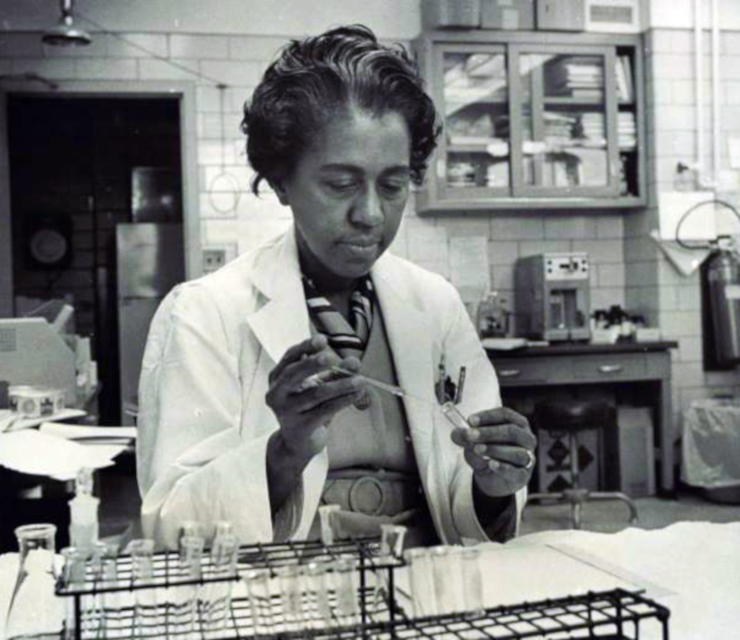
The first African-American woman to receive a PhD in Chemistry in the US, Marie Maynard Daly, PhD, had a distinguished career in biochemistry and was an Academy Member, as well as a Member of the Academy’s Board of Governors in the 1970s.

Daly was born in 1921, in the Corona neighborhood of Queens in New York City, to a father who immigrated to the US from the West Indies and a mother born in Washington, DC. She went on to earn her doctorate from Columbia University and helped make important contributions to our understanding of the links between cholesterol and heart attacks.

Who was her biggest science inspiration?

While we can’t say for sure, many of the available biographies of Daly speak about the influence of her father, Ivan C. Daly, on her early decision to study chemistry.

Ivan attended Cornell University as a young man and hoped to complete a degree in chemistry there but had to leave school before finishing because of a lack of funds. As a young woman, both her father and mother, along with her maternal grandfather, encouraged Daly to pursue a career in the sciences.

It was on a visit to her grandparents’ house in Washington, DC, where she discovered Paul de Kruif’s 1926 book The Microbe Hunters, which is also said to have been an important inspiration to her. However, the clue that seems to reveal just how important her father was to her comes later in her life, when she established a scholarship fund in his name for African-American students studying science at her undergraduate alma mater, Queens College.

Did she have a science mentor?

During her doctoral studies at Columbia University, Daly’s doctoral advisor was Mary Letitia Caldwell, PhD. Caldwell was the first and only female senior faculty member at Columbia for a number of years and spent the bulk of her career working to isolate the enzyme amylase.

Caldwell is credited in a couple of the available biographies with encouraging Daly to focus on studying aspects of digestion, and the title of Daly’s dissertation reflects Caldwell’s intellectual influence: “A Study of the Products Formed by the Action of Pancreatic Amylase on Corn Starch.” We can only speculate about the other early influences that Caldwell might have provided Daly, both of whom are remembered for being important “first” women in their fields.

What was one of her biggest career accomplishments?

In the mid-1950s, Marie began working with Quentin B. Deming, MD, first at the College of Physicians and Surgeons of Columbia University, and later at Albert Einstein College of Medicine at Yeshiva University. The work they did together helped to lay important groundwork for our understanding of the relationship between heart attacks and cholesterol, along with other blockages in the arteries.

Click here and go to page 1340 to read the abstract for their paper, “Effect of Hypertension on Cholesterol Synthesis in Rats,” which they presented, along with three others, at the 1962 Annual Meeting of the American Society for Clinical Investigation.

Learn more about Daly


Also see:

How One Woman Had a Lasting Impact on the Academy

A woman wearing 1950s era clothing.

Eunice Thomas Miner played a significant role in growing the Academy’s membership in the 20th century.

Published January 1, 2017

By Marie Gentile and Robert Birchard

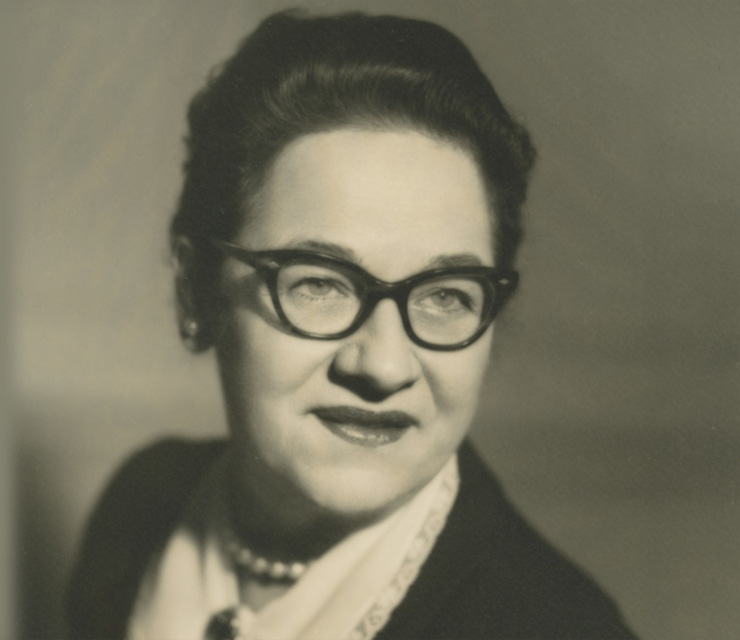
When Eunice Thomas Miner became involved with the New York Academy of Sciences in 1932, the Academy was in a state of great flux. Its records showed just $6,000 in assets and double that amount in unpaid bills. And its Membership numbers were dire.

“We had the grand total of exactly one active Member,” Miner later recalled in an interview, noting that while 317 people were listed on the books, only one was recorded as having paid dues.

But the worst part, in Miner’s view, was the general apathy about the Academy’s proceedings. She recalled a geology paper presentation attracting a total of four participants: “the section head, my husband, myself, and a janitor.” Miner, at the time a young research assistant in the American Museum of Natural History’s Zoology Department — the Academy’s offices were housed within the museum in those days — felt something had to be done to turn things around.

Bringing the Academy “Back to Life”

She decided to “bring the Academy back to life.” Her goal was more idealistic than merely increasing participation and reviving publications. Miner wanted to create a place for scientific debate, where researchers could share their work, present recent discoveries and argue new ideas.

“I felt the Academy, if it could be rejuvenated, would provide a true forum, a unique institution that scientists could call their own,” she later said.

Miner took the Academy’s future not only into her own hands, but also into her own apartment. To draw more participants, she and her husband, Roy Waldo Miner, hosted paper presentations at their own dinners. That earned the Academy 72 Members within a year.

A Goal of 100 New Members Each Year

Miner promised to hit 100 new people annually, with a total goal of 1,000 Members. That required significant time and energy, so she left her research position at the museum and fully devoted herself to the Academy’s needs.

Miner’s Membership drives, which she began running in 1936, exceeded all expectations. She recruited 110 new Members the first year, more than doubled that amount the next year, and by 1940 reached her 1,000 Member goal — much sooner than planned.

Given her successes, the Scientific Council of the Academy appointed her as the organization’s Executive Secretary. By the time Miner retired from her role as Executive Director of the Academy in 1967, after serving in a number of positions, the Academy counted over 26,000 Members across the world. Among her many impactful achievements was securing the organization a new home, through a gift from wealthy philanthropist Norman Woolworth, who donated his mansion to the Academy.

The Role of the Academy

However, Miner’s vision for the Academy and the sciences it represented was far more than a permanent home and stable financing. She saw the organization playing a key role in fostering scientific collaborations and educating the public about scientific progress.

“The time has long since passed when the scientist could afford to isolate himself in his laboratory or think of his discipline as a world unto itself,” Miner said in one of her later interviews. “Today, more than any other time in history, disciplines interact with each other and are dependent upon each other, both in a research and social sense.”

Moreover, Miner wanted scientists to build public awareness of what was developing in their respective fields; to involve them in the inspiring process of discovery.

“More than ever, the public needs to be informed about science,” she said, emphasizing the critical role of research in modern society.

Miner envisioned the Academy as an enabler and disseminator of the scientific progress, and, a half-century later, the Academy still upholds this vital tradition.


Also see: