Australia The Australian National University Paleoecology
I want my research to also help people, to contribute to humanity, because directly or indirectly ecological crises affect people’s lives. The ISR’s first readiness exercise gave me a way to think about my research interests and areas of expertise from another perspective that explores multidisciplinary approaches.
Brazil Scientific Director of Microbiote Fundação Arthur Bernardes/Petrobras, Universidade Federal de Viçosa Microbiology
As scientists, we can prevent real crises. The ISR allows us to think in advance, think about the future. When a crisis arrives, we can have strong projects or concepts that are ready to help mitigate disasters.
The Academy announced today that its highly regarded Junior Academy has been named the Silver Anthem Winner in Education or Literacy Platform.
New York, NY | January 30, 2024 – The New York Academy of Sciences announced today that its highly regarded Junior Academy has been named the Silver Anthem Winner in Education or Literacy Platform in the Third Annual Anthem Awards. Launched by The Webby Awards in 2021, the Anthem Awards honors mission-driven work of people, companies, and organizations worldwide. This year’s Anthem Award Winners were selected from a pool of over 2,000 submissions from 44 countries by the International Academy of Digital Arts and Sciences (IADAS).
“Since 2016, over 15,000 students from 100+ countries have participated in the Junior Academy, gaining knowledge while also learning to apply STEM to real-world challenges,” said Meghan Groome, PhD, Senior Vice President of Education at The New York Academy of Sciences. “Through the Junior Academy’s platform Launchpad, students can engage in a world-class science program, meeting students worldwide and gaining technical and fundamental work-ready skills such as collaboration, communication, and problem-solving. We thank our sponsors for making the Junior Academy possible.”
The New York Academy of Sciences’ Junior Academy was relaunched in 2016 as an online community and collaboration platform. It currently has over 2,500 members from over 80 countries. The platform is designed to directly address the opportunity gap between young people who love STEM but have limited opportunities to participate in work-ready programs such as research experiences and internships.
The Junior Academy recruits thousands of high school students worldwide who self-assemble into virtual teams through a custom-designed virtual platform called Launchpad to solve real-world problems using STEM (science, technology, engineering, math). Using technology to reach students traditionally shut out of science and STEM careers ensures that any student with internet access can participate in this world-class science program. The goal is to identify and connect the students and give them the tools to solve growing local and global problems. By solving real-world problems, students will build both the technical and soft skills needed for the workforce of the future.
“The Anthem Awards were born out of the desire to amplify and celebrate the voices that are creating sustainable change and to inspire others to take action,” said Patricia McLoughlin, Anthem Awards General Manager. “In a year where so much is at stake, it is incredibly important to recognize impact work and celebrate the progress happening globally. Congratulations to all of this year’s Winners.”
About The Anthem Awards
Launched in 2021 by The Webby Awards, The Anthem Awards honors the purpose and mission-driven work of people, companies and organizations worldwide. The Anthem Awards was launched in response to the prevalence social good has taken within the national conversation and cultural zeitgeist in recent years. By amplifying the voices that spark global change, we’re defining a new benchmark for impactful work that inspires others to take action in their own communities. The Anthem Awards honors work across seven core causes: Diversity; Equity & Inclusion; Education; Art & Culture; Health; Human & Civil Rights; Humanitarian Action & Services; Responsible Technology; and Sustainability, Environment & Climate. Founded in partnership with the Ad Council, Born This Way Foundation, Feeding America, Glaad, Mozilla, NAACP, NRDC, WWF, and XQ.
About The Webby Awards
Hailed as the “Internet’s highest honor” by The New York Times, The Webby Awards is the leading international awards organization honoring excellence on the Internet, including Websites; Video; Advertising, Media & PR; Apps, Mobile, and Voice; Social; Podcasts; and Games. Established in 1996, The Webby Awards received more than 13,500 entries from all 50 states and 70 countries worldwide this year. The Webby Awards are presented by the International Academy of Digital Arts and Sciences (IADAS). Sponsors and Partners of The Webby Awards include Verizon, WP Engine, YouGov, Brandlive, Canva, NAACP, KPMG, Fast Company, Wall Street Journal, MediaPost, Podcast Movement, and AIGA.
In a two-year partnership with the Ericsson-created Center of Excellence (CoE), the Academy invited Omani youth to join the Junior Academy and participate in a series of Internet of Things (IoT) challenges and activities. Students and mentors from Omani industry and academia will participate in Challenges around the topic of ‘Internet of Things’ which will offer you opportunities to innovate and learn with peers and mentors around the globe.
Challenge
Design a smart home that integrates technology which collects, processes, and stores environmental and health information. The smart home you design should be sustainable and provide suitable feedback mechanisms for such information to promote sustainable energy use but also the physical and mental health of those living in the home. The design can include new innovations and/or alterations of existing technology.
In essence, the central challenge question you need to answer is:
How can a smart home create a healthier and more sustainable home environment?
Winners
The winning team, Smart Shelter, focused on using data—in particular, the interconnected web of computing devices and digital machines known as the Internet of Things (IoT)—to monitor energy, water and air quality/air usage and improve the efficiency of service provision in the shelters automatically. They also highlighted the use of data to enhance security, register new residents, and to keep track of unsheltered people at risk in order to direct them to shelters with available space.
Team members: Al-Zahraa A. (Team Lead) (Oman), Tahra A. (Oman), Miaad A. (Oman), Taher A. (Oman)
This program is made possible by a two-year partnership between the Academy and Ericsson-created Center of Excellence for Advanced Telecommunications and IoT. Throughout the program, Omani youth will build critically important 21st century skills, hone their entrepreneurial and innovation mindsets, and build their digital knowledge and leadership potential.
Clifford Chance has partnered with The New York Academy of Sciences to launch innovation challenges in Kigali, Rwanda. The goal of this three-year program is to strengthen Science, Technology, Engineering, and Math (STEM) education opportunities and enhance STEM workforce development in Kigali. We’re pleased to launch our latest Open Innovation Challenge and we seek innovative ideas for how to grow food in our own homes.
Students ages 13-17 in Kigali, Rwanda are invited to compete in an 10-week innovation challenge this Spring. During the challenge, students can form teams with peers and have access to research guidance from mentors via the Academy’s own virtual collaboration platform, Launchpad. The students then work together to develop an innovative, research-driven solution to address the challenge.
Challenge
Kigali, Rwanda has been hailed by the United Nations as a “model sustainable city” and is considered one of the most food-secure cities in Africa. Nonetheless, drought and competing needs for land-use continue to threaten food security. In the face of climate change and a growing urban population, students who take on this challenge will be tasked with considering how urban gardening can be a part of the solution. The need for low-cost or no-cost innovations will be critical.
Design an innovative approach to implement urban gardening in your home, school or neighborhood that increases access to nutritious food sources for your family and/or community.
Sponsor
The program is made possible through the support of Clifford Chance as a part of its Cornerstone initiative. Cornerstone is Clifford Chance’s flagship global pro bono and community investment initiative in Rwanda. The initiative is made up of a series of projects that are designed to help these communities overcome the barriers inhibiting improvements in well-being.
The digital landscape is rapidly transforming as information, processes, and devices are increasingly connected in complex networks. Nearly everything is connected via the internet: homes, businesses, medical systems, monetary systems, infrastructure, and governments, just to name a few. At the same time, individual users of technology open themselves up to risks on a regular basis simply by using smartphones, tablets and laptops. These mobile computing devices are vulnerable to multiple types of cyber threats such as phishing, malicious apps, and ransomware. Relaxed security settings and the use of public Wi-Fi networks add on additional layers of risk.
Thanks to our hyper-connectedness, these individual security breaches can have far-reaching consequences. With access to a singular password or social media account, cyber criminals have the potential to steal information and identities, crash networks, and even hold entire governments digitally hostage. Innovative cybersecurity solutions that address the vulnerabilities of mobile computing devices and their human users have the potential to make individuals, organizations, and the entire digital landscape more resilient and secure.
Winners
The winning team, Cybersafe, focused on developing software that enables Artificial Intelligence (AI) to interact with and enhance testing systems on smartphones, tablets, and laptops. In addition to this technological solution, the team members advocated for policy changes to better protect the public from cyberhackers.
Team members: Jessica K. (Team Lead) (United States), Ritwik D. (United States), Neha B. (United States), Bhavya D. (United States), Farah M. (Jordan)
NEOM is an accelerator of human progress and a vision of what a new future might look like. It is a region in northwest Saudi Arabia on the Red Sea being built from the ground up as a destination and a home for dreamers who want to be part of building a new model for exceptional livability, creating thriving businesses and reinventing environmental conservation.
NEOM will include hyperconnected, cognitive cities, ports and enterprise zones, research centers, sports and entertainment venues and tourist destinations. As a hub for innovation, entrepreneurs, business leaders and companies will come to research, incubate, and commercialize new technologies and enterprises in groundbreaking ways. Residents of NEOM will embody an international ethos and embrace a culture of exploration, risk-taking and diversity. Some of the most recent cities and destination launched by NEOM include:
THE LINE – A linear, cognitive city without cars that redefines urban living
Oxagon – An advanced manufacturing and innovation city with a floating platform
Trojena – A sustainable year-round mountain tourism destination
Nine outstanding researchers were recipients of the 2024 Blavatnik Awards for Young Scientists in the UK, with the funds totaling £480,000.
The 2024 Awards recognise scientific advances driven by researchers who have:
Used new research in RNA structure to improve crop resilience
Detected water and other life-signalling molecules from planets beyond the solar system
Designed new enzymes never before seen in nature or a lab
Encoded photons with information in new ways that enable the possibility for high-capacity quantum communication networks for the first time
Heriot-Watt University in Scotland and the John Innes Centre in Norwich, England, are honoured for the first time.
Five of the nine honourees come from ethnic minority groups of the UK academic community.
London | 17 January 2024 – Today, the Blavatnik Family Foundation and The New York Academy of Sciences have announced the nine recipients of the 2024 Blavatnik Awards for Young Scientists in the UK. The grants, totaling £480,000, recognize research that is transforming medicine, technology, and our understanding of the world across three categories: Chemical Sciences, Physical Sciences & Engineering, and Life Sciences.
This year’s Laureates, selected by an independent jury of expert scientists across the UK, will each receive £100,000 in unrestricted funds:
Green
Professor Anthony P. Green, an organic chemist from The University of Manchester, has been named the Chemical Sciences Laureate for his discoveries in designing and engineering new enzymes, with valuable catalytic functions previously unknown in nature that address societal needs. Recent examples include the development of biocatalysts to produce COVID-19 therapies, to break down plastics, and to use visible light to drive chemical reactions.
Nair
Professor Rahul R. Nair, a materials physicist at The University of Manchester, was named Laureate in Physical Sciences & Engineering for developing novel membranes based on two-dimensional (2D) materials that will enable energy-efficient separation and filtration technologies. Using graphene and other 2D materials, his research aims to study the transport of water, organic molecules, and ions at the nanoscale, exploring its potential applications to address societal challenges, including water filtration and other separation technologies.
McGranahan
Dr. Nicholas McGranahan, a computational biologist from University College London (UCL), was named the Life Sciences Laureate. His research explores how to harness evolutionary principles to understand cancers and why tumours are so difficult to treat. His work also aims to understand why and how tumours spread to other parts of the body and to explore the interaction between cancer and the immune system. His work is intended to inform clinical decision-making, identify determinants of treatment resistance, and promote the development of personalized immunotherapies.
Now in its seventh year, the Awards are the largest unrestricted prizes available to UK scientists aged 42 or younger, donating £3.3 million to scientists across UK academia since their inception. Internationally recognised by the scientific community, the Blavatnik Awards for Young Scientists are instrumental in expanding the engagement and recognition of young scientists and provide the support and encouragement needed to drive scientific innovation for the next generation.
The jury also selected two Finalists from each category, who will each receive £30,000:
Fernanda Duarte, PhD, from the University of Oxford (Chemical Sciences)
Samuel D. Stranks, DPhil, from the University of Cambridge (Chemical Sciences)
Jayne Birkby, PhD, from the University of Oxford (Physical Sciences & Engineering)
Mehul Malik, PhD, from Heriot-Watt University (Physical Sciences & Engineering)
Tanmay Bharat, PhD, from the MRC Laboratory of Molecular Biology (Life Sciences)
Yiliang Ding, PhD, from the John Innes Centre (Life Sciences)
This is the first year that Heriot-Watt University and the John Innes Centre were recognised by the Blavatnik Awards for Young Scientists in the UK. The 2024 Awards received 84 nominations from 40 academic and research institutions.
“Providing recognition and funding early in a scientist’s career can make the difference between discoveries that remain in the lab and those that make transformative scientific breakthroughs,” said Sir Leonard Blavatnik, Founder and Chairman of Access Industries and Head of the Blavatnik Family Foundation. “We are proud that the Awards have promoted both UK science and the careers of many brilliant young scientists and we look forward to their additional discoveries in the years ahead.”
Professor Nicholas B. Dirks, President and CEO of The New York Academy of Sciences and Chair of the Awards’ Scientific Advisory Council, noted, “From studying cancer to identifying water in far-off planets, to laying the groundwork for futuristic quantum communications systems, to making enzymes never seen before in a lab or in nature, this year’s Laureates and Finalists are pushing the boundaries of science and working to make the world a better place. Thank you to this year’s jury for sharing their time and expertise in selecting these daring and bold scientists as the winning Laureates and Finalists of the 2024 Blavatnik Awards for Young Scientists in the UK.”
The Blavatnik Awards in the UK sit alongside their global counterparts, the Blavatnik National Awards and the Blavatnik Regional Awards in the United States, and the Blavatnik Awards in Israel, all of which honour and support exceptional early-career scientists. By the close of 2024, the Blavatnik Awards will have awarded prizes totalling US$17.2 million. About 60% of all recipients are immigrants to the country in which they were recognised; honourees hail from 54 countries across six continents, reflecting the Blavatnik Family Foundation’s recognition that groundbreaking science is a global enterprise.
Blavatnik Awards scholars are driving economic growth by embarking on new scientific trajectories to pursue high-risk, high-reward scientific research. To date, Blavatnik Awards honourees have founded 72 companies. After recognition by the Blavatnik Awards, 30% of past honourees obtained a patent or filed a patent application, 75% have started a new research direction, and 11% have started a new collaboration with another Blavatnik Awards honouree.
The 2024 Blavatnik Awards in the UK Laureates and Finalists will be honoured at a black-tie gala dinner and award ceremony at Banqueting House in Whitehall, London, on 27 February 2024; Professor Irene Tracey, vice-chancellor of the University of Oxford, will serve as ceremony presenter. The following day, on 28 February 2024 from 11:00 to 17:00 GMT, the honourees will present their research with a series of short, interactive lectures at a free public symposium at the RSA House located at 8 John Adam St., London. To attend the symposium, click HERE to register.
About the Laureates
Chemical Sciences
Anthony P. Green, PhD, The University of Manchester – Designing and engineering new enzymes with functions beyond those found in nature to make the materials that society needs
As Professor of Organic and Biological Chemistry at The University of Manchester, Professor Anthony P. Green studies and designs enzymes – nature’s catalysts – that speed up almost all of the biochemical processes needed for life. He was recognised for the targeted engineering of enzymes to catalyse new chemical reactions not possible using conventional techniques. Building from fundamentals of synthetic chemistry, Professor Green designs and evolves bespoke enzymes to perform valuable chemical reactions, unlocking synthetic pathways never seen before in chemistry labs or in nature. His research allows the chemical industry to develop more efficient and environmentally benign ways to solve global challenges, from making new pharmaceuticals, agrochemicals, or biofuels to breaking down environmental pollutants such as plastics.
Physical Sciences & Engineering
Rahul R. Nair, PhD, The University of Manchester – Studying two-dimensional materials to explore their potential applications in water filtration and other separation technologies
As Professor of Materials Physics and Carlsberg/Royal Academy of Engineering Research Chair at The University of Manchester, Professor Rahul R. Nair conducts research in two-dimensional (2D) material-based membranes, using the technology to solve real-world global challenges. Professor Nair’s work on graphene oxide and other 2D material membranes highlights their potential in various real-world applications: water filtration and seawater desalination, organic solvent nanofiltration, and intelligent membranes for filtration and biomedical uses. Additionally, his research has provided valuable insights into the movement of water and other molecules in nanocapillaries, as those movements differ from their behaviour on the macro scale.
Life Sciences
Nicholas McGranahan, PhD, University College London (UCL) – Harnessing evolutionary principles to understand cancers, tumour development, and metastasis, laying the foundation for developing new treatment approaches
Cancer remains one of the leading causes of death worldwide; for each patient, cancer manifests differently, but it is always an uncertain diagnosis. Computational biologist and Principal Research Fellow at University College London (UCL), Dr. Nicholas McGranahan, was recognised for developing computational analyses to understand how tumours have developed and how they might be treated. Dr. McGranahan’s work has laid a foundation for exploring tumour development as an evolutionary process. He has developed tools to permit researchers to understand the genetic faults that have accumulated during a tumour’s development and to evaluate how these can be harnessed to predict the tumour’s future trajectory. His tools also allow researchers to determine how we might design more effective cancer treatments, which are specific to each individual tumour.
About the Finalists
Chemical Sciences
Fernanda Duarte, PhD, University of Oxford – Developing cutting-edge computational tools to simulate chemical reactions and design new molecules for future therapeutics
Professor Fernanda Duarte, Associate Professor of Computational Organic Chemistry at the University of Oxford, is developing groundbreaking computational tools to simulate chemical reactions, optimise chemical synthesis, and guide the design of new molecules. Professor Duarte integrates molecular modelling with advances in computer science to address pressing challenges in computational chemistry. A key application of Professor Duarte’s work is the identification of new therapeutic agents to address global health challenges. The traditional drug discovery process is time consuming and costly, but through her new techniques, Professor Duarte can screen and analyse large chemical libraries quickly, identifying potential drug candidates before the rigors of experimental testing.
Samuel D. Stranks, DPhil, University of Cambridge – Improving the efficiency of next-generation solar cells through studying the behaviour and stability of their key component, perovskite materials
Traditional silicon-based solar cell technology has reached an efficiency plateau. Next-generation solar cells based on perovskite materials hold extraordinary potential to improve solar panel efficiency. Despite their high efficiency, perovskite solar cells have several technical challenges to address before they can be widely deployed commercially. These include pushing performances to their potential efficiency limits and stopping performance degradation over long-term operation. Professor Samuel D. Stranks, Professor of Optoelectronics at the University of Cambridge, has developed novel techniques to study the optical and electronic properties of novel perovskite semiconductors to inform the design of low-cost, high-performance and stable technologies to drive society’s next-generation energy transition.
Physical Sciences & Engineering
Jayne Birkby, PhD, University of Oxford – Detecting water in the atmosphere of an exoplanet with robust evidence, for the first time
For centuries, the question of life beyond Earth has captivated human imagination. Today, thanks to the tireless efforts of astrophysicists like Professor Jayne Birkby, Associate Professor of Exoplanetary Science and Tutorial Fellow in Physics at Brasenose College at the University of Oxford, this inquiry is no longer a matter of speculation. Professor Birkby was recognised for detecting water in the atmosphere of an exoplanet – a planet that is beyond the solar system – with robust evidence, for the first time, and continuously advancing cutting-edge spectroscopy and imaging techniques for exoplanet research. Professor Birkby’s work accelerates the quest to identify life-signalling molecules like oxygen, methane, water, and carbon dioxide on nearby exoplanets.
Mehul Malik, PhD, Heriot-Watt University – Encoding information onto photons in new ways that create a pathway towards a future quantum internet
While still in its infancy, quantum communication technology holds the promise of unprecedented levels of information security, positioning itself as the indispensable backbone for the future functioning of human society. Quantum physicist and Professor of Physics, Professor Mehul Malik, is advancing quantum communications at Heriot-Watt University through revolutionary techniques that harness high-dimensional entanglement, a complex quantum physics phenomenon. Professor Malik’s innovations enable the normally fragile entanglement to survive long distances and harsh conditions, laying the foundation for noise-robust and high-capacity quantum networks that securely transmit large amounts of information encoded on individual photons.
Life Sciences
Yiliang Ding, PhD, John Innes Centre – Unveiling the functional roles of RNA structure in living cells as the key to RNA structure-based therapeutics and crop improvement
RNA biologist Dr. Yiliang Ding serves as Group Leader at the John Innes Centre, where she is developing innovative methods for profiling RNA structures in living cells. RNA has long been known as a crucial part of the central dogma of cellular biology, where DNA is transcribed into RNA and then translated into protein. However, less is known about the complex structures into which RNA can be formed and the importance of these structures in regulating diverse biological processes. Dr. Ding’s research is delivering new insights into the functional roles of RNA structures in gene regulation. This pioneering research provides a springboard for the global use of RNA structure-guided molecular designs in therapeutics and crop improvement.
Tanmay Bharat, PhD, MRC Laboratory of Molecular Biology – Tackling human health by understanding the mechanisms of biofilm and microbiome formation through new cutting-edge electron cryotomography (cryo-ET) techniques
Microorganisms such as bacteria and archaea are commonly found in complex multicellular communities; however, relatively little is understood about how these multicellular communities form. Dr. Tanmay Bharat, structural microbiologist and Programme Leader in the Structural Studies Division at the MRC Laboratory of Molecular Biology, has developed and applied cutting-edge cryo-ET techniques to create atomic-level pictures of cell surface molecules on microorganisms, revealing how these molecules mediate the formation of multicellular communities. Dr. Bharat’s work has important biomedical implications, since most pathogenic bacteria infect humans by forming multicellular, antibiotic-resistant, biofilm communities. This work is also vital for the fundamental understanding of the dynamics of cell-to-cell interactions that led to the historical evolution of multicellular life on earth.
About the Blavatnik Awards for Young Scientists
The Blavatnik Awards for Young Scientists, established by the Blavatnik Family Foundation in 2007 and independently administered by The New York Academy of Sciences, began by identifying outstanding scientific talent in New York, New Jersey, and Connecticut. In 2014, the Blavatnik National Awards were created to recognise faculty-rank scientists throughout the United States. In 2017, the Awards were further expanded to honour faculty-rank scientists in the UK and Israel. For updates about the Blavatnik Awards for Young Scientists, please visit blavatnikawards.org or follow us on X and Facebook @BlavatnikAwards.
About the Blavatnik Family Foundation
The Blavatnik Family Foundation provides many of the world’s best researchers, scientists, and future leaders with the support and funding needed to solve humankind’s greatest challenges. Led by Sir Leonard Blavatnik, founder and chairman of Access Industries, the Foundation advances and promotes innovation, discovery, and creativity to benefit the whole of society. Over the past decade, the Foundation has contributed more than US$1 billion to more than 250 organisations. See more at blavatnikfoundation.org.
Notes to Editors
To follow the progress of the Blavatnik Awards, please visit the Awards’ website (blavatnikawards.org) or follow us on Facebook and X (@BlavatnikAwards).
The 2024 Innovators in Science Awards recognize innovative science that has significantly advanced the field of research in cancer immunology.
2024 Award Celebrates Outstanding Research in Cancer Immunology
Winners Discovered Novel Connections Between the Immune System and Cancer
Recipients Each Receive Unrestricted USD 200,000 Awards
OSAKA, Japan, and CAMBRIDGE, Massachusetts | December 5, 2023 – Takeda (TSE:4502/NYSE:TAK) and The New York Academy of Sciences today announced the winners of the 2024 Innovators in Science Award for their excellence in, and commitment to, innovative science that has significantly advanced the field of research in cancer immunology. Each winner receives an unrestricted prize of USD 200,000.
Senior Scientist Winner: Robert D. Schreiber, Ph.D.
The 2024 Senior Scientist winner is Robert D. Schreiber, Ph.D., the Andrew M. and Jane M. Bursky Distinguished Professor of Pathology and Immunology and director of The Bursky Center for Human Immunology and Immunotherapy at Washington University in St. Louis. Dr. Schreiber is an international leader in the fields of tumor immunology and cytokine biology. His early work was foundational in characterizing the role of cytokines in promoting immune responses to cancer. Dr. Schreiber pioneered the concept of “cancer immunoediting,” which describes how the immune system can induce, promote and prevent cancer. He also identified a novel subset of immune cells that interfere with cancer immunotherapy.
“I began researching the connection between the immune system and cancer more than 40 years ago. Along the way my research has benefitted from the contributions of more than 70 colleagues, technicians and trainees who have helped build on both our small discoveries and setbacks to make connections that are now transforming cancer research and treatment,” said Dr. Schreiber. “Scientific research is rewarding even when it takes decades to see results, which is why this award is so meaningful to me.”
Early-Career Scientist Winner: Elham Azizi, Ph.D.
The 2024 Early-Career Scientist winner is Elham Azizi, Ph.D., assistant professor of biomedical engineering, and the Herbert and Florence Irving Assistant Professor of Cancer Data Research at Columbia University. Dr. Azizi is recognized for developing a suite of computational tools and models that leverage artificial intelligence and machine learning to characterize immune profiles in the tumor microenvironment. Her novel machine learning algorithms are applied to data from genomic and imaging technologies, guiding improved and personalized cancer therapies. Dr. Azizi’s work has helped identify immune components involved in anti-tumor responses and characterize immune states that promote tumor progression and response to immunotherapy. Her innovative models have identified, for the first time, determinants of immunotherapy response in leukemia.
“This award is a significant recognition of our efforts to push the boundaries of cancer immunology through innovations in statistical machine learning,” said Dr. Azizi. “The Innovators in Science Award motivates me, my team and the broader community to continue on the path of blending multiple fields to find creative cancer immunology solutions. This award will allow me and my team to forge new collaborations and explore high-risk and ambitious directions in our mission to help patients.”
Treating Cancer with Immunotherapies
“We are inspired by the groundbreaking work of Dr. Schreiber and Dr. Azizi to deepen our understanding of both the immune response to cancer and immunotherapies,” said Andrew Plump, M.D., Ph.D., president of research & development at Takeda. “There has been remarkable progress in treating cancer with immunotherapies, thanks to the advances of these researchers and others. Takeda proudly supports the Innovators in Science Award to honor researchers who share in our goal to improve lives through the relentless pursuit of science.”
“Cancer is the second-leading cause of death worldwide. We are proud to join Takeda to champion pioneering medical researchers around the world who seek to harness the power of the body’s own immune system to fight cancer,” said Nicholas B. Dirks, President and CEO of The New York Academy of Sciences. “The 2024 Innovators in Science Award winners are using AI, computational tools and groundbreaking methods to fight cancer and advance the field of cancer immunology. We congratulate the winners and eagerly await their future discoveries.”
The 2024 winners will be honored at the Innovators in Science Award ceremony and symposium in April 2024 in Boston. For more information, visit TakedaInnovators.com.
About the Innovators in Science Award
Established in 2016, the Innovators in Science Award grants two unrestricted prizes of USD 200,000 each award cycle: one to an early-career scientist and the other to a well-established senior scientist who have distinguished themselves for the creative thinking and impact of their research. The Innovators in Science Award is a limited submission competition in which research universities, academic institutions, government, or non-profit institutions, or equivalent from around the globe with a well-established record of scientific excellence are invited to nominate their most promising early-career scientists and their most outstanding senior scientists.
The therapeutic focus rotates each year. The 2024 focus is cancer immunology. Prize winners are determined by a panel of judges, independently selected by The New York Academy of Sciences, with expertise in these disciplines. The New York Academy of Sciences administers the Award in partnership with Takeda. For more information, visit TakedaInnovators.com.
About Takeda
Takeda is focused on creating better health for people and a brighter future for the world. We aim to discover and deliver life-transforming treatments in our core therapeutic and business areas, including gastrointestinal and inflammation, rare diseases, plasma-derived therapies, oncology, neuroscience and vaccines. Together with our partners, we aim to improve the patient experience and advance a new frontier of treatment options through our dynamic and diverse pipeline.
As a leading values-based, R&D-driven biopharmaceutical company headquartered in Japan, we are guided by our commitment to patients, our people and the planet. Our employees in approximately 80 countries and regions are driven by our purpose and are grounded in the values that have defined us for more than two centuries. For more information, visit www.takeda.com.
The Junior Academy has been named a Finalist in the Education, Art, & Culture category in the Third Annual Anthem Awards, which recognizes mission-driven work.
New York, NY | December 5, 2023 – The New York Academy of Sciences announced today that its highly regarded Junior Academy has been named a Finalist in the Education, Art, & Culture category in the Third Annual Anthem Awards. The Anthem Awards, launched by The Webby Awards in 2021, honors the purpose and mission-driven work of people, companies, and organizations worldwide.
“The New York Academy of Sciences is thrilled that our esteemed Junior Academy was selected from the more than 2,000 entries from over 30 countries worldwide as a Finalist for the 2024 Anthem Awards,” said Nicholas Dirks, president and chief executive officer of The New York Academy of Sciences. “Since 2016, over 15,000 students from 100+ countries have participated in the Junior Academy, gaining knowledge but also learning to apply STEM to real-world challenges such as combatting climate change, breeches in cybersecurity, and identifying ways to reduce bias in AI successfully. We thank our sponsors for making the Junior Academy possible.”
As an Anthem Awards Finalist, the Junior Academy will be considered by the International Academy of Digital Arts and Sciences (IADAS) for the Gold, Silver, and Bronze Anthem Award and the Anthem Community Voice Award, supported by the online public vote. From December 5th to December 21st, fans can support the Junior Academy on the Anthem Awards’ public voting page HERE. The Third Annual Anthem Awards winners will be announced on Tuesday, January 30th, 2024.
The Relaunch of the Junior Academy
The New York Academy of Sciences Junior Academy was relaunched in 2016 as an online community and collaboration platform. It currently has over 2,500 members from over 80 countries. The platform is designed to directly address the opportunity gap between young people who love STEM but have limited opportunities to participate in work-ready programs such as research experiences and internships. The Junior Academy recruits thousands of high school students worldwide who self-assemble into virtual teams through a custom-designed virtual platform called Launchpad to solve real-world problems using STEM (science, technology, engineering, math).
Using technology to reach students traditionally shut out of science and STEM careers, ensures that any student with internet access can participate in this world-class science program. The goal is to identify and connect the students and give them the tools to solve growing local and global problems. By solving real-world problems, students will build both the technical and soft skills needed for the workforce of the future. These students have not only gained new content knowledge but applied it in a way that shows them the importance of STEM education. In addition to technical skills, they also learn critical work-ready skills such as collaboration, communication, and problem solving.
“Since launching the Anthem Awards in 2021, we’ve seen incredible change and growth in the impact sector,” said Anthem Awards General Manager, Patricia McLoughlin. “The work that we have received in the 3rd Annual Anthem Awards is game-changing. From innovative projects fighting climate change to impactful calls for equal rights across the globe and best-in-class CSR and ESG efforts – the Anthem Community is a bright light in our uncertain world.”
About The Anthem Awards
Launched in 2021 by The Webby Awards, The Anthem Awards honors the purpose and mission-driven work of people, companies and organizations worldwide. The Anthem Awards was launched in response to the prevalence social good has taken within the national conversation and cultural zeitgeist in recent years. By amplifying the voices that spark global change, we’re defining a new benchmark for impactful work that inspires others to take action in their own communities. The Anthem Awards honors work across seven core causes: Diversity; Equity & Inclusion; Education; Art & Culture; Health; Human & Civil Rights; Humanitarian Action & Services; Responsible Technology; and Sustainability, Environment & Climate. Founded in partnership with the Ad Council, Born This Way Foundation, Feeding America, Glaad, Mozilla, NAACP, NRDC, WWF, and XQ.
About The Webby Awards
Hailed as the “Internet’s highest honor” by The New York Times, The Webby Awards is the leading international awards organization honoring excellence on the Internet, including Websites; Video; Advertising, Media & PR; Apps, Mobile, and Voice; Social; Podcasts; and Games. Established in 1996, The Webby Awards received more than 13,500 entries from all 50 states and 70 countries worldwide this year. The Webby Awards are presented by the International Academy of Digital Arts and Sciences (IADAS). Sponsors and Partners of The Webby Awards include Verizon, WP Engine, YouGov, Brandlive, Canva, NAACP, KPMG, Fast Company, Wall Street Journal, MediaPost, Podcast Movement, and AIGA.
An Annals article and lecture given by Samuel L. Mitchill in 1823 presented paleolithic research suggesting that the territory of the Megatherium americanum may have extended farther north than scientists had previously thought.
Published November 28, 2023
By Nick Fetty
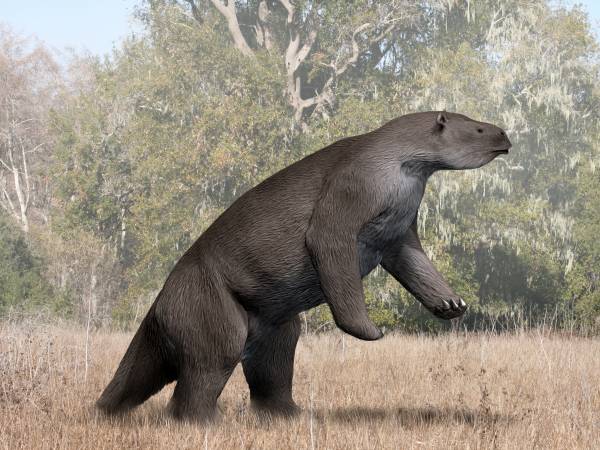
An illustration of what the Megatherium americanum may have looked like. Image by Nobu Tamura. Licensed via CC BY-SA 4.0. No changes were made to the original work.
Massive sloth-like creatures may have been roaming the land that we now call the United States during the Pleistocene Epoch (between 2.6 million and 11,700 years ago), according to research presented by The New York Academy of Sciences’ first president two hundred years ago this month.
Samuel L. Mitchell, a prominent physician, scientist, politician, and founding member of the Academy (then known as the “Lyceum of Natural History in the City of New York”) gave a talk at the Lyceum on November 17, 1823, entitled “Observations on the teeth of the MEGATHERIUM recently discovered in the United States.”
This was followed by an article by the same name published in the inaugural issue of Annals of the New York Academy of Sciences in 1824. The article and lecture covered findings from Mitchell’s paleolithic research which suggested that the territory of the Megatherium (Megatherium americanum), a now-extinct species of giant ground sloth, may have extended farther north than scientists previously thought. This marked the first such recorded discovery north of the equator.
A Noteworthy Discovery
Mitchell received a set of fossil teeth that were discovered on Skidaway Island, just south of Savannah, Georgia. Mitchell noted that the teeth marked a noteworthy scientific discovery at that time, but bones that were discovered alongside the teeth were not able to be studied because of improper handling.
“These teeth are very remarkable, and differ much from any hitherto discovered in North America,” Mitchell wrote, adding “…there can be no doubt that the teeth in question belong to that extinct species, [known as] the Megaterium.”
A Megatherium americanum skeleton on display at the Natural History Museum in London. Photo by Ballista. Licensed via CC BY-SA 3.0 DEED. No changes were made to the original work.
Built Upon Previous Findings
This discovery built upon similar findings from the late 18th century (about fifty years prior) when a near-perfect skeleton of the Megaterium was discovered near Buenos Aires, Argentina. Years later, another specimen was discovered in Paraguay. The full skeleton was on display at the Royal Cabinet of Madrid (Spain) at the time Mitchell published his findings. Charles Darwin, another prominent member in the early history of the Lyceum, would go on to discover remains from another Megatherium in Argentina between 1832 and 1833.
The Megatherium was described as similar in size to a rhinoceros or elephant. Biologically, the furry creature occupied a space between a sloth (Bradypus Lin.) and an ant eater (Myrmecophaga Lin.), though it shared more characteristics with the former. Based on the form of the teeth and the structure of the claws, researchers hypothesized that the creature subsisted on vegetables, predominately roots.
5 1/2 Inches in Length
Mitchell described the fossils in his possession as “one tooth entire, with the exception of the fang which is broken transversely off, and the half of another, with the fang separated.” Each sample was square in shape, with rounded edges. Their approximate length of five and a half inches matched the description provided by previous researchers, indicating to Mitchell that these teeth were, in fact, likely those of a Megatherium. The teeth were black in color and the cutting edges were well-worn, indicating the animal’s likely advanced age at the time of its demise.
Mitchell, who arranged the Lyceum’s first formal meeting in 1817, concluded his paper by reemphasizing the importance of this discovery within the context of the natural history of the United States.
“Although, from the circumstances previously mentioned, it is hardly possible that a complete skeleton will be found, yet enough has been discovered to satisfy us, that the United States, which contains so many relics of huge animals, may add to her ‘giant brood,’ the Megatherium.”