Decades into a distinguished psychology career researching and decoding the facial expressions of people from California to Papua New Guinea, Paul Ekman, a member of The New York Academy of Sciences (the Academy), now finds himself dedicating half his time to a Fox Network television show.
A new series, Lie To Me, is based on the life work of the scientist known for developing the Facial Action Coding System to read the meaning in human expression. The show’s protagonist, Cal Lightman, is “the world’s leading deception expert” who assists law enforcement and government agencies by studying facial expressions and involuntary body language to discover whether and why someone is lying.
Ekman, who had attained celebrity scientist status over the years as he appeared on numerous outlets including Larry King, Oprah, Johnny Carson, and the Bill Moyers’ special The Truth About Lying, says the new Fox program “is an unusual role for a scientist in a television program, and an unusual television program to rely on science.”
The show’s genesis was a 2002 New Yorker article that described Ekman’s work. It caught the eye of Brian Grazer, head of Imagine Television and producer of the shows 24 and House and blockbuster movies such as The Titanic and Ghostbusters. “Brian contacted me and said ‘I love your work and I want to get it on TV and I want to get the right writer’,” says Ekman. Two years later, Ekman began collaborating with writer Samuel Baum and now has a contract with 20th Century Fox to critically review each script for scientific accuracy and plausibility.
Art Imitates Life
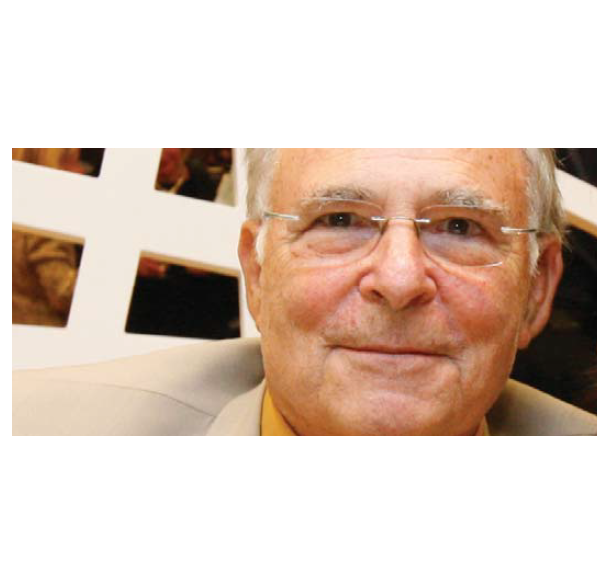
Paul Eckman. Photo by Michael Ian.
Ekman loans the show’s producers his private collection of materials depicting liars and truth tellers, and provides the show’s actors with video clips of him demonstrating some of the most difficult-to-perform facial expressions and gestures. Ekman also writes a weekly column, The Truth about Lie to Me, in which he elaborates on parts of that week’s episode that are based on science and explains which parts shouldn’t be taken seriously. For fans who want even more detail, Ekman pens a bimonthly newsletter about the nature of lying called Reading Between the Lies.
Ekman says that while many cases on the show draw on his own experiences, Fox’s writers are barred from basing personal aspects of Lightman’s character on him. For instance, Ekman says, “Cal Lightman is young, divorced, British, and has a strained relationship with his one child while I have a 30-year marriage and good relationships with my two children.”
Ekman says there are also some striking professional differences between him and the television version of the lie expert: “Lightman is always more certain than I am about everything. He solves in 24 hours what sometimes takes me six months. He has a better equipped, better looking lab than me. And I do work with a number of government agencies, but not as many as he’s working with. Clearly more branches are impressed with the usefulness of his work than the usefulness of mine!”
Nevertheless, Ekman says each case mimics work he is either doing at the moment or has undertaken in the past. “They haven’t done anything that I haven’t already done, but they’re doing more of it because they’re better funded and he’s younger than me!”
A Nobel Laureate, a Blavatnik Award winner, and a major industry scientist chat about what it will take to keep the US science talent pipeline pumping out quality, competitive professionals.
Published March 1, 2009
By Adrienne J. Burke
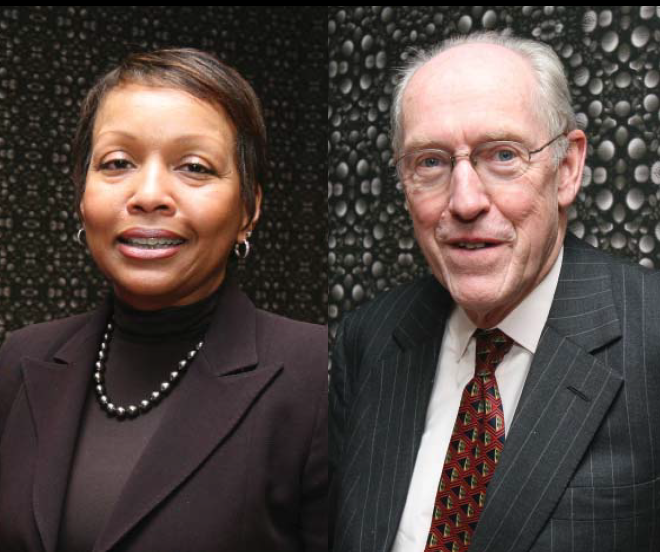
Toni Hoover, and Garrick Utley
On February 25, The New York Academy of Sciences (the Academy) hosted a screening of the new film, Naturally Obsessed: The Making of a Scientist. The hour-long documentary, directed and produced by Academy President Emeritus Richard Rifkind and his wife Carole, an author and filmmaker, takes viewers inside the protein crystallography laboratory of Larry Shapiro at Columbia University and follows the trials and triumphs of three PhD candidates there. After the screening, broadcast journalist Garrick Utley moderated a conversation among Academy members James Watson, Toni Hoover, and Andrey Pisarev to address the question “What does it take to produce the scientists we need to keep America competitive?”
Watson is a molecular biologist and Nobel Laureate known for solving the structure of DNA with Frances Crick. He is chancellor emeritus at Cold Spring Harbor Laboratory, and has authored several books, most recently Avoid Boring People: Lessons from a Life in Science.
Toni Hoover is Senior Vice President Global Research & Development, and Director of the Groton/New London Laboratories of Pfizer. She received her BA, MA, and PhD degrees in psychology from Harvard University where she trained in experimental psychopathology and neuropsychological assessment.
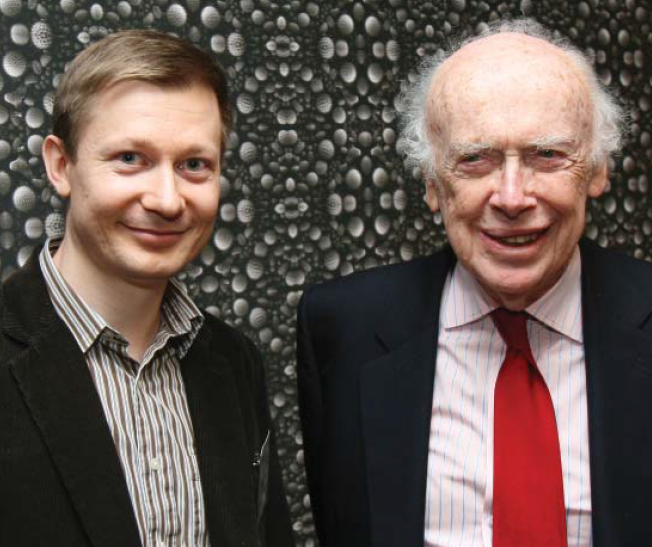
Andrey Pisarev and James Watson
Andrey Pisarev is a postdoctoral fellow in the Department of Microbiology and Immunology at SUNY Downstate Medical Center.
Utley’s 40-year journalism career has included posts as news anchor for NBC, ABC, and CNN. What follows is an abridged transcript of their conversation.
Garrick Utley
We want to talk about science, about what’s happening or what will be happening to the pipeline. The quality, the quantity of young scientists. How are we going to develop them, nurture them? Where are they going to be coming from? Where is the support for them going to be coming from?
What are you seeing, from your various perspectives, in the younger generation of scientists that are coming through the pipeline, coming into the field? Is this film an accurate reflection of what you are seeing? And what does that mean for the future of the scientific community?
James Watson
I thought it was a very good film. Today, the main question is whether you can get a job after [you earn your PhD] and, always my worry was, was I bright enough? Would I be able to really solve a problem? I worried whether I would ever have an idea. This was my chief concern, and then I was with people who said that if you don’t do anything by 25, your career is over. I was 20, so I had about five years, but crystallography is a pretty scary field because sometimes you just don’t get crystals. It’s very clear when you’ve got a result. In many fields you can sort of fudge it, but you can’t fudge this one.
Garrick Utley
When you look at the young scientists coming today, do you see anything different?
James Watson
My own impression is they are not as bright because the problems are much harder. People are really trying to do much more difficult things and to do them in the face of this unknown competition. When I was there you knew all your competition. Now someone you’ve never heard of could publish a paper. And, you know, there are 500 graduate students in Beijing solving crystal structures. People are scared for different reasons now than we were. We were scared about whether we would rank with the great people. Now it’s much more about “can I get a job?”
Toni Hoover
In our laboratories we go from individuals who are late baby boomers all the way to millennials, so it is a laboratory of various types of scientists in how they do business, how they engage in scientific pursuits, and what types of questions are they asking. I am extremely hopeful about the types of solutions that we are going to be able to come up with through the constant cross-fertilization of the more experienced scientists with the young scientists. Often, I see them asking different types of questions, and working in different ways, with different methods that increase the diversity of the underlying scientific pursuits that we’re embarking upon.
I almost jumped out of my chair last night as I was watching President Obama’s first address to Congress, because about three minutes into his address, he said, “The solutions reside in our laboratories and in our universities.” And he was speaking to the grave challenges that we face, not only in our country but around the world in that the source of those solutions is going to be in science.
And so I continue to be extremely hopeful about our ability to continue to dream big dreams because of the fact that we have the capabilities. We have the greatest educational institutions in the world that can produce the best scientists in the world and we also have a way to link with science all over the world. So we are doing science in a very different type of way. Science has become a very global kind of pursuit. I believe that our scientists today, all over the world, are capable of climbing new heights because of the way that we continue to evolve the way that we embark upon our scientific pursuits.
Garrick Utley
I’d like to come back to the title of the film tonight, “Naturally Obsessed.” In any field you have to have a certain obsession with what you are doing. Do you see any weakening of this obsession in science? Is the supply going to be there of quality scientists? With the choices in the world or the concern over jobs, as Dr. Watson was saying, is there something changing here or are you confident the human supply is going to be there?
Toni Hoover
I would submit to you that there are certain types of scientists and scientific competencies that we probably need more of now, and potentially will in the future. I’m not sure if we’ve identified a way to say, okay, this is where we are going in the future and so we are going to need these types of skill sets and these types of people answering these types of questions.
In the bio-pharmaceutical industry, where we rely upon a great deal of science, collaborations externally as well as within our own walls, you might not be able to find the scientific talent for a specific area. However, what we need to do more of is help to grow the type of scientific talent that we think is required, and that starts very early on.
You have to nurture that type of passion very early on. That passion that you saw in Rob didn’t just start when he was on that ship in the Navy. I would imagine it started very early on and it had to be nurtured. What are we doing to help build that infrastructure, that foundation where the passion for science is embedded in a much larger pool of students?
Garrick Utley
Andrey, you are of a slightly younger generation, maybe a few years closer to the kind of students we saw in the film tonight. What are you seeing in the talent pool that you are working with or in the students coming through?
Andrey Pisarev
What do I think about my generation of young scientists? I think that there is enough supply of good, educated young scientists, and you will find a lot of smart people leave academic science to go to business. Science is under-financed. I am trying to find my own position right now and I have not succeeded yet. I have been selected as one of the best young scientists in the tri-state area, so, what can I say about other people? There are a lot of smart people around!
Garrick Utley
Let’s come back and pick up on something that Dr. Watson mentioned: the globalization impact. In the scientific community and workforce, whether it is 10,000 scientists in China studying crystals or what have you, what is going to be the impact of this? What is the impact on the sheer quantity as well as quality of scientific research? And what is the impact on how information is being shared?
Toni Hoover
We are not building laboratories. Instead, we are working much more virtually and linking up with research institutions and leasing laboratory space, for example, in Shanghai. We have laboratories in Sandwich, UK, outside of London, and then we have our major R&D laboratory in Groton/New London, Connecticut. And we have major laboratories in St. Louis and in La Jolla, California. But we are doing a lot more collaboration with academic institutions and not building a lot of new laboratories. We are a global organization so we go where the science is.
We continue to go after the best talent wherever they are in the world, and when we have to, we bring them to our research centers in the US and UK or wherever. I don’t know specifically what percentage of our researchers are non-US, because we consider ourselves a global organization and we are in a war for talent with our competitors.
Garrick Utley
What do you think the Obama administration needs to do to maintain this competitive advantage the United States has long enjoyed, as well as to continue to be the place where people come for training and hopefully stay on? How much of this is a function of money and funding? And how much of this is something in the culture or just the changing nature in the dynamics of the world we live in today? And why don’t we start with you Andrey. When you talk to the people who are training in the US, and then going back to their home countries, would money solve it?
Andrey Pisarev
I’m sure the money is one thing. But not only the money. I can share with you the story of my country. In the time of the Soviet Union, scientists lived as the most prestigious professionals in the country. They had modern salaries as well as very high, very great respect from society. They had support from government and many advantages. And that really stimulates you to work.
The situation in Russia right now [is that] if you are a scientist, people laugh at you because you have a very, very low salary. You cannot support your family and you struggle with your life. Furthermore, you cannot support your kids, your wife, your parents. You have all these obligations. You stop thinking about science at all.
Garrick Utley
Toni, what do you see happening under the current administration with the people that the President has brought in as his scientific advisors?
Toni Hoover
He obviously has a scientific advisory board, but I think the most important thing he is doing right now is talking about the fact that science is at the core of solving many of the challenges that we are facing. Also in his speech last night, [President Obama said] that he is “committing to the largest investment in research in history.” Well, we obviously have to wait to see how that manifests itself, but just the fact that he’s talking about it is encouraging.
You asked, is it a question of money or culture in terms of where we need to go? I think it’s a combination. Obviously we need to be supporting the scientific enterprise, the NIH. We also recognize that science with government support can partner with other organizations that can provide sources of funding. That will help to continue to provide possible revenue streams and opportunities for funding research within the academic institutions.
But also, we have to create the sense of respect that Andrey talked about in our culture, about the fact that it’s cool to be a scientist, and that this is a noble pursuit, and that you can have a huge impact on society. We have a generation of students growing up in our society who are looking to have big impacts on society. And one way that you can have an impact on society is through science.
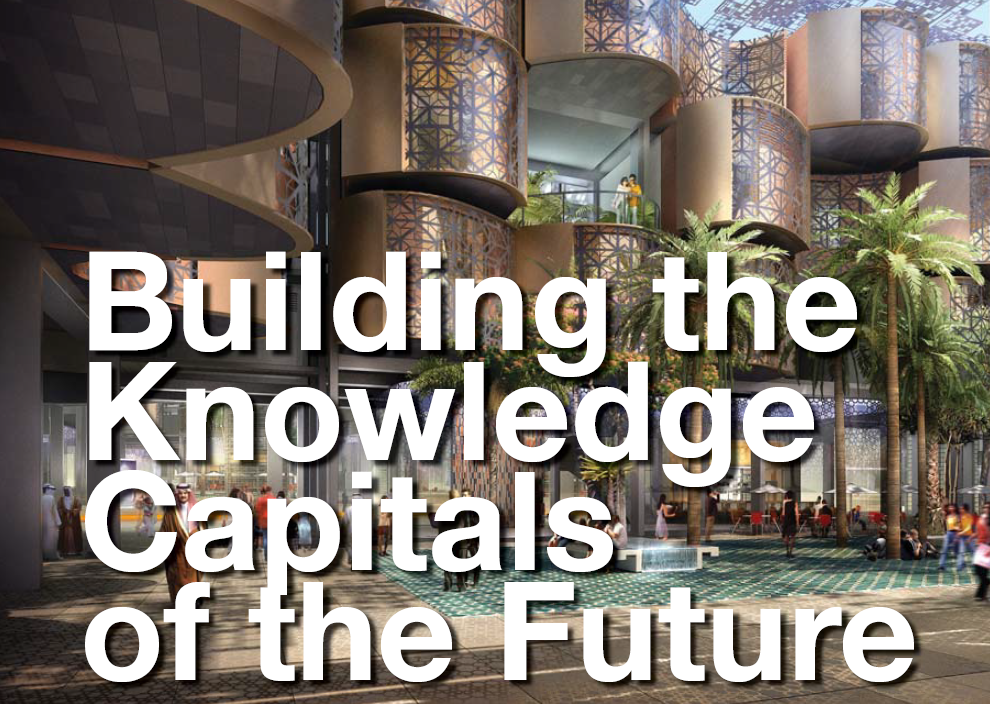
Cities worldwide are in a race to transform themselves into hubs of science and technology expertise. Here’s a look at how a few plan to achieve that goal—some with help from the Academy.
Published November 1, 2008
By Adrienne J. Burke
If you made a list today of the world’s innovation hotbeds, Mexico City wouldn’t be on it. Sure, the city has become known since the 1980s as an international hub of financial services. And it’s long been seen as a center of manufacturing. But if Mayor Marcelo Ebrard Casaubón has his way, that image will soon change. Not only will Mexico’s capital become known as the Knowledge Capital of Latin America, but it will, in the near future, be respected as a global hub of scientific and technological excellence.
Ebrard, who took office two years ago and recently joined The New York Academy of Sciences President’s Council, aims to trade in the smog-ridden region’s dependence on “old economy” industries for a so-called “knowledge economy” by incubating a sci-tech cluster in the sprawling city.
Toward that end, Ebrard has commissioned the new Institute for Science and Technology to prompt collaborations between academia and industry. He has established a government-funded company, Capital En Crecimiento (City in Growth), to bolster technology infrastructure and improve the skills of the metro-area’s 22 million residents. And he has retained the US-based RAND Corporation to identify Mexico City’s strengths in science and technology development.
Ebrard has also entered a multi-year partnership with the Academy, the first product of which was a week-long innovation conference in September organized by the Academy and local officials. Jorge de los Santos, an Academy member and former director of business development and technology transfer at Columbia University whom Ebrard recruited to run Capital En Crecimiento, says he saw the Academy as a neutral body that could help the Mayor “to have the private sector working with universities on a common strategy and vision.” He adds that the Mayor’s team is “working to create a knowledge hub because our city needs to be good at something that is higher value-added than a service economy.”
“A knowledge-based economy will empower people,” says Ebrard. “It’s people producing and absorbing knowledge and people creating and using technology that will add value to Mexico City’s economy.”
Nurturing a Knowledge Economy
Many economists share Ebrard’s anticipation of a future in which scientific prowess is the key to superpower—or at least super-city—status. Their predictions are at the root of a trend among urban areas worldwide to ramp up capacity to compete for the unofficial title of “Global Knowledge Capital.” Leaders in China, India, and the United Arab Emirates are among those who believe that economic vitality in the 21st century hinges on the ability to generate and deliver scientific solutions to problems such as climate change, energy, healthcare, housing, and transportation.
Juan Enriquez, author of the 2001 book As the Future Catches You: How Genomics & Other Forces Are Changing Your Life, Work, Health & Wealth, advises a dozen national governments on sci-tech economics. He describes a worldwide movement to excel in scientific innovation. “There’s absolutely a race on to be the capital of ideas, to get the best entrepreneurs and the smartest people,” Enriquez says.
“In the past, you had competition for raw material, then for money and resources,” says Mexico City’s De los Santos. “Now the competition is for the human mind. All the cities are trying to attract the best and brightest in the world.” The same way US high-tech hotbeds like Boston and San Francisco have attracted sharp minds from around the world in recent decades, top talent from the US and elsewhere will migrate to cities that emerge as leaders of the knowledge economy, he and others predict.
Ideas about how to nurture a knowledge economy have been percolating since at least 1969, when management guru Peter Drucker used the phrase in his book The Age of Discontinuity: Guidelines to Our Changing Society. The concept is now widespread enough to have its own Wikipedia entry. Contributors define a knowledge economy as “strongly interdisciplinary, involving economists, computer scientists, software engineers, mathematicians, chemists, physicists, as well as cognitivists, psychologists, and sociologists.” A knowledge employee, they say, “works with his or her head not hands, and produces ideas, knowledge, and information.”
A “cluster”—a concept popularized by Harvard Business School Professor Michael Porter in his 1990 book, The Competitive Advantage of Nations—is at the heart of a knowledge economy. According to theories about clusters, whether they be business clusters, industry clusters, or science clusters, when information flows openly among stakeholders pursuing solutions in the same field in a concentrated geographic area, innovation happens sooner. Investors and talent move to the region, and the economy thrives.
What It Takes to Make a Cluster
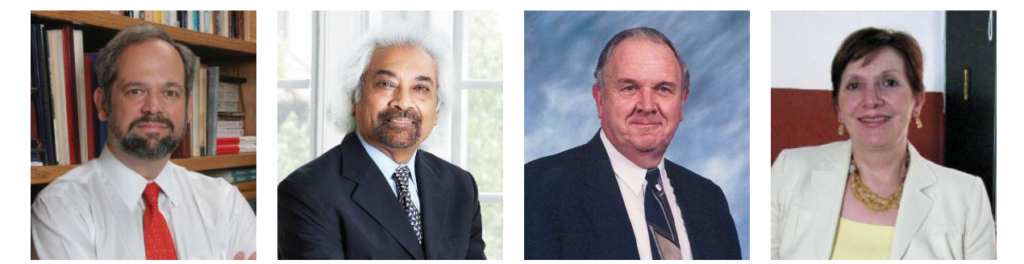
Left to right: Juan Enriquez advises governments on sci-tech development; Sam Pitroda chairs India’s National Knowledge Commission; Russell Jones, founding president, Masdar Institute; Esther Orozco, general director, Mexico City’s Institute for Science & Technology
Silicon Valley—where an industry cropped up around a research university, lured venture capital, and grew wildly as entrepreneurs flooded the area—is commonly invoked as a model of a cluster. But Silicon Valley’s tech roots go back to the 1956 choice of inventor William Shockley to locate his semiconductor company near his ailing mother. Clusters emerging around the world today are by deliberate design. In the view of New York University President and Academy Board Chair John Sexton, few US cities today are pursuing knowledge economies with the “purposefulness” of places like Mexico City.
Experts list several features crucial to knowledge economy success: commitment by the government; a major research university anchor; a critical mass of skilled employees; a technology infrastructure; business, labor, and intellectual property policies that facilitate rapid growth; and an easy flow of knowledge among and between sectors. Mexico City is just one of many regions following that formula.
In China, the State Council in 2006 approved a 20-year “out-line” for science and technology expansion. It calls for a near doubling of R&D investment, banking policies and fiscal incentives to support sci-tech startups and venture capitalists, a system for evaluating researchers and research institutes, intellectual property rights strategy, improved government support of industry, and “an enhanced capacity to build creative personnel.”
Mao Zhong Ying, science and technology counselor for China’s Consulate General in New York, says China will focus its cluster building efforts on four scientific subjects: protein research, nanoscience, growth and reproduction, and quantum modulation research. “In those technologies, we are at the same point as Western countries,” Mao says, explaining one of the principles that economists say will enable cities in lesser developed countries to compete with US and European cities: “These are brand new technologies, so we need to focus on these to realize the benefits of leapfrog development.”
Still, Mao concedes, China has a long way to go training its young people to be innovative and bridging private and public sector researchers.
Beijing, Shanghai, Tianjin, Jiangsu, and Guangdong are presently the country’s most promising centers of knowledge, Mao says. All five have strengths in biotechnology. And local government policies in those cities support R&D investment, enable industry access to academic research, and promote quality science and engineering university education. They’re policies support a shift from a “made in China” period to an “innovated in China” period, he says.
Three years ago in India, Prime Minister Manmohan Singh formed a National Knowledge Commission to identify strategies for transforming his country into a knowledge society. The high-level, seven-person team’s recommendation to improve access to education will result in a $65 billion expenditure on education in the next four years.
Telecommunications inventor and entrepreneur Sam Pitroda, who chairs the commission, considers human capital the key to a knowledge economy. In the 1980s, the telecom revolution he launched in India succeeded only because thousands of Indians were trained to work on network management and fiber optics. “Knowledge,” he says, “will be the next driver for India. The first challenge is to expand the knowledge base, improve access to knowledge, and improve the quality of knowledge. We have 200,000 students appearing for entrance exams, and only 2,000 get into good technology colleges. So, we need more engineering or biomedical colleges.”
Pitroda argues that turning manufacturing or service-based economies into knowledge capitals also requires a complete re-thinking of urban infrastructures. “In the past we built cities and suburbs based on the idea of manufacturing plants,” he says. “The idea now is to focus on knowledge as the key driver to re-structure everything.”
Indian cities Bangalore and Hyderabad have become famous for their IT booms but aren’t knowledge economy models.
“The cities haven’t transformed,” Pitroda says. “They’re crowded and the infrastructure is not in tune because nobody thought it through.” True knowledge capitals must be designed with a sustainable plan, he says. “Start from scratch and go vertical.” He advocates building clusters that “bring large numbers of people together in a setting where they live, work, and innovate together.”
Start from Scratch
Masdar City in Abu Dhabi could be a utopian version of what Pitroda describes. The $22 billion, eight-year project launched in 2006 by Crown Prince Sheikh Mohammed bin Zayed Al Nahyan is constructing an entire town focused on engineering solutions to problems in energy, security, climate change, and sustainable human development. The “green” city, designed by Foster + Partners to be entirely solar- and wind-powered with zero carbon emissions, will be anchored by a major new scientific engineering university, the Masdar Institute, to welcome its first students in September 2009.
The institute’s founding president, Russell Jones, former president of the University of Delaware, says three things persuaded him to move with his wife to Abu Dhabi to take the helm: A strategic decision had been made by the government to build a cluster; the graduate-level-only university is being staffed through a partnership with MIT; and research there will focus on solving one of the world’s most important problems—alternative energy.
Jones says the state-funded Masdar Initiative has a $15 billion seed fund (projected to increase to $80 billion) to bring alternative energy companies to the region. His university “is the human capital piece” of the knowledge economy equation, training the scientists and engineers who will staff and startup the alternative energy companies that will fuel the Masdar City economy.
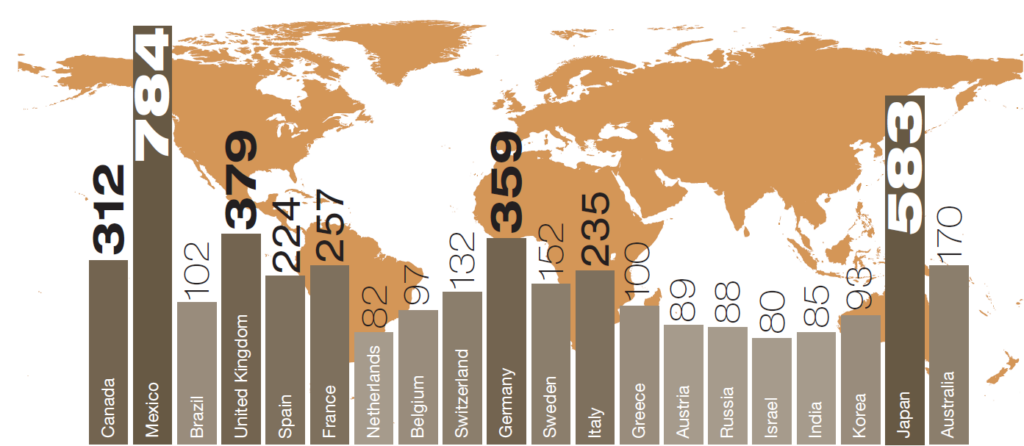
Clusters of Scientists. Science and technology clusters are emerging in some surprising spots around the world. Clusters of scientists exist in some unexpected places too. This map shows the 20 countries outside of the US with the largest numbers of NYAS members.
Identifying Ways to Win
As host to some 20,000 scientists conducting three-quarters of the nation’s research, Mexico City has a leg up on Abu Dhabi in the human capital department. Mexico City is already “a hub for producing human capital,” says Mayor Ebrard. “Graduate students flock to our many universities and research institutes.”
But unlike Abu Dhabi, Mexico City doesn’t have the wealth to build a knowledge city from the ground up. The Mayor’s various initiatives are directed instead at improving upon what exists.
As General Director of the Mayor’s new Institute for Science & Technology, Esther Orozco has dedicated a $17 million budget to five distinct programs for improving Mexico City’s infrastructure and assets. Teams from the institute evaluate the region’s needs in water, energy, and food; sexual, nutritional, and mental health, including addiction; digital connectivity; small business incubation and competitiveness; and science and technology education.
Orozco says the teams address those issues in partnership with experts from government, industry, and academia. In just over a year, their work has resulted in the installation of an optical fiber network throughout the metropolitan area, which she says will “close the digital gap” between Mexico City and more developed cities by providing free internet to all residents.
Orozco’s education team has brought scientists to the city’s street fairs to teach citizens how cell phones and other modern technologies work. An interactive exhibit to educate kids about the effects of drug use will soon open. And a team of scientists and engineers working on the water program has mapped a system to automate the handling of Mexico City’s deep sewage.
Meanwhile, another of the Mayor’s initiatives, Capital En Crecimiento, is looking at additional infrastructure challenges. Jorge de los Santos, CEO of the government-owned company, says, “We’re like the Port Authority. We build tunnels, roads, transportation hubs—anything we need to in order to enhance the competitiveness and productivity of Mexico City.”
De los Santos is also working with the RAND Corporation to identify the sectors Mexico City can dominate. “What sectors should we be targeting to be the best in the world?” he asks. Whether it be personalized medicine, digital design, financial IT, or healthcare informatics, Capital En Crecimiento will build communities within the city with R&D campuses, parks, and housing where technology-focused clusters can grow. “Here you would be able to live, work, study, research, and shop,” says De los Santos, who predicts it will be three years before the first such development is inhabitable.
Mayor Ebrard is nothing but optimistic for his city’s chance to contend as a Global Knowledge Capital. “The East Asian tigers of the 1980s, like Singapore and South Korea, and the rising giants of this century’s first decade, India and China, all had economies smaller than Mexico’s not too long ago,” he says. “India’s mastery of software technology has transformed its economy and raised its global competitiveness. They’ve made tremendous leaps and we think we can too.”
An imprisoned Cuban physician and a Guatemalan forensic scientist have been awarded The New York Academy of Sciences Heinz R. Pagels Human Rights of Scientists Award for 2008.
The Academy’s Human Rights Committee bestowed the awards on Oscar Elias Biscet, MD, and Fredy Peccerelli. The presentation took place during the Academy’s September 18 Annual Meeting. Dr. Angel Garrido of the Lawton Foundation for Human Rights, of which Dr. Biscet is president, accepted the award on his colleague’s behalf.
Dr. Biscet, a 46-year-old community organizer and human rights advocate, is a widely known Cuban political prisoner who began serving a 25-year term in 2002. He is the founder of the Lawton Foundation, a human rights organization that peacefully promotes the rights of Cubans through nonviolent civil disobedience. In 1998, Dr. Biscet and his wife, Elsa Morejon, a nurse, were both fired from the Havana Municipal Hospital for his open criticism of the Cuban government. In 2007, President George W. Bush awarded Dr. Biscet the Medal of Freedom, one of many honors he has received for his human rights work.
Peccerelli is a founding member of the Guatemalan Forensic Anthropology Foundation. Since 1992 his Foundation has carried out exhumations of unmarked mass graves containing the remains of individuals murdered during that country’s 36-year armed conflict. Despite repeated threats against him and his family, Peccerelli has continued to carry out their work. This work has provided forensic investigation teams with crucial scientific evidence in the few cases where perpetrators of human rights abuses have been convicted in Guatemala.
About the Award
The Pagels Awards were conferred on the two honorees by Henry Greenberg, chair of the Human Rights Committee. Greenberg, associate director of cardiology at St. Luke’s Roosevelt Hospital and associate professor of clinical medicine at the Columbia University College of Physicians and Surgeons, says the committee has been aware of the work of the two honorees for several years and selected them for the award this year based to recognize their heroism and “to raise the noise level in their support.”
First presented in 1979 to Russian physicist Andrei Sakharov, the award has gone to such imminent scientists as Chinese dissident Fang Li-Zhi, Russian Nuclear Engineer Alexander Nikitin, and Cuban Economist Martha Beatriz Roque Cabello. The 2005 Pagels awards went to Zafra Lerman, distinguished professor of Science and Public Policy and head of the Institute for Science Education and Science Communication, Columbia College, Chicago; and Herman Winick, assistant director and professor emeritus of the Stanford Synchrotron Radiation Laboratory, Stanford University.
An interview with Kiyoshi Kurokawa, a science, technology, and innovation policy advisor in Japan, who discusses his strategies for fostering scientific change.
Published September 1, 2008
By Leslie Taylor
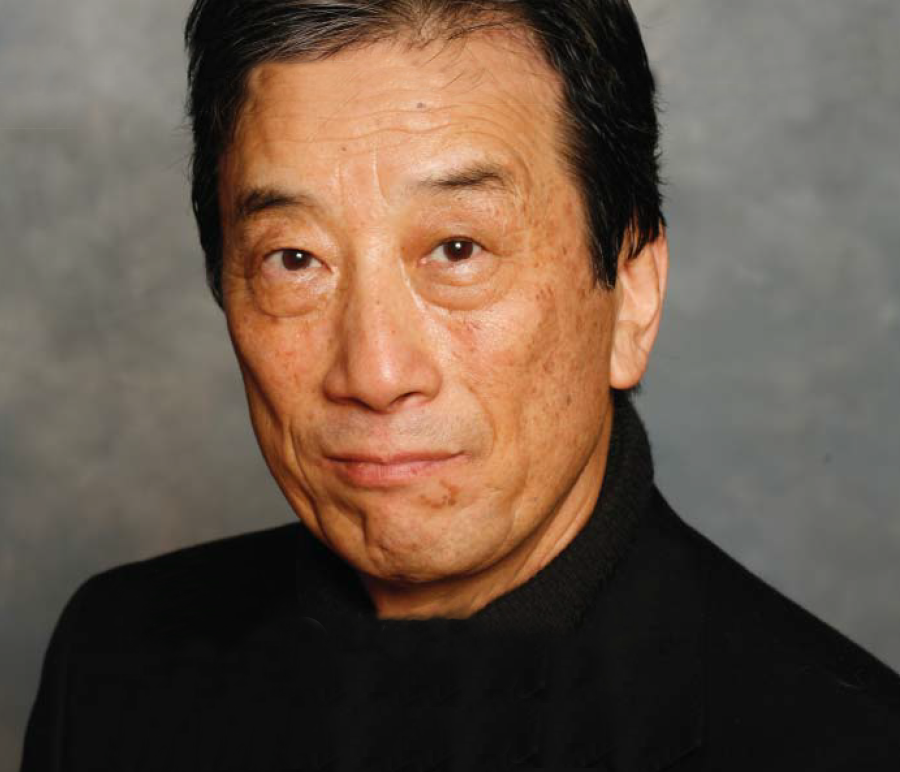
Kiyoshi Kurokawa. Photo by Michael Ian.
Kiyoshi Kurokawa is special advisor to the Prime Minister of Japan and his Cabinet on science, technology, and innovation issues. He chairs the strategy council for “Innovation 25,” Japan’s long-term initiative to encourage transformation in medicine, engineering, and information technology by the year 2025. He also sits on The New York Academy of Sciences’ (the Academy’s) President’s Council and is an advisor to Scientists Without Borders.
How do you define innovation?
Innovation is a change. It may be a new technology or a combination of new technologies that brings about a major breakthrough, that creates and delivers new social values.
The information revolution of the last decade or so was like the industrial revolution. The creation of the World Wide Web in 1992 was the beginning of our connected world and triggered many new concepts and technologies. Google was founded in 1997. Within 10 years it created a tremendous impact on the way we think and behave. And built on that, new businesses emerged throughout the world.
On the Innovation 25 Web site you write about the importance of a “society where high-spirited, highly creative people are willing to take on any risks to play an active role.” What other qualities are important for an innovator?
A passionate researcher may spend time trying to discover why humans usually die around the age of 70 or 80 or 100, but cannot live to be 200. But their research results and discoveries may not always help transform society until somebody from outside or within the community looks at those advances with more perspective. Someone with different skills and a different perspective could bring up some new idea or solution. And that’s where the innovation is.
There are quite a number of people who are passionately pursuing their own inquiries. But we need somebody who can see the much bigger picture, who has a different perspective and can relate the views of all the different multiple stakeholders. One person can change the world very quickly.
Exceptional, extraordinary individuals—not necessarily scientists, but those who understand science—can use their combination of skills to turn a discovery into something, to bring something new to the world, and to disseminate a new idea or new product. It is more likely that those people who have a different way of thinking, who are not bound by conventional wisdom, will bring something new.
What are some of the strategies that governments or universities can use to encourage innovators?
The new paradigm of the economy is different from the old paradigm of mass production and mass consumerism and standardization. The old corporate structure was very hierarchical, specialized, and integrated, and also financed through the bank. But it becomes quite different in our ‘flattening’ world. People are not afraid to challenge and take risks that will deliver new social values. That is innovation.
One of the messages in innovation is: to be different may create a value. For example, if you are organizing a research institute, its value is more likely to increase if you try to recruit many investigators or scientists with different backgrounds and different ideas. Heterogeneity is key because different views are more likely to create a new way of thinking.
Suppose you have a great research institute with very smart people, but all with the same cultural background. They are more likely to share the same values and will tend to see the same thing in the same way and that’s not going to create any sort of new ideas or outcomes.
How do market forces influence people to be innovative?
The marketplace and industry are major driving forces for innovation. Academic researchers and universities provide the seeds and the potential for social value creation, but it is really the private sector that makes it so the general public begins to see the benefits of new ideas.
Research and technology engineers in the business sector may have a different view from individual scientists, so they may be well-positioned to consider or perceive [the significance of] new developments. Four billion dollars in venture capital poured into the clean energy sector in Silicon Valley last year. In 2006 the investment in that category was only $1 billion and the year before only half a billion. So, it suggests investors think the bright out-of-the-box thinkers working in that area could provide a new engine of economic growth by tackling a major global issue—climate change.
When it comes to supporting science, the work of past Academy President Fleur L. Stand is never done. Even in retirement she continued to advance science for the public good.
Published September 1, 2008
By Adelle Caravanos
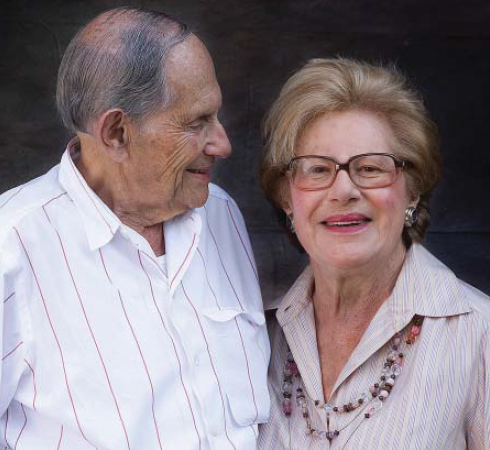
Fleur Strand and her husband Curt
Contribute. Revitalize. Innovate. Used as a call to action in The New York Academy of Sciences’ (the Academy’s) first ever Comprehensive Campaign, these three words can easily describe the modus operandi of Academy Past President Fleur L. Strand. A member since 1950, the distinguished professor of biology and neural science became the second female Academy president in 1987. But Strand’s dedication and deep involvement with the organization did not end there. More than 20 years later she remains an active member and generous supporter.
Born and raised in South Africa, Strand came to New York in 1945 and earned both her undergraduate and doctoral degrees in biology at New York University. She continued her work at the Free University of Berlin and the University of Leiden in the Netherlands. Strand’s research at the time showed that adreno-cortical hormone (ACTH) has a direct effect on neuromuscular activity—a finding that was considered blasphemous, as it required ACTH to bypass its usual intermediary, the adrenal cortex. Unable to get her research published, Strand became discouraged.
Fortunately, it was around that time that she met David De Wied, the father of neuropeptide research, at an International Physiological Society meeting in Munich. De Wied encouraged her work; his own had demonstrated the same effect of neuropeptides on the brain and on behavior—now a universally accepted concept, basic to this field of research.
Ascending the Academic Ranks
Strand returned to NYU in 1961 and worked her way up the academic ranks to her present position as the Carroll and Milton Petrie Professor Emerita of Biology and Neural Science, following her retirement in 1966. She is the recipient of the school’s Distinguished Teaching Award and has chaired the Mayor’s Award for Science and Technology committee. She has authored several textbooks, including one for which she won the American Medical Writer’s Award. Strand was selected as Outstanding Woman Scientist by the New York Chapter of the Association for Women in Science in 1987. She also served on the New York State Spinal Cord Injury Board, from which she reluctantly resigned when she moved to Colorado.
For 58 years, Strand has been an active Academy member, attending and organizing meetings and editing more than eight Annalsvolumes. She also worked with the editors on The Sciences, “particularly in the choice of the wonderful art that characterized that magazine,” she says. Strand is a lifetime member of the Academy and was elected a Fellow in 1976. Her participation in so many facets of the Academy’s activities culminated in her inauguration as Academy President at the 170th Annual Dinner.
“After I was inaugurated, I was honored to give Surgeon General C. Everett Koop the Presidential Award,” she says. “This was at the beginning of the realization of AIDS as an important social and political issue, and Dr. Koop was one of the first to call for an alliance of American social, political, and medical organizations.” Then, as now, the Academy was the unique, neutral meeting ground where these alliances could be forged, with science at the center of the discussion, she adds.
Madam President
During her tenure as President, Strand was particularly interested in bringing “new young blood” into the Academy, and attempted to do so by initiating a founding group of active student leaders. Although this program did not succeed during her presidency, she is pleased to support the great success of the Academy’s current program, the Science Alliance for Graduate Students and Postdocs. Strand adds that she has kept in close contact with many of her own doctoral students, most of whom are deeply involved in academic or research positions. She says they report on their current research and projects at an annual neuropeptide conference at Strand’s upstate New York home.
Earlier this year, Strand reached out to former Academy leaders, inviting them to support the new Comprehensive Campaign: “Sustainability through Science and Technology.” She called for the creation of a “Past President’s Fund” which boasts remarkably high participation.
Katie Thibodeau, the Academy’s major gifts officer, praises Strand’s dedication to the Academy. “Dr. Strand answered our call to action with enthusiasm,” Thibodeau says. “Her passion and commitment to science and to the Academy’s essential role in shaping science is inspiring and truly valued.”
In addition to her work with past Academy presidents, Strand has pledged her continued support of the Science Alliance, the program for which she planted the seeds more than 20 years ago. Through this and other programs, she predicts that the Academy will continue to strengthen its function as an important, neutral convening organization for scientists, business leaders, and policy makers.
“Wine can of their wits the wise beguile, Make the sage frolic, and the serious smile.” — Homer, The Odyssey (Alexander Pope translation)
Published June 1, 2007
By James Kennedy
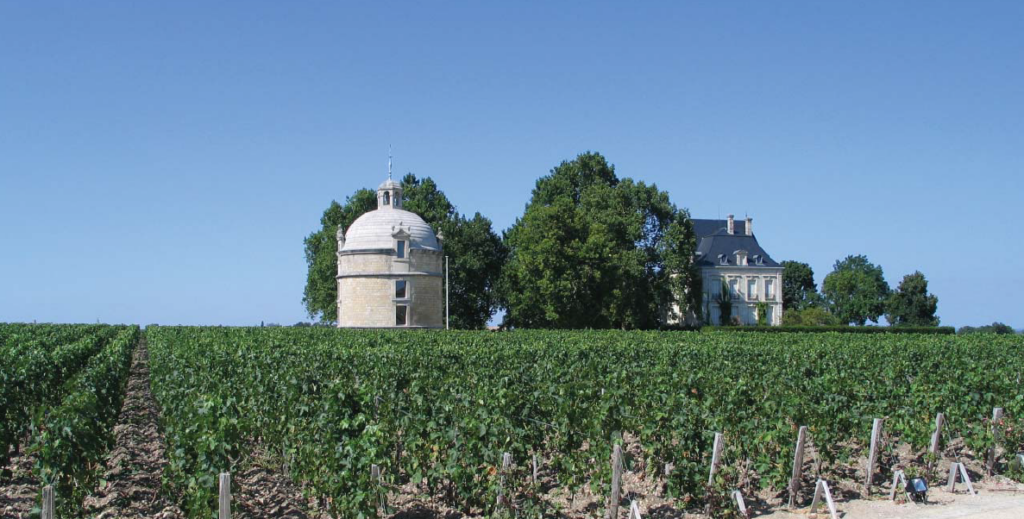
Built in the 14th century, destroyed in the 15th, then rebuilt in the 17th, the tower of Chateau Latour in the Bordeaux region of France is one of the world’s most recognizable landmarks associated with the rich history and longevity of fine red wine. Photo by James Kennedy.
Celebrated for centuries, red wine has extensive historical, cultural, and economic significance in the Western world. Wine connoisseurs become enamored with the “mystique” of a supple Burgundy or an explosive Australian Shiraz. They expound on the taste of black currants and leather coexisting in the same wine. The average wine drinker, by contrast, may be content to distinguish between “dry” and “fruity.” Yet it is unlikely that either consumer fully grasps how dynamic the chemical system is that transforms a simple fruit juice into an ever-evolving synthesis of soil, sun, oxidation, winemaker influence, and age.
The Chemistry of Wine
Wine is a complex liquid. Although water, ethanol, glycerol, and various organic acids comprise the major (nondescript) portion of wine, its distinct identity comes from the aroma compounds (such as terpenes, esters, and alcohols), polysaccharides and phenolics (such as anthocyanins and tannins). Some aroma compounds are present in the grapes from which the wine is made, and some are synthesized as by-products of fermentation by the yeast that turns the sugar in the grape into ethanol. Still others are formed only after wine has been aged and are the result of oxidation and acid-catalyzed reactions.
This constant evolution of the different kinds of aroma compounds is one of the many subtle aspects of wine appreciation. Polysaccharides are polymeric unfermentable sugars that lend body and viscosity to a wine—without them, a wine might seem thin or watery. These compounds are formed during fruit ripening when the grape berry softens. The riper the grape, the more these components are found in the final wine. This explains why wines from warm growing areas (Australia, the Central Valley in California) often have more body than those from cooler climates.
Tannins contribute to the color stability, astringency, and bitterness of wine. This combination of factors is critically important to the age-worthiness and texture of wine, and possibly has health benefits. With regard to texture, tannins can be a positive or negative influence. This duality is a core aspect of red wine quality—the right amount of the right type of tannin yields a blockbuster wine, whereas too much of the wrong type of tannin results in a wine lacking character and suppleness. From a chemical and research standpoint, tannins are probably the most defining component of the quality of red wine.
What Are Tannins?
Tannins (or proanthocyanidins, or condensed tannins) are a class of complex flavonoids that are localized in the grape skin and seed and are extracted into the wine during fermentation. Flavonoids are found in plants—and include several compound classes such as anthocyanins (responsible for the color in many fruits and flowers), catechins (the healthy component of green teas), and flavonoid-based tannins (found in blueberries, apples, cranberries, bananas, and quinces).
Tannins encompass a large molecular weight range and interact strongly with most proteins. This interactive property is the functional role of tannins in nature. For example, many developing fruits contain large amounts of tannins, which interact strongly with salivary proteins. Any creature eating the fruit perceives it as astringent; making tannins effective feeding deterrents. This same property explains why tannins are the component of red wine that makes the taster’s mouth pucker, a distinctive characteristic of red wine.
Although scientists’ understanding of the physiology of taste is incomplete, we do know that tannins can be perceived as “good” or “bad.” Wines with “good” tannins we often describe as “ripe,” “supple,” “lush,” “velvety,” or “round,” whereas a wine with bad tannins we find “unripe,” “hard,” “coarse,” and “bitter.” This is much like how we describe the taste of fruit (think of an underripe versus fully ripened banana).
Eating an underripe fruit is not a pleasant experience for most people, yet the fruit emerges as a succulent and tasty morsel once sufficiently ripe. Where did the tannin go? Through the complex biochemical process of fruit ripening, the tannins, while still in the fruit, have become “inactivated” by the production of sugars, oxidation, and the breakdown of cell-wall material. The fruit becomes a delectable treat. In the case of red wine, changes in the grape during fruit ripening yield wine with increasingly ripe tannins.
Astringency and Texture
The molecular structure of the different tannins is strongly correlated with its sensory property in wine: the lowest-molecular-weight tannins can have a distinct bitterness associated with them, whereas the larger-molecular-weight tannins are regarded as purely astringent. Whether these sensory properties are considered individually or in combination, they are almost universally regarded as negative. Humans have evolved in such a way that we find bitterness and astringency to be repulsive. How can this repugnant taste become something we desire and prize in red wine?
Tannins become palatable in fruit because our ability to perceive tannins is influenced by many things. This combined perception of tannin in the presence of other components is described as texture or mouthfeel in the wine world. In many fruits, organic acids are produced at the same time as tannin and the combination of high organic acid and tannin concentrations yields a very astringent (and sour) experience. During fruit ripening, sugars are produced, and our ability to perceive astringency diminishes as the sweetness increases. Moreover, many fruits soften during fruit ripening, due to cell-wall breakdown. The breakdown of cell-wall material produces soluble polysaccharides which interact with tannins, once again reducing their astringent properties.
In a similar way, red wine contains many components that influence our ability to perceive tannins. The short list of compounds includes organic acids, simple sugars (generally too low in concentration to influence astringency), ethanol, polysaccharides, and anthocyanins. These all combine to modify astringency perception. As many winemakers describe the effect, it is much like flesh covering a skeleton. The tannins provide the structure and support of the red wine, and the other components provide the flesh and appeal.
Tannins and Longevity
Essential as they are to red wine texture, tannins prove just as important to red wine longevity. Several chemical features of tannins give red wine its stability. First, under red wine’s acidic conditions, tannins are continuously recombined through hydrolysis reactions. Through this recombination process the anthocyanins responsible for red wine color become incorporated into the tannin pool and become stabilized. Without tannins, the color of red wine would quickly fade and become orange. Once the anthocyanins join the tannin matrix, the color becomes stable. For age-worthy wines, color that would otherwise last for just a few years lasts for many decades in the presence of tannins.
During wine aging, tannins can also minimize the damaging effects of oxidation. Grape-based tannins possess the ortho-phenol (pyrocatechol) substitution pattern. These pyrocatechol groups are susceptible to oxidation and because of this, they are very effective antioxidants. In general, red wines that are built to age contain large amounts of tannin. The long-term effect of age on tannin structure is that it becomes increasingly pigmented (due to anthocyanins) and oxidized.
These processes “soften” the tannin and make their texture more desirable. Wines that are built to age can often be quite astringent when young, and it is only with time that these wines reveal their innate wonder. Here lies the source of one of the fundamental schisms in the wine-producing world: When should a wine be drunk? On the one side, most wine is consumed within a couple of days of purchase and therefore it should be “ready to drink” when bought. From a winemaking perspective, these wines should contain lower concentrations of tannin. Theoretically, wines meant to be aged should contain lots of tannin.
The Complexity and Unique Taste of Well-aged Wine
Despite the worldwide movement towards the consumption of young wines, consumption of a well-aged wine offers complexity and a unique taste. There are very few people who can experience and appreciate this, due to the limited availability and costliness of aged red wines. This is unfortunate because wine of this caliber is a scientific, philosophic, and culinary wonder. More people should experience it. Wine writers do. While most wine is consumed when young, the most influential wine writers have a studied appreciation of age-worthy wines. These wines get media attention far beyond what their production volume or revenue justifies.
Is it possible to produce a wine that is ready to drink yet will age well? The answer depends on whom you ask. Based upon what we know, the ideal wine should have an abundance of structure (tannin) but with ample flesh to dress the tannins so that they aren’t too astringent. How would this wine age? Must a wine that is made to be age-worthy be unpalatable in its youth? This question was put to the test in the famous Paris wine tasting of 1976 and again in 2006.
In this tasting, first-growth Bordeaux wines were pitted against California Cabernet Sauvignon. These wines represent the stereotypical extremes detailed above: the aggressive and astringent-in-youth Bordelaise against the fat-and-happy, drink-me-when-I’m-young California Cabs. The winner in the 1976 tasting was a California Cabernet Sauvignon (1973 Stag’s Leap Wine Cellars). Thirty years later in 2006, the tasting was repeated and again, the winner was a California Cabernet Sauvignon (1971 Ridge Vineyards Monte Bello). These results suggest that it is indeed possible to produce age-worthy wine in such a way that it can be consumed when young or after a considerable amount of time.
Timing Tannins
The process of optimizing tannin concentration and composition in red wines occurs at all stages of production and in a variety of ways. In the vineyard, research has shown that wines made from increasingly ripe fruit tend to have a more desirable texture. Yet, grapes that are left to ripen too long risk developing so much sugar content that the resulting wine is excessively alcoholic, and is therefore perceived as “hot” in the mouth. During the winemaking process, the fermentation temperature and the contact of the new wine with the skins and seeds influence the extraction of tannins and thus the balance of the wine.
Skill in wine production is knowing when to separate the skins and seeds from the new wine. Premium wines are generally aged in small oak barrels. When they age in barrels the tannins oxidize (and thus soften) at a more rapid rate than they would in the bottle, so cellaring time is another critical factor. This is a significant cost to wineries because of the barrel and time investment. Recent advances in wine production practices have accelerated this process and reduced the cost by incorporating oak in wine stored in stainless steel tanks along with micro-oxygenation.
The Future of Wine Research
The comparatively recent progress in our understanding of grape and wine tannins serves as a good example of how the wine industry is better served when scientists and craftsmen can work side by side to uncover the secrets of a centuries-old tradition. An example of how wine science has contributed immensely to the success of our global wine industry is seen in the emergence of commercial winemaking in parts of the world that have had little in the way of wine history. For example, in Oregon, the wine industry is based upon vineyards that were planted on sites without prior grape production experience.
Moreover, the most significant varietal in Oregon is Pinot noir, a varietal notoriously difficult to produce well.
And Oregon isn’t alone in its achievement. Other wine producers have done as well in Australia, Chile, New Mexico, South Africa, Texas, and many other new and emerging winemaking areas. What took centuries to achieve in well-established lands, new wine-producing regions have achieved in mere decades. Grape and wine scientists of the world: give yourselves a collective pat on the back. Job well done! Where does wine tannin research go from here? Here are some examples of projects that are currently in progress and how they are designed to contribute to the progress of our fine wine industry.
Spatial Variation in Grape and Wine Tannins
In many parts of the world, vineyards are planted in sites that are far from uniform (e.g., soil, aspect, elevation, nutrient availability). This makes the fruit as heterogeneous as the site. Transferring this heterogeneity into a fermentation tank is not desirable because it makes wine quality a guessing game. Using precision agriculture tools, this heterogeneity can be mapped out and the vineyard management practices can either be modified to try to minimize the heterogeneity or the winemaker can use this information to make harvesting decisions. Based upon our research findings, understanding how site variation influences tannin chemistry can have a large impact on the entire winemaking enterprise.
Influence of Grape Cluster Temperature on Composition
The immediate climate around a grape cluster can profoundly affect its composition at harvest. Understanding how specific microclimate factors (e.g., light, temperature, relative humidity) influence grape composition could change grape management practices and our ability to predict effects due to climate change. Working with United States Department of Agriculture micrometeorologist Julie Tarara, the Food Science and Technology department at Oregon State University is investigating how cluster temperature influences grape tannin composition.
Relative Extraction of Skin and Seed Tannins
When tannins are extracted from the grape into new red wine, they generally come from two sources, the skin and seed of the berry. Research has shown that these tannin pools have different compositions. Anecdotally, it is thought that seed and skin tannins have different sensory properties in wine. Winemakers have developed production methods to accentuate the presence of one or the other tannin based upon this anecdotal evidence. The problem: How do you differentiate skin tannin from seed tannin once extracted into wine? This problem was recently solved and we are now studying how specific grape and wine production techniques influence the extraction and presence of these tannin pools in wine, and more importantly, their corresponding sensory properties.
Science and Craftmanship
Wine history predates western civilization itself, and it is not surprising that wine production today is steeped in tradition. Despite the many advances in wine science, from a traditionalist’s perspective, it often seems that the product of wine science is dull and uninteresting. Yet I would argue that at no other time in the history of wine have so many fine age-worthy wines been readily available. Wine science has been instrumental in this progress. So pour yourself a fine wine and toast to the accomplishments of wine science!
James Kennedy is an assistant professor in the department of Food Science and Technology at Oregon State University. His research focus is on grape and wine chemistry, with much of his current research in the area of red wine phenolics and how they relate to wine quality.
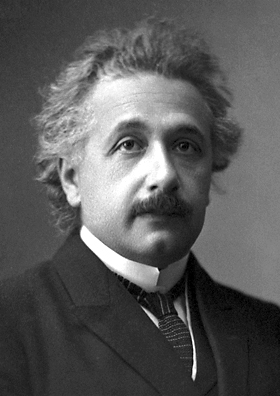
Having already penned a bestselling book about the life of Ben Franklin and another on Henry Kissinger, Walter Isaacson, CEO of the Aspen Institute, became interested in Albert Einstein as the subject of his third biography while working as managing editor at Time Magazine.
“We were looking at who should be person of the century in the mid ’90s and I became more and more convinced that it should be Einstein because it was a century of science and technology,” Isaacson says. “Obviously the two great scientific theories, quantum theory and relativity, are born out of his papers in 1905, but also [his work led] to a century of technology in which you can see his fingerprints on everything from atomic power to lasers to photoelectric cells—even the microchip.”
Isaacson says he also saw Einstein as a representative of people who left oppressive places, fleeing the Nazis or the Communists during the last century, in order to come into places where there is more freedom. “His life is a testament to the connection between freedom and creativity,” Isaacson says.
In a prelude to his upcoming speaking engagement at the Academy, the author discussed his research on Einstein.
Your educational background is not in science, but you do a fantastic job of explaining Einstein’s theories in a way a lay reader can understand them. How did you do that?
First of all, I love science. I was one of those geeks who always used to enter what was then the Westinghouse Future Scientists of America contest. Unfortunately, I was also among those who never won the big prize. But I kept that sense of wonder and I believe that those of us who are not scientists should be able to appreciate and grapple with science just as we do with great music or theatre. The joy and wonder of creativity is something we should embrace as a society even when it’s in a field we don’t know as much about.
I also had a lot of great help from scientists like Murray Gell-Mann, Brian Greene, Lawrence Krauss, Doug Stone at Yale, and Gerry Holton up at Harvard, who helped me with the science. And I took a couple of math courses to make sure I could understand the tensor calculus. But I tried to do a book that’s geared for the non-scientist. There are other great books for those who want to delve down deeper into Einstein’s science.
You note in the book that there are those who have suggested that Einstein’s first wife, Mileva Maric, contributed more to the development of his theories than she’s credited with, but you seem to conclude that the work was purely his own.
I don’t think it was purely his. I think the conceptual leaps were his. The idea of the relativity of simultaneity, which is at the core of the special theory—I think he does that while walking with his friend from the patent office, Michele Besso.
But I do think she helped check the math, she served as a sounding board, and, perhaps even more difficult, she put up with him when he was not the world’s best husband in 1905 and that period. I think she’s a great pioneer in science, but as we look at the papers and discover day by day what he was writing, what he was saying, who he was talking to, I don’t think it does her justice to exaggerate her credit to these things.
I think we can do her justice and show her the respect she deserves by showing what a pioneer she was in the field of science for women, how important she was to Einstein’s life at that point, but not try to say that she came up with the concepts behind the theory of relativity.
Everyone is fascinated with Einstein’s view of God. You call him “the mind reader of the creator of the cosmos.”
He always tried to figure out the elegance and the spirit manifest in the laws of the universe and he says, for him, that’s his cosmic religion. Both during his lifetime and nowadays, both sides of the religious argument try to compete for Einstein, whether it’s the people who are strongly atheist or the people who are fundamental believers. They all quote Einstein out of context.
It takes an entire chapter of my book for me to try to put it all in context, and it evolves over the years. But at age 50 he believes in what you might call a deist or perhaps pantheist conception of a God whose spirit is manifest in the laws of the universe, not a personal God who intervenes in our lives.
I think what’s important is to watch him wrestling with that concept and to see how humbled he is, because, as he puts it, our imaginations are far too small for the vastness of these eternal questions, so we just feel our way. And I think it might give pause and some humility to those on both sides of the argument who think they’ve solved this argument to know how Einstein wrestled with it and to see how his views evolved over the years.
Are there things that you reveal in this book that had been previously unknown about Einstein?
I think there’s a lot in the personal letters that became available just in the past 12 months … that shows the struggle in particular when he’s doing general relativity, struggling against the militarist times in Berlin where he’s a professor, becoming a pacifist, having these custody battles where the kids are being used as pawns between him and Mileva, and racing against others to get the field equations of gravity right for his general theory. To me that’s an absolutely thrilling tale that we couldn’t tell until the latest opening of the papers.
About the Author
Walter Isaacson has been the President and CEO of the Aspen Institute since 2003. He has been the Chairman and CEO of CNN and the Managing Editor of Time Magazine. He is the author of Benjamin Franklin: An American Life (2003) and of Kissinger: A Biography (1992) and is the coauthor of The Wise Men: Six Friends and the World They Made (1986). His biography of Albert Einstein – Einstein: His Life and Universe – was released in April 2007.
Published continually for 184 years, the Annals of the New York Academy of Sciences is now available online in its entirety for the first time. It stands as the longest-running American scientific serial publication. (Click here to visit the Annals archive.)
At the time the Annals was first published, two attempts at establishing an American scientific journal had recently failed: Historian Simon Baatz reports of one of those failures that “[Benjamin] Silliman had learnt a painful lesson: the fickleness of the scientific public often masqueraded as enthusiasm,” [1]. Distinguishing true enthusiasm from “fickleness” and adjusting the focus accordingly have been challenges for Annals editors ever since.
The Lyceum Years
For many years, the Annals published papers read by members at “sectional meetings” when the Academy was known as the Lyceum of Natural History in the City of New York. Some papers anticipate concerns that have only now moved into center stage: a paper on “sanitary science” (environmental pollution), “rather quaintly termed ‘filth among men,'” was published in the last Annals volume of the Lyceum days. [2]. The charm of antique language is one of the rewards of reading the early papers.
In the first Annals volume, DeWitt Clinton, just recently retired as governor of New York, began a paper on the ornithology of swallows with “a fanfare of allusions to classical authors, quoting Horace, Hesiod, and Virgil … Herodotus, Aristotle, and Pliny before getting down to scientific brass tacks.” [3] The swallow enthusiasts were undoubtedly happier with the lively, yet straightforward style of another contributor to the same volume: John James Audubon.
In following the successful formula of publishing the papers presented at its meetings, the Annals reflected the scientific interests of the day and remained viable by attracting support from sources such as the Audubon Fund, which subsidized publication until the early 20th century.
In 1899, about the time the Audubon Fund support was tapering off, the record of the Annual Meeting contained the following entry: “The publications of the Academy have been greatly improved as to quality, appearance, and dignity…The thanks of the Academy are certainly due to our enthusiastic and very careful Editor, Mr. van Ingen.”
The Leadership of Eunice Thomas Miner
Under the leadership of Eunice Thomas Miner (beginning in 1935), multi-day conferences rose in importance among the Academy’s activities, and the Annals began publishing conference proceedings. A landmark conference on electrophoresis was convened, paving the way for another conference, “Gel Electrophoresis,” held in 1963. It produced the two most cited Annals articles in history, by B. J. Davis and G. Scatchard, accumulating between them some 44,000 citations.
In the 1970s, the Annals editors broadened their remit by beginning selectively to consider for publication conferences that had not been sponsored and held under the Academy’s auspices. Science’s impact on society always raises controversy, and one quality of conference proceedings is that they allow speculative and often controversial assessments of a field. The Academy has discussed and published subjects years before the public became fully aware of their importance.
In 1973, the Annals published a paper by Raymond Damadian on the potential for NMR’s use in cancer research and diagnosis (Vol. 222). Annals also published early work on HIV and AIDS, with individual papers in 1982 and a full volume in 1984 (Vol. 437), followed by another in 1990 and two volumes on pediatric AIDS (1993, 2000).
The Academy was an early publisher of work on the neurologic basis for the self concept in psychology, beginning in 1961 (Vol. 91). In 1960, before the Surgeon General’s warning, the Academy convened and published the proceedings of a conference on cardiovascular effects of nicotine (Vol. 90). Volumes on asbestos (starting with Vol. 132 in 1965) have had a large impact on workplace health regulations.
Joining the Information Revolution
The Annals rose to the challenge of the information revolution with online publication in 1998, an initiative that no doubt assisted the steady increase of its impact and immediacy factors over the past seven years. The Academy currently publishes 28 new Annals volumes every year. The Institute for Scientific Information ranks the Annals in the top 2% of sources cited in the scientific literature. All Annals volumes dating back to 1823 have been digitized and are available in PDF format.
Access to Annals is one perk of being an Academy member. Not a member? Sign up today!
Notes
[1] Baatz, Simon. 1990. Ann. N.Y. Acad. Sci. 584: 31. [2] Cullinan, Denis. 1993. Current Comments, #49 (Dec. 6), p. 403. [3] Ibid.
French chemist Hervé This is a founder of the field of molecular gastronomy which uses the tools of science to explore the methodology and mechanisms of the culinary arts.
Students in introductory chemistry courses are taught one important and seemingly obvious rule: Do not eat in the laboratory. But for French chemist Hervé This, eating in the lab is the whole point.
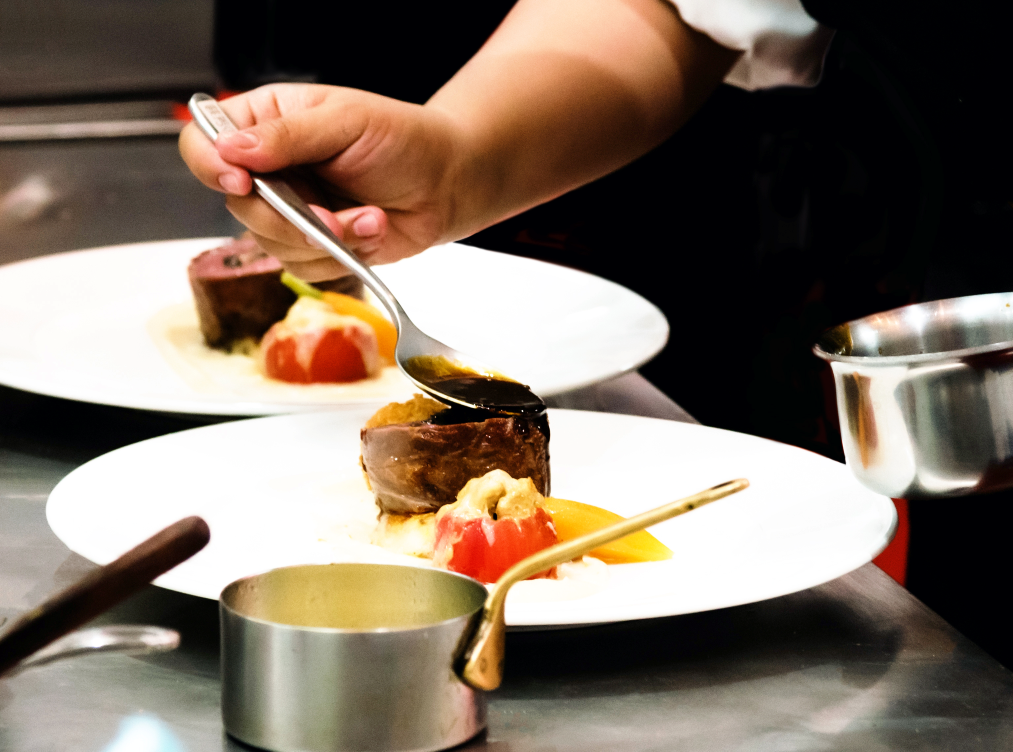
This (pronounced “Teese”) is one of the founders of the field of molecular gastronomy, the application of science to culinary knowledge and practice. Along with physicist Nicholas Kurti and science writer Harold McGee, This was among the first to use the tools of science to explore the methodology and mechanisms of the culinary arts.
This will speak at The New York Academy of Sciences (the Academy) on April 10, as part of the Science of Food series. Molecular Gastronomy: Exploring the Science of Flavor, his first book available in English, was published in September 2006.
It Started with a Soufflé
While preparing a Roquefort cheese soufflé for friends one Sunday in March 1980, This—then an editor at Pour la Science, the French edition of Scientific American—stopped at a line in an ELLE magazine recipe that called for adding eggs two-by-two. Why two-by-two? This wondered. With his scientific curiosity piqued, This tempted the fate of the dinner by adding all the eggs at once—resulting in a dish that was “edible,” but lacked the signature pouf of a perfectly prepared soufflé.
When another party of friends called the following Sunday, This repeated his informal experiment, this time adding the eggs one at a time. Pour la Science did without its editor the following day, as This stayed home to tinker with the recipe and postulate about the precisions, or old wives’ tales, which peppered this, and many other recipes, of France’s haute cuisine.
Since that day, This has collected more than 25,000 of these precisions, with the admittedly lofty goal of putting each one to the test. He continued experimenting in his home laboratory (otherwise known as his kitchen) and in 1986 met Kurti, a physicist at Oxford who shared the same passion for science and cooking. The two began collaborating almost immediately, writing papers and hosting a series of meetings in Erice, Sicily, which were attended by the few active researchers in the newly created field of molecular and physical gastronomy, including McGee and biochemist Shirley Corriher.
In 1995, This was awarded the first PhD in molecular and physical gastronomy, and he took a part-time position in Nobel Laureate Jean-Marie Lehn’s chemistry lab at the Collège de France. Five years later, he quit his day job at Pour la Science to work as a full-time researcher at the French National Institute for Agricultural Research (INRA).
Rules are meant to be challenged
The French culinary method, viewed by gastronomes as close to perfect in its practice, is rife with detailed recipes and long lists of instructions, many of which seem almost silly. To this day, the same set of traditions that calls for cooking green beans uncovered (lest they turn blue in the pan) predicts that a menstruating woman cannot get mayonnaise to emulsify. With assistance from his wife, This debunked both tenets.
This breaks the old wives’ tales into four categories: “Some precisions seem wrong and they are wrong; some seem wrong and they are true; some seem true and they are wrong; and some seem true and they are true.” He says, “I’m most interested in ‘right’ precisions that seem ‘wrong’.” For example, one particular precision instructs a chef preparing a suckling pig to immediately cut off the animal’s head after cooking, to preserve the coveted crackling skin. Although this traditional advice seemed misguided to This, his experiments showed that the pig skin indeed softens if left on the body (due to a layer of water vapor that cannot escape unless the skin is cut).
It Takes a Kitchen-full
As This’s list of old wives’ tales grew longer, he decided to enlist the help of both the culinary and the scientific communities. He began challenging his friend, world-renowned chef Pierre Gagnaire, to create recipes using some of the precisions. These monthly challenges led to a series of more than 60 collaborative molecular gastronomy seminars in Paris.
For each meeting, sponsored by the INRA, scientists, chefs, and students are given a culinary precision in advance (for example: Is it true that omelets become dry when they are over-whipped? And what does “dry” exactly mean?). At the seminar, participants perform preliminary observations and experiments, and decide on protocol and methodology to be used to conduct more controlled tests at home. The attendees reconvene a month later to share their results and reach a consensus on the accuracy and practicality of the precision.
Learning a New Language
Often, the participants at This’s seminars find that it is not the results, but the interpretations, that demand further study. On one occasion, Gagnaire explained to This that when French chefs make wine sauce with butter, they are taught not to whip the ingredients. According to the grand master, shaking the pan ensures the sauce will be “brilliant.”
“Even when Pierre is telling something to me, I do not trust him, technically. I trust nobody, I have to check,” This says. So the chemist set up an experiment to test the preparation methods, and found that visually, the sauces looked no different. But looking at the mixtures through a microscope, he observed that when the sauce was whipped, the melted butter droplets were very tiny.
The reverse occurred with shaking: larger droplets formed. He worked on a calculation, relating the distribution and size of the fat droplets to the energy transferred to the pan. The difference was clear: “Brilliance” is not a visual quality, but a description of the flavor (which is affected by the distribution of the fat in the sauce).
“I know that chefs very frequently use some words to describe taste, not appearance,” This says. “So probably, Pierre has seen an effect, but the words are wrong. [Chefs] can discover very minute effects that we scientists have to interpret.”
The Science and the Practice
This is careful to note the difference between molecular gastronomy—a science—and its various applications, which include molecular cooking, note-by-note cooking, and culinary constructivism. By his own admission, This is not a chef, although he aspires to change the way people cook around the globe. “Cooking in the next century will have nothing to do with cooking today,” predicts this.
“We are sending probes to Mars,” but we have yet to discover the secrets of soup stocks, says This. For him, the stock pot is the final frontier.
About Hervé This
Hervé This is a physical chemist at the French National Institute for Agricultural Research (INRA) and author of Molecular Gastronomy: Exploring the Science of Flavor (Columbia University Press, 2006.) He will speak at the Academy on April 10 as part of the Science of Food series.



.png)