Scientific images occupy an interesting place at the intersection of art and science. Can artistic principles be used to more effectively communicate science to the public?
Published August 19, 2013
By Maryam Zaringhalam, Ivan Oransky, and Nina Samuel
“After a certain high level of technical skill is achieved, science and art tend to coalesce in esthetics, plasticity, and form. The greatest scientists are always artists as well.” -Einstein
Scientific images are often beautiful as well as informative. Is science artistic? Are images evidence? Experts weigh in from scientific and artistic perspectives. For more on the intersection between art and science, check out this podcast.
Maryam Zaringhalam is a genetics and molecular biology PhD candidate at Rockefeller University and the author of the blog ArtLab.
I think scientists and artists have similar ways of thinking about the world. Science is based on observation and questions, and a lot of art is as well. Some of the most interesting questions come from artists. I happen to use a pipette instead of a paintbrush, but it’s all about trying to understand.
There’s a lot of emphasis in science on the image. The way I was taught to read scientific papers is figure by figure. Seeing is believing, at the end of the day. The power of images is that it’s right in front of you. Art is this really universal means of concept delivery. An image can act as a catalyst to create awareness around an issue or an area of research, and now you can send images out into the world immediately and reach huge numbers of people. It’s an amazing tool for science communication. It would be lovely if more scientists began to communicate their work to the public through images.
One of the Biggest Challenges of Teaching Science
People think of science as way up in an ivory tower because some of the concepts we deal with can seem really abstract, but you can show an image and all of a sudden it becomes more real. One of the biggest challenges of teaching science is that it’s hard to convince people that it’s more than what you learn in the classroom, where ideas can seem boring or intangible. The images can be so inspiring. You can see something and realize, “Wow! This is inside me—or all around me, or way, way off in the distant universe. It’s real and means something!” And sometimes, it’s crazy beautiful.
It’s also really interesting to think about the ethics of scientific images. A huge issue is knowing how to balance what you can manipulate. It’s so easy to edit images, and sometimes you might want to tweak something to make it clearer or more compelling. But it’s so important to make sure you’re not crossing any lines into falsification.
Ivan Oransky, MD, is the vice president and global editorial director of MedPage Today, a clinical assistant professor of medicine at the New York University School of Medicine, and co-founder and writer for the blog Retraction Watch.
Image manipulation is one of the most common reasons for retraction that we see on Retraction Watch. Sometimes, duplicated images are just unintentional or sloppy. When we see investigations uncovering images in papers from unrelated experiments that just happen to prove the main points of a paper, however, it’s hard to imagine the authors having done that for any reason other than making their results look better than they are. Fortunately for science—and unfortunately for fraudsters—the same tools that allow image manipulation allow its detection.
Nina Samuel, PhD, is a historian of science and art. She is the curator of the exhibits The Islands of Benoît Mandelbrot: Fractals, Chaos, and the Materiality of Thinking and My Brain Is in My Inkstand: Drawing as Thinking and Process, opening in November at the Cranbrook Art Museum in Bloomfield Hills, Michigan.
There is a famous quote of British mathematician G.H. Hardy who stated in his essay, A Mathematician’s Apology, “Beauty is the first test: there is no permanent place in the world for ugly mathematics.” I dare to argue that most scientists have experienced a similar feeling—that a “beautiful” (or an especially simple and at the same time aesthetically compelling) theorem or equation seems to be more likely to be true (or to embody a “higher truth”) than an overly complicated or, for example, asymmetric or “ugly” one.
The aesthetic feeling that guides these choices or the design of scientific theories is no different from the aesthetic feeling that artists use to compose their works. This doesn’t mean that the result—an artwork or a scientific theory—should be confused or understood as the same. But I would not say that the feeling of beauty itself does differ in scientific or non-scientific contexts.
The Methods of Art and Science
I would say that images can make scientific ideas or theories emerge. Art and science are not the same, but the methods of art and science come very close in the moment of creation. One could maybe ask: How could science have emerged without image making at all? The observation of nature can be understood as one of the most important foundations of science. The attempt to depict, to describe, to record, to classify and to understand the observed through the production of pictorial representations is one of the most elementary operations of science.
For example, the analysis of shapes and forms, the classification of morphologies, is the most important method of sciences like biology or anatomy. Representations make it possible that things in nature can migrate to conceptual realms, that they can be written about, that they can be pointed at, and, most importantly, that they can start to exist as “scientific things.” And this doesn’t stop at the visible world surrounding us. Making the invisible visible is another basic operation in science (think for example of the micro- and the telescope, or of x-rays).
Producing evidence is one of the basic features of images in general. This becomes clear if one considers the etymology of the Latin term evidentia, which can be translated as “obviousness/vividness,” or the quality of being manifest. Based on that root, what becomes “evident” in the first place is that which comes before the eyes—what we see. The term “eye witnessing” is very telling in this sense. Also, for example, think of the history of photography. Photographs have been used as legal evidence since their invention.
A Complex Relationship
However, the relation between evidence and a proof in science is more complex. Often scientists that I met told me that the “feeling of evidence” was triggered through an image, but that the proof itself had to be done in an analytic way or based on equations. This is especially true for mathematics, where images are mostly not regarded as proofs, but they can surely lead to a proof.
With the digital revolution, the question of the image—in science but also in society—has become more urgent than ever. Our world is not only full of images, but also our decisions are based on them, e.g. whom we should admire, how we should behave, what we should desire to possess, and even whom we should start a war with—all these things are based on images used as evidences and strategies to make us believe. This is obviously dangerous if images are not understood in the right way, that is, as representations of reality and never as the reality itself.
The main challenge, I would say, isn’t the fact that we can use Photoshop or other digital tools to manipulate images (the history of the ‘manipulation’ of images is as long as the history of images themselves), but it is their overpowering presence everywhere, and their free migration and floatation. It is the fact that they can easily become economic or political weapons. Images can get out of control. Therefore, what we need today is an education that helps us to never lose the distance in front of the images. This distance will make us understand that the representation and the represented are never the same. We need an education of the eye that fosters critical thinking.
Though it has been more than seven decades in the making, researchers were finally able to “catch the viscous pitch, the unicorn of the scientific world, in the act of dropping.”
Last Thursday, something happened that has never happened before. After almost 70 thwarted years, a simple drip proved that basic scientific curiosity can still yield novel delights, as well as the viscosity of pitch. And, the moment was observed!
Pitch, made from wood, coal, or petroleum, is a viscoelastic polymer. Though apparently solid at room temperature—so much so that it can shatter—it’s actually flowing. Very, very slowly. Viscosity describes a fluid’s resistance to flow and is determined by the interactions of particles within a system. In liquids, viscosity usually decreases as temperature rises (so the liquid flows more quickly) because the speed of the constituent molecules increases, cutting down the amount of contact between molecules and resultant friction. In gases, this is reversed. At higher temperatures, gas molecules collide more frequently. For a more thorough explanation of the physics involved, click here. Superfluids, which have zero viscosity, seem to defy gravity.
A Catalyst for Curiosity
Pitch is well at the other end of the spectrum, with a viscosity 230 billion times that of water. If you heat it, put it into a funnel, and let it cool, it will drip at a rate of about once a decade. This very experiment was set up at the University of Queensland in 1927 and at Trinity College Dublin in 1944. Since then, nobody had managed to observe a single drop.
A Radiolab podcast with Professor John Mainstone, long-time custodian of the Queensland experiment, details the tragicomic series of missed drip sightings. At last, on July 18, 2013, scientists at Trinity College—and anyone felicitously watching the webcam at the right moment—participated in a human first and watched the pitch drop!
It’s not every day one gets to do something that’s never happened before. “It summed up why I like being a scientist,” says Trinity College School of Physics Professor Shane Bergin. “It acts as a catalyst for curiosity, and that’s, for me, what the driving force of science is.”
The Queensland pitch is looking ripe for the dripping as well. Test your luck catching the drop fall live here. “You, yourself,” writes Megan Garber for The Atlantic, “can do what nobody had done before: catch the viscous pitch, the unicorn of the scientific world, in the act of dropping.”
The NY tri-state area pulses with scientific progress and energy, changing the world far beyond its borders.
Published June 1, 2013
By Steven Barboza
The nursery rhyme about London Bridge falling down gives a fair assessment of the fate of bridges. Patch them up with wood and clay, and the wood and clay will wash away. Iron and steel would fare better, but eventually these bridges will bend and bow. But what about plastic?
Structural plastic—the stuff of recycled milk cartons, detergent bottles, and car bumpers—is actually a bridge-builder’s dream. It can be molded into T-beams then bolted into I-beams that are eight times stronger than steel at one-eighth the density. It can be drilled, screwed, sawed, pinned, and even sprayed with a fire-retardant coating.
Theoretically, a plastic George Washington Bridge is possible. “There’s no technical limit to how big a beam we can make out of plastic. All you need is bigger beams to make bigger bridges,” says Tom Nosker, professor of materials science and engineering, who developed structural plastic at Rutgers University’s Advanced Polymer Center in NJ.
A bridge made of recycled plastic lumber is built in Scotland.
The Material Advantages of Plastic
The engineering lesson is elementary. Even sturdy wooden or cement and steel bridges erode given enough time, traffic, and exposure to wind and weather. Plastic beams will not buckle; they’re impervious to rot; and they’re eco-friendly, providing a novel use for mountains of discarded milk containers.
But there’s a broader lesson here: the entire New York tri-state region is a kind of science and technology Grand Central, where researchers bustle to push back the boundaries of possibility. Structural plastic is only one of the region’s thousands of innovations bound to affect our lives in extraordinary ways in the not-so-distant future.
An incredible array of area research universities are bristling with a spirit of invention that extends New York’s science ecosystem into a much larger footprint—creating an entire region of unparalleled scientific excitement.
A New Frontier in Manufacturing
Connecticut is brewing a latter-day industrial revolution of its own, as it paves the way for digital manufacturing. The University of Connecticut (UConn) has built a sort of factory of the future—one of the most advanced additive manufacturing centers in the nation. Additive manufacturing is a breakthrough method of making things—from flight-proven rocket engines to individually tailored hearing aids. Instead of using lathes, drills, molding machines, and stamping presses, it uses software and digital 3D printers that build items layer by layer. There’s no waste, molds, or assembly of intricate parts
The new Pratt & Whitney Additive Manufacturing Innovation Center, a partnership of UConn and Pratt & Whitney, is the Northeast’s first such facility to work with metals. Techniques developed here might one day empower small and medium-sized firms and entrepreneurs to launch novel, incredibly complex products quickly, profitably, and more flexibly than ever, with minimal manual labor.
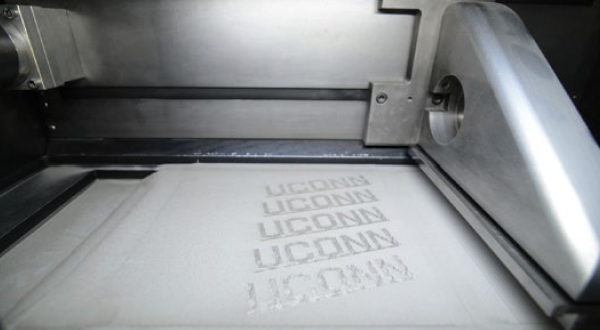
A 3D printer in UConn’s Pratt & Whitney Additive Manufacturing Innovation Center.
Imagine a new generation of intricate, lightweight, and durable custom products—printed in cost-efficient home factories.
At UConn’s center, which houses 3D manufacturing equipment and rapid prototyping technologies, two high-powered electron beam melting machines and lasers repeatedly melt layer upon layer of powdered material, such as titanium, into a single solid piece. The items are built to the exact specifications dictated by a 3D computer assisted design (CAD) model. Engineers are using the center to develop advanced fabrication techniques for production parts in aerospace, biomedical science, and other industries.
“The new center will allow us to push into new frontiers of manufacturing and materials science while training a new generation of engineers in some of the world’s most sophisticated manufacturing technology,” says UConn President Susan Herbst.
Bringing Cybernetics to Life
Scientists at Princeton University are also using 3D printing tools, not to crank out jet engines, but to print a fully functional organ—a bionic ear so sensitive it can tune into frequencies far beyond the limits of human hearing.
The bionic ear is a bold mixture of electronics and tissue. Researchers, led by Michael McAlpine, an assistant professor of mechanical and aerospace engineering, used an ordinary 3D printer purchased off the Internet to combine a matrix of hydrogel and bovine cells with silver nanoparticles. Using CAD software, the printer deposits layer upon layer of gel, silver, and cells, building the ear out of an array of thin slices. The nanoparticles form a working antenna, while the cells multiply and mature into cartilage.
The finished product is soft and squishy and looks remarkably like the real thing, except there’s a coil antenna in the center. Two wires wind around its electrical “cochlea,” where sound is sensed. The wires can be connected to electrodes.
The ear is a step toward a device that someday could be used to restore a person’s hearing, or improve it by connecting electrical signals to a human’s nerve endings, as is customary with cochlear implants. But additional research and testing is being done. “The design and implementation of bionic organs and devices that enhance human capabilities, known as cybernetics, has been an area of increasing scientific interest,” the researchers wrote in an article. “This field has the potential to generate customized replacement parts for the human body, or even create organs containing capabilities beyond what human biology ordinarily provides.”
Revolutionizing Computing Architecture
As Princeton scientists chart a new course in the brave new world of cybernetics, Yale University scientists are inventing a new cyber age. Three Yale physicists are laying the foundation for the warp-speed computers of the future—machines that will harness the power of atoms and molecules to store, process, and transfer colossal amounts of data at almost unimaginable speeds, and do it in spaces so miniscule they cannot be seen by the naked eye.
Two applied physics professors—Robert Schoelkopf and Michel Devoret—are building a quantum computer, one “artificial atom” at a time. The scientists are putting “microwave quantum optics” on a chip by squeezing microwave photons, or tiny packets of light energy, into ultra small cavities on a chip. They’re also squeezing in electrical circuit elements, which act as artificial atoms that can be used as quantum bits, units that process and store quantum information.
These small “atoms” interact with the packets of light energy from the microwaves at extremely high speeds. The small cavity acts as a quantum bus of sorts, transmitting quantum information to and from the atoms. The result: a radical new architecture that may usher in the end of computing as we know it. Scientists hope to one day use this approach to create a huge integrated circuit of quantum bits, resulting in a quantum computer.
Old Fuel, New Production Method
Lehigh University researchers are looking to forge a new path in fuel production—creating a solution to the world’s unsustainable levels of energy consumption. They’re turning to the simple but powerful process most kids learn about in grade school, photosynthesis, to harness sunlight and synthesize liquid fuel from dissolved carbon dioxide.
While the process is new and extremely efficient, the fuel has been around for decades: it’s methanol, which is a safe fuel that burns cleaner than gas and can reduce hydrocarbon emissions by as much as 80%. In fact, methanol actually consumes CO2.
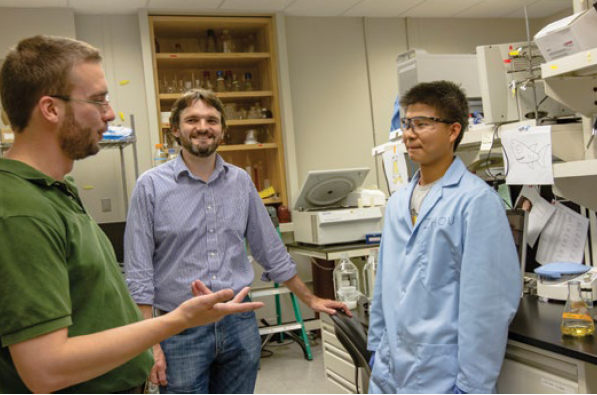
Bryan Berger, assistant professor, chemical engineering; Steven McIntosh, associate professor, chemical engineering; and graduate student / research assistant Zhou Yang collaborate in the lab. Photo by Christa Neu/Lehigh University Communications + Public Affairs
Methanol is mainly produced using natural gas or coal. Nobody knew it was possible to photosynthesize it into existence—until now. In the 1990s, methanol was marketed as an alternative fuel for vehicles. It was never fully adopted because there was no economic incentive for continuing methanol production as petroleum fuel prices fell in the ‘90s.
Why turn to methanol again? Because it has a higher-octane level than gasoline, there are no technical hurdles for vehicle design and fuel distribution, and a methanol-based fuel economy would dramatically reduce energy dependence on dwindling fossil fuel sources.
Converting Sunlight into Methanol
By using a cross-disciplinary effort in catalysis, materials chemistry, and cellular engineering, Lehigh scientists have found a way to directly convert sunlight into methanol, bypassing the need to grow and process a plant.
The team replaced slow, natural photosynthesis with rapid, efficient, and selective artificial photosynthesis, using semiconductor quantum dots (QDs) as photocatalysts. QDs are nanocrystals that once promised to revolutionize display technologies, solar power, and biological imaging. A key barrier has been price; they cost up to $10,000 per gram, thus their use has been limited to special applications.
The Lehigh team discovered a novel way to produce QDs: by using an engineered bacterial strain to initiate and control their growth—essentially a batch fermentation process. “We are thus able to achieve a cost of less than $38 per gram for quantum dots,” says Bryan Berger, professor of chemical engineering and co-principal investigator.
The Lehigh team has projected production costs for their methanol to be 65% cheaper than current costs for producing biodiesel fuel. If they can develop a production method that can be scaled-up and is commercially feasible, photocatalytic methanol production could have a significant long-term impact on society and the economy.
“A low-cost, green fuel produced in large quantities from carbon dioxide, sunlight, and water could potentially meet our transportation needs. It would reduce oil imports without depleting our natural resources,” says Berger.
New Diagnostic Tools Target Tumors
The University of Pennsylvania (UPenn) technically sits outside the New York tri-state area and yet its extraordinary commitment to R&D (as exemplified by an annual budget of more than $800 million) and a legacy of discovery traced to Benjamin Franklin, the Founding Father with a knack for creating something out of nothing, makes it an important contributor to the region’s science ecosystem.
While UPenn created the first general-purpose electronic computer in the early 1940s, a 27-ton, 680-square-foot model that calculated ballistic trajectories during World War II, current UPenn scientists are leading explorers in the world of the infinitesimal. By developing nanotechnology as an effective diagnostic tool, researchers are hoping to revolutionize the prevention and treatment of disease.
While magnetic resonance imaging (MRI) can produce topographical maps of tissue, scan clarity isn’t always sufficient for diagnosis. To mitigate patients’ health risks and to improve imaging, UPenn researchers are coating an iron-based contrast agent so it interacts with the acidic microenvironments of tumors, making tumors stand out clearly from healthy tissue. The approach is both safer and less costly than other methods.
The coating of glycol chitosan—a sugar-based polymer that reacts to acids—allows nanoparticles to remain neutral when near healthy tissue but to become ionized in low pH. In the vicinity of acidic tumors, a change in charge causes the nanoparticles to be attracted to and retained by the tumors.
Delivering Drugs to Tumor Sites
“Having a tool like ours would allow clinicians to better differentiate the benign and malignant tumors, especially since there has been shown to be a correlation between malignancy and pH,” says Andrew Tsourkas, associate professor of bioengineering. The coated nanoparticles are not limited to imaging, he added. “They can also be used to deliver drugs to tumor sites.”
Developing Infection-Resistant Medical Implants Scientists at Stevens Institute of Technology are developing next generation, bacteria-resistant biomaterials that could become an implant staple for millions of patients. And as the population ages, the market for orthopedic implants will experience exponential growth; by 2017, the global market will reach $46 billion. But 1% of hip implants, 4% of knee implants, and 15% of implants associated with orthopedic trauma fail—due to infection.
“Usually the only way to resolve a biomaterials-associated infection is to remove the device, treat the infected tissue, and later implant a second device,” says Matthew Libera, professor of materials science at Stevens. “Not only does this bring really significant cost to the healthcare system; it forces the patient to undergo a lengthy and challenging surgical and rehabilitation process. We would like to eliminate that risk.”
Stevens faculty from numerous disciplines, including materials science, chemical biology, and biomedical engineering, developed technology that actually repels bacteria and promotes the growth of healthy bone cells on uncemented implants. The surface of the implants is treated with hydrogel because most bacteria, particularly the staphylococci common to implant infection, do not adhere to most hydrogels. As a result, patients won’t have to take antibiotics orally; the medicine will go to work at the surface of the implant.
A Local Home for the World’s Biosamples
Many of the biospecimens used in research projects across the region, and around the world, are provided by Rutgers University, a national leader in genetics. RUCDR Infinite Biologics, founded in 1998 as the Rutgers University Cell and DNA Repository, is the world’s largest university-based biorepository. It provides DNA, RNA, and cell lines with clinical data to research laboratories worldwide, which use them to study a host of diseases and disorders.
RUCDR contains more than 12 million biosamples, logs 100 million database entries per year, operates one of the nation’s largest stem cell programs, and facilitates a slew of research initiatives.
“This sort of advanced-technology, automated facility was sorely needed on the national level, and we anticipate a continual increase in use by Rutgers faculty,” says RUCDR CEO Jay A. Tischfield, director of the Human Genetics Institute of New Jersey and professor of genetics.
Last year, the repository received a $10 million grant from the National Institute on Alcohol and Alcoholism Abuse to provide DNA extraction, basic genetic testing, and repository services for more than 46,000 saliva samples for a national research effort to determine the genetic and environmental factors leading to alcoholism. Formerly, large-scale studies on the causes of alcoholism used sociological, behavioral, and limited biological data.
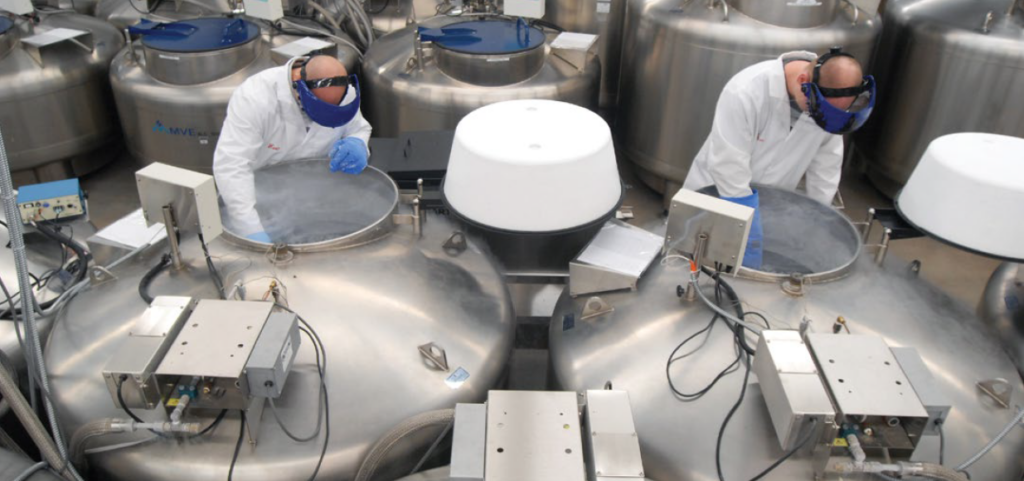
Members of the Rutgers RUCDR Infinite Biologics group maintain biosamples.
Robust Epidemiological and Biological Information
“For the first time, researchers will have robust epidemiological and biological information from large numbers of individuals so that they may correlate genetics to alcohol abuse behavior,” Tischfield says. “The results are used to formulate national policy and improve healthcare services.”
In 2013, RUCDR received $44.5 million from the Cooperative Agreement award from the National Institute of Mental Health (NIMH), which will allow RUCDR to support the NIMH Center for Collaborative Genomics Research on Mental Disorders by collecting, processing, and analyzing blood and tissue samples from NIMH-funded scientists nationwide.
“With the new funding, RUCDR Infinite Biologics will implement new meta-analytic approaches for combined analysis of clinical and genetic data in the NIMH Human Genetics Initiative,” says Tischfield.
Transforming Lives through Research
Research projects such as those detailed above represent just a fraction of the novel endeavors under way in labs across the tri-state region—probing mysteries that puzzle us, creating technologies that amaze us, and making discoveries that alter how we live and think. And in the process, Tri-State scientists are bringing robust new revenue streams to the local economy—creating both short- and long-term benefits.
While we may never see a plastic twin of the George Washington Bridge, plastic bridges are on the horizon, literally. Rutgers has partnered with the U.S. Army Corps of Engineers to build plastic lumber bridges that can tolerate punishing loads: 70-ton tanks and 120-ton locomotives.
Chances are, structural plastic has already touched your life. If you’ve ever traveled by train, you have probably glided along rails held in place by plastic railroad ties. With 212,000 miles of track in the U.S., ties are big business; 20 million are replaced each year for maintenance, and composite ties are rapidly gaining notice for their corrosion-resistance.
Leave it to scientists in the tri-state region to come up with an ingenious idea for what to do with the world’s rubbish: create everlasting building blocks.
A recently proposed bill sparks controversy over NSF research funding criteria. How will this impact basic research and the broader realm of science?
Published May 9, 2013
By Diana Friedman
John Holdren, PhD
Last month, Representative Lamar Smith (R-TX), Chairman of the Committee on Space, Science, and Technology, drafted what he calls the “High Quality Research Act.” The bill aims to harness the National Science Foundation’s (NSF) funding decisions to the national interest. “That would be alright with me if the national interest were defined to include expanding the frontiers of knowledge, but I don’t think that’s what the members of Congress had in mind,” said Dr. John Holdren, Assistant to the President for Science and Technology, at a Distinguished Lecture last week at Stevens Institute of Technology.
In fact, the bill defines appropriate science as research that hasn’t received any other federal funding; that advances “the national health, prosperity, or welfare” and secures “the national defense”; and that is “groundbreaking.”
Addressing the National Academy of Sciences for the organization’s 150th anniversary, President Obama emphasized the need to “make sure that our scientific research does not fall victim to political maneuvers or agendas that in some ways would impact the integrity of the scientific process.”
What exactly does all this mean?
Here’s What the Bill Says:
Prior to making an award of any contract or grant funding for a scientific research project, the Director of NSF shall publish a statement on the public website of the Foundation that certifies that the research project—
(1) is in the interests of the United States to advance the national health, prosperity, or welfare, and to secure the national defense by promoting the progress of science;
(2) is the finest quality, is ground breaking, and answers questions or solves problems that are of utmost importance to society at large; and
(3) is not duplicative of other research projects being funded by the Foundation or other Federal science agencies.
The Utility of Basic Research
As Science Insider reports, many scientists view Rep. Smith’s proposal as the next step in an effort to politicize research, following the success of the Coburn amendment in the 2013 spending bill, which yoked social and political science research to a national security and economic agenda. There have also been concerns about undermining the NSF’s peer review system with the scientifically inexpert reactions of Congress to superficial assumptions about the value of research projects.
In a statement, Smith denies any Congressional micromanagement of the NSF. “It is the responsibility of the professionals at the NSF to exercise their best judgment and ensure that only proposals that benefit the taxpayer get funded. It is Congress’ job to encourage accountability and make sure hard-earned taxpayers’ dollars are spent in ways that benefit the American people,” he says.
At the Stevens Institute of Technology lecture, Dr. Holdren countered: “This happens about every decade. Members of Congress page through large numbers of NSF grants looking for titles that seem frivolous, and then try to assert that NSF is wasting taxpayers’ money…If they succeed in requiring in advance that we specify what the desired outcome and the national interest are going to be, two things are going to happen. One, you’re throwing out the basic research baby with the bath water,” said Dr. Holdren.
“Basic research is precisely research where you don’t know where it’s going, but in fact, it contributes to the expansion of knowledge which is the basis of all future applied research and development and practical innovation and products. The second thing is, if you demand to know in advance [what will be the outcome of a study], you fund nothing but very low-risk, obvious research and path-breaking, transformative research will not get funded. This is a very bad idea.”
Playing the Long Game
In his statement, Rep. Smith also claims, “I support basic research.” However, the expectation that research be known in advance to serve any purpose, much less the simultaneously narrow and vague teleology delineated in the bill, is essentially contradictory to the concept of basic research, which by definition is undertaken without heed for potential applications.
Applications may arise and prove profoundly beneficial to taxpayers, but this can take a very long time to happen, often much longer than the election cycles of politicians who might appoint themselves accountability gatekeepers. Illustratively, at an address to AAAS on May 2, Dr. Holdren “questioned whether the NSF director should have known that a grant for a project on search algorithms awarded to Larry Page and Sergey Brin before they co-founded Google would lead to a revolution in how people find information.”
In fairness, subsection 3, on non-duplicative funding, merits real consideration. In this podcast, “Envy: the Cutthroat Side of Science,” Dr. Harold Garner discusses the prevalence of overlapping grant applications to different funding agencies for the same research. Since 1985, Dr. Garner estimates this phenomenon has cost the government 5.1 billion dollars—a serious concern if you’re trying to get as much and as efficient mileage from a limited budget as possible. While this amount constitutes a tiny percentage of the total research budget, it represents about 660 new grants a year that are not awarded while other projects are redundantly funded.
Just a Speed Bump? Or Completely Over the Cliff?
“There’s innovative science that will be missed because of that,” says Dr. Garner. His approach to tackling this problem employs a publicly available database of “highly similar” text in scientific articles and grant applications to expose “double dipping.” This is a lot more effective than mandating the NSF develop official prescience regarding the outcomes of the science it funds.
To end on a practical note, let’s look at what’s actually in the budget for some perspective. AAAS has charts representing the amounts allocated to basic and applied research by the agency from 1976 to 2012. The split is pretty close, and pretty consistent, and is scheduled to remain so for 2014.
The FY2014 budget has $33,162 million slotted for basic research across all agencies, and $34,963 million for applied research (see page 9 of The 2014 Budget: A World-Leading Commitment to Science and Research). While the mission-driven nature of some of the agencies makes the purity of basic research somewhat debatable, there doesn’t seem to be a looming crisis in basic research funding, so all the fuss might only amount to so much fist-waving.
On the other hand, the success of the Coburn amendment does give one pause. According to AAAS R&D Budget Analysis Program Director Matt Hourihan, “the big question” is the $91 billion “gap between the administration’s request and the current discretionary spending caps…Answering that question will then theoretically provide some additional insight into…whether science has hit a speed bump or has crossed over the fiscal cliff into this austerity valley with depressed R&D funding over the next many years.”
Dr. Meghan Groome was recently asked to provide City Council testimony on the success of the Academy’s Afterschool STEM Mentoring Program.
Published October 19, 2012
By Meghan Groome, PhD
Meghan Groome, PhD
On Tuesday, October 16, 2012, Meghan Groome, PhD, was asked to provide testimony for the New York City Council on the topic of STEM (science, technology, engineering, and math) opportunities in afterschool programs. Dr. Groome runs the Academy’s Afterschool STEM Mentoring Program, which aims to create a replicable, scalable program model that can be instituted in communities near and far. Below is a transcript of Dr. Groome’s testimony.
Testimony Transcript:
Good afternoon and thank you for inviting me to testify before the Committee on Youth Services. My name is Meghan Groome and I am the director of K12 Education and Science & the City at the New York Academy of Sciences. For nearly 200 years the New York Academy of Sciences (or the Academy) has brought together extraordinary people working at the frontiers of discovery and has promoted vital links between science and society. The Academy has a history of building new scientific communities, constructing innovative connections among an extensive scientific network, and driving path-breaking initiatives for scientific, social, and economic benefit.
Since the 1940s, the Academy has made investments in K-12 (Kindergarten through 12th grade) science education, with programs like the New York City Science & Engineering Fair, capacity-building programs to support outreach in other institutions, and mentoring programs for top performing students in New York City. As a result of these investments, the Academy has increased the City’s ability to nurture top scientific talent.
In recent years, the Academy has redoubled its efforts to bring New York’s wealth of scientific resources to bear on the needs of the City’s schools, with a focus on improving science education for all students, especially those traditionally underrepresented in the STEM (science, technology, engineering, and math) fields. The New York City Science Education Initiative has a simple mission: to identify high-impact, scalable pathways for scientists to directly improve the number of children who are STEM-literate. Our theory of change relies heavily on the core competencies of the Academy – to serve as a connector between the well-resourced scientific community and the under-resourced education community (including high-need students and teachers).
The Academy’s Afterschool STEM Mentoring Program
In 2010, a group of Deans and Faculty affiliated with the City’s research and medical universities asked the Academy to create a program to provide their top young scientists with an opportunity to learn how to teach science/STEM. At the same time, The Department of Youth and Community Development (DYCD) approached the Academy to find a partnership opportunity to provide more STEM education in the OST and Beacon Programs.
Launched in Fall 2010, the Afterschool STEM Mentoring Program was designed to satisfy both requests by recruiting graduate students and postdoctoral fellows from the Academy’s Science Alliance[i] program to volunteer to teach in DYCD funded afterschool programs. When hired, I myself had a hard time understanding why a young scientist, mathematician, or engineer would take an afternoon a week to volunteer to teach 4th through 8th graders, but it becomes easier to understand when you learn that this generation of young people believe it is their obligation to serve as role models and mentors. They have grown up in a culture of service learning. They also face a tough job market where teaching, interpersonal, and mentoring skills are at a premium and can result in increased job opportunities.
Now, as we begin our 6th semester of mentors, we’ve worked with nearly 400 young scientists, 7,000 children, and delivered more than 80,000 hours of instruction in all 5 boroughs (Exhibit 1). In Fall 2011, we expanded to Newark, NJ, and recently received a $2.95 million grant from the National Science Foundation to scale this program through the State University of New York system which will serve close to 200 young scientists and 3,000 children.
The Misconceptions of What a Scientist Is
For the students in the programs, the benefits are obvious. As one of our mentors recently wrote, “Learning comes pretty easily when people enjoy what you’re asking them to learn!” Moreover, our mentors deliver high quality, inquiry-based math, science, and robotics courses while serving as role models and demonstrating to the students that scientists aren’t at all stereotypes.
For example, all of the mentors do the same activity on the first day: they ask the students to “draw a scientist”[ii]. It’s a research protocol that allows the mentors to understand that most kids hold the same misconception of a scientist; invariably the students almost all draw an older white man with crazy hair, a bowtie, and often an evil glint in his eye. It doesn’t take long after the students meet their mentors to understand that today’s scientists used to look just like them. This realization is the beginning of the development of a scientific identity. When students are again asked to draw a scientist on the last day of class, they often draw their mentors or themselves in a lab coat.
In addition to attitudinal changes, children in our program receive at least 12-15 hours of enrichment programming over the course of a semester. While this may not sound like a lot of time, consider that the average student receives 2.3 hours of science instruction a week[iii] and that many of our mentors report that they are the sole source of science in a child’s day.
Serving the Needs of Young Scientists
We are often asked why we don’t work directly with schools and the answer is that we do – we have nearly 1,400 public school teachers engaged in programming designed for them. However, through the STEM Mentoring Program we realized that we had a great opportunity to serve the need of our young scientists to learn in an environment where the children’s social, emotional, and educational well being were top priority while hewing to the hands-on, activity learning spirit of afterschool programs.
Afterschool programs typically offer smaller class sizes, freedom from state and local academic standards, reduced anxiety over tests and performance indicators, and more fluid uses of time free from the traditional school day structure. The Afterschool STEM Mentoring Program takes advantage of the existing infrastructure of OST programs, which include hundreds of community-based organizations charged with the safekeeping and, increasingly, the academic enrichment of the children in their care.
As science continues to be marginalized in formal classrooms, the role of afterschool programs is increasingly viewed as an important arena for academic enrichment[iv]. Expanding the school day through afterschool programs offers the opportunity to increase a student’s exposure to high-quality STEM education by providing three elements that lead to an individual’s persistence into a STEM career: engagement, continuity, and capacity[v].
The Importance of Engagement
While continuity and capacity are important factors, there is evidence that engagement is potentially more important than achievement or course enrollment[vi]. By infusing STEM into existing community-based afterschool programs with strong curriculum partners, the proposed program can bypass the constraints of the formal classroom structure by providing relevant, hands-on curriculum; opportunities to interact with young, diverse scientific role models; and additional content knowledge and resources[vii]. Afterschool programs reach large swaths of urban students and provide safe and structured informal learning environments that allow for creative and enriching STEM programming[viii].
As a result of the success we’ve had with the current Afterschool STEM Mentoring Program, the Academy will pilot this program with the State University of New York (SUNY) in six communities, including an expanded partnership with SUNY Downstate in Brooklyn. Additionally, we have a partnership with the Girl Scouts of the USA to scale this program through their council system.
With the generous and sustained support of our funders and the Department of Youth and Community Development, we aim to deepen our commitment to the students of New York and create a model by which any region with an abundance of scientists and students with an enthusiasm for STEM can adopt this new model for delivering high quality STEM education via afterschool programs.
[vi] Maltese, A. V. and Tai, R. H. (2011), Pipeline persistence: Examining the association of educational experiences with earned degrees in STEM among U.S. students. Science Education, 95: 877-907. doi: 10.1002/sce.20441
[viii] Center for Advancement of Informal Science Education. (2010). Out of school time STEM: Building experiences, building bridges. B. Bevan, V. Michalchik, R. Bhanot, N. Rauch, J. Remold, R. Semper, & P. Shields (Eds.). San Francisco, CA: Exploratorium.
The state of Yucatán uses local policies to promote science and technology.
Published August 1, 2012
By Raul Godoy-Montañez and Alfonso Larqué-Saavedra
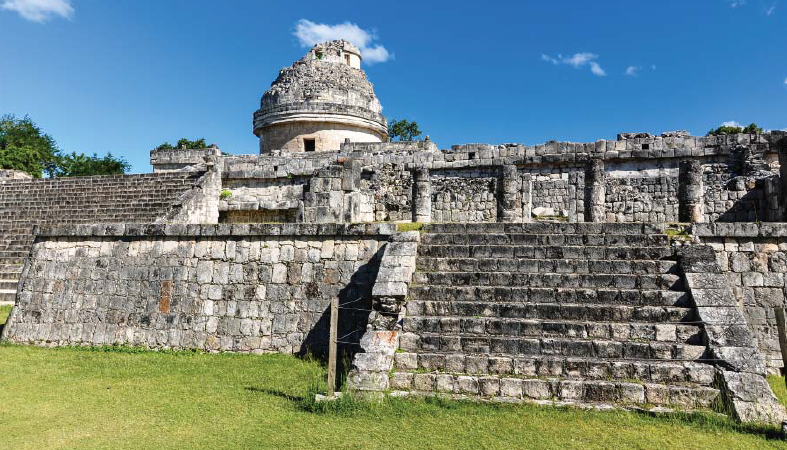
Mayan Observatory at the ruins in Chichén-Itzá.
The state of Yucatán in Mexico is widely known as the land of the classic Mayan ruins of Uxmal and Chichén Itzá. While Yucatán is characterized by age-old cultural traditions, the past does not define this area that is home to 2 million people. Yucatecan society has long recognized the importance of technology in creating a better future for its residents.
In 1852, the Yucatán governor requested 2,000 pesos from the President for the development of a machine that could extract fiber from the leaves of the henequen plant (Agave fourcroydes Lem.). This mechanization enabled the extension of the henequen industry through the establishment of large plantations and a processing industry within the hacienda system—all of which had a tremendous impact on the economic development of Yucatán.
Today, Yucatán boasts more than 1,000 science researchers, including members of the Mexican Academy of Sciences. It has several institutions dedicated to the development of scientific research, including the state university, a technological institute, centers belonging to the National Council of Science and Technology, and campuses of out-of-state institutions, such as the National Autonomous University of Mexico and the Center of Research and Advanced Studies of the National Polytechnic Institute. The best-known features of scientific interest in the state are the Chicxulub Crater, the Mayan culture, the peninsular aquifer, and the area’s biodiversity.
While such natural resources bring a wealth of potential development opportunities to Yucatán, researchers and government leaders realized that the impact of nearby technological and scientific institutions could be bolstered if the institutions’ goals and resources were better aligned.
Creating a Hub for S&T
To this end, in May 2008, the System of Research, Innovation and Technological Development of Yucatán (SIIDETEY) was created, integrating the ten most important federal and local public institutions in the state. The aim of SIIDETEY is to make Yucatán a “pole” for the development of science and technology in the Mexican Southeast, the Caribbean, and Central American countries, thereby attracting students and the establishment of technology-based companies.
SIIDETEY is a governance model with no cost to the State. It is an agreement between the Rectors and Directors of institutions belonging to the System with the aim of bringing together the capacities of its members in favor of science and technology. It is coordinated by the Secretary of Local Education, who acts as a promoter of the model.
The two main objectives of this System are to facilitate the development of joint research projects dealing with topics of interest for Yucatán and to serve as a liaison with the State and other national and international agencies in order to obtain the necessary funding to boost the development of science and technology.
Initially, SIIDETEY defined the most important research fields for the State as the development of the Mayan people, coastal development, water, health, food, education, energy, and habitat. The focal points for each of the fields were also identified. For example, in the field of water, the conservation of the peninsular aquifer was of prime interest. SIIDETEY is now establishing joint academic institutional programs to tackle these priorities, such as a program promoting renewable energy sources.
Financial Successes
Yucatan State Governor Ivonne Ortega (right) and Minister of Education Raul Godoy-Montanéz attend a ground-breaking ceremony for the Science and Technology Park of Yucatán.
Within the SIIDETEY model, the State has agreed to finance the Science and Technology Park of Yucatán and the construction of various laboratories. The SIIDETEY laboratories were conceived to serve both students and researchers in fields such as biomaterials, nanotechnology, biotechnology, coastal engineering, food processing, and renewable energy. A seed bank will also be financed.
One hundred and two hectares were ceded for the establishment of the Science and Technology Park of Yucatán, within which the SIIDETEY laboratories and the facilities required for the programs of member institutions will be built, along with other technology-based companies. For its second stage, the Park has been offered a further 100 hectares to promote, preferably, the establishment of additional companies.
SIIDETEY has made significant progress in obtaining financial resources. The resources gathered for the funding of research projects since the establishment of SIIDETEY four years ago are approaching $25 million. Construction has also begun on the Science and Technology Park and the laboratories with an initial investment of $40 million. It is estimated that, by the year 2018, the Park will be providing services to at least 300 researchers and 1,000 postgraduate students.
The financial resources obtained for science and technology in Yucatán over the last four years are unprecedented, and also very welcome, since it is in the Mexican Southeast where a significant portion of the country’s natural and cultural wealth (oil fields, water features, and biological and cultural diversity) is located.
Scientific and Political Support
Since its creation, SIIDETEY has received the permanent support of the National Council of Science and Technology, whose members have also established programs to provide the industrial sector with seed capital, and to coordinate—through technological development projects—with the academic sector. The constant improvement of the business sector and the establishment of new technology-based companies will in turn generate new jobs, thanks to the achievements of the SIIDETEY model.
Due to the vision proposed and the progress achieved, the model has recently received the unanimous approval of representatives from the different political parties comprising the local Congress, who have provided legal justification for the existence of SIIDETEY and the Science and Technology Park of Yucatán.
Although there is still an urgent need for the decentralization of science in Mexico in order to multiply the current capacity of the country, efforts to align the work of various scientific institutions have begun to gain momentum. The initiative taken by the small state of Yucatán has allowed a new plan to emerge in Mexico, facilitating the transition to a knowledge-based economy. The promotion of science by the local government and institutions will surely stimulate and strengthen the regional economy and generate more opportunities for the next generation.
Creativity is a learned skill, not an innate ability; such is the premise of Tina Seelig’s new book, inGenius: A Crash Course on Creativity. But what of those deep-seeded cultural assumptions—that artists, writers, and musicians are born creative, while those in more technical fields (scientists, engineers, and mathematicians) are simply not? Seelig, the executive director of the Stanford Technology Ventures Program at Stanford University, finds the idea that creativity is simply a personality trait—you either have it or you don’t—laughable. “Think of math, or science, or dance…Yes, there are people who are naturally gifted in these fields, but most of the population learns these skills. It’s the same thing with creativity.”
Seelig believes that scientists and engineers—those working “at the frontier of knowledge”—can particularly benefit from expanding their creative capacity through purposeful exercises. “If you just perform the next logical experiment, you will make incremental progress. Breakthroughs require breakthrough thinking.” When working on large-scale problems that haven’t been solved before, such as global warming, creativity could be the key to finding solutions that work, says Seelig.
So, what can those in scientific and technical fields do to enhance their creativity? Seelig provides an easy-to-follow roadmap for enhancing creativity in her book. But she is not alone in her efforts to get more people to spend time on, and see the value in, fostering creativity. From professors who ask open-ended questions with multiple ways to solve a problem (a method Seelig endorses) to actors who teach improv classes for scientists, the intersection of science and creativity is getting some time in the spotlight.
Art vs. Science?
“The ancient Renaissance man could be fantastic at art and science, but today we like to separate the two,” says Rebecca Jones, a biochemistry PhD candidate and the public engagement officer at the University of Bristol in the United Kingdom. The common thinking that excellence in science and technical fields precludes a wealth of creativity, is entirely inaccurate, says Jones. “If you’re creative, you’re often better at science. Some of the best scientists I know have come up with more abstract ways of approaching a problem, instead of going the more obvious, logical route.”
But even scientists can get trapped in the notion that creativity has no place in the lab. “A lot of scientists went into science because they feel much more comfortable in a non-artistic environment. I’ve always had that artistic side, so I want other scientists to see themselves in that way too,” says Jones. Such was the impetus for the annual Art of Science Competition that Jones started at the University of Bristol in 2009.
Jones and colleagues collect science-related photographs from research scientists and display them in the medical building. Visitors then vote for their favorites. It took a year or so for the entrants to fully understand the point of the competition, says Jones. At first, many submitted their best research images—those that showed a good result, scientifically speaking. But as the competition gained traction, entrants began to understand that the images could be valuable for their visually striking nature, or for what they said about the life of the scientist.
The Power of Photography
Jones recalls a serene black and white photo that looks like a field of small wildflowers titled “My Beautiful Adversary.” In reality, it is a photo of mold growing on a sample—a nightmare for a scientist. But the photo became very popular with other scientists—they could relate to the subject but they also appreciated its aesthetic value. Another, a photo of a rack of test tubes, all bearing labels written in different, messy handwriting, was an antidote to the typical sleek scientific photos in magazines. But, says Jones, it drove home the point that science is largely a team endeavor, with many hands playing a role in a successful experiment.
“The goal is to give scientists an outlet for their creativity and to let them take joy and release in their work,” says Jones. Scientists at the University of Bristol have responded positively, with the competition getting more intense, and the images more artistic, each year.
“A lot of the entrants were really surprised to see how much their images stood out when they were shown in a group—they were so used to seeing them every day that they forgot how special they were. This allows them to see their work in a new way and get reinvigorated about their research.”
Where It Will Go, Nobody Knows
Valeri Lantz-Gefroh is a lecturer in the School of Journalism and a workshop coordinator for The Center for Communicating Science at Stony Brook University in New York. But in a word, she is an actor. She was one of three acting teachers, led by the well-known Alan Alda, to help build The Center for Communicating Science, a truly unique undertaking aimed at science students.
“Science affects every human being on the planet, but there’s a wall of misunderstanding between the general public and scientists,” says Lantz-Gefroh. The general public often thinks they are incapable of understanding science and, furthermore, that scientists aren’t willing to help them understand it, she says. Scientists, on the other hand, often do not sense the general public’s interest in their work.
So where does acting fit in? Lantz-Gefroh teaches improv, one of the more unusual classes at the Center, which aims to teach scientists, through credit-bearing classes, how to better communicate their work to various audiences. She has been pleasantly surprised by how receptive budding scientists have been to her courses. “I expected skepticism, but I have not gotten it at all.”
A Creative Process
Instead, what Lantz-Gefroh has gotten is the question, “What does this exercise relate to?” Improv exercises are, by nature, abstract. Students are often eager to know what, for instance, mirroring their partners’ movements with eyes open, then eyes closed, will teach them as it relates to their future careers. “I tell them, ‘It’s a creative process, you don’t always know where it is going to go’,” says Lantz-Gefroh. “If I say, it’s for X, then that’s the thing you’ll look for. But if I don’t say, then it could have a bunch of different effects I haven’t even thought about. All could have tremendous value; I don’t want to diminish the potential of the exercise.”
It is for this reason that Lantz-Gefroh likes working with scientists. “They like to quantify things, but they are also comfortable not knowing the answer. I tell them to look at the exercises as a creative investigation.” She is quick to stress that opening up the mind and allowing more abstract thinking is not only of benefit to scientists. “I think every person benefits from creative investigation.” However, she says, that for someone used to looking at the world on a sometimes microscopic level, taking a step back can be particularly beneficial.
Story of My Life
Enhancing creativity among professionals in science and technical fields certainly has personal and professional benefits for those in the field. But can getting scientists to think of their work in new ways also provide benefits to the general public? Ben Lillie, a high-energy physicist by training, and now director of The Story Collider, thinks so. The Story Collider, based in New York City, hosts informal storytelling events where people (both scientists and nonscientists) come together to tell true, science-related stories, usually in a bar.
“I think of us primarily as an arts organization, which is a little weird since we are tied so closely to science,” says Lillie. “Our goal is the same as any arts organization: to explore what it means to be human.” And because the human experience is being so drastically changed by science, “that’s something we need to explore in a cultural context, to explore how that affects us.”
Lillie focused on storytelling as the method for exploration because he believes that sharing stories connect us with each other and help us to see that we are not alone. “We give people a way to see that science is a part of their everyday lives, that it’s not this big mystical thing you have to go into a laboratory to even think about.”
Personalizing and Demystifying Science
Lillie recalls a neuroscientist who told a story about his father having a stroke. The neuroscientist talked about the details of what was happening in his father’s brain (and related them in lay terms to the audience), but he also related all of his personal emotions that went along with each aspect of his father’s illness. This, says Lillie, is how science gets personalized and demystified.
While The Story Collider focuses on true stories, the creativity comes in the telling of them. The Story Collider staff helps storytellers craft their tales, cutting out the extraneous bits and focusing on the parts that move the story along or convey powerful thoughts and emotions. It is an exercise that’s very different than the ones most scientists do in their labs. And for nonscientists, it is valuable and different to take ownership of a story relating to science—learning that the personal is powerful, even in the realm of science.
“I think scientists need some space to step aside from their work, to go do something completely different and come back to it.” Lillie says that storytelling is not necessarily the answer; it is just one creative medium out of an infinite number that can provide benefits, both known and unknown. What might you gain from a creative investigation of your own? There’s only one way to find out.
The concept of “study abroad” experiences has changed drastically since I began my career in education. Thirty years ago, studying abroad was thought of as something “those humanities students do.” Rather than being seen as integral to succeeding in a future career, it was a life experience, and it was heavily concentrated on Europe, the humanities, and female students.
Flash-forward three dozen years and international student mobility is a huge trend with the numbers of students crossing borders for education increasing by the day. While the U.S. is currently the top destination for education in terms of raw numbers, it is losing market share, as higher education becomes more commoditized and students can “shop around” for their education the way we might shop around for a car.
Part of the reason for this is that there is a growing awareness that being prepared for the workforce means being prepared to work between not only job verticals, but cultures—and with some frequency (the average person now has 4.6 jobs in their lifetime). Even one job can require a transition between cultures and languages. A means to gain these skills is exposure of an international context, whether through a distinct study abroad time period, or the undertaking of an education entirely in a different country.
A Large and Growing Market
One of the benefits of higher education is that it is a large and growing market, not a zero-sum market. To capitalize on this, many universities are looking to move into regions where the opportunities for expansion are greater than at their home bases. The State University of New York (SUNY), for instance, recently launched a physical campus in Korea. I believe these expansion efforts are generally positive, both for universities and potential students, so long as they are undertaken with care.
It is hard work to set up an overseas branch campus with comparable quality and experience as the original location (some universities franchise their brands to third parties, resulting in significant compromises). It is even harder to do it and create a situation where the branch campus is economically sustainable—that is, it is sustainable on tuition alone. This can be difficult as many students look to international schools for good educational value.
There are success stories, however: INSEAD’s Singapore-based outpost of the European business school has been so successful that it can command tuitions similar to the original location, and students go back and forth between the campuses in France and Singapore to further strengthen their education.
The Impact of Branch Campuses
Just as globalization has contributed to the geographical spread of universities, branch campuses can have globalizing effects on their geographical areas. To start, there’s a multiplier effect on the local economy because of the sheer number of businesses and services that are required to support international students.
Right here in New York, we now have the Cornell University/ Technion-Israel Institute initiative—a New York City-based engineering campus. Having a lot of Israeli and Middle East researchers come to the US for engineering education may change the trade relationship between these countries.
There’s also often a cultural impact as well. One can hope that the University of Nottingham and New York University—both of which now have campuses in China—may help the Chinese liberalize their approach to undergraduate education. As for SUNY, we look forward to expanding our global reach not only through programs established abroad, but also through crosscutting research and teaching—bringing the benefits of international education to students at all of our campuses, whether local or abroad.
Read more about learning opportunities offered by the Academy.
Global problems demand global resources to solve them—such is the theory behind the creation of Scientists Without Borders, an initiative that designs and executes projects to tackle these challenges and provides a free web-based platform where users from around the world connect to address pressing global needs. While Scientists Without Borders works on a diverse array of challenges, we have recently focused significant attention on the critical issue of maternal and child malnutrition.
Indeed, the work of both initiatives reflects the awareness that despite renewed global attention to the catastrophic consequences of maternal and child under-nutrition, the burden of the problem looms large over efforts to solve it—and those in the developing world are particularly hard hit. If we are to reverse this trend, coordinated, multi-sector approaches are required.
Closing Knowledge Gaps
A major barrier to improving maternal and child nutrition is the existence of gaps in scientific knowledge about essential processes and biological mechanisms related to healthy fetal growth and nutrition for infants and children. This lack of understanding impedes the development of effective evidence-based approaches and interventions for vulnerable populations.
To fill in the gaps, we need collaboration and knowledge exchange among stakeholders in the nutrition space, as well as the ability to harness the capacity of people and institutions from outside the traditional nutrition science community. It is for this reason that Scientists Without Borders recently launched an exciting crowdsourcing project to connect hundreds of diverse participants among the human nutrition, animal science, and veterinary science communities.
By engaging in high-level discussions about the knowledge needed to advance these fields, these participants have the potential to generate significant and disruptive advances for maternal and child nutrition. For example, when we spoke to scientists in these disciplines, they noted that there is common interest and urgency in understanding in the role of the microbiome, as well as clearly identifying biomarkers in human and animal nutrition.
How We’re Doing It
In order to compress the timeframe on these kinds of cross-disciplinary insights and advances, we designed an invitation-only crowdsourcing platform. We leveraged our global network to invite hundreds of experts from a variety of fields to participate in a 45-day crowdsourcing activity where participants could freely pose questions and ideas and engage in discussions about voids in scientific research, promising interventions or innovations, and unique collaborations or areas of priority. Specifically, we encouraged discussion around seven areas: biomarkers and metabolomics, nutrition and epigenetics, vaccines and immunology, animal models, biofortification, and dietary change.
We built in functionality that allowed participants to rate the contributions of their peers by awarding scores for innovation, feasibility, and expertise. In this way, the ideas with the greatest traction among, or of the greatest interest to, users could be elevated and identified for further refinement and amplification. Subsequent to the crowdsourcing event, Scientists Without Borders, is hosting a small group of select stakeholders (leaders from academia, policy, multinationals, and funding entities) to discuss and build on the most promising ideas.
The in-person convening will provide the opportunity for dialogue and brainstorming between high-level stakeholders around new ideas and new opportunities for collaboration, which they can then translate into actionable steps and outcomes. We believe that bringing together leading thinkers—through both crowdsourcing activities and in-person exchanges—will create the foundation for a global community of interested actors contributing their unique insights and perspectives to the critical area of nutrition, and beyond.
Science is the path to a better future for humankind and strategic collaboration between scientists will get us there.
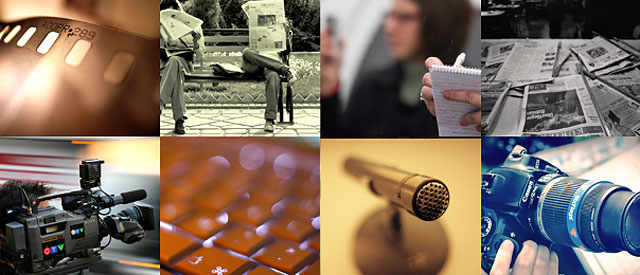
Mariette DiChristina reviews the vast expanse of science, technology, engineering, and math (STEM) news and decides not only what is newsworthy but also what is of interest to the general public and, more importantly, to the magazine’s readership.
Image credit: Modified from March Mosaic 3, created by Darcy Gill using the collage tools on flickr.com. Original images (left to right, from top row to bottom) by Solar ikon, Hamed Saber, [Zenat El3ain]TM, rutlo, Alex Barth, booleansplit, Duchamp, flequi.
Published April 18, 2011
By Meghan Groome, PhD
Scientific American is one of the oldest scientific magazines in the United States, and its mission is to give readers “the science beyond the headlines.” As the magazine’s editor-in-chief, Mariette DiChristina reviews the vast expanse of science, technology, engineering, and math (STEM) news and decides not only what is newsworthy but also what is of interest to the general public and, more importantly, to the magazine’s readership.
DiChristina is the eighth person and the first woman to hold the title editor-in-chief at Scientific American. She joined the staff in 2001 as executive editor after a 14-year stint at Popular Science. She served as the president of the National Science Writers Association for 2009 and 2010 and has been an adjunct professor in the graduate Science, Health, and Environmental Reporting program at New York University for the past few years.
On March 16, 2011, DiChristina, spoke to The New York Academy of Sciences membership of K-12 teachers about her selection of the top science stories of 2011. The event was slightly modified to provide teachers with information about the March 11, 2011, earthquake and tsunami that hit Japan, information which they could use in their classes. She divided the content by topics: life science, chemistry, energy, earth science, and space science.
Life sciences
According to DiChristina, the life sciences are set for some big breakthroughs emerging from stem cell research, including FDA trials for treatments of macular degeneration. DiChristina also commented that there will be news on adult skin cell-derived pluripotent stem cells, as they begin to be used as models for studying medical conditions, especially those conditions without good animal models. Using adult stem cells side steps many of the ethical issues associated with embryonic stem cells.
In addition to more applications of stem cells, this may be the year we finally get a way to sequence a genome cheaply (for less than $1000) because of new, cheaper, table-top sequencers coming on the market. Such inexpensive sequencers could improve, among other functions, our ability to diagnose infections by sequencing bacterial genomes and to investigate the biochemical associations between genomes and diseases.
DiChristina then introduced the audience to the science of optogenetics. This technique offers less invasive ways of treating certain neurological conditions. Genes that respond to specific frequencies of light will be inserted into and expressed by certain neurons in the brain, and then a small fiber optic cable can be inserted to stimulate the protein products of those genes and to activate or silence the particular neurons. While still an invasive treatment this method is significantly less invasive that some current therapies.
Chemistry
Through NBCLearns, the education arm of the NBC broadcast network, Scientific American is involved in a year-long celebration of chemistry known as the International Year of Chemistry (IcY). This initiative provides teachers with great resources about the chemistry of everyday experiences. Among them are resources about the chemistry of water and about how making a cheeseburger involves chemistry, to name a few.
DiChristina also predicted that we will see breakthroughs that allow us to understand how life began on this planet. While DNA and RNA can form spontaneously, they don’t do so easily. Scientists are working to replicate the right chemistry and environment to figure out how to give life a little kick. All the individual steps for spontaneous life have been performed, and she thinks that this year they may find just the right spark for the whole process.
Energy
By far the biggest story of the year will be energy, and while DiChristina spoke about the specifics of nuclear power in Japan, she emphasized that there are dangers associated with all our methods of getting energy. The Deepwater Horizon oil spill, mountain top removal and the collapse of coal mines, and the hazards to birds by wind farms all serve as reminders that energy never comes without a price.
The big news in energy this year (aside from the dangers associated with obtaining it) is that scientists are very close to completing a fusion reactor that creates more energy than it expends. DiChristina was quick to joke that scientists always promise that fusion is 20 years in the future, but she noted that the National Ignition Facility may be up and running much sooner than expected. She warned, however, that some steep engineering challenges stand in the way of successful fusion: creating a structure that can withstand the heat, the complex process of making tritium (the radioactive isotope that forms part of the reactor’s fuel), and the need to improve the reliability of lasers needed for the reactor.
Earth science
One of the most fascinating topics discussed involved a shift in the way scientists and the public view minerals. Traditionally, the general public has not viewed the study of minerals as a dynamic and important field. According to DiChristina, a shift in thinking has allowed them to be cast in a new light, as artifacts of an evolving planet in a geologic timeframe.
While all the matter in the universe is made of the same basic building blocks, it takes time for a planet’s processes to mold these elements into the different chemical combinations needed for the earth’s minerals. As we search for habitable planets, mineral composition can help us learn the characteristics of a foreign planet and understand the history of our own.
Space science
The MESSENGER satellite, whose descent to Mercury coincided with this event, is another big story of 2011. In a parallel to the changing perception of minerals, new scientific tools and theories have changed how the public thinks about Mercury. Once thought geologically dead, the MESSENGER mission has shown the planet to be volcanically active and magnetically dynamic because of its proximity to the Sun. By early April, 2011 NASA will have learned a tremendous amount about the planet from this satellite.
One of the reasons that science is so popular and energized right now is that a technology-aided movement called Citizen Science has made it possible for anyone to participate in research, DiChristina remarked. Some programs, such as Cornell University’s BirdSleuth and the Great Sunflower Project from San Francisco State University allow anyone to gather data for large scale projects. Others like Galaxy Zoo from Zooniverse and SETI@Home from the University of California, Berkeley take advantage of people’s amazing ability to detect patterns in images. These projects enlist members of the public to help look for galaxies and planets.
As DiChristina’s presentation highlighted, 2011 is shaping up to be an amazing time in science. Publications like Scientific American have embraced their capacity to provide the public with “the science behind the headlines,” and technology has expanded the ways these publications can deliver content and interact with readers and science enthusiasts.