The Economics of Transportation Infrastructure

A bird's eye view of a shipping harbor with thousands of shipping containers.

From jobs to goods, the region’s transportation infrastructure is critical to economic prosperity of not just the tri-state, but the entire country.

Published March 1, 2001

By Veronica Hendrickson, Allison L. C. de Cerreño, Ph.D., and Susan U. Raymond, Ph.D.

Image courtesy of leungchopan via stock.adobe.com.

The Tri-State region represents 19% of the nation’s total value of product shipments annually, and 10% of the nation’s tonnage. But, New York and New Jersey are each their own most important trading partner. Roughly 49% of NY’s tonnage shipped remains in-state, for NJ that figure is 39%. Facilitating this intrastate and interstate regional trade are 115,000 miles of roads and 5,000 miles of rail lines, which knit the states together.

Annually, the three states originate and ship product worth more than $305 billion totally withinthe region. This represents nearly 25% of the value of all goods shipped domestically into and out of the region. That value also represents nearly half a billion tons of goods, or 38% of the tonnage shipped domestically into and out of the region.

Moreover, for both tonnage and value, beyond each other, the top trading-partners for all three states are two proximate states: Massachusetts and Pennsylvania. Maintaining the efficiency and effectiveness of the region’s transportation system is critical for the smooth and timely flow of goods and people, which in turn are needed for a strong regional economy.

How Many SUVs can You Fit in Your Garage?

New Jersey holds the dubious distinction of having the greatest number of drivers per square mile in the nation. But the big news on the road is not numbers; it is size. Truck motor vehicle registrations in all three states have increased between 37% and 43% since 1992. And the dominant force behind that growth has been the Sport Utility Vehicle. Between 1992 and 1997, SUV registrations grew by 133% in Connecticut, 138% in New York and 107% in New Jersey. In Connecticut, there is now one SUV for every 9 licensed drivers.

The Port Still Mater, but Region Faces Increased Competition

From the early 1700s through the mid twentieth century, the New York-New Jersey Port served as America’s trading center. By 1950, half of all the nation’s trade entered or left via its docks. Container shipping, born at Port Newark, promised to keep the Port in the forefront of trade. But the world changed. Ships became behemoths, with drafts approaching 45 feet, deeper than the Port’s channels at all but high tide.

Population and production shifted to the south and west of the nation. The Pacific Rim became an economic engine, overcoming Europe’s eastward pull. In turn, shipping shifted, south to Norfolk and Miami and West to Long Beach and Seattle. These ports invested in technology to manage trade growth efficiently. The NY-NJ port invested as well, in containerized cargo capacity and on- dock rail service. But the competition remained stiff.

The price of not keeping pace with trade opportunity is high for the Tri-State region. The Port now accounts for 166,500 jobs in the 17-county metropolitan area. It generates $23 billion annually in economic activity, and saves the region’s citizens and businesses $750 million per year in transportation costs.

The Economic Impact of Globalization

And globalization is providing the opportunity to reassert the region’s shipping leadership, and to increase these economic benefits. Growth in maritime trade could generate an additional 238,000 jobs by 2040, nearly 3 times current levels. That level of growth would generate another 165,000 indirect jobs. Furthermore, Port job growth extends across skill levels, providing opportunity for management, but also for warehousing, transport, cargo handling and trucking personnel. Growth at the Port could be an anchor for job diversity.

But investment will be needed to cope with both growth and new transport technologies. For example, by 2020, 65% of all maritime trade will be carried on ships with drafts of more than 40 feet; 30% on ships with drafts exceeding 45 feet. Dredging the Port’s channels to accommodate such size is estimated to cost $3 billion.

Also read: Railroads and Transportation Infrastructure in the Tri-State

Sources

  • United States Department of Transportation, 1998
  • United States Department of Commerce, Bureau of the Census, 1997 Economic Census, “Vehicle Inventory and Use Survey,” December 1998.
  • Port Authority of New York/New Jersey, Strategy Plan for Building and Expanding the Port of New York/New Jersey, “Building a 21st Century Port,” 2000.

Transportation Infrastructure in the Tri-State

An old railroad bridge across a river in a rural setting.

Adequate funding has enabled the tri-state to develop some of the most robust transportation infrastructure in the nation, but more funding is necessary for the region’s economic prosperity.

Published March 1, 2001

By Veronica Hendrickson, Allison L. C. de Cerreño, Ph.D., and Susan U. Raymond, Ph.D.

Image courtesy of Guy Bryant via stock.adobe.com.

Rail Infrastructure in the Region

TREND: A Shrinking Asset…

The region’s freight system is home to a whopping 5,119 miles of operated track which transported over 111 million tons of freight in 1999. Nevertheless, while miles of track operated in the nation have declined by 1.6% (and increased by 13.6% in Massachusetts!), the region has lost 3.4% since 1996.

UPSHOT: …But Growing Need

Nationally, coal accounts for 42% of rail tonnage. In the region, the picture is more diverse, with mixed commercial freight, nonmetallic minerals, chemicals, and food products accounting for over half the region’s tonnage. While freight tonnage has increased by only .86% nationally, the region is well ahead at 4.0%; nevertheless this is still a smaller percent increase than Massachusetts’ 9.3% growth. Connecticut is doing much better than the rest of the region. It increased its miles of operating track by 8.2%, with a corresponding 4.9% increase in freight tonnage transported.

Jobs and Pay

TREND: A Declining Workforce…

Railroads provide 24,888 Tri-State residents with jobs, a decline of 7.9% since 1996. New Jersey led the way with its 13.6% decrease. Other states have seen smaller decreases (5.6% in California, for example) and some have even seen increases, like Massachusetts at 7.4%.

UPSHOT: …While Wages Rise and Fall

Rail wages in the region totaled about $1.36 billion in 1999. That was down from 1998’s high of $1.48 billion, but still represents a 3.8% increase since 1996. Connecticut’s wages have increased 10.2%, but are still behind Massachusetts, both in terms of actual dollar and percent increases (20.7%).

Ah, the Commute

TREND: Alive and Well on the 7:16…

The region’s commuter rail system comprises 1,645 miles of track and carries nearly 200 million passengers per year. The Long Island Rail Road holds the dubious distinction of being the busiest commuter railroad in the nation.

UPSHOT: …And It Costs a Pretty Penny

Maintaining and improving rail systems is expensive. MTA’s MetroNorth capital program for 2000-2004 totals $1.3 billion, over half of which is dedicated to rolling stock and track improvements.

Maintaining Transportation Infrastructure

“It’s gonna take money, a whole lotta spendin’ money.” George Harrison was right, even though the subject is rolling stock, not true love. Maintaining and improving the capital infrastructure of the Tri-State region’s transportation system takes money, lots of it. The highway capital programs of the region’s three transportation departments totaled just over $4 billion in 1999.

For New Jersey, the capital budget constituted one-third of its total DOT expenditures; for Connecticut, road capital improvement is 58% of the DOT’s combined balance sheet. With 200,000 customer trips per day, the MTA has even bigger plans: a $14.4 billion capital program lasting through 2004. Of that, $10 billion is reserved for New York City Transit, including nearly $4 billion for subway cars and stations.

Also read: The Economic Importance of Transportation Infrastructure

Sources

  • Connecticut, New Jersey, and New York Departments of Transportation; Association of American Railroads, Policy and Communications Department, State Specific Railroad Data, “Railroads and States,” 1996-1999; Annual Reports of the Long Island Railroad, New Jersey Transit, the Metropolitan Transit Authority, and Metro-North.
  • Construction and state highway expenditures budgets of the Departments of Transportation of NY, NJ, and CT; 2000-2004 Capital Improvement Program of MTA Metro-North Railroad.

Federal R&D Spending in the Tri-State Region

The seal for the United States Federal Reserve System as seen on a $100 bill.

With federal research funders like the National Institutes of Health and the Department of Defense, the tri-state region is well positioned to advance research and development in the coming years.

Published January 1, 2001

By Frank B. Hicks, Ph.D., Allison L. C. de Cerreño, Ph.D., and Susan U. Raymond, Ph.D

Image courtesy of AlexGo via stock.adobe.com.

Federal funding for research in the Tri-State region (New York, New Jersey, Connecticut) depends on broader trends in Federal budget allocation. While the Fiscal 2001 shows large increases for research and development (R&D), they come out of a historically shrinking discretionary pot.

In the early 1960’s, discretionary spending (that portion of the budget over which Congress has annual control) represented 70% of the total Federal budget. Today it is about one-third. While the overall budget itself has tripled in real terms since 1960, mandated entitlements have increased nearly ten-fold.

Hence, R&D must compete for resources with other societal and economic sectors within a narrowing portion of the overall budget. This fiscal year, science did itself proud. The final fiscal 2001 budget agreed to in December 2000 contains $91 billion in Federal funding for R&D, a 9% increase over the previous year. The big winner was the National Institutes of Health, with a 14.5% increase ($2.5 billion). The Department of Defense also registered just over $2.5 billion in gains, making the NIH and DOD the largest R&D winners in dollar terms.

All of which is good news for the Tri-State Region. Medical research and the continued presence of a strong DOD infrastructure position the Region to attract greater levels of Federal R&D funding in the coming years.

Federal R&D Funds in the Region

The Tri-State region received about $5.2 billion in Federal funding for research and development during 1999. While in New Jersey this represents only 11% of all statewide R&D expenditures, Federal resources make up 24.5% of R&D funding in Connecticut and 19.5% in New York.

In terms of per capita Federal R&D funds, all three states fall far below the national leaders and technology competitors. The highest concentrations of Federal resources are, unsurprisingly, in Maryland and Virginia, home to many Federal agencies. But both California and Massachusetts receive over twice as much Federal R&D funding per capita as any of the states in the region. Only in New Jersey did Federal funding growth rates outpace the national average.

Apart from funding for Federal laboratories in the region, Federal funds flow to academic research, private sector contracts, and cooperative agreements with both industrial and non-profit institutions.

The Academic Pipeline

The region’s academic institutions receive about $1.5 billion in research grants annually from the Federal government. In 1998, this funding represented more than 10,000 individual academic grants. In Connecticut and New York, academic grants represent one-third of all Federal R&D funding; in New Jersey, where industrial contracts play a much more important role, that portion is 13%.

Federal flows for academic research in the region tend to be highly concentrated. Yale University receives 81% of Connecticut’s academic grants. In New Jersey, Rutgers and Princeton together receive 70%; and in New York, which has a larger number of research universities, Columbia and Cornell together still account for 40% of Federal academic research grant funds.

Health and Defense

For academic institutions, health sector research capacity is critical. The Department of Health and Human Services is the source of 50% of the academic research grant funds in New Jersey, 75% in New York, and a whopping 83% in Connecticut.

Except in New York, however, the Department of Defense remains the largest supplier of overall Federal R&D funding, accounting for 61% of New Jersey’s flow and 50% of the flows to Connecticut.

Also read: Federal Lab and Research Funding in the Tri-State Region

Sources

  • Executive Office of the President, Office of Management and Budget; American Association for the Advancement of Science; The Sciences, November/December 2000.
  • NSF Science and Engineering Indicators 2000; “Discovery and Innovation: Federal Research and Development Activities in the Fifty States, District of Columbia and Puerto Rico,” RAND 2000.

The Convergence of Natural and Human Science

Leading scientists and scholars ponder the ethical and philosophical dimensions at the intersection of molecular biology and neuroscience.

Published September 1, 2000

By Henry Moss

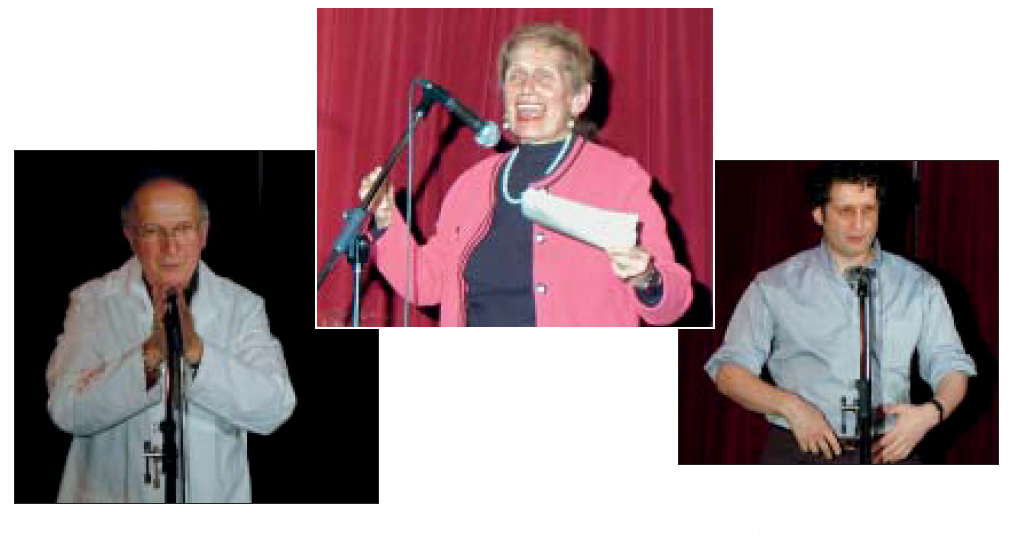
Stuart A. Kauffman of the Santa Fe Institute presents material from his forthcoming book, Investigations, at the Academy Conference, “Unity of Knowledge: The Convergence of Natural and Human Sciences.” On the far left is Joshua Lederberg, Nobel laureate and President Emeritus of the Rockefeller University. Seated in the middle is Edward O. Wilson of Harvard University.

It was inevitable that the extraordinary progress in molecular biology and neuroscience of the last few decades would rekindle philosophical debates about human nature and the limits of science. Scientists have been mapping the genetic, neuronal, endocrinal, and somatosensory correlates of human behavior, emotions, memory, language, and thinking, and scenarios abound for explaining our sexual, aesthetic, ethical, and religious predispositions in terms of the blind processes of Darwinian selection. The popular press offers a steady diet of stories and books telling us how much of what we do and think relates to our genes and brains.

The New York Academy of Sciences (the Academy) brought some of the world’s most respected scientists and scholars to New York City from June 23–25 for the conference Unity of Knowledge: The Convergence of Natural and Human Science to reflect on all this before an audience of nearly 400, from virtually every discipline and from as far away as Belgium, Chile, and Armenia.

The conference keynote was delivered by Edward O. Wilson of Harvard whose controversial book Consilience has done much to rekindle this debate. Updating decades of work in sociobiology with recent findings in behavioral genetics and cognitive neuroscience, Wilson expressed confidence that modern biological science would soon provide material evidence of sufficient scope and depth to reduce even the most esoteric of human cultural precepts to underlying deterministic mechanisms.

Unity: Perhaps Possible

On the opening panel with Wilson were Stuart Kauffman of the Santa Fe Institute and Joshua Lederberg, Academy Life Governor, and one of the founders of modern molecular biology. Providing a counterpoint to Wilson, Kauffman suggested that unity was perhaps possible but only through a non-reductionist approach, based upon a universe that spontaneously creates wholes from parts, and order from random interactions.

Presenting material from his forthcoming book Investigations, Kauffman proposed that complexity theory can provide adequate definitions of life and intelligence, ones that will hold up in the laboratory. But Lederberg reminded the audience that grand programs, reductionist or holist, are prone to running ahead of the evidence, and that while we have come a long way in modern biology, human culture appears to have left its natural context far behind, perhaps defying a purely natural interpretation.

The next three panels, organized by neuroendocrinologist Bruce McEwen of Rockefeller University, neurologist Antonio Damasio of the University of Iowa, and psychologist Jerome Kagan of Harvard, presented a remarkable array of research results that have driven biological science deep into domains usually left to traditional social sciences. There were striking examples of the genetic and neurobiological underpinnings of behavior and states of mind including stress, anxiety, and depression, and a particular emphasis on the important role of biologically-rooted emotion and affect in understanding higher-order mental activity including language and reason.

Looking 25 Years Ahead

The Kagan panel asked what social science might look like 25 years hence, given such powerful biological results, initiating a debate that continued for the rest of the conference. Kagan and others insisted that convergence, though real enough, must balance biological and non-biological perspectives, and incorporate the human environment. University of Chicago social scientist Richard Schweder went much further, suggesting that a “science-driven unity” of knowledge was just old, discredited genetic determinism in new guise, the same determinism that brought us social Darwinism, eugenics and other such excesses of past “scientism.”

The ensuing panels, “Science, Culture, Meaning, Values —a Dialogue,” organized by science historian Anne Harrington of Harvard, and “Science in the Liberal Arts Curriculum,” a roundtable chaired by Academy president Rodney Nichols, continued the discussion, drawing in the humanities, religion, education and a lively and engaged audience. And the debate will continue as the Academy plans further excursions into the broader ethical and philosophical implications of the progress of modern science.

Also read: Teaming Up to Advance Brain Research

Examining the Psychology of Olympic Athletes

A runner in the starting stance.

Olympic records in endurance events will continue to fall as the physiological limits of athletes still has not been reached.

Published August 1, 2000

By Jill Stolarik

Image courtesy of Drobot Dean via stock.adobe.com.

As the 2000 Olympic Games prepare to open in Sydney, sports fans around the world will continue to see new records being set-especially in endurance events such as swimming, cycling and long-distance running-predicts a scientist studying the physiological limits of athletic performance.

Writing in the September/October issue of The Sciences, University of Cambridge biochemist Guy C. Brown reports that world records in many events have not begun to taper off and, in fact, they seem to show steady improvement with each passing decade.

“If there is a physiological maximum to the running speed of a human being, one would expect that as athletes approached that limit, improvements would become both rarer and smaller,” Brown says. “Remarkably, neither of those trends has shown up, with world-record running times having declined almost linearly in the past hundred years.”

Rates of Improvement

Brown notes, for example, that the men’s record for the 1,500-meter run decreased from 4:06.2 in 1900 to 3:26.0 in 1998, at roughly ten-second intervals every quarter century. He also points out that although women have generally been unable to match men’s records, their world marks are improving faster than the men’s are.

“If the rates of improvement continue, women will outrun men in most events by the year 2035, and much sooner in endurance events such as the marathon,” Brown says. According to projections made by The Sciences of world-record times for selected events, women will surpass the men’s record in the 10,000-meter run by the year 2020.

In his article, Brown looks closely at the chain of events that begins with the intake of oxygen by the lungs and ends with the consumption of energy by the contracting muscles. He also takes a peek at the future, when advanced surgeries, implants and genetic engineering may play a role in athletic performance.

Also read: At Any Cost: Cheating, Integrity, and the Olympics

Devastating: In the Eye of the Beholder

Exploring some of the ethical issues around medical science, recent breakthroughs in genetic discovery, and the broader impacts on society.

Published July 1, 2000

By Allison C. de Cerreño

Image courtesy of ustas via stock.adobe.com.

It seems that not a day goes by without hearing about some new advance in the area of genetics. Whether it is mapping a new chromosome or finding a new marker for disease, the pace of discovery is sometimes awe-inspiring.

Recently, I was reading an article in a well-known science magazine about the mapping of Chromosome 21. The gist of the article was that with the recent mapping of this chromosome, much more can now be learned about Down syndrome. This is exciting news indeed. However, one phrase in particular struck me—the use of “devastating disease” to describe Down syndrome. These two words have tremendous implications for how we move ahead in this age of genetics, what we choose to study, and how we perceive ourselves and those around us.

Having worked with Down syndrome children and other children and adults with various developmental delays and special needs, I immediately questioned: “devastating” to whom? To the child with Down syndrome, to the parents of that child, or to society? Along those same lines, who determines when something is “devastating”? And finally, who determines how we treat something, or whether we treat something, that others consider “devastating”?

Questions Left Unasked

Such questions have long been asked by groups working with adults and children with special needs. I am reminded, for example, of the debate regarding the use of cochlear implants to help certain hearing-impaired children experience sounds. But all too often the questions are left unasked by policymakers, or by the scientists making the discoveries.

The answers to these seemingly simple questions are not always clear-cut. What is devastating to one person may not be to another. What is perceived as devastating by one culture may not be seen the same by another.

However, it is important to make sure these questions are asked as we move forward making discoveries about our genetic makeup. Indeed, as more is learned and we are able to effect changes in people as a result, asking such questions will be critical. The way they are answered will prove even more so, for it will say much about how we perceive humanity.

Also read: Of Stereotypes and Scientists: STEM in Popular Media

Exploring the State and Local Roles in Education

A teacher at a chalkboard with math equations.

From government support to tuition inflation, here’s breakdown of the different education funding sources and their impact on the tri-state region.

Published July 1, 2000

By Frank B. Hicks, Ph.D. and Susan U. Raymond, Ph.D.

Image courtesy of Drazen via stock.adobe.com.

Government Support

TREND: A Significant Economic Sector

Based on employment, education is the single largest functional section of government in the region, employing 832,000 workers in 1998. Together, the state and local governments of the Tri-State region spend some $53 billion (6% of the gross regional product) on public education each year.

UPSHOT: Not Short of Resources

The regional pattern is similar to those in states nationwide. So the region’s schools do not seem to suffer from a lack of manpower or funding (see below). If there are improvements to be made, they will most likely need to focus not on increasing resources, but improving the way they are used and distributed.

Public K-12 Spending

TREND: More and More Money…

State and local governments in the region have nearly quadrupled their constant dollar per-pupil resource commitments to public elementary and secondary education in the last four decades. Indeed, New York has quintupled these resources and now spends twice as much per public school student as California.

UPSHOT: Reflects Rising Public Commitment

While debate over the content of the curriculum and the quality of the output persists, there is little question that education’s importance as a community value has become central to public decision making. A recent survey found education to be the #1 voter concern for the upcoming presidential election.

Higher Education

TREND: State Budgets Compare Poorly to Nation

Compared to the national average, the Tri-State region commits only a small fraction of state and local budget resources to higher education. New York’s 4.5% commitment gives it the dubious honor of ranking last in the nation on this measure. But perhaps there is comfort in community: Connecticut ranks 47th and New Jersey 45th.

UPSHOT: Questions About Priorities

If where you put your money reflects what you hold dear, higher education spending may raise questions about state priorities in an increasingly technology-driven economy. All three states are also falling below the national average on state per capita spending on higher education; in Connecticut’s case, nearly 30% below.

Tuition And Debt Are on The Move (Upward, Of Course)

Tuition inflation, like grade inflation, is no secret. Between 1995 and 1998, the total cost of tuition, room, and board to attend a public college in the Tri-State region rose about 14-19% across the three states. That’s roughly in line with the national average rise of 14%. How are students coping? Analysis of the Stafford federal student loan program indicates that the debt burden of undergraduates in the nation increased by 19% between 1995 and 1999.

Community college students saw an increase of 33%, and most striking, graduate students’ average debt more than doubled. The real affordability story is in the repayment burden. A good rule of thumb is that loan payments shouldn’t be more than 8% of monthly earnings. Today’s buoyant economy seems to be keeping debts in line, although graduate student debt is starting to push precarious heights.

Also read: Community College Output Keeps Pace in Tech Fields

Source

  • U.S. Census Bureau, “Statistical Abstract of the United States: 1999”; National Center for Education Statistics, “Digest of Education Statistics 1999.”

Community College Output Keeps Pace in Tech Fields

A shot of an empty classroom.

From K-12 education to community colleges to adult job training, all of these areas contribute to the workforce and economic wellbeing of the region.

Published July 1, 2000

By Frank B. Hicks, Ph.D. and Susan U. Raymond, Ph.D.

Image courtesy of .shock via stock.adobe.com.

Dot-com entrepreneurs may be today’s darlings of the trading floor, but a technology-intense economy rests on a much broader base of workers. Of particular, but often unrecognized, importance in educating these workers are the region’s 214 community colleges, serving about 225,000 full-time students each year.

From the point of view of producing associate degree employees with technical skills, the challenge set before community colleges has been significant: Between 1990 and 1997, employment in the computer and data processing services industry grew by 57% in the Tri-State region, and it is expected to lead growth in the coming decade.

But community colleges have managed to keep pace. Over the same 1990-97 period, the number of students earning associate degrees in computer and information sciences each year in the region nearly doubled. The Tri-State region awards more associate degrees in this field than California, which has a significantly larger computer services industry.

In engineering and related fields, the number of degrees since 1993 is declining slightly. However, this is also a reflection of the regional job market. The engineering and architectural services industry, one of the main employers for engineering technicians, has also been shrinking.

Federal Money for Adult Job Training

Federal resources for adult job training available to the region have nearly doubled since 1993. In addition to $311 million in Job Training Partnership Act (JTPA) funding, the region receives about $125 million each year in Department of Education funding for vocational and adult education. Of course, the key to the effectiveness of Federal funds is their use. The new federal Workforce Investment Act emphasizes the need for “one-stop career centers.” Connecticut and New Jersey have made considerable strides in establishing such centers, but New York is still finding its footing.

Regional Teacher Training and Pay Compares Well with U.S.

One of the keys to quality education is quality teaching. Although much has been written about the sad state of some of the Tri-State region’s K-12 schools, the region’s teaching corps compares well with teachers in other technology-intense states. All three states score above the national average (which, admittedly, was a D+!) in the national teacher quality report developed and issued by the Thomas B. Fordham Foundation. New York State, with a B-, tied for fifth place nationally.

Considering training of science and math teachers, the three states outperform the nation and many of their economic competitors. Between 80% and 90% of the region’s science teachers in grades 7-12 hold an academic major in science, compared to 70% nationally and only 60% in California. In math, New Jersey lags the nation, but over 80% of math teachers in New York and Connecticut hold majors in math. This compares to 70% nationally and only 50% in California.

While the region’s science and math teachers stand up well to other states, there is still room for improvement compared to other subjects. By the same measure of having a major in the field, the region’s social studies, English, and foreign language teachers are, on average, better trained than their math and science colleagues.

Regionally Competitive

Teacher pay is also relatively competitive in the region. Connecticut, New York, and New Jersey are national leaders in teacher salary, ranking 1-3-4 (Alaska holds second place). Even when adjusted for cost of living differences between the states, all three still remain in the top five.

Regional teacher salaries are closer to the average pay of other professionals holding similar degrees than they are in the rest of the nation as well. Salaries are far more market-friendly than in Texas, for example, where the teaching/non-teaching gap is more than $20,000 per year. Indeed, the gap in Connecticut is only about $7,000.

But over time, the salary gaps worsen. Upward salary potential outside the teaching profession rapidly overtakes wage increases that teachers receive. Nationally, at ages 22-28 the average salary gap for all teachers is about $7,000. By ages 44-50 the gap has tripled, with teachers earning $24,000 per year less than their comparable counterparts. In the labor market, it appears that experience tends to pay more elsewhere.

Also read: Exploring the State and Local Roles in Education

Sources

  • National Center for Education Statistics, Integrated Postsecondary Education Data System (IPEDS); Connecticut, New Jersey, and New York Departments of Labor
  • Council of Chief State School Officers, “State Indicators of Science and Mathematics Education 1999”; Education Week, “Quality Counts 2000.”

Of Stereotypes and Scientists: STEM in Popular Media

Exploring the ways in which scientists are depicted, often in less-than-flattering ways, in movies. But is this just a reflection of the public’s conflicting attitudes toward scientists?

Published May 1, 2000

By Allison L.C. de Cerreño

Genetically modified food is a hot topic today. Advocates point to its tremendous potential, while detractors highlight concerns about possible environmental and health effects. At times, debates degenerate to name-calling, with some critics referring to the crops and their resulting products as “Frankenfoods.”

Mulling this over recently after reading still another article about “Frankenfoods,” I thought about how such a term paints a stereotypical picture of the “mad scientist” in his or her laboratory, reaching beyond what is reasonable without any regard for the potential impact on humanity. This, unfortunately, is not an uncommon portrayal. There are numerous examples of negative portrayals of scientists in popular culture.

Take, for example, motion pictures. With only few exceptions (most notably, Indiana Jones), scientists are characterized at best as bumbling geeks as in Flubber or Back to the Future. Lovable characters, to be sure, but eccentric to say the least. At other times, they are depicted as playing god – as in Jurassic Park. And last but not least is the portrayal of scientists as downright conniving and evil, as in The Island of Dr. Moreau or various James Bond movies.

The Public’s Conflicting Attitudes Toward Scientists

I am not the first to ponder these stereotypes. In an article in the November/December 1998 issue of The Sciences, M.Z. Ribalow explains that the filmmakers’ depictions are based on the public’s conflicting attitudes toward scientists. “We want what they have, but fear what they will do with it,” he observes. “Often, we admire their intellectual curiosity, but doubt whether they understand the full implications of their knowledge. We need them, but mistrust both them and our need.”

The way scientists as a group communicate—or fail to communicate—with the public is partly responsible for this mistrust and fear, and that can be changed over time. However, there is an underlying issue, exemplified by the debates over genetically modified foods, that must be addressed as communication is improved.

Scientists push the frontiers of current knowledge by challenging existing theory. Sometimes entire belief systems may be uprooted as a result of scientific findings. In other words, scientists challenge us to question who we are and the way we understand the world–– something not every society welcomes. Such reluctance to face the implications of scientific findings cannot be minimized or ignored. Better communication alone will not resolve the conflicting public attitudes toward scientists unless that communication is based on mutual understanding—the public better understanding scientists, and scientists better understanding society.

‘The Sciences’ archive is accessible to Academy members. Not a member of our impactful network? Sign up today.

Adnan Waly: A Life and Career in Physics

From high-voltage mistakes to a visit with the Gestapo, physicist Adnan Waly talks about a life and career in science.

Published May 1, 2000

By Merle Spiegel

Image courtesy of WP_7824 via stock.adobe.com.

The New York Academy of Sciences’ (the Academy’s) most valuable asset is the knowledge and experience of its members. Ninety-year-old Adnan Waly — an Academy member for 49 years, and an active member of its Lyceum Society — has watched and been a part of the unfolding of the “century of physics.”

During his long career, he had personal contact with almost all the eminent scientists working in or passing through Germany in the 1930s and 1940s. Waly shared his memories in an extensive series of interviews with Professor Martin Pope. Evelyn Samuel transcribed the entire series, which is available at the Niels Bohr Library of the American Institute of Physics.

Following are some selected highlights:

High-Voltage Mistakes

“We had a one-million-volt pulse generator, but if you activated this, all the instruments in the institute would break down. So the whole room was coated in aluminum in order to protect the other instruments, and I was standing beautifully on aluminum and adjusting the spark gaps. In order to make photographic exposures of some discharges, the control table was separated by a dark curtain so the one on the controls could not see the generator.

“Brasch [Arno] was at the controls, and when I had just adjusted the last spark he misunderstood something I said and switched the thing on. The current entered my arm. I had an insulating rod in my hand, and it broke into a million pieces. The current went through my body and out through my feet. I got an incredible cramp in my lungs, and my lungs collapsed totally.

“No air. I collapsed. The soles of my feet had big blisters where the current went out, and my arm was paralyzed for three days. Brasch came running over and dragged me to a nice comfortable chair. Then he did something else – he lost his head. He went into his bag – I’ll never forget this – and took out a piece of cake, which he knew I liked. Then he stuffed this in my mouth. I almost suffocated. I’ll never forget that. He almost killed me a second time.”

A Visit with the Gestapo

“When Hitler came to power, Max von Laue tried to recommend Jewish scientists to universities in the States, but he could not send letters as the mail was opened. I could travel because I had an Egyptian passport. My wife — at that time, my girlfriend — was Jewish. I went to the Egyptian embassy and said, ‘I’m an Egyptian.’ I didn’t know anything about Egypt — my father [who was from Egypt] had died when I was two years old. I pestered them until I got an Egyptian passport for myself and my wife.

“So I had an Egyptian passport and could travel. I traveled once to Egypt and twice to Holland to deliver the letters of von Laue. The Gestapo then asked me to come to their headquarters. It is very unpleasant to be summoned to Gestapo headquarters. A barred iron door closed behind me, and I was quizzed by two investigators for quite a while about why I traveled so much.

“At that time I had a very good imagination and an excellent memory. I concocted all sorts of stories, which they tried to pierce and defuse. After a few hours they bought my story. I had posted a friend in a car and told him to go to the Egyptian Consulate and tell them what happened if I didn’t return in five hours. But I was released.”

Art Meets Science at the Academy

“I was at The New York Academy of Sciences attending a lecture of the Nuclear Section. I found a seat in an empty row because not too many people were interested in nuclear physics at the time. The door opened, and in came a gentleman flanked by two gorgeous women. It was Salvadore Dali with his moustache and his cane. He sat in my row with the ladies, and he put his cane up, two hands on the cane and his chin resting on it, as was his habit. He looked at the pictures that were presented.

“One of the pictures was of a cloud chamber — a photograph of particles moving apart from a center. Some time afterwards I saw a television program where Dali was interviewed, and his latest painting was exactly what he had seen at the Academy, with tracks coming out from the center. ‘You don’t know what this is?’ Dali said to the interviewer. ‘These are pimmesons.’ The lecture had been on the π meson.”

Also read: The Academy’s Lyceum Society: A “Think Tank”