A New Case for More Equity in STEM Outcomes

A shot of students clustered together at a graduation ceremony, wearing graduation caps and gowns.

Trends and data on graduates from traditionally underrepresented groups, the “digital divide,” college preparation, and foreign STEM investment.

Published March 1, 2000

By Frank B. Hicks, PhD, and Susan U. Raymond, PhD

Image courtesy of methaphum via stock.adobe.com.

Graduates from Traditionally Underrepresented Groups

TREND: More Grad Students in Science and Engineering from Traditionally Underrepresented Groups

Nationally and regionally, Blacks and Hispanics (who make up about one fifth of the national and one quarter of the regional population) have comprised a growing share of the students pursuing advanced degrees in science and engineering. In the region, the overall fraction rose from 5.8% in 1982 to 12.3% in 1998.

UPSHOT: Progress, But Much Room for Improvement

More students mean more degrees—4.6% of the region’s students receiving science and engineering (S&E) Ph.D.s in 1997 were Blacks and Hispanics, compared to only 2.3% twenty years earlier. While the region as a whole runs on a par with the nation in its share of graduate students, it trails in its annual share of S&E Ph.D. recipients.

The “Digital Divide”

TREND: Lower Computer Exposure

Nationally, about half of White households, but only a quarter of Black and Hispanic households, own at least one computer. And there is no simple explanation: income and education level are factors, but not the only ones. In the Tri-State region, New Jersey leads in narrowing the gap.

UPSHOT: Missing Which Skills?

Does having a home computer build academic skills or just Pac-Man scores? Access to computers is certainly important for acquiring the skills necessary to build a well-prepared workforce, but with computers increasingly available in libraries, schools, and activity centers, the importance of home ownership is unclear.

The Pre-College Years

TREND: Gaps in Math Skills

White children in the fourth grade are about twice as likely as their Black and Hispanic peers to have at least basic math skills, according to national mathematics testing. The gaps typically run above 40 percentage points both nationally and in the region, and the disparity tends to grow as the children get older.

UPSHOT: A Missing Foundation

Unlike the digital divide data, there is little question that lower math scores imply missing skills. The gaps at grade four continue, rippling on into grades eight and twelve. While underrepresented students are making progress at advanced levels (like in S&E graduate school), work needs to be done to ensure that all students leave high school with at least basic skills.

Foreign Investment Shows Strong International Ties in the Tri-State Region
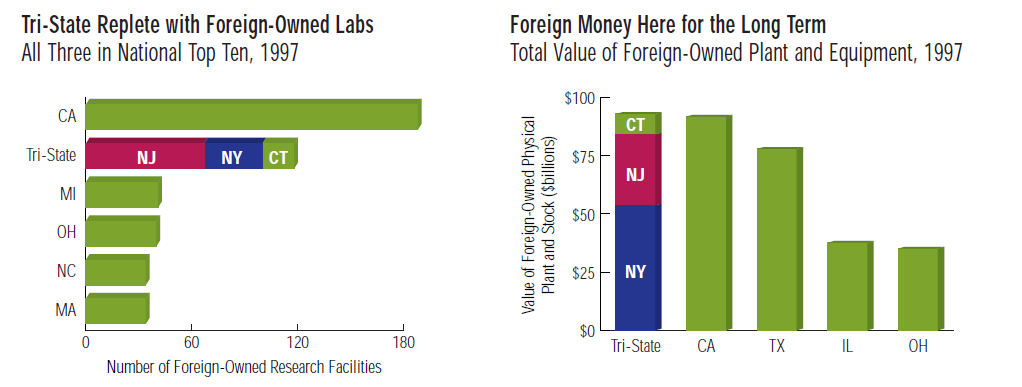
The Tri-State region is home to 118 stand-alone research facilities owned by foreign parent companies. California, the region’s closest competition, leads the entire nation with 188 facilities (about a quarter of the U.S. total), but New Jersey clinches second with its 67 facilities, New York (33 facilities) claims seventh, and Connecticut (18 facilities) is tenth nationally.

New Jersey’s balanced success draws nearly equally from its electronics, instrumentation, biotech, and chemical industries. When it comes to the total value of plant, property, and equipment of all foreign-owned affiliates (including non-technical businesses), the region tops even California, with nearly $93 billion of plants and equipment in place. This wealth of physical plant is the result of long and fruitful international cooperation within the region.

Also read: Science and Engineering Immigrants Advance Region’s Economics

Sources

  • National Science Foundation WebCASPAR Database System.
  • U.S. Census Bureau, Current Population Survey, December 1998 Supplement.
  • National Center for Education Statistics, NAEP 1996 Mathematics Report Card for the Nation and States.
  • “Globalizing Industrial Research and Development,” Office of Technology Policy, U.S. Department of Commerce, 1999; International Accounts Data, Bureau of Economic Analysis, U.S. Department of Commerce.
From the Front Lines of the Japanese Scientific World

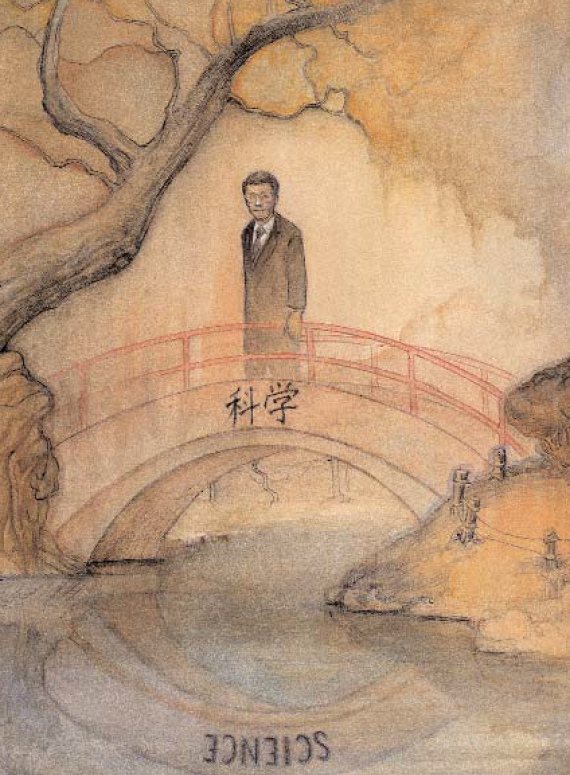
A hand-drawn illustration of a man walking over a bridge in Japan.

A scientific researcher, writer, and translator, Academy member Toshiyuki Esaki plays a critical role in promoting and advancing science in service of the public good.

Published March 1, 2000

By Fred Moreno, Anne de León, and Jennifer Tang

Toshiyuki Esaki, a member of The New York Academy of Sciences (the Academy), doesn’t have much time for leisure travel, having been only to London (once) and Honolulu (twice) — with the purpose of each trip being “to participate in scientific meetings,” he says.

But even without leaving his native Japan, Esaki says he keeps informed about the latest scientific developments in his field by logging into the Academy’s online meetings, as well as reading the Annals, Academy Update, and The Sciences. A researcher who specializes in computer-aided design of bioactive molecules, Esaki also teaches the elementary course on information technology at Chukyo University in Nagoya. He also works as an abstractor of scientific journals and translates academic books into Japanese.

Eskai grew up in Nagoya and studied pharmaceutical sciences at Kyoto University. He says his interest in drug action at the electronic level was sparked by a lecture on quantum mechanics by one of the collaborators of Prof. Hideki Yukawa, the first Nobel Laureate in Japan. His current project is to develop a computer system to predict biological activities of molecules on the basis of their 3D chemical structures. “I am particularly interested in the theoretical elucidation of drug action at the sub-molecular level,” he says.

Raising his Consciousness as a Scientist

Esaki joined the Academy in 1994. “When I received the invitation to become a member of the Academy, I felt it was an honor to join this advanced scientific society,” he says.

He prizes the Annals, especially its series of pharmacological titles. He finds the online information at the Academy web site invaluable and also enjoys communicating with other scientists via e-mail. “I have used my membership as a source for research themes and topics in my work,” he notes, adding that Academy ideas and activities are “the compass” for his work and “raise my consciousness as a scientist.”

Esaki has published books on molecular modeling and has a forthcoming book on chemical pharmacology. He has worked for over twenty years as a translator. This year, Esaki received the Longtime Cooperator Award from Japan’s Science and Technology Corporation in recognition of his work translating reports on medicinal chemistry, pharmaceutical sciences and pharmacology that had been published in the U.S. and Western Europe.

“I feel my work in translation is the best way I can contribute to the front lines of the Japanese scientific world,” he says.

Also read: A Global Giver Lends Support from Japan

A New Ethical Framework to Urban Archeology

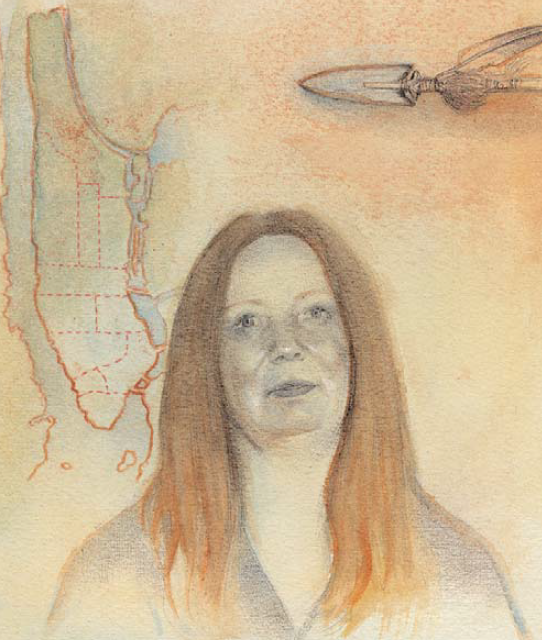
A hand-drawn illustration of a woman with a map of lower Manhattan and an arrowhead.

Anthropologist Anne-Marie Cantwell explores the ethical dilemmas that those in her field face and provides guidance for acknowledging past injustices.

Published March 1, 2000

By Fred Moreno, Anne de León, and Jennifer Tang

When you think of archaeology, you don’t normally think of New York City.

But Anne-Marie Cantwell, a professor at Rutgers University-Newark, exemplifies that combination to a “T.” She’s one of America’s most prominent archaeologists and New York City is one of her main areas of fieldwork. But her research interests extend beyond urban archaeology to include Hopewellian societies, complex hunter-gatherers, mortuary systems, trade networks, the anthropology of death, and contact between Native American and European societies.

In her work, Cantwell has underscored the ethical dilemmas faced by anthropologists as their relationship to the indigenous peoples they study has undergone changes reflecting pre- and post-colonialist attitudes, the emergence of civil and human rights and the “modern social identities” created by globalization. It is these dilemmas that prompted a conference that she helped organize at The New York Academy of Sciences (the Academy) and the Annals volume she co-edited (with Eva Friedlander and Madelaine Tramm) on its deliberations, Ethics in Anthropology.

Topics of Concern for Anthropologists

The Academy volume followed shortly after the release of a controversial book on the Amazon’s Yanomami Indians, which raised accusations and allegations of misconduct among researchers.

“Many of the ethical issues highlighted by the Yanomami uproar have long been topics of concern for anthropologists,” she says. “This concern is reflected in ongoing discussions at regional and national meetings, codes of ethics, dialogues in professional journals, newsletters, and in innumerable collegial conversations around the world.”

Professor Cantwell’s essay in the Annals volume focuses on the repatriation of human remains to indigenous peoples in Australia and the U.S. and the role anthropologists play in the construction of past, present, and future identities for contemporary indigenous peoples. She believes that anthropologists are “increasingly involved in the witting and unwitting reproduction of indigenous social orders,” due to the combination of heritage/cultural resource management legislation, government regulations, and changing professional ethics.

A vocal supporter of human rights for indigenous peoples, Cantwell suggests the possibility of a new kind of future “if archaeologists work collaboratively with indigenous peoples to acknowledge past injustices and common ground.”

Making Science More Accessible to the Public

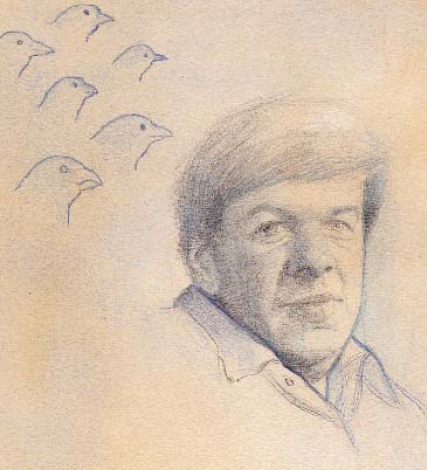
A hand-drawn illustration of a man with birds.

One of the most popular writers and lecturers on scientific topics, Stephen Jay Gould aims to make science more accessible to the public.

Published March 1, 2000

By Fred Moreno, Anne de León, and Jennifer Tang

When he was five years old, Stephen Jay Gould took the short trip from Queens to the American Museum of Natural History in Manhattan with his father. That visit sparked an interest in paleontology that blossomed throughout his boyhood and teenage years in New York City’s public schools.

Today, some 50-plus years later, Gould has become one of the most popular writers and lecturers on scientific topics. His 20 books and hundreds of essays, reviews, and articles have contributed immeasurably to building bridges between science and society. Since 1994, his essays, “On Common Ground,” have appeared regularly in The New York Academy of Sciences’ (the Academy’s) magazine, The Sciences, helping fulfill one of the Academy’s prime missions: advancing the understanding of science and technology. His essays in The Sciences reflect Gould’s view of scientific writing as a critical, rather than purely instructional or educational, genre.

“I believe my kind of writing is part of a humanistic tradition, sort of what Galileo did when he wrote his books as Italian dialogues and not as Latin treatises,” he says. “Even the conceptually most complex material can be written for general audiences without dumbing it down.”

Inspiring Critical Debate

But Gould is much more than just a popular author of accessible essays and books. A productive scholar (currently on the faculty at Harvard), his ideas on the theory of evolution and the interpretation of fossil evidence have inspired critical debates among biological and geological scientists. His insights into the importance of statistical reasoning and the meaning of variation are also significant and have more personal connotations: they were derived as a long-term survivor of abdominal mesothelioma, a rare form of cancer that was usually fatal at the time of his diagnosis in 1982.

“My statistical training taught me that the ‘median mortality of eight months’ for mesothelioma was not necessarily a prediction about me,” he says. “I decided that I was going to be in the half that lives longer.”

Gould has said that one of his goals is to make people “less scared” of science. His essays in The Sciences are playing a role in doing just that.

The Immeasurable Value of Advancing Science

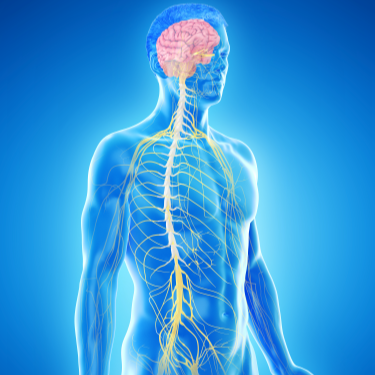
A colorful diagram depicting the human brain and nervous system.

For members like Carolyn Foster, The New York Academy of Sciences offers a “neutral ground” where academics and industrial scientists can come together to advance a common goal.

Published March 1, 2000

By Fred Moreno, Anne de León, and Jennifer Tang

Nearly 30 years ago, Carolyn Foster attended a mini-symposium sponsored by The New York Academy of Sciences (the Academy) that had a profound effect on her life. “It made me go back to study biochemical pharmacology”—a career path that had not been part of her plans.

Now a senior principal scientist in the central nervous system and cardiovascular pharmacology division at the Schering-Plough Institute, Foster’s participation in Academy activities has continued unabated. Indeed, in part through Foster’s leadership as the president of the Biochemical Pharmacology Discussion Group, the organizing arm of the Academy’s Biochemistry Section, the discussion group has evolved into an international forum that is about to celebrate its 35th anniversary.

“The Academy provides a unique ‘neutral ground’ where the drug industry and academe can meet,” explains Foster, a collegial place to exchange notes in cutting-edge research in the continuing effort to develop therapies for such diseases as Alzheimer’s. “It’s all about education and opening up communication.”

A Value Beyond Calculation

Foster has vivid memories of particularly instructive meetings, including one at which Parkinson’s patients shared their experiences and observations and raised good questions. The value of this exchange to academics and industrial scientists, she recalls, was beyond calculation.

When Foster is not immersed in her scientific research or her activities at the Academy (which includes service on its Conference Committee), she is involved in science education efforts, such as the Kean College Women in Science Technology project.

Her tireless advancement of the work of the Academy was recognized recently. She was one of 15 scientists named an Academy Fellow, honored for “a lifetime of scientific achievement and service.”

Also read: A New Model for a Career in Industry

The Catalyst to the Revolution in Life Sciences

A shot of a lecture hall full of attendees.

From the physical and life sciences to tackling diseases and discovering the root of health disparities, the Academy’s programming is diverse and impactful.

Published January 1, 2000

By Merle Spiegel

Image courtesy of Souvik via stock.adobe.com.

Just as research of the past century gave the world remarkable advances in many areas of science and engineering, the future promises even more stunning progress. The life sciences exemplify the prospects. It is not just a glib headline to claim that research will unravel the function of genes. Yet we remain uneasy about lingering health inequalities and resurgent diseases. The New York Academy of Sciences (the Academy) excels at gathering diverse expertise to solve stubborn problems. Does music provide a window into understanding the brain? How are seemingly separate instruments such as psychology, physics, biology, and the social sciences coming together as an orchestra?

These illustrate questions the Academy asks through cutting-edge, multidisciplinary conferences. Our organization combines the insights of science with the drive to tackle emerging questions that affect our daily lives.

Linking the Physical and the Life Sciences

When biologists began to collaborate with chemists and physicists on techniques to understand the structure and function of molecules, the field of structural biology was born. The Academy was early to recognize the value of cross-fertilization between the physical and life sciences, starting one of the first Discussion Groups that brought together scientists from disparate fields to focus their expertise on the structural underpinnings of living systems. This outstanding group – comprising representatives of industry and academe became so large that it outgrew the Academy’s facility and now meets regularly at The Rockefeller University. With the Academy’s help, it is a renowned component of the research culture of New York City.

Tackling Disease

Understanding disease has historically been one of the goals of biomedical science and an area where science and society share an imperative. The Academy provides strong leadership through conferences and publications that gather and disseminate the scientific community’s most recent advances. The first scientific conference to focus on AIDS, for example, was held by the Academy in 1983. In 1999, we sponsored a conference in Montreal on pediatric AIDS to probe the transmission factors and known treatments for the disease and to chart clinical trials and research targets.

Studying the Roots of Health Disparities

How does social position affect health? Is there a scientific explanation for the observation that “poverty is the worst toxin”? A 1999 Academy conference on “Socioeconomic Status and Health in Industrialized Nations” examined the effects of social ordering on health in humans and animals. “Social class…is one of the most powerful predictors of health, more powerful than genetics, exposure to carcinogens, even smoking,” wrote The New York Times in its coverage of this seminal conference.

Learn more about the Academy’s conferences and events.