Developing a New App to Empower Urban Farmers

Winners of the Junior Academy Innovation Challenge Spring 2023 “Urban Gardens”

Published July 1, 2023

By Nicole Pope

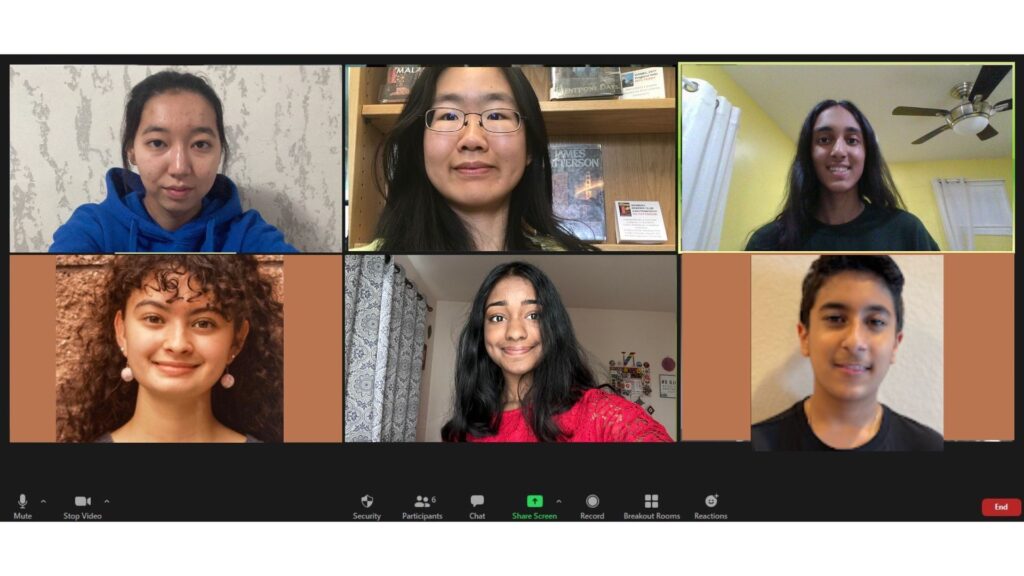
Team members: Tianze H. (Team Lead) (United States), Tianlai H. (United States), Radwa A. (Egypt)

Mentor: Olusola Ladokun (Nigeria)

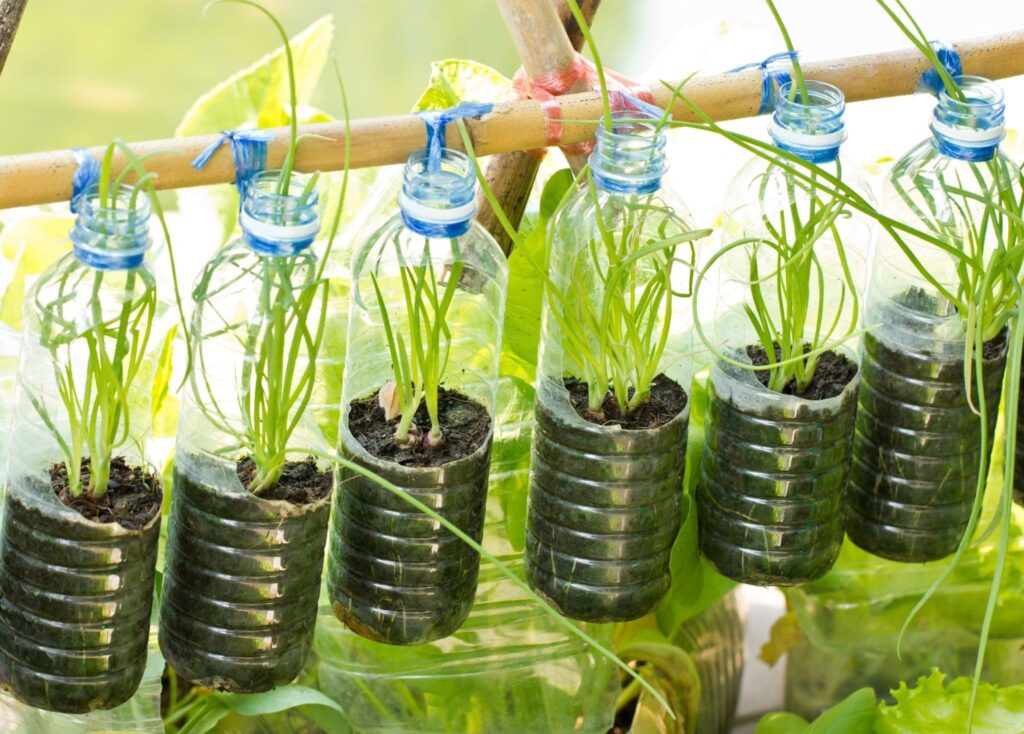
Urban gardening can be an effective way to provide fresh and healthy food at a low cost, particularly in parts of the world where food security remains elusive. But it involves many variables– climate, soil, location, sun exposure, type of crop– and urban residents often need education and guidance in order to be successful gardeners right from the start.

Three students — Tianze H. (United States, Team Lead), Tianlai H. (United States), Radwa A. (Egypt) — worked under the guidance of their mentor, Olusola Ladokun (Nigeria) to address this knowledge gap, and ultimately won the Spring 2023 Junior Academy Innovation Challenge with their project, “Family Farming: The Ultimate Planting Companion”. The project aims to promote urban gardening around the world by providing useful tips to city dwellers that enables them to supplement their diet with home grown crops.

“After long discussions we finally settled on the current idea,” says Tianlai. “Personally, I contributed creative ideas for our projects, like using deep learning algorithms in our application. I also worked with my teammates on the slides, adding things that they might have missed.” To identify what information would-be gardeners might need, the team conducted a small survey before designing an eco-friendly app called Family Farmers. The app contains a scanner that taps into existing plant and weather databases in order to identify the best potential garden locations based on available amount of space and local climate. The app also provides information about farming methods. It also shows how common household items can help reduce gardening costs.

Adding a Fun Factor to Urban Gardening

Family Farmers is designed to be the ultimate tool for aspiring gardeners, with an AI search engine that can be used to find suitable plants, an option to share progress and tips with a community of like-minded garden enthusiasts, and a calendar to remind users when to water and take care of their plants. The students also added an element of entertainment to their app, with plant-related games that provide fun facts about gardening.

Developing this innovative solution required hard work. The small but mighty team size (just three people) did not deter the committed students– in fact, it helped with the difficult task of coordinating online meetings across time zones.

Strengthening Relationships

“The size of the group does not matter. In fact, it might have even helped everyone strengthen our relationships,” says Team Lead Tianze.

“We were also able to help each other and make up for what we may not be good at. The teammates were willing to cooperate and overcome the time differences that we have,” says Tianze. “We were also able to help each other and make up for what we may not be good at. Helping to solve a real-world problem was a great experience.”

Team member Radwa enjoyed researching the issues surrounding gardening in an urban environment and collaborating with international students. “This was my first time in a program that involves meeting students from different nationalities and working together on new ideas,” he said. “This is a wonderful thing and I’m very glad to have gone through this experience, meeting new friends and learning many things in a field that I’m passionate about. I hope to do something that is related to it one day.”


The Junior Academy was supported by the Stevens Initiative, which is sponsored by the U.S. Department of State, with funding provided by the U.S. Government, and is administered by the Aspen Institute.

Collaboration is Key to Solving Global Issues

The New York Academy of Sciences works in partnership with New York City high schools to promote interest in STEM subjects among students. Many high school students from New York have taken part in Junior Academy challenges, which enable them to team up with peers from various countries around the world to devise innovative solutions to real-life issues.

Published June 29, 2023

By Nicole Pope

We interviewed Angela, and a group of students from around NYC, who recently participated in the Junior Academy about their experiences.

Newfound Confidence and a Broader Understanding of Science

When we catch up with Angela, she has just embarked on her second Junior Academy challenge. Her team is still at the beginning of the three-month process to find a solution. The high school student is excited about making new connections and learning about a new topic. “I’m doing the public health and climate change challenge,” Angela says. “Some of my current team members are from Egypt and although we still have a language barrier, we’ve been communicating really well.”

This time, she is familiar with the process and what it entails. Angela first signed up for a Junior Academy challenge (designed by the Royal Academy of Engineering in Sweden) on the Restoration of Aquatic Ecosystems in 2021, encouraged by her older sister who had taken part in an earlier competition. For their project, Angela’s team focused on tackling overgrown algae in the Yellow Sea.

When she enrolled, Angela wasn’t sure how much she would benefit from working online with other students. The experience, it turns out, “far exceeded my expectations,” she says. “It’s been amazing.”

Global Collaboration

Angela enjoyed introducing herself to her teammates and getting to know them better through their regular interactions over the Launchpad platform. “This program was one of my first experiences meeting people from different U.S. states. I’ve really grown my network. I was able to bond with people from different places, different schools,” she says. “We still talk to each other. It’s cool. I can say I have a friend in Texas.”

Working collaboratively with her teammates and mentor has increased Angela’s self-confidence. “I used to be more on the quiet side, sometimes afraid of sharing because I was afraid I would be wrong,” she explains. “But everyone makes mistakes and we work off them, and it helps build the final product in the project. Being able to answer questions with the mistakes we made in the past has been great.”

Angela also credits her teammates for encouraging her to express her views. “At the start, seeing everyone so open was a shock for me. Everyone was sharing their ideas,” she explains. Initially, she was more reticent. “Over time, my teammates understood and they would bring me into the conversation and ask, ‘Do you have something to add?’”

Empowering Shy Participants

Enabling shy participants and giving them space to be heard in a collective environment is a lesson from the challenge that Angela is now applying to other areas of her life.

Her communication skills have improved. In class, she no longer hesitates to speak up. “Whenever I raise my hand, I have more confidence in what I’m going to say – even if it comes out wrong and you cause some laughter in class. I’m learning, they’re learning.”

The Junior Academy has changed Angela’s understanding of science and she has a broader understanding of the arduous but exhilarating path to scientific progress. “When I was younger, I thought research meant you just google something and it’s over. But now I see everything we do is shaped by a very long process,” she says. “Even if you find a solution, you can continue and share it with the scientific community. This has really shaped me as a person.”

Applying What They Learn

When Angela recently attended a Model U.N. conference on climate change, she was proud to discuss her work and her team’s achievements on the aquatic ecosystems project. With the knowledge she had acquired, she was even able to provide input for the conference resolution.

Angela loves the student-led, hands-on collaboration with her teammates (very different from the science classes at school, she points out) but also highlights the contribution of the team mentors, who guide them through the project.

“I think my favorite part, aside from collaborating with people, was the final product: creating something. One of my teammates was able to create a 3D model on an app on the computer. Some of us didn’t know how to do that,” she says. “This is something I want to continue to work on and develop my skills.”

Prior to joining the Junior Academy, Angela was mainly interested in computer science and political science. “Working with mentors has opened me to possibilities that are out there – so many majors I didn’t know of when I started, in 10th grade,” she says.

The Junior Academy has revealed new areas of interest for Angela. “Being able to do research in different fields, such as biology and biomedical, has really changed what I want to do, and now I’m focusing more on working toward that field.” Whatever subject of study she eventually chooses, Angela hopes to have a transformative impact and to contribute to the solution of pressing issues. “I hope I can do that and apply in the future what I learn now and in college.”

Student Interviewed

  • Angela, High School for Dual Language and Asian Studies
    Challenge: Restoration of Aquatic Ecosystems (Fall 2021)
    Project: Prevention of Algae

Interviews from Junior Academy Participants from New York City Schools

What did you learn from engaging with students from around the world?

Joseph: Coming from New York, I was already exposed to a multitude of cultures and perspectives, but my past experiences were nowhere near the scope of this project. I felt like the country that my team’s project focused on, Egypt, was gradually becoming a part of me.  Conversing with Bashar and Noor, my [Egyptian] teammates, has taught me the importance of open mindedness– from coordinating early morning meetings across time zones to listening intently to their findings as they knew their community on a much deeper level.

Courtney: This was my first time working on a Junior Academy challenge. I had so much fun and I really enjoyed being able to bring in my coding skills to contribute to the team. It was also really insightful to be able to work with people of different backgrounds because it gave me new perspectives and ideas I never would have thought of alone.

Demetra: My team’s varied perspectives were needed in order to come up with our solution. I do not think we would have had the same process or results if we all lived in the same place and had the same experiences.

Jocelyn: A significant part of this challenge that made it enjoyable was working in a group. If I had worked alone, I wouldn’t have been able to come up with some of the solutions and research that we came up with. We were able to work harmoniously as a team. Because everyone had different skill sets, we were able to split up the work to best complement each of our background knowledge and experiences. We also helped each other out whenever needed, allowing our work to be done thoroughly and effectively.

Ethan: I was surprised that I could collaborate with students around the world to brainstorm and develop solutions for contemporary problems. Initially, I expected this process to be difficult since I only had a few skills. However, working collaboratively in a group made the process significantly easier and approachable since my group members were extremely talented and diligent.

What have you learned about science and how it works? What skills have you gained?

Jocelyn: Throughout this challenge, I’ve not only improved in my collaborative and communication skills, but I’ve also grown as a researcher and creative thinker. The challenge definitely prompted me to think outside of the box to come up with my own creative solutions to various issues. In order to devise these solutions, I had to look through countless research journals and papers, allowing me to refine my research skills as I carefully selected pieces of information to include in our deliverables. I’m extremely grateful for having the opportunity to participate in The Junior Academy due to the innumerable knowledge and teamwork, collaboration, communication, and research skills that I walked away with.

Yewon: Despite several setbacks and hurdles we’ve had to overcome along the way, I’m glad to have learned valuable lessons through trials and errors.

Qing Yi: While it was a smooth process overall, we had our set of obstacles that we had to overcome, such as our schedule, and what exactly our main goal was by the end of the project as there were so many factors and ideas, and we had to solve them. But of course, we overcame them over time and especially with the help of our mentor, Renee.

How important was it to have a mentor?

Yewon: Dr. Mails has been a wonderful mentor and guide to us, offering her timely advice and aiding us in producing work that we could all be proud of, consistently.

Joseph: The project was one of the first instances I have worked with such a passionate mentor, Ms. Janice Havasy. Her extensive knowledge and profound experience in this field proved essential to the progression of our challenge from time to time.

Ethan: Our mentor considerably assisted our group by thoroughly reviewing our brainstorming and development stages, including our deliverables, to identify flaws and ways to make our solution more explicit and effective. Throughout this program, I learned and incorporated graphic design, and I hope to learn web-development or programming in the future since they are critical skills to create virtual solutions. Ultimately, all our group demonstrated a collective effort to create multiple effective solutions to combat misinformation in the public health sector.

Courtney: Working with a mentor was also really helpful as she was able to point out aspects of our project we may have overlooked. Overall, I think I was able to grow personally and professionally through this project.

Demetra: The Junior Academy has been a unique experience because it is largely student led. I have had few opportunities to participate in entirely student run projects outside of clubs at my school, and it was really enjoyable to be able to work out issues and bounce ideas off of my peers rather than an adult with more experience and education. Our mentor helped to guide us and provided advice, but she also let us make our own decisions and choose which direction our project went in. I think that my team had the right balance of guidance from our mentor and leadership from the student participants.

Jocelyn: Our mentor provided extremely valuable feedback that prompted us to consider additional ideas and solutions that we didn’t previously look into. He also consistently communicated with us to ensure that we stayed on track and remained organized.

What was the broader impact of your participation in the Junior Academy Challenge?

Joseph: The Junior Academy has served as a bridge for me to make meaningful connections – combining medicine and social sciences in my research and bonding with teammates from all walks of life. I am beyond grateful for being able to grow and communicate with my peers and mentor, and would love to do it again!

Demetra: I learned about a topic I knew almost nothing about before I started this program, and I was able to do it with people I would never have met without this program, as well. I will use my experience in the Junior Academy to inform my future experiences in STEM, leadership, and teamwork, and I hope to join the program again in the future!

Qing Yi: Everyone did a great job working together, with the short deadlines, the long calls, and our perseverance we made it so far. It wasn’t easy but it was an amazing effort and involvement of each and every single team member.

Ethan: This program gave me a foundation in STEM, and I hope to partake in other future challenges to develop more skills to develop more effective projects.

Students Interviewed

  • Ethan, Queens High School for the Sciences at York College
    Challenge: Combating Misinformation in the Public Sector (Spring 2022)
    Project: Misinformation Management
  • Jocelyn, Townsend Harris High School
    Challenge: Healthcare on Demand: The Future of Telemedicine (Fall 2020)
    Project: Telehealth Technology Meets Healthcare
  • Yewon, The High School for Math, Science and Engineering
    Challenge: Restoration of Aquatic Ecosystems (Fall 2021)
    Project:  De-Eutrophying Lakes
  • Joseph, Stuyvesant High School
    Challenge: The Impact of COVID-19 on Non-Communicable Diseases (Fall 2021)
    Project: Coronavirus Controllers
  • Courtney, Stuyvesant High School
    Challenge: The Impact of COVID-19 on Non-Communicable Diseases (Fall 2021)
    Project: Data Innovate
  • Demetra, Dominican Academy
    Challenge: Restoration of Aquatic Ecosystems (Fall 2021)
    Project: Prevention of Algae
  • Quing Yi, Stuyvesant High School
    Challenge: Restoration of Aquatic Ecosystems (Fall 2021)
    Project: Algae Geostrainer – The Restorative Buffer
Math Anxiety: Experimental and Developmental Perspectives

This collection of papers brings together experimental and developmental perspectives on how mathematics anxiety impacts mathematics performance: studies within experimental psychology; studies on neural substrates of mathematics anxiety and its links to mathematics performance, and studies of interventions targeting emotional, behavioural, and cognitive aspects of mathematics anxiety. Importantly, intervention studies, apart from obvious practical benefits, shed unique light on causal mechanisms. The virtual issue is edited by Flavia H. Santos, Ann Dowker, Krzysztof Cipora, and Karin Kucian. See https://nyaspubs.onlinelibrary.wiley.com/doi/toc/10.1111/(ISSN)1749-6632.math-anxiety.

From the Lab to the Classroom

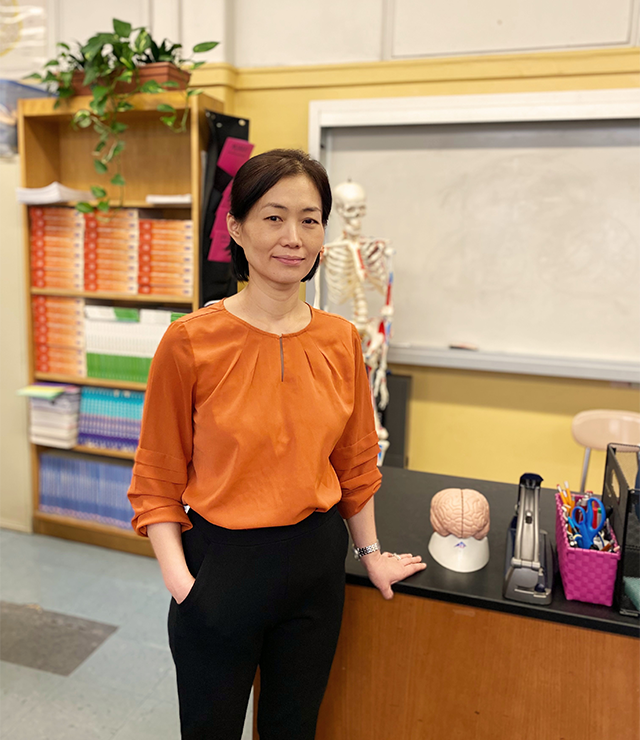
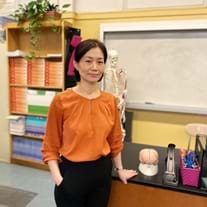
A high school teacher poses for the camera inside her science lab classroom.

Inspired by her father’s appreciation for education and giving back, Chuhyon Corwin became a high school science teacher.

Published February 17, 2023

By David Freeman

Neuroscience researcher and EnCorps Fellow, Chuhyon Corwin, traded her research lab for the classroom in a New York City public high school where she works as a science teacher.

Thanks to a partnership between The New York Academy of Sciences (NYAS) and the EnCorps STEM Teachers Program, Korean-born Corwin, an accomplished scientist, was able to explore her interest in teaching high school. For 10 weeks, with support from program staff, she was a volunteer guest teacher in the classroom of a skilled high school science teacher while, in parallel, exploring pedagogical techniques through the program’s online learning modules.

The EnCorps Program

Launched in 2007, EnCorps has already helped over 1,360 seasoned STEM professionals transition from industry or academia to public middle or high school education to ease the acute shortage of Science, Technology, Engineering, and Math (STEM) teachers across the United States.

NYAS teamed up with EnCorps to launch the program in New York City in 2022. Corwin was part of the first cohort of New York EnCorps Fellows who had an opportunity to explore becoming a STEM teacher before committing to a career change.

“During my 10-week guest teaching, I fell in love with the students,” explains Corwin. “The joy I experienced gave me the confidence that I was making the right decision in becoming a high school teacher as a long-term career choice.”

Although Corwin had taught university students, she found the work very different in high school. Teachers have to actively engage with their students and ensure they are paying attention. They also have to make sure that students who struggle get the assistance they need to prevent them from falling behind.

Effectively Engaging Students

Maintaining discipline among 30 teenagers and keeping them interested requires a great deal of creativity as well as solid classroom management methods.

“With lab activities, you have to be conscious of their safety and make sure they have enough materials,” says Corwin. “The class itself is short, only 43 minutes, so it has to run like clockwork.”.

While teaching STEM to high schoolers requires dedication and hard work, Corwin finds nurturing young people’s innate curiosity hugely rewarding. She has witnessed the amazement that lights up her students’ faces when their lab experiments succeed. Her own enthusiasm for science and discovery has never abated and she appreciates the opportunity to transmit her passion to the next generation.

“I hadn’t realized how much I would enjoy talking with these students. They come up with good questions,” says Corwin. “At that age, students are so frank. They let you know exactly what they think and I love that.”

After completing her volunteer guest teaching experience with the EnCorps program, with the support and guidance from EnCorps and NYAS, Corwin enrolled in an accelerated program to gain her teaching credentials.

She doesn’t see her move to teaching as a major break in her life.

“I’m simply redirecting my energy to continue my journey as a scientist to make a greater impact by raising more capable future scientists,” she says. “I think a teaching career is very appealing to people who love research. As a scientist, you explore different options, you try things out and reflect to find out what works best.”

Using science fiction novels to engage students with STEM subjects is one of the innovative approaches Corwin discovered while studying for her educational degree.

Inspired by her Father

Corwin sees her father in the students she teaches. While he never had the opportunity to finish high school, he greatly valued education and encouraged her to pursue her studies. He also instilled in her the importance of giving back.

“Hopefully, people who have been in the STEM industry will see the value of giving back,” Corwin says.

Today, Corwin is a science teacher at the High School for Health Professions & Human Services in Manhattan, where she completed her guest teaching as an EnCorps Fellow. Corwin recommends the EnCorps STEM Teachers Program to scientists exploring entering the teaching profession.

“They should try it. Even if in the end you decide not to become a teacher, it’s a valuable experience.”

Learn more about the Academy’s School & Community Programs.

Technology for More Sustainable Agriculture

Agricultural workers in a farm field.

Winners of the Junior Academy Innovation Challenge Fall 2022: “The Green Redesign”

Published December 1, 2022

By Nicole Pope

Sponsored by Ericsson

Team Members: Jiho L. (Team Lead) (Republic of Korea), Ansh T. (India), Riya K. (India), Arshroop S. (India), Aman A. (India), Rawnaq A. (Oman)

Mentor: Olusola Ladokun (Nigeria)

Among the 85 teams that embarked on the Green Redesign Challenge in Fall 2022, one team stood out.

By improving irrigation and reducing the waste of resources, Team Greetopia aims to bring innovation to agriculture. They were named the winning project in the challenge.

Based on research and stories shared by numerous farmers, the team identified key issues, illustrated by stark figures: 2 quadrillion gallons of agricultural water are wasted annually[1], and agriculture uses 2.2 quadrillion KJ of energy every year[2], about 5% of world energy demand. They also found that 1.2 billion tons of food[3]– enough to feed the entire US population for 3.64 years– is wasted, never leaving the farm.

Working online, across time zones, created initial difficulties– but the team members found ways of collaborating productively.

“I’m grateful to have experienced the diverse cultures coming together for the betterment of this human society,” says Aman. “Time zones were a hurdle in the smooth performance of the team, but we managed it by distributing the work evenly to be performed by individuals at their time of comfort, alongside holding alternate team meetings at common times.”

Challenges in Agriculture

The Organisation for Economic Co-operation and Development (OECD) has identified lack of innovation as one of the biggest challenges in agriculture. In a world facing multiple challenges such as depleted natural resources, climate change, and pollution, developing more efficient agricultural systems is crucial for our survival.

Through online brainstorming, the team concluded that emerging technologies like the Internet of Things (IoT) and Artificial Intelligence (AI) can address some of these issues and can help farmers who often lack the skill set to optimize agricultural methods. Overuse of fertilizer, for example, can pollute waterways, burn crops, deplete the soil of minerals and increase air pollution.

“It was an amazing experience to have connected with like-minded individuals and research world-changing approaches!” says Riya.

Greetopia team members decided to develop a web application that would tackle the excessive use of non-renewable resources.

“I got to research and learn more about the important crises around the world, such as concrete pollution, irrigation, etc.,” says Arshroop. “The constant communication within the team allowed us to keep up with the information and learn a lot of valuable lessons through the program.”

Utilizing the Internet of Things

In particular, the students opted to use the Internet of Things (IoT) to increase efficiency in irrigation and modernize farming practices that have remained unchanged for centuries.

“As team lead, I worked on planning our work, informing each member of what they have to do until certain target dates, creating documents to make the process efficient, and of course, conducting research about our research topic and filling in the milestones,” explains Team Lead Jiho.

The team devised “Kanad”, a farming application that delivers four main functions. First, it senses soil moisture levels by using a machine-learning component called Long Short-Term Memory Network (LSTM), which gets more accurate with use. Second, farmers can enter information on the Nitrogen, Phosphorus and Potassium (NPK) content in the soil, (also analyzed by sensors) to identify the most optimally adapting crops for these soil characteristics and locations.

Utilizing Machine-Learning

Machine-learning can also recommend the optimal amount of fertilizer based on the same NPK levels in the field. Finally, farmers can enter images of their crop into the web-based application, which will use the Convolutional Neural Network deep learning system to identify potential crop diseases with an accuracy of 95.25%.

Arriving at this successful solution did not prove easy: the team decided to change direction halfway through the Challenge.

“I’m glad that the team members understood the sudden change in our projected target in the middle of the program, which led to a successful ending,” says Ansh. In the end, perseverance paid off and the outcome amply justified the effort involved.

“Despite the obstacles we encountered, we made it till the end,” says Rawnaq. “We did not just complete the challenge but the result was awesome.”


[1] Source: UN Food and Agriculture Organisation
[2] Source: US Department of Agriculture
[3] Source: World Wildlife Fund (WWF-UK)

An Innovative Approach to Predicting Forest Fires

A firefighter combats a wildfire.

Winners of the Junior Academy Innovation Challenge Fall 2022: “Forestry for a Sustainable Future”

Published December 1, 2022

By Nicole Pope

Sponsored by Royal Swedish Academy of Engineering Sciences (IVA)

Prolonged droughts, caused by climate change, have amplified the risks of forest fires around the globe– making blazes bigger, more frequent, and more intense.

These fires devastate vast swathes of forests and often spread into residential areas, threatening lives and housing. Research by the University of Maryland suggests that fires cause forests to lose 3 million more hectares annually than in 2001. Furthermore, the UN Environment Program estimates that by 2100, the number of forest fires will increase by 50%.

The team Intelligent Forest — Chinmay R. (India, Team Lead), Rohan S. (India), and Soumik P. (India) — worked under the guidance of their mentor Malarvizhi Arulraj (United States) to tackle this critical issue as part of the “Forestry for a Sustainable Future” Fall 2022 Junior Academy Challenge, sponsored by the Royal Swedish Academy of Engineering Sciences (IVA). Intelligent Forest bested the field among 175 competitors. Their innovative method to predict the risk of fire helped them to win.

“It was great taking on real world problems and using our intellect to solve them. I learned various things throughout the course of the challenge such as AI, weather patterns, machine learning applications and much more,” says Rohan. “We worked hard as a team and came up with a solution in the end together.”

Understanding Forest Fires

Forest fires can be triggered by natural factors, such as lightning, or by human factors, such as the careless dropping of a cigarette or the lighting of an unnecessary fire in severe drought conditions. Crown fires burn the entire length of the trees while surface fires only scorch dried leaves and grass.

In some cases, fire can rage under the ground. As the team discovered over the course of their research, climatic conditions play a critical role– the hotter and drier the weather, the more destructive the fire is likely to be.

Finding ways to mitigate the impact of these now-frequent infernos required hard work, but the team members worked collaboratively to achieve results.

“There were times when I was uncertain as to whether we would even reach the end, but here we are,” says Soumik. “It was a fun experience working with my team members, and I had the opportunity to add and develop my skills. My main contribution was helping with the research side of things and suggesting ideas and edits.”

Utilizing Artificial Intelligence

With support from their mentor, the students decided to focus on harnessing the power of Artificial Intelligence (AI) to analyze forest and temperature data, in the hope that it would be possible to predict the risk of fires.

“I was impressed by the plans and ideas the team put together and was absolutely delighted to mentor the team,” says their mentor, Malarvizhi. “They chose a problem and approach that was hard and challenging. Especially, finding the best dataset and creating working machine-learning algorithms needs a lot of effort.”

Using data on fire alerts and meteorological information (minimal and maximal temperatures, rainfall, solar radiation and daily evaporation) collected in the Brisbane area in Australia between 2012 and 2022, the team tested two different AI approaches: Decision Tree and Random Forest.

The Results

The goal was to create four categories: no risk, low risk, medium risk or high risk of fire. The results provided the proof-of-concept the team expected. With the Decision Tree approach, they were able to predict fire risk with 70% accuracy, while the accuracy was 79% using the Random Forest approach.

These findings demonstrated that with the help of AI, it is possible to predict the risk of forest fires with 70–80% accuracy, which, in turn, allows for increased preparedness and limited impact.

“The project was a great learning experience for me,” says Team Lead Chinmay. “I had taken Artificial Intelligence as a subject in high school and this project taught me how I could apply what I had learned in a real-life situation.”

Work-Life Balance is Key in the Hybrid Environment

A man poses with his toddler daughter while holding a newborn baby.

Daniel Brandenburg, the 2022 Blavatnik Regional Awards Finalist in Physical Sciences & Engineering, offers tips on how to find a healthy work-life balance in the new age of hybrid work.

Published September 21, 2022

By Daniel Brandenburg

Daniel Brandenburg

For many of us, COVID ushered in an era of working from home. I was traveling for a scientific conference when Brookhaven National Laboratory first sent all employees home to work. It was an eerie experience returning from a trip and just never going back to my office. At first, I loved working from home, since every extra minute with my wife and two young daughters is a gift. As I tried to balance everything, I quickly realized that working from home is a double-edged sword. As much as I loved being seconds away from my family, I really benefit from a “work” routine—of getting out of the house and going to the office.

The change in external environment naturally helped change my internal focus, shifting it onto my research and work. Then, at the end of the day when I left my office, the change in environment helped my to-do list slip out of my mind. Working from home removed that routine overnight along with the environment switching that I relied on to kick-start my morning focus and my winding down each day. At first, I didn’t even have a home office, since we lived in a small apartment. So, I worked wherever I could find some peace and quiet. But when you train yourself to focus on work at your dinner table or in your living room, it is hard to ever forget about work in your own home.

If left unchecked, that turns into an unhealthy cycle: work, eat, sleep, work.

And that is not a good routine for life or for long-term quality and productivity. Whenever I catch myself getting too overwhelmed with my research or falling into a bad routine, my family is what helps me find balance. That help comes primarily in two ways:

1) Balance is hard work. My family gives me something outside of work I truly care about enough to invest the hard work needed to find balance.

2) They expect me to succeed in finding balance, and they celebrate with me when I do.

Daniel with his two children.

I think number one is easy to overlook. Anything that requires hard work needs to be compelled by something you value, otherwise it can be hard to stay motivated. Most scientists genuinely enjoy their research, so what is the harm in another hour or two? Having a daughter that is eagerly awaiting my free time puts that into sharp focus and gives me a reason to put healthy boundaries on my time. I enjoy physics and most of my daily work, so it’s even more important for me to recognize and remember that time spent on work, is time not spent on something else that’s important and good.

But number two is at least as important for me. “Balance” isn’t something that happens once; it is a process and a pattern with ups and downs at different periods. And academia is a competitive field. Even more, I work in a large scientific collaboration with over 700 members from across the globe—there’s really no concept of a nine-to-five. So sometimes I work a long day or, if a major conference is coming, maybe a long couple of weeks. Those are the times when it is easiest for it to become normal, to slip into an unhealthy work routine. But my family doesn’t operate on deadlines, so they are expecting me to make time for them every day, regardless of the day or week. And when I do, they are happier, and I am too. This expectation for successful balance is a kind of restorative force, preventing me from ever getting too unhealthy. I am glad for that kind of positive pressure in my life.

Daniel kayaking with his daughter.

So, practically speaking, I try to focus 100 percent on work when I am working. I set up my environment to remove distractions and unrelated interests. This lets me feel accomplished and honest with my time at the end of the day. Then, once the workday is done, I try to plan quality time with my family. For instance, my daughter and I have been making use of the hot summer to go kayaking together. She is still small enough to sit in my lap in a single kayak. We often spend hours together talking, exploring, and looking for fish. Even the more mundane parts of daily life can be planned for a better outcome. I acquired a love of cooking from my father, so often I’ll try to make dinner with my wife or daughter’s help. Since my older daughter is only three-and-a-half years old, I must find creative ways for her to help. Sometimes that means giving her an extra bowl and her own ingredients to mix. Sometimes it means making a mess—that’s my wife’s favorite 😉

These kinds of activities are my favorite because they engage my mind, they help me relax, and they often provide teachable moments for my daughters.

This piece was originally published on the National Postdoctoral Association member blog as part of 2022 National Postdoc Appreciation Week. Current Academy Members can receive a 20% discount on a National Postdoctoral Association postdoc individual membership by emailing info@nyas.org and requesting the NPA membership discount code

Learn more about the 2022 Blavatnik Regional Awards for Young Scientists


About the Author

Daniel Brandenburg is a Finalist in Physical Sciences & Engineering for the 2022 Blavatnik Regional Awards for Young Scientists. You can learn more about him and the Blavatnik Awards at Blavatnikawards.org

Meeting Electricity Needs in the Philippines

A shot of planet Earth taken from space.

Winners of the Junior Academy Innovation Challenge Spring 2022: “Flexible Use of Electricity”

Published July 1, 2022

By Roger Torda

Team Members: Abhi G. (Team Lead) (India), Marianne I. (Philippines), Shreya J. (Canada), Angel I. (Philippines), Elijah U. (Nigeria)

Mentor: Muhammad Mahad Malik (Pakistan)

For this Junior Academy challenge on Flexible Use of Electricity, the five Power On team members chose to address a thorny issue: the energy deficit in the Philippines, where electricity demand is growing rapidly, and supply falls short of demand– leaving close to 30% of the population without electricity or facing significant fluctuations in electricity supply known as brownouts. Constraints on access to power are especially acute in rural areas and on the country’s numerous islands.

“The flexible electricity challenge is one of the most complex research projects I’ve ever worked on as it took quite a while for me to decipher the exact problems that needed to be tackled,” explains Elijah. “However, this pushed me to engage more in extensive readings, and actively be a part of reaching out to and interviewing numerous experts.”

After conducting a survey in nine countries, consulting their mentor and experts, and brainstorming through the Academy’s Launchpad platform, the team members narrowed down potential solutions to focus on three approaches.

“Asking questions and making sure that we understood the concepts fueled me to keep on collecting more knowledge,” says Marianne. “Interviewing different experts from different fields gave us new perspectives when we dealt with this challenge. Because a problem has deep roots, it is important to look at it from different angles.”

Raising Public Awareness

First, based on the results of their survey, the students determined it was important to raise public awareness of electricity issues such as peaks/non-peaks, flexible use of electricity, and supply, storage and distribution. They’ve addressed this need for awareness with an entertaining game designed to educate consumers.

“I had to meet experts from around the globe to hear their perspectives on flexible electricity,” explains Angel. “It made me realize that people may have different geographies and have various living standards, but what we have in common is that we face similar problems, such as balancing the demand and supply of electricity.”

The second pillar of the students’ project is Demaflex, an app to forecast demand and improve the response. The app would analyze data to predict times of high demand and encourage consumers to reduce the pressure on the power grid by scheduling their use of various appliances (such as dishwashers or washing machines) during off-peak periods. By sending recommendations to power users, the app would promote flexible use of electricity.

Finally, the team focused on developing Electrade, an app-based, decentralized, user-friendly energy trading platform that would allow people to buy energy and sell excess electricity back to the grid. The enterprising students will be working with the Department of Science and Technology (DOST) and the Philippine Council for Industry, Energy, and Emerging Technology Research and Development (PCIEERD), which have created a partnership program to grant startup funding towards commercializing their solutions.

An Eye-Opening Experience

Seeing their project take shape has given the team members a great sense of achievement.

“Electricity, in particular, always seemed like an intimidating challenge to tackle, but now, I’ve learned so much,” says Shreya. “I’m proud of the solution that we created and the work we’ve done to create, test, innovate, and communicate our project to the world.”

Participating in the Junior Academy challenge has been an intense learning experience and the students are delighted that their hard work has paid off– winning the challenge is merely the icing on the cake.

“The Flexible Electricity Challenge, for me personally, was quite an eye-opener. From all the research done by everyone on the team, I’ve learned quite a few things about the grid, electricity supply, and the demand response system,” says Team Lead Abhi. “The late nights and the sheer amount of work each and every one put in on our project is something I’ll always remember and be grateful for.”

Raising Awareness about Water Quality in Ukraine

A photo of a polluted body of water.

Meet Sea Saviors, the winning team of the Fall 2021 Junior Academy Challenge “Restoration of Aquatic Ecosystems.”

Published December 15, 2021

By Roger Torda

In the fall of 2021, six budding scientists entered the Junior Academy Challenge and teamed up online to address eutrophication in the Black Sea area and the Dnieper River that runs across Ukraine. Team members were Anzhelika-Mariia H. (Team Lead) (Ukraine), Kusum S. (Nepal), Aman Kumar F. (India), Manan P. (India), Ksheerja S. (India), and Viktoriia L. (Ukraine); the team worked under the mentorship of Pratibha Gupta (India).

Eutrophication is a naturally-occurring process that affects the chemical composition of water bodies. When this process is accelerated by human factors like industrial waste, sewage and fertilizers from farms, it causes excessive growth of algae and phytoplankton, oxygen deficiency, and dead zones – thus threatening ecosystems, biodiversity, and public health.

As a first step, the Challenge participants conducted research to better understand the root causes of the problem in the Dnieper River basin.

“I got tons of insights on eutrophication and how it is destroying our planet’s life,” explains Aman Kumar.

Encouraged by their mentor Pratibha (a.k.a. “Power Girl”), the students also looked at existing solutions before brainstorming new approaches that could improve the aquatic environment.

“Our mentor’s enlightening advice and expertise showed me just how vital the role of mentor is,” says Manan. “Hopefully, some day, I can become a Junior Academy mentor!”

Focusing Ecological Ditches

The team eventually opted to focus on ecological ditches, a traditional drainage system that developed in Ukraine in the 1960s, when the country was still part of the Soviet Union. Located at the edge of fields, eco-ditches allow excess rainwater to be carried away. In their conventional form, the drainage channels are inefficient at filtering unwanted fertilizer or nutrients and the team sought ways to improve them with better engineering.

“The diversity of our group, not only geographical, but also the unique personality that each of us carried added immense value to our work,” says Kusum.

The students identified a potential solution of adding plants with strong filtration capacity to eco-ditches, and looked at hydraulic flow rate control.

“I met hardworking individuals who helped me improve my own skills and taught me many valuable lessons in teamwork and analytical thinking,” says Ksheerja.

Eco-ditches require regular maintenance to remove sediments. While polluting industries can be easily identified, farms are harder to locate – yet farms release nitrogen and phosphorus fertilizers that affect the delicate chemical balance of water bodies. The students saw a potential path to a sustainable solution: by mapping agricultural farms and existing canals, they could be linked into common drainage systems that could be monitored.

Raising Awareness Through Gaming

Raising awareness of the threats posed by eutrophication is also crucial. The Sea Saviors designed a web-based computer game aimed at children aged 8-13 to sensitize them to environmental issues.

“My role was to be a game designer and developer. Because of the Junior Academy, I found out about different ways of creating the video game and practiced one more game developing engine,” says Viktoriia.

In the two-level game, a friendly sea monster tries to make the aquatic environment more habitable for his fish buddies. In the process, Bob the Monster introduces young players to ecological ditches and the cultivation of oyster shells as ways of regulating the aquatic ecosystem.

“My team was tenacious and industrious from the beginning,” says Pratibha, thrilled with her mentees’ achievements. “Each member had faith in the other one to work diligently.”

For the winning team members, the project has been a stimulating learning experience that allowed them to form strong bonds.

“Working on this project boosted my motivation to continue my studies in the hope of becoming a scientist one day,” said Anzhelika-Mariia.

How the Brain Gives Rise to the Mind

A professor gives a presentation to students.

This Year’s Blavatnik National Awards for Young Scientists Laureate in the Life Sciences is connecting the activity of cells and synapses to emotions and social behavior

Published October 21, 2021

By Roger Torda

Neuroscientist Kay Tye has challenged orthodoxy in her field by studying the connection between the brain and the mind. The work has led to breakthroughs in basic science. It also points to new approaches to mental illness, with significant potential impact.

Tye is a professor in the Systems Neurobiology Laboratory at the Salk Institute for Biological Studies. She and her research team work to identify the neural mechanism of emotional and social processing, in health and disease. Tye explained to the New York Academy of Sciences why this work is so important.

Impacts on Mental Health

“Mental health disorders have a prevalence of one in two. This is half the population. If we could understand how the brain gives rise to the mind, we could de-stigmatize mental health, and everyone would go and get the treatment that they need,” she says.

Current therapies for mental disorders are developed by trial-and-error, with drugs that have broad ranges of effects. Tye envisions a much different approach, with treatments that target specific mechanisms in the brain.

“Our insights could revolutionize our approach to mental health treatments, supporting individualized therapies that would be effective for everyone and have the precision to be free of side effects,” she says.

Neuroscientist Kay Tye at the Salk Institute

Tye’s work is widely recognized, and this year the Blavatnik National Awards for Young Scientists named Tye its 2021 Life Sciences Laureate.

Tye’s Background

Tye is the daughter of two scientists—a biologist and a physicist—who met while travelling to the U.S. from Hong Kong to pursue their educations. From a young age, Tye says she was fascinated by subjective experiences, foreshadowing her studies on the connection between brain and mind.

“How do I feel the way I feel?” Tye recalls wondering as a child. “How can two people listen to the same song and one person loves it and one person hates it? What are emotions?”

Tye with her children

Tye went to MIT for her undergraduate degree and received her Ph.D. from the University of California, San Francisco. After a postdoctoral fellowship at Stanford, she opened her lab as an assistant professor at MIT in 2012. In 2019, she moved across the country again, to the Salk Institute.

As Tye gained confidence as a young scientist, she took on a difficult professional challenge as she sought to examine questions that had not traditionally been the purview of her field.

“As a neuroscientist, I’m often told I am not allowed to study how internal states like anxiety, or craving, or loneliness are represented by the brain,” she recalled in a TED Talk. “And so, I decided to set out and do exactly that.”

Research in Optogenetics

In her research, Tye uses technology called “optogenetics,”  which transfers the light sensitivity of certain proteins found in some algae to specific neurons in the brains of lab animals. Researchers can then use light to control signaling by the neuron, and they can establish links between the neuron and specific behavior. Tye developed an approach using this tool called “projection-specific optogenetic manipulation.”

“This permits scientists to dissect the tangled mess of wires that is our brains to understand where each wire goes and what each wire does,” Tye said.

Kay Tye in the lab

Tye’s postdoctoral training was in the Stanford University lab of Karl Deisseroth, who had recently developed optogenetics. Many young neuroscientists wanted to be among the first to use optogenetics, and Tye was eager to use it to study behavior and emotion. Tye recalled that period.

“It was a very exciting time in neuroscience, and in 2009 I already felt like I had come late to the party, and knew I needed to push the field forward to make a new contribution,” Tye says. “I worked absurdly hard during my postdoc, fueled by the rapidly changing landscape of neuroscience, and feel like I did five years of work in that two-year period.”

Analyzing Neural Circuits

Tye’s research program initially focused on the neural circuits that process emotional valence, the degree to which the brain assigns positive or negative value to certain sensory information.  Her lab has analyzed the neural circuits controlling valence processing in psychiatric and substance abuse disorders.

This work includes the discovery of a group of neurons connecting the cerebral cortex to the brainstem that can serve as a biomarker to predict whether an animal will develop compulsive alcohol drinking behavior. Recent research has focused on neurons activated when animals experience social isolation and enter “loneliness-like” states.

Kay Tye in the lab

Tye and her research team are also exploring how the brain represents “social homeostasis”— a new field of research which seeks to understand how individuals know their place within a social group and identify optimal amounts of social contact.

Kay Tye and her lab team

Pushing Boundaries in Her Field

Even after considerable success in her field, Tye says she still feels as though she is pushing boundaries of her discipline. In doing so, she is continuing to bring neuroscience rigor to the study of feelings and emotions. Referring to her recent work, Tye said:

We faced a lot of pushback with this line of research, just because “loneliness” isn’t a word that has been used in neuroscience until now. These types of processes, these psychological constructs didn’t belong in what people considered to be hardcore neuroscience.

We are now bringing rigorous neuroscience approaches to ideas that were purely conceptual before. And so we’re being quantitative. We are being mechanistic. We are creating biologically grounded, predictive dynamical models for these nebulous ideas like “feelings” and “emotions.” And this is something that I find extremely gratifying.

Kay and colleagues at Salk Insitute