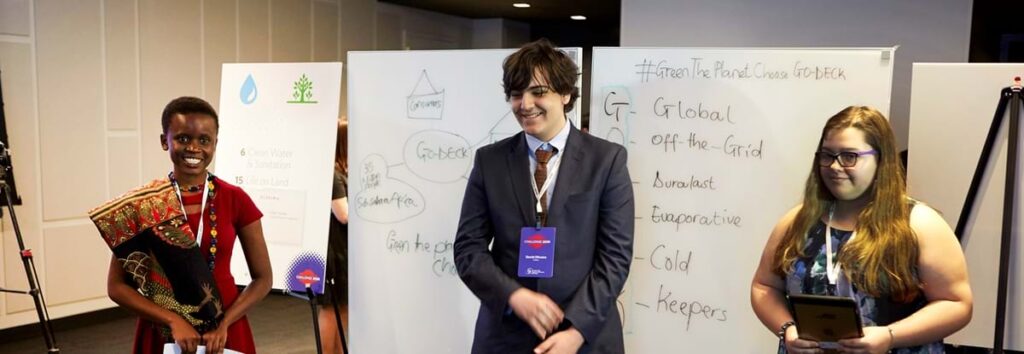
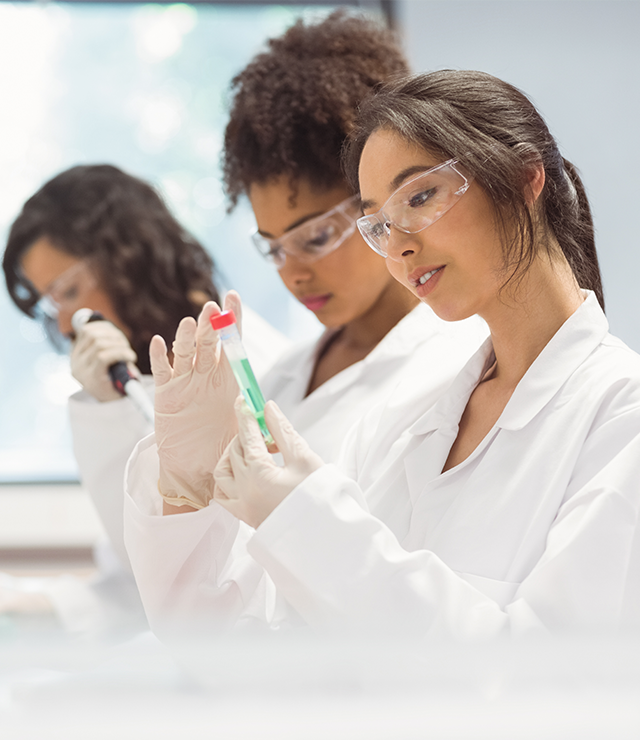
Junior Academy team works together to solve the problem of the lack of refrigeration in rural Tanzania.
Published March 3, 2020
By Marie Gentile and Roger Torda
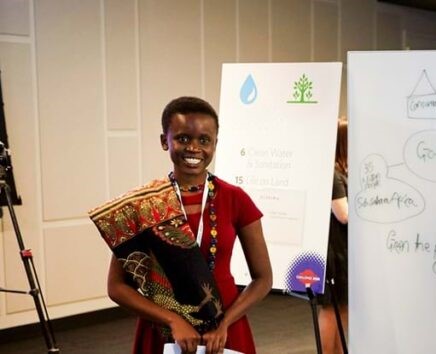
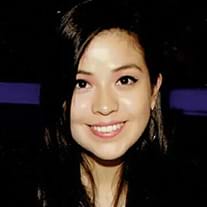
Belinda Baraka Boniphace, 17, of Tanzania, runs an online market connecting sellers to buyers.
She noticed that high temperatures in her area and a lack of cold storage options were significantly impacting the quality of produce available in her town of Dar es Salaam and nationwide. Vegetables would start to spoil 6-24 hours post-harvest.
Luckily, Belinda is part of the Junior Academy, which brings together teams of students from around the world to collaborate on solutions for real-world problems. Belinda told her fellow teammates about the problem her country was facing, and together they were inspired to do something about it.
Developing a No-Power Fridge
The team developed a no-power fridge, Global Off-the-Grid Duralast Evaporative Cold Keepers (GO-DECK), made locally from landfill-bound materials such styrofoam that reduce temperatures and also regulates humidity during storage and transport. The food transport/storage system uses water instead of electricity to keep vegetables cool.
They experimented with six different models improve upon their refrigeration system, inspired in part by Zeer pot designs. A Zeer pot, also known as a pot-in-pot refrigerator, is used in rural regions that have limited access to electricity. The technology works by cooling through evaporation.
After experimenting, the team landed on an end product that is made from 100 percent recycled materials and can be easily distributed to local farmers. The team believes the system has the potential to save millions of metric tons of food per year, all for a nominal cost.
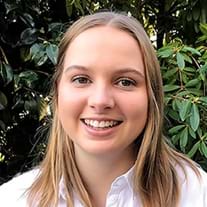
Building upon the success of their first solution, Belinda and one of her teammates, Talar Terzian, are now developing an online market for farmers. They are expanding on the Go-Deck Unit to offer hand washing machines, and their latest water carrier, to local women in Tanzania.
“I wish to help local farmers and women take advantage of their agriculture and gain the best profit for their hard labor,” Belinda says.
Overcoming Obstacles
However, Belinda has had to overcome many hurdles in order to accomplish her goal. She’s faced technical difficulties with internet and power outages due to weather and flooding in her area.
Also, her local school system is limited and not able to support the research that Belinda wants to pursue. Therefore, Talar and her mother, who live in Gainsville, Fla., helped Belinda prepare for SAT exams and complete scholarship applications so that she can go to university. Belinda says she’s been able to thrive because of the connections she’s made through The Junior Academy.
“By developing global connections like those I made with Talar in the US, I will be able to improve my business and help others,” Belinda adds.
This amazing endeavor is one of many innovative collaborations occurring all over the world through the Junior Academy.
A natural disaster inspired one high school student to use science to help others.
Published October 1, 2019
By Mandy Carr
Luis G. Alvarez
Luis G. Alvarez, 17, is a member of the Junior Academy at Colegio Integral Mesoamericano Patzicia in Guatemala; a volatile environment that is subject to earthquakes, tropical storms and volcanic eruptions. And on June 3, 2018, he experienced the eruption of Volcan de Fuego.
“I remember hearing something like rain falling on the leaves,” said Alvarez. “At first, I didn’t recognize what it was, but then I realized it was ashes and sand, not rain. I told my parents, and we quickly got into the car and left.”
According to Reuters, more than 190 people were killed, many of whom died in their homes because they were unable to escape. That prompted Alvarez to do something about it.
“This event had a pretty big impact on me. I wanted to do something so that more people would survive and recover from these traumatic experiences,” he said.
The Junior Academy’s Natural Disasters: Relief & Recovery Challenge
Alvarez came across The Junior Academy’s Natural Disasters: Relief & Recovery Challenge sponsored by the S&P Foundation from a Facebook ad, and saw an opportunity. He promptly completed the application form on Launchpad, the Academy’s collaboration platform and was selected by the project team leader to work on the Challenge with three other students from Hungary, Vietnam and the United States.
Using Hurricane Katrina as their case study, the students noticed that mental health was a serious side effect of the hurricane, and largely went untreated.
To address this deficit in disaster relief, the team created a smartphone-based community survey app to gather critical information in high-risk and disaster-prone areas that would provide a useful baseline for responders during a crisis.
The survey collects information such as residents’ financial and employment status, mindset, living habits and mental health. The information is then used to help tailor recovery efforts when a disaster strikes.
Studying the Physiological Damage
Like his team found in the Hurricane Katrina case study, many residents in Alvarez’s community suffered physiological damage following the volcanic eruption. He also found that his community wasn’t prepared because they underestimated the devastation caused by the eruption and there was a lack of information surrounding the event.
“We had radio service and a cellphone signal,” he said, “yet we were never made aware that the volcano had high levels of activity. All these factors combined to shape my contributions and suggestions during the project.”
According to Alvarez, while the survey solution is based on the Hurricane Katrina situation, its principles can be applied to all natural disaster preparation.
“Natural disasters are often socially and economically disastrous for communities,” said Carolyn C. Cavicchio, Director, Corporate Responsibility; Vice President, S&P Global Foundation.
“The type of solution that these students developed has the potential to reduce valuable time and resources when disasters strike. Moreover, Challenges like this help young people to develop and refine important problem-solving skills that are crucial in today’s workplace,” she says.
Learn more about The New York Academy of Sciences’ Innovation Challenges.
Learning how to craft a scientific paper so that it is accepted for publication takes practice. An expert provides his perspective.
Published October 1, 2019
By Douglas Braaten, PhD
Learning how to craft a scientific paper so that it is accepted for publication takes practice. It also requires attention to details across many domains. Many advice resources are available, and I encourage any young scientist to carve out time to focus on what to do — and what to avoid — when writing scientific papers.
Before starting to write, give some thought to preparation, process, attitude and goal. Some key points I’ve learned from reading and editing hundreds of papers at Annals of the New York Academy of Sciences and Nature Immunology follow.
These two journals have very different aims, scope and readership, but similar goals of publishing well-written, well-constructed papers for the sake of readers’ understanding and clarity. Note the points below are not presented in order of importance or temporality — all are useful.
Preparation
Part of the preparation is learning as much as possible about scientific publishing in general which will help to make the process both more enjoyable and successful.
The writing of a scientific paper begins when a lot of hard work has been done already. Completion of a series of experiments that demonstrate a statistically relevant discovery is the foundation of all good scientific papers.
That’s not to suggest that one can’t have a reasonably clear picture of what a paper might look like along the way of performing experiments. Indeed, designing experiments — the order and what’s required — is often critically informed by one’s experience in crafting a good scientific paper.
However, it’s never a good idea to start before a complete set of experimental results has been gathered. Doing so can reverse the circle from “now that I have a set of data how best can it be presented?” to “what experiments do I need to do to finish my paper?” the latter being the wrong way around.
Don’t get caught in the trap of needing to do an experiment in order to finish a paper. Instead, set out to perform the complete set of experiments necessary for readers (in particular peer reviewers!) to agree with you that the conclusions are supported by the data. And then write.
Process
Consider who will need to read your paper before it is accepted for publication.
Among the best papers I’ve read are those that have been prepared for a particular journal and its readership. Writing to achieve those goals may not seem as important as simply describing the data. It’s critical, however, to write for readers and to prepare a paper with specific audiences in mind. These two points are often ignored. The journal editors must find it suitable for their journal, believe a given paper presents good data, and does so clearly enough to send it out for peer review. Next, while the process of peer review can vary among journals, papers at most journals are sent to at least two external peer reviewers. These individuals — very busy scientists, often pressed for time and overloaded with work — volunteer their time to comment on papers.
More than anything, peer reviewers hate papers that are overly long, vague and not crafted for readers. By accepting to review a paper, reviewers by and large give benefit to any doubt that it presents interesting information and data. Give them what they want without distractions.
Reviewers and editors are busy individuals — don’t hobble yourself by ignoring the fact that they can be easily put off by sloppy and careless writing.
Attitude
Some of the above considerations of process are also considerations of attitude. It’s critical for authors to set and maintain a level of respect and collegiality for everyone involved when preparing and submitting a scientific paper — from submission, to peer review, production and every step through publication.
In my experience, the most successful authors are those whose attitude reflects the ideals of both achievement of work and an earnest, genuine desire to share important new information with the scientific community.
In contrast to that, an attitude of entitlement to be published is immediately noticeable to editors and, especially, to peer reviewers. I have seen good papers that may have only needed minor improvements as recommended by reviewers, upended by rejection because the authors believed they were in the right and didn’t need to make changes.
Even the most experienced scientists know it’s their responsibility to maintain an open, respectful attitude during the publishing process. Ignoring this imperils your aims for little more than an overly needy ego. Consider it a privilege to have your scientific paper evaluated and published.
Goal
Much of the above could have been included in a discussion of scientific author goals. The right preparation, a well-considered process, and a collegial and respectful attitude are certainly worthy goals.
Less obvious, yet equally important is considering the audience from the perspective of readers who want Open Access (OA). The interest in scientific papers to be OA is now so intense that it’s important for authors to consider OA for every one of their papers.
Indeed, so many funders are pushing for not only OA, but for other forms of pre- and post-publication access to scientific data that it behooves every author to consider both the laudable goals of OA and the ramifications for scientific publishing. Fortunately, many online forums present extensive discussions — e.g. oaspa.org.
As the OA movement grows — and there’s no doubt that it will — authors must consider whether they will submit only to OA journals to support the goal of open information. At the same time, they should consider that publishers of OA journals will feel increasing pressure to seek more and more submissions to cover their publication costs as subscription revenue declines. Authors will surely experience this increasing pressure, as it will undoubtedly affect the publishing process.
For example, more papers to evaluate increases the burdens on everyone involved — editors, reviewers, production staff. Ensuring you do all that you can as a responsible scientific author will likely help achieve your personal aims of publishing and of contributing openly to scientific progress. And while much more can be said about how to publish successfully, keeping in mind preparation, process, attitude and your goal should help.
Efforts to close the gender gap in STEM by encouraging girls to study science have resulted in more young women considering careers in science. Yet systemic biases in academia create an uncertain future.
Published October 1, 2019
By Sonya Dougal, PhD
Many women who earn PhDs in life sciences choose to pursue non-academic careers during the critical period between receiving their doctoral degree and becoming an independent investigator. This gender specific phenomenon, described as a “leaky pipeline,” is a significant source of brain drain for academic and biomedical research.
Anne L. Taylor, MD, Columbia University Vagelos College of Physicians and Surgeons
A Biased Culture
Overt bias against women in the sciences is less common today than in decades past, but implicit bias remains a major challenge for male and female scientists alike.
According to Virginia Valian, distinguished professor at Hunter College and CUNY Graduate Center and director of the Hunter College Gender Equity Project, bias, whether conscious or not, shapes attitudes and behavior.
“The traits that are perceived to be better for science are those we often ascribe to men, such as independence and a focus on the task at hand, while women are nurturant, communal and express their feelings,” Valian said. “These gender schemas can impact reality, such that women’s achievements are systematically slightly under-acknowledged and men’s are slightly over-acknowledged.”
The Impact of Implicit Bias on Hiring Decisions
A slew of research studies examining the impact of implicit bias on hiring decisions and career advancement, conference presentations, manuscript authorship and grant funding, confirm Valian’s assertion. For example, in a 2012 study from Yale University, 100 male and female faculty members at top research institutions reviewed an identical resume for a hypothetical lab position with one change — the applicant was either a man or a woman. The resume bearing a man’s name was favored over the same resume with a woman’s name. Male candidates were perceived as more competent and offered higher salaries, while female candidates were rated as more likeable.
Navigating the transition from graduate school or postdoctoral researcher to independent investigator hinges largely on funding, and this too is an area rife with inequalities. While women receive grants from the National Institutes of Health (NIH) at about the same rate as their male peers, first-time female PIs are funded at comparatively lower levels.
A further consequence of implicit bias is that female professors do more of the service work within departments — taking on additional teaching responsibilities and serving on committees. While this work is essential, it does not support the attainment of federal and foundation grant funding needed to advance to academic leadership positions, nor is it valued during tenure review.
Not Just Women’s Work
The difficulties of juggling career and family demands have especially stark repercussions in the scientific workforce. A surprising 43 percent of women scientists — and nearly 25 percent of men — transition to part-time employment or leave their careers altogether after having their first child, according to Cech & Blair-Loy’s 2019 study of the impact of parenthood on STEM careers. In response, some institutions have implemented policies to address retention of both women and men.
“Having children should not be a permanent impediment to advancement,” said Ann Taylor, MD, vice dean of academic affairs at the Columbia University Vagelos College of Physicians and Surgeons. “Yet when women lessen their workload to accommodate their family responsibilities, we don’t do a good job putting them back on the path to leadership.”
Taylor believes that gender-neutral policies at Columbia, such as 13 weeks of paid leave for primary caregivers and an extra year on the tenure clock for each child, “really help support careers,” but acknowledges that some difficulties are harder to address. Grant funds often come with strict timelines, posing challenges for women and men who temporarily trim their work responsibilities during the early years of family life.
“You don’t have the luxury of saying, ‘I’m going to take this three-year grant and make it a six-year grant,’” Taylor said. “These are problems we have to solve, and we are actively thinking about how to do that.”
Creating the systemic, institutional change that Taylor and others envision requires support from male STEM professionals as well. Neuroscientist Paul Greengard — who was Vincent Astor Professor at The Rockefeller University until his death last year — was an early advocate for gender equality in academia.
“There’s absolutely no evidence one way or another as to whether there’s a difference between the sexes in terms of creativity, the most important parameter of scientific discovery,” Greengard said in an interview with The Rockefeller University in 2016.
Establishing a Preeminent Annual Prize for Women in STEM
When he won the Nobel Prize in 2000, Greengard donated his share of the honorarium to establish the preeminent annual prize for women in science — The Pearl Meister Greengard Prize. Named for Dr. Greengard’s mother, the prize sparked a robust program of advocacy and fundraising to support women scientists at Rockefeller. Aaron Mertz, director of the Aspen Institute Science & Society Program and a former postdoctoral fellow at Rockefeller, served as the vice president of the professional development group WISeR (Women in Science at Rockefeller).
“Men must be active contributors to discussions about gender equality, and have a significant role in creating a scientific environment in which women can flourish,” he said. “I firmly believe that women’s issues are men’s issues.”
Without men at the table, institutional change will not happen.
The New York Academy of Sciences is committed to a diverse balance of program speakers.
If You Can’t See It, You Can’t Be It
A culture of mentoring is vital in business — including guidance on salary negotiation, self-promotion and other skills necessary to advance in competitive fields — yet this type of support is a relative newcomer to academia. For early and mid-career women scientists, direction from senior colleagues can mean the difference between choosing an alternative career path and advancing to leadership positions.
Critically, Taylor highlighted that “the nature of mentorship can vary. Women are more likely to have mentorship that involves psychosocial support and are not provided with tactical career development strategies.” Columbia recently augmented their leadership and management programs to address the needs of women and diverse faculty by making both types of mentoring available for all faculty members, along with initiatives to ensure salary parity and timely promotions.
Men have so outnumbered women in scientific conference programs that a new word — manels — to describe all-male panels has entered the scientific lexicon. Feminist and activist Marie Wilson popularized the notion “if you can’t see it, you can’t be it” to encourage women’s leadership as role models.
To raise the visibility of women scientists, the New York Academy of Sciences requires gender parity among conference speakers. Forty-five percent of the speakers in the Academy’s 2018-2019 programming cycle were women, with an organizational goal of reaching 50 percent in the coming year.
Recently, NIH director Francis Collins released a statement indicating that he would decline participation at scientific conferences where “inclusiveness was not evident in the agenda,” writing that these parameters should include women and underrepresented groups. Conference organizers striving to meet that mandate may turn to Request a Woman Scientist, a database created by the 500 Women Scientists initiative — an organization galvanizing public support for STEM diversity and equality. In less than one year, more than 9,000 women scientists from 133 countries have added their profiles.
The Challenge Ahead
A 2018 paper by Lerchenmueller & Sorenson of the Yale School of Management noted that, “Rather than women dripping out of the STEM career pipe every centimeter along the way, they appear to pour out at one of the critical junctures.” This metaphor suggests that the first step to gender equality is raising awareness of the pressure points in women scientists’ careers such as the transition between trainee and independent investigator.
The path forward will require collective action between universities, government agencies and funders to remove systemic barriers and biases. Momentum is building for those willing to make the effort. As Taylor emphasized, “Equity and justice is work every single day.”
Today’s employers want workers who have “soft skills,” such as being a good listener or thinking critically.
Published October 1, 2019
By Pinelopi Kyriazi
Joseph Borrello, Sinai Bio-Design, Ichan School of Medicine at Mount Sinai
According to a new report from Cengage, an educational technology and services company, employers want college graduates who have “soft skills,” such as being a good listener or thinking critically, but they have difficulty finding such candidates.
Such so-called “soft” skills are highly sought after by employers, yet they tend to be given short shrift in academic settings. As a result, while science, technology, engineering and mathematics (STEM) professionals receive extensive training on technical skills, their non-STEM skills tend to be underdeveloped.
Nevertheless, a growing body of evidence shows that soft skills are an indicator for future employment and earnings compared to technical and manual skills. Hence, a gap has been created between which skills employers are looking for, and which skills STEM job candidates provide. From running a productive lab to leading a research team, a successful career for scientists hinges on their ability to communicate and collaborate, often with teams that may be in other departments, other institutions or even other countries.
Developing Skills in Persuasive Writing, Management
Take grant writing. Competition for a shrinking pool of funding is fierce, so academic scientists need to tell a cohesive and evidence-based story from complicated data to grab the attention of reviewers and secure funding.
Translating complex content in a simple and easy to understand manner is not a skill frequently practiced until scientists earn their first academic job. By this point, stress is high as job security often rests on their ability to earn grants to continue their research.
Similarly, managing a team of graduate students or post-doctoral trainees is a daunting task for a new professor. On top of all that, many have a heavy teaching load, making their time and project management skills essential to their productivity.
Nida Rehmani Lotus STEMM
Technical Skills: The Great Decline
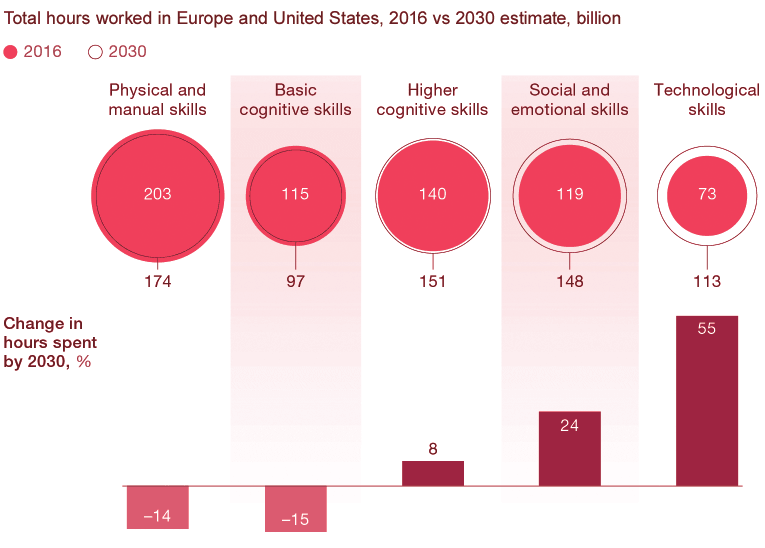
A recent report by the McKinsey Global Institute, explored the shifting demand for workforce skills from now until 2030. They found that technological advancements, including automation and artificial intelligence, are changing the types of tasks employees are performing.
As people increasingly interact with machines, there is a greater need for technological skills, social and emotional skills and higher cognitive skills. These include creativity, complex information processing, empathy, critical thinking and communication. People are still outperforming machines on such skills, but machines are generally much better at repetitive tasks with explicit rules requiring physical or manual labor.
The Impact of Automation
Historically, technological advancement has created new types of work while some occupations become outdated. According to the McKinsey report, while the internet eliminated many jobs, new positions emerged in computer programming, application development, social media marketing and search engine optimization.
Science is undergoing a similar pattern, with mundane tasks such as repetitive data collection and replication becoming more dependent on automation. Scientists are improving their technological skills such as coding complex algorithmic models, interpreting multi-dimensional data and managing big data sets.
Social skills are also becoming more prevalent as teamwork and communication required for intricate experiments is growing. Lab sizes are increasing and scientists at various training levels — from undergraduate students to early career researchers — must work together to complete large scale projects.
Scientists in Academia and Industry Possess Many Non-STEM Skills
Graduate training for scientists is heavily focused on acquiring technical skills and scientific acumen. But a vital aspect of scientific research is sharing the knowledge acquired through experimentation in a meaningful and comprehensible manner. Hence communication of scientific data becomes the cornerstone of research.
Joseph Borrello, a PhD candidate and Prototyping Fellow at Sinai Bio-Design at Icahn School of Medicine at Mount Sinai, highlights the need to attend scientific conferences and share his work.
“Part of communication is going to places where you can communicate,” he says, “and knowing that you have something to share even if it is not completed into a polished publication or presentation.”
Conferences are a great way to interact with other scientists, but also attending events for a broader audience can make you a better communicator.
“It is hard to condense everything down into an elevator pitch format,” says Borrello. But he emphasizes that “doing it once is not necessarily enough.” Building up to a confident elevator pitch takes practice and repetition, just like a good science experiment.
Skills in Effective Communication
Savitri Sharma Nike Sport Research La
Communication doesn’t only include oral presentations. Scientists must master communicating science through writing as well.
Nida Rehmani, who completed her PhD in Biochemistry and M.Ed. in STEM, worked on her writing skills after graduate school as a content/blog editor at Lotus STEMM, a non-profit organization for South Asian women in STEMM (the second M stands for medicine).
“Activities like writing scientific blogs is a great way to develop one of the soft skills and should be inculcated in the next STEM generation,” she says.
Academics are not the only scientists who need excellent communication skills. Those in industry require both scientific and business acumen to get ahead. Savitri Sharma, a biochemist leading the Apparel Research division of Nike Sport Research Lab, emphasizes that scientists need to develop their story-telling skills; especially when sharing results with team members of different backgrounds.
“Bottom line up front,” she says, “being able to connect your work straight to what is happening at the company will set you apart.”
It’s important to grab the audience’s attention and communicate why someone should care. Additionally, she underscores that what sets scientists apart in business, is that they can dive into the details when needed.
“Don’t shy away from being the expert that you are, don’t feel embarrassed or ashamed, be proud,” she says.
The Power of Networking
Another important non-STEM skill is networking. Regularly attending both external and internal conferences, receptions and symposia can help scientists improve their research by making new connections leading to collaborations. As Borrello explains, networking is a stochastic process and can feel awkward at first.
“All the rules of chemistry and chemical reactions that apply to solutions, apply to people also,” he says. “Sometimes the randomness in networking can enable positive relationships to develop. The only way to meet a new collaborator or connect with a potential employer is by attending many networking opportunities and speaking up.”
In industry, networking plays an important role in advancing your career. Sharma leveraged this skill to land her current role as a researcher at Nike. Further she emphasized this as one of the essential skills for her mentees during her tenure as Chair of Women of STEM network at Nike.
After working in various business functions, she declared her intent to pursue a career in research and development at one of the events. As a result of a connection she made, one of the other attendees helped her apply for the position. Navigating large organizations is difficult, but effective networking skills can ameliorate the stress and propel your scientific career forward.
Other “Soft” Skills
Other soft skills include time and project management, team work, listening and social skills. Many of these are often underestimated, but they are all important elements in today’s work environment and can give you an edge to land the job of your dreams.
“Understanding your own potential and skills is important in time management,” says Rehmani.
Knowing and articulating your value can make a difference in the productivity of a lab or a team setting. Scientists already possess many of these skills — continually refining and practicing them will help researchers to become more valued employees, and, as a result, advance their careers.
Automation and Artificial Intelligence Will Accelerate the Shift in Skills that the Workforce Needs
Projections of the future workforce into 2030 indicate that the number of work hours spent on soft skills and technological skills will rise, while hours on physical, manual and basic cognitive skills will drop. Source: McKinsey Global Institute Workforce Skills Model; McKinsey Global Institute analysis
The fastest growing occupations over the next decade will be in the energy, health and education sectors.
Published October 1, 2019
By Joan Lebow
Fabio Manca, Head of the Skills Analysis team at the OECD Centre for Skills
According to the Bureau of Labor Statistics, the fastest growing occupations over the next decade will be in the energy, health and education sectors, while the medical and technical sectors will contain the highest paying occupations. All these occupations will require a STEM education.
STEM learning is often cited by the public and private sectors as the way to prepare for a technology-driven future. A recently published study by Randstad USA, an employment/recruitment agency, found that 68 percent of U.S. workers surveyed would focus on studying science, technology, engineering and math (STEM) fields, if they could restart their educational journeys at age 18.
Spending for STEM education has grown substantially at all levels of schooling, largely due to the investment of billions of public and private sector dollars. This trajectory continues even with the persistent challenge of keeping young people, especially girls, engaged in STEM learning in their elementary years throughout higher education.
Filling the “Skills Gap” in STEM Careers
On the surface, an emphasis on STEM would seem to be all that’s needed to prepare the next generation workforce. But with projections for employment in STEM related occupations expected to grow to more than nine million jobs by 2022 and the steady drumbeat of corporate leaders saying they cannot find qualified workers for millions of open positions, the issues surrounding the so-called “skills gap” are not quite that straightforward.
“To thrive in a digital world, workers will need not only digital skills, but a broad mix of skills including strong cognitive and socio-emotional skills. High level information communication technology skills will also be increasingly important in growing occupations linked to new technologies,” says Fabio Manca, Head of the Skills Analysis team at the Organisation for Economic Co-operation and Development (OECD) Centre for Skills.
The OECD is an international forum and knowledge hub for data and analysis, best-practice sharing, and advice on public policies and global standard-setting. “[Workers] will also need complementary skills, ranging from good literacy and numeracy to the socio-emotional skills required to work collaboratively and flexibly,” says Manca.
Also Developing Soft Skills
Peter Robinson, President and CEO, United States Council for International Business (USCIB)
Analysts agree that more training and more types of abilities are needed now and in the future for workers to fill those jobs. Along with STEM knowledge, it’s traits like “flexibility” and “adaptability” that analysts repeatedly mention as signposts to success.
“It’s not just the hard skills, but critical thinking and soft skills that will be valued,” says Peter Robinson, president and CEO of the United States Council for International Business (USCIB), a policy advocacy and trade services organization dedicated to promoting open markets and representing American business interests internationally.
Technological advances mean work itself will keep evolving. Robinson and others call for more public-private partnerships among business, education and government to help the labor force prepare for, and respond to change. Without this shared burden they see a skills gap that will only widen.
“You won’t be able to front load your education. You will have to be adaptable to change down the road in your career,” says Robinson.
It Starts with Education
Any one-dimensional academic or on-the-job background, could pose challenges. As the OECD’s 2019 Report on Skills points out, “Initial education systems have a key role to play in providing young people with the skills required for a successful entry into the labor market. However, deep and rapid changes in technology make it difficult for initial education to equip young people with the knowledge and capabilities they will need throughout their work life.”
Says the OECD’s Manca, “Recent research by the OECD also highlights that labor market shortages are widespread in high-skilled occupations that make an intense use of communication and verbal abilities, these latter influencing the acquisition and application of information in problem solving contexts.”
An ability to collaborate, problem solve, think creatively and be malleable enough for a future of life-long learning are essential, experts agree. A paradox is emerging. Such skills are often best learned on the job, and not having them is an impediment to hiring, the USCIB’s Robinson explains. He says companies will need to partner with the education system much earlier. “They can’t just show up on graduation day.”
New approaches to curriculum, modern versions of industrial apprenticeships, and efforts to re-skill existing employees and returning mid-career employees through “returnships” are among the ways to accomplish these expanded training needs. “Employers who want the right work force will also need to invest in training workers,” says Robinson. “But it will not be just about training in computers or robotics. Entire industries may change in ways we don’t foresee.”
Sangheon Lee, Director of the Employment Policy Department of the International Labour Organization (ILO)
Filling the “Investment Gap”
“We have an investment gap,” says Sangheon Lee, Director of the Employment Policy Department of the International Labor Organization (ILO). The ILO seeks to promote full and productive employment by developing integrated employment, development and skills policies. Lee also views reinvigorated job training initiatives as essential to creating a productive workforce.
“The most important thing is to reduce the gap between the rhetoric and investment” Lee says. “In over 20 countries, people are learning more and doing more in STEM. But what they are learning is theoretical and needs to be more reality-based. You need to come out of your education with some reasonable set of skills, and the job would train you further.”
Lee and other labor policy analysts concur, a forward-thinking combination of government, education and industry must support this focus on training and especially life-long learning. For now, employers are poaching skilled workers from other companies.
“They are hesitant to spend money on training for transferable skills, the very skills that are often important to success. Instead, employers typically want to invest only in training related to a specific job, keeping their investments targeted to their bottom line,“ says Lee.
This is especially true in the tech sector where innovative businesses are small and agile, but don’t have the money for significant training programs, Lee notes.
Tax Incentives for Job Training
Neither students nor individuals seeing their jobs morph mid-career can afford to pay for additional training without help. Public incentives will be necessary, from apprenticeships to late-career pivots. According to Lee, new accounting structures, tax incentives for job training, and more up-front government investment will be important tools bridging the skills gap as work changes.
Another critical issue to address that will ultimately narrow the skills gap, Lee says, is gender bias. More attention is needed to improve workplace policies and attitudes towards qualified women in the labor force. STEM skills may land a woman a job, he points out, but attitudes and stereotypes are a persistent barrier to their success especially in STEM professions.
“There is still a lot of implicit discrimination. It’s not just about the ability to do the job,” Lee says.
Labor policy analysts say it’s an over-simplification to divide jobs of the future into tech and non-tech roles; the future of work will be far more nuanced than what works for the STEM haves and have nots. To prepare for what’s ahead and be able to address changes when the time comes, as well as to find a workforce with the necessary skills, will take a longer, collaborative view from many societal sectors.
“There needs to be a paradigm shift, from employment to employability, says Robinson from USCIB.
Four different sciences and engineers share their experiences of transitioning from academia into research-focused private sector positions.
Published October 1, 2019
By Ann Delfaro
As a doctoral student, microbiologist Natasha Frank was known for challenging assumptions. Her scientific skepticism and technical skills steered more than one experiment to safety when it threatened to tank, and classmates routinely approached her for advice.
Few were surprised, then, when Frank accepted a postdoctoral position at the Pacific Northwest National Laboratory and started down the path of a traditional academic career. Later, as a research scientist at Washington State University, she divided her days between teaching, bench work and grant applications.
It’s not that Frank particularly wanted to become a professor — that’s simply the path graduate students are steered down, she says.
“I’d heard of a few alternate careers in science but they seemed out of reach,” says Frank. “I always thought, how do you get into those things?”
She eventually accepted a microbiologist position at Clorox, reasoning that industry was basically science with added job stability.
But that wasn’t quite true, as she discovered when her department was dissolved. While scanning LinkedIn for new opportunities, she noticed that she met all the qualifications for a position unlike any other on her CV.
She landed the job. Now she works as a patent agent for a large molecular diagnostics company, using her science training to gauge whether new products or services might infringe on existing patents.
“I went from thinking alternative careers were out of reach to having one,” she says.
If Frank’s story seems familiar, that’s because it is. More and more students are graduating from PhD programs — a 41 percent increase between 2003 and 2013 — but ultimately, only 26 percent move into tenured or tenure-track positions in the United States. Others migrate to jobs in business, government or industry.
And still others leave science entirely. Sort of.
Define ‘Anomaly’
Joseph Brown, a senior data scientist, holds a PhD in biomedical sciences and was working for Thermo Fisher Scientific — writing software to analyze peptide behavior in different conditions — when a friend mentioned the strong culture and benefits at nearby Netflix.
On a whim, Brown went online and scanned the company’s job listings. He noticed one for a data scientist to do anomaly detection; that is, to pinpoint a small number of problematic servers among the company’s hundreds of thousands of servers.
“And I thought, you know — it’s kind of similar to my past work, identifying individual peptides or genes that are behaving unusually in a huge swath of the proteome or transcriptome,” Brown says.
Video streaming might seem a far reach from molecular biology, but for Brown the shift was a natural progression of his lifelong interests in statistics and computer programming.
“The math is what really tied everything together,” he says.
Now he works alongside other scientists, most holding doctorates in physics, economics, mathematics or computer science. While few have a life sciences background, it isn’t unheard of, according to Brown.
Rebranding the PhD
David Cox MIT-IBM Watson Artificial Intelligence Lab
“A lot of it is training you how to think, how to solve problems, how to be resilient,” Cox says
During his years as a Harvard professor of engineering, computer science, and molecular and cell biology, Cox saw many PhD graduates apply their critical thinking skills to successful careers in consulting. In particular, he says, the routine practice of “analyzing data” is now called “data science” — and it’s in high demand.
“Scientists have been doing that for a long time and didn’t think anything of it, but industry has woken up to the idea that this is an interesting thing to do with business data,” Cox says. “If you know how to wrangle data, run statistically valid and rigorous tests to understand it, that’s a marketable and valuable skill.”
It’s obvious how computer science graduates might leverage that skill, but scientists in fields such as neurology can bank on that, too. The combination of data analysis and specialized knowledge — for example, how the brain and intelligence work — is especially transferable.
“Those skills are often transferable to thinking about AI and structuring experiments to understand what is happening in an artificial system,” Cox says.
Emphasizing Marketable Skills
Sometimes PhDs need help rebranding themselves to emphasize these marketable skills. That’s where physicist Alejandro de la Puente comes in.
“Nowadays, there are fewer options in academia and more options elsewhere,” says de la Puente, who completed a postdoc in physics and now offers career and professional development for STEM graduates at the New York Academy of Sciences.
The pressures that discourage recent STEM graduates from entering academia are cyclical, de la Puente notes. Few tenure positions exist because scientists who land those positions tend to stay a long time and retire late in life. At the same time, university enrollment is up. To deal with the demand, institutions are hiring more adjuncts or non-tenure track professors than in years past.
“When you join as an adjunct, most of your responsibility is teaching,” de la Puente explains. “So it’s a circular thing: You want to stay in academia, but most positions are not tenure track. And if you’re not tenure track, you’re doing more teaching and less research. That limits your chances of getting grants and gives you no chance at tenure.”
Through the Academy’s Science Alliance Initiative, de la Puente teaches scientists how to transfer their skills to nonacademic jobs, how to broaden their reach — and most importantly, how to communicate the technicalities of their work to a broader audience, including job recruiters. The program fills an unmet need for graduate students like Frank, who may hear about alternate careers but have no idea how to pursue one.
Counter Culture
Chacko Sonny Blizzard Entertainment
How does one land quite so far from the lab, though?
Chacko Sonny, executive producer and vice president at Blizzard Entertainment, the company behind the game Overwatch, knew he wanted to be an engineer years before enrolling in Stanford’s undergraduate and master’s electrical engineering programs. But what he didn’t count on was eventually applying that training to the video game industry.
Strategic by nature, Sonny was working as a consultant for the international strategy firm McKinsey & Company when he realized he craved a change of pace. Specifically, he wanted to use his training in electrical engineering and economics to build and market things, and he wanted those things to be fun and creative. He saw two options: the visual effects industry or the video game industry.
Sonny began applying to every game company he could think of, finally landing an interview with Los Angeles-based Activision. He noticed a “massive” culture divide between the engineering and video game industries.
A Heterogeneous Blend Of Talent
Whereas both his McKinsey and video game colleagues were exceptionally smart, his game industry colleagues were talented across more different dimensions that is typically found in consulting companies. Teams of 200 people, consisting of a third each of artists, designers and engineers, collaborated on projects that demanded a heterogeneous blend of talent.
For one thing, debugging problems becomes a massive ordeal for video games built on millions of lines of code.
“If a character behaves oddly on screen or doesn’t display an expected behavior, you need a structured problem-solving approach to figure out why,” he says.
Games can take hundreds of hours to play to completion, so Sonny used his engineering mindset to hone in on small yet critical errors in the code. The consistent challenge and excitement of the game industry propelled him forward, and before long he’d made a career of it.
Forward Momentum
Like Sonny, Frank has gained valuable, diverse skills since leaving the traditional academic route.
“I get exposed to business development and even finance, regulatory, marketing, communications,” she says.
She’s learned how to calculate prospective revenue and determine if the company can afford a certain license. These challenges keep her engaged, but she hasn’t ruled out a future career shift.
“This experience has created opportunities to do different things, should I decide later on that I might take a different turn.”
The Academy works with partners in industry, academia and government to develop solutions for everyday challenges.
Published October 1, 2019
By Robert Birchard
Matthew Friedman
For more than a decade the Academy has worked with partners in industry, academia and government to identify solutions to every day challenges through its innovation challenges.
“These challenges provide a platform for people to hone their STEM skills on a level playing field — no lab, credentials or financial commitment required — and apply them in an interdisciplinary, real world environment,” explains Chenelle Bonavito Martinez, MS, Vice President, STEM Talent Programs.
Challenges are not just about working on a solution to a problem. They also provide an opportunity for students to practice time and project management, as well as communication and presentation skills.
Lessening the Impact of Wildfires
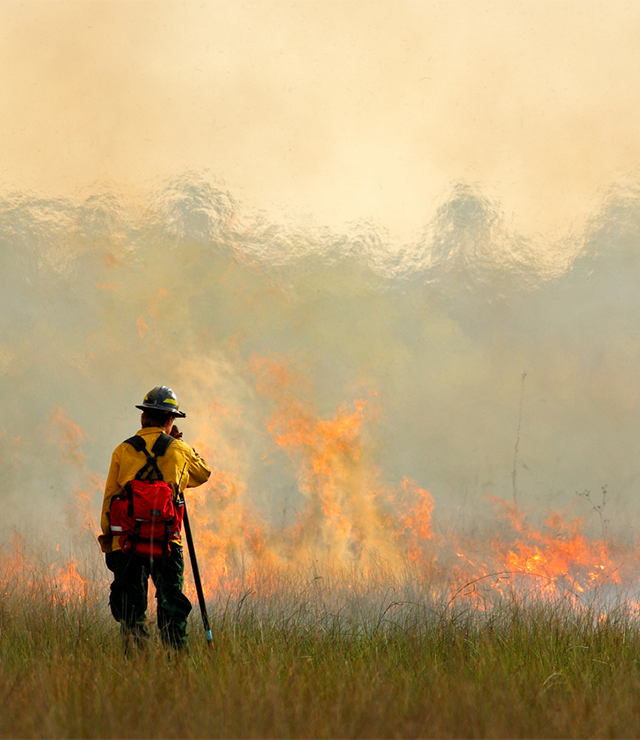
In one such challenge, a team of five students from The Junior Academy in five different countries devised a solution to lessen the impact of wildfires.
Not only do [wildfires] destroy homes, they also halt local economies, raze whole habitats, injure and kill many, send carcinogens into the air, and so much more,” says Matt Friedman, 16, United States, a member of the winning Wildfire team. “Understanding the factors related to real-world problems can help us solve them.”
Rubi Lopez
The team looked at how to best counter the wildfire embers and maintain adequate water supply in pumping stations without electricity. In addition to the scientific and engineering questions, the group also grappled with questions of cost-effectiveness and how to implement their solution in already existing communities.
“I think it is really easy to fall into the trap of putting science into neat little boxes where each idea or development belongs in its own discipline,” says Wildfire team member Isabelle Robertson, 18, New Zealand. “But the real world isn’t like that and global problems require us to use collaborative approaches and tie aspects of different disciplines into one solution.”
Devising Healthier Snack Options
Rubi Lopez, Monterrey Institute of Technology and Higher Education and Bianka Martinez, Technological Institute of Morelia were completing their undergraduate degrees, when they won the Pepsico Healthy Snack Challenge, devising a healthy snack that would appeal to children. Their solution required not just extensive nutrition research, but also thorough market research.
Bianka Martinez
“My experience with this challenge expanded my vision of the food industry and focused my attention on creating bigger impact in the world,” says Martinez, a biochemical engineer who recently finished a Master’s degree in Food Technology and Innovation at the Polytechnic School of Design in Milan, Italy.
“The best way to solve worldwide problems is by applying scientific skills combined with creative and design skills. Science lays the foundations, the procedures and the means to solve problems, while the design thinking helps us create innovative and unique solutions by focusing on people,” says Martinez.
“Scientific skills are like a yellow brick road that lead you to the truth. You don’t know if Oz is near or far, but you know you’re on the right path,” echoes Lopez an international business major. “I participated in this challenge despite it not being directly related to my major. I thought my skills could be useful and that this challenge offered the opportunity to learn new things. It’s not necessary to have a science degree to generate solutions to real problems, but critical thinking and constant curiosity are always necessary to make a positive change.”
Isabelle Robertson
“The tools and techniques of science helps people make breakthrough discoveries in understanding phenomena,” says Bhavna Mehra, General Manager, Infosys Science Foundation. “Therefore, science and its pursuers and practitioners have the responsibility, along with the vision, to solve these problems.”
A Real-World Scenario
This belief in the responsibilities of a scientist led to the development of the Infosys Science Foundation Nutrition Challenge. Originally envisioned as a way to raise awareness about the number of deaths attributed to malnutrition in children under the age of five, the challenge also gave participants a platform to develop.
“The skills of observing, experimenting, data collection and applying a concept in a real-world scenario were all tested as the solvers worked on the nutrition challenge,” explains Mehra.
The top two teams — team Podible and team Nutri-APP — came up with their own hypotheses, collected data and applied the results to come up with executable plans to tackle malnutrition.
“Cultivating an understanding and practice of scientific thinking in all fields will go a long way in helping solve social, economic and civic issues, says Mehra.”
New breakthroughs in controlling mosquito populations, quantum gravity and reducing chemical byproduct waste are among the cutting edge research being honored by the 2019 Blavatnik Regional Awards for Young Scientists.
Published September 14, 2019
By Kamala Murthy
This year the Blavatnik Regional Awards for Young Scientists received 137 nominations from 20 academic institutions in the tri-state area. A jury of distinguished senior scientists and engineers from leading academic institutions selected three outstanding scientists as Winners who will each receive a $30,000 unrestricted prize, and six Finalists (two from each category) who each will collect a $10,000 unrestricted prize.
Supporting outstanding scientists from academic research institutions across New York, New Jersey, and Connecticut since 2007, the Blavatnik Regional Awards for Young Scientists recognize and honor postdoctoral researchers in three scientific disciplinary categories: Life Sciences, Physical Sciences & Engineering, and Chemistry.
The 2019 Blavatnik Regional Awards Winners are:
Life Sciences: Laura Duvall, PhD, nominated by The Rockefeller University (now at Columbia University). Dr. Duvall’s discovery of two key molecules in mosquitos that inhibit blood-feeding and breeding has worldwide implications for controlling mosquito populations and the spread of diseases such as Dengue and Zika. At the time of nomination, Dr. Duvall was a trainee of the 2007 Blavatnik Regional Awards Faculty Winner, Leslie Vosshall of The Rockefeller University.
Physical Sciences & Engineering: Netta Engelhardt, PhD, nominated by Princeton University (now at Massachusetts Institute of Technology). Dr. Engelhardt’s research at the interface of general relativity and quantum field theory is answering complex questions about the fundamentals of our universe, including the remarkable explanation for the origin of black hole entropy. Her work is integral to the understanding of how the fabric of the universe at large-scale is encoded in quantum gravity.
Chemistry: Juntao Ye, PhD, nominated by Cornell University (now at Shanghai Jiao Tong University in China). Improving synthetic efficiency while lowering the cost of synthesis is a primary goal for pharmaceutical industries. Ye invented several new methods that allow for converting readily available chemicals into value-added and pharmaceutically relevant products in a highly efficient and economical manner, while reducing chemical byproduct waste. These methods could accelerate the pace of drug discovery through improving efficiency in synthesizing complex and bioactive compounds.
The cutting-edge discoveries being recognized this year cover an incredibly disparate breadth of work in quantum gravity, drug discovery, control of mosquito populations and underwater photographic imagery. These are the advances that will change our world.
Ellis Rubinstein
2019 Blavatnik Regional Awards Finalists
Life Sciences
Carla Nasca, PhD, nominated by The Rockefeller University — recognized for the discovery of acetyl-L-carnitine (LAC) as a novel modulator of brain rewiring and a possible new treatment for depression that acts by turning on and off specific genes related to the neurotransmitter glutamate.
Liling Wan, PhD, nominated by The Rockefeller University (currently transitioning to the University of Pennsylvania) — recognized for identifying a previously unknown function of a protein called ENL, which has the ability to read epigenetic information on our chromosomes and activate genes that perpetuate tumor growth. Elucidating the structure and mechanism of ENL has guided ongoing development of drugs to treat cancers.
Physical Sciences & Engineering
Derya Akkaynak, PhD, nominated by Princeton University — recognized for significant breakthroughs in computer vision and underwater imaging technologies, resolving a fundamental technological problem in the computer vision community — the reconstruction of lost colors and contrast in underwater photographic imagery — which will have real implications for oceanographic research.
Matthew Yankowitz, PhD, nominated by Columbia University (now at the University of Washington) — recognized for groundbreaking experimental work modifying the electronic properties of a new class of two-dimensional materials, known as van der Waal materials. van der Waal materials have generated tremendous interest due to their properties and the promise they show for use in next-generation optoelectronic and electronic devices, future computing, and telecommunications technologies. Dr. Yankowitz’s work led to the discovery that applied pressure can be used to induce superconductive properties in multi-layer graphene, and has significantly advanced a new area of research recently coined “twistronics.”
Chemistry
Yaping Zang, PhD, nominated by Columbia University — recognized for innovatively using electrochemistry and electrical fields in conjunction with scanning tunneling microscopy techniques to drive chemical reactions. This work provides a deeper understanding of the reaction mechanisms and opens new avenues for the use of electricity as a catalyst in chemical reactions.
Igor Dikiy, PhD, nominated by the Advanced Science Research Center at The Graduate Center, CUNY — recognized for completing the first study of G-protein–coupled receptor (GPCR) fast sidechain dynamics using NMR (nuclear magnetic resonance) spectroscopy to shed light on the molecular mechanisms of cell signaling. GPCRs control a variety of processes in the human body and are targets for over 30% of all FDA-approved drugs. Elucidating the mechanisms of GPCR signaling will enable researchers to design more effective drugs.
Honoring the Blavatnik Regional Award Winners and Finalists
The 2019 Blavatnik Regional Awards Winners and Finalists will be honored at the New York Academy of Sciences’ Annual Gala at Cipriani 25 Broadway in New York on Monday, November 11, 2019.
Mentoring had a profound impact on Adriana Bankston, PhD, as she transitioned from academia to a career in science policy. She offers guidance on how to effectively mentor the next generation.
Published May 20, 2019
By Adriana Bankston, PhD
Adriana Bankston, PhD
Mentoring is a necessity, not just during a particular phase in one’s life, but throughout one’s professional progression. And while I know that certain mentors can provide excellent training for academic careers and general skills at specific moments, others may serve as unconventional mentors during career transitions, or in life in general. These individuals could be faculty members or administrators at your university. They may mentor for different purposes or they may just be there to listen—even that can make a large difference.
I’m a former academic who transitioned into a science policy career. During my academic career, and in my transition from the bench, mentors have been critical.
How to Think Like a Scientist
My PhD advisor taught me how to think like a scientist, how to problem-solve and troubleshoot, and how to accomplish projects in a timely manner. She took the time to celebrate small successes and created a positive environment where I felt appreciated. She also chatted with me about personal matters that I felt comfortable sharing, and always had an open door and a listening ear when I needed it. Her mentoring style made all the difference for me, helping me gain confidence in both my personal and professional abilities.
During my transition into policy, and even now, it became clear that mentoring sometimes comes from unexpected places or even from people who may not necessarily be more experienced. We typically think of mentors as academic advisors, but I’ve come to find that sometimes even a friend can be a mentor, and they can help you move forward in your journey by purely being there to listen. Mentoring is less about giving one-directional advice, but more about building a bidirectional relationship in which both parties gain and grow together. In fact, both people can be the mentor and the mentee at different times during the relationship.
The Power of a Supportive Mentor
This distinction is particularly important for early career scientists and, in particular, those in academia, where there is often an imbalance in power dynamics. Having a supportive mentor can make a large difference in your happiness and professional success. Mentors are able to more broadly influence an entire generation of scientists by creating a positive environment in their research groups or labs. The more we focus on developing the person in front of us and building them up, the better the entire research enterprise will be in the long term.
We must also remember that the research enterprise is composed of various groups of scientists at different stages who likely require different types of mentorship. I want to ensure that the next generation of scientists is mentored appropriately for their level, and this includes providing additional support where it is needed. As a woman in science, one of my interests is to ensure that girls with an interest in STEM have role models to look up to who can help them be successful. Just as my PhD advisor did for me, I seek to be a mentor for the next generation of scientists, in particular girls who want to pursue a science career.
Learn more about educational and mentoring opportunities available through the Academy.
About the Author
Adriana Bankston is a Policy & Advocacy Fellow at The Society for Neuroscience (SfN), the Director of Communications & Outreach at the Journal of Science Policy and Governance (JSPG), and a Policy Activist at Future of Research (FoR), a nonprofit organization with a mission to champion, engage and empower early career researchers with evidence-based resources to improve the scientific research endeavor.