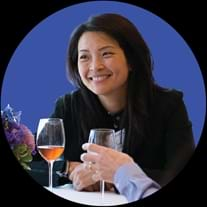
Learn how Academy member and immunologist Mirza S. Baig applies his love of science, with patience and persistence, to research inflammation.
Published September 2, 2016
By Diana Friedman
Mirza Baig, PhD
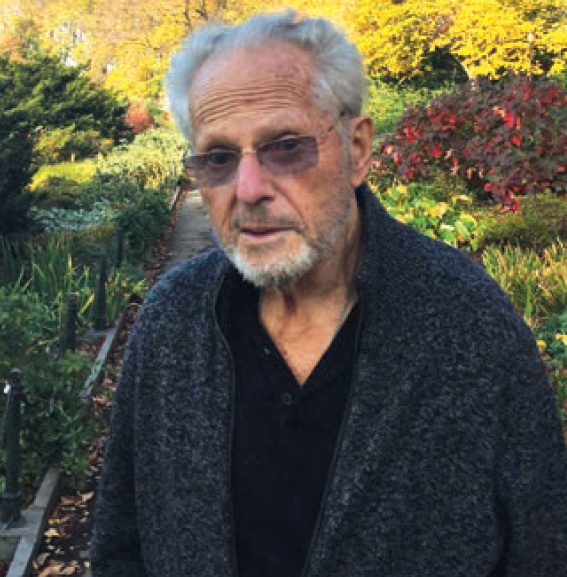
Academy Member and immunologist Mirza Baig, PhD, has one true passion: science. After receiving his PhD from the Central Drug Research Institute in India, he began his career doing bench work as a postdoc at the University of Illinois at Chicago. Today he’s back in India, working and publishing papers at the Indian Institute of Technology Indore.
What are you currently working on?
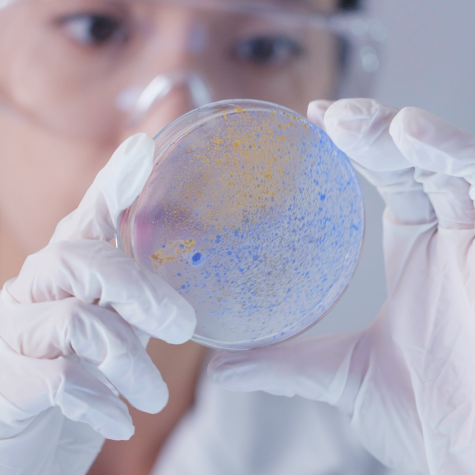
I focus primarily on the cell signaling networks in macrophages during various pathophysiological conditions that lead to inflammatory disease. We are studying both the basic biology of inflammation and the regulatory mechanisms that control the initiation, quality, and intensity of inflammatory responses. Our interest at the cellular and molecular levels is to understand how the inflammatory response is triggered and executed.
Who has been your biggest science inspiration?
I am inspired by not just one, but many people. When I see that people are doing great work which directly impacts and improves human health (even one step closer), I get inspired!
What have been some of the most rewarding moments of your career?
My recent publication in the The Journal of Experimental Medicine (JEM) on the role of NOS1-derived nitric oxide in inflammation was the most rewarding moment of my life. This novel study has not only paved the way for my future projects, but also given me confidence and, above all, the zeal to do more.
What are some of the things you do outside the lab?
It might sound a bit too much, but even outside the lab, I am thinking about science and research. An exciting publication or a novel idea makes me jump with joy or puts me in a trance. On a lighter note, I like traveling with my family.
What’s the best piece of career advice you’ve received?
Success is the sum of small efforts, repeated day-in and day-out. It comes with genuine efforts and patience, and, of course, there are never shortcuts!
A member of The New York Academy of Sciences’ Junior Academy reminisces about her involvement in the program, including as president, during the 1970s.
Published September 1, 2016
By W.M. Akers
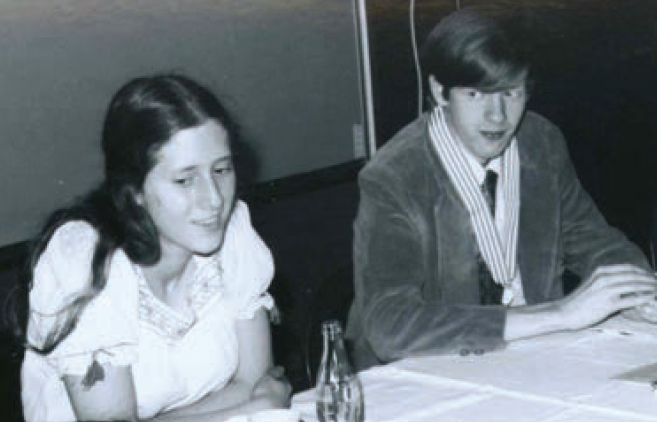
Junior Academy president Paul Sullivan passes the torch to Joy Hecht.
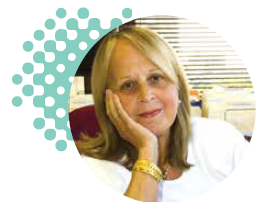
An environmental economist, Joy Hecht, PhD, has studied the economic impact of environmental damage everywhere from Lebanon to Malawi. But in 1974, she spent most of her free time somewhere less exciting: the Xerox room of The New York Academy of Sciences (the Academy). As president of the Junior Academy, Hecht oversaw an entirely student-run operation with members all over New York. We spoke to her recently to ask about her memories of the Junior Academy, and the special bond she and the other students formed.
How did you get involved with the Junior Academy?
I went to Hunter High School, which at that time was an all-girls school. My mother told me, “You should get involved with the Junior Academy of Sciences. You can meet boys that way.” I got involved with it, initially as a way to meet boys, and it became a part of my life.
I think a great deal of what made the Junior Academy awesome is that it was run by high school kids. We did all the work. No one else was telling us what to do.
What was the Junior Academy like then?
It was a place to hang out. The Junior Academy had its files at the Xerox room, so we all hung out at the Xerox machine. We were organizing events, we were doing mailings, we would get kids in after school to stuff envelopes. We always had a group of kids who were hanging around. It was very social.
We were often there after five o’clock, and we had free run of the place. I distinctly remember wandering in and out of the president’s conference room after everyone went home. These were really nerdy kids—a lot of big Trekkies—so we weren’t the type who were going to demolish the building, even though we did snoop around the place.
When you became president, how did you change things?
I started out doing the same stuff the Academy had been doing all along. That fall, my mother took me and my sister out to San Francisco, and I looked up the California Academy of Sciences, and I spent a bunch of time talking to the guy who ran their Junior Academy.
He asked me, “When you look back on this experience, what do you want to have accomplished? Do you want to feel like you did something new, or do you want to have just kept the Junior Academy what it was?”
So I went home, and I told the group: “We organize lectures, and we do field trips, but it doesn’t really make any difference. What we need to do is get these kids working in science, to see if they like it.”
We started calling up the Academy members who had labs, and asked if they were willing to take on high school kids during the summer. We put together what we called the summer opportunities booklet—we published it and distributed it. I assume there were kids who ended up working in labs because of it. That was the most important thing, to actually get kids doing stuff in science, instead of just going to lectures.
And did you meet boys?
Oh, yes. Paul Sullivan ended up being my first boyfriend. Mind you, I hated Paul at the beginning. He was the president the year before me, and I couldn’t wait for him to leave so I could take over, but then the summer before my senior year of high school, he called to tell me the Academy had hired him as the Junior Academy advisor. I was madder than hell, but I got over it.
Every June, one of the field trips would be a trip up to Mohonk. There was a trail there we always hiked, and it’s something my cohort at the Academy kept doing every summer for four or five years after high school. When Paul died in 1999, we all found each other again, and we went on the same trail at Mohonk, and we planted a tree in his memory. We didn’t stay boyfriend and girlfriend very long, but we stayed good friends throughout his life.
From his career as an accomplished medical researcher to his post-retirement foray into documentary production, Richard Rifkind has learned that “Failure is an essential step in the pathway to success.”
Published September 1, 2016
By W.M. Akers
Richard Rifkind
By age thirteen, Richard Rifkind was beginning to worry about his future. Following the party celebrating his Bar Mitzvah, he convinced his family physician to take him along on his evening round of house calls. Before morning, the inquisitive boy was set on becoming a doctor. The practice of medicine eventually led him to basic biological research at the lab bench, a distinguished career at several of New York’s most respected research institutions, and, finally, in his retirement years, to the cutting edge of documentary film.
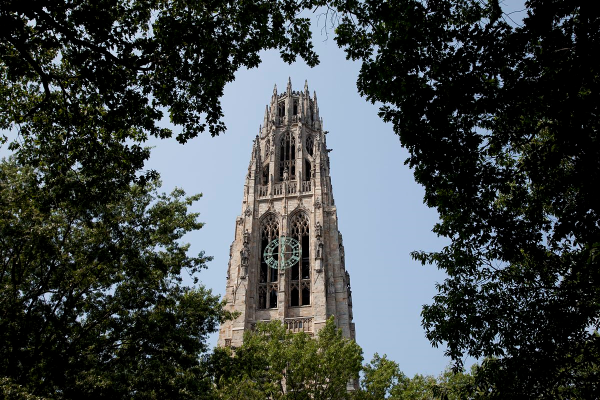
After time in the army, and with degrees from Yale and, in 1955, from the Columbia University College of Physicians and Surgeons, Rifkind taught at Columbia, where he led an overhaul of the curriculum designed to provide medical students with a stronger and more relevant grounding in the scientific and research elements that supported their clinical experiences. “We are now in an era of enormous growth in scientific knowledge,” Rifkind told his medical students. “The practice of medicine must keep up with it!”
In 1984, Rifkind was appointed Chairman and director of the legendary Sloan-Kettering Institute for Cancer Research, where he presided over a complete overhaul and diversification of the Institute’s research faculty towards making the organization “more advanced and adventurous.” His own laboratory work now focused on control of malignant cell growth, leading to a new class of chemotherapy, as the affiliated Memorial Hospital set goals of applying developmental biology to the treatment of cancer.
Promoting the Public Understanding of Science
In the 1990s, as a participant in high level discussions among New York’s leading scientific institutions, Rifkind was able to convince his colleagues that “to make this city able to compete for the finest research talents, we must collaborate in providing the most advanced scientific technology.” This led to the formation of the New York Structural Biology Center, a trend-setting consortium of ten biomedical institutions and the creation of a world-class, cost-efficient cooperative core facility, ultimately representing public investment of close to $100,000,000.
That talent for large-scale management challenges caught the eye of The New York Academy of Sciences (the Academy), who in 1993 recruited Rifkind to serve on their Board of Governors.
“We are very grateful to Dick for his years of service on our Board of Governors,” says Academy President Ellis Rubinstein. “The Academy is incredibly fortunate to have been able to draw upon someone of his stature, who could bring to the role not only a profound understanding of the scientific process, but also the accumulated wisdom of years of experience in leading complex global organizations.” Promoting a strong interest in the public understanding of science, Rifkind also served on the boards of the New York Academy of Medicine and the New York Hall of Science.
Farther afield, Rifkind took an adventurous leap into film making, seeing the documentary as a way of awakening public concern for the terrible impact of mass tourism on a dearly loved city, Venice, where he had a second home. Working with his wife, Carole, an author and architectural historian, he produced and directed The Venetian Dilemma, a film about a city that the New York Times’ review of the film noted as “being admired to death” that was shown on public television and film festivals in the U.S. and abroad.
Encouraging the Next Generation of Scientists
“It amazed me to learn that making a film is very like doing science,” Rifkind says. “It’s a continuous process of asking questions and solving problems. You can’t let yourself give up.” Upon retiring from Sloan Kettering in 2003, he set out to make a film that encourages youth to enter the world of science.
Together with Carole and his camera crew, he spent several years in repeatedly shooting the experiences of three young scientists in training in a laboratory at Columbia University, not knowing if the students would fail or succeed in their projects. With a good deal of dramatic tension, one of the students achieves a remarkable success. The film received a top award from the National Academy of Science, was broadcast around the world, and is used as a teaching tool in dozens of universities. One message of the film is that “Failure is an essential step in the pathway to success.”
“As the Academy launches programs like the Junior Academy, which will impact children all over the world, Dick remains an inspiration,” says Rubinstein. “His combined success in science and filmmaking remind us that creativity is an essential ingredient in STEM.”
Rifkind is impressed by the Junior Academy, a project he called “beautiful,” saying that if you want science to continue, “you have to invest in the young.”
There is no better time to be a woman in the sciences. Generations of advocacy and effort have helped usher more women into diverse scientific fields than ever before, and despite the challenges that remain, today’s women scientists are the largest and most influential cohort in history, their voices louder by the minute.
Ask any of the 34 women who are winners and finalists of the Blavatnik Awards for Young Scientists and they will readily volunteer that they have the best job in the world. The long years of schooling, competitive atmosphere, tight faculty job market, and difficult juggling act between work and family never diminish the joy and excitement that comes through in discussions of their work. For many in the group, becoming a scientist was the dream of a lifetime, even before they had the words to describe it.
Many Paths
For Kathryn Uhrich, it began with questions. “Even though, I didn’t know I wanted to be a scientist, but I knew I was curious,” the dean of natural and agricultural sciences at Rutgers University recalled of her childhood self. “I wanted to know how everything worked. I took everything apart.” A similar early curiosity found a young Laura Landweber parked at her family’s kitchen table on snow days, immersed in an anatomy coloring book or busy building models. One winter, without a hint of prescience, she painted a model of a paramecium—a ciliate from the same group as the organism on which her groundbreaking work in molecular evolution is based.
The notion that questioning, probing, assembling, and even destroying are all central to the scientific endeavor did not register for these women until later, most often when elementary or middle school science teachers noticed an aptitude for the subject. By the time particle physicist Mariangela Lisanti was in the eighth grade, she knew where her interests lay, even if she was still honing her experimental skills.
Laura Landweber
“My science fair project that year was an investigation of whether microwaves killed or damaged corn seeds,” she remembers fondly. “I knew they did, but I was trying to find out how much they could take before their growth was stunted, and at what point they died. I grew all these corn seeds and literally covered my parents’ dining room table with petri dishes.” With a reassuring laugh, she adds that the following year’s project investigated how to protect the seeds.
A Knack for Science
Sometimes a knack for science exists among other talents, and while it’s hard to imagine microbiologist Christine Jacobs-Wagner as anything but a scientist, science was not her first career choice. At a university open house during her final year of high school, she made a beeline for the law department. “I sat through exactly one class and that was it—I didn’t want to be a lawyer,” she says. “I had to pick a major, and even though I was really interested in business, I picked science because my favorite high school classes were biology and chemistry. I’m a scientist because of those teachers. They really had a tremendous influence on me.”
Discovering a love of science and a natural gift for the academic skills it requires, whether in math, biology, statistics, or chemistry, is only the first step. Even before the long road of advanced degrees, there is a choice: which field beckons loudest? Daphne Bavelier, a cognitive neuroscientist whose work on brain plasticity has upended conventional views of how learning takes place, started out pursuing molecular biology.
At an internship in her third year of undergraduate work, during some of her first hands-on molecular biology experiments, she had what she describes as “a real halt, a moment of ‘Wait, what am I doing?’” She was surprised that a field that thrilled her in books felt less exciting in real life. “I discovered it was more fun to read about Western blots than to do them,” she remembers. “And thankfully this all happened at a time when there was a revolution in our understanding of brain science. I was fascinated by that, and even though my field didn’t exist yet, that all changed quickly.”
The Road Ahead
Bavelier was fortunate to land in the lab of trailblazing psychologist Molly Potter, who had in the 1960s been one of the first women to join the faculty at the Massachusetts Institute of Technology, at a time when many of the school’s buildings had no women’s restrooms. Potter was not just one of Bavelier’s most influential scientific mentors; she epitomized a quality crucial to the success of any scientist: determination.
Today’s academic climate insists that faculty scientists wear many hats: grant writer, teacher, researcher, and sometimes even politician. Add the pressure to “publish or perish” and it is not hard to see why biological engineer Antje Baeumner tells her students, “If you want the easy route, don’t get a PhD.”
Choosing a life in academia means following the work you love into an environment that tests even the brightest and most confident, with the specter of rejection never far from mind. Whether it involves being turned down for a grant or having a paper rejected for publication, a life in science means learning to accept no for an answer. What separates the highest achievers seems to be the ability to balance the short-term difficulties with the promise of big-picture goals.
“We just had a grant rejected last night and a paper rejected this morning,” says Uhrich. “But that’s just 5 percent of the time. The other 95 percent of the time I’m thrilled. No matter what you do or how you do it, there will be difficulties, so you may as well do what you enjoy.”
Handling Rejection
The subject of rejection brings up a particular set of issues for women in science, many of whom approach the topic, and the perceived differences in how men and women process the experience, with an analytical precision befitting their occupation. Many have acknowledged that for women, who represent less than 25 percent of science faculty in the country, being rejected or overlooked can have larger resonance, and the effects can be more detrimental.
Carmala Garzione
“If you look at the culture of promotion and tenure, it really preys on insecurity,” says geologist Carmala Garzione. “You feel like your work is being evaluated until someone gives you the final nod and says ‘You’re good enough, you can stay.’” Garzione suspects that many women are hampered by notions of how they should behave in a tough competitive environment. “These perceptions feed women’s doubts in their ability to succeed,” she says. “I tell my students to worry less—keep their heads down, get their work done, and do what they love.”
Jacobs-Wagner posits that men in science may be able to push past insecurities and setbacks more easily than she and her female colleagues seem to do early in their careers because societal norms present men with more opportunities to face rejection early in life. She cites the typical roles of courtship, explaining, “This has been going on forever—both men and women flirt, but the men propose. The norm is the man in control, and men experience a ton of rejection in this area. If that’s what builds confidence, then maybe we can learn more from being rejected, maybe it can’t be such a big deal.”
The Role of Gender Roles
Gender roles never entered into Daniela Schiller’s process of becoming a neuroscientist. As a child growing up in Israel, she knew she would someday serve in the army. “Over the years I played the drums and parachuted and did a lot of things typically considered masculine,” she explains. “At one point, I wondered why. But I realized it’s not about male or female ability, it’s about choosing the human experience you wish to have. For me, I think it helps to not consider gender, and to just do it, no matter how hard it is.”
Refrains of just do it, keep trying, never give up, take it as far as you can are constant mantras for this group of elite women, and it’s advice that they never hesitate to share with peers and students. Cell biologist Agnel Sfeir’s passion for her field survived the difficulties of growing up amid the Lebanese Civil War, and her determination remains undiminished today.
“If you love science, you have to take it all the way to the end. There’s nothing more rewarding than having your own lab. This is the ultimate. It’s tough, but it’s doable, and there are plenty of women doing it,” she says.
The Best Life
Elza Erkip
For electrical engineer Elza Erkip, the best job in the world is one that allows her to pursue her passion—these days, much of her research is in wireless networking—and to have the flexibility to make her own hours, spend time with her two young daughters, present her research at major conferences, and mentor her students. It’s the job she has, and she cannot imagine any other life.
“Some women decide that the juggle of life after a PhD is just too much. But a faculty position is actually the best job for a woman to have a career and a family. Why is this still a secret?” she exclaimed. “I’m so flexible, and there’s nothing else like it. The hard part is getting here, but once you’re here, it’s the best,” says Erkip, who also serves as a mentor for The Junior Academy.
“Getting here” is unquestionably a different journey for men and women—if it were not, perhaps the stubbornly low rate of women scientists applying for faculty positions would rise. The simple, and at times frustrating, math that causes two major paths in the lives of many women in science—their childbearing years and their work toward tenure—to intersect, is a major factor that lures some away from academia.
Erkip does not deny the challenges, but she is determined to be living proof that they can be overcome. “Part of the problem is perception, and part of it is having more role models. One of my students got pregnant just as she was about to finish her PhD, and she told me that she looked at me and my family and knew that she could do it too.”
A Marketing Problem
But the dream career for Erkip and many of her peers still suffers from a marketing problem. Uhrich sees most of her doctoral students accept industry jobs, and she and others at her level find themselves working harder to promote the best aspects of faculty science to the next generation.
“I try to share my excitement—who wouldn’t want a job where you get paid to play detective, to try to figure out how nature works. Often, I can’t imagine a better job and I tell that to my students,” says Jacobs-Wagner. “I tell them that we all get rejected—I get slapped in the face all the time—and if we take it a little bit personally, which is natural, it only makes the quality of our science better.”
Bavelier echoes similar sentiments with the students she mentors, striving to show that the benefits of a career in science are too rich to ignore. “It doesn’t matter where you work, balancing work and family is never simple. But the flexibility and the rewards of committing to science are so great, I have to show them it’s worth accepting the difficult parts.”
Certainly institutional change will help, and many universities boast growing rosters of women in faculty positions, particularly at untenured ranks. Established senior scientists acknowledge that further systemic change will take a generation. “As a tenured woman in science, I’m definitely a role model for my students,” says Landweber. “But especially as a full professor at a small place like Princeton, with few senior women in science relative to competitor institutions, you might find yourself the only woman at that rank in your department. And then there’s another gender imbalance if the leaders in the department have had their PhDs for 50 years and you’ve had yours for 15.”
A Mid-Career Move
Landweber, who will soon move to Columbia University after more than two decades at Princeton, adds that “a mid-career move can bring refreshing and exhilarating change. Plus, the opportunity to be recruited as a senior colleague means that there is no more glass ceiling.”
Emily Hodges
The postdocs and new faculty who will become the deans and department heads of the future seem to be taking the messages of their mentors to heart, and many new faculty are experiencing refreshingly positive early days on the job. After just six months at Vanderbilt University, biochemist Emily Hodges reports that she is already taking on leadership roles. “I have to give my colleagues a lot of credit—it’s been very encouraging and I’m already being put on committees,” she says. “You’d have to be blind not to see that there are fewer women, but I’m finding opportunities to become a leader.”
Hodges and her contemporaries, just like the generations of women scientists that preceded them, are shattering misconceptions and creating new paradigms for women in science. They are also benefitting from cultural shifts that they hope will bring greater equality to their work. They’re fearless boundary-breakers, agents of change. They are living the best advice Erkip gives to her young students. “We cannot be afraid of what’s hard,” she says. “Love what you’re doing and you will succeed.”
Interdisciplinarity is a word à la mode, as shown by the contributions in Nature’s special issue on the topic (September 2015). However, the collection of articles and the statistics they present confirm that interdisciplinary science is still not mainstream: it is still rarely supported by funders of scientific research despite the increasing number of calls for interdisciplinary projects, it is still rarely taught in higher education curricula, and it is still not recognized by many academic institutions. Indeed, interdisciplinary research is considered by many to be contradictory to the basic principles of the production of scientific knowledge.
Despite these challenges, the volume of interdisciplinary research has increased in recent decades, especially since 2000. In addition, the diversity and scope of collaborations between disciplines has increased. However, the number of collaborations between “near neighbor disciplines”—for example between researchers in social sciences—exceeds by far the number of collaborations between “distant disciplines,” such as biophysical sciences and social sciences. Examples abound.
For instance, the United Nations Intergovernmental Panel on Climate Change (IPCC) includes over 1,000 biophysical scientists but only a small number of researchers from the humanities and social sciences. The cultural, ethical, psychological, and spiritual dimensions of climate change should be part of a much-needed humane conceptual framework that could improve our understanding of that extremely complex subject and how societies can tackle it.
Geophysical and Biochemical Dimensions
The biophysical sciences are committed to improving our understanding of the geophysical and biochemical dimensions of climate change at global, regional, and local levels; we must also understand the individual, group, and societal attitudes, perceptions, motivations, reasoning, and values concerning climate change at each of these levels before considering which behavioral, financial, political, and technological tools to implement in specific situations.
Global climate change is not just a complex ecological challenge but indeed a societal one that concerns sustaining human life and guaranteeing health in diverse climatic, cultural, geographical, and political contexts. Tackling climate change will require a fundamental rethinking of the role and responsibility of human agency in the state of the planet.
Interdisciplinary contributions to climate change (and other components of global change) extend beyond common research questions about the occurrence and magnitude of change to address other equally important questions, such as how change is experienced by different groups or populations, why some countries have failed to acknowledge climate change in national policy agendas, and how adaptation and mitigation could become more effective.
No Prescribed Research Protocol
There is no prescribed research protocol for interdisciplinary research into complex questions. Such research is more than simply effective teamwork, and integration cannot be taken for granted. According to Swiss developmental psychologist Jean Piaget (1896–1980), who had a doctorate in biology, there are at least three modes of interdisciplinary collaboration. The first results from the willingness of researchers from two or more disciplines to collaborate and exchange ideas and information.
The second is the transfer of concepts from one discipline, sub-discipline, or field to another for reuse in a different line of inquiry; a recent example of this is the transfer of the concept of resilience from physics to the biological, ecological, and social sciences.
The third mode is the development of new concepts, such as planetary health, as described by Whitmee et al. in The Lancet (2015).
The either/or dichotomy of the current debate on disciplinary versus interdisciplinary research discussed in the special issue of Nature needs to be surpassed. It’s time to admit that disciplinary and interdisciplinary research can and should coexist, because the co-benefits of interdisciplinary research for individuals, research groups, and research institutions in the public and private sectors can lead to added value for society.
Academy Member Roderick J. Lawrence is a visiting professor at the United Nations University’s International Institute for Global Health, and holds several roles at the University of Geneva, including emeritus professor at the Geneva School of Social Sciences and director of the Global Environmental Policy Program. He is also an adjunct professor at the National University of Malaysia.
The Academy community represents one of the most dynamic and diverse groups of STEM professionals and science enthusiasts and supporters around the world, with more than 16,000 Members across 100 countries.
Published May 1, 2016
By Diana Friedman
Academy Members are building STEM careers, overcoming the challenges associated with cutting-edge research, putting science into practice, influencing policy, and supporting future generations of science leaders.
We invite you to get to know your fellow Academy Members and learn about new opportunities to interact and get involved!
Anne Inger Helmen Borge
As the Head of Research for the Department of Psychology at the University of Oslo in Norway, Anne Inger Helmen Borge, PhD, has focused her own research on developmental psychology. She conducts longitudinal studies on behavioral and emotional development from childhood through adulthood. An internationally recognized expert with Horizon 2020, the largest European Union research and innovation program, and a mentor to others, Anne cites early experiences with a mentor of her own as the source of major science inspiration.
What are you currently working on?
“The Matter of the First Friendships,” a longitudinal study that examines whether friendships protect against the development of psychopathology among very young children. Data collection originally took place between 2006 and 2009. It was surprising to observe how early children, ages 1–2 in daycare, establish friendships and show preferences among peers in the groups. This spring, 10 years after we started, we will follow up with the children who are now are 12–16 years of age.
Why did you become a Member of the New York Academy of Sciences?
I attended one of your excellent conferences and I understood international organizations were important. I like very much the Academy’s balance of understanding young scientists as well as those of us who are older.
Expand Your Network!
Inspired by the passion, expertise, and unique perspectives of your fellow Members? Tap in to the incredible network the Academy offers through our mentoring programs.
We’re thrilled to offer you access to a new opportunity to get involved and interact: Member-to-Member Mentoring. The program matches you with a mentor—or a mentee—who is a fellow STEM professional and Academy Member. Depending upon your experience level and needs, you can request a mentor, become a mentor, or both.
Interested in mentoring students? We also offer incredible mentorship opportunities through the Academy’s Global STEM Alliance, which delivers education programs that can help you develop your teaching and communication skills, while paying it forward to the next generation of scientific innovators.
The Academy community represents one of the most dynamic and diverse groups of STEM professionals and science enthusiasts and supporters around the world, with more than 16,000 Members across 100 countries.
Published May 1, 2016
By Diana Friedman
Academy Members are building STEM careers, overcoming the challenges associated with cutting-edge research, putting science into practice, influencing policy, and supporting future generations of science leaders.
We invite you to get to know your fellow Academy Members and learn about new opportunities to interact and get involved!
Mohamed El Zowalaty
Virologist and microbiologist Mohamed El Zowalaty, PhD, who often goes by the nickname Mez, has been passionate about biology for as long as he can remember. His commitment to the animal–human interface has led to unique opportunities in Malaysia, the United Kingdom, and the U.S.
What are you currently working on?
I am working on research projects focused on zoonotic diseases, including the MERS coronaviruses, nanoparticles of biomedical application as antimicrobial agents, and the microbiome as it relates to human health.
Who has been your biggest science inspiration?
My late father Dr. Ezzat El Zowalaty. He was a veterinarian who inspired me to study at the animal–human interface. The animal–human interface refers to diseases that are transmitted from animals to humans (zoonotic diseases), or from humans to animals (zooanthroponosis). I find veterinary science to be a cornerstone field in improving human health.
What are some of the things you do outside the lab?
Arts, reading, tennis, and I volunteer in community and childhood education initiatives on various topics aiming to improve health.
Also, a few months back, I was selected as a champion and listed member for Antibiotic Action, an independent, global initiative funded by the British Society for Antimicrobial Chemotherapy. Antibiotic Action contributes to national and international activities aiming to improve public awareness on antimicrobial resistance.
Expand Your Network!
Inspired by the passion, expertise, and unique perspectives of your fellow Members? Tap in to the incredible network the Academy offers through our mentoring programs.
We’re thrilled to offer you access to a new opportunity to get involved and interact: Member-to-Member Mentoring. The program matches you with a mentor—or a mentee—who is a fellow STEM professional and Academy Member. Depending upon your experience level and needs, you can request a mentor, become a mentor, or both.
Interested in mentoring students? We also offer incredible mentorship opportunities through the Academy’s Global STEM Alliance, which delivers education programs that can help you develop your teaching and communication skills, while paying it forward to the next generation of scientific innovators.
The Academy community represents one of the most dynamic and diverse groups of STEM professionals and science enthusiasts and supporters around the world, with more than 16,000 Members across 100 countries.
Published May 1, 2016
By Diana Friedman
Academy Members are building STEM careers, overcoming the challenges associated with cutting-edge research, putting science into practice, influencing policy, and supporting future generations of science leaders.
We invite you to get to know your fellow Academy Members and learn about new opportunities to interact and get involved!
Michael I. McBurney
Michael I. McBurney, PhD, FACN, who lives in Kinnelon, NJ, is the vice president of Science, Communications & Advocacy for DSM Nutritional Products as well as an Adjunct Professor at the Friedman School of Nutrition Science & Policy at Tufts University. Michael’s “life goal” is to make a difference and he is achieving this through his work in the fields of nutrition and health.
You blog a lot—what’s one of your favorite posts?
This is a difficult question as I am usually enamored with every blog once it is posted! With over 900 blog posts at DSM’s TalkingNutrition blog, it is our readers who have the final say (vote) on best blog post. And using that yardstick, the vote usually goes to those by my co-blogger, Julia K. Bird! However, as a recent example, it is personally satisfying to have a platform to discuss nutrition research [such as my recent post on] “Why Conduct Nutrition RCTs without Nutrition Assessment?”
What is one of the biggest challenges you’re facing right now?
Consumer confusion about the nutritional quality and safety of foods. Over 70% of our food purchases are for processed foods. Our health is most often challenged because we eat too much and/or we routinely eat the same few foods. Without a diverse diet, moderate portions, and adherence to recommended number of servings from each food group, it is very difficult to consume recommended quantities (RDAs) of vitamins and minerals.
Food enrichment and fortification has increased the amount of micronutrients (nutrient density) of our diet. A multivitamin-mineral supplement can provide additional insurance that we meet RDAs. Yet, there is a misperception about the healthfulness of fortified foods and multivitamin-mineral supplements. Because of our food choices and sedentary lifestyle, obesity co-exists with undernutrition (inadequate intake of essential nutrients).
Expand Your Network!
Inspired by the passion, expertise, and unique perspectives of your fellow Members? Tap in to the incredible network the Academy offers through our mentoring programs.
We’re thrilled to offer you access to a new opportunity to get involved and interact: Member-to-Member Mentoring. The program matches you with a mentor—or a mentee—who is a fellow STEM professional and Academy Member. Depending upon your experience level and needs, you can request a mentor, become a mentor, or both.
Interested in mentoring students? We also offer incredible mentorship opportunities through the Academy’s Global STEM Alliance, which delivers education programs that can help you develop your teaching and communication skills, while paying it forward to the next generation of scientific innovators.
The Academy community represents one of the most dynamic and diverse groups of STEM professionals and science enthusiasts and supporters around the world, with more than 16,000 Members across 100 countries.
Published May 1, 2016
By Diana Friedman
Academy Members are building STEM careers, overcoming the challenges associated with cutting-edge research, putting science into practice, influencing policy, and supporting future generations of science leaders.
We invite you to get to know your fellow Academy Members and learn about new opportunities to interact and get involved!
Dmitry Storcheus
Dmitry Storcheus, MS, is an engineer at Google Research NY, where he specializes in the research and implementation of dimensionality reduction.
What initially drew you to the field of machine learning?
I was drawn to the field because of the remarkable power of machine learning tools to learn and forecast patterns in data. I remember an article from 2011 about scientists from Stanford who were able to use machine learning to study breast cancer with their algorithm (called C-Path) using microscopic images. They reported that the algorithm was more accurate than human doctors in predicting survival, which was amazing for me at that time. The success of machine learning combined with its mathematical rigor inspired me to conduct research in this field.
What are some of the biggest challenges in machine learning right now?
The first one is regarding supervised versus unsupervised methods. While unsupervised methods have greater flexibility, the supervised ones can be fine-tuned to achieve better accuracy, so there is a tradeoff. Recently I published a paper coauthored with Mehryar Mohri and Afshin Rostamizadeh that makes a point for using supervised dimensionality reduction, since it has favorable learning guarantees. Particularly, we show that the generalization error of a hypothesis class that includes learning a linear combination of kernels that define projection jointly with a classifier has a favorable bound.
The second challenge is “Can kernel machines match deep neural networks in accuracy?” So far we have seen great progress by wonderful scientists, such as Fei Sha and Le Song, who were able to use kernel approximations to match deep neural networks in accuracy on speech datasets and provide theoretical justification of their results. This work is still in progress, and I think it will be raising widespread discussions in the next couple of years.
Expand Your Network!
Inspired by the passion, expertise, and unique perspectives of your fellow Members? Tap in to the incredible network the Academy offers through our mentoring programs.
We’re thrilled to offer you access to a new opportunity to get involved and interact: Member-to-Member Mentoring. The program matches you with a mentor—or a mentee—who is a fellow STEM professional and Academy Member. Depending upon your experience level and needs, you can request a mentor, become a mentor, or both.
Interested in mentoring students? We also offer incredible mentorship opportunities through the Academy’s Global STEM Alliance, which delivers education programs that can help you develop your teaching and communication skills, while paying it forward to the next generation of scientific innovators.
The Academy community represents one of the most dynamic and diverse groups of STEM professionals and science enthusiasts and supporters around the world, with more than 16,000 Members across 100 countries.
Published May 1, 2016
By Diana Friedman
Academy Members are building STEM careers, overcoming the challenges associated with cutting-edge research, putting science into practice, influencing policy, and supporting future generations of science leaders.
We invite you to get to know your fellow Academy Members and learn about new opportunities to interact and get involved!
Devika Varma
Devika Varma is a PhD candidate in Biomedical Engineering at The City College of New York. Her thesis focuses on developing novel, plant-based materials for intervertebral disc repair and regeneration. In short, she is working to figure out a non-invasive treatment for back pain. In her spare time, Devika mentors students by participating in the Academy’s mentoring programs.
Who has been your biggest science inspiration?
My grandfather, K.K.R Varma, has been my biggest science inspiration. He would always encourage me to read science fiction authors and push his collection of Popular Mechanics my way. Even at the age of 90 he is learning new languages like Urdu and Arabic. He also continues to brush up on his Calculus. This constant thirst for knowledge is what continues to inspire me. I am very lucky to have him in my life.
What’s a fun fact about you that might surprise your friends or colleagues?
I strongly believe in the power of human “poop.” Human excreta is packed with nutrients and has tons of untapped energy which I believe can be manipulated to power our future and increase our agricultural productivity, organically. Resourceful sanitation can create biofuel and compost from dry toilets. Sounds like a pipe dream, but organizations such as SOIL in Haiti are setting great examples.
What is the most important benefit you feel the Academy’s Global STEM Alliance provides?
The programming at the Global STEM Alliance has been very impressive in terms of how impactful they are for young professionals in STEM and how genuine their outreach efforts have been. Their mentoring programs such as the Afterschool STEM Mentoring Program and its “Food Connection” project have really helped me tap into the inner mentor in me.
Expand Your Network!
Inspired by the passion, expertise, and unique perspectives of your fellow Members? Tap in to the incredible network the Academy offers through our mentoring programs.
We’re thrilled to offer you access to a new opportunity to get involved and interact: Member-to-Member Mentoring. The program matches you with a mentor—or a mentee—who is a fellow STEM professional and Academy Member. Depending upon your experience level and needs, you can request a mentor, become a mentor, or both.
Interested in mentoring students? We also offer incredible mentorship opportunities through the Academy’s Global STEM Alliance, which delivers education programs that can help you develop your teaching and communication skills, while paying it forward to the next generation of scientific innovators. The Junior Academy and 1000 Girls, 1000 Futures are recruiting new mentors this June.