The Academy community represents one of the most dynamic and diverse groups of STEM professionals and science enthusiasts and supporters around the world, with more than 16,000 Members across 100 countries.
Published May 1, 2016
By Diana Friedman
Academy Members are building STEM careers, overcoming the challenges associated with cutting-edge research, putting science into practice, influencing policy, and supporting future generations of science leaders.
We invite you to get to know your fellow Academy Members and learn about new opportunities to interact and get involved!
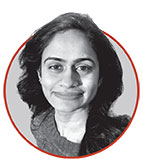
Yana Zorina
Yana Zorina, PhD, is currently working as a cell biologist at Acorda Therapeutics, a biotechnology company located just north of New York City that focuses on developing treatments for multiple sclerosis and spinal cord injury.
What’s the best piece of career advice you’ve received?
When I was in college, I entered the pre-med program with the assumption that if I was interested in science and biology, then the most logical place to go was medical school. My pre-med advisor at the time told me that science comes in three stages: scientists discover new knowledge, teachers disseminate the new knowledge, and doctors apply it to patients. At that point I realized that I wanted to be at the root of the process, and these words have stayed with me until the present day.
Did you ever compete in a science fair as a kid?
During high school I participated in the Intel Science Talent Search program and became a semi-finalist after performing a screen for iron-regulated promoters in mycobacterium tuberculosis. The Intel competition served as my springboard into the amazing world of scientific research.
Do you have any hobbies outside of science?
Ever since childhood I have always enjoyed intricate craft making. I particularly love making flowers out of fine beads. The patience and attention to detail required in such projects directly translates to the projects I now work on in the lab. The morphological beauty of neuronal and glial cells speaks directly to the artist in me, and I greatly enjoy imaging these cells via confocal microscopy.
Expand Your Network!
Inspired by the passion, expertise, and unique perspectives of your fellow Members? Tap in to the incredible network the Academy offers through our mentoring programs.
We’re thrilled to offer you access to a new opportunity to get involved and interact: Member-to-Member Mentoring. The program matches you with a mentor—or a mentee—who is a fellow STEM professional and Academy Member. Depending upon your experience level and needs, you can request a mentor, become a mentor, or both.
Interested in mentoring students? We also offer incredible mentorship opportunities through the Academy’s Global STEM Alliance, which delivers education programs that can help you develop your teaching and communication skills, while paying it forward to the next generation of scientific innovators.
The Academy community represents one of the most dynamic and diverse groups of STEM professionals and science enthusiasts and supporters around the world, with more than 16,000 Members across 100 countries.
Published May 1, 2016
By Diana Friedman
The Academy community represents one of the most dynamic and diverse groups of STEM professionals and science enthusiasts and supporters around the world. Academy members are building STEM careers, overcoming the challenges associated with cutting-edge research, putting science into practice, influencing policy and supporting future generations of science leaders.
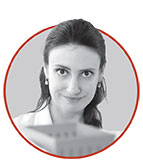
Fredda Weinberg
Fredda Weinberg, a graduate of the original Junior Academy program, returned to the Academy as a member while pursuing her Master’s in Information Systems. A programmer for Reliable Health Systems, Fredda is passionate about “connecting the needy to sources of security, justice, and sustenance.”
How did you get hooked on a STEM career? The ability to reproduce results was enough to convert me from superstitious to scientific.
Was there someone who helped encourage you to pursue a career in STEM? My chemistry teacher at Sheepshead Bay High School [in Brooklyn, NY], in 1977, showed me my first programming language and suggested that one day, it could be a career.
What has been one of the most rewarding moments of your career? There’s nothing like having your work profiled on the local evening news. A little technology, leveraged properly, changed countless lives for kids who previously did not imagine they had a future.
Expand Your Network!
Inspired by the passion, expertise, and unique perspectives of your fellow Members? Tap in to the incredible network the Academy offers through our mentoring programs.
We’re thrilled to offer you access to a new opportunity to get involved and interact: Member-to-Member Mentoring. The program matches you with a mentor—or a mentee—who is a fellow STEM professional and Academy Member. Depending upon your experience level and needs, you can request a mentor, become a mentor, or both.
Interested in mentoring students? We also offer incredible mentorship opportunities through the Academy’s Global STEM Alliance, which delivers education programs that can help you develop your teaching and communication skills, while paying it forward to the next generation of scientific innovators.
The Academy community represents one of the most dynamic and diverse groups of STEM professionals and science enthusiasts and supporters around the world, with more than 16,000 Members across 100 countries.
Published May 1, 2016
By Diana Friedman
Academy Members are building STEM careers, overcoming the challenges associated with cutting-edge research, putting science into practice, influencing policy, and supporting future generations of science leaders.
We invite you to get to know your fellow Academy Members and learn about new opportunities to interact and get involved!
Juan A. Gallego
Award-winning scientist and multi-instrument musician Juan A. Gallego, MD, MS, is an assistant professor of Psychiatry at the Hofstra North Shore LIJ School of Medicine. He lives in Brooklyn, NY, where he can also be heard playing bass, guitar, drums, and more.
What project(s) are you currently working on?
I am performing lumbar punctures (spinal taps) in patients with schizophrenia and in healthy volunteers with the goal of studying the role of microRNAs in cerebrospinal fluid as prognostic and diagnostic biomarkers.
What is one of the biggest challenges you’re facing right now?
Recruiting subjects is always a challenge, especially for a study like mine. Therefore, recruiting enough subjects to be able to conduct meaningful and relevant analysis is my biggest challenge.
What is one thing you love to do outside the lab?
I’ve been playing music since age 16. I play the electric bass, guitar, some piano and drums, and I perform regularly in the New York area. I typically play with bands but also write some of my own music. I play regularly with a few artists such as Nilko Andreas and LaMar NYC (world music) and La Cumbiamba eNeYe (Colombian music). I also fly to perform in my home country, Colombia, with Estados Alterados (synth pop).
Expand Your Network!
Inspired by the passion, expertise, and unique perspectives of your fellow Members? Tap in to the incredible network the Academy offers through our mentoring programs.
We’re thrilled to offer you access to a new opportunity to get involved and interact: Member-to-Member Mentoring. The program matches you with a mentor—or a mentee—who is a fellow STEM professional and Academy Member. Depending upon your experience level and needs, you can request a mentor, become a mentor, or both.
Interested in mentoring students? We also offer incredible mentorship opportunities through the Academy’s Global STEM Alliance, which delivers education programs that can help you develop your teaching and communication skills, while paying it forward to the next generation of scientific innovators.
The Academy community represents one of the most dynamic and diverse groups of STEM professionals and science enthusiasts and supporters around the world, with more than 16,000 Members across 100 countries.
Published May 1, 2016
By Diana Friedman
Academy Members are building STEM careers, overcoming the challenges associated with cutting-edge research, putting science into practice, influencing policy, and supporting future generations of science leaders.
We invite you to get to know your fellow Academy Members and learn about new opportunities to interact and get involved.
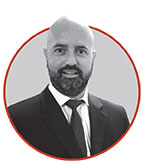
Mark Jackson
After spending a number of years working in theoretical physics at an array of prestigious institutions, including the Fermi National Accelerator Laboratory and the Lorentz Institute for Theoretical Physics, Mark Jackson, PhD, decided to change things up a bit in his career. In 2014, he harnessed his entrepreneurial spirit, years of experience as a researcher, and love of sharing science with the public to found Fiat Physica, a crowd funding platform specifically for physics, astronomy, and space exploration.
What is one of the biggest challenges you’re facing right now?
When I began Fiat Physica I believed that the challenge would be to convince the public that science was worth supporting. This turned out not to be a problem: the public loves science! The problem is that most researchers do a very poor job of communicating their work to the public. Much of Fiat Physica’s focus is now educating researchers on how to market their projects in a way that engages the public.
Who has been your biggest science inspiration?
Linus Pauling: the only person to have won two unshared Nobel Prizes (Chemistry and Peace), social and peace activist, and fellow Oregonian.
What’s the best piece of career advice you’ve received?
If you don’t want your supervisor’s job, you have the wrong job.
Expand Your Network!
Inspired by the passion, expertise, and unique perspectives of your fellow Members? Tap in to the incredible network the Academy offers through our mentoring programs.
We’re thrilled to offer you access to a new opportunity to get involved and interact: Member-to-Member Mentoring. The program matches you with a mentor—or a mentee—who is a fellow STEM professional and Academy Member. Depending upon your experience level and needs, you can request a mentor, become a mentor, or both.
Interested in mentoring students? We also offer incredible mentorship opportunities through the Academy’s Global STEM Alliance, which delivers education programs that can help you develop your teaching and communication skills, while paying it forward to the next generation of scientific innovators.
The Academy community represents one of the most dynamic and diverse groups of STEM professionals and science enthusiasts and supporters around the world, with more than 16,000 Members across 100 countries.
Published May 1, 2016
By Diana Friedman
Academy Members are building STEM careers, overcoming the challenges associated with cutting-edge research, putting science into practice, influencing policy, and supporting future generations of science leaders.
We invite you to get to know your fellow Academy Members and learn about new opportunities to interact and get involved!
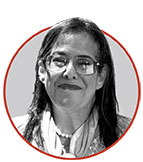
Mirna Mihovilovic Skanata
Mirna Mihovilovic Skanata, PhD, got her degree in Physics from Brown University in Rhode Island. Originally hailing from the beautiful coastal city of Split, Croatia, she is currently based in New York City working as a Postdoctoral Research Associate at New York University and is relishing in the excitement that her adopted home has to offer.
What projects are you currently working on?
I am working on understanding how neural circuits process information—you can say I am “cracking neural circuits.” The human nervous system is extremely complex, so it is paradoxically more profitable to ask these big questions using small model organisms. My research project envisions developing a specialized microscope that can image neural activity in a freely behaving fruit fly larva, “reading its mind” as it makes decisions crucial to its survival.
What is one of the biggest challenges you’re facing right now?
My research now involves developing new technologies and utilizing electronics and optics in a novel way to build a very sophisticated microscope. It is a challenge, but also a great adventure.
How do you like to keep busy when you’re not in the lab?
Since I moved to New York City, I started ice-skating at Chelsea Piers and at the Central Park Wollman Rink, I sail on the Hudson, tap-dance in the West Village, and skateboard in the many parks in the City. I have one activity for each season! I find it exciting to start from scratch and pick up a new skill.
Expand Your Network!
Inspired by the passion, expertise, and unique perspectives of your fellow Members? Tap in to the incredible network the Academy offers through our mentoring programs.
We’re thrilled to offer you access to a new opportunity to get involved and interact: Member-to-Member Mentoring. The program matches you with a mentor—or a mentee—who is a fellow STEM professional and Academy Member. Depending upon your experience level and needs, you can request a mentor, become a mentor, or both.
Interested in mentoring students? We also offer incredible mentorship opportunities through the Academy’s Global STEM Alliance, which delivers education programs that can help you develop your teaching and communication skills, while paying it forward to the next generation of scientific innovators.
A new grant will help expand the Academy’s Afterschool STEM Mentoring Program, enabling members to have a greater impact on the next generation of scientists.
Published April 13, 2016
By Diana Friedman
As Ellis Rubinstein, President and CEO of The New York Academy of Sciences, said in his keynote earlier this week at the World Strategic Forum, “If all of us work together, we can better prepare today’s students to become tomorrow’s STEM innovators.”
In addition to bringing industry, academia, government, and philanthropy together, one of the key strategies that the Academy has focused on in its STEM education programs is bringing science professionals and students together. By providing young people with the chance to meet role models face-to-face and learn directly from those working in STEM, students get the chance to imagine new possibilities for pursuing lifelong careers in science, technology, engineering and math. This is particularly important for young people living in some of the poorest areas of New York, who particularly benefit from meeting younger scientists who look like them and with whom they can build friendships.
That’s why the Academy is so excited to announce the expansion of the Afterschool STEM Mentoring Program thanks to a grant from the Corporation for National and Community Service (CNCS). This grant, mentioned today in the White House’s annual Science Fair Fact Sheet, will build the capacity of our afterschool programming in New York and Newark, New Jersey.
A Flood of Applications
When the Academy first put out a call for mentors to members, the applications flooded in. And in the six years since the program started, interest has only grown. Many members have returned to the program year after year, demonstrating their deep desire to have an impact beyond their research by volunteering to serve as afterschool mentors.
“We would like to thank the Corporation for National and Community Service and are excited to be part of the AmeriCorps VISTA expansion,” said Rubinstein. “Over 1,000 Academy members have already volunteered to teach and mentor kids through the Afterschool STEM Mentoring Program. This generous grant from CNCS will build our capacity to bring this experience to thousands more.”
Learn more about our Afterschool STEM Mentoring Program:
How John Maris, MD, got to the heart of the (genetic) matter through his research.
Published February 27, 2016
By Diana Friedman
Persistence paid off for John Maris, MD. Fifteen years after he began searching for genetic abnormalities linked to neuroblastoma during his post-doctoral fellowship, his research team discovered that mutations of the anaplastic lymphoma kinase (ALK) gene are associated with many neuroblastomas. Today, Maris’s work at The Children’s Hospital of Philadelphia (CHOP) continues to strive to translate basic and clinical research into improved therapies for patients.
Currently, neuroblastoma is the most common extracranial solid tumor in childhood, with an incidence rate of about 10.54 cases per 1 million per year in children younger than 15 years. Although overall incidence of pediatric cancer has declined since 1975, survival rates for children with neuroblastoma vary significantly based on age of diagnosis and risk classification. The five-year survival rates for patients range from 90% for those younger than 1 year to 66% for those age 10- 14 years; children in the low-risk group have a five-year survival rate at more than 95%, but the survival rates for children in the high-risk group are between 40- 50%.
Influenced to Study Neuroblastoma
These statistics, plus a research opportunity prior to attending medical school, played a significant role in shaping Maris’ career path in medicine. Working in the laboratories of noted pediatric oncologist Audrey Evans and biophysicist Britton Chance prior to attending the University of Pennsylvania School of Medicine, influenced his decision to study neuroblastoma.
“I was introduced to the disease, including patients and families, while a technician before medical school,” Maris told us. “I had great mentors and have stuck ever since to trying to solve the many enigmas associated with the disease.”
During his postdoctoral fellowship, Maris’s research was focused on determining genetic mutations associated with familial neuroblastoma—he didn’t discover it then, but fifteen years later his team found that the primary cause of familial neuroblastoma is a germline mutation in the ALK gene. Yael Mossé, MD was the post-doctoral trainee who made the actual discovery, and now she is an internationally recognized expert in translating ALK inhibition strategies to patients.
A Multifaceted Approach
For Maris, improving survival rates of neuroblastoma is promising when a multifaceted approach is applied.
Bridging the fields of genomics and immunotherapy together is our greatest hope,” he noted. “We will be increasingly individualizing therapy based on the unique features of the patients and their heritable genome and the evolving cancer genome/proteome. The road to translating research findings into novel therapies is long, but we’re working on it.”
According to the NIH, less than a quarter of U.S.-trained biomedical PhD graduates obtain tenure or tenure-track academic positions. The number of postdocs in the sciences continues to grow—in the U.S. there were 2.5 times more postdocs in 2012 than in 2000—while the number of tenure and other full-time faculty positions has plateaued.
Not surprisingly, postdocs who have independent funding are more competitive in the academic job market. On November 3, 2015, the Academy’s Science Alliance presented a seminar on grant writing, specifically applied to the NIH K99/R00 career transition award for postdocs. This year’s Grantsmanship for Postdocs event featured a presentation by Jaime S. Rubin from Columbia University and a panel of postdoctoral fellows and junior faculty who have successfully applied for K99/R00 funding. The information Rubin provided on the K99/R00 funding mechanism is one component of the material she discusses in her Columbia University graduate-level course, “Funding and Grantsmanship for Research and Career Development Activities.”
Rubin described the K99/R00 award, and other similar funding from organizations such as the Burroughs Wellcome Fund and the American Heart Association, which helps PhDs and physician-scientists with MD, DDS, and DVM degrees successfully transition to tenure-track academic positions. She outlined the K99/R00 application and review process, discussed common mistakes applicants make, and offered tips for writing a competitive application.
The K99/R00, “a very unique—and growing—funding mechanism,” is broken into two stages: researchers mentored by a more senior faculty member are funded at the K99 stage for 1–2 years before moving to the independent investigator R00 stage, funded for up to 3 years. Rubin and the panelists stressed the importance of starting the application early, seeking advice from past awardees, and working closely with a postdoc mentor and grant writing advisors during the application process.
Rubin described the growing availability of the K9/R00 award as “a very good trend [that] shows the feeling at the [NIH] Institutes that this is an important and successful funding mechanism.”
The NIH K99/R00 grant, introduced in 2007, is growing faster than any other NIH career development award. (Image presented by Jaime S. Rubin courtesy of NIH)
The K99/R00 award has no citizenship requirements but applicants must hold a PhD, MD, or similar degree and must have completed less than 4 years of post-degree research (excluding time off for family responsibilities, military service, and other such activities). The award requires that at least 75% of professional time during the award period be devoted to research and career development activities, and the institutional commitment letter should explicitly commit to this. The remaining time can be used, for example, for teaching or clinical activities.
Candidates apply for K99/R00 funding as a whole, but it is expected that the K99 part is described in more detail. During transition to the independent R00 stage, the applicant needs to find a research-focused position as an assistant professor (or similar), usually at another institution. The new position and institution have to be approved by the NIH—administratively, not competitively.
“If you have a K99/R00, things will be different on the job market: first, you come with your own money, and second, you demonstrate to possible employers that you have already been successful in a very competitive grant review process,” Rubin said.
Rubin explained that the K99/R00 funding mechanism is different from that of many other research grants, such as the R01, because the candidate and the plan to transition to independence are almost as important as the proposed research plan. Gabrielle Fredman, a K99/R00 awardee who is now an assistant professor at Albany Medical College, agreed: “I was shocked to see how seriously they took the candidate background and the career development plan,” she said.
The purpose of the K99/R00 award is to support the transition from a mentored to an independent research career, and a plan to do so should be the focus of every part of the application. Konstantinos Drosatos, an assistant professor at Temple University, explained that “science needs to shine, but you also have to convince the reviewers that you will be a leader in your field, which is the second part—career development.”
In the K99/R00 application, the candidate background, career goals and objectives, career development and training activities, and research strategy sections are counted together and cannot exceed 12 pages. Therefore, it is up to the applicant to decide how many pages to devote to each section.
Rubin recommended that the first three sections fill about 4 pages and the research section fill about 8 pages. The candidate description should include prior research and training experiences as well as career goals and objectives, particularly current skills and areas for development.
“If you don’t have any lacking skills, then you don’t need this award,” Rubin pointed out. “You have to be really honest about why you need another two years of mentored experience—because you need to learn X, Y, and Z.”
The learning objectives should not list technical skills but scientific areas, such as how to formulate a hypothesis and answer research questions: “These are not awards for technicians; these are awards for scientists.” The idea is that “when the reviewer reads [the candidate] sections, he or she will know you, will know about your enthusiasm and dedication to science, and all your wishes and plans going forward for the next 3 to 4 years. It all comes through in those four pages, and if it doesn’t then there is a problem,” Rubin said.
Rubin recommended organizing proposed training activities in a timeline table. For example, obtaining preliminary data could be the goal for years 1 and 2, publishing manuscripts for years 3 and 4, and submitting an R01 application for year 5.
Fredman used this strategy: “The table with X’s on years 1 to 5 was the thing that they liked the most, because they didn’t have to read it, they just saw it,” she said. Such a table should include research-related training, such as a course in statistics or a workshop on a specific technique, as well as training in so-called soft skills, which include grant and manuscript writing, mentoring, and responsible conduct of research. An application might be more competitive with stronger preliminary data or with a multi- or interdisciplinary focus.
The grant application should be a coherent document, with cross-referencing between sections. Rubin pointed to the facilities and resources section, which has no page limit, as a good place to include supporting information, such as institutional career development resources, that can be referenced elsewhere.
A checklist and firm timeline for completing tasks, with “an absolute deadline for the final compilation,” keeps the grant writing process on track. Some components of the application can be delegated to others; for example, an administrator could help draft the budget.
Winning applications usually have not only a strong candidate and strong mentors but also an advisory committee and research consultants and collaborators. Consultants and collaborators help candidates build technical skills; an advisory committee helps with career advancement, including future grant submissions.
The committee could also help, as Drosatos pointed out, with the search for an assistant professorship position for the independent R00 stage. Robin Clugston from Columbia University, who is about to make the transition to the R00 stage, encouraged candidates to cast a wide net.
“There is no harm in contacting people that you recognize as being leaders in your field or in techniques that you want to work with,” he said. “Generally, you’d be surprised to get a quite positive response.”
Applications are usually scored by three reviewers according to five criteria: candidate, career development plan, research plan, mentors and consultants, and environment and institutional commitment to the candidate. Each category is scored from 1 (exceptional) to 9 (poor), and these initial scores are used to decide whether an application will be discussed at the NIH Institute’s study section. About half the applications are discussed by reviewers at a study section, where applications receive an overall impact score that reflects “the likelihood that the proposed career development and research plan will enhance the candidate’s potential for an independent scientific research career.”
The overall impact score can go up or down after discussion, depending on the consensus of the study section and how well the application matches both the mission of the institute and the K99/R00 purpose. A common mistake is to “pay attention to the research and [not] give a lot of attention to the career development part,” Rubin warned. “The research plan is only one of five review criteria.” Rubin also provided tips for writing a competitive K99/R00 application.
“Remember two things,” she said. “The competition is huge, and there are human beings on the other end reviewing your grants.” It is important to use a legible font, to use concise sentences, and to include well-designed tables and images, because reviewers “are reading page after page after page—they are looking for something to break up the text.” As Rubin noted, “Maybe technically a sentence can be a full paragraph, but can a human being really follow it if it’s that long?”
The panelists advised candidates to start preparing an application more than 6 months before the deadline. They agreed that it is helpful to consult colleagues who have received K99/R00 awards and to review past funded applications, if possible.
Rubin explained that the application should match the funding opportunity announcement (FOA) and the mission of the particular NIH Institute. If a proposal fits more than one institute, Rubin suggested choosing either the institute that most closely matches the scientific interests or career aspirations of the candidate or the institute with the higher success rate. This information is available on the NIH Research Portfolio Online Reporting Tools (RePORT) website, which has resources for preparing an application.
“If you want reviewers to know something, tell them, don’t [ask them to] infer it. And if it’s important, tell them more than once in your grant application,” Rubin said.
She also advised candidates to openly discuss possible challenges and alternative approaches to the proposed experiments and to refer to literature thoroughly and thoughtfully. As “a new investigator, you want to prove to them that you know exactly where the field is and how your research is moving the field forward,” she said. It is useful to ask several people to review the grant application, leaving plenty of time to make changes.
The most common problems with K99/R00 applications. (Image courtesy of Jaime S. Rubin)
Common problems with K99/R00 applications include overly ambitious or not-hypothesis-driven research plans. After being told his proposal was too ambitious, Clugston removed one of his three research aims.
“Get a feel for what’s the right amount of research to propose,” he advised.
Furthermore, “one should clearly state the rationale of the proposed study,” Rubin said. “Don’t make them fish around for the hypothesis.”
Another common problem is a failure among applicants to sufficiently separate the proposed project from a mentor’s research. As Fredman put it, “There is probably nothing more important to the reviewer than how you distinguish yourself, what you can take with you. Having these conversations [with your mentor] upfront can be a little uncomfortable and is probably the most challenging; you have to think years and years in advance.”
Choosing a mentor is also important. If a mentor is too junior or has too many other responsibilities, one option is to ask a more senior or a less busy researcher to serve as a co-mentor.
Remember, Rubin concluded, “[reviewers] are overloaded with grant applications, and somehow they have to differentiate them—and pick yours.” Reviewers tend to sort through applications by finding something wrong, such as lack of statistical analysis, or poorly described career development plans, or illegible font in figure legends. “They don’t realize how exciting that figure is, because they cannot read the caption,” she said. These issues can lead to unfavorable scores.
“All components of the application [should be] as strong as possible. In the end, you want to be, at least, the one with the grant where they weren’t able to find something wrong, so you get to be moved into a funding situation.”
Presentation available from Jaime S. Rubin, PhD (Columbia University) Panel moderator: Peter Hare, PhD (NYU School of Medicine)
How to cite this eBriefing
The New York Academy of Sciences. Grantsmanship for Postdocs: Navigating the K99/R00 Award. Academy eBriefings. 2016.
Media
Panel Discussion
Moderator: Peter Hare (NYU School of Medicine)
Resources
American Heart Association Postdoctoral Fellowship. The AHA aims to help trainees initiate careers in cardiovascular and stroke research while obtaining significant research results under the supervision of a sponsor or mentor; the fellowship supports researchers before they are ready for some stage of independent research.
Burroughs Wellcome Fund An independent private foundation that aims to help scientists early in their careers develop as independent investigators and to advance fields in the basic biomedical sciences that are undervalued or in need of encouragement.
National Institutes of Health. Office of Extramural Research. Grants & Funding. The Office of Extramural Research provides the corporate framework for NIH research administration, ensuring scientific integrity, public accountability, and effective stewardship of the NIH extramural research portfolio.
NIH Research Portfolio Online Reporting Tools (RePORT). NIH RePORTER. The RePORTER website provides access to reports, data, and analyses of NIH research activities, including information on NIH expenditures and the results of NIH-supported research.
NIH Research Portfolio Online Reporting Tools (RePORT). Funding Facts.
Jaime S. Rubin holds MSc and PhD degrees from the University of Toronto, Canada. Her PhD thesis, published in Nature, described the first molecular identification and characterization of a human DNA repair gene. Since 1985, she has held several senior positions at the Columbia University Medical Center, where she is now the vice chair for investigator development in the Department of Medicine. She founded and teaches the graduate course Funding and Grantsmanship for Research and Career Development Activities and started and codirects the Medical Center’s course Responsible Conduct of Research and Related Policy Issues. She has served as the associate program director for the Doris Duke Clinical Research Fellowship Program and as associate director for career development on a number of NIH-funded pre- and postdoctoral training grants. She has also served on the advisory boards of Columbia’s Patient-Oriented Research (POR) Master of Science Program and Clinical and Translational Science Award (Education).
Moderator
Peter Hare, PhD NYU School of Medicine
Peter Hare is the associate director of Research Mission Programs at New York University School of Medicine. He edits the scientific components of grant proposals and helps faculty members identify appropriate funding opportunities. He also develops initiatives to support the faculty and promote their visibility. Before joining NYU School of Medicine, Hare worked for Nature Publishing Group, where he was a senior editor at Nature Biotechnology and editorial lead for its Digital First program. He was a research associate at the Rockefeller University after completing his PhD at the University of KwaZulu-Natal in South Africa.
Panelists
Robin Clugston, PhD Columbia University Medical Center
Konstantinos Drosatos, PhD Temple University
Gabrielle Fredman, PhD Albany Medical College
Reported by: Evguenia Alexandrova
Evguenia Alexandrova is a postdoctoral associate working at the intersection of cancer and stem cell biology at Stony Brook University. She is also an aspiring writer, passionate about disseminating scientific knowledge to the general public.
The actor, writer, and science advocate educates scientists in the elusive art of communication.
Published August 1, 2015
By Kellie M. Walsh
All he’d said was “Oh,” but I could hear in the shape of the vowel that the smile on his face was evaporating. I’d given Alan Alda a terrible answer, exactly the type of answer he has worked so hard to train out of others.
For more than 20 years, Alda, like The New York Academy of Sciences, has been on a mission to get people talking to one another. While the Academy brings scientists and non-scientists from different disciplines, sectors, and communities together through common goals and initiatives, Alda focuses on bringing them together through a common language.
As Visiting Professor at the Alan Alda Center for Communicating Science at Stony Brook University, he uses improvisational techniques and theater games to train scientists to distill and translate their work into language that officials, media, funders, the public, and scientists of other disciplines can all understand. This interest in aiding the sciences through the arts, in fact, inspired the founding of the Center for Communicating Science in 2009; it was renamed in his honor in 2013.
Alda’s objective is to transform scientists not into actors but rather into comfortable, empathetic conversationalists able to clearly express their work to anyone and everyone—and, consequently, help advance it forward. He has also hosted several notable science documentary series for public television; is an award-winning actor, writer, and director; and has received numerous science communications awards, including the National Science Board’s Public Service Award (2006), the Scientific American Lifetime Achievement Award (2013), the AAAS Kavli Science Journalism Award for The Human Spark (2010), and the Council of Scientific Society Presidents’ Carl Sagan Award for Public Understanding of Science (1998).
Talking Shop about Communications
In anticipation of our phone call, I’d prepared to talk about Alda’s long and credentialed career. I’d prepared to talk shop about communications. I’d even prepared a two-sentence introduction that I’d practiced reading aloud, hoping to convey to Alda that his communications work and mine paralleled in notable ways. I wanted to show that we spoke the same language.
I hadn’t prepared for him to actually be interested.
I’d just finished my introduction, explaining I was the then Associate Director of Web Content and Development for the Academy, which was a long way of saying that I helped people communicate online. Alda jumped on my last word so quickly I almost didn’t hear him ask, “How?” As in, how in my work do I help people communicate online?
It was a reasonable question; one I’d opened the door to even. Yet I bumbled. I stammered out a staccato of half-sentences, then topped them off with jargon. Rather than speaking his language, I found myself talking straight over his head. Without meaning to, I’d answered his interest and curiosity by shutting the door in his face.
Mine wasn’t the first disappointing answer Alda had ever encountered, however: during his 11-year tenure as host of Scientific American Frontiers, for one, Alda had interviewed hundreds of scientists, many whose thoughts he’d found stuck inside their own minds. But rather than allow his interview subjects to deflect, obfuscate, or drone through a rote script, he discovered that the way to break through this obstacle was to keep tapping interviewees with questions until their shells finally cracked.
“In most interviews,” explains Alda, “you already know the answer to the questions. I didn’t know what the questions were; nor did I know what the answers were. I just wanted to understand what their work was. And if I didn’t understand it, I’d badger them until I did.”
Alda’s persistence and desire to learn often helped his interviewees overcome both their nerves and their “curse of knowledge,” the cognitive bias that makes it difficult to think or talk about a familiar subject as if from a position of unfamiliarity. “They lost all interest in talking to the camera,” he says, “and really wanted me, personally, to understand it. It was just me and them. Their humor came out, their curiosity. It was an intimate interaction. That’s what we want and what we work hard to get scientists to do when they communicate. We invite them to tell stories, to let themselves be in the stories. Because that’s what audiences will respond to.”
Of course, that’s easy for Alda to say: he’s a famous, quick-witted raconteur with a smile you can hear through a phone line. Yet he says he, too, must consciously work at interaction, especially in unfamiliar social settings. “We often shrink from human contact because we feel naked out there sometimes,” he says. “I mean, I’m not comfortable with cocktail parties. I have to use what I’ve learned in communication to be comfortable, to realize that the person I’m talking to has probably the same uncertainty about the situation that I do.”
Making that Connection
That consideration of his audience’s state–that empathy–is how Alda transforms superficial small talk into meaningful communication. The key, he says, is to make an active effort “to connect with the people you’re talking to or writing for. What are they thinking when you say the first thing you’re saying? Who are they? What do they know already? That old thing of knowing your audience–it’s not just knowing your audience; it’s connecting to your audience. To be there with them in the same room.”
Alda means that last bit both literally and figuratively: to connect, we must recognize–relish even–that we are all allies, social animals with an innate desire to understand and to be understood. In this way, he says, art informs life. “You can’t achieve what you’re going onstage for unless you can make real contact with the fellow players,” he says.
“That’s the essence of what we’ve found about communication: that connection, that awareness of the other person, immediately relaxes you. When you address the audience directly, they become your fellow players. And there’s a big difference between thinking of them as your fellow players and thinking of them as people who are judging you…I’ve had so many young scientists say, ‘I overcome my fear by looking over the heads of the audience.’”
“[But] once you get used to the fact that they’re your playmates and not your adversaries, you overcome your fear by looking them in the eye. By enjoying their company. Then you actually can develop–it seems hard to believe–but you actually can develop a personal relationship with a group of strangers.”
An Experiential Learning Process
Breaking through our natural aversions to vulnerability to develop such relationships, however, takes practice. “It’s not an intellectual understanding,” says Alda. “It’s an experiential learning process,” one he says often requires fighting against lessons most scientists have had drilled into them.
To facilitate objectivity, he explains, “you have emotion trained out of you when you’re writing science for other scientists in your field.” But communicating science to broader audiences requires the opposite approach because, as he says, “people like me, ordinary people, rely on story and emotion.” Thus, the Alda Center aims to redesign the way scientists are educated, placing special emphasis on training science and healthcare graduate students while they’re still learning their fields of study so “when they leave as professional scientists, they’ll be good communicators as a matter of course.”
Alda cites Nobel Prize-winning physicist Richard Feynman, whom he played in QED on Broadway, as the preeminent example of a successful science communicator. “He didn’t wave his arms and get crazy about it,” he says, “[yet] he could talk in the most loving way about nature in all its complexity, and you could really follow him.” Alda wants the same for his workshop students: for them to leave able to use “everyday terms for complex things” in a way that is both compelling and easy to understand. So compelling and easy, perhaps, that even a child could understand.
The Flame Challenge
Since 2012, Alda and the Alda Center have posed to scientists an annual challenge: to explain (in words, graphics, or video) a common but complex scientific phenomenon in a manner acceptable to the average 11-year-old. Inspired by a disappointing childhood experience in which a teacher answered a young Alda’s curiosity with cool jargon, the challenge (called The Flame Challenge, for its first-year topic) requires scientists to think deeply about how best to engage this unique, likely unfamiliar audience.
This year’s challenge question: What is sleep? “The Flame Challenge is a great exercise for scientists because it is all about focusing on the people you’re talking to–in this case, 11-year-olds,” says Elizabeth Bass, Director of the Alda Center, via email. “What do they know? What do they care about? How can I express something important and complex in ways that will connect with them?”
That Bass’ questions echo Alda’s is unsurprising: their individual and collective goals are one and the same. “Connecting with your audience–trying to read their minds, in a sense–is at the heart of communication for Alan Alda and for the Alda Center at Stony Brook,” she says. “So the Flame Challenge fits perfectly with our approach.”
Challenge submissions are vetted, then released for judging to an international pool of tens of thousands of middle-school students. Winning entries are announced at the World Science Festival in New York City, which occurred in late May.
The challenge fosters the development not only of current scientists but of potential future scientists and science enthusiasts as well.
An Unconventional Approach
“The Flame Challenge was aimed at scientists,” Bass says, “but kids and teachers loved the contest right from the start. The kids get to judge the work of adults, and that doesn’t happen very often. They really appreciate being taken seriously. Also, kids get to hear different attempts at answering the same question. It’s a good way to learn. It helps them see that science isn’t a stock set of known facts: it’s a way of trying to know things.”
This unconventional approach to trying to know things underlies both the Alda Center’s mission and Alda’s vast successes as an actor, writer, director, teacher, and science and communications advocate.
And, it comes as no surprise, as a conversationalist. In our phone call, Alda was friendly, familiar, and disarmingly charming; the discussion flowed, with one exception, smoothly. Yet, as I put down my script to listen, I couldn’t help but feel quietly mortified. I’d allowed my nerves to trip me into curse-of-knowledge jargon and deflection, forcing me to work twice as hard to re-build the easy rapport I had disrupted. My one comfort was knowing, or at least hoping, that he was working as hard to make a connection as I was.
Marina Picciotto, PhD, shares five ways to help young scientists more effectively use their mentoring experience to reach their career goals.
Published May 1, 2015
By Marina Picciotto, PhD
Students from Dr. Picciotto’s lab.
Academy member Marina Picciotto, PhD, is the Charles B. G. Murphy Professor of Psychiatry at Yale School of Medicine, where she studies the effect of nicotine on the brain. Her leadership is evidenced not only by her research but also by the numerous recognitions she has received, including being elected to the National Academy of Medicine for Leadership and the Presidential Early Career Award for Scientists and Engineers for Exceptional Research.
Dr. Picciotto offers five tips on how to be a more effective mentor.
Assess Needs and Set Goals from the Start
This is the most fundamental part of the mentoring experience and needs to be established at the outset. Mentoring is a professional relationship between two people, with the goal of career and personal development. While fostering good mentorship is the responsibility of the students’ institution, Dr. Picciotto stresses that trainees are often on their own, and accountable for identifying those areas they struggle with the most. “Each trainee has their own set of skills and background,” she says, “so it’s important that young scientists do some honest self-reflection to help them recognize their own training needs and identify what is or isn’t provided in the environment.”
She adds that while some students have gaps in technical knowledge, others might benefit from improving time management or interpersonal skills. In this context, Dr. Picciotto urges young scientists to use Individual Development Plans (IDPs) to help set clear career objectives and identify professional development needs. Greater self-awareness can help trainees define goals that build new strengths, find an appropriate mentor, and obtain the most value from the mentoring relationship.
Make Your Experience Work to Your Benefit
Marina Picciotto, PhD
During her training years, Dr. Picciotto’s mentors encouraged her to freely explore scientific questions and directions, recognizing that “learning by doing” is often an essential part of professional growth. Naturally this resulted in setbacks that were important teachable moments. “I made a lot of mistakes, but this allowed me to shape my own vision of what my career could be, and was a source of motivation to stay in science.”
Dr. Picciotto likes to stress to junior scientists that finding that elusive tenure track position in academia shouldn’t be the sole purpose of scientific mentoring. Equipping trainees with the tools they need to achieve their own goals–which could just as easily be outside traditional academic paths–is a more effective mentoring goal.
There are many career paths where a STEM degree is in demand, and mentors can help young scientists to consider alternative career paths in publishing, industry, finance or law. This may include sharing information about the training needed to transition into non-academic positions, and introducing trainees to professionals currently working in those alternative fields. “Laboratory heads should help trainees to realize how a [STEM] PhD can be useful in today’s world,” says Dr. Picciotto.
One Size Does NOT Fit All. Find Your Fit!
Going back to fundamentals, Dr. Picciotto underscores that at its essence, mentoring is a professional relationship between two people, so there is no such thing as a “one size fits all” mentoring style. The independence she was encouraged to have as a trainee scientist may not work for those who would profit from closer supervision. Moreover, she emphasizes that there is no absolute definition of what constitutes mentoring. “Mentoring can be about simply providing information, or it may call for more extensive support and providing of opportunities.” In a research setting, the laboratory’s head is usually the main reference for guidance and advice.
However, Dr. Picciotto notes that mentorship can come from many different sources. Formal courses or workshops at the trainee’s institution, as well as in professional organizations, can complement training. These include the so-called “soft skills” such as effective writing, public speaking, or preparing for job interviews. “Trainees need many different things [to succeed in their careers] and no one mentor can provide them all.” Since there is no “cookie-cutter approach” for professional success, students who have access to a variety of training resources, and a network of mentors with different styles and professional backgrounds, will benefit from a far richer learning experience.
Stay in it for the Long Haul
Dr. Picciotto recognizes that mentorship is equally important at every career stage. “[Mentoring] shouldn’t stop after the training years but ideally should continue, as there are things we do not know and challenges at all career levels.” Continued mentorship is particularly important for women and other underrepresented groups in the sciences, to develop the contacts they need to reach leadership positions. Dr. Picciotto’s mentorship helped her build leadership skills at an advanced stage in her career. “As Chair of the Program Committee for the Society for Neuroscience, I was faced with a complex decision about the annual meeting’s program.”
Her mentor advised seeking input from a working group of experts in neuroscience, and subsequent discussions with the group helped her work through an effective solution. “I learned many things from this [experience], including the necessity of listening to all constituencies and seeking consensus.”
Think of Your Mentor as an Extended Family Member
Effective mentorship not only imparts knowledge, but also provides sponsorship. “Sponsoring trainees by writing letters of support when applying for jobs or funding, requires a degree of familiarity that only develops by working closely with someone,” says Dr. Picciotto. “The commitment to caring about a young professionals’ career development can be rewarding. Scientific discovery is one type of satisfaction, but watching those who work with you succeed on their own and knowing that your mentorship helps trainees succeed, is an even greater satisfaction.”
Dr. Picciotto believes that the most effective form of mentoring is what’s known as “adoption” which involves working closely with a trainee to ensure that he/she is exposed to opportunities. “Mentorship and adoption is the only way to provide everyone with the same opportunities to succeed. The scientific community is far richer when everyone is part of it.”
Learn more about educational and mentoring opportunities available through the Academy.