Are you interested in building a career in STEM? Join The New York Academy of Sciences for an exciting monthly online event series designed to explore the vast opportunities within STEM fields. This series offers unique access to experts across industries.
Each session features guest speakers from distinguished organizations, including Noven Pharmaceuticals, Pfizer, and more. Gain invaluable insights into their career journeys, the roles they hold today, and the innovative work they do.
Engage in live Q&A sessions to ask questions that will help shape your own career path. Whether actively pursuing a STEM career or simply exploring possibilities, this event series provides the tools and knowledge you need to succeed.
This series is open to all, regardless of age or background, and is the perfect opportunity to network and learn. Don’t miss your chance to connect with leading STEM professionals and take the next step in your career journey!
Dr. Mahwish Khan is the Associate Director of Medical Affairs and Medical Information at Noven Pharmaceuticals. She obtained her Doctor of Pharmacy (Pharm.D.) in 2019 from Arnold and Marie Schwartz College of Pharmacy – Long Island University. Throughout her training, she spent 6+ years in direct patient care working at various care settings including hospitals, long-term care facilities and pharmacies throughout NYC. Following graduation, she transitioned into the pharmaceutical industry, where she has 5+ years of experience across US/Global Medical Affairs projects. Dr. Khan has experience leading medical readiness activities for new product launches and developing life cycle management strategies across psychiatry and neurology. She has a passion for bringing science to life by developing meaningful relationships with key healthcare experts and educating patients through holistic approaches.
Pricing
Member: Free
Nonmember: $10.00
By attending this session, you will receive an exclusive 50% discount for upcoming events in the series.
Inclusion, in its broadest sense, refers to the practice of ensuring that all individuals are respected, valued, and supported within a community or society, regardless of their differences. Each individual should feel confident and comfortable being their authentic selves without fear of judgment or retaliation.
But what does inclusion look like in the context of STEM fields? What are some barriers to inclusion in STEM? And what unique potential does fostering a culture of inclusion have on promoting social justice and driving innovative solutions to our society’s problems? Explore the answers to these questions and learn more at the first session of our ‘Inclusion in STEM’ series, featuring Alfred M. Mays, Chief Diversity Officer and Strategist and Senior Program Officer for Diversity and Education at the Burroughs Wellcome Fund.
About the Series
The Inclusion in STEM series delves into a few of the many topics that are essential for actively cultivating a culture of inclusion in STEM, including defining inclusion, promoting inclusive pipelines through mentorship, finding solidarity and power through joining affinity groups, being an inclusive leader, and communicating research in a way that centers inclusion, equity, and intersectionality. Learn more about the series and explore the full lineup of events.
Speaker
Alfred M. Mays currently serves as the Chief Diversity Officer and Strategist for Science Education and Diversity at Burroughs Wellcome Fund where he directs a portfolio of competitive and strategic grant programs. Prior to Alfred assuming this role, he served as an independent consultant with a service delivery that included strategic planning, project incubation, design, and implementation. Alfred has served as an enabler within several education initiatives to include the Collaborative Project, a 21st Century Program that was supported by the North Carolina General Assembly, staff advisor to North Carolina’s eLearning Commission, Director of Special Projects at the University of North Carolina – Office of the President, and regional director for the North Carolina Model Teacher Education Consortium. Alfred enjoys facilitating youth leadership and empowerment activities and serves on the Board of Directors for several organizations. He has been recognized for his contributions with many organizational successes to include Government Wide Best Practices.
Sponsor
Thought Partner
Pricing
Member: Free
Nonmember: $10.00
By attending this session, you will receive an exclusive 50% discount for upcoming events in the series.
Are you interested in building a career in STEM? Join The New York Academy of Sciences for an exciting monthly online event series designed to explore the vast opportunities within STEM fields. This series offers unique access to experts across industries.
Each session features guest speakers from distinguished organizations, including Noven Pharmaceuticals, Pfizer, and more. Gain invaluable insights into their career journeys, the roles they hold today, and the innovative work they do.
Engage in live Q&A sessions to ask questions that will help shape your own career path. Whether actively pursuing a STEM career or simply exploring possibilities, this event series provides the tools and knowledge you need to succeed.
This series is open to all, regardless of age or background, and is the perfect opportunity to network and learn. Don’t miss your chance to connect with leading STEM professionals and take the next step in your career journey!
Dr. Lev Sviridov, joined the Macaulay Honors College at Hunter College in 2013 as an Acting Director. Following a national search, Dr. Sviridov was appointed Director in 2014. He received a B.S. degree in Chemistry from The City College of New York and a D.Phil degree in Inorganic Chemistry from the University of Oxford, where he was a Rhodes Scholar. Prior to his service as Acting Director, Dr. Sviridov served as a Senior Research Associate at the CUNY Energy Institute, where his research led to the founding of Urban Electric Power, a non-lithium energy storage company based in Pearl River, New York. In addition to his responsibilities, he serves as Vice Chair of Human Rights First and on the selection panel for the Sloan Award for Teaching of Math and Science in New York City Public Schools, and as Chair of the Development Committee for the Foundation for City College.
Pricing
Member: Free
Nonmember: $10.00
By attending this session, you will receive an exclusive 50% discount for upcoming events in the series.
Blavatnik Regional Awards Finalist Nicole Lake, PhD, is now a strong advocate for postdoctoral researchers. She offers advice on how postdocs should advocate for one another.
Published September 17, 2024
By Nicole Lake, PhD
As postdocs, we are not just passive participants in our journey. We are active shapers of our own experience. We must learn and apply a wide range of skills, from research and teaching to networking and time management.
Another crucial skill we need is self-advocacy – standing up for our needs. Whether negotiating for better resources, obtaining support to attend a conference, securing mentorship, or balancing work-life demands, self-advocacy is vital for our postdoctoral success and well-being. As we move through our postdoc, some of us will also find ourselves stepping into a new role: advocating for others. Whether it’s pushing for better representation, compensation, childcare support, or benefits, advocacy for postdocs by postdocs also plays a central role in shaping the postdoc experience.
During my postdoc, I navigated a journey that saw me grow from advocating for myself to advocating for my peers in the postdoc community. My experience taught me that advocacy goes beyond identifying needs; it also requires the confidence and understanding of how to ask for your needs to be met effectively. Whether advocating for yourself or pushing for change within a department or university, framing an ask around mutual benefits is often key. Before making a request, I consider the other person’s perspective: understanding their viewpoint, finding common ground, and showing how my request will benefit them can often lead to a solution.
Advocating for Fellow Postdocs
My role as a Yale Postdoctoral Association (YPA) Co-Chair had the most significant impact on my advocacy perspective as a postdoc. In this role, I was privileged to advocate for over 1,000 postdocs. The YPA has a proud history of advocating for positive change for the postdocs it serves, and one of the achievements I’m most proud of during my term was securing salary increases to reflect the value of postdocs and their living costs better. I took away two critical lessons from this experience:
1) the power of data-driven advocacy and
2) the importance that the allyship of faculty and staff plays in advocacy success.
In academia, we rely on data to support our hypotheses, and I’ve found this approach equally powerful for advocacy. To better understand, uncover, and address unmet needs in our community, we initiated a university-wide postdoc survey on topics including cost-of-living considerations, and available resources for postdocs, to obtain data, enable data-driven discussions with university leadership, and strengthen our case for change. This survey was a collaborative effort with the postdoctoral office, representing an example of allyship between postdocs and the university, working together to achieve a common goal: improving the postdoc experience.
It’s important to acknowledge that the success of our advocacy didn’t happen in isolation. Within the YPA it was built on the groundwork laid by previous leaders who, for example, established channels for regular dialogue with university leadership—these channels were critical for communicating our requests. Our time as a postdoc is limited, and we may not always see the outcomes of our efforts advocating for better representation, benefits, compensation, and beyond. However, it’s important to remember that our efforts are cumulative and often provide a foundation for future advocates to build upon, contributing to progress long after we’ve moved on.
A Skill Developed Over Time
Finally, I want to share that self-advocacy does not come naturally to me but rather is a skill I’ve had to develop over time. Advocating for others has always come more easily than advocating for myself. Like any other skill, self-advocacy is learned—it requires practice, patience, and persistence. However, it is a skill worth cultivating, given its impact on your career and well-being.
Overall, my journey has shown me the power of advocacy – not only for improving our circumstances but also for improving the experience of others. Whether you’re advocating for yourself or pushing for change to benefit others, advocacy has an essential place in the postdoctoral experience.
This piece published on the National Postdoctoral Association member blog as part of 2024 National Postdoc Appreciation Week. Current Academy Members can receive a 20% discount on a National Postdoctoral Association postdoc individual membership by emailing info@nyas.org and requesting the NPA membership discount code
Blavatnik Regional Awards Laureate Raghavendra Pradyumna Pothukuchi, PhD, had to advocate for himself to find the right work-life balance. He offers advice so fellow postdocs can do the same.
Published September 17, 2024
By Raghavendra Pradyumna Pothukuchi, PhD
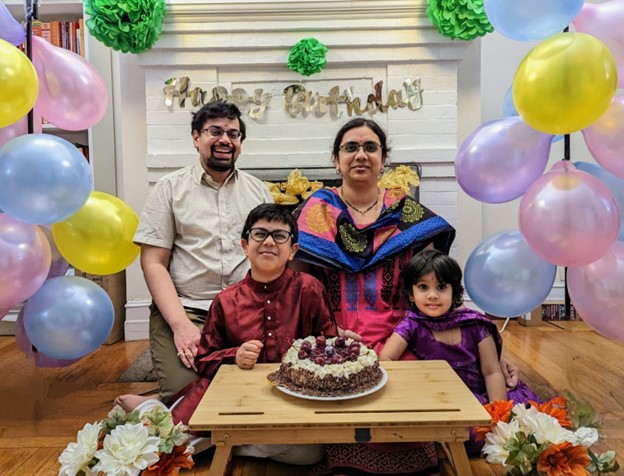
Raghavendra Pradyumna Pothukuchi, PhD, celebrates his wife’s birthday with their two children.
We all enjoy science and research, but it’s hard to deny that academic life is grueling. This is especially so as a postdoc, which is a great springboard for one’s career but also brings unique challenges.
Making the most of a postdoc inevitably requires significant effort. Couple this with personal needs, goals, and responsibilities, and you have a fragile contraption of sorts, ready to fall in many ways.
My choice of being a postdoc was born out of an abruptly terminated job search during the COVID-19 fallout. When I graduated from the University of Illinois at Urbana-Champaign in 2020, my kids were 1 and 4, and my dear wife, a fellow PhD in computer science, would soon opt out of work due to long COVID.
My postdoc would be on brain-computer interfaces, and classical and quantum frameworks for cognitive models. It’s exciting — but very new and challenging. I had to balance my research with personal commitments including childcare, my wife’s health, providing long-distance support to my parents living in my home country of India, traveling to help my father while he was being treated for cancer, and, of course, managing my own well-being.
Finding Work-Life Balance
One way that has helped me in making the postdoc process work, is self-advocacy. You are (or can be) your best ally and advocate on issues that matter to you, whether they are about yourself or those that you care about. The definition of being a self-advocate means “identifying your needs and communicating them clearly to help others understand how they can support you”.
There are many valuable resources on self-advocacy, including those at the National Postdoctoral Association (NPA). I’d like to share what I learned from my experience. The first step to self-advocacy is to identify what you need, professionally and personally. These could be resources, compensation, special needs, processes, projects you should be on, or even assistance from people, like teammates and mentors. This step is not easy—it requires time and thought.
One could start with high-level tangible goals such as, readiness for academic job searches within two years, allocating hours for childcare, improving wellbeing in a community you care about, etc.; then move to identify the specific needs to accomplish them. It’s helpful to identify and talk to various stakeholders, such as family and mentors, with whom your plans intersect. On the professional side, a good starting point is the postdoc mentoring plan, which makes career goals and means explicit.
Advocating for Yourself
In my case, I needed a mentor who understood my situation, a system with flexible schedules, reasonable compensation and benefits to support my family, and the leeway to explore new fields. These needs weren’t exhaustive or static, since life changes. However, to the extent possible, it pays to be foresighted so that you don’t appear capricious or importunate, and importantly, that you ask for what actually helps you.
The next step is to identify the people that you would communicate your needs with. This is critical. They should be able to provide what you need and be willing to help. In several cases, this could be your mentor, but it doesn’t have to be. For example, while my mentor was the right person to talk to about compensation and work schedules, it wasn’t so for childcare or other benefits that are set by my university.
Sometimes when asking for policy-level changes, it helps to find others who share your cause. This could be your local postdoctoral association, or the NPA. When I was a grad student, I was concerned about the wellbeing of students in my academic community (computer architecture). At a conference, I met with a fellow student who shared the same cause, and our joint effort led to the creation of a new student association with this mission, CASA. This wouldn’t have been possible if I hadn’t met my co-founder.
The last step is to articulate your needs. This means clearly and politely stating your needs, participating in good faith, and being open. If needed, convey the value you bring to the group.
Raghavendra Pradyumna Pothukuchi, PhD, (second from left) with his lab members.
Identify Your Non-Negotiables
It’s useful to identify which of your needs are non-negotiable. However, it’s also possible that some needs can’t be met, at least not fully or immediately. Be open to alternatives. In my case, my starting postdoc salary was good but not great for my family needs. I brought this up with my mentor, who understood my situation and recommended that we apply for a fellowship, the NSF and CRA computing innovation fellowship, which I received. This took time, but it helped immensely, even beyond the finances.
I hope my experience inspires you to self-advocate. My postdoc journey didn’t happen without making hard choices or giving up things I loved. But I’m glad about my progress—personal and professional (the Blavatnik Regional Award for Young Scientists being one!), and the things I was able to hold on to, and pickup. Self-advocacy played an important role in my journey.
Looking forward, I will continue to practice it as I transition to a tenure-track faculty position at the University of North Carolina, Chapel Hill.
This piece published on the National Postdoctoral Association member blog is part of 2024 National Postdoc Appreciation Week. Current Academy Members can receive a 20% discount on a National Postdoctoral Association postdoc individual membership by emailing info@nyas.org and requesting the NPA membership discount code
Blavatnik Regional Awards Finalist Amy R. Strom, PhD, offers advice on the subtle differences postdocs must consider when finding work-life balance.
Published September 17, 2024
By Amy R. Strom, PhD
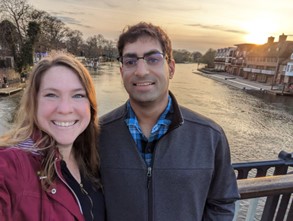
Amy Strom and partner Akshay Tambe.
Is work-life balance truly harder for postdocs than other professions? The short answer is yes, and there’s a reason you’ll find so many “How I Found Balance” articles written by academics. These narratives often focus on the number of hours spent at work versus at home, which is, of course, an essential aspect of balance. However, this narrow focus misses a crucial component: the role of the employer in shaping the work environment.
Achieving balance in the face of obstacles is not just about personal discipline; it often hinges on the resources and support provided by the institution. We should be building structures that empower individuals to create a balanced life.
My own journey in science has required a long-distance relationship during my postdoc, between New Jersey and California. I have had to carefully organize my project timelines and fund cross-country flights in order to spend time with my partner, but even with these personal sacrifices I quickly ran out of leave.
An Individualized Approach
Then I advocated for myself to my mentor and the University to be able to work remotely from out of state without the time away from campus being counted as vacation. As an experimentalist, remote work can be complicated to coordinate, so I am grateful to my partner, to my mentor and to the administrators in my department for their support in identifying a solution that works for my personal situation.
Perhaps establishing this solution and sharing the story will aid postdocs in similar situations in the future (long-distance relationships among academics are not rare), but more practically, it is important for each individual to get the support they need to enact their own personal solutions. I credit my own navigation of my challenges not in small part to coalescing with a group of fellow women grad students and postdocs who face different but equally complex challenges. Together we discuss the difficulties we face and help each other brainstorm potential solutions. Women in Science groups and other shared identity groups provide not only a sense of belonging but also a platform for advocacy.
Postdocs are not a monophyletic clade. We are women, men, nonbinary, single, partnered, married; we are sexually, racially, and culturally diverse. Such diversity means that a one-size-fits-all approach to work-life balance is ineffective at best and harmful at worst. This is where mutual and intersectional advocacy becomes crucial. By recognizing our shared challenges and working together, we can push for changes that benefit us all.
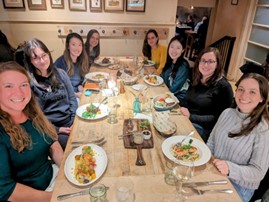
Amy with a close group of women scientists. From left: Amy Strom, Claire Weaver, Jessica Zhao, Lindsay Becker, Anita Donlic, Yoonji Kim, Sofia Quinodoz, and Hailey Tanner
Postdocs and Unionization
In the summer of 2024, postdocs at my home institution, Princeton University, voted to become part of the United Auto Workers (UAW) union, an American union that has grown to represent more than just the auto industry. This victory required immense effort from many current postdocs, demonstrating the power of collective action.
Unionization will allow us to gather centralized information about our needs and bargain more effectively with the University for policy changes that will benefit us as a group and as individuals. Now just a few weeks later, a survey is collecting data on the most pressing issues we face, from pay equity to green card applications to family leave policies. I enthusiastically look forward to the additional support and benefits that Princeton will enact based on these data.
So, this National Postdoc Appreciation Week, let’s truly appreciate postdocs. Let’s listen to their unique stories, empathize with their individual challenges, and then make real, tangible, institutional changes to support them. Acknowledging the diversity of experiences among postdocs is the first step towards creating a more equitable academic environment where each individual can achieve their own balance.
This piece published on the National Postdoctoral Association member blog is part of 2024 National Postdoc Appreciation Week. Current Academy Members can receive a 20% discount on a National Postdoctoral Association postdoc individual membership by emailing info@nyas.org and requesting the NPA membership discount code
Team members:Riya K. (India) (Team Lead), Shreeniket B. (United States), Sysha R. (India), Prakul P. (India), Tisha S. (India), Medha T. (United States)
Dementia is a neurodegenerative condition that affects 55 million people worldwide and 1 in 10 people older than 65 in the United States, according to the World Health Organization. Alzheimer’s disease is the best-known form of this debilitating condition, which leads to memory loss and confusion. It gradually erodes individuals’ ability to perform simple functions or even recognize familiar faces.
The impact of dementia is not limited to the individuals affected by the condition. Caregivers, who are often family members, bear the burden of providing support, often at great personal cost.
Harnessing the power of wearable technology, the members of this enterprising team composed of high-schoolers from the U.S. and India, devised the VisionXcelerate glasses – an innovative device designed to provide personalized assistance to dementia patients and help them perform every-day tasks independently, thus lightening the burden of carers. Some of the sensors are contained in an eyeglass chain that also ensures users do not lose the device. The students reached out to patients, hospitals and nursing homes to identify specific needs.
“After contacting 90 dementia patients in total, I gained new research and critical thinking abilities. I was able to identify their needs by observing them and analyzing their responses,” explains Sysha, who also learned about coding while working on the image/facial recognition for the glasses. “I have gained more empathy for others by trying to find a solution for people suffering from Alzheimer’s.”
“Wonder Glasses”
The VisionXcelerate smart glasses and their numerous features, including collecting user health data, are the result of an intense group effort, with each team member contributing different skills and strengths. “Being the Team Lead for this project, I’ve witnessed firsthand how collaboration, hard work, new ideas, and obstacles have shaped our journey,” explains Team Lead Riya. “Each member of our team has contributed significantly, from ideation to prototyping. It’s been inspiring to see everyone’s passion and commitment to the project.”
The students used both Artificial Intelligence (AI) and Augmented Reality (AR) to develop the various functions of their “wonder glasses”, which provide real-time assistance, and help dementia patients overcome some of the challenges posed by memory loss and help wearers identify objects and faces. “I was mainly involved in the research and design aspects of the project, particularly surrounding the technologies we wanted to implement in our design and their practicality/viability,” explains Shreeniket, whose approach was partly shaped by observing elderly family members.
For example, the device includes a virtual personal assistant that prompts users to take medication at specific times and to eat or drink at regular intervals, in a voice that mimics the patients’ loved ones. This helps to foster trust and build emotional connection.
VirtualXcelerate also features an app that allows caregivers to monitor the patients and their activities from afar. “The experience of working with teammates sitting in different corners of the world has helped me gain new insights and think about solutions from a completely new perspective,” explains Tisha.
A Rewarding Journey
Working across time zones was not always smooth sailing. “There were a few hiccups. But at the end of the day, everything came together beautifully,” says Prakul. “Despite the obstacles, the journey was rewarding. It pushed me out of my comfort zone, taught me valuable skills in teamwork, problem-solving, and project management, and allowed me to contribute to a meaningful cause.”
This experience gave team members a new understanding of dementia and how it affects patients and those around them. “I learned about the difficulty dementia patients face on a daily basis, and how our solution was impactful to them,” says Medha. “During this process, I helped contribute to researching certain features on the glasses, such as the reminders. Additionally, I sketched out each feature on the glasses, in a variety of angles to demonstrate the importance of location. Overall, this experience was an outstanding opportunity for me.”
As dementia sufferers are prone to falling, the glasses have detection systems to alert caregivers in case of a mishap while GPS tracking and geofencing allows them to locate patients who have wandered beyond a safe area and are too confused to find their way home. These security features not only contribute to dementia patients’ well-being, but also provide carers and relatives peace of mind.
With user feedback, the team plans to continue to refine their solution and add more elements that will further enhance the quality of life of people living with dementia, help them retain their independence longer, and ease the pressure on caregivers.
Team members:Rachita J. (India) (Team Lead), Mariia H. (Ukraine), Sofía R. (Colombia), Alex B. (United States), Sylvia X. (United States), Altynay N. (Kazakhstan)
Textiles and fashion are important sectors for the world economy but as demand increases, so do the environmental and human costs – due to harmful production processes that degrade natural resources and the mountains of textile items that are discarded every year.
Estimates suggest that 87% of global textile waste ends up in landfills or incinerators. These environmental impacts apply not only to the clothes we wear in our daily life, but also to the textiles used in the medicine, agriculture, and manufacturing sectors.
For the Junior Academy Innovation Challenge “Circular Textiles”, this international team of students came up with new suggestions to improve environmental standards in textiles, each member sharing their own insights to the design of their solution. “Throughout the project, everyone contributed their unique ideas and leveraged their specialized skills to advance our goals,” explains Sylvia. “The synergy within the team was palpable, fostering an environment of creativity and productivity.”
Collaborating online through the Academy’s Launchpad platform, the students divided the tasks across the group to develop their comprehensive plan. “I did some research and produced tables that consisted of the information about the project,” says Mariia. “I also contacted some experts and I was working on Lean Canvas.” The team found that technical textiles – engineered and manufactured with specific functions in mind – was a rapidly growing sector that reached US$213 billion in 2023, a 5.6% increase in the previous year.
Replacing Non-Sustainable Synthetics
The group focused on finding a sustainable replacement for fossil fuel-based synthetic yarns, nature-based materials like Rayon (viscose) that are linked to deforestation, as well as fibers like cotton that require water-intensive cultivation. They landed on Biofabrics as a potential solution. The students proposed addressing the three main drawbacks of Biofabric clothing – the expensive cost, the susceptibility to microbes, and the poor resistance to repeated washing – to create a more affordable, longer lasting product.
Their solution was using agricultural waste to optimize the production of a synthetic cellulose fiber called Lyocell and relying on deep eutectic solvents (DES) as an alternative to the more expensive chemicals traditionally used in cellulose extraction to reduce the cost. Another ground-breaking innovation involves the application of silver nanostructures to the Lyocell fibers, which would confer both greater durability and antibacterial properties to the fabric, and last more than 20 washes.
To tackle the pollution caused by fabric coloration, the team members suggested employing Direct Laser Interference Patterning (DLIP), a cutting-edge technique that uses laser beams to create nano-texture surfaces with precise interference patterns to impart vibrant colors without the need of toxic dyes.
Throughout the competition, the team’s schedule was intense. Finding time to meet across time zones was not always easy. “There were some challenges during the entire duration of the project, the biggest being the time difference,” says Team Lead Rachita. “I however tried to manage this by dividing the team further into teams and distributing tasks after getting approved by the entire team.” Team member Alex, for his part, created a spreadsheet to keep track of availability. “This helped us schedule meetings with as many people able to attend as possible,” he says.
Striving for Sustainable Textile Production
The students realized that, in addition to using technology to make textile production less damaging to the ecosystem, promoting circularity and sustainability in the sector also required raising awareness of environmental impacts among consumers, particularly in low and middle-income groups, which account for an estimated 90 percent of the global population.
They developed “EcoFashion,” an app designed to educate users of all ages and engage with them, which includes age-specific games aimed at toddlers and teenagers, challenges to motivate adults, as well as mini courses and interactive modules that deliver a wealth of information and leverage psychology to change consumer behavior.
For nine weeks, the team members worked long hours to develop their innovative approach and outline their findings in a polished presentation. “With the abundance of information and the high quality of research done by each team member, condensing it into a concise presentation was daunting,” says Sofia. “To overcome this hurdle, we collectively decided to put in extra hours, working diligently to summarize our findings effectively while ensuring the essence of our work remained intact.”
Their success, and the skills they acquired along the way while developing friendships across borders, made it all worth it. “The experience was great as it was the first time I did such a thing,” says Altynay. “I think such experience will help me in the future in researching other things, and in communicating with different people.”
Team members:Dawik D. (Team Lead) (Qatar), Atharv K. (India), Anoushka T. (India), Abhay B. (India), Asmit B. (India), Jefferson L. (United States)
Mentor:Aryan Chowdhary (India)
250 million children worldwide lack access to a decent education due to extreme poverty, child labor, or discrimination, according to data from the United Nations. A shortage of teachers, lack of resources and logistical constraints further undermine countless children’s educational outcomes.
This talented international team, comprising students from India, Qatar, and the United States, tackled this massive disparity with their project AI4Access. Tasked with devising innovative ways of harnessing the power of immersive technologies like artificial intelligence/machine learning (AI/ML) and virtual reality/augmented reality (VR/AR) to create a more inclusive, fair, and efficient environment in classrooms and improve students’ learning experience, the team more than met the challenge.
The team members learned that students respond to different learning styles (visual, auditory, and kinesthetic), but traditional teaching favors read/write learner types. 1 in 59 students, according to the UN, is affected by learning disabilities such as dyslexia, ADHD, dyscalculia and dyspraxia, which undermine their academic success in a rigid, one-size-fits-all education system. This is the aspect that the AI4Access team chose to focus on.
Advancing Education Through Digital Technology
The team developed an AI-led application designed to diversify the education experience, give students access to new visualized learning styles, and enable teachers to monitor individual students’ performance and provide support when needed.
The tool analyzes the students’ learner profile and enables teachers to provide them with a personalized teaching plan that considers their strengths and weaknesses. By providing visual learning features, such as 3D models and live simulations using VR/AR, the app enhances the learning experience and supports students with learning difficulties. The teacher can more easily track individual students’ progress, track their response, and identify when individuals need additional attention.
The team drew on individual members’ skills to build their app. “I’ve enjoyed working with the team, capitalizing on our respective strengths for the best possible outcome,” explains Anoushka. “This journey helped me truly appreciate the power of collaboration and teamwork!” Their end product—an elegant app that uses OpenAI API, Python and Eleven Labs API to improve the classroom experience for both students and teachers—won praise from the judges.
Their already impressive achievement is made even more outstanding by the difficulties they overcame to reach their solution. For six intense weeks, the team worked across time zones and at odd hours of the night to create their prototype app. “Even though we all had various commitments, whatever time I had spare, it would be dedicated to this even if it was midnight at my time!” explains Jefferson.
Sharpening Practical Skills
“Working countless hours at awkward times in the morning, just to meet up with your friends from halfway across the globe and work on something that truly motivates you is a feeling I cannot describe,” says Team Lead Dawik. “This project has taught me how to lead better, how to work with my peers and manage my time as well as the importance of meeting deadlines and staying committed to your work.”
Through the challenge, the team members were able to sharpen skills that will be essential in future endeavors, like teamwork and critical thinking. “My journey with this team has proven to be incredibly enriching. The team’s diverse skills and backgrounds, coupled with our unwavering unity, created an environment of continuous learning and personal growth,” believes Abhay. “We tackled challenges head-on, demonstrating resilience and innovative problem-solving.”
The Cognitive Classroom challenge was a wonderful learning opportunity for the members of the team and it left them hungry for more creative discoveries. “From late-night discussions to constructing prototypes and presentations, this environment taught me many things and opened new paths I never dreamed could exist,” explains Asmit.
His teammate Atharv concurs: “The diversity, unwavering support, and commitment to excellence of team members have pushed me to grow professionally and personally. I’m grateful to be part of this remarkable team, and I eagerly look forward to our next adventures.”
Team members:Sriyash T. (Team Lead) (India), Radoslav K. (United States), Aarish K. (United States), Rehan S. (India), Aashritha T. (United States), Farhan M. (United States)
For the “Minerals of Technology” Junior Academy Innovation Challenge, high school students were asked to come up with an innovative approach to secure the supply of the critical minerals needed to support the transition to a fossil fuel-free society.
Critical minerals are used in the manufacture of cell phones, photovoltaic solar plants, electric vehicles and numerous other modern appliances. As a growing number of countries move away from fossil fuels to combat climate change and limit the global temperature rise to 1.5°, ensuring a sufficient supply of these critical minerals has become a global concern. The supply will need to increase six-fold by 2040 to support the shift to a more climate-friendly, fossil fuel-free world. Crucially, these rare minerals are not renewable, and must therefore be used efficiently and sustainably.
For their winning project, the MINnovator’s team members from the United States and India sought a solution to this issue in space. They proposed developing a fleet of autonomous asteroid mining drones, powered by hydrogen and solar energy. The drones would extract and process the resources they collected in space. The students’ plan would reduce the carbon emissions associated with conventional mining methods and mitigate the risk of mineral shortages on Earth.
Intrigued, Yet Skeptical
“Initially intrigued, yet skeptical about the idea of harvesting resources from asteroids for a cleaner alternative, I’ve witnessed the evolution of this concept into a tangible project,” says Aarish. “Our space droid, fueled by solar and hydrogen energy and employing 3D printing technology, promises to revolutionize resource acquisition. The droid’s ability to gather rare metals, silicon, oxygen, and water presents a promising solution to the scarcity of these vital resources on Earth.”
According to their ambitious solution, the drones would include a retractable drill to harvest materials through precision scraping or strip mining of resource-dense veins, as well as 3D printers and robotic assemblers to process them in situ. Only finished products would need to be transported back to Earth, in bulk shipments, to maximize cost efficiency and minimize environmental impact. Thanks to a modular design, the drones could be adapted and configured for optimal use during specific aspects of the mining cycle.
“One of my primary roles within the group was the creation of 3D models that visualized the intricate details of our proposed asteroid mining operations,” explains Farhan. “This involved a steep learning curve, but the opportunity to immerse myself in the technical aspects of space mining was both exciting and rewarding. The models not only enhanced our presentations but also provided a tangible visual aid that helped the team grasp the complexity of the project.”
Opening New Horizons
The topic of this Junior Academy challenge opened up new horizons for the team members. “Working with this team on the mineral conservation project through asteroid mining was an illuminating journey,” explains Aasritha. “Working with a diverse team has been a profound and enriching experience, one that has stretched my perspectives and broadened my understanding of collaboration in many ways I never anticipated.”
“It was both inspiring and incredibly satisfying to think that our study would open the door for asteroid mining to provide sustainable mineral conservation,” says Rehan. “The problem we faced was extremely complex and offered many difficulties, one of which was coordinating communication across time zones.”
Tackling a global issue that could shape the future of their generation, gave the participants a great sense of achievement. “This initiative underscores the potential of youth to wield significant influence, irrespective of age or background,” says Team Lead Sriyash. “I want to express profound gratitude to my exceptional teammates. The formation of MINnovators was driven by the intent to unite diverse individuals who share a common fervor for leveraging science to transform the world.”
His teammate Radoslav, echoes Sriyash’s sentiment: “Even when this challenge is over, I trust every one of us to go out into the world and continue to make the world a better place, one project at a time.”