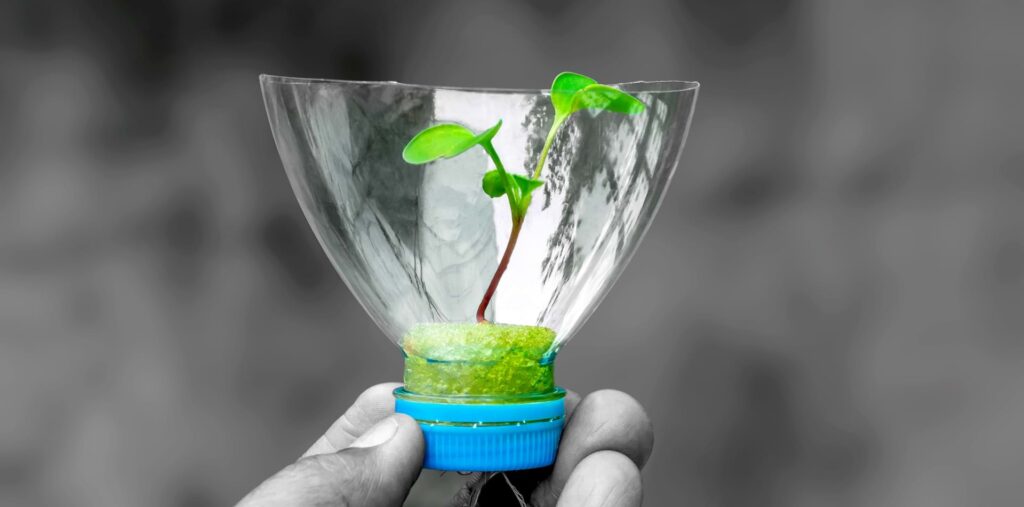
Clifford Chance has partnered with The New York Academy of Sciences to launch innovation challenges in Kigali, Rwanda. The goal of this three-year program is to strengthen Science, Technology, Engineering, and Math (STEM) education opportunities and enhance STEM workforce development in Kigali. We’re pleased to launch our latest Open Innovation Challenge and we seek innovative ideas for how to grow food in our own homes.
Students ages 13-17 in Kigali, Rwanda are invited to compete in an 10-week innovation challenge this Spring. During the challenge, students can form teams with peers and have access to research guidance from mentors via the Academy’s own virtual collaboration platform, Launchpad. The students then work together to develop an innovative, research-driven solution to address the challenge.
Challenge
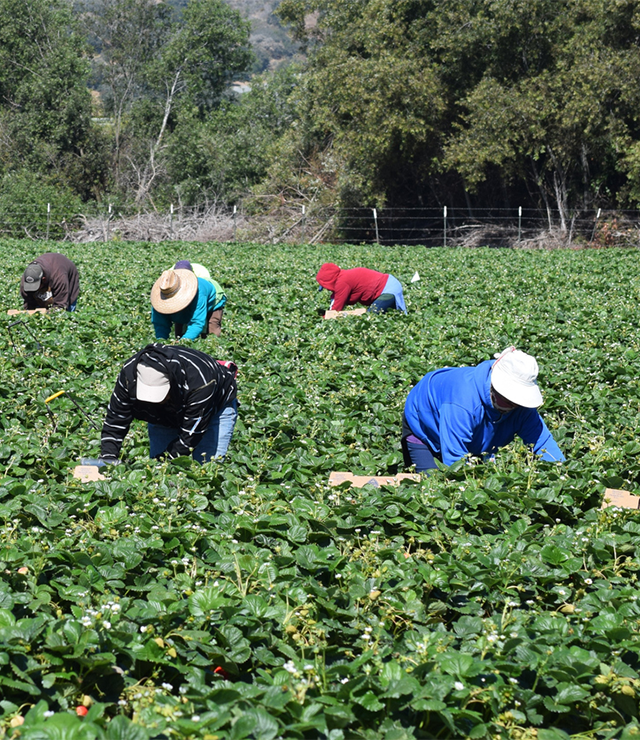
Kigali, Rwanda has been hailed by the United Nations as a “model sustainable city” and is considered one of the most food-secure cities in Africa. Nonetheless, drought and competing needs for land-use continue to threaten food security. In the face of climate change and a growing urban population, students who take on this challenge will be tasked with considering how urban gardening can be a part of the solution. The need for low-cost or no-cost innovations will be critical.
Design an innovative approach to implement urban gardening in your home, school or neighborhood that increases access to nutritious food sources for your family and/or community.
Sponsor
The program is made possible through the support of Clifford Chance as a part of its Cornerstone initiative. Cornerstone is Clifford Chance’s flagship global pro bono and community investment initiative in Rwanda. The initiative is made up of a series of projects that are designed to help these communities overcome the barriers inhibiting improvements in well-being.
International Science Reserve community member Daniel San Martin shares how he is applying his research in scientific computing to wildfire preparation and response.
In any major climate-related crisis, access to geo-spatial-temporal datasets, mapping, modeling, and analytical tools are critical to aid recovery efforts and protect communities. Many expert researchers, especially scientists and institutions in low-to-middle income countries, lack the tools to access and analyze relevant data, to inform local decision makers on how to act rapidly and effectively.
During a recent panel with the Predictive Analytics World (PAW) climate conference, we spoke with ISR community member Daniel San Martin of Universidad Técnica Federico Santa María in Chile. Daniel specializes in scientific computing with a current research focus on computational fluid dynamics, numerical methods, and high-performance computing applied to forest fire modeling.
How are you using data to inform crisis preparedness and decision-making on wildfires in your region?
Our work is not only based on data, but we also use physical models and simulations to get or evaluate dangerous zones and vulnerable locations. Our approach is to use these simulations to make informed decisions for experts in disaster management, like government institutions. We can also use the models to create new data for AI-based models in order to complement the analysis. The main contribution of our work with wildfires is trying to best inform the people who make the decisions and try to minimize the damage of wildfires.
Why did you look for collaborations outside of Chile, and why is a global network like the ISR beneficial to your work?
I think collaboration with a global network is crucial for developing countries, like Chile. We do this to tap into diverse expertise and to gain a global perspective, specifically on disasters. Also, to share resources and build capacity for rapid response. I think different experts in disaster management approach this work in order to help shape policies. I strongly believe that global collaboration is mandatory nowadays to face any kind of disaster, even more so now that we are suffering the effects of climate change.
How does access to resources, like geospatial mapping and modeling, impact your research and work?
In terms of data, it is really tricky in my region because of the availability of the technology or the funding to get intelligent data, like they have in the United States. We have a lot of resource constraints, such as spatiotemporal resolution issues, data integration complexities, sharing restrictions, data quality concerns, resource constraints, and remote sensing limitations, among others. Usually, we try to use the data provided by US or European institutions. We use that data to create models, but it cannot always be applied because we have geographical or meteorological differences. We need data and tech development by other countries, to create or adjust the tools to our own context.
What more could be done for researchers like yourself to get the data you need, and communicate it to decision makers?
To better support researchers in disasters, enhanced data accessibility through open initiatives and real-time streams is crucial. This includes advocating for standardized formats and integrating advanced remote sensing technologies. To communicate findings effectively to decision makers, user-friendly visualization tools and comprehensive scenario analysis reports are essential. Collaborative engagement with stakeholders, including regular workshops and educational initiatives, can bridge the gap between researchers and decision-makers, fostering understanding and trust.
Additionally, advocating for policy integration and offering training sessions to decision makers can ensure that scientific research is considered in disaster management strategies, ultimately enhancing the impact of simulation models on informed decision-making.
Annals of the New York Academy of Sciences has a long and rich history of publishing papers on bat research. With guest editor Sonja Vernes (University of St. Andrews), we are growing this collection which will include all of our bat-related papers that consist of a wide range of topics including echolocation, ecology, flight mechanics, social behavior, immunology, physiology, and more. This collection will not only expand our knowledge on bat biology and ecology, but also give insight into human health and conservation methods.
This International Science Reserve online event was hosted by The New York Academy of Sciences. It was of particular interest to those interested in risk management, as well as crisis and disaster preparedness and response—including the 1000+ members of the ISR science community.
In this special edition of Science Unusual, we bring you the International Science Reserve’s session from the Science Summit at the 2023 United Nations General Assembly.
Team members:Tianze H. (Team Lead) (United States), Tianlai H. (United States), Radwa A. (Egypt)
Mentor:Olusola Ladokun (Nigeria)
Urban gardening can be an effective way to provide fresh and healthy food at a low cost, particularly in parts of the world where food security remains elusive. But it involves many variables– climate, soil, location, sun exposure, type of crop– and urban residents often need education and guidance in order to be successful gardeners right from the start.
Three students — Tianze H. (United States, Team Lead), Tianlai H. (United States), Radwa A. (Egypt) — worked under the guidance of their mentor, Olusola Ladokun (Nigeria) to address this knowledge gap, and ultimately won the Spring 2023 Junior Academy Innovation Challenge with their project, “Family Farming: The Ultimate Planting Companion”. The project aims to promote urban gardening around the world by providing useful tips to city dwellers that enables them to supplement their diet with home grown crops.
“After long discussions we finally settled on the current idea,” says Tianlai. “Personally, I contributed creative ideas for our projects, like using deep learning algorithms in our application. I also worked with my teammates on the slides, adding things that they might have missed.” To identify what information would-be gardeners might need, the team conducted a small survey before designing an eco-friendly app called Family Farmers. The app contains a scanner that taps into existing plant and weather databases in order to identify the best potential garden locations based on available amount of space and local climate. The app also provides information about farming methods. It also shows how common household items can help reduce gardening costs.
Adding a Fun Factor to Urban Gardening
Family Farmers is designed to be the ultimate tool for aspiring gardeners, with an AI search engine that can be used to find suitable plants, an option to share progress and tips with a community of like-minded garden enthusiasts, and a calendar to remind users when to water and take care of their plants. The students also added an element of entertainment to their app, with plant-related games that provide fun facts about gardening.
Developing this innovative solution required hard work. The small but mighty team size (just three people) did not deter the committed students– in fact, it helped with the difficult task of coordinating online meetings across time zones.
Strengthening Relationships
“The size of the group does not matter. In fact, it might have even helped everyone strengthen our relationships,” says Team Lead Tianze.
“We were also able to help each other and make up for what we may not be good at. The teammates were willing to cooperate and overcome the time differences that we have,” says Tianze. “We were also able to help each other and make up for what we may not be good at. Helping to solve a real-world problem was a great experience.”
Team member Radwa enjoyed researching the issues surrounding gardening in an urban environment and collaborating with international students. “This was my first time in a program that involves meeting students from different nationalities and working together on new ideas,” he said. “This is a wonderful thing and I’m very glad to have gone through this experience, meeting new friends and learning many things in a field that I’m passionate about. I hope to do something that is related to it one day.”
The Junior Academy was supported by the Stevens Initiative, which is sponsored by the U.S. Department of State, with funding provided by the U.S. Government, and is administered by the Aspen Institute.
The International Science Reserve convened an expert panel to talk about the role of data in preparing for and responding to potential food system crises.
The world has enough food to feed everyone, yet the World Food Programme estimates that 345 million people around the world remain acutely food insecure in 2023.
Potentially further escalating this inequity, climate shocks are increasing the risks to agricultural yields. Heavy rainfall, droughts, and heatwaves can cause crop failures; climate and environmental pressures can decimate insect populations and microorganisms vital to plants and soil or let new crop pests or diseases emerge. Combined with a globalized distribution system and geopolitics, food system disasters are a compound problem.
To plan for or reduce the impact of these catastrophes, a variety of datasets, modeling, and analytical tools will be key, including observational data, remote sensing, geospatial mapping, and satellite imagery.
The International Science Reserve convened an expert panel from nonprofit and corporate perspectives across disciplinary and geographic boundaries to talk about the role of data in preparing for and responding to potential food system crises, as part of the International Science Reserve’s webinar series, Science Unusual: R&D for Global Crisis Response. Participants were:
Michael Hinge, Senior Economist, ALLFED (Alliance to Feed the Earth in Disasters)
Levente Klein, Research Staff Member, IBM
Kyriacos M. Koupparis, Head, Hunger Monitoring Unit, United Nations World Food Programme
Kay Sun, Senior Scientist, Mondelez International
Vaishnavi Chandrashekhar, Climate and Environmental Journalist, panel moderator
Here are the top takeaways from the discussion:
Participants agreed about the urgent priority to get accurate data about what’s happening with food systems, weather, and climate patterns:
The information needs to include a wide range of data inputs to make sure it includes the “ground-truthing” from sources where people are seeing the most immediate impacts.
And in turn that the information, modeling and predictions should be made available to the communities who are most affected.
The panelists talked about climate impacts on specific food crop examples and ways that data-based planning can help deal with those impacts with alternative food sources or adapting agricultural cultivation methods.
With more than 500 participants, the Urban Gardens Innovation Challenge was a great success.
Published March 10, 2023
By David Freeman
With the participation of 547 students in 118 teams, the Urban Gardens Innovation Challenge organized in Rwanda by The New York Academy of Sciences in partnership with Association Mwana Ukundwa (AMU) has been a great success.
Sponsored by the Clifford Chance Cornerstone Initiative, the Spring 2022 competition tasked students aged 13-17 from Kigali, the country’s capital, to use micro-gardening techniques to broaden access to nutritious food sources.
Kigali is considered one of the most food-secure cities in Africa, but the ability to obtain nutritious food remains a concern for many poorer households. Malnutrition and micronutrient deficiencies can result in stunted growth and put children and adults’ health at risk.
Eager to address food scarcity and poor nutrition, which affect their communities, the students took up the challenge with great enthusiasm and came up with a wide range of practical and creative solutions to help people living in crowded urban environments supplement their diet with home-grown vegetables.
Challenge participants dedicated many after-school hours to their projects, spending time researching urban gardening methods and suitable crops, brainstorming with their teammates and developing their projects.
Ten public schools and three charter schools, coordinated by AMU, supported the competition and gave students access to computer labs. Several Rwandan science teachers acted as mentors for participating teams.
After carefully reviewing submissions, the judges selected a winning project and five runner-up projects of distinction. Members of the winning team got a chance to showcase their project at the 2022 Global STEM Alliance Summit, organized by The New York Academy of Sciences.
Winning Team: Growing Vegetables
Team members: Tarah (Team Lead), Emerance, Solange, Emmanuel, Sandrine, Hirwa Mentors: Baseka Didier (in Kigali) and Gaurangkumar Sharma
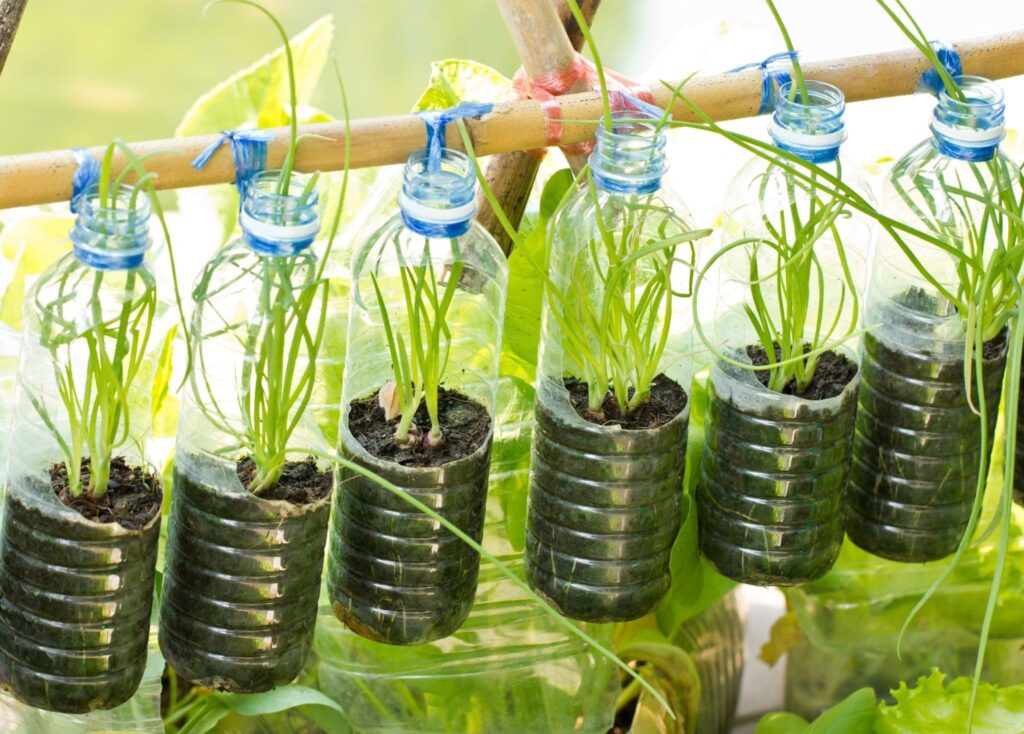
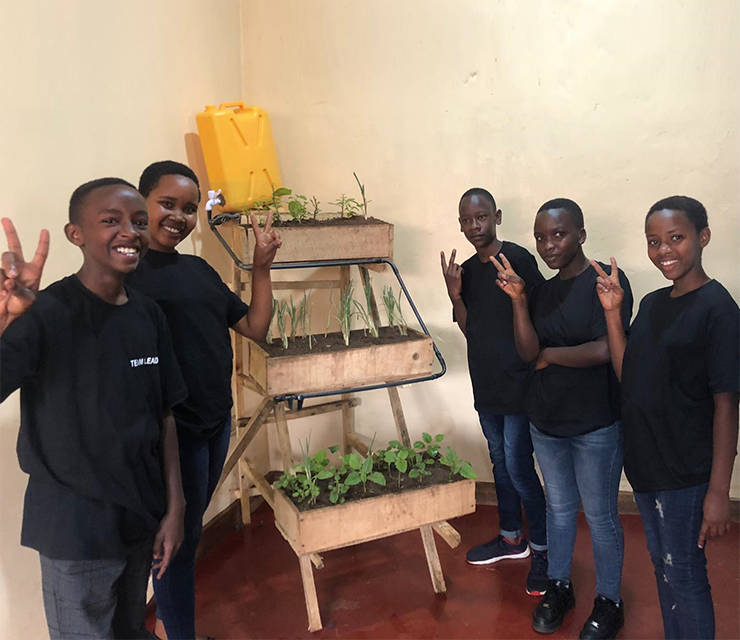
The team came up with an innovative solution to address food scarcity. To enable low-income households living in cramped conditions to grow vegetables, the team hung recycled PVC pipes and old bottles and used them as planters. Because PVC pipes contain toxic chemicals, the team stressed that they need to be cleaned with ashes before use. After careful research, the team opted to grow produce like onions, garlic and green vegetables, which do not grow long roots and can fit into these containers. The students also developed a simple but effective irrigation system consisting of old jerrycans, a tap and small tubes.
“We did the project after class, so the challenge was going home late and tiredness,” says Team Lead Tarah. But developing this project that can improve the lives of their relatives and the community around them was also a powerful experience for the enterprising students. “I learned a lot from my teammates,” says Emmanuel. “This group is very important to me, it helped me to be happy and work together.”
Runner-up Team: Reducing Lack of Vitamin in Urban Settlements
After brainstorming on the best way to encourage urban dwellers to improve their vitamin intake by growing and consuming more fresh vegetables, members of this team considered three key factors: potential users in urban settlements tend to move frequently; they have little space to cultivate vegetables; and they are short of time. As a result, the team focused on creating a vertical, space-saving micro-garden on wheels. With recycled wooden planks, they fashioned a stair-like structure consisting of terraced planters, irrigated with tubing, which can be used to grow fresh vegetables.
Building their prototype required hard work but the team learned a lot in the course of working on this project and enjoyed the process. “In this project, I had a lot of fun and did hard work with the group, brainstorming and searching for a solution,” says Esperance.
Runner-up Team: Growing Vegetables
Team members: Fabrice (Team Lead), Nziza, Teddy, Ally, Djanati, Samuel
This team also focused on portability and created a vertical garden with wheels to cultivate a variety of crops. As planting containers, they used old jerrycans cut in half while wooden sticks provided legs. They then added wheels for easy transportation. Team members explored the nutritional qualities and health benefits of several types of vegetables and consulted experts, and opted to focus on carrots, cabbage, onions and green peppers.
“I thought our project would help the poor who do not have a large farm, as they cultivate small and fertile land,” says Ally. Team Lead Fabrice concurs and says he, too, has benefited from the project. “This project helped me in different ways: it got me thinking and work hard and helps my parents to have our own food garden with a great expense.”
The team conducted a survey in the community and discovered that many people lack knowledge and time to grow vegetables. Team members therefore focused on cultivating fast-growing plants such as lettuce, onions, cabbage that require minimal care. They found that by placing plants in a transparent jar filled with water that is changed every second day, roots would grow within two weeks. By encouraging their community to develop basic gardening skills, the team hope their initiative will have a positive impact on people’s daily lives.
“This project taught me that there are multiple ways to grow plants and that growing plants is actually really interesting if you give it time and attention,” says Ivanka. “It was an enlightening experience,” concurs her teammate Albina. “It has improved my communication ability. I would love to do it again.”
Runner-up Team: Growing Crops at Home by Using Discarded Materials
Team: Cedric (Team Lead), Esther, Jean-Marie, Christian, Kevin, Axelle Mentor: Rubarema Maurice (in Kigali)
Having identified the high cost of vegetables as a root cause of poor nutrition, the team focused on using widely available discarded materials such as plastic bottles, glass and sacks to build a tiny kitchen garden. Using old timber, they constructed a small frame that they lined with sack fabric and filled with soil and manure. They carefully selected the vegetables they planted after researching the amounts of water and manure required for each crop.
“As team leader, I helped my team to find the land where we built our kitchen garden,“ says Cedric. Says team member Arielle: “I helped my team with the irrigation of our crops. I learned why we have to irrigate our crops and put manure in soil for every crop.”
Runner-up Team: Using Different Local Tools to Increase Crop Production
Team: Elias (Team Lead), Samantha Kiara, Englide, Glory, Uwase Mentor: Rubarema Maurice (in Kigali)
To optimize the use of space, water and manure, and increase crop production, this team experimented with different seeds that they planted in a variety of recycled containers. For example, they drilled holes in the sides of plastic tubs to plant green onions. They also discovered that they could accelerate germination by poking small holes in nutrient-rich ripe bananas, planting seeds, then covering them up with soil.
“Working in this challenge helped me to think further and brainstorm. I also got new skills in making kitchen gardens, how to create innovation and transform useless tools into useful things,” says Team Lead Elias.
A broad positive impact
In September 2022, Academy and Clifford Chance staff visited Rwanda’s capital Kigali and discussed the Urban Gardens Innovation Challenge in a series of interviews with local stakeholders. They confirmed that the innovation challenge had left a lasting, positive impact at several levels:
Participating students supplemented their studies about nutrition and urban agriculture by deeply researching the subjects and were then able to apply their extended knowledge to improve soil quality and grow vegetables. In addition to improving their own family’s access to food, the students also gained self-confidence and developed a broad range of skills, including leadership, problem solving, critical thinking, teamwork, computer skills, and design and technology.
Teachers and participating schools expressed great satisfaction with the challenge. The nineteen local science teachers who mentored and supported students during the competition reported that the challenge had improved their own self-confidence. They expressed pride in the students’ contribution to address malnutrition in Rwanda. The challenge brought a new approach to teaching STEM, making it more relevant and rooted in the students’ living experience.
Families and the greater community also benefited from the challenge. Students’ parents followed their children’s progress with great excitement and acknowledged that the Urban Gardens Innovation Challenge had improved food stability in their household. They shared their children’s achievements with neighbors and the wider community.
Policy makers also highlighted the potential for further positive effects, since the Urban Gardens Innovation Challenge reinforced a government policy that encouraged households to grow their own food.
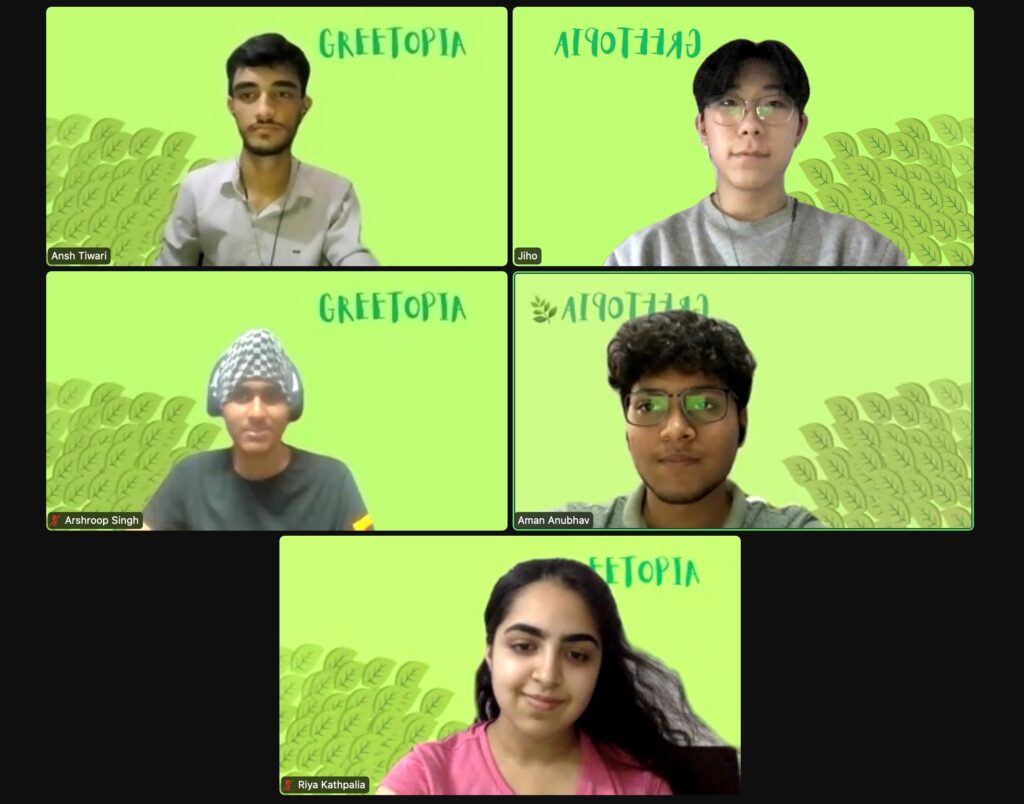
Team Members: Jiho L. (Team Lead) (Republic of Korea), Ansh T. (India), Riya K. (India), Arshroop S. (India), Aman A. (India), Rawnaq A. (Oman)
Mentor: Olusola Ladokun (Nigeria)
Among the 85 teams that embarked on the Green Redesign Challenge in Fall 2022, one team stood out.
By improving irrigation and reducing the waste of resources, Team Greetopia aims to bring innovation to agriculture. They were named the winning project in the challenge.
Based on research and stories shared by numerous farmers, the team identified key issues, illustrated by stark figures: 2 quadrillion gallons of agricultural water are wasted annually[1], and agriculture uses 2.2 quadrillion KJ of energy every year[2], about 5% of world energy demand. They also found that 1.2 billion tons of food[3]– enough to feed the entire US population for 3.64 years– is wasted, never leaving the farm.
Working online, across time zones, created initial difficulties– but the team members found ways of collaborating productively.
“I’m grateful to have experienced the diverse cultures coming together for the betterment of this human society,” says Aman. “Time zones were a hurdle in the smooth performance of the team, but we managed it by distributing the work evenly to be performed by individuals at their time of comfort, alongside holding alternate team meetings at common times.”
Challenges in Agriculture
The Organisation for Economic Co-operation and Development (OECD) has identified lack of innovation as one of the biggest challenges in agriculture. In a world facing multiple challenges such as depleted natural resources, climate change, and pollution, developing more efficient agricultural systems is crucial for our survival.
Through online brainstorming, the team concluded that emerging technologies like the Internet of Things (IoT) and Artificial Intelligence (AI) can address some of these issues and can help farmers who often lack the skill set to optimize agricultural methods. Overuse of fertilizer, for example, can pollute waterways, burn crops, deplete the soil of minerals and increase air pollution.
“It was an amazing experience to have connected with like-minded individuals and research world-changing approaches!” says Riya.
Greetopia team members decided to develop a web application that would tackle the excessive use of non-renewable resources.
“I got to research and learn more about the important crises around the world, such as concrete pollution, irrigation, etc.,” says Arshroop. “The constant communication within the team allowed us to keep up with the information and learn a lot of valuable lessons through the program.”
Utilizing the Internet of Things
In particular, the students opted to use the Internet of Things (IoT) to increase efficiency in irrigation and modernize farming practices that have remained unchanged for centuries.
“As team lead, I worked on planning our work, informing each member of what they have to do until certain target dates, creating documents to make the process efficient, and of course, conducting research about our research topic and filling in the milestones,” explains Team Lead Jiho.
The team devised “Kanad”, a farming application that delivers four main functions. First, it senses soil moisture levels by using a machine-learning component called Long Short-Term Memory Network (LSTM), which gets more accurate with use. Second, farmers can enter information on the Nitrogen, Phosphorus and Potassium (NPK) content in the soil, (also analyzed by sensors) to identify the most optimally adapting crops for these soil characteristics and locations.
Utilizing Machine-Learning
Machine-learning can also recommend the optimal amount of fertilizer based on the same NPK levels in the field. Finally, farmers can enter images of their crop into the web-based application, which will use the Convolutional Neural Network deep learning system to identify potential crop diseases with an accuracy of 95.25%.
Arriving at this successful solution did not prove easy: the team decided to change direction halfway through the Challenge.
“I’m glad that the team members understood the sudden change in our projected target in the middle of the program, which led to a successful ending,” says Ansh. In the end, perseverance paid off and the outcome amply justified the effort involved.
“Despite the obstacles we encountered, we made it till the end,” says Rawnaq. “We did not just complete the challenge but the result was awesome.”
[1] Source: UN Food and Agriculture Organisation [2] Source: US Department of Agriculture [3] Source: World Wildlife Fund (WWF-UK)
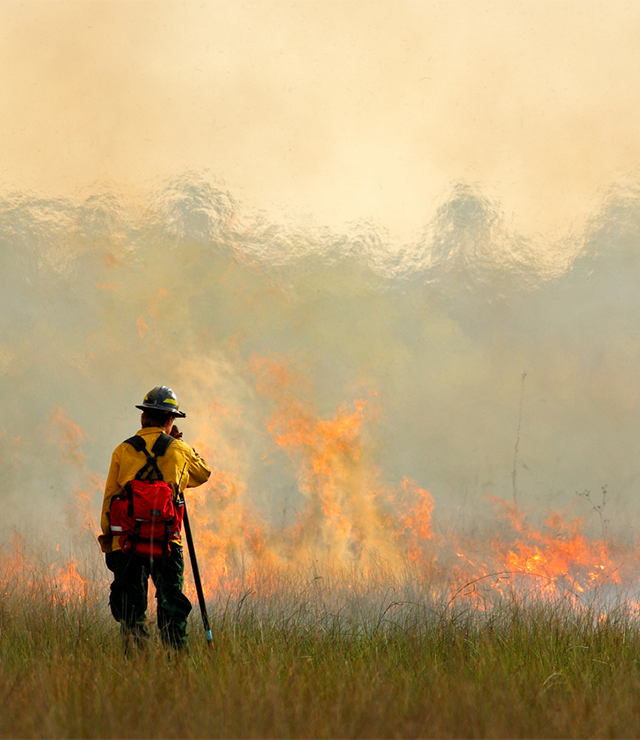
Prolonged droughts, caused by climate change, have amplified the risks of forest fires around the globe– making blazes bigger, more frequent, and more intense.
These fires devastate vast swathes of forests and often spread into residential areas, threatening lives and housing. Research by the University of Maryland suggests that fires cause forests to lose 3 million more hectares annually than in 2001. Furthermore, the UN Environment Program estimates that by 2100, the number of forest fires will increase by 50%.
The team Intelligent Forest — Chinmay R. (India, Team Lead), Rohan S. (India), and Soumik P. (India) — worked under the guidance of their mentor Malarvizhi Arulraj (United States) to tackle this critical issue as part of the “Forestry for a Sustainable Future” Fall 2022 Junior Academy Challenge, sponsored by the Royal Swedish Academy of Engineering Sciences (IVA). Intelligent Forest bested the field among 175 competitors. Their innovative method to predict the risk of fire helped them to win.
“It was great taking on real world problems and using our intellect to solve them. I learned various things throughout the course of the challenge such as AI, weather patterns, machine learning applications and much more,” says Rohan. “We worked hard as a team and came up with a solution in the end together.”
Understanding Forest Fires
Forest fires can be triggered by natural factors, such as lightning, or by human factors, such as the careless dropping of a cigarette or the lighting of an unnecessary fire in severe drought conditions. Crown fires burn the entire length of the trees while surface fires only scorch dried leaves and grass.
In some cases, fire can rage under the ground. As the team discovered over the course of their research, climatic conditions play a critical role– the hotter and drier the weather, the more destructive the fire is likely to be.
Finding ways to mitigate the impact of these now-frequent infernos required hard work, but the team members worked collaboratively to achieve results.
“There were times when I was uncertain as to whether we would even reach the end, but here we are,” says Soumik. “It was a fun experience working with my team members, and I had the opportunity to add and develop my skills. My main contribution was helping with the research side of things and suggesting ideas and edits.”
Utilizing Artificial Intelligence
With support from their mentor, the students decided to focus on harnessing the power of Artificial Intelligence (AI) to analyze forest and temperature data, in the hope that it would be possible to predict the risk of fires.
“I was impressed by the plans and ideas the team put together and was absolutely delighted to mentor the team,” says their mentor, Malarvizhi. “They chose a problem and approach that was hard and challenging. Especially, finding the best dataset and creating working machine-learning algorithms needs a lot of effort.”
Using data on fire alerts and meteorological information (minimal and maximal temperatures, rainfall, solar radiation and daily evaporation) collected in the Brisbane area in Australia between 2012 and 2022, the team tested two different AI approaches: Decision Tree and Random Forest.
The Results
The goal was to create four categories: no risk, low risk, medium risk or high risk of fire. The results provided the proof-of-concept the team expected. With the Decision Tree approach, they were able to predict fire risk with 70% accuracy, while the accuracy was 79% using the Random Forest approach.
These findings demonstrated that with the help of AI, it is possible to predict the risk of forest fires with 70–80% accuracy, which, in turn, allows for increased preparedness and limited impact.
“The project was a great learning experience for me,” says Team Lead Chinmay. “I had taken Artificial Intelligence as a subject in high school and this project taught me how I could apply what I had learned in a real-life situation.”