Advancing Science of the Global Public Good

A shot of various hands coming together in unity.

Teams, made up of 28 students from 11 countries, win international challenges in Space Exploration, Smart Technology for Home and Health, Cybersecurity, Sustainable Transportation, and the battle against COVID-19.

Published August 12, 2020

By Roger Torda

Five international teams made up of 28 students from 11 countries have demonstrated they can solve challenges that vex the most experienced scientists and engineers. The students are among more than a thousand that competed in 2020 Challenges run by teams, made up of 28 students from 11 countries, won international challenges in various fields of science as part of The New York Academy of Sciences’ Global STEM Alliance. The teams collaborated across borders to develop solutions related to the coronavirus pandemic, routine healthcare monitoring, cybersecurity, lunar exploration, and sustainable transportation.

The Combating COVID-19 Challenge

“I didn’t want to stand by and passively wait for the pandemic to be over,” said Young Chen, explaining why he assembled a team to enter the Combating COVID-19 Challenge. “It was a combination of curiosity, risk-taking, and desire to help my community.” Chen, from Ashburn, Virginia, four other students from the United States, and another from New Delhi, India, won first place among 200 entries in the global competition. Their winning project, called GOvid-19, was a chatbot to provide users with information about government responses, emergency resources, and statistics on COVID-19, and ways they can help fight the pandemic.

The Academy’s goal with the competitions is to help students develop capabilities necessary for effective work and leadership in STEM fields. “Providing opportunities for students to build 21st-century skills like problem solving, collaboration and communication are core goals of our challenge programs,” said Hank Nourse, Senior Vice President & Chief Learning Officer for the Academy, in announcing the winners of the Challenges. This year, several of the Challenges were especially valuable as non-classroom projects for students whose schools had closed because of COVID-19. “Several of these teams completed their work during shutdowns due to the pandemic,” Nourse explained. “We are happy to know that our digital tools allowed students to continue working and learning without interruption.”

The Intelligent Homes & Health Challenge

Zoe Piccirillo, leader for the team that won the Intelligent Homes & Health Challenge, described some of what she learned: “I have become a more open-minded, collaborative and creative individual from working with the motivated and bright members of our team… My team members also helped make our final solution more inclusive. The diversity of the group provided new perspectives regarding what values and concerns are prevalent across the world.”  Zoe’s Health Sync team designed a secure, in-home health monitoring system connecting patients, doctors, and pharmacists. Zoe, from New York City, worked with another student from the United States, two from Sweden, and one each from the Philippines and Australia.

I have become a more open-minded, collaborative and creative individual from working with the motivated and bright members of our team.

Zoe Piccirillo

After assembling their teams, the students use the Academy’s Launchpad platform to connect with a volunteer mentor and then to reach out to other experts as they conduct research. “Mentors are often early career scientists, from academia and industry, who volunteer their time to help guide the students with their projects,” explained Kaari Casey, GSA program manager.

“I’m incredibly proud of my teams,” said Jessica Black, the mentor for Health Sync and a veteran of nine previous Challenges. “Often, the topics that are presented for these challenges are varied and out of the scope of what most students are studying in school,” Black continued. “They have to integrate their knowledge base with newly acquired information that must be obtained through research. It’s a new process for many of them. To see the resolutions and presentations they formulate by the end of the challenge is incredible.”

Black is a fellow in pediatric oncology at New York-Presbyterian/Weill Cornell Medical Center in New York City. “As a female in STEM I feel it’s really important to act as a role model not just for my female students, but for all of my students,” she added. The Intelligent Homes and Health Challenge was sponsored by the Royal Swedish Academy of Engineering Sciences, AstraZeneca, and Chalmers University of Technology.

The Cybersecurity in the Age of IoT Challenge

A team calling itself Cybercastle won the Cybersecurity in the Age of IoT Challenge, with a system that uses blockchain technology to encrypt medical records. Team lead Rasmus Häggkvist, from Norrbotten, Sweden, described his criteria for forming a team using Launchpad, saying he “was looking for kind, organized, diligent, and prudent perfectionists.” He found them in all corners of the world, including India, Morocco, Canada and the Philippines. The Cybersecurity Challenge was sponsored by the S&P Global Foundation, with 25 employees from S&P Global serving as mentors to student teams.

The Space Challenge

The LunarX team won the Space Challenge for its plan to colonize the Moon, including designs for shelters, sustainable food and water systems, and artificial intelligence tools for energy and mobile transport. Sachee Kachchakaduge, the team’s leader from Vancouver, Canada, pointed to the importance of using digital communications in a global project: “We used asynchronous collaboration to work on our own time. Distance and time zones did not prove to be issues, and we were able to work as if we were school friends or classmates.”

Sachee also pointed to opportunities to expand skills in sometimes unexpected ways: “At the surface, challenges seem like they only teach you about the topic at hand. However, in reality, you learn many other things. The team provides a safe space for everyone to try new software, and to learn from others and to test out your ideas.”  Sachee’s teammates were from the United Arab Emirates, the Republic of Moldova, India, and the United States.

LunarX team mentor Garret Schneider, a retired aeronautical and astronautical engineer who worked in the Air Force and in industry, said the team worked hard to avoid becoming overwhelmed: “I think their biggest obstacles were digesting all the information and possibilities, and also deciding where to focus their energies…. [This] contributed to their success, as well as their dedication to tie all the elements of their solution together in a thorough, coherent manner.” Garret, who has volunteered with the Academy for close to 20 years, said he benefits as well as the students: “I have a renewed respect for the intelligence and capability and spirit of our youth – I feel pride to have been associated with them.”

The Chain of Transportation Challenge

A team calling itself LiFe won the Sustainable Chain of Transportation Challenge. The team designed a battery, a vehicle and an app to match specific transportation needs with the most efficient transportation solutions. Team member Abby Liang, from Troy, Michigan, said: “My new knowledge about the scientific research and design process, as well as both technical and creative skills from coding to policy frameworks to project management, will stay with me as I continue in my studies… I am so proud of our final comprehensive design.”

Members of the team were from Mexico, New Zealand, Egypt and the United States. The Sustainable Chain of Transportation Challenge was sponsored by the Royal Swedish Academy of Engineering Sciences and the Volvo Group.

Winning teams will receive a trip to New York City for next year’s annual GSA Summit, as this year’s Summit was postponed due to the coronavirus pandemic. In lieu of the in-person event this year, a virtual summit was held last month. Nicholas B. Dirks, the Academy’s President and CEO, addressed almost a thousand students and mentors, with a message about the importance of cross-discipline curiosity.

Laura Helmuth, Editor-In-Chief of Scientific American, delivered a keynote address, describing career pathways to science journalism and explaining the importance of good communication in the practice of science.

One of S&P Global’s 25 Challenge mentors echoed the belief that the exchange of ideas is a two-way process. “I wanted the chance… [to] get some exposure to what the next generation thinks about the problems the world is facing,” said Ryan Duve, a senior data scientist. Ryan worked with several teams and mentored a team called Symblot, which competed in the Cybersecurity Challenge. “I think the most important part of mentoring is just being a positive example of what you can be when you grow up,” he continued. “Too many young people only hear about different professions in articles and never really get a chance to do Q&A with a practitioner, which is a role I thought I could help fill.”

Winning Teams for the 2020 Global STEM Alliance Challenges

Combatting COVID-19

Abhay Sheshadri, Monroe Township, NJ, US; Anshul Mahajan, New Delhi, India; Regan Razon, Morrisville, NC, US; Tanush Swaminathan, Monroe Township, NJ, US; Young Chen, Asburn, VA, US.

Cybersecurity in the Age of IoT

Rasmus Häggkvist, Norbotten, Sweden; Sneha Pullanoor, Mumbai, India; Ouahib Timoulali, Kenitra, Morocco; Subaita Rahman, Toronto, Canada; Ma. Rizza Cerilles, Cavite, Philippines; Max Kenning, Stockholm, Sweden.

Space

Sachee Kachchakaduge, Vancouver, Canada; Sreenidhi Vijayaraghavan, Dubai, United Arab Emirates; Andreea Bujor, Ungheni, Republic of Moldova; Abhinav Agarwal, Jaipur, India; Arnav Hazra, San Francisco, CA, US; Naveen HV, Mysore, India.

Intelligent Homes & Health

Sara Rydell, Stockholm, Sweden; Jana Montanez, Parañaque City, Philippines; Ansh Gadodia, Princeton Junction, NJ, US; Sophia Li, Melbourne, Australia; Alice Forslund, Göteborg, Sweden; Zoe Piccirillo, New York, NY, US.

Sustainable Chain of Transportation

Cynthia Ramirez Meneses, Texcoco, Mexico; Izabela Zmirska, St. Augustine, FL, US; Evie Rose Grace, Dunedin, New Zealand; Ishita Bhimavarapu, Princeton, NJ, US; Abby Liang, Troy, MI, US.

Learn more about educational opportunities at the Academy.

Game Changers: Scientists Shaping the Future of Research in the UK

On March 5, 2020, the New York Academy of Sciences celebrated the Laureates and Finalists and winners of the 2020 Blavatnik Awards for Young Scientists in the United Kingdom. The one-day symposium featured fast-paced, engaging research updates from nine scientists working in diverse fields within life sciences, chemistry, and physical sciences and engineering. This year’s Blavatnik UK honorees are probing the deepest mysteries ranging from the universe to the human mind, tackling longstanding questions that have occupied scientists and philosophers for millennia. Is there life beyond our Solar system? How is knowledge organized in the brain? What is the fundamental nature of gravity? Find out how this game-changing group of young scientists is working to answer these questions in this summary of the symposium.

Symposium Highlights

  • Environmental factors can influence the defense strategies bacteria use to fend off invading viruses. Insights into this process are advancing the potential for phage therapy as an alternative to antibiotics.
  • New analytical and computational tools are revealing the neural machinery that allows the brain to create models of the world and facilitates decision-making and behavior.
  • Chemists can exploit chirality to create novel molecules with a wide variety of applications in drug design, consumer electronics, and catalysis.
  • The scientific community is closer now than ever to realizing the commercial potential of nuclear fusion as a source of clean energy.
  • The first viable theory of massive gravity might help explain some of the biggest mysteries in physics, including the accelerated expansion of the universe.

Hosted By

Victoria Gill
Science Correspondent
BBC News

Speakers

Tim Behrens, DPhil
University of Oxford and University College London

Ian Chapman, PhD
UK Atomic Energy Authority

Matthew J. Fuchter, PhD
Imperial College London

Stephen M. Goldup, PhD
University of Southampton

Kirsty Penkman, PhD
University of York

Claudia de Rham, PhD
Imperial College London

Eleanor Stride, PhD
University of Oxford

Amaury Triaud, PhD
University of Birmingham

Edze Westra, PhD
University of Exeter

Program Supporter

Changing the Game in Life Sciences

Speakers

Eleanor Stride, PhD
University of Oxford

Edze Westra, PhD
University of Exeter

Tim Behrens, DPhil
University of Oxford & University College London

Engineering Bubbles

Mechanical engineer Eleanor Stride never planned to design drug delivery systems. She was “convinced I wanted to spend my career designing Aston Martins,” until a chance discussion with a supervisor piqued her interest in therapeutic applications of engineered microbubbles. Just two microns in diameter, microbubbles can be used as ultrasound contrast agents, but Stride sees a role for these tiny tools in the fight against cancer. “In many cases, the problem with cancer drugs [is] how we deliver them,” she said, explaining that systemic chemotherapy agents often cannot penetrate far enough into tumors to be effective. These drugs can also cause side effects and damage healthy tissues.

Microbubbles can help sidestep these challenges, safely encapsulating drug molecules within a stabilizing shell.  The shell can be functionalized with magnetic nanoparticles, allowing clinicians to direct the bubbles’ aggregation at tumor sites and visualize them with ultrasound. As the bubbles compress and release in response to the ultrasound beam, the oscillation helps the bubbles penetrate into the surrounding tissue. “If we increase the ultrasound energy, we can destroy the bubble, allowing us to release the drugs on demand,” said Stride, noting that molecules released from a single 2-micron microbubble can circulate up to 100 times that diameter, pumping drugs deep into tumor tissues. This approach is highly localized—drugs are only released at the tumor site—which eliminates the potential for systemic toxic effects.

Ultrasound-stimulated oscillation of microbubbles creates a vortex in surrounding fluids. The vortex pumps drug molecules deep into tumor sites.

In 2019, Stride and a team of collaborators published the results of trials using oxygen-loaded magnetic microbubbles to treat malignant pancreatic tumors. In animal models, tumors treated with microbubble-delivered drugs showed dramatic spikes in cell death and also shrank in size, “which can mean the difference between a surgeon being able to remove a tumor or not,” said Stride. Additional experiments have helped hone techniques for external magnetic control of microbubbles within blood vessels to ensure precise, targeted drug delivery—a critical step toward tailoring this method for use in humans. Stride and her collaborators aim to launch a clinical trial in pancreatic cancer patients “in the very near future.”

Insights From Bacteria-Phage Interactions

As the fight against viruses dominates the news cycle, 2020 Blavatnik Awards UK Finalist Edze Westra shared an update from the front lines of a viral war billions of years in duration: the “evolutionary arms race” between bacteria and the viruses that infect them, called phages. The interactions between bacteria and phages—the most abundant biological entities on Earth—have profound implications for the development of phage-based therapies as alternatives to antibiotics.

Phages are often successful killers, but bacteria have evolved sophisticated immune strategies to resist attacks. Understanding how and when bacteria deploy each of these defensive tactics is key to designing phage therapies to treat bacterial infections.

Like humans, bacteria utilize both innate and adaptive immune responses to invading pathogens. In bacteria, innate immunity relies on the modification of surface structures to prevent phages from attaching. This system is effective, yet it creates no “record,” or memory, of which phages it encounters. The adaptive immune system, however, allows bacteria to build a database of previously encountered pathogens in the form of bits of genetic material snipped from invading phages and incorporated into the bacterium’s own DNA. The adaptive immune system, known as CRISPR immunity, forms the basis of CRISPR-Cas genome editing techniques. “There’s a critical balance between these two systems, and both are critical for survival,” said Westra, whose research aims to determine the factors that influence whether a bacterium mounts an innate or adaptive immune defense against a particular phage.

Using Pseudomonas aeruginosa, an antibiotic-resistant pathogen that often infects cystic fibrosis patients, Westra determined that a bacterium’s environment—specifically, the level of available nutrients—determined which defensive strategy was utilized. In high-nutrient environments, almost all bacteria deployed an innate immune response to phage attacks, whereas in lower nutrient settings, CRISPR immunity dominated.

The level of available nutrients influences which immune strategy bacteria use to defend against phage attacks.

In experiments using moth larvae, Westra discovered that infections were more severe when bacteria utilized CRISPR immunity, whereas bacteria that evolved innate immunity often caused less aggressive infections. “If we can manipulate how bacteria evolve resistance to phages, this could potentially revolutionize the way we approach antimicrobial resistance, with major benefits to our healthcare,” Westra said.

Building Models of the World

Computational neuroscientist Timothy Behrens is fascinated with the basic functions and decisions of everyday life—the process of navigating our home or city, the steps involved in completing household tasks, the near-subconscious inferences that inform our understanding of the relationships between people and things. Behrens designs analytical tools to understand how neuronal activity in the brain gives rise to these thought processes and behaviors, and his research is illuminating how knowledge is organized in the brain.

The activities of grid cells and place cells are well understood. By creating spatial maps of the world, grid and place cells allow us to navigate familiar spaces and locate items, such as car keys. Behrens explained that much less is known about how the brain encodes non-spatial, abstract concepts and sequence-based tasks, such as loading, running, and emptying a dishwasher. Over the past several years, Behrens and his collaborators have demonstrated that abstract information is similarly mapped as grid-like codes within the brain. “On some level, all relational structures are the same, and all are handled by the same neural machinery,” he said. This insight helps explain the effects of diseases like Alzheimer’s, which targets grid and place cells first and impacts both spatial and non-spatial knowledge.

Relational information is encoded by the same neural machinery that encodes spatial and navigational maps.

In another line of research, Behrens is probing a phenomenon called replay, during which the brain revisits recent memories as a means to consolidate knowledge about current events and anticipate future ones. Behrens illustrated the concept by showing patterns of neuronal activity as a rat runs around a track, then rests. Even at rest, the rat’s brain displays millisecond-long flashes of neuronal activity that mimic those that take place during running. “He’s not running down the track anymore, but his brain is,” said Behrens. Replay also underlies the human ability to understand a simple story even when it’s told in the wrong order. “Our knowledge of the world tells us…what the correct order is, and replay will rapidly stitch together the events in the correct order.”

Computational tools developed in Behrens’ lab have been shared with thousands of scientists around the globe as they pursue new hypotheses about the neural computations that control cognition and behavior. “It’s an exciting time to be thinking about the brain,” Behrens said.

Further Readings

Stride

Beguin E, Shrivastava S, Dezhkunov NV, et al.

Direct Evidence of Multibubble Sonoluminescence Using Therapeutic Ultrasound and Microbubbles

ACS Appl Mater Interfaces. 2019 Jun 5;11(22):19913-19919

Beguin E, Bau L, Shrivastava S, Stride E.

Comparing Strategies for Magnetic Functionalization of Microbubbles

ACS Appl Mater Interfaces. 2019 Jan 16;11(2):1829-1840

Westra

Alseth EO, Pursey E, Luján AM, et al.

Bacterial Biodiversity Drives the Evolution of CRISPR-based Phage Resistance in Pseudomonas Aeruginosa

Nature. 2019 Oct;574(7779):549-552

Westra ER, van Houte S, Gandon S, Whitaker R.

The Ecology and Evolution of Microbial CRISPR-Cas Adaptive Immune Systems

Philos Trans R Soc Lond B Biol Sci. 2019 May.13;374(1772):20190101

Behrens

Liu Y, Dolan RJ, Kurth-Nelson Z, Behrens TEJ

Human Replay Spontaneously Reorganizes Experience

Cell. 2019 Jul 25;178(3):640-652.e14

Constantinescu AO, O’Reilly JX , Behrens TEJ

Organizing Conceptual Knowledge in Humans With a Gridlike Code

Science. 2016 Jun 17;352(6292):1464-1468

Behrens TEJ, Muller TH, Whittington James CR

What Is a Cognitive Map? Organizing Knowledge for Flexible Behavior

Neuron. 2018 Oct 24;100(2):490-509

Changing the Game in Chemistry

Speakers

Matthew J. Fuchter, PhD
Imperial College London

Stephen M. Goldup, PhD
University of Southampton

Kirsty Penkman, PhD
University of York

Exploiting Molecular Shape to Develop Materials and Medicines

Consider the handshake: a greeting so automatic it takes place without thinking. Two right hands extend and naturally lock together, but as Matthew Fuchter explained, that easy connection becomes impossible if one party offers their left hand instead. The fumbling that ensues stems from a type of asymmetry called chirality. Chiral objects, such as hands, are mirror-image forms that cannot be superimposed or overlapped, and when one chiral object interacts with another, their chirality dictates the limits of their interaction. Chirality can be observed throughout nature, from the smallest biological molecules to the structures of skyscrapers.

In organic chemistry, molecular chirality can be exploited to tremendous advantage. Fuchter explained that the shape of molecules “is not only critical for their molecular properties, but also for how they interact with their environment.” By controlling subtle aspects of molecular shape, Fuchter is pioneering new strategies in drug design and devising solutions to technological problems that plague common electronic devices.

The notion of pairing complementary molecular geometries to achieve a specific effect is not unique to drug design—such synchronicities can be found throughout nature, including in the “lock and key” structure of enzymes and their substrates. Fuchter’s work aims to invent new drug molecules with geometries perfectly suited to bind to specific biological targets, including those implicated in diseases such as malaria and cancer.

Only one of these two chiral molecules has the correct orientation, or “handedness” to bind to the receptor site on the target protein.

Fuchter is also exploring applications for chirality in a field where the concept is less prominent—consumer electronics. Organic LED, or OLED, technology has “revolutionized the display industry,” allowing manufacturers to create ultra-thin, foldable screens for smartphones and other displays. Yet these features come at a steep efficiency cost—more than half of the light generated by OLED pixels is blocked by anti-glare filters added to the screens to minimize reflectiveness. A novel solution, in the form of chiral molecules bound to non-chiral OLED-optimized polymers, induces a chiral state of light called circularly polarized light. These circularly polarized, chiral light molecules are capable of bypassing the anti-glare filter on OLED screens. Fuchter noted that displays are far from the only technology that stands to be impacted by the introduction of chiral molecules. “Our research is generating new opportunities for chiral molecules to control electron transport and electron spin, which could lead to new approaches in data storage,” he said.

Making Use of the Mechanical Bond

Most molecules are bound by chemical bonds—strong, glue-like connections that maintain the integrity of molecules, which can be both simple, such as hydrogen, and highly complex, such as DNA. 2020 Blavatnik Awards UK Finalist Stephen Goldup’s work focuses on a less familiar bond. Mechanical bonds join molecules in a manner akin to an interconnected chain of links—the components retain movement, yet cannot separate.

Mechanically interlocked molecules have the potential to yield materials with “exciting properties,” according to Goldup, but in the decades since they were first synthesized, they have largely been regarded as “molecular curiosities.” Goldup’s lab is working to push these molecules beyond the laboratory bench by characterizing the properties of interlocked molecules and probing their potential applications in unprecedented ways. His work focuses on two types of mechanically bound molecules—catenanes, in which components are linked together like a chain, and rotaxanes, which consist of a ring component threaded through a dumbbell-shaped axle.

Goldup’s lab has taken cues from nature to introduce additional elements into rotaxanes, resulting in novel molecules with a variety of potential applications. For example, much as enzymes contain “pockets” within which small molecules can bind, rotaxanes too contain a space that can trap a molecule or ion of interest. Rotaxanes that bind metal ions have unique magnetic and electronic properties that could be used in memory storage devices or medical imaging. Inspired by proteins and enzymes that bind DNA, Goldup’s lab has also designed rotaxanes in which DNA itself is the “axle.” In theory, these molecules can be used to effectively “hide” portions of DNA and alter its biological behavior.

Just as enzymes bind small molecules with their structures, rotaxanes can bind molecules in the cavity between the ring and the axle.

Perhaps most significantly, Goldup’s lab has solved a longstanding obstacle to studying rotaxanes: the difficulty of making them. The problem lies in the fact that rotaxanes can be chiral even when their components are not, making it extremely challenging to synthesize a distinct “hand,” or version, of the molecule. Recalling Matthew Fuchter’s example of how an awkward left-hand/right-hand handshake differentiates the “handedness” of two chiral objects, Goldup explained how his lab developed a technique for synthesizing distinctly “left” or “right” handed rotaxanes by utilizing a chiral axle to build the molecules. “Our insight was that by making the axle portion chiral on its own, when we thread the axle into the ring, the rotaxanes we make are no longer mirror-images of each other. They have different properties, and they can now be separated,” he said. Once separate, the chiral portion of the axle can be chemically removed and replaced with other functional groups.

Goldup’s lab is conducting experiments with new mechanically-locked molecules—including chiral rotaxane catalysts— to determine where they may outperform existing catalysts.

Amino Acids as a Portal to the Past

Scientists have multiple methods for peering into the history of Earth’s climate, including sampling marine sediment and ice cores that encapsulate environmental conditions stretching back millions of years. “But this is an incomplete picture—akin to a musical beat with no notes,” said Kirsty Penkman, the 2020 Blavatnik Awards UK Laureate in Chemistry. The records of life on land—fossil records—provide “the notes to our tune, and if we know the timing, that gives us the whole melody,” she said.  Archaeologists, paleontologists, and climate scientists can harmonize fossil records with climate history to understand the past, yet their efforts stall with fossils older than 50,000 years—the limit of radiocarbon dating.

Penkman’s lab is developing dating methods for organic remains that reach far deeper into the history of life on Earth. Their strategy relies not on the decay of carbon, but the conversion of amino acid molecules from one form to another. Continuing the theme of chirality from previous presentations, Penkman explained that amino acids exist in two mirror-image forms. However, the body only synthesizes amino acids in the “left-handed,” or L-form. This disequilibrium shifts after death, when a portion of L-amino acids begins a slow, predictable conversion to the right-handed, or D-form. The older the fossil, the greater the balance between D and L isomers. This conversion process, called racemization, was first proposed as a dating method in the 1960s. Yet, it became clear that some of the fossil amino acids were vulnerable to environmental factors that impact the racemization rate, and therefore the date.

About 15 years ago, Penkman discovered that minute stores of proteins within the remains of snail shells are entrapped in intracrystalline voids. These tiny time capsules are unaffected by environmental factors. Studies have since confirmed that shells found in older horizons, for example deeper underground, contain higher ratios of D-amino acids versus those found at younger sites, thus validating the technique.

Calcitic snail shells found at older horizons have higher ratios of D-amino acids than those found at younger horizons.

Snail shells are often found in archeological sites, a serendipity that has led to astonishing findings about early human migration. Shells found alongside several Paleolithic tools “dated as far back as 700,000 years,” according to Penkman. “We’ve successfully shown that early humans were living in Northern Europe 200,000 years earlier than previously believed,” she said.

Penkman’s team has analyzed remains of ostrich eggshells at some of the earliest human sites in Africa, discovering fully preserved, stable sequences of proteins in shells dating back 3.8 million years. Mammalian remains are the next frontier for Penkman’s lab. They have analyzed amino acids in ancient tooth enamel—including that of a 1.7-million-year-old rhinoceros—and are developing microfluidic techniques to sample enamel from early human remains.

Further Readings

Fuchter

Yang Y, Rice B, Shi X, et al.

Emergent Properties of an Organic Semiconductor Driven by its Molecular Chirality

ACS Nano. 2017 Aug 22;11(8):8329-8338

Yang Y, Correa da Costa R, Fuchter MJ, Campbell AJ

Circularly polarized light detection by a chiral organic semiconductor transistor

Nat. Photonics. 2013 July 21;7:634–638

Goldup

Jamieson EMG, Modicom F, Goldup SM

Chirality in Rotaxanes and Catenanes

Chem Soc Rev. 2018 Jul 17;47(14):5266-5311

Lewis JEM, Beer PD, Loeb SJ, Goldup SM

Metal Ions in the Synthesis of Interlocked Molecules and Materials

Chem Soc Rev. 2017 May 9;46(9):2577-2591

Galli M, Lewis JEM, Goldup SM

A Stimuli-responsive Rotaxane–Gold Catalyst: Regulation of Activity and Diastereoselectivity

Angewandte Chemie International Edition. 2015

Penkman

Penkman KEH, Kaufman DS, Maddy D, Collins MJ

Closed-system Behavior of the Intra-crystalline Fraction of Amino Acids in Mollusk Shells

Quaternary Geochronology. 2008. Feb-May; 3, 1–2:2-25

Demarchi B, Hall S, Roncal-Herrero T, et al

Protein Sequences Bound to Mineral Surfaces Persist Into Deep Time

eLife. 2016 Sep 27;5:e17092

Penkman KEH, Preece RC, Bridgland DR, et al

A Chronological Framework for the British Quaternary Based on Bithynia Opercula

Nature. 2011 Jul 31;476(7361):446-9

Changing the Game in Physical Sciences and Engineering

Speakers

Amaury Triaud
University of Birmingham

Ian Chapman
UK Atomic Energy Authority and Culham Centre for Fusion Energy

Claudia de Rham
Imperial College London

Worlds Beyond Our Solar System

For millennia, humans have wondered whether life exists beyond our planet.  Amaury Triaud, 2020 Blavatnik Awards UK Finalist believes we are closer to answering that question now than at any other time in history. The study of exoplanets—planets that orbit stars other than the Sun—offers what Triaud believes is “the best hope for finding out how often genesis happens, and under what conditions.”

The search for exoplanets has revealed remarkable variety among stars and planets in our galaxy. “The universe is far more surprising and diverse than we anticipated,” said Triaud. Astronomers have identified thousands of exoplanets since 1995, and now estimate that there are more planets in the Milky Way than stars—”something we had no idea about ten years ago,” Triaud said. Many exoplanets orbit stars so much smaller than the Sun that these stars cannot be seen with the naked eye.  Yet these comparatively small stars provide “optimal conditions” for exoplanet hunters.

Exoplanets are often detected using the transit method—as an orbiting planet passes in front of a star, its shadow temporarily dims the star’s brightness. The larger the planet relative to the star, the greater its impact on the brightness curve and the easier for astronomers to detect. While monitoring a small star 39 light-years from Earth, TRAPPIST-1, a team of astronomers, including Triaud, discovered an exoplanet system comprised of seven rocky planets similar in size to Earth, Venus, and Mercury.

“The next question is to find out whether biology is happening out there,” said Triaud, joking that the biology of interest is not little green men, but rather green algae or microbes similar to the ones that fill our atmosphere with oxygen. The presence of oxygen “acts like a beacon through space, broadcasting that here on Earth, there is life,” said Triaud, explaining that the only way to gauge the presence of life on exoplanets is through atmospheric analysis. Using transmission spectroscopy, Triaud and other astronomers will look for exoplanets that possess an atmosphere and chemical signatures of life, such as oxygen, ozone, or methane, in the atmospheric composition of exoplanets.

Measurements of spectral signatures in a planet’s atmosphere can reveal the presence of gases associated with life, including oxygen and methane. 

Such analyses will begin with the launch of the James Webb telescope in 2021.  In the meantime, a land-based mission called Speculoos, based partially in Chile’s Atacama desert, is monitoring 1,400 stars in search of additional exoplanets. “It’s rather poetic that from one of the most inhospitable places on Earth, we are on the path to investigating habitability and the presence of life in the cosmos,” Triaud said.

The Path to Delivering Fusion Power

“There’s an old joke that nuclear fusion is 30 years away and somehow always will be,” said 2020 Blavatnik Awards UK Finalist Ian Chapman, but he insists that the joke will end soon. According to Chapman, the “ultimate energy source” is entering the realm of reality. “We’re now in the delivery era, where fusion lives up to its potential,” he said. Low-carbon, low-waste, capable of producing tremendous amounts of energy from an unlimited fuel source—seawater—and far safer than nuclear fission, fusion power has a long list of desirable qualities. Chapman is the first to acknowledge that fusion is “really hard,” but his work is helping to ease the challenges and bring a future of fusion into focus.

Nuclear fusion relies on the collision of two atoms—deuterium, or “heavy” hydrogen, and tritium, an even heavier isotope of hydrogen. Inside the Sun, these atoms collide and fuse, producing the heat and energy that powers the star. Replicating that process on Earth requires enough energy to heat the fuel. of deutrium and tritium gases to temperatures ten times hotter than the Sun, a feat that Chapman admits “sounds bonkers, but we do it every day.”

Within fusion reactors called tokamaks, this superhot fuel is trapped between arrays of powerful magnets that “levitate” the jet as it spins around a central magnetic core, preventing the fuel from melting reactor walls. Yet this is an imperfect process, explained Chapman, and due to fuel instabilities, eruptions akin to “throwing a hand grenade into the bottom of the machine” happen as often as once per second. Chapman devised a method based on his numerical calculations for preventing these eruptions using additional magnet arrays that induce three-dimensional perturbations, or “lobes” at the edge of the plasma stream. Just as a propped-open lid on a pot of boiling water allows steam to escape, these lobes provide a path to release excess pressure.

An array of magnets near the plasma edge creates perturbations in the fuel stream, allowing pressure to escape safely.

Chapman’s technique has been incorporated into the “the biggest scientific experiment ever undertaken by humankind”—a massive tokamak called ITER, roughly the size of a football stadium and equipped with a central magnet strong enough to lift an aircraft carrier. Scheduled to begin producing power in 2025, ITER aims to demonstrate the commercial viability of nuclear fusion. “We can put 50 megawatts of power into the machine, and it produces 500 megawatts of power out,” said Chapman. “That’s enough to power a medium-sized city for a day.”

Even before ITER’s completion, Chapman and others are setting their sights on designing less expensive fusion devices. Late last year, the UK committed to building a compact tokamak that offers the benefits of fusion with a smaller footprint, and Chapman is the leader of this project.

The Nature of Gravity

Claudia de Rham, the 2020 Blavatnik Awards UK Laureate in Physical Sciences and Engineering, concluded the day’s research presentations with an exploration of nothing less than “the biggest mystery in physics today.”  For decades, cosmologists and physicists have grappled with discrepancies between observations about the universe—for example, its accelerated expansion— and Einstein’s general theory of relativity, which dictates that gravity should gradually slow that expansion. “The universe is behaving in unexpected ways,” said de Rham, whose efforts to resolve this question stand to profoundly impact all areas of physics.

Understanding the fundamental nature of gravity is key to understanding the origin and evolution of the universe. As de Rham explained, gravity can be detected in the form of gravitational waves, which are produced when two black holes or neutron stars rotate around each other, perturbing the fabric of spacetime and sending rippling waves outward like a stone tossed into a pond. But gravity can also be represented as a fundamental particle, the graviton, similar to the way light can be considered as a particle, the photon, or an electromagnetic wave.  Unlike the other fundamental particles such as the photon, the electron, the neutrino, or even the famously elusive Higgs boson, the graviton has never been observed. In theory, the graviton would, like all fundamental particles, exist even in a perfect vacuum, a phenomenon known as vacuum quantum fluctuation. Unknown in Einstein’s day, vacuum quantum fluctuations, when factored into the general theory of relativity, do predict an accelerated expansion of the universe. “That’s the good news,” said de Rham. “The bad news is that the predicted rate of expansion is too fast by at least 28 orders of magnitude.”

This raises the possibility that “general relativity may not be the correct description of gravity on large cosmological scales,” said de Rham. If the graviton had mass, however, it would impact the behavior of gravity on the largest scales and could explain the observed rate of expansion.

Signal patterns from gravitational wave events can serve as models for estimating the mass of the graviton. By comparing the expected signals produced by either a massless particle or a high-mass particle with actual signal patterns from detected events, physicists can place an upper and lower boundary on the graviton’s potential mass.

The idea of a massive graviton has been considered—and refuted—by physicists as far back as the 1930s. Several years ago, de Rham, along with collaborators Andrew Tolley and Gregory Gabadadze, “realized a loophole that had evaded the whole community.” Together, they derived the first theory of massive gravity. “Through gravity, we can now connect small vacuum fluctuations with the acceleration of the universe, linking the infinitely small with the infinitely large,” de Rham said.

Determining the mass of the graviton requires the most precise scale imaginable, and de Rham believes that gravitational wave observatories are perfectly suited to the task. Whether her theory will hold up in future tests remains to be seen, but when it comes to solving this epic mystery, “the possibility is now open.”

Further Readings

Triaud

Gillon M, Triaud AH, Demory BO, et al.

Seven temperate terrestrial planets around the nearby ultracool dwarf star TRAPPIST-1

Nature. 2017 Feb 22;542(7642):456-460

Gillon M,  1 , Jehin E, Lederer SM, et al

Temperate Earth-sized Planets Transiting a Nearby Ultracool Dwarf Star

Nature. 2016 May 12;533(7602):221-4

de Wit J, Wakeford HR, Gillon M, et al

A Combined Transmission Spectrum of the Earth-sized Exoplanets TRAPPIST-1 B and C

Nature. 2016 Sep 1;537(7618):69-72

Chapman

Kirk A, Harrison J, Liu Y, et al.

Observation of Lobes Near the X Point in Resonant Magnetic Perturbation Experiments on MAST

Phys Rev Lett. 2012 Jun 22;108(25):255003

Chapman IT, Morris AW

UKAEA Capabilities to Address the Challenges on the Path to Delivering Fusion Power

Philos Trans A Math Phys Eng Sci. 2019 Mar 25;377(2141):20170436

Claudia de Rham

de Rham C.

Massive Gravity

Living Rev Relativ. 2014;17(1):7.

de Rham C, Gabadadze G, Tolley AJ

Resummation of Massive Gravity

Phys Rev Lett. 2011 Jun 10;106(23):231101

de Rham C, Deskins JT, Tolley AJ, Zhou S.

Graviton Mass Bounds

Rev. Mod. Phys. 89 (2017), 025004

Panel Discussion: Hopes for the Future

Speakers

Ian Chapman, PhD
UK Atomic Energy Authority

Kirsty Penkman, PhD
University of York

Eleanor Stride, PhD
University of Oxford

Edze Westra, PhD
University of Exeter

Victoria Gill
BBC News (Moderator)

Several Laureates and Finalists of the 2020 Blavatnik Awards in the UK joined BBC science reporter Victoria Gill for the final session of the day, a wide-ranging panel discussion that touched on issues both current and future-looking.

Two themes—fear and opportunity— emerged as powerful forces shaping science and society, especially as it relates to climate change and the threat of emerging infectious disease. Gill noted that climate change is “the biggest challenge ever to face humanity,” and that many efforts to raise awareness of its impacts focus on bleak projections for the future. Asked for insights on shifting the tone of climate change communications, Kirsty Penkman acknowledged that “there needs to be a certain level of fear to get people’s attention.” She then advocated for a solutions-oriented plan rooted in the fast pace of scientific progress in clean energy, among other areas. “This is an amazing opportunity,” she said. “Humans are ingenious….in the last 120 years we’ve moved from a horse-drawn economy to a carbon-based economy, and in 5 or 20 years we could be in a fusion-based economy. We have the potential to open up a whole new world.” Eleanor Stride suggested combatting complacency by emphasizing the power of small changes in mitigating the impact of climate change. “One billion people making a tiny change has a huge impact,” she said.

The specter of a coronavirus pandemic had not yet become a reality at the time of the symposium. But Edze Westra presciently detailed the challenges of containing a highly contagious emerging pathogen in a “tightly connected world.” He commented that detecting and containing emerging diseases hinges on the development of new diagnostics, and that preventing future outbreaks will require cultural shifts to limit high-risk interactions with wildlife. For zoonotic diseases such as the novel coronavirus, “it’s all about opportunity,” Westra said.

Panelists also looked to the future of science, touching on issues of equality, discrimination, and diversity, and emphasizing the importance of raising the bar for science education. Stride noted that children are natural scientists, gravitating toward problem-solving and puzzles regardless of nationality or gender. “But something happens later,” she said, lamenting the drop in interest in science as children progress in school. “One of the things that gets lost is that creativity, which is what science really is—we’re coming up with a guess and trying to gather evidence for it—we’re not just learning a huge number of facts and regurgitating them,” she said.

In the wake of Brexit, panelists expressed concern about potential difficulties in attracting international students to their labs. “Diversity is so important,” said Penkman. “Getting ideas from all around the world from people with different backgrounds is essential to making science in the UK—and the world—the best it can be.” In her closing comments, Penkman said that ultimately, the trajectory of science comes down to the people in the field. “My eternal optimism is in the people I work with and the people I talk to when I visit schools—it’s that innate interest and curiosity. Whenever I see it, I feel that is the future of science,” she said.

The Impact of Climate Change in Agriculture

A woman examines the leaf of a corn plate with a magnifying glass.

Scientists are searching for ways to develop long-term sustainable food production systems, while preserving fragile eco-systems.

Published May 1, 2020

By Alan Dove, PhD

Image courtesy of The New York Academy of Sciences Magazine, Spring 2020

What should we eat? This fundamental question has bedeviled humanity throughout our history, spurring a series of urgent, society-changing innovations. For centuries, agriculture changed little, from the hunter-gatherer tribes who lived off the limited bounty of subsistence farming and the hunting of wild animals, to the open-field system of farming performed by village serfs. But these approaches could not produce enough food to feed a growing population.

The enclosures of the common lands in 16th century England caused massive civil unrest, but it made the land more productive. The industrial revolution introduced such innovations as the combine harvester, as well as storage and shipping technologies that allowed the cultivation of a greater variety of food for an even larger population. Today “agribots” and other AI-based technologies are helping farmers to keep pace with the demand for food production as the global population balloons into the billions.

Unfortunately, these innovations have come at a steep environmental cost. Modern farming guzzles fossil fuels and scarce water reserves, emits hazardous chemicals, and overturns entire ecosystems. The planet can’t sustain this pace much longer, so we’re faced with the prospect of refereeing the interests of commercial farmers with those who believe the health of people is only as good as the environment in which they live. With environmental laws now being weakened, farmers and researchers will need to work together more closely to develop new long-term sustainable food production systems while preserving fragile eco-systems.

“Oh, The Farmer And The [Researcher] Should Be Friends …”

A central problem in restructuring global agriculture is the sheer scale and diversity of the industry. Ideas that work well in an Iowa corn field are irrelevant to an Indonesian rice paddy, which in turn bears little relation to beeves grazing on Argentine range land.

That’s why the United Nations’ Sustainable Development Solutions Network launched the Food, Agriculture, Biodiversity, Land-Use, and Energy (FABLE) Consortium in 2017. “The idea was that we need to build the capacity in many countries … to do some long-term analysis of the food and land systems in order to design policies,” says Aline Mosnier, scientific director of FABLE in Paris, France. Based mostly at research institutes, each of the 22 current FABLE country teams focuses on analyzing and modeling a specific country’s agricultural systems.

FABLE released its first report in 2019, a comprehensive overview that identified “pathways to sustainability” for different countries and types of agriculture. Consortium teams focused on strategies to increase food security while reducing greenhouse gas emissions and deforestation, tailoring them to local conditions. “It’s very important to have this being driven at the country level,” says Mosnier, adding that “studies before this were just at the global level.”

The FABLE models suggest that with appropriate policies and careful implementation, farming doesn’t have to come at the expense of the environment. “It seems feasible that we could reach many of our targets toward greater sustainability … it’s feasible by 2050 if we have some proactive measures implemented by the different countries,” says Mosnier.

However, sustainability requires political will to follow the science. Brazil, for example, achieved significant, rapid reductions in deforestation in recent years. But in 2018, a far-right government took over, appointing pro-industry administrators to top posts and setting aside many of the previous recommendations by scientists. Deforestation rates in the country have since skyrocketed.

This Land Is My Land, This Land Is Your Land

Problematic land use changes aren’t limited to the clearing of rainforests. Indeed, all forms of agriculture entail some degree of ecosystem engineering. “There’s such a variety of approaches, and they vary in how much they sort of coerce the ecological system,” explains Craig Allen, Director of the Center for Resilience in Working Agricultural Landscapes at the University of Nebraska in Lincoln.

Clear-cutting forests to make room for farms can extirpate many native species, but even converting grasslands to similar-looking fields of wheat or corn can disrupt an ecosystem. And while many environmentalists argue — correctly — that modern animal farming can be quite destructive, not all meat is the same. “Here in Nebraska we have extensive range lands, and those are pretty much native prairie, managed quite well and fulfilling habitat requirements for a wide range of species,” says Allen.

The fundamental problem is that any ecosystem can only support a finite number of organisms, so growing plants or animals for human consumption will always carry some environmental cost. “Our landscapes produce a wide range of ecosystem services, and one of those services is food production,” says Allen, adding that on land dominated by modern monoculture farming, biodiversity inevitably suffers.

Experts project that by the year 2050, the growing global population will need as much as 70 percent more food than the world’s farmers currently produce. One solution is to farm existing agricultural land more intensely. New irrigation, fertilization, and crop breeding strategies are already boosting yields in many areas. “I’m relatively optimistic about our ability to increase productivity, but of course the planet’s becoming smaller and smaller,” says Allen. He adds that pollution from some of the fundamental inputs of intensive agriculture, such as nitrogen fertilizers and fossil fuels, may soon strain the planet’s ecological limits.

In the meantime, farmers in many areas are already running up against another critical limit: water scarcity. While drought has been a hazard to agriculture throughout history, growing demand and climate change exacerbate the problem. “Water supplies are becoming increasingly erratic, and that’s a function of the rainfall and the snowfall and changes in dry times, but more importantly, it’s becoming less predictable from year to year,” says Todd Jarvis, director of the Institute for Water and Watersheds at Oregon State University in Corvallis.

That volatility is a problem for scientists as well as farmers. Researchers such as Jarvis have long built their prediction models based on stationarity, the idea that past trends will continue into the future. With droughts and floods becoming more erratic, that approach doesn’t work anymore.

Worse, the changing climate will have radically different effects in different parts of the world. “Everybody makes reference to climate change as global drying, and that’s not the case. In just the Midwest of the United States alone, the change in climate is resulting in more water in some places,” says Jarvis.

Adapting to these changes will require different approaches, depending on the types of water problems each region is facing. Infrastructure such as dams and reservoirs built to handle floods may have to be expanded or modified, while irrigation systems designed for current droughts may prove inadequate in the future. As with changes in land use, infrastructure shifts may also have unintended consequences.

“A lot of the infrastructure that’s been constructed over the past 50 to 100 years was in response to building the agricultural industry and settling lands, and today we’re having a completely different bundle of challenges,” says Jarvis. As an example, he cites the flood-control dams of the Pacific Northwest, which are now considered threats to the region’s salmon fishery.

The Answer May Not Necessarily Lie in the Soil

The difficult tradeoffs involved in farming have led some scientists to explore a different approach to food production: fermentation. Microbes growing in industrial scale fermenters can produce vast quantities of proteins, carbohydrates, and fats in a matter of days. The idea of turning this nutritional bonanza into food isn’t new. Marmite, a popular sandwich spread in Britain made from leftover brewer’s yeast, was developed in the 19th century.

More recent efforts to brew staple foods have focused on other microbes, especially soil bacteria that can grow on simple inputs. Solar Foods in Helsinki, Finland, is at the leading edge of this field. “We want to disconnect food production from agriculture,” says Pasi Vainikka, the company’s CEO. The core of Solar Foods’ system is a fermentation process that runs on hydrogen, carbon dioxide, ammonia, and a few minor nutrients such as calcium and phosphorous. The hydrogen comes from splitting water molecules. For energy, the company relies on solar-generated electricity.

“From a physicist’s point of view, we’re just converting electricity to edible calories,” says Vainikka. Based on current solar electricity production capabilities, Vainikka has calculated that a kilogram of Solein, the company’s food product, uses one-tenth the land area required for a kilogram of soy protein, and one-hundredth the land area needed for a kilogram of beef. The production process also uses orders of magnitude less water than conventional agriculture.

Solar Foods’ pilot plant in Helsinki now produces about a kilogram of Solein per day. The company is using that material to carry out the testing required by regulatory agencies in the U.S. and E.U., while refining the fermentation process. Vainikka hopes to scale up to a full-size factory by 2025, to supply Solein as a protein-rich additive for various food products worldwide.

If that happens, humanity may soon be pulling food out of thin air.

Shaping the Future of Science: 2019 Blavatnik Science Symposium

Overview

The New York Academy of Sciences and the Blavatnik Family Foundation hosted the annual Blavatnik Science Symposium on July 15–16, 2019, uniting 75 Finalists, Laureates, and Winners of the Blavatnik Awards for Young Scientists. Honorees from the UK and Israel Awards programs joined Blavatnik National and Regional Awards honorees from the U.S. for what one speaker described as “two days of the impossible.” Nearly 30 presenters delivered research updates over the course of nine themed sessions, offering a fast-paced peek into the latest developments in materials science, quantum optics, sustainable technologies, neuroscience, chemical biology, and biomedicine.

Symposium Highlights

  • Computer vision and machine learning have enabled novel analyses of satellite and drone images of wildlife, food crops, and the Earth itself. 
  • Next-generation atomic clocks can be used to study interactions between particles in complex many-body systems.
  • Bacterial communities colonizing the intestinal tract produce bioactive molecules that interact with the human genome and may influence disease susceptibility.
  • New catalysts can reduce carbon emissions associated with industrial chemical production.
  • Retinal neurons display a surprising degree of plasticity, changing their coding in response to repetitive stimuli.
  • New approaches for applying machine learning to complex datasets is improving predictive algorithms in fields ranging from consumer marketing to healthcare.
  • Breakthroughs in materials science have resulted in materials with remarkable strength and responsiveness.
  • Single-cell genomic studies are revealing some of the mechanisms that drive cancer development, metastasis, and resistance to treatment.

Speakers

Emily Balskus, PhD
Harvard University

Chiara Daraio, PhD
Caltech

William Dichtel, PhD Northwestern University

Elza Erkip, PhD
New York University

Lucia Gualtieri, PhD
Stanford University

Ive Hermans, PhD
University of Wisconsin – Madison

Liangbing Hu, PhD
University of Maryland, College Park

Jure Leskovec, PhD
Stanford University

Heather J. Lynch, PhD
Stony Brook University

Wei Min, PhD
Columbia University

Seth Murray, PhD
Texas A & M University

Nicholas Navin, PhD, MD
MD Anderson Cancer Center

Ana Maria Rey, PhD
University of Colorado Boulder

Michal Rivlin, PhD
Weizmann Institute of Science

Nieng Yan, PhD
Princeton University

Event Sponsor

Technology for Sustainability

Speakers

Heather J. Lynch
Stony Brook University

Lucia Gualtieri
Stanford University

Seth Murray
Texas A & M University

Highlights

  • Machine learning algorithms trained to analyze satellite imagery have led to the discovery of previously unknown colonies of Antarctic penguins.
  • Seismographic data can be used to analyze more than just earthquakes—typhoons, hurricanes, iceberg-calving events and landslides are reflected in the seismic record.
  • Unmanned aerial systems are a valuable tool for phenotypic analysis in plant breeding, allowing researchers to take frequent measurements of key metrics during the growing season and identify spectral signatures of crop yield.

Satellites, Drones, and New Insights into Penguin Biogeography

Satellite images have been used for decades to document geological changes and environmental disasters, but ecologist and 2019 Blavatnik National Awards Laureate in Life Sciences, Heather Lynch, is one of the few to probe the database in search of penguin guano. She opened the symposium with the story of how the Landsat satellite program enabled a surprise discovery of several of Earth’s largest colonies of Adélie penguins, a finding that has ushered in a new era of insight into these iconic Antarctic animals.

Steady streams of high quality spatial and temporal data regularly support environmental science. In contrast, Lynch noted that wildlife biology has advanced so slowly that many field techniques “would be familiar to Darwin.” Collecting information on animal populations, including changes in population size or migration patterns, relies on arduous and imprecise counting methods. The quest for alternative ways to track wildlife populations—in this case, Antarctic penguin colonies—led Lynch to develop a machine learning algorithm for automated identification of penguin guano in high resolution commercial satellite imagery, which can be combined with lower resolution imagery like that coming from NASA’s Landsat program. Pairing measurements of vast, visible tracts of penguin guano—the excrement colored bright pink due to the birds’ diet—with information about penguin colony density yields near-precise population information. The technique has been used to survey populations in known penguin colonies and enabled the unexpected discovery of a “major biological hotspot” in the Danger Islands, on the tip of the Antarctic Peninsula. This Antarctic Archipelago is so small that it is doesn’t appear on most maps of the Antarctic continent, yet it hosts one of the world’s largest Adélie penguin hotspots.
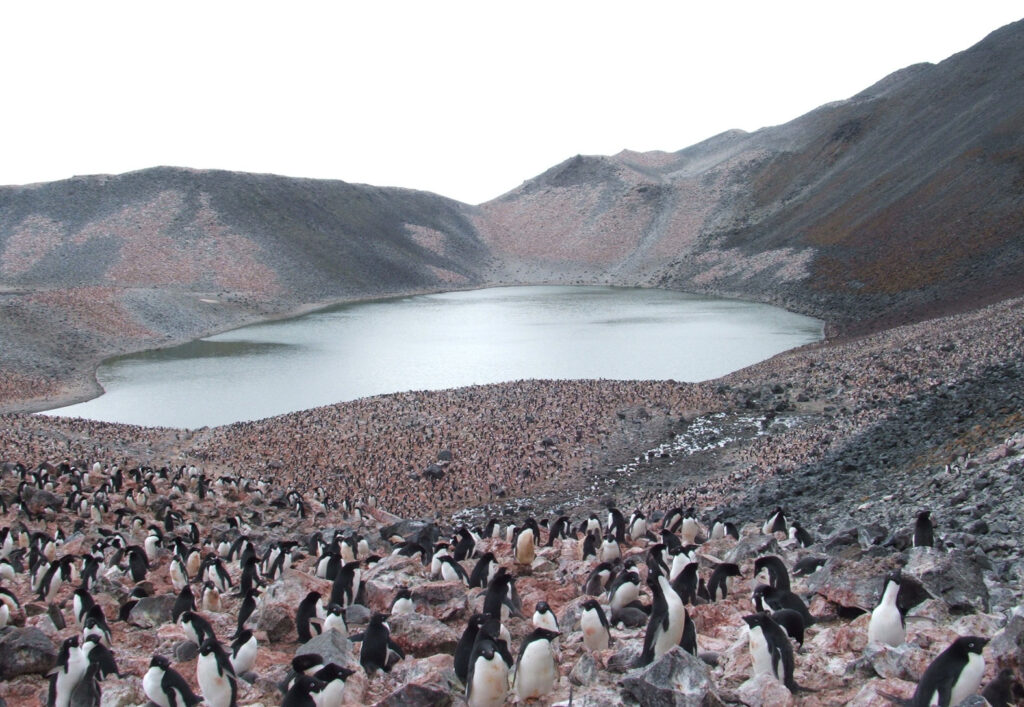
Satellite images of the pink stains of Antarctic penguin guano have been used to identify and track penguin populations.

Lynch and her colleagues are developing new algorithms that utilize high-resolution drone and satellite imagery to create centimeter-scale, 3D models of penguin terrain. These models feed into detailed habitat suitability and population-tracking analyses that further basic research and can even influence environmental policy decisions. Lynch noted that the discovery of the Danger Island colony led to the institution of crucial environmental protections for this region that may have otherwise been overlooked.  “Better technology actually can lead to better conservation,” she said.

Listening to the Environment with Seismic Waves

The study of earthquakes has dominated seismology for decades, but new analyses of seismic wave activity are broadening the field. “The Earth is never at rest,” said Lucia Gualtieri, 2018 Blavatnik Regional Awards Finalist, while reviewing a series of non-earthquake seismograms that show constant, low-level vibrations within the Earth. Long discarded as “seismic noise,” these data, which comprise more than 90% of seismograms, are now considered a powerful tool for uniting seismology, atmospheric science, and oceanography to produce a holistic picture of the interactions between the solid Earth and other systems.
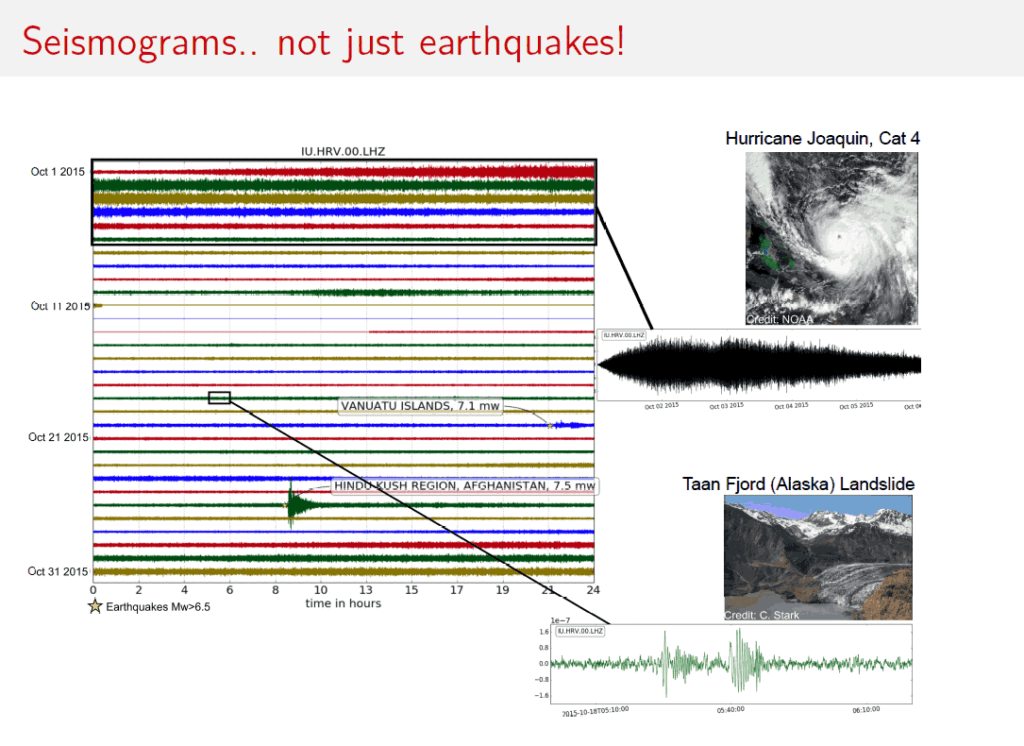
In addition to earthquakes, events such as hurricanes, typhoons, and landslides are reflected in the seismic record.

Nearly every environmental process generates seismic waves. Hurricanes, typhoons, and landslides have distinct vibrational patterns, as do changes in river flow during monsoons and “glacial earthquakes” caused by ice calving events. Gualtieri illustrated how events on the surface of the Earth are reflected within the seismic record—even at remarkably long distances—including a massive landslide in Alaska detected by a seismic sensor in Massachusetts. Gualtieri and her collaborators are tapping this exquisite sensitivity to create a new generation of tools capable of measuring the precise path and strength of hurricanes and tropical cyclones, and for making predictive models of cyclone strength and behavior based on decades of seismic data.

Improving Crop Yield Using Unmanned Aerial Systems and Field Phenomics

Plant breeders like Seth Murray, 2019 Blavatnik National Awards Finalist, are uniquely attuned to the demands a soaring global population places on the planet’s food supply. Staple crop yields have skyrocketed thanks to a century of advances in breeding and improved management practices, but the pressure is on to create new strategies for boosting yield while reducing agricultural inputs. “We need to grow more plants, measure them better, use more genetic diversity, and create more seasons per year,” Murray said. It’s a tall order, but one that he and a transdisciplinary group of collaborators are tackling with the help of a fleet of unmanned aerial systems (UAS), or drones.
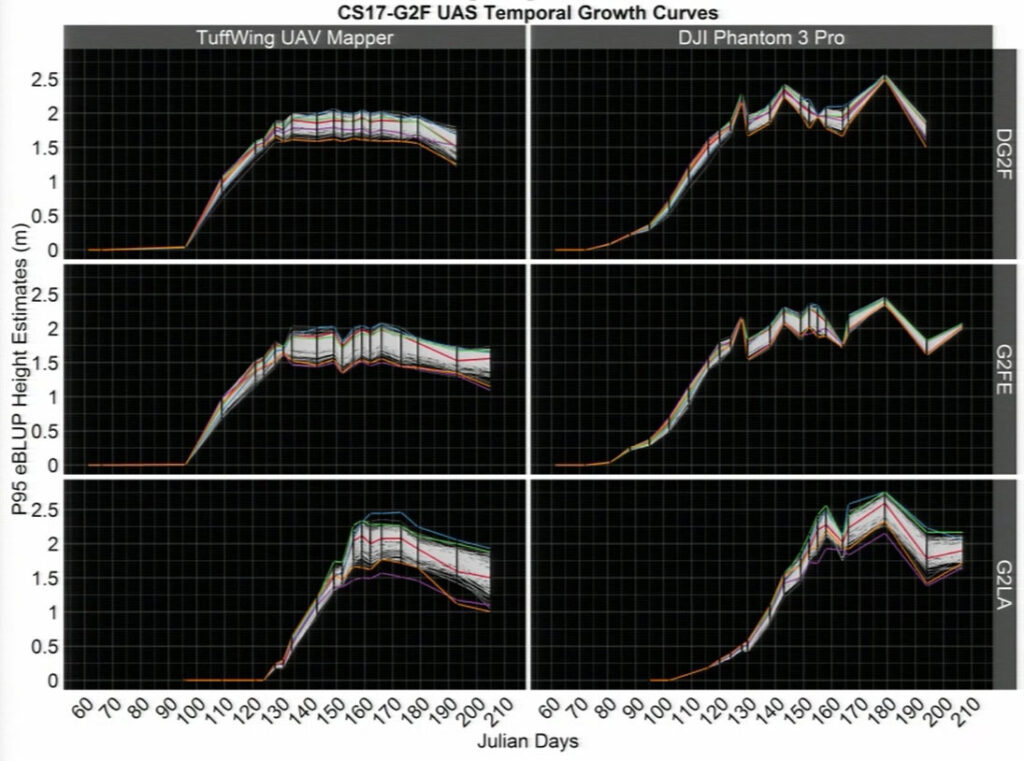
Drones facilitate frequent measurement of plant height, revealing variations between varietals early in the growth process.

Genomics has transformed many aspects of plant breeding, but phenotypic, rather than genotypic, information is more useful for predicting crop yield. Using drones equipped with specialized equipment, Murray has not only automated many of the time-consuming measurements critical for plant phenotyping, such as tracking height, but has also identified novel metrics that can accelerate the development of new varietals. Spectral signatures obtained via drone can be used to identify top-yielding varietals of maize even before the plants are fully mature. Phenotypic features distilled from drone images are also being used to determine attributes such as disease resistance, which directly influence crop management. Murray’s team is modeling the influence of thousands of phenotypes on overall crop performance, paving the way for true phenomic selection in plant breeding.

Further Readings

Lynch

Borowicz A, McDowall P, Youngflesh C, et al.

Multi-modal survey of Adélie penguin mega-colonies reveals the Danger Islands as a seabird hotspot.

Sci Rep. 2018 Mar 2;8(1):3926.

Che-Castaldo C, Jenouvrier S, Youngflesh C, et al.

Pan-Antarctic analysis aggregating spatial estimates of Adélie penguin abundance reveals robust dynamics despite stochastic noise.

Nat Commun. 2017 Oct 10;8(1):832.

Murray

Zhang M, Cui Y, Liu YH, et al.

Accurate prediction of maize grain yield using its contributing genes for gene-based breeding.

Genomics. 2019 Feb 28. pii: S0888-7543(18)30708-0.

Shi Y, Thomasson JA, Murray SC, et al.

Unmanned Aerial Vehicles for High-Throughput Phenotyping and Agronomic Research.

PLoS One. 2016 Jul 29;11(7):e0159781.

Quantum Optics

Speakers

Ana Maria Rey
University of Colorado Boulder

Highlights

  • Quantum mechanics underlies the technologies of modern computing, including transistors and integrated circuits.
  • Most quantum insights are derived from studies of single quantum particles, but understanding interactions between many particles is necessary for the development of devices such as quantum computers.
  • Atoms cooled to one billionth of a degree above absolute zero obey the laws of quantum mechanics, and can be used as quantum simulators to study many-particle interactions.

Atomic Clocks: From Timekeepers to Quantum Computers
The discovery of quantum mechanics opened “a new chapter in human knowledge,” said 2019 Blavatnik National Awards Laureate in Physical Sciences & Engineering, Ana Maria Rey, describing how the study of quantum phenomena has revolutionized modern computing, telecommunications, and navigation systems. Transistors, which make up integrated circuits, and lasers, which are the foundation of the atomic clocks that maintain the precision of satellites used in global positioning systems, all stem from discoveries about the nature of quantum particles.

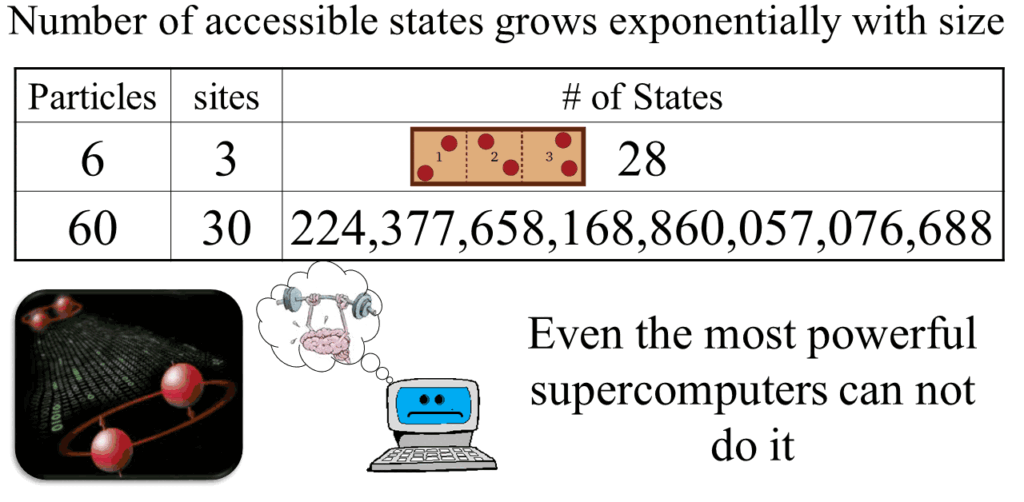
The next generation of innovations—such as room temperature superconductors and quantum computers—will be based on new quantum insights, and all of this hinges on our ability to study interactions between many particles in quantum systems. The complexity of this task is beyond the scope of even the most powerful supercomputers. As Rey explained, calculating the possible states for a small number of quantum particles (six, for example) is simple. “But if you increase that by a factor of just 10, you end up with a number of states larger than the number of stars in the known universe,” she said.

Calculating the number of possible states for even a small number of quantum particles is a task too complex for even the most powerful supercomputer.

Researchers have developed several experimental platforms to clear this hurdle and explore the quantum world. Rey shared the story of how her work developing ultra-precise atomic clocks inadvertently led to one experimental platform that is already demystifying some aspects of quantum systems.

Atomic clocks keep time by measuring oscillations of atoms—typically in cesium atoms—as they change energy levels. Recently, Rey and her collaborators at JILA built the world’s most sensitive atomic clock using strontium atoms instead of cesium and using many more atoms that are typically found in these clocks. The instrument had the potential to be 1,000 times more sensitive than its predecessors, yet collisions between the atoms compromised its precision. Rey explained that by suppressing these collisions, their clock became “a window to explore the quantum world.” Within this framework, the atoms can be manipulated to simulate the movement and interactions of quantum particles in solid-state materials. Rey reported that this clock-turned-quantum simulator has already generated new findings about phenomena including superconductivity and quantum magnetism.

Further Readings

Rey

Goban A, Hutson R, Marti GE, et al.

Emergence of multi-body interactions in a fermionic lattice clock.

Nature. 2018 Nov;563(7731):369-373.

Kolkowitz S, Bromley SL, Bothwell T, et al.

Spin-orbit-coupled fermions in an optical lattice clock.

Nature. 2017 Feb 2;542(7639):66-70.

Chemical Biology

Speakers

Emily Balskus
Harvard University

Highlights

  • The human gut is colonized by trillions of bacteria that are critical for host health, yet may also be implicated in the development of diseases including colorectal cancer.
  • For over a decade, chemists have sought to resolve the structure of a genotoxin called colibactin, which is produced by a strain of E. coli commonly found in the gut microbiome of colorectal cancer patients.
  • By studying the specific type of DNA damage caused by colibactin, researchers found a trail of clues that led to a promising candidate structure of the colibactin molecule.

Gut Reactions: Understanding the Chemistry of the Human Gut Microbiome

The composition of the trillions-strong microbial communities that colonize the mammalian intestinal tract is well characterized, but a deeper understanding of their chemistry remains elusive. Emily Balskus, the 2019 Blavatnik National Awards Laureate in Chemistry, described her lab’s hunt for clues to solve one chemical mystery of the gut microbiome—a mission that could have implications for colorectal cancer (CRC) screening and early detection.

Some commensal E. coli strains in the human gut produce a genotoxin called colibactin. When cultured with human cells, these strains cause cell cycle arrest and DNA damage, and studies have shown increased populations of colibactin-producing E. coli in CRC patients. Previous studies have localized production of colibactin within the E. coli genome and hypothesized that the toxin is synthesized through an enzymatic assembly line. Yet every attempt to isolate colibactin and determine its chemical structure had failed.

Balskus’ group took “a very different approach,” in their efforts to discover colibactin’s structure. By studying the enzymes that make the toxin, the team uncovered a critical clue: a cyclopropane ring in the structure of a series of molecules they believed could be colibactin precursors. This functional group, when present in other molecules, is known to damage DNA, and its detection in the molecular products of the colibactin assembly line led the researchers to consider it as a potential mechanism of colibactin’s genotoxicity.

In collaboration with researchers at the University of Minnesota School of Public Health, Balskus’ team cultured human cells with colibactin-producing E. coli strains as well as strains that cannot produce the toxin. They identified and characterized the products of colibactin-mediated DNA damage. “Starting from the chemical structure of these DNA adducts, we can work backwards and think about potential routes for their production,” Balskus explained.
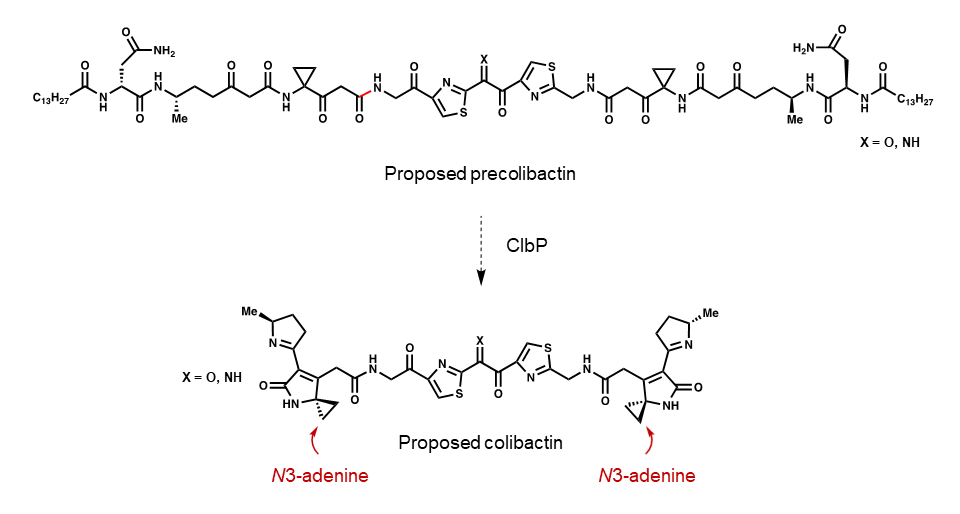
A proposed structure for the genotoxin colibactin, which is associated with colorectal cancer, features two cyclopropane rings capable of interacting with DNA to generate interstrand cross links, a type of DNA damage.

Further studies revealed that colibactin triggers a specific type of DNA damage that requires two reactive groups—likely represented by two cyclopropane rings in the final toxin structure—a pivotal discovery in deriving what Balskus believes is a strong candidate for the true colibactin structure. Balskus emphasized that this work could illuminate the role of colibactin in carcinogenesis, and may lead to cancer screening methods that rely on detecting DNA damage before cells become malignant. The findings also have implications for understanding microbiome-host interactions. “These studies reveal that human gut microbiota can interact with our genomes, compromising their integrity,” she said.

Further Readings

Balskus

Jiang Y, Stornetta A, Villalta PW et al.

Reactivity of an Unusual Amidase May Explain Colibactin’s DNA Cross-Linking Activity.

J Am Chem Soc. 2019 Jul 24;141(29):11489-11496.

Wilson MR, Jiang Y, Villalta PW, et al.

The human gut bacterial genotoxin colibactin alkylates DNA.

Science. 2019 Feb 15;363(6428).

Synthetic Methodology

Speakers

Ive Hermans
University of Wisconsin – Madison

William Dichtel
Northwestern University

Highlights

  • The chemical industry is a major producer of carbon dioxide, and efforts to create more efficient and sustainable chemical processes are often stymied by cost or scale.
  • Boron nitride is not well known as a catalyst, yet experiments show it is highly efficient at converting propane to propylene—one of the most widely used chemical building blocks in the world.
  • Two-dimensional polymers called covalent organic frameworks (COFs) can be used for water filtration, energy storage, and chemical sensing.
  • Until recently, researchers have struggled to control and direct COF formation, but new approaches to COF synthesis are advancing the field.

Boron Nitride: A Surprising Catalyst

Industrial chemicals “define our standard of living,” said Ive Hermans, 2019 Blavatnik National Awards Finalist, before explaining that nearly 96% of the products used in daily life arise from processes requiring bulk chemical production. These building block molecules are produced at an astonishingly large scale, using energy-intensive methods that also produce waste products, including carbon dioxide.

Despite pressure to reduce carbon emissions, the pace of innovation in chemical production is slow. The industry is capital-intensive — a chemical production plant can cost more than $2 billion—and it can take a decade or more to develop new methods of synthesizing chemicals.  Concepts that show promise in the lab often fail at scale or are too costly to make the transition from lab to plant. “The goal is to come up with technologies that are both easily implemented and scalable,” Hermans said.

Catalysts are a key area of interest for improving chemical production processes. These molecules bind to reactants and can boost the speed and efficiency of chemical reactions. Hermans’ research focuses on catalyst design, and one of his recent discoveries, made “just by luck,” stands to transform production of one of the most in-demand chemicals worldwide—propylene.

Historically, propylene was one product (along with ethylene and several others) produced by “cracking” carbon–carbon bonds in naphtha, a crude oil component that has since been replaced by ethane (from natural gas) as a preferred starting material. However, ethane yields far less propylene, leaving manufacturers and researchers to seek alternative methods of producing the chemical.
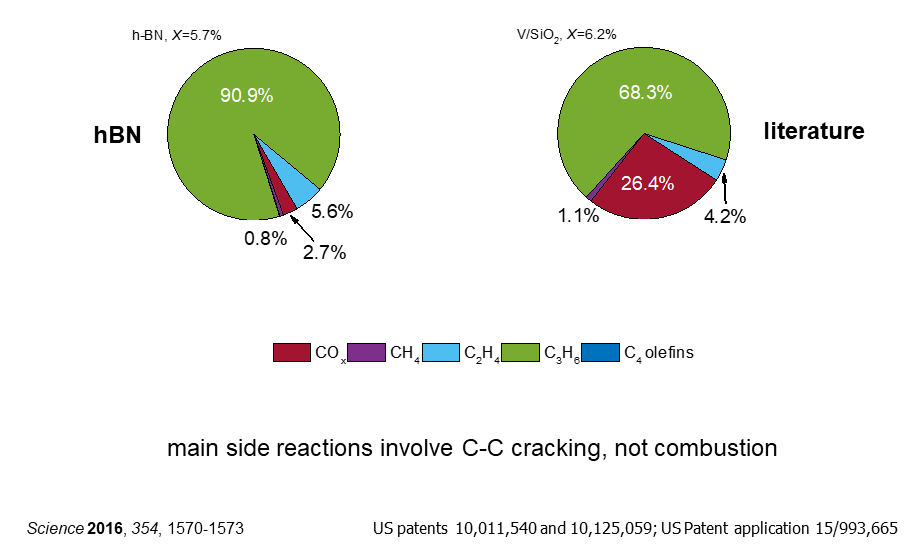
Boron nitride catalyzes a highly efficient conversion of propane to propylene.

Enter boron nitride, a two-dimensional material whose catalytic properties took Hermans by surprise when a student in his lab discovered its efficiency at converting propane, also a component of natural gas, to propylene. Existing methods for running this reaction are endothermic and produce significant CO2. Boron nitride catalysts facilitate an exothermic reaction that can be conducted at far cooler temperatures, with little CO2 production. Better still, the only significant byproduct is ethylene, an in-demand commodity.

Hermans sees this success as a step toward a more sustainable future, where chemical production moves “away from a linear economy approach, where we make things and produce CO2 as a byproduct, and more toward a circular economy where we use different starting materials and convert CO2 back into chemical building blocks.”

Polymerization in Two Dimensions

William Dichtel, a Blavatnik National Awards Finalist in 2017 and 2019, offered an update from one of the most exciting frontiers in polymer chemistry—two-dimensional polymerization. The synthetic polymers that dominate modern life are comprised of linear, repeating chains of linked building blocks that imbue materials with specific properties. Designing non-linear polymer architectures requires the ability to precisely control the placement of components, a feat that has challenged chemists for a decade.

Dichtel described the potential of a class of polymers called covalent organic frameworks, or COFs—networks of polymers that form when monomers are polymerized into well-defined, two-dimensional structures. COFs can be created in a variety of topologies, dictated by the shape of the monomers that comprise it, and typically feature pores that can be customized to perform a range of functions. These materials hold promise for applications including water purification membranes, energy and gas storage, organic electronics, and chemical sensing.

Dichtel explained that COF development is a trial and error process that often fails, as the mechanisms of their formation are not well understood. “We have very limited ability to improve these materials rationally—we need to be able to control their form so we can integrate them into a wide variety of contexts,” he said.
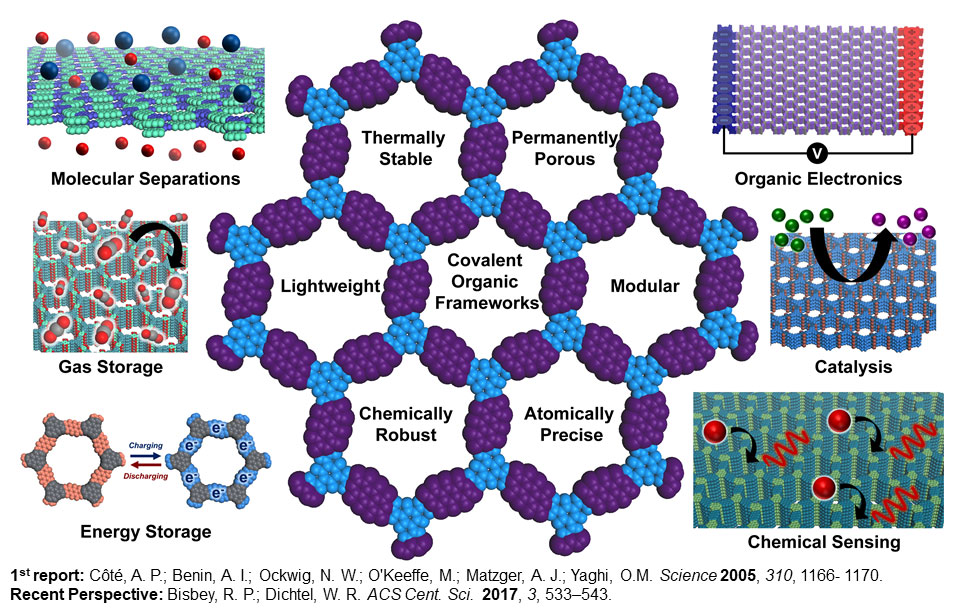
Two-dimensional polymer networks can be utilized for water purification, energy storage, and many other applications, but chemists have long struggled to understand their formation and control their structure.

A breakthrough in COF synthesis came when chemist Brian Smith, a former postdoc in Dichtel’s lab, discovered that certain solvents allowed COFs to disperse as nanoparticles in solution rather than precipitating as powder. These particles became the basis for a new method of growing large, controlled crystalline COFs using nanoparticles as structural “seeds,” then slowly adding monomers to maximize growth while limiting nucleation. “This level of control parallels living polymerization, with well-defined initiation and growth phases,” Dichtel said.

More recently, Dichtel’s group has made significant advances in COF fabrication, successfully casting them into thin films that could be used in membrane and filtration applications.

Further Readings

Hermans

Zhang Z, Jimenez-Izal E, Hermans I, Alexandrova AN.

Dynamic Phase Diagram of Catalytic Surface of Hexagonal Boron Nitride under Conditions of Oxidative Dehydrogenation of Propane.

J Phys Chem Lett. 2019 Jan 3;10(1):20-25.

Love AM, Thomas B, Specht SE, et al.

Probing the Transformation of Boron Nitride Catalysts under Oxidative Dehydrogenation Conditions.

J Am Chem Soc. 2019 Jan 9;141(1):182-190.

Dichtel

Côté AP, Benin AI, Ockwig NW, et al.

Porous, crystalline, covalent organic frameworks.

Science. 2005 Nov 18;310(5751):1166-70.

Bisbey RP, Dichtel WR.

Covalent Organic Frameworks as a Platform for Multidimensional Polymerization.

ACS Cent Sci. 2017 Jun 28;3(6):533-543.

Mulzer CR, Shen L, Bisbey RP, et al.

Superior Charge Storage and Power Density of a Conducting Polymer-Modified Covalent Organic Framework.

ACS Cent Sci. 2016 Sep 28;2(9):667-673.

Smith BJ, Parent LR, Overholts AC, et al.

Colloidal Covalent Organic Frameworks.

ACS Cent Sci. 2017 Jan 25;3(1):58-65.

Li H. Evans AM, Castano I, et al.

Nucleation-Elongation Dynamics of Two-Dimensional Covalent Organic Frameworks.

ChemRxiv, 2019.

Advances in Neuroscience

Speakers

Michal Rivlin
Weizmann Institute of Science

Nieng Yan
Princeton University

Highlights

  • The 80 subtypes of retinal ganglion cells each encode different aspects of vision, such as direction and motion.
  • The “preferences” of these cells were believed to be hard-wired, yet experiments show that retinal ganglion cells can be reprogrammed by exposure to repetitive stimuli.
  • Sodium ion channels control electrical signaling in cells of the heart, muscles, and brain, and have long been drug targets due to their connection to pain signaling.
  • Cryo-electron microscopy has allowed researchers to visualize Nav 7, a sodium ion channel implicated in pain syndromes, and to identify molecules that interfere with its function.

Retinal Computations: Recalculating

The presentation from Michal Rivlin, the Life Sciences Laureate of the 2019 Blavatnik Awards in Israel, began with an optical illusion, a dizzying exercise during which a repetitive, unidirectional pattern of motion appeared to rapidly reverse direction. “You probably still perceive motion, but the image is actually stable now,” Rivlin said, completing a powerful demonstration of the action of direction-sensitive retinal ganglion cells (RGCs), whose mechanisms she has studied for more than a decade. The approximately 80 subtypes of RGCs each encode a different aspect, or modality of vision—motion, color, and edges, as well as perception of visual phenomena such as direction. These modalities are hard-wired into the cells and were thought to be immutable—a retinal ganglion cell that perceived left-to-right motion was thought incapable of responding to visual signals that move right-to-left. Rivlin’s research has challenged not only this notion, but also many other beliefs about the function and capabilities of the retina.

Rather than simply capturing discrete aspects of visual information like a camera and relaying that information to the visual thalamus for processing, the cells of the retina actually perform complex processing functions and display a surprising level of plasticity. Rivlin’s lab is probing both the anatomy and functionality of various types of retinal ganglion cells, including those that demonstrate selectivity, such as a preference for movement in one direction or attunement to increases or decreases in illumination. By exposing these cells to various repetitive stimuli, Rivlin has shown that the selectivity of RGCs can be reversed, even in adult retinas.
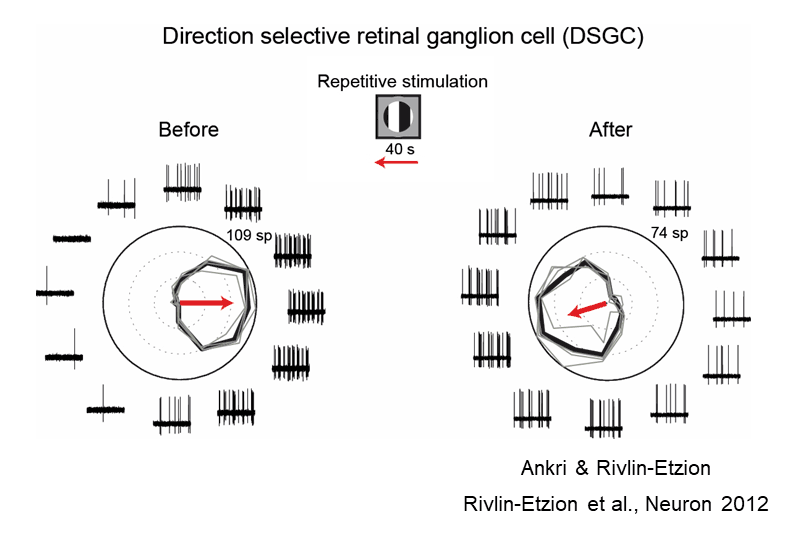
Direction-selective retinal ganglion cells that prefer left-to-right motion (Before) can change their directional preference (After) following a repetitive visual stimulus.

These dynamic changes in cells whose preferences were believed to be singular and hard-wired have implications not just for understanding retinal function but for understanding the physiological basis of visual perception. Stimulus-dependent changes in the coding of retinal ganglion cells also have downstream impacts on the visual thalamus, where retinal signals are processed. This unexpected plasticity in retinal cells has led Rivlin and her collaborators to investigate the possibility that the visual thalamus and other parts of the visual system might also display greater plasticity than previously believed.

Targeting Sodium Channels for Pain Treatment

Nature’s deadliest predators may seem an unlikely inspiration for developing new analgesic drugs, but as Nieng Yan, 2019 Blavatnik National Awards Finalist, explained, the potent toxins of some snails, spiders, and fish are the basis for research that could lead to safer alternatives to opioid medications.

Voltage-gated ion channels are responsible for electrical signaling in cells of the brain, heart, and skeletal muscles. Sodium channels are one of many ion channel subtypes, and their connection to pain signaling is well documented. Sodium channel blockers have been used as analgesics for a century, but they can be dangerously indiscriminate, inhibiting both the intended channel as well as others in cardiac or muscle tissues. The development of highly selective small molecules capable of blocking only channels tied to pain signaling seemed nearly impossible until two breakthroughs—one genetic, the other technological—brought a potential path for success into focus.

A 2006 study of families with a rare genetic mutation that renders them fully insensitive to pain turned researchers’ focus to the role of the gene SCN9A, which codes for the voltage-gated sodium ion channel Nav 1.7, in pain syndromes. Earlier studies showed that overexpression of SCN9A caused patients to suffer extreme pain sensitivity, and it was now clear that loss of function mutations resulted in the opposite condition.
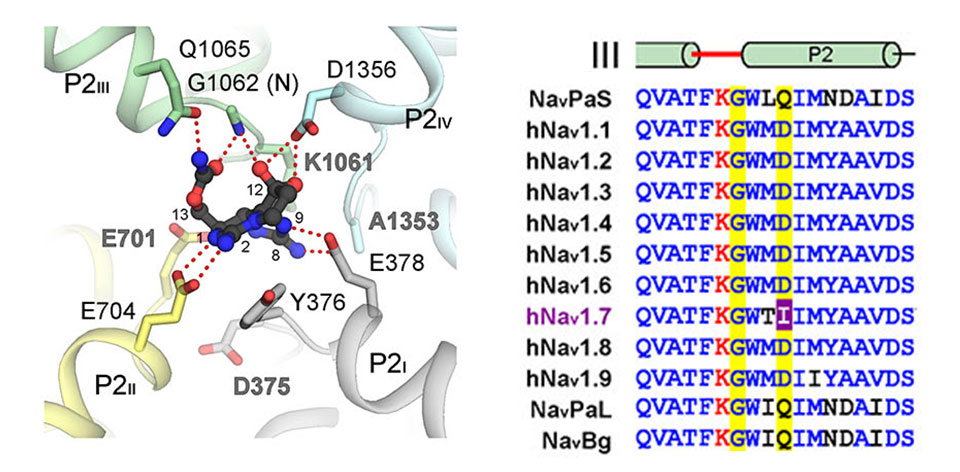
A powerful natural toxin derived from corn snails blocks the pore of a voltage-gated sodium channel, halting the flow of ions and inhibiting the initiation of an action potential.

As Yan explained, understanding this channel required the ability to resolve its structure, but imaging techniques available at that time were poorly suited to large, membrane-bound proteins. With the advent of cryo-electron microscopy­­­, Yan and other researchers have not only resolved the structure of Nav 1.7, but also characterized small molecules—mostly derived from animal toxins—that precisely and selectively interfere with its function. Developing synthetic drugs based on these molecules is the next phase of discovery, and it’s one that may happen more quickly than expected. “When I started my lab, I thought resolving this protein’s structure would be a lifetime project, but we shortened it to just five years,” said Yan.

Further Readings

Rivlin

Warwick RA, Kaushansky N, Sarid N, et al.

Inhomogeneous Encoding of the Visual Field in the Mouse Retina.

Curr Biol. 2018 Mar 5;28(5):655-665.e3

Rivlin-Etzion M, Grimes WN, Rieke F.

Flexible Neural Hardware Supports Dynamic Computations in Retina.

Trends Neurosci. 2018 Apr;41(4):224-237.

Vlasits AL, Bos R, Morrie RD, et al.

Visual stimulation switches the polarity of excitatory input to starburst amacrine cells.

Neuron. 2014 Sep 3;83(5):1172-84.

Rivlin-Etzion M, Wei W, Feller MB.

Visual stimulation reverses the directional preference of direction-selective retinal ganglion cells.

Neuron. 2012 Nov 8;76(3):518-25.

Yan

Shen H, Liu D, Wu K, et al.

Structures of human Nav1.7 channel in complex with auxiliary subunits and animal toxins.

Science. 2019 Mar 22;363(6433):1303-1308.

Pan X, Li Z, Huang X, et al.

Molecular basis for pore blockade of human Na+ channel Nav1.2 by the μ-conotoxin KIIIA.

Science. 2019 Mar 22;363(6433):1309-1313.

Pan X, Li Z, Zhou Q, et al.

Structure of the human voltage-gated sodium channel Nav1.4 in complex with β1.

Science. 2018 Oct 19;362(6412).

Shen H, Li Z, Jiang Y, et al.

Structural basis for the modulation of voltage-gated sodium channels by animal toxins.

Science. 2018 Oct 19;362(6412).

Computer Science

Speakers

Jure Leskovec
Stanford University

Elza Erkip
New York University


Highlights

  • A novel approach to developing machine learning algorithms has improved applications for non-linear datasets.
  • Neural networks can now be used for complex predictive tasks, including forecasting polypharmacy side effects.
  • 5G wireless networks will expand the capabilities of internet-connected devices, providing dramatically faster data transmission and increased reliability.
  • Tools used to design wireless networks can also be used to understand vulnerabilities in the design of online platforms and social networks, particularly as it pertains to user privacy and data anonymization.

Machine Learning with Networks

“For the first time in history, we are using computers to process data at scale to gain novel insights,” said Jure Leskovec, a Blavatnik National Awards Finalist in 2017, 2018, and 2019, describing one aspect of the digital transformation of science, technology, and society. This shift, from using computers to run calculations or simulations to using them to generate insights, is driven in part by the massive data streams available from the Internet and internet-connected devices. Machine learning has catalyzed this transformation, allowing researchers to not only glean useful information from large datasets, but to make increasingly reliable predictions based on it. Just as new imaging techniques reveal previously unknown structures and phenomena in biology, astronomy, and other fields, so too are big data and machine learning bringing previously unobservable models, signals, and patterns to the surface.

This “new paradigm for discovery” has limitations, as Leskovec explained. Machine learning has advanced most rapidly in areas where data can be represented as simple sequences or grids, such as computer vision, image analysis, and speech processing. Analysis of more complex datasets—represented by networks rather than linear sequences—was beyond the scope of neural networks until recently, when Leskovec and his collaborators approached the challenge from a different angle.

The team considered networks as computation graphs, recognizing that the key to making predictions was understanding how information propagates across the network. By training each node in the network to collect information about neighboring nodes and aggregating the resulting data, they can use node-level information to make predictions within the context of the entire network.
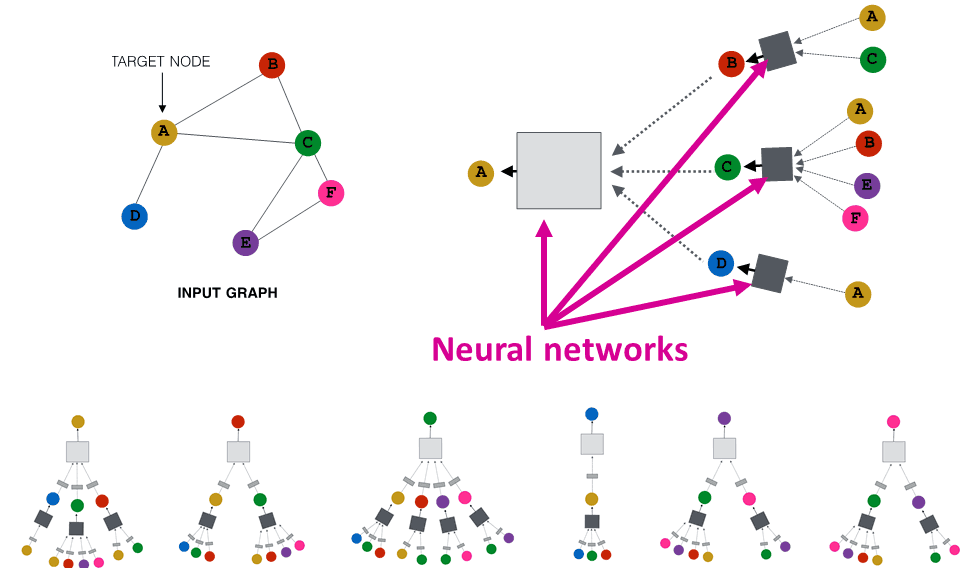
Each node within a network collects information from neighboring nodes. Together, this information can be used to make predictions within the context of the network as a whole.

Leskovec shared two case studies demonstrating the broad applicability of this approach. In healthcare, a neural network designed by Leskovec is identifying previously undocumented side effects from drug-drug interactions. Each network node represents a drug or a protein target of a drug, with links between the nodes emerging based on shared side effects, protein targets, and protein-protein interactions. This type of polydrug side effects analysis is infeasible through clinical trials, and Leskovec is working to optimize it as a point-of-care tool for clinicians.

A similar system has been deployed on the online platform Pinterest, where Leskovec serves as Chief Scientist. It has improved the site’s ability to classify users’ preferences and suggest additional content. “We’re generalizing deep learning methodologies to complex data types, and this is leading to new frontiers,” Leskovec said.

Understanding and Engineering Communications Networks

Elza Erkip has never seen a slide rule. In two decades as a faculty researcher and electrical and computer engineer, Erkip, 2010 Blavatnik Awards Finalist, has corrected her share of misconceptions about her field, and about the role of engineering among the scientific disciplines. She joked about stereotypes portraying engineers—most of them men—wielding slide rules or wearing hard hats, but emphasized the importance of raising awareness about the real-life work of engineers. “Scientists want to understand the universe, but engineers use existing scientific knowledge to design and build things,” she explained. “We contribute to discovery, but mostly we want to solve problems, to find solutions that work in the real world.”

Erkip focuses on one of the most impactful areas of 21st century living—wireless communication—and the ever-evolving suite of technologies that support it. She reviewed the rapid progression of wireless device capabilities, from phones that featured only voice calling and text messaging, through the addition of Wi-Fi capability and web browsing, all the way to the smartphones of today, which boast more computing power than the Apollo 11 spacecraft that landed on the moon. She described the next revolution in wireless—5G networks and devices—which promises higher data rates and significant increases in speed and reliability. Tapping the millimeter-wave bands of the electromagnetic spectrum, 5G will rely on different wireless architectures featuring massive arrays of small antennae, which are better suited to propagating shorter wavelengths. The increased bandwidth will enable many more devices to come online. “It won’t just be humans communicating—we’ll have devices communicating with each other,” Erkip said, describing the future connectivity between robots, autonomous cars, home appliances, and sensors embedded in transportation, manufacturing, and industrial equipment.
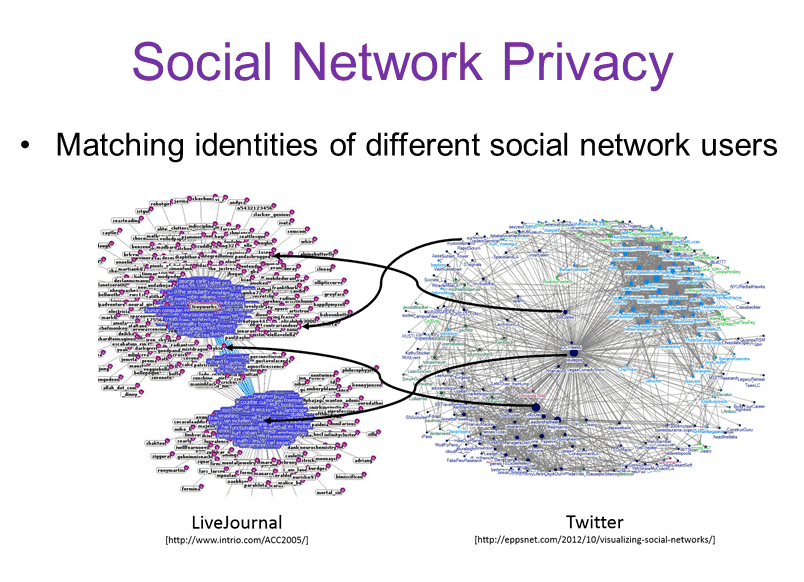
Despite efforts to anonymize data, many social media sites and online databases remain vulnerable to efforts to match users’ identities across platforms.

Erkip also discussed the application of tools used to understand and build wireless networks to gain insight into privacy issues within social networks. De-anonymization of user data has long plagued online platforms. Studies have shown that it’s often possible to identify and match users across multiple social platforms or databases using publicly available information—a breach that has greater implications for a database of health or voting records than it does for a consumer-oriented site such as Netflix. Erkip is working to understand the fundamental properties of these networks to elucidate the factors that predispose them to de-anonymization attacks.

Further Readings

Leskovec

Zitnik M, Agrawal M, Leskovec J.

Modeling polypharmacy side effects with graph convolutional networks.

Bioinformatics. 2018 Jul 1;34(13):i457-i466.

Erkip

Shirani F, Garg S, Erkip E.

A Concentration of Measure Approach to Database De-anonymization.

IEEE International Symposium on Information Theory. 2019.

Shirani F, Garg S, Erkip E.

Optimal Active social Network De-anonymization Using Information Thresholds.

IEEE International Symposium on Information Theory. 2018.

Materials Science

Speakers

Chiara Daraio
Caltech

Liangbing Hu
University of Maryland, College Park

Highlights

  • Computer-aided manufacturing is enabling researchers to design materials with precisely tuned properties, such as responsiveness to light, temperature, or moisture.
  • Structured materials can mimic robots or machines, changing shape and form repeatedly in the presence of various stimuli.
  • Ultra-strong, lightweight wood-based materials made of nanocellulose fibers may one day resolve some of the world’s most pressing challenges in water, energy and sustainability, replacing transparent plastic packaging, window glass, and even steel and other alloys in vehicles and buildings.

Mechanics of Robotic Matter

Chiara Daraio’s work challenges the traditional definition of words like material, structure, and robot.  Working at the intersection of physics, materials science, and computer science, she designs materials with novel properties and functionalities, enabled by computer-aided design and 3D fabrication. Rather than considering a material as the foundation for assembling a structure, Daraio, 2019 Blavatnik National Awards Finalist, designs materials with intricate structures in unique and complex geometries.

Daraio demonstrated a series of responsive materials—those that morph in the presence of stimuli such as temperature, light, moisture, or salinity. In their simplest forms, these materials change shape—a piece of heat-responsive material folds and unfolds as air temperature changes, or a leaf-shaped hydro-sensitive material opens and closes as it transitions from wet to dry. In more complex forms, materials can display time-dependent responses, as shown in a video demonstration of a row of polymer strips changing shape at different rates, depending on their thickness. Daraio showed how computer-graphical approaches allow researchers to design a single material with different properties in different regions, allowing complex actuation in a time-dependent manner, such as a polymer “flower” with interconnecting leaves taking shape and a polymer “ribbon” slowly interweaving a knot.
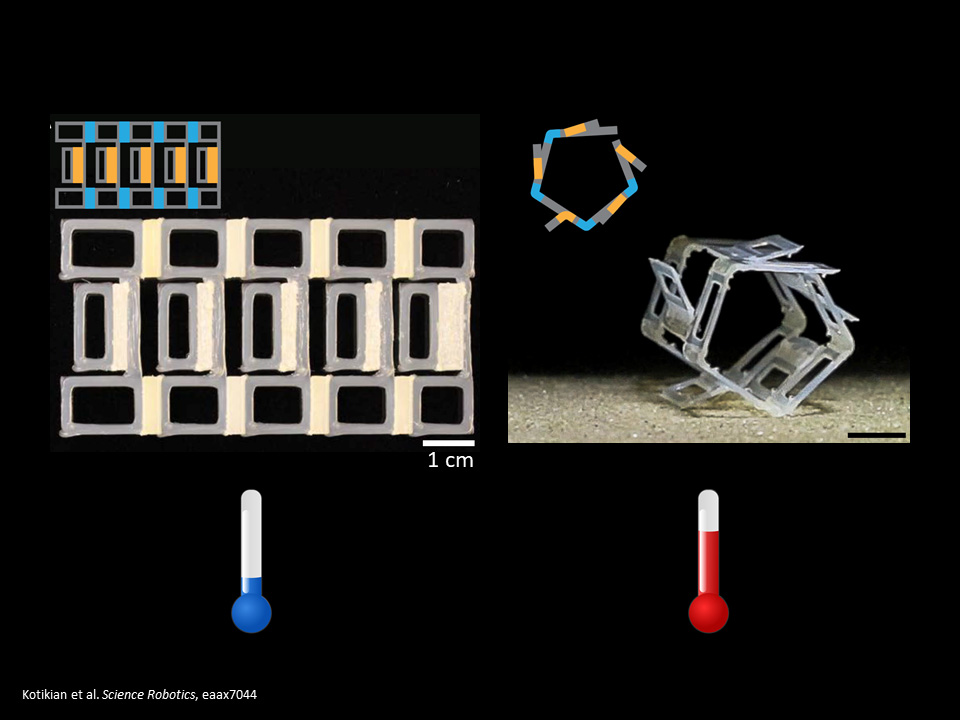
A thin foil elastomer comprised of materials with alternating temperature-sensitivity (heat and cold) folds up and “walks” across a table as the temperature varies.

Conventional ideas dictate that a robot is a programmable machine capable of completing a task. “But what if the material is the machine?” asked Daraio, showing the remarkable capabilities of a thin liquid crystal elastomer foil composed of one heat-sensitive and one cold-sensitive material. At room temperature, the foil is flat. Heat from a warm table causes it to curl upward, turn over, and “walk” forward. “As long as there’s some kind of external environmental stimulus, we can design a material that can repeatedly perform actions in time,” Daraio said. Similar responsive materials have been used in a self-deploying solar panel that [remove folds and] unfolds in response to heat.

Materials have been “the seeds of technological innovation” throughout human history, and Daraio believes that structured materials will enable new functionalities at the macroscale—for use in wearables such as helmets as well as in smart building technologies—and at the microscale, where responsive materials could be used for medical diagnostics or drug delivery.

Sustainable Applications for Wood Nanotechnologies

Wood, glass, plastic, and steel are among the most ubiquitous materials on Earth, and Liangbing Hu, 2019 Blavatnik National Awards Finalist, is rethinking them all. Inspired by the global need to develop sustainable materials, Hu turned to the most plentiful source of biomass on Earth— trees—to create a new generation of wood-based materials with astonishing properties. Hu relies on nanocellulose fibers, which can be engineered to serve as alternatives to commonly used unsustainable or energy-intensive materials.

Hu introduced a transparent film that could pass for plastic and can be used for packaging, yet is ten times stronger and far more versatile. This transparent nanopaper, made of nanocellulose fibers, could also be used as a display material in flexible electronics or as a photonic overlay that boosts the efficiency of solar cells by 30%.

Hu has also tested transparent wood—a heavier-gauge version of nanopaper made by removing lignin from wood and injecting the channels with a clear polymer—as an energy-saving building material. More than half of home energy loss is due to poor wall insulation and leakage through window glass. By Hu’s calculations, replacing glass windows with transparent wood would also provide a six-fold increase in thermal insulation. Pressed, delignified wood has also proven to be a superior material for wall insulation. Used on roofs, it is a highly efficient means of passive cooling—the material absorbs heat and then re-radiates it, cooling the surface below it by about ten degrees.
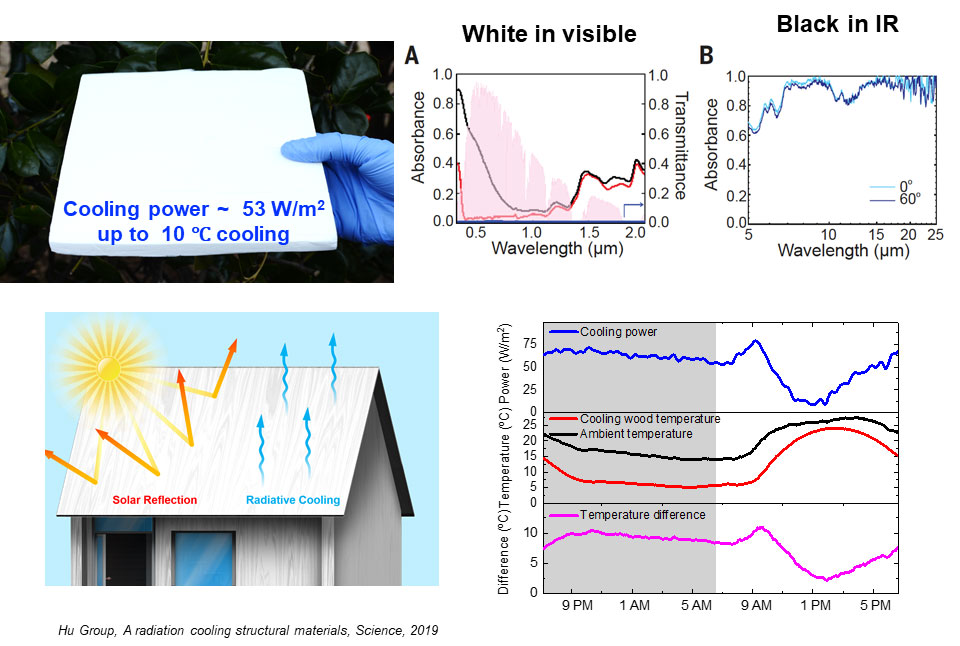
White delignified wood is pressed to increase its strength. It can be used on roofs to passively cool homes by absorbing and re-radiating light, cooling the area below it by about ten degrees.

Comparisons of mechanical strength between wood and steel are almost laughable, unless the wood is another of Hu’s creations—the aptly named “superwood.” Delignified and compressed to align the nanocellulose fibers, even inexpensive woods become thinner and 10-20 times stronger. Superwood rivals steel in strength and durability, and could become a viable alternative to steel and other alloys in buildings, vehicles, trains, and airplanes. Sustainable sourcing would eliminate pollution and carbon dioxide associated with steel production, and its lightweight profile could drastically improve vehicle fuel efficiency.

Further Readings

Daraio

Celli P, McMahan C, Ramirez B, et al.

Shape-morphing architected sheets with non-periodic cut patterns.

Soft Matter. 2018 Dec 12;14(48):9744-9749.

Chen T, Bilal OR, Shea K, Daraio C.

Harnessing bistability for directional propulsion of soft, untethered robots.

Proc Natl Acad Sci USA. 2018 May 29;115(22):5698-5702.

Bauhofer AA, Krödel S, Rys J, et al.

Harnessing Photochemical Shrinkage in Direct Laser Writing for Shape Morphing of Polymer Sheets.

Adv Mater. 2017 Nov;29(42).

Hu

Song J, Chen C, Zhu S, et al.

Processing bulk natural wood into a high-performance structural material.

Nature. 2018 Feb 7;554(7691):224-228.

Huang J, Zhu H, Chen Y, et al.

Highly transparent and flexible nanopaper transistors.

ACS Nano. 2013 Mar 26;7(3):2106-13.

Huang J, Zhu H, Chen Y, et al.

Novel nanostructured paper with ultrahigh transparency and ultrahigh haze for solar cells.

Nano Lett. 2014 Feb 12;14(2):765-73.

Zhu M, Song J, Li T, et al.

Highly Anisotropic, Highly Transparent Wood Composites.

Adv Mater. 2016 Jul;28(26):5181-7.

Li T, Zhai Y, He S, et al.

A radiative cooling structural material.

Science. 2019 May 24;364(6442):760-763.

Zhu H, Luo W, Ciesielski PN, et al.

Wood-Derived Materials for Green Electronics, Biological Devices, and Energy Applications.

Chem Rev. 2016 Aug 24;116(16):9305-74.

Medicine and Medical Diagnostics

Speakers

Nicholas Navin
MD Anderson Cancer Center

Wei Min
Columbia University

Highlights

  • Tumor cells are genetically heterogeneous, complicating efforts to sequence DNA from tumor tissue samples.
  • Techniques for isolating and sequencing single-cell samples have transformed the study of cancer genetics.
  • Stimulated Ramen scattering, a non-invasive imaging technique, can visualize processes including glucose uptake and fatty acid metabolism within living cells.

Single Cell Genomics: A Revolution in Cancer Biology

Nicholas Navin, 2019 Blavatnik National Awards Finalist, doesn’t use the word “revolution” lightly, but when it comes to the field of single-cell genomics and its impact on cancer research, he stands by the term. Over the past ten years, DNA sequencing of single tumor cells has led to major discoveries about the progression of cancer and the process by which cancer cells resist treatment.

Unlike healthy tissue cells, tumor cells are characterized by genomic heterogeneity. Samples from different areas of the same tumor often contain different mutations or numbers of chromosomes. This diversity has long piqued researchers’ curiosity. “Is it stochastic noise generated as tumor cells acquire different mutations, or could this diversity be important for resistance to therapy, invasion, or metastasis?” Navin asked.

Answering that question required the ability to do comparative studies of single tumor cells, a task that was long out of reach. DNA sequencing technologies historically required a large sample of genetic material—a tricky proposition when sampling a highly diverse population of tumor cells. Some mutations, which could drive invasion or resistance, may be present in just a few cells and thus not be represented in the results. Navin was part of the first team to develop a method for excising a single cancer cell from a tumor, amplifying the DNA, and producing an individualized genetic sequence. As amplification and sequencing methods have improved, so too have the insights gleaned from single-cell genomic studies, which Navin likens to “paleontology in tumors”—the notion that a sample taken at a single point in time can allow researchers to make inferences about tumor evolution.
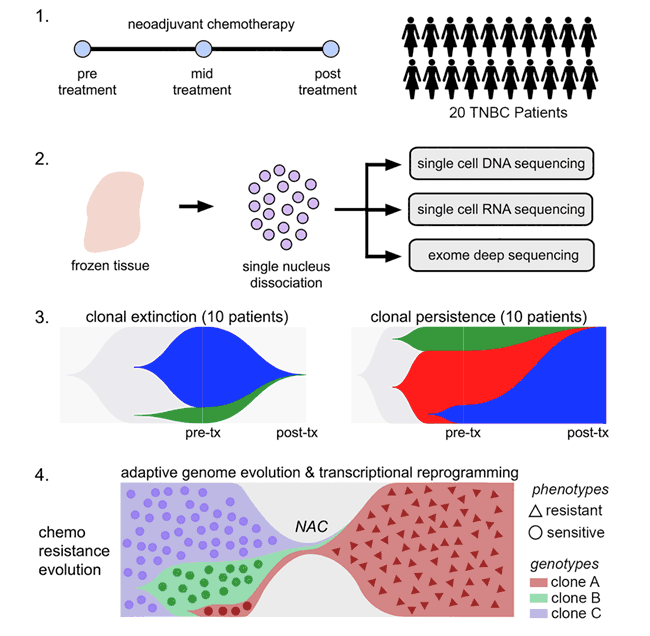
Single-cell genomic studies reveal that some cancer cells have innate mechanisms of resistance to chemotherapy, and undergo further transcriptional changes that enhance this resistance.

Single-cell studies have contradicted the idea of a stepwise evolution of cancer cells, with one mutation leading to another and ultimately tipping the scales toward malignancy. Instead, Navin’s studies reveal a punctuated evolution, whereby many cells simultaneously become genetically unstable. Longitudinal studies of single-cell samples in patients with triple-negative breast cancer are beginning to answer questions about how cancer cells evade treatment, showing that cells that survive chemotherapy have innate resistance, and then undergo further transcriptional changes during treatment, which increase resistance.

Translating these findings to the clinic is a longer-term process, but Navin envisions single-cell genomics will significantly impact strategies for targeted therapy, non-invasive monitoring, and early cancer detection.

Chemical Imaging in Biomedicine

Wei Min, a Blavatnik Awards Finalist in 2012 and 2019, concluded the session with a visually striking glimpse into the world of stimulated Raman scattering (SRS) microscopy. This noninvasive imaging technique provides both sub-cellular resolution and chemical information about living cells, while transcending some of the limitations of fluorescence-based optical microscopy. The probes used to tag molecules for fluorescent imaging can alter or destroy small molecules of interest, including glucose, lipids, amino acids, or neurotransmitters. Rather than using tags, SRS builds on traditional Raman spectroscopy, which captures and analyzes light scattered by the unique vibrational frequencies between atoms in biomolecules. The original method, first pioneered in the 1930s, is slow and lacks sensitivity, but in 2008, Min and others improved the technique.

SRS has since become a leading method for label-free visualization of living cells, providing an unprecedented window into cellular activities. Using SRS and a variety of custom chemical tags—“vibrational tags,” as Min described them—bound to biomolecules such as DNA or RNA bases, amino acids, or even glucose, researchers can observe the dynamics of biological functions. SRS has visualized glucose uptake in neurons and malignant tumors, and has been used to observe fatty acid metabolism, a critical step in understanding lipid disorders. Imaging small drug molecules is notoriously difficult, but Min reported the results of experiments using SRS to tag therapeutic drug molecules and study their activity within tissues.
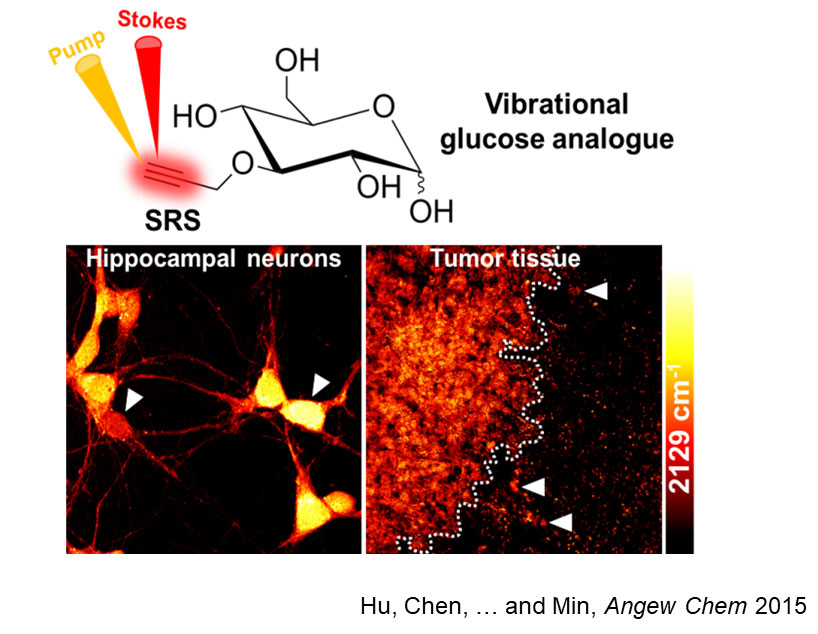
Stimulated Raman scattering microscopy uses chemical tags to image small biological molecules in living cells. The technique can visualize cellular processes including glucose uptake in healthy cells and tumor cells.

A recent breakthrough in SRS technology involves pairing it with Raman dyes to break the “color barrier” in optical imaging. Due to the width of the fluorescent spectrum, labels are limited to five or six colors per sample, which prevents researchers from imaging many structures within a tissue sample simultaneously. Min has introduced a hybrid imaging technique that allows for super-multiplexed imaging—up to 10 colors in a single cell image—and utilizes a dramatically expanded palette of Raman frequencies that yield at least 20 distinct colors.

Further Readings

Navin

Kim C, Gao R, Sei E, et al.

Chemoresistance Evolution in Triple-Negative Breast Cancer Delineated by Single-Cell Sequencing.

Cell. 2018 May 3;173(4):879-893.e13.

Casasent AK, Schalck A, Gao R, et al.

Multiclonal Invasion in Breast Tumors Identified by Topographic Single Cell Sequencing.

Cell. 2018 Jan 11;172(1-2):205-217.e12.

Gao R, Davis A, McDonald TO, et al.

Punctuated copy number evolution and clonal stasis in triple-negative breast cancer.

Nat Genet. 2016 Oct;48(10):1119-30.

Wang Y, Navin NE.

Advances and applications of single-cell sequencing technologies.

Mol Cell. 2015 May 21;58(4):598-609.

Navin NE.

Cancer genomics: one cell at a time.

Genome Biol. 2014 Aug 30;15(8):452.

Wang Y, Waters J, Leung ML, et al.

Clonal evolution in breast cancer revealed by single nucleus genome sequencing.

Nature. 2014 Aug 14;512(7513):155-60.

Min

Xiong H, Shi L, Wei L, et al.

Stimulated Raman excited fluorescence spectroscopy and imaging.

Nat Photonics. 2019; (3) 412–417.

Xiong H, Qian N, Miao Y, et al.

Stimulated Raman Excited Fluorescence Spectroscopy of Visible Dyes.

J Phys Chem Lett. 2019 Jul 5;10(13):3563-3570.

Zhang L, Shi L, Shen Y, et al.

Spectral tracing of deuterium for imaging glucose metabolism.

Nat Biomed Eng. 2019 May;3(5):402-413.

Shen Y, Hu F, Min W.

Raman Imaging of Small Biomolecules.

Annu Rev Biophys. 2019 May 6;48:347-369.

Wei M, Shi L, Shen Y, et al.

Volumetric chemical imaging by clearing-enhanced stimulated Raman scattering microscopy.

Proc Natl Acad Sci U S A. 2019 Apr 2;116(14):6608-6617.

Shi L, Zheng C, Shen Y, et al.

Optical imaging of metabolic dynamics in animals.

Nat Commun. 2018 Aug 6;9(1):2995.
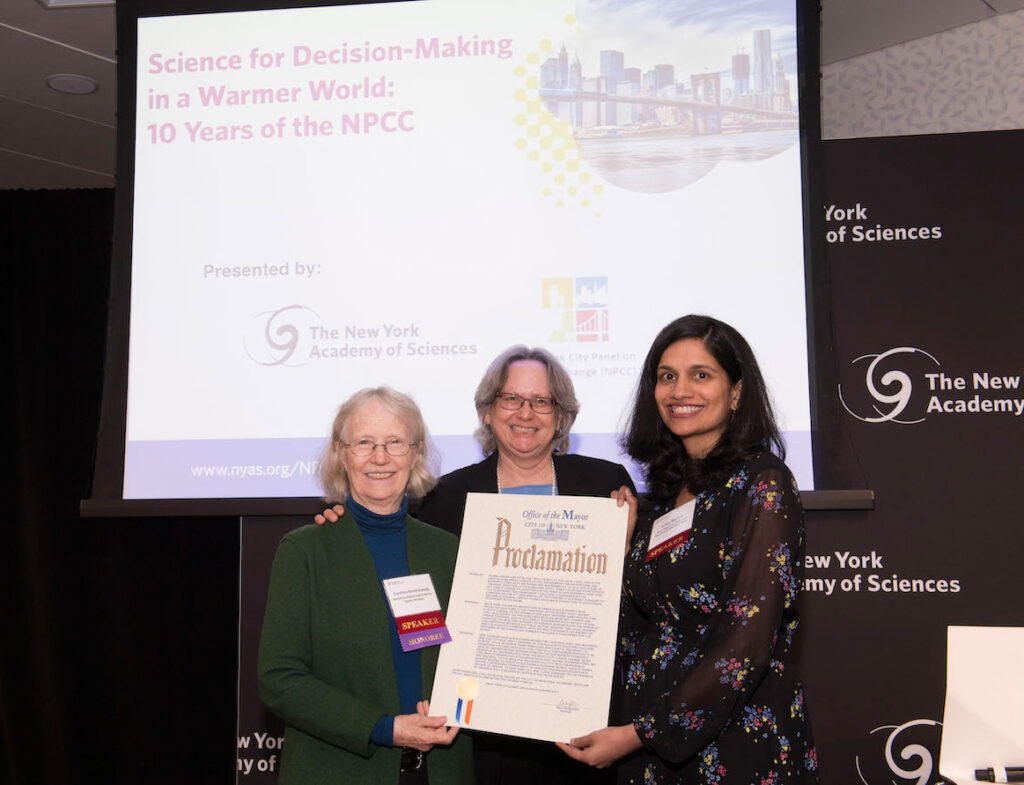
Climate Science: Decision-Making in a Warmer World

Overview

Climate change is a growing threat with global impact. Shifts in the climate present special challenges for urban areas where more than half of the world’s population lives. New York City residents, for example, are already feeling the effects through recurrent flooding in coastal communities, warmer temperatures across all five boroughs, and strains in the city’s infrastructure during heavy downpours and extreme weather events. As a result, cities like New York require the best-available climate science to develop tangible policies for resilience, mitigation, and adaptation.

On March 15, 2019, climate scientists, city planners, and community and industry stakeholders attended the Science for Decision-Making in a Warmer World summit at the New York Academy of Sciences to discuss how cities are responding to the effects of climate change. The event marked the 10th anniversary of a successful partnership between the New York City Panel on Climate Change (NPCC), the City of New York, and the New York Academy of Sciences. Established in 2008, the NPCC has opened new frontiers of urban climate science to build the foundation for resiliency actions in the New York metropolitan region.

Learn about the NPCC’s latest research findings and their implications for New York City and other cities seeking to identify and mitigate the effects of climate change in this summary.

Meeting Highlights

  • NPCC research provides tools to inform and shape climate change resilience in New York City and other cities around the globe. 
  • Shifts in mean and extreme climate conditions significantly impact cities and communities worldwide. 
  • Cities can move forward by adopting flexible adaptation pathways, an overall approach to developing effective climate change adaptation strategies for a region under conditions of increasing risk.
  • There is a growing recognition that resilience strategies need to be inclusive of community perspectives.

Speakers

Dan Bader
Columbia University, New York City Panel on Climate Change

Jainey Bavishi
New York City Mayor’s Office of Recovery and Resiliency

Sam Carter
Rockefeller Foundation

Alan Cohn
New York City Department of Environmental Protection

Kerry Constabile
Executive Office of the UN Secretary General

Susanne DesRoches
New York City Mayor’s Office of Recovery and Resiliency

Alexander Durst
The Durst Organization

Sheila Foster
Georgetown, New York City Panel on Climate Change

Vivien Gornitz
Columbia University, New York City Panel on Climate Change

Mandy Ikert
C40 Cities Climate Leadership Group

Klaus Jacob
Columbia University, New York City Panel on Climate Change

Michael Marrella
New York City Department of City Planning

Richard Moss
American Meteorological Society

Kathy Robb
Sive, Paget, and Riesel

Seth Schultz
Urban Breakthroughs

Daniel Zarrilli, PE
New York City Office of the Mayor

Climate Change, Science, and New York City

Speakers

Alan Cohn
New York City Department of Environmental Protection

Susanne DesRoches
New York City Mayor’s Office of Recovery and Resiliency

Alexander Durst
The Durst Organization

Michael Marrella
New York City Department of City Planning

Daniel Zarrilli (keynote)
New York City Office of the Mayor

James Gennaro (panel moderator)
New York State Department of Environmental Conservation

Keynote: Preparing for Climate Change — NPCC and Its Role in New York City

Daniel Zarrilli, of the New York City Office of the Mayor, gave the first keynote presentation. In addition to outlining NPCC history, he emphasized the meaning of NPCC to the city. NPCC has provided the tools to inform policy since before Hurricane Sandy in 2012. Because of NPCC, Zarrilli stated, people now know that the waters around New York City are rising “twice as quickly as the global average” and that climate change will affect communities disproportionately. The city can and will take on the responsibility to protect those who are most vulnerable.  Zarrilli highlighted steps the Mayor’s Office is taking: fossil fuel divestment, bringing a lawsuit against big oil for causing climate change, and launching a new OneNYC strategic plan to confront our climate crisis, achieve equity, and strengthen our democracy. He concluded by saying that with “8.6 million New Yorkers and all major cities watching,” NPCC is providing the best possible climate science to drive New York City policy.

Panel 1: NPCC and Its Role in New York City

How are NPCC findings used in developing resiliency in New York City?

The first panel was moderated by William Solecki of Hunter College Institute for Sustainable Cities – City University of New York, and featured three city representatives, Susanne DesRoches, of the New York City Mayor’s Office of Recovery and Resiliency; Michael Marrella, of the New York City Department of City Planning; Alan Cohn, of the New York City Department of Environmental Protection; and one industry stakeholder, Alexander Durst, of the Durst Organization.

DesRoches noted that the NPCC research has made possible a proliferation of guidelines regulating building design in the city. In fact, the New York City Climate Resiliency Design Guidelines, released the same day that the panel took place, provide instruction on how to use climate projections in the design of city buildings. The Department of City Planning also uses NPCC data in its Coastal Zone Management Program to require that coastal site developers to disclose and address current and future flood risks. Marrella added that NPCC research tools allow public and private stakeholders to make informed decisions on how to shape policy. NPCC methods and approaches are also being used climate data is also being used for New York State and national projections.

Panelists also addressed how New York City’s mitigation goals enable resilience in the face of climate change challenges. DesRoches pointed to the city’s aggressive climate targets, including an “80% [emissions] reduction by 2050,” and a goal to limit temperature increase to 1.5°C, as targeted by the Paris Agreement (UN Climate Change 2015). She gave two examples of adaptations that align with the City’s mitigation goals: adapting high “passive house” and green building standards for a reduced carbon footprint; and diversifying how the city receives energy, including the development of a renewable energy grid. Cohn added that the Department of Environmental Protection aims to free up capacity in water conservation and implement the use of methane as an energy source. With resilience in mind, Durst stressed that energy models should be uniform and based on the future, not just today.

Further Readings

Zarrilli

Wallace-Wells D.

The Uninhabitable Earth: Life after Warming

New York: Tim Duggan Books; 2019

Panel 1

UN Climate Change. The Paris Agreement.

What is the Paris Agreement?

Dec (2015)

NYC Mayor’s Office of Recovery and Resiliency.

Climate Resiliency Design Guidelines.

March (2019)

Wuebbles DJ, Fahey DW, Hibbard KA, Dokken DJ, et al.

Climate Science Special Report: Fourth National Climate Assessment

U.S. Global Change Research Program, Washington, DC, USA, 2017;1-477.

Rosenzweig C, Solecki W, DeGaetano A, O’Grady M, et al.

Responding to climate change in New York State: The ClimAID integrated assessment for effective climate change adaptation in New York State

Final report, NYSERDA. 2011;1-149

Findings from the New York City Panel on Climate Change

Panelists

Dan Bader
Columbia University, New York City Panel on Climate Change

Sheila Foster
Georgetown, New York City Panel on Climate Change

Vivien Gornitz
Columbia University, New York City Panel on Climate Change

Klaus Jacob
Columbia University, New York City Panel on Climate Change

Julie Pullen (panel moderator)
Jupiter Intelligence

Panel 2: Latest Findings from the New York City Panel on Climate Change

What types of information are the most useful?

The second panel was moderated by Julie Pullen of Jupiter Intelligence, and featured four NPCC members who presented the latest NPCC3 report findings: Vivien Gornitz, Klaus Jacob, and Daniel Bader of Columbia University; and Sheila Foster, of Georgetown Law.

The latest NPCC3 findings confirmed climate projections from the 2015 report as the projections of record for New York City planning and decision-making. For example, by the end of the century, “ocean levels will be higher than they are now due to thermal expansion; changes in ocean heights; loss of ice from Greenland and Antarctic Ice Sheets; land-water storage; vertical land movements; and gravitational, rotational, and elastic ‘fingerprints’ of ice loss,” said Gornitz. Under the NPCC’s new Antarctic Rapid Ice melt (ARIM) scenario, there could be up to a 9.5 ft. increase in sea level rise by 2100 at the high end of the projections. The new report advises that levies or raised streets might reduce the effects that sea level rise will have on New York City’s coastline.

Vulnerability to climate change varies by neighborhood and socioeconomic status. Foster presented a new three-dimensional approach to community-based adaptation through the lens of equity: distributional, contextual, and procedural. Distributional equity emphasizes disparities across social groups, neighborhoods, and communities in vulnerability, adaptive capacity, and the outcomes of adaptation actions. Contextual equity emphasizes social, economic, and political factors and processes that contribute to uneven vulnerability and shape adaptive capacity. Procedural equity emphasizes the extent and robustness of public and community participation in adaptation planning and decision-making.

Echoing Mayor Bloomberg’s sentiment that “if you can’t measure it, you can’t manage it,” Jacob presented the proposed NPCC New York City Climate Change Resilience Indicators and Monitoring system (NYCLIM). Through the new proposed NYCLIM system, NPCC recommends climate, impact, vulnerability, and resilience indicators for the City’s decision-making processes.

Further Readings

Cities as Solutions for Climate Change and Closing Remarks

Keynote Speaker and Panelists

Jainey Bavishi
New York City Mayor’s Office of Recovery and Resiliency

Sam Carter
Rockefeller Foundation

Kerry Constabile
Executive Office of the UN Secretary General

Seth Schultz
Urban Breakthroughs

Mandy Ikert (keynote)
C40 Cities Climate Leadership Group

Richard Moss (panel moderator)
American Meteorological Society

Keynote: Role of Cities in Achieving Progress

Mandy Ikert, of C40 Cities Climate Leadership Group, gave the second keynote presentationThe Future We Don’t Want, a study recently released by C40, the Urban Climate Change Research Network (UCCRN), and Acclimatise found that billions of urban citizens are at risk of climate-related heat waves, droughts, floods, food shortages, and blackouts by 2050 (UCCRN 2018). Cities are situated at the forefront of these effects and urgently need to respond. Ikert stated that “we live in an urbanizing world,” where 68% of the world’s population will be living in cities by 2050, up from approximately 54% today.” Ikert stressed that “mayors and city agencies are directly accountable to their constituency” in order to protect and preserve their lives and livelihood. She also urged cities to reach out to researchers to obtain accurate modeling for extreme events. Cities have the potential to account for 40% of the emissions reductions required to align with the Paris Agreement’s goal to limit temperature rise to 1.5°C (UN Climate Change 2015). Therefore, the way a city responds to climate change, Ikert said, determines how livable and competitive it will be in the future.

Panel 3: City Stakeholders and Beyond

How can knowledge networks and city networks improve interactions to achieve climate change solutions?

The final panel was moderated by Richard Moss of the American Meteorological Society, and featured Corinne LeTourneau, of the North America Region, 100 Resilient Cities; Kerry Constabile, of the Executive Office of the UN Secretary General; Jainey Bavishi, of the New York City Mayor’s Office of Recovery and Resiliency; and Seth Schultz, of Urban Breakthroughs, spoke about the enormous value and knowledge of stakeholders.

In this session, all of the participants highlighted that many cities are playing a critical role in meeting the challenge of climate change, both through efforts to reduce their own greenhouse gas footprints, and to update infrastructure and programs to meet the needs of their citizens as climate change impacts occur.

Panelists discussed how finances are a major challenge to addressing climate change. For example, Constabile noted that a small percentage of megacities in developing countries have credit ratings. This lack of “creditworthiness” hinders cities from raising their own bonds and attracting private investment, both of which are significant sources of funding for climate-related projects. Schultz suggested that private money may jumpstart some climate resiliency and adaptation efforts, and stated that eight of ten of the world’s largest countries are funding research on climate change. LeTourneau and Schultz identified that without the climate data to assess risks, money will not be directed to the areas of greatest need. LeTourneau highlighted the importance of describing how climate change affects risks and “the bottom line” in a way that decision makers and citizens find compelling and relatable.

Panelists also highlighted that climate does not have boundaries, but government bodies do. As Bavishi pointed out, New York City is lucky that climate change adaptation has been codified into law. Chief resilience officers are retained even after city funding is spent, so continuity is in place. City governments around the country and the globe are following suit, but as the panelists pointed out, these ideas should spread more widely.

Closing Remarks

NPCC member Michael Oppenheimer remarked that the NPCC offers a “local picture at granular level with the best possible science.” Hurricane Sandy taught the City about its vulnerability and drove research on flood tides and rising coastal tides. With the 2010 NPCC report, he said, a firm research agenda was drafted that shifted the City’s view of climate change to resiliency. Oppenheimer stressed that NPCC science is useful for policy and praised New York City for utilizing NPCC data in policy decisions. In closing, Oppenheimer said that dissemination assures that communities worldwide are able to use NPCC data.

Further Readings

Ikert

Rosenzweig C, Solecki W, Romero-Lankao P, Mehrtotra S, et al.

Climate change and cities: Second assessment report of the urban climate change research network

Cambridge: Cambridge University Press Eds; 2018

United Nations, Department of Economic and Social Affairs

World Urbanization Prospects: The 2018 Revision, Online Edition

Population Division (2018)

Moss RH, Avery S, Baja K, Burkett M, et al.

Evaluating Knowledge to Support Climate Action: A Framework for Sustained Assessment

Wea., Clim., Soc. 2019 Apr 4(2019)

The New York City Mayor’s Proclamation

Whereas: Global issues are often felt most deeply at the local level, and in the face of worldwide threats to our environment, infrastructure, and economy, cities have the power and responsibility to lead our planet in the right direction.  After Hurricane Sandy, when the devastating effects of climate change hit home for far too many of our residents, New York City reaffirmed our commitment to building a sustainable path forward.  On the 10th anniversary of its founding, it is a great pleasure to recognize the New York City Panel on Climate Change for its exceptional leadership in this work.

Whereas: Since 2008, the NPCC’s innovations in urban climate science have propelled New York to the forefront of the global fight against climate change.  Its recommendations have informed ambitious policies that have helped the five boroughs recover from past damage and emerge stronger, and its successful partnership with the City of New York and the New York Academy of Sciences demonstrates the power of collaboration between the public sector, industry and local leaders, and the scientific community.  With the NPCC’s guidance, we are better prepared to anticipate and conquer the climate challenges that lie ahead.

Whereas: New Yorkers have always been known for their resiliency and boldness, and our city must meet concerns of this scale with solutions that our worthy of its residents.  From increasing our coastal resiliency to pioneering a global protocol for cities to attain carbon neutrality by 2050, my administration remains steadfast in our efforts to protect people of all backgrounds from the impacts of climate change.  As we continue to grapple with the grave risks that global warming poses, we are grateful to the NPCC for providing our city with the rigorous science needed to thrive in our rapidly changing world.  Today’s Summit offers a wonderful opportunity to applaud this organization for a decade of service to New York City, and I look forward to the progress its members will continue to inspire in the years ahead.

Now therefore, I, Bill De Blasio, Mayor of the City of New York, do hereby proclaim Friday, March 15th, 2019 in the City of New York as:

 “NEW YORK CITY PANEL ON CLIMATE CHANGE DAY”

Proclamation of the Mayor of New York City

Tackling Climate Change One City at a Time

A shot of the New York City skyline.

We caught up with New York City Panel on Climate Change (NPCC) member Michael Oppenheimer to discuss the importance of sound science informing effective policy.

Published February 22, 2019

By Marie Gentile, Mandy Carr, and Richard Birchard

Michael Oppenheimer, PhD

It will take more than a village — even when that “village” is the size of New York City — to find solutions to climate change, but that hasn’t deterred the New York City Panel on Climate Change (NPCC).

Consisting of leading climate change scientists, policy makers, and private sector practitioners the panel consists of leading climate change scientists, policy makers and private sector practitioners. Together, they are identifying and communicating the impacts of climate change. We recently sat down with NPCC member Michael Oppenheimer — head of Princeton University’s Center for Policy Research on Energy and Environment — to discuss the importance of sound science informing effective policy.

Why should NYC take the lead on identifying the impact of climate change?

Not only does NYC have the financial and intellectual capital to address climate change, it has the ability to deploy this capital to find solutions and consider what the looming risks and the options for dealing with these risks are. Its resources, in that way, are greater than any other city on earth.

Secondly, the city has a very high level of risk along its coast, compared to other places around the world. We are subject to both sea level rise and North Atlantic hurricanes and that’s a one, two punch. When it goes bad, you get Hurricane Sandy. So we have to learn to live in an already risk-laden world. If we can figure out how to deal with current risks and sustain the viability of the city through future, growing risks, that will be an important lesson for other places.

What role does the private sector have in helping to shape and implement NYC’s climate change response?

The private sector can be very helpful in terms of gathering the information we need to design potential options. A lot of the progress that’s been made in places like The Netherlands has been made with heavy private sector involvement. The private sector will have to be deeply involved in capital intensive solutions, like a surge barrier or the Big U, not as investors in the projects but because these will have significant implications for businesses. Their support could be a critical factor in the success of such efforts.

Conversely the private sector can create obstacles to progress by being resistant to the financial arrangements that are needed for adaptation and resilience building. NYC’s real estate industry is very politically influential and its preferences have often been quite visible. Sometimes their proposals are smart, and sometimes they are counterproductive and focused on rather narrow interests rather than the welfare of the city. Instead, I hope the industry provides forward-looking engagement that helps the city to protect its people at an affordable cost.

Why is scientific research critical to the development of good policy?

If we don’t have science, we have nothing. We have no evidence to provide a basis for rational decisions, we have no way to know whether it’s wise to retreat from certain areas of the city, or the effects of surge barriers versus more modest control efforts.

We have to understand these things as best we are able decades in advance, in order to implement cost effective solutions. Policymakers cannot make efficient decisions on any particular type of broad scale adaptation project, unless they have at least a vague idea of how fast the sea level may rise. For example, we won’t know whether to begin certain activities now or defer them for 10 years, without science.

If there was ever a problem where you need cutting edge science, climate change is it. The city has been very wise in engaging scientists in understanding what the risk is through the NPCC. That way, the city is in the position to make the best decisions that can be made today, even given significant uncertainty.

How can scientists more effectively communicate with policymakers to implements their findings in effective policy?

Scientists need to be honest with policymakers about what the uncertainties are, what might happen, and what the risks are of taking certain steps (or not taking them). Scientists have to be willing to engage in a two-way conversation, listening carefully to what policymakers need, so that they can better formulate their responses.

In general scientists are not brilliant communicators, but it isn’t necessarily their fault. It’s also difficult to decipher what politicians are willing to hear. Scientists have to talk to political leaders, as if they’re average people, and not in jargon. They need to understand when they approach politicians and policy makers, that in a democracy everyone involved in the decision process, including scientists, are ultimately responsible to the average citizen.

To learn more on this topic, read the full report published in our Annals Special Issue: Advancing Tools and Methods for Flexible Adaption Pathways and Science Policy Integration: NPCC 2019 Report.

The Need for Sustainable Development in Outer Space

A satellite hovers over earth in outer space.

2019 not only marks the 50th anniversary of the moon landings, but we’ll also see the first fleet of “space taxis” deployed.

Published December 1, 2018

By Jennifer L. Costley, PhD

Image courtesy of Ivan via stock.adobe.com.

Recently, Vice President Pence laid out an ambitious plan to establish a new military “Space Force” as soon as 2020. NASA has already outlined its plans to send humans to Mars in the 2030s. Private companies like Boeing, SpaceX and Sierra Nevada Corp., are investing heavily in commercial spacecraft. And Orion Span, Bigelow Aerospace, Virgin Galactic and Blue Origin are just a few of the players testing the space tourism waters as the ultimate vacation destination for those who have lots of disposable income and have already been everywhere on Earth, twice.

But what impact might increased human activity have on the fragile space eco-system? How will space travelers grow enough food to sustain a trip of months or years? Already some experts are sounding the alarm about the amount of “space debris” in orbit around the Earth. Who gets to own space and how will commercial and military use of space be governed?

2019 will mark yet another milestone for space travel. As we celebrate the 50th anniversary of the moon landings, the first fleet of private “space taxis” will be deployed. If all goes as planned, SpaceX’s Crew Dragon capsule and Boeing’s CST-100 Starliner are both scheduled to blast off on test flights with NASA astronauts on board.

A Tremendous Expansion in Scientific Knowledge

We have had nearly sixty years of space travel, and almost fifty years since the iconic “giant leap for mankind.” Human exploration of space has resulted in a tremendous expansion in scientific knowledge about our solar system, and orbiting satellites have provided critical knowledge about the Earth itself — continuously collecting data on global climate, environmental change and natural hazards.

But the scientific benefits of space exploration are only the tip of the iceberg. Our activity in space has improved nearly every aspect of quality of life on Earth. Early satellites contributed critical knowledge and capabilities for communication and global positioning. The challenges of energy efficiency for space exploration drove the development of solar cells, batteries and fuel cells. The precision and reliability required of robots for space have advanced robotic capabilities on Earth, such as a robotic glove developed as a grasp assist device, first for astronauts and then factory workers.

The International Space Exploration Coordination Group recently published an overview of the benefits stemming from space exploration, listing the following technological innovations: implantable heart monitors, light-based anti-cancer therapy, cordless tools, light-weight high temperature alloys for jet engines, cell phone cameras, compact water purification systems, global search-and-rescue systems and biomedical technologies.

An Exciting New Phase of Space Exploration

We are poised on the edge of an exciting new phase of space exploration — what Bloomberg Businessweek recently called “The New Space Age.” This new phase is characterized not only by a new mission — Mars and beyond — but by a new focus on sustainability. With years in an enclosed environment and on a planet without oxygen, a long-haul space mission will not get replenishments of food, water, equipment, clothing or anything else.

As astronaut Cady Coleman put it, “Sustainability, for someone like myself planning to go to Mars, is a closed loop system, not being able to go home or bring supplies. The things we need to think about are exactly the things we need to think about for a sustainable Earth.”

Sustainable space exploration promises to be an essential driver for exciting and dynamic discoveries. The possibilities of providing solutions to some of our most urgent problems, creating ecosystems of innovation, fueling job creation, and inspiring new generations of young people toward careers in science, engineering and technology are limitless.

And by overcoming the challenges of sustainable space travel, we have an opportunity to realize a whole new set of benefits for the 7.5 billion people here on Earth.

Also read: To Infinity: The New Age of Space Exploration

Antimicrobial Resistance in the Environment

A professor smiles for the camera inside her research lab,

Amy Pruden’s research examines the spread of antibiotic resistance, a major public health and environmental concern.

Amy Pruden, PhD

Published August 13, 2018

By Marie Gentile, Mandy Carr, and Richard Birchard

The spread of antibiotic resistance is a major public health concern, prompting a movement to reduce their use in food animal production, and prevent resistance buildup in people and the environment.

Amy Pruden, PhD, the W. Thomas Rice Professor in the Department of Civil and Environmental Engineering at Virginia Tech, was among the first researchers to describe antibiotic resistance genes (ARGs) as environmental “contaminants.”

Her research has laid a foundation for understanding why and how agricultural, wastewater, and water environments may represent key pathways for receiving and spreading antimicrobial resistance.

This interview has been edited for space and clarity.

What first led you to investigate water pathways as locations that contribute to the antibiotic resistant genes burden?

As a new faculty member at Colorado State University, there was this growing awareness of emerging pollutants – the trace chemicals that end up in our water. Things like pharmaceuticals, personal care products, etc.

Things that in the past, we thought, ‘Oh, it goes down the drain and it goes away,’ or, ‘I took that pill, it’s gone. My body broke it down.’ Now we know that isn’t the case.

At the time, my collaborator, Dr. Ken Carlson had begun looking at antibiotic residuals in Colorado’s Poudre River. Ken is a water chemist and had developed techniques to look for pharmaceuticals at trace levels in environmental water samples. He was able to distinguish between antibiotics typically found in livestock and in people.

This led me to think, ‘Antibiotics in the environment might not be much of a concern, unless they’re influencing the resident microbial communities and stimulating the spread of antibiotic resistance.’ At the same time, I was well-aware of the complexity of microbial communities in the environment and that culture-based methods would only provide information about a small fraction of a percent of the bacteria in the river.

It all came together, if we wanted to understand antibiotic resistance in these river sediments, we had to use the DNA-based tools, and not look at one culture or strain at a time.

What are some of the practical challenges of your work?

A big challenge is the lack of a standard agreed upon method for monitoring antibiotic resistance in the environment. Most of the antibiotic resistance work that’s been done, has been done in the clinic, but the single strain-based diagnostic methods used there are not necessarily appropriate for environmental monitoring.

Ideally, what is needed are tools and metrics that capture microbial ecological dimensions of antibiotic resistance, including types, mechanisms, and magnitudes of ARGs, and their potential to spread.

Assessing the potential for bacteria to share their ARGs, which they can do within and among members of microbial communities via horizontal gene transfer, is especially key.

Currently we’re working on methods using next-generation DNA sequencing and bioinformatics analysis to gain a holistic “resistome” perspective: a full sense assessment of all the ARGs that are present, along with mobile genetic elements, like plasmids, transposons, and integrons and things that may facilitate development of multi-drug resistance and the capacity for ARGs to spread among bacteria.

How can we better control the spread of antibiotic resistance genes?

We need to get at the root causes, understanding how antibiotic resistance evolves and spreads in the first place. Identifying hotspots can be a useful way to achieve this.

A hotspot is a place where many factors come together to increase the chances that antibiotic-resistant pathogens can evolve. For example, wastewater treatment plants are potential hotspots, because they bring together everything that’s flushed down the drain, pathogens, ARGs, and antibiotics. Hotspots would be a useful target both for monitoring and mitigation.

The other big area is in agriculture. The majority of antibiotics used in the world, are for agriculture and livestock. Yet, we don’t have wastewater treatment plants on farms – that would be too costly and impractical.

Instead, there are opportunities to improve manure management. For this to work, we need simple, practical guidelines, that determine which antibiotics best protect livestock, but have the least effect on human health and lesser environmental impact. Then we need to decide how to handle manure from livestock treated with antibiotics.

Should it be composted or digested? What are the safest practices for land application as a soil amendment?

Also read: Getting Out the Facts on Public Health

Green is the New Black in Sustainable Fashion

Various clothing items hung up on a rack, presumably at a boutique or thrift store.

Textile waste has been on the rise in recent years because of “fast fashion” trends. Companies are exploring ways to recycle these otherwise discarded materials.

Published June 1, 2018

By Mandy Carr

Image courtesy of Hilda Weges via stock.adobe.com.

How much stuff do you have in your closet? If you’re like most people, it’s way too much and with clothing you probably seldom wear. According to Mattias Wallander, CEO of USAgain, Americans purchase five times as much clothing as they did in 1980 — largely due to “fast-fashion” — low-quality, inexpensive fashions typically found at retailers like H&M and Forever 21. As a result, textile waste grew 40 percent between 1999 and 2009, according to the Council for Textile Recycling. In 2014 the EPA reported that 10,460,000 tons of textile waste was thrown into landfills.

In the State of Fashion 2018 report by Business of Fashion and McKinsey & Company, Dame Ellen MacArthur said, “Today’s textiles economy is so wasteful that in a business-as-usual scenario, by 2050 we will have released over 20 million tons of plastic microfibers into the ocean.” Those stats show a frightening trend, but according to a 2014 article in The Atlantic, of the clothing that is collected by charities: 45 percent is used for secondhand clothing, 30 percent is cut down and made into industrial rags, 20 percent is ground down and reproduced and five percent is unusable. Less than one percent is recycled into new textile fiber.

Barriers to Recycling Textiles

So why isn’t more disused clothing being recycled? According to Natasha Franck, the founder of EON, a collective focused on making fashion sustainable, the biggest barrier to recycling textiles is the lack of material transparency. Fabric cannot be recycled if its composition is unknown. Seventy percent of retailers plan to provide item level tagging by 2021 and EON is developing the first global tagging system for textile recycling, making it easier to sort through fabrics.

Some retail companies are developing their own solutions. International fashion retailer Zara, for example, is installing collection bins across all its stores in China, while Swedish retailer H&M, has invested in Re:Newcell the first garment in the world made from chemically recycled used textiles. C&A introduced a mass market price T-shirt that is “Cradle-to-Cradle” certified i.e. designers and manufactures have undergone a continual improvement process that looks at five quality categories; material health, material reutilization, renewable energy and carbon management, water stewardship, and social fairness. Each product receives a level of achievement in each category — basic, bronze, silver, gold or platinum.

Many cities have their own recycling programs. New York City has NYC Grow collection points to donate clothing. Unwanted clothes are picked up at collection stations and then taken to a facility to be sorted and recycled. Germany-based I:CO — short for I:Collect — provides global solutions for collection, reuse and recycling of used clothing and shoes. Their worldwide take-back system and logistics network currently operates in 60 countries and helps cities and retail outlets to develop recycling solutions.

Also read: Students Make Sustainable Fashion Statement

Scientists Step into New Roles to End Poverty

A woman's hands holds soil, with a small plant sprouting up.

Scientists from across the globe are teaming up to lessen poverty and advance sustainability to make the world a better place for the next generation.

Published June 1, 2018

By Charles Ward

Image courtesy of Liudmyla via stock.adobe.com.

Based on aerodynamic laws bumblebees should not be able to fly, and yet they do. Similarly if past lessons of human history are reliable guides to future performance, ambitious global commitments to address poverty, inequality and sustainable development should quickly flounder amidst human foible. And yet, in the three years since their adoption, the United Nations’ Sustainable Development Goals (SDGs) have already changed the conversation about what collective will can accomplish. The shift has taken place, thanks in part to members of the world’s scientific community, who have stepped into informal roles as conceptual interpreters, brokers between advocacy and realpolitik, and coalition builders.

The Power of Collective Effort

When 193 U.N. member states signed onto the SDGs in 2015, there was fresh evidence that seemingly intractable issues of poverty, growth and inequality could in fact yield to collective effort. The U.N.’s preceding framework, the Millennium Development Goals (MDGs), had met its most well known objective of “cutting extreme poverty in half” five years ahead of schedule. The SDGs raise the poverty goalposts even higher — by redefining poverty beyond purely monetary terms as a threefold condition that includes economic, social and environmental factors.

The SDGs have pulled in active participation from a growing spectrum of stakeholders that include governments, multi-lateral organizations, NGOs and private-sector actors. But with every stakeholder pressing ahead with its own SDG priorities, what actually addresses global poverty is the question that connects all parties. This common need for shared, fact-based understanding has put scientific disciplines into a position of de-facto referee. The perceived apolitical objectivity of scientific methods and the historic training of scientists in the transfer of knowledge offer a glue strong enough to hold together would-be SDG collaborators and partners, and dissolve tensions born out of perceived biases or competing agendas.

An Unfolding, Dynamic Entity

Scientists involved with the SDGs acknowledge they are a complex, even sprawling web of interdependent causes and effects. The scientific tearing apart of causes, conditions and valid findings would be challenging even before all the cultural, political and environmental variables that prevail across the globe are factored. “How do you talk to people when sustainability is an unfolding, dynamic entity?” asks Dr. Mark B. Milstein, who directs the Center for Sustainable Global Enterprise at Cornell University’s Samuel Curtis Johnson Graduate School of Management. “The SDGs really capture that—they’re overlapping, they’re not clean, with sub-areas that are not mutually exclusive.”

A strategic management expert by training, Milstein straddles the intersection where situation-specific solutions and broad, transferable scientific insights merge or collide. Explicitly, Milstein specializes in framing the world’s social and environmental challenges as unmet market needs, often best addressed by the private sector. Tacitly, as someone who consults extensively with business entities to help them effect change, he’s a translator. “For somebody like myself, rigorous scientific inquiry means training to examine and analyze data sets, and look for trends,” says Milstein. “How do you go about doing work that can adhere to scientific rigor while still trying to move the needle on these critical issues that we believe have to be addressed?”

Immediate Problem Solving

The private-sector SDG actors who are making decisions and on-the-ground investments, Milstein notes, tend to be focused on immediate problem solving. They’re equally committed to their own SDG projects, he notes, but often working with shorter deadlines, and applied research that leans more to market needs and decisions. Part of his job, he elaborates, is using the kind of knowledge science can produce to help private business along.

“Since we’re talking about how it makes sense for the private sector to get involved and stay involved, we have to make sure the questions we’re asking are as clear as can be, that we’re being very specific about the language that we use and the data that we collect, and the conclusions that we draw from that,” he explains. “There’s no reason why applied research cannot be rigorous the way academic research is.”

For SDG scientist stakeholders, dynamic tension is built into the multiple roles they are asked to play. Working as a policy expert for the U.N. Development Program (UNDP), Dr. Esuna Dugarova walks a tightrope every day between scientific detachment and the realities of SDG realpolitik.

“Being part of the U.N. system, I’m here to promote the framework of the SDGs, and to provide recommendations to governments on how to implement the 2030 Agenda,” says Dugarova, emphasizing that her perspective on SDG multi-tasking is her own, and not that of UNDP. “On the other hand, in my capacity as a researcher, I do research and analysis. Sometimes, the recommendations are not always what governments want to hear. I’m also critical about what kind of data should be used, and how to incorporate that data to make good policy advice.”

Processing Data Mindfully

As one example, Dugarova points to her research work on unemployment and poverty in Central Asia. Accurate findings are difficult to obtain, she recounts, partly because large portions of local employment are not parts of formal economies, and thus underreported. Additionally, host governments are sensitive about their image, creating a delicate atmosphere for the presentation of the data. “One must be mindful about how to process data,” says Dugarova.

Dugarova has a very definite point of view about one of the major levers that drive progress against poverty, inequality and towards sustainable development: gender equality. “There are certain universal accelerators. Gender equality is one of them, capable of achieving many goals at the same time, whether it’s economic development, food security, climate change or political participation.”

But here again, Dugarova is keenly aware of her role as an informal broker of facts to sometimes unreceptive national governments, who happen to be her major professional stakeholders. She can easily point to gender-equality progress. For example, two-thirds of developing countries have achieved gender equality in primary education, female political participation is growing strongly in Latin America and U.N. economic models show strong correlation between female labor force participation and economic growth.

Structural, Institutional, and Cultural Bottlenecks

She’s also aware of structural, institutional and cultural bottlenecks in the way of further progress, citing gender-based violence as an example. As a policy expert and advocate for gender equality, Dugarova realizes it’s one thing to know that 49 countries still have no legal framework to address domestic violence, it’s entirely another to go up against social and cultural norms that are often woven into national identity. “If you address gender norms that are embedded in national identity, you have to address or even change national identity, and these are deeply embedded in the nation-state,” she elaborates. Dugarova does not have to state the obvious, that the nation-state is the foundation of the U.N. system.

There does seem to be consensus among stakeholders that achievement of the SDGs will require unprecedented levels of cooperation, and entirely new models of partnership. Dr. Robert Lepenies is a Research Scientist at the Helmholtz Centre for Environmental Research (UFZ) in Leipzig, Germany, and a member of the Global Young Academy. He has watched the specific ways in which the world’s scientific communities coalesce around the SDGs, and is an active participant in related coalition-building.

The SDGs, Lepenies points out, have put new initiatives in motion to bring together scientists, policy specialists and non-governmental actors, with impacts yet to be revealed. Lepenies mentions cooperation between statistical agencies worldwide to agree on metrics to determine whether the SDGs have been successfully met. In no way is this a finished process, notes Lepenies, and scientists must use the prestige of their positions to continue to press for accountability and statistical rigor. “I think the major advantage is that the discussion has been changed for good now,“ Lepenies says. “It is simply assumed that partnerships must be interdisciplinary, transdisciplinary, participatory and draw on different types of input.”

Processes, Methodologies, and Approaches

Lepenies is particularly optimistic about relatively new entities such as the Global Young Academy, and innovative hybrid frameworks such as Future Earth’s Knowledge-Action Networks. “I am personally very excited about the pioneering roles played by national science academies, particularly young academies in places like Africa, and even associations of science academies such as the InterAcademy Partnership,” Lepenies observes. “Poverty is back on the agenda, defined in ways that will contribute to huge capacity building for social, economic and environmental statistics around the world.”

The Holy Grail for SDG scientists who attempt to address the economic, social and environmental dimensions of poverty are universally applicable solutions — processes, methodologies and approaches — that are in fact sustainable, scalable and replicable.

But the reality seems to be much messier, with progress that takes the form of scalpels rather than hammers, and localized, population-specific solutions rather than sweeping antidotes. In the past three years, scientists invested in the success of the SDGs may have built or picked up an increasingly fine-grained understanding of what works, what doesn’t and why. They’ve learned new ways of communicating with SDG partners who think and speak in a different idiom. And they’ve demonstrated willingness to partner with each other and with non-scientist stakeholders.

A More Just World is Possible

Scientists are also learning, perhaps, to remain participants in an SDG universe of calibrated expectations and incremental advancements. The U.N.’s own SDG charter contains terms like “slow and uneven progress.” As Lepenies says, “The SDGs are primarily about the long-term vision we have for our planet. Even though the agreed-upon goals represent a non-binding consensus, I think we should look at the 2030 Agenda as the best chance to achieve a ‘realistic utopia,’ a global endeavor to bring about social and intergenerational justice. A more just world is possible, and the SDGs give us a pretty good shot at achieving this.”

Editor’s Note: The views expressed by the participants quoted in this article are personal and do not necessarily reflect the positions of their affiliated institutions or The New York Academy of Sciences

Also read: Sustainable Development for a Better Tomorrow