A Need for Sustainable Urban Ecosystems in the Future

A shot of the NYC skyline

Imagine an “Intellicity,” where neural networks ensure everything works together.

Published May 1, 2018

By Lori Greene

Today’s students will be the inhabitants of tomorrow’s cities, so they want more sustainable ways of living and working in urban ecosystems.

That was the premise behind United Technologies’ Future of Buildings Innovation Challenge. This event was created by The New York Academy of Sciences and launched in September 2017.

Fifty-two teams of students 13 to 18 years old from across the globe competed. Their goal: to conceive the most inventive green building solution.

Imagining an “Intellicity,” was the creation of one team. Here, neural networks run a building’s systems to ensure people, machines and the environment work in concert to adroitly use and conserve resources.

Reducing Waste

In the “Intellicity” paradigm, little is wasted.  Solar panels and wind turbines create an on-going source of clean, abundant, renewable energy. Rainwater collected from the roofs of buildings provide water for indoor plumbing and hydroponic systems. Once inside, hydroponic walls can repurpose rainwater for food growth. Intellicity’s student founders want to ensure that people are harnessing energy generated by city activity and putting it to use.

Floor tiles in larger structures convert footsteps into electrical energy, and waste is turned into fertilizer.  Solar panels on windows maximize sunlight and capture the energy to help run a building’s lighting and temperature systems.  Revolving doors connected to electric generators can be used to capture energy as people walk in and out. This creates another source to power the structure’s electricity, heating and cooling needs.

The Applications of Artificial Intelligence

Using artificial intelligence (AI), energy is redistributed to increase the comfort and productivity of building occupants. The AI system that would run the integrated interior and exterior building networks “learns” from several inputs and the resulting outputs.  For example, during high usage times, the power could go towards controlling lighting as well as heating and cooling rooms. Over time, the network records occupant preferences and automatically adjusts the room, heat and light depending on who enters and leaves.

Similarly, the team sought to give people an opportunity to interact with their building using a “neural network.” This computer system was developed around the human nervous system. It aims to allow the building to communicate back through an app detailing the energy being collected, used and wasted in the structure.

Retrofitting Existing Infrastructure

With the flexibility of AI, the team theorizes that this can also be implemented in a variety of structures. This includes transportation hubs such as airports as well as offices and apartment buildings. According to the plan, each section of the building could provide sustainable energy with minimal impact to the environment around it. Rather than redesigning structures, the team suggests using sensors in every room. They also suggested monitoring software that can help devise a customized solution to precisely redistribute energy.

Integrating neural networks into buildings to create an energy efficient sustainable future is Intellicity’s ultimate goal.

Check: nyas.org/challenges for information about the UTC Future Buildings and Cities Challenge winners.

Tales in New Urban Sustainability

A tall building in lower Manhattan.

From global data-sharing efforts to local educational campaigns, new urban sustainability projects are shaping the cities of a greener future.

Published May 1, 2018

By Alan Dove, PhD

In 1900, about 13 percent of the world’s population lived in cities. Today, well over half of it does, and that proportion continues to grow. Cities now account for three-fourths of global gross domestic product, and about the same fraction of human-generated carbon emissions.

Because they concentrate huge amounts of human activity into small areas, cities are ideal test beds for new sustainability efforts. Inspired by the United Nations’ Sustainable Development Goals (SDGs) new collaborations have sprung up between political leaders, scientists, communities and non-governmental organizations. From global data-sharing efforts to local educational campaigns, these new urban sustainability projects are shaping the cities of the future.

Christiana Figueres

The Political Climate

Nations formally sign international agreements such as the SDGs, but in the case of urban sustainability, it falls to the leaders of individual cities to implement relevant policies. Fortunately, compared to national or regional governments, “cities are much more in tune with the direct impact of their policies, and they are much more in tune with the quality of life of citizens … from day to day,” says Christiana Figueres, Vice Chair of the Brussels-based Global Covenant of Mayors for Climate and Energy.

Figueres’ group provides a global network through which city leaders can share their ideas and results in pursuing sustainability.

“We’re a very important platform for city officials to learn what has worked,” says Figueres, pointing to examples such as Seoul’s renewable energy campaign, Paris’ expanding bicycle infrastructure, and a multi-city effort in India that has exchanged over 700 million incandescent lightbulbs for high-efficiency ones.

The central focus of the Global Covenant of Mayors is helping cities design and implement ambitious climate action plans, but that remit intersects with many of the U.N.’s other SDGs.

“How we pursue building our cities for the future — such as using high-carbon or low-carbon infrastructure, the way we change our consumption and production patterns, the way we deliver economic growth — are all relevant to the sustainable development goals and will largely determine the quality of life on this planet,” says Figueres.

United by Common Problems, Divided by Different Regulations

While cities around the world face common problems, they’re also bound by the particular laws and circumstances of their nations. Figueres emphasizes that the Global Covenant of Mayors has neither the authority nor the desire to try to synchronize urban policies across national boundaries. Instead, the group serves as a clearinghouse for cities to share data, strategies and ideas and discuss their experiences and results.

Science is a central part of all of these efforts, in measuring greenhouse gas emissions, studying and predicting the potential impacts of future climate change and also identifying the most effective measures cities can take to reduce their environmental impact and mitigate risks. Figueres points to a project in Myanmar, where scientists are developing models that can predict storm surges from cyclones, and others that identify areas at the highest risk of earthquakes and fires.

That information will help local leaders plan disaster responses to focus on the areas with the greatest needs, while also guiding future infrastructure development. Data from that project could inform similar efforts in coastal cities around the world, as rising seas and temperatures will likely make natural disasters more frequent.

Fundamentally a Problem of Physics and Atmospheric Chemistry

Climate change is fundamentally a problem of physics and atmospheric chemistry, but responding to it will require many other disciplines. Figueres emphasizes that in cities especially, researchers need to focus on social aspects of sustainability.

“We have a tendency to dehumanize cities, as though the purpose of cities were to have buildings and infrastructure, [but] the purpose of cities is actually to be the home for human beings,” says Figueres.

For policymakers to make the best use of science, scientists also need to explain it in human terms. “It does no good to come with science, accurate as it may be, if it’s not made relevant and understandable,” says Figueres.

Melanie Uhde 
Photo: Sun Kim, skstudiosnyc

Hungry For Change

While the Global Covenant of Mayors is helping scientists and city leaders work together globally, individual researchers are also taking local action in their own towns. New York’s Urban17 Initiative exemplifies this trend.

“I wanted the students who are part of our team to focus on urban sustainability in New York City, because it’s a great city to model hypotheses,” says Melanie Uhde, Urban17’s founder and managing director.

Urban17 currently consists of about a half-dozen volunteer analysts, mostly graduate students and young researchers from different disciplines and universities around the city. Despite its small size and lack of funding, the ambitious group is already tackling a project with global relevance, studying the overlapping problems of obesity and hunger.

“We know that, for example, the rates of obesity and hunger in the Bronx are the highest [in the city], so they’re basically bedfellows, which is a very common phenomenon in urban environments throughout the world,” says Uhde.

The Paradoxical Overlap of Hunger and Obesity

It may seem paradoxical for hunger and obesity to overlap, but interconnected problems can yield exactly that result.

“It’s definitely poverty, but it’s unfortunately much more complicated,” says Uhde, adding “even if you have money, do you have access to food, do you have the education, do you know what’s actually good for you, [and] do you have the time to put effort into a nutritious meal?”

In poor urban neighborhoods, the answers to those questions are often ‘no,’ causing  synergistic deficits that can produce the entire spectrum of dietary problems. To address that, Uhde and her team are combining data on obesity and hunger with the locations of groceries, parks, fitness centers and schools.

The Impact of Obesity and Hunger on Education

Public schools provide good anchors for the project, not only in mapping the extent of obesity and hunger in some of the most vulnerable populations, but also in implementing solutions.

“Education is a very important factor to achieve sustainability, and we’re seeing [how] other factors like obesity or hunger influence education,” says Uhde. Malnourished students aren’t likely to learn well, which in turn can perpetuate poverty and poor health. Improving school meal programs and health classes could help break that cycle.

Uhde hopes other scientists will start tackling sustainability problems in their own towns. “Sustainability … affects everyone in every aspect of life,” she says, adding that “we’re living in this era where we have to do something no matter what.”


Jennifer Costley, PhD, Director, Physical Sciences, Sustainability and Engineering, New York Academy of Sciences contributed to this story.

Also see: Infrastructure Architecture Framework: A multi-sector approach to enterprise systems
engineering and management

Cultivating Better Health with Science

Various healthy food items.

Researchers across the globe are doing their part to both fuel and sustain a healthy planet.

Published May 1, 2018

By Hallie Kapner

Patrick Schnable

To the untrained eye, the black dots speckling the corn leaves in the greenhouses at Iowa State University’s Plant Sciences Institute could be anything — blight, mold, rot. But to Patrick Schnable, the Institute’s director and the C.F. Curtiss Distinguished Professor and Iowa Corn Endowed Chair in Genetics at ISU, the dots are the future of precision irrigation — a simple and inexpensive window into how plants use a precious global resource: water.

Dubbed the “plant tattoo,” the dots are bits of graphene oxide deposited on a gas-permeable tape to form an easily applied sensor that precisely measures transpiration — water loss — on an individual-leaf basis. As leaves lose water, the moisture changes graphene’s electrical conductivity. By measuring those changes, Schnable and his collaborators can observe transpiration in real time.

“If you have a plant under drought stress and you water it or it rains, you can track water moving up through the plant,” Schnable said. “For the first time ever, we can observe plants reacting to an irrigation event as it happens.”

The plant tattoo is one of countless research initiatives underway worldwide that aim to conserve and maximize natural resources, improve access to nutrition, prevent and treat disease, and boost the health and well-being of the planet’s people and wildlife.

Schnable and his collaborator, Liang Dong, associate professor of electrical and computer engineering at ISU, envision a day when farmers can use plant sensors to guide irrigation decisions and breeders can use them to create drought-resistant varietals. The researchers are already adapting the technology for use beyond the Iowa cornfields. While the current version requires connection to a control box to provide both voltage and transpiration rate analysis, plant tattoo 2.0 will be wireless and smartphone-compatible. Such refinements will drop the cost of the system even further, making the sensors accessible for areas of the developing world where every drop of water counts.

Cultivating “Black Rice”

Ujjawal Kr. S. Kushwaha

Maximizing efficiencies in breeding and irrigation of agricultural crops is one key part of meeting the global goals related to hunger, nutrition and stewardship of the land. Equally critical are efforts to identify and promote staple crops that pack maximum nutrition, explained Ujjawal Kr. S. Kushwaha, PhD Scholar in Genetics and Plant Breeding at G.B. Pant University of Agriculture and Technology in Pantnagar, India.

More than half of the world’s population relies on rice for at least 20 percent of their daily calories. If Kushwaha had his way, the typical white rice of subsistence would be replaced by black rice, an heirloom variety sometimes called “forbidden” rice, and one of nature’s nutritional powerhouses.

“No other rice has higher nutritional content,” Kushwaha said. “It’s high in fiber, anthocyanins and other antioxidants, vitamins B and E, iron, thiamine, magnesium, niacin and phosphorous. Consumed at scale, it could have a significant impact on malnutrition.”

Decades of effort to boost the nutritional content of rice have yielded biofortified varietals rich in iron, zinc and provitamin A. While addressing these highly prevalent micronutrient deficiencies is critical, Kushwaha contends that black rice could address both a broad spectrum of nutritional deficiencies as well as provide anti-inflammatory and anti-atherogenic benefits.

However, black rice is not widely cultivated outside of China, and most varietals are relatively low-yield, which drives the crop’s high cost. Kushwaha is working to shift that equation, spreading the black rice gospel with the hope of boosting demand and incentives for farmers to develop higher-yield varietals, which could make a crop once reserved for royalty as affordable as white rice.

Anticipating the potential hurdles of acceptance — factors such as taste and color often determine whether new varietals are adopted or rejected — Kushwaha and others cultivating nutrient-rich rices have determined that black rice could be bred to minimize color while preserving much of its nutritional value. “Some of the qualities could be reduced, but it’s still far better than white rice,” he noted.

Plant Power

Plants already do far more than just feed the world — we derive fuel, fabrics, medicinal compounds and much more from them. Yet over the past two decades, a new role for plants has emerged — one that may revolutionize one of the most important pipelines for global health: vaccine production.

Conventional vaccine manufacturing relies on primary cells — like chicken eggs — mammalian cell lines, yeast cells or bacteria. These approaches have well-known limitations, such as long production times, variable yields and risk of contamination by other human pathogens. As Kathleen Hefferon, a virologist and Fulbright Canada Research Chair of Global Food Security at the University of Guelph explained, plants are not merely viable alternative bioreactors for many types of vaccines — they are production superstars.

First-generation plant-made biopharmaceuticals were derived from transgenic crops, but public concerns about GMOs, as well as variability in the amount of vaccine protein produced per plant, drove the development of a second — and now dominant — production method. Plant virus expression vectors are used to deliver genes for producing vaccine proteins into the leaves of plants such as tobacco and potato, turning common crops into factories capable of churning out huge quantities of vaccine protein faster and more cheaply than any other method.

Plant-made vaccine proteins carry no risk of contamination with mammalian pathogens, and better still, plants can produce similar post-translational modifications to human cells, which increases biocompatibility. Hefferon believes plant-made biopharmaceuticals will grow exponentially over the next five years, due in part to increased interest in stockpiling vaccines against pandemic flu and other diseases.

“It’s hard to stockpile vaccines produced in mammalian systems, and it’s very hard to produce enough vaccine in time to be helpful in an outbreak,” she said. “Plants offer a clear advantage here.”

Several pharmaceutical companies have plant-made vaccines and therapeutics in clinical trials, but the public is already familiar with one experimental drug that made headlines in 2015 — ZMapp, which was used to treat several Ebola-infected healthcare workers in West Africa. Hefferon is also quick to emphasize that the lower-cost profile of plant-made vaccines has special relevance for cancer prevention in the developing world, where rates of cancers linked to vaccine-preventable viruses, including HPV, are skyrocketing.

“We’re already in the running to advance the science toward pharmaceutical production in plants,” she said. “The current systems have so many limitations and plants are an incredible alternative.”

On Land and Sea

Just as human health is inextricably tied to the health of the air, soil, water and environment, so too is the health of the animals we rely on for work and food. In the tropical regions of Mexico, scientists including veterinarians Felipe Torres-Acosta and Carlos Sandoval-Castro, and organic chemist Gabriela Mancilla, of Universidad Autonoma de Yucatan (UADY), are studying how sheep and goats regulate their own health through diet.

The team at UADY has been devising strategies to improve the health of ruminants in tropical environments for 30 years. One of their standout findings is that malnourished animals are less resilient to native parasites, and while farmers can boost resilience with supplemental food, access to native flora is critical for keeping the host-parasite relationship in balance.

The UADY team showed that sheep and goats left to forage on their own in the Mexican jungle feast on an astonishing 60 different plant species per day, adjusting their food choices based on seasonal availability. Diving deeper into the connection between diet and immune resistance, Torres-Acosta’s team collected samples of ruminants’ preferred foods, analyzing them for nutritional content and the presence of anthelmintic activity.

Stephen Frattinii
Photo: Hudson Rivers Fisheries Unit Staff

Analysis reveals that most local flora do contain anti-parasitic compounds, and Mancilla is working to discover the mechanisms by which they act to control parasite load. The team is investigating whether animals intentionally seek a diet rich in plants that naturally limit parasite infection. This work, as well as similar research in sheep and goats around the world, is already impacting how some small farmers treat infections.

“If animals have access to their native foods, they can keep parasites in check, which reduces the need for medication and allows farmers to treat only the sickest animals,” Torres-Acosta said. “The most interesting things we’re learning come directly from observing the animals — given the choice, animals know what they need to eat to stay healthy, and we can learn so much from their innate wisdom.”

Off the shores of Long Island, New York, Stephen Frattini, founder of the Center for Aquatic Animal Research and Management (CFAARM), is trying to bring a similar sensibility to the seafood industry, which supplies three billion people worldwide with their primary source of protein. Frattini, a veterinarian, focuses not just on how fisheries and aquaculture operations could improve fish welfare, though his passion for that subject runs deep.

His goals are bigger, and include uniting experts in animal welfare, engineering, health management, feed development and consumer psychology to transform the seafood industry from a profoundly siloed one, rife with inefficiencies and transparency issues, to an integrated one that places the health of the environment, people and fish front and center. Frattini believes that a more integrated seafood industry could revitalize coastal communities both in the United States and developing countries, as well as advance production strategies already known to improve fish health, such as emphasizing diversity over monoculture.

“We still need a much better understanding of fish behavior in captivity and what we can do to create happier, healthier animals, but I’m convinced we can increase efficiencies while increasing fish contentment, which is a win for animals, the environment and the industry,” he said.

A Matter of Will

William Haseltine

Decades of fast-paced discovery in medical research, coupled with high-tech advances in equipment, procedures and information technologies have yielded many of the solutions necessary to provide high-quality healthcare to all. No cohort in history has been better equipped than ours to identify problems, connect patients with preventative and acute care and measure and understand the outcomes. Yet nations around the globe, from the most developed to the least, struggle to manage the cost, logistics and delivery of basic human health services.

A desire to identify best practices and help spread their adoption drove William Haseltine, a biologist and former professor at Harvard Medical School, known for his pioneering research on HIV/AIDS and the human genome, to found the nonprofit ACCESS Health International 10 years ago.

ACCESS Health has since partnered with nations in every region of the world to better understand the systems that improve primary care, lower maternal and child mortality, and meet the needs of an aging population while maintaining affordability. From a revolutionary emergency-response system in India that serves 700 million people each year with greater efficiency and lower cost than any system in the West, to hospitals using information technology to implement radical transparency and accountability systems that are improving patient safety, Haseltine and the ACCESS Health team have found no shortage of strategies that save and improve lives within budget. Bringing them to bear on the global problem of healthcare access is mainly a matter of will.

“We have a lot of knowledge that can be deployed broadly across the globe, but there has to be a desire and incentive to change,” Haseltine said.

The 17 SDGs can be viewed as a tally of ways people and planet can suffer and struggle. But they can also be viewed as vision of hope, a commitment by 193 nations to alleviate pain and work toward a healthier, more equal future.

“We have come to the point where we have the ability to dramatically improve health outcomes, whether it’s in environmental health, or improving maternal and infant mortality,” said Haseltine. “It all comes down to the question: do we have the will to do it? When the answer is yes, it’s transformative.“

Drone Delivery Takes Off In Rwanda

Delivering goods via drones is not a new idea, but it’s providing an important sustainable lifeline to rural communities in Rwanda that are benefiting from the technology.

California-based automated logistics company, Zipline and the Government of Rwanda have collaborated on the world’s first national drone delivery service for on-demand emergency blood deliveries to transfusion clinics across the country. Since its launch in October, 2016, Zipline has flown more than 7,500 flights covering 300,000 km, and delivered 7,000 units of blood to physicians and medical workers in Rwandan villagers nationwide.

Zipline’s technology was developed for longer-haul flights than typical drones and have a round trip range of 160 kilometers. The drones can carry 1.5 kilos of cargo and cruise at 110 kilometers an hour.

More importantly the craft are built to handle the challenges of Rwanda’s mountainous terrain and extreme weather conditions. They look more like fixed wing airplanes than the typical quadcopter image, but it is one of the reasons why they are capable of flying faster and farther than standard craft; imperative for speeding-up the delivery of life-saving medical supplies to remote communities.

The airplanes are powered by lithium-ion battery packs. Two twin electric motors provide reliability at a low operating cost. Redundant motors, batteries, GPS and other electronics provide the safety features, in addition to a parachute-enabled landing system. The planes fly on predetermined routes and are monitored by a Zipline operator.


Also see: Innovation Challenge in Rwanda on “Green Schools, Green Homes, Green Communities”

Tech’s Messy Challenge: Finding the Rx for Global E-Waste

Old electronics at a junkyard.

The components that were state-of-the-art two years ago are now obsolete in today’s world.

Published May 1, 2018

By Charles Cooper

In the decade following the debut of the first iPhone in 2007, Apple has released 18 different models of its iconic smartphone, some major, some minor — all designed with the idea of appealing to buyers thirsting for the latest and the greatest technology from Silicon Valley’s most iconic brand.

That’s the way our gadget-addicted economy works. Products rarely remain in their original owners’ hands for longer than a few years. Planned obsolescence is the rule as slick marketing campaigns encourage consumers to trade up to faster, cheaper and smaller devices that roll off assembly lines, because yesterday’s state-of-the-art technology won’t hold a candle to what’s coming tomorrow.
“The problem we run into in the IT industry is profound because the functionality of these devices advances so quickly,” said Dr. Matthew Realff, a professor of chemical and biomolecular engineering at the Georgia Institute of Technology.   “The components that were state-of-the-art two years ago are now obsolete in today’s world. This is not a technological problem but a societal one. Replacing your phones every six months or every year or two, may not, from a sustainability perspective, be needed. The problem is that the industry wants to drive functionality at every step.”

So as digitization transforms how society communicates and does business, there are now billions of smartphones, personal computers and connected devices in use worldwide. But what happens when these and other high-tech appliances — televisions, printers, scanners, fax machines and other technology peripherals — reach the end of their useful lives? That darker side of the digital revolution is having a major impact on the lives of millions of people and their environment every day.

The Fastest-Growing Stream of Municipal Solid Waste

Electronic waste (e-waste) now constitutes the fastest-growing stream of municipal solid waste in the world, according to the National Institute of Environmental Health Sciences. People now generate some 40 million tons of e-waste each year — up 20 percent in just two years, leading the United Nations to warn of a veritable “tsunami of e-waste” inundating the Earth.

The toxic threat to health is so severe that scientists warn of a global safety threat linked to the release of harmful substances such as lead, mercury, cadmium and arsenic, in discarded electrical devices and equipment. The implications are particularly acute for developing nations where older products often get dumped in  landfills. As more e-waste winds up in landfills, the exposure to environmental toxins creates health hazards for workers and residents, including greater risks of cancer and neurological disorders.

Alarm over the public health challenge has forced the issue onto the global agenda. In fact, one of the U.N.’s Sustainable Development Goals (#12) is a pledge to “substantially reduce waste generation through prevention, reduction, recycling and reuse” by 2030. The success of that initiative will be closely intertwined with progress made battling e-waste.

Given the magnitude of the challenge, it’s too early to handicap the outcome. Experts in the field are guardedly optimistic, saying it will take a combination of smart engineering and equally smart public policies to help reverse a years-in-the-making problem paradoxically created by the very technology used to solve so many other societal problems.

Don’t Expect A Quick Fix

“Originally, you had a paradigm in which these products were never considered from an end-of-life cycle perspective,” said Nancy Gillis, Chief Executive Officer of the Green Electronics Council. “In fact, the IT sector was treated no differently from any other products in our consumer society. So when people asked the question, `What do we do with this stuff later on?’ the response was `We know … we’ll stick it all in a hole.’ Then we became aware of the fact that we don’t have enough holes. They’re not big enough and they’re costing us.”

Compounding the challenge, she said, is the incessant churn of new technology into the market. Projections vary, but tens of billions of IoT devices will be online by the end of this decade.

“When you start putting sensors in your shirts and shoes or when toys become as much IT as IT is considered, then we’re ill prepared for that also becoming part of the [e-waste] stream,” Gillis added. “It’d be great if technology just evolved along the same timeline as our understanding of its impact … we wouldn’t have a problem. But it’s not. This is a development cycle made up of many players and it involves an extremely complex supply chain.”

High-Tech Alternatives in Flux

Realff has thought a lot about how supply chain management could make a difference in controlling e-waste. One area where he sees potential is in the application of advanced computational methods, such as machine learning and mathematical programming to improve product tracking as materials flow through supply chains. By adding smart tags to products, companies will soon be able to wirelessly track items flowing through supply chains to customers to get a comprehensive picture.

“We’re getting to the point where our ability to label individual items and keep track of them is about to increase exponentially,” he said. “With the availability of inexpensive embedded sensors and ubiquitous wireless networks, we’ll know how long they are in use and when they eventually get retired.”

Big Data and the Internet of Things

As these and other technologies, including Big Data and IoT improve supply chain visibility, it should also clear the way for companies to do a better job retrieving value from discarded e-waste. There’s money to be made cleaning up e-waste as many products contain valuable materials — including gold, silver, copper and palladium — that can be resold. The International Telecommunication Union put the estimated value of recoverable material generated by e-waste in 2016 at $55 billion.

However, only 20 percent of that e-waste was found to have been collected and recycled despite the presence of those high-value recoverable materials. In other cases, perfectly fine machines still capable of productive service are getting discarded. That’s where better analytical insights into the data can give them a second life.

“We need to figure out how to reuse those systems in ways in which they benefit the less fortunate parts of the world,” said Realff. “We may not need top-of-the-line servers to do certain tasks, but how do we take servers that may not be used in a Google warehouse and use them where they could still have value? It’s less a technology issue, than an organizational issue.”

The Emergence of Nanotechnology and Synthetic Biology

From a sustainable development goal perspective, nanotechnology and synthetic biology are two emerging fields of science and technology that have attracted interest due to their broad applicability and their potential as alternative solutions.
Bart Kolodziejczyk, co-author of a recent paper on recycling standards to handle nanowaste, pointed to the history of polymers and plastic, which were originally hailed as game-changing developments. But they also led to unintended consequences.

“Not only are we surrounded by plastic waste that take decades to decompose in the environment, but only recently have we reached the point when the very first plastic waste finally starts degrading,” he said. “While we should be happy, there is another problem … the degradation of polymeric materials is incomplete; partially degraded plastic nanoparticles can be currently found in 83 percent of the world’s tap water, including most U.S. cities. You can imagine that these plastic fibers are not good for your health, cannot be easily digested and build up in your body.”

Similarly, he said there are still unanswered safety questions around nanowaste and synthetic biology waste.

“We certainly don’t know how to deal with hazards associated with these two very promising technologies. I am even more skeptical when I attend different workshops and conferences organized by international organizations because policy makers simply don’t know how to deal with this type of a threat.”

“Nanowaste disposal will be a big issue because different nanoparticles will require different and tailored waste treatment protocols,” Kolodziejczyk added. “While most organic nanoparticles, such as polymers, can be potentially digested by flame, inorganic nanoparticles, such as oxides known for high thermal stability will require more sophisticated methods.”

Reasons for Optimism

Despite the clear challenges, Gillis says that growing recognition of the e-waste problem is reason enough for optimism that things can improve.

“We’re starting to think seriously about end of life while designing products and there’s also a recognition that there’s money involved in getting those core resources back,” she said. “Companies are leaving money on the table which is foolish.”

As we wait for market forces and new technologies to come to the rescue, the easiest way to reduce the amount of e-waste would be for people and businesses to resist the urge to discard perfectly usable older products just because a newer, more robust version hit the market.
But is it reasonable to expect users to resist the siren call of advertising and change age-old consumption patterns? Maybe that’s asking for too much. For Realff, however, it’s a question that needs to get asked — if only to avoid the inevitable consequences of continuing along the current path.

“Maybe we can’t all have the latest and greatest,” he said. “And I’m not just referring to consumers here in the West but also to the billions of consumers in the rest of the world. We will not be talking about tsunamis of e-waste; we will be talking about a planet full of e-waste — which obviously is not feasible.”

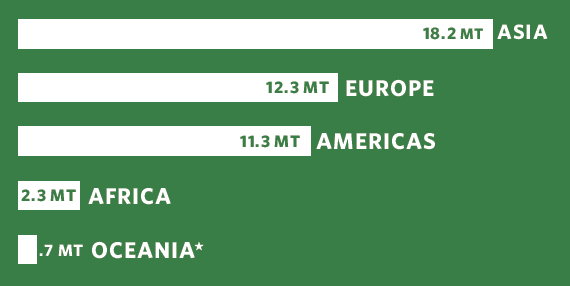
Who Generates the Most E-Waste?

According to The Global E-waste Monitor 2017, a publication produced by the Global E-waste Statistics Partnership, Asia takes the lead followed by Europe and the Americas.

The Global E-waste Partnership is a collaborative effort of the United Nations University (UNU), represented through its Vice-Rectorate in Europe hosted Sustainable Cycles (SCYCLE) Programme, the International Telecommunication Union (ITU) and the International Solid Waste Association (ISWA).


Also see:


Charles Cooper is a Silicon-valley based technology writer and former Executive Editor of CNET.

Rethinking Climate Change

An iceberg collapsing into the ocean.

Climate change may be controversial in the political realm, but for three Blavatnik Awards Scholars, all leading experts in environmental studies, there is no debate. The Earth’s ice sheets, glaciers, forests, and animals have all been altered by high levels of CO2 and increasing global temperatures. But are these changes permanent? This podcast examines the latest ecological, geological, and biogeographic research related to climate change. 

This podcast was produced as part of the 2017 Blavatnik Science Symposium, co-presented by the Blavatnik Family Foundation and The New York Academy of Sciences. 

Two New York Startup Companies Envision a Waste-Free Future

A shot of the New York City skyline.

Bringing bold, transformative technologies from the lab into the world.

Published October 1, 2017

By Hallie Kapner

Small companies throughout New York State are bringing bold, transformative technologies from the lab into the world thanks to support from the New York State Energy Research and Development Authority (NYSERDA).

Together with The New York Academy of Sciences, NYSERDA is supporting visionary early-stage startups through proof-of-concept centers that foster the growth and development of clean tech businesses. The two centers, PowerBridgeNY and Nexus-NY, have provided critical financial support, mentorship, and guidance for dozens of startups that are shaping the future of clean energy. Two companies, Allied Microbiota and Dimensional Energy, are tackling waste remediation and reuse with novel techniques that are being tested and proven today.

Tackling Toxic Waste with Nature’s Warriors

Amid some of the most expensive real estate in the world, on the waterfronts of Manhattan and Brooklyn, lay the remnants of disaster.

Epifluorescent photomicrograph of bacteria (green rods) on soil (orange-red particles). Particles were stained with a fluorescent dye.

The waters of the East River, Newtown Creek and the Gowanus Canal are among the local sites where benzene and oil residues mingle with persistent pollutants, such as polychlorinated biphenyls (PCBs), to form a stubbornly toxic soup that resists remediation. For environmental microbiologist Ray Sambrotto, Lamont Associate Professor at the Lamont–Doherty Earth Observatory at Columbia University, the solution for cleaning up such sites may be as simple as a common soil bacterium isolated from a compost pile in the 1990s.

Allied Microbiota, the company Sambrotto and a cohort of Columbia colleagues founded in 2017, is commercializing the use of this bacterial strain, aiming to reclaim polluted areas by simply allowing the microbes to do what they do best: break down environmental contaminants. The scientific community has long been aware that common microbes can degrade some pollutants — indeed, dozens of bacterial species are credited with dispatching of much of the oil dumped into the Gulf of Mexico during the Deepwater Horizon explosion.

The class of contaminants that includes PCBs, polyaromatic hydrocarbons and dioxins are less susceptible to natural attenuation, however, and these so-called recalcitrant pollutants require expensive, logistically challenging remediation techniques.

“The idea of using bacteria for bioremediation of recalcitrant pollutants isn’t a new one,” said Sambrotto, noting that research interest has waxed and waned over several decades.

Advances in Biotechnology

As advances in biotechnology have moved into the environmental field, the notion of deploying nature’s soldiers against a decidedly unnatural group of pollutants has gained momentum. Sambrotto and his Allied Microbiota co-founder Frana James describe their approach as “augmentation,” as it uses specialized bacteria to amplify the work of native microbes, a process they believe can be done safely and at low cost.

“Our bacteria are thermophiles, and they only reproduce when conditions are ideal,” Sambrotto said, adding that if temperatures drop below 40 degrees Celsius, the bacteria enter a dormant state.

When active, they are powerhouses of bioremediation, eliminating recalcitrant pollutants at breakneck speeds relative to other bacterial breakdown methods. Sambrotto credits this speed to the fact that the microbes are aerobic, rather than anaerobic, like most strains used in remediation.

“Aerobic enzymes have much more rapid degradation rates,” he said. “Oxygen is just a better hammer to hit these things with.”

Testing Their Technique

With support from PowerBridgeNY, a proof-of-concept center that commercializes cleantech spinning out of universities, Sambrotto and James are pilot testing their technique on polluted soil and sediment samples from the Hudson River and other sites.

“People are more than happy to send us samples, and they’re especially interested in hearing about the speed of remediation, as that’s what drives costs,” he said. Experiments on samples containing a mix of PCBs and chlorobenzene reveal breakdown rates of 25–40 percent per day under optimal conditions, versus 1 percent with anaerobic bioremediation. “When we hit that sweet spot to maintain optimum growth of the organism, breakdown rates are orders of magnitude faster than anything we’ve seen,” said Sambrotto.

While more pilot tests are needed — and the company is on the lookout for such projects — the promising early results have inspired the team to think about the future. Sambrotto described his vision of eliminating the financial barriers to remediating desirable but toxic spots along the Hudson River and restoring their utility.

“Hopefully, we can bring the cost down enough to address these areas,” he said. “Rather than digging up sediments and moving them elsewhere for treatment, I can envision a portable system that allows us to bring bacteria to the site and treat it right there. It’s incredible to think that we could reclaim properties that have been fallow for decades.”

Turning Carbon Dioxide Emissions into Tomorrow’s Fuels

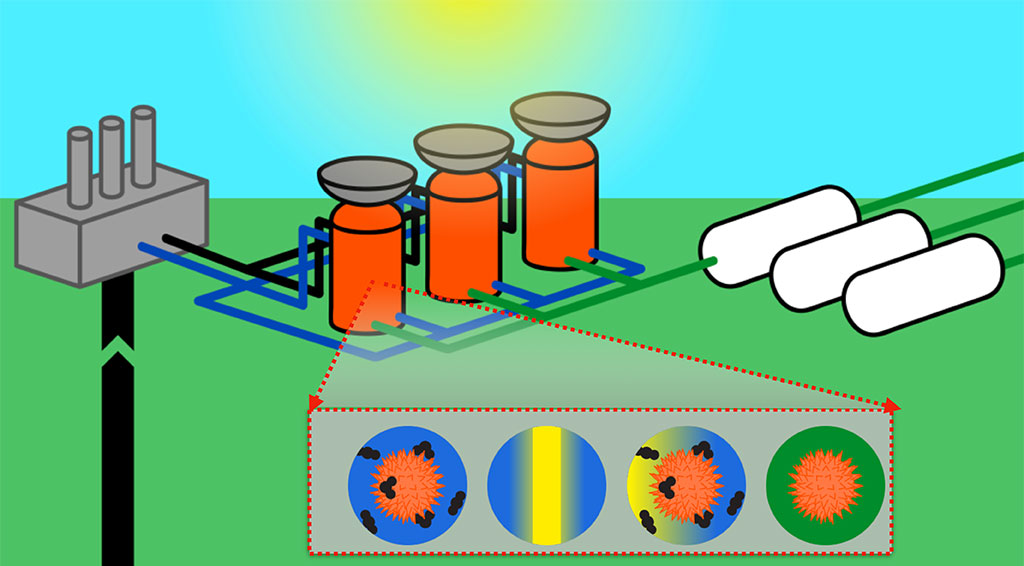
Most people don’t often think about combustion — the fundamental chemical reaction that converts a fuel source into energy, leaving water and carbon dioxide as waste products. Jason Salfi is the opposite. As CEO and co-founder of Dimensional Energy, along with David Erickson, Tobias Hanrath and Clayton Poppe, he spends his days talking about ways to reverse combustion, which may sound like a tall order, “but it’s what plants do all the time,” Salfi said, describing the process his company is working to commercialize: a form of artificial photosynthesis that uses sunlight, water and waste carbon dioxide to create fuel.

Dimensional Energy was born from serendipity, when Erickson and Hanrath, two faculty scientists from Cornell University, unknowingly submitted complimentary applications to NEXUS-NY, a clean energy business accelerator for which Salfi serves as an advisor. Noting the ties between the professors’ technologies, which tapped sunlight and catalytic materials to convert waste carbon dioxide (CO2) into hydrocarbon fuels, the NEXUS-NY team played matchmaker, suggesting the two join forces with Salfi to form a company.

Since 2016, the team has refined their core technology and begun laying plans for an industrial partnership to test their capabilities at increasingly larger scales. Although the technology is still in its early stages, the team envisions a scalable reactor that uses sunlight as an energy source, along with novel nanocatalysts and fiber optic waveguides developed in Hanrath and Erickson’s labs, to convert waste CO2 into methanol or syngas for use in a broad range of industrial processes.

“We’re not just sequestering carbon dioxide, we’re creating something useful,” said Erickson.

The Dimensional Energy technology is “plug-in” compatible with established carbon capture systems. The schematic illustrates how waveguide and catalyst concepts are integrated to enhance light exposure to the surface of nanostructured catalysts.

Carbon Conversion Technologies

As a semi-finalist in the Carbon X-PRIZE, a $20 million competition accelerating the development of carbon conversion technologies, the Dimensional Energy team is testing the feasibility of situating their reactor at point sources of CO2 emissions, such as natural gas or coal-fired power plants, although Salfi says such co-location isn’t crucial for the system to be successful at scale.

“Ultimately, it’s up to the industrial customer whether we capture the carbon on site or use sequestered carbon,” he said. “For now, we’re just aiming to create a reactor that fits within the current industrial infrastructure, with a few novel modifications.”

This level of attention to design schemes that work well in industrial settings is a distinguishing factor of Dimensional Energy’s approach to tackling what is, by all measures, a challenging end goal. Carbon conversion technologies are viewed as a critical component of efforts to rebalance the carbon landscape, but the field is still relatively new and most technologies are early-stage.

CO2 Sequestration and Transportation

At present, the cost of sequestering and transporting CO2 makes many potential applications cost-prohibitive at scale, and new sequestration technologies, including those that capture CO2 directly from the air, are not fully commercialized. Erickson believes the company’s pragmatic approach to design and functionality will ease the process toward scalability.

“We’re pursuing traditional methods of building small prototypes and learning how to optimize and grow,” said Erickson, “But since day one we have looked at major chemical plants to understand what works in that setting, and we’ve modeled our reactors on proven designs that we know can scale.”

Salfi and his team are realistic about the timeline for carbon conversion to have a measurable impact — easily 30 years by many estimates — but they, like most others working in the renewable energy field, are undeterred by the long time horizon.

“This is hard work, and I can tell you that there are easier ways to make money,” Salfi said. “But there are so many pioneers and passionate people excited to build businesses around these technologies, and our mission to make a difference drives what we’re doing and how we approach the challenges we face.”


Also see:

Sustainable Development for a Better Tomorrow

The logo for the UN.

The New York Academy of Sciences supports the United Nations’ Sustainable Development Goals, focused on issues like poverty, human rights and sustainability.

Published May 1, 2017

By Hallie Kapner

United Nations Secretary General Ban Ki-moon gives the opening remarks at the Sustainable Development Goals Summit

As Ban Ki-moon stepped up to a podium at the New York Academy of Sciences Summit on Science and Technology Enablement for the Sustainable Development Goals on November 29, he joked that back in school, science had never been his strong point.

But as the UN Secretary General kicked off a day-long deep dive into how innovation could transform life for billions across the globe, Ban’s admiration for those in the sciences was clearly evident. Indeed, he was there to ask scientists and representatives from industry, UN agencies, NGOs and intergovernmental organizations for their help in achieving the most ambitious to-do list ever created by humans for the sake of humankind—the United Nations Sustainable Development Goals (SDGs).

Jumpstarting an Unprecedented Collaboration

The Goals are a monumental undertaking, calling for unprecedented collaboration. To jump start the necessary teamwork, UN Deputy Secretary-General Jan Eliasson and Academy President Ellis Rubinstein came up with the idea to convene this first gathering of representatives from the science and technology communities at the Academy headquarters, in hopes of spurring action and innovation on behalf of the SDGs.

“The Academy has brought people together to address global issues since the beginning of our 200-year history,” Rubinstein told the packed auditorium. “There is no task more global than the work of fulfilling the Sustainable Development Goals. We felt it right to host this important meeting.”

Focused on Poverty, Human Rights, Sustainability and Peace

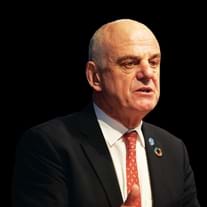
David Nabarro, UN Special Adviser on the 2030 Agenda for Sustainable Development and Climate Change

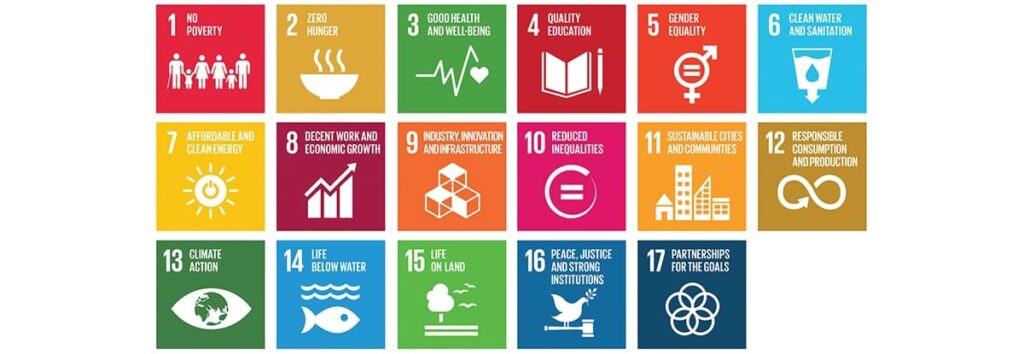
Adopted by the UN’s 193 member states in 2015 as the centerpiece of the 2030 Agenda for Sustainable Development, the 17 SDGs are a plan of action for the planet, comprising 169 targets for eradicating poverty and hunger, realizing human rights for all, embracing sustainability to protect the planet and fostering peaceful societies. Building on the framework established over the past 15 years by the Millennium Development Goals, which mostly focused on developing countries, the SDGs aim for global engagement and global cooperation.

As the declaration announcing the Agenda stated, the SDGs are “universal goals and targets which involve…developed and developing countries alike. They are integrated and indivisible, and balance the three dimensions of sustainable development: the economic, social and environmental.” “The SDG’s are universal goals…and balance the three dimensions of sustainable development: the economic, social and environmental.”

When the SDGs were adopted, UN officials realized it was crucial to “mobilize the scientists,” Ban said, remarking on how that community has long paved the way for global transformation.

“You aren’t daunted by ambition, and you’re quite at home with big goals and new ways of thinking,” he told the Academy audience.

Developing a “Common Language” Among Scientists

Further, he noted that the common language of scientists is a powerful diplomatic asset in times when cooperation among nations is critical. History supports this assertion, as recently as 2015, when scientists aided in the negotiations that led to the Iran nuclear deal, and as far back as the famous U.S.–Soviet “handshake in space” in 1975, scientists have succeeded where others have struggled.

“When extremist groups and politicians strive to push people into groups of ‘us’ and ‘them,’ the scientific community is an example of problem-solving across lines that may otherwise divide us,” Ban said.

One Summit, Four Streams

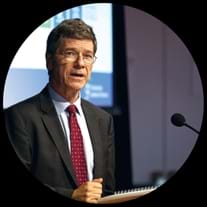
Jeffrey Sachs, Special Advisor to United Nations Secretary-General Ban Ki-moon on the Sustainable Development Goals

A crowd of over 100 VIPs filled the Academy’s auditorium in lower Manhattan for the Academy Summit. Surrounded by panoramic views of one of the world’s great cities, participants came together from the United Kingdom, China, Japan, Korea, India, Africa and states across the United States to join one of four working groups, or “streams” tasked with plotting a roadmap to advance the SDGs through science and technology.

The four streams—Early Childhood Development, People in Crisis, Sustainable Consumption and Production and Urbanization—were designed to encompass several SDGs.

For example, in Urbanization, participants explored interlinked concepts of resilient infrastructure, sustainable cities and clean energy, while Early Childhood Development brought together goals advocating good health and well-being, quality education and gender equality. In this way, the stream approach encouraged participants to think holistically, and to identify problems and potential solutions capable of satisfying multiple goals.

Developing a Framework for Achieving Goals

To ensure the feasibility of these solutions, each group began by listing the key research and data gaps that must be filled in order to lay out a framework for achieving the SDGs, before brainstorming potential partnerships—particularly between the public and private sectors—required for financing, implementation and monitoring. They were then encouraged to discuss proofs of concept within their fields that could be brought to scale in service of the SDGs.

Throughout the day, speakers presented brief case studies of partnerships that are utilizing existing technologies in new ways in the fields of health, education, disease management and nutrition. Jeffrey Sachs, Special Advisor to the United Nations Secretary-General on the Sustainable Development Goals, offered particularly salient advice for tapping promising but underdeveloped technologies, and described how the progression from basic idea to mass uptake of a new technology is often stymied not by a lack of need, but by a lack of planning.

“When extremist groups and politicians strive to push people into groups of ‘us’ and ‘them,’ the scientific community is an example of problem-solving across lines that may otherwise divide us,” Ban said.

“We have to plan for the whole value chain, and that means planning for diffusion,” he said, noting that the SDGs 15-year timeline calls for quick mobilization. “Otherwise, we have wonderful technologies sitting on the shelf, not deployed.”

To help achieve the SDGs, the scientific community will be relied upon to think about innovations that can be globally implemented by the year 2030. Sachs reminded the groups of the seemingly impossible tasks humans have tackled throughout history.

“We didn’t go to the moon because it was easy, we did it because it was hard. This too is hard, but it couldn’t be more exciting,” said Sachs, recalling John F. Kennedy’s famous “moonshot” remarks.

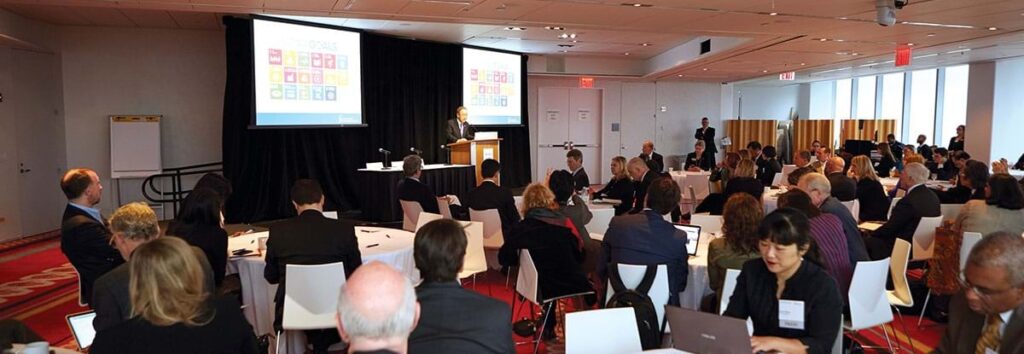
More than 100 leaders from industry, academia, government and philanthropy participated in a series of discussions on how best to achieve the Sustainable Development Goals.

The Hope Factors

After a day of brainstorming, debate and discussion, the working groups presented their first set of recommendations to the Summit at large. Ideas ran the gamut, from rough sketches of how to use mobile apps to collect data on early childhood development interventions to suggestions for making cities more sustainable as well as more livable through technology. But a common thread emerged from all four groups: the desire to meet again, to continue the conversation and to collectively commit to the work ahead.

Many attendees echoed the sentiments of David Nabarro, UN Special Adviser on the 2030 Agenda for Sustainable Development and Climate Change, who described the Summit as a “landmark day” and hoped that the activism sparked would drive change over the next 15 years.

Along the way, “in every Goal, science has a role to play,” said Jan Eliasson, UN Deputy Secretary-General, as he offered the Summit’s closing remarks.

He explained that even before the SDGs were finalized, the Science Advisory Board of the UN Secretary-General advocated an integrated, scientific approach to achieving them, noting the universality of science and its reliance on empirical facts as a force to broker the kind of global cooperation on which the SDGs depend.

“To solve problems in real life, you need a cross-cutting approach that helps coalesce people around a problem—the scientific community has perfected that model,” Eliasson said. Acknowledging the titanic scope of the SDGs and the dire circumstances of the people the Goals seek to aid, he emphasized the vast potential to create a brighter, healthier future. “The people in this room lift our hopes,” he said. “The future depends on women, youth and science—these are the hope factors.”

How a Small Redesign Can Lead to Big Savings

A photo with solar panels in the foreground, wind turbines in the middle ground, and the sun in the background.

With the help of PowerBridgeNY, the HIGHEST Transformers company aims for cleaner, safer electrical technology that could save billions of dollars a year.

Published March 29, 2017

By Marie Gentile and Robert Birchard

What if one component of the electrical grid could be redesigned to be safer and more environmentally-friendly, plus save the United States billions of dollars each year?

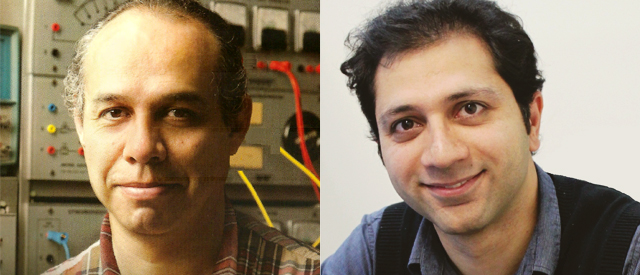
Engineers-turned-entrepreneurs Saeed Jazebi, PhD, and Francisco de Leon, PhD, from the New York University Tandon School of Engineering, are bringing their clean-tech to the marketplace to accomplish exactly this task. The product, HIGH Efficiency Shielded Toroidal (HIGHEST) Transformers, is designed to be a reliable and cost-efficient clean-energy alternative to traditional transformers for use by electric utilities. With new energy efficiency standards from the U.S. Department of Energy that went into effect in January 2016, the timing is deal for HIGHEST Transformers to enter the field of electrical engineering with a unique green technology.

Jazebi and de Leon honed their product and started their company as part of a proof-of-concept center program called PowerBridgeNY, which provides early-stage investments and services to help inventors and scientists turn their high-tech, clean-energy ideas into successful businesses. The POCC, for which the Academy serves in an advisory capacity, is funded through a grant from the New York State Energy Research and Development Authority (NYSERDA).

Typically, transformers transfer electrical energy between two or more circuits via electromagnetic induction; because it’s not efficient to transmit electricity at a low voltage across long distances, transformers increase or decrease the alternating voltages in electric power applications. Ideally these transformers would operate at 100% efficiency, but energy losses linked to transformer inefficiencies are estimated at 60-80 billion kilowatt hours (kWh), carrying a cost of approximately $4 billion per year.

Developing Environmentally Friendly, Safe Transformers

In addition, the coils of toroidal transformers are often insulated and cooled with mineral oil that can have a risk of leaking, or even exploding. As part of their work with PowerBridgeNY, Jazebi and de Leon set out to develop a more reliable dry (non-oil) toroidal transformer that is environmentally friendly and has a lower risk of explosions.

With the technology developed during their participation in the POCC program, HIGHEST Transformers are capable of significantly reducing energy losses and thus cutting energy costs.

“HIGHEST Transformers are comprised of a continuous steel strip that is wound into a doughnut shape (toroidal iron core) and then wrapped entirely in coils. The core has a gapless construction with extremely low no-load losses,” Jazebi explains.

A specialty designed electrostatic shield, new winding strategy, and amorphous iron cores allow the smaller transformers to be comparable in price and efficiency to larger transformers that use oil.

Built with Business Expertise

PowerBridgeNY also helped to provide HIGHEST Transformers with the business expertise and knowledge that is extremely beneficial-but not always accessible-to startups.

“The resources that they provide such as workshops and hourly meetings with lawyers and accountants are invaluable for startup companies,” Jazebi emphasized. “The conferences and networking events assisted us in connecting with national labs, large manufacturing companies, and electric utilities to test the product as well as understand the market.”

With this aid, HIGHEST Transformers achieved two extremely valuable milestones:  the company became an incorporated business, and received a National Science Foundation Small Business Technology Transfer Research grant to further develop their ideas and research.

Innovation for the Next Generation

Next steps for HIGHEST Transformers include manufacturing up to five prototypes to be tested according to the Institute of Electrical and Electronics Engineers Standards Association standard test codes and then implement pilot programs with utility companies and work with large transformer manufacturers or venture capitalists. Because of the new energy efficiency standards are poised to save 3.63 quadrillion BTUs of energy for equipment sold over the next 30 years, it is an ideal time for HIGHEST Transformers to enter the marketplace since there will be a greater demand than ever for this cleantech.

More than anything, the potential impact of this technology drives the research and development of HIGHEST Transformers.

“We owe the environment to future generations; we have to maintain it. This is the prime factor of our progress,” stated Jazebi. “Providing U.S. residents a better place to live with innovative engineering and design motivates us to innovate on this path.”


Learn more about NYSERDA‘s energy-focused Proof of Concept Centers in this podcast from the Academy.

Proof of Concept Centers: Energy Technology

The logo for The New York Academy of Sciences.

It’s easier to find people to invest in a great new tech product if you can show that it will be profitable relatively quickly. Unfortunately, that’s not so easy to demonstrate. Learn how we’re working to change that.

The New York Academy of Sciences and NYSERDA (the New York State Energy Research and Development Authority) are teaming up to drive investment in the new technologies that will help revolutionize the way we produce and use energy by supporting Proof of Concept Centers – institutes that bridge the gap between academic laboratories and working companies. In this podcast we learn about Proof of Concept Centers: what they are and how they have the potential to create a sea change in the way new technologies are turned from ideas into realities.

Promoting Clean Energy in New York

A shot of solar panels and wind turbines, with a sunrise/sunset in the background.

Board members provide strategic advice to three clean energy proof-of-concept centers.

Published July 1, 2015

By Diana Friedman

The New York State Energy Research and Development Authority (NYSERDA) held the annual Advisory Board Meeting for its clean energy proof-of-concept centers (POCCs) on January 28 at the Academy.

Now in their third year of operation, the POCCs run programming to help inventors and scientists turn their high-tech, clean energy ideas into successful businesses by going through an immersive commercialization program that lasts for more than a year. The POCCs are led by Columbia University and the New York University Polytechnic School of Engineering, which have collaborated to form PowerBridgeNY, and High Tech Rochester, which has formed NEXUS-NY. The ultimate goal is to create more New York State-based businesses in clean technology.

Advising the POCCs

The Academy, which serves in an advisory capacity for the POCCs, in concert with NYSERDA, formed the Advisory Board (members listed below) to provide strategic advice to the POCCs, on topics such as refining program processes, timelines, and outcome reporting. In addition to discussing successes, challenges, and future plans with representatives from the POCCs, at this year’s meeting, the Board heard from three POCC program participants about their companies, technologies, and experience in the program, as well as from two POCC mentors, who shared both successes and ideas for improvement.

Board members were selected for their expertise in innovative technologies, commercialization, and start-ups, as well as their experience working across sectors, including academia, industry, government, and non-profits.

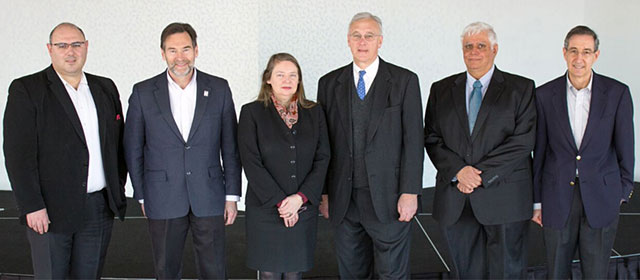
The Advisory Board is comprised of:

  • Richard Adams, Manager of the Innovation and Entrepreneurship Center (IEC) at the National Renewable Energy Laboratory (NREL)
  • David Audretsch, Distinguished Professor and SEPA Director of the SPEA Overseas Education Program, Ameritech Chair of Economic Development, and Director of the Institute for Development Strategies, Indiana University
  • Abigail Barrow, Founding Director, Massachusetts Technology Transfer Center
  • Bill Bonvillian, Director, MIT Washington Office, Massachusetts Institute of Technology
  • Michael Cassidy, President and CEO, Georgia Research Alliance
  • Jerome Engel, Founding Executive Director Emeritus, Lester Center for Entrepreneurship, University of California Berkeley
  • Ed Greer, Manager, Scouting and Exploration Network, Ventures and Business Development Group, The Dow Chemical Company
  • Jerry McGuire, Former Associate Vice Chancellor for Economic Development, University of North Carolina at Greensboro
  • Glen Merfeld, Platform Leader, Energy Storage Technology, GE Global Research – New York
  • Philip Mott, Technical Fellow, BorgWarner Corporation
  • Leon Sandler, Executive Director, MIT Deshpande Center for Technological Innovation
  • Robert Strom, Director of Research and Policy, The Kauffman Foundation
  • Dawn Tew, Program Director, Collaborative Research Initiatives, Global University Program, IBM

To learn more about the POCC model, download the Academy’s podcast, Proof of Concept Centers: Energy Technology.