Can Our Knowledge of Nature Ever Be Complete?

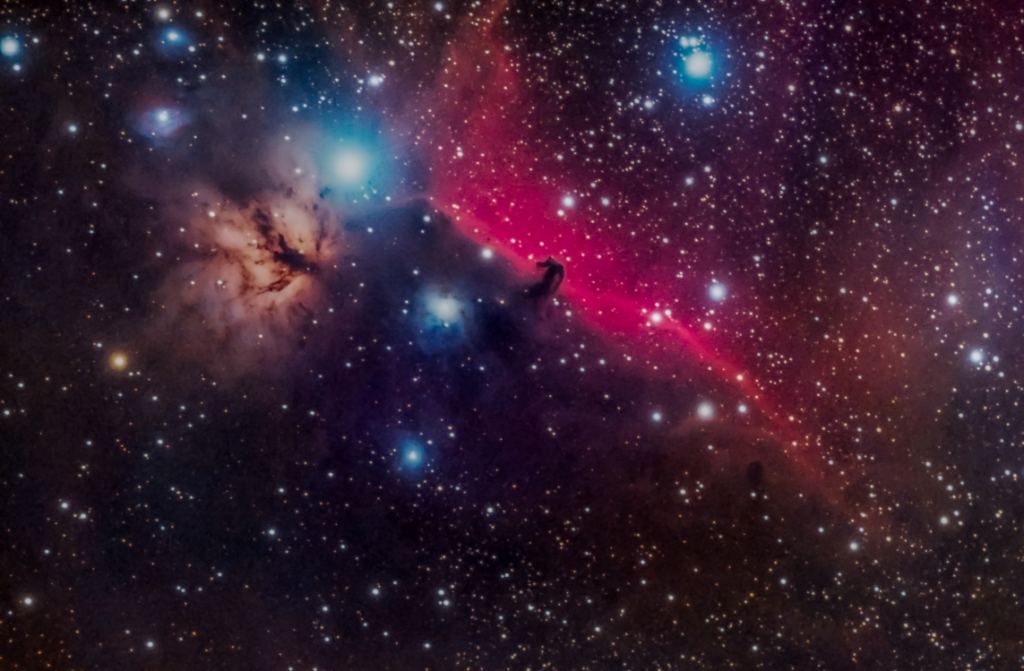
A color photo taken of outer space.

“So, even if there are other intelligent life forms out there, we are, for all practical purposes, alone. This revelation should fill us with awe.”

Published May 1, 2010

By Marcelo Gleiser

Image courtesy of Juan via stock.adobe.com.

I’d like to start this essay with a statement that might be surprising coming from a scientist: We are surrounded by the mysterious.

I’ll follow with a quote from another scientist: “The fairest thing we can experience is the mysterious. It is the fundamental emotion which stands at the cradle of true art and true science.”

Albert Einstein wrote those words in 1930, as part of a text entitled “What I Believe.” By “mysterious,” we both mean “that which is beyond our current knowledge.” That is, the knowledge we still don’t have of the universe. Einstein was well aware that we could only understand part of the whole. “What I see in Nature is a magnificent structure that we can comprehend only very imperfectly, and that must fill a thinking person with a feeling of humility,” he said.

Sadly, this concession to our limitations has been forgotten over the years. Perhaps some of the blame goes to Einstein: for the last two decades of his life, he searched for a “final theory,” a mathematical structure that would reveal the unity of nature, perfect in conception and in symmetry. His approach has been criticized for having been out of touch with the mainstream physics of the time. But his legacy as a unifier remains strong, having inspired a new generation of theoretical physicists in search of a final theory of nature.

Einstein believed—as did the Pythagoreans of pre-Socratic Greece—that geometry is the key to nature’s deepest secrets. Likewise, superstring theory—the preeminent modern incarnation of the final theory—aims to build a unified explanation for how the elementary particles of matter interact among themselves based on geometrical arguments.

The Ultimate Triumph of Reductionism

The stated goal is far from humble: the Theory of Everything should be the ultimate triumph of reductionism, the culmination of a search that started some 25 centuries ago in the Turkish town of Miletus. Can such a theory ever be devised? Or is the notion of unification, of Nature’s deep unity, more a myth, inspired by the pervasive influence of monotheistic ideas in Western thought?

To answer this question we must turn to particle physics, the branch of physics that searches for matter’s smallest building blocks. There is no question that the notion of symmetry is one of the cornerstones of physics. To deny this would be foolish

Many theories that successfully describe natural phenomena are based on the idea of symmetry and how it is applied mathematically. The problem starts when symmetry stops being a tool and becomes dogma. Because it’s been so successful so many times, it’s hard not to elevate symmetry to a pedestal and claim that nature’s harmony must be the expression of a grand mathematical code hiding underneath it all. The problem is, we have no experimental evidence that it must be so.

Current particle physics identifies four fundamental forces of nature: to the familiar gravitational and electromagnetic forces, we add the strong and weak nuclear forces, both active only within the confines of the atomic nucleus. The goal of unification is to show that all of these forces are, in fact, manifestations of a single force.

“Beauty is Truth, Truth Beauty”

We can’t perceive this unity at the low energies of our everyday lives, or even in our most powerful accelerators. But close to the Big Bang, at inconceivably high energies, the unity of nature would be revealed in all its amazing beauty. One senses Plato’s legacy—the belief that only in the pure beauty of mathematics can truth be found—or, as Keats wrote, that “beauty is truth, truth beauty.” Unfortunately, nature is not willing to cooperate.

One of the great triumphs of modern physics is the Standard Model of particle physics, a theory that collects all (or almost all) that we know of the world of the very small. In the 1960s, Sheldon Glashow, Abdus Salam, and Steve Weinberg built a theoretical framework whereby the electromagnetic and weak interactions were “unified”: At high energies, the weak interaction behaves in ways similar to electromagnetism.

The theory made some remarkable predictions, which were spectacularly confirmed by experiments in 1983 at the European Center for Particle Physics. In spite of its well-deserved success, the reality is that the theory can’t be considered a truly unified description of the two forces. Traces of both forces remain throughout; too many experimental facts must be accommodated by hand. In 35 years of attempts and massive experimental searches for the predicted effects such unification would entail, efforts to go beyond this “electroweak” unification to incorporate the strong force have failed.

Interestingly, we can detect a growing attitude shift in recent papers published by the high-energy physics community. Many scientists are proposing that perhaps things are not so perfect after all—that perhaps the universe started with the forces as described by the Standard Model, featuring only the partial electroweak unification.

Surrounded by the Mysterious
Image courtesy of Claudia Kamergorodski.

We can now revert to our opening statement—that we are surrounded by the mysterious. One of the problems with the notion of a final unification is that it assumes that we have complete knowledge of the fundamental particles and their interactions. Einstein was criticized for his stubborn attachment to gravity and electromagnetism; how can we be sure that there aren’t other interactions out there, beyond those we can currently measure?

We only know what our instruments tell us. And although their accuracy is increasing, allowing us to see more of the cosmos, it will always be limited. Since we cannot know all there is to know, we cannot build a theory of everything. We don’t even know what “everything” is!

The historian of ideas Isaiah Berlin called the notion of ultimate explanations a “fallacy,” blaming it on the pre-Socratics. There is a perennial darkness out there, beyond the circle of our current knowledge. And although this circle is always expanding, so is the level of our ignorance.

Imagine how much Galileo found he didn’t know when he pointed his telescope to the sky in 1609; just as when van Leeuwenhoek looked through his micro-scope only a few years earlier. In our times, think of all that the Hubble Space Telescope has revealed. Einstein was right when he wrote of how imperfect and limited our knowledge of nature is. And Berlin was right to condemn the rigidity of monistic ideals.

As we leave notions of mathematical perfection and final unification behind, what do we have left? A universe that thrives on the imperfect, on the manifestation of asymmetries from particles to galaxies; a universe that is no less fascinating for not hiding a “mind of God.”

Fundamental Imperfections

The argument doesn’t stop with fundamental physics. Life itself is only possible due to fundamental imperfections. Take, for example, the remarkable chirality, or handedness, of organic molecules. As Pasteur revealed more than 150 years ago, life seems to have a marked preference for molecules of specific spatial configurations. In modern times, we identify the amino acids that make up all proteins in living organisms as being “left -handed,” while the sugars that form the backbone of RNA and DNA are identified as being “right-handed.”

Handedness here relates to how these molecules are able to rotate the polarization of light either to the left or to the right, like the blades of a fan. The curious thing is that, when synthesized in the laboratory, these amino acids and sugars come out fifty-fifty. So, out of two choices, life picks only one.

No one knows why, although there are many tantalizing ideas. Perhaps, as I suggested in a recent paper, the choice of chirality depends on the complex interactions between the primitive organic chemistry and the early terrestrial environment of four billion years ago. Other life forms in other planets or moons may have opposite chirality to ours.

Survival by Genetic Mutation

As life developed, it only survived because of genetic mutations, themselves imperfections during the reproductive cycle. Life’s complexity, the transition from single-celled to multicellular organisms, is an amazing feat of adaptability, of the symbiotic relationship between living creatures and Earth’s unique properties.

As we look out at our neighbors in this solar system, we see barren worlds, most probably devoid of life. What about the rest of the galaxy or even the universe as a whole? Current research indicates that simple life may not be so rare; but complex life, and, in particular, intelligent life, is a whole other story. The Search for Extraterrestrial Intelligence program, known as SETI, is 50 years old, but no radio signal from an alien civilization has been detected. Furthermore, the distances are vast; with current technology, it would take us over 110,000 years to arrive at the nearest star, Alpha Centauri.

So, even if there are other intelligent life forms out there, we are, for all practical purposes, alone. This revelation should fill us with awe: we are how the universe thinks about itself. And for this reason, we have the moral obligation to preserve life at all cost. Not bad for a species that has only a limited knowledge of reality.

About Marcelo Gleiser

Marcelo Gleiser is the Appleton Professor of Natural Philosophy and Professor of Physics and Astronomy at Dartmouth College. He is a Fellow of the American Physical Society and the recipient of the Presidential Fellow Award from the White House and the National Science Foundation, as well as several literary awards. He is the author of A Tear at the Edge of Creation: A Radical New Vision for Life in an Imperfect Universe (Free Press), published in April 2010.
Developing a Database of New York Battery Test Sites

A graphic illustration of a battery.

An Academy team completed a needs assessment project for NY-BEST.

Published April 22, 2010

By Adrienne J. Burke

A graphic illustration of a battery.

The Academy recently completed a needs assessment project for the New York Battery and Energy Storage Technology Consortium (NY-BEST). NY-BEST is an industry-led coalition of New York energy storage professionals. Their goal is to establish New York as an industry leader in the energy storage sector by accelerating the commercialization of relevant technologies developed in the state.

The Academy was asked to compile and analyze information on the energy storage testing needs and capabilities of New York’s research and business community. The team was tasked with determining what the statewide needs and capabilities are for testing batteries for use in cars and heavier duty transportation as well as energy storage devices for the electric grid.

A Diligent Assessment

In early March, the Academy submitted an assessment to NY-BEST based on reviews of 24 survey responses and 69 research proposals by stakeholders, as well as interviews with more than 40 battery researchers in New York. The Academy recommended the creation of a database for use by NY-BEST members that would identify and describe available capabilities around the state. The Academy also recommended that the state create a new position for a “testing facilitator” who could assist organizations in matching needs with capabilities and identify common unmet needs in the area of battery testing.

Ben Levitan, a program associate involved with this effort, says, “Our goal was to come up with an inventory of the energy storage device testing capabilities in the state and to highlight the needs for particular energy storage testing capabilities. As the project progressed, it became clear that the needs across the state were diverse and divergent, and that a database would be highly useful.” A working prototype of the database, built upon the Academy’s research, is currently available to NY-BEST members.

Also read: The Economic Imperative for Better Battery Technology

The Role of Technology in Drug Development

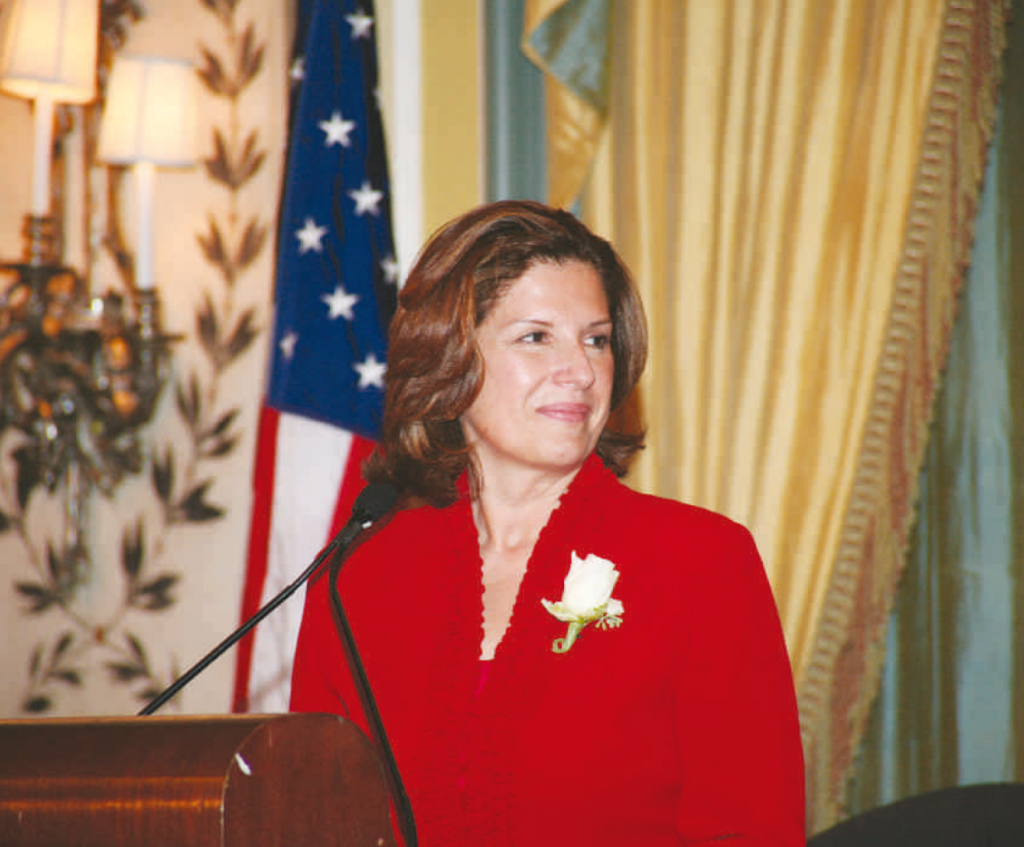
A woman presents from a podium.

Biophysicist Maria Freire draws inspiration from her work which involves putting more emphasis on developing drugs for underserved populations than on chasing profits.

Published December 1, 2009

By Maria Freire, as told to Abigail Jeffries

Maria Freire

I was born and raised in Lima, Peru, where my extended family lives. After attending university in Lima, where I received my bachelor’s degree, I came to the US on a Fulbright Foundation scholarship to pursue my doctorate in biophysics at the University of Virginia. It was my good fortune to be able to remain in the US and to embark upon what some considered a peculiar career path.

The journey began when I went to Capitol Hill as a Congressional Science Fellow from the American Association for the Advancement of Science. I worked in the offices of then-Congressman Norm Mineta, who was on the Science and Technology Committee, and Senator Jay Rockefeller. In this context, I realized that a piece of legislation called the Federal Technology Transfer Act was moving forward.

This legislation allowed government laboratories to protect their intellectual property and encouraged the commercialization of these inventions. The Bayh-Dole Act had already been passed to allow universities and businesses to retain title to intellectual property developed with federal funds and to license their rights to for-profit entities. Through exposure to these complementary acts, I began to understand the transformational potential of technology transfer.

A Serendipitous Path

After finishing my fellowship on the Hill, the University of Maryland, Baltimore, recruited me to help start the new Graduate School. It was there that after a couple of years I let them know that I wanted to focus on the up-and-coming field of technology transfer. Surprised, my boss asked, “What do you know about patents?” I confessed that I didn’t actually know anything about them, but they gave me the chance and I established the university’s first Office of Technology Development. It’s that kind of serendipitous path–a non-traditional approach to science–that leads to unexpected opportunities. I learned an enormous amount, and I loved it.

From there, I went to the US National Institutes of Health where I directed the Office of Technology Transfer. I was responsible for the development and implementation of technology transfer policies and procedures for the Department of Health and Human Services, and for the patenting and licensing activities for NIH and the Food and Drug Administration. This was a fabulous position, at a remarkable point in history, tackling thorny issues such as the patenting of human genes, which few had thought about before.

The Most Successful Technology Transfer Operation

At NIH, I wanted to assess success not only using financial metrics, but also on the impact a commercial application or the transfer of technology would have on the population. When it came down to a decision between having NIH earn more royalties on technology it had developed versus allowing the technology to move forward and benefit people, the decision was very clear.

At the end of the day, this was technology the taxpayers had funded, and the benefit to the taxpayers was to make sure the new drug, vaccine, or diagnostic tool was available to them. I am pleased to say we were able to achieve this balance, making OTT the most successful technology transfer operation in the US government.

The transfer of technology for cancer or diabetes or other indications for which there was a large, profitable commercial market, was entirely feasible. However, we couldn’t manage to give away technology associated with indications like malaria or cholera, in spite of the huge impact these would have on global health. I found this extremely frustrating.

In 2001 when the opportunity arose to work on developing a drug for tuberculosis, I left NIH and became the first CEO of the Global Alliance for TB Drug Development. There were three of us, we had a seed grant of $15 million from the Rockefeller Foundation. Over six years, we grew to a team of about 40 people with over $200 million and the support of U.S. and European governments and the Gates Foundation. This was no longer technology transfer; it was the development of drugs for an underserved population, and it was inspirational.

What’s Next?

Once the TB Alliance was poised to succeed, I wondered, “What’s next?” That’s when the Lasker Foundation knocked on my door. At Lasker, I can look at science from the perspective of what has been accomplished and the gaps that still exist, and I can try to focus the right sources and support on what science can do that’s transformational. Lasker presents awards through a juried process—an extraordinary panel consisting of 25 scientists, many Lasker or Nobel Laureates or both—aimed at identifying accomplishments that have profoundly influenced a scientific field and by honoring scientific, clinical, and public service careers that leave us in awe.

Lasker is usually first at recognizing such outstanding work; scientists tend to get the Nobel Prize after they have received the Lasker, and if one wins the Lasker, he or she has been vetted by the brightest in the world. The Lasker Foundation illuminates the paths of where things came from and where we believe they have the potential to go. Part of my interest is in trying to present the excitement and the transformational potential of biomedical science to the next generation of students, through increased funding of biomedical science, through the example of our Lasker Laureates, and through identifying areas of science with global impact on which we have not yet shone an appropriate light.

A Non-Traditional Route

When I was growing up, the expectation was for scientists to go into academia. Early on I realized this was not the route I wanted to take. Now scientists have the option of going into a vast number of fields, from biotechnology to the computer industry—there are many alternative possibilities. My career choices seemed odd for the times, but for me it wasn’t difficult to take this non-traditional route; it made all the sense in the world.

Also read: The Evolution of an Environmental Scientist


About the Authors

Marie Freier is the President of the Albert and Mary Lasker Foundaton. She has been an Academy member since 2005 and holds a Ph.D. in biophysics from the University of Virgina. She has received a Fulbright Fellowship, two US Congressional Science Fellowships, the Department of Health and Human Services’ Secretary’s Award for Distinguished Service, the 1999 Arthur S. Flemming Award, and the 2002 Bayh-Dole Award In her free time she enjoys furniture refinishing and mystery novels.

Abigail Jeffries is a freelance health and science reporter based in Tolland, CT.

Informing the New Age of Human Space Flight

A shot of stars and galaxies.

Can NASA afford to look beyond the international space station given budget constraints?

Published August 13, 2009

By Adrienne J. Burke

Academy member Norman Augustine, who chaired a National Academy of Sciences committee on strengthening research and education in science and technology, has another critical assignment. He’s chairing an expert panel investigating options for the future of the U.S. space program.

NASA convened the committee in response to a request by President Obama and the Office of Science and Technology Policy in May. The panel, which heard from former astronaut Sally Ride and others in Washington, DC, held its last scheduled public hearing August 12. It has until the end of the month to deliver its report.

Ride told the committee that the U.S. can’t afford to send humans on any missions beyond those to the international space station – such as to Mars – without boosting NASA’s budget. Augustine, former chief executive of Lockheed Martin, acknowledged that, “If we do want a strong space program, we might have to face up to investing more,” according to the New York Times.

A Long and Illustrious Career

Augustine has had a long and illustrious career in the worlds of science and engineering. In addition to his long-standing Academy membership and tenure at Lockheed Martin Corp., he serves on the President’s Council of Advisors on Science and Technology and the U.S. Department of Homeland Security’s Advisory Council. He also is a former undersecretary of the Army and served as chairman and principal officer of the American Red Cross

He has been honored with numerous awards, including the National Medal of Technology and the U.S. Department of Defense’s highest civilian award, the Distinguished Service Medal, given to him five times. He also received the 2005 AAAS Philip Hauge Abelson Prize and the 2006 Public Welfare Medal from the National Academy of Sciences (NAS).

Augustine was among several experts who testified before Congress in 2007 on the NAS report Rising Above the Gathering Storm: Energizing and Employing America for a Brighter Economic Future. The report, released in 2005, was requested by Congress as a way to address concerns that the U.S. was falling behind other nations in assuring the adequacy of its scientific and technical infrastructure and pipeline of young investigators.

Want to be part of this impactful and inclusive community? Join today!

A Global Advisor on Science and Technology

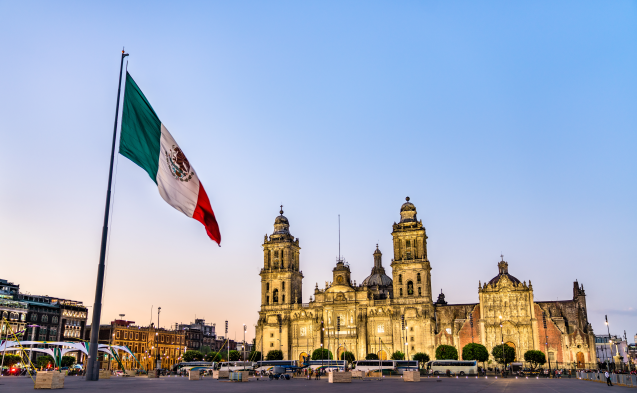
The Mexican flag with a castle-like structure in the background.

Expertise from The New York Academy of Sciences is helping regions around the world to build capacity in their own R&D efforts.

Published June 2, 2009

By Adrienne J. Burke

The New York Academy of Sciences’ (the Academy’s) reputation as a world-leading scientific event host and neutral convener of meetings among industry, academia, government, and NGOs has special value in what many are calling the “Knowledge Century,” where scientific and technical expertise will be the drivers of growth and sustainable development. People charged with building such capacity around the world are increasingly calling upon the Academy for guidance.

When the New York State Foundation for Science and Technology Innovation wanted to identify technological areas of importance to New York, it called on the Academy for help. After presenting its analysis of the state’s R&D strengths to stakeholders, the Academy helped NYSTAR identify clean technology as a growth area. Later, the Academy reconvened the group to examine specific strengths, opportunities, and models of clean-tech development. Leaders of the UK’s Global Medical Excellence Cluster (GMEC) also sought guidance from the Academy in breaking down the walls that prevented flow of knowledge among their research institutions.

Rick Trainor, president of King’s College, says the GMEC community of six universities, two hospitals, three corporations, and the London Development Agency wanted to promote collaboration, and was attracted to the Academy’s track record for nurturing partnerships.

“The Academy was neutral, it was interdisciplinary, and it was coming from another metropolis with a track record for bringing academic institutions there together,” Trainor says.

Bridging Public and Private Research

And when Mexico City’s Mayor decided to bridge the public and private research sectors in his city, he asked the Academy to show him how. The result was a four-day science and innovation conference in Mexico City in September, convened by the Academy and the administration of Mayor Marcelo Ebrard Casaubón. Some 300 corporate leaders, scientists, government officials, educators, investors, and students attended. With tracks examining Mexico City’s strengths in health, innovation, green energy, urban infrastructure, and science education and careers, the gathering spurred discussion about next steps toward developing a knowledge economy.

Advising groups outside of its hometown is becoming a new business for the Academy. To respond to requests from governments for guidance on policies and investments in science-and-technology-based innovation and economic development, the Academy has developed an advisory program.

“We’re leveraging our strengths as a uniquely independent organization with a broad knowledge of global science and a deep expertise in building communities that include all stakeholders in science and technology,” says Rene Baston, the Academy’s Chief Business Officer. “The goal of our ‘cluster’ activities is to develop and link knowledge centers around the world.”

What’s the value of this work to Academy members? “We’re advancing science,” says Karin Pavese, Vice President, Innovation and Sustainability. “We’re translating one of the Academy’s core competencies—to bridge disparate communities and build robust networks—to other parts of the world.”

And as scientists in Mexico City and other emerging sci-tech clusters join the Academy, all members benefit from being linked to a wider circle of scientific excellence.

Also read: Aligning Scientific Efforts in Mexico

A Case for Clean Technology in New York

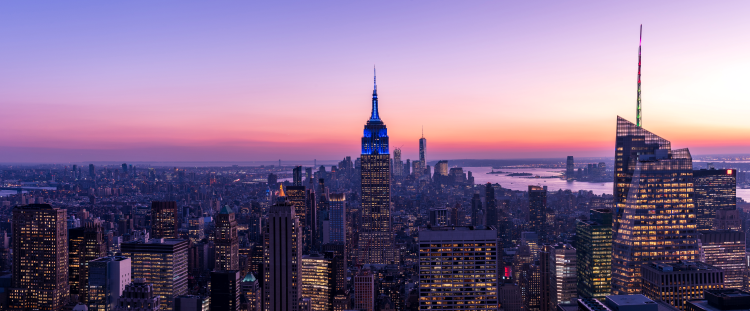
A shot of the NYC skyline, shot from midtown looking toward the Empire State Building and downtown Manhattan.

Examining the state’s clearest strengths and most promising prospects for commercializing the technology today that will create tomorrow’s cleantech economy.

Published May 30, 2009

By Adrienne J. Burke

Image courtesy of hit1912 via stock.adobe.com.

Over the past two years, in collaboration with the New York State Foundation for Science, Technology and Innovation (NYSTAR) and the New York State Energy Research and Development Authority (NYSERDA), The New York Academy of Sciences (the Academy) has been leading an effort to identify areas of science and technology that hold the most economic promise for New York State. Specifically, the initiative has identified clean technology as an emerging area of research in which the state holds significant assets and resources in specific areas.

Over the past year, the Academy has been conducting extensive interviews with key cleantech stakeholders in industry, academia, and government, as well as independent research on cleantech R&D assets and appropriate innovation/public private partnership models. On May 18, 2009, representatives of the Academy presented their findings to key stakeholders, and then moderated breakout sessions to discuss and refine their recommendations.

The breakout sessions focused on ways to foster innovation and to define clean technology priorities. Ultimately, the event revealed that New York has a broad set of assets that could assist in its economic development, including the necessary R&D base, strong programs, and an emerging vision and set of policies capable of optimizing a cleantech innovation system and creating a competitive cleantech industry.

Significant Potential for Economic Impact

In particular, the initiative has identified the following set of clean technology areas as having significant potential for economic impact:

  • Photovoltaics
  • Energy Storage
  • Fuel Cells
  • Biomass
  • Buildings
  • Smart Grid

During both interviews and the breakout sessions, systems integration was also identified as a discrete set of activities that constitute a core strength of New York State and could, itself, provide significant opportunity for economic development. In general, a systems approach could enable the diverse but interconnected set of clean technology areas to be unified into a cleantech “ecosystem.” It could also facilitate the incorporation of technologies not identified in the Academy’s initial findings that were identified as being important in the breakout sessions. These include nuclear energy, wind energy, electric transportation, water systems, and hydrogen produced from electricity, coal, and natural gas.

Four Goals for Commercializing Technology

In addition to identifying promising technology areas, the event also focused on how to foster a productive innovation system that allows researchers in all fields to commercialize their technologies. New York State has already demonstrated strong support for innovation, and the initiative has identified four key goals as being particularly important:

  • Incorporating innovation assets
  • Connecting assets through a robust network
  • Aligning resources and stakeholders by setting a challenge
  • Investing in a well rounded technology portfolio

As with the technology areas, these components hold the potential to provide their most significant outputs when treated as complementary and co-dependent components of an innovation economy. The meeting focused on strategies for generating interest among venture capitalists and entrepreneurs; fostering public-private partnerships that connect researchers, investors, and government agencies; and setting challenges through better coordinated RFP’s that address state cleantech priorities.

A New Cleantech Economy

During the event, there was wide appreciation of current initiatives already undertaken by the State, particularly by NYSTAR, NYSERDA, and the Governor’s Office, to improve New York’s already competitive innovation system. Their efforts, combined with supportive administrations at the local and national levels, create a window of opportunity that participants in the workshop agreed should not be missed.

There is clearly momentum toward developing an optimized cleantech innovation system in New York State. Building on its existing strengths, the State is well positioned to create significant economic impact through an impressive portfolio of cleantech assets and policies. With continued leadership from the Governor’s Office and organizations such as NYSTAR and NYSERDA, the gathering indicated that New York could become home to a new cleantech economy.

Also read: Two New York Startup Companies Envision a Waste-Free Future and How a Small Redesign Can Lead to Big Savings

Creativity After Google: Art and Science Interfaces

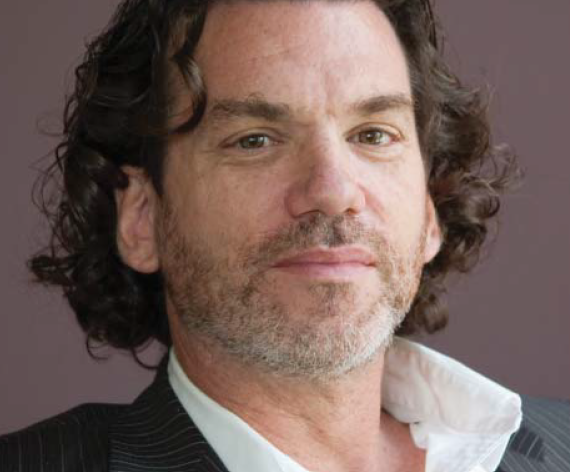
A man in a suit poses for the camera.

Biomedical engineering professor David Edwards feels that creativity is catalyzed by the act of crossing the conceptual boundary between art and science.

Published September 1, 2008

By Adelle C. Pelekanos

David Edwards. Photo by Eliza Grinnell.

Pop quiz: What is the 43rd element on the periodic table? Who served as Secretary of State under President William Taft? What was the name of the fourth Star Trek motion picture?

Unless you’re preparing for a turn on Jeopardy, you’re probably not storing that knowledge in your head. No matter. In less than a second, an Internet search engine can produce it for you: Technetium; Philander Knox; and Star Trek IV: The Voyage Home.

In an age when information is increasingly at our fingertips, the ability to retain facts ranks second to the power of problem solving. And leaders of innovation are asking how an educational system that emphasizes rote memorization can generate creative thinkers.

Harvard biomedical engineering professor, entrepreneur, and author David Edwards tackles that question in a new book, ARTSCIENCE: Creativity in the Post-Google Generation. To teach people to be innovative, he suggests, requires an understanding of the circumstances that promote innovation. He proposes that creativity is catalyzed by the act of crossing the conceptual boundary between art and science. And to show what happens when creators traverse the invisible borders between disciplines and institutions, Edwards offers anecdotal evidence from his career and those of contemporary artists and scientists.

Artscience: One Word, One Process

“Artscience” is the term Edwards coined to describe the phenomenon by which creators float among the disciplines of art and science. An artscientist may be a cell biologist such as Don Ingber, who as a young Yale science student was inspired to take a design class. In it, he studied the structural principle of tensegrity in design, originally described by architect Buckminster Fuller. Ingber recognized this type of integrity in the cells he was studying in his lab, and went on to pioneer a new view of cellular structure.

Or, an artscientist may be a doctor such as Sean Palfry, whose passion for medicine runs parallel to a passion for photography. Unlike Ingber, who carried a specific idea over the artscience boundary, Palfry experienced another kind of catalyst for innovation. While working in the toughest neighborhood hospital in Boston, Palfry spent his free time developing a photography technique involving multiple exposures. The attention to detail and analytical skills that he honed as a doctor complemented his photographic work, and the enjoyment he experienced taking pictures served to balance the stress of his difficult work at the hospital. His application of artscience in his leisure activities both sparked his creativity and revitalized him for his medical work.

From Musician to Mathematician

Diana Darby is a third kind of artscientist—an artist by training who pursues scientific understanding to advance her creative work. One afternoon, Darby, a professional concert pianist, became fascinated by articles she found in a music journal at the Lincoln Center Library. The articles, written primarily by engineers, piqued her curiosity about how science might help her better understand her music. Unable to let the idea go, Darby researched engineering programs and eventually enrolled in City College, followed by graduate school at MIT.

Toward the end of her studies, Darby finally had the mathematical tools to explore her music. Her eureka moment came when she developed a use of chaos theory to generate musical variations. It had taken the intuition to follow her idea, the courage to risk her career as a professional musician, and dedication of more than six years to produce her artscience innovation.

Obstacles to Artscience Innovation

Edwards sees Darby, Ingber, Palfry, and other artscientists as “idea translators,” who have taken an idea through three stages: conception, translation, and realization.

None of them set out with the intention to pursue artscience. Darby’s idea of chaos theory transformed into music began merely as an intuition that mathematics and science could enhance her experience of music. She struggled with the decision to return to school, leaving behind her successful career as a pianist. But it is the move from one intellectual environment to another that Edwards says allows artscientists to create an aesthetic result from a scientific method, or the opposite.

Unfortunately, in a world that increasingly values innovation over information, our cultural and academic institutions are as yet ill equipped to foster creative innovation of the kind Edwards describes. “We value creators in business, culture, education, and society, but somehow we struggle to create institutional environments to welcome them,” he says.

Indeed, the divide between art and science that Edwards recognizes as a catalyst for creativity can contribute to the “administrative inertia” that weighs on academic institutions. “That we institutionally encourage these modern prejudices through our dizzying array of disciplines and internal departments stems from the specialization of human knowledge, expression, and experience,” Edwards writes. He calls this the educational institutional problem.

The Artscience Lab

To overcome such institutional barriers and catalyze innovation, Edwards proposes an intellectual artscience environment he calls the “laboratory.” Edwards promotes development of workspaces “for the societies, industries, cultural institutions, and research and education institutions in which artists and scientists might create a place that allows…creativity…to spread as pervasively as good ideas today should.”

Edwards walks his talk. In October 2007, he opened Le Laboratoire, the world’s first artscience center, in Paris. The 14,000-square-meter open area includes a large exhibition gallery, a design atelier, offices, and the commercial spaces for Le LaboClub, a members-only recreation area, and Le LaboShop, which sells merchandise.

Edwards says he founded the not-for-profit Le Laboratoire as an “art and design experimental center” where students could learn “to more effectively realize ideas about which they can feel passionate and which are simultaneously relevant to society, industry, and culture.” He underwrote a significant chunk of its operating expenses through the sale of his own biotech startup. A range of cultural, nonprofit, commercial, and educational institutions including Epson, the Wellcome Trust, and Harvard University also provide funding to support the break-even operation.

Edwards describes the center’s first few months as a “completely wild experience,” with artists and scientists collaborating on various experiments that might

produce “theater in the street, visual art in the office, or opera in the bathroom.” He says, “What takes place in the laboratory continues to change as the world’s issues and needs change.”

Inspired By NASA

One of the first projects of Le Laboratoire has been Edwards’ own collaboration with French designer Mathieu Lehanneur on an air filtration system called Bel-Air, inspired by observations of NASA scientists who detected unusually high levels of toxins in the blood of astronauts returning from space missions. The NASA team experimented with certain plants that acted like natural filters, absorbing and metabolizing the noxious chemicals emitted into the air by the artificial materials of the space suits and shuttle environment.

Edwards and Lehanneur recognized similarities between the space shuttle environment and a modern home—both of which play host to high levels of fine particles emitted by plastics, insulation, and other modern building materials. The two envisioned a kind of living filter that would absorb and metabolize airborne particles, the way plants did in the space shuttle. Bel-Air aims to maximize the natural absorptive properties of plants by optimizing the filtration capacity of leaves, roots, soil, and plant water.

Bel-Air qualifies as artscience because Edwards and Lehanneur used the tools of plant metabolism and of airborne chemicals to create an important functional appliance that is also aesthetically pleasing.

Innovation By Example

In addition to artscience experiments such as Bel-Air, Le Laboratoire carries out public programming and education in accordance with a goal to serve as a center for learning that complements traditional school environments in which, Edwards says, specialization is inevitable.

When specialization stifles creativity, the artscience lab is an invaluable environment for students, he says. Edwards sees the artscience lab as a supplement to the specialized learning that pervades education today. Through Le Laboratoire partnerships, such as one with Harvard, university students can work alongside established artists and scientists at the lab. Edwards hopes that this model for collaboration will be repeated between other educational and cultural institutions, catalyzing innovation and complementing similar missions.

Younger students can benefit from learning about the innovative work happening at the artscience lab in less formal ways. On any given day, students of any age can be found seated cross-legged on the ground at Le Laboratoire, chatting about exhibits and scribbling in notebooks, Edwards says. By presenting examples of creators freely exploring ideas through various methods, he says the artscience lab effectively teaches innovation by example.

“Giving kids the opportunity to play on that artscience interface is a gift,” Edwards says. “We learn best by being passionate for an idea, and by having enough fearlessness and experience to pursue those ideas wherever they’ll take us.”

Also read: The Art and Science of Human Facial Perception


About the Author

Adelle C. Pelekanos is a freelance science writer living in Queens, New York.

How Are Skyscrapers Able to Withstand High Winds?

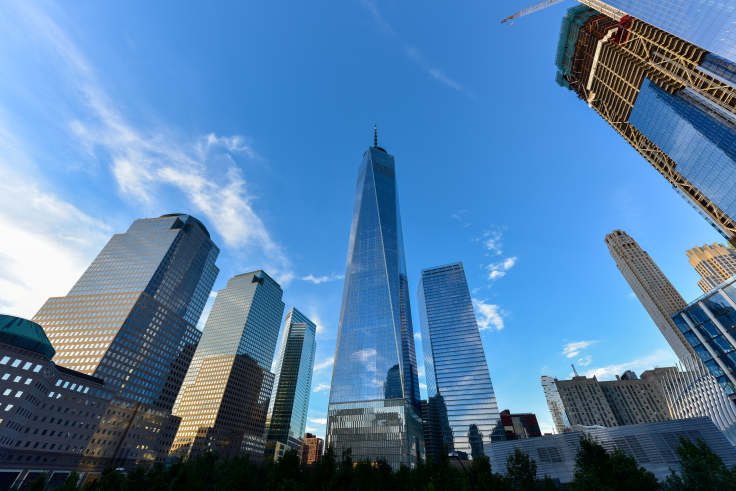
A shot taken from ground level, looking up at the Freedom Tower and lower Manhattan.

While building codes do not require wind tunnel testing for new skyscrapers, engineers and architects conduct the testing anyway to ensure precision and efficiency during construction.

Published July 1, 2006

By Deborah Snoonian

Image courtesy of demerzel21 via stock.adobe.com.

Before glass, steel, and concrete, there were plastic, plywood, and pressure sensors. And even in this age of computer-aided design and analysis, engineers still build scale models of buildings to see if the full-sized real ones can withstand strong winds.

That explains why in 2002, researchers at the Alan G. Davenport Wind Engineering Group at the University of Western Ontario (UWO) built a 1-to-500 scale replica of 7 World Trade Center and the surrounding neighborhood, measuring about a foot and a half tall. They placed the model carefully inside a boundary-layer wind tunnel, a 128-foot long, 11-foot wide, and 8-foot high apparatus equipped with a wind machine that can simulate everything from gentle breezes to gusts of hurricane intensity. Then, as the wind blew, sensors attached to and around the model logged thousands of readings of pressures, speeds, and deflections. Later, researchers analyzed the data to spot potential wind-related problems, and compared them to computer-model predictions.

Such a study is a common practice in the design of a tall building to ensure its safety and the comfort of occupants and pedestrians. The studies guarantee that skyscrapers are flexible enough to withstand high winds without toppling over (all tall buildings are designed to sway slightly), and that strong gusts won’t rip off or break the cladding (I.M. Pei’s John Hancock Tower in Boston notoriously suffered falling and broken windows during its construction in the 1970s). As for comfort, engineers aim to prevent occupants from detecting the building’s motion by making sure it moves slowly and gently. Wind speeds at the base of the building are monitored so that pedestrians won’t have to endure strong gusts.

Wind Tunnel Testing Not Required

Although building codes don’t require wind tunnel testing, they usually permit architects and engineers to base their designs on test conclusions. This typically results in buildings that are engineered precisely and efficiently—and therefore less expensively—than what is mandated by conservative building codes.

The architects and engineers for 7 WTC, Skidmore, Owings & Merrill (SOM) and WSP Cantor Seinuk, respectively, had access to data on many similar tall, existing buildings. But the timing presented a challenge, because there was then no master plan yet in place for Ground Zero. Researchers tested three models: one of 7 WTC with no structures at Ground Zero (which is what exists today), and two that included surrounding buildings at various heights and orientations, which affect the wind speed and direction around 7 WTC. “We had to make some assumptions about what might get built there, so we made them conservatively,” says Silvian Marcus, chief executive officer of WSP Cantor Seinuk.

In the last decade or so, emerging analytical methods such as computational fluid dynamics (CFD) have allowed designers to study the complex behavior of air movement around buildings without the use of scale models or wind tunnels. But by all accounts, it will be years before computer-only wind studies become the norm.

Immensely Complicated and Computationally Intensive

One reason is that wind tunnel facilities—there are just a few in North America—have given designers the ability to look not only at the effects of wind, but also at other weather-related effects like snow and at the perfomance of other systems such as air in-takes and exhaust fans. These are “all things that are critical to building performance,” says SOM partner Carl Galioto.

More fundamentally, calculating airflow around buildings is both immensely complicated and computationally intensive. At this stage, CFD software for buildings requires a high level of expertise, produces results that are highly dependent on assumptions, and tends to be used only by wind-tunnel facilities themselves.

Change will come when the software and processing power improve. “I’d like to be able to use CFD analysis to spot check parts of buildings that tend to be problem areas for wind pressure, like corners and parapets, and then confirm the CFD predictions with a physical test prior to construction,” says Nicholas Holt, SOM’s senior technical architect for the project. “Eventually, with enough data corroborated by physical models, codes will likely begin to accept CFD analysis in lieu of wind tunnel testing.”

In the meantime, though, engineers will keep the plastic, plywood, and pressure sensors handy.

Also read: Green Buildings and Water Infrastructure

What’s Old Is New: A Revitalized Downtown NYC

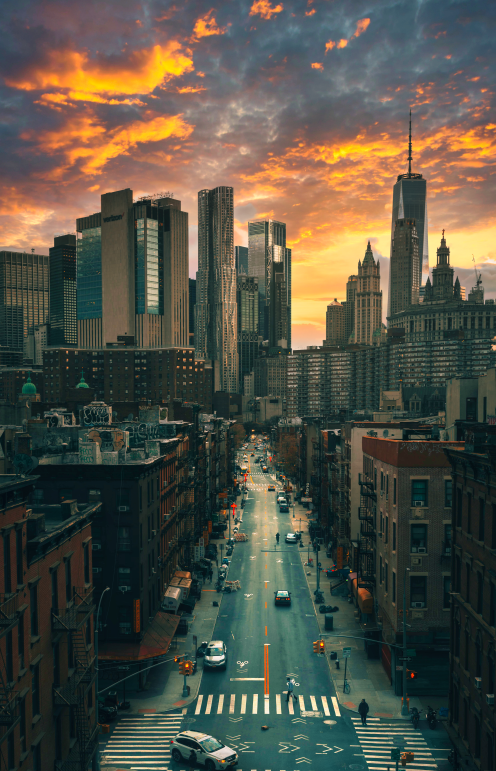
A shot taken from a NYC building, looking downtown toward the Freedom Tower.

A convergence of real estate development, infrastructure improvements, and diverse cultural offerings is redefining Lower Manhattan, harkening back to the city’s colonial days.

Published July 1, 2006

By Pamela Sherrid

The block of Front Street just north of the South Street Seaport in Lower Manhattan was a sad sight for most of the last 30 years. Vintage commercial buildings built by prosperous merchants at the end of the 18th century stood derelict and nearly empty.

But today, life is stirring on Front Street. Real estate developers, helped by low-cost public financing, recently renovated 11 old buildings and built three new ones, creating 96 chic apartments that were all quickly snapped up by renters. On a recent sunny spring afternoon, entrepreneur Sandra Tedesco was unpacking bottles at her new wine bar, Bin No. 220, the first retail business to open on the block. A coffee bar, a dry cleaner, a sushi place, and a gourmet grocer—those basic upscale urban amenities—are also on the way.

Sandra and her business partner, Calli Lerner, both pioneering residents in the Financial District, are engines of the change that is sweeping Lower Manhattan. “We had nowhere we could walk to have a nice glass of wine and relax,” says Tedesco. So, both experienced in the restaurant trade, the partners are remedying the situation by opening a cozy neighborhood place.

A Neighborhood on the Move

If all you know about downtown is the seemingly endless squabbling about what will be built at Ground Zero, you are missing the big picture. Lower Manhattan is not only being rebuilt, it is morphing into a much more diverse and lively neighborhood. No longer is finance the only employer, nor do the streets echo emptily at 7 p.m. “This is definitely not the Downtown we once knew,” says Mary Ann Tighe, CEO of the New York Tri-State Region at real estate firm CB Richard Ellis. Baby strollers roll right by bankers’ limousines and green parks are sprouting amidst the concrete canyons.

Two powerful forces—the free market and the government—are working in tandem to improve life downtown. Rentals and condos are less expensive below Chambers Street than in many spots elsewhere in Manhattan, luring singles and families. That relative value is even greater for office space, attracting many nonprofit organizations and firms in everything from biometrics to publishing.

As for the public sector, it is spending billions to make Downtown an architectural and cultural showplace as a moral victory over terrorism. “Despite wishing terribly that 9/11 never happened, it does present us with a chance to look at Lower Manhattan from top to bottom, to evaluate its assets and see how it can be improved,” says Stefan Pryor, president of the Lower Manhattan Development Corp (LMDC).

Transportation Projects

The really big-ticket items are transportation projects that will make Downtown easier and more pleasant to travel to and move around. A new Fulton Street Transit Center, with an expected completion in 2008, will untangle the maze of ramps and passageways that connect a dozen subway lines. Its dramatic glass- and-steel pavilion entry at the corner of Fulton Street and Broadway, designed by prominent British architect Nicholas Grimshaw, will let natural light filter down to below street level.

The Port Authority hired an even better-known international “starchitect,” Santiago Calatrava, to design a new PATH Terminal at the World Trade Center, also currently under construction. A pedestrian underground concourse will be built to connect the Fulton Street Transit Center to the PATH terminal and to the World Financial Center further west. A proposed rail link to JFK airport, requiring a new tunnel under the East River, would make travel much faster between Downtown and anywhere on Long Island. It is not a done deal, but already funding is in place for more than half its $6 billion cost.

Arts and Leisure

Public spending is also revving up the cultural life Downtown. This spring 63 Lower Manhattan arts organizations and projects received a total of $27 million in grants that are expected to spur private donations of many times that sum. The Flea Theater, an award-winning Off-Off-Broadway theater known for nurturing innovative playwrights, is hoping to upgrade its building and create more rehearsal space.

The Poets House, which offers lectures and readings, and houses the nation’s largest collection of poetry books and media open to the public, will be moving next year to a beautiful river-view home in Battery Park City, just a short walk from The New York Academy of Sciences (the Academy).

The River to River Festival presents over 500 performances downtown from June through September, including a diverse range of music that includes pioneering rappers, The Sugar Hill Gang, and the lush-sounding indie rockers, Belle & Sebastian. And music is just part of the happenings: On a Sunday afternoon, for instance, a family can see a tap dance demonstration and then take part in a marathon reading of Walt Whitman’s “Song of Myself” aboard a tall ship.

Downtown nature lovers can celebrate, too. Government money is improving and creating more than a dozen parks and open spaces. At the foot of Broadway, Bowling Green, the nation’s oldest park, has been relandscaped, creating an oasis of green. Kiosks serving sandwiches and salads will open this summer in Battery Park; patrons can sit at café tables set amidst 57,000 square feet of newly planted perennial gardens and enjoy the views of New York harbor.

Governors Island

Governors Island, that 172-acre gem located just 800 yards off the southern tip of Manhattan, is a magnificent wildcard in the future of Lower Manhattan. In 2003, the federal government transferred control of most of the island to the State and City of New York. The public entity created to decide the island’s future has sketched out varied possibilities for redevelopment, ranging from entertainment park to innovation center. This spring more than two dozen proposals for development flooded in to meet a May deadline.

Live, Work, Visit, Enjoy

Meanwhile, the boom in residential population in Lower Manhattan—more than doubling in the past 15 years to 36,000—is also a boon for workers and visitors. As is the case with Bin No. 220 on Front Street, many of the businesses that are opening to serve residents also make it a nicer place to visit.

Lower Manhattan is now the fastest growing residential neighborhood in New York City, and not only in the traditional residential area of Battery Park City. Wall Street has been synonymous with finance for hundreds of years, but many of the older office buildings there can’t accommodate the high-tech wiring needed for modern trading.

So every building on the south side of that famous row from Broad Street to Water Street has been or is being converted to condos or rentals. “At 6 p.m. I now see people coming out of the sub- way on Wall Street on their way home,” says real estate broker Vanessa Low Mendelson, who not only sells luxury condos downtown, but also lives there with her husband and 18-month-old baby.

The Sound of Hope and Renewal

Of course, all these changes can’t happen without disruption. There’s a huge amount of construction going on downtown, bringing with it noise, blocked streets and sidewalks, and weekend subway station closures. “What’s going on in Lower Manhattan is like having open heart surgery while running a marathon,” says Eric Deutsch, president of the neighborhood business group Downtown Alliance.

But many people find in the commotion the sound of hope and renewal. In a 2002 speech, Mayor Bloomberg outlined his vision of Lower Manhattan as a bustling global hub of culture and commerce, and a live-work-and-visit community for the world. “If you study New York history,” he said, “you realize that it is often at the moments when New York has faced its greatest challenges that we’ve had our biggest achievements.”

Also read: 7WTC: A New Home, A Return to Downtown


About the Author

Guest Editor Pamela Sherrid is a veteran of U.S. News & World Report, Forbes, and Fortune magazines.

7WTC: A New Home, A Return to Downtown

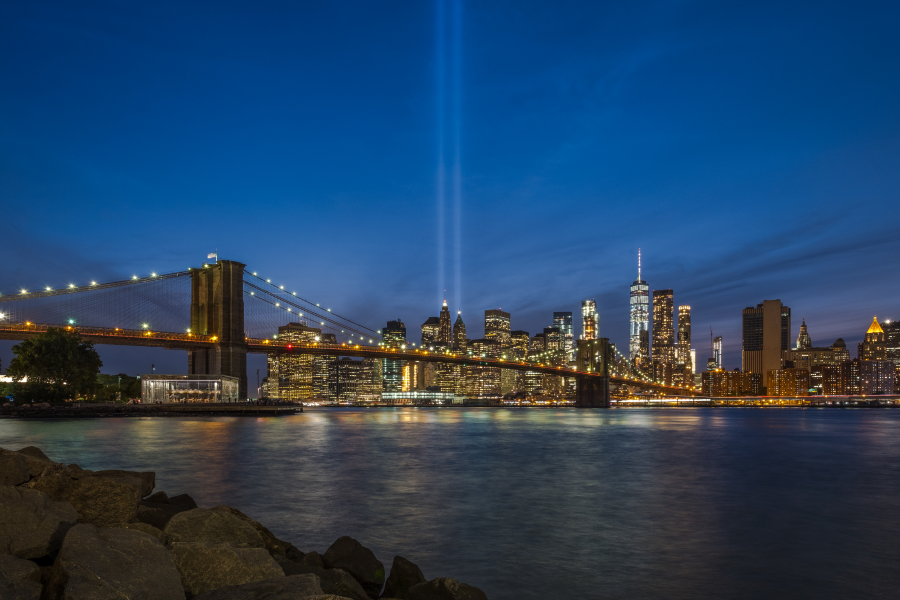
A shot of the Brooklyn Bridge looking forward lower Manhattan.

The Academy’s new home features elegant architecture, intriguing conceptual art, and advanced environmental and safety engineering.

Published July 1, 2006

By Glenn Collins

Image courtesy of quietbits via stock.adobe.com.

7 World Trade Center was the last tower to fall on September 11, 2001, and the first to be reborn at Ground Zero. This shimmering, sharp-edged, 52-story parallelogram redefines the cityscape, and the arrival of new occupants fulfills a dream for those who dealt firsthand with the rubble that preceded it.

Fortunately for incoming tenants—and those from The New York Academy of Sciences (the Academy) will be among the first, following the developer of the building himself, Larry A. Silverstein—there is much more than the burden of memory to be acknowledged. There is also the promise of award-winning new architecture, state-of-the-art design, intricate technological solutions to daunting challenges and constraints, and a tower that is not only more environmentally responsible than any other in the city but, not incidentally, safer than any other as well.

A Poignant Transparency

There’s one aspect of the building—known simply as “Seven” by its designers and builders—that fascinates those who know it well. They call it the “stealth building” because its glass skin scatters light, and at times lets the building, from many different angles, inhabit the boundary between transparent and reflective.

The intensity of this magical effect is greatest in the early morning and late afternoon. Sometimes the shimmering surface takes on a seemingly supernatural glow, especially when viewed from the Hudson River. Its shining aspect changes dramatically during shifting light and varying weather conditions, and at times, when the conditions are perfectly correct, “the elements of the building seem to merge with the sky,” said James Carpenter. He is the glass artist and MacArthur Fellow who helped design Seven, and envisions it as one huge prism.

Despite its eerie transparency, though, it is an office building. And Seven embodies the antithesis of insubstantiality in its vital statistics: it is 741 feet tall, it cost $700 million to build, and has 1.7 million square feet of office space on 42 tenant floors. The tower is sheathed in 538,420 square feet of glass, more than 12 acres. Bounded by Barclay Street on the north, Vesey Street on the south, Washington Street on the west, and Greenwich Street on the east, it is within five minutes of 13 subway lines, the PATH system, and New York Waterway ferries. It takes just one sharp right turn from its doors to reach the West Side Highway.

Zip Code: 10007

But Seven has always been more than just a building. Many of those involved in the new Seven have searing memories of the day when the old one fell, including Mr. Silverstein of Silverstein Properties, the developer of both the original tower and the new one, on land leased from the Port Authority of New York and New Jersey. Mr. Silverstein had a dermatology appointment on September 11, and therefore missed a breakfast meeting in Windows on the World, where no one survived.

Rebuilding Seven was an especially emotional experience for the workers who built it twice, like Elio Cettena and Mike Pinelli, who were onsite supervisors for Tishman Construction Corporation, the construction manager of both the new tower and the old in 1985.

And it is no exaggeration to say that every milestone of the building’s creation was followed avidly, from its November 2003 groundbreaking to its topping-out ceremony on October 21, 2004. Then, after installing 15 tons of steel, the final beam was positioned on the 52nd floor as 500 construction workers, Governor George Pataki, Mayor Michael Bloomberg, and Silverstein looked on. With smiles, salutes, and not a few tears, the steel beam—which was adorned with the same American flag used in the topping-out ceremony for the original 7 World Trade Center—was hoisted 750 feet in the air to its place at the summit of the building.

Gateway to a New Downtown

Back in the clean-up phase after 9/11, open forums had made it clear that the public wanted streets to run through the redeveloped Trade Center site, unlike the former 1960’s design with a “super-block” pedestal that brought street traffic to a dead end. Both community activists and Seven’s lead architect, David Childs of Skidmore, Owings & Merrill, advocated that Silverstein reduce Seven’s footprint to reestablish Greenwich Street, one of the city’s oldest north-south thoroughfares.

Silverstein acceded. Instead of proceeding directly south on Greenwich Street, travelers will take a jog around a new, triangular, 15,000-square-foot park and pedestrian plaza. Planted with 60 sweetgum trees and boxwood shrubs, the plaza will serve as an amenity to occupants and also, in the words of Childs, “as the gateway to the Trade Center site.” To come is a complex of office towers including the 1776-foot-tall Freedom Tower, a retail center on Church Street, the World Trade Center Memorial , and a commuter station designed by architect Santiago Calatrava. In front of Seven, a short stretch of Greenwich Street will serve as a private drive for taxis and limos.

As for the building itself, Mr. Childs was aiming for “restrained beauty and perfect pitch,” he said, that would derive its effect not only from formal restraint but also from attention to detail.

Lighting the Way

But to do so, the architects had to respond to “a unique set of design challenges,” Silverstein said. Those challenges are so unusual that the building is actually a feat of architectural legerdemain: Childs had to place a delicate skyscraper a top one of the ugliest pedestals in any Manhattan building, a monumental $100 million Con Edison substation.

Sheathed in concrete like the old substation, which was destroyed on September 11, the new substation has three transformers putting out 80 megawatts of power not only for Seven, but also for Battery Park City and, eventually, the buildings of the rebuilt Trade Center site. It can accommodate seven more transformers up to a total of 10, one more than the inventory in the original substation.

The facility, one of 24 substations in Manhattan, reduces 138,000-volt power from generating stations into more manageable, 13,000-volt current distributed to residential and commercial customers. If the $1.1 million, 20-foot-tall, 168-ton transformers are unsightly, then the shifting of the base of the new Seven to the west of the previous Seven (to create the park and reestablish Greenwich Street) made the Con Edison vaults even uglier, because the transformers had to be stacked vertically to save space.

Free Flow of Air

Since the transformers generate heat, they posed another constraint: The wall around them had to permit air to flow freely. Worse, atop the seven-story concrete substation, three floors of the building had to be devoted to mechanical equipment. Rentable offices, therefore, could not be situated until the 11th floor.

While it was obvious that the lower floors had to be clad in some sort of curtain wall (an independently supported outside screen), Childs was adamant that the solution to the quandary of the skyscraper’s base be “something integral, that was designed from the start,” he said, adding that it could not be some fig leaf-like “external piece of art.”

Hoping, as in the haiku and the sonnet, that limitation would be the catalyst for art, Childs sought out Carpenter, a sculptor and architect whose designs have summoned effects from the characteristics of light.

The substation problem came down to one question for Carpenter: “How do you turn an absorptive concrete block,” he asked, “into a reflective, emotive surface?”

A Solution

Carpenter’s solution was to design a sculptural installation for the base of the building, “a stainless-steel scrim that is animated with light,” he said, visually shifting naturally by day with the changing light conditions, and artificially at night with programmed illumination sequences using light-emitting diodes (LEDs). At the same time, the wall could also second as a porous ventilator for the hidden vaults of the three-story transformers, dissipating their heat.

And so, the wall is built of elegantly polished and machined 15-foot-tall, 5-foot-wide panels—each weighing 1500 pounds—of precisely crafted, high-precision triangular steel prism bars set in inner and outer rows.

During the day, these 130,000 prisms reflect ambient light and make the wall an active surface, capturing the sky in different directions, since the prism sections are set off by 15 degrees from each other. “The wall creates a moiré effect that moves by you, as if you are walking past stretched silk,” Childs said.

At night, on the north and south walls, 220,000 blue and white LEDs illuminate the wall of prisms from within, subtly reflecting off the steel and into the street. The diodes are easy to maintain, and give off little heat. At night, 12 motion-sensing cameras are programmed to follow passers-by, marking their passage in columns of multistory blue light on a white ground.

Art and Innovation

The building lobby, which has the postal address of 250 Greenwich Street, posed another architectural challenge: It had to be sandwiched between two banks of transformer vaults framed by unsightly structural columns five feet in diameter. Childs opened it all up with a street side, 46-foot-tall curtain wall of glass that welcomes daylight into the lobby; he cladded the columns in reflective stainless steel.

Then Childs commissioned an artistic centerpiece: A dominating, floor-to-ceiling, 14-by-65-foot wall of acid-etched translucent glass illuminated by whitish light-emitting diodes, created by Carpenter and the conceptual artist Jenny Holzer. Like Chinese calligraphy, Holzer’s work uses words as art, at the same time as it plays with the power of commercial billboards.

At Seven, she has programmed the wall to display thousands of ghostly white, streaming words of text. This never-ending ribbon of poetry and prose by dozens of authors—from Elizabeth Bishop and Allen Ginsberg to Langston Hughes and Walt Whitman—evokes the history of New York. Though the artwork resides in the lobby, it is visible to pedestrians outside, as well as to those congregating in the Greenwich Street park; it even can be seen blocks away, on Church Street.

The sum of these architectural efforts helped 7 World Trade Center to win a Municipal Art Society annual MASterwork award for urban design this year.

Building Safe

But Seven is far from being just a provocative pretty face. It is also the first office tower in New York City to win gold certification for its green—or environmentally sensitive—architecture, which seeks to reduce energy and natural-resource consumption and lower the building’s impact on the environment. The design incorporates the recycling of rainwater and the use of natural light and air in an interior where toxic materials have largely been eliminated.

Given the building’s location, security was also a crucial concern. “It was a challenge to put an office building on top of a power substation, but it was equally a challenge, if not more so, to create a building that would be safe—safer than anything that had previously been built,” said Silvian Marcus, chief executive officer of WSP Cantor Seinuk, the building’s structural engineers. For its work on 7 World Trade Center, his company recently won the 2006 award for engineering excellence from the New York Association of Consulting Engineers.

Marcus said that Seven’s steel framing “has sufficient redundancy to prevent a progressive collapse,” which was the failing of the Trade Center towers. Nevertheless, “the framing could not interfere with the exterior look of the building, so we tried to make the framing invisible,” he said.

The Bulky Base

Among the building’s security consultants was an Israeli firm experienced in blast effects. Ironically, the bulky base of 7 World Trade Center dramatically enhances its safety, security experts say, since its tenant space starts at the 11th floor above grade, well above immediate street-level blast effects from vehicle-borne explosives. Indeed, the New York Police Department has insisted that the Freedom Tower at Ground Zero—also being designed by Childs—incorporate a similar structurally massive base that is distinctly different from its upper office floors. The designers are likely to use stainless-steel cladding to hide it, adopting design and artistic strategies similar to those pioneered at Seven.

At the base of 7 World Trade Center, the architects have utilized glass, including the 46-foot-high lobby facade, that is laminated with layers of polyvinyl butyral, which stabilizes blast-shattered panes and keeps shards in place. Holzer’s language wall is also a security blanket. Not only does it screen the private precincts of the building, its lamination acts as a blast shield and its high-strength steel members will yield if they counter an explosion.

Massive Concrete Central Core

Further than this, the architects’ principal answer to disaster at Seven is its massive concrete central core, which extends from the base to the top, placing a shield around the stairways, the elevators, sprinkler pipes, and electrical conduits.

The base-to-top core, for the most part two feet thick, is double-constructed with steel reinforcing bars. Its two stairwells will be located at opposite sides of the core, about 110 feet apart, cutting down the possibility that they could be damaged at the same time.

The stairways are oversized, five and a half feet wide—20 percent wider than required by the city code—to permit rapid evacuation. They are fitted with independent emergency lighting and glow-in-the-dark paint and are pressurized to prevent the intrusion of smoke in case of a fire.

The stair landings are extra deep—8 feet by 11 feet—to enable employees in wheelchairs to wait for rescue while the more mobile are able to step past them. The stair treads are wide enough to permit people to walk down, Silverstein said, while emergency workers are walking up. The four fire stairs exit directly to the building’s exterior, preventing bottlenecks or the possible confusion that might result from exits that lead through the main lobby.

A Renaissance, With a View

The beauty of the execution is that the Academy’s visitors will remain indifferent to all this contingency planning. They can simply enjoy the building’s location, elegant architecture, and the Academy’s striking new offices on the 40th floor. Seven will be a welcoming landmark on the route from trendy Tribeca, with its mix of shopping and restaurants, to the cultural institutions of Lower Manhattan. Looking out the Academy’s office windows, or pausing in Seven’s park, its new tenants will have a privileged close-up view of New York’s oldest neighborhood being made new again.

Also read: Academy’s Past: Where It All Began


About the Author

Glenn Collins reports on Ground Zero for The New York Times.