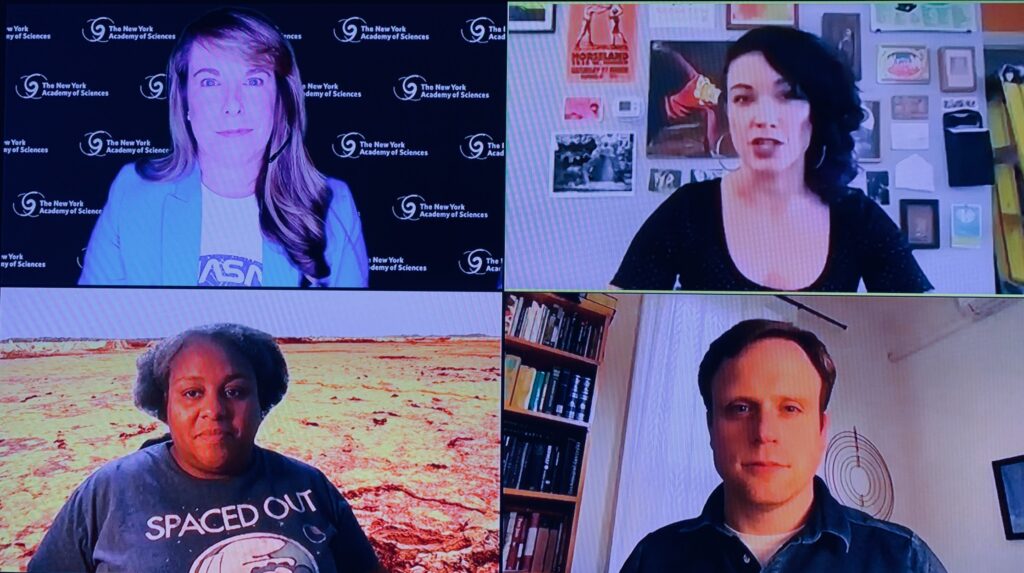
Beyond Spacesuits and Pain Relievers: Could we Genetically Protect Astronaut Health on the Mission to Mars? On May 12, 2020, I hosted a virtual conversation for the New York Academy of Sciences with astrobiologist Kennda Lynch, PhD (Lunar and Planetary Institute), geneticist Christopher Mason, PhD (Weill Cornell Medicine), and planetary scientist Lucianne Walkowicz, PhD (The JustSpace Alliance; Adler Plantarium) exploring some of the physical—and ethical—obstacles to be surmounted for a successful human mission to Mars.
Much has been written about finding the next Earth—a planetary body to serve as future outpost for the human race as Earth’s life-sustaining natural resources dwindle. But Mars won’t exactly offer a warm welcome to unshielded humans: an average temperature of -80°F/-62°C, an atmosphere of 96% toxic carbon dioxide, a surface covered in fine red dust, and a hefty dose of radiation constantly tearing through your DNA. Hostile welcome aside, we first have to get there safely.
Are We There Yet?
With current jet propulsion technologies, and depending on the position of the red planet in its orbit, the shortest journey from Earth to Mars is estimated to take 6 months. As revealed by NASA’s study of identical twins Scott and Mark Kelly—undertaken before, during, and after Scott embarked on his one-year mission on the International Space Station—long-term space flight can exact a multitude of transient and permanent effects on the human body: from loss of muscle tone and bone density to changes in vision and the body’s ability to repair itself.
A round trip is expected to eclipse the lifetime maximum recommended dosage of radiation. We humans are hardy, but are we tough enough for the mission to Mars?
Beyond the Whims of Evolution
While we don’t yet know if there is life on Mars, or if it had life in the past, a peek at the vast diversity of life right here on Earth reveals lifeforms that can survive in harsh environments that resemble the Martian surface. Some extremophiles—organisms that thrive in high radiation or very dry, salty, acidic, hot or cold settings—may be better equipped than Homo sapiens for life on Mars. Could they serve as a genetic reservoir in which to fish for talents and traits that if introduced into humans would make us more resilient?
The gene editing technique CRISPR, or the synthetic redesign of organisms to engineer new abilities, could propel astronaut preparation forward through strategic genetic enhancement of the human body or the custom design of microbes that support daily life on Mars. Imagine a designer microbe that secretes materials that catalyze concrete production from Mars soil, or supports water production, waste disposal, or plant growth. Genes taken from the humble tardigrade—a microscopic creature genetically resistant to radiation damage—when inserted into human cells, have been shown to provide protection against radiation. Along with physical and pharmacological protections—from spacesuits to pain relievers—could we safely genetically protect astronaut heath? And if so, should we?
The Big Experiment
When human medical studies are conducted, patients must be fully apprised of the risks and willingly give their consent to participate. If at any time the patient wishes to leave the study, they can withdraw their consent and go home. No such U-turns will be available to astronauts when months into their journey to Mars. The risks associated with space travel are carefully calculated, and many regulations in place to protect astronaut health.
However, as we push the human body to, and perhaps beyond, reasonable limits, this begs the question: are the health risks so high that extreme methods of protection like gene editing or synthetic biology would be justified? Are we in fact ethically bound to pursue these methods of protection because the risk of not pursuing them is too great? While these technologies are still in exploratory stages today, it’s intriguing to think of the future possibilities, and ethical quandaries, that may be realized on the fourth or fifth generation missions to Mars.
Mars may only be half the size of Earth, but it will pack one heck of a sensory punch for the astronauts anticipated to touch down on the red planet by 2035. As the fantastic future of human space travel continues to unfold before us, the challenges of sustaining human life in space should, in parallel, drive us to live more sustainably here on Earth in the here and now.
Turning data into predictive models is not a simple task.
Published April 14, 2020
By Roger Torda
Shelf life is an important variable when it comes to snack foods. But how can shelf life be predicted when new products are being developed?
The starting point is often data from taste tests. Turning that data into a predictive model is not a simple task. And that is why PepsiCo, teaming with The New York Academy of Sciences, posed the problem as a challenge to young scientists.
Pallavi Gupta, who is pursuing her PhD in Informatics at the University of Missouri, Columbia, was the Grand Prize winner in the Data Science in Research & Development Challenge. And as a result she will head to Valhalla, New York in the Summer of 2020, for an internship with PepsiCo’s R&D Data Analytics team.
“I love to analyze data,” Pallavi said, quickly breaking into laughter. “I am looking forward to the internship with PepsiCo, to test my skills and to gain additional experience with data analytics using machine learning techniques.”
Competing Against Hundreds of Innovators
Pallavi was among 1,235 registrants in the Challenge. Jhansi Kurma, who recently earned a master’s degree in Business Information Systems from the New Jersey Institute of Technology, came in second.
PepsiCo turned to the Academy to host the competition because of its experience running innovation challenges in science and technology, dating back to 2010. Many of the Academy’s challenges target early career scientists. Other Academy challenges are for high school students.
“The New York Academy of Science-led data challenge has proven to be an excellent way to reach talented data scientists from around the world and have them work on real life challenges together with PepsiCo’s experts. We are looking forward to the 2020 edition and are committed to make this an annual tradition,” says Ellen de Brabander, PepsiCo’s Senior Vice President for Research and Development, said the Data Science Challenge.
The Value of STEM Skills
Large, diverse companies like PepsiCo, value STEM skills across a wide range of job functions.
“In global research and development, our number one output is innovation, and STEM [skills] are critically important competencies to drive innovation,” the company’s James Yuan said in a NYAS webinar titled “Why STEM Professionals are Valuable Across Industries.”
Yuan, Pepsico’s Senior Director, Data Science & Analytics, went on to explain that students joining R&D at the company can pursue work in a wide variety of areas, including product formulation, packaging, process engineering, food safety, quality control, and regulatory affairs.
“In e-commerce and in global business, there are also a lot of opportunities to leverage STEM capabilities for business optimization,” said Eric Higgins, PepsiCo VP, Data Science and Analytics. “We’re talking about media buys, we’re talking about identifying how to best place our products, product assortment, and supply chain optimization.”
A lot of product innovation within this company comes through simply hypothesis testing,” Higgins continued. “Using data science and STEM disciplines, we’re able to automate that process and expand capability, so we can find new ways of innovating. So, in both R&D and on the business side, there are opportunities across the board for people using new methodologies in mathematics, statistics, and computer science.”
Developing a Useful Shelf-Life Model
Competitors in the Challenge were each given a data set from 81 individual shelf-life studies. The data came from evaluations of changes in the taste of snack products as they aged. The goal was to develop a useful shelf-life model that would allow a product developer to predict shelf life based on the product, process, packaging information, and storage conditions related to where the product would be sold.
The competitors had 14 days to complete the challenge. Ten finalists then presented their solutions virtually to a panel of judges, made up of PepsiCo employees from Data Science, R&D, and Human Resources departments.
Pallavi is working toward her PhD, and is using computational and machine learning approaches to study how small non-coding RNA (also known as “small RNAs) – are involved in gene expression regulation. Pallavi said she would take skills from her upcoming internship and apply them to her own research in genomics.
The Data Science in Research and Development Challenge drew entries from 42 countries, especially from the US, Ireland, the UK, Canada and India.
The New York Academy of Sciences and the Blavatnik Family Foundation hosted the annual Blavatnik Science Symposium on July 15–16, 2019, uniting 75 Finalists, Laureates, and Winners of the Blavatnik Awards for Young Scientists. Honorees from the UK and Israel Awards programs joined Blavatnik National and Regional Awards honorees from the U.S. for what one speaker described as “two days of the impossible.” Nearly 30 presenters delivered research updates over the course of nine themed sessions, offering a fast-paced peek into the latest developments in materials science, quantum optics, sustainable technologies, neuroscience, chemical biology, and biomedicine.
Symposium Highlights
Computer vision and machine learning have enabled novel analyses of satellite and drone images of wildlife, food crops, and the Earth itself.
Next-generation atomic clocks can be used to study interactions between particles in complex many-body systems.
Bacterial communities colonizing the intestinal tract produce bioactive molecules that interact with the human genome and may influence disease susceptibility.
New catalysts can reduce carbon emissions associated with industrial chemical production.
Retinal neurons display a surprising degree of plasticity, changing their coding in response to repetitive stimuli.
New approaches for applying machine learning to complex datasets is improving predictive algorithms in fields ranging from consumer marketing to healthcare.
Breakthroughs in materials science have resulted in materials with remarkable strength and responsiveness.
Single-cell genomic studies are revealing some of the mechanisms that drive cancer development, metastasis, and resistance to treatment.
Speakers
Emily Balskus, PhD Harvard University
Chiara Daraio, PhD Caltech
William Dichtel, PhD Northwestern University
Elza Erkip, PhD New York University
Lucia Gualtieri, PhD Stanford University
Ive Hermans, PhD University of Wisconsin – Madison
Liangbing Hu, PhD University of Maryland, College Park
Jure Leskovec, PhD Stanford University
Heather J. Lynch, PhD Stony Brook University
Wei Min, PhD Columbia University
Seth Murray, PhD Texas A & M University
Nicholas Navin, PhD, MD MD Anderson Cancer Center
Ana Maria Rey, PhD University of Colorado Boulder
Michal Rivlin, PhD Weizmann Institute of Science
Nieng Yan, PhD Princeton University
Event Sponsor
Technology for Sustainability
Speakers
Heather J. Lynch Stony Brook University
Lucia Gualtieri Stanford University
Seth Murray Texas A & M University
Highlights
Machine learning algorithms trained to analyze satellite imagery have led to the discovery of previously unknown colonies of Antarctic penguins.
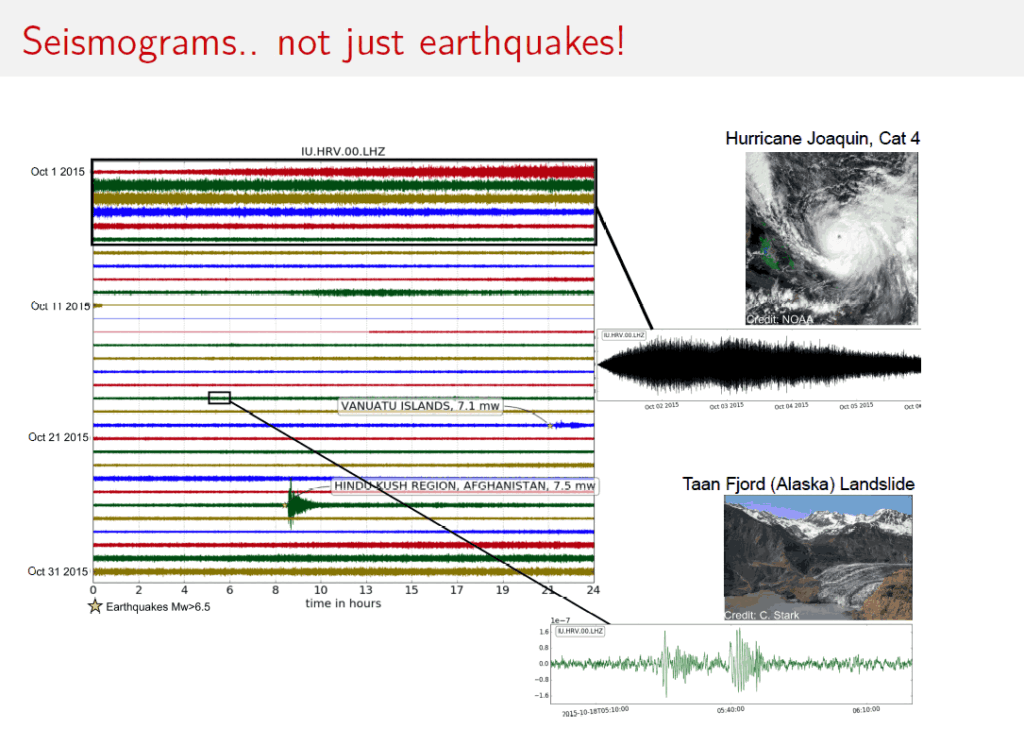
Seismographic data can be used to analyze more than just earthquakes—typhoons, hurricanes, iceberg-calving events and landslides are reflected in the seismic record.
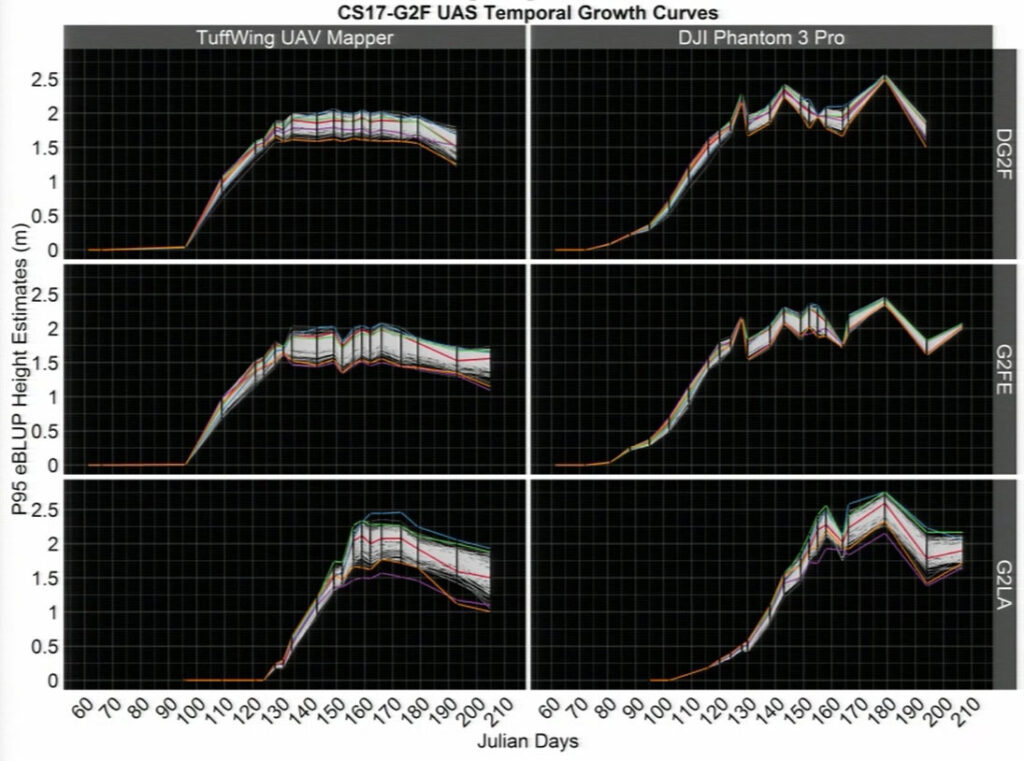
Unmanned aerial systems are a valuable tool for phenotypic analysis in plant breeding, allowing researchers to take frequent measurements of key metrics during the growing season and identify spectral signatures of crop yield.
Satellites, Drones, and New Insights into Penguin Biogeography
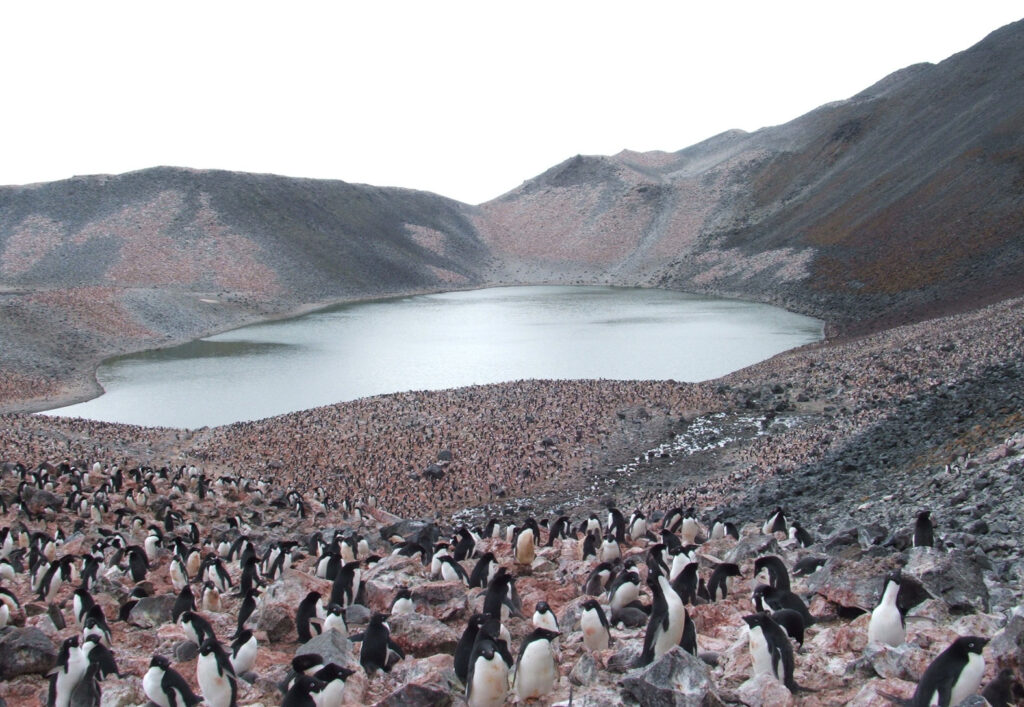
Satellite images have been used for decades to document geological changes and environmental disasters, but ecologist and 2019 Blavatnik National Awards Laureate in Life Sciences, Heather Lynch, is one of the few to probe the database in search of penguin guano. She opened the symposium with the story of how the Landsat satellite program enabled a surprise discovery of several of Earth’s largest colonies of Adélie penguins, a finding that has ushered in a new era of insight into these iconic Antarctic animals.
Steady streams of high quality spatial and temporal data regularly support environmental science. In contrast, Lynch noted that wildlife biology has advanced so slowly that many field techniques “would be familiar to Darwin.” Collecting information on animal populations, including changes in population size or migration patterns, relies on arduous and imprecise counting methods. The quest for alternative ways to track wildlife populations—in this case, Antarctic penguin colonies—led Lynch to develop a machine learning algorithm for automated identification of penguin guano in high resolution commercial satellite imagery, which can be combined with lower resolution imagery like that coming from NASA’s Landsat program. Pairing measurements of vast, visible tracts of penguin guano—the excrement colored bright pink due to the birds’ diet—with information about penguin colony density yields near-precise population information. The technique has been used to survey populations in known penguin colonies and enabled the unexpected discovery of a “major biological hotspot” in the Danger Islands, on the tip of the Antarctic Peninsula. This Antarctic Archipelago is so small that it is doesn’t appear on most maps of the Antarctic continent, yet it hosts one of the world’s largest Adélie penguin hotspots.
Satellite images of the pink stains of Antarctic penguin guano have been used to identify and track penguin populations.
Lynch and her colleagues are developing new algorithms that utilize high-resolution drone and satellite imagery to create centimeter-scale, 3D models of penguin terrain. These models feed into detailed habitat suitability and population-tracking analyses that further basic research and can even influence environmental policy decisions. Lynch noted that the discovery of the Danger Island colony led to the institution of crucial environmental protections for this region that may have otherwise been overlooked. “Better technology actually can lead to better conservation,” she said.
Listening to the Environment with Seismic Waves
The study of earthquakes has dominated seismology for decades, but new analyses of seismic wave activity are broadening the field. “The Earth is never at rest,” said Lucia Gualtieri, 2018 Blavatnik Regional Awards Finalist, while reviewing a series of non-earthquake seismograms that show constant, low-level vibrations within the Earth. Long discarded as “seismic noise,” these data, which comprise more than 90% of seismograms, are now considered a powerful tool for uniting seismology, atmospheric science, and oceanography to produce a holistic picture of the interactions between the solid Earth and other systems.
In addition to earthquakes, events such as hurricanes, typhoons, and landslides are reflected in the seismic record.
Nearly every environmental process generates seismic waves. Hurricanes, typhoons, and landslides have distinct vibrational patterns, as do changes in river flow during monsoons and “glacial earthquakes” caused by ice calving events. Gualtieri illustrated how events on the surface of the Earth are reflected within the seismic record—even at remarkably long distances—including a massive landslide in Alaska detected by a seismic sensor in Massachusetts. Gualtieri and her collaborators are tapping this exquisite sensitivity to create a new generation of tools capable of measuring the precise path and strength of hurricanes and tropical cyclones, and for making predictive models of cyclone strength and behavior based on decades of seismic data.
Improving Crop Yield Using Unmanned Aerial Systems and Field Phenomics
Plant breeders like Seth Murray, 2019 Blavatnik National Awards Finalist, are uniquely attuned to the demands a soaring global population places on the planet’s food supply. Staple crop yields have skyrocketed thanks to a century of advances in breeding and improved management practices, but the pressure is on to create new strategies for boosting yield while reducing agricultural inputs. “We need to grow more plants, measure them better, use more genetic diversity, and create more seasons per year,” Murray said. It’s a tall order, but one that he and a transdisciplinary group of collaborators are tackling with the help of a fleet of unmanned aerial systems (UAS), or drones.
Drones facilitate frequent measurement of plant height, revealing variations between varietals early in the growth process.
Genomics has transformed many aspects of plant breeding, but phenotypic, rather than genotypic, information is more useful for predicting crop yield. Using drones equipped with specialized equipment, Murray has not only automated many of the time-consuming measurements critical for plant phenotyping, such as tracking height, but has also identified novel metrics that can accelerate the development of new varietals. Spectral signatures obtained via drone can be used to identify top-yielding varietals of maize even before the plants are fully mature. Phenotypic features distilled from drone images are also being used to determine attributes such as disease resistance, which directly influence crop management. Murray’s team is modeling the influence of thousands of phenotypes on overall crop performance, paving the way for true phenomic selection in plant breeding.
Quantum mechanics underlies the technologies of modern computing, including transistors and integrated circuits.
Most quantum insights are derived from studies of single quantum particles, but understanding interactions between many particles is necessary for the development of devices such as quantum computers.
Atoms cooled to one billionth of a degree above absolute zero obey the laws of quantum mechanics, and can be used as quantum simulators to study many-particle interactions.
Atomic Clocks: From Timekeepers to Quantum Computers
The discovery of quantum mechanics opened “a new chapter in human knowledge,” said 2019 Blavatnik National Awards Laureate in Physical Sciences & Engineering, Ana Maria Rey, describing how the study of quantum phenomena has revolutionized modern computing, telecommunications, and navigation systems. Transistors, which make up integrated circuits, and lasers, which are the foundation of the atomic clocks that maintain the precision of satellites used in global positioning systems, all stem from discoveries about the nature of quantum particles.
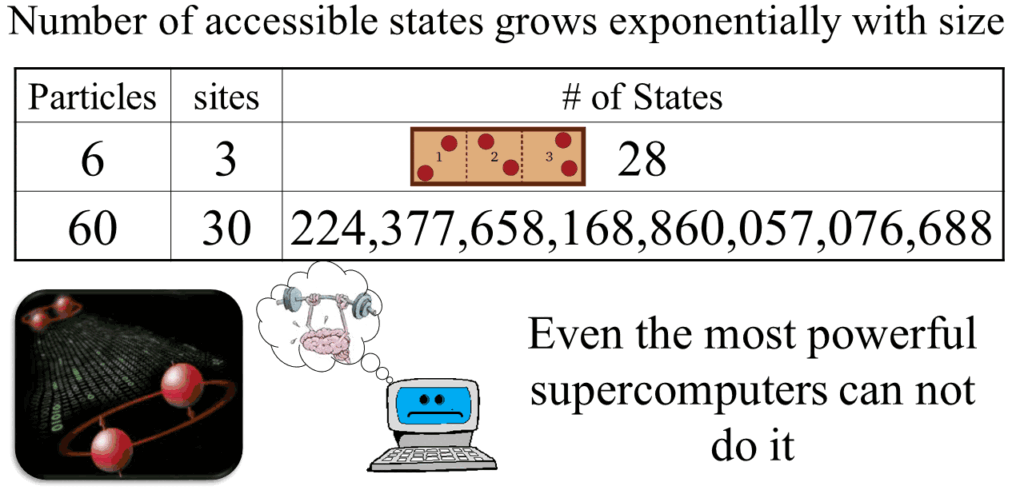
The next generation of innovations—such as room temperature superconductors and quantum computers—will be based on new quantum insights, and all of this hinges on our ability to study interactions between many particles in quantum systems. The complexity of this task is beyond the scope of even the most powerful supercomputers. As Rey explained, calculating the possible states for a small number of quantum particles (six, for example) is simple. “But if you increase that by a factor of just 10, you end up with a number of states larger than the number of stars in the known universe,” she said.
Calculating the number of possible states for even a small number of quantum particles is a task too complex for even the most powerful supercomputer.
Researchers have developed several experimental platforms to clear this hurdle and explore the quantum world. Rey shared the story of how her work developing ultra-precise atomic clocks inadvertently led to one experimental platform that is already demystifying some aspects of quantum systems.
Atomic clocks keep time by measuring oscillations of atoms—typically in cesium atoms—as they change energy levels. Recently, Rey and her collaborators at JILA built the world’s most sensitive atomic clock using strontium atoms instead of cesium and using many more atoms that are typically found in these clocks. The instrument had the potential to be 1,000 times more sensitive than its predecessors, yet collisions between the atoms compromised its precision. Rey explained that by suppressing these collisions, their clock became “a window to explore the quantum world.” Within this framework, the atoms can be manipulated to simulate the movement and interactions of quantum particles in solid-state materials. Rey reported that this clock-turned-quantum simulator has already generated new findings about phenomena including superconductivity and quantum magnetism.
The human gut is colonized by trillions of bacteria that are critical for host health, yet may also be implicated in the development of diseases including colorectal cancer.
For over a decade, chemists have sought to resolve the structure of a genotoxin called colibactin, which is produced by a strain of E. coli commonly found in the gut microbiome of colorectal cancer patients.
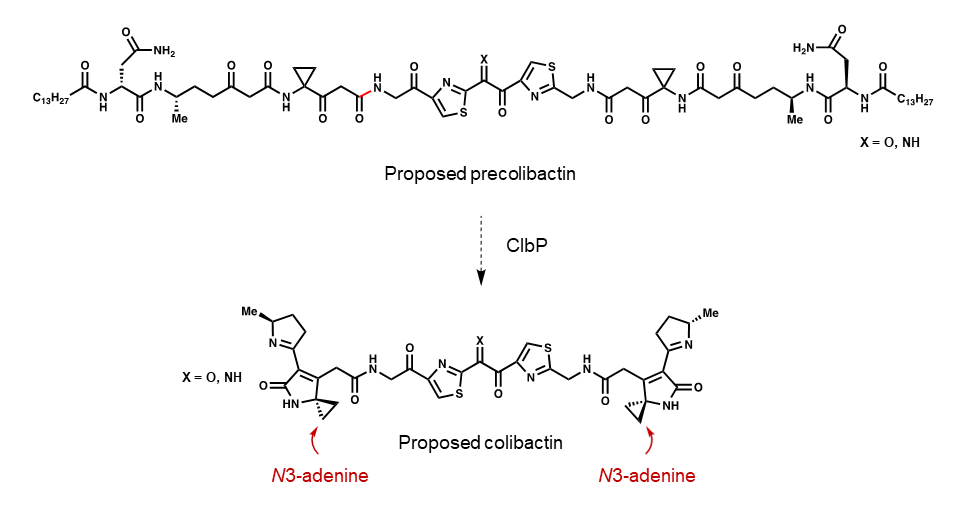
By studying the specific type of DNA damage caused by colibactin, researchers found a trail of clues that led to a promising candidate structure of the colibactin molecule.
Gut Reactions: Understanding the Chemistry of the Human Gut Microbiome
The composition of the trillions-strong microbial communities that colonize the mammalian intestinal tract is well characterized, but a deeper understanding of their chemistry remains elusive. Emily Balskus, the 2019 Blavatnik National Awards Laureate in Chemistry, described her lab’s hunt for clues to solve one chemical mystery of the gut microbiome—a mission that could have implications for colorectal cancer (CRC) screening and early detection.
Some commensal E. coli strains in the human gut produce a genotoxin called colibactin. When cultured with human cells, these strains cause cell cycle arrest and DNA damage, and studies have shown increased populations of colibactin-producing E. coli in CRC patients. Previous studies have localized production of colibactin within the E. coli genome and hypothesized that the toxin is synthesized through an enzymatic assembly line. Yet every attempt to isolate colibactin and determine its chemical structure had failed.
Balskus’ group took “a very different approach,” in their efforts to discover colibactin’s structure. By studying the enzymes that make the toxin, the team uncovered a critical clue: a cyclopropane ring in the structure of a series of molecules they believed could be colibactin precursors. This functional group, when present in other molecules, is known to damage DNA, and its detection in the molecular products of the colibactin assembly line led the researchers to consider it as a potential mechanism of colibactin’s genotoxicity.
In collaboration with researchers at the University of Minnesota School of Public Health, Balskus’ team cultured human cells with colibactin-producing E. coli strains as well as strains that cannot produce the toxin. They identified and characterized the products of colibactin-mediated DNA damage. “Starting from the chemical structure of these DNA adducts, we can work backwards and think about potential routes for their production,” Balskus explained.
A proposed structure for the genotoxin colibactin, which is associated with colorectal cancer, features two cyclopropane rings capable of interacting with DNA to generate interstrand cross links, a type of DNA damage.
Further studies revealed that colibactin triggers a specific type of DNA damage that requires two reactive groups—likely represented by two cyclopropane rings in the final toxin structure—a pivotal discovery in deriving what Balskus believes is a strong candidate for the true colibactin structure. Balskus emphasized that this work could illuminate the role of colibactin in carcinogenesis, and may lead to cancer screening methods that rely on detecting DNA damage before cells become malignant. The findings also have implications for understanding microbiome-host interactions. “These studies reveal that human gut microbiota can interact with our genomes, compromising their integrity,” she said.
The chemical industry is a major producer of carbon dioxide, and efforts to create more efficient and sustainable chemical processes are often stymied by cost or scale.
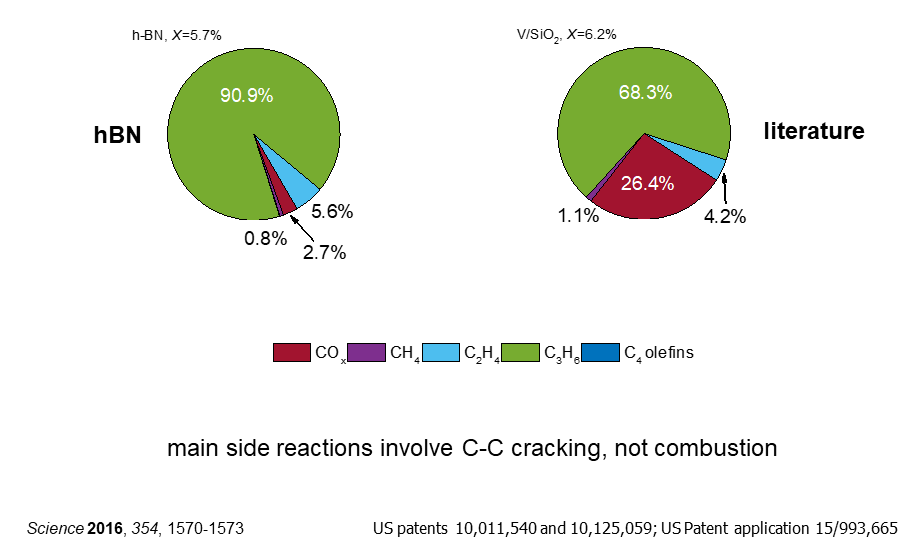
Boron nitride is not well known as a catalyst, yet experiments show it is highly efficient at converting propane to propylene—one of the most widely used chemical building blocks in the world.
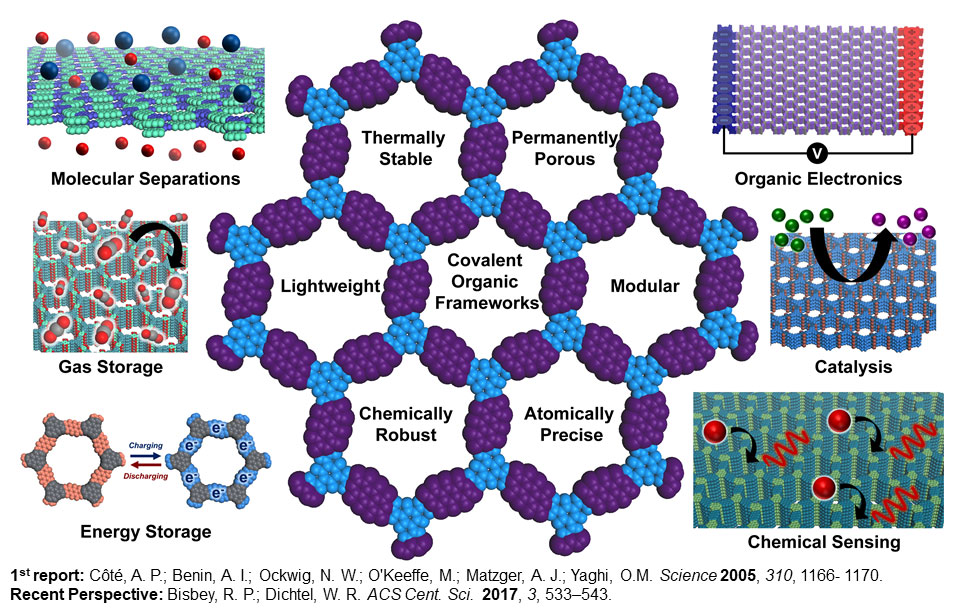
Two-dimensional polymers called covalent organic frameworks (COFs) can be used for water filtration, energy storage, and chemical sensing.
Until recently, researchers have struggled to control and direct COF formation, but new approaches to COF synthesis are advancing the field.
Boron Nitride: A Surprising Catalyst
Industrial chemicals “define our standard of living,” said Ive Hermans, 2019 Blavatnik National Awards Finalist, before explaining that nearly 96% of the products used in daily life arise from processes requiring bulk chemical production. These building block molecules are produced at an astonishingly large scale, using energy-intensive methods that also produce waste products, including carbon dioxide.
Despite pressure to reduce carbon emissions, the pace of innovation in chemical production is slow. The industry is capital-intensive — a chemical production plant can cost more than $2 billion—and it can take a decade or more to develop new methods of synthesizing chemicals. Concepts that show promise in the lab often fail at scale or are too costly to make the transition from lab to plant. “The goal is to come up with technologies that are both easily implemented and scalable,” Hermans said.
Catalysts are a key area of interest for improving chemical production processes. These molecules bind to reactants and can boost the speed and efficiency of chemical reactions. Hermans’ research focuses on catalyst design, and one of his recent discoveries, made “just by luck,” stands to transform production of one of the most in-demand chemicals worldwide—propylene.
Historically, propylene was one product (along with ethylene and several others) produced by “cracking” carbon–carbon bonds in naphtha, a crude oil component that has since been replaced by ethane (from natural gas) as a preferred starting material. However, ethane yields far less propylene, leaving manufacturers and researchers to seek alternative methods of producing the chemical.
Boron nitride catalyzes a highly efficient conversion of propane to propylene.
Enter boron nitride, a two-dimensional material whose catalytic properties took Hermans by surprise when a student in his lab discovered its efficiency at converting propane, also a component of natural gas, to propylene. Existing methods for running this reaction are endothermic and produce significant CO2. Boron nitride catalysts facilitate an exothermic reaction that can be conducted at far cooler temperatures, with little CO2 production. Better still, the only significant byproduct is ethylene, an in-demand commodity.
Hermans sees this success as a step toward a more sustainable future, where chemical production moves “away from a linear economy approach, where we make things and produce CO2 as a byproduct, and more toward a circular economy where we use different starting materials and convert CO2 back into chemical building blocks.”
Polymerization in Two Dimensions
William Dichtel, a Blavatnik National Awards Finalist in 2017 and 2019, offered an update from one of the most exciting frontiers in polymer chemistry—two-dimensional polymerization. The synthetic polymers that dominate modern life are comprised of linear, repeating chains of linked building blocks that imbue materials with specific properties. Designing non-linear polymer architectures requires the ability to precisely control the placement of components, a feat that has challenged chemists for a decade.
Dichtel described the potential of a class of polymers called covalent organic frameworks, or COFs—networks of polymers that form when monomers are polymerized into well-defined, two-dimensional structures. COFs can be created in a variety of topologies, dictated by the shape of the monomers that comprise it, and typically feature pores that can be customized to perform a range of functions. These materials hold promise for applications including water purification membranes, energy and gas storage, organic electronics, and chemical sensing.
Dichtel explained that COF development is a trial and error process that often fails, as the mechanisms of their formation are not well understood. “We have very limited ability to improve these materials rationally—we need to be able to control their form so we can integrate them into a wide variety of contexts,” he said.
Two-dimensional polymer networks can be utilized for water purification, energy storage, and many other applications, but chemists have long struggled to understand their formation and control their structure.
A breakthrough in COF synthesis came when chemist Brian Smith, a former postdoc in Dichtel’s lab, discovered that certain solvents allowed COFs to disperse as nanoparticles in solution rather than precipitating as powder. These particles became the basis for a new method of growing large, controlled crystalline COFs using nanoparticles as structural “seeds,” then slowly adding monomers to maximize growth while limiting nucleation. “This level of control parallels living polymerization, with well-defined initiation and growth phases,” Dichtel said.
More recently, Dichtel’s group has made significant advances in COF fabrication, successfully casting them into thin films that could be used in membrane and filtration applications.
Further Readings
Hermans
Zhang Z, Jimenez-Izal E, Hermans I, Alexandrova AN.
The 80 subtypes of retinal ganglion cells each encode different aspects of vision, such as direction and motion.
The “preferences” of these cells were believed to be hard-wired, yet experiments show that retinal ganglion cells can be reprogrammed by exposure to repetitive stimuli.
Sodium ion channels control electrical signaling in cells of the heart, muscles, and brain, and have long been drug targets due to their connection to pain signaling.
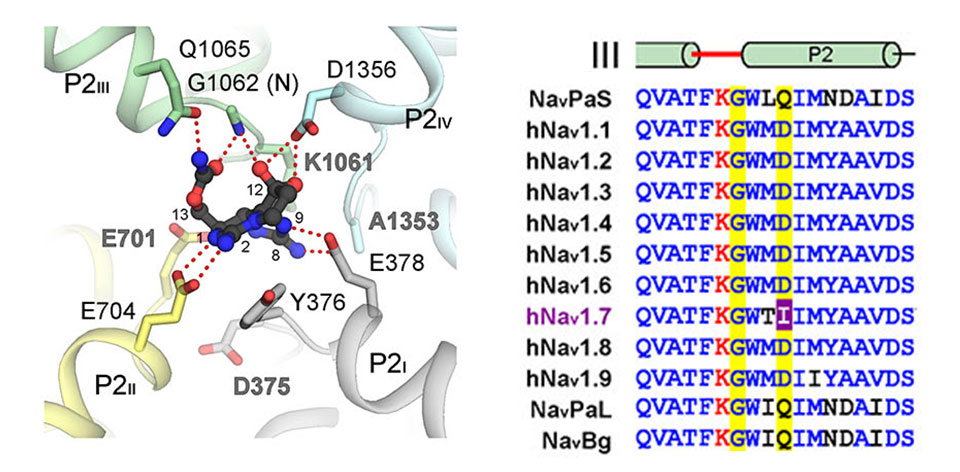
Cryo-electron microscopy has allowed researchers to visualize Nav 7, a sodium ion channel implicated in pain syndromes, and to identify molecules that interfere with its function.
Retinal Computations: Recalculating
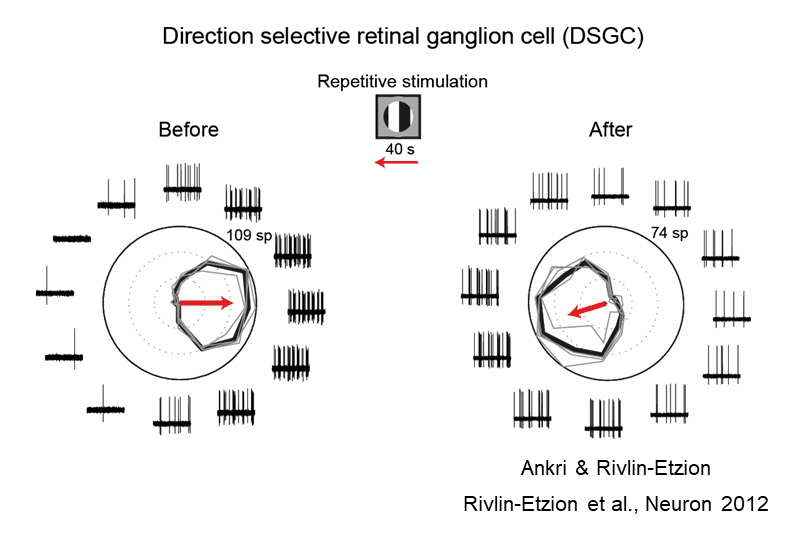
The presentation from Michal Rivlin, the Life Sciences Laureate of the 2019 Blavatnik Awards in Israel, began with an optical illusion, a dizzying exercise during which a repetitive, unidirectional pattern of motion appeared to rapidly reverse direction. “You probably still perceive motion, but the image is actually stable now,” Rivlin said, completing a powerful demonstration of the action of direction-sensitive retinal ganglion cells (RGCs), whose mechanisms she has studied for more than a decade. The approximately 80 subtypes of RGCs each encode a different aspect, or modality of vision—motion, color, and edges, as well as perception of visual phenomena such as direction. These modalities are hard-wired into the cells and were thought to be immutable—a retinal ganglion cell that perceived left-to-right motion was thought incapable of responding to visual signals that move right-to-left. Rivlin’s research has challenged not only this notion, but also many other beliefs about the function and capabilities of the retina.
Rather than simply capturing discrete aspects of visual information like a camera and relaying that information to the visual thalamus for processing, the cells of the retina actually perform complex processing functions and display a surprising level of plasticity. Rivlin’s lab is probing both the anatomy and functionality of various types of retinal ganglion cells, including those that demonstrate selectivity, such as a preference for movement in one direction or attunement to increases or decreases in illumination. By exposing these cells to various repetitive stimuli, Rivlin has shown that the selectivity of RGCs can be reversed, even in adult retinas.
Direction-selective retinal ganglion cells that prefer left-to-right motion (Before) can change their directional preference (After) following a repetitive visual stimulus.
These dynamic changes in cells whose preferences were believed to be singular and hard-wired have implications not just for understanding retinal function but for understanding the physiological basis of visual perception. Stimulus-dependent changes in the coding of retinal ganglion cells also have downstream impacts on the visual thalamus, where retinal signals are processed. This unexpected plasticity in retinal cells has led Rivlin and her collaborators to investigate the possibility that the visual thalamus and other parts of the visual system might also display greater plasticity than previously believed.
Targeting Sodium Channels for Pain Treatment
Nature’s deadliest predators may seem an unlikely inspiration for developing new analgesic drugs, but as Nieng Yan, 2019 Blavatnik National Awards Finalist, explained, the potent toxins of some snails, spiders, and fish are the basis for research that could lead to safer alternatives to opioid medications.
Voltage-gated ion channels are responsible for electrical signaling in cells of the brain, heart, and skeletal muscles. Sodium channels are one of many ion channel subtypes, and their connection to pain signaling is well documented. Sodium channel blockers have been used as analgesics for a century, but they can be dangerously indiscriminate, inhibiting both the intended channel as well as others in cardiac or muscle tissues. The development of highly selective small molecules capable of blocking only channels tied to pain signaling seemed nearly impossible until two breakthroughs—one genetic, the other technological—brought a potential path for success into focus.
A 2006 study of families with a rare genetic mutation that renders them fully insensitive to pain turned researchers’ focus to the role of the gene SCN9A, which codes for the voltage-gated sodium ion channel Nav 1.7, in pain syndromes. Earlier studies showed that overexpression of SCN9A caused patients to suffer extreme pain sensitivity, and it was now clear that loss of function mutations resulted in the opposite condition.
A powerful natural toxin derived from corn snails blocks the pore of a voltage-gated sodium channel, halting the flow of ions and inhibiting the initiation of an action potential.
As Yan explained, understanding this channel required the ability to resolve its structure, but imaging techniques available at that time were poorly suited to large, membrane-bound proteins. With the advent of cryo-electron microscopy, Yan and other researchers have not only resolved the structure of Nav 1.7, but also characterized small molecules—mostly derived from animal toxins—that precisely and selectively interfere with its function. Developing synthetic drugs based on these molecules is the next phase of discovery, and it’s one that may happen more quickly than expected. “When I started my lab, I thought resolving this protein’s structure would be a lifetime project, but we shortened it to just five years,” said Yan.
A novel approach to developing machine learning algorithms has improved applications for non-linear datasets.
Neural networks can now be used for complex predictive tasks, including forecasting polypharmacy side effects.
5G wireless networks will expand the capabilities of internet-connected devices, providing dramatically faster data transmission and increased reliability.
Tools used to design wireless networks can also be used to understand vulnerabilities in the design of online platforms and social networks, particularly as it pertains to user privacy and data anonymization.
Machine Learning with Networks
“For the first time in history, we are using computers to process data at scale to gain novel insights,” said Jure Leskovec, a Blavatnik National Awards Finalist in 2017, 2018, and 2019, describing one aspect of the digital transformation of science, technology, and society. This shift, from using computers to run calculations or simulations to using them to generate insights, is driven in part by the massive data streams available from the Internet and internet-connected devices. Machine learning has catalyzed this transformation, allowing researchers to not only glean useful information from large datasets, but to make increasingly reliable predictions based on it. Just as new imaging techniques reveal previously unknown structures and phenomena in biology, astronomy, and other fields, so too are big data and machine learning bringing previously unobservable models, signals, and patterns to the surface.
This “new paradigm for discovery” has limitations, as Leskovec explained. Machine learning has advanced most rapidly in areas where data can be represented as simple sequences or grids, such as computer vision, image analysis, and speech processing. Analysis of more complex datasets—represented by networks rather than linear sequences—was beyond the scope of neural networks until recently, when Leskovec and his collaborators approached the challenge from a different angle.
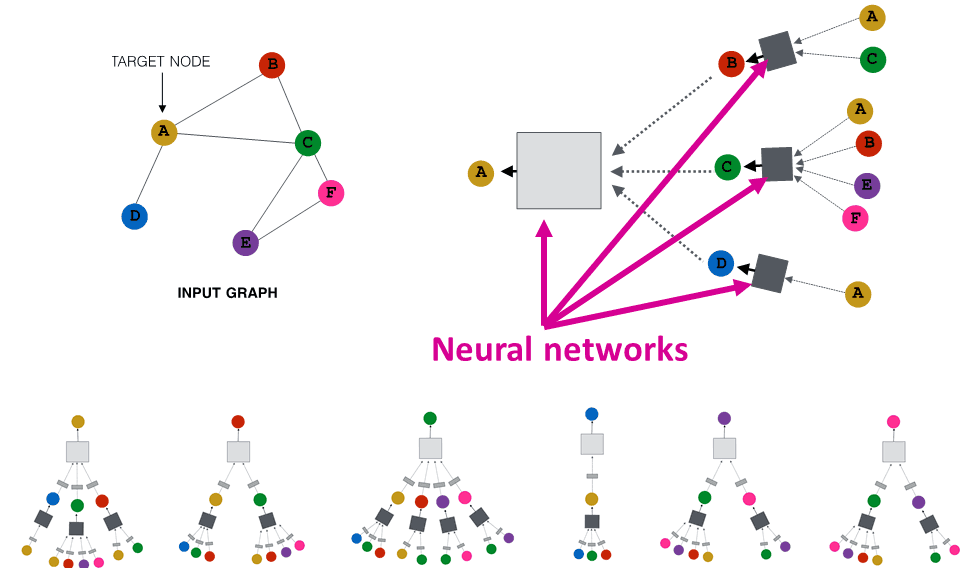
The team considered networks as computation graphs, recognizing that the key to making predictions was understanding how information propagates across the network. By training each node in the network to collect information about neighboring nodes and aggregating the resulting data, they can use node-level information to make predictions within the context of the entire network.
Each node within a network collects information from neighboring nodes. Together, this information can be used to make predictions within the context of the network as a whole.
Leskovec shared two case studies demonstrating the broad applicability of this approach. In healthcare, a neural network designed by Leskovec is identifying previously undocumented side effects from drug-drug interactions. Each network node represents a drug or a protein target of a drug, with links between the nodes emerging based on shared side effects, protein targets, and protein-protein interactions. This type of polydrug side effects analysis is infeasible through clinical trials, and Leskovec is working to optimize it as a point-of-care tool for clinicians.
A similar system has been deployed on the online platform Pinterest, where Leskovec serves as Chief Scientist. It has improved the site’s ability to classify users’ preferences and suggest additional content. “We’re generalizing deep learning methodologies to complex data types, and this is leading to new frontiers,” Leskovec said.
Understanding and Engineering Communications Networks
Elza Erkip has never seen a slide rule. In two decades as a faculty researcher and electrical and computer engineer, Erkip, 2010 Blavatnik Awards Finalist, has corrected her share of misconceptions about her field, and about the role of engineering among the scientific disciplines. She joked about stereotypes portraying engineers—most of them men—wielding slide rules or wearing hard hats, but emphasized the importance of raising awareness about the real-life work of engineers. “Scientists want to understand the universe, but engineers use existing scientific knowledge to design and build things,” she explained. “We contribute to discovery, but mostly we want to solve problems, to find solutions that work in the real world.”
Erkip focuses on one of the most impactful areas of 21st century living—wireless communication—and the ever-evolving suite of technologies that support it. She reviewed the rapid progression of wireless device capabilities, from phones that featured only voice calling and text messaging, through the addition of Wi-Fi capability and web browsing, all the way to the smartphones of today, which boast more computing power than the Apollo 11 spacecraft that landed on the moon. She described the next revolution in wireless—5G networks and devices—which promises higher data rates and significant increases in speed and reliability. Tapping the millimeter-wave bands of the electromagnetic spectrum, 5G will rely on different wireless architectures featuring massive arrays of small antennae, which are better suited to propagating shorter wavelengths. The increased bandwidth will enable many more devices to come online. “It won’t just be humans communicating—we’ll have devices communicating with each other,” Erkip said, describing the future connectivity between robots, autonomous cars, home appliances, and sensors embedded in transportation, manufacturing, and industrial equipment.
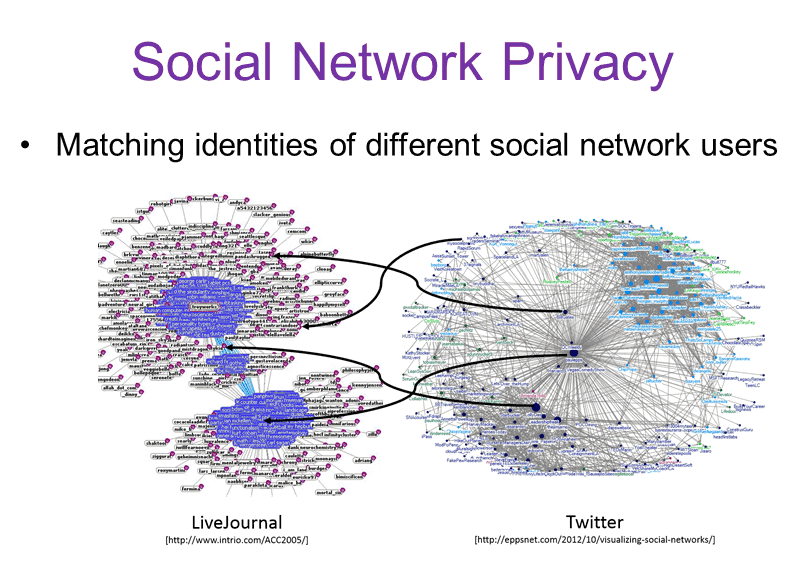
Despite efforts to anonymize data, many social media sites and online databases remain vulnerable to efforts to match users’ identities across platforms.
Erkip also discussed the application of tools used to understand and build wireless networks to gain insight into privacy issues within social networks. De-anonymization of user data has long plagued online platforms. Studies have shown that it’s often possible to identify and match users across multiple social platforms or databases using publicly available information—a breach that has greater implications for a database of health or voting records than it does for a consumer-oriented site such as Netflix. Erkip is working to understand the fundamental properties of these networks to elucidate the factors that predispose them to de-anonymization attacks.
IEEE International Symposium on Information Theory. 2018.
Materials Science
Speakers
Chiara Daraio Caltech
Liangbing Hu University of Maryland, College Park
Highlights
Computer-aided manufacturing is enabling researchers to design materials with precisely tuned properties, such as responsiveness to light, temperature, or moisture.
Structured materials can mimic robots or machines, changing shape and form repeatedly in the presence of various stimuli.
Ultra-strong, lightweight wood-based materials made of nanocellulose fibers may one day resolve some of the world’s most pressing challenges in water, energy and sustainability, replacing transparent plastic packaging, window glass, and even steel and other alloys in vehicles and buildings.
Mechanics of Robotic Matter
Chiara Daraio’s work challenges the traditional definition of words like material, structure, and robot. Working at the intersection of physics, materials science, and computer science, she designs materials with novel properties and functionalities, enabled by computer-aided design and 3D fabrication. Rather than considering a material as the foundation for assembling a structure, Daraio, 2019 Blavatnik National Awards Finalist, designs materials with intricate structures in unique and complex geometries.
Daraio demonstrated a series of responsive materials—those that morph in the presence of stimuli such as temperature, light, moisture, or salinity. In their simplest forms, these materials change shape—a piece of heat-responsive material folds and unfolds as air temperature changes, or a leaf-shaped hydro-sensitive material opens and closes as it transitions from wet to dry. In more complex forms, materials can display time-dependent responses, as shown in a video demonstration of a row of polymer strips changing shape at different rates, depending on their thickness. Daraio showed how computer-graphical approaches allow researchers to design a single material with different properties in different regions, allowing complex actuation in a time-dependent manner, such as a polymer “flower” with interconnecting leaves taking shape and a polymer “ribbon” slowly interweaving a knot.
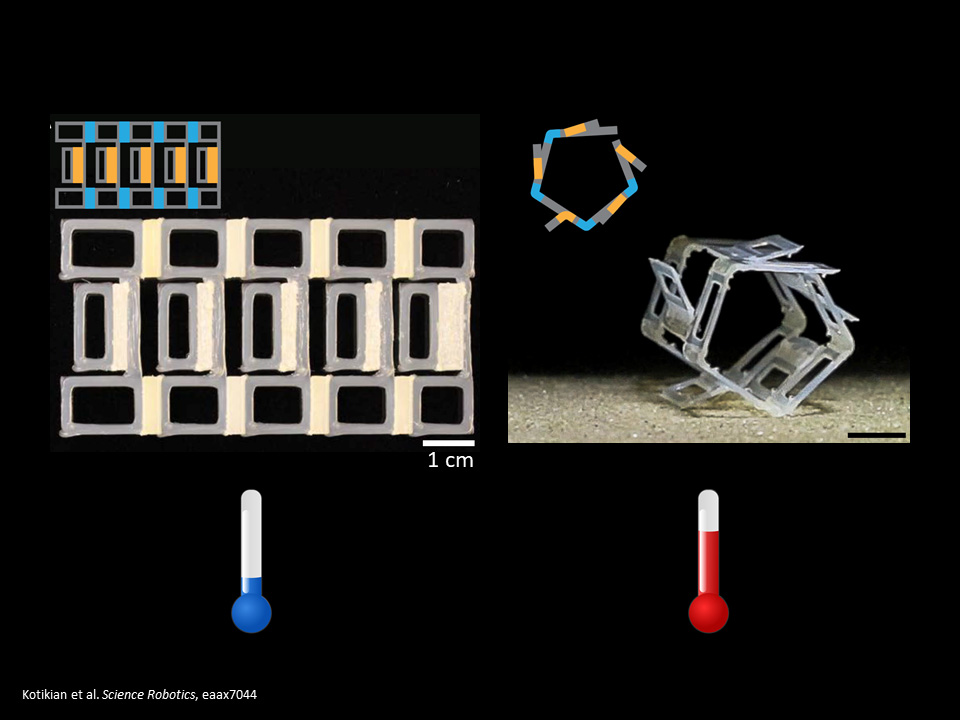
A thin foil elastomer comprised of materials with alternating temperature-sensitivity (heat and cold) folds up and “walks” across a table as the temperature varies.
Conventional ideas dictate that a robot is a programmable machine capable of completing a task. “But what if the material is the machine?” asked Daraio, showing the remarkable capabilities of a thin liquid crystal elastomer foil composed of one heat-sensitive and one cold-sensitive material. At room temperature, the foil is flat. Heat from a warm table causes it to curl upward, turn over, and “walk” forward. “As long as there’s some kind of external environmental stimulus, we can design a material that can repeatedly perform actions in time,” Daraio said. Similar responsive materials have been used in a self-deploying solar panel that [remove folds and] unfolds in response to heat.
Materials have been “the seeds of technological innovation” throughout human history, and Daraio believes that structured materials will enable new functionalities at the macroscale—for use in wearables such as helmets as well as in smart building technologies—and at the microscale, where responsive materials could be used for medical diagnostics or drug delivery.
Sustainable Applications for Wood Nanotechnologies
Wood, glass, plastic, and steel are among the most ubiquitous materials on Earth, and Liangbing Hu, 2019 Blavatnik National Awards Finalist, is rethinking them all. Inspired by the global need to develop sustainable materials, Hu turned to the most plentiful source of biomass on Earth— trees—to create a new generation of wood-based materials with astonishing properties. Hu relies on nanocellulose fibers, which can be engineered to serve as alternatives to commonly used unsustainable or energy-intensive materials.
Hu introduced a transparent film that could pass for plastic and can be used for packaging, yet is ten times stronger and far more versatile. This transparent nanopaper, made of nanocellulose fibers, could also be used as a display material in flexible electronics or as a photonic overlay that boosts the efficiency of solar cells by 30%.
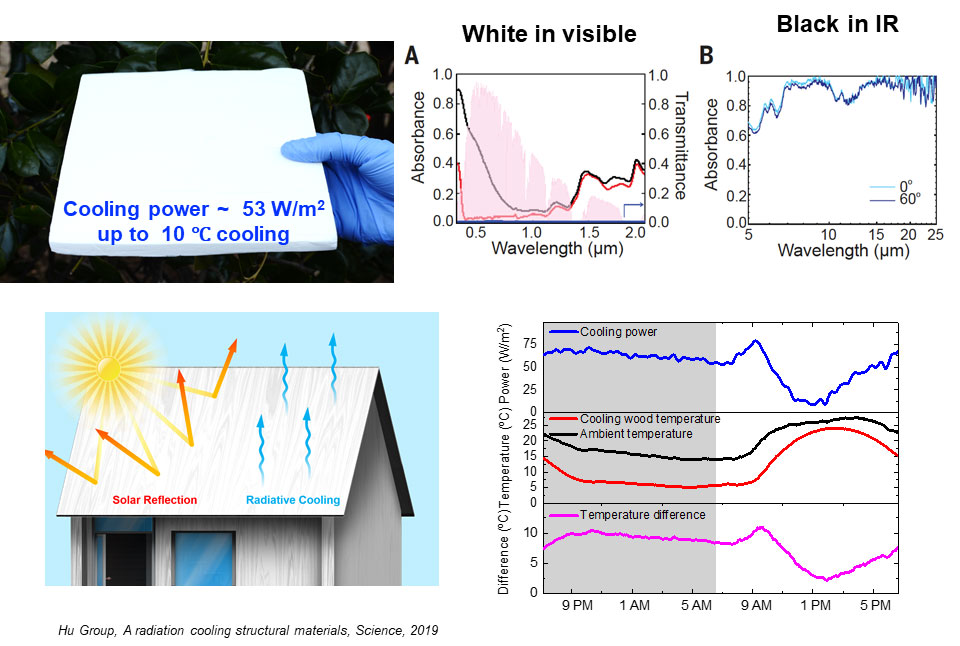
Hu has also tested transparent wood—a heavier-gauge version of nanopaper made by removing lignin from wood and injecting the channels with a clear polymer—as an energy-saving building material. More than half of home energy loss is due to poor wall insulation and leakage through window glass. By Hu’s calculations, replacing glass windows with transparent wood would also provide a six-fold increase in thermal insulation. Pressed, delignified wood has also proven to be a superior material for wall insulation. Used on roofs, it is a highly efficient means of passive cooling—the material absorbs heat and then re-radiates it, cooling the surface below it by about ten degrees.
White delignified wood is pressed to increase its strength. It can be used on roofs to passively cool homes by absorbing and re-radiating light, cooling the area below it by about ten degrees.
Comparisons of mechanical strength between wood and steel are almost laughable, unless the wood is another of Hu’s creations—the aptly named “superwood.” Delignified and compressed to align the nanocellulose fibers, even inexpensive woods become thinner and 10-20 times stronger. Superwood rivals steel in strength and durability, and could become a viable alternative to steel and other alloys in buildings, vehicles, trains, and airplanes. Sustainable sourcing would eliminate pollution and carbon dioxide associated with steel production, and its lightweight profile could drastically improve vehicle fuel efficiency.
Tumor cells are genetically heterogeneous, complicating efforts to sequence DNA from tumor tissue samples.
Techniques for isolating and sequencing single-cell samples have transformed the study of cancer genetics.
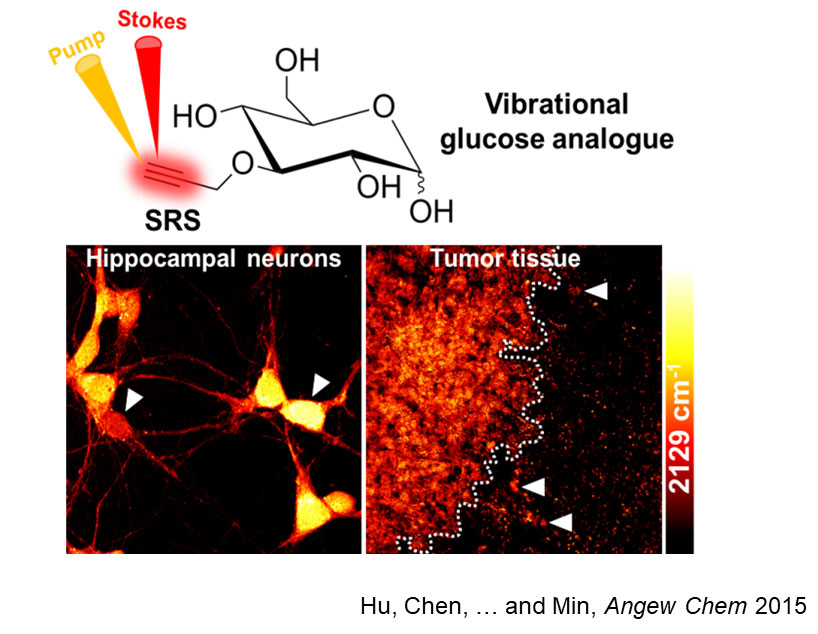
Stimulated Ramen scattering, a non-invasive imaging technique, can visualize processes including glucose uptake and fatty acid metabolism within living cells.
Single Cell Genomics: A Revolution in Cancer Biology
Nicholas Navin, 2019 Blavatnik National Awards Finalist, doesn’t use the word “revolution” lightly, but when it comes to the field of single-cell genomics and its impact on cancer research, he stands by the term. Over the past ten years, DNA sequencing of single tumor cells has led to major discoveries about the progression of cancer and the process by which cancer cells resist treatment.
Unlike healthy tissue cells, tumor cells are characterized by genomic heterogeneity. Samples from different areas of the same tumor often contain different mutations or numbers of chromosomes. This diversity has long piqued researchers’ curiosity. “Is it stochastic noise generated as tumor cells acquire different mutations, or could this diversity be important for resistance to therapy, invasion, or metastasis?” Navin asked.
Answering that question required the ability to do comparative studies of single tumor cells, a task that was long out of reach. DNA sequencing technologies historically required a large sample of genetic material—a tricky proposition when sampling a highly diverse population of tumor cells. Some mutations, which could drive invasion or resistance, may be present in just a few cells and thus not be represented in the results. Navin was part of the first team to develop a method for excising a single cancer cell from a tumor, amplifying the DNA, and producing an individualized genetic sequence. As amplification and sequencing methods have improved, so too have the insights gleaned from single-cell genomic studies, which Navin likens to “paleontology in tumors”—the notion that a sample taken at a single point in time can allow researchers to make inferences about tumor evolution.
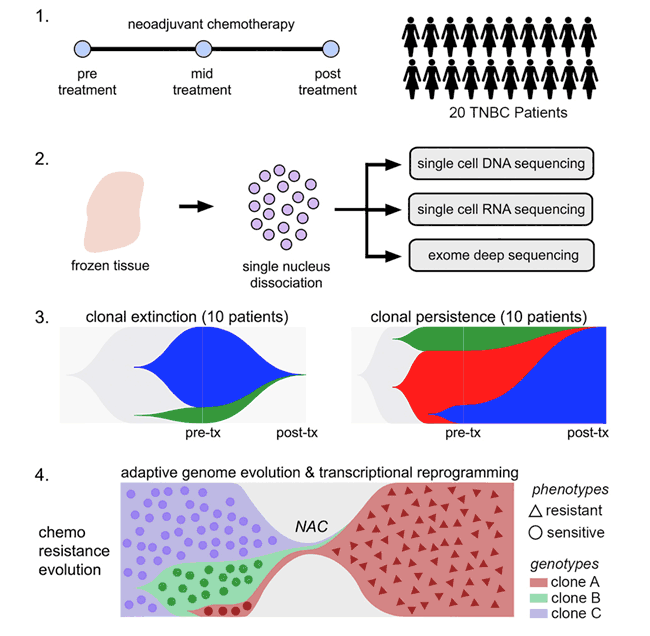
Single-cell genomic studies reveal that some cancer cells have innate mechanisms of resistance to chemotherapy, and undergo further transcriptional changes that enhance this resistance.
Single-cell studies have contradicted the idea of a stepwise evolution of cancer cells, with one mutation leading to another and ultimately tipping the scales toward malignancy. Instead, Navin’s studies reveal a punctuated evolution, whereby many cells simultaneously become genetically unstable. Longitudinal studies of single-cell samples in patients with triple-negative breast cancer are beginning to answer questions about how cancer cells evade treatment, showing that cells that survive chemotherapy have innate resistance, and then undergo further transcriptional changes during treatment, which increase resistance.
Translating these findings to the clinic is a longer-term process, but Navin envisions single-cell genomics will significantly impact strategies for targeted therapy, non-invasive monitoring, and early cancer detection.
Chemical Imaging in Biomedicine
Wei Min, a Blavatnik Awards Finalist in 2012 and 2019, concluded the session with a visually striking glimpse into the world of stimulated Raman scattering (SRS) microscopy. This noninvasive imaging technique provides both sub-cellular resolution and chemical information about living cells, while transcending some of the limitations of fluorescence-based optical microscopy. The probes used to tag molecules for fluorescent imaging can alter or destroy small molecules of interest, including glucose, lipids, amino acids, or neurotransmitters. Rather than using tags, SRS builds on traditional Raman spectroscopy, which captures and analyzes light scattered by the unique vibrational frequencies between atoms in biomolecules. The original method, first pioneered in the 1930s, is slow and lacks sensitivity, but in 2008, Min and others improved the technique.
SRS has since become a leading method for label-free visualization of living cells, providing an unprecedented window into cellular activities. Using SRS and a variety of custom chemical tags—“vibrational tags,” as Min described them—bound to biomolecules such as DNA or RNA bases, amino acids, or even glucose, researchers can observe the dynamics of biological functions. SRS has visualized glucose uptake in neurons and malignant tumors, and has been used to observe fatty acid metabolism, a critical step in understanding lipid disorders. Imaging small drug molecules is notoriously difficult, but Min reported the results of experiments using SRS to tag therapeutic drug molecules and study their activity within tissues.
Stimulated Raman scattering microscopy uses chemical tags to image small biological molecules in living cells. The technique can visualize cellular processes including glucose uptake in healthy cells and tumor cells.
A recent breakthrough in SRS technology involves pairing it with Raman dyes to break the “color barrier” in optical imaging. Due to the width of the fluorescent spectrum, labels are limited to five or six colors per sample, which prevents researchers from imaging many structures within a tissue sample simultaneously. Min has introduced a hybrid imaging technique that allows for super-multiplexed imaging—up to 10 colors in a single cell image—and utilizes a dramatically expanded palette of Raman frequencies that yield at least 20 distinct colors.
The Intelligence Revolution raises fundamental questions about what it means to be human.
Published October 1, 2019
By Jerry Hultin
Machine learning. Advanced manufacturing. Autonomous vehicles. Robotics. Drones. Welcome to the rise of smart machines! This revolution — let’s call it the Intelligence Revolution — offers the world benefit and harm at a scale exceeding that of the three earlier Industrial Revolutions. But it also raises fundamental questions about what it means to be human.
Will science and technology of the 21st century make us irrelevant? Will this lead to massive social unrest when smart machines take worker’s jobs? More fundamentally, how will a world operate where everyone may have the luxury of leisure, but not the economic resources to enjoy it?
In 2017, I chaired a study into the impact of artificial intelligence and automation on the Pentagon’s “business processes.” Based on what corporations in America have already achieved, we estimated that the U.S. Department of Defense could save nearly $60 billion a year by using the existing tools of automation and artificial intelligence.
The Growing Role of Automation in the Workplace
In addition, the quality and speed of decision-making in the Pentagon would be quantitatively better. Conversely we cautioned that the job losses and the redistribution of work functions would be huge. Thus the Pentagon would face a major challenge in finding jobs and providing training for the thousands of displaced employees.
According to a recent McKinsey Global Institute report on the growing role of automation in the workplace, at least 30 percent of the predominantly repetitive, routine and physical activities in 60 percent of current jobs can be automated. With efficiency gains and cost reduction of such magnitude the commercial, industrial, healthcare and construction industries will see AI and the automation that springs from AI, as compelling.
So how will the accelerating application of AI play out around the world? Here in the United States, the people most at risk include 14.7 million young workers, 11.5 million workers over age 50 and 11.9 million Hispanic and African-American workers. This accounts for more than 20 percent of the full-time employees in the United States. Amazon, which attributes the success of its one-day shipping to AI, is now committing some $700 million to retrain or up-skill its workers for the increasing technical demands of new jobs that will help them stay ahead of displacement by AI.
Automation Implications in India, Africa
But what about a country like India? With a population over 1.3 billion, nearly 750 million young people under the age of thirty, and an overall literacy rate of 71 percent, India is striving to radically increase jobs and reduce its level of poverty. But India may not get this chance if automated technologies supplant available jobs.
Much the same can be said about the future fate of Africa as its population of approximately 1 billion people grows to 2 billion by 2050. If Africa only has access to the educational and economic tools available today, the likelihood that it can match the growth rates of China and other Asian nations is remote.
The challenges presented by AI require a fundamental reworking of key components of how we learn and live. A recent Atlantic Monthly “conversation” between Henry Kissinger, Eric Schmidt and Dan Huttenlocher about the future of AI concluded with the following:
The three of us differ in the extent to which we are optimists about AI. But we agree that it is changing human knowledge, perception, and reality — and, in so doing, changing the course of human history. We seek to understand it and its consequences, and encourage others across disciplines to do the same.
Looking Ahead
Fortunately, the Academy under Ellis Rubinstein’s leadership has taken seriously the importance of increasing scientific and technological skills among young people around the world. Propelled by his concerns about their future prosperity and security, Ellis enlisted the business community, NGOs and philanthropists, in an unprecedented series of cooperative programs designed to increase skills. Through the collective action of our partners, benefactors and Members, we can lead a global conversation to better understand, develop and employ the power of AI.
Boosting STEM classes in public schools and retraining adults so they can enter STEM fields are only the first steps to closing the employment skills gap. Long-term solutions are much more complex.
Published October 1, 2019
By Alan Dove, PhD
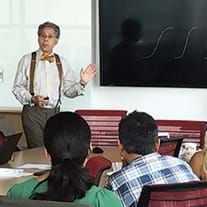
Mark Dembo Cornell University eCornell
In the 21st century, advances in science and technology drive much of the global economy, employing millions of people while causing fundamental shifts in the nature of work and the distribution of wealth. These changes have led many corporate leaders, academics and policy experts to warn of a widening “skills gap,” in which a lack of workers with the necessary training holds companies back and exacerbates inequity.
Traditional labor markets follow the law of supply and demand, where filling a position requires little more than offering adequate pay and benefits based on the number of workers able to do the job. When the employer pays the market price for a position, someone will take it. In some science and technology fields today, however, companies have trouble finding qualified employees at any price.
Policymakers and educators have offered blanket solutions for the problem, ranging from efforts to boost science, technology, engineering and math (STEM) classes in public schools, to retraining skilled adults looking to change fields. However, discussions with subject experts reveal that the reality of the skills gap is complex, and suffused with thorny geographic, economic and political challenges.
Serfs Up
The U.S. unemployment rate, often cited as a major indicator of economic health, has been falling since 2010 and now hovers below four percent. Beneath that rosy figure hides a troubling reality, with huge swaths of the population in precarious, low-paying jobs.
“The people at the bottom of the skills spectrum have experienced wage stagnation and lower mobility, while the people in high skill jobs have seen more job opportunities and … great upward mobility,” says Marcela Escobari, Senior Fellow in Global Economy at the Brookings Institute in Washington, D.C.
The skills gap lies at the core of this bifurcation; educated, skilled workers, especially in science and technology fields, enjoy expanding opportunities and growing wages, while less-skilled individuals see their options narrowing and wages shrinking. Advances in automation promise to make the problem worse, as computers and robots replace mostly low-skilled workers. Geography also influences this trend, with most of the high-skill, high-paying jobs concentrated in a handful of major cities.
Drawing on large databases of employment and social trends, Escobari and her colleagues have identified the factors that could drive a more broad-based form of economic growth. Brookings is now producing a series of reports based on their findings, to help regions address not only the skills gap but the broader social and economic forces that exacerbate it.
“For your low-wage workers to be able to take advantage of opportunities, [they need] affordable housing, accessible transport, [and] childcare,” says Escobari. Most important, “cities need thriving industries that create opportunities for upward mobility” adds Escobari.
CEOs: The Skills Gap is Big Problem
Even with the basic services in place, training and re-training workers for fast-evolving businesses will require a major change in tactics. One recent survey found that the vast majority of CEOs say the skills gap is a big problem for them, but few have invested in training programs to address it.
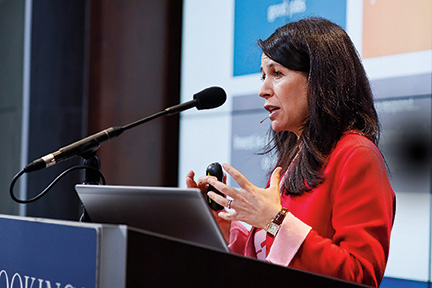
Brookings Center for Universal Education Senior Fellow Marcela Escobari presents her May 2019 report “Growing Cities that Work for All: A Capability-based Approach to Regional Economic Development” at the 2019 Building the Workforce of the Future: Resilient People and Places symposium. Photo: Brookings
Companies that do implement training programs often see their workers poached by competitors who didn’t have to make that investment. Escobari contrasts that with the situation in many European countries, where strong unions and labor regulations encourage companies to collaborate on training and building the pipeline of talent, “then even when people move from company to company, they all benefit from having more highly skilled and technically able people.”
With 44 percent of the American workforce now in low-wage jobs, the problem may be coming to a head.
“People are thinking about this because we are seeing the repercussions not only in increased inequality, and financial precariousness of low wage workers, but also in the political sphere,” says Escobari.
The Express Train
That anger is likely to get worse when the current economic boom reaches its inevitable end. “It’s sort of the calm before the storm, because you have high employment, [but] as in any economic cycle, when that starts to go down you’re going to see a major transformation,” says Art Langer, director of the Columbia University Center for Technology Management in New York, N.Y. Langer, who also founded the job training nonprofit Workforce Opportunity Services (WOS), has been working on multiple fronts to close the skills gap.
Traditionally, students interested in science and technology have been encouraged to get college degrees rather than vocational certifications, but that’s now leaving some industries shorthanded.
“You have advanced manufacturing that is using all different types of scientific and computerized equipment, and there are huge skills gaps there,” says Langer.
Meanwhile, the best-trained white collar workers gravitate to trendy high-tech companies such as Google and Facebook, leaving insurers, banks and other traditional businesses short of skilled labor as they try to adopt more sophisticated technologies. The irony of these skills gaps is that Americans are attending college in record numbers, and racking up massive debts to do so.
Addressing the Skills Gap
Many graduate with degrees that haven’t prepared them for the jobs that are available. While many educators and policymakers focus on public schools and state universities to address the skills gaps, Langer doesn’t have much hope for that approach.
“Public institutions of higher education [are] controlled by political forces,” says Langer, adding that changes in legislatures and governorships often jerk policies and funding in different directions every few years. “This concept that somehow these institutions … are going to change themselves is a dream,” he says.
Instead, Langer advocates transforming the relationship between employers and job training programs. WOS, for example, works directly with companies to identify the skills they need, then finds and trains people for those positions. By focusing on underserved job seekers, including minorities, women and veterans, WOS is able to recruit eager, talented individuals who would otherwise be left out of highly skilled jobs. As that and other collaborative job training programs take off, Langer hopes more traditional educational institutions will adopt similar approaches.
The Gospel According to the Peter Principle
Some major universities are already working to boost their vocational training programs, especially online.
“Our focus is primarily on providing online certificate programs that are really focused on the working professionals [and] online professional development,” says Mark Dembo, director of corporate programs at Cornell University’s eCornell in Ithaca, N.Y. Dembo explains that eCornell works closely with major employers to determine industries’ current needs, and tailors programs to meet those needs.
That perspective reveals two major types of skills gaps. First, companies need increasing numbers of technically trained people to take on entry-level positions, especially jobs requiring data analysis and computer programming capabilities. The second gap, which has received less publicity, comes after those employees have advanced in their fields for a few years.
“What we hear quite often is ‘we’ve got people that have very strong technical backgrounds, [but] now I need them to lead teams,’” says Dembo, adding that many companies have “people that are strong technically, and then they get to a point of failure because they don’t have those softer skills” required to manage people.
More Technical Training
In particular, Dembo distinguishes between leadership and management skills. The former refers to the ability to influence people and unify teams around common goals, while the latter entails an understanding of budgeting, administration and group organization. To meet the growing need, eCornell and other online universities now offer programs to teach both. Conversely, Dembo says he also hears from established managers who need more technical training to be able to understand what their subordinates are doing.
The rising need for continuing education underscores another major trend in the labor market; companies want to hire lifelong learners.
“In today’s world you’re going to have to continue to adapt because the needs are going to change, of what’s needed in the labor market,” says Dembo. Faculty will also need to adapt, keeping ahead of trends in employers’ needs so they can continue teaching relevant knowledge and skills to their students.
With student loan debt in the U.S. now ballooning past $1.5 trillion, employers’ demand for lifelong learners is taking a heavy toll on their future and present employees. Though he declines to comment on the student loan issue, Dembo urges people to take careful stock of their skills and finances, and consider the return they expect to get from their educational investments.
Gaps in the Clouds
The ways technology firms respond to the skills gap reflect their unique needs, as well as a less appreciated aspect of the problem: geography. Companies outside major cities have been hit especially hard.
“We … consistently have to go outside of our area and outside of our state to source sufficient talent, credentials, experiences and diversity,” says Bill Avey, global head of personal systems services at Hewlett-Packard in Boise, Idaho.
As a major employer in Boise and a leading manufacturer of personal computers, HP faces an ongoing struggle to find and develop the skilled workers they need. The problem extends across the educational spectrum.
Almost half of Idaho children need remedial education as early as kindergarten to meet minimum standards, and many fail to thrive academically in later years. In response, Avey and leaders in other local companies have banded together to lobby Idaho’s deeply conservative politicians for solutions.
“Business leaders are the one group of folks that can credibly show up in the legislature and say … something as crazy as ‘we suggest you raise our taxes to spend more on education’” says Avey, adding that “it’s very different than a teacher’s union showing up.”
Expanding Access to Education
Boosting education budgets is only a partial solution, though. Even for companies in major metropolitan areas with access to top university graduates, science and technology businesses are changing and growing so fast that demand for skills vastly outstrips supply.
“The country produces about 60,000 computer scientists every year, whereas we’re seeing more than 700,000 technology jobs open,” says Obed Louissaint, vice president of talent at IBM in Armonk, N.Y.
The drastic expansion of artificial intelligence technology is one of the biggest drivers of the skill gap. Previously the domain of a handful of high-tech companies, AI is now considered indispensable in numerous industries.
“We have financial services firms, retailers and insurance companies who are all looking for people with AI skills or data science capability, (which) puts a strain on the available talent,” says Louissaint.
IBM is attacking the problem aggressively, with multiple initiatives to retrain many of the same groups targeted by Langer’s team: blue collar workers, veterans and women, who the company then places in rapidly expanding fields. Like others confronting the skills gap, Louissaint also emphasizes the need for workers to change their perspectives on education and training: “They should be thinking of learning … as a continuous journey.”
Deciding to make the leap from research to start-up doesn’t mean you have to leave your passion for science behind.
Published October 1, 2019
By Chenelle Bonavito Martinez
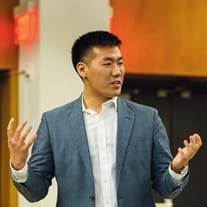
Sean Mehra Chief Strategy Officer and co-founder, HealthTap
The days of lifetime employment with one employer are long gone. Most people will have at minimum half a dozen jobs over a working lifetime and possibly two or three career paths. And just as many will try their hand at starting their own business. Unfortunately, small business statistics show that by the end of four years more than half of them will be gone.
But being a scientist may have a distinct advantage when deciding to be an entrepreneur. Forbes contributor and STEM consultant Anna Powers writes in a 2018 article titled One Scientific Principal Will Make You A Better Entrepreneur, that “…the process of entrepreneurship mirrors the process of innovation in science. A lot can be learned [about innovation and entrepreneurship] from science, which has formulated certain guidelines about the process of innovation. Perhaps that is why almost 30 percent of Fortune 50 CEOs are scientists.”
The key to easing the transition from employee to “boss” is recognizing how the skills you possess for one job, translate into another. This not only applies to a direct transfer of specific technical knowledge or soft skills like communication and collaboration, but also how certain skills specific to your current career, are the same as those you need to possess to become a successful entrepreneur.
What it Takes
So what does it take for a scientist to become an entrepreneur? Opinions vary, but mostly it starts with a question and a desire to make an impact. However, deciding to make the leap from research to start-up doesn’t mean you are leaving your passion for science behind.
Sean Mehra, Chief Strategy Officer and co-founder of HealthTap, a digital health company that enables convenient access to doctors, says, “People think of the decision to be an entrepreneur as a choice to leave your skills and knowledge as a scientist behind, when that’s not really the case.” Scientists are innovators and they can easily identify as entrepreneurs. Mehra cites several examples of skills developed in the lab that can be applied to starting a business.
“Writing grants to acquire funds for research is not much different than fundraising, corporate development and sales,” he says. “Conducting experiments is product R&D and market fit. If you have recruited postdocs to work in your lab and guided their work, then you have hired talent and managed a team. Publishing and presenting your research at conferences is pretty much like marketing your vision. And networking and connecting with colleagues in your field is no different than prospecting for business connections and talking to your customers.”
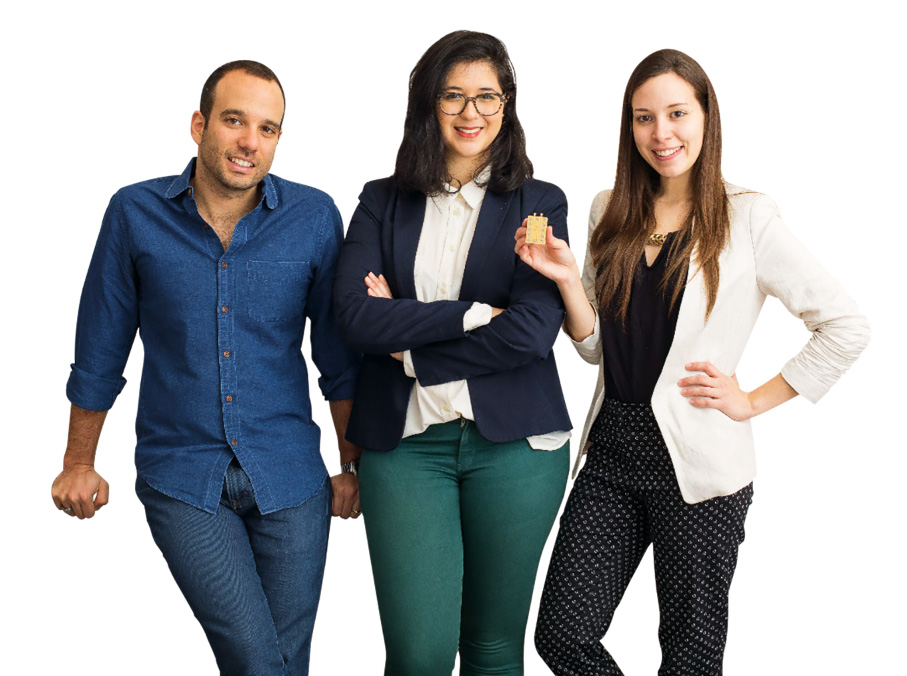
Myriam Sbeiti and Daniela Blanco, Co-founders of Sunthetics, met in school and as graduation approached saw an opportunity to launch a viable business. In 2018 they developed a more efficient and more sustainable electrochemical manufacturing path for a chemical intermediate of Nylon 6,6. The process uses electricity rather than heat to power the reaction in a way that uses 30 percent less raw materials and energy, reducing a variety of harmful emissions in the process.
Suntheics co-founders from left to right: Professor Miguel Modestino, Myriam Sbeiti, Daniela Blanco
Similar to the Scientific Method
In the future, Sbeiti and Blanco are planning to apply this electrochemical process to a variety of reactions, making the chemical industry green, one reaction at a time. Sbeiti reflects that a lot of the research and interviews conducted to figure out if their ideas were viable were very similar to the scientific method and scientific experiments, i.e. they created a hypothesis and then needed to validate it. The major difference was that they did not need to confirm their hypothesis through years of research, instead they needed to talk to potential customers to find the right fit.
As scientists and researchers themselves, both emphasized that failure was the hardest skill to master. “The chemical industry wasn’t really interested in our original idea and the fashion industry didn’t really see value.” After a round of customer interviews, they realized they were designing a product they thought the customer needed instead of the product the customer said they wanted. In addition, efficacy and cost were a customer priority so Sbeiti and Blanco pivoted their idea to develop a product that fit the market. The Sunthetics team is shaping up to make the impact that was envisioned after graduate school. In fact, Blanco continues to pursue her technology as part of her PhD research and “thinks of it like R&D.”
Entrepreneurship is definitely a “higher risk and higher reward” scenario says Mehra. Most traditional researchers typically have a lower risk tolerance than the average innovator or entrepreneur. It can be very uncomfortable for a trained researcher turned entrepreneur to accept failure and pivot away from their original idea. But Mehra says that “even if the original idea isn’t quite right, there is still a lot of good knowledge acquired through the process.”
Unlocking the “Why”
Unlocking the “why” and a desire to create impact at scale are drivers behind making the shift into entrepreneurship. While contemplating his own career path, Mehra reflects that “thinking about my passion for technology, I realized that technology has a way to scale and have a one-to-many impact on the world. I started to think about ways I could use my technology skills to help people on a global scale instead of, for example, treating patients one-at-a-time as a doctor.”
Sbeiti and Blanco also began their journey by observing their surroundings and asking why. These common traits make up what Clayton Christensen, the current Kim B. Clark Professor of Business Administration at the Harvard Business School of Harvard University, and his co-authors, call The Innovators DNA. After six years of studying innovative entrepreneurs, executives and individuals, they agree this common skill set is present in every innovative entrepreneur. Clayton et al. argue that if innovation can be developed through practice, then the first step on the journey to being more innovative is to sharpen the skills.
Studies of identical twins separated at birth indicate that one’s ability to think creatively comes one-third from genetics “that means that roughly two-thirds of our innovation skills come through learning — from first understanding the skill, then practicing it, and ultimately gaining confidence in our capacity to create,” says Clayton. The most important skill to practice is questioning. Asking “why” or “what if” can help strengthen the other skills and allow you to see a problem or opportunity from a different perspective.
Ted Cho StartupHoyas MED
A Search for Something That’s Never Been Done
Ted Cho, President of StartupHoyas MED, an organization dedicated to healthcare startups and innovators at Georgetown University, sees that skill in many of the innovators and entrepreneurs who are part of the StartupHoyas community. Like Drs. Jean-Marc Voyadzis and Hakim Morsli who created Amie, a “virtual surgical assistant” to help patients prepare for surgery and recovery, entrepreneurs often create their companies by observing and questioning their surroundings, identifying a problem, and developing a solution.
Cho says that “one of the most common pitfalls for entrepreneurs is building solutions without problems. Often times the most successful startups are those that are rooted in problems that the founders experienced firsthand. However, that doesn’t mean that you necessarily have to be an insider. Some of the most innovative ideas with the greatest potential to create impact have come from outsiders with fresh perspectives who aren’t locked into the conventions that seem to restrict many of the traditional players in the healthcare space.” While all of the innovators and entrepreneurs in the StartupHoyas community are focused on improving healthcare, not all are medical students. In fact, many are students and faculty from other areas of life sciences.
Starting one’s own company is much like scientific research — it’s the search for something that’s never been done before, because there is no product that is exactly like yours. But it’s important for researchers considering a business launch to stay flexible. As Cho says “pick something you love, but be careful not to fall in love with your own science.”
Creative Intelligence
Innovative entrepreneurs have something called “creative intelligence,” which enables discovery, yet differs from other types of intelligence. This means innovators are more than “right-brained individuals.” They engage both sides of the brain and leverage what the authors call the “five discovery skills” to create new ideas.
Associating: Connecting seemingly unrelated question, ideas or problems from different areas.
Questioning: Challenging the status quo by asking “why,” “why not” and “what if.”
Observing: Scrutinizing common phenomena, particularly behavior.
Experimenting: Trying new ideas.
Networking: Meeting people with different viewpoints, ideas and perspectives to expand your knowledge.
Professor and AI researcher Yejin Choi wants to build machines with “commonsense intelligence.” What is commonsense intelligence and how is she doing this?
Published June 11, 2019
By Robert Birchard
Natural language processing is a branch of artificial intelligence (AI) that studies the interactions between computers and human languages. Yejin Choi, associate professor in the Paul G. Allen School of Computer Science & Engineering at the University of Washington and Senior Research Manager at the Allen Institute for Artificial Intelligence’s MOSAIC project wants to build machines with commonsense intelligence. Dr. Choi recently spoke about her research and what she means when she says common sense.
What is the focus of your research?
My research addresses some of the fundamental limits of AI, modeling common sense that humans have but today’s AI lacks. Specifically the inability of AI to navigate previously unseen situations or perform generalized tasks by relying on memory or external knowledge. Machine learning today is very task specific and not very efficient—models work really well for only one purpose because they lack the general knowledge of the world.
How do you define common sense?
Common sense is the basic level of practical knowledge and reasoning capabilities concerning everyday situations and events that are commonly shared among most people. For example, if we forget to close the fridge door, then we can anticipate that the food inside will spoil. Common sense is essential for humans to live and interact with each other in a reasonable and safe way. As AI becomes increasingly important in human life, it is crucial for AI to understand and reason about this fundamental component of human intelligence.
What differentiates human intelligence from AI?
Yejin Choi, PhD
One of the fundamental differences between human intelligence and AI is our understanding of how the world works and our ability to reason based on that understanding of how the world works.
AI excels at understanding taxonomic knowledge like whether a penguin is a bird, or aspects of encyclopedic knowledge, like whether Washington is located in the United States. However, it struggles to reason about everyday common-sense situations, for example, if you need to break a window, it’s better to use a hard and heavy object like a bicycle lock than a soft lightweight object like a teddy bear. This type of knowledge is difficult to process because people don’t explicitly state, that bicycle locks are harder and heavier than teddy bears, and it’s difficult for machines to learn this just by reading text and processing language patterns.
The goal of my research is to acquire implicit knowledge for AI and construct a commonsense knowledge graph, which we will then use to build a deep learning representation that acts as external memory. This external memory can be used in other applications to enable faster learning based on less data.
How do you teach artificial intelligence to reason implicitly?
I’m most excited about a new deep learning model that transfers representation between language and knowledge. A lot of knowledge is within the language. Nobody says, ‘My house is bigger than me,’ but if I did say that, you would understand my meaning. Our research involves a new language written for common sense which everybody can understand and evaluate. This isn’t the natural language read in textbooks or spoken in daily dialogues, but it’s still technically a natural language, albeit a bit outside the scope of the usual use of language.
Between natural language and commonsense language, there’s a significant overlap in the words and phrases that represent meanings which allows us to perform transfer-learning. We can use both typical language model training data and our new machine commonsense data. That’s a big plus because today’s deep learning based neural language models are trained on enormous datasets, so that even though our machine commonsense dataset is very large in scale, it doesn’t match the scale of typical language model training data.
What are the benefits of your research?
By addressing the lack of common sense in deep learning or AI systems, we can advance the scope of how much an AI system might be able to perform. With the understanding of implicit knowledge we can teach new tasks with less data. Along with other researchers, our goals are improving performance against benchmarks for measuring common sense and also reducing the amount of training data needed to address a range of tasks.
Can AI be taught human characteristics like empathy or curiosity?
Understanding social common sense knowledge and reasoning capabilities will improve a machine’s ability to simulate empathy, but it’s only mimicking what humans feel. AI doesn’t have feelings. Improved common sense will help AI better understand how humans might feel about a given situation, but it won’t instill AI with these characteristics.
Apps and other digital platforms have become part of our daily lives for everything from social interaction to ordering dinner. These technologies are also providing intriguing opportunities to accelerate the use of science to improve our daily lives.
Published June 1, 2019
By Jennifer L. Costley and Chenelle Bonavito Martinez
According to the Pew Research Center, 77 percent of all Americans own smartphones. For the 18 through 29 set this number increases to 93 percent and continues to rise. According to analysts who track such things, the number of apps downloaded daily across iOS and Google Play has reached 300 million, and the average number of apps downloaded to every iPhone/iPod touch and iPad is more than 60.
So it is safe to say that we are increasingly living in an app-driven world and that digital technology is now an integral part of how most of us manage our time and lives. Science is no exception — digital technologies are providing intriguing opportunities to accelerate the use of science to improve our daily lives.
This exciting trend is underlined by recent 5G announcements from Verizon and AT&T. The impact of 5G (fifth-generation wireless connectivity) has yet to be felt, but with transmission speeds much faster than current capabilities and a capacity for many more devices to connect simultaneously, it is clear that 5G is poised to transform our world.
A Network of “Solvers” from Around the Globe
Here at the Academy, the transformation has already begun. Virtual, cloud-based innovation challenges — sponsored by some of the world’s most dynamic companies — are enabling us to tap into a network of “solvers” from around the globe. Thus far, Academy challenges have generated potentially groundbreaking ideas on topics ranging from future aircraft design, to wildfire management, alternative energy sources and sustainable urban development, just to name a few.
One recent example, sponsored by aerospace giant Lockheed Martin, was “Disruptive Ideas for Aerospace and Security”. In this challenge, researchers were invited to submit ideas for novel innovations utilizing autonomy, human augmentation or block-chain technologies. The entries include an extraordinary range of truly game-changing ideas, some with the potential to upend the aerospace industry.
And researchers are not the only ones getting involved. In the “Future of Buildings and Cities Challenge,” young people from around the world were invited to develop sustainable building concepts for future urban landscapes. The winners, six gifted teens from five countries, collaborated virtually to develop an ingenious “green” building design that incorporated a water recycling system, solar roof panels and “green walls” (a collection of vines, leaf twiners and climbers on a grid-like support to help purify the air and provide additional insulation). The concept also featured an ingenious “home assistant,” leveraging a series of indoor sensors to detect occupancy, light intensity, temperature, humidity and air quality, an idea that 5G connectivity could soon enable.
Artificial Intelligence
But 5G is not the only game-changing technology at play. The field of artificial intelligence (AI) has also made astounding progress over the past decade. Machine learning and natural language are particularly dynamic subfields of AI, with the potential to revolutionize critical elements of the economy, including the media, finance, and healthcare sectors.
That’s why the Academy will be building upon the success of our annual Machine Learning Symposium to launch a new symposium series on natural language, dialog and speech in November of this year. We’re also thrilled that Yann LeCun, Chief AI Scientist at Facebook, and Manuela Veloso, Head of AI Research at J.P. Morgan, have agreed to serve as honorary chairs for the launch of a new initiative on applications of AI to critical sectors of the New York City economy.
We stand at the forefront of a massive shift in how society compiles, shares and learns from massive data sets. But there are serious obstacles to overcome before we can unlock the potential of digital technology, AI, and big data to drive positive change. As advocates of evidence-based policy and decision-making, we in the scientific community must be at the forefront of efforts to ensure these new technologies are used to the benefit of humankind, and the planet upon which we live.
Beneath all the negative noise, science can flourish on social media, but users must be diligent, measured, and ethical with how they use this powerful platform.
Somewhere in between those halcyon days of Facebook as a friendly college social media network and the acrimonious 2016 elections, meme-filled newsfeeds took over, and social media sites like Facebook, Twitter, YouTube and Pinterest transformed into new express lanes for the spread of misinformation. This development feels especially glaring in science.
As the use of social media expanded it also became a major source for news and information. A 2018 Pew Research Center study found that 68 percent of American adults get news through social media sites. That change held not only for politically-themed content, but for science too. Another 2018 Pew study found that most users report seeing science-related posts, and 33 percent view it as a source for science news. Millions follow science-related pages on social media with the most popular pages including National Geographic, IFL Science, NASA, and ScienceAlert.
As news sources become increasingly fractured, it is difficult to dig through the mountains of contradictory articles, especially when we are asked to evaluate highly technical subjects that might be communicated poorly — sometimes intentionally so. The aforementioned list of influential “science-related” pages also includes those whose basis in empirical data is more loosely defined, like that of Dr. Mehmet Oz. In 2014 he was called before Congress for promoting sham supplements, and recently tweeted about the link between astrology and health. His page has over 5.5 million followers.
Flawed information has a way of spreading quickly. Of the 100 most shared health-related articles in 2018, over half of the articles contained misleading or exaggerated statements, or even outright falsehoods. Some of those articles even came from reputable news sources.
The Pervasiveness of False Information
The pervasiveness of false information on social media may translate to an effect on public health. When measles outbreaks increased 30 percent worldwide, vaccine misinformation on the internet took center stage. A recent study in the United Kingdom from the Royal Society for Public Health showthat 50 percent of parents with young children were exposed to negative messages about vaccines on social media.
This did not happen entirely organically. Russian trolls engaged not only in spreading political falsehoods, but they heightened the debate around vaccines too. A study analyzing tweets from 2014 to 2017 revealed that known Russian accounts tweeted about vaccines at higher rates than average users. The content of their tweets presented both pro- and anti-vaccine messages, a known tactic that amplifies a sense of “debate” and therefore propagates a sense of uncertainty.
Why are these misleading posts so attractive? Dominique Brossard, professor and chair in the Department of Life Sciences Communication at the University of Wisconsin-Madison, pulls no punches in her assessment, “They’re using all the strategies that unfortunately the scientific community has not been using.” She emphasizes that they exploit the most fundamental driver of whether or not information is accepted: trust. “What are the main things that build trust? Concern, care and honesty.” Or at least the perception of honesty.
The strength of these tactics can be especially heightened when they are insulated from outside influence. Many organizations against vaccines structure their Facebook groups so that they are closed or private, allowing for misinformation to be stated entirely unchecked and out of the public eye.
The Effect on Public Opinion
But, as all good scientists know, correlation does not equal causation. The pervasiveness of false information does not mean that there is a straight line of causality to an effect on public opinion. “It’s hard to quantify the effects of misinformation,” Brossard cautions. That same 2018 Pew study revealing 68 percent of American adults getting news on social media also stated that 57 percent expect the news they see to largely be inaccurate.
The public may also be changing how they’re interacting with social media. After the 2016 elections and the Cambridge Analytica scandal, some users needed a pause. On Facebook, 54 percent of adults modified their use in 2018: adjusting their privacy settings, deleting the app from their cellphone, or even taking extended breaks.
Social media companies are also modifying their approach. Pinterest blocked users from searching for vaccine-related terms. YouTube removed advertisements from anti-vaccine themed videos, and recently pledged to curb the spread of misinformation by modifying its recommendation algorithms — hopefully preventing users from following conspiracy-laden video rabbit holes.
And in spite of all the misleading content, which prompts all scientists to reply #headdesk or #facepalm — that’s social media speak for frustration or exasperation — there are many exciting online communities that may provide some redemption for these platforms.
Recognizing the opportunity to cater to the sci-curious, experts in science outreach jumped online as a way to spread a passion for science. YouTube accounts like AsapSCIENCE and Physics Girl have millions of subscribers, and take the time to break down complex subjects for their audiences.
Scientists and Instagram
On Instagram, science.sam is the account of Samantha Yammine, who uses the platform as a new line of communication with the public. While earning her PhD, she shares her daily life as a researcher through photos and videos both in and outside of the lab, with a humanizing effect. She also contributes to a research study nicknamed #ScientistsWhoSelfie, which is systematically exploring the effects of scientists’ Instagram posts to influence public perception of scientists.
Social media also provides a megaphone to amplify diverse voices in science, and remove hierarchies that exist offline. The accounts belonging to #VanguardSTEM link to live, monthly interviews with both “emerging and established women of color in STEM,” where they cover research, career advice and social commentary.
Kyle Marian Viterbo, social media manager at Guerilla Science and producer of The Symposium: Academic Stand-Up, cites her experience in biological anthropology groups on Facebook as some of the earliest examples of social forums for scientific discussion, where status and titles were stripped away. “We talked about papers and coverage of papers in depth, in a way that only an academic community can. It’s been an amazing experience to see that community grow, and add new scientists who have equal conversation power with folks who are emeritus professors.”
Scientists and Twitter
A 2017 study estimated that over 45,000 scientists use Twitter. From volcanologists, to climate scientists, to evolutionary biologists, they’re all online in a professional capacity. There, they share new papers, announce job openings in their labs, comment on published research and network with other scientists both in and outside of their field.
For science professionals who feel emboldened to get online, but don’t know how, Viterbo advises easing your way in, “My number one advice is to just lurk. You’re silent, you’re observing, it’s almost like an ethnography situation…you don’t have to be active. A lot of it is also getting to know what you want out of that experience, and you don’t really know that until you see other people doing it well, and it resonates.”
Once your field observations are complete, Viterbo says it’s time to experiment with a few posts, “You just have to play in this space, and allow yourself to make a few mistakes.” She reminds scientists that we have the instincts for learning how to do well, but we can also get out of our own way, “Apply the scientific method to communication and social media, but also be more forgiving. We’re not necessarily the most forgiving of ourselves in science, but do it for fun!”
Communication Works Both Ways
If you plan on venturing into social media with an agenda in mind, perhaps take a cue from Tamar Haspel, a science journalist who writes the award-winning Washington Post column Unearthed. She spends much of her time researching controversial topics like pesticides, GMOs and diet recommendations, and cautions scientists to remember that “communication works both ways.”
Haspel makes a point to read thoughtful discussions from all sides, even on Twitter, “I have smart people with wildly different views in my feed, and I pay attention when they post something, because of course when we see something that we don’t want to believe we have a tendency to just scroll down. I try to stop, click through, and listen.” Her own posts are comprehensive explainers on the complex science of agriculture, and she also readily self-corrects and engages politely on divisive topics.
The result has positioned her as a trustworthy source for information. Haspel’s number one piece of advice for scientists who want to achieve the same? “We need to think less about being persuasive, and think more about being persuadable.
The winners of Lockheed Martin’s 2019 Challenge are developing innovative ways to advance national defense.
Published May 15, 2019
By Marie Gentile, Robert Birchard, and Mandy Carr
Big ideas come from the unlikeliest sources. Their only common attributes are the passion and ingenuity of their inventors. Recently, Lockheed Martin sponsored the “Disruptive Ideas for Aerospace and Security” Challenge to find the next big idea. Meet the winners who hope to transform the future with their innovative solutions.
Grand Prize Winner: IRIS
Bryan Knouse
The ability to make decisions can be comprised by cognitive overload, especially during stressful situations, so Bryan Knouse envisioned IRIS — a voice-controlled interface for Patriot Missile Systems — that would help people make better decisions.
“IRIS leverages software automation and speech technology in high pressure scenarios to reduce human cognitive overload and enable the operator to better focus on mission-critical decisions,” explained Mr. Knouse. “I came at this project thinking about using AI and software interfaces to make sophisticated experiences simpler and safer.”
A mechanical engineer by training, but Al software and programing tinkerer by habit, Mr. Knouse believes voice interfaces present the greatest opportunity to make complicated and sophisticated processes simpler. In the aerospace and security field simplicity is valued because complexity can cause poor decision making which loses lives.
“Artificial intelligence excels at not getting overwhelmed with scales of information. Unlike humans, a computer won’t get paranoid, or disturbed, or stressed out after being fed a spreadsheet with millions of rows of data. A computer will process the information.”
“This challenge was an awesome opportunity. Not just because I was able to build a cool project, but also to connect with a company that I’d otherwise not really have an opportunity to interface with,” Mr. Knouse concluded. “These kinds of technology competitions are a great way for the private sector and established companies to interface with innovators.”
Second Place: Improving Urban Situational Awareness
Dan Cornett
Ninety four percent of vehicular accidents in the United States are caused by driver error, but what if assistive technologies could help drivers focus? This is the premise advanced by Garrett Colby and Dan Cornett, two solutions orientated engineering students, from the University of North Carolina at Charlotte.
While no technology can remove modern day distractions, a modular sensor array could collect data about roadside conditions and unobtrusively alert the driver to potential hazards.
The pair plan to combine neural networks, RADAR, LiDAR, and a 360-degree camera, to continuously collect information on roadside conditions. The weakness of one sensor could be compensated for, with the strength of another, while the data provided by each, individually could be compared to ensure accuracy.
Garrett Colby
“Challenges like this are a good illustration for potential engineers that anyone can make a difference,” said Mr. Colby. “This project was different in that the sky was the limit, being a conceptual project you got to really think outside the box,” added Mr. Cornett.
“Challenges like this give young engineers a place to demonstrate their creativity.”
Third Place: Augmented Superluminal Communication
The sense of isolation experienced during space flight could contribute to the degradation of mission performance. Gabriel Bolgenhagen Schöninger, a physics student at the Technical University of Berlin with a communications technology background, believes his proposal could help lonely astronauts focus. The solution is wearable technologies, biometric sensors and augmented reality to simulate conversation.
Gabriel Bolgenhagen Schöninger
The idea came from Mr. Bolgenhagen Schöninger’s own experience with the rigors of living far from his native Brazil.
“My intention was to create an environment where you can simulate a conversation by collecting communications data and then emulating this data in a virtual environment,” he explained.
In advance of space travel, information could be condensed and inserted into intelligent communications platforms. The compressed communications data could then be “reanimated” to respond to the astronaut. While he developed this idea for long distance travel, Mr. Bolgenhagen Schöninger believes it could have implications in the field of education.
“This challenge creates a great opportunity for young people to get feedback on their ideas,” he finished. “It can help motivate young engineers, to display their ideas, while developing more confidence in that idea.”