
Artificial Intelligence and Society Fellowship Program
Overview


In response to the urgent need to incorporate ethical and humanistic principles into the development and application of artificial intelligence (AI), The New York Academy of Sciences offers a new AI and Society post-doctoral fellowship program, in partnership with Arizona State University’s School for the Future of Innovation in Society.
Merging technical AI research with perspectives from the social sciences and humanities, the goal of the program is the development of multidisciplinary scholars more holistically prepared to inform the future use of AI in society for the benefit of humankind.
Promising young researchers from disciplines spanning computer science, the social sciences, and the humanities will be recruited to participate in a curated research program. Fellows’ time will be divided between New York City, Arizona State University, and on-site internships, working alongside seasoned researchers who are well-versed in academia, industry, or policy work.
To qualify, candidates must have a PhD in a relevant field such as computer science, artificial intelligence, psychology, philosophy, sociology, ethics, law (JD), or a related field. Strong research background and expertise in the field of AI and Society, including publications in leading academic journals, is recommended.
From the Academy Blog
Learn about the accomplishments of AI and Society Fellows.
[{"id":21921,"link":"https:\/\/www.nyas.org\/ideas-insights\/blog\/artificial-intelligence-and-animal-group-behavior\/","name":"artificial-intelligence-and-animal-group-behavior","thumbnail":{"url":"https:\/\/www.nyas.org\/wp-content\/uploads\/2024\/12\/2048px-Bay-breasted_warbler_in_Central_Park_43472-1024x742.jpg","alt":"A yellow and black bird is perched outside on a branch with thorns."},"title":"Artificial Intelligence and Animal Group Behavior","author":{"name":"The New York Academy of Sciences","link":"https:\/\/www.nyas.org\/author\/nickfetty\/"},"date":"Dec 23, 2024","dateGMT":"2024-12-23 19:10:59","modifiedDate":"2025-10-31 19:27:00","modifiedDateGMT":"2025-10-31 19:27:00","commentCount":"0","commentStatus":"closed","categories":{"coma":"<a href=\"https:\/\/www.nyas.org\/category\/ai\/\" rel=\"category tag\">Artificial Intelligence<\/a>, <a href=\"https:\/\/www.nyas.org\/category\/neuroscience\/\" rel=\"category tag\">Neuroscience<\/a>, <a href=\"https:\/\/www.nyas.org\/category\/nick-fetty\/\" rel=\"category tag\">Nick Fetty<\/a>","space":"<a href=\"https:\/\/www.nyas.org\/category\/ai\/\" rel=\"category tag\">Artificial Intelligence<\/a> <a href=\"https:\/\/www.nyas.org\/category\/neuroscience\/\" rel=\"category tag\">Neuroscience<\/a> <a href=\"https:\/\/www.nyas.org\/category\/nick-fetty\/\" rel=\"category tag\">Nick Fetty<\/a>"},"taxonomies":{"blog-highlight":"","blog-category":"<a href='https:\/\/www.nyas.org\/blog-category\/research-summaries\/' rel='blog-category'>Research Summaries<\/a>","feature":"<a href='https:\/\/www.nyas.org\/feature\/academy-fellow\/' rel='feature'>Academy Fellow<\/a>","program-category":"<a href='https:\/\/www.nyas.org\/program-category\/asu\/' rel='program-category'>ASU<\/a>","scientific-theme":"<a href='https:\/\/www.nyas.org\/scientific-theme\/science-in-society\/' rel='scientific-theme'>Science in Society<\/a>","speaker-name":""},"readTime":{"min":4,"sec":34},"status":"publish","excerpt":"Linking cognitive strategy, neural mechanisms, movement statistics, and artificial intelligence to better understand animal group behavior."},{"id":17979,"link":"https:\/\/www.nyas.org\/ideas-insights\/blog\/the-ethics-of-developing-voice-biometrics\/","name":"the-ethics-of-developing-voice-biometrics","thumbnail":{"url":"https:\/\/www.nyas.org\/wp-content\/uploads\/2024\/08\/JCBS.png","alt":"A writer conducts an interview with an AI researcher."},"title":"The Ethics of Developing Voice Biometrics","author":{"name":"The New York Academy of Sciences","link":"https:\/\/www.nyas.org\/author\/nickfetty\/"},"date":"Aug 29, 2024","dateGMT":"2024-08-29 13:33:26","modifiedDate":"2025-10-31 19:47:09","modifiedDateGMT":"2025-10-31 19:47:09","commentCount":"0","commentStatus":"closed","categories":{"coma":"<a href=\"https:\/\/www.nyas.org\/category\/ai\/\" rel=\"category tag\">Artificial Intelligence<\/a>","space":"<a href=\"https:\/\/www.nyas.org\/category\/ai\/\" rel=\"category tag\">Artificial Intelligence<\/a>"},"taxonomies":{"blog-highlight":"","blog-category":"<a href='https:\/\/www.nyas.org\/blog-category\/research-summaries\/' rel='blog-category'>Research Summaries<\/a>","feature":"<a href='https:\/\/www.nyas.org\/feature\/program-participant\/' rel='feature'>Program Participant<\/a>","program-category":"<a href='https:\/\/www.nyas.org\/program-category\/asu\/' rel='program-category'>ASU<\/a><a href='https:\/\/www.nyas.org\/program-category\/fellowships\/' rel='program-category'>Fellowships<\/a>","scientific-theme":"<a href='https:\/\/www.nyas.org\/scientific-theme\/science-in-society\/' rel='scientific-theme'>Science in Society<\/a><a href='https:\/\/www.nyas.org\/scientific-theme\/technology-innovation\/' rel='scientific-theme'>Technology & Innovation<\/a>","speaker-name":""},"readTime":{"min":6,"sec":41},"status":"publish","excerpt":"Ethical development of AI technologies like voice biometrics can ensure disenfranchised populations are not negatively impacted."},{"id":17744,"link":"https:\/\/www.nyas.org\/ideas-insights\/blog\/have-we-passed-the-turing-test-and-should-we-really-be-trying\/","name":"have-we-passed-the-turing-test-and-should-we-really-be-trying","thumbnail":{"url":"https:\/\/www.nyas.org\/wp-content\/uploads\/2024\/08\/Alan_Turing_1912-1954_in_1936_at_Princeton_University.jpg","alt":"A black and white headshot of computer scientist Alan Turing."},"title":"Have We Passed the Turing Test, and Should We Really be Trying?","author":{"name":"The New York Academy of Sciences","link":"https:\/\/www.nyas.org\/author\/nickfetty\/"},"date":"Aug 22, 2024","dateGMT":"2024-08-22 18:13:01","modifiedDate":"2025-10-31 19:47:03","modifiedDateGMT":"2025-10-31 19:47:03","commentCount":"0","commentStatus":"closed","categories":{"coma":"<a href=\"https:\/\/www.nyas.org\/category\/ai\/\" rel=\"category tag\">Artificial Intelligence<\/a>","space":"<a href=\"https:\/\/www.nyas.org\/category\/ai\/\" rel=\"category tag\">Artificial Intelligence<\/a>"},"taxonomies":{"blog-highlight":"<a href='https:\/\/www.nyas.org\/blog-highlight\/top-read\/' rel='blog-highlight'>Top Read<\/a>","blog-category":"<a href='https:\/\/www.nyas.org\/blog-category\/thought-leadership\/' rel='blog-category'>Thought Leadership<\/a>","feature":"<a href='https:\/\/www.nyas.org\/feature\/academy-fellow\/' rel='feature'>Academy Fellow<\/a>","program-category":"<a href='https:\/\/www.nyas.org\/program-category\/asu\/' rel='program-category'>ASU<\/a><a href='https:\/\/www.nyas.org\/program-category\/fellowships\/' rel='program-category'>Fellowships<\/a>","scientific-theme":"<a href='https:\/\/www.nyas.org\/scientific-theme\/technology-innovation\/' rel='scientific-theme'>Technology & Innovation<\/a>","speaker-name":""},"readTime":{"min":4,"sec":11},"status":"publish","excerpt":"The 70th anniversary of Alan Turing\u2019s death invites us to ponder these and other questions."},{"id":17413,"link":"https:\/\/www.nyas.org\/ideas-insights\/blog\/a-more-scientific-approach-to-artificial-intelligence-and-machine-learning\/","name":"a-more-scientific-approach-to-artificial-intelligence-and-machine-learning","thumbnail":{"url":"https:\/\/www.nyas.org\/wp-content\/uploads\/2024\/08\/Savannah-Thais-768x1024.jpg","alt":"A researcher poses next to a vertical banner with the text \"The New York Academy of Sciences.\""},"title":"A More Scientific Approach to Artificial Intelligence and Machine Learning","author":{"name":"The New York Academy of Sciences","link":"https:\/\/www.nyas.org\/author\/nickfetty\/"},"date":"Aug 13, 2024","dateGMT":"2024-08-13 15:48:11","modifiedDate":"2025-10-31 19:49:21","modifiedDateGMT":"2025-10-31 19:49:21","commentCount":"0","commentStatus":"closed","categories":{"coma":"<a href=\"https:\/\/www.nyas.org\/category\/ai\/\" rel=\"category tag\">Artificial Intelligence<\/a>","space":"<a href=\"https:\/\/www.nyas.org\/category\/ai\/\" rel=\"category tag\">Artificial Intelligence<\/a>"},"taxonomies":{"blog-highlight":"","blog-category":"<a href='https:\/\/www.nyas.org\/blog-category\/research-summaries\/' rel='blog-category'>Research Summaries<\/a>","feature":"<a href='https:\/\/www.nyas.org\/feature\/program-participant\/' rel='feature'>Program Participant<\/a>","program-category":"<a href='https:\/\/www.nyas.org\/program-category\/asu\/' rel='program-category'>ASU<\/a>","scientific-theme":"<a href='https:\/\/www.nyas.org\/scientific-theme\/technology-innovation\/' rel='scientific-theme'>Technology & Innovation<\/a>","speaker-name":""},"readTime":{"min":5,"sec":1},"status":"publish","excerpt":"Taking a more scientific perspective, while remaining ethical, can improve public trust of these emerging technologies."},{"id":15761,"link":"https:\/\/www.nyas.org\/ideas-insights\/blog\/using-ai-and-neuroscience-to-improve-mental-health\/","name":"using-ai-and-neuroscience-to-improve-mental-health","thumbnail":{"url":"https:\/\/www.nyas.org\/wp-content\/uploads\/2024\/05\/marjorie-xie-FULL.jpeg","alt":"Headshot of Marjorie Xie"},"title":"Using AI and Neuroscience to Transform Mental Health","author":{"name":"The New York Academy of Sciences","link":"https:\/\/www.nyas.org\/author\/nickfetty\/"},"date":"May 8, 2024","dateGMT":"2024-05-08 17:13:57","modifiedDate":"2025-10-31 19:53:35","modifiedDateGMT":"2025-10-31 19:53:35","commentCount":"0","commentStatus":"closed","categories":{"coma":"<a href=\"https:\/\/www.nyas.org\/category\/ai\/\" rel=\"category tag\">Artificial Intelligence<\/a>, <a href=\"https:\/\/www.nyas.org\/category\/neuroscience\/\" rel=\"category tag\">Neuroscience<\/a>, <a href=\"https:\/\/www.nyas.org\/category\/nick-fetty\/\" rel=\"category tag\">Nick Fetty<\/a>","space":"<a href=\"https:\/\/www.nyas.org\/category\/ai\/\" rel=\"category tag\">Artificial Intelligence<\/a> <a href=\"https:\/\/www.nyas.org\/category\/neuroscience\/\" rel=\"category tag\">Neuroscience<\/a> <a href=\"https:\/\/www.nyas.org\/category\/nick-fetty\/\" rel=\"category tag\">Nick Fetty<\/a>"},"taxonomies":{"blog-highlight":"","blog-category":"<a href='https:\/\/www.nyas.org\/blog-category\/profile\/' rel='blog-category'>Profile<\/a>","feature":"<a href='https:\/\/www.nyas.org\/feature\/academy-fellow\/' rel='feature'>Academy Fellow<\/a>","program-category":"<a href='https:\/\/www.nyas.org\/program-category\/asu\/' rel='program-category'>ASU<\/a><a href='https:\/\/www.nyas.org\/program-category\/fellowships\/' rel='program-category'>Fellowships<\/a>","scientific-theme":"<a href='https:\/\/www.nyas.org\/scientific-theme\/health-disease\/' rel='scientific-theme'>Health & Disease<\/a>","speaker-name":""},"readTime":{"min":7,"sec":58},"status":"publish","excerpt":"Developing AI systems to facilitate the treatment of mental health conditions and improve access to care. \u00a0"},{"id":15355,"link":"https:\/\/www.nyas.org\/ideas-insights\/blog\/from-new-delhi-to-new-york\/","name":"from-new-delhi-to-new-york","thumbnail":{"url":"https:\/\/www.nyas.org\/wp-content\/uploads\/2024\/04\/Nitin-Verma.jpg","alt":"Headshot of Nitin Verma"},"title":"From New Delhi to New York","author":{"name":"The New York Academy of Sciences","link":"https:\/\/www.nyas.org\/author\/nickfetty\/"},"date":"Apr 23, 2024","dateGMT":"2024-04-23 14:00:39","modifiedDate":"2025-10-31 19:58:09","modifiedDateGMT":"2025-10-31 19:58:09","commentCount":"0","commentStatus":"closed","categories":{"coma":"<a href=\"https:\/\/www.nyas.org\/category\/ai\/\" rel=\"category tag\">Artificial Intelligence<\/a>, <a href=\"https:\/\/www.nyas.org\/category\/nick-fetty\/\" rel=\"category tag\">Nick Fetty<\/a>","space":"<a href=\"https:\/\/www.nyas.org\/category\/ai\/\" rel=\"category tag\">Artificial Intelligence<\/a> <a href=\"https:\/\/www.nyas.org\/category\/nick-fetty\/\" rel=\"category tag\">Nick Fetty<\/a>"},"taxonomies":{"blog-highlight":"","blog-category":"","feature":"<a href='https:\/\/www.nyas.org\/feature\/program-participant\/' rel='feature'>Program Participant<\/a>","program-category":"<a href='https:\/\/www.nyas.org\/program-category\/asu\/' rel='program-category'>ASU<\/a>","scientific-theme":"<a href='https:\/\/www.nyas.org\/scientific-theme\/technology-innovation\/' rel='scientific-theme'>Technology & Innovation<\/a>","speaker-name":""},"readTime":{"min":4,"sec":58},"status":"publish","excerpt":"Nitin Verma, an AI and Society Fellow, is taking a closer look at deepfakes and their impact."},{"id":15296,"link":"https:\/\/www.nyas.org\/ideas-insights\/blog\/applying-human-computer-interaction-to-brain-injuries\/","name":"applying-human-computer-interaction-to-brain-injuries","thumbnail":{"url":"https:\/\/www.nyas.org\/wp-content\/uploads\/2024\/04\/Headshot.jpeg","alt":"Headshot of Akuadasuo Ezenyilimba"},"title":"Applying Human Computer Interaction to Brain Injuries","author":{"name":"The New York Academy of Sciences","link":"https:\/\/www.nyas.org\/author\/nickfetty\/"},"date":"Apr 19, 2024","dateGMT":"2024-04-19 14:43:51","modifiedDate":"2025-10-31 19:57:59","modifiedDateGMT":"2025-10-31 19:57:59","commentCount":"0","commentStatus":"closed","categories":{"coma":"<a href=\"https:\/\/www.nyas.org\/category\/ai\/\" rel=\"category tag\">Artificial Intelligence<\/a>, <a href=\"https:\/\/www.nyas.org\/category\/nick-fetty\/\" rel=\"category tag\">Nick Fetty<\/a>","space":"<a href=\"https:\/\/www.nyas.org\/category\/ai\/\" rel=\"category tag\">Artificial Intelligence<\/a> <a href=\"https:\/\/www.nyas.org\/category\/nick-fetty\/\" rel=\"category tag\">Nick Fetty<\/a>"},"taxonomies":{"blog-highlight":"","blog-category":"<a href='https:\/\/www.nyas.org\/blog-category\/profile\/' rel='blog-category'>Profile<\/a>","feature":"<a href='https:\/\/www.nyas.org\/feature\/academy-fellow\/' rel='feature'>Academy Fellow<\/a>","program-category":"<a href='https:\/\/www.nyas.org\/program-category\/asu\/' rel='program-category'>ASU<\/a><a href='https:\/\/www.nyas.org\/program-category\/fellowships\/' rel='program-category'>Fellowships<\/a>","scientific-theme":"<a href='https:\/\/www.nyas.org\/scientific-theme\/technology-innovation\/' rel='scientific-theme'>Technology & Innovation<\/a>","speaker-name":""},"readTime":{"min":4,"sec":57},"status":"publish","excerpt":"Akuadasuo Ezenyilimba brings a unique perspective to her research."},{"id":2967,"link":"https:\/\/www.nyas.org\/ideas-insights\/blog\/considering-the-societal-and-ethical-implications-in-the-development-of-ai\/","name":"considering-the-societal-and-ethical-implications-in-the-development-of-ai","thumbnail":{"url":"https:\/\/www.nyas.org\/wp-content\/uploads\/2023\/11\/Considering-the-societal-and-ethical-implications-in-the-development-of-AI.png","alt":"An AI researcher poses for the camera."},"title":"Ethical Implications in the Development of AI","author":{"name":"The New York Academy of Sciences","link":"https:\/\/www.nyas.org\/author\/nickfetty\/"},"date":"Nov 21, 2023","dateGMT":"2023-11-21 15:16:51","modifiedDate":"2025-11-04 19:54:50","modifiedDateGMT":"2025-11-04 19:54:50","commentCount":"0","commentStatus":"closed","categories":{"coma":"<a href=\"https:\/\/www.nyas.org\/category\/ai\/\" rel=\"category tag\">Artificial Intelligence<\/a>, <a href=\"https:\/\/www.nyas.org\/category\/nick-fetty\/\" rel=\"category tag\">Nick Fetty<\/a>","space":"<a href=\"https:\/\/www.nyas.org\/category\/ai\/\" rel=\"category tag\">Artificial Intelligence<\/a> <a href=\"https:\/\/www.nyas.org\/category\/nick-fetty\/\" rel=\"category tag\">Nick Fetty<\/a>"},"taxonomies":{"blog-highlight":"","blog-category":"<a href='https:\/\/www.nyas.org\/blog-category\/research-summaries\/' rel='blog-category'>Research Summaries<\/a>","feature":"<a href='https:\/\/www.nyas.org\/feature\/n-a\/' rel='feature'>N\/A<\/a>","program-category":"<a href='https:\/\/www.nyas.org\/program-category\/asu\/' rel='program-category'>ASU<\/a><a href='https:\/\/www.nyas.org\/program-category\/fellowships\/' rel='program-category'>Fellowships<\/a>","scientific-theme":"<a href='https:\/\/www.nyas.org\/scientific-theme\/technology-innovation\/' rel='scientific-theme'>Technology & Innovation<\/a>","speaker-name":""},"readTime":{"min":2,"sec":36},"status":"publish","excerpt":"Betty Li Hou\u2019s research examines the ethical impacts that AI systems have on societies."}]
Fellows
2023 Fellows

Akuadasuo Ezenyilimba, PhD
Akuadasuo Ezenyilimba is a recent Human Systems Engineering PhD graduate. Her academic background consists of a Bachelor’s in Psychology, Master’s in Applied Psychology, and a Master’s in Human Systems Engineering, Her research interest include human computer interaction, traumatic brain injury (TBI), and TBI rehabilitation. She is looking forward to beginning her post doctoral work focused on Artificial Intelligence in Society with Arizona State University and The New York Academy of Sciences.
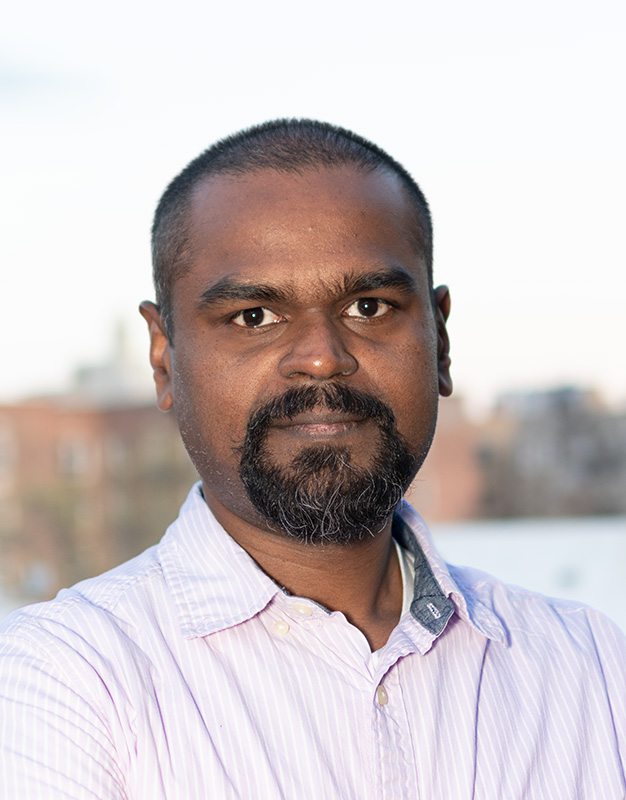
Nitin Verma, PhD
Nitin is an incoming Postdoctoral Research Scholar at Arizona State University’s School for the Future of Innovation in Society in collaboration with the New York Academy of Sciences. His doctoral dissertation research at the School of Information at The University of Texas at Austin investigated the notion of public trust in video with the emergence of deepfake and allied generative-AI technologies. Nitin’s broader research interests include the interrelationship between society (individuals, platforms, governments, and other stakeholders) and AI, the role of the photographic record in shaping history, and in the deep connection between human curiosity and the continuing evolution of the scientific method.

Marjorie Xie, PhD
Dr. Marjorie Xie serves as an AI & Society fellow at The New York Academy of Sciences, joint with Arizona State University’s School for the Future of Innovation in Society. Marjorie’s work combines AI, mental health, and education. Her goals are: 1) Develop technology to enable social-emotional learning and to facilitate collaborative interpersonal relationships; 2) Develop systems for effective AI governance. As an AI researcher, engineer, and social entrepreneur, she hopes to collaborate with mental health professionals, educators, business leaders, and social media experts.
Prior to serving as a fellow, Marjorie interned at Basis Research Institute, building AI tools for reasoning about collaborative intelligence in animals. Marjorie completed her Ph.D. in Neurobiology & Behavior at Columbia University, where she used AI tools to build interpretable models of neural systems in the brain. Before her PhD, she designed and completed an independent major in computational neuroscience at Princeton University, where she also pursued intensive studies in philosophy, literature, and history. Born in France and raised in Seattle, Washington by Chinese immigrants, she currently lives and serves as a resident fellow at the International House in New York City.