Building a Bridge from Epidemiology to Nutrition

How does what I eat affect my long-term health and wellbeing? The bridge between epidemiology and nutrition provides a way to these answers.

Published December 1, 2010

By Walter Willett, as told to Adrienne J. Burke

Image courtesy of yanadjan via stock.adobe.com.

I grew up in Wisconsin and Michigan in a family that has been dairy farming for generations. While studying at Michigan State University, I grew vegetables–sweet corn, tomatoes, squash—that I sold to local grocery stores to support my studies.

I started off there in physics and food science. Then, I went on to medical school but took several electives on nutrition-related topics. I spent one summer on a reservation in the Upper Peninsula of Michigan doing a health and nutrition survey. I was shocked that 50 percent of adults in our survey had type-2 diabetes, and the study demonstrated to me how it was possible to collect very interesting and useful data about people’s diets with a simple structured questionnaire.

My papers on how diet relates to long-term health and disease have led to being the second-most-cited author in clinical medicine. Much of this work was conducted within the Nurses’ Health Study, which has provided a tremendous platform that continues to yield an expanding output of data as the subjects grow older.

The original focus of the study was breast cancer, but that allowed us to get funding to collect dietary data starting in 1980. The Nurses’ Health Study was the first large study to gather dietary data and follow a large number of people for many different outcomes. It’s also unique for having repeatedly updated dietary data every four years over time.

Diet and Cardiovascular Disease

Many of our findings flew in the face of conventional wisdom. I was interested in the 1970’s in the relationship between diet and cardiovascular disease and people were being told very strongly, as though it was absolutely established truth, that we should avoid eggs to prevent heart disease and give up saturated fat.

When I dug into the literature supporting this, it was remarkably weak. In fact, there were no studies that showed that people who ate more eggs had higher risk of heart attacks, and the few small studies showed no relationship. It became apparent to me that a strong body of empirical evidence was needed if we were going to be giving guidance to individuals or the public.

During that time, several epidemiologists were documenting that rates of many cancers around the world varied tremendously. For example, the rates of breast cancer in post-menopausal women in Japan were only about one-eighth of those in the U.S.  That obviously provokes the question, why? When I was in medical school, no one really asked why these things were happening, why people get cancer. When I went to the Harvard School of Public Health, people in the Department of Epidemiology were asking those questions. 

The Department Chair at the time, Brian MacMahon, said there were some suggestions that diet might be important in the cause or prevention of cancer. That sounded like a pretty radical statement. The evidence was very scattered and not very strong, but the topic seemed worth investigating. What has unfolded has been surprising. Many highly controversial at first, but the finding has been replicated repeatedly and it’s accepted now.

Research Leads to Regulation of Trans Fats

There had been a belief that the percentage of calories from fat in the diet was the main reason why breast cancer rates were higher in the U.S. than in Japan and in developing countries. That idea turned out to be not supported by the data. Trans fats appeared early on as a problem. Experts in the cardiovascular field had been telling people to replace butter with margarine and Crisco to reduce cholesterol and saturated fat. But it turned out that those foods were very high in trans fats and were even worse than the foods they were meant to be replacing. 

I was attacked, but most of these findings have become accepted with time. It took about 10 years to get FDA to require that trans fats be included on food labels. Just a few weeks ago, The New England Journal of Medicine published a letter by one of our junior colleagues showing that in prepared foods, restaurant foods, and main national chains the amounts of trans fats have been reduced by about 90 percent. There’s been a huge change in the last three or four years in the national food supply and probably in everybody’s body. If you actually stuck in a needle and analyzed your tissues, you’d find a big difference.

In the field of nutrition, the tools did not exist to answer the most important questions: How does what I eat affect my long-term health and wellbeing? The bridge between epidemiology and nutrition provides a way to these answers.

Learn more about Nutrition Science at the Academy.

Innovative Technologies to Serve Those in Need

Flags for different countries flying outside of the United Nations.

A UN General Assembly Week event stressed the need for global collaboration in developing science and technology solutions to the most pressing problems of poor communities.

Published September 23, 2010

By Adrienne J. Burke

Flags for different countries flying outside of the United Nations.

A solar-powered autoclave for sterilizing surgical instruments in the field, a portable irrigation system that instantly converts saltwater to fresh water, and a bicycle that can be converted to a corn sheller or cell-phone charger were among the innovative and inexpensive technologies introduced by 18 teams of inventors at a science fair and development forum yesterday.

The Science, Technology & Innovation Forum, hosted by the U.S. Agency for International Development (USAID) and The New York Academy of Sciences (the Academy) during UN Week festivities, highlighted the work of teams of inventors from laboratories at world-class public, private, and academic organizations that have made the integration and application of science, technology, and innovation for development their primary goal. The event also featured several talks about the importance of innovative science and technology and global collaboration to solve problems with and for communities in need.

“Many of today’s global challenges are shared and require solutions that cross borders, sectors, and disciplines, and addressing these issues cannot be met without appropriate scientific knowledge and technological expertise,” said Rajiv Shah, MD, USAID Administrator. In announcing USAID’s Grand Challenges for Development strategy, which is designed to solve some of the most difficult development problems facing those in need in all parts of the world, Dr. Shah said, “At USAID, unleashing new technologies and game-changing innovations means taking a new approach and we intend to target our investments in areas where we can have the greatest impacts, improving the lives of millions.”

Integrating Better Science, Technology, and Innovation

Dr. Shah noted that there is unprecedented momentum within USAID and among many government, host-country, foundation, and private sector partners to integrate better science, technology, and innovation to solve today’s most pressing needs using frugal, high-impact, life-saving, and income-producing products and technologies.

Quarraisha Abdool Karim, PhD, leader of a scientific trial supported by USAID that showed promise for a microbicide-based method of protecting women from HIV infection, highlighted the importance of partnerships between research, public health, and business communities that were critical to this breakthrough. And Shaifali Puri, Executive Director of the Academy’s own Scientists Without Borders initiative, discussed a new approach to cross-sector global collaboration: the Scientists Without Borders open innovation web platform. “Our novel tools provide dynamic and meaningful ways for passionate problem-solvers from all sectors, disciplines, and geographies to engage their expertise, connect with others similarly interested, and exchange resources and knowledge to improve the quality of life for the world’s poorest people,” Puri said.

All of the inventions exhibited, including the Bicilavadora pedal-powered washing machine, the Dirt Power microbial fuel cell battery, and the Spiral Pine Needle Cookstove, are already in use or are poised to enter the marketplace, and all have significant lifesaving and income-producing impact or potential.

Also read: Sustainable Development for a Better Tomorrow

Putting Academy Webinars to Work for New York City

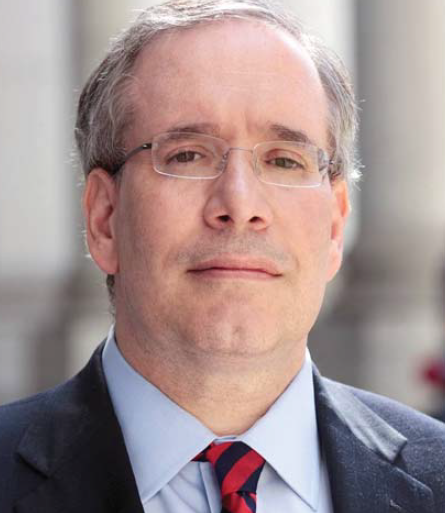
A man in a suit and tie poses for the camera.

An innovative grant from the Manhattan Borough President will lead to new programming at the Academy, which aims to spur economic and technological growth in the city.

Published September 1, 2010

By Adam Ludwig

Scott Stringer

When The New York Academy of Sciences (the Academy) applied to the Office of Manhattan Borough President Scott Stringer for funding to optimize its webinar broadcasting capabilities, it could hardly have expected a more enthusiastic response. Stringer has a strong vision about how to bridge New York’s science and business communities to promote new industry and stimulate job growth. Seeing how the Academy uses new media to extend the reach of its activities, he recognized the potential for a dynamic collaboration.

The Academy’s proposal calls for an overhaul of its webinar production and networking equipment—including upgraded HD cameras, recorders, routers, switches, server storage, and a new fiber-based internet connection—in order to enhance online broadcasts that reach its membership base of 25,000 scientists and students, and beyond. Existing Academy web-based outreach includes Science & the City’s programs for the general public; conferences, symposia, and discussion groups for the scientific community; career counseling and networking opportunities for science students through the Science Alliance program; and the Academy’s newly launched New York City Science Education Initiative.

While acknowledging the value of enhancing the Academy’s educational mission, Stringer’s approval of a $265,000 grant also comes with a counterproposal. He wants to see the Academy expand the purview of its webinar series to promote economic development in New York by nurturing science entrepreneurs and connecting scientists to the business community.

A New Series of Interactive Online Webinars

With the equipment upgrade and expansion, the Academy will launch a new series of interactive online webinars focused on giving scientists access to available resources that will help them create more science- and technology-based jobs in New York City. Through live programming, the Academy currently strives to help science and technology entrepreneurs turn their ideas and discoveries into businesses and jobs. The new webinar offerings will enhance these programs, supplying an accessible and flexible forum where scientists can gain an understanding of all the facets involved in an early-stage venture.

Stringer’s support of the Academy dates to 2006, when he advocated for an $800,000 grant from the Lower Manhattan Development Corporation to outfit the Academy’s new space at 7 World Trade Center. He says he appreciates the unique potential of science and technology as catalysts for job creation. Too often, science and business are “two ships passing in the night,” he says. “There are smart people with great ideas in the science community,” he notes, “but they miss greater opportunities because they are isolated from the business side.”

Stimulus from local government is just one of the instruments that can foster a strong connection between science and business, and Stringer’s faith in this model is rooted in a vision of how the city might look in 20 years. “Look at where the Academy is located,” he says, gesturing towards the view from his Centre Street office. “It’s right next to Wall Street.” Stringer sees this proximity as favorable for the emergence of a new Silicon Alley, with the Academy’s webinar capabilities functioning as a tool to stimulate business investment in science and technology initiatives throughout the city.

Cross-Pollination of the Science and Business Communities

Stringer would like to see “the next Google in Manhattan, the next Apple in Queens, the next food-production idea in the Bronx,” and he knows that the push to capitalize and market scientific innovation has to come from both public and private sources. A plugged-in Wall Street will generate corporate investment in new technology, but the city and the state have to promote an atmosphere in which scientists and businesspeople stay connected, he says.

Stringer’s vision for the cross-pollination of New York’s science and business communities is part of a larger plan to address the economic slowdown, as well as state- and citywide budget shortfalls. “Taxing Ring Dings and cutting jobs is not a long- term solution,” he says. Having the wherewithal to exploit innovation in science and technology, Stringer believes, offers the best hope for economic revitalization, and he is optimistic about the city’s future. “We’ve always gotten there,” he says. “New York is a magnet city. How do we keep people coming? We grow the economy. Science and technology creates those jobs.”

When it comes to boosting the Academy’s role in the city’s future by supporting the webinar program, Stringer’s attitude is refreshingly transparent. “I’m very excited,” he says of the partnership.

Also read: A Science State of Mind in the Empire State


About the Author

Adam Ludwig is a writer in New York City.

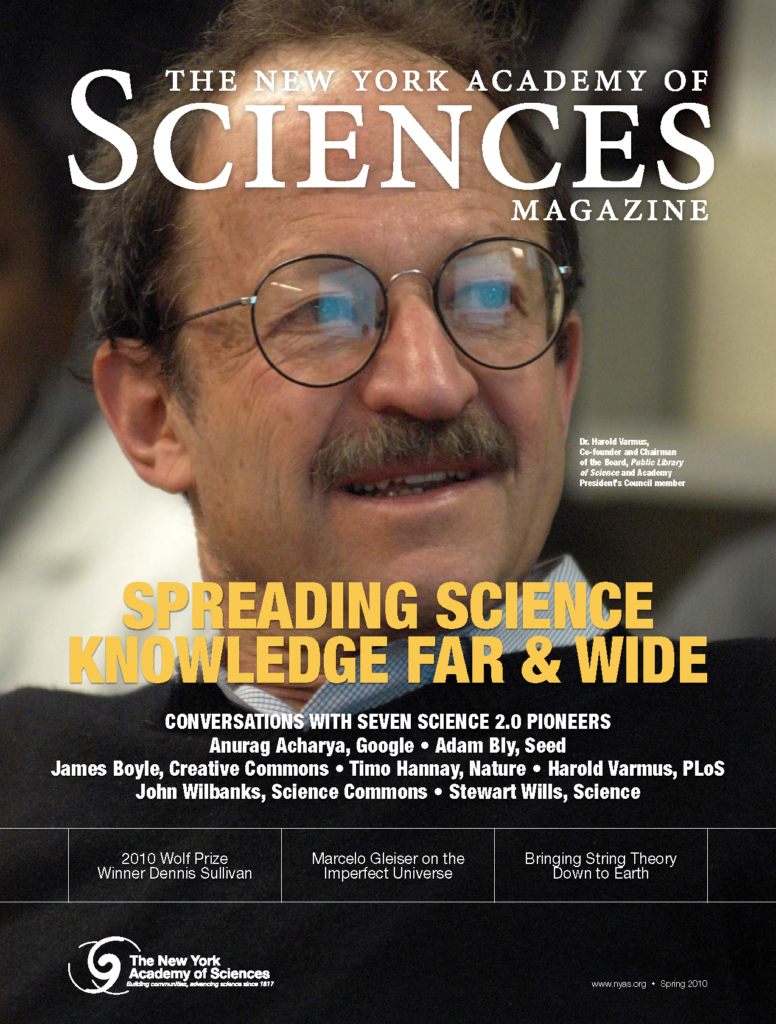
Spreading Science Knowledge Far and Wide

Seven Science 2.0 pioneers offer their perspectives on science, information sharing, collaboration, and the role of technology going forward.

Published May 1, 2010

By Adrienne J. Burke

Surely you’ve noticed: The scientific community is undergoing a research-and-data-sharing sea change. Perhaps slower to take to Web-based dissemination than some professions, science—the endeavor for which the World Wide Web was developed—has gradually been adopting new online methods for distributing knowledge. Some say the changes could accelerate scientific progress.

From open-access journals to research-review blogs, from collaboration by wiki to epidemiology by Blackberry, networked knowledge has made more science more accessible more quickly and to more people around the globe than could have been imagined 20 years ago.

And it’s not just new media businesses that are pioneering the Science 2.0 movement. Traditional scientific journals are part of this social evolution too, innovating ways to engage scientists online and enable global collaboration and conversation. Even the 187-year-old Annals of the New York Academy of Sciences has joined the digital age. The Academy now permits free public access to selected online content and has digitized every volume dating back to 1823.

That wider, freer, faster access to scientific data and research results will benefit the world is, to many, intuitively obvious. “We work on the assumption that the reason we publish is to keep science moving forward,” says Public Library of Science founder Harold Varmus. “If everybody can see the work that we do, and new work is built on what’s come before, science moves faster.”

Varmus is among a cadre of iconoclasts calling for immediate open access to scientific papers. They’re impatient for colleagues to give up their allegiance to the conventional process that they say keeps new research under wraps for too long. And they’re eager for publishers to break out of business models that require a paid subscription to read the most current publications.

To be sure, some changes are easier advocated than adopted. The most esteemed peer-review journals have taken great leaps toward openness in the last decade. Some now help readers network with each other online or enable posting on their Web sites of commentary and conversations about scientific publications. Many make papers openly accessible after a certain time. But how to sustain a business that publishes peer-vetted, high-quality content without requiring payment for access remains a hotly debated question.

As Varmus himself points out, the essential importance of the scientific paper has a lot to do with why it’s not just for-profit publishers, but scientists themselves who are moving toward open access with such caution. “Publication is not an addendum to, but the heart of the career of scientists,” he says. “The way you’ve built a legacy is through your publication—it’s the most important thing you do.” To give up the emotional reward of seeing their research published in a distinguished journal is a lot to ask of scientists raised in this tradition.

Seed Media Group CEO Adam Bly hints at how the up-and-coming generation of scientists—the so-called “digital natives” who’ve never known a world without the Internet—might move science past the paid-access paper. Says Bly, “In a Seed research study, one scientist said to us, ‘The soul of your identity is on the Web, because it is your most direct form of communication out into the wide world. You have a great degree of control over how you present yourself, your ideas, and your findings, and it’s fast, and it’s free.’”

For help considering whether the desire for open access contradicts the value of peer evaluation and envisioning what the future of science publishing could look like, The New York Academy of Sciences spoke with Varmus, Bly, and five other pioneers at the forefront of the Science 2.0 movement. These experts in Web technology, publishing, law, and science have the vision and passion to change the future of the way you work. As Bly says, “Open science is not this maverick idea; it’s becoming reality.”

Harold Varmus: Co-founder and Chairman of the Board, Public Library of Science

This story originally appeared in the Spring 2010 edition of The New York Academy of Sciences Magazine.

Harold Varmus, a Nobel Laureate, President and CEO of Memorial Sloan-Kettering Cancer Center, and member of the Academy’s President’s Council, led the team of biomedical scientists who set out in October 2000 to liberate access to scientific research in their field by petitioning publishers to post peer-reviewed papers in free, public online archives.

Varmus and his cohorts ultimately launched a nonprofit open-access publishing venture, which achieved financial sustainability this year. The Public Library of Science journals—there are now seven of them at www.plos.org—make scientific papers immediately available online, with no charges for access and no restrictions on subsequent redistribution or use, as long as the authors and source are cited, as specified by the Creative Commons Attribution License.

Would you define what you mean by “open access.”

Some people think that if their content is online it’s “open access.” That’s not the case. “Public access” is what the National Institutes of Health now operates under; if your work is supported by the NIH, then you must be sure that it’s available in less than a year on a public database like PubMed Central. That was a big victory for us, but it’s not anywhere near the goal.

True “open access” is different from “public access.” It means that the author holds the copyrights, that the journal places the work immediately and freely in the public domain under a Creative Common license or something equivalent to it, and that the work is in public libraries and available for all kinds of reasonable use, as long as attribution is maintained.

Have scientists been slow to embrace submitting their work to open access journals?

There’s now pretty wide acceptance of Public Library of Science journals, but most of my colleagues are still tormented by the need to publish in Nature, Cell, and Science, which are not open access journals. This is about much more than just publishing; it’s about values in the scientific academic community. Biomedical trainees are completely obsessed with the idea that they can’t get a job unless they publish papers in Nature, Cell, and Science. This is unfortunate, because those journals are going to be the last to go completely open access.

PLoS is now publishing far more research than any of those journals, isn’t it?

Yes. We publish over 600 articles a month. The only way you really can change the culture is to take on those top journals, so we decided we would publish two journals, PLoS Medicine and PLoS Biology, to compete with the very best.

We’ve achieved a high level of credibility for PLoS Medicine and PLoS Biology. They’re so-called high-impact journals. But to do that means rejecting a lot of articles, which gets expensive because of the costs of reviewing articles that do not get published. We afford those two journals because we make very modest amounts of money from other higher volume journals and we cover the cost of the whole enterprise by balancing things out.

What about the importance of the impact factor in scientific publishing?

The impact factor is a completely flawed metric and it’s a source of a lot of unhappiness in the scientific community. Evaluating someone’s scientific productivity by looking at the number of papers they published in journals with impact factors over a certain level is poisonous to the system. A couple of folks are acting as gatekeepers to the distribution of information, and this is a very bad system. It really slows progress by keeping ideas and experiments out of the public domain until reviewers have been satisfied and authors are allowed to get their paper into the journal that they feel will advance their career.

What are some ways PLoS is taking knowledge-sharing to the next level?

One of the most important developments is not particular to open access journals, and that is the addition of online commentary. Here’s our opportunity to make every article an occasion for conversation and a way to have another kind of evaluation. I can imagine search and promotion committees of the future spending more time looking at the kind of commentary that a paper has elicited than calculating impact-factor scores.

We’ve tried another experiment in the last few months called PLoS Currents. We’ve done this with one subject so far—influenza, a topic of great interest with a need for rapid publication. We invite people to post in PLoS Currents anything that can be looked at by a board of curators in 24 hours. The point is to get an article or an idea or a single result into the public domain quickly so people can build on it.

Look at PLoS Currents: Influenza on our Web site and you’ll see it’s been quite a nice experiment. Some postings look like full-fledged articles, others look much more primitive, but most have anywhere from a few to 10 or 20 commentaries attached to them. This is a way for scientists to get others to comment while they’re still working.

Information can also be aggregated and put together in very useful ways on sites that we’ve been calling Hubs, a project still in development. The idea is to try to wrest deeper ideas out of aggregated material without violation of copyright. We hope to create communities that migrate to these sites every day and then use them as platforms for fostering their field. This is another way to make science more energized.

What would be one technical fix you’d wish for right now to enable more sharing of science?

We have problems about sharing in our community that are not very technical, and it’s important to keep those in mind. Getting people to share their reagents, their mice, their plasmids—there’s a problem. People seem to forget that they were paid by the government or by some charitable agency or an institution to do this work and that they don’t own it. Say you made a new transgenic mouse 10 years ago or even two years ago and somebody else wants it.

You ought to give it to them, and you don’t need cloud computing to do that. Before we make all sharing digital, let’s remember that there are some simple things that reflect community values that we don’t subscribe to with the kind of enthusiasm we should. Of course, we’d also like to see everyone publishing more papers in open-access journals, especially at PLoS!

Adam Bly: Founder & CEO, Seed Media Group

After a three-year stint researching cancer at Canada’s National Research Council while still a teenager, Adam Bly set out to launch a magazine to cover “the 21st century scientific renaissance.” Five years later, his Seed Media Group has expanded beyond its glossy print flagship, Seed, to launch several online products serving science, including: ScienceBlogs.com, a social media site reaching more than 2.5 million readers; ResearchBlogging.org, which aggregates and feeds to relevant journals blog conversations about the peer-reviewed research that they publish; and ScienceWide, a platform that aims to drive advertising dollars to support open-access science publications and other innovative online science tools. Bly’s company’s mantra: “We are inspired by the potential of science to improve the state of the world, and we make media and technology to help realize that potential.” 

What do you mean when you say that science publishing needs to adopt a digital core?

Science has gone digital. Open science is not this maverick idea; it’s becoming reality. About 35 percent of scientists are using things like blogs to consume and produce content. There is an explosion of online tools and platforms available to scientists, ranging from Web 2.0 tools modified or created for the scientific world to Web sites that are doing amazing things with video, lab notebooks, and social networking.

There are thousands of scientific software programs freely available online and tens of millions of science, technology, and math journal articles online. What’s missing is the vision and infrastructure to bring together all of the various changes and new players across this Science 2.0 landscape so that it’s simple, scalable, and sustainable—so that it makes research better.

How will that happen?

To affect this kind of change is a grand challenge and will take the participation of many stakeholders—from government agencies to funding bodies to scientists themselves. The next generation of PIs is already establishing new behaviors. They feel comfortable blogging, using social media tools, and using wikis to advance their research. It will take the big institutions to support open-access journals, for example. And it will take technological innovation in the form of software that is purpose-built for this unique community and its set of challenges.

The culture of science resists change to science itself, and it’s important that it does. Part of that is practical: nobody sets rules for all of science. So it might take 10 or 20 years or more to effect a complete transformation. We’re talking about something as fundamental and important as modernizing the architecture of science.

What are some ways your company is contributing to this transformation?

We’re listening to scientists and introducing software and digital and social media platforms to help spur and support this transformation. Any scientist who blogs anywhere can now go onto ResearchBlogging.org and download free software that we’ve built that allows them to easily affix to a post the digital object identifier (DOI) of the scientific paper they’re blogging about along with some metadata.

We’re aggregating all of the conversations that are happening around that specific paper, and, through ResearchBlogging Connect, feeding the conversations back to scientists and journals in the form of widgets and RSS feeds. Now, when you’re reading the paper online, you see a feed of blog posts associated with that paper coming from across the Web. So in this example, we’re tackling post-publication peer-review and working to connect analog to digital in a way that’s seamless and useful to the scientist.

It sounds like you could have a new way of measuring a paper’s impact.

There are a lot of people trying to bring forth some new ideas about how to create more dynamic indicators. There are people merging scientometrics with data visualization, and there’s amazing work being done at universities around the world to develop new ways of measuring scientific progress. One thing we’re really interested in at Seed is whether blogs and the conversations we’re now organizing can serve in any way as an indicator of the momentum of scientific ideas. Technology can afford us more dynamic intelligence and useful knowledge.

James Boyle: Founding Member, Board of Directors, Creative Commons

James Boyle is a widely published leader of the global discussion about the ways that current copyright, patent, and trademark laws stand in the way of innovation by interfering with access to information that is in the public domain. He was one of the original board members of Creative Commons, which works to facilitate the free availability of art, scholarship, and cultural materials by developing licenses that individuals and institutions can attach to their work.

And he was a co-founder of Science Commons, which aims to expand the Creative Commons mission into the realm of scientific and technical data. In 2000 he joined the faculty at Duke University, where he is William Neal Reynolds Professor of Law and co-founder of the Center for the Study of the Public Domain. He is also a board member of the Public Library of Science.

What do you see as the current problem with access to science knowledge?

Science knowledge generation has gone digital, but our method of knowledge processing is still analog. Most scientific literature is behind pay walls. You may be able to find it with Google, but you probably can’t read it. That’s Science 1.0: You don’t have access unless you’re sitting in a great research university where it’s free, and you certainly can’t send a robot to crawl the literature to create a mini index of all the articles, and cross index them and see whether, for example, a particular gene known by multiple names is referenced by them.

Is the prestige attached to publishing with closed journals part of the problem?

Right now, if your article gets into Nature or Science it’s a big help in getting tenure and grants and retaining grad students. That’s important—we should encourage people to publish. But perhaps we could refine the incentives so that you get more of a bump for publishing openly. I would like to see people’s resumes say when their database has been downloaded more than 1,000 times. You want the prestige economy to reward the prosocial behavior, not the anti-social behavior.

So, how can incentives be changed?

When you’ve got centrally funded science, it should be a pretty easy cascade to start. The funders get much more bang for their buck if they do this. You’re actually saving the public money and increasing the yield of every research dollar. 

Once the idea can be explained to people, it makes an enormous amount of sense. I tell scientists, “There are a billion people connected to the Web. At least one of them has a smarter idea about what to do with your data than you do.”

Their first take, though, is “Oh, great. You’re going to force me to annotate my data and put everything out there. You’re going to troll it and publish ahead of me. I’m going to get no credit, I’m not going to get tenure, and I’m going to end up living under a dumpster. And you’re going to win the Nobel Prize.” That mindset is the big obstacle.   

We need funders to say that a condition for the funding is data deposit in an open, accessible format. That’s beginning to happen—the public-access mandate from NIH is beginning to make the literature openly available. But we’re just at the beginning.

Beyond social/cultural issues, what else needs to change?

Nobody ever wants to fund infrastructure because it’s boring, but enabling Science 2.0 is the Eisenhower freeway system of the mind. And then we need to get past the legal restrictions so that we can have technologies that troll for data, make sense of it, and import it mechanically.

How is Science Commons addressing those issues?

We’re sort of the public interest lawyer to the sciences. Say you want to use a database which was generated in Europe. We come up with a data protocol, a legal tool, which says “this gets your data free to the greatest extent possible in every jurisdiction in the world that we have lawyers in” (and we have lawyers pretty much everywhere, because a lot of really smart lawyers have volunteered to produce this high-quality tool).

We’re also attempting to show people what it might look like if you could wire together all this open stuff. We have a project called the Neuro Commons which is putting all the publicly available neurological literature and open databases together in a vast, open network that anyone can download, use, or build upon.

We’ve had high-throughput arrays, robotization, in silico studies, genetic sequencing, and the personal genome. All of these were supposed to catapult us off into a scientific revolution but didn’t. It reminds me of what people were saying about the personal computer in 1985: “This thing’s just a paperweight. What does it do for me?” The answer was, “Nothing until it’s wired together with all of the other ones.” Then suddenly you can’t imagine being without it.

Anurag Acharya: Founding Engineer, Google Scholar

Computer scientist Anurag Acharya and colleague Alex Verstak were onto something big when they took a break from building the Google Web index to focus on improving the rankings of scholarly articles within Google searches. The result of their sabbatical was Google Scholar beta. The specialized section of the larger Google search engine, which was launched in late 2004 and is now managed by a team of four people, has been transformational for enabling people to get their hands on all the world’s scholarly publications from their desktop. Acharya says the goal of Google Scholar is simple: a resource for anyone to find all scholarly literature across all disciplines, languages, and time periods.

Did your interest in creating Google Scholar stem from a need you saw in your own academic experience?

It was an experience I had as an undergraduate back in India. I grew up on the Indian Institute of Technology campus in Kharagpur. My uncle was a faculty member, and doing research was what the cool people did, at least in my head. I thought you did some work, and you wrote it up and you sent it for publication, because that’s what people do. You go to the library, you look up citations, you follow references, and you learn what you can.

If the papers don’t exist in your library, you write letters to people—this is 1985—and some fraction of them send you back their reprints. You send your own paper out for publication, and the reviews from the U.S. come back saying, “This is all very smart stuff, but you’re making this key assumption that is four years out of date.” So you’ve gone through all this effort and ultimately what you have done is not relevant because you didn’t know what was already being done.

With Google Scholar, first and foremost we make it possible for you to find the literature. Whether you can read it is a more complicated problem, but if you don’t know it exists, you have no hope.

Has it been difficult to persuade publishers to permit you to index their paid-subscription content?

Oh, yes. I started talking to publishers in 2001. We’re now indexing all the major publications, publishers, and societies, but it was a slow process. Initially the scholarly publishers didn’t believe that scholars used a lowly thing like a search engine. I’m serious. I had to convince people that researchers do use this. It was a mindset that search engines are used for casual things and not for real research. The attitudes really have changed.

If you could have some problem solved immediately, what would that be?

If I had one silver bullet I would apply it to translation. We index papers in every language that has any significant number of papers. We have a feature that allows you to find related articles, and relatedness can jump across language. All of this is trying to facilitate discovery.

A Google group has been working on a translation feature for many years now. There are groups that are using it to point to open-access journals and outside the English-speaking countries to make it possible for people to read papers that are not originally in English. Translation could open up the space to a population that previously we have not had an opportunity to reach.

Timo Hannay: Publishing Director, Web Publishing, Nature Publishing Group

A doctor of neurophysiology based in London, Timo Hannay manages Nature.com, Naturejobs.com, Natureevents.com, Nature Methods and Nature Protocols. He is organizer of Science Foo Camp, an annual interdisciplinary scientific “unconference” at Google headquarters. And he was a contributor to The Fourth Paradigm: Data Intensive Scientific Discovery, a collection of essays that envision the future of discovery based on data-intensive science. In the “interests” fi eld on his Nature Network profile, Hannay lists just one: “Making the most of the Web in scientific communication.”

You have called the Web “the ultimate global collaborative medium” and science “the ultimate global collaborative pursuit.”

Yes, that’s one of the reasons why I decided to work on the Web in science. Tim Berners-Lee originally considered the Web a scientific communication means. But ironically it hasn’t been scientists and the research community pushing the Web to its limits. It’s my job to try and make the Web more useful as a scientific communication medium. 

The volume of data is important and has profound implications, but an even more profound change will be if it’s all linked together. It’s going to be messy. We’re going to be using tags and microformats and ontologies and links and all sorts of strategies. But one way or another we’re integrating this data more and more. It’s not the volume of data, it’s the interconnectedness of it that’s critical in my mind.

Some would say that one of the obstacles to connecting scientific data is the traditional method of scientific publishing that doesn’t permit open access to research.

The fundamental issue is that the unit of contribution to the scientific knowledge base has become the paper. Journals grew up as a means for scientists to be able to share their discoveries and ideas. The incentive for doing so was that by publishing in journals their contributions would be recognized by citation and other means. So, you have this pact: be open with your ideas and share them through journals and you will get credit. 

Publishing in peer-review journals is no bad thing. I work for a company whose main business is publishing peer-review journals. They’re useful. However, we need to move beyond the view that peer-review publications are the only kinds of significant contributions that scientists make to the research process. A classic example would be genome sequences.

Large teams of scientists put enormous amounts of effort into providing genome sequences. Fundamentally, their contribution is making that data available to other scientists to draw insights from it. They can also provide reagents and materials to other scientists, or they can provide software and code and algorithms.

There are all kinds of ways in which scientists can contribute to the global endeavor. And yet one type of contribution, the peer-reviewed publication, has priority over all the others in the way that it’s measured and in the way that credit is assigned. The incentive structure has not caught up with what we really want scientists to do. We do want them to be able to share their ideas and their data and their reagents and so forth as well as publish traditional peer-review research reports. 

At Nature Publishing Group we try to be open to new ideas and try them out. From making tagging of scientific information possible to things like Nature Network and Nature Precedings which are venues for scientists to be able to share information with one another more informally and more immediately than they could through a scientific journal. Some things worked well and some didn’t, but that’s the nature of trying to understand a new medium and how it can be harnessed to best effect. I think the only way to effect change is by the funders, publishers, the scientists all working together.

John Wilbanks: Executive Director, Science Commons

John Wilbanks was named one of “50 visionaries who are changing your world” by the Utne Reader, and a “Revolutionary Mind of 2008” by Seed Magazine. He writes the Common Knowledge blog on Science Blogs and is known simply as Wilbanks on Twitter. As VP for Science at Creative Commons, he runs Science Commons from an office at MIT. Wilbanks joined Creative Commons from a Fellowship at the World Wide Web Consortium in Semantic Web for Life Sciences. Previously, he founded and led to acquisition the bioinformatics company Incellico.

How is Science Commons different from Creative Commons?

The primary way that we convey scientific knowledge is to compress it down into text and distribute that through a journal. But with the Internet we can now distribute a lot of the tools, data, stem cells, and so forth that used to simply be described in the paper. Making data useful to people who didn’t generate it is the most important problem, and it requires an enormous investment of time, infrastructure, curation, data standards, standard formats, and giant computers that can store it. If you add the law to that complexity, you have what we would call an NP-hard problem. Unsolvable.

When we got into this, we thought that the way we license software or literature was going to be the solution—that a Creative Commons license would take care of the problem. But data is much more foundational than literature or software and it’s more like the Web than it is like software. In other words, we all take software and run it, but the human genome is the knowledge equivalent of the Internet—it’s the common language of biotech, and if that foundational architecture imposed down-stream restrictions it would really screw things up.

The genome being in the public domain was much better than the genome being licensed. Imagine if every time a distributed annotation server ran across the genome it had to attribute whoever put that piece of genome online?

What we use instead of the law there is citation. You know that if someone published the first paper about that piece of the genome, when you write your paper you should add a citation to it. Citation norms scaled much better than the legal aspect of licensing. So, we stopped working on licensing for data and we started working on public domain pools for data. We worked on a tool called CC0—Creative Commons zero—which is a legal tool that achieves a legal status that is similar to the public domain. The idea is to waive the rights that are associated with data.

Let’s say you and I try to generate something like the genome now. If we had the money, we could sequence both of our genomes in a couple of days. But there are little bits of copyright that stick around data when you put them into a database in the U.S. They attach not to the data itself, but to the look and feel and the structure of the database. It’s unclear to many people where those rights stop and start, so the first thing CC0 does is waive those elements. 

If we want to have that data be interoperable with the public genome, we have to get rid of the database rights and the copyrightable pieces of it. The second thing CC0 does is get rid of those database rights. If we can make things legally interoperable, then the only problems we leave are the monstrously complicated technical and semantic ones. 

So, we wrote the Science Commons Protocol for Implementing Open Access Data. The first two requirements are: waive your intellectual property rights to the extent they exist, and don’t put a contract on your data. The third requirement is to request behavior through norms, not through the law. That’s about using citation, not attribution. In science, citation scales in a way that attribution doesn’t, because attribution is tied to this very old way of thinking about copyrightable object as opposed to massive data structures.

What would be one change you’d put at the top of your wish list?

It would be for the various funding agencies to put meaningful requirements or evaluation systems in place for sharing data and tools, not just papers. Right now, there’s no incentive to go through the effort of curating, annotating, and posting your data. The biggest thing the NIH could do would be to begin looking at a two-pronged mandate, similar to the open-access literature mandate, and provide minimum requirements for sharing data that you generate.

That would create incentives for researchers to get their data online and share their tools and it would create an environment where some of the startups can have success. In the absence of putting some teeth behind those requirements, all we’re going to see is an increase in the number of PDFs deposited, and I don’t think that revolutionizes scholarly communication.

Stewart Wills: Online Editor, Science

On his Twitter profile, Stewart Wills describes himself as the “aging online editor of a scientific journal, trying to stay young in 140 characters or less.” An earlier adopter than many a “digital native,” he’s been Tweeting diligently, usually several times a day, since June 2008 about all things science and media. In 2000, when he completed a PhD in geological sciences at Columbia University, Wills joined Science. His principal goal at present, he says (via his Linked In profile), is, “Keeping the Science site moving forward, to provide the best possible value and utility to users, the scientific community, and the public.”

How is your publication responding to the move of science onto the Web?

At Science we pay a lot of attention to how the digital natives are changing everything. We have a set of users with new expectations, new assumptions, new ways of learning that we in publishing need to figure out how to address. As an editor working with a scientific publication, I have an interest in making our content as available as possible and serving the community as well as possible. Whatever the business models we’re dealing with, we have to find a way to serve the community on this.

Moreso than the general population, scientists are do-it-yourselfers. If there’s a tool available, they figure out how to use it. The Web is one huge, highly flexible tool. Certain groups of scientists are in there using open notebook science and open wetware and various things like that to do their jobs. They are exploring new ways of doing science. For that reason, we increasingly hear the community’s need not just for open access but for open science—for open data.

How are you changing the way Science makes research and data available? 

The data supporting the papers has always been free on our Web site, and Science has had full text on the Web since 1996. Now we’re doing some of the more obvious things to improve the syndication of research results—RSS feeds, Twitter, and Facebook. We’re active on these social channels because that’s where the users are having conversations. It’s a way to capture some of the conversation around our content. And we are experimenting with adding different kinds of content, such as a pilot with the Journal of Visualized Experiments to create video methods to go along with certain papers. 

Would you say that scientists who aren’t on Facebook or following Twitter are at a competitive disadvantage?

That’s an interesting question and I’ll answer it this way: It’s going to depend on the network that you’re following. I heard Cameron Neylon, a senior scientist with the U.K.’s Science and Technology Facilities Council, speak at a conference recently. He filters his content through a tool called FriendFeed. It’s the most sophisticated use of tools like Twitter or Facebook to deal with the information glut: a collection of friends he trusts helps him with discovery by filtering papers that are of interest to him. It’s a certain kind of peer review.

Developing Drugs for the Benefit of Society

A woman smiles for the camera.

Having nurtured her own strong scientific curiosity as a child growing up in New Orleans, Toni Hoover wants to help the next generation find what motivates them.

Published March 1, 2010

By Adam Ludwig

Toni Hoover.

Long before Toni Hoover became a senior vice president at Pfizer, she honed an interest in psychology by keeping an eye on the street life in her hometown of New Orleans.

The odd behavior of some of the local denizens fascinated her as a teenager, even if it was largely indulged as harmless eccentricity or regional flair. Today, she acknowledges that much of what captured her interest was in fact psychopathology.

Hoover took her early passion for understanding the underlying causes of abnormal behavior to Harvard, where she earned a BA, MA, and PhD in psychology. Early work as a clinical scientist in the neurosciences area at Warner-Lambert/Parke-Davis in Ann Arbor, Mich., led to a project standardizing clinical assessment outcome measures to be used in clinical trials of treatments for Alzheimer’s patients. She went on to lead central nervous system drug development at Parke-Davis, overseeing the development of several medications, including Pfizer’s Lyrica, and has now worked for Pfizer and its legacy companies for 23 years.

Since 2006, Hoover has been site director of Pfizer’s Groton/ New London Laboratories, the company’s largest research and development facility. Her focus is on creating a vibrant, innovative, and productive environment for discovering and developing new medicines. In addition to making sure that the needs of the R&D colleagues are met, Hoover is responsible for the site’s compliance with state regulations, serving as the public face of Pfizer in dealing with legislative, public policy, and community relations.

An Invaluable Partnership

Three years ago, she was tapped to reassess Pfizer’s relationship with The New York Academy of Sciences (the Academy), and set out to identify new ways in which Pfizer R&D could get “more bang for its sponsorship buck.” Encouraged by discussions with Academy leadership, which yielded new strategies for rejuvenating the relationship, Hoover made the case to Pfizer’s worldwide president of R&D to continue major sponsorship of the Academy.

Given the location of Pfizer’s corporate headquarters in New York City and the close proximity of its large R&D site in southeastern Connecticut, she argued that the visibility of Pfizer as a corporate sponsor of the Academy was invaluable, making support of high-profile Academy initiatives a natural fit. Upon approval of Hoover’s proposal, Pfizer renewed its support of the Academy as a Mission Partner.

Subsequently, she was asked to consider joining the Academy’s board. She accepted the invitation, and in 2009 became a member of the Board of Governors. Meanwhile, she has stepped up her own investment in the Academy by directing her personal contribution towards programs focused on advancing women and people of color in the sciences. She says these mirror similar educational outreach efforts by Pfizer in Connecticut to “support, spark, and delight” young people about scientific careers. Hoover takes special delight in witnessing the first green shoots of youthful inquiry, remarking, “You can see the ‘Aha!’ moment as they watch hands-on demos of the wonders of science.”

Encouraging Scientific Curiosity

At the college level, Pfizer offers summer internships aimed at getting undergrads interested in discovering and developing new medicines. Some of Pfizer’s collaborations with university science departments focus specifically on increasing the diversity of the pipeline of new talent, and Hoover believes that the Academy can further such efforts by developing skills among women and ethnic minorities, and by working to facilitate networking among scientists from those groups.

Hoover’s growing personal investment in the Academy capitalizes on the Pfizer Foundation Matching Gift program, which allows her to double her impact. And since Pfizer renewed its sponsorship three years ago, the number of Pfizer scientists who have joined the Academy has increased from 20 in 2005 to more than 366 today. This represents the largest number of scientists from any company and from any single corporate sponsor.

Just as Hoover has watched young people from Pfizer’s student programs go on to become working scientists—sometimes as researchers at her Groton/New London laboratories—she hopes to see the Academy raise its own crop of scholars and scientists. Scientific curiosity came naturally to Hoover as she was growing up in New Orleans, but she knows that it doesn’t grow on trees.

Also read: How Science Can Keep America Globally Competitive


About the Author

Adam Ludwig is a writer in New York City.

The Growth of Citizen Science: Amateur Research

New technology and changing attitudes have made it so that science is no longer restricted to those who have PhDs and wear lab coats.

Published December 1, 2009

By Darlene Cavalier and Alex Soojung-Kim Pang

A child experiments with a walkie talkie. Image courtesy of LumineImages – via stock.adobe.com.

Yale University astrophysics professor Kevin Schawinski studies how galaxies form. But his most valuable tool isn’t a telescope or arcane theory. It’s Galaxy Zoo, a project that has enlisted the help of more than 150,000 “citizen scientists” to classify a million galaxies.

Why use people rather than computers for such an undertaking? At least for now, humans with a little training are more accurate than expensive software. And when you have a million galaxies to classify, you want all the help you can get.

Not so long ago, “citizen scientist” would have seemed to be a contradiction in terms. Science is traditionally something done by people in lab coats who hold PhDs. As with classical music or acting, amateurs might be able to appreciate science, but they could not contribute to it. Today, however, enabled by technology and empowered by social change, science-interested laypeople are transforming the way science gets done.

Satisfied Citizens

Who are citizen scientists? A survey conducted by the forthcoming ScienceForCitizens.net web site found that 46 percent of citizen scientists have graduate degrees (compared to the national average of 10 percent). Like President Obama and 53 million other Americans, a majority of citizen scientists hail from the Generation Jones group, aged 44-55, described by commentator Jonathan Pontell as having “a general aching to act.”

 Technology makes it easier for people to get involved in serious science. The Internet has dramatically reduced the cost and difficulty of sharing information and obtaining or using high-quality scientific instruments. The spread of mobile smartphones has been especially important for democratizing participation in science. GPS and digital photography have become available to the masses; soon, we will even see cell phone microscopes that take color images of malaria parasites and TB bacteria using fluorescent markers.

Citizen scientists don’t do scientific research for a living; they practice science for personal satisfaction. Many work with grassroots organizations or professional scientists in academia or government, or form their own social networks. They believe that research and discovery should be accessible and useful. The US federal government funds more than half of all basic research, after all. And it doesn’t take a PhD to grasp modern scientific problems like climate change, become involved in monitoring environmental conditions, or participate in policy discussions. Turns out, it’s a short leap from supporting science to participating.

Contributing to Contemporary Science

Some citizen scientists look to the stars. GalaxyZoo is just one program popular with amateur astronomers. Other citizen scientists focus on Earth through formal and recreational projects. BeeWatchers, a program sponsored by the American Museum of Natural History, relies on citizen scientists in its preservation efforts to identify more than 200 types of native bees and the plants they pollinate.

Some of the more than 670,000 recreational fishermen in North Carolina are using Twitter to log their catches, sharing critical data with marine biologists and state officials in the process. Across the country, more than a half million amateur chemists and biologists monitor the quality of America’s waterways. Many organize into local chapters operating on $2,000 a year or less and feed their findings to databases used by professional scientists and policymakers.

Through projects like these, citizen scientists are collaborating with professionals, conducting field studies, and adding valuable local detail to research. Their data are improving local decisions and policy-making. And their independence sometimes frees them to ask questions that lead science in new directions.

The Final Citizen Frontier

What’s next for citizen science? We may soon see the citizen science equivalent of Big Science or Revolutionary Science—discoveries and collaborations that bring together millions of people, and change the dynamics of innovation and research. Yale’s Kevin Schawinski envisions a day “when you’ve got a quarter of a million enthusiastic people knocking on your door.” At that scale, “the kinds of tasks that suddenly become possible are on an entirely different level.”

Citizen scientists may also move into space. CubeSats—satellites roughly the size of large coffee mugs—are already being put into space by NASA, and some experts predict they will be affordable to the masses within a decade. Imagine one of science’s final frontiers, formerly open only to governments and rocket scientists, accessible to all.

No matter what fields they work in, citizen scientists will continue. As Schawinski puts it, to “bring their insights, organizational skills, and a sense of community” to science.

Read more from the Citizen Science in the Digital Age series:


About the Authors

Darlene Cavalier is the founder of ScienceCheerleader.com, a blog that advances adult science literacy and promotes the involvement of citizens in science and science-related policy. She is developing Science-ForCitizens.net with her partner Michael Gold and Science House. This major multifunctional Web site will act as a centralized hub to enable people to learn about, participate in, and contribute to science through recreational and formal research activities.

Alex Soojung-Kim Pang is Associate Fellow at the Saïd Business School, Oxford University and cofounder of the Palo Alto Strategy Studio, a research and consulting group based in Silicon Valley. He specializes in forecasting the future of science and technology.

A Global Advisor on Science and Technology

The Mexican flag with a castle-like structure in the background.

Expertise from The New York Academy of Sciences is helping regions around the world to build capacity in their own R&D efforts.

Published June 2, 2009

By Adrienne J. Burke

The New York Academy of Sciences’ (the Academy’s) reputation as a world-leading scientific event host and neutral convener of meetings among industry, academia, government, and NGOs has special value in what many are calling the “Knowledge Century,” where scientific and technical expertise will be the drivers of growth and sustainable development. People charged with building such capacity around the world are increasingly calling upon the Academy for guidance.

When the New York State Foundation for Science and Technology Innovation wanted to identify technological areas of importance to New York, it called on the Academy for help. After presenting its analysis of the state’s R&D strengths to stakeholders, the Academy helped NYSTAR identify clean technology as a growth area. Later, the Academy reconvened the group to examine specific strengths, opportunities, and models of clean-tech development. Leaders of the UK’s Global Medical Excellence Cluster (GMEC) also sought guidance from the Academy in breaking down the walls that prevented flow of knowledge among their research institutions.

Rick Trainor, president of King’s College, says the GMEC community of six universities, two hospitals, three corporations, and the London Development Agency wanted to promote collaboration, and was attracted to the Academy’s track record for nurturing partnerships.

“The Academy was neutral, it was interdisciplinary, and it was coming from another metropolis with a track record for bringing academic institutions there together,” Trainor says.

Bridging Public and Private Research

And when Mexico City’s Mayor decided to bridge the public and private research sectors in his city, he asked the Academy to show him how. The result was a four-day science and innovation conference in Mexico City in September, convened by the Academy and the administration of Mayor Marcelo Ebrard Casaubón. Some 300 corporate leaders, scientists, government officials, educators, investors, and students attended. With tracks examining Mexico City’s strengths in health, innovation, green energy, urban infrastructure, and science education and careers, the gathering spurred discussion about next steps toward developing a knowledge economy.

Advising groups outside of its hometown is becoming a new business for the Academy. To respond to requests from governments for guidance on policies and investments in science-and-technology-based innovation and economic development, the Academy has developed an advisory program.

“We’re leveraging our strengths as a uniquely independent organization with a broad knowledge of global science and a deep expertise in building communities that include all stakeholders in science and technology,” says Rene Baston, the Academy’s Chief Business Officer. “The goal of our ‘cluster’ activities is to develop and link knowledge centers around the world.”

What’s the value of this work to Academy members? “We’re advancing science,” says Karin Pavese, Vice President, Innovation and Sustainability. “We’re translating one of the Academy’s core competencies—to bridge disparate communities and build robust networks—to other parts of the world.”

And as scientists in Mexico City and other emerging sci-tech clusters join the Academy, all members benefit from being linked to a wider circle of scientific excellence.

Also read: Aligning Scientific Efforts in Mexico

A Global Giver Lends Support from Japan

A shot of beautiful architecture and cherry blossoms in Japan.

With a successful medical career in obstetrics and gynecology, Kenichi Furuya also spends his time advancing science as a member of the Academy’s Darwin Society.

Published March 1, 2009

By Adelle C. Pelekanos

Image courtesy of ake1150 via stock.adobe.com.

At the core of The New York Academy of Sciences’ (the Academy’s) mission is a commitment to “creating a global community of science for the benefit of humanity.” It is a statement that deeply resonates with the Academy members from 140 countries – including Darwin Society member Kenichi Furuya. For this Japanese researcher, the Academy membership is one important way to bridge the distance between Tokyo, New York City, and other international hubs of science.

Furuya, a specialist in obstetrics and gynecology, holds both an MD and PhD. He is a professor and Chairman of the Department of Obstetrics and Gynecology at Japan’s National Defense Medical College. In addition to his association with the Academy, Furuya is a fellow of the International College of Surgeons (headquartered in Chicago) as well as a number of Japanese medical societies. He was born in Tokyo in 1953, and still lives in a central area of the city, Bunkyoku.

A Proud Scientific Tradition

Furuya graduated from the School of Medicine at Japan’s Juntendo University in 1979. He recounts his alma mater’s history with pride: “Our medical school was founded as one of the oldest western-style private hospital/schools in Edo City (Tokyo), in 1838,” during a period of national isolation. Thirty years later, Japan’s Meiji Revolution opened the country’s doors to the West, Furuya explains. Juntendo’s third president, Susumu Sato, was the first Japanese student to study abroad officially, and since the late 19th century the school has encouraged international education and collaboration between researchers. Furuya is a product of this tradition, as evidenced by his active membership and generous support of the Academy.

In the almost 30 years since graduating from Juntendo, Furuya has worked in various areas within obstetrics and gynecology, including basic molecular research, reproductive immunology, clinical reproductive medicine (such as IVF- ET and laparoscopic surgery), and clinical pelvic surgery (such as ovarian and uterine cancers).

In his current work, Furuya focuses on two areas of gynecological research. First, he is studying the mechanisms by which the fetal period of pregnancy (week 10 through birth) affects the development of metabolic disorders in children. In particular, Furuya is interested in diabetes, obesity, and hypertension as epigenetic influences of this period, in pregnancies complicated by placental malfunctions such as gestational diabetes mellitus, nutritional deficiency, and pregnancy-induced hypertension.

Secondly, Furuya is working to clarify the basic mechanism of the relationship between ovarian endometriosis (EM) and ovarian cancer. Epidemiologic findings indicate a strong positive correlation between ovarian EM and ovarian clear cell carcinoma characterized as “refractory,” or resistant to chemotherapy, he explains.

It Runs in the Family

Kenichi Furuya

Furuya’s family, past and present, shares the doctor’s dedication to medicine. Furuya’s wife is an anesthesiologist, his son is an obstetrics-gynecology resident, and his daughter is in dental school. His late father, Hiroshi Furuya, was a gynecologist and emeritus president of the Society of Tokyo Maternal Health. In the 1970s, the elder Furuya was a visiting professor at Germany’s Hamburg University, as well as Columbia University. Furuya not only inherited his father’s vocation, but also his passion for participation in the global science community. It was his father’s status as an Academy member during his time at Columbia that inspired Furuya to become a member 20 years later.

Support in an Important Time

Furuya’s proud support of the Academy conveys his passionate support for scientific collaborations across the globe, and in particular, between the US and Japan. With the new presidential administration, Furuya believes that the American society may be undergoing its “fourth revolution”—identifying the first as the American Revolution, the second as the Civil War, and the third as the end of World War II. “I have been impressed indeed that [the US is changing its] basic social, political, and historical foundations,” Furuya explains. He likens this period in American history to his own country’s Meiji Revolution, the time that ushered in new world views and sparked international dialogue between Japan and the world. Furuya’s long-distance membership is his vote of confidence in the current and future relationship between the US and Japan.

Although Furuya has traveled to New York a number of times, he has not been to the new Academy headquarters at 7 World Trade Center. He plans to visit in the near future, and to continue his support of the Academy. “It is my great honor to support the activities of The New York Academy of Sciences given its long history and many pure science traditions,” Furuya says.

Also read: Changing the Face of Molecular Medicine


About the Author

Adelle C. Pelekanos is a freelance science writer in New York City.

Darwin’s Descendants: Reflecting on his Impact

Six leading scholars reflect on the enduring influence of Charles Darwin and demonstrate how his work continues to inspire scientists across disciplines.

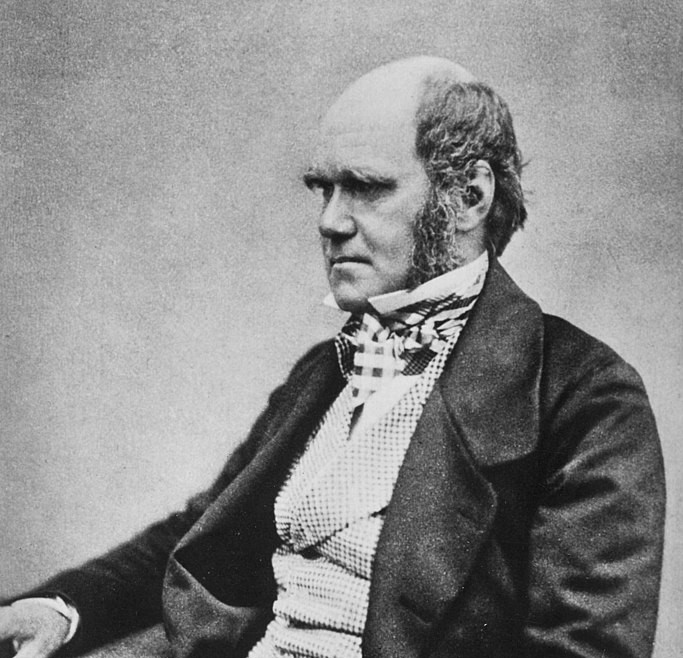
Charles Darwin circa 1854. Image courtesy of Wikimedia Commons.

Published March 1, 2009

By Janet Browne, Paul Ekman, Stuart Kauffman, Robert May, Massimo Pigliucci, and Charles Raison

The theory of natural selection that Charles Darwin first articulated in print in 1859 is still the fundamental idea on which all modern biological studies are based today. But Darwin’s observations of evolution and sexual selection among humans and other species have reached far beyond the field of biology, to influence, inspire, and inform nearly every scientific discipline.

Six leading scholars—historian Janet Browne, psychologist Paul Ekman, astronomist-physicist-biochemist Stuart Kauffman, theoretical physicist-environmental scientist Lord Robert May, geneticist-botanist-philosopher and “evo-devo” pioneer Massimo Pigliucci, and physician-behavioral scientist Charles Raison—write about how Darwin’s observations influenced their own work or field of research. Their respective comments illuminate the wide and varying influence Darwin continues to have on science and on humanity.

Documenting the Life of the Enigmatic 19th C. Scientist

By Janet Browne

Over the years Darwin has become a real person to me. As a historian of science and as one of his several biographers, I have spent some 15 years in his company, often on a daily basis. Through his letters I accompanied him on his Beagle adventures, followed the development of his theories, observed his anxieties about marriage, watched his family grow up, worried with him about illness, and felt heartbroken at the death of his daughter Annie.

Darwin was a traveler, a family man, a thinker, a much-loved husband, father, friend, and neighbor—a likeable and genial figure, as expressive in his letters as he must have been in life. Although his theories were first conceived in the smoky atmosphere of London, just after his return from the Beagle in 1836, his major books and articles were all researched and constructed in the domestic setting of his home at Down House in Kent.

An International Celebrity

There he lived for 40 years with his wife Emma Wedgwood and 10 children, of whom only seven survived to adulthood. The house still exists and is now a museum restored to show how it was in Darwin’s time. It is an inspiring place to visit, quiet and rural, and one can almost imagine Darwin stepping in through a doorway. Visitors used to record how he would greet them with an outstretched hand.

So, behind that large white Victorian beard, there existed a friendly, stimulating, often enigmatic personality, who still intrigues all those who come into contact with him. How could such a modest and retiring figure come up with the theory that made the modern world?

Writing about the famous has many advantages. Darwin was an eager and regular correspondent with a wide variety of people, and left a copious record of his activities, both personal and scientific. By the time of his death, he had become an international celebrity and many manuscripts were preserved by friends and family. Encountering this rich and varied archive—now primarily located in Cambridge University Library—was a major influence on the way that I began to reconceptualize the role that biography might play in the history of science.

The Circulation and Accreditation of Ideas

For too long, scientific biographies have been regarded as the lighter end of history, suitable mostly for bedtime reading. Instead, biography can also tell us much about the actual creation of science, from the first stirrings of new concepts in an individual’s mind, followed by the careful documentation and experiment that usually supports a scientific claim, on to the eventual publication and public response to fresh ideas. Biography can, in fact, illuminate what historians are beginning to call the circulation and accreditation of ideas.

It seemed to me that this modern rethink provided a good opportunity to explore the movement of Darwin’s evolutionary ideas from the privacy of his own mind, as expressed in letters and notebooks during his most creative years on the Beagle voyage and immediately afterwards, to the extraordinary public controversy that erupted after he published the Origin of Species. From private to public, from the Beagle years to the Origin of Species: Darwin’s intellectual trajectory provided me with a way to investigate the generation and acceptance of new ideas.

Janet Browne is Aramont Professor of the History of Science at Harvard University, and author of the highly acclaimed two-volume biographical study, Charles Darwin: Voyaging, published in 1995, and Charles Darwin: The Power of Place, published in 2002, which won the James Tait Black award for non-fiction in 2004, the W.H. Heinemann Prize from the Royal Literary Society, and the Pfizer Prize from the History of Science Society. She was also associate editor of the early volumes of The Correspondence of Charles Darwin.

Charles Darwin, the Dalai Lama, and Sentient Beings

By Paul Ekman

A few years ago, I had a series of conversations with the Dalai Lama about the nature of emotion and compassion reported in our book Emotional Awareness. [1] I explained recent research in which a monkey could get food only by delivering a shock to another monkey. If it was a familiar monkey, the hungry monkey did not attempt to get food for many days. The amount of delayed gratification decreased if it was an unfamiliar monkey, and even more if it was a monkey from a different species. [2] Nevertheless, even when the monkey who would suffer was unfamiliar and from another species, there was still some delay in responding to hunger.

This is consistent with Darwin’s report of such compassionate actions: “Many animals, however, certainly sympathize with each other’s distress or danger. … I have myself, seen a dog who never passed a great friend of his, a cat, without giving her a few licks with his tongue, a sure sign of a kind feeling in a dog. For with those animals which were benefited by living in close association, the individuals which took the greatest pleasure in society would best escape dangers. Whilst those that cared least for their comrades and lived solitarily would perish in great numbers.” [3]

Importantly Darwin draws our attention to the benefits of compassionate behavior, what de Waals calls reciprocity. [2]

Darwin and the Dalai Lama

The Dalai Lama responded to these examples saying: “I fully agree … in those animals, like turtles, [that do not interact] with the mother, I do not think they have the capacity to show affection. … Affection [between mother and offspring] brings them together. Without affection, there is no force to develop … [the necessary] willpower to face difficulties.” [1]

Darwin explained the origin of compassionate actions as follows: “The sight of another person enduring hunger, cold, fatigue revives in us some recollection of these states, which are painful even in the idea. And we are thus impelled to relieve the suffering of another in order that our own painful feelings may be at the same time relieved.” [1] The Dalai Lama completely agreed, pointing out that when he acts compassionately it helps him at least as much as he helps the person suffering.

Darwin also expressed exactly the same ethic that can be found in Buddhism scripts from centuries earlier: “As man advances in civilization, and small tribes are united into larger communities, the simplest reason would tell each individual that he ought to extend his social instincts and sympathies to all the members of the same nation, though personally unknown to him…there is only an artificial barrier to prevent his sympathies extending to the men of all nations and races.

The Dalai Lama a Darwinian

If indeed such men are separated from him by great differences in appearance or habits, experience, unfortunately, shows us how long it is before we look at them as our fellow creatures. Sympathy beyond the confines of man, that is, humanity to the lower animals seems to be one of the latest moral acquisitions. This virtue, one of the noblest with which man is endowed, seems to arise incidentally from our sympathies, becoming more tender and widely diffused, until they are extended to all sentient beings.” [1]

Hearing this, the Dalai Lama pronounced himself a Darwinian!

Paul Ekman is Professor Emeritus of Psychology at the University of California, San Francisco, Medical School and director of the Paul Ekman Group, a small company that produces training devices relevant to emotional skills and is initiating new research relevant to national security and law enforcement. Ekman is author and co-author of numerous books on the evolution of human facial expression, and was editor of Darwin and Facial Expression (1973), of the third edition of Darwin’s The Expression of the Emotions in Man and Animals (1998), and of the Annals of the New York Academy of Sciences, Vol. 1000, Dec. 2003, Emotions Inside Out: 130 Years after Darwin’s The Expression of the Emotions in Man and Animals.

Two Deep Issues in Evolutionary Theory

By Stuart Kauffman

Charles Darwin made what may be the greatest change in Western thinking. With him, history and historical processes emerge as a central focus for scientific thought. With Darwin, heritable variation, and natural selection, we have for the first time a start for understanding the becoming of the biosphere. In this short article I want to discuss two features of evolution that remain largely outside mainstream discussion of evolution yet are of central importance to the evolution of the biosphere.

First, Darwin did not know of self-organization. Today, in part due to the sciences of complexity and the computer as a kind of “macroscope,” we begin to see such self-organization. Does it play a role in evolution? If so, how does it mingle with selection as interwoven sources of order in organisms down the evolutionary pathways?

Second, what is the physical basis of the historical processes of which Darwin made us aware? We shall see that we are led to issues of the “open universe.”

Self-Organization

Darwin did not know about self-organization. Physicists do, of course, as in Benard cells and the Zhabotinski reaction. Snowflakes show six-fold exquisite symmetry without benefit of natural selection. Cholesterol dissolved in water forms liposomes, bi-lipid-layered vesicles that must be the origins of cell membranes but arise without selection. For many years I have studied models of genetic regulatory networks, where I have modeled genes as binary, on/off devices and studied random Boolean nets.

More than 40 years of work shows that such networks behave in either an ordered or a chaotic regime, separated by a critical phase transition. The ordered regime and the critical phase transition demonstrate astonishing order. I will not describe it here, other than to say that our intuitions about the requirements for dynamical order have been drastically wrong. And I add two thoughts. Such networks have dynamical attractors. I have long thought that cell types correspond to attractors. I have also hoped that cells are dynamically critical, poised at the edge of chaos. Some recent evidence suggests this may be true.

The Marriage of Self-Organization and Selection

If cells are critical, then we have before us an example of the marriage of self-organization and selection. In a parameter space concerning features such as the mean number of inputs per gene, the input distribution, biases on Boolean functions used in the network and so forth, critical networks are extremely rare, occurring on a critical surface in parameter space separating ordered from chaotic behavior. But if cells are critical, this suggests both that the generic self-organized behavior of complex non-linear dynamical systems such as genetic regulatory networks may readily afford “ordered” and critical dynamics without much selection, but that substantial selection is required to achieve and maintain critical behavior.

This means that we must rethink evolution. Selection is not the sole source of order in organisms. Neither is self-organization. We must understand both and their marriage. Somehow I think Darwin would have been delighted.

The Open Universe

Consider first the set of all possible proteins with a length of 200 amino acids. Since there are 20 kinds of amino acids, there are 20,200 such proteins. We can easily now synthesize any one of them.

Now consider that the universe is 1017 seconds old and has about 1080 particles in it. It is easy to calculate that, were the universe doing nothing on the Planck time scale of 10-43 seconds but making proteins length 200, it would take 1039 times the current lifetime of the universe to make all these proteins just once.

This means that once we are above the level of complexity of atoms, where all possible atoms exist in the universe, the universe is on a unique trajectory. We will never make all possible proteins, complex molecules, organs, organisms, social systems. The universe is indefinitely open “upward” in complexity. More, when the space of the possible is vastly larger than the space of the actual, history enters. Here is the root of Darwin’s historicity.

Reductionism

Now, suppose reductionism were right. Suppose that, when the science shall have been done, there really is some final theory as Nobel Laureate Steven Weinberg hoped, and perhaps still hopes, despite 10,500 string theories. Then all that exists in the universe would be entailed by that final theory, and the existence of all that exists would be explained.

What if reductionism fails? What if the becoming of the biosphere is partially lawless? Then the very existence of many things becomes a matter to conjure upon. Consider a hummingbird and a field of flowers. The hummingbird puts her beak into one flower to eat the nectar, some pollen rubs onto her beak and sticks to it. She flies to the next flower, eats some nectar, and the pollen from the first flower rubs off on the stamen of the second flower. The hummingbird pollinates the flower.

A Vast Mutualism

Suppose before the hummingbird left the first flower, all the pollen fell off her beak, or she regularly flew to a nearby tree to eat the nectar. Pollenization would not occur.

Thus it is by the quixotic fact of the stickiness of the hummingbird’s beak that both the hummingbird and the flowers exist and, with insects, have co-evolved for millions of years. They are conditions of one another’s physical existence in the universe by virtue of a mutualism. But the biosphere as a whole is a vast mutualism in the sense that all in it exist with only sunshine and a few minerals, making natural games by which all live and evolve. The ground of our existence, then, is not to be found in physics alone, but also in the partially lawless becoming of the biosphere, econosphere, culture that we self-consistently co-construct. (See Reinventing the Sacred, Kauffman, 2008.)

Darwin, it appears, started us down a path now beyond his stunning dreams.

Stuart Kauffman is Professor in the Department of Biological Sciences and Physics and Astronomy at the University of Calgary. He is also Director of the Institute for Biocomplexity and Informatics, as well as an Emeritus Professor of Biochemistry at the University of Pennsylvania, a MacArthur Fellow, and an external professor at the Santa Fe Institute. Originally a medical doctor, Kauff man’s primary work has been as a theoretical biologist studying the origin of life and molecular organization. He is the author of The Origins of Order, At Home in the Universe: The Search for the Laws of Self-Organization, Investigations, and Reinventing the Sacred: A New View of Science, Reason, and Religion.

Cooperation Among Nations in A Crowded & Changing World

By Robert May

In his own time, Darwin’s theory of evolution had serious scientific difficulties. For one thing, the physics of his day put a limit of a few million years both on the life of the sun, and for planet Earth to have cooled from a molten ball to a frozen mass. For another, prevailing ideas about “blending inheritance” were irreconcilable with preserving variability within populations, upon which his theory was based. Happily, the former difficulty was resolved by our discovery of nuclear forces (which fuel the sun and warm the earth by radioactive decays within its core) and the latter by rediscovery of Mendel (and consequent understanding of particulate inheritance by Hardy and Weinberg).

Darwin, however, arguably saw his most important unsolved problem as explaining how cooperative behavior among animals evolved. At first glance, the answer seems easy. You pay some small cost to gather a much larger cooperative benefit. For example, a prairie dog takes a personal risk in giving an alarm call, but all the colony benefits and, by taking turns as alarm giver, each individual’s group benefit exceeds the occasional risk.

But any such arrangement is immediately vulnerable to cheats who enjoy the benefits without paying the risk-taking dues. In evolutionary terms, such cheats have a selective advantage (today we would say their survivorship advantage means their genes are more represented in the next generation). So, it is unclear how such observed cooperative phenomena can arise or be maintained.

“Kin Selection”

Following work on “kin selection” by Hamilton and others a century after Darwin, we now understand how such cooperative associations can evolve and persist in relatively small groups of sufficiently closely related individuals. Moreover, these conditions could apply to humans when we were small bands of hunter-gatherers. But for large aggregations of essentially unrelated individuals, as developed once agriculture appeared and cities began, the origin of cooperative associations—with group benefits which exceed the “cost of membership”—remains as puzzling today as it was for Darwin.

Nor is this some abstract, academic problem. The past 150 years had seen the human population increase sevenfold, and the ecological footprint of the average individual also increase sevenfold, for an overall 50-fold rise in our impacts on the planet. And still these impacts are increasing. There are consequently huge and global problems—climate change, loss of biological diversity, pressure on water supplies, and much else—which demand globally cooperative solutions. These problems are further compounded by the fact that nations must cooperate, but in equitable proportions.

These problems have recently received much attention in the scholarly literature, employing a variety of metaphors: the Tragedy of the Commons; the Free-Rider problem; the Prisoner’s Dilemma; and others. These metaphors are allied to artificial games in which the subjects (usually undergraduates) trade small sums of money to test limits to altruism and tolerance of cheating. Incidentally, essentially none of this work involves the costs and benefits varying among the players, as it usually does in the real world.

A “Stabilization Matrix”

My own speculation about how cooperative human societies evolved is both less academic and analytic, and more gloomy. Once we move out of the mists of pre-history, we find stories of dreamtime, creation myths, ceremonies and initiation rites, spirits and gods, with a unifying theme that all seek simultaneously to help explain the external world and also to provide a “stabilization matrix” for a cohesive society.

There are, moreover, some striking and unexplained similarities in belief systems and rituals from different times and places. Conscience, a simple word for a complex concept which helps foster behaviour in accord with society’s professed norms, has been memorably defined by H. L. Mencken as “the inner voice which warns us that somebody might be looking.” And how helpful it is if that somebody is an all-seeing, all-knowing supernatural entity.

Common to these conjectured “stabilizing forces” in essentially all earlier societies are hierarchical structures, serving and interpreting the divine being or pantheon, along with unquestioning respect for authority. In such systems, faith trumps evidence.

But if indeed this is broadly the explanation for how cooperative behaviour has evolved and been maintained in human society, it could be Bad News. That is because, although such authoritarian systems seem to be good at preserving social coherence and an orderly society, they are, by the same token, not good at adapting to change. Diamond’s book, Collapse: How Societies Choose to Fail or Survive, provides striking examples.

A fundamental principle emerging from the Neo-Darwinian Revolution of around a century ago is Fisher’s Fundamental Theorem, which states that a population’s potential rate of change of gene frequency (which measures its ability to adapt to changing circumstances) is proportional to the variance in gene frequency, which will be small if essentially all individuals are well-adapted to their current environment.

An Inherent Tension Between Adaptedness and Adaptability

That is, there is an inherent tension between adaptedness and adaptability. If there is any substance in my speculations about the answer to Darwin’s problem in explaining cooperation in human societies, we again have a fundamental tension—at the level of the entire society—between, on the one hand, “ties that bind” and permit stably cooperative aggregations, and, on the other hand, ability to respond effectively to changing environmental circumstances.

It could even be argued that the recent rise of fundamentalism, in both East and West, is an illustration of this meta-level version of Fisher’s Fundamental Theorem, as complex faiths are reduced to intolerant ideologies to resist the challenge of societal change. It is a pity that Darwin is not here to help us.

Robert, Lord May of Oxford, holds a Professorship jointly at Ox-ford University and Imperial College, London, and is a Fellow of Merton College, Oxford. He was President of The Royal Society (2000-2005), and Chief Scientific Adviser to the UK Government and Head of the UK Office of Science and Technology (1995-2000). Prof. May has also served as a Personal Chair in Physics at Sydney University, Professor of Zoology and Chairman of the Research Board at Princeton, and Royal Society Research Professor at Oxford and Imperial College. He is recognized for his research into how populations are structured and respond to change, particularly with respect to infectious diseases and biodiversity.

Darwin, Evolution, Development

By Massimo Pigliucci

Charles Darwin had a difficult job in 1859: although a few people before him had floated the idea that living organisms evolve, no known mechanism for their alleged change over time was known, and little compelling evidence was available in favor of it. Indeed, the dominant paradigm among naturalists was William Paley’s inference from biological complexity to supernatural intelligent design.

Darwin met the challenge by amassing an impressive amount of observations that pointed to two conclusions: all living organisms share common ancestors, and the chief mechanism responsible for the appearance of a “fit” between organisms and their environment is natural selection. Part of the evidence brought into play by Darwin and other early evolutionary biologists in favor of the view of evolution came from developmental biology and consisted in showing that organisms of the same type (say, vertebrates) have very similar stages of development before they differentiate into the variety of adult forms that distinguish birds from reptiles and from mammals. This similarity in development was the result of their evolution from a common ancestor.

Despite its early central role in evolutionary biology, developmental biology remained a separate field of inquiry for most of the 20th century, especially during the 1940s, which brought us the mature version of evolutionary theory known as the Modern Synthesis.

Developmental Biology vs Evolutionary Biology

For decades biologists drew a sharp distinction between proximate and ultimate causes of the phenomena they studied: proximate causes deal with how living organisms are built (e.g., the molecules and developmental mechanisms that form the eye), while ultimate causes inquire into why they are built in a particular way (e.g., the eye’s function to capture information about the environment aids survival and reproduction). Developmental biology (as well as genetics and molecular biology) was thought to address the first type of question, while evolutionary biology remained focused on the second one.

This neat distinction between types of causes would have seemed strange to Darwin, and it is being rejected by modern evolutionary developmental biologists, who are inspired by Darwin’s comprehensive approach to understanding life’s history and diversity. During the 1990s a new field of research, nicknamed “evo-devo” for “evolution of development” emerged with the declared goal of once again joining the two disciplines. The fundamental idea was that knowing how organisms develop also gives us invaluable clues to how they evolved: the “how” question informs the “why” question.

My own interest in this area has been spurred by the possibility that taking development seriously will usher in an expanded version of evolutionary theory, one where new phenomena—unknown to Darwin and to 20th century biologists—play an hitherto unexpected role. Take for instance the idea of “evolvability.” The term refers to the fact that the ability of different lineages of organisms to evolve itself changes over time; that is, the very capacity for evolution evolves!

The Evolution of Particular Molecules

We have known for some time that populations of organisms with different amounts of genetic variation respond at different rates to natural selection, some evolving faster than others because they harbor more genetic variants that can be selected. But recent discoveries in developmental biology have presented us with the intriguing possibility that natural selection may favor the evolution of particular molecules (called “capacitors” of evolution), or arrangements of gene networks, that make it easier for a population to evolve in response to new environmental challenges.

The implications of these views are still being worked out, and both theoretical and empirical biologists feel the excitement of the opening up of new vistas on the process of evolution, a prospect that would have delighted Darwin. As he famously put it: “There is grandeur in this view of life … that, whilst this planet has gone cycling on according to the fixed law of gravity, from so simple a beginning endless forms most beautiful and most wonderful have been, and are being evolved.”

Massimo Pigliucci is a Professor of Ecology and Evolution and of Philosophy at Stony Brook University in New York. He holds doctorate degrees in genetics, botany, and philosophy, and is known as an outspoken opponent of creationism and staunch supporter of science education. In 1997, he received the Dobzhansky Prize from the Society for the Study of Evolution, which recognizes the accomplishments and future promise of an outstanding young evolutionary biologist.

An Evolutionary View of the Anti-Inflammatory, Compassion 

By Charles Raison

During recent lectures, I’ve found myself invoking the old saying “all roads lead to Rome” as a way of embarking on discussions of the multiple ways in which innate immune, autonomic, and neuroendocrine pathways converge to promote depression in response to stress and sickness. This old chestnut about Rome is also profoundly true in regards to evolution. The great Roman edifices of evolution are survival and reproduction: as long as the road a species is on eventually passes through these portals, that road is a viable path, regardless of the length of the journey or the variety of scenery on the way.

An immediate implication of this truth is that all things not prohibited by the twin mandates of survival and reproduction are allowed. Indeed, some theoreticians suggest that all things not prohibited must be manifested somewhere across the vast reaches of universal space and time. [4] Whether this is true or not, even a cursory look at the manifold pathways walked by life on earth makes the head spin.

As I type this I am sitting in the Arizona-Sonora Desert Museum, and just from the last hour of wandering I have seen species that have survived by being aggressive or being peaceful, by being solitary or being highly social, by killing other beings to eat or eating sunlight directly. Evolution is not mandatorily about egregious selfishness. It is about anything that works, and even our one fragile planet testifies to the fact that almost anything—done well—can represent a viable strategy through the vast labyrinth of evolutionary design space.

Increasingly, evolutionary scientists are recognizing that cooperation, connection, and reciprocity represent one such strategy, giving the lie to older simplistic ideas that evolution mandates a natural order that is unremittingly “red in tooth and claw”. [5]

Darwin’s Dangerous Idea

My realization of this truth while reading Darwin’s Dangerous Idea, by Daniel Dennett, permanently altered the direction of my research. [6] Prior to this realization, my professional work on inflammatory processes and psychiatric symptoms seemed unrelated to my hobbyist’s interest in the health benefits of psychosocial connectivity. [7] After the realization, I began to wonder whether social integration and inflammation might not be intimately locked in a struggle for the soul of humanity. Fueled by a hunger to bring evolutionary causality into my work with proximal mechanisms, I retooled my life’s work.

My idea of an unsuspected evolutionary link between love and immunity seems odd at first blush, but makes much more sense when seen against the backdrop of our phylogeny, in which natural selection has favored robust brain-body danger response pathways (including inflammation) to protect individuals against predators and pathogens—whether encountered through killing, being killed, or being infected. [8]

The Old Biology Persists

In the modern world, however, with its laws, medical expertise, and sanitary practices, our need for such hair-trigger inflammatory pathways has waned, because civilization has become an extended phenotype for battling pathogens against which our one reliable defense used to be inflammation. Nonetheless, the old biology persists, with nothing better to do most of the time than fire off in response to all sorts of novel situations against which it is of little use. Hence the contribution of stress-induced inflammation to all the major modern maladies—and the potential for social embeddedness to shoulder at least some of its burden.

This line of reasoning made me begin to wonder whether training people to re-envision their social surround in more positive terms might enhance health by attenuating inflammatory responses to psychosocial stress—a thought I never would have had without an evolutionary perspective. But we reasoned that if people could be encouraged to see the social world as being less threatening and more supportive, they would be less likely to activate danger pathways that trigger inflammatory responses, resulting in reduced wear and tear on the body and brain over time.

Tibetan Buddhist Compassion Meditation

To test this idea my colleagues and I selected what appears to me to be the most radical program ever designed to change how we view our social connections—Tibetan Buddhist compassion meditation. And indeed, data from our group do suggest that when people learn through compassion meditation to see the world more realistically (i.e. as a safer, more nurturing place) than our old danger pathways would advise, inflammatory responses are reduced and people become less upset in the face of the types of social stressors that provide such rich fodder for illness in the modern world. [9]

Of course, to tolerate reduced inflammation safely we must keep civilization intact, which in turn links compassion to odd bed partners like waste disposal and vaccines. But I am far over my word limit and these realities, alas, represent other roads to Rome.

Charles Raison is Assistant Professor in the Department of Psychiatry and Behavioral Sciences and Co-Director of Collaborative for Contemplative Studies at Emory University in Atlanta. He is a physician whose research ranges from immune system effects on central nervous system functioning to the application of compassion meditation as a strategy to prevent depressive symptoms in college students via reduction in stress-related inflammatory activity. He is also internationally recognized for his expertise in the diagnosis and treatment of interferon-alpha-induced depression and anxiety.

Works Cited

1. Emotional Awareness, Dalai Lama & Paul Ekman, New York: Henry Holt, 2008.

2. Primates and Philosophers, Frans B.M. de Waal, Princeton, NJ: Princeton University Press, 2006.

3. The Descent of Man, Charles Darwin, New York: Appleton and Company, 1871.

4. Deutsch D. The Fabric of Reality. New York: Penguin; 1997.

5. Wilson DL. Evolution for Everyone. New York: Delacorte Press; 2007.

6. Dennett DD. Darwin’s Dangerous Idea: Evolution and the Meanings of Life New York: Penguin Science; 1995.

7. Cacioppo JT. Loneliness: Human Nature and the Need for Social Connection. New York: W.W. Norton; 2008.

8. Raison CL, Capuron L, Miller AH. Cytokines sing the blues: inflammation and the pathogenesis of major depression. Trends in Immunology 2006;27(1):24-31.

9. Pace TWW, Negi LT, Adame DD, Cole SP, Sivilli TS, Brown T, Issa MJ, Raison CL. Effect of compassion meditation on neuroendocrine, innate immune and behavioral responses to psychosocial stress. Psychoneuroendocrinology 2008; Epub.

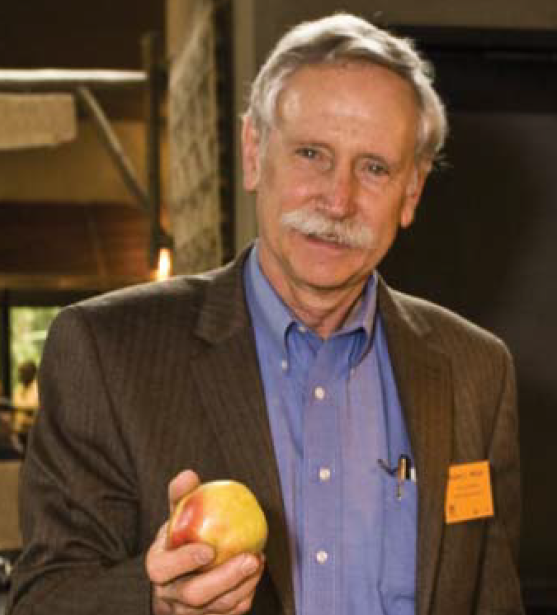
An Academy Member’s Work in Prime Time

A man shoots video of another man talking to the video camera.

For Academy member Paul Eckman, art imitates life as he lends his psychological expertise to a popular television show focused on snuffing out liars.

Published March 1, 2009

By Adrienne J. Burke

Image courtesy of kanpisut via stock.adobe.com.

Decades into a distinguished psychology career researching and decoding the facial expressions of people from California to Papua New Guinea, Paul Ekman, a member of The New York Academy of Sciences (the Academy), now finds himself dedicating half his time to a Fox Network television show.

A new series, Lie To Me, is based on the life work of the scientist known for developing the Facial Action Coding System to read the meaning in human expression. The show’s protagonist, Cal Lightman, is “the world’s leading deception expert” who assists law enforcement and government agencies by studying facial expressions and involuntary body language to discover whether and why someone is lying.

Ekman, who had attained celebrity scientist status over the years as he appeared on numerous outlets including Larry King, Oprah, Johnny Carson, and the Bill Moyers’ special The Truth About Lying, says the new Fox program “is an unusual role for a scientist in a television program, and an unusual television program to rely on science.”

The show’s genesis was a 2002 New Yorker article that described Ekman’s work. It caught the eye of Brian Grazer, head of Imagine Television and producer of the shows 24 and House and blockbuster movies such as The Titanic and Ghostbusters. “Brian contacted me and said ‘I love your work and I want to get it on TV and I want to get the right writer’,” says Ekman. Two years later, Ekman began collaborating with writer Samuel Baum and now has a contract with 20th Century Fox to critically review each script for scientific accuracy and plausibility.

Art Imitates Life

Paul Eckman. Photo by Michael Ian.

Ekman loans the show’s producers his private collection of materials depicting liars and truth tellers, and provides the show’s actors with video clips of him demonstrating some of the most difficult-to-perform facial expressions and gestures. Ekman also writes a weekly column, The Truth about Lie to Me, in which he elaborates on parts of that week’s episode that are based on science and explains which parts shouldn’t be taken seriously. For fans who want even more detail, Ekman pens a bimonthly newsletter about the nature of lying called Reading Between the Lies.

Ekman says that while many cases on the show draw on his own experiences, Fox’s writers are barred from basing personal aspects of Lightman’s character on him. For instance, Ekman says, “Cal Lightman is young, divorced, British, and has a strained relationship with his one child while I have a 30-year marriage and good relationships with my two children.”

Ekman says there are also some striking professional differences between him and the television version of the lie expert: “Lightman is always more certain than I am about everything. He solves in 24 hours what sometimes takes me six months. He has a better equipped, better looking lab than me. And I do work with a number of government agencies, but not as many as he’s working with. Clearly more branches are impressed with the usefulness of his work than the usefulness of mine!”

Nevertheless, Ekman says each case mimics work he is either doing at the moment or has undertaken in the past. “They haven’t done anything that I haven’t already done, but they’re doing more of it because they’re better funded and he’s younger than me!”

Also read: The Fraught and Fruitful Future of Fungi