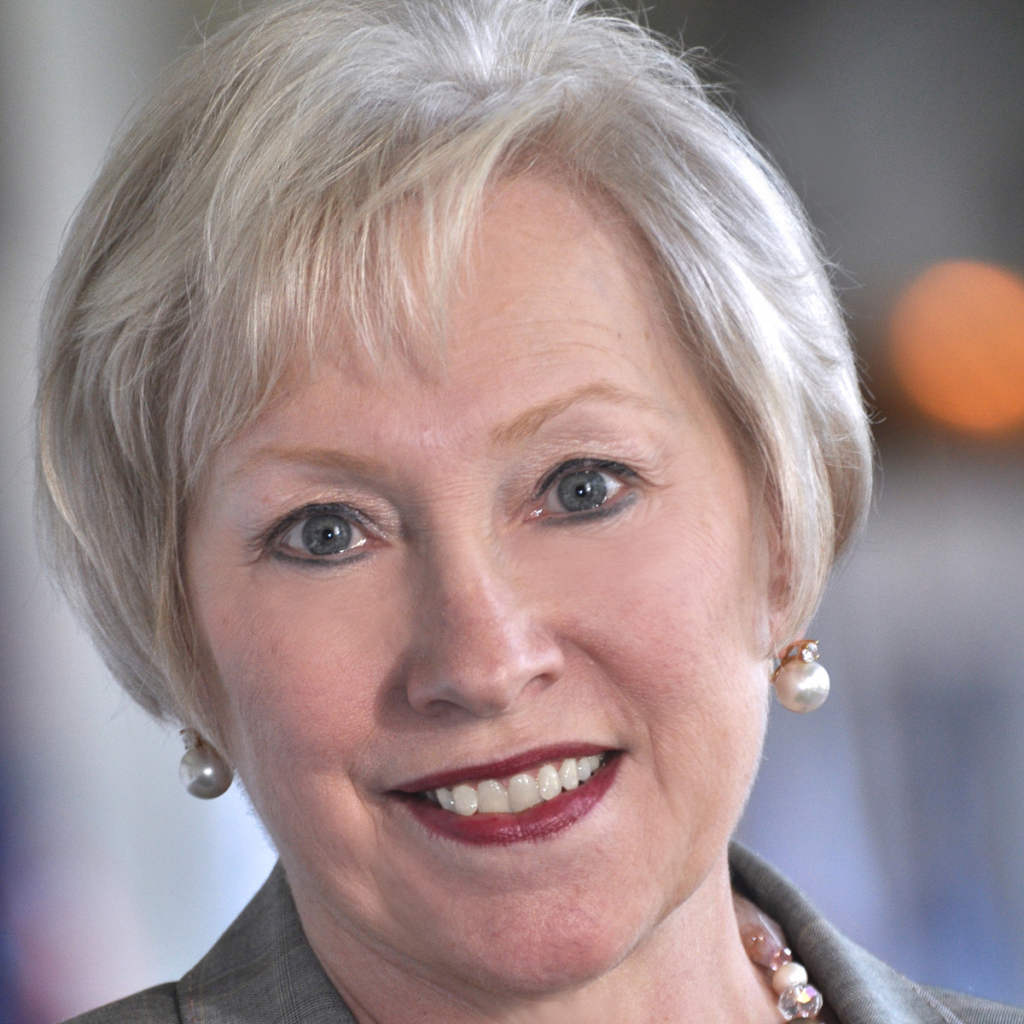
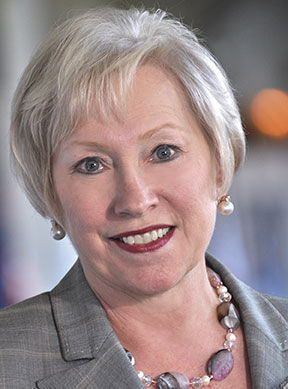
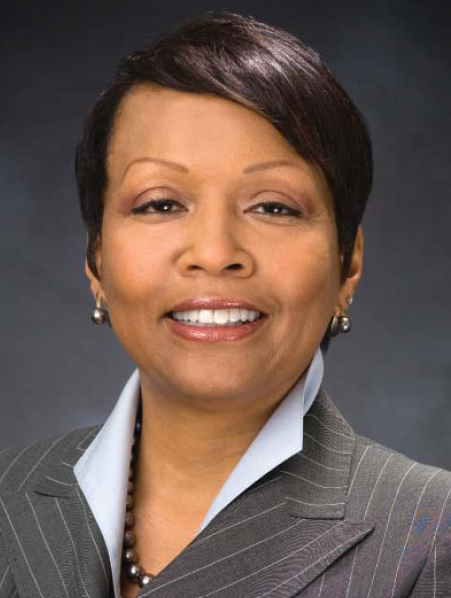
From rural one-room schoolhouse to Chancellor of the State University of New York, Nancy Zimpher has a diverse perspective on education.
Published May 1, 2011
By Marilynn Larkin
When Nancy Zimpher entered the one-room schoolhouse in the foothills of the Ozarks, she knew she was in trouble. “I was the sole teacher for four grades meshed into one classroom. The disconnect between how I had been prepared—as an English teacher—and what I was expected to do in the classroom couldn’t have been clearer,” Zimpher recalls.
“I hadn’t developed the disciplinary skills to stretch across that range of subjects. And I didn’t know as much as I needed to know about managing a classroom. I also didn’t know enough about how young people developed cognitively and emotionally and socially at different grade levels. And I didn’t know how to provide for students the kinds of extracurricular and home life assistance that were required in what we now call a ‘high-needs’ school.”
That experience, in the early 1970s, helped shape Zimpher’s career, which ultimately took her out of the classroom and into the spotlight as a passionate advocate and respected leader in transforming education for students as well as teachers. In her current role as Chancellor of the State University of New York (SUNY), a post she accepted in 2009, Zimpher has continued her efforts to revitalize the educational system, focusing on New York State as a model for the nation.
Education Pipeline
“It’s not unusual for teachers to be teaching out of their depth and out of their discipline, often certified on some emergency basis to teach in some of the most challenging environments. This indicates that the supply chain is quite broken,” Zimpher says. “In terms of solutions, what started as a little ball rolling down the hill has become a huge issue that is coming together at this stage of my professional career through my work at SUNY, where we’re creating models that enable a very different approach to education.”
At the heart of Zimpher’s vision is an “education pipeline” that encompasses “everything people are learning at home and in schools, from the time they’re born through college graduation and as they pursue a career,” she explains. “We need to make a more connected pathway, supporting students not only in the classroom, but outside of school, in their families, in their neighborhoods, and in the whole social structure of our communities,” she says. This systemic approach is exemplified in two recent initiatives she spearheaded: Strive and the National Cradle to Career Network.
Strive, which Zimpher helped launch in Ohio when she was president of the University of Cincinnati, has since been adopted by a number of other cities across the United States, including Houston, Richmond, and Portland, Ore. The initiative brings together, among others, teachers, school district superintendents, college and university presidents, business leaders, and early childhood advocates—experts who usually work in their own “silos,” she says.
Working Across Sectors
By encouraging these individuals to work together across sectors, Strive aims to ensure that children are better prepared for school, supported inside and outside of school, succeed academically, enroll in some form of postsecondary education, graduate and embark on a career. Its most recent “report card” and other data how that in participating cities, Strive implementation has increased academic achievement, kindergarten preparedness, and college graduation rates.
The National Cradle to Career Network, launched in February 2011, is modeled after Strive, bringing together parents, teachers, administrators, and thought leaders from pre-kindergarten through higher education, as well as representatives from industry, community organizations, and government. For the prototype network, which is being developed in and around Albany, SUNY will collaborate with the Albany city school district, several regional SUNY campuses, and local governments and nonprofit organizations. Similar networks will soon be underway in Buffalo and in the borough of Brooklyn, in New York City.
“Clinical” Curriculum
Zimpher emphasizes that teachers “are in a practice-based Profession like doctors, nurses, and clinical psychologists, and they need a whole series of on-campus laboratory experiences, simulations, and video demonstrations to begin to understand the culture of specific schools and classrooms. Even when they’re sent out to a school to observe, they typically don’t know what to look for. Therefore, they cannot see.”
Convinced that clinical preparation should be the “centerpiece” of teacher education, Zimpher agreed to co-chair with former Colorado Commissioner of Education Dwight Jones the Blue Ribbon Panel on Clinical Preparation and Partnerships for Improved Student Learning, convened by the National Council for Accreditation of Teacher Education in November 2010.
In line with Zimpher’s approach, the expert panel called for teacher education to be “turned upside down” and refocused on clinical practice; as in the medical preparation model, “teachers, mentors, and coaches, and teacher interns and residents [will] work together as part of teams.” Stronger oversight by states and accreditation agencies is also recommended to ensure that teacher preparation programs become more accountable.
Thus far, New York, California, Colorado, Louisiana, Maryland, Ohio, Oregon, and Tennessee have agreed to implement the panel’s recommendations.
Power of SUNY…and the Academy
Shortly after she came on board at SUNY, Zimpher launched a strategic plan, called The Power of SUNY, with the goal of making the university system an “economic engine” for New York State. Not surprisingly, a “seamless education pipeline” is a key objective. The plan highlights the increasing need for workers with knowledge and skills in science, technology, engineering, and mathematics (STEM)—the very areas in which performance drops as students move from elementary school through high school.
SUNY is the largest higher education system in the United States, with more than 467,000 students on 64 campuses. Its breadth, scope, and potential are what drew Zimpher to her current post. “Over my 40 years in higher education, I’ve seen a great deal of innovation, but it all had the look of a cottage industry—boutique innovations that are very difficult to take to scale,” she says.
“I saw coming to SUNY as a one-of-a-kind opportunity to take innovation to scale at every level—in education, in the sciences, in art, and in healthcare. My greatest desire for an accomplishment is to realize the power of this complex, diverse system by implementing innovative ideas across multiple campuses.”
That aspiration propelled Zimpher to join The New York Academy of Sciences’ Board of Governors, largely because of the Academy’s “strong commitment to education and, in particular, to the STEM disciplines,” she says. “Linking SUNY’s many scientists, faculty, and graduate students to the Academy’s scientific community has the potential to yield mutual benefits on a huge scale.”
Global Affairs and Outreach
Zimpher also was attracted to the Academy’s international projects and connections. “These dovetail with our desire to better coordinate SUNY’s global affairs and outreach,” she explains. “Many people talk very vehemently about how America’s educational system lags behind those of other countries. Some of what ails our system is being taken care of in other systems.
Nevertheless, as word got out about our cradle-to-career partnerships, people in other countries learned about them on the web, and have begun to solicit our advice. So, I’m thinking that all educational systems around the world get pieces of the comprehensive picture right. But the whole picture—the need to imbue the education process with academic, cultural, and social investments in our future—is something that everybody is challenged with. And that means we have an opportunity to be a model.”
Zimpher’s passion for teaching and revamping the educational system has deep roots. Although her experience in the one-room schoolhouse was a precipitating factor, the foundation was laid much earlier. Her father was a principal in a Herndon, West Virginia, elementary school when he met her mother, who came from Kentucky to teach “commercial” classes in the local high school. “Commercial classes were taken mainly by women who were not college-bound,” Zimpher notes. “Ironically, though, these classes included the one subject that has the most value for us in the 21st century—keyboarding [typing].
“Another irony is that my mother placed students in cooperative internships in local businesses, and years later I learned that the city of Cincinnati was the founder of cooperative education, close to a hundred years ago,” Zimpher says. “And here I am now, working diligently to bring paid internships and cooperative education to scale in New York.”
About the Author
Marilynn Larkin is an independent health, medical, science editor and writer in New York City.
The green building community has made significant progress in designing and constructing energy neutral or ‘net-zero energy buildings’ (nZEBs), but these buildings are rare and are generally relatively low-intensity-use structures under 15,000 square feet. Now the community is developing strategies to scale up and to make the buildings more commonplace within the industry. On January 25, 2011, three speakers presented inspiring projects that are achieving new levels of sustainability in a challenging marketplace. They provided insights into metrics of success, best practices, trends, and prospects in the realm of low/net-zero energy building development.
Paul Torcellini, a commercial buildings researcher at the National Renewable Energy Laboratory (NREL), described the goals and vision that guided the design of the NREL–RSF (NREL–Research Support Facility) building. NREL preferred a design-build bid that would meet as many goals as possible from NREL’s list of priorities.
The energy goals held particular significance. According to Torcellini, the success of the NREL-RSF design-build process was that it provided performance-based guidelines rather than design solutions—thus allowing the design-build contractors to be creative and develop their designs within the performance guidelines. The resulting building, which represents a great step forward in the net-zero energy realm, was constructed with the budget typical for a regular office building. Most of that budget was spent on design and modeling rather than on construction.
Human Behavior: The “Final Frontier”
The value of such a front-loaded design process was echoed by Philip Macey who leads Haselden Construction’s sustainable building division. Macey noted that the design form and function of the NREL-RSF were modeled to meet the energy goal. This required designing the building’s components for synergistic roles and multiple uses. Macey explained that designing with a ‘multi-purpose’ concept for a building’s elements was not new: architects have been applying the same idea to work within space constraints, but the difference this time was that the constraint was an unequivocal and precise energy savings goal. Macey articulated that being goal-oriented from the beginning was crucial to maintaining control, achieving those goals, and reaching project completion within budget.
Bert Gregory, Chairman and CEO of Mithun, expanded the discussion to neighborhoods, which can offer benefits unavailable to single buildings. For instance, integrating water systems is better achieved at the district scale. Gregory outlined several sustainable urban design projects where the goals varied from carbon neutrality, to water neutrality, and, in the case of Mithun’s Lloyd Crossing project, to having a neighborhood that has an environmental footprint equivalent to that of a native Northwest forest by 2050. The Lloyd Crossing project aims to transform the Lloyd district study area, a 35-block area in Portland, Oregon, into an environmentally and financially sustainable community.
In all his examples, the goals and performance metrics were stated at the outset and were followed by the development of strategies to achieve these goals within constraints such as zoning regulations, electricity demand reduction capabilities, renewable energy generation capacity, resource recovery, governance models, financing, and human behavior. According to Gregory, when it comes to achieving the energy saving goals of demand-side management initiatives, human behavior is the “final frontier.”
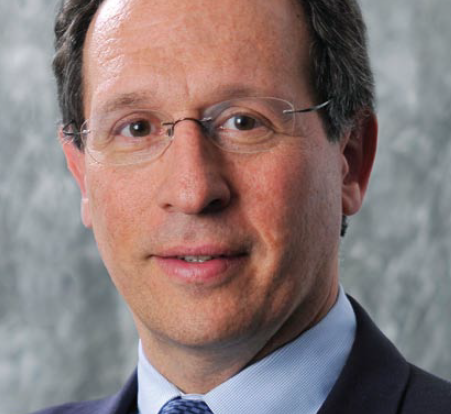
Steve Hochberg has put The New York Academy of Sciences in the position to support life-science entrepreneurs and the impactful work they do.
Published March 1, 2011
By Adam Ludwig
Steve Hochberg.
Behind every medical technology breakthrough—whether it’s a new drug that improves everyday life or a novel device that revolutionizes a surgical procedure—lies years of painstaking research, testing, verification, and investment. Transforming ideas into potentially life-saving innovations involves a diverse set of players that can include student researchers, physicians, lawyers, government regulators, and entrepreneurs. This complex interplay relies on a cross-pollination of expertise that can find businesspeople donning lab coats and cardiologists polishing their dress shoes for a fundraising luncheon.
Steve Hochberg, a Board Governor for The New York Academy of Sciences (the Academy) and co-founder of 12 companies, believes entrepreneurial tenacity is the key to forging real-world applications from pure scientific ingenuity. He is co-founder of Ascent Biomedical Ventures, a company that has helped bring an impressive array of medical technologies and pharmaceuticals to market. Among the many products his firm has had a hand in developing: medical scaffolding for soft tissue repair, including tendons, hernias, and aneurisms; a minimally invasive cage for performing spinal fusions; and dermal absorption drug delivery techniques.
Hochberg has an impressive record of matching scientific ingenuity with money and management. Beyond being a generous donor to the Academy, throughout his four years serving as an Academy Governor, Hochberg has also been active in recruiting new board members and raising funds, and he wondered how the Academy could get involved in furthering innovation in the greater New York area. So when Milena Adamian, an interventional cardiologist with Wall Street and venture capital experience, contacted him with the idea of creating an angel network to fund biomedical companies in the pre-institutional-financing stage, Hochberg immediately suggested the Academy as a venue.
The Life Sciences Angel Network
Thanks in part to seed funding that he provided, the Academy’s Life Sciences Angel Network (LSAN) was launched in November 2010, with Adamian as Director and Hochberg chairing the Screening and Investment Committee. Together, they recruited physicians, academics, lawyers, entrepreneurs, and technical developers to serve on the Committee, which closely reviews each project before presenting it to LSAN’s group of angel investors.
Taking a cue from Hochberg’s work at Ascent, which produces safe and effective clinical data from new therapeutic ideas—with the ultimate goal of designing and implementing actual U.S. Food and Drug Administration (FDA) trials—the Committee scrutinizes candidates’ viability for clinical, regulatory, and commercial success before presenting them to potential investors in this notoriously risky field.
Hochberg describes LSAN’s role as “bridging the gap between the napkin stage and the clinical testing stage,” with the scribbled-on napkin representing the earliest germ of an idea. A $500,000 to $2 million investment from LSAN’s angels can lead to further research, helping to attract the next-stage institutional investment of between $2 million and over $10 million necessary to facilitate clinical trials. In short, LSAN can get companies over the hump before they receive the kind of investment necessary to bring innovations to market.
Looking for Unmet Clinical Needs
Hochberg is happy to report that the first three companies to submit proposals to LSAN all received financing offers. “We are looking for unmet clinical needs,” he says. “That doesn’t always mean that there isn’t some existing therapy out there; just that it could be greatly improved on.” For example, he points to hypertension, where new approaches are needed for people who aren’t responding to existing drugs.
What excites Hochberg most is the possibility that a scientific meeting could be convened at the Academy to discuss a novel life-science question, and within months a company might get financing for an innovation that addresses this very question, with the entire process shepherded by the Academy. “There are a lot of stakeholders that make up the Academy network,” says Hochberg. “At the end of the day, we want to create great therapies using the science and technology that exists in New York.”
Hochberg would never call himself a “renaissance entrepreneur,” but in many ways the label fits. In addition to his on-the-job science training and his involvement in developing medical technology and care delivery, Hochberg is vice chair of Continuum Health Partners, a six-hospital health system in New York City. He is co-founder of the award-winning Evening Land Vineyards and has helped publish books on the medical implications of obesity and the benefits of the Mediterranean diet. He’s also a professional positive thinker. When asked about the long-term prospects for the Academy’s LSAN to foster life-changing innovation, he replies, “I’m a venture capitalist; I’m an optimist by virtue of what I do every day.”
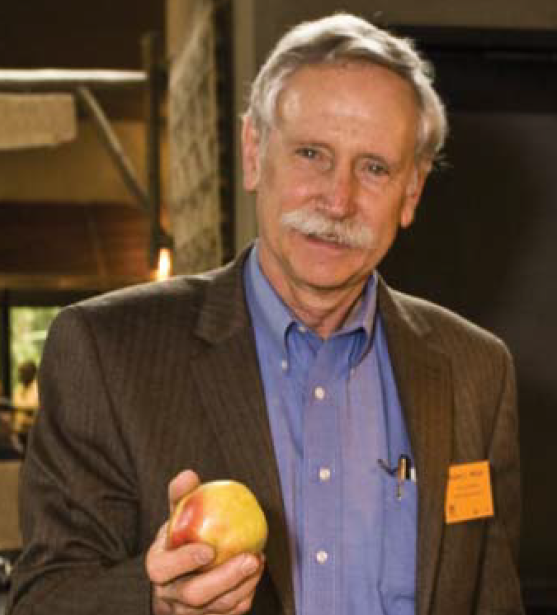
I grew up in Wisconsin and Michigan in a family that has been dairy farming for generations. While studying at Michigan State University, I grew vegetables–sweet corn, tomatoes, squash—that I sold to local grocery stores to support my studies.
I started off there in physics and food science. Then, I went on to medical school but took several electives on nutrition-related topics. I spent one summer on a reservation in the Upper Peninsula of Michigan doing a health and nutrition survey. I was shocked that 50 percent of adults in our survey had type-2 diabetes, and the study demonstrated to me how it was possible to collect very interesting and useful data about people’s diets with a simple structured questionnaire.
My papers on how diet relates to long-term health and disease have led to being the second-most-cited author in clinical medicine. Much of this work was conducted within the Nurses’ Health Study, which has provided a tremendous platform that continues to yield an expanding output of data as the subjects grow older.
The original focus of the study was breast cancer, but that allowed us to get funding to collect dietary data starting in 1980. The Nurses’ Health Study was the first large study to gather dietary data and follow a large number of people for many different outcomes. It’s also unique for having repeatedly updated dietary data every four years over time.
Diet and Cardiovascular Disease
Many of our findings flew in the face of conventional wisdom. I was interested in the 1970’s in the relationship between diet and cardiovascular disease and people were being told very strongly, as though it was absolutely established truth, that we should avoid eggs to prevent heart disease and give up saturated fat.
When I dug into the literature supporting this, it was remarkably weak. In fact, there were no studies that showed that people who ate more eggs had higher risk of heart attacks, and the few small studies showed no relationship. It became apparent to me that a strong body of empirical evidence was needed if we were going to be giving guidance to individuals or the public.
During that time, several epidemiologists were documenting that rates of many cancers around the world varied tremendously. For example, the rates of breast cancer in post-menopausal women in Japan were only about one-eighth of those in the U.S. That obviously provokes the question, why? When I was in medical school, no one really asked why these things were happening, why people get cancer. When I went to the Harvard School of Public Health, people in the Department of Epidemiology were asking those questions.
The Department Chair at the time, Brian MacMahon, said there were some suggestions that diet might be important in the cause or prevention of cancer. That sounded like a pretty radical statement. The evidence was very scattered and not very strong, but the topic seemed worth investigating. What has unfolded has been surprising. Many highly controversial at first, but the finding has been replicated repeatedly and it’s accepted now.
Research Leads to Regulation of Trans Fats
There had been a belief that the percentage of calories from fat in the diet was the main reason why breast cancer rates were higher in the U.S. than in Japan and in developing countries. That idea turned out to be not supported by the data. Trans fats appeared early on as a problem. Experts in the cardiovascular field had been telling people to replace butter with margarine and Crisco to reduce cholesterol and saturated fat. But it turned out that those foods were very high in trans fats and were even worse than the foods they were meant to be replacing.
I was attacked, but most of these findings have become accepted with time. It took about 10 years to get FDA to require that trans fats be included on food labels. Just a few weeks ago, The New England Journal of Medicine published a letter by one of our junior colleagues showing that in prepared foods, restaurant foods, and main national chains the amounts of trans fats have been reduced by about 90 percent. There’s been a huge change in the last three or four years in the national food supply and probably in everybody’s body. If you actually stuck in a needle and analyzed your tissues, you’d find a big difference.
In the field of nutrition, the tools did not exist to answer the most important questions: How does what I eat affect my long-term health and wellbeing? The bridge between epidemiology and nutrition provides a way to these answers.
A UN General Assembly Week event stressed the need for global collaboration in developing science and technology solutions to the most pressing problems of poor communities.
Published September 23, 2010
By Adrienne J. Burke
A solar-powered autoclave for sterilizing surgical instruments in the field, a portable irrigation system that instantly converts saltwater to fresh water, and a bicycle that can be converted to a corn sheller or cell-phone charger were among the innovative and inexpensive technologies introduced by 18 teams of inventors at a science fair and development forum yesterday.
The Science, Technology & Innovation Forum, hosted by the U.S. Agency for International Development (USAID) and The New York Academy of Sciences (the Academy) during UN Week festivities, highlighted the work of teams of inventors from laboratories at world-class public, private, and academic organizations that have made the integration and application of science, technology, and innovation for development their primary goal. The event also featured several talks about the importance of innovative science and technology and global collaboration to solve problems with and for communities in need.
“Many of today’s global challenges are shared and require solutions that cross borders, sectors, and disciplines, and addressing these issues cannot be met without appropriate scientific knowledge and technological expertise,” said Rajiv Shah, MD, USAID Administrator. In announcing USAID’s Grand Challenges for Development strategy, which is designed to solve some of the most difficult development problems facing those in need in all parts of the world, Dr. Shah said, “At USAID, unleashing new technologies and game-changing innovations means taking a new approach and we intend to target our investments in areas where we can have the greatest impacts, improving the lives of millions.”
Integrating Better Science, Technology, and Innovation
Dr. Shah noted that there is unprecedented momentum within USAID and among many government, host-country, foundation, and private sector partners to integrate better science, technology, and innovation to solve today’s most pressing needs using frugal, high-impact, life-saving, and income-producing products and technologies.
Quarraisha Abdool Karim, PhD, leader of a scientific trial supported by USAID that showed promise for a microbicide-based method of protecting women from HIV infection, highlighted the importance of partnerships between research, public health, and business communities that were critical to this breakthrough. And Shaifali Puri, Executive Director of the Academy’s own Scientists Without Borders initiative, discussed a new approach to cross-sector global collaboration: the Scientists Without Borders open innovation web platform. “Our novel tools provide dynamic and meaningful ways for passionate problem-solvers from all sectors, disciplines, and geographies to engage their expertise, connect with others similarly interested, and exchange resources and knowledge to improve the quality of life for the world’s poorest people,” Puri said.
All of the inventions exhibited, including the Bicilavadora pedal-powered washing machine, the Dirt Power microbial fuel cell battery, and the Spiral Pine Needle Cookstove, are already in use or are poised to enter the marketplace, and all have significant lifesaving and income-producing impact or potential.
An innovative grant from the Manhattan Borough President will lead to new programming at the Academy, which aims to spur economic and technological growth in the city.
Published September 1, 2010
By Adam Ludwig
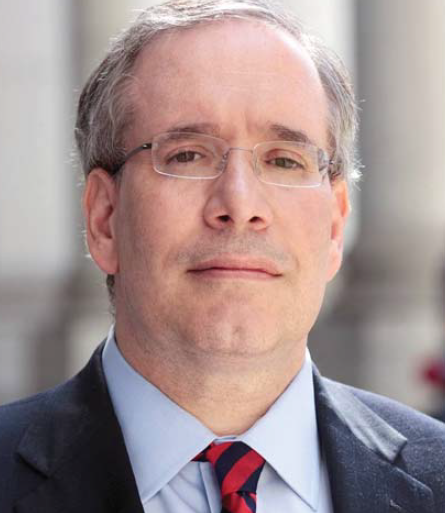
Scott Stringer
When The New York Academy of Sciences (the Academy) applied to the Office of Manhattan Borough President Scott Stringer for funding to optimize its webinar broadcasting capabilities, it could hardly have expected a more enthusiastic response. Stringer has a strong vision about how to bridge New York’s science and business communities to promote new industry and stimulate job growth. Seeing how the Academy uses new media to extend the reach of its activities, he recognized the potential for a dynamic collaboration.
The Academy’s proposal calls for an overhaul of its webinar production and networking equipment—including upgraded HD cameras, recorders, routers, switches, server storage, and a new fiber-based internet connection—in order to enhance online broadcasts that reach its membership base of 25,000 scientists and students, and beyond. Existing Academy web-based outreach includes Science & the City’s programs for the general public; conferences, symposia, and discussion groups for the scientific community; career counseling and networking opportunities for science students through the Science Alliance program; and the Academy’s newly launched New York City Science Education Initiative.
While acknowledging the value of enhancing the Academy’s educational mission, Stringer’s approval of a $265,000 grant also comes with a counterproposal. He wants to see the Academy expand the purview of its webinar series to promote economic development in New York by nurturing science entrepreneurs and connecting scientists to the business community.
A New Series of Interactive Online Webinars
With the equipment upgrade and expansion, the Academy will launch a new series of interactive online webinars focused on giving scientists access to available resources that will help them create more science- and technology-based jobs in New York City. Through live programming, the Academy currently strives to help science and technology entrepreneurs turn their ideas and discoveries into businesses and jobs. The new webinar offerings will enhance these programs, supplying an accessible and flexible forum where scientists can gain an understanding of all the facets involved in an early-stage venture.
Stringer’s support of the Academy dates to 2006, when he advocated for an $800,000 grant from the Lower Manhattan Development Corporation to outfit the Academy’s new space at 7 World Trade Center. He says he appreciates the unique potential of science and technology as catalysts for job creation. Too often, science and business are “two ships passing in the night,” he says. “There are smart people with great ideas in the science community,” he notes, “but they miss greater opportunities because they are isolated from the business side.”
Stimulus from local government is just one of the instruments that can foster a strong connection between science and business, and Stringer’s faith in this model is rooted in a vision of how the city might look in 20 years. “Look at where the Academy is located,” he says, gesturing towards the view from his Centre Street office. “It’s right next to Wall Street.” Stringer sees this proximity as favorable for the emergence of a new Silicon Alley, with the Academy’s webinar capabilities functioning as a tool to stimulate business investment in science and technology initiatives throughout the city.
Cross-Pollination of the Science and Business Communities
Stringer would like to see “the next Google in Manhattan, the next Apple in Queens, the next food-production idea in the Bronx,” and he knows that the push to capitalize and market scientific innovation has to come from both public and private sources. A plugged-in Wall Street will generate corporate investment in new technology, but the city and the state have to promote an atmosphere in which scientists and businesspeople stay connected, he says.
Stringer’s vision for the cross-pollination of New York’s science and business communities is part of a larger plan to address the economic slowdown, as well as state- and citywide budget shortfalls. “Taxing Ring Dings and cutting jobs is not a long- term solution,” he says. Having the wherewithal to exploit innovation in science and technology, Stringer believes, offers the best hope for economic revitalization, and he is optimistic about the city’s future. “We’ve always gotten there,” he says. “New York is a magnet city. How do we keep people coming? We grow the economy. Science and technology creates those jobs.”
When it comes to boosting the Academy’s role in the city’s future by supporting the webinar program, Stringer’s attitude is refreshingly transparent. “I’m very excited,” he says of the partnership.
Surely you’ve noticed: The scientific community is undergoing a research-and-data-sharing sea change. Perhaps slower to take to Web-based dissemination than some professions, science—the endeavor for which the World Wide Web was developed—has gradually been adopting new online methods for distributing knowledge. Some say the changes could accelerate scientific progress.
From open-access journals to research-review blogs, from collaboration by wiki to epidemiology by Blackberry, networked knowledge has made more science more accessible more quickly and to more people around the globe than could have been imagined 20 years ago.
And it’s not just new media businesses that are pioneering the Science 2.0 movement. Traditional scientific journals are part of this social evolution too, innovating ways to engage scientists online and enable global collaboration and conversation. Even the 187-year-old Annals of the New York Academy of Sciences has joined the digital age. The Academy now permits free public access to selected online content and has digitized every volume dating back to 1823.
That wider, freer, faster access to scientific data and research results will benefit the world is, to many, intuitively obvious. “We work on the assumption that the reason we publish is to keep science moving forward,” says Public Library of Science founder Harold Varmus. “If everybody can see the work that we do, and new work is built on what’s come before, science moves faster.”
Varmus is among a cadre of iconoclasts calling for immediate open access to scientific papers. They’re impatient for colleagues to give up their allegiance to the conventional process that they say keeps new research under wraps for too long. And they’re eager for publishers to break out of business models that require a paid subscription to read the most current publications.
To be sure, some changes are easier advocated than adopted. The most esteemed peer-review journals have taken great leaps toward openness in the last decade. Some now help readers network with each other online or enable posting on their Web sites of commentary and conversations about scientific publications. Many make papers openly accessible after a certain time. But how to sustain a business that publishes peer-vetted, high-quality content without requiring payment for access remains a hotly debated question.
As Varmus himself points out, the essential importance of the scientific paper has a lot to do with why it’s not just for-profit publishers, but scientists themselves who are moving toward open access with such caution. “Publication is not an addendum to, but the heart of the career of scientists,” he says. “The way you’ve built a legacy is through your publication—it’s the most important thing you do.” To give up the emotional reward of seeing their research published in a distinguished journal is a lot to ask of scientists raised in this tradition.
Seed Media Group CEO Adam Bly hints at how the up-and-coming generation of scientists—the so-called “digital natives” who’ve never known a world without the Internet—might move science past the paid-access paper. Says Bly, “In a Seed research study, one scientist said to us, ‘The soul of your identity is on the Web, because it is your most direct form of communication out into the wide world. You have a great degree of control over how you present yourself, your ideas, and your findings, and it’s fast, and it’s free.’”
For help considering whether the desire for open access contradicts the value of peer evaluation and envisioning what the future of science publishing could look like, The New York Academy of Sciences spoke with Varmus, Bly, and five other pioneers at the forefront of the Science 2.0 movement. These experts in Web technology, publishing, law, and science have the vision and passion to change the future of the way you work. As Bly says, “Open science is not this maverick idea; it’s becoming reality.”
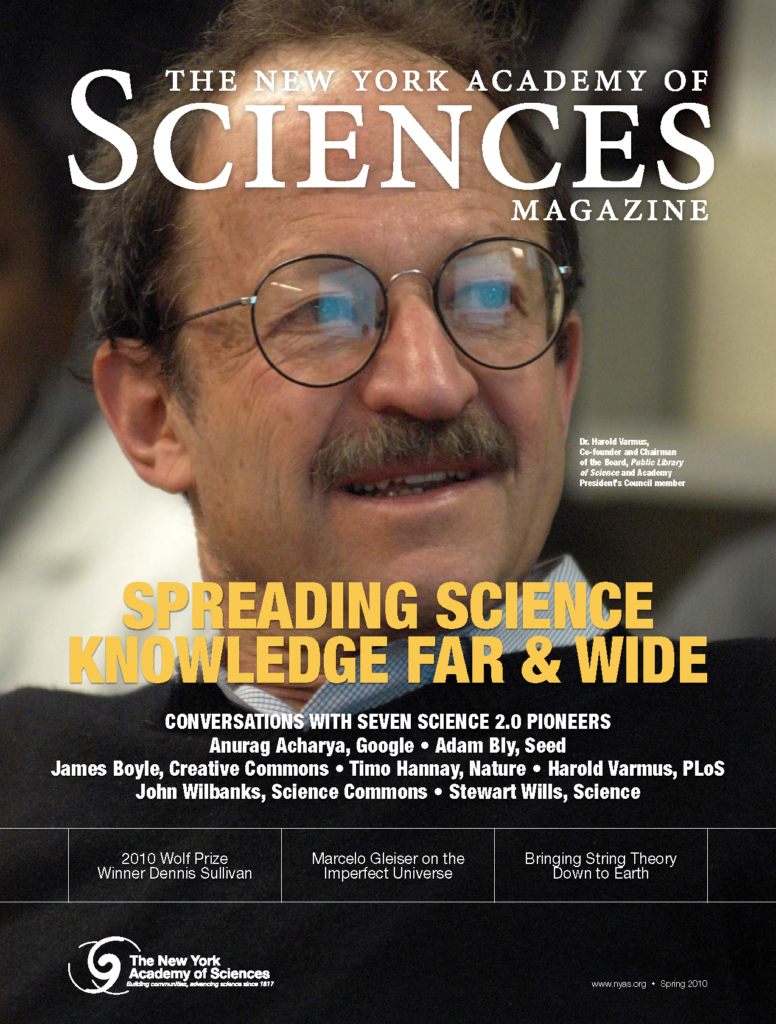
Harold Varmus: Co-founder and Chairman of the Board, Public Library of Science
This story originally appeared in the Spring 2010 edition of The New York Academy of Sciences Magazine.
Harold Varmus, a Nobel Laureate, President and CEO of Memorial Sloan-Kettering Cancer Center, and member of the Academy’s President’s Council, led the team of biomedical scientists who set out in October 2000 to liberate access to scientific research in their field by petitioning publishers to post peer-reviewed papers in free, public online archives.
Varmus and his cohorts ultimately launched a nonprofit open-access publishing venture, which achieved financial sustainability this year. The Public Library of Science journals—there are now seven of them at www.plos.org—make scientific papers immediately available online, with no charges for access and no restrictions on subsequent redistribution or use, as long as the authors and source are cited, as specified by the Creative Commons Attribution License.
Would you define what you mean by “open access.”
Some people think that if their content is online it’s “open access.” That’s not the case. “Public access” is what the National Institutes of Health now operates under; if your work is supported by the NIH, then you must be sure that it’s available in less than a year on a public database like PubMed Central. That was a big victory for us, but it’s not anywhere near the goal.
True “open access” is different from “public access.” It means that the author holds the copyrights, that the journal places the work immediately and freely in the public domain under a Creative Common license or something equivalent to it, and that the work is in public libraries and available for all kinds of reasonable use, as long as attribution is maintained.
Have scientists been slow to embrace submitting their work to open access journals?
There’s now pretty wide acceptance of Public Library of Science journals, but most of my colleagues are still tormented by the need to publish in Nature, Cell, and Science, which are not open access journals. This is about much more than just publishing; it’s about values in the scientific academic community. Biomedical trainees are completely obsessed with the idea that they can’t get a job unless they publish papers in Nature, Cell, and Science. This is unfortunate, because those journals are going to be the last to go completely open access.
PLoS is now publishing far more research than any of those journals, isn’t it?
Yes. We publish over 600 articles a month. The only way you really can change the culture is to take on those top journals, so we decided we would publish two journals, PLoS Medicine and PLoS Biology, to compete with the very best.
We’ve achieved a high level of credibility for PLoS Medicine and PLoS Biology. They’re so-called high-impact journals. But to do that means rejecting a lot of articles, which gets expensive because of the costs of reviewing articles that do not get published. We afford those two journals because we make very modest amounts of money from other higher volume journals and we cover the cost of the whole enterprise by balancing things out.
What about the importance of the impact factor in scientific publishing?
The impact factor is a completely flawed metric and it’s a source of a lot of unhappiness in the scientific community. Evaluating someone’s scientific productivity by looking at the number of papers they published in journals with impact factors over a certain level is poisonous to the system. A couple of folks are acting as gatekeepers to the distribution of information, and this is a very bad system. It really slows progress by keeping ideas and experiments out of the public domain until reviewers have been satisfied and authors are allowed to get their paper into the journal that they feel will advance their career.
What are some ways PLoS is taking knowledge-sharing to the next level?
One of the most important developments is not particular to open access journals, and that is the addition of online commentary. Here’s our opportunity to make every article an occasion for conversation and a way to have another kind of evaluation. I can imagine search and promotion committees of the future spending more time looking at the kind of commentary that a paper has elicited than calculating impact-factor scores.
We’ve tried another experiment in the last few months called PLoS Currents. We’ve done this with one subject so far—influenza, a topic of great interest with a need for rapid publication. We invite people to post in PLoS Currents anything that can be looked at by a board of curators in 24 hours. The point is to get an article or an idea or a single result into the public domain quickly so people can build on it.
Look at PLoS Currents: Influenza on our Web site and you’ll see it’s been quite a nice experiment. Some postings look like full-fledged articles, others look much more primitive, but most have anywhere from a few to 10 or 20 commentaries attached to them. This is a way for scientists to get others to comment while they’re still working.
Information can also be aggregated and put together in very useful ways on sites that we’ve been calling Hubs, a project still in development. The idea is to try to wrest deeper ideas out of aggregated material without violation of copyright. We hope to create communities that migrate to these sites every day and then use them as platforms for fostering their field. This is another way to make science more energized.
What would be one technical fix you’d wish for right now to enable more sharing of science?
We have problems about sharing in our community that are not very technical, and it’s important to keep those in mind. Getting people to share their reagents, their mice, their plasmids—there’s a problem. People seem to forget that they were paid by the government or by some charitable agency or an institution to do this work and that they don’t own it. Say you made a new transgenic mouse 10 years ago or even two years ago and somebody else wants it.
You ought to give it to them, and you don’t need cloud computing to do that. Before we make all sharing digital, let’s remember that there are some simple things that reflect community values that we don’t subscribe to with the kind of enthusiasm we should. Of course, we’d also like to see everyone publishing more papers in open-access journals, especially at PLoS!
Adam Bly: Founder & CEO, Seed Media Group
After a three-year stint researching cancer at Canada’s National Research Council while still a teenager, Adam Bly set out to launch a magazine to cover “the 21st century scientific renaissance.” Five years later, his Seed Media Group has expanded beyond its glossy print flagship, Seed, to launch several online products serving science, including: ScienceBlogs.com, a social media site reaching more than 2.5 million readers; ResearchBlogging.org, which aggregates and feeds to relevant journals blog conversations about the peer-reviewed research that they publish; and ScienceWide, a platform that aims to drive advertising dollars to support open-access science publications and other innovative online science tools. Bly’s company’s mantra: “We are inspired by the potential of science to improve the state of the world, and we make media and technology to help realize that potential.”
What do you mean when you say that science publishing needs to adopt a digital core?
Science has gone digital. Open science is not this maverick idea; it’s becoming reality. About 35 percent of scientists are using things like blogs to consume and produce content. There is an explosion of online tools and platforms available to scientists, ranging from Web 2.0 tools modified or created for the scientific world to Web sites that are doing amazing things with video, lab notebooks, and social networking.
There are thousands of scientific software programs freely available online and tens of millions of science, technology, and math journal articles online. What’s missing is the vision and infrastructure to bring together all of the various changes and new players across this Science 2.0 landscape so that it’s simple, scalable, and sustainable—so that it makes research better.
How will that happen?
To affect this kind of change is a grand challenge and will take the participation of many stakeholders—from government agencies to funding bodies to scientists themselves. The next generation of PIs is already establishing new behaviors. They feel comfortable blogging, using social media tools, and using wikis to advance their research. It will take the big institutions to support open-access journals, for example. And it will take technological innovation in the form of software that is purpose-built for this unique community and its set of challenges.
The culture of science resists change to science itself, and it’s important that it does. Part of that is practical: nobody sets rules for all of science. So it might take 10 or 20 years or more to effect a complete transformation. We’re talking about something as fundamental and important as modernizing the architecture of science.
What are some ways your company is contributing to this transformation?
We’re listening to scientists and introducing software and digital and social media platforms to help spur and support this transformation. Any scientist who blogs anywhere can now go onto ResearchBlogging.org and download free software that we’ve built that allows them to easily affix to a post the digital object identifier (DOI) of the scientific paper they’re blogging about along with some metadata.
We’re aggregating all of the conversations that are happening around that specific paper, and, through ResearchBlogging Connect, feeding the conversations back to scientists and journals in the form of widgets and RSS feeds. Now, when you’re reading the paper online, you see a feed of blog posts associated with that paper coming from across the Web. So in this example, we’re tackling post-publication peer-review and working to connect analog to digital in a way that’s seamless and useful to the scientist.
It sounds like you could have a new way of measuring a paper’s impact.
There are a lot of people trying to bring forth some new ideas about how to create more dynamic indicators. There are people merging scientometrics with data visualization, and there’s amazing work being done at universities around the world to develop new ways of measuring scientific progress. One thing we’re really interested in at Seed is whether blogs and the conversations we’re now organizing can serve in any way as an indicator of the momentum of scientific ideas. Technology can afford us more dynamic intelligence and useful knowledge.
James Boyle: Founding Member, Board of Directors, Creative Commons
James Boyle is a widely published leader of the global discussion about the ways that current copyright, patent, and trademark laws stand in the way of innovation by interfering with access to information that is in the public domain. He was one of the original board members of Creative Commons, which works to facilitate the free availability of art, scholarship, and cultural materials by developing licenses that individuals and institutions can attach to their work.
And he was a co-founder of Science Commons, which aims to expand the Creative Commons mission into the realm of scientific and technical data. In 2000 he joined the faculty at Duke University, where he is William Neal Reynolds Professor of Law and co-founder of the Center for the Study of the Public Domain. He is also a board member of the Public Library of Science.
What do you see as the current problem with access to science knowledge?
Science knowledge generation has gone digital, but our method of knowledge processing is still analog. Most scientific literature is behind pay walls. You may be able to find it with Google, but you probably can’t read it. That’s Science 1.0: You don’t have access unless you’re sitting in a great research university where it’s free, and you certainly can’t send a robot to crawl the literature to create a mini index of all the articles, and cross index them and see whether, for example, a particular gene known by multiple names is referenced by them.
Is the prestige attached to publishing with closed journals part of the problem?
Right now, if your article gets into Nature or Science it’s a big help in getting tenure and grants and retaining grad students. That’s important—we should encourage people to publish. But perhaps we could refine the incentives so that you get more of a bump for publishing openly. I would like to see people’s resumes say when their database has been downloaded more than 1,000 times. You want the prestige economy to reward the prosocial behavior, not the anti-social behavior.
So, how can incentives be changed?
When you’ve got centrally funded science, it should be a pretty easy cascade to start. The funders get much more bang for their buck if they do this. You’re actually saving the public money and increasing the yield of every research dollar.
Once the idea can be explained to people, it makes an enormous amount of sense. I tell scientists, “There are a billion people connected to the Web. At least one of them has a smarter idea about what to do with your data than you do.”
Their first take, though, is “Oh, great. You’re going to force me to annotate my data and put everything out there. You’re going to troll it and publish ahead of me. I’m going to get no credit, I’m not going to get tenure, and I’m going to end up living under a dumpster. And you’re going to win the Nobel Prize.” That mindset is the big obstacle.
We need funders to say that a condition for the funding is data deposit in an open, accessible format. That’s beginning to happen—the public-access mandate from NIH is beginning to make the literature openly available. But we’re just at the beginning.
Beyond social/cultural issues, what else needs to change?
Nobody ever wants to fund infrastructure because it’s boring, but enabling Science 2.0 is the Eisenhower freeway system of the mind. And then we need to get past the legal restrictions so that we can have technologies that troll for data, make sense of it, and import it mechanically.
How is Science Commons addressing those issues?
We’re sort of the public interest lawyer to the sciences. Say you want to use a database which was generated in Europe. We come up with a data protocol, a legal tool, which says “this gets your data free to the greatest extent possible in every jurisdiction in the world that we have lawyers in” (and we have lawyers pretty much everywhere, because a lot of really smart lawyers have volunteered to produce this high-quality tool).
We’re also attempting to show people what it might look like if you could wire together all this open stuff. We have a project called the Neuro Commons which is putting all the publicly available neurological literature and open databases together in a vast, open network that anyone can download, use, or build upon.
We’ve had high-throughput arrays, robotization, in silico studies, genetic sequencing, and the personal genome. All of these were supposed to catapult us off into a scientific revolution but didn’t. It reminds me of what people were saying about the personal computer in 1985: “This thing’s just a paperweight. What does it do for me?” The answer was, “Nothing until it’s wired together with all of the other ones.” Then suddenly you can’t imagine being without it.
Anurag Acharya: Founding Engineer, Google Scholar
Computer scientist Anurag Acharya and colleague Alex Verstak were onto something big when they took a break from building the Google Web index to focus on improving the rankings of scholarly articles within Google searches. The result of their sabbatical was Google Scholar beta. The specialized section of the larger Google search engine, which was launched in late 2004 and is now managed by a team of four people, has been transformational for enabling people to get their hands on all the world’s scholarly publications from their desktop. Acharya says the goal of Google Scholar is simple: a resource for anyone to find all scholarly literature across all disciplines, languages, and time periods.
Did your interest in creating Google Scholar stem from a need you saw in your own academic experience?
It was an experience I had as an undergraduate back in India. I grew up on the Indian Institute of Technology campus in Kharagpur. My uncle was a faculty member, and doing research was what the cool people did, at least in my head. I thought you did some work, and you wrote it up and you sent it for publication, because that’s what people do. You go to the library, you look up citations, you follow references, and you learn what you can.
If the papers don’t exist in your library, you write letters to people—this is 1985—and some fraction of them send you back their reprints. You send your own paper out for publication, and the reviews from the U.S. come back saying, “This is all very smart stuff, but you’re making this key assumption that is four years out of date.” So you’ve gone through all this effort and ultimately what you have done is not relevant because you didn’t know what was already being done.
With Google Scholar, first and foremost we make it possible for you to find the literature. Whether you can read it is a more complicated problem, but if you don’t know it exists, you have no hope.
Has it been difficult to persuade publishers to permit you to index their paid-subscription content?
Oh, yes. I started talking to publishers in 2001. We’re now indexing all the major publications, publishers, and societies, but it was a slow process. Initially the scholarly publishers didn’t believe that scholars used a lowly thing like a search engine. I’m serious. I had to convince people that researchers do use this. It was a mindset that search engines are used for casual things and not for real research. The attitudes really have changed.
If you could have some problem solved immediately, what would that be?
If I had one silver bullet I would apply it to translation. We index papers in every language that has any significant number of papers. We have a feature that allows you to find related articles, and relatedness can jump across language. All of this is trying to facilitate discovery.
A Google group has been working on a translation feature for many years now. There are groups that are using it to point to open-access journals and outside the English-speaking countries to make it possible for people to read papers that are not originally in English. Translation could open up the space to a population that previously we have not had an opportunity to reach.
Timo Hannay: Publishing Director, Web Publishing, Nature Publishing Group
A doctor of neurophysiology based in London, Timo Hannay manages Nature.com, Naturejobs.com, Natureevents.com, Nature Methods and Nature Protocols. He is organizer of Science Foo Camp, an annual interdisciplinary scientific “unconference” at Google headquarters. And he was a contributor to The Fourth Paradigm: Data Intensive Scientific Discovery, a collection of essays that envision the future of discovery based on data-intensive science. In the “interests” fi eld on his Nature Network profile, Hannay lists just one: “Making the most of the Web in scientific communication.”
You have called the Web “the ultimate global collaborative medium” and science “the ultimate global collaborative pursuit.”
Yes, that’s one of the reasons why I decided to work on the Web in science. Tim Berners-Lee originally considered the Web a scientific communication means. But ironically it hasn’t been scientists and the research community pushing the Web to its limits. It’s my job to try and make the Web more useful as a scientific communication medium.
The volume of data is important and has profound implications, but an even more profound change will be if it’s all linked together. It’s going to be messy. We’re going to be using tags and microformats and ontologies and links and all sorts of strategies. But one way or another we’re integrating this data more and more. It’s not the volume of data, it’s the interconnectedness of it that’s critical in my mind.
Some would say that one of the obstacles to connecting scientific data is the traditional method of scientific publishing that doesn’t permit open access to research.
The fundamental issue is that the unit of contribution to the scientific knowledge base has become the paper. Journals grew up as a means for scientists to be able to share their discoveries and ideas. The incentive for doing so was that by publishing in journals their contributions would be recognized by citation and other means. So, you have this pact: be open with your ideas and share them through journals and you will get credit.
Publishing in peer-review journals is no bad thing. I work for a company whose main business is publishing peer-review journals. They’re useful. However, we need to move beyond the view that peer-review publications are the only kinds of significant contributions that scientists make to the research process. A classic example would be genome sequences.
Large teams of scientists put enormous amounts of effort into providing genome sequences. Fundamentally, their contribution is making that data available to other scientists to draw insights from it. They can also provide reagents and materials to other scientists, or they can provide software and code and algorithms.
There are all kinds of ways in which scientists can contribute to the global endeavor. And yet one type of contribution, the peer-reviewed publication, has priority over all the others in the way that it’s measured and in the way that credit is assigned. The incentive structure has not caught up with what we really want scientists to do. We do want them to be able to share their ideas and their data and their reagents and so forth as well as publish traditional peer-review research reports.
At Nature Publishing Group we try to be open to new ideas and try them out. From making tagging of scientific information possible to things like Nature Network and Nature Precedings which are venues for scientists to be able to share information with one another more informally and more immediately than they could through a scientific journal. Some things worked well and some didn’t, but that’s the nature of trying to understand a new medium and how it can be harnessed to best effect. I think the only way to effect change is by the funders, publishers, the scientists all working together.
John Wilbanks: Executive Director, Science Commons
John Wilbanks was named one of “50 visionaries who are changing your world” by the Utne Reader, and a “Revolutionary Mind of 2008” by Seed Magazine. He writes the Common Knowledge blog on Science Blogs and is known simply as Wilbanks on Twitter. As VP for Science at Creative Commons, he runs Science Commons from an office at MIT. Wilbanks joined Creative Commons from a Fellowship at the World Wide Web Consortium in Semantic Web for Life Sciences. Previously, he founded and led to acquisition the bioinformatics company Incellico.
How is Science Commons different from Creative Commons?
The primary way that we convey scientific knowledge is to compress it down into text and distribute that through a journal. But with the Internet we can now distribute a lot of the tools, data, stem cells, and so forth that used to simply be described in the paper. Making data useful to people who didn’t generate it is the most important problem, and it requires an enormous investment of time, infrastructure, curation, data standards, standard formats, and giant computers that can store it. If you add the law to that complexity, you have what we would call an NP-hard problem. Unsolvable.
When we got into this, we thought that the way we license software or literature was going to be the solution—that a Creative Commons license would take care of the problem. But data is much more foundational than literature or software and it’s more like the Web than it is like software. In other words, we all take software and run it, but the human genome is the knowledge equivalent of the Internet—it’s the common language of biotech, and if that foundational architecture imposed down-stream restrictions it would really screw things up.
The genome being in the public domain was much better than the genome being licensed. Imagine if every time a distributed annotation server ran across the genome it had to attribute whoever put that piece of genome online?
What we use instead of the law there is citation. You know that if someone published the first paper about that piece of the genome, when you write your paper you should add a citation to it. Citation norms scaled much better than the legal aspect of licensing. So, we stopped working on licensing for data and we started working on public domain pools for data. We worked on a tool called CC0—Creative Commons zero—which is a legal tool that achieves a legal status that is similar to the public domain. The idea is to waive the rights that are associated with data.
Let’s say you and I try to generate something like the genome now. If we had the money, we could sequence both of our genomes in a couple of days. But there are little bits of copyright that stick around data when you put them into a database in the U.S. They attach not to the data itself, but to the look and feel and the structure of the database. It’s unclear to many people where those rights stop and start, so the first thing CC0 does is waive those elements.
If we want to have that data be interoperable with the public genome, we have to get rid of the database rights and the copyrightable pieces of it. The second thing CC0 does is get rid of those database rights. If we can make things legally interoperable, then the only problems we leave are the monstrously complicated technical and semantic ones.
So, we wrote the Science Commons Protocol for Implementing Open Access Data. The first two requirements are: waive your intellectual property rights to the extent they exist, and don’t put a contract on your data. The third requirement is to request behavior through norms, not through the law. That’s about using citation, not attribution. In science, citation scales in a way that attribution doesn’t, because attribution is tied to this very old way of thinking about copyrightable object as opposed to massive data structures.
What would be one change you’d put at the top of your wish list?
It would be for the various funding agencies to put meaningful requirements or evaluation systems in place for sharing data and tools, not just papers. Right now, there’s no incentive to go through the effort of curating, annotating, and posting your data. The biggest thing the NIH could do would be to begin looking at a two-pronged mandate, similar to the open-access literature mandate, and provide minimum requirements for sharing data that you generate.
That would create incentives for researchers to get their data online and share their tools and it would create an environment where some of the startups can have success. In the absence of putting some teeth behind those requirements, all we’re going to see is an increase in the number of PDFs deposited, and I don’t think that revolutionizes scholarly communication.
Stewart Wills: Online Editor, Science
On his Twitter profile, Stewart Wills describes himself as the “aging online editor of a scientific journal, trying to stay young in 140 characters or less.” An earlier adopter than many a “digital native,” he’s been Tweeting diligently, usually several times a day, since June 2008 about all things science and media. In 2000, when he completed a PhD in geological sciences at Columbia University, Wills joined Science. His principal goal at present, he says (via his Linked In profile), is, “Keeping the Science site moving forward, to provide the best possible value and utility to users, the scientific community, and the public.”
How is your publication responding to the move of science onto the Web?
At Science we pay a lot of attention to how the digital natives are changing everything. We have a set of users with new expectations, new assumptions, new ways of learning that we in publishing need to figure out how to address. As an editor working with a scientific publication, I have an interest in making our content as available as possible and serving the community as well as possible. Whatever the business models we’re dealing with, we have to find a way to serve the community on this.
Moreso than the general population, scientists are do-it-yourselfers. If there’s a tool available, they figure out how to use it. The Web is one huge, highly flexible tool. Certain groups of scientists are in there using open notebook science and open wetware and various things like that to do their jobs. They are exploring new ways of doing science. For that reason, we increasingly hear the community’s need not just for open access but for open science—for open data.
How are you changing the way Science makes research and data available?
The data supporting the papers has always been free on our Web site, and Science has had full text on the Web since 1996. Now we’re doing some of the more obvious things to improve the syndication of research results—RSS feeds, Twitter, and Facebook. We’re active on these social channels because that’s where the users are having conversations. It’s a way to capture some of the conversation around our content. And we are experimenting with adding different kinds of content, such as a pilot with the Journal of Visualized Experiments to create video methods to go along with certain papers.
Would you say that scientists who aren’t on Facebook or following Twitter are at a competitive disadvantage?
That’s an interesting question and I’ll answer it this way: It’s going to depend on the network that you’re following. I heard Cameron Neylon, a senior scientist with the U.K.’s Science and Technology Facilities Council, speak at a conference recently. He filters his content through a tool called FriendFeed. It’s the most sophisticated use of tools like Twitter or Facebook to deal with the information glut: a collection of friends he trusts helps him with discovery by filtering papers that are of interest to him. It’s a certain kind of peer review.
Having nurtured her own strong scientific curiosity as a child growing up in New Orleans, Toni Hoover wants to help the next generation find what motivates them.
Published March 1, 2010
By Adam Ludwig
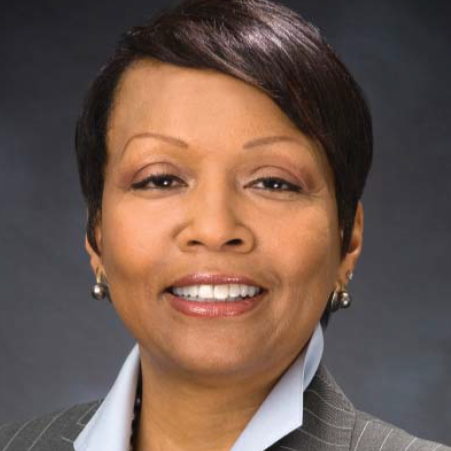
Toni Hoover.
Long before Toni Hoover became a senior vice president at Pfizer, she honed an interest in psychology by keeping an eye on the street life in her hometown of New Orleans.
The odd behavior of some of the local denizens fascinated her as a teenager, even if it was largely indulged as harmless eccentricity or regional flair. Today, she acknowledges that much of what captured her interest was in fact psychopathology.
Hoover took her early passion for understanding the underlying causes of abnormal behavior to Harvard, where she earned a BA, MA, and PhD in psychology. Early work as a clinical scientist in the neurosciences area at Warner-Lambert/Parke-Davis in Ann Arbor, Mich., led to a project standardizing clinical assessment outcome measures to be used in clinical trials of treatments for Alzheimer’s patients. She went on to lead central nervous system drug development at Parke-Davis, overseeing the development of several medications, including Pfizer’s Lyrica, and has now worked for Pfizer and its legacy companies for 23 years.
Since 2006, Hoover has been site director of Pfizer’s Groton/ New London Laboratories, the company’s largest research and development facility. Her focus is on creating a vibrant, innovative, and productive environment for discovering and developing new medicines. In addition to making sure that the needs of the R&D colleagues are met, Hoover is responsible for the site’s compliance with state regulations, serving as the public face of Pfizer in dealing with legislative, public policy, and community relations.
An Invaluable Partnership
Three years ago, she was tapped to reassess Pfizer’s relationship with The New York Academy of Sciences (the Academy), and set out to identify new ways in which Pfizer R&D could get “more bang for its sponsorship buck.” Encouraged by discussions with Academy leadership, which yielded new strategies for rejuvenating the relationship, Hoover made the case to Pfizer’s worldwide president of R&D to continue major sponsorship of the Academy.
Given the location of Pfizer’s corporate headquarters in New York City and the close proximity of its large R&D site in southeastern Connecticut, she argued that the visibility of Pfizer as a corporate sponsor of the Academy was invaluable, making support of high-profile Academy initiatives a natural fit. Upon approval of Hoover’s proposal, Pfizer renewed its support of the Academy as a Mission Partner.
Subsequently, she was asked to consider joining the Academy’s board. She accepted the invitation, and in 2009 became a member of the Board of Governors. Meanwhile, she has stepped up her own investment in the Academy by directing her personal contribution towards programs focused on advancing women and people of color in the sciences. She says these mirror similar educational outreach efforts by Pfizer in Connecticut to “support, spark, and delight” young people about scientific careers. Hoover takes special delight in witnessing the first green shoots of youthful inquiry, remarking, “You can see the ‘Aha!’ moment as they watch hands-on demos of the wonders of science.”
Encouraging Scientific Curiosity
At the college level, Pfizer offers summer internships aimed at getting undergrads interested in discovering and developing new medicines. Some of Pfizer’s collaborations with university science departments focus specifically on increasing the diversity of the pipeline of new talent, and Hoover believes that the Academy can further such efforts by developing skills among women and ethnic minorities, and by working to facilitate networking among scientists from those groups.
Hoover’s growing personal investment in the Academy capitalizes on the Pfizer Foundation Matching Gift program, which allows her to double her impact. And since Pfizer renewed its sponsorship three years ago, the number of Pfizer scientists who have joined the Academy has increased from 20 in 2005 to more than 366 today. This represents the largest number of scientists from any company and from any single corporate sponsor.
Just as Hoover has watched young people from Pfizer’s student programs go on to become working scientists—sometimes as researchers at her Groton/New London laboratories—she hopes to see the Academy raise its own crop of scholars and scientists. Scientific curiosity came naturally to Hoover as she was growing up in New Orleans, but she knows that it doesn’t grow on trees.
Yale University astrophysics professor Kevin Schawinski studies how galaxies form. But his most valuable tool isn’t a telescope or arcane theory. It’s Galaxy Zoo, a project that has enlisted the help of more than 150,000 “citizen scientists” to classify a million galaxies.
Why use people rather than computers for such an undertaking? At least for now, humans with a little training are more accurate than expensive software. And when you have a million galaxies to classify, you want all the help you can get.
Not so long ago, “citizen scientist” would have seemed to be a contradiction in terms. Science is traditionally something done by people in lab coats who hold PhDs. As with classical music or acting, amateurs might be able to appreciate science, but they could not contribute to it. Today, however, enabled by technology and empowered by social change, science-interested laypeople are transforming the way science gets done.
Satisfied Citizens
Who are citizen scientists? A survey conducted by the forthcoming ScienceForCitizens.net web site found that 46 percent of citizen scientists have graduate degrees (compared to the national average of 10 percent). Like President Obama and 53 million other Americans, a majority of citizen scientists hail from the Generation Jones group, aged 44-55, described by commentator Jonathan Pontell as having “a general aching to act.”
Technology makes it easier for people to get involved in serious science. The Internet has dramatically reduced the cost and difficulty of sharing information and obtaining or using high-quality scientific instruments. The spread of mobile smartphones has been especially important for democratizing participation in science. GPS and digital photography have become available to the masses; soon, we will even see cell phone microscopes that take color images of malaria parasites and TB bacteria using fluorescent markers.
Citizen scientists don’t do scientific research for a living; they practice science for personal satisfaction. Many work with grassroots organizations or professional scientists in academia or government, or form their own social networks. They believe that research and discovery should be accessible and useful. The US federal government funds more than half of all basic research, after all. And it doesn’t take a PhD to grasp modern scientific problems like climate change, become involved in monitoring environmental conditions, or participate in policy discussions. Turns out, it’s a short leap from supporting science to participating.
Contributing to Contemporary Science
Some citizen scientists look to the stars. GalaxyZoo is just one program popular with amateur astronomers. Other citizen scientists focus on Earth through formal and recreational projects. BeeWatchers, a program sponsored by the American Museum of Natural History, relies on citizen scientists in its preservation efforts to identify more than 200 types of native bees and the plants they pollinate.
Some of the more than 670,000 recreational fishermen in North Carolina are using Twitter to log their catches, sharing critical data with marine biologists and state officials in the process. Across the country, more than a half million amateur chemists and biologists monitor the quality of America’s waterways. Many organize into local chapters operating on $2,000 a year or less and feed their findings to databases used by professional scientists and policymakers.
Through projects like these, citizen scientists are collaborating with professionals, conducting field studies, and adding valuable local detail to research. Their data are improving local decisions and policy-making. And their independence sometimes frees them to ask questions that lead science in new directions.
The Final Citizen Frontier
What’s next for citizen science? We may soon see the citizen science equivalent of Big Science or Revolutionary Science—discoveries and collaborations that bring together millions of people, and change the dynamics of innovation and research. Yale’s Kevin Schawinski envisions a day “when you’ve got a quarter of a million enthusiastic people knocking on your door.” At that scale, “the kinds of tasks that suddenly become possible are on an entirely different level.”
Citizen scientists may also move into space. CubeSats—satellites roughly the size of large coffee mugs—are already being put into space by NASA, and some experts predict they will be affordable to the masses within a decade. Imagine one of science’s final frontiers, formerly open only to governments and rocket scientists, accessible to all.
No matter what fields they work in, citizen scientists will continue. As Schawinski puts it, to “bring their insights, organizational skills, and a sense of community” to science.
Read more from the Citizen Science in the Digital Age series:
Darlene Cavalier is the founder of ScienceCheerleader.com, a blog that advances adult science literacy and promotes the involvement of citizens in science and science-related policy. She is developing Science-ForCitizens.net with her partner Michael Gold and Science House. This major multifunctional Web site will act as a centralized hub to enable people to learn about, participate in, and contribute to science through recreational and formal research activities.
Alex Soojung-Kim Pang is Associate Fellow at the Saïd Business School, Oxford University and cofounder of the Palo Alto Strategy Studio, a research and consulting group based in Silicon Valley. He specializes in forecasting the future of science and technology.
The New York Academy of Sciences’ (the Academy’s) reputation as a world-leading scientific event host and neutral convener of meetings among industry, academia, government, and NGOs has special value in what many are calling the “Knowledge Century,” where scientific and technical expertise will be the drivers of growth and sustainable development. People charged with building such capacity around the world are increasingly calling upon the Academy for guidance.
When the New York State Foundation for Science and Technology Innovation wanted to identify technological areas of importance to New York, it called on the Academy for help. After presenting its analysis of the state’s R&D strengths to stakeholders, the Academy helped NYSTAR identify clean technology as a growth area. Later, the Academy reconvened the group to examine specific strengths, opportunities, and models of clean-tech development. Leaders of the UK’s Global Medical Excellence Cluster (GMEC) also sought guidance from the Academy in breaking down the walls that prevented flow of knowledge among their research institutions.
Rick Trainor, president of King’s College, says the GMEC community of six universities, two hospitals, three corporations, and the London Development Agency wanted to promote collaboration, and was attracted to the Academy’s track record for nurturing partnerships.
“The Academy was neutral, it was interdisciplinary, and it was coming from another metropolis with a track record for bringing academic institutions there together,” Trainor says.
Bridging Public and Private Research
And when Mexico City’s Mayor decided to bridge the public and private research sectors in his city, he asked the Academy to show him how. The result was a four-day science and innovation conference in Mexico City in September, convened by the Academy and the administration of Mayor Marcelo Ebrard Casaubón. Some 300 corporate leaders, scientists, government officials, educators, investors, and students attended. With tracks examining Mexico City’s strengths in health, innovation, green energy, urban infrastructure, and science education and careers, the gathering spurred discussion about next steps toward developing a knowledge economy.
Advising groups outside of its hometown is becoming a new business for the Academy. To respond to requests from governments for guidance on policies and investments in science-and-technology-based innovation and economic development, the Academy has developed an advisory program.
“We’re leveraging our strengths as a uniquely independent organization with a broad knowledge of global science and a deep expertise in building communities that include all stakeholders in science and technology,” says Rene Baston, the Academy’s Chief Business Officer. “The goal of our ‘cluster’ activities is to develop and link knowledge centers around the world.”
What’s the value of this work to Academy members? “We’re advancing science,” says Karin Pavese, Vice President, Innovation and Sustainability. “We’re translating one of the Academy’s core competencies—to bridge disparate communities and build robust networks—to other parts of the world.”
And as scientists in Mexico City and other emerging sci-tech clusters join the Academy, all members benefit from being linked to a wider circle of scientific excellence.