Technology Promises Faster Diagnostic Tests

A medical professional examines graphs and data on a tablet.

The Doctor-on-a-Chip technology has potential to revolutionize the field of medicine by providing quick and accurate test results.

Published March 1, 2003

By Bruce Tobin

Image courtesy of Toowongsa via stock.adobe.com.

Sending medical specimens off to labs can mean lengthy waits for results needed to make or confirm diagnoses. But help is on the way in the form of a developing nanotechnology called Doctor-on-a-Chip (DoaC).

In broad terms, DoaC technology will allow a sample of bodily fluid to be processed to test for a disease’s DNA marker. Research teams at universities in the United Kingdom and the United States are working on such devices. DoaCs will allow clinicians to perform many more medical diagnostic tests in their offices and in the field, and promise delivery of results in as little as 5 to 10 minutes.

At Brunel University in London, Professor Wamadeva Balachandran (Bala) heads a six-member research team working on a DoaC. In the United States, a team of 70 researchers led by Professor Chad A. Mirkin, of Northwestern University, is working on a similar program.

Bala believes the system of taking a patient sample and sending it to a lab – where it may takes days for the results to be determined and communicated back to the doctor – can be dangerous. “In certain cases it could be a life-and-death situation,” he said. “The idea here (with DoaC devices) is that doctors can get the results while still talking with their patient.”

In the DoaC concept, the doctor places a drop of the patient’s blood on the front end of a polymer chip and waits 5 to 10 minutes for the chip to do its tests and display the results. The device will initially be the size of a credit card, Bala said, and eventually the size of a microprocessor chip.

Faster Diagnostic Tests
Prof. Wamadeva Balachandran (Bala)

Going into more detail, Mirkin explained, “A sample (blood, saliva or urine) is processed through microfluidics (micro- or nano-scale devices for manipulating fluids). Then the marker DNA (for the diseases of interest) is delivered to the reader portion of the chip. If marker DNA binds to this portion of the chip…nanoparticle probes are used to develop the chip (also through microfluidics).” The readout device will measure the conductivity of the particles between microelectrodes.

Bala said the idea behind his device involves the Electric Field Manipulation of DNA (characterizing DNA using electrical fields to move them and then to look at their properties). His original thinking, three or four years ago, was that if you could identify various characteristics you could confirm a particular virus in terms of its properties.

“But, of course, during this period the genome sequencing has moved on so fast,” Bala explained. “Various medical colleagues were all saying that if there were a system, which could be easily utilized to detect viruses by GPs (general practitioners) in their offices, that would speed up the process of diagnosis and save a lot of lives.” So he decided to work on it. Bala’s idea now is to use this technique to move DNA into a chamber to look for a particular type of DNA linked to a virus. Once confirmed as the suspect DNA type, “it comes out of that chamber and we again use electrical techniques to categorize the DNA: electrical impedance, for example.”

Results in 5-10 Minutes

Prof. Chad A. Mirkin

The technology involved in the tests is nothing new. “The challenge is to bring the technique down to the microscale, to put it on a single chip,” Bala said, “and we’re doing that now.”

Processing the sample involves attaching probes to the DNA. The type of virus that’s suspected determines the type of probe that is used. The sample then goes through a polymerase chain reaction (PCR) and then through the chamber with the medium for dielectrophoretic measurement. It then passes through various dielectrophoretic chambers. “In 5-10 minutes the doctor will be able to look at his computer screen and know whether you have hepatitis A or hepatitis B, for example, or whether you don’t have any virus,” he said.

Early models of Bala’s chip will check for various kinds of viral infections sequentially, one virus type after another being tried until a match is found. Eventually, he expects DoaCs to have the ability to run through a whole series of tests for various viruses.

“The (DoaC) potential,” concludes Mirkin, “is enormous.”

Also read: Building a Big Future from Small Things

A Scientific Explanation to the Demise of Dinosaurs

Partially dug up bones of a dinosaur.

You may know that a meteoric collision likely led to the demise of dinosaurs, but did you know earth’s had at least five mass extinctions during its history?

Published March 1, 2003

By Jeffrey Penn

Image courtesy of Panupong via stock.adobe.com.

A growing body of evidence suggests that the history of life on earth has been significantly affected by the collision of comets, meteorites and asteroids, resulting in global catastrophe and mass extinctions.

“Prehistoric mass extinctions of life were much more affected by extraterrestrial events than had ever been thought,” Michael Rampino, PhD, of New York University and the NASA Goddard Institute for Space Studies, told a Nov. 4, 2002, gathering at The New York Academy of Sciences (the Academy). “Earth’s history has been marked by periodic mass extinctions of life.”

Although scientists who first theorized that explosive collisions had significantly altered life on earth were not always taken seriously, Rampino said the theory is now not only accepted, but is considered among the most exciting fields in the sciences. “Astronomers and paleontologists formerly didn’t have cause to engage in conversations,” he said. “Now they have come to understand that their worlds are intimately connected.”

Five Mass Extinctions

More than 99 percent of species that have ever lived on earth are now extinct, according to Rampino. Paleontologists have identified five major mass extinctions and 20 minor mass extinctions on the planet earth. “The largest mass extinction was approximately 250 million years ago,” he said, “when 95 percent of marine species were wiped out.”

A mass extinction about 65 million years ago has long been widely recognized by scientists, since it represents the time when dinosaurs became extinct. “Dinosaurs were successful for a period of nearly 135 million years and suddenly became extinct about 65 million years ago,” Rampino said. “As many as 50 theories have been offered to explain the extinction of the dinosaurs, but none of those theories was supported by physical evidence.”

In the past 20 years, however, physical evidence gathered from sites as far apart as Italy and Colorado revealed that a thin layer of clay separated the geological record into two distinct eras. Analysis of the clay revealed “elevated levels of the kind of metals that are rare in terrestrial settings, but abundant in asteroids and meteorites,” Rampino said. “A similar review of geological samples from more than 150 sites around the world revealed that there is a global layer of this clay.”

In addition, scientists discovered a “shock layer” of quartz crystals in the clay, indicating high-pressure shocks. “Meteorite craters are the only places on earth that show these quartz crystals,” Rampino said. Scientists also discovered tiny spheres of glass in the clay. They are thought to have formed by intense heat from the impact and then dispersed into the atmosphere, where they cooled into their spherical shapes and dropped back to the ground.

Where is the Crater?

Despite the mounting evidence that a meteoric collision had eliminated the dinosaurs, scientists initially could not identify any crater on the earth that would explain the mass extinctions. In 1990, however, the giant Chicxulub Crater – nearly 200 kilometers in diameter – was discovered buried in the shallow sea just off the coast of Mexico’s Yucatan Peninsula. Additional exploration in Mexico indicated a thick bed of course sand, likely washed to shore by a giant wave (tsunami), in the precise layer of the geological record thought to indicate the mass extinction 65 million years ago.

What happened when the meteor collided with the earth? According to Rampino, scientists have estimated the object was nearly 10 kilometers long, causing the crater nearly 200 kilometers in diameter.

Environmental Catastrophe

“Dust and shock material were thrown out of the impact site into the atmosphere, causing heat and fires all over the world,” Rampino said. “The impact would have a tremendous, catastrophic effect on the environment. A high level of dust and ash would have clouded the sky, leading to a cooling and darkening that may have prevented photosynthesis.”

The geologist said such an event could have resulted in an “impact winter” lasting six months or longer. “Such an abrupt impact would lead to nothing less than a world-ending destruction of life,” Rampino said. “Food chains in the ocean and on land were broken, and plants and animals died out.”

Whatever life survived the calamity would continue to evolve, but the earth would see major changes in the dominant forms of life that remained. “The impact would provide opportunities for survivors to expand into empty niches, so that they dominate the earth during the next geological period,” Rampino added.

Prior Mass Extinctions?

Now that scientific consensus has accepted an impact collision as the most likely explanation for the extinction of dinosaurs, geologists are trying to determine if such collisions can be linked to other major and minor mass extinctions identified in the geological record.

Scientists have identified approximately 150 large impact craters on the earth. A statistical analysis reveals that about every 100,000 years a 1-kilometer object collides with earth, creating a crater of about 20 kilometers in diameter. “Only about once every 100 million years is there an impact of the magnitude that is capable of causing the dust storms and global fires believed to have eliminated the dinosaurs,” Rampino said.

Final proof of a connection between the largest mass extinction on earth – about 200-250 million years ago – and an impact collision has yet to be found. Evidence of such a crater may have eroded, he said, or remain hidden, perhaps below deep ocean water.

Future Extinctions?

If past evidence is also prologue, an impact collision that might cause mass extinctions on earth is likely in the next 40 million years or so, Rampino pointed out. “Earth exists in a zone of many earth-crossing asteroids and comets,” he noted.

While such projections appear far removed from the present, Rampino left his audience with a sobering fact. Concerning the potentially dangerous approach of comets, asteroids and meteorites, he pointed out, “there are no stop signs in outer space.”

Also read: Prehistoric Sloth-Like Creatures May Have Roamed the US

Exploring Movement in Time and Space

An artsy, black and white photo of a woman doing a dance.

Many of the dances choreographed by this MacArthur Foundation “genius” award winner brings in elements of science, such as the physics of kinetic sound.

Published March 1, 2003

By Garry D. Reigenborn

Image courtesy of Pixel-Shot via stock.adobe.com.

Elizabeth Streb is a genius. She has been certified as such by the MacArthur Foundation “genius” award she received in 1997. If “genius” implies exceptional intellectual or creative power, however, Streb didn’t require any certification to qualify for such an appellation.

A choreographer with an intense curiosity and willingness – no, need – to experiment and test the boundaries of movement, Streb’s passion has resulted in a body of work that takes “dance” into a new dimension. As The New York Times said in a recent article, “Streb’s rough and tumble dances are about velocity, physical stamina and an unwillingness to bow to gravity without a fight.”

For the past 20 years her work has been centered on challenging the laws of gravity, informed by a scientific inquiry into the physics of kinetic energy.

“I’d love to defy the laws of Newton, but I’m told that’s not possible,” she says. “But my battle cry is to at least try, and to keep asking questions about movement without being satisfied with first answers.”

Streb is currently the Dean’s Special Scholar at New York University, where she’s studying physics, mathematics, and philosophy and working toward a M.A. in Time and Space. She graduated from the State University of New York at Brockport in 1972 with a degree in modern dance – and quickly transformed much of what she learned.

“I soon discovered that traditional dance was deeply married to music, borrowing its compositional forms rather than playing by its own rules,” she says. “If dance is an art of movement, then it’s not okay just to be on your feet, on a horizontal surface transferring weight. That’s like ignoring space.”

Pop Action

Among her early teachers was the great American choreographer Merce Cunningham, from whom she learned the importance of timing, removing dance from music but retaining those rhythmic forces needed to get a dancer from here to there. She developed her own language to describe her work, “Pop Action.” In a sense, that’s what happens during performances, as the dancers’ bodies expand and contract.

“The muscles ‘pop,’ and this muscular action combines with aspects of time, space and precision to create multi-directional theatrical images,” she explains.

With the company she founded in 1985, STREB/Ringside, she devises what one writer called “essays on the human body’s interaction with Newton’s Laws.” In “Cannonball Drop,” for example, several cannonballs splash into tubs of water and then, in a reference to Galileo’s famous experiment, Streb casually walks onto the stage and drops a feather, watching it drift lazily downward.

In “Breakthru,” which Streb says is about the effect of action on substance, dancers wearing protective goggles dive headfirst through a panel of glass without hurting themselves. In “Fly,” described as her attempt to “destroy the tyranny of the floor,” a performer buckled into a 16-foot-long steel lever loaded with counterweights that can spin and soar through the air.

For one of her works, Streb collaborated with math and science professors at the University of California-Berkeley to develop a new piece of machinery, which she dubbed the “Catastrophic Realizer.” It looks like a seesaw that moves in circles as well as up and down, with one end that can touch the ground and another that can’t. Instead of seats at the ends of the beam, the machine features oval platforms attached by hinges, creating yet another element of instability.

Working Toward an Answer

Like Newton, who developed theories based on mathematics that made it possible for predictions to be confirmed by real-world experiments, Streb concocts possible scenarios for her actions and then devises ‘experiments’ that allow her to ratify the results. She acknowledges that her work is not a literal translation of her scientific studies, but that it reflects her efforts at reaching the core of a particular action problem.

“Studying math, physics and philosophy shows me the way, method-wise, to approach finding answers to my questions about movement,” she said. “It’s made me come back to my work and look at things like the fundamental theorems of calculus, or the application of the chain rule, and analyze the types of questions I’m asking about movement in a deeper way.”

She added that, in science “you work and work toward an answer, and then that moment comes when you master and understand it. I try to mimic that experience in the studio in order to solve the problem I’m encountering.”

An Obsession with Learning

Streb’s obsession with learning and searching for answers is reflected in her commitment to working with young people. She has long held classes for children and community residents and will extend that educational component in her new studio building, an old mustard factory in a working-class area of Brooklyn. She started teaching children from two local YMCA’s this year and has had discussions with the principals of 10 public and private schools in the area about classes for their students.

“Children are the ‘truth-sayers’ of movement,” she says. “They’re purely physical and unrestrained. That so often gets stripped away from them. I believe we shouldn’t censor movement but encourage it. Believe me, my dancers and I learn as much about energy and bravery and honesty of movement from the children as they learn from us.”

A local community leader supports Streb’s educational efforts because “physical activity helps kids mentally, physically and spiritually, and through dance they can express themselves, learn teamwork and increase their self-esteem.”

Einstein once said that Newton “combined the experimenter, the theorist, the mechanic and, not least, the artist, in exposition.” Much the same can be said for Elizabeth Streb.

Also read:The Intersection of Sports and STEM


About the Author

Garry Reigenborn is a choreographer and assistant professor of Dance at Bard College, New York. He has been affiliated with the Lucinda Childs Dance Company as a dancer and rehearsal director since 1982.

130 Years Later: Darwin’s Theories Stand

A baby primate is handled by a caretaker after getting a bath.

While Darwin theorized about it more than a century ago, scientists continue to study links between emotions in humans and in animals.

Published January 1, 2003

By Rosemarie Foster

Image courtesy of NPD stock via stocka.adobe.com.

Birds do it. Bees do it. Humans and chimpanzees do it. What do we have in common? Expressing our emotions, albeit in different ways. How we do it and why was the subject of a recent two-day conference called Emotions Inside Out, sponsored by The New York Academy of Sciences (the Academy) in November and held at The Rockefeller University.

The topic is not new: In his 1872 book The Expression of the Emotions in Man and Animals, Charles Darwin recounted his observations of animals, his own children and other people, linking particular expressions with specific emotions. His book was “radical for his time and for today,” explained Paul Ekman, PhD, of the University of California, San Francisco, and conference chair. “We all stand on the contributions this great man made in this extraordinary book.”

Face Value

The face is often our first encounter with another’s emotions. Frans B.M. de Waal, PhD, of Emory University’s Yerkes Primate Center, scrutinizes the facial expressions and gestures of chimpanzees and their cousins, the bonobos, and has found remarkable similarities with humans. They smile and laugh like we do. A chimp may even extend a hand to another chimp after having been fighting – as a sign of reconciliation.

Image courtesy of ballabeyla via stock.adobe.com.

At Yerkes, Lisa A. Parr, PhD, observes how chimpanzees respond to photographs and sound recordings of other chimps. She has found that they process both visual and auditory cues to interpret emotion, with certain facial expressions and sounds having more relevance than others.

The same goes for human infants. “The emotional signals of a mother influence her baby in very powerful ways, and some of those have long-lasting impact,” said Joseph J. Campos, PhD, of U.C., Berkeley. For example, a mother may use facial expressions and varying tones of voice to denote approval or disapproval of her young infant’s actions.

By 12 months, infants begin seeking out emotional information themselves as a means of interpreting what’s happening around them. Emotional sharing between the infant and the mother begins shortly thereafter.

Infants’ emotional expression also varies by culture. Linda A. Camras, PhD, of DePaul University, compares facial expressions and reactions among infants of different nationalities who are exposed to stimuli that elicit positive and negative emotions. She has found that European-American babies are more expressive than Chinese infants, with Japanese babies falling somewhere in between.

Liar, Liar?

“The face lies and the face leaks,” said Paul Ekman in his presentation on facial expressions and deception. He described the value of interpreting facial “micro-expressions,” which may only last 1/25th of a second but reveal a person’s true intent. Micro-expressions, and the messages they convey, become much more apparent when viewed using slow-motion video, though trained observers can spot them instantly. They are often involuntary muscular movements of which the speaker is unaware.

“Facial expressions that contain an involuntary movement that is difficult to make voluntarily are the most reliable,” added Ekman. Taken in context with the pitch of a person’s voice, micro-expressions are a “very real source of information.”

Such fleeting expressions were also addressed by Dacher Keltner, PhD, of U.C., Berkeley. In a study of the faces of women in Mills College yearbook photos taken more than 30 years ago, Keltner found that women who displayed strong, natural smiles in the photos later felt the happiest over the course of their lives, and had better marriages. “Very brief observations of the face can tell us a tremendous amount about life,” he concluded.

Calls of the Wild

Some animals rely more on auditory displays to express their emotions. Superb starlings, diana monkeys, and baboons of Botswana’s Okavango Delta all have a catalogue of alarm calls to differentiate airborne predators (such as an eagle) from those on the ground (such as a leopard), letting nearby animals know how to escape.

“These vocalizations are clearly emotional signals, given in highly emotionally charged situations,” explained Robert M. Seyfarth, PhD, of the University of Pennsylvania. The characteristic “wahoo” sound of the baboons also differentiates high- from low-ranking males, as well as young from old.

Jo-Anne Bachorowski, PhD, of Vanderbilt University, might argue that humans use laughter in a similar way, to influence the response of those who hear it. Her studies have shown that men laugh most strongly with other male friends, while women’s laughs are stronger in the presence of other males (friends as well as strangers). “Laughter is a tool to elicit affect, and thereby shape the behavior of the listener toward the laugher,” she concluded.

Blood, Sweat, and Fears

When we laugh or cry – and when we try to stifle those feelings – our bodies respond with measurable responses in the heart and brain.

“There is no single emotion center in the brain,” said Richard J. Davidson, PhD, of the University of Wisconsin. Rather, the seat of emotion stretches across several regions.

Much of emotion is regulated by various areas in the prefrontal cortex, a finding supported by Davidson’s functional MRI studies. Those investigations also demonstrated contractility in the heart in response to the threat of shock, as well as activation of the brain’s amygdala.

David G. Amaral, PhD, of U.C., Davis, has done studies in monkeys confirming the role of the amygdala as the fear-processing center of the brain. “The amygdala is a protection device that not only instills a fear response,” he explained, “but controls behavior so that an individual can evaluate a situation.”

In response to fear, some of us turn white. Robert W. Levenson, PhD, of U.C., Berkeley, explained how that response is regulated by the autonomic nervous system (ANS).

In addition to making us blush with embarrassment or turn red with anger, the ANS governs the physiological responses that occur when we try to suppress an emotion we are feeling. Levenson’s studies demonstrate that such suppression can cause increased heart rate and skin conductance.

Emotion in the Golden Years

We know our bodies begin to slow down as we age. But our emotional perception actually gets better. “Emotional experience and regulation improve with age, despite the losses that occur with aging,” noted Laura L. Carstensen, PhD, of Stanford University.

In the second half of life, people reprioritize their lives in pursuit of emotional balance and well-being. Her research shows they’re more likely to recall positive images and messages, and desire more time with their families. Concluded Carstensen, “As we age, we begin to focus on the positive, forget about the negative, and find a way to successfully navigate through life in our later years.” And that’s good news.

Also read: 165 Years of ‘On the Origin of Species’

Success, Tenacity, and the Aid of Global Colleagues

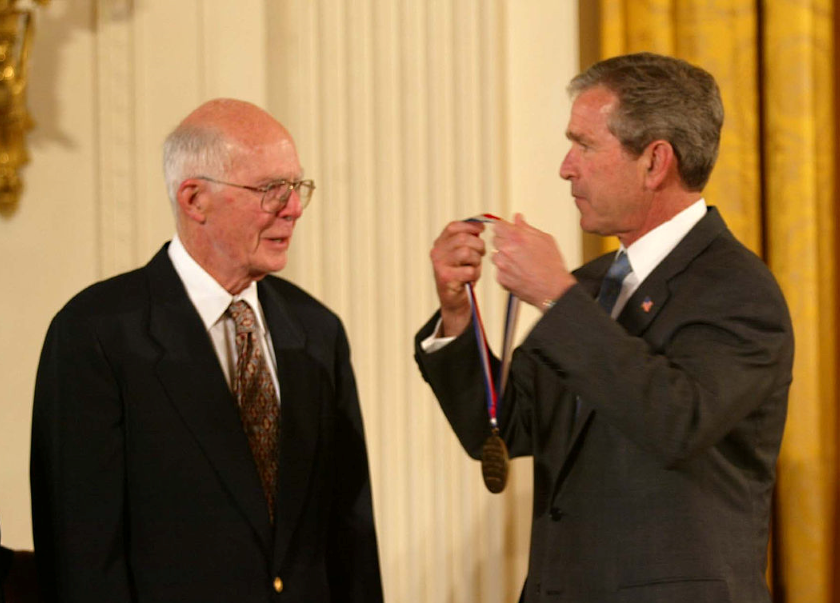
President George W. Bush presents a man with medal award.

Noble Prize winner and long-time Academy member Raymond Davis, Jr., PhD shares his advice to find success as a scientist.

Published January 1, 2003

By Dan Van Atta

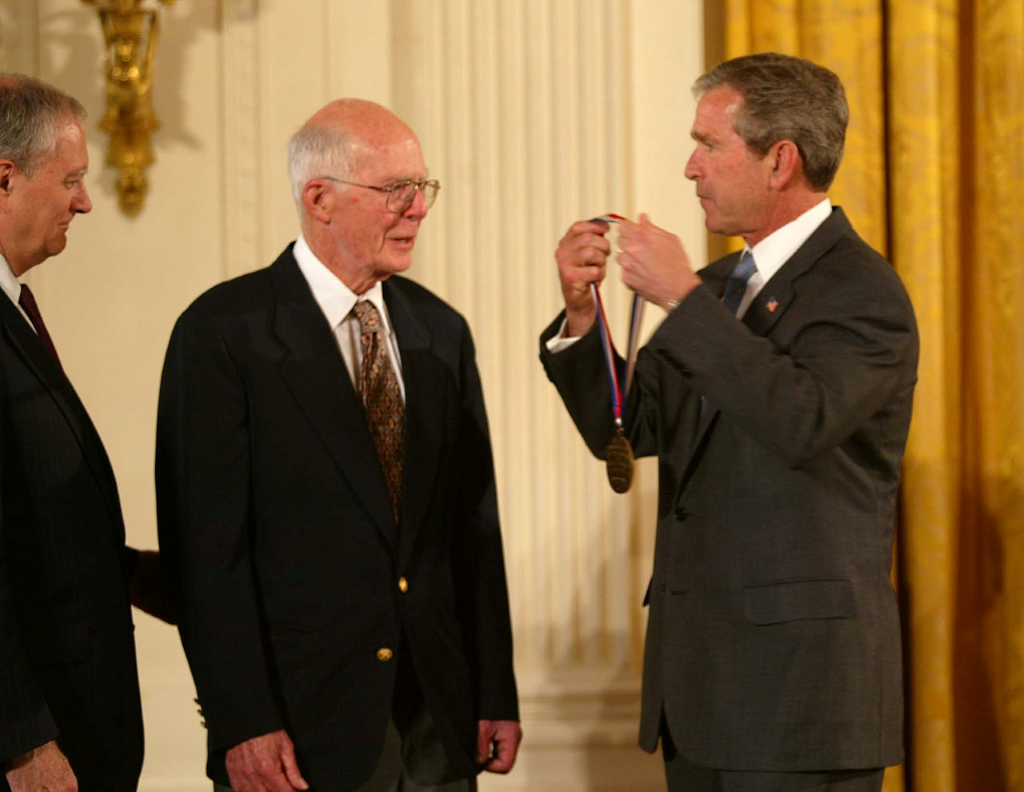
Raymond Davis, Jr. receives the Medal of Science from President Bush, with Office of Science and Technology Policy Director John “Jack” Marburger looking on. Image courtesy of the National Science Foundation.

Curiosity, a keen focus, teamwork, and the tenacity to never stop searching for solutions: These are among the qualities that Raymond Davis, Jr., Ph.D., credits with contributing to his long and highly successful career as a physical chemist.

A long-time member of The New York Academy of Sciences (the Academy) and contributor to the Annals of the New York Academy of Sciences, Davis was awarded the Nobel Prize in Physics last month for detecting solar neutrinos – ghostlike particles produced in the nuclear reactions that power the sun. He shares the prize with Masatoshi Koshiba of Japan and Riccardo Giacconi of the United States.

“Neutrinos are fascinating particles, so tiny and fast that they can pass straight through everything, even the earth itself, without even slowing down,” said Davis.

“I’ve been interested in studying neutrinos since 1948, when I first read about them in a review article by physicist H.R. Crane. Back then, it was a brand-new field of study. It has captivated me for more than a half-century.”

After receiving his BS and MS from the University of Maryland, Davis earned a PhD in physical chemistry from Yale University in 1942. After his 1942-46 years of service in the U.S. Army Air Force and two years at Monsanto Chemical Company, he joined the Brookhaven National Laboratory’s Chemistry Department in 1948. He received tenure in 1956 and was named senior chemist in 1964.

The Neutrino Detector

Davis is recognized for devising a method to detect solar neutrinos based on the theory that the elusive particles produce radioactive argon when they interact with a chlorine nucleus. He constructed his first solar neutrino detector in 1961, 2,300 feet below ground in a limestone mine in Ohio. Later, he mounted a full-scale experiment 4,800 feet underground, at the Homestake Gold Mine in South Dakota.

In research that spanned from 1967 to 1985, Davis consistently found only one-third of the neutrinos that standard theories predicted. His results threw the field of astrophysics into an uproar and, for nearly three decades, physicists tried to resolve the so-called “solar neutrino puzzle.”

Experiments in the 1990s using different detectors around the world eventually confirmed the solar neutrino discrepancy. Davis’ lower-than-expected neutrino detection rate is now accepted by the international science community as evidence that neutrinos have the ability to change from one of the three known neutrino forms into another. This characteristic, called neutrino oscillation, implies that the neutrino has mass, a property that is not included in the current standard model of elementary particles. (In contrast, particles of light, called photons, have zero mass.) Davis’ detector was sensitive to only one form of the neutrino, so he observed less than the expected number of solar neutrinos.

‘A Lot of Fun’

“I had a lot of fun doing the work,” Davis said, adding that he was “very surprised” when he learned it had earned him the Nobel Prize. “I could never have done it,” he hastened to add, “without the aid of colleagues all over the world.”

Davis said he is especially indebted to colleagues at Brookhaven, where he retired in 1984, but has an appointment in Brookhaven’s Chemistry Department as a research collaborator, and at the University of Pennsylvania. Davis moved to Penn in 1985 to continue experiments at the Homestake Gold Mine with Professor Kenneth Lande, and continues his association there as a research professor of Physics.

A member of the National Academy of Sciences and the American Academy of Arts and Sciences, Davis has won numerous scientific awards. Among them, most recently, are the 2000 Wolf Prize in Physics, which he shared with Masatoshi Koshiba, of the University of Tokyo, and the 2002 National Medal of Science.

Asked to what singular factor he attributes his remarkable success, Davis responded: “People say I’m tenacious. But I’d also have to say that the atmosphere at Brookhaven gave me the freedom to focus on research that really intrigued me.”

What advice would the accomplished researcher have for today’s generation of young scientists? “I would tell aspiring students and young scientists to find a research topic that really interests them,” Davis said. “When I began my work I was intrigued by the idea of learning something new. The interesting thing about doing new experiments is that you never know what the answer is going to be.”

Also read:  Adnan Waly: A Life and Career in Physics

Science and Citizenship: ‘A Matter of Trust’

A woman writes math equations on a chalkboard.

Public trust in science is an issue as old as time, but experts are proposing new methods and approaches aim to change this.

Published January 1, 2003

By Jennifer Tang

Image courtesy of RomanR via stock.adobe.com.

Scientists and policymakers now insist that the public must understand science if people are to be useful citizens – capable of functioning as workers, community members and informed citizens in a technological age.

But what does public understanding mean? And what can we do to prepare the public, and particularly the young, for lives of citizenship and social responsibility – as well as success in workplaces that are increasingly shaped by science and technology?

These issues were the focus of the Willard Jacobson Lecture recently given by Dr. Judith A. Ramaley, assistant director, Education & Human Resources, National Science Foundation. Ramaley, the winner of this year’s Jacobson Award, was honored for her work in mathematics and science education projects.

Public Understanding?

How much do our citizens really “know” about science? According to Ramaley, approximately 20 percent of American adults think they are well informed about new scientific discoveries and technologies, while 25 percent say they understand enough about scientific inquiry to make informed judgments about scientific research reported in the media. About 14 percent admit they pay attention to science and technology policy issues only when a crisis compels their attention.

Ramaley defined what a public understanding of science would encompass: it means paying careful and thoughtful attention to science and technology issues while also recognizing the strengths and limitations of these fields. Scientific literacy involves understanding scientific and technical concepts and vocabulary as well as the use of various sources of such information.

But how well prepared is the public to distinguish valid sources of information from useless or even dangerous misrepresentations?

Developing Public Trust

Dr. Judith A. Ramaley

Surveys show that public trust in science and scientists is highest in times of peace, Ramaley noted. This confidence can waver, however, when a crisis emerges over such controversial subjects as nuclear power, genetic engineering or space exploration.

“People who think that science is a product rather than a messy process of inquiry can become profoundly uncomfortable when they are brought face-to-face with the uncertainties and arguments at the frontiers of science,” she observed. “When people are fearful, they want simple answers to emotionally laden questions, preferring the opinions of their friends or trusted advisors over the information provided by scientists.”

How, then, can we increase the public’s trust in the scientific community? The UK’s public outreach effort was cited as a model. The Citizen Foresight project, launched by the London Centre for Governance, Innovation and Science, offered citizens an opportunity to meet with scientists. British citizens, selected at random, met every week to explore not only the “facts,” but also the deeper ethical and emotional issues associated with questions about food supplies and agricultural technologies.

“The British have learned that public trust and confidence cannot be gained simply through providing information about science, but by direct dialogue and discussion about the issues,” she observed. “Scientific knowledge must be grounded in a moral and ethical foundation that is seen as legitimate by the public and is accepted as responsive to their needs and interests.”

Science for Everyone

How science is taught in the schools also is vital to promoting a public understanding of science. “Students can best learn how science is done by doing genuine scientific inquiry,” she said.

Science also can be made appealing to students if they view science as being connected to their own lives and interests. “When science is meaningfully connected to things that young people care about, it becomes an experience rather than a product to be memorized,” she added.

In addition, schools should integrate scientific exploration with other disciplines so that students can see how science contributes to understanding in any field, and how other fields contribute to science. “Science is for everybody,” Ramaley said. She recommends a curriculum in which disciplines that foster creative and critical thinking – such as language and literature, history, the arts and foreign languages – predominate.

Understanding science, however, poses a mental challenge. “New knowledge can only be absorbed and put in context if the participant can uncover older, ‘untrue,’ knowledge and discard it,” she said. “If during our education, we are never required to examine those deeper assumptions, acquired early and applied without thought to the challenges of daily life, we will not be responsive to the insights and knowledge generated by any discipline, including the sciences and mathematics.”

Also read: Building Trust Through Transparency in Biorisk Management

Challenging Female Stereotypes in STEM

A colorized photo of a woman working with machinery as part of the war effort during WWII.

A new book explores the stereotypes that women overcame, as well as their accomplishments achieved, when contributing to the war effort in WWII.

Published January 1, 2003

By Jeffrey Penn

A colorized photo of real life “Rosie the Riveter.” Image courtesy of U.S. Library of Congress via Wikimedia Commons. Public Domain.

Advertising and other visual images during the past century have helped shape and challenge prevailing stereotypes about the role of women at home and in society, according to a social historian who recently addressed a gathering at The New York Academy of Sciences (the Academy) on the subject of “Woman and the Machine: Changing Images.”

“These contrasting images reveal signs of ambivalence in deeply felt social attitudes about women’s roles and technical abilities,” said Julie Wosk, professor of Art History, English, and Studio Painting at SUNY Maritime College and author of the recently published Women and the Machine: Representations From the Spinning Wheel to the Electronic Age (Johns Hopkins University Press).

Breaking Old Frameworks

It was recognized soon after new machines and technologies became widespread following the Industrial Revolution that the breaking of old frameworks could have a disorienting effect on people. “In early images that anxiety was often expressed visually in people being confused or torn apart by exploding steam-powered machines,” Wosk said.

Commenting on a series of slides, Wosk noted that many of the early images portrayed machines as the tools that could liberate women from the drudgery associated with the manual labor of domestic life. “Machines and technology have often been sold as liberating to women,” she said, “but there also has been an enslaving of women.” New electrical appliances, for example, were supposed to emancipate women from housework. “But there were often heightened expectations about increased cleanliness,” Wosk said, “and a belief that the new appliances would permit women to do even more work.”

Although some images challenged stereotyped assumptions about the relationship of women to machines, just as many used women as mere decorations or sentimental and romantic adornments to whatever was being marketed. “Women were early portrayed as childlike and naive, requiring simple machines in contrast to men, whose sphere was assumed to be machines and technology,” Wosk said. “Women were often portrayed as aghast at machines, technologically challenged, forlorn and baffled.”

The “Rosie the Riveter” poster. Image courtesy of U.S. Library of Congress. Public Domain.

Riding Old Assumptions

In early advertisements and motion pictures associated with electricity and electrical devices, women often appeared as “daffy and fearful,” Wosk noted, “or, occasionally, as electrically created facsimiles of females compliant to men.” There were, however, some positive female images in early advertisements related to electricity. But the ambivalence was still there, Wosk suggested, seen in the notion that gas engine automobiles were masculine and electric automobiles were especially suited for women because they were clean and easy to operate.

More than in any other advertising genre, visual images related to transportation – particularly bicycles, automobiles and airplanes – have both supported and challenged conventional assumptions about the role of women, Wosk said.

Early bicycle advertising included images of women, but the invention of the safety bicycle in the 1890s “contributed most to the idea that women could be fully independent and mobile,” Wosk said. “A bicycle-riding craze began because bicycles were lighter, more stable, and the closed gears permitted women to ride bikes without their skirts getting caught. The invention of coaster brakes and a drop-frame bicycle for women also encouraged them to take up bike riding.”

Even though many images portrayed women on bicycles, they often contained a subtle suggestion. In satiric stereoscopic photos, she said, “You often see men in the background looking nervous that women might just ride away from their responsibilities at home.”

The advent of automobiles, however, helped women refute stereotypes that they were inept, she said. Female images were increasingly used to market the vehicles, and magazine photos included portrayals of so-called “flappers” displaying their sense of independence in cars.

A Cultural Ambivalence

Peggy Bridgeman at the left demonstrates to Ruth Harris the correct technique while their instructor, Lee Fiscus, looks on attentively, in the Gary plant of the Tubular Alloy Steel Corporation, United States Steel Corporation subsidiary. Peggy is acclaimed by her superiors to be one of the most skilled welders they have had working with them. Image courtesy of U.S. National Archives and Records Administration via Wikimedia Commons Public Domain.

Again, however, many early images of women with autos revealed a cultural ambivalence. “You often find that women in advertising images are presented as being more interested in the color and upholstery of the interior of cars than in the mechanics of the internal combustion engine,” Wosk said. And she pointed out that artists’ images sometimes supported the notion that women “were harebrained, maniacal drivers.”

The invention of the airplane, Wosk believes, combined with rapid social change during both world wars to transform the image of women in visual and advertising images. “With airplanes there was a sense that women could transcend the earth and the confining cultural notions about women’s lack of technical abilities.” As one early female aviator wrote, “Flying is the only real freedom we are privileged to possess.”

Service During WWI

Although the shift in expectations regarding women during World War II is well documented, Wosk noted that women were recruited to serve as machine tool operators, automobile repairers and workers in airline manufacturing as early as World War I.

“During World War II, women began to redefine their roles and sense of patriotic duty as they learned new jobs vacated by men who entered the military,” Wosk said. Many new images portrayed women in jobs formerly held only by men, including famous renderings of “Rosie the Riveter.” Yet even in those images, “Rosie often was portrayed with a makeup compact in her pocket.” In many of the new images, Wosk said, “women were portrayed as changing their clothes – a practical requirement related to the new jobs they were doing, but also a symbol of transformation.”

After World War II, advertising images attempted to persuade women to revert to their former clothing styles and occupations. “Women were encouraged to become enamored of their home appliances again,” Wosk concluded.

Also read:Celebrating Girls and Women in Science


About Prof. Wosk

Professor Julie Wosk received a B.A. from Washington University in St. Louis (graduating magna cum laude, Phi Beta Kappa), an M.A. from Harvard University and a Ph.D. from the University of Wisconsin. She has twice been a National Endowment for the Humanities Fellow in art history – at Princeton and Columbia University. She is also an artist whose oil paintings and large-format color photographs have been exhibited in New York and Connecticut galleries.

Code to Commodity: Genetics and Art

A DNA helix with lettering in the background.

A new art exhibit at The New York Academy of Sciences explores everything from genetic iconography and gene patents to bioinformation and artificial chromosomes.

Published January 1, 2003

By Dorothy Nelkin and Suzanne Anker

In scientific terms, the gene is no more than a biological structure, a DNA segment that, by specifying the composition of a protein, carries information that promotes the formation of living cells and tissues. However, its cultural meaning – reflected in popular culture and visual art – is independent of its biological definition. The signs and symbols of genetics have become icons expressing numerous issues emerging from the genetic revolution.

Since the late 1980s many contemporary artists have incorporated genetic imagery into their work. Images of chromosomes, double helices and autoradiographs increasingly appear in paintings, sculpture, photography and film. Both scientists and artists use visualizations to explore the hidden meanings in the corporeal body, to probe the deeper world underlying surface manifestations and to comprehend the mysteries of life.

While science and art share a cultural context and draw referents from the same milieu, they are distinct ways of knowing the world. Scientific images reflect the fact that science, aspiring to objectivity, is evidence-based. In contrast, artists are absorbed by subjectivity, seeking a truth based on individual and private perceptions.

The images created by artists, however subjective, are important in bridging the connection between the world of scientific discovery and its cultural interpretation in society. These visualizations are a means to shape and analyze how culture assimilates the issues emerging from the burgeoning genetic revolution and a filter engaging our hopes and fears of a bio-engineered future.

Genetic Iconography

From Code to Commodity: Genetics and Visual Art, a show we have curated for The New York Academy of Sciences’ (the Academy’s) Gallery of Art and Science, addresses two themes that have inspired artists to adopt genetic iconography: DNA as a semiotic sign system and a bio-archive for the commercial patenting of gene sequences. Molecular biology has turned the body into a set of notations as scientists seek to understand the workings of the DNA molecule.

Many artists regard these graphic visions as an aspect of modernism’s abstract legacy, a part of the iconography of the 21st century. Attracted by the concept of the body as “code,” they use the symbols of chromosomes and helices to reflect upon the complex structures of life, the inner domain of the person, and the truth underlying appearances.

In Frank Gillette’s The Broken Code (for Luria) (2002), the artist converts a Gregorian chant into a meditation on mitosis. Olivia Parker’s Torso on Blue (1998) directly addresses the body as code through letter forms imposed on a torso. So does Kevin Clarke. His digital color portrait Eight Pages from the Book of Michael Berger, Page 5 (1999) uses the subject’s own nucleotide sequence, garnered through his blood sample.

The artist then overlays this genetic code on top of Mr. Berger’s collection of robots, bringing together two variants of the sitter’s identity. The emerging world of proteomics is another source of iconography, adopted by Steve Miller, Eat Protein (2002).

Bioinformation and Artificial Chromosomes

Michael Rees generates a linguistic sculpture using a sculptural user interface computer program. By typing a particular sentence into his program, he constructs a pictorial equivalent that can be turned into a prototyped sculpture. Marcia Lyons Manipulates her “code” in Munging Body (1999) series to show future ways in which bioinformation may be used to create living specimens in a variety of shapes.

And Suzanne Anker’s Cyber-Chrome Chromosome (1991) addresses the concept of artificial chromosomes, which geneticists are now beginning to create in their labs.

Other artists are starting to explore an increasingly important aspect of contemporary genetics – its role in the world of commerce. Bryan Crockett’s marble and resin sculptures employ the motif of genetically altered mice as instruments in science. In Frank Moore’s Index Study (2001), the commercial icon Mickey Mouse appears on a fingernail emerging from a double helix.

Ellen Levy addresses the issue of patenting life forms as an extension of the routine pattern of commodifying inventions. For the Storey sisters, high fashion meets high technology in a set of dresses conceived from images of fetal development and cellular script. Concerns about the way the body and its genetic materials have been mined and patented, bought and sold, banked and exchanged as commodities are expressed in Larry Miller’s conceptual copyright certificates. And for Natalie Jeremijenko, the cost/benefit analysis of IVF is rhetorically and visually addressed in her media installation.

Public Concern Over Gene Patents

The implications of gene patents – for privacy as well as the protection of patients and human subjects of research and the exchange of information – are emerging as public concerns in the molecular age. This also is reflected in contemporary art.

This Academy exhibition is intended to raise several questions: Is bio-information just another commodity? Should the body become a bio-archive? What are the implications for using the body as a source of coded information for personal privacy, identity and corporeal integrity?

An extended analysis, including numerous illustrations, can be found in our forthcoming book, The Molecular Gaze: Art in the Age of Genetics (New York: Cold Spring Harbor Laboratory Press, 2003).

Also read:The Art and Science of Human Facial Perception

85 Cents at a Time: Saving Lives and Fighting HIV

A scientist works with blood samples in a research lab.

After diagnosing the first pediatric case of HIV in Uganda, Dr. Ammann has devoted much of his professional life to combating this deadly virus.

Published November 1, 2002

By Fred Moreno, Dan Van Atta, and Jennifer Tang

Image courtesy of salomonus_ via stock.adobe.com.

More than 2000 infants around the world are infected with HIV every day. In sub-Saharan Africa alone up to 46 percent of pregnant women carry the virus, and some 25 to 35 percent of their children will be born infected.

Arthur J. Ammann, MD, is succeeding in improving those statistics. As President of Global Strategies for HIV Prevention, Ammann oversees the Save a Life program, which provides HIV testing and medication to prevent HIV transmission from pregnant women to their infants in Africa, Asia and South America.

At the heart of the program is the antiretroviral drug nevirapine. Giving a single tablet of nevirapine to a woman during labor and delivery together with a single dose of nevirapine syrup to her newborn reduces HIV transmission by 50 percent. Moreover, in many countries the cost of treatment is as little as 85 cents for both mother and child. The program has helped some 50,000 women and infants in more than 72 hospitals in 18 nations. Save a Life also provides antibiotics to prevent opportunistic infections in HIV-infected women.

Obtaining and Administering Nevirapine

Global Strategies makes it easier for start-up programs in developing countries to obtain and administer nevirapine for this use. “They just tell us what they do and how much they need,” explains Ammann. “This is especially helpful for small programs that have the infrastructure to test women and give the drugs, but which may be waiting for additional funding from larger organizations.”

Ammann’s commitment to helping women and children with HIV began some two decades ago. As a professor of Pediatric Immunology at the University of California, San Francisco (where he is still on the faculty), Ammann and his colleagues diagnosed the first child with HIV in this country. The epidemic grew, and in 1987 AZT was introduced as the first anti-HIV drug.

In 1994, a landmark study showed that giving AZT to pregnant women could prevent transmission of the virus to newborns. Thanks to AZT, the number of new pediatric AIDS cases in the United States and Europe plummeted from 2,000 per year to less than 200. “However, that remarkable success story was paralleled by a lack of success in developing countries,” notes Ammann, “where 1,800 children are born with HIV every day.”

HIV Treatment

So, in 1997 Ammann founded Global Strategies. Through a series of international conferences held every two years, and with the assistance of organizations such as the Elizabeth Glaser Pediatric AIDS Foundation, Global Strategies has called on nations to immediately implement countrywide programs to prevent HIV infection of infants, identify HIV-infected women, and provide treatment for children and mothers with HIV. One major step in that direction is the production and distribution of more than 30,000 copies of an educational CDROM.

While Save a Life is clearly rescuing the futures of thousands of infants, Ammann notes that challenges remain. Programs to continue drug treatment of HIV-infected women, as well as their sexual partners, require further development. A new drug that could be used when HIV eventually develops resistance to nevirapine remains to be found. And educational opportunities and support for children orphaned by AIDS need to be expanded.

In the meantime, counseling is becoming more available to women without HIV, so they remain uninfected. “We’re working at the end of the process, the point where HIV infection has already occurred,” says Ammann. “Where we want to go is the beginning, to keep the infection from happening in the first place. Then all those other problems would go away.”

Also read: Improving Women’s Health: HIV, Contraception, Cervical Cancer, and Schistosomiasis

Environmental Catastrophe or New Global Ecology?

A shot of a crowded city street with people walking shoulder to shoulder.

With the population of urban areas expected to grow substantially in coming decades, researchers are pondering ways to plan with climate change in mind.

Published November 1, 2002

By Margaret W. Crane

Image courtesy of .shock via stock.adobe.com.

In 2007, for the first time in history, the number of people living in cities will equal the number of rural dwellers, according to the most recent report of the United Nations Population Division of the Department of Economic and Social Affairs. Virtually all of the world’s anticipated population growth during the next 30 years will be concentrated in urban areas. And almost all of that growth will take place in less-developed regions.

The urbanization of early 19th-century Europe begins to look like a modest blip compared to the unplanned, unchecked growth of cities in the developing world today. Between 2000 and 2010, cities in Africa will have grown by another 100 million people, while those in Asia will have swelled by 340 million. Taken together, that’s the equivalent of adding another Hong Kong, Teheran, Chicago or Bangkok every two months.

Concerned about the coming dominance of urban areas over the world’s environment, a small but growing number of scientists have begun to focus on the city itself as simultaneous driver and subject of environmental change. In their view, the sheer quantity of people piling into cities calls for a shift of focus away from issues related to the physical environment alone and toward a more integrated approach to the broad question of urban ecology.

A New Vocabulary and Conceptual Framework

Roberta Balstad Miller, PhD, director of Columbia University’s Center for International Earth Science Information Network (CIESIN), believes scientists need a new vocabulary and a new conceptual framework to tackle the complex dialectic between physical environmental change, mushrooming cities, poverty, and rising human expectations across the globe.

“We already know a great deal about each discrete sector in the urban environmental mix,” said Miller. “Beyond atmospheres, oceans and the natural historical origins of environmental change, scientists also have investigated the interlocking issues of clean water, waste disposal, energy and land use. What we haven’t done is connect the dots that will allow us to respond to the big picture: How can cities become less vulnerable to environmental stressors? What can we learn from the environmental successes as well as the environmental problems of the great 20th-century metropolises?”

These questions form the backdrop of a new research project at the Earth Institute of Columbia University – provisionally called the Twenty-First Century Cities Project – that will examine environment and sustainable development issues in major cities worldwide. The project will focus initially on four cities: Fortaleza, Brazil; Accra, Ghana; Chennai, India; and New York, United States.

“We’re keeping New York in the mix,” said Dr. Balstad Miller, “because it affords an opportunity to study the impact of rapid urban growth over a long period of time, and also because there is so much research on the environment of New York under way at Columbia.”

Toward Sustainable Cities

The Brundtland report (Our Common Future, 1987) defined sustainable development, the theme of this summer’s Johannesburg Summit, as development that meets the needs of the present without compromising the ability to satisfy the requirements of future generations.

It’s a concept most governments agree on in principle. But with cities expanding at the rate of 10 percent per year, largely owing to massive migration fueled by poverty and conflicts in rural areas, sustainability can look like a remote ideal instead of a real-world possibility. In Johannesburg, 100 world leaders and nearly 50,000 delegates turned their energies to the challenge of bringing sustainable development back down to earth.

The Summit’s participants queried the model of urban development based on automobile-driven sprawl. They asked themselves whether it is possible for new cities laboring under a chronic shortage of resources to develop sewage and waste disposal systems in time to prevent serious outbreaks of communicable disease. They looked at the plight of unemployed urban youth and the need to find ways to cool down the social tinderbox of frustration and poverty. And they discussed the strengthening of governance – the management of society – to help smooth the expansion of cities and check chaos.

In a speech to the Megacities Foundation, British architect Lord Richard Rogers said that, above all, cities must be a vehicle for social inclusion. “This is no utopian vision,” he said. “Cities that are beautiful, safe and equitable are within our grasp.”

The Role of Sustainability

Utopian or not, the question of sustainability colors Balstad Miller’s research, and is the ultimate motivation behind the Twenty-First Century Cities Project. “Ecosystems are being bisected by highways,” she said. “Forests, wetlands and prime agricultural lands are being lost to urban development. Less land is available for indigenous animal and plant populations, whose genetic diversity is at risk. And yet we can’t halt urban growth. We need to develop sustainable approaches to a process that’s not about to go away.”

Balstad Miller, an urban historian, studies cities at three levels: The environment of the city itself, exemplified by the quality of its air, water and sanitation systems; the environment of the region, such as the city’s impact on regional weather patterns and its surrounding forested and agricultural areas; and global networks of cities as the nexus of decision-making, economic integration, and growth.

Oddly enough, she added, the real demographic story isn’t taking place in megacities like Tokyo, Mexico City, Mumbai and Sao Paulo. The number of cities with 1 million or more inhabitants grew from 80 in 1950 to more than 300 by 1990, and is projected to reach 500 by 2010. Most of the world’s urban population actually lives in the 40,000-50,000 urban centers with fewer than 1 million inhabitants, according to the United Nations Centre for Human Settlements. These urban agglomerations are a relatively new subject for those who study the complex relationship between environment and urban development. What these scientists learn may be crucial for our common future.

Also read:The Impact of Climate Change on Urban Environments


About Dr. Roberta Balstad Miller

Roberta Balstad Miller, PhD, is a senior research scientist at Columbia University and director of the University’s Center for International Earth Science Information Network (CIESIN). Dr. Miller has published extensively on science policy, information technology and scientific research, and the role of the social sciences in understanding global environmental change.

As chair of the National Research Council’s Steering Committee on Space Applications and Commercialization, she recently completed two book-length reports on public-private partnerships in remote sensing and on government use of this new technology. In addition to her many research interests, she is a published translator of the poetry of Jorge Luis Borges and N.P. van Wyck Louw. Dr. Miller was recently elected a Fellow of The New York Academy of Sciences.