The New Age Threat Of Tuberculosis

Much of German physician Robert Koch’s research on tuberculosis is more relevant than ever as this contagious disease is reemerging globally.

Published January 1, 2002

By Fred Moreno, Dan Van Atta, Jill Stolarik, and Jennifer Tang

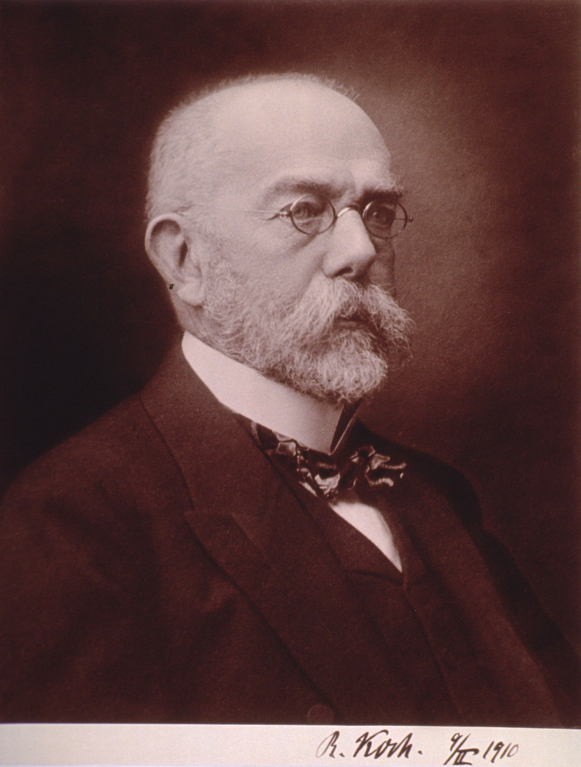
Robert Koch. Image via NIH’s National Library of Medicine.

On March 24, 1882, a thin, near-sighted German physician named Robert Koch delivered his latest research paper to an evening meeting of the Physiological Society of Berlin. His audience was attentive. Koch had already made a name for himself by identifying the cause of a leading pathogenic killer of cattle –– a disease called anthrax.

Koch, a country practitioner in Wollstein, Posen, who devoted much time to microscopic studies of bacteria, also had developed a way to dry and strain the anthrax bacterium for examination under a microscope, and a way to grow it in a culture. His techniques of bacteriological culture continue in use around the world, most recently as a tool in conclusively diagnosing anthrax in the human victims of 21st century terrorists.

But anthrax was not the subject of Koch’s paper that evening. Instead, he spoke of an even more dreaded disease that had long plagued humanity: a menace that had so consumed its victims that it was commonly called death by “consumption.” Koch presented to the attending physicians and scientists the first convincing evidence that tuberculosis (TB) is caused by an infectious bacterium.

Ironically today, while world attention has recently focused on the deadly potential of anthrax spores used as bio-weaponry, the global threat from multi-drug-resistant strains of tuberculosis (MDR-TB) is perhaps as great as the TB challenge posed that evening in 1882 –– 13 years before William Conrad Roentgen discovered X-rays.

The Present TB Threat

This present TB threat is conveyed in compelling detail in a new McGraw-Hill book: Timebomb –– The Global Epidemic of Multi-Drug-Resistant Tuberculosis, by Dr. Lee B. Reichman (M.D., M.P.H.) and Janice Hopkins Tanne, an award-winning science and medical writer, and member of The New York Academy of Sciences (the Academy). Evidence the book presents in support of its chilling title is based on a lifetime of experience and personal observation by Reichman, executive director of the New Jersey Medical School National Tuberculosis Center and former director of the New York City Health Department’s Bureau of Tuberculosis.

Reichman and Tanne build a clear and convincing case in support of the World Health Organization (WHO) and allied public health groups that are working to combat the global MDR-TB threat.

Estimates say one-third of the world’s population –– about 2 billion people –– are currently infected with TB. The disease often remains latent in the lungs of unknowing victims for years, usually manifesting if and when the victim’s immune system is stressed (which is one reason TB is a leading cause of death among HIV/AIDS sufferers).

An Airborne Threat

Each year, another 8.4 million people actually become ill with TB, and 2 to 3 million people die of TB. Because TB bacteria readily fly through the air, as when an afflicted person coughs, it’s estimated that each victim will infect 10 to 20 or more other people –– in whom the disease will likely remain latent, creating the potential “timebomb” effect.

Tuberculosis has become resistant to many of the drugs previously used to cure it, because of incorrect prescribing or failure to make sure the patient completes treatment. It will be many years before effective new drugs are readily available.

The WHO-approved direct observation therapy (DOTS) is a multi-drug regimen that can save the lives of MDR-TB patients if started early enough and the patient cooperates. But successful treatment is very costly, requiring at least several months of carefully monitored therapy.

Malnutrition and poor living conditions help create MDRTB “factories” in some of the world’s most impoverished populations –– such as in Africa, Peru and the former Soviet states. Timebomb describes in gruesome detail Reichman’s visits –– along with teams of experts, including Academy member Dr. Barry Kreiswirth, director of the Public Health Research Institute’s TB Center –– to the overcrowded gulags, or prisons, of the former Soviet Union.

Despite reforms, an MDR-TB epidemic is raging in the Post Cold War prisons of Russia today. Timebomb explores in great depth the economic, cultural and geo-political problems that continue to impede progress.

A Decades-long Process

A TB vaccine called BCG (bacille Calmette-Guérin, named for the French scientists who developed it) was widely used in the 20th century and is still one of six vaccines in the WHO’s expanded program of immunizations. Active TB has been found in persons who have received BCG, however, and the Timebomb authors say there’s no proof the vaccine is effective. While there is a great deal of scientific interest in developing an effective vaccine, they say the process will likely take decades.

Timebomb’s publication is timely not only because of the attention that recent bio-terrorist threats have focused on bacteriological agents, but also because March 24, 2002 –– designated World TB Day –– will honor Koch’s findings about M. tuberculosis with outreach activities supported by organizations in more than 200 countries. They include the International Union Against Tuberculosis and Lung Disease, the World Health Organization, the U.S. Centers for Disease Control and Prevention, and the American Lung Association.

“One-seventh of all human beings die of tuberculosis,” Koch, told the Berlin gathering on that evening, almost 120 years ago. “If one considers only the productive, middle age groups, tuberculosis carries away one-third and often more of these.” For his discovery of the tuberculosis bacterium and the tuberculin test, Koch was awarded the 1905 Nobel Prize in Physiology and Medicine.

Despite the genius of Robert Koch and the dedicated work of countless scientists and physicians who have come after him, the MDR-TB threat that Reichman and Tanne so thoroughly elucidate is just as serious today.
Also read: Tuberculosis: A Potential 21st Century Plague

Saving Lives in the Aftermath of Sept 11 Attack

Academy member and medical doctor Robert Lahita didn’t hesitate to use his medical knowledge to help others during this traumatic experience.

Published November 1, 2001

By Fred Moreno, Dan Van Atta, Jill Stolarik, and Jennifer Tang

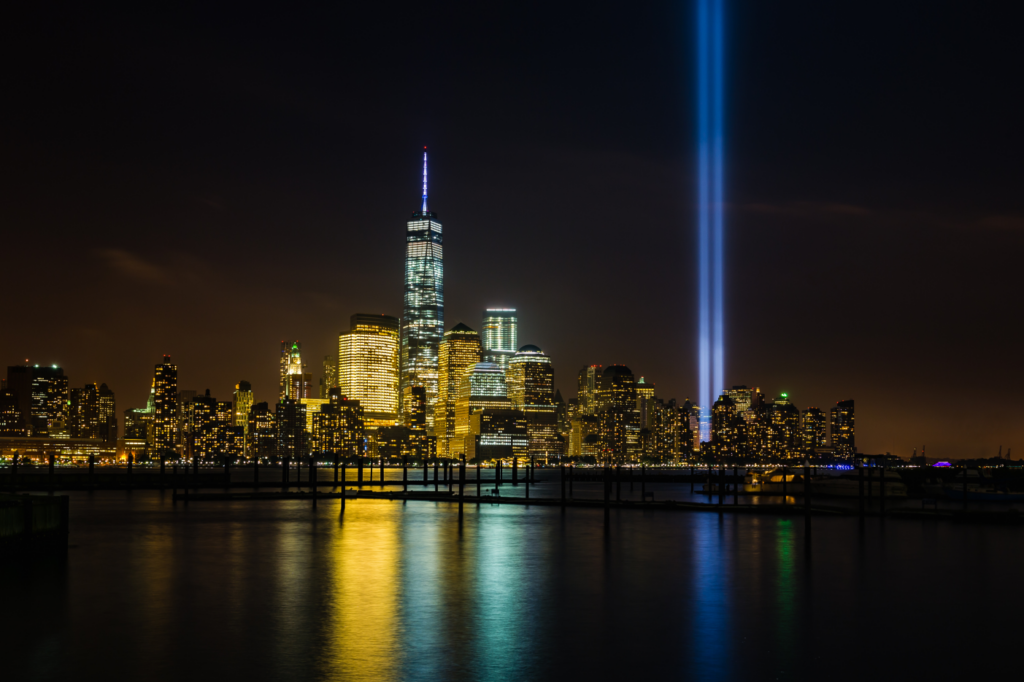
Image courtesy of VOJTa Herout via stock.adobe.com.

On September 24, in a cheerful ceremony as part of the Academy’s 183rd Annual Meeting, Dr. Robert Lahita received a special award in appreciation of his years of service as a member of The New York Academy of Sciences (the Academy’s) Board of Governors.

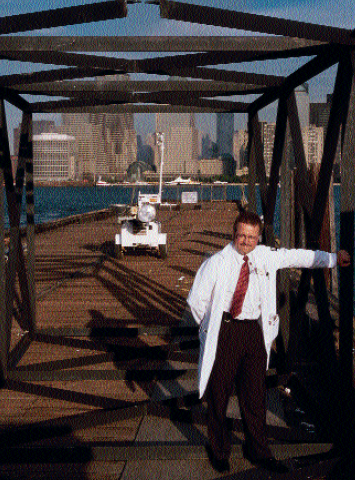
Less than two weeks earlier, on Tuesday, September 11, Lahita was at center stage of a far different venue — a New Jersey pier across from the smoking ruins of what had been the twin towers of the World Trade Center. What had started as a quiet morning making rounds at St. Vincent’s Hospital in New York’s Greenwich Village, where he is Chief of Rheumatology, became a living nightmare of burned and mangled bodies arriving by tugboat and ferry from the collapsed buildings across the Hudson River.

“As soon as I heard about the attack, I left the hospital and caught a train to Jersey City, where I’m the medical director of the mobile intensive care units of Hudson County and EMS at Jersey City Medical Center,” Lahita said. Most of his equipment, such as burn kits and trauma materials for treating patients, was in his car in New Jersey. “An EMS dispatcher sent me to the Colgate-Palmolive piers, where hundreds of victims were being unloaded by the Coast Guard and other groups. Had I parked that morning in Manhattan, I might have gone directly to the scene and been among the missing,” he observed.

The Walking Wounded

When Lahita arrived in Jersey City, a handful of paramedics and EMS technicians were trying to deal with the wounded. As the only doctor on the scene, Lahita took over and began treating injuries that ranged from open skull fractures and crushed pelvises to broken arms and legs. Many were firefighters and police officers, as well as “the walking wounded” – people temporarily blinded from the billowing smoke and ash.

“It was the most devastating scene I’ve ever seen in my life,” he said. “There was lots of blood and a great deal of emotion. It seemed like Armageddon.”

Because the radio transmitter atop the towers was destroyed, Lahita’s efforts to call for more help were thwarted. He immediately assigned specific tasks to everyone working with him. Chairs with wheels were converted into makeshift stretchers, splints were fashioned out of window blinds and, as other supplies like bandages began dwindling, office workers contributed their first-aid kits.

A Scene of Mass Confusion

Dr. Bob Lahita.

After an hour Lahita was joined by another doctor and more medical personnel began arriving. As the 200 most critical patients were delivered to area hospitals, Port Authority officials asked Lahita to accompany them on a caravan headed to “ground zero” via the Holland Tunnel. There he found a scene of mass confusion, debris, smoke, fire and five inches of smoldering ash.

“I saw dust, papers and scattered personal belongings everywhere,” he said. “Everyone was covered with ash and it was difficult to breathe.” Lahita carried boxes of masks and began distributing them to rescue workers.

A resident of Ridgewood, New Jersey, Lahita later learned that 35 people from his area were among the dead. However, he knows that his efforts helped save an untold number of people. “I work best under pressure, but this was beyond what I’ve ever experienced,” he said. “I’ll never forget it.” Nor will the people whose lives he saved.

Lahita joins other Members and friends of the Academy in expressing their condolences to those who have lost loved ones in the tragedy. “The Academy personifies science,” he said. “This is a sad occasion for all of us, as the World Trade Center was also a magnificent feat of engineering science.”

Lahita is a Fellow of The New York Academy of Sciences and has been a Member since 1979. He chairs the Academy’s Conference Committee, which he joined in 1991. He also has co-organized two major Academy conferences, B Lymphocytes and Autoimmunity and Neuropsychiatric Manifestations of Systemic Lupus Erythematosus (SLE). Since 1994, he has been a Member of the Academy’s Committee on the Annals of the New York Academy of Sciences.

Also read: How Trauma Changes Us: Life after 9/11

A Pioneer on Behalf of Women in Science

Inspired by her father, Sara Lee Schupf has supported various efforts that aim to encourage and support more women pursuing STEM careers.

Published November 1, 2001

By Fred Moreno, Dan Van Atta, Jill Stolarik, and Jennifer Tang

Image courtesy of sutlafk via stock.adobe.com.

Sara Lee Schupf, the woman for whom Sara Lee Bakery is named, credits her father, Charles Lubin, for her personal interest in advancing science. “My father was dedicated to supporting science and he encouraged me to do the same,” Schupf explained. “He loved the Weizmann Institute in Israel and asked if I would continue his interests in Weizmann, when he was no longer able to do so.”

At the time her father died in 1988, Schupf was enrolled in the University Without Walls program at Skidmore College, majoring in Women’s Studies. Her final paper was on “Women in Science and Their Relationship to Their Fathers.”  She quickly became aware of  the obstacles women scientists face, which motivated her to strengthen her commitment to helping women succeed in science. “I soon realized that, as a woman with a name that could open doors, I had a responsibility to get those doors opened, and that I needed to focus my energies on women and girls in science and technology,” she said.

Advancing Women Participation in Science

Like her father, who engineered a long series of technological innovations that revolutionized bakeries and the frozen foods industry, Schupf also is a pioneer in initiating programs and projects that are helping to increase the participation of women in science. Her major accomplishments include establishing the Weizmann Women and Science Award, the first-ever national award that recognizes an outstanding woman scientist who can serve as a role model and encourage other women in science. At the same institution, she also initiated the first Women and Science Lecture Series.

Another first was her endowment of the first academic chair for a woman scientist at Skidmore College. To make role models and mentors more visible for pre-college women, she has endowed a teaching science internship at the Emma Willard School, a private secondary school. In May 2000, she chaired the Girls Claiming Science Symposium there.

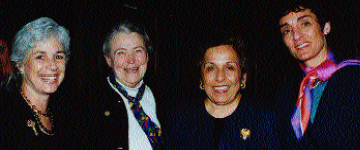
Supporting Women in Science — Sara Lee Schupf (left), Mildred Dresselhaus, Donna Shalala and Carla Shatz at the 2000 Weizmann Women and Science Award Ceremony.

Active in many science and women’s organizations, Schupf is Chair Emerita of the American Committee for the Weizmann Institute of Science, a trustee of The New York Academy of Sciences (the Academy), Skidmore College, the New York Hall of Science, and a member of the President’s Circle of the National Academy of Sciences. In addition, Schupf has contributed to major scientific organizations.

Supporting Science Communications

Recently, Schupf made a serious contribution to the Academy, specifically for the SciEduNet web site. Schupf believes the SciEduNet site “is of a great value to the community and I hope that it will serve as a model for others around the country. SciEduNet provides information about programs and resources available in science. In addition, SciEduNet is a perfect vehicle to initiate collaborations between partners as diverse as public service organizations, parents, teachers, students, universities and other academies and museums,” she said.

Her commitment to SciEduNet reflects her dedication to encouraging more people to have an interest in science, especially women and girls. SciEduNet is one way to bring science to the people if the people do not know how to come to science. “I have learned that one person cannot do it alone. In order to have women take ownership of science, we must all join forces, and understand and use the important associations. We will see progress only when those who have the means or ability collaborate and work effectively together, be it mothers, scientists, philanthropists, businesswomen or teachers,” she said.

Also read: Strategies from Successful Women Scientists

Environmentalism in the K–12 Science Classroom

Advocacy or science? A recent forum sponsored by The New York Academy of Sciences emphasizes challenges teachers face when teaching environmental science.

Published October 1, 2001

By Fred Moreno, Jill Stolarik, and Jennifer Tang

Educating young people about global warming, biodiversity, the importance of conservation and other matters has become a major issue in K–12 education. Students are taught sensitivity to the natural environment, the potential impact of human activities and the value of conservation. However, ecological science is difficult and complex, and many questions remain open on how we might best understand the diverse factors—geological, biological, economic, societal—involved in natural systems and man-nature interactions.

Some fear that science education is being shortchanged in favor of advocacy, with the promotion of specific policies or practices (e.g., recycling and composting) substituting for a deeper education in the sciences that promotes scientific literacy. In the wake of studies such as the Third International Math and Science Study (TIMSS) that show America’s high school seniors’ math and science skills are superior to their peers only in Cyprus and South Africa, some educators and scientists are concerned that environmental education is yet another field in which students are not learning enough science.

Advocacy or Science?

Is there a way to bring environmental issues into the science classroom while maintaining a strong focus on the underlying science? How does learning ecological science relate to traditional biology, chemistry, and physics?

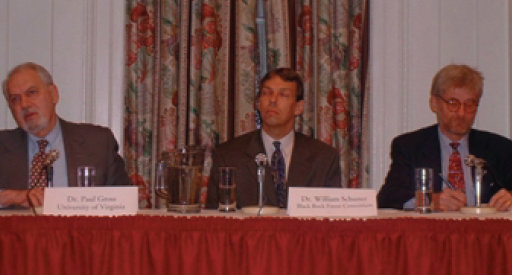
These questions and more prompted the NYC Science EduNetWork and The New York Academy of Sciences (the Academy’s) Science Education Section to sponsor a forum entitled “Environmentalism in the K-12 Science Classroom: Advocacy or Science?” Featured panelists were: Dr. Paul R. Gross, professor emeritus of biology at the University of Virginia, and coauthor of Higher Superstition: The Academic Left and Its Quarrels with Science; Dr. William F. Schuster, executive director of the Black Rock Forest Consortium, and Mr. Don S. Cook, director of the Tiorati Workshop for Environmental Learning at New York’s Bank Street College.

Environmental Education

No one disputes that K-12 education should offer courses on the environment. The Kyoto Protocol on Global Warming, the energy blackouts in California and other high-profile events attest to the importance of understanding environmental issues. Currently, there are more registered specialists in environmental education in American public schools (26,000) than there are in physical science. Most state K–12 science frameworks and science standards documents place some major emphasis upon environmental science.

Environmental education often covers a wide range of areas including: the workings of ecosystems and threats to ecosystem viability; pollution prevention; conservation; waste and recycling; human health; the economics of electric power grids; and the thermodynamics of planetary atmospheres. However, while some stress the importance of teaching environmental stewardship, others are more concerned that fundamental scientific concepts are being omitted or given less classroom time in environmental education.

Gross espoused the latter view. “The fraction of our population with even minimal comprehension of scientific inquiry and scientific claims is dangerously small and the same holds true, on the whole, for our schoolchildren,” he said. “Are those children, in environmental education, learning the basic science whose classroom and fieldwork time has been preempted by it? From what I have seen and heard, the answer is no.”

Preach Rather Than Teach?

From left: Paul Gross, William Schuster, Don Cook

Gross highlighted two factors affecting the quality of environmental education: the quality of the textbooks being used in schools and the level of teacher preparation in K–12 science education. In some textbooks, he observed, “The dominant tone is one of proud advocacy rather than science.” Although Gross agrees that the existence of serious environmental concerns warrant the inclusion of environmental science in the curriculum, he fears environmentalism in the science classroom may promote an activist mentality in students while failing to teach them the scientific complexity surrounding environmental issues.

He noted that only one out of five science teachers at the middle-school level have ever taken a college physical science course. For teachers who have not been adequately prepared to teach science education, it may be easier for them to “preach rather than teach.”

In addition, Gross believes that environmental education should focus on environmental science. He defined environmental science as an applied science, that is grounded in facts, concepts, and techniques from basic sciences and mathematics. “You cannot have a useful, serious notion of the scientific or even the economic issues of global climate change, historical and current, without a reasonable background in the physics of heat and energy, the elementary thermodynamics of gases, and the elements of geology,” he said.

Environmental Stewardship

While Schuster agrees that advocacy should not replace basic science teaching, he believes environmental literacy should be an integral component of scientific literacy. “From scientific studies, we know we are substantially changing the makeup of our planet’s atmosphere. The quality and availability of water is severely compromised in many areas and human activities are causing one of the biggest episodes of extinction in our planet’s history. These are serious matters and ones that deserve to come under the microscope of scientific research and teaching,” he said.

As executive director of the Black Rock Forest Consortium, an organization that operates a nature preserve 50 miles north of New York City, he has led and overseen outdoor forest experiences for thousands of pre-college students. In his experience, most students enjoy nature field studies and seem to thrive in a classroom “without walls.” He noted that “interest in organisms and their environment often leads not just to knowledge but also to care, respect and even love for these ecosystems. These feelings may naturally engender what is typically considered environmentalism.”

Schuster believes there is more value in holistic science and nature studies than Gross, however, and sees it as a valid way to introduce K–12 students to the scientific world. “Science education should put an emphasis on an active process of inquiry as opposed to an inert body of information to be memorized,” he added. However, he cautioned that classroom lessons and field experiences complement each other and are both necessary to give students “a well-rounded education that includes scientific and environmental understanding, as well as knowledge about human social systems so that they will have the tools they need to make informed, responsible decisions on the environment.”

Experiential Learning

While Cook agreed with Gross’ assessment that science education in the U.S. needs to be improved, his focus was on making science more accessible to students and the importance of experiential learning. He believes that students need to actively engage in subject matter in order to understand it. In order to give students a basis for learning more complex concepts, scientific experiences should begin with phenomena described in everyday language before introducing terminology used by scientists. “We need to rethink the roles of language and experience in the education of non-scientists,” he said.

Also read: From the Lab to the Classroom

Adnan Waly: A Life and Career in Physics

From high-voltage mistakes to a visit with the Gestapo, physicist Adnan Waly talks about a life and career in science.

Published May 1, 2000

By Merle Spiegel

Image courtesy of WP_7824 via stock.adobe.com.

The New York Academy of Sciences’ (the Academy’s) most valuable asset is the knowledge and experience of its members. Ninety-year-old Adnan Waly — an Academy member for 49 years, and an active member of its Lyceum Society — has watched and been a part of the unfolding of the “century of physics.”

During his long career, he had personal contact with almost all the eminent scientists working in or passing through Germany in the 1930s and 1940s. Waly shared his memories in an extensive series of interviews with Professor Martin Pope. Evelyn Samuel transcribed the entire series, which is available at the Niels Bohr Library of the American Institute of Physics.

Following are some selected highlights:

High-Voltage Mistakes

“We had a one-million-volt pulse generator, but if you activated this, all the instruments in the institute would break down. So the whole room was coated in aluminum in order to protect the other instruments, and I was standing beautifully on aluminum and adjusting the spark gaps. In order to make photographic exposures of some discharges, the control table was separated by a dark curtain so the one on the controls could not see the generator.

“Brasch [Arno] was at the controls, and when I had just adjusted the last spark he misunderstood something I said and switched the thing on. The current entered my arm. I had an insulating rod in my hand, and it broke into a million pieces. The current went through my body and out through my feet. I got an incredible cramp in my lungs, and my lungs collapsed totally.

“No air. I collapsed. The soles of my feet had big blisters where the current went out, and my arm was paralyzed for three days. Brasch came running over and dragged me to a nice comfortable chair. Then he did something else – he lost his head. He went into his bag – I’ll never forget this – and took out a piece of cake, which he knew I liked. Then he stuffed this in my mouth. I almost suffocated. I’ll never forget that. He almost killed me a second time.”

A Visit with the Gestapo

“When Hitler came to power, Max von Laue tried to recommend Jewish scientists to universities in the States, but he could not send letters as the mail was opened. I could travel because I had an Egyptian passport. My wife — at that time, my girlfriend — was Jewish. I went to the Egyptian embassy and said, ‘I’m an Egyptian.’ I didn’t know anything about Egypt — my father [who was from Egypt] had died when I was two years old. I pestered them until I got an Egyptian passport for myself and my wife.

“So I had an Egyptian passport and could travel. I traveled once to Egypt and twice to Holland to deliver the letters of von Laue. The Gestapo then asked me to come to their headquarters. It is very unpleasant to be summoned to Gestapo headquarters. A barred iron door closed behind me, and I was quizzed by two investigators for quite a while about why I traveled so much.

“At that time I had a very good imagination and an excellent memory. I concocted all sorts of stories, which they tried to pierce and defuse. After a few hours they bought my story. I had posted a friend in a car and told him to go to the Egyptian Consulate and tell them what happened if I didn’t return in five hours. But I was released.”

Art Meets Science at the Academy

“I was at The New York Academy of Sciences attending a lecture of the Nuclear Section. I found a seat in an empty row because not too many people were interested in nuclear physics at the time. The door opened, and in came a gentleman flanked by two gorgeous women. It was Salvadore Dali with his moustache and his cane. He sat in my row with the ladies, and he put his cane up, two hands on the cane and his chin resting on it, as was his habit. He looked at the pictures that were presented.

“One of the pictures was of a cloud chamber — a photograph of particles moving apart from a center. Some time afterwards I saw a television program where Dali was interviewed, and his latest painting was exactly what he had seen at the Academy, with tracks coming out from the center. ‘You don’t know what this is?’ Dali said to the interviewer. ‘These are pimmesons.’ The lecture had been on the π meson.”

Also read: The Academy’s Lyceum Society: A “Think Tank”

Russian Engineer Acquitted of Espionage Charges

While Aleksandr Nikitin has been temporarily acquitted on espionage charges, a higher court has appealed the case.

Published April 17, 2000

By Merle Spiegel

Image courtesy of Grispb via stock.adobe.com.

Nikitin says it was his wife, Tatyana, who made sure the world didn’t forget about him.

Tatyana Tchernova tried to maintain some human contact with the unannounced visitors. She offered them something to eat. It was the middle of the night, October 5, 1995, in her tiny apartment in St. Petersburg. The men were from the FSB, the Russian secret police, and were trying to find evidence that would put her husband, Aleksandr Nikitin, in jail or even have him executed.

That same morning Aleksandr Nikitin had returned from Moscow having learned that he would be issued visas from the Canadian embassy. Those visas would have allowed him to take his family to Toronto and start a new life. There had started to be friction between what he did for a living, his conscience, and his country.

Nikitin’s line of work was nuclear energy. Specifically, he knew about nuclear reactors on military submarines. He had been chief mechanic on a nuclear submarine in the Russian navy, and then a senior safety inspector. When Nikitin began talking about the danger of nuclear accidents in the northern fleet of submarines publicly expressing concerns about the future of 100 decommissioned vessels afloat in the North Sea and the growing threat presented by nuclear waste in the area, some began to see him as a threat. When he collaborated with the Norwegian environmental organization Bellona to tell the story and to ask for help from the international community in containing the environmental hazard, the FSB came to visit.

Psychological Warfare

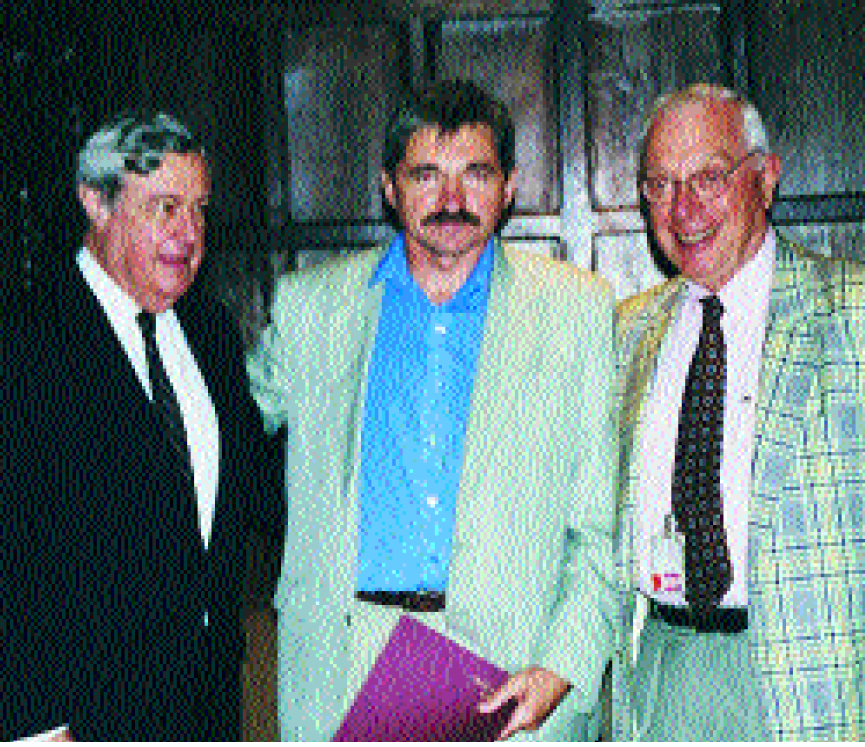
From left: Board of Governors Chair Bill Green, Russian engineer Aleksandr Nikitin, and Joseph L.Birman, chair of the Academy’s Committee on Human Rights of Scientists and Distinguished Professor of Physics at the City College of New York.

Nikitin was charged repeatedly with treason and with revealing state secrets. He spent 10 months in prison. “The first two months,” he says, “was an attempt to destroy me psychologically.” He and his family were harassed repeatedly. They were followed. Their tires were slashed. He was indicted eight times and tried twice, each trial leading to neither conviction nor acquittal. The prosecution was told to keep trying. “Prosecution turned into persecution on a human level,” says Irwin Cotler, a Montreal-based lawyer who has followed the case.

On December 29, 1999, Nikitin was acquitted on all charges by the St. Petersburg City Court. He barely had time to celebrate before the prosecution appealed the decision to the Russian Supreme Court. Nevertheless, observers hope that this last verdict will permanently deflate the prosecution’s case, and the verdict was celebrated as a major victory by The New York Academy of Sciences and by human rights and environmental organizations around the world.

The most dangerous point in Nikitin’s journey was probably those early days before the world had heard of his case – while he was still just one man against a machine rooted in Soviet-era police tactics. Nikitin says it was his wife, Tatyana, who made sure the world didn’t forget about him. “She was constantly doing something,” he says. “She made phone calls and found people everywhere. All the people who are standing by me now, she got them involved in my case.”

The Academy Fights for Nikitin’s Release

On April 17, 2000, Nikitin won the final victory in the four-year nightmarish espionage case against him. The Russian Supreme Court confirmed the December 1999 judgment of the St. Petersburg City Court to dismiss all charges against Nikitin. Although the prosecution has a year in which it can appeal the decision, in all likelihood this judgement brings Nikitin’s ordeal to a happy conclusion.

Working with The Bellona Foundation, the Sierra Club, and Amnesty International, the Academy mounted an intense lobbying effort in Washington, D.C. In addition, John Gillespie, Professor and Chair of the Department of Physics and Astronomy at Lehman College, City University of New York, and a member of the Academy’s Human Rights Committee, spent time in St. Petersburg as an observer during the trial.

This case was the result of Nikitin’s contributions to the Bellona report entitled “The Russian Northern Fleet: Sources of Radioactive Contamination.” The report described the dangers associated with Russia’s nuclear-powered vessels, the storage of spent nuclear fuel, and other radioactive waste generated by the vessels.

“There was no crime.”

For his efforts to expose this environmental threat to the Russian public, Nikitin was accused of espionage by the FSB, the successor to the Soviet-era KGB. He was imprisoned for several months and repeatedly placed on trial during the past four years. Nikitin consistently maintained that all information he contributed to the report was publicly available and that the world community needed to know about the dangerous storage practices of nuclear waste in the Russian navy. Therefore, he stated, such information could not be classified as secret under the Russian Constitution. This latest trial involved the eighth set of charges made against Nikitin since 1996.

“Of course there was no crime,” Nikitin explained. “The Bellona report just describes one of the main environmental challenges for Russia. Information about nuclear hazards, waste, and accidents onboard nuclear submarines is no threat to national security. It is the nuclear problems that constitute a threat to Russia.”

Speaking after the Supreme Court ruling, Nikitin said a lot of work needs to be done to turn this personal victory into one for the country.

“I’ll continue to work with my colleagues at Bellona and to work for safe handling of the radioactive waste stored in the Murmansk area. We also have to work to support other environmentalists in Russia who are facing FSB trouble-makers,” he said.

Nikitin is the director of Bellona St. Petersburg, one of the international affiliates of the Bellona Foundation. He also heads the Environmental Rights Center, an organization that protects the legal rights of citizens to due process and legal protection in environmental cases.

Also read: Academy Aids Effort to Release Political Prisoner

A Vital Part of a Teacher’s Professional Development

A hand-drawn illustration of a woman holding a pencil.

The Academy’s Authentic Science Research program, supported by NSF and SUNY-Albany, empowers teachers with the tools to be confident scientists and impactful mentors.

Published March 1, 2000

By Fred Moreno, Anne de León, and Jennifer Tang

To the students enrolled in Viveca Peek’s rigorous science research course at Humanities H.S. in Manhattan, showing up for a “zero period” class at 7:30 a.m. can be quite a challenge—as all who have ever endured the New York City subway know so well. “Showing up, on time, is sometimes easier said than done,” says Peek. “You need dedication.”

The research course is the heart of “Authentic Science Research (ASR),” a three-year project sponsored by The New York Academy of Sciences (the Academy) through an arrangement with a State University of New York at Albany/National Science Foundation grant. The program is designed to train and help teachers establish and lead science programs in their respective high schools; 15 NYC high schools currently participate.

In this innovative project, Peek’s responsibilities include teaching her students the scientific method; helping them to identify appropriate literature covering the topics they have selected; providing constructive feedback on student hypotheses and experimental designs; identifying resources to support the inquiry; and, perhaps most important, locating professors and professionals in the scientific community who are willing to serve as student mentors.

A Vital Part of Professional Development

Peek encourages her students “to do hands-on work on topics that are related to your lives.” They have responded by selecting topics relating to autism and steroids, as well as esoteric topics such as the Black Band disease in the Coral Reef. Students in the program have successfully competed in local and national science competitions such as the Intel Science Talent Search and the Academy’s own Science and Technology Expo.

She views the ASR program as a vital part of her professional development as a teacher. The training includes a three-week summer institute held at the Academy, for which participating teachers receive three graduate credits. Peek declares “I would be lost if I hadn’t taken the institute.”

She also expresses appreciation for “the chance to meet other teachers going through the same thing.” She has kept in touch with others in the institute, sharing information and experiences and exchanging war stories.

The Academy is in frequent contact with the 15 participating schools and provides a schedule of school visits designed to offer support and guidance for staff and parents in adapting the needs of individual schools to the demands of the program. Teachers are also required to take five follow-up workshops throughout the school year.

When Peek welcomes her students early each morning, this most prized of all professionals—a deeply dedicated teacher—resumes the gentle guiding, encouraging, and occasional prodding of the young scientists entrusted to her care.

Learn more about educational opportunities at the Academy.

Exploring the Biology Behind the Music We Love

The Biological Foundations of Music conference will examine why and how the human brain has such an affinity for music.

Published March 1, 2000

By Merle Spiegel

Music is a part of all human cultures – and of almost every individual’s life, from infancy to death. We are uniquely able to produce and respond to music. It’s time we took it seriously.

This spring, the Academy will host a conference on the Biological Foundations of Music that should help us begin to understand why and how the human brain has such an affinity for music as well as an ability to process its language.

“There seems to be some kind of innate predisposition that our species has to produce music,” says Robert Zatorre of the Montreal Neurological Institute, who co-organized the conference along with Isabelle Peretz of the Department of Psychology at the University of Montreal. “Small children are able to do fairly sophisticated things musically, without any training. We tend to overlook this because it’s so simple for us,” he adds. “Our brains do an excellent job of encoding complex patterns. It’s the converse of what computers are good at.”

Computers are still lumbering buffoons at the simple act of recognizing a tune, however, and Zatorre believes that looking at how the brain processes music can provide a unique avenue for understanding brain function. “There are many aspects of brain function that we still don’t understand,” he says. “If you want to know what’s unique about the human brain, you have to look at those functions that distinguish us from other species. In the world of sound processing, the perception of speech and the perception of musical sounds are the two that distinguish us from every other species. We talk to each other and we play music.”

Music, Biology, and the Brain

The Biological Foundations of Music Conference rewards many years of lonely work by a relatively small group of researchers. Both Zatorre and Peretz combined science and music in graduate school when few others considered the field a respectable line of inquiry. “I thought I was the only one on earth doing it,” Peretz says of her early years in graduate school in Belgium.

Nevertheless, both she and Zatorre stuck with their interests, and over the course of the past 10 years the field has begun to be seen as a respectable line of inquiry and to gather serious attention. The upcoming conference, which will be held at The Rockefeller University in New York City, May 20-22, is “the first serious conference on music and the brain anywhere in the world,” according to Rashid Shaikh, Director of Science and Technology Meetings for the Academy.

More than 20 presentations and discussions will be included on topics such as the origins of music, the question of music as an evolutionary adaption, neural processing of complex sounds, electrophysiology of pitch, the history of neurology and music, tonal processing, brain plasticity and musical training, music and emotion, and music and other cognitive functions such as the “Mozart effect.”

Also read: Music on the Mind: A Neurologist’s Take

Exploring New Frontiers in Canopy Ecology

Exploring the science of canopy ecology, some of which takes place 120 feet off the ground.

Published March 1, 2000

By Merle Spiegel

Image courtesy of jittawit.21 via stock.adobe.com.

After millennia on the ground, we’re headed back to the treetops. That’s what Bruce Rinker would like, anyway. Rinker, an avowed acrophobe, has shinnied his way into the tops of trees from Africa to New York, from Central and South America to Florida. The science of canopy ecology is a new frontier, he says. And the view will knock your socks off.

“The U.S. and Europe spent a lot of time and money training ecologists to go into the tropics,” says Rinker. “And we learned about all these new species and new processes in the upper canopy. It didn’t take us long to ask: ‘If this is going on here, what’s going on back home?’”

Rinker and other canopy ecologists are starting to get answers to that question. On December 16, Rinker spoke to The New York Academy of Sciences’ (the Academy’s) Engineering Section about some of the findings of this new science. “Neotropical migrants—warblers and tanagers—stratify as they move through the forest,” he says. “Some never come out of the treetops.”

Rinker was introduced to the science of canopy ecology in 1991 when he was part of the U.S. team of an expedition into the treetops in Cameroon, Africa. Enthralled by the possibilities of these new techniques, he brought the technology home to the Millbrook School in New York, where he is Chairman of the Science Department and Project Director of the Forest Canopy Walkway. Built in 1995, this is one of only five such canopy research facilities in the United States.

An Amazing Miricle of Color and Noise

Rinker lights up when asked to describe the reactions of animals to his presence 120 feet off the ground. “One cold, overcast, and breezy Sunday, we no sooner got into the treetops when we could hear a swarm of neotropical migrants coming toward us. Within moments we were completely enveloped in this flock like a swarm of bees. They were literally walking on us black-throated blue warblers walking on my chest, on my shoes. There were grosbeaks and tanagers everywhere. It was the most amazing miracle of color and noise I’ve ever witnessed. It seemed as though they were oblivious to our presence. Then, in a couple of minutes, it was all over.”

Rinker is convinced of the utility of this new science and technology, but he would like to broaden its reach. “Traditionally the word canopy has referred to the upper layer of vegetation in the forest,” he explains. “We’re redefining the word, and it has upset some people. The problem is that there are all sorts of nooks and crannies and valleys and troughs. We’re redefining the word canopy to mean the entire forest system, from ground up. This means that not only can forests have canopies, but you can have sugar cane fields with canopies. You can have a golf course lawn with canopies. A kelp forest with canopies. Even the stromatolites of Australia define a canopy.

”Who knows what kind of insects and microclimate differences we will find,” he concludes.” This is all brand new.”

Also read:A Case for Going to Bat for the Bats

Making Science More Accessible to the Public

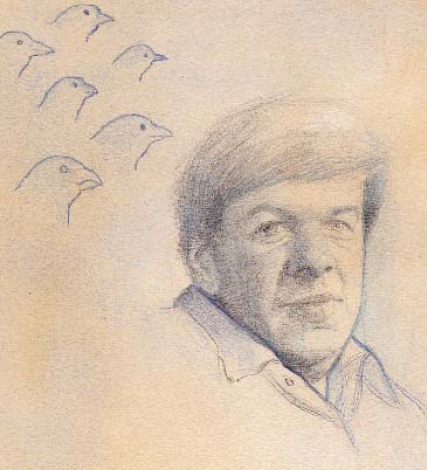
A hand-drawn illustration of a man with birds.

One of the most popular writers and lecturers on scientific topics, Stephen Jay Gould aims to make science more accessible to the public.

Published March 1, 2000

By Fred Moreno, Anne de León, and Jennifer Tang

When he was five years old, Stephen Jay Gould took the short trip from Queens to the American Museum of Natural History in Manhattan with his father. That visit sparked an interest in paleontology that blossomed throughout his boyhood and teenage years in New York City’s public schools.

Today, some 50-plus years later, Gould has become one of the most popular writers and lecturers on scientific topics. His 20 books and hundreds of essays, reviews, and articles have contributed immeasurably to building bridges between science and society. Since 1994, his essays, “On Common Ground,” have appeared regularly in The New York Academy of Sciences’ (the Academy’s) magazine, The Sciences, helping fulfill one of the Academy’s prime missions: advancing the understanding of science and technology. His essays in The Sciences reflect Gould’s view of scientific writing as a critical, rather than purely instructional or educational, genre.

“I believe my kind of writing is part of a humanistic tradition, sort of what Galileo did when he wrote his books as Italian dialogues and not as Latin treatises,” he says. “Even the conceptually most complex material can be written for general audiences without dumbing it down.”

Inspiring Critical Debate

But Gould is much more than just a popular author of accessible essays and books. A productive scholar (currently on the faculty at Harvard), his ideas on the theory of evolution and the interpretation of fossil evidence have inspired critical debates among biological and geological scientists. His insights into the importance of statistical reasoning and the meaning of variation are also significant and have more personal connotations: they were derived as a long-term survivor of abdominal mesothelioma, a rare form of cancer that was usually fatal at the time of his diagnosis in 1982.

“My statistical training taught me that the ‘median mortality of eight months’ for mesothelioma was not necessarily a prediction about me,” he says. “I decided that I was going to be in the half that lives longer.”

Gould has said that one of his goals is to make people “less scared” of science. His essays in The Sciences are playing a role in doing just that.