Challenges in Food and Nutrition Science

The New York Academy of Sciences’ work in nutrition science aims to address global issues such as food security which affects infants, adolescents and the aging population.

Published June 1, 2020

By Carina Storrs, PhD

According to the United Nations, malnutrition is “a trap from which people cannot easily escape.” And it is a trap that affects every country in the world. In 2015, ending hunger and ensuring access to nutritious food was named one of the U.N.’s 17 Sustainable Development Goals (SDG) for 2030. Efforts to reduce malnutrition stretch back decades and have taken many forms. These include global initiatives that increase access to nutritious foods; government policies that promote healthy diets and set nutrition standards; nonprofit groups that operate food pantries and kitchens; and researchers who study malnutrition and evaluate interventions.

Within the vast landscape of approaches to combat malnutrition, The New York Academy of Sciences Nutrition Science Program has been focusing on where it can make the greatest contributions to nutrition science research. Over the last four years, it has focused on important nutrition science interventions, including the control and prevention of thiamine and micro-nutrient deficiencies and bolstering evidence-based nutrition models.

These activities support a priority for the Academy — addressing global issues such as food security that affect infants, adolescents and the aging population. “Today we can say that the Nutrition Program at the New York Academy of Sciences has become a center of reference on a number of those issues,” said Gilles Bergeron, PhD, Senior Vice President for Nutrition Science at the Academy.

The Academy’s reputation as a neutral convener of experts representing all sides of an issue, makes it the ideal catalyst to assess current scientific evidence writ large. In the case of the Nutrition Program, it also actively evaluates data, and participates in ongoing research needed to design future large-scale programmatic activities.

Filling Knowledge Gaps

For its research on thiamine deficiency, a problem that mainly occurs in low and middle-income countries (LMIC) due to insufficient dietary intake of the B1 vitamin, the Academy’s nutrition science team, together with the Bill & Melinda Gates Foundation, convened a task force in 2017 to take stock of existing data. The team is now collaborating with researchers internationally on several projects to fill in knowledge gaps, determine best solutions to tackle this public health problem, and to assess the prevalence of thiamine deficiency in understudied regions of Africa, such as Madagascar and The Gambia.

Thiamine deficiency can easily go unrecognized, as it did for decades in parts of Asia such as Bhutan and Northern India, because the symptoms are so vague, ranging from the loss of appetite in infants and children, to tingling in hands and feet in adults. But left untreated, thiamine deficiency can rapidly lead to death, and there is increasing evidence that sub-clinical cases — which almost never get detected — can cause long-term cognitive delays and motor skill problems. “We are starting to work on strategies to prevent thiamine deficiency and to raise awareness of its prevalence, which is much, much broader than I think anyone expected,” said Megan Bourassa, PhD, a biochemist and the Academy’s Associate Director of Nutrition Science.

The Academy’s Nutrition Science Program has brought much-needed attention to the issue of thiamine deficiency, according to Frank Wieringa, MD, PhD, senior researcher at the Institut de Recherche pour le Développement (IRD) in Montpellier, France. “In 2012, we knew as much about thiamine deficiency as we did in 1950, there was hardly any progress in those 60, 70 years,” said Wieringa, who served on the Program’s task force and is part of its Scientific Advisory Group.

A High Prevalence of Thiamine Deficiency in Cambodia

Wieringa found a high prevalence of thiamine deficiency in Cambodia, even though the problem has generally been less well recognized by the medical community there than in other parts of Southeast Asia such as Laos. He and his collaborators, including the Academy nutrition team, are currently testing the optimal dose of thiamine to give lactating women in Cambodia. Early data will be available this spring and the hope is to eventually fortify salt with the optimal thiamine dose, much like salt is already iodine-fortified.

On a separate but related front, the Academy has taken on the challenge of trying to improve the myriad of computer models that can guide policy makers, researchers and aid groups in deciding how to tackle malnutrition despite limited resources. The models, which have been developed by academic, governmental and humanitarian groups, can make predictions about important policy questions such as:

  • Which nutrition issue is the most pressing in a particular setting?
  • Should attention be directed at certain micronutrient deficiencies or on bigger issues of stunting and underweight populations?
  • Which intervention(s) would be most cost-effective?
  • What is the best mix of interventions to achieve multiple concurrent objectives?

With competing models, policy makers may only use the tools that are promoted by the donor they work with (be it The World Bank, USAID or other); and not necessarily the one that is most appropriate for their goals. There needs to be a greater recognition of the diversity of needs and the fit-for purpose of specific modeling tools to the specific task.

The Nutrition Modeling Consortium

Over the last three years, the Academy, with funding from the Bill & Melinda Gates Foundation, has brought together various modelers and launched the Nutrition Modeling Consortium to try to increase awareness of the models in LMIC. Such a partnership was developed to foster collaborations and shared experiences between countries regarding the use of models in decision making.

The Consortium has given modelers the “unique opportunity to sit down and really dig into what these models can do,” said Stephen Vosti, PhD, Adjunct Professor at University of California, Davis, and member of the Consortium. Vosti and his colleagues created MINIMOD, a tool to help plan and manage the most cost-effective micronutrient interventions in LMIC.

So far, the researchers have identified strategies for reducing vitamin A deficiency in Cameroon and plan to deploy the tool to look at other micronutrient deficiencies in countries such as Malawi and Nigeria. MINIMOD could also be used to assess the risk of interventions leading to overconsumption of micronutrients, which is a particular concern in the United States and other developed countries, according to Vosti.

Undernourishment Impacts More than 800 million Globally

With more than 800 million people around the world experiencing undernourishment in 2017, the stakes for the Nutrition Science Program, as well as the many other efforts featured in this issue, could not be higher. Ensuring that all the world’s people have access to adequate nutrition achieves multiple societal objectives. Healthy people are productive people who can work and contribute to long-term economic sustainability.

And a proper diet is foundational in enabling people to fight off disease. It is arguably a gender issue as well. In societies where male children are often more valued than females, girls may not receive adequate nutrition in their formative years, which will impact their ability to bear healthy children of their own.

“Access to nutritious food is a common thread to all population segments,” said Bergeron. “What we do at the Academy is not just about starving children in remote parts of the world, although we recognize the need. Obesity, antibiotics in animal food production, adolescent women nutrition as well as nutrition for the aging, are issues that need to be addressed in developed countries as well.

Here in the United States, it is estimated that one in every 10 adults who are 20 years or older has diabetes. For seniors (65 years and older), that figure rises to more than one in four. The cost of diagnosed diabetes is an estimated $245 billion — money that could go to crucial nutrition programs both in the U.S. and around the world for a healthier society at large.”
Good Mentors are Key to Student Interest in STEM

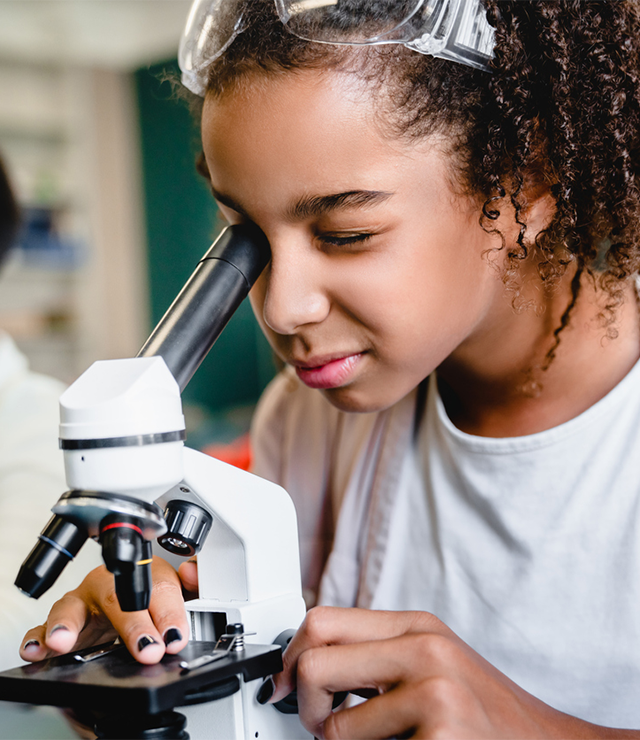
A young woman examines a specimen under a microscope.

The Academy’s Scientists in Residence initiative aims to jumpstart student interest in STEM.

Published May 1, 2020

By Adrienne Umali, M.S.B.S., M.S.Ed.

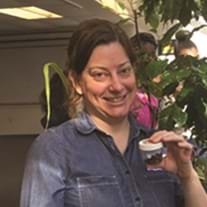
Kathrin Schilling, Ph.D.
Associate Research Scientist Geochemistry, Columbia University

Regardless of the field you’re in, it is likely that if you looked back at your career path, you could identify at least one person who has helped guide you to where you are today. Whether this person was a teacher, family member, coach, or supervisor, mentorship has always been an incredibly important part of not only exposing individuals to new ideas and opportunities, but in encouraging them to their full potential.

When the 2018 Program for International Student Assessment (PISA) scores in math and science showed the United States ranked 13th, behind several Asian and European nations, it was once again demonstrated that the U.S. needs to raise its investment in science, technology, engineering and math (STEM) to remain globally competitive. These fields are core to almost every industry, but a 2017 poll found that only 38 percent of middle and high school teachers see their students as being “naturally interested” in STEM.

Cultivating a Love of STEM

Most students rarely have the opportunity to meet a working scientist, so developing programs that expose students to science professionals is proving to be a critical way to cultivate a love of STEM in the next generation. It’s what brought Emily Bohonos, a middle school science teacher in Brooklyn, N.Y., to join The New York Academy of Science’s Scientist-in-Residence (SiR) program.

SiR brings together scientists and NYC middle and high school teachers for a year-long collaboration that aims to jumpstart student interest in STEM through real-world projects and the opportunity to “humanize” a scientist.

Emily Bohonos
Science Teacher, Elijah Stroud Middle School, Brooklyn, N.Y.

Bohonos along with her partner Kathrin Schilling, Ph.D., an associate research scientist of Geochemistry from Columbia University, have spent the last few months creating a project focused on something that most students already have an interest in: food. Building off of Schillings’ expertise — she has degrees in geology, soil science and microbiology — the two are challenging students to research diet variations around the world and create experiments that explore the effects of different conditions on plant growth. Their project pushes students to practice thinking critically, creatively, and globally.

Thinking Outside the Box

Schilling loves sharing her passion for science with students and is thrilled when she sees them thinking outside of the box. The benefits of programs like this, however, are not limited to added content expertise — they also provide tangible examples of people who have found success in STEM.

In fact, Schilling notes that many of the questions she gets are far removed from her area of expertise. With the title of “Dr.“, the students see her as an expert in all science-related fields, a factor she recognizes may be one of the reasons that science can seem inaccessible to some students. “It feels like you have to be a genius in every field [to be a scientist] and we are definitely not.” Schilling admits that she herself wasn’t a great student until she was able to start specializing in her post-secondary education.

To this end, Bohonos creates time during each lesson to allow students to interact one-on-one with their Resident Scientist and get to know her on a personal level. In this way, students can hopefully begin to see STEM as a career path not just limited to those who have already been labeled as “smart”. Fostering this type of environment is particularly critical at schools like Bohonos’, where students of color make up almost 90 percent of the student body, a group which still remains significantly underrepresented in the number of individuals receiving undergraduate STEM degrees.

Mentoring takes time and it comes with its own challenges, but despite this, Schilling remains optimistic about her role in fostering a positive outlook regarding STEM. “Even if I can change the mind of just a few [students] it’s more than before the program.

Upskilling Nurses to Handle the Worst of the Pandemic

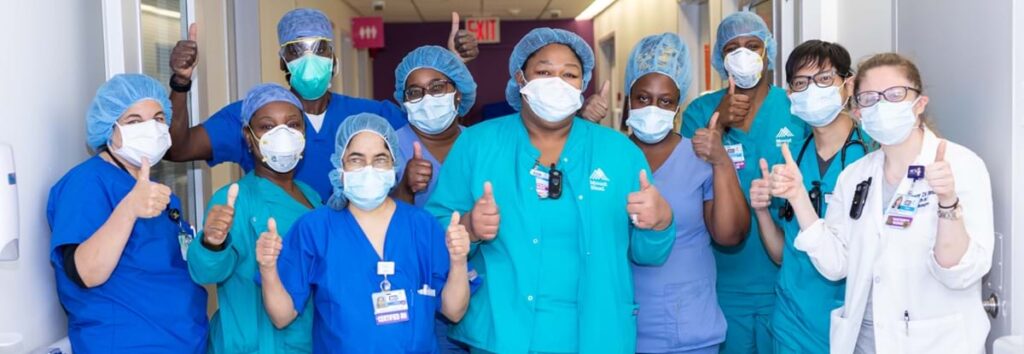
A group of medical professionals give a thumbs up.

The Academy, Mount Sinai and Sweden’s Sana Labs team up to “upskill” nurses volunteering to treat COVID-19 patients in New York City.

Published April 16, 2020

By Roger Torda

The New York Academy of Sciences (the Academy) has helped launch a transformational artificial-intelligence-based online learning program to increase the number of Registered Nurses able to handle the explosion of COVID-19 patients in New York City’s Intensive Care Units (ICUs).

Leveraging its global network of expertise, the Academy identified a cutting-edge online learning company, Sweden’s Sana Labs, that was willing to donate its team pro bono to meet New York’s need. The world-renowned Mount Sinai Health System, one of the largest in New York with eight hospital campuses, jumped at the chance to “upskill” their heroic nurses and provided Sana with curricula drawn from the American Association of Clinical Care Nurses and Mount Sinai itself. In record time, this material was transformed into a 16-hour course that can be taken in short batches during break time or at home on personal computers.

So far, about 100 nurses in a pilot program at Mount Sinai Hospital System have used this innovative learning platform. As many as an additional two thousand Mount Sinai nurses may take the training in weeks ahead, according to Sana Labs.

Says Mt. Sinai’s Jane Maksoud, Senior Vice President and Chief Human Resources Officer for Mount Sinai Health System: “The profound shortage of intensive care healthcare workers and other ICU staff available to operate mechanical ventilators during a pandemic will be one of the most significant hurdles facing U.S. hospitals treating critically ill COVID-19 patients. I cannot express my gratitude enough for the work that this team is doing.”

Expanding the Program

Now that this pilot is up and running, Sana and the New York Academy of Sciences are working to expand the program to other hospitals in the New York City metropolitan area, and across the United States. Ultimately, an even more crucial need may arise if cases of COVID-19 explode in the world’s Developing countries.

“Project Florence is designed to deliver personalized learning at scale and we’re making it available for free to any hospital or emergency care unit in the U.S. in need of quickly upskilling nurses for work in the ICU,” said Joel Hellermark, founder and CEO of Sana Labs. The project honors Florence Nightingale, the nursing pioneer. Sana Labs’ platform uses Artificial Intelligence to customize learning for individuals, improve retention of knowledge, and increase flexibility in training.

The Academy’s Ellis Rubinstein played a central role in bringing Sana and Mt. Sinai together for this initiative. “We recognized the important contribution Sana’s learning platform could make as the healthcare system in New York mobilized against COVID-19,” said Rubinstein. “As healthcare systems throughout the city, country, and world face scarcities of trained talent, we are prepared to use the global network of The New York Academy of Sciences to link the Sana Labs team to those in need.”

“I’m very excited to bring this innovative approach to Mount Sinai hospitals to help advance the skillset of our nurses,” said Diane Adams, Chief Learning Officer at Mount Sinai Health System. “Not only are we advancing learning for our health care system, but we are also meeting the needs of our community during a particularly critical time across New York City, the United States and the rest of the world.”

A Proud History of Advancing Medicine and Healthcare

The Academy has a strong background in rapid response to new developments in medicine and healthcare. As early as the mid-1940s, the Academy held a ground-breaking conference on antibiotics. Events hosted at the Academy as early as the 1960s focused on the carcinogenic threat of asbestos, a popular building material at that time. In 1983, the Academy hosted the world’s first major conference on AIDS, just as the scientific community identified the virus that causes the disease.

When the world became aware of a mysterious pneumonia called SARS in early 2003, the Academy quickly convened the first multi-sectoral meeting of scores of the world’s expert scientists and physicians from academia, government and the pharmaceutical industry. Six years later, in 2009, the Academy mounted a similar response to H1N1, the so-called swine influenza outbreak. In 2012, the Academy used its ability to convene diverse stakeholders to sponsor a conference exploring conflicts between scientists and biosecurity officials over research on the H5N1 influenza virus.

“We are very proud that the Academy can leverage its experience in the Life Sciences to make important contributions to world-wide efforts to address the COVID-19 pandemic,” Rubinstein said, referring to the upskilling initiative as well as the Academy’s robust series of programs for sharing scientific developments on the novel coronavirus.

Also read: Advancing Science for the Public Good thru Nursing

Collaborating Today for a Better Tomorrow

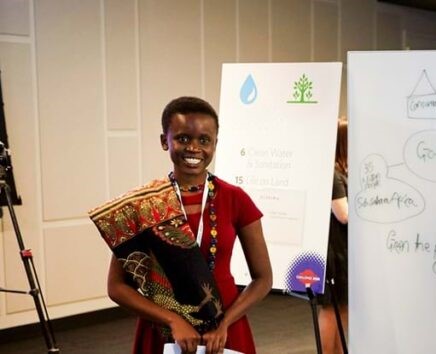
A woman poses with her research poster during an Academy event.

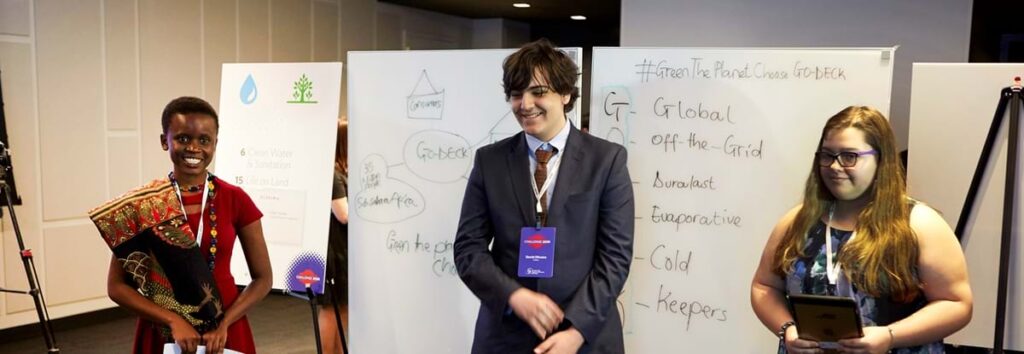
Junior Academy team works together to solve the problem of the lack of refrigeration in rural Tanzania.

Published March 3, 2020

By Marie Gentile and Roger Torda

Belinda Baraka Boniphace, 17, of Tanzania, runs an online market connecting sellers to buyers.

She noticed that high temperatures in her area and a lack of cold storage options were significantly impacting the quality of produce available in her town of Dar es Salaam and nationwide. Vegetables would start to spoil 6-24 hours post-harvest.

Luckily, Belinda is part of the Junior Academy, which brings together teams of students from around the world to collaborate on solutions for real-world problems. Belinda told her fellow teammates about the problem her country was facing, and together they were inspired to do something about it.

Developing a No-Power Fridge

The team developed a no-power fridge, Global Off-the-Grid Duralast Evaporative Cold Keepers (GO-DECK), made locally from landfill-bound materials such styrofoam that reduce temperatures and also regulates humidity during storage and transport. The food transport/storage system uses water instead of electricity to keep vegetables cool.

They experimented with six different models improve upon their refrigeration system, inspired in part by Zeer pot designs. A Zeer pot, also known as a pot-in-pot refrigerator, is used in rural regions that have limited access to electricity. The technology works by cooling through evaporation.

After experimenting, the team landed on an end product that is made from 100 percent recycled materials and can be easily distributed to local farmers. The team believes the system has the potential to save millions of metric tons of food per year, all for a nominal cost.

Building upon the success of their first solution, Belinda and one of her teammates, Talar Terzian, are now developing an online market for farmers. They are expanding on the Go-Deck Unit to offer hand washing machines, and their latest water carrier, to local women in Tanzania.

“I wish to help local farmers and women take advantage of their agriculture and gain the best profit for their hard labor,” Belinda says.

Overcoming Obstacles

However, Belinda has had to overcome many hurdles in order to accomplish her goal. She’s faced technical difficulties with internet and power outages due to weather and flooding in her area.

Also, her local school system is limited and not able to support the research that Belinda wants to pursue. Therefore, Talar and her mother, who live in Gainsville, Fla., helped Belinda prepare for SAT exams and complete scholarship applications so that she can go to university. Belinda says she’s been able to thrive because of the connections she’s made through The Junior Academy.

“By developing global connections like those I made with Talar in the US, I will be able to improve my business and help others,” Belinda adds.

This amazing endeavor is one of many innovative collaborations occurring all over the world through the Junior Academy.

A New Approach to Natural Disaster Preparation

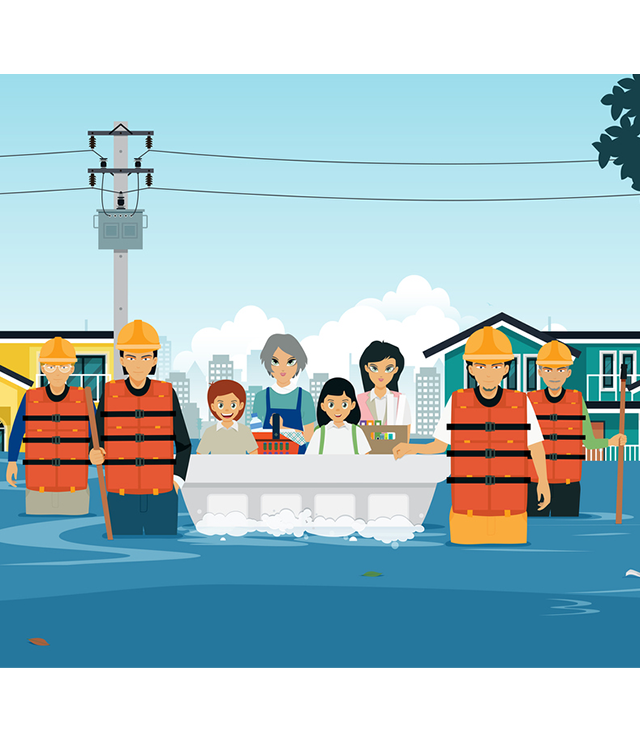
A graphic illustration of people responding to a flooding disaster.

A natural disaster inspired one high school student to use science to help others.

Published October 1, 2019

By Mandy Carr

Luis G. Alvarez
Luis G. Alvarez

Luis G. Alvarez, 17, is a member of the Junior Academy at Colegio Integral Mesoamericano Patzicia in Guatemala; a volatile environment that is subject to earthquakes, tropical storms and volcanic eruptions. And on June 3, 2018, he experienced the eruption of Volcan de Fuego.

“I remember hearing something like rain falling on the leaves,” said Alvarez. “At first, I didn’t recognize what it was, but then I realized it was ashes and sand, not rain. I told my parents, and we quickly got into the car and left.”

According to Reuters, more than 190 people were killed, many of whom died in their homes because they were unable to escape. That prompted Alvarez to do something about it.

“This event had a pretty big impact on me. I wanted to do something so that more people would survive and recover from these traumatic experiences,” he said.

The Junior Academy’s Natural Disasters: Relief & Recovery Challenge

Alvarez came across The Junior Academy’s Natural Disasters: Relief & Recovery Challenge sponsored by the S&P Foundation from a Facebook ad, and saw an opportunity. He promptly completed the application form on Launchpad, the Academy’s collaboration platform and was selected by the project team leader to work on the Challenge with three other students from Hungary, Vietnam and the United States.

Using Hurricane Katrina as their case study, the students noticed that mental health was a serious side effect of the hurricane, and largely went untreated.

To address this deficit in disaster relief, the team created a smartphone-based community survey app to gather critical information in high-risk and disaster-prone areas that would provide a useful baseline for responders during a crisis.

The survey collects information such as residents’ financial and employment status, mindset, living habits and mental health. The information is then used to help tailor recovery efforts when a disaster strikes.

Studying the Physiological Damage

Like his team found in the Hurricane Katrina case study, many residents in Alvarez’s community suffered physiological damage following the volcanic eruption. He also found that his community wasn’t prepared because they underestimated the devastation caused by the eruption and there was a lack of information surrounding the event.

“We had radio service and a cellphone signal,” he said, “yet we were never made aware that the volcano had high levels of activity. All these factors combined to shape my contributions and suggestions during the project.”

According to Alvarez, while the survey solution is based on the Hurricane Katrina situation, its principles can be applied to all natural disaster preparation.

“Natural disasters are often socially and economically disastrous for communities,” said Carolyn C. Cavicchio, Director, Corporate Responsibility; Vice President, S&P Global Foundation.

“The type of solution that these students developed has the potential to reduce valuable time and resources when disasters strike. Moreover, Challenges like this help young people to develop and refine important problem-solving skills that are crucial in today’s workplace,” she says.

Learn more about The New York Academy of Sciences’ Innovation Challenges.

Improving the Diagnosis of Rare Diseases

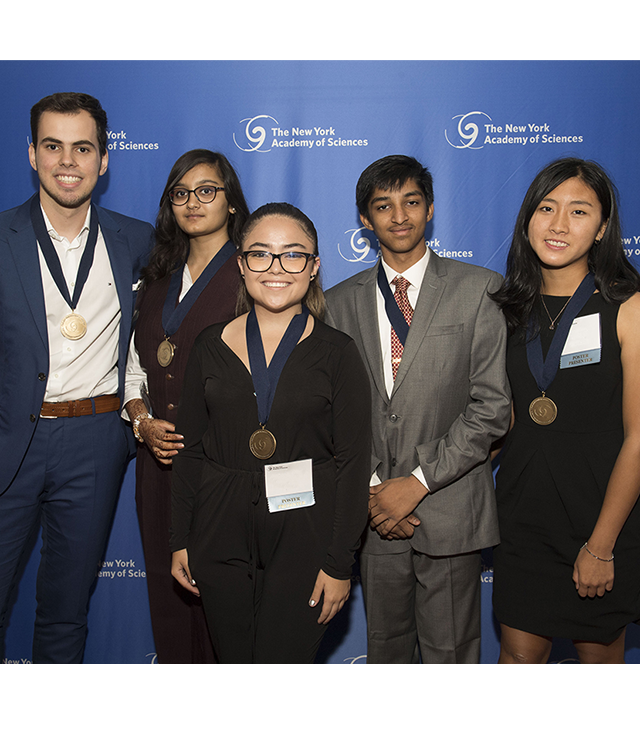
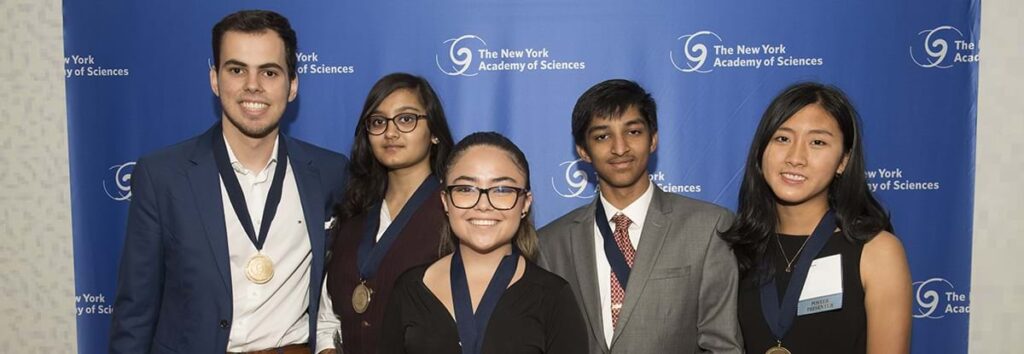
Five high school students pose for the camera.

Meet the winning team of the 2019 Junior Academy Genomics Challenge.

Published October 18, 2019

By Marie Gentile, Richard Birchard, and Mandy Carr

According to the World Health Organization, there are 5,000 to 8,000 rare diseases, most of them with a genetic basis. But errors in diagnosis can delay the implementation of proper treatments, especially for those in poor areas of the world where access to healthcare is limited.

Now, six high school students who participated in the Junior Academy’s Genomics Challenge, sponsored by Regeneron and Medidata, have developed a prototype for a better way to test the genetic code and thereby improve the diagnosis of rare diseases.

The students (Evangelos Kassos, 18, from Karditsa Greece; Ana Stratan, 18, from Bucharest, Romania; Aditi Gupta, 18, from Delhi, India; Monish Singhal, 14, from Bengaluru, India; Athena Yao, 17, from Wantagh, New York, USA; and Ana Bonavides-Aguilar, 17, from Cuernavaca, Morelos, México) impressed the Challenge judges with their comprehensive four-step approach, which addressed rare disease diagnosis, access to consultation, patient privacy, and knowledge distribution.

An Innovative Approach

Their innovative “iDNA Protocol” utilizes blockchain technology to ensure patient privacy, while increasing data sharing across research entities through their Doc2Doc platform model. Better data sharing facilitates collaboration between researchers, doctors, and patients, leading to more efficient and personalized diagnosis and treatment.

A “Prion Detection Kit” will help patients identify neurodegenerative disorders through at-home urine tests. This early detection kit complements the “GenePack” testing and treatment protocol, which tests newborns for genetic diseases and connects people living in isolated areas with research centers.

For their solution, the team received an all-expenses-paid trip to New York City to attend the 2019 Global STEM Alliance Summit.

Here, the students share their thoughts on the project and why they’re excited about its potential impact on medically underserved communities:

“Most of all, we thought about who we could help. We fashioned our project to cater to the needs of underserved communities.”

Ana Stratan

Diverse Perspectives

“I had no idea what was waiting for me when I posted ‘Wanna be the next Watson?’ on Launchpad. Five amazing people from around the world joined me in taking on the Genomics Challenge,” explains Evangelos Kassos. “Along with our mentor, we created a fantastic space full of creativity, where we could all thrive.”

Multidisciplinary Focus

“All of us had a focus—biology, technology, informatics—and we thought about the Challenge through these different lenses. Most of all, we thought about who we could help. We fashioned our project to cater to the needs of underserved communities,” says Ana Stratan. “Periodically we asked for input from people outside of the project to better understand our target audience.”

People Aren’t Numbers

“Our mentor explained to us how dire situations could get. We realized that while everyone was looking at the numbers, no one was realizing that these numbers are people,” laments Aditi Gupta. “I have lived in both a first world country and a third world country. I’m thankful for having access to the American healthcare system because India is still developing theirs.”

A Diagnosis-Focused Solution

”We realized that treatment is a different problem. The mere diagnosis of the disease can be troublesome,” says Monish Singhal. “We spoke with Prasanna Shirol, the co-founder and board director of the Organization for Rare Diseases India (ORDI), whose daughter suffers from Pompe disease. His daughter was diagnosed inaccurately several times. This example led to our diagnosis-focused solution, which emphasizes early identification of a disease.”

“We realized that while everyone was looking at the numbers, no one was realizing that these numbers are people.”

A Unified Approach

“Our solution has the potential to improve lives and be implemented effectively in existing communities globally, in a cost-effective manner,” says Athena Yao. “Our approach involves changes in the rare disease diagnosis and treatment process, addressing the different aspects of the problem. We employed our knowledge, resources, and understanding of global perspectives to create a solution that is viable for various areas.”

Achievable Impact

”The ideas we are proposing are groundbreaking, innovative, and achievable,” concludes Ana Bonavides-Aguilar. “Even though some are more challenging to attain (like creating the iDNA Protocol) there are others that if research begins, they could change the way genetic diseases are being detected, like the Antibody Testing Kit. Therefore, people suffering from rare diseases could—and will—have a chance at a high quality of life.”

Want to tackle global problems like this one? Learn more about the Junior Academy.

Developing Practical Solutions to Everyday Challenges

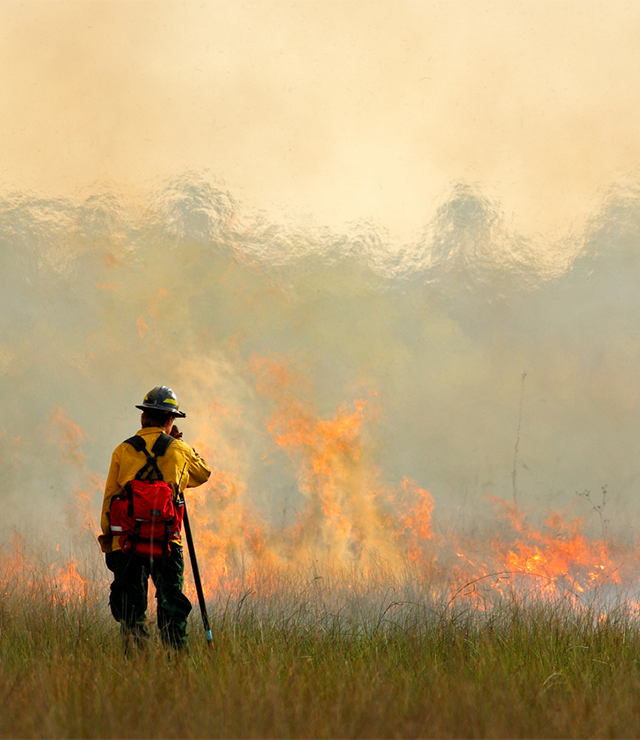
A firefighter combats a wildfire.

The Academy works with partners in industry, academia and government to develop solutions for everyday challenges.

Published October 1, 2019

By Robert Birchard

Matthew Friedman

For more than a decade the Academy has worked with partners in industry, academia and government to identify solutions to every day challenges through its innovation challenges.

“These challenges provide a platform for people to hone their STEM skills on a level playing field — no lab, credentials or financial commitment required — and apply them in an interdisciplinary, real world environment,” explains Chenelle Bonavito Martinez, MS, Vice President, STEM Talent Programs.

Challenges are not just about working on a solution to a problem. They also provide an opportunity for students to practice time and project management, as well as communication and presentation skills.

Lessening the Impact of Wildfires

In one such challenge, a team of five students from The Junior Academy in five different countries devised a solution to lessen the impact of wildfires.

Not only do [wildfires] destroy homes, they also halt local economies, raze whole habitats, injure and kill many, send carcinogens into the air, and so much more,” says Matt Friedman, 16, United States, a member of the winning Wildfire team. “Understanding the factors related to real-world problems can help us solve them.”

Rubi Lopez

The team looked at how to best counter the wildfire embers and maintain adequate water supply in pumping stations without electricity. In addition to the scientific and engineering questions, the group also grappled with questions of cost-effectiveness and how to implement their solution in already existing communities.

“I think it is really easy to fall into the trap of putting science into neat little boxes where each idea or development belongs in its own discipline,” says Wildfire team member Isabelle Robertson, 18, New Zealand. “But the real world isn’t like that and global problems require us to use collaborative approaches and tie aspects of different disciplines into one solution.”

Devising Healthier Snack Options

Rubi Lopez, Monterrey Institute of Technology and Higher Education and Bianka Martinez, Technological Institute of Morelia were completing their undergraduate degrees, when they won the Pepsico Healthy Snack Challenge, devising a healthy snack that would appeal to children. Their solution required not just extensive nutrition research, but also thorough market research.

Bianka Martinez

“My experience with this challenge expanded my vision of the food industry and focused my attention on creating bigger impact in the world,” says Martinez, a biochemical engineer who recently finished a Master’s degree in Food Technology and Innovation at the Polytechnic School of Design in Milan, Italy.

“The best way to solve worldwide problems is by applying scientific skills combined with creative and design skills. Science lays the foundations, the procedures and the means to solve problems, while the design thinking helps us create innovative and unique solutions by focusing on people,” says Martinez.

“Scientific skills are like a yellow brick road that lead you to the truth. You don’t know if Oz is near or far, but you know you’re on the right path,” echoes Lopez an international business major. “I participated in this challenge despite it not being directly related to my major. I thought my skills could be useful and that this challenge offered the opportunity to learn new things. It’s not necessary to have a science degree to generate solutions to real problems, but critical thinking and constant curiosity are always necessary to make a positive change.”

Isabelle Robertson

“The tools and techniques of science helps people make breakthrough discoveries in understanding phenomena,” says Bhavna Mehra, General Manager, Infosys Science Foundation. “Therefore, science and its pursuers and practitioners have the responsibility, along with the vision, to solve these problems.”

A Real-World Scenario

This belief in the responsibilities of a scientist led to the development of the Infosys Science Foundation Nutrition Challenge. Originally envisioned as a way to raise awareness about the number of deaths attributed to malnutrition in children under the age of five, the challenge also gave participants a platform to develop.

“The skills of observing, experimenting, data collection and applying a concept in a real-world scenario were all tested as the solvers worked on the nutrition challenge,” explains Mehra.

The top two teams — team Podible and team Nutri-APP — came up with their own hypotheses, collected data and applied the results to come up with executable plans to tackle malnutrition.

“Cultivating an understanding and practice of scientific thinking in all fields will go a long way in helping solve social, economic and civic issues, says Mehra.”

Advancing Science in an App-Driven World

Apps and other digital platforms have become part of our daily lives for everything from social interaction to ordering dinner. These technologies are also providing intriguing opportunities to accelerate the use of science to improve our daily lives.

Published June 1, 2019

By Jennifer L. Costley and Chenelle Bonavito Martinez

Image courtesy of Pixel-Shot via stock.adobe.com.

According to the Pew Research Center, 77 percent of all Americans own smartphones. For the 18 through 29 set this number increases to 93 percent and continues to rise. According to analysts who track such things, the number of apps downloaded daily across iOS and Google Play has reached 300 million, and the average number of apps downloaded to every iPhone/iPod touch and iPad is more than 60.

So it is safe to say that we are increasingly living in an app-driven world and that digital technology is now an integral part of how most of us manage our time and lives. Science is no exception — digital technologies are providing intriguing opportunities to accelerate the use of science to improve our daily lives.

This exciting trend is underlined by recent 5G announcements from Verizon and AT&T. The impact of 5G (fifth-generation wireless connectivity) has yet to be felt, but with transmission speeds much faster than current capabilities and a capacity for many more devices to connect simultaneously, it is clear that 5G is poised to transform our world.

A Network of “Solvers” from Around the Globe

Here at the Academy, the transformation has already begun. Virtual, cloud-based innovation challenges — sponsored by some of the world’s most dynamic companies — are enabling us to tap into a network of “solvers” from around the globe. Thus far, Academy challenges have generated potentially groundbreaking ideas on topics ranging from future aircraft design, to wildfire management, alternative energy sources and sustainable urban development, just to name a few.

One recent example, sponsored by aerospace giant Lockheed Martin, was “Disruptive Ideas for Aerospace and Security”. In this challenge, researchers were invited to submit ideas for novel innovations utilizing autonomy, human augmentation or block-chain technologies. The entries include an extraordinary range of truly game-changing ideas, some with the potential to upend the aerospace industry.

And researchers are not the only ones getting involved. In the “Future of Buildings and Cities Challenge,” young people from around the world were invited to develop sustainable building concepts for future urban landscapes. The winners, six gifted teens from five countries, collaborated virtually to develop an ingenious “green” building design that incorporated a water recycling system, solar roof panels and “green walls” (a collection of vines, leaf twiners and climbers on a grid-like support to help purify the air and provide additional insulation). The concept also featured an ingenious “home assistant,” leveraging a series of indoor sensors to detect occupancy, light intensity, temperature, humidity and air quality, an idea that 5G connectivity could soon enable.

Artificial Intelligence

But 5G is not the only game-changing technology at play. The field of artificial intelligence (AI) has also made astounding progress over the past decade. Machine learning and natural language are particularly dynamic subfields of AI, with the potential to revolutionize critical elements of the economy, including the media, finance, and healthcare sectors.

That’s why the Academy will be building upon the success of our annual Machine Learning Symposium to launch a new symposium series on natural language, dialog and speech in November of this year. We’re also thrilled that Yann LeCun, Chief AI Scientist at Facebook, and Manuela Veloso, Head of AI Research at J.P. Morgan, have agreed to serve as honorary chairs for the launch of a new initiative on applications of AI to critical sectors of the New York City economy.

We stand at the forefront of a massive shift in how society compiles, shares and learns from massive data sets. But there are serious obstacles to overcome before we can unlock the potential of digital technology, AI, and big data to drive positive change. As advocates of evidence-based policy and decision-making, we in the scientific community must be at the forefront of efforts to ensure these new technologies are used to the benefit of humankind, and the planet upon which we live.

Science and Social Media: #facepalm or #hearteyes?

Beneath all the negative noise, science can flourish on social media, but users must be diligent, measured, and ethical with how they use this powerful platform.

Published June 1, 2019

By Kari Fischer, PhD

Image courtesy of Poramet via stock.adobe.com.

Somewhere in between those halcyon days of Facebook as a friendly college social media network and the acrimonious 2016 elections, meme-filled newsfeeds took over, and social media sites like Facebook, Twitter, YouTube and Pinterest transformed into new express lanes for the spread of misinformation. This development feels especially glaring in science.

As the use of social media expanded it also became a major source for news and information. A 2018 Pew Research Center study found that 68 percent of American adults get news through social media sites. That change held not only for politically-themed content, but for science too. Another 2018 Pew study found that most users report seeing science-related posts, and 33 percent view it as a source for science news. Millions follow science-related pages on social media with the most popular pages including National Geographic, IFL Science, NASA, and ScienceAlert.

As news sources become increasingly fractured, it is difficult to dig through the mountains of contradictory articles, especially when we are asked to evaluate highly technical subjects that might be communicated poorly — sometimes intentionally so. The aforementioned list of influential “science-related” pages also includes those whose basis in empirical data is more loosely defined, like that of Dr. Mehmet Oz. In 2014 he was called before Congress for promoting sham supplements, and recently tweeted about the link between astrology and health. His page has over 5.5 million followers.

Flawed information has a way of spreading quickly. Of the 100 most shared health-related articles in 2018, over half of the articles contained misleading or exaggerated statements, or even outright falsehoods. Some of those articles even came from reputable news sources.

The Pervasiveness of False Information

The pervasiveness of false information on social media may translate to an effect on public health. When measles outbreaks increased 30 percent worldwide, vaccine misinformation on the internet took center stage. A recent study in the United Kingdom from the Royal Society for Public Health showthat 50 percent of parents with young children were exposed to negative messages about vaccines on social media.

This did not happen entirely organically. Russian trolls engaged not only in spreading political falsehoods, but they heightened the debate around vaccines too. A study analyzing tweets from 2014 to 2017 revealed that known Russian accounts tweeted about vaccines at higher rates than average users. The content of their tweets presented both pro- and anti-vaccine messages, a known tactic that amplifies a sense of “debate” and therefore propagates a sense of uncertainty.

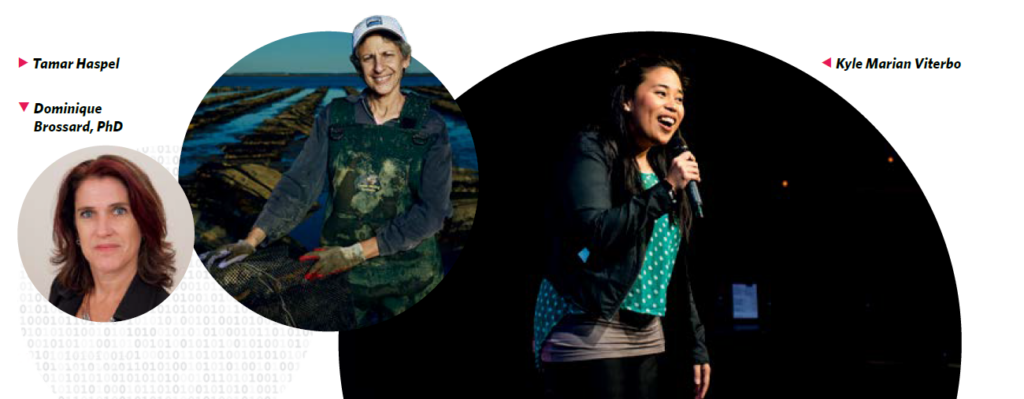
Why are these misleading posts so attractive? Dominique Brossard, professor and chair in the Department of Life Sciences Communication at the University of Wisconsin-Madison, pulls no punches in her assessment, “They’re using all the strategies that unfortunately the scientific community has not been using.” She emphasizes that they exploit the most fundamental driver of whether or not information is accepted: trust. “What are the main things that build trust? Concern, care and honesty.” Or at least the perception of honesty.

The strength of these tactics can be especially heightened when they are insulated from outside influence. Many organizations against vaccines structure their Facebook groups so that they are closed or private, allowing for misinformation to be stated entirely unchecked and out of the public eye.

The Effect on Public Opinion

But, as all good scientists know, correlation does not equal causation. The pervasiveness of false information does not mean that there is a straight line of causality to an effect on public opinion. “It’s hard to quantify the effects of misinformation,” Brossard cautions. That same 2018 Pew study revealing 68 percent of American adults getting news on social media also stated that 57 percent expect the news they see to largely be inaccurate.

The public may also be changing how they’re interacting with social media. After the 2016 elections and the Cambridge Analytica scandal, some users needed a pause. On Facebook, 54 percent of adults modified their use in 2018: adjusting their privacy settings, deleting the app from their cellphone, or even taking extended breaks.

Social media companies are also modifying their approach. Pinterest blocked users from searching for vaccine-related terms. YouTube removed advertisements from anti-vaccine themed videos, and recently pledged to curb the spread of misinformation by modifying its recommendation algorithms — hopefully preventing users from following conspiracy-laden video rabbit holes.

And in spite of all the misleading content, which prompts all scientists to reply #headdesk or #facepalm — that’s social media speak for frustration or exasperation — there are many exciting online communities that may provide some redemption for these platforms.

Recognizing the opportunity to cater to the sci-curious, experts in science outreach jumped online as a way to spread a passion for science. YouTube accounts like AsapSCIENCE and Physics Girl have millions of subscribers, and take the time to break down complex subjects for their audiences.

Scientists and Instagram

On Instagram, science.sam is the account of Samantha Yammine, who uses the platform as a new line of communication with the public. While earning her PhD, she shares her daily life as a researcher through photos and videos both in and outside of the lab, with a humanizing effect. She also contributes to a research study nicknamed #ScientistsWhoSelfie, which is systematically exploring the effects of scientists’ Instagram posts to influence public perception of scientists.

Social media also provides a megaphone to amplify diverse voices in science, and remove hierarchies that exist offline. The accounts belonging to #VanguardSTEM link to live, monthly interviews with both “emerging and established women of color in STEM,” where they cover research, career advice and social commentary.

Kyle Marian Viterbo, social media manager at Guerilla Science and producer of The Symposium: Academic Stand-Up, cites her experience in biological anthropology groups on Facebook as some of the earliest examples of social forums for scientific discussion, where status and titles were stripped away. “We talked about papers and coverage of papers in depth, in a way that only an academic community can. It’s been an amazing experience to see that community grow, and add new scientists who have equal conversation power with folks who are emeritus professors.”

Scientists and Twitter

A 2017 study estimated that over 45,000 scientists use Twitter. From volcanologists, to climate scientists, to evolutionary biologists, they’re all online in a professional capacity. There, they share new papers, announce job openings in their labs, comment on published research and network with other scientists both in and outside of their field.

For science professionals who feel emboldened to get online, but don’t know how, Viterbo advises easing your way in, “My number one advice is to just lurk. You’re silent, you’re observing, it’s almost like an ethnography situation…you don’t have to be active. A lot of it is also getting to know what you want out of that experience, and you don’t really know that until you see other people doing it well, and it resonates.”

Once your field observations are complete, Viterbo says it’s time to experiment with a few posts, “You just have to play in this space, and allow yourself to make a few mistakes.” She reminds scientists that we have the instincts for learning how to do well, but we can also get out of our own way, “Apply the scientific method to communication and social media, but also be more forgiving. We’re not necessarily the most forgiving of ourselves in science, but do it for fun!”

Communication Works Both Ways

If you plan on venturing into social media with an agenda in mind, perhaps take a cue from Tamar Haspel, a science journalist who writes the award-winning Washington Post column Unearthed. She spends much of her time researching controversial topics like pesticides, GMOs and diet recommendations, and cautions scientists to remember that “communication works both ways.”

Haspel makes a point to read thoughtful discussions from all sides, even on Twitter, “I have smart people with wildly different views in my feed, and I pay attention when they post something, because of course when we see something that we don’t want to believe we have a tendency to just scroll down. I try to stop, click through, and listen.” Her own posts are comprehensive explainers on the complex science of agriculture, and she also readily self-corrects and engages politely on divisive topics.

The result has positioned her as a trustworthy source for information. Haspel’s number one piece of advice for scientists who want to achieve the same? “We need to think less about being persuasive, and think more about being persuadable.

Also read: Deepfakes and Democracy in the Digital Age

Lockheed Martin Challenge Inspires Innovative Ideas

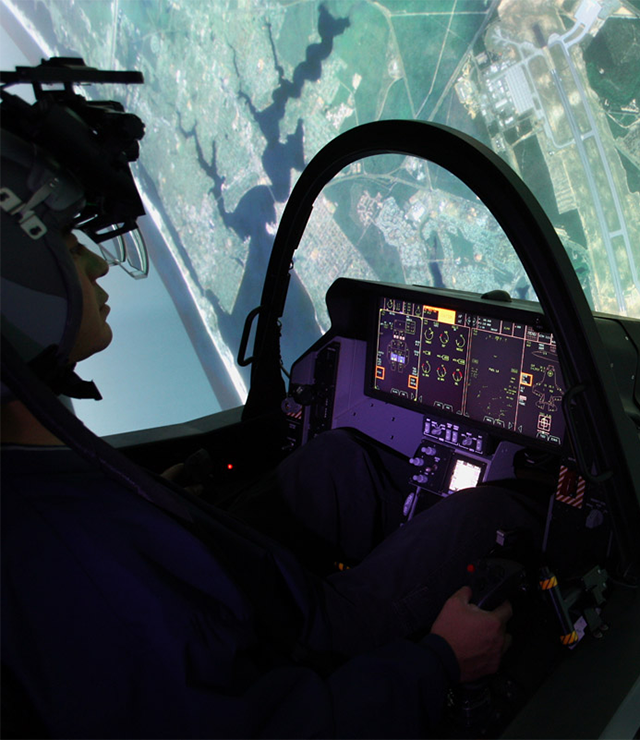
A shot of a pilot in a cockpit hovering above planet Earth.

The winners of Lockheed Martin’s 2019 Challenge are developing innovative ways to advance national defense.

Published May 15, 2019

By Marie Gentile, Robert Birchard, and Mandy Carr

Big ideas come from the unlikeliest sources. Their only common attributes are the passion and ingenuity of their inventors. Recently, Lockheed Martin sponsored the “Disruptive Ideas for Aerospace and Security” Challenge to find the next big idea. Meet the winners who hope to transform the future with their innovative solutions.

Grand Prize Winner: IRIS

Bryan Knouse

The ability to make decisions can be comprised by cognitive overload, especially during stressful situations, so Bryan Knouse envisioned IRIS — a voice-controlled interface for Patriot Missile Systems — that would help people make better decisions.

“IRIS leverages software automation and speech technology in high pressure scenarios to reduce human cognitive overload and enable the operator to better focus on mission-critical decisions,” explained Mr. Knouse. “I came at this project thinking about using AI and software interfaces to make sophisticated experiences simpler and safer.”

A mechanical engineer by training, but Al software and programing tinkerer by habit, Mr. Knouse believes voice interfaces present the greatest opportunity to make complicated and sophisticated processes simpler. In the aerospace and security field simplicity is valued because complexity can cause poor decision making which loses lives.

“Artificial intelligence excels at not getting overwhelmed with scales of information. Unlike humans, a computer won’t get paranoid, or disturbed, or stressed out after being fed a spreadsheet with millions of rows of data. A computer will process the information.”

“This challenge was an awesome opportunity. Not just because I was able to build a cool project, but also to connect with a company that I’d otherwise not really have an opportunity to interface with,” Mr. Knouse concluded. “These kinds of technology competitions are a great way for the private sector and established companies to interface with innovators.”

Second Place: Improving Urban Situational Awareness

Dan Cornett

Ninety four percent of vehicular accidents in the United States are caused by driver error, but what if assistive technologies could help drivers focus? This is the premise advanced by Garrett Colby and Dan Cornett, two solutions orientated engineering students, from the University of North Carolina at Charlotte.

While no technology can remove modern day distractions, a modular sensor array could collect data about roadside conditions and unobtrusively alert the driver to potential hazards.

The pair plan to combine neural networks, RADAR, LiDAR, and a 360-degree camera, to continuously collect information on roadside conditions. The weakness of one sensor could be compensated for, with the strength of another, while the data provided by each, individually could be compared to ensure accuracy.

Garrett Colby

“Challenges like this are a good illustration for potential engineers that anyone can make a difference,” said Mr. Colby. “This project was different in that the sky was the limit, being a conceptual project you got to really think outside the box,” added Mr. Cornett.

“Challenges like this give young engineers a place to demonstrate their creativity.”

Third Place: Augmented Superluminal Communication

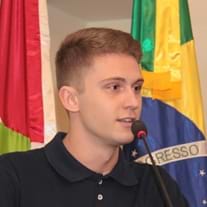
The sense of isolation experienced during space flight could contribute to the degradation of mission performance. Gabriel Bolgenhagen Schöninger, a physics student at the Technical University of Berlin with a communications technology background, believes his proposal could help lonely astronauts focus. The solution is wearable technologies, biometric sensors and augmented reality to simulate conversation.

Gabriel Bolgenhagen Schöninger

The idea came from Mr. Bolgenhagen Schöninger’s own experience with the rigors of living far from his native Brazil.

“My intention was to create an environment where you can simulate a conversation by collecting communications data and then emulating this data in a virtual environment,” he explained.

In advance of space travel, information could be condensed and inserted into intelligent communications platforms. The compressed communications data could then be “reanimated” to respond to the astronaut. While he developed this idea for long distance travel, Mr. Bolgenhagen Schöninger believes it could have implications in the field of education.

“This challenge creates a great opportunity for young people to get feedback on their ideas,” he finished. “It can help motivate young engineers, to display their ideas, while developing more confidence in that idea.”

Learn more about our challenges