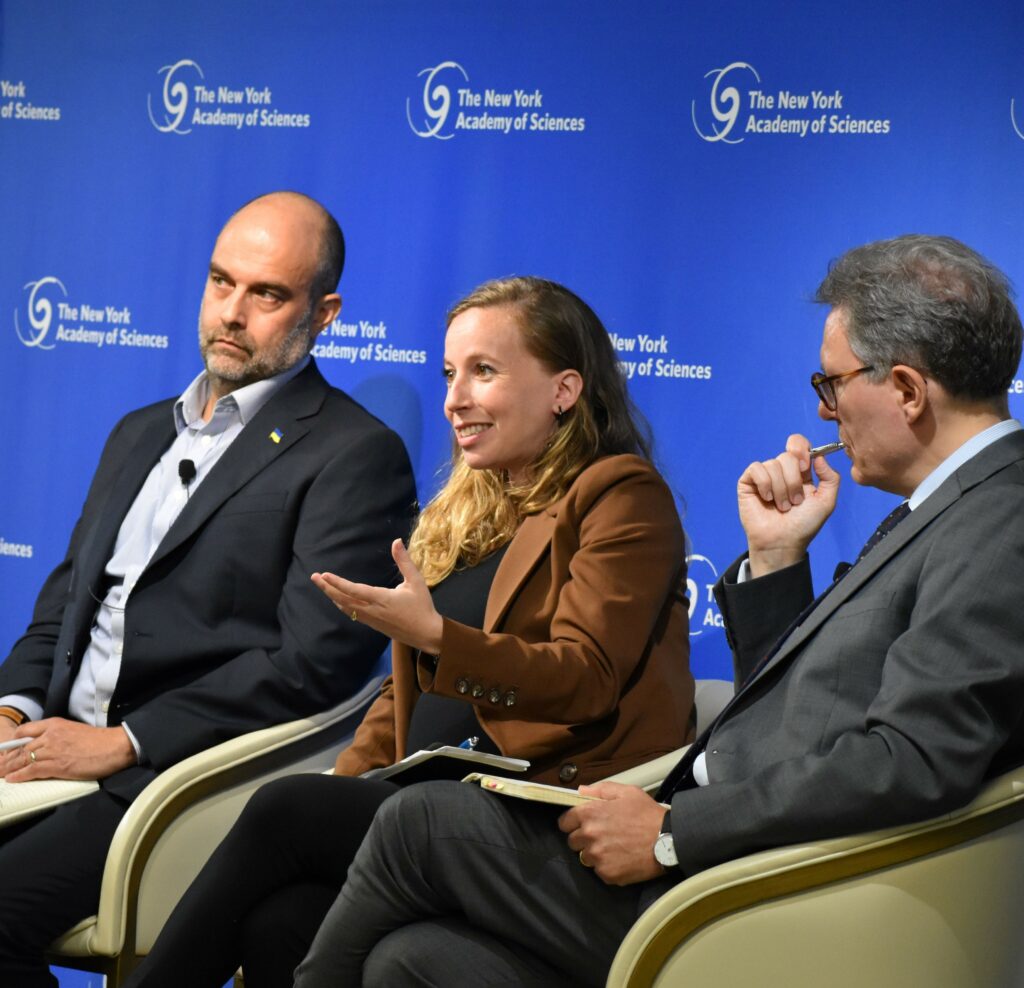
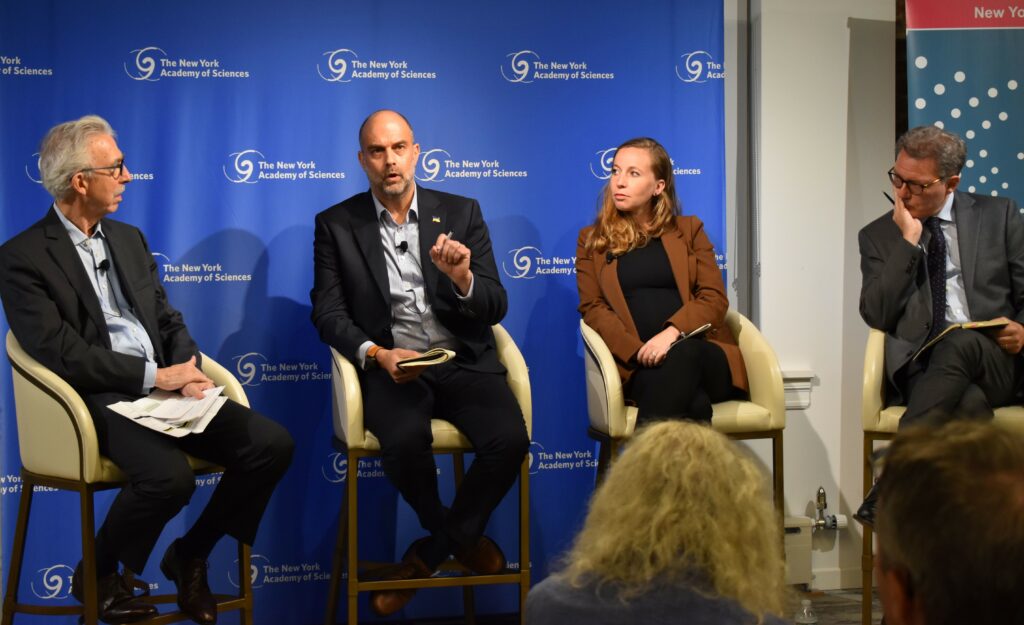
The field of chemical biology applies chemical techniques to investigate and manipulate biological systems, understand their underlying mechanisms, and address critical challenges in biotechnology and human health. By bridging chemistry and biology, this field enables researchers to develop novel tools for probing cellular processes and uncovering new therapeutic strategies.
The Chemical Biology Discussion Group End-of-Year Symposium offers a platform for dynamic discussions and collaboration between chemists equipped with cutting-edge technologies and biologists eager to apply these tools to solve complex biological problems. The program highlights two distinguished keynote speakers — Christina Schroeder, PhD, from Genentech, and Jack Taunton, PhD, from the University of California, San Francisco — and a selection of junior researchers showcasing innovative work in chemical biology. Attendees will gain insights into the latest discoveries, spanning topics such as chemical probes, drug design, and molecular therapeutics, in this rapidly expanding field.
Sponsors
Presented By
The New York Academy of Sciences Chemical Biology Discussion Group
Former president of Yale University to assume leadership role of the Academy’s Board of Governors
New York, NY | November 18, 2024 – Peter Salovey, PhD, a social psychologist and early pioneer in the field of emotional intelligence, has been named as Chair, Board of Governors, The New York Academy of Sciences (the Academy).
He will oversee the governance of the Academy and its 26 Member board, and work with current President and CEO, Nicholas B. Dirks, on the future of the 200+ year old scientific society and its extensive portfolio of scientific programs. He succeeds the Honorable Jerry MacArthur Hultin, Chair and Co-Founder, Global Futures Group, LLC, who has served in the role since2019.
Salovey’s scientific/academic credentials are extensive. Prior to joining the Academy, Salovey served as the 23rd president of Yale University from 2013 to 2024, as well as past provost, Dean of Yale Graduate School of Arts and Sciences and Dean of Yale College.
Over the course of his nearly 40 years of academic research experience, he investigated the connections among emotion, health communication, and health behavior, with a special focus on emotional intelligence. He played key roles in multiple Yale programs including the Health, Emotion, and Behavior Laboratory, which Former President Salovey founded; the Center for Interdisciplinary Research on AIDS; and the Cancer Prevention and Control Research Program. He is the author and editor of over a dozen books translated into eleven languages and published hundreds of journal articles and essays. He co-developed a broad framework called “emotional intelligence,” the theory that just as people have a wide range of intellectual abilities, they also have a wide range of measurable emotional skills that profoundly affect their thinking and action.
“Peter Salovey’s stewardship as incoming Chair of the Academy’s Board will be an invaluable asset as we head into a critically important time for science,” said Nicholas B. Dirks, President and CEO, The New York Academy of Sciences. “In such an unsettled world, we need strong advocacy for continued investment in scientific research and leadership in shaping an enlightened role for science to help solve our global challenges.”
In addition to teaching and mentoring scores of graduate students, former President Salovey has won the William Clyde DeVane Medal for Distinguished Scholarship and Teaching in Yale College and the Lex Hixon ’63 Prize for Teaching Excellence in the Social Sciences. He has received honorary degrees from the University of Pretoria (2009), Shanghai Jiao Tong University (2014), National Tsing Hua University (2014), Harvard University (2015), McGill University (2018), University of Haifa (2018), and Vytautas Magnus University (2019). In 2013, he was elected to the American Academy of Arts and Sciences and the National Academy of Medicine.
“The New York Academy of Sciences and its track record of bringing widely disparate groups together to address global problems are enormously respected,” said Peter Salovey. “I’m looking forward to working with the Academy to continue its influential thought leadership and prominence in supporting the careers of young scientists.”
115 Broadway, 8th Floor, New York, NY 10006 or join virtually by Zoom
This presentation explores Elon Magazine, a work of design anthropology that uses parody to explore the celebrity and cultural milieu of Elon Musk. While the magazine is comprised of writing based on research and fieldwork, many of the visuals were produced via extensive collaboration with the generative artificial intelligence model, Midjourney. The talk will bring this project into dialogue with Salter and Saunier’s recent work (2023) on material encounters between humans and sentient machines. It will also include an interactive activity exploring human-AI collaboration. Dr. Campbell and his collaborators describe Elon as a “hype(r)ethnography of brometheanism in the time mass-extinction.” The lecture sets the stage for a lively discussion about design anthropology, fame, and artificial intelligence.
Speaker
Craig Campbell Associate Professor of Anthropology University of Texas, Austin
Pricing
All: Free
About the Series
Since 1877, the Anthropology Section of The New York Academy of Sciences has served as a meeting place for scholars in the Greater New York area. The section strives to be a progressive voice within the anthropological community and to contribute innovative perspectives on the human condition nationally and internationally. Learn more and view other events in the Anthropology Section series.
“Honorees have continued to make paradigm-shifting fundamental discoveries, at the same time, they have applied these breakthroughs to the development of applications that regularly make the world a better place.”
Published October 29, 2024
By Kamala Murthy
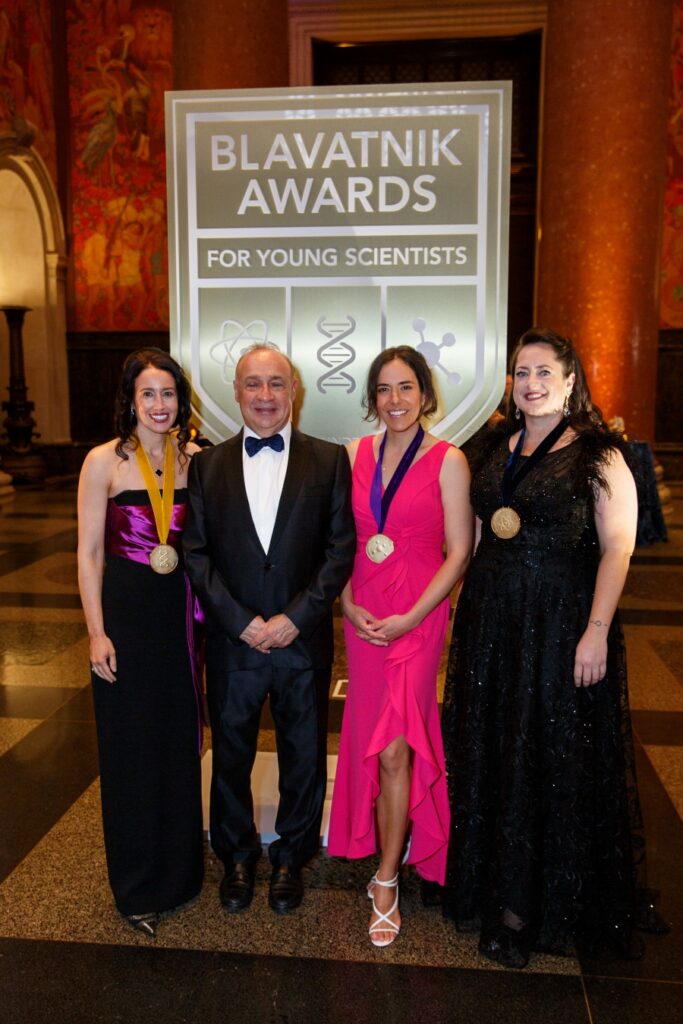
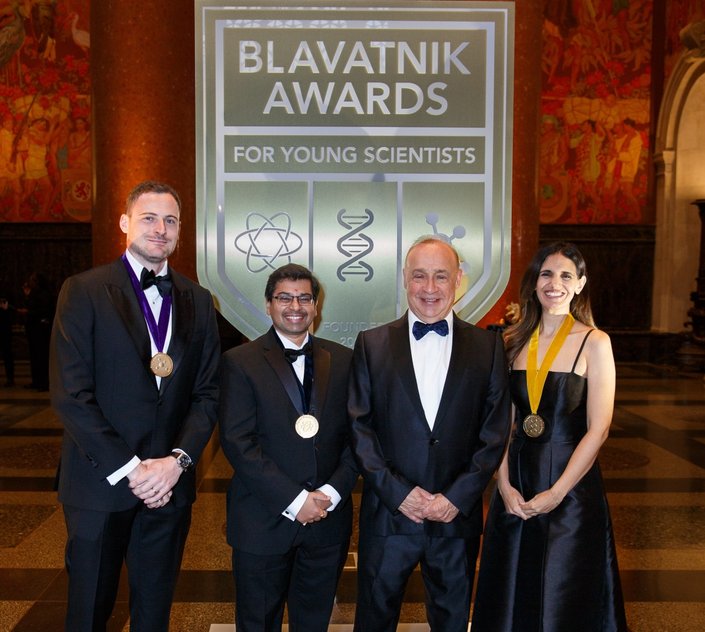
From left: Life Sciences Laureate Cigall Kadoch from the Dana-Farber Cancer Institute, Harvard Medical School, and the Howard Hughes Medical Institute; Len Blavatnik, Founder of Access Industries and the Blavatnik Family Foundation; Chemical Science Laureate Markita del Carpio Landry from the University of California, Berkeley; Physical Sciences & Engineering Laureate Britney E. Schmidt from Cornell University.
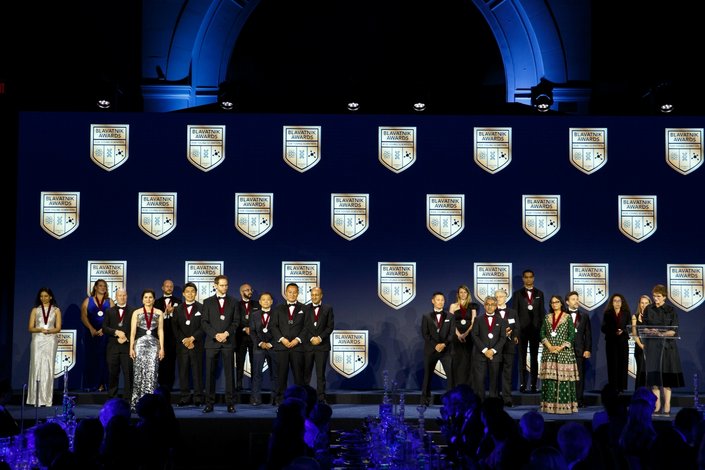
The Blavatnik Family Foundation and The New York Academy of Sciences honored three rising stars in their fields at the 2024 Blavatnik Awards for Young Scientists ceremony on October 1, 2024. The event was held at the American Museum of Natural History, where it has been held annually since 2014.
Christina Paxon, PhD, President of Brown University and renowned American economist and public health expert, served as the ceremony presenter. Over 150 guests attended the ceremony, including leading figures in academia, science, and business. Distinguished guests included:
George Daley, MD, PhD, Dean of Harvard Medical School;
Maurie McInnis, PhD, President of Yale University;
Nancy Brown, MD, Dean of Yale Medical School;
Richard Lifton, MD, PhD, President of The Rockefeller University;
Doug Clark, PhD, Dean of Chemistry at the University of California, Berkeley;
Krystyn J. Van Vliet, PhD, Vice President of Research and Innovation at Cornell University;
Walter Massey, PhD, chairman of the board overseeing construction of the Giant Magellan Telescope at Las Campanas Observatory;
Robert Kyncl, CEO of Warner Music Group;
Lincoln Benet, CEO of Access Industries;
Peter Thorén, EVP of Access Industries; and
Len Blavatnik, Founder of Access Industries and the Blavatnik Family Foundation.
During her remarks, Paxson encouraged the evening’s honorees to use their unrestricted prize to bring their discoveries to fruition: “… you are being given a rare and marvelous gift – generous financial support for the ground-breaking research that you have demonstrated you’re capable of doing. Your challenge now is to supply the intellectual curiosity and the persistence that is needed for your ideas to be realized.”
Nicholas B. Dirks, President, and CEO of The New York Academy of Sciences, spoke about the impact of Blavatnik Awards honorees’ achievements on science and society: “Honorees have continued to make paradigm-shifting fundamental discoveries, at the same time, they have applied these breakthroughs to the development of applications that regularly make the world a better place.”
Blavatnik National Awards
Paxson introduced the 15 National Finalists – five in each category of Physical Sciences & Engineering, Chemistry, and Life Sciences – who were selected by a prestigious jury of leading expert scientists from a pool of 331 nominations representing 172 institutions from 43 U.S. states; each Finalist was awarded $15,000. The ceremony then spotlighted the three talented young scientists recognized as Laureates of the 2024 Blavatnik National Awards. When introducing the Laureates, Paxson remarked, “It gives me great pleasure to note that for the second time in this event’s history, all three of our National Laureates are women!” Three National Laureates receive $250,000, the largest prize for early-career scientists. After receiving their medal, each scientist showcased their prize-winning research.
2024 National Laureates
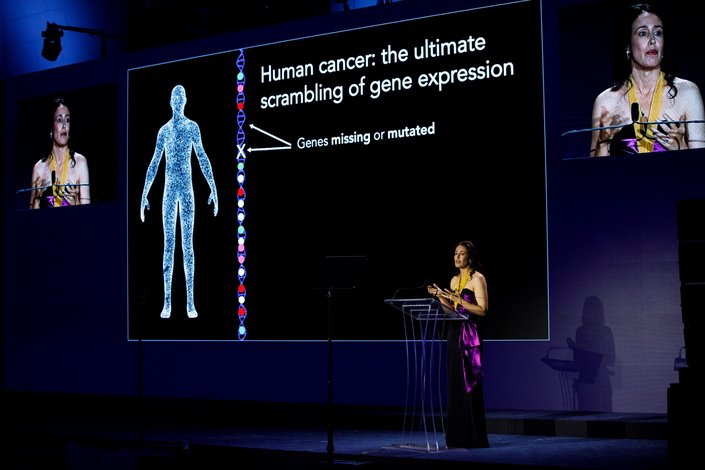
Cigall Kadoch, PhD (Life Sciences) from the Dana-Farber Cancer Institute, Harvard Medical School, and Howard Hughes Medical Institute. Kadoch is working to discover and characterize chromatin remodeling complexes to understand how their disruption leads to human disease, including cancer, and to develop a new class of therapeutics.
Markita del Carpio Landry, PhD (Chemical Sciences) from the University of California, Berkeley. Landry spoke about developing novel nanoscale chemical tools to address disparate challenges in human health and sustainability.
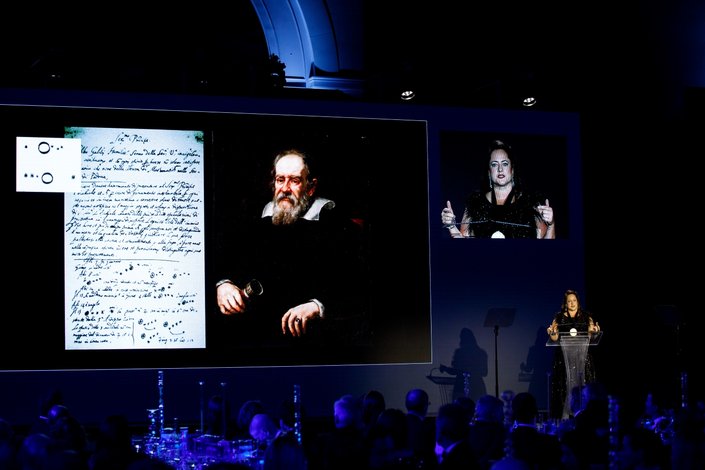
Britney E. Schmidt, PhD (Physical Sciences & Engineering) from Cornell University. Schmidt highlighted her advances in climate science and planetary habitability studies through her groundbreaking research on ice-ocean interactions and innovative exploration of Earth’s polar regions and icy planetary bodies using Icefin, a hybrid, remote, under-ice, robotic vehicle developed by Schmidt and her research team.
Blavatnik Regional Awards
Nine Regional Finalists – three in each category – were each awarded $10,000 by the 2024 Blavatnik Regional Awards. Three Regional Laureates were selected from 134 outstanding nominees representing 24 New York, New Jersey, and Connecticut academic institutions. Each Regional Laureate was awarded $30,000.
2024 Regional Laureates
Shira Weingarten-Gabbay, PhD (Life Sciences), nominated by The Rockefeller University, has uncovered thousands of novel microproteins encoded in the “dark matter” of viral genomes, exposing previously unknown immune targets for vaccines.
Arnaud Vanden-Broeck, PhD (Chemical Sciences), nominated by The Rockefeller University has led groundbreaking work in uncovering the intricate processes behind human ribosome assembly. This work is laying the foundation for treating cancers and diseases related to ribosome dysfunction.
Raghavendra Pradyumna Pothukuchi, PhD (Physical Sciences & Engineering), nominated by Yale University, has made unprecedented advances in creating a “brain-memex,” a system that interfaces computers with the human brain and could fundamentally shift our ability to understand neurological characteristics.
The ceremony concluded with the traditional “Toast to Science,” a hallmark of the Blavatnik Awards for Young Scientists celebrations.
To learn more about the Blavatnik Awards for Young Scientists, visit blavatnikawards.org.
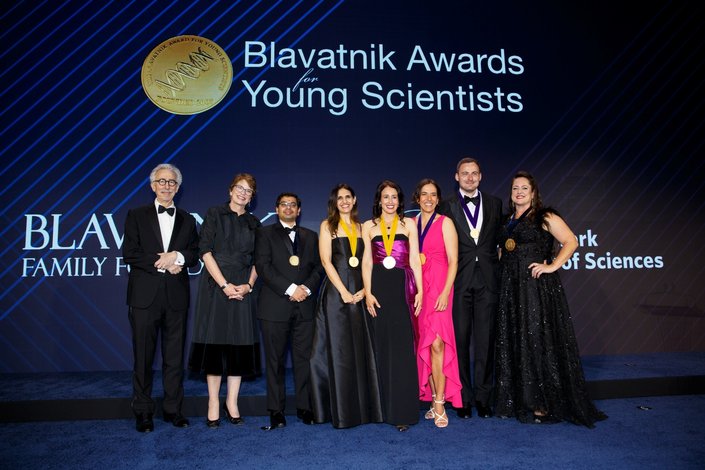
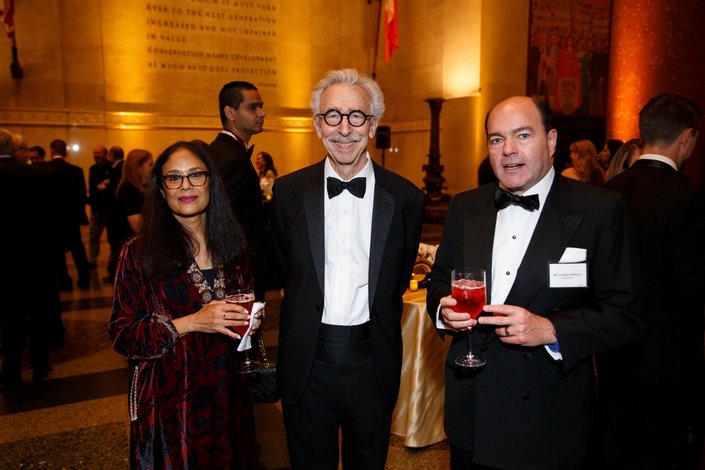
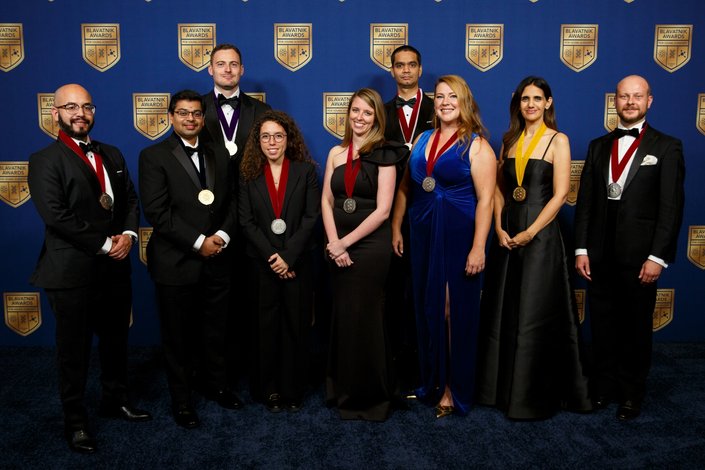
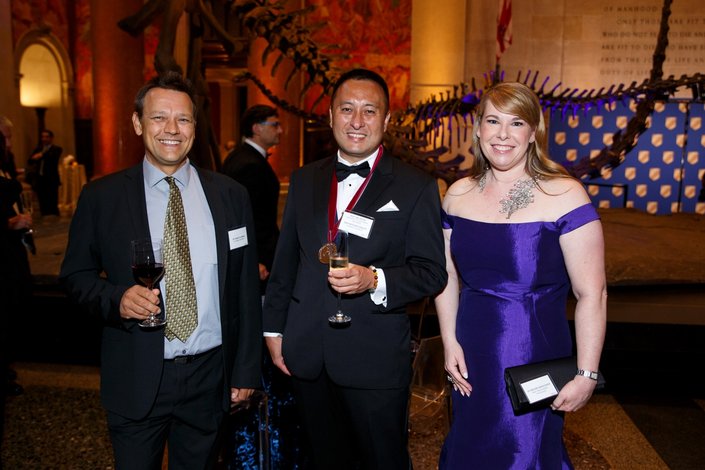
From left: Nicholas B. Dirks, Christina Paxson, Raghavendra Pradyumna Pothukuchi, Shira Weingarten-Gabbay, Cigall Kadoch, Markita del Carpio Landry, Arnaud Vanden-Broeck, and Britney E. Schmidt.Cigall Kadoch.From left: Janaki Bakhle with spouse and Academy President & CEO, Nicholas B. Dirks with Vice-Chair of the Academy’s Board of Governors, Thomas Pompidou.Britney E. Schmidt.2024 Blavatnik Regional Awards Honorees.From Access Industries and the Blavatnik Family Foundatio. From left: Dan Becker, Christine Borowski, Peter Thorén, and Liam Ratcliffe.2024 Blavatnik National and Regional Awards Finalists.From left: 2011 Regional Winner Szabolcs Márka with 2024 National Finalist Kaiyu Guan with the Academy’s Chief Scientific Officer, Brooke Grindlinger.2024 Blavatnik Regional Awards Laureates: Arnaud Vanden-Broeck, Raghavendra Pradyumna Pothukuchi, and Shira Weingarten-Gabbay with Len Blavatnik.
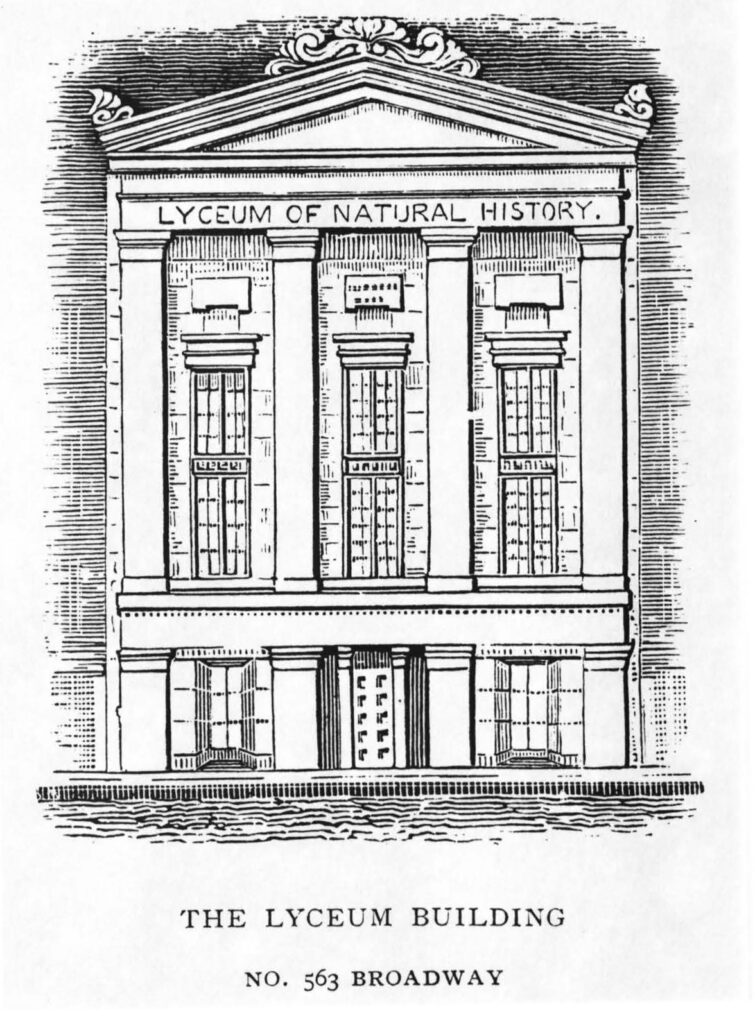
For the first time in its relatively short history, The Lyceum of Natural History in the City of New York (“the Lyceum”) had its own standalone building when it moved into 563 Broadway, south of Prince Street.
The first meeting in the new building was held on May 9, 1836, with 18 members present, “an unusually large attendance.” The front of the building was light gray in color and consisted of a granite pilaster and columns, reminiscent of ancient Greek or Roman architecture. The building had a frontage of 50 feet, with a depth of 100 feet.
Searching for Revenue Streams
The new space provided ample room for the collections and library given the standards of the time, though later historical accounts suggest that such an “edifice” would “be considered a very contracted space.” The new building also included spaces that could be rented to other entities, serving as a revenue source for the Lyceum, which would rename itself The New York Academy of Sciences in 1876.
Retail stores on the ground level were rented for an annual rate of $750. Rooms on the second and third floors were rented for $350 each year. The Lyceum leased its lecture hall for use by the New Jerusalem Church on Sundays, and the museum room at one time served as a space for the exhibition of paintings.
Despite the multiple uses of the building, the revenue streams generated were insufficient and the cachet of the Lyceum having its own building proved to be impractical. Financial inflation was common at this time which led to an economic depression, and the institute was forced to sell the property in 1844 for $37,000 (more than $1.5 million today), just enough to cover the building’s three mortgages and the accompanying interest. The Lyceum would move to its next home in 1845, a few blocks up Broadway.
This is the fourth piece in an eleven-part series exploring the Academy’s past homes. Read:
The University Club of New York | One West 54th Street, New York, NY 10019
Reception: 6:00 PM Program & Dinner: 7:00 PM Dress Code: Festive or Business Attire (jacket and collared shirt for men required)
Join us for the Academy’s premiere fundraising event of the year, an unforgettable evening of innovation and discovery at our Spring Soirée, hosted by Academy President and CEO, Nicholas Dirks.
Together, we will celebrate the exceptional achievements of accomplished figures who have expanded the frontiers of knowledge and are shaping the future of science.
We will also honor the accomplishments of STEM Teacher of the Year, Brittany Beck, Biology Teacher at the High School of Telecommunication Arts and Technology; STEM Mentor of the Year, Megan C. Henriquez of the CUNY Graduate Center; and five Emerging Student Researchers in our Education Programs, as well as outstanding contributions among our Board of Governors.
The Soirée promises to be an inspiring evening, filled with engaging conversations and captivating stories of scientific triumph. This event will offer a wonderful opportunity for you to network with scientific leaders from companies, universities and research institutes, and philanthropic organizations.
Honorees
Dr. Albert Bourla
Chairman & CEO, Pfizer Recipient of the Inaugural Visionary Award
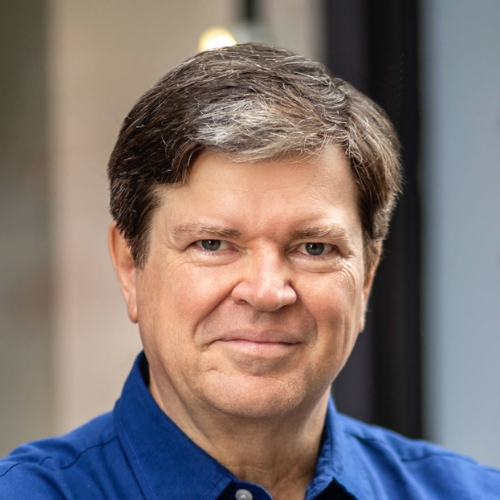
Yann LeCun
VP & Chief AI Scientist, Meta Recipient of the Inaugural Trailblazer Award
Janet Tobias
Emmy Award-Winning Director, Writer and Producer Recipient of the Communicating Science Award
Jared Lipworth
Head of Studio, HHMI Tangled Bank Studios Recipient of the Communicating Science Award
STEM Honorees
Brittany Beck
STEM Teacher of the Year
Megan C. Henriquez
STEM Mentor of the Year
Dinner Chair
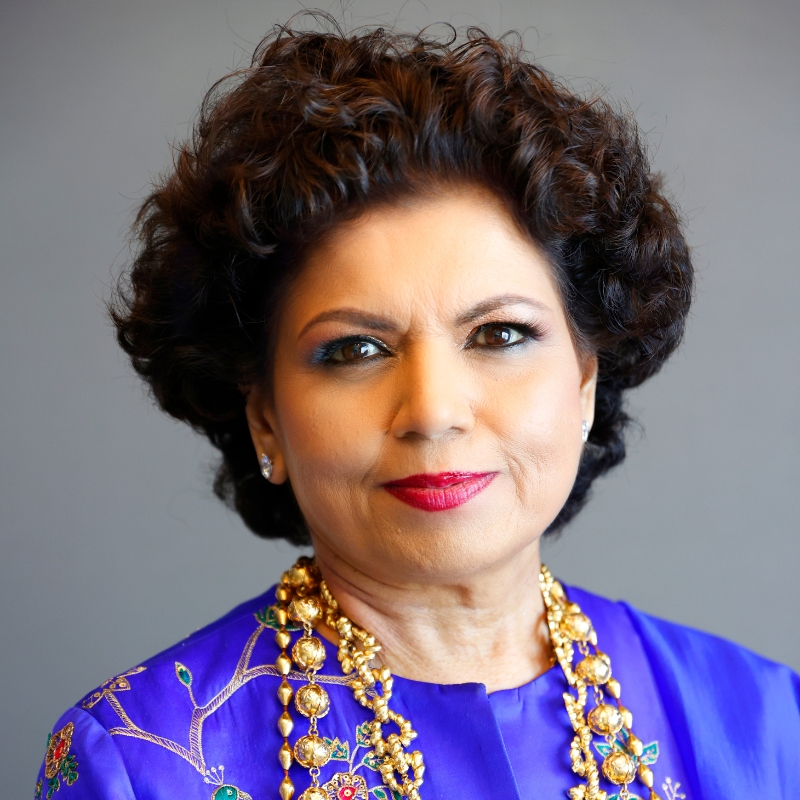
Chandrika K. Tandon Academy Board Member, Grammy Award-Winning Artist, and Humanitarian
Sponsors
Underwriter
Mission Partner
Benefactors
Chandrika K. Tandon
Patrons
Thomas C. Franco
Soirée Partner
Friends of the Soirée
AKA Strategy
Brooklyn Botanical Garden
City University of New York Advanced Science Research Center
Cast your vote today to help the Academy be an Anthem Awards winner for the second year in a row.
New York, NY | October 21, 2024 – The New York Academy of Sciences announced that its Scientist-in-Residence program was named an Anthem Awards Finalist in the Education, Art, & Culture category in The 4th Annual Anthem Awards. In the Anthem Awards’ most competitive year, Scientist-in-Residence was short-listed from over 2,300 entries submitted from 34 countries worldwide.
“Through access to real-life scientists, the Scientist-in-Residence program at The New York Academy of Sciences has inspired public school students and their teachers across New York City, for the past 12 years, to experience how science works beyond traditional textbooks and lessons,” said Nicholas Dirks, President and Chief Executive Officer of The New York Academy of Sciences. “Under the expert mentorship of volunteer scientists, classrooms become research labs, giving students hands-on learning experiences and access to actual scientific tools to conduct a year-long science research project. Scientist-in-Residence nurtures a deep enthusiasm and curiosity for the wonders of science, technology, engineering, and math that exist all around us.”
From now until October 31st, fans can support Scientist-in-Residence by voting on the Anthem Awards Community Voice Celebration page HERE. All Finalists are also running to win a Gold, Silver, or Bronze Anthem Award selected by Anthem judges. All Winners for the 4th Annual Anthem Awards will be announced on Tuesday, November 19th, 2024.
About Scientist-in-Residence
Created in cooperation with the New York City Department of Education and The New York Academy of Sciences in 2012, the Scientist-in-Residence program matches scientists with New York City public school teachers to bring scientific inquiry to life in the classroom. By combining their research and pedagogical expertise, each scientist-teacher pair develops and implements a year-long science project that prepares students to engage in authentic research involving data collection and analysis that sparks their interest in STEM learning. The Scientist-in-Residence program also supports students toward a career in STEM by providing an avenue to find the inspiration that builds their curiosity and connects them with other scientists and STEM-inspired students across New York City. Each year, the Academy hosts a student showcase where group representatives from each class present posters and samples of their work, sharing their findings with fellow students. This event allows students to identify their peers building a support system as they continue their STEM career; it teaches students that success in a research project is not about failure or lack thereof but collecting information that can be shared with others; it also introduces students to scientists from various backgrounds that they may also see as part of their career support system.
“The Finalists of this year’s Anthem Awards are truly inspiring, and I am honored to help elevate their impact,” said Anthem Awards General Manager Patricia McLoughlin. “At this moment, there is a lot of uncertainty in our world, but the tireless and extraordinary efforts of the Anthem Awards community provide hope that a better tomorrow is possible. Thank you to everyone doing this work and making an impact.”
About The Anthem Awards
Launched in 2021 by The Webby Awards, The Anthem Awards honors the purpose & mission-driven work of people, companies and organizations worldwide. By amplifying the voices that spark global change, we’re defining a new benchmark for impactful work that inspires others to take action in their own communities. The Anthem Awards honors work across seven core causes: Diversity; Equity & Inclusion; Education; Art & Culture; Health; Human & Civil Rights; Humanitarian Action & Services; Responsible Technology; and Sustainability, Environment & Climate. This season’s partners include Ms. Magazine, The Female Quotient, Sustainable Brands, NationSwell, and TheFutureParty. The Awards were founded in partnership with the Ad Council, Born This Way Foundation, Feeding America, Glaad, Mozilla, NAACP, NRDC, WWF, and XQ.
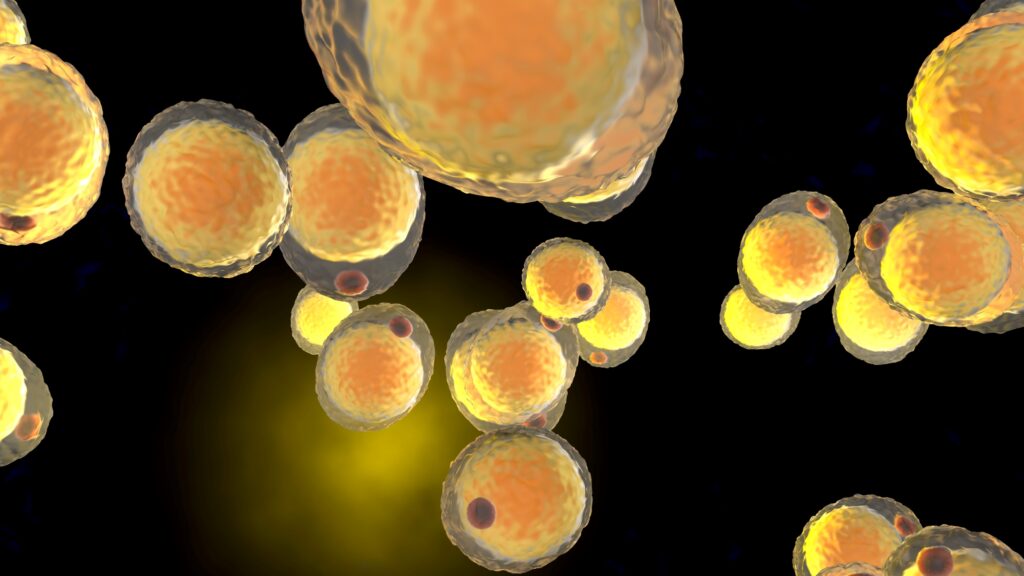
Join leading experts at the forefront of adipose biology, genetics, metabolism, and metabolic memory research for a one-day event on April 3, 2025, in New York City. The New York Academy of Sciences invites you to “Adipose Health and Obesogenic Memory” where top basic, translational, and clinical scientists will explore the most current adipose biology studies and their relevance to obesity and cardiometabolic disease.
Emerging evidence indicates that adipose tissue plays a pivotal role in regulating the metabolic memory of obesity. Gaining deeper insights into the biology of adipose tissue is crucial for understanding how its health impacts metabolic diseases. This knowledge could also guide the development of innovative therapies aimed at improving metabolic outcomes.
Take part in this exciting conference to explore the latest advancements in adipose tissue research and its crucial role in metabolic health. Don’t miss the chance to engage with renowned experts, uncover groundbreaking studies, and discuss innovative therapeutic strategies.
Sponsors
Presented By
The New York Academy of Sciences Biochemical Pharmacology Discussion Group
Sponsored By
Lead Supporters: Biochemical Pharmacology Discussion Group
Supporter: Biochemical Pharmacology Discussion Group
Combatting misinformation in the 2024 U.S. Presidential Election is crucial to ensuring democracy. It falls to science to address this challenge.
Published October 8, 2024
By Nick Fetty
From left: Nicholas Dirks; Joshua Tucker, PhD, Maya Kornberg, PhD; and Luciano Floridi, PhD. Photo by Nick Fetty/The New York Academy of Sciences.
The complexities of artificial intelligence were discussed during the Deepfakes and Democracy in the Age of AI event, presented by The New York Academy of Sciences and Cure on September 17, 2024.
Seema Kumar, Chief Executive Officer of Cure, a healthcare innovation campus in New York City, set the stage for the discussion by emphasizing the impact of AI on healthcare. She cited a survey of nearly 2000 physicians who expressed concern about changes in behavior they’ve observed in patients as we move into a more digital age.
Nicholas Dirks. Photo by Nick Fetty/The New York Academy of Sciences.
“Patients are coming to them with misinformation and they’re not trusting physicians when physicians correct them,” said Kumar, who also serves on the Academy’s Board of Governors. “In healthcare, too, this is becoming an issue we have to tackle and address.”
Nicholas Dirks, president and CEO of the Academy introduced the panel of experts:
Luciano Floridi, PhD: Founding Director of the Digital Ethics Center and Professor in the Practice in the Cognitive Science Program at Yale University. His expertise covers the ethics and philosophy of AI.
Maya Kornberg, PhD: Senior Research Fellow and Manager, Elections & Government, at NYU Law’s Brennan Center for Justice. She leads work around information and misinformation in politics, congress, and political violence.
Joshua Tucker, PhD: Professor of Politics, Director of the Jordan Center for the Advanced Study of Russia, and Co-Director of the NYU Center for Social Media and Politics. His recent work has focused on social media and politics.
The Role of Deepfakes
Professor Tucker suggested that research can be an effective way to better protect information integrity.
“The question is, and I don’t know the answer to this yet, but this is something we want to get at with research,” he said. “Is there a meaningful difference across modes of communication?” adding that modes include text, images, and video.
Professor Tucker argued that the most impactful video so far in this U.S. election cycle wasn’t a deepfake at all. Instead, it was the unedited footage of President Joe Biden’s performance in the debate on June 27, 2024.
Not A New Phenomenon
Luciano Floridi, PhD. Photo by Nick Fetty/The New York Academy of Sciences.
Dr. Kornberg agreed that misinformation is not a new phenomenon. However, she does recognize that because of the often-realistic nature of deepfakes, it may be more difficult for people today to differentiate fact from fiction. The lack of regulation in the tech sector in this regard further complicates the issue. She posed the example of an AI generated phone call impersonating an election official sent to misinform potential voters.
“It can be difficult to determine if this is a real call or a fake call,” said Dr. Kornberg. “It’s extremely important, I think, as a society for us to be doubling down in civic listening and civic training programs.”
The ease of producing realistic AI-generated content is also contributing to the issue, according to Professor Floridi. He cautioned that media can become so oversaturated with this content, that consumers begin questioning the legitimacy of everything.
Professor Floridi cited a research project that he and his team are currently working on with the Wikimedia Foundation. The team hopes to release their findings prior to the U.S. election, but at this point, they have not observed anything particularly worrisome in terms of deepfakes.
Maya Kornberg, PhD. Photo by Nick Fetty/The New York Academy of Sciences
“What we do see is call it ‘shallowfakes.’ The tiny little change [to otherwise authentic content],” Professor Floridi said. He added that these “shallowfakes” can almost be more dangerous than deepfakes because the slight manipulations are generally less obvious.
The Issue of Credibility
Dirks then shifted the focus of the conversation to credibility. With first order effects, a person sees something untrue, then forms an opinion based on that misinformation. Dirks invited Professor Tucker to talk about his research on second order effects, in which the political consequences can be more salient and destabilizing.
Professor Tucker and his lab studied the Russian misinformation on Twitter during the 2016 U.S. Presidential Election. However, counter to popular belief, the researchers did not observe a significant correlation to indicate that exposure to such misinformation influenced American voter opinion.
“Yet, we spent years talking about how the Russians were able to change the outcomes of the election. It was a convenient narrative,” said Professor Tucker. “But it worried me. And I wondered for a long time after this, did that sow the seeds of doubt in people’s minds?”
With the current hype surrounding generative AI as we enter the 2024 election, Professor Tucker expressed concern that it can be a new tool to further spread misinformation.
Combatting Voter Suppression
Dr. Kornberg and her colleagues at the Brennan Center study the impact of voter suppression efforts. The researchers are studying ways to debunk, or “pre-bunk,” certain misconceptions that may be on the minds of voters. She said that purveyors of misinformation deliberately focus on simple themes like malfunctioning voter machines, distrust of election officials, and dead people voting.
Joshua Tucker, PhD. Photo by Nick Fetty/The New York Academy of Sciences.
“We saw that in 2020. We saw that in 2022. There’s a lot of reason to believe we’re going to see that in 2024,” said Dr. Kornberg. “So, we’re working to proactively get resources out to election administrators [so they can better counteract these threats].”
She cited the role of AI in further amplifying misinformation, which will make deciphering fact from fiction even more difficult for the average voter. Dr. Kornberg and her colleagues aim to get ahead of these issues by offering training and other resources for election administrators. She also advocates for experts with technical expertise in AI to advise local election official offices, municipalities, state legislatures and even congress.
“There’s a lot of demystifying for the workers themselves that we’re trying to do with our trainings about how to deal with AI,” said Dr. Kornberg. “This will help us to come up with some intelligent and timely solutions about how to combat this.”
Academy members can access an on-demand video recording of the event. Click here to listen to or watch the full conversation.
The International Science Reserve’s new “serious game” puts players in the hot seat to test their decision-making skills.
Published October 3, 2024
By Mila Rosenthal, PhD
Since COVID-19 hit in 2020, there have been hundreds of articles in journals and mainstream news outlets analyzing the shortcomings in the global response to the pandemic, and how we can learn from our collective mistakes. One of those articles last year, an op-Ed by Bill Gates for The New York Times, called on the world to think about what we can do now to better prepare the world for future outbreaks.
His advice? Prepare for outbreaks like firefighters tackle blazes: run drills, have dedicated teams of volunteers on standby, and build on existing expertise across institutions and specialties. The International Science Reserve (ISR), an initiative of The New York Academy of Sciences, has been working to build this exact model.
We have spent the last few years cultivating a reserve of over 11,000 scientists across 100 countries in nearly three dozen specialties who want to prepare and act when the next big crisis hits. We support them for future crises by building tools that break down borders and help them collaborate before the fire starts.
This August, we proudly launched a new digital game that simulates a pathogen outbreak, just like a fire drill. The Pathogen Outbreak Game, available with free membership to the ISR, puts our network in the hot seat. In the game scenario, players act as a public health director as an unknown pathogen emerges. The game asks you to consider: What would you do differently if we experienced a crisis of the same scale and scope? What decisions would you make if you could call the shots during the next pandemic?
“The Pathogen Outbreak Game offers a compelling exploration of crisis management, challenging me to think critically, much like real-world situations.”
Developed in partnership with the Center for Advanced Preparedness and Threat Response Simulation (CAPTRS), the game challenges players to navigate an evolving, hypothetical public health crisis, evaluating new information that is shared as the game progresses. When a crisis hits, there are complex decisions that leaders must make to protect people and reduce the impact on society and the environment. To simulate real-world situations, players are presented with dynamic information and surveillance data about an unknown pathogen outbreak.
In a series of game rounds, players are asked to practice their decision-making skills using data to identify outbreak trends and better prepare for and reduce the public health threat. This trailer demonstrates the basics of the Pathogen Outbreak Game:
The Next Pandemic and Building a “Culture of Readiness”
So, why games? Our research found that simulating real-life scenarios or drills can improve the capacity to collaborate, communicate, and make informed decisions in high-pressure crisis situations. Gamification also makes the experience of learning crisis preparedness skills more engaging for participants, encouraging wider participation and contributing towards a culture of readiness.
“I learned the importance of carefully evaluating the credibility of information before making decisions. The game highlighted how my conclusions could change drastically based on the reliability of the sources, demonstrating the critical need to assess information accurately to identify the correct virus.”
Our gamification-related literature review found that points, badges, and leadership boards are the best way to turn these drills into games. After they complete the game exercise, players are then encouraged to discuss their experiences with fellow scientists and experts in the ISR’s network and promote their achievements through digital badging on social media.
We do not know when another outbreak will happen, so in the meantime we need to quickly learn and grow from our mistakes, and better collaborate across disciplines and borders to save lives and reduce harm. The digital pathogen game can help build a “culture of readiness” and accustom policymakers to assessing different sources of scientific information to make decisions. It can also help scientists explore how their research could be prioritized and adapted when most needed. Together, we could build a more resilient future, one game at a time.
Are You Ready for the Challenge?
Ready to jump in? Then join us and play the ISR’s new Pathogen Outbreak Game! Earn badges, climb the leaderboard, and be recognized as a top player and top contributor in a global scientific community.
Not a member of this inclusive and impactful community? Join the ISR today.