Throughout the arc of history, humans have been fascinated with death, as well as mystical or peak experiences and other non-ordinary states of awareness — each with the potential to influence our understanding of the nature of consciousness. With recent advances in neuroscience and resuscitation medicine, millions of people have come close to, or even entered, what is now considered a gray zone of death by cardiopulmonary criteria, before being resuscitated back to life.
Near-death experiences (NDEs) have been reported throughout the world, often associated with long-term growth and psychological transformation. Occurring cross-culturally and since antiquity, these phenomena —along with the recent scientific investigation of psychedelic-occasioned mystical-type experience — often include an enhanced sense of personal meaning, purpose, existential and spiritual well-being.
What is consciousness? Why are humans seemingly wired for these transcendent and meaning-making experiences? What happens to consciousness upon physical death? Are there common features in the variety of altered states of consciousness? This special one-day event features a notable group of international experts in consciousness research, neuroscience, psychedelics, mystical and near-death experience research, the history of comparative religion and mythology, along with a first-hand account of a near-death experience.
There is an urgent need for new drugs and treatments to address a range of illnesses in infants, children, and adolescents, yet including these vulnerable populations in clinical research raises a number of ethical issues that are important to address. This event will explore key ethical considerations regarding the research participation of those who have not attained the legal age for consent to treatments or procedures involved in biomedical studies. Discussions will center on addressing consent, assent, and privacy in pediatric research, study design and regulatory issues, small sample size studies in genomics and rare disease research, health disparities, Covid-19 research in children, broad population-based disease prevention efforts, and will close with a look to the future of pediatric research.
Colloquium Conflict Management
The New York Academy of Sciences is a neutral convener of scientific symposia. We adhere to Accreditation Council for Continuing Medical Education (ACCME) principles for all of our programming. Please note that Johnson & Johnson is a sponsor of this convening, and The New York Academy of Sciences and NYU Grossman School of Medicine exercise full control over the planning of the program’s content, the selection of speakers and all enduring materials.
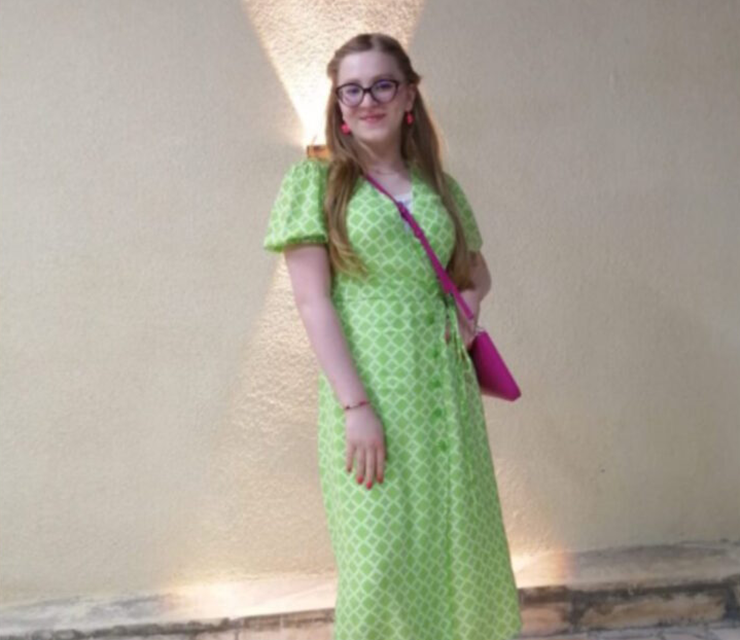
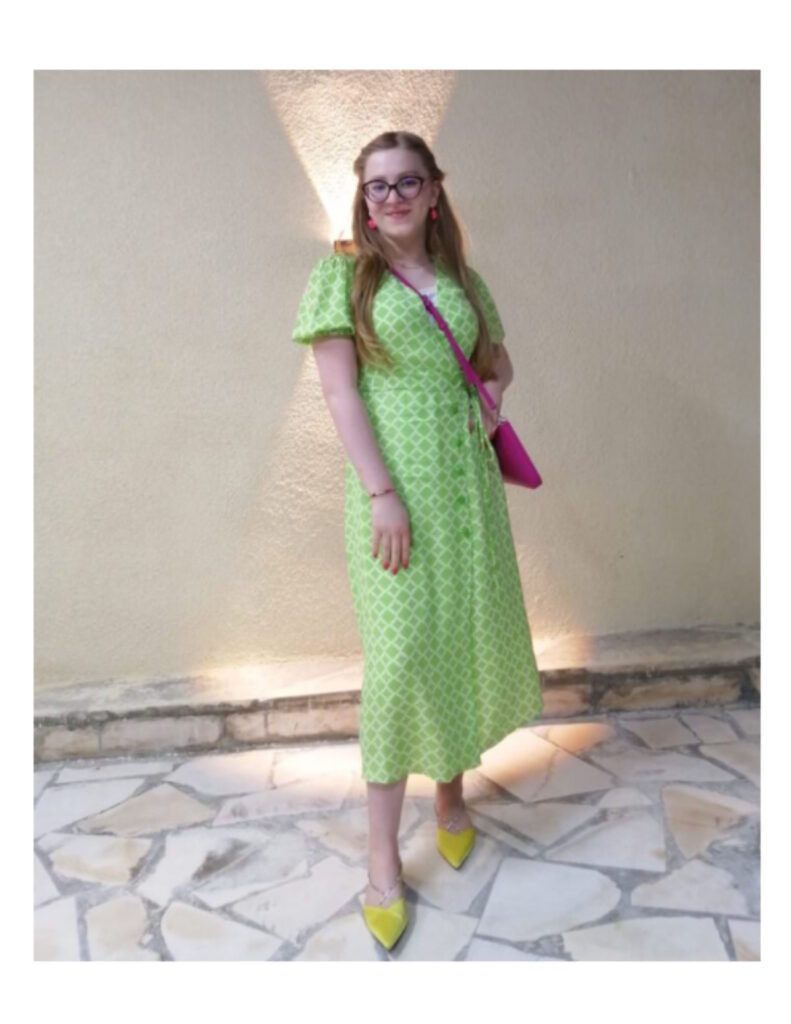
Junior Academy participant Sebsa wants to pursue a career that enables her to combine science and entrepreneurship.
Published September 7, 2023
By Nicole Pope
For Sebsa, a 14-year-old student living in Amman, Jordan, it all began with an ad on social media via the Royal Health Awareness Society, urging teens interested in science and innovation to apply for the Junior Academy Challenge.
Sebsa’s curiosity was triggered, but she hesitated at first. Few of her schoolmates shared her passion for science and she had never embarked on a virtual collaborative project.
Yet taking this first step has launched the teen on an exciting new path. Accepted as a Challenge participant, Sebsa teamed up with four other students (one from Jordan, three from the U.S.) to address The Impact of COVID-19 on Non-Communicable Diseases.
“We were all a bit nervous when we first met online,” Sebsa says, adding that it took no time for their initial shyness to evaporate. “I immediately realized: this is the type of people I want to connect with.”
For three months, the teenagers collaborated closely via the online Launchpad platform. They chose to focus on diabetes, a condition that affects millions around the world. First, they had to gain better knowledge of the disease. Sebsa’s primary role was to collect data on diabetes in the Middle East.
“Our mentor helped us identify good resources,” she says.
Mitigating the Impact of COVID
The team then discussed innovative ways to mitigate the negative impact of COVID-related lockdowns and restrictions on the treatment of diabetes, eventually opting to create an application that would enable doctors to monitor their diabetic patients remotely. App development was a new field for Sebsa, who feels she learned a lot from the interaction with her teammates.
Completing the challenge required hard work and pressure felt intense at times, Sebsa says. One of four sisters, she enjoyed strong support at home from her family. The end result justified all her efforts.
“I am very proud of what we have achieved,” Sebsa says, delighted that her team’s project was named one of the finalists with their contribution. “But the proudest person was my mom, because she works in healthcare, and is my science teacher.”
Submitting the Junior Academy project marked the completion of Sebsa’s first international collaboration, but the teen’s journey into science and innovation is just beginning. At school, she was invited to create a 45-minute presentation about her team’s project and talk about her Junior Academy experience with her classmates, who were impressed with her spirit of initiative and newfound knowledge.
Many expressed a wish to follow in her footsteps. Working across borders with like-minded students has boosted Sebsa’s self-confidence.
“She is reaching for the stars and the moon,” jokes her 19-year-old sister Sina.
Building Upon Past Success
Inspired by this first success, Sebsa is constantly seeking new opportunities to learn and shine. In partnership with her 17-year-old sister Simaza and four other participants, she entered a National Competition for Young Entrepreneurship, organized by Entro Gate, and won first place.
After enrolling in a robotics and technology course, Sebsa decided to test her new teamwork skills in a nationwide tournament in Jordan, coming in third in the competition. She has signed up for yet another science program with Jordan’s Abdul Hameed Shoman Foundation that focuses on applying science to real-life problem solving.
The Junior Academy Challenge has taught Sebsa important skills such as organization, efficiency, and teamwork. Above all, the experience has fueled her desire to keep pushing her personal boundaries and explore the wide world of science.
“I want to study science, but also entrepreneurship,” says the teenager. “I want a career that links the two and doesn’t just benefit me but enables me to help others.”
The Junior Academy was supported by the Stevens Initiative, which is sponsored by the U.S. Department of State, with funding provided by the U.S. Government, and is administered by the Aspen Institute. A version of this story was originally published on the Stevens Initiative’s website here.
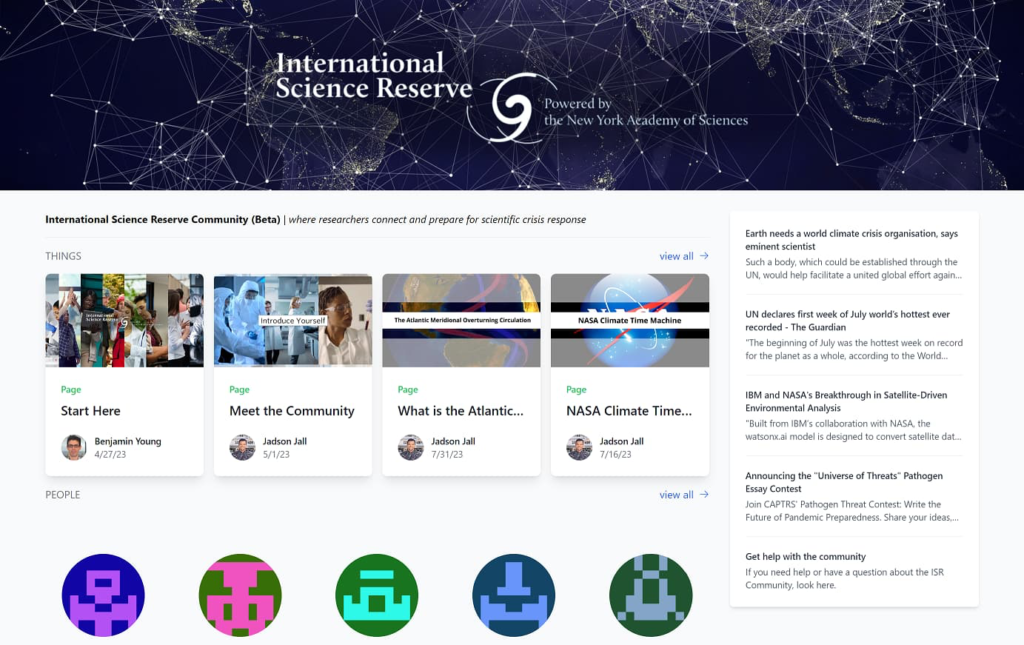
Earlier this year, the ISR launched a Beta version of a free, digital hub for the 4,000+ scientists in the ISR network. The ISR Community builds on the learnings from our first readiness exercise in 2022, a test case around wildfires, where we asked scientists to submit proposals for how they would manage a cross-border wildfire crisis and consider what tools and resources they would need.
Jadson Jall
In the wildfire test readiness exercise and throughout our ongoing conversations, ISR members were clear about the need for interdisciplinary, cross-geographic collaboration, and for easier and faster ways to engage in preparedness. We heard you. That’s why we built the ISR Community and have been working closely with Beta testers to ensure it is effective across disciplines and regions. A full, network-wide launch is expected in Fall 2023.
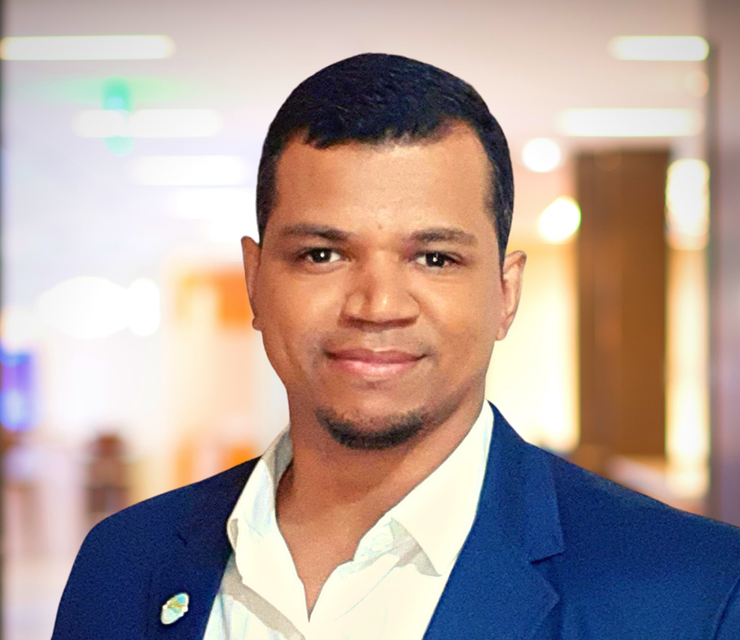
Recently, we sat down with Jadson Jall, the ISR’s first Science Community Manager to learn more about the digital hub’s progress. Jall is a geneticist from Brazil and has a passion for bringing scientists together to unlock the power of scientific collaboration as a key to solving humanity’s greatest challenges.
Why do you think the global science community needs a network like the ISR now?
The global science community needs a network like the ISR because we live in a world with many compounding crises, such as pandemics and climate-related disasters. These crises are huge, affecting people and the environment in different countries and regions, and they are complex. That means they need lots of different kinds of responses and resources. So, one country’s scientific capabilities, or a single national science policy, can’t begin to resolve crises at that scale. An open, global network of scientists, such as the ISR, means individuals and institutions can pool resources and solve problems together, leading to faster and more effective responses to crises. Furthermore, the network’s principles, such as bringing together Scientists Without Borders and ensuring fair resource access, promoting collaboration, and including different voices, make it a much-needed platform for the current global scientific community.
What would you like the ISR’s digital hub to look like a year from now, and how would scientists be using it?
In my dream world, a year from now, the International Science Reserve (ISR) hub would be a globally recognized and effectively functioning platform facilitating seamless personal connections and collaboration among scientists worldwide. It would have grown beyond its current network, and its resources would be even more diverse and plentiful. Scientists would use the hub to conduct and participate in readiness exercises and explore crisis scenarios, helping them prepare for various kinds and aspects of disasters and emergencies. The hub would also be a place where scientists would know where to go and how to apply to connect to different scientific and technical resources in different situations. Ideally, the hub would have a track record of successful crisis response efforts. That will demonstrate its effectiveness and reinforce its value, most importantly, by having a positive impact.
Can you share more about how you see early adopters using the online community, and their feedback? What do they want to see more of?
Active community pioneers – our earliest testers – engaged in discussions on diverse topics, from climate change crisis simulations to challenges in research collaboration. Our testers from varied locations and research backgrounds provided invaluable feedback, helping us to consistently refine our virtual environment to better foster scientific engagement and collaboration. For example, they helped us figure out which formats could work for the ISR’s Readiness Exercises and helped us try out various types of activities and collaborations. During the current Beta phase of the ISR Community, we continue to learn from our early adopters. It is clear that our community is eager to collaborate across borders, and I am doing my best as Community Manager to facilitate these connections and collaborations.
Why did the ISR choose to use “serious games” as an approach to crisis readiness? And how will the readiness exercises work in the ISR Community?
The ISR chose to use serious games as part of crisis readiness because it’s a fun way to learn about and improve the decision-making process, so that participants can feel they are undertaking the process themselves. Role-playing puts the participant in the position of learning about the crisis in real time and actively experiencing the dilemmas and decisions of how to respond, rather than learning about it afterward. These scenario-based simulation exercises allow researchers and decision-makers to practice analyzing available, often limited, information and making the best decisions, as quickly as possible.
Serious games will help members of the ISR Community explore decision making around issue areas such as water resource management, climate change adaptation, weather disasters, public health crises, and urban planning. These games serve as a hands-on and immersive way to understand the complexities and nuances of various crises and try different strategies for dealing with them.
The ISR’s serious games will be conducted online, in a collaborative, interactive format. These exercises will simulate various real-world crisis scenarios, and participants will devise and implement strategies to manage these crises. The activities are being designed to help participants better understand how resources will be deployed and managed in future crises and explore related decisions, helping to prepare us for scientific work in times of global crisis.
What kinds of resources are available to researchers in the ISR Community?
The ISR Community offers a rich suite of resources to its community of researchers and other stakeholders. They can be organized around two main areas. The first of these consists of specialized scientific resources such as high-performance computing, remote sensing, geospatial-temporal mapping, and databases. The ISR partners with organizations like IBM, UL Solutions, Google, Pfizer, and the National Science Foundation, offering various technical tools, data, and other resources. During a declared crisis, researchers will be able to log on to the ISR Community to gain access to resources like IBM’s Geospatial Discovery Network.
The other key resource of the ISR Community is our global network of over 4,000 scientists who have come together around a common goal. The ISR Community provides a space for this growing network to prepare, learn, collaborate, and be ready for crises. We will be offering different types of preparedness activities to help facilitate some of the community’s collaborations, and we are also planning special features for the fall based on the interests of the community.
One last question: why should your fellow scientists join you on the ISR Community?
I recommend that my fellow scientists join me in the ISR Community for a multitude of reasons, including:
Joining is completely free, and you will receive global exposure and appreciation for your contributions to crisis resolution. Being part of the ISR is a unique opportunity to apply your research in a real-world context, contributing to tangible crisis solutions.
As a member of the ISR Community, you will be part of a borderless network of experts, allowing for valuable collaborations and exchanges of ideas. It’s also an excellent space for professional development, offering opportunities for knowledge sharing, networking, and building community connections.
Being part of the ISR Community ensures that you stay in the loop, with critical crisis communication updates.
So, the ISR Community is not only an opportunity to contribute to global crisis resolution but also a chance to grow professionally and expand our scientific horizons.
This collection of papers explores the biological underpinnings of social behavior through a series of experiments, reviews, and perspectives. These papers include a wide range of species ranging from ants to monkeys and analyzes the biology of social behavior in relation to their epigenetic, ecological, evolutionary, and neuromolecular mechanisms and influences. The novel experimental findings, timely reviews, and unique perspectives will provide important contributions to advance the field of the biology of social behavior. The virtual issue is edited by Karen L. Bales (University of California, Davis) and Sara M. Freeman (Utah State University).
“The world needs science and scientists. And we need scientists everywhere to be working together to tackle the world’s growing list of challenges.”
Published July 12, 2023
By Kamala Murthy
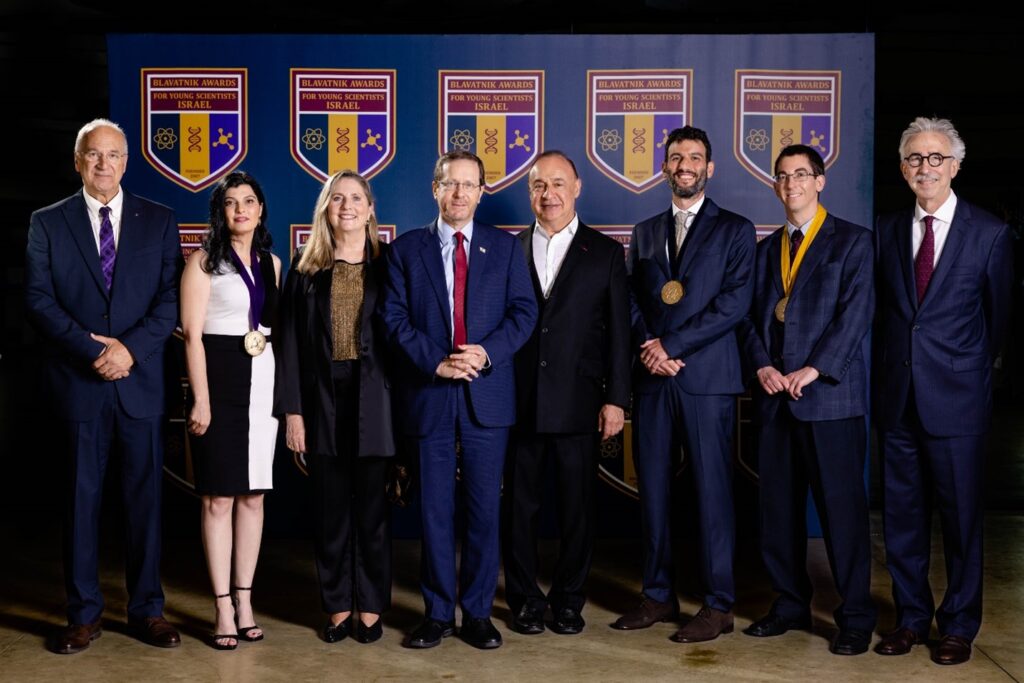
From left: Israel Academy of Sciences and Humanities President David Harel, Chemistry Laureate Rina Rosenzweig, Michal Herzog and Israel President Isaac Herzog, Len Blavatnik, PS&E Laureate Zvika Brakerski, Life Sciences Laureate Shai Carmi, The New York Academy of Sciences President and CEO Nicholas Dirks.
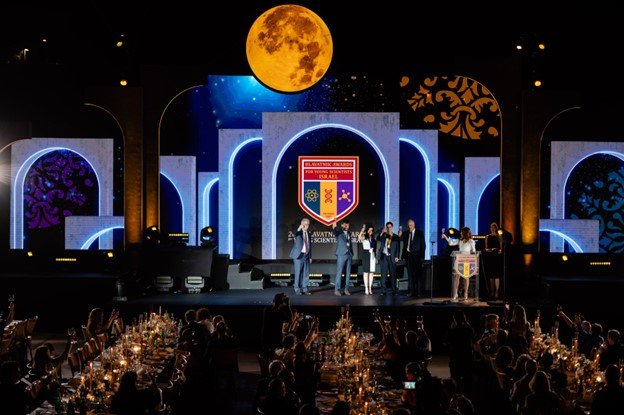
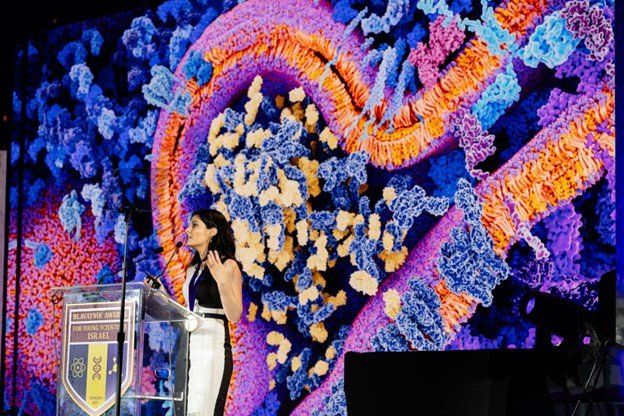
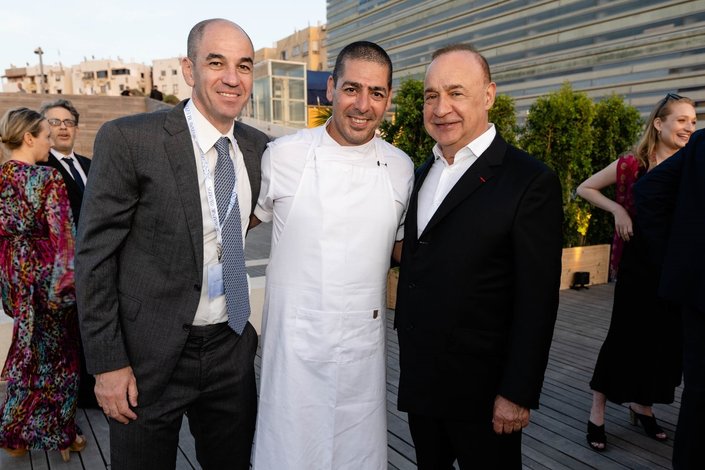
The New York Academy of Sciences, in collaboration with the Israel Academy of Sciences and Humanities and the Blavatnik Family Foundation, hosted the fifth ceremony for the Blavatnik Awards for Young Scientists in Israel on June 7, 2023. The gala event was held at the Peres Center for Peace & Innovation in Tel Aviv for the second year and was attended by Israel’s top leaders in business, academia and industry. Israeli TV News Anchor, Tamar Ish-Shalom, from Reshet 13, served as Presenter of Ceremonies. Renowned Israeli chef, Yossi Shitrit, catered the ceremony.
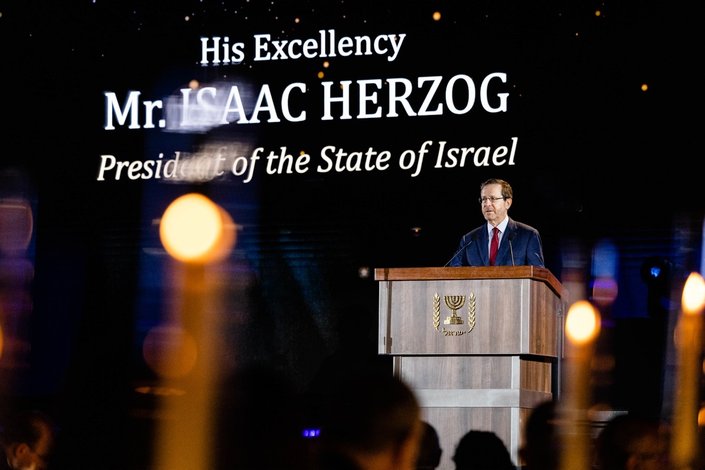
Israel’s President Isaac Herzog attended the ceremony in-person and in his remarks reflected on Israel’s historical investment in science by the first President of Israel, Chaim Weizmann, who saw great promise in science to bringing prosperity to the region. David Harel, President of the Israel Academy of Sciences and Humanities, congratulated the Laureates and thanked the jury and the Scientific Advisory Council.
Academy President and CEO, Nicholas Dirks, spoke about how the Blavatnik Awards honorees are improving our world: “The world needs science and scientists. And we need scientists everywhere to be working together to tackle the world’s growing list of challenges. These awards are so important, for they support the work of scientists who look beyond the walls of their labs, and beyond geographical borders to think creatively and take risks in their research. This is where solutions will be found”.
Physical Sciences & Engineering
In the category of Physical Sciences & Engineering, Zvika Brakerski from the Weizmann Institute of Science was recognized for developing the first efficient encryption algorithm that allows cloud computers to perform computations on encrypted data without the need to first decrypt them. His algorithm has enormous potential to improve the security of cloud computing. In addition, he has also developed new cryptography algorithms to verify the output of quantum computations.
Chemistry
Also, from the Weizmann Institute of Science, Rina Rosenzweig received the Blavatnik Award in Chemistry for discovering the regulatory mechanism by which a particular class of proteins, “chaperone” proteins, drive the innate ability of our cells to prevent and reverse protein aggregation—a phenomena associated with many neurodegenerative conditions including Alzheimer’s, Parkinson’s, and Huntington’s diseases. Harnessing and amplifying natural methods to reverse protein aggregation in cells paves the way to treatments for these conditions.
Life Sciences
In Life Sciences, the first Laureate from The Hebrew University of Jerusalem, Shai Carmi, was honored for his fundamental contributions to the fields of population and medical genetics. In medical genetics, he has reported the first evaluations of a new technology for genetic testing of preimplantation embryos for complex (adult) diseases and traits. Through his groundbreaking work in population genetics, he has rewritten the demographic history of medieval Ashkenazi Jews.
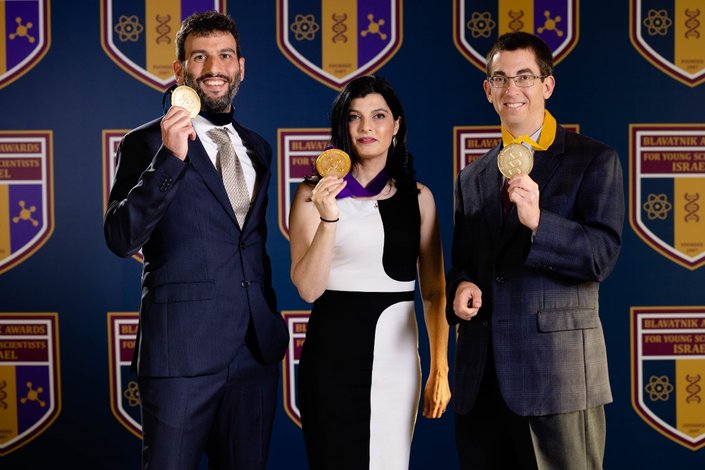
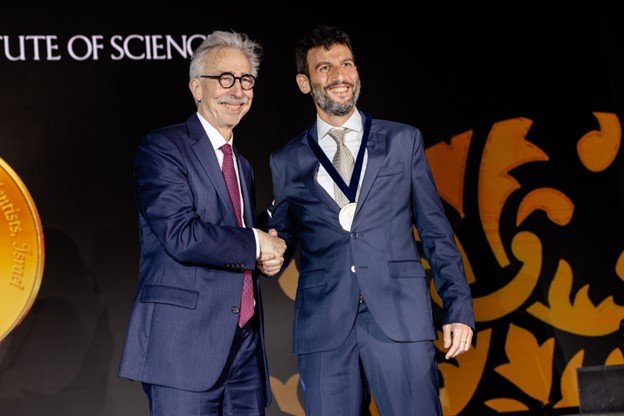
Each Laureate came to the stage to receive their Blavatnik Awards medal from Nicholas Dirks. Afterwards, the Laureates each gave a ten-minute presentation on their award-winning discoveries to the audience. The evening also featured the all-female classical instrumental group, Havriot, who composed a song in honor of the 550th anniversary of Copernicus’s discovery of the sun being the center of the solar system, not the earth as was previously thought.
Ceremony presenter Tamar Ish-Shalom, closed the evening’s festivities with the Blavatnik Awards in Israel tradition of gathering the Academies’ Presidents and the Laureates on stage to make a toast to science in Hebrew, “L’Chaim; To Science!”
To learn more about the Blavatnik Awards for Young Scientists, visit blavatnikawards.org.
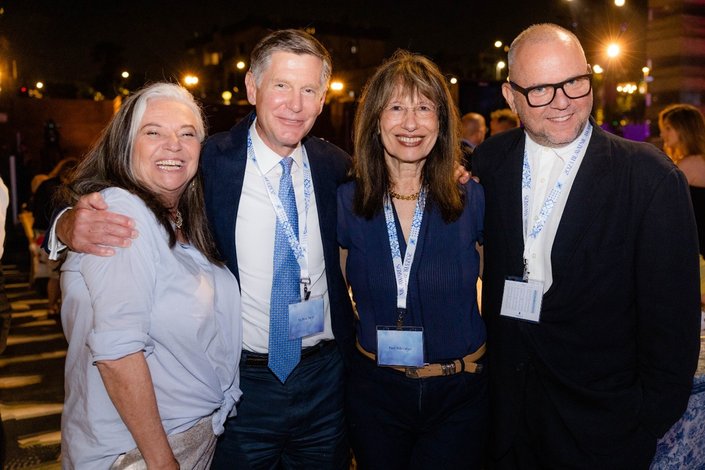
From left: Ilana Brand, Peter Thorén, Nili Cohen, and Nir BrandFrom left: Zvika Brakerski, Rina Rosenzweig, and Shai Carmi.The musical group Havriot performs an original song for the audience.Prof. Rina Rosenzweig.From left: Nadav Topolski Chairman of Reshet Media, Chef Yossi Shitrit, with Len Blavatnik.Prof. Zvika Brakerski (right) with Prof. Nick Dirks.President Isaac Herzog of the State of Israel gives remarks.Prof. Shai Carmi.L’Chaim to Science.
Articles, news, and commentary on scientific developments of social and cultural interest…, “a continuing feast for the mind and the eye,” The Sciences magazine was a unique forum for examining issues in all areas of science. Winner of seven National Magazine Awards, The Sciences was published from 1961 to 2001. All 41 volumes are available online; access through the Wiley Online Library is free for Academy Members and subscribing libraries and available on a pay-per-view basis for others. Tables of contents and abstracts may be viewed by all.
Beginning in 2022, the virtual issue content published below has been commissioned in the spirit of the The Sciences magazine for publication as a front-half section of Annals of the New York Academy of Sciences. Each article — book review/excerpt, essay, commentary, perspective, or concise report — in this front-half “The Sciences” section is branded with The Sciences logo, thereby paying homage to the original award-winning magazine. Thought leaders in various diverse fields are invited to submit papers.
Fast Company honored the ISR as a World Changing Idea for its ongoing work to create a global scientific network focused on rapid crisis response.
New York, NY | May 2, 2023 – The International Science Reserve (ISR), an initiative of the New York Academy of Sciences, today announced that Fast Company honored the ISR as a World Changing Idea for its ongoing work with private and public partners to create a global scientific network focused on rapid crisis response.
The initiative was honored under the annual awards’ new “Rapid Response” category.
“Scientists from around the world want to contribute when there is a global crisis – from climate-related disasters to pandemics. The International Science Reserve is a hub for solutions, connecting scientists to collaborate across borders. That way, we can make sure that solutions are informed by the expertise and insights of researchers in lower-resource contexts, equipping them with cutting-edge tools so that they can better respond to emerging threats,” said Dr. Mila Rosenthal, Executive Director of the International Science Reserve.
This year’s World Changing Ideas Awards were chosen by a panel of Fast Company editors and reporters, who selected winners and finalists from a pool of more than 2,200 entries across urban design, education, nature, politics, technology, corporate social responsibility, and more.
Dr. Rosenthal added, “We are grateful that Fast Company recognized the ISR as a ‘World Changing Idea,’ and we encourage scientists from every discipline to join the ISR network to help tackle the next crisis, together.”
A Network of Over 2,000 Scientists from Over 90 Countries
The New York Academy of Sciences launched ISR in 2022 with partners and collaborators including IBM, Google, Pfizer, UL Solutions, and the National Science Foundation.
Since 2022, the International Science Reserve has seeded a network of over 2,000 scientists from over 90 countries. The ISR has worked with its public and private partners to map and make resources more accessible to their network’s researchers, including high-performance computing, geospatial-temporal data sets, and machine learning or AI for terrain mapping and visualization.
In January, the ISR launched a first-of-its-kind partnership with IBM to increase access during crisis to real-time, complex data sets and modeling that will allow for a more effective and systematic global approach to emerging disasters and threats.
About the International Science Reserve
The International Science Reserve is an open network of scientists and scientific institutions, bringing together specialized technical resources for scientists to collaborate on preparing and responding to complex and urgent global crises. In transnational health emergencies and climate-related disasters, researchers in the ISR network will work together to help people and protect communities. Learn more about the initiative Fast Company named a “World Changing Idea” in 2023: www.isr.nyas.org
About Fast Company’s World Changing Ideas Awards
World Changing Ideas is one of Fast Company’s major annual awards programs and is focused on social good, seeking to elevate finished products and brave concepts that make the world better. A panel of judges from across sectors choose winners, finalists, and honorable mentions based on feasibility and the potential for impact. With the goals of awarding ingenuity and fostering innovation, Fast Company draws attention to ideas with great potential and helps them expand their reach to inspire more people to start working on solving the problems that affect us all.
“So tonight, we also celebrate the progress that has been made to allow women in STEM to flourish — there is more work to do, but these awardees illustrate the bounties that an ever-inclusive work environment brings to society.”
Published March 16, 2023
By Kamala Murthy
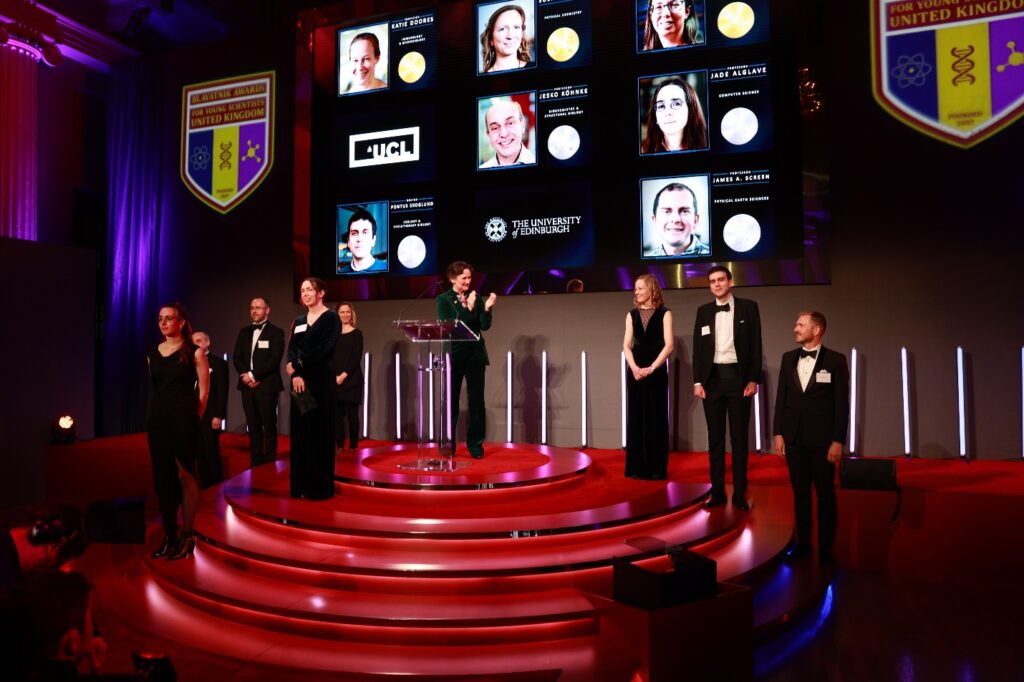
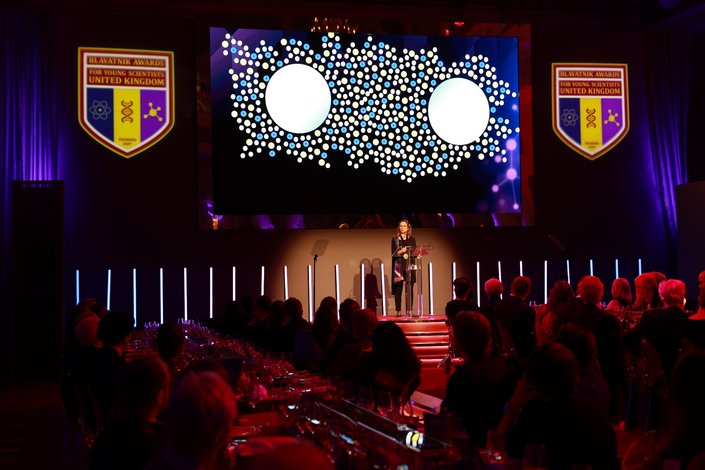
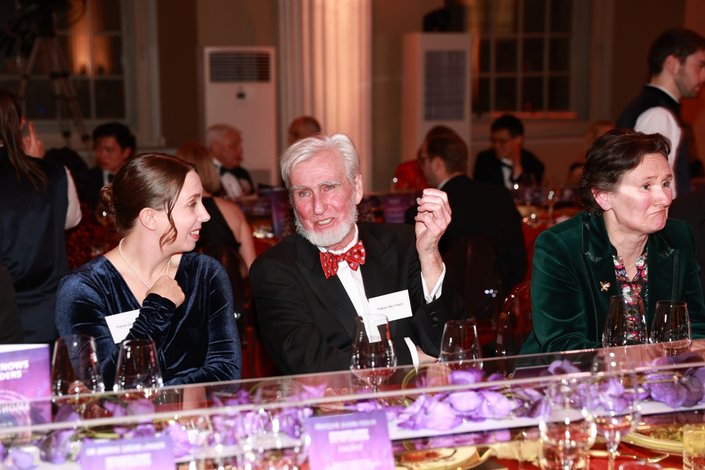
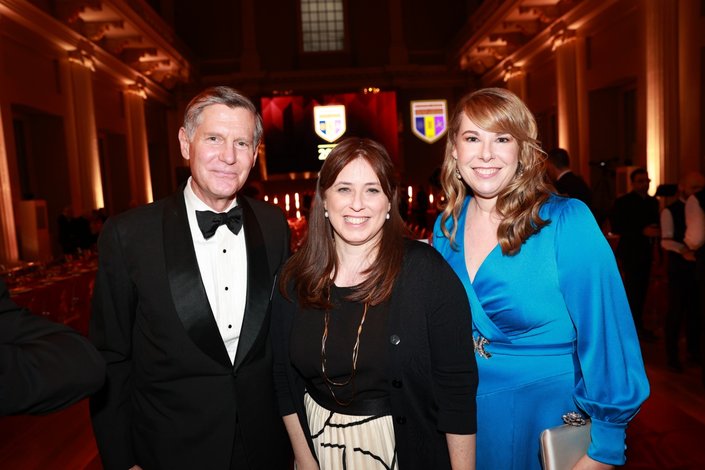
The Blavatnik Family Foundation and The New York Academy of Sciences celebrated the sixth annual Blavatnik Awards for Young Scientists in the United Kingdom with an awards ceremony and gala dinner on February 28, 2023. The event returned to the historic Banqueting House in Whitehall, London, where it was previously held in 2020 and 2021. The celebration showcased the nine honorees of the 2023 Blavatnik Awards in the UK.
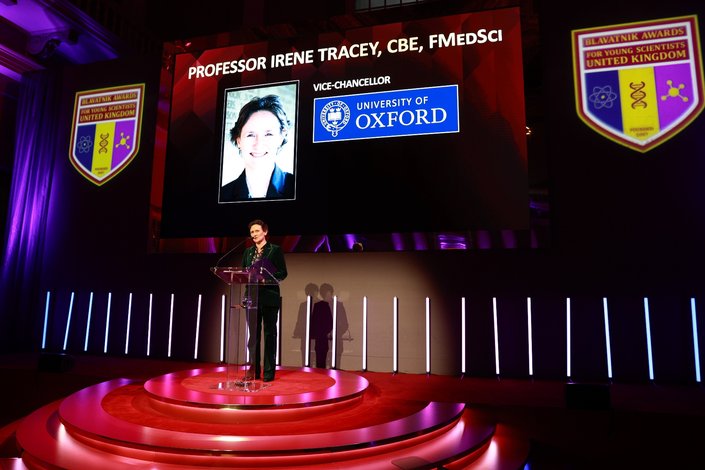
The new Vice-Chancellor of the University of Oxford and renowned neuroscientist, Professor Irene Tracey, CBE, FMedSci served as the 2023 Presenter. Over 140 guests attended the ceremony, including prominent leaders in science, academia, government, business, and past Blavatnik Awards Laureates. Distinguished guests included:
The current Ambassador of Israel to the United Kingdom, Tzipi Hotovely;
British Diplomat Sir Michael Pakenham;
Nobel Laureates Prof. John O’Keefe and Sir Paul Nurse;
Director of the Science Museum Group, Roger Highfield;
Founding Dean of the Blavatnik School of Government, Prof. Ngaire Woods;
British physicist and a pioneer of string theory, Prof. Michael B. Green;
President of the European Research Council, Prof. Maria Leptin;
President Emeritus of the School of the Art Institute of Chicago, Dr. Walter Massey;
Chair of Surgery at Imperial College London, the Royal Marsden Hospital and the Institute of Cancer Research, Prof. The Lord Darzi of Denham;
CEO of Access Industries, Lincoln Benet; and
EVP of the Blavatnik Family Foundation and Access Industries, Peter Thorén.
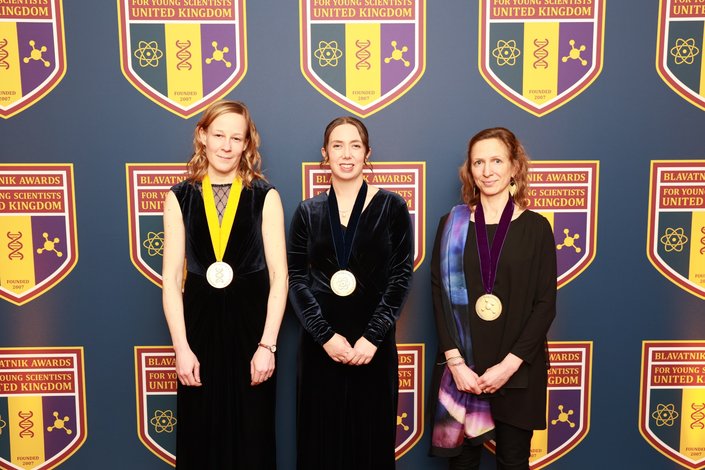
During her opening remarks, Professor Tracey commented on the three Laureates: “I’m particularly proud, as a woman of science myself, that, for the first time in the history of the Blavatnik Awards in the United Kingdom, we have three women Laureates! So tonight, we also celebrate the progress that has been made to allow women in STEM to flourish—there is more work to do, but these awardees illustrate the bounties that an ever-inclusive work environment brings to society—when everyone is given the chance to thrive, everyone benefits.”
In commenting on the Award’s impact, President and CEO of The New York Academy of Sciences, Nicholas B. Dirks said “the Blavatnik Awards program doesn’t just benefit its honorees, but all of us. In their relatively short lifetimes, they’ve already changed the world. How much more will they change all of our lives? I, for one, can’t wait to find out!”
For each Award category—Physical Sciences & Engineering, Chemistry, and Life Sciences—two Finalists were each awarded prizes of £30,000, and one Laureate was awarded £100,000. As each honoree was recognized, the audience viewed a film introducing their groundbreaking research before they were presented with their Blavatnik Awards medal. 2022 Blavatnik Awards in the UK Laureate, Prof. Matthew Brookes from the University of Nottingham was also recognized during the night, as he was unable to attend last year’s ceremony.
Laureates
Katie Doores, DPhil (Life Sciences)—King’s College London
Susan Perkin, DPhil (Chemistry)—University of Oxford
Clare Burrage, PhD (Physical Sciences & Engineering)—University of Nottingham
Finalists
Andrew Saxe, PhD (Life Sciences)—University College London (UCL)
Pontus Skoglund, PhD (Life Sciences)—The Francis Crick Institute
Jesko Köhnke, PhD (Chemistry)—University of Glasgow
Andrew L. Lawrence, DPhil (Chemistry)—The University of Edinburgh
Jade Alglave, PhD (Physical Sciences & Engineering)—University College London (UCL) and Arm
James A. Screen, PhD (Physical Sciences & Engineering)—University of Exeter
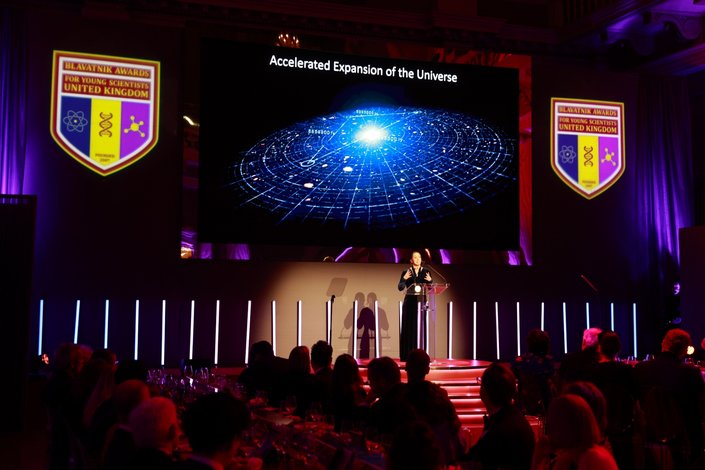
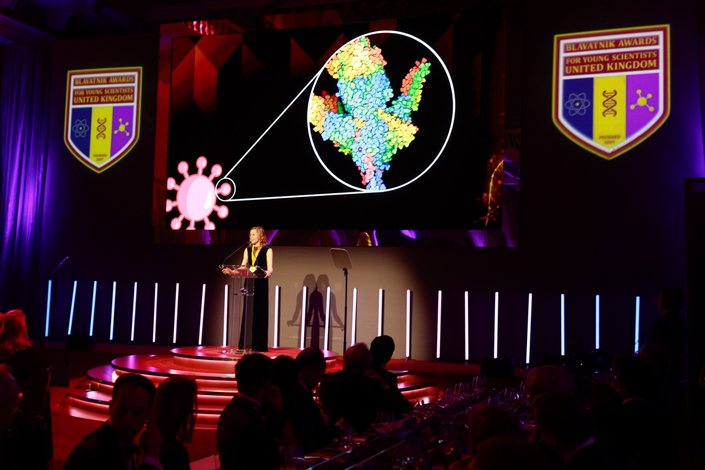
The Laureates all gave short scientific talks after receiving their medals. Physical Sciences & Engineering Finalist, Prof. James Screen was unable to attend due to research commitments in Australia and was honored in absentia.
The ceremony concluded with the Blavatnik Awards tradition of making a “Toast to Science.” The following day, the honorees shared their cutting-edge research in a Blavatnik Awards public symposium “Catalysing Change: 9 Young Scientists Transforming Our World.”
To learn more about the Blavatnik Awards for Young Scientists, visit blavatnikawards.org.
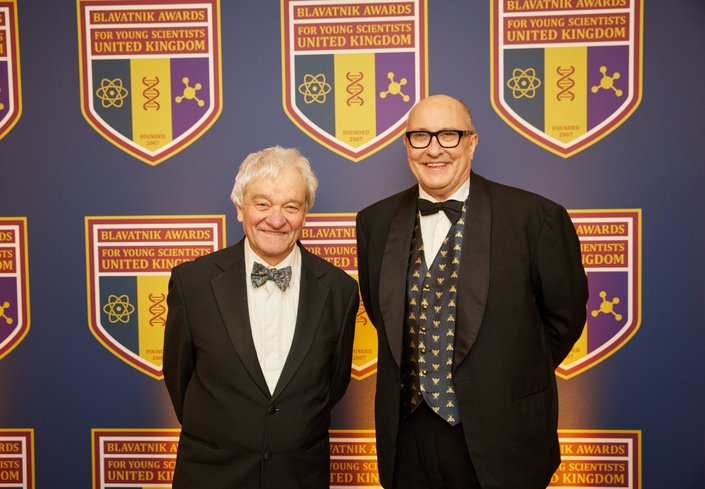
Prof. Clare Burrage.Prof. Katie Doores.Prof. Susan Perkin.Prof. Clare Burrage and Prof. John O’Keefe.Prof. Irene Tracey served as 2023 Presenter of Ceremonies.Peter Thorén, Tzipi Hotovely, and Brooke Grindlinger.The 2023 Blavatnik Awards in the UK Laureates.Paul Nurse and Roger Highfield.
The International Science Reserve (ISR) has won an Anthem Award for its ongoing work to create a global scientific network focused on urgent disaster response.
New York, NY — The International Science Reserve (ISR), an initiative of The New Academy of Sciences, today announced that it has won an Anthem Award for its ongoing work with private and public partners to create a global scientific network focused on urgent disaster response.
The Anthem Awards celebrate purpose and mission-driven work by people, companies and organizations worldwide.
The ISR was launched in early 2022 with partners and collaborators including IBM, Google, Pfizer, UL Solutions and the National Science Foundation.
“When a major crisis or disaster hits, the International Science Reserve wants to be able to mobilize the most effective scientific response—by connecting any scientist anywhere with the best resources available in both private and public sectors,” said Dr. Mila Rosenthal, Executive Director of the International Science Reserve.
“It’s a vision that evolved from the experiences of the COVID-19 pandemic—which underlined the need for a more systematic, global approach to sharing scientific resources in response to threats that go far beyond national boundaries. We thank the Anthem Awards for acknowledging the importance of this collaborative work.”
Over the past two years, the International Science Reserve has rapidly seeded a network of over 1,500 scientists from 90+ countries, and worked with its partners to map available resources including high-performance computing, geospatial-temporal data sets, and machine learning or AI for terrain mapping and visualization. Most recently, the ISR announced that it has partnered with IBM to put advanced data and AI tools directly into the hands of researchers during crisis.
The International Science Reserve received the Anthem Award for partnership and collaboration within the Responsible Technology category, which celebrates efforts to ensure that digital technology has a positive impact on society.
About The International Science Reserve
The International Science Reserve is an open network of scientists and scientific institutions, bringing together specialized technical resources for scientists to collaborate on preparing and responding to complex and urgent global crises. In transnational health emergencies and climate-related disasters, researchers in the ISR network will work together to help people and protect communities. Learn more about joining us: www.isr.nyas.org
About The Anthem Awards
Launched in 2021 by The Webby Awards, The Anthem Awards honors the purpose & mission-driven work of people, companies and organizations worldwide. By amplifying the voices that spark global change, we’re defining a new benchmark for impactful work that inspires others to take action in their own communities. The Anthem Awards honors work across seven core causes: Diversity; Equity & Inclusion; Education; Art & Culture; Health; Human & Civil Rights; Humanitarian Action & Services; Responsible Technology; and Sustainability, Environment & Climate. Founded in partnership with the Ad Council, Born This Way Foundation, Feeding America, Glaad, Mozilla, NAACP, NRDC, WWF, and XQ.