Your Creative Mind: Art Meets Science

What can you gain by venturing into the abstract?

Published August 1, 2012

By Diana Friedman

Image courtesy of Tarun via stock.adobe.com.

Creativity is a learned skill, not an innate ability; such is the premise of Tina Seelig’s new book, inGenius: A Crash Course on Creativity. But what of those deep-seeded cultural assumptions—that artists, writers, and musicians are born creative, while those in more technical fields (scientists, engineers, and mathematicians) are simply not? Seelig, the executive director of the Stanford Technology Ventures Program at Stanford University, finds the idea that creativity is simply a personality trait—you either have it or you don’t—laughable. “Think of math, or science, or dance…Yes, there are people who are naturally gifted in these fields, but most of the population learns these skills. It’s the same thing with creativity.”

Seelig believes that scientists and engineers—those working “at the frontier of knowledge”—can particularly benefit from expanding their creative capacity through purposeful exercises. “If you just perform the next logical experiment, you will make incremental progress. Breakthroughs require breakthrough thinking.” When working on large-scale problems that haven’t been solved before, such as global warming, creativity could be the key to finding solutions that work, says Seelig.

So, what can those in scientific and technical fields do to enhance their creativity? Seelig provides an easy-to-follow roadmap for enhancing creativity in her book. But she is not alone in her efforts to get more people to spend time on, and see the value in, fostering creativity. From professors who ask open-ended questions with multiple ways to solve a problem (a method Seelig endorses) to actors who teach improv classes for scientists, the intersection of science and creativity is getting some time in the spotlight.

Art vs. Science?

“The ancient Renaissance man could be fantastic at art and science, but today we like to separate the two,” says Rebecca Jones, a biochemistry PhD candidate and the public engagement officer at the University of Bristol in the United Kingdom. The common thinking that excellence in science and technical fields precludes a wealth of creativity, is entirely inaccurate, says Jones. “If you’re creative, you’re often better at science. Some of the best scientists I know have come up with more abstract ways of approaching a problem, instead of going the more obvious, logical route.”

But even scientists can get trapped in the notion that creativity has no place in the lab. “A lot of scientists went into science because they feel much more comfortable in a non-artistic environment. I’ve always had that artistic side, so I want other scientists to see themselves in that way too,” says Jones. Such was the impetus for the annual Art of Science Competition that Jones started at the University of Bristol in 2009.

Jones and colleagues collect science-related photographs from research scientists and display them in the medical building. Visitors then vote for their favorites. It took a year or so for the entrants to fully understand the point of the competition, says Jones. At first, many submitted their best research images—those that showed a good result, scientifically speaking. But as the competition gained traction, entrants began to understand that the images could be valuable for their visually striking nature, or for what they said about the life of the scientist.

The Power of Photography

Jones recalls a serene black and white photo that looks like a field of small wildflowers titled “My Beautiful Adversary.” In reality, it is a photo of mold growing on a sample—a nightmare for a scientist. But the photo became very popular with other scientists—they could relate to the subject but they also appreciated its aesthetic value. Another, a photo of a rack of test tubes, all bearing labels written in different, messy handwriting, was an antidote to the typical sleek scientific photos in magazines. But, says Jones, it drove home the point that science is largely a team endeavor, with many hands playing a role in a successful experiment.

“The goal is to give scientists an outlet for their creativity and to let them take joy and release in their work,” says Jones. Scientists at the University of Bristol have responded positively, with the competition getting more intense, and the images more artistic, each year.

“A lot of the entrants were really surprised to see how much their images stood out when they were shown in a group—they were so used to seeing them every day that they forgot how special they were. This allows them to see their work in a new way and get reinvigorated about their research.”

Where It Will Go, Nobody Knows

Valeri Lantz-Gefroh is a lecturer in the School of Journalism and a workshop coordinator for The Center for Communicating Science at Stony Brook University in New York. But in a word, she is an actor. She was one of three acting teachers, led by the well-known Alan Alda, to help build The Center for Communicating Science, a truly unique undertaking aimed at science students.

“Science affects every human being on the planet, but there’s a wall of misunderstanding between the general public and scientists,” says Lantz-Gefroh. The general public often thinks they are incapable of understanding science and, furthermore, that scientists aren’t willing to help them understand it, she says. Scientists, on the other hand, often do not sense the general public’s interest in their work.

So where does acting fit in? Lantz-Gefroh teaches improv, one of the more unusual classes at the Center, which aims to teach scientists, through credit-bearing classes, how to better communicate their work to various audiences. She has been pleasantly surprised by how receptive budding scientists have been to her courses. “I expected skepticism, but I have not gotten it at all.”

A Creative Process

Instead, what Lantz-Gefroh has gotten is the question, “What does this exercise relate to?” Improv exercises are, by nature, abstract. Students are often eager to know what, for instance, mirroring their partners’ movements with eyes open, then eyes closed, will teach them as it relates to their future careers. “I tell them, ‘It’s a creative process, you don’t always know where it is going to go’,” says Lantz-Gefroh. “If I say, it’s for X, then that’s the thing you’ll look for. But if I don’t say, then it could have a bunch of different effects I haven’t even thought about. All could have tremendous value; I don’t want to diminish the potential of the exercise.”

It is for this reason that Lantz-Gefroh likes working with scientists. “They like to quantify things, but they are also comfortable not knowing the answer. I tell them to look at the exercises as a creative investigation.” She is quick to stress that opening up the mind and allowing more abstract thinking is not only of benefit to scientists. “I think every person benefits from creative investigation.” However, she says, that for someone used to looking at the world on a sometimes microscopic level, taking a step back can be particularly beneficial.

Story of My Life

Enhancing creativity among professionals in science and technical fields certainly has personal and professional benefits for those in the field. But can getting scientists to think of their work in new ways also provide benefits to the general public? Ben Lillie, a high-energy physicist by training, and now director of The Story Collider, thinks so. The Story Collider, based in New York City, hosts informal storytelling events where people (both scientists and nonscientists) come together to tell true, science-related stories, usually in a bar.

“I think of us primarily as an arts organization, which is a little weird since we are tied so closely to science,” says Lillie. “Our goal is the same as any arts organization: to explore what it means to be human.” And because the human experience is being so drastically changed by science, “that’s something we need to explore in a cultural context, to explore how that affects us.”

Lillie focused on storytelling as the method for exploration because he believes that sharing stories connect us with each other and help us to see that we are not alone. “We give people a way to see that science is a part of their everyday lives, that it’s not this big mystical thing you have to go into a laboratory to even think about.”

Personalizing and Demystifying Science

Lillie recalls a neuroscientist who told a story about his father having a stroke. The neuroscientist talked about the details of what was happening in his father’s brain (and related them in lay terms to the audience), but he also related all of his personal emotions that went along with each aspect of his father’s illness. This, says Lillie, is how science gets personalized and demystified.

While The Story Collider focuses on true stories, the creativity comes in the telling of them. The Story Collider staff helps storytellers craft their tales, cutting out the extraneous bits and focusing on the parts that move the story along or convey powerful thoughts and emotions. It is an exercise that’s very different than the ones most scientists do in their labs. And for nonscientists, it is valuable and different to take ownership of a story relating to science—learning that the personal is powerful, even in the realm of science.

“I think scientists need some space to step aside from their work, to go do something completely different and come back to it.” Lillie says that storytelling is not necessarily the answer; it is just one creative medium out of an infinite number that can provide benefits, both known and unknown. What might you gain from a creative investigation of your own? There’s only one way to find out.

Expanding Educational Empires in a Globalized World

Higher education is not immune to the effects of globalization. Academics must be proactive to remain internationally competitive.

Published June 1, 2012

Image courtesy of Kizilkaya Photos – istockphoto.com.

By Mitch Leventhal, as told to Diana Friedman

The concept of “study abroad” experiences has changed drastically since I began my career in education. Thirty years ago, studying abroad was thought of as something “those humanities students do.” Rather than being seen as integral to succeeding in a future career, it was a life experience, and it was heavily concentrated on Europe, the humanities, and female students.

Flash-forward three dozen years and international student mobility is a huge trend with the numbers of students crossing borders for education increasing by the day. While the U.S. is currently the top destination for education in terms of raw numbers, it is losing market share, as higher education becomes more commoditized and students can “shop around” for their education the way we might shop around for a car.

Part of the reason for this is that there is a growing awareness that being prepared for the workforce means being prepared to work between not only job verticals, but cultures—and with some frequency (the average person now has 4.6 jobs in their lifetime). Even one job can require a transition between cultures and languages. A means to gain these skills is exposure of an international context, whether through a distinct study abroad time period, or the undertaking of an education entirely in a different country.

A Large and Growing Market

One of the benefits of higher education is that it is a large and growing market, not a zero-sum market. To capitalize on this, many universities are looking to move into regions where the opportunities for expansion are greater than at their home bases. The State University of New York (SUNY), for instance, recently launched a physical campus in Korea. I believe these expansion efforts are generally positive, both for universities and potential students, so long as they are undertaken with care.

It is hard work to set up an overseas branch campus with comparable quality and experience as the original location (some universities franchise their brands to third parties, resulting in significant compromises). It is even harder to do it and create a situation where the branch campus is economically sustainable—that is, it is sustainable on tuition alone. This can be difficult as many students look to international schools for good educational value.

There are success stories, however: INSEAD’s Singapore-based outpost of the European business school has been so successful that it can command tuitions similar to the original location, and students go back and forth between the campuses in France and Singapore to further strengthen their education.

The Impact of Branch Campuses

Just as globalization has contributed to the geographical spread of universities, branch campuses can have globalizing effects on their geographical areas. To start, there’s a multiplier effect on the local economy because of the sheer number of businesses and services that are required to support international students.

Right here in New York, we now have the Cornell University/ Technion-Israel Institute initiative—a New York City-based engineering campus. Having a lot of Israeli and Middle East researchers come to the US for engineering education may change the trade relationship between these countries.

There’s also often a cultural impact as well. One can hope that the University of Nottingham and New York University—both of which now have campuses in China—may help the Chinese liberalize their approach to undergraduate education. As for SUNY, we look forward to expanding our global reach not only through programs established abroad, but also through crosscutting research and teaching—bringing the benefits of international education to students at all of our campuses, whether local or abroad.

Read more about learning opportunities offered by the Academy.

Crowdsourcing for Health Across Borders

Through a novel crowdsourcing exercise, Scientists Without Borders leverages insights from animal science to tackle malnutrition.

Published June 1, 2012

By Shaifali Puri

Image courtesy of FarhanMohib via stock.adobe.com.

Global problems demand global resources to solve them—such is the theory behind the creation of Scientists Without Borders, an initiative that designs and executes projects to tackle these challenges and provides a free web-based platform where users from around the world connect to address pressing global needs. While Scientists Without Borders works on a diverse array of challenges, we have recently focused significant attention on the critical issue of maternal and child malnutrition.

Indeed, the work of both initiatives reflects the awareness that despite renewed global attention to the catastrophic consequences of maternal and child under-nutrition, the burden of the problem looms large over efforts to solve it—and those in the developing world are particularly hard hit. If we are to reverse this trend, coordinated, multi-sector approaches are required.

Closing Knowledge Gaps

A major barrier to improving maternal and child nutrition is the existence of gaps in scientific knowledge about essential processes and biological mechanisms related to healthy fetal growth and nutrition for infants and children. This lack of understanding impedes the development of effective evidence-based approaches and interventions for vulnerable populations.

To fill in the gaps, we need collaboration and knowledge exchange among stakeholders in the nutrition space, as well as the ability to harness the capacity of people and institutions from outside the traditional nutrition science community. It is for this reason that Scientists Without Borders recently launched an exciting crowdsourcing project to connect hundreds of diverse participants among the human nutrition, animal science, and veterinary science communities.

By engaging in high-level discussions about the knowledge needed to advance these fields, these participants have the potential to generate significant and disruptive advances for maternal and child nutrition. For example, when we spoke to scientists in these disciplines, they noted that there is common interest and urgency in understanding in the role of the microbiome, as well as clearly identifying biomarkers in human and animal nutrition.

How We’re Doing It

In order to compress the timeframe on these kinds of cross-disciplinary insights and advances, we designed an invitation-only crowdsourcing platform. We leveraged our global network to invite hundreds of experts from a variety of fields to participate in a 45-day crowdsourcing activity where participants could freely pose questions and ideas and engage in discussions about voids in scientific research, promising interventions or innovations, and unique collaborations or areas of priority. Specifically, we encouraged discussion around seven areas: biomarkers and metabolomics, nutrition and epigenetics, vaccines and immunology, animal models, biofortification, and dietary change.

We built in functionality that allowed participants to rate the contributions of their peers by awarding scores for innovation, feasibility, and expertise. In this way, the ideas with the greatest traction among, or of the greatest interest to, users could be elevated and identified for further refinement and amplification. Subsequent to the crowdsourcing event, Scientists Without Borders, is hosting a small group of select stakeholders (leaders from academia, policy, multinationals, and funding entities) to discuss and build on the most promising ideas.

The in-person convening will provide the opportunity for dialogue and brainstorming between high-level stakeholders around new ideas and new opportunities for collaboration, which they can then translate into actionable steps and outcomes. We believe that bringing together leading thinkers—through both crowdsourcing activities and in-person exchanges—will create the foundation for a global community of interested actors contributing their unique insights and perspectives to the critical area of nutrition, and beyond.

Science is the path to a better future for humankind and strategic collaboration between scientists will get us there.

What Makes Science of Interest to the Public?

A stack of newspapers.

Mariette DiChristina reviews the vast expanse of science, technology, engineering, and math (STEM) news and decides not only what is newsworthy but also what is of interest to the general public and, more importantly, to the magazine’s readership.

Image credit: Modified from March Mosaic 3, created by Darcy Gill using the collage tools on flickr.com. Original images (left to right, from top row to bottom) by Solar ikon, Hamed Saber, [Zenat El3ain]TM, rutlo, Alex Barth, booleansplit, Duchamp, flequi.

Published April 18, 2011

By Meghan Groome, PhD

Scientific American is one of the oldest scientific magazines in the United States, and its mission is to give readers “the science beyond the headlines.” As the magazine’s editor-in-chief, Mariette DiChristina reviews the vast expanse of science, technology, engineering, and math (STEM) news and decides not only what is newsworthy but also what is of interest to the general public and, more importantly, to the magazine’s readership.

DiChristina is the eighth person and the first woman to hold the title editor-in-chief at Scientific American. She joined the staff in 2001 as executive editor after a 14-year stint at Popular Science. She served as the president of the National Science Writers Association for 2009 and 2010 and has been an adjunct professor in the graduate Science, Health, and Environmental Reporting program at New York University for the past few years.

On March 16, 2011, DiChristina, spoke to The New York Academy of Sciences membership of K-12 teachers about her selection of the top science stories of 2011. The event was slightly modified to provide teachers with information about the March 11, 2011, earthquake and tsunami that hit Japan, information which they could use in their classes. She divided the content by topics: life science, chemistry, energy, earth science, and space science.

Life sciences

According to DiChristina, the life sciences are set for some big breakthroughs emerging from stem cell research, including FDA trials for treatments of macular degeneration. DiChristina also commented that there will be news on adult skin cell-derived pluripotent stem cells, as they begin to be used as models for studying medical conditions, especially those conditions without good animal models. Using adult stem cells side steps many of the ethical issues associated with embryonic stem cells.

In addition to more applications of stem cells, this may be the year we finally get a way to sequence a genome cheaply (for less than $1000) because of new, cheaper, table-top sequencers coming on the market. Such inexpensive sequencers could improve, among other functions, our ability to diagnose infections by sequencing bacterial genomes and to investigate the biochemical associations between genomes and diseases.

DiChristina then introduced the audience to the science of optogenetics. This technique offers less invasive ways of treating certain neurological conditions. Genes that respond to specific frequencies of light will be inserted into and expressed by certain neurons in the brain, and then a small fiber optic cable can be inserted to stimulate the protein products of those genes and to activate or silence the particular neurons. While still an invasive treatment this method is significantly less invasive that some current therapies.

Chemistry

Through NBCLearns, the education arm of the NBC broadcast network, Scientific American is involved in a year-long celebration of chemistry known as the International Year of Chemistry (IcY). This initiative provides teachers with great resources about the chemistry of everyday experiences. Among them are resources about the chemistry of water and about how making a cheeseburger involves chemistry, to name a few.

DiChristina also predicted that we will see breakthroughs that allow us to understand how life began on this planet. While DNA and RNA can form spontaneously, they don’t do so easily. Scientists are working to replicate the right chemistry and environment to figure out how to give life a little kick. All the individual steps for spontaneous life have been performed, and she thinks that this year they may find just the right spark for the whole process.

Energy

By far the biggest story of the year will be energy, and while DiChristina spoke about the specifics of nuclear power in Japan, she emphasized that there are dangers associated with all our methods of getting energy. The Deepwater Horizon oil spill, mountain top removal and the collapse of coal mines, and the hazards to birds by wind farms all serve as reminders that energy never comes without a price.

The big news in energy this year (aside from the dangers associated with obtaining it) is that scientists are very close to completing a fusion reactor that creates more energy than it expends. DiChristina was quick to joke that scientists always promise that fusion is 20 years in the future, but she noted that the National Ignition Facility may be up and running much sooner than expected. She warned, however, that some steep engineering challenges stand in the way of successful fusion: creating a structure that can withstand the heat, the complex process of making tritium (the radioactive isotope that forms part of the reactor’s fuel), and the need to improve the reliability of lasers needed for the reactor.

Earth science

One of the most fascinating topics discussed involved a shift in the way scientists and the public view minerals. Traditionally, the general public has not viewed the study of minerals as a dynamic and important field. According to DiChristina, a shift in thinking has allowed them to be cast in a new light, as artifacts of an evolving planet in a geologic timeframe.

While all the matter in the universe is made of the same basic building blocks, it takes time for a planet’s processes to mold these elements into the different chemical combinations needed for the earth’s minerals. As we search for habitable planets, mineral composition can help us learn the characteristics of a foreign planet and understand the history of our own.

Space science

The MESSENGER satellite, whose descent to Mercury coincided with this event, is another big story of 2011. In a parallel to the changing perception of minerals, new scientific tools and theories have changed how the public thinks about Mercury. Once thought geologically dead, the MESSENGER mission has shown the planet to be volcanically active and magnetically dynamic because of its proximity to the Sun. By early April, 2011 NASA will have learned a tremendous amount about the planet from this satellite.

One of the reasons that science is so popular and energized right now is that a technology-aided movement called Citizen Science has made it possible for anyone to participate in research, DiChristina remarked. Some programs, such as Cornell University’s BirdSleuth and the Great Sunflower Project from San Francisco State University allow anyone to gather data for large scale projects. Others like Galaxy Zoo from Zooniverse and SETI@Home from the University of California, Berkeley take advantage of people’s amazing ability to detect patterns in images. These projects enlist members of the public to help look for galaxies and planets.

As DiChristina’s presentation highlighted, 2011 is shaping up to be an amazing time in science. Publications like Scientific American have embraced their capacity to provide the public with “the science behind the headlines,” and technology has expanded the ways these publications can deliver content and interact with readers and science enthusiasts.

The Future of Science Education in New York

A panel discussion involving five panelists.

A group of education professionals from across New York state gathered to discuss important changes in teacher preparation, the integration of math and reading and writing curricula, and the role of scientists in the classroom.

Published January 15, 2011

By Adrienne J. Burke

On January 11, 2011, education leaders and stakeholders from across the state gathered to discuss major issues in science education facing New York State. Over 200 educators, administrators, scientists, and policymakers braved the snow to attend the panel discussion in-person, and approximately 50 people participated in the event via a live, interactive webinar. The event was co-sponsored by The State University of New York (SUNY), and a number of the SUNY campuses organized regional discussions and viewing parties, making this a truly statewide event.

The panel consisted of Nancy Zimpher, Chancellor of the State University of New York; David Steiner, Commissioner of the New York State Education Department; Milton Cofield, Vice Chancellor of the Board of Regents; and Josh Thomases, Chief Academic Officer for the New York City Department of Education Office of Portfolio Development. Margaret Ashida, Project Manager for the Empire State STEM Learning Network, moderated the panel.

While the event was originally conceived as a more technical conversation about curriculum and academic standards, the participating teachers, administrators, and university faculty were keen to discuss important changes in teacher preparation, the integration of math and reading and writing curricula, and the role of scientists in the classroom.

Preparation and Retention of Teachers

The preparation and retention of teachers were recurring themes during the night, and they are central to New York’s winning application in the federal Race to the Top (RttT) competition. Currently the state produces only 700 science, technology, engineering, and math teachers each year and must increase that production three-fold to meet demands across the state.

One change already in pilot form but prompted by RttT is the shift to giving all teachers more clinical experience, such as student teaching, as they earn their certification. This change and others like it, inspired by the clinical preparation of medical professionals, will give pre-service teachers more hours in classrooms honing their craft with a mentoring teacher.

Chancellor Zimpher emphasized that teacher preparation must “begin at the beginning” with more clinical experiences that provide low-risk opportunities for teachers to learn both the art and the science of teaching. In addition, teacher preparation must become more appealing, rigorous, and practice-based to appeal to top graduates as it does in other countries.

The panelists also focused on the lowest performing schools in urban and rural districts around the state. Recruitment and retention of teachers at low-performing schools has been identified as an area in need of improvement, and RttT funding will motivate top teachers to choose placements in high needs schools and will encourage them to stay in those schools. All of the panelists urged communities to focus on their local schools, pushing for an “all hands on deck” approach to improving schools that involves an increased role for parents and for the surrounding post-secondary and industrial communities.

Supporting Advanced Placement Courses

RttT funding will also support the State’s efforts to provide Advanced Placement courses. Under-performing high schools traditionally offer very few advanced math and science classes, effectively ensuring that students will not be prepared to succeed as a science major in college. A focus on providing AP courses will also help draw teachers with advanced science degrees to schools where they are needed.

Finally, RttT will fund the writing of a state-wide curriculum that will map out what students should learn from kindergarten through high school. While these new standards will provide a state-wide measure of rigor, the panel expressed the belief that all of the subject areas need to be integrated across the grades so that students have an opportunity to learn problems relevant to the real-world context in which they are situated.

Speaking from the perspective of a scientist, Vice Chancellor Cofield remarked that success in science has a “long time horizon” for young people and that generally kids want to become a professional faster than this time horizon would allow. In addition, both the panel and the audience questioned how to make the study of science similar to the actual practice of science. In the classroom, science can become about memorization or labs that resemble recipes, making it devoid of real-world excitement and context.

The Need for Experiential Learning Opportunities

The scientists in the room promoted field experiences, inquiry labs, and increased connections with faculty and graduate students as solutions to this problem. The panel also pointed to specific policy changes such as a switch from Carnegie Units, credit based upon the number of hours in class, to performance-based credits based on exit exams, portfolio reviews, and other benchmarks that can be met through a variety of school activities.

After the panel discussion ended, the speakers answered questions from the in-person and online audience. The questions echoed the themes of the discussion: the importance and challenges of teacher preparation, the role of scientists and communities, and the specific policy questions such as the implications and future of the No Child Left Behind Act.  Many individuals came forward to discuss their experiences with different teacher preparation programs and certification routes, highlighting the tension between those who want to teach, and often have multiple advanced degrees, and a teacher preparation system that is either too inflexible to account for diverse experiences or that deems them unqualified despite their advanced training.

Commissioner Steiner highlighted current actions that would provide pathways for more scientists to become K-12 educators, and all of the panelists expressed that much more work was needed to reconcile the needs of the K-12 community with the interests of stakeholders and with the pace of education reforms.

Also read: Flexibility Is Key to the Successful Future of Higher Ed

What is the Life Science Angel Network?

An areal shot of downtown NYC.

The “Life Science Angel Network” will promote innovation and match healthcare startups with early-stage funding.

Published November 18, 2010

By Adrienne J. Burke

The New York Academy of Sciences launched the Life Science Angel Network (LSAN) at an event at the Academy’s lower Manhattan headquarters on Thursday, November 18. The new investment network is designed to connect scientists and entrepreneurs with funding to support innovations in biotechnology, medical devices, and healthcare IT. The Academy’s partners in the program include many of the city’s leading academic institutions and the New York City Economic Development Corporation.

As the first angel group in New York City focused on healthcare and life sciences, the Life Science Angel Network will fill the gap between New York and tri-state area technology transfer offices, entrepreneurs, and venture capitalists by providing capital primarily through individual member contributions and sponsorships from organizations involved in supporting innovation and building companies. The program will leverage the Academy’s wide-ranging network in the life sciences industry to uncover, fund, and mentor a wide variety of emerging life sciences companies.

A Worldwide Center for Bioscience

“New York City has one of the largest concentrations of life science and biomedical research institutions in the world, but many of the new and innovative technologies they are producing lack the funding required for commercialization,” said Mayor Michael R. Bloomberg. “The Academy’s Life Science Angel Network will create new access to capital and establish new opportunities for our talented researchers to develop contacts within the investment and entrepreneurial communities. And it will further promote New York City as a worldwide center for bioscience.”

Seth W. Pinsky, President of the New York City Economic Development Corporation, a government partner in the network, said, “New York City’s life science companies regularly develop new and innovative technologies, but we know that there is even more potential from this important industry. I applaud the efforts of The New York Academy of Sciences to create this new angel network that will support the crucial life sciences sector that has the power not only to create new jobs, but to change how we live in fundamental ways.”

Dr. Milena Adamian, Director of the Angel Network at The New York Academy of Sciences, said, “Our Mission is to provide young life sciences companies with financial and operational support, sector-specific mentorship, and access to a broad network of investors and entrepreneurs for subsequent institutional financing.”

Business plans submitted to the LSAN will be screened by a multi-disciplinary expert panel of clinicians, scientists, entrepreneurs and investment professionals. Selected candidates will present to the entire membership to seek financing with clearly defined milestones and timelines.

Deep Scientific and Business Resources

“The New York Academy of Sciences uniquely offers company founders and inventors with deep scientific and business resources to advance medical technologies through the earliest stages of development. The caliber of the participants in the LSAN provides the potential to spark growth and expansion of both entrepreneurship and early-stage financing of life sciences technologies based in New York City and the Tri-State area,” said Steven Hochberg, member of the Board of Governors of The New York Academy of Sciences and managing partner of Ascent Biomedical Ventures, a NYC-based early stage venture capital fund focused on biomedical technologies.

“With a large concentration of universities, research institutions, and medical centers that attract some of the world’s best talent, New York City is a national leader in research and development in the life sciences,” said President & CEO of The New York Academy of Sciences, Ellis Rubinstein. “Despite having such unmatched resources, NYC has, until now, been missing a focused organization that will consolidate the efforts of turning research ideas into improved patient care by providing early-stage funding to promising new companies with validated technologies.”

Founding sponsors of the Life Science Angel Network are Ascent Biomedical Ventures, CBIZ MHM, LLC, Meditech Strategic Consultants, and Wilson Sonsini Goodrich & Rosati. Partners include the New York City Economic Development Corporation, the Downtown Alliance, NYU Ventures, Columbia Technology Ventures, Cornell Center for Technology, Enterprise and Commercialization, NYC Investment Fund, Office of Technology and Business Development at Mount Sinai Medical Center, Office of Industrial Liaison at Sloan Kettering, and Hospital for Special Surgery.

Also read: A Science State of Mind in the Empire State

Cooking for Geeks: Chemistry from the Kitchen

Fresh baked cookies getting pulled out of the oven.

Do you know about the chemical and physical process that occur when cookies are baked in a toaster oven? Engineer-turned-cookbook-author Jeff Potter explores the chemistry of the kitchen in his new book.

Published November 8, 2010

By Adrienne J. Burke

Image courtesy of Pixel-Shot via stock.adobe.com.

On November 1, 2010, cookbook author, software engineer, and self-proclaimed geek Jeff Potter visited The New York Academy of Sciences (the Academy) to talk about how to teach chemistry from the kitchen. From the work of food scientists such as Harold McGee to the urban gardening movement, teachers have plenty of ways to use cooking, food, and nutrition as a theme in the classroom. Riding the wave of this interest and excitement, Potter’s talk called Cooking for Geeks: Chemistry from the Kitchen provided teachers with another way to use a hacker’s thirst for unrestricted inquiry coupled with a scientific spirit and an enthusiasm for cooking to approach inquiry and learning in their lessons.

Geeks, and Jeff wears that mantle proudly, are defined by their curiosity and desire to take things apart, see what’s under the surface, and find out how action causes reaction. Hackers, geeks in their own way, take this one step further and adapt everyday tools to carry out these investigations. For teachers, following this model means taking easy-to-find tools such as kitchen thermometers and using them to collect data about the world.

Baking Cookies…in a Toaster Oven

For example, Potter queried what could be learned from making cookies in the classroom using a toaster oven. What we find, he notes, is that for every observable change in the cookie (flattening, rising, and browning) there is a chemical or physical process that can be explored by following the temperature of the cookie. Some physical changes, such as the melting of sugar or the boiling of water are great opportunities to discuss phase changes while others, such as caramelization and the Maillard reaction, are chemical changes that can lead to lessons about atomic structures or bonding. All of these processes happen at specific temperature points or over specific ranges that can be monitored with household instruments.

Potter continued with the temperature theme by telling the audience how to “hack” a sous vide pressure cooker. While many teachers may not be interested in actually “hacking” a pressure cooker for their class, he uses the cooking technique of sous vide (a low temperature poaching method) to discuss the connection between how proteins denature with heat and how foods taste as a result of this process. To illustrate this point, he looked at why most people prefer their steak cooked medium–rare.

At this temperature some proteins, myosin molecules in particular, have denatured while actin molecules have not, and as Potter pointed out, “denatured myosin equals yummy, denatured actin equals yucky.” By cooking steak, eggs, or fish sous vide, one can control exactly at what temperature the food is cooked, and thus, what proteins get denatured.

Jeff Potter is the author of Cooking for Geeks: Real Science, Great Hacks, Good Food. His background is in computer science, and he credits cooking with saving his sanity.

Also read: Exploring the Science of Haute Cuisine

Supporting Science and Innovation in Russia

A man wearing a suit and tie poses for the camera.

Scientists in the Academy’s Innovation & Sustainability program have advised Russian Federation President Dmitry Medvedev on steps his country must take to evolve an innovation economy.

Published September 13, 2010

By Adrienne J. Burke

A man wearing a suit and tie poses for the camera.
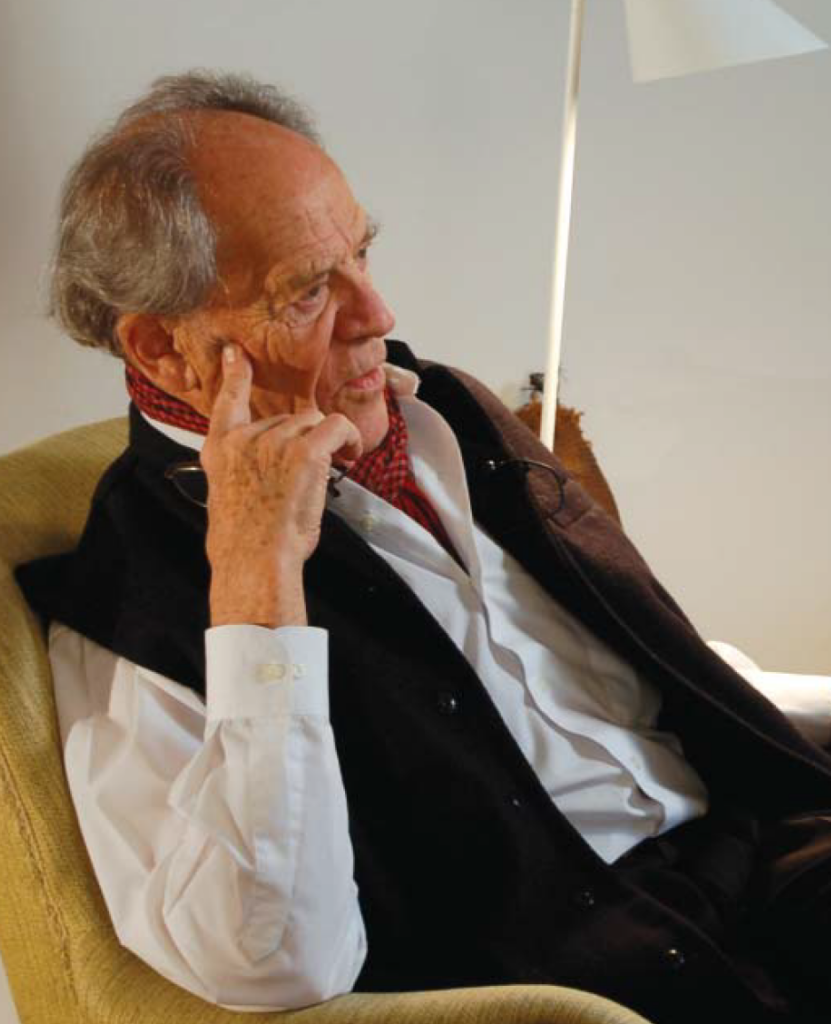
Ellis Rubinstein

Academy CEO Ellis Rubinstein last week delivered a report to Russian Federation President Dmitry Medvedev on steps his country must take to evolve an innovation economy. The report, “Yaroslavl Roadmap 10-15-20: 10 Years to Implement, 15 Steps to Take, 20 Pitfalls to Avoid-International Experience and the Path Forward for Russian Innovation Policy,” was produced by scientists in the Academy’s Innovation & Sustainability program.

Honorable Ilya Ponomarev, Chair of the High Tech Subcommittee of the Russian State Duma, presented details from the 83-page document during the plenary session of Global Policy Forum 2010, hosted by President Medvedev, Sept. 9-10 in Yaroslavl. During the conference, Academy President Rubinstein and Vice President, Innovation & Sustainability, Karin Ezbiansky Pavese led a roundtable dialogue on “The Roadmap,” which describes the innovation policies, successes, and challenges of four countries-Israel, Finland, India, and the U.S.-and Taiwan Province, China. Based on analyses of how those regions developed innovation economies, and on a study of the current state of Russia’s economy compared to the priorities of President Medvedev, the report offers 15 specific recommendations. It also highlights 20 pitfalls for Russia to avoid.

Developing Innovation Policy

Pavese, who led the Academy team that authored the report, said, “This 12-week project was focused on thematic trends in how a subset of locales has successfully fostered innovation. The report is meant to be a set of practical recommendations to be used by President Medvedev and his staff as they continue to develop innovation policy for Russia.

“Under President Medvedev, the Russian Federation has set a priority to develop a robust national innovation system, and to transform itself from an economy reliant on natural resource production into a knowledge-based economy,” she said. “Modernization of the society as a whole will be accompanied by a thorough integration of cutting-edge science and innovation into productive activity, fulfilling the human and intellectual potentials of the country and creating entirely new areas of world-class technology.”

“The Yaroslavl Roadmap 10-15-20” includes recommendations that Russia focus on basic research to ensure a pipeline of cutting-edge technology and human talent, and that the country define mission-oriented grand challenges based on its needs and strengths in areas of energy; communications, transportation, telecom, and space technology; biotechnology and life sciences; and IT and supercomputing. The report also advocates establishing trusted and complete intellectual property law and clear IP ownership rules for government-funded research, mandating international standards and regulations, and creating a network of state procurement agencies.

Also read: A Science Collaboration Between the U.S. and Russia

The History and Science of Ship’s Hull on WTC Site

The New York Academy of Sciences is hosting an event to explore the hull of an 18th century ship that was recently unearthed on the site of the World Trade Center.

Published September 1, 2010

By Adrienne J. Burke

7 World Trade Center.

The Tribute WTC Visitor Center and The New York Academy of Sciences will present “An Historic Hull on Hallowed Ground: Three Experts Discuss the 200-Year-Old Ship Next Door,” a free public event at 7:30 pm on Thursday, September 30.

The Tribute WTC Visitor Center, a museum that tells the personal stories of September 11th, and the Academy, which is headquartered in 7 World Trade Center, have invited an archaeologist, a conservationist, and a maritime historian to present a behind-the-scenes look into the 18th century ship remnant that was discovered in July at the World Trade Center reconstruction site.

Michael Pappalardo, the supervising archaeologist for AKRF at the World Trade Center, Norman Brouwer, a maritime historian specializing in New York City maritime history, and Nichole Doub, head conservator at the MAC Lab which is stabilizing the unearthed wood, will each explain the work they have done to help understand the story of this surprising discovery 25 feet below street level.

An Historic Hull on Hallowed Ground

Pappalardo will show images of the ship where it was found and discuss its relationship to the archaeology of the site. Doub will talk about removing and transporting the ship and the painstaking work of stabilizing the wood in a premier laboratory for this type of work. Brouwer, formerly of the South Street Seaport Museum, will hypothesize on the voyages of the ship and compare it to other ship remnants found in Lower Manhattan over the past 30 years.

Although the ship bears no direct connection to the original World Trade Center, some of its characteristics resonate with more recent history. A curator found what is believed to be a coin from the mast-stepping box, which would have been placed on a new ship to bring good fortune to future crews, according to ancient Greek maritime custom. The recently launched USS NY, which was made with 7.5 tons of steel recovered from the World Trade Center, had symbolic coins placed in its mast-stepping box when it was built.

The two institutions presenting this program, Tribute, on the south side of the World Trade Center site, and the Academy, on the north side, are united in their interest in bringing information about this historic aspect of the World Trade Center neighborhood to light.

“An Historic Hull on Hallowed Ground” will take place at the New York Academy of Sciences, 7 World Trade Center, 250 Greenwich St., 40th floor, at 7:30 pm, Thursday, September 30.

Also read: Prehistoric Sloth-Like Creatures May Have Roamed the US

Uniting the Best Science Minds in the US, Spain

A traffic roundabout in Spain.

A three-year partnership will establish, disseminate, and promote science in Catalonia, some of which will engage non-scientific members of the public.

Published March 8, 2010

By Adrienne J. Burke

Aerial view of Placa d’Espanya, landmark in Barcelona, Catalonia, Spain. Image courtesy of marcorubino via stock.adobe.com.

The New York Academy of Sciences (the Academy) and Talència, (formerly known as the Fundació Catalana per a la Recerca i la Innovació) of Barcelona have established a collaboration aimed at promoting science in the autonomous community of Catalonia in Spain.

The three-year partnership will establish, disseminate, and promote science in Catalonia through a variety of measures. First, the Academy and Talència have agreed to collaborate on the development of several high-quality scientific symposia in interdisciplinary topics to highlight Catalonia science to the global scientific community. Public lectures associated with each scientific event will also translate the science presented at these symposia for non-scientific audiences, thereby increasing scientific knowledge in Catalonia. To further promote public understanding of science in Catalonia, the agreement aims to provide additional opportunities for Catalan non-scientists to listen to world-renowned thought leaders discuss relevant and interesting scientific issues.

Communicating Science

The Academy and Talència have also agreed to create and disseminate professional print and electronic materials that present to the Catalan scientific community and the world the scientific research being undertaken in Catalonia. And the Academy has agreed to work to connect up-and-coming young Catalan scientists with other promising young faculty and post-docs globally via the Science Alliance. The agreement calls for the Academy to offer 100 one-year memberships to the Alliance to support the best and brightest Catalan scientists-in-training.

Talència, a public institution and instrument of the Government of Catalonia, implements measures aimed at fostering and recognizing research in Catalonia, and seeks to become a useful organization and an international reference point for its research community.

As a new research-boosting institution in Catalonia, Talència is set up to contribute to the mandate of the Catalan Agreement on Research and Innovation (CARI)—promoted by the Catalan Ministry of Innovation, Research and Innovation and signed in October 2008—which raises the need of adopting a new intelligent, efficient, and effective research governance system in Catalonia, amongst other challenges.

Also read: A New Partnership Aims to Strengthen US-China STEM Collaborations