Is There a Limit to Human Knowledge?

A colorful and abstract graphic.

Modern physics and its leading theories have been remarkably successful in describing the history of our universe, and large-scale experiments, such as the Large Hadron Collider, are continuously producing new data that extend our knowledge of the world. Nevertheless, our understanding of some physical concepts that seek to explain our universe—dark matter and dark energy, quantum gravity, supersymmetry, and the cosmological constant—remain unresolved. Featuring cosmologist Neil Weiner, string theorist Eva Silverstein, and physicist Vijay Balasubramanian, with moderation from philosopher of science Jill North, this podcast explores what the future holds for physics. 

This podcast was made possible through the support of a grant from the John Templeton Foundation. The opinions expressed in this podcast are those of the speaker(s) and do not necessarily reflect the views of the John Templeton Foundation. 

Improving Clinical Trials through Mobile Technology

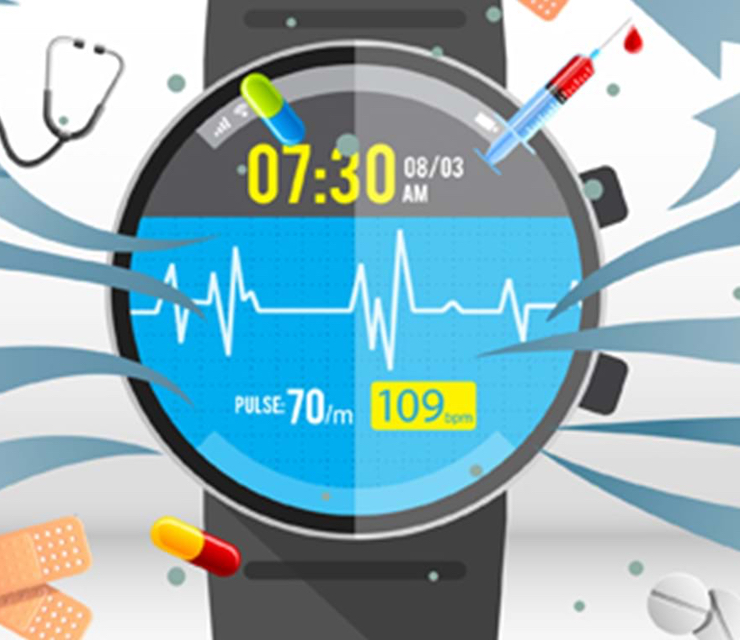
An illustration of a smartwatch with healthcare/medical elements.

Mobile technology is emerging as a powerful tool for transforming the way clinical research is conducted now and in the future. Acquisition of real-time biometric data though the use of wireless medical sensors will allow for around-the-clock patient monitoring, reduce costly clinic visits, and streamline inefficient administrative processes. With the promise of this technology also comes challenges including digital data privacy concerns, patient compliance issues, and practical considerations such as continuous powering of these devices.  

This podcast provides an illuminating examination of both the promises and challenges that underpin the implementation of mobile technology into the clinical realm. 

Proof of Concept Centers: Energy Technology

The logo for The New York Academy of Sciences.

It’s easier to find people to invest in a great new tech product if you can show that it will be profitable relatively quickly. Unfortunately, that’s not so easy to demonstrate. Learn how we’re working to change that.

The New York Academy of Sciences and NYSERDA (the New York State Energy Research and Development Authority) are teaming up to drive investment in the new technologies that will help revolutionize the way we produce and use energy by supporting Proof of Concept Centers – institutes that bridge the gap between academic laboratories and working companies. In this podcast we learn about Proof of Concept Centers: what they are and how they have the potential to create a sea change in the way new technologies are turned from ideas into realities.

The Important Role of Support and Motivation

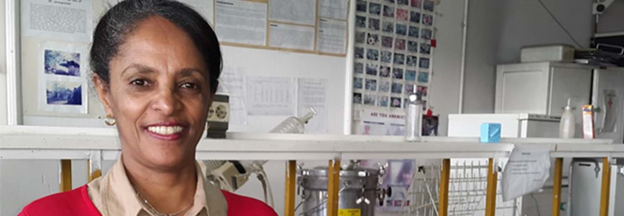
A woman smiles for the camera.

Learn how Yalemtsehay Mekonnen, PhD, has taken the lead in academia in Ethiopia and in motivating young female scientists.

Published October 1, 2015

By Diana Friedman

Yalemtsehay Mekonnen, PhD

Not only was Academy member Yalemtsehay Mekonnen, PhD, among the first graduates from Addis Ababa University. She went on to become the first female professor in Ethiopia. Her impressive research and publishing track record in cell biology and human physiology focuses specifically on analyzing medicinal plants used in communities across Ethiopia to evaluate whether or not they could help to treat infectious disease such as malaria, or non-communicable diseases such as hypertension and diabetes. Dr. Mekonnen’s interest in medicinal plants also extends to working toward their safe and sustainable use, and advocating for the preservation of plant biodiversity in Ethiopia and beyond.

Her work has not only helped move the field of science forward, it has also allowed her to travel and, importantly, to help motivate younger women to pursue careers in the sciences.

What helped inspire you to pursue a career in the sciences?

I was always fascinated by discoveries in the natural sciences. The great scientists of the 18th and 19th century are my inspirations. In particular, Joseph Priestley, Louis Pasteur and Marie Curie. I admire them because of their curious minds, intelligence and their great contribution to the knowledge of science. I am always attentive of women scientists who excel and I also wish that many women come up as Nobel Prize winners like Marie Curie, the first woman ever to have broken the barriers of neglect of women in the 19th century.

What’s the best piece of career advice you’ve received?

I learned from those senior to me, instructors and from those who made it in their professions, that I have to be purposeful and hold on to my ideals and convictions to be fruitful in my career.

What has been one of the most rewarding moments of your career?

In science rewards do not come overnight, it is a continuous effort. The most rewarding moment of my career is the motivating feeling I get when my scientific experiment works right and when my work is published in reputable scientific journals.

What is one of the biggest challenges you’re facing right now?

My challenge now is that I always want to do more and I never have enough time!

What is one of your hobbies (outside of science)?

I like to travel and see new places and get to know people of different backgrounds and cultures.

Do you want to be part of our inclusive and impactful network? Join today!

From Running a Lab to Running Marathons

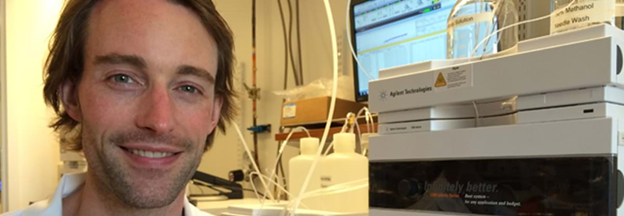
A man smiles for the camera.

Postdoctoral associate Robert S. Jansen doesn’t just love his work; he also loves running marathons.

Published September 23, 2015

By Diana Friedman

Robert S. Jansen

Like many scientists working in New York and around the US, Academy member Robert Jansen is originally from outside the US. In his case, home is just over the Atlantic Ocean in Amsterdam, the Netherlands. But today he’s a postdoctoral associate in medicine at Weill Cornell Medical College.

What is the focus of your current research?

I am working to identify the function of essential genes of Mycobacterium tuberculosis by untargeted metabolomics. Knowing the function of these essential genes allows us to screen for inhibitors, which might ultimately serve as drugs for the treatment of tuberculosis.

What has been one of the most rewarding moments of your career?

Seeing that my fundamental lab work on a transporter was translated into an experimental therapy for patients suffering from a hereditary calcification disorder.

What is one of the biggest challenges you’re facing in your career right now?

Making the transition from postdoc to an independent position.

Tell us about something you like to do outside the lab.

I run about one marathon per year – Chicago is up in November. My best marathon experience was New York; it was my first marathon and my first visit to the USA. Americans are much better at cheering than the Dutch. I started running shorter distances when I was young, about 10. I only started running longer distances during my PhD because I joined my hospital’s team in the annual “dam to dam run” in Amsterdam.

If you’re a scientist from outside the US who is navigating visa and immigration issues, be sure to check out our guide for scientists.

Do you want to be part of our inclusive and impactful network? Join today!

2015 Blavatnik Science Symposium

The second annual Blavatnik Science Symposium was a celebration of scientific excellence and achievement in the United States.

Published August 6, 2015

By Diana Friedman

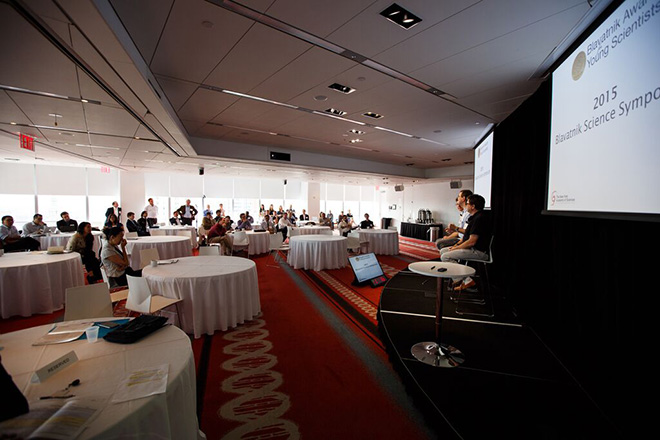
The 2015 Blavatnik Science Symposium hosted at The New York Academy of Sciences.

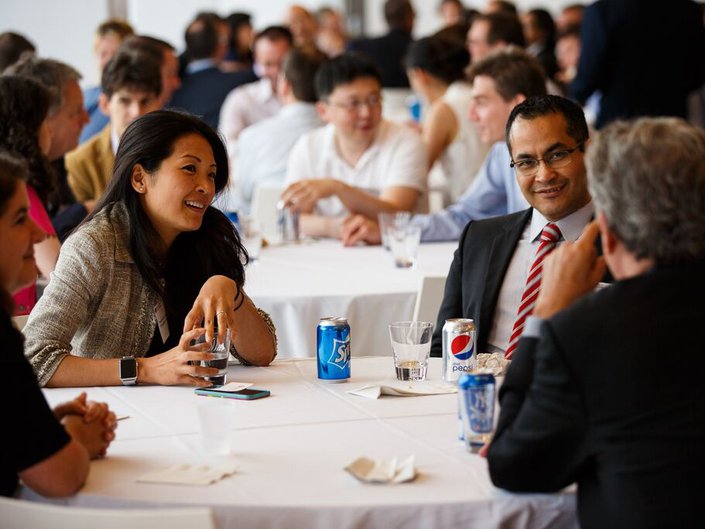
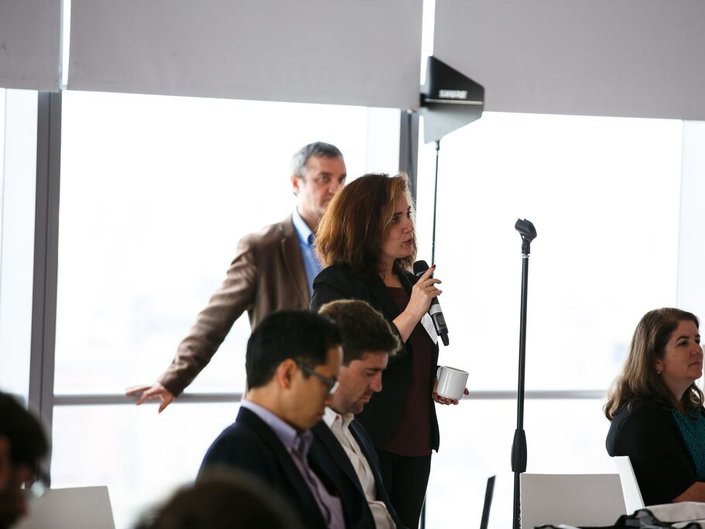
The second annual Blavatnik Science Symposium took place on August 5th and 6th 2015 at The New York Academy of Sciences (the Academy). This two-day event was hosted by the Blavatnik Family Foundation and the Academy and convened more than 50 past Blavatnik Awards honorees and 2015 National Finalists. The Symposium was attended by Len Blavatnik and other representatives of the Blavatnik Family Foundation, scientific luminaries, representatives of the Blavatnik Biomedical Accelerator and the Blavatnik Fellowship in Life Science Entrepreneurship program from Harvard University, and members of the press.

Building on the success of the inaugural 2014 Blavatnik Science Symposium, this year’s event was expanded to a two-day program to accommodate the growing Blavatnik Science Scholars Community of past and current honorees. Ellis Rubinstein, President and CEO of the Academy, and Dr. Mercedes Gorre, Executive Director of the Blavatnik Awards, opened the event with their welcoming remarks and were followed by a keynote address by 2010 Blavatnik Regional Award winner Michal Lipson, professor of Electrical Engineering at Columbia University, who spoke about the latest advances in nanophotonics.

Networking, Panel Discussions, and More

Blavatnik Awards honorees and 2015 National Finalists had the opportunity to network and present their work in front of their peers. A number of participants gave brief talks highlighting their research accomplishments in a broad variety of areas ranging from genomics to quantum materials to devices for portable diagnostics. A special session featured 2014 Blavatnik Regional Award honorees, who, having been recognized for their stellar postdoctoral work, have received faculty appointments in leading universities in the US and Europe.

Several panel discussions took place around topics of particular interest to the Blavatnik Science Scholars, including:

  • Reinvention, Building Cross-Disciplinary and Multi-Faceted Research Programs” moderated by New York Times columnist Carl Zimmer
  • Latest Developments and Top Unsolved Problems in Artificial Intelligence & Machine Learning” with participation by Yann LeCun (Director of AI Research, Facebook/NYU), 2007 Blavatnik Regional Award winner Léon Bottou (Facebook), and 2013 Blavatnik Regional Award winner David Blei (Columbia University)
  • Commercialization and Entrepreneurship in the Blavatnik Science Scholars Community,” moderated by Ellis Rubinstein;
  • And a special presentation by 2014/2015 National Finalist Rob Knight (UCSD) and 2011 Blavatnik Regional Award winner Szabolcs Márka (Columbia University) on collaboration between their groups that had emerged from their meeting at a Blavatnik Science Scholars event.

On the evening of the first day, Carl Zimmer delivered his keynote address: “Cross-Talk: Telling Stories about Science” where he shared with the guests his rich experience of successfully communicating scientific research to diverse audiences via a variety of media channels.

To learn more about the Blavatnik Awards for Young Scientists, visit blavatnikawards.org.

A New Report On the “Global STEM Paradox”

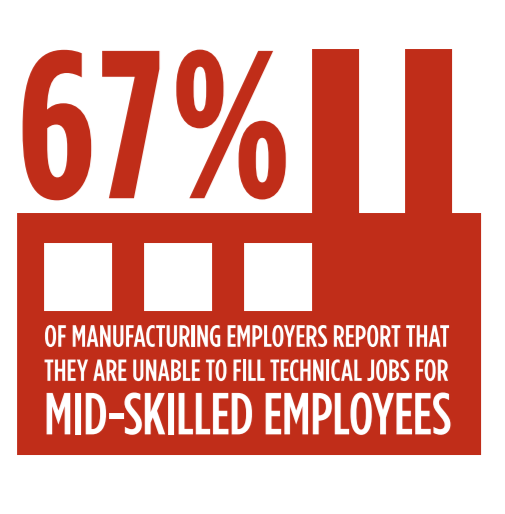
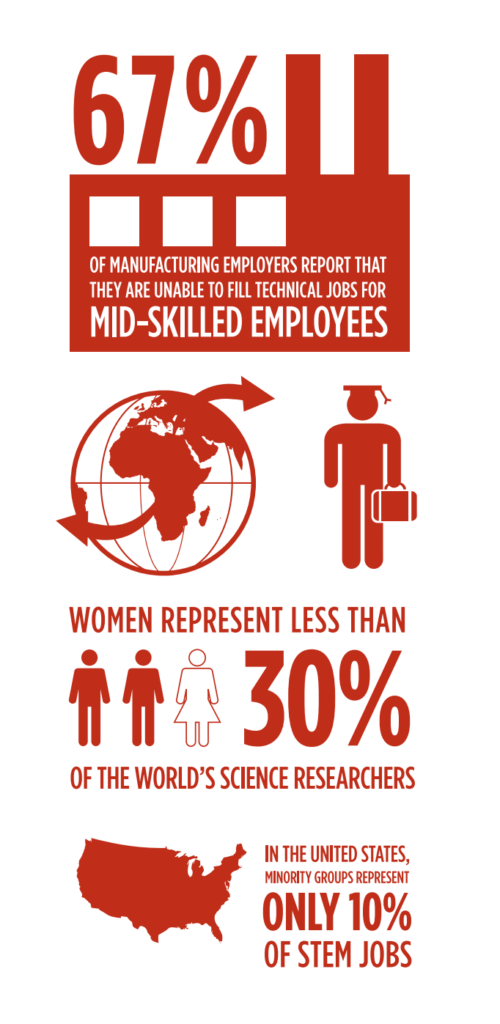
A graph showing 67% of manufacturing employers report that they are unable to fill technical jobs for mid-skilled employees.

This comprehensive report answers the recent paradoxical question: if we’re graduating record numbers of STEM students, why are STEM jobs still unfilled?

Published January 26, 2015

By Stacy-Ann Ashley

Today the New York Academy of Sciences (the Academy) released a new report, “The Global STEM Paradox,” in an effort to better define the state of science, technology, engineering and math (STEM) education and careers worldwide.

The report paints a shocking picture of the state of STEM education across the world: 67% of manufacturing employers in the United States report that they are unable to fill technical jobs for mid-skilled employees, while women represent less than 30% of the world’s science researchers. Furthermore, in the United States, people of color represent only 10% of STEM employees.

The Academy’s report demonstrates that while there are sufficient numbers of graduates in STEM, employers still report difficulty in filling STEM jobs – the global STEM paradox. The report identifies areas of concern that contribute to employers’ challenges: low numbers of graduates who have the skills needed to match actual job requirements, “brain drain” from developing countries, and the lack of women and people of color in STEM fields. The report also highlights a global disconnect between the developed and developing worlds, with mid and high-skill STEM jobs available in the Global South, but most of the candidates available to fill them living in the West.

“If we want to solve the global STEM paradox, we need to change the way we think about STEM education and careers worldwide, ” says Meghan Groome, PhD, Executive Director of Education at the Academy. “It’s not enough to churn out a small army of PhDs from our top institutions. We need a new class of skilled technicians, we need home-grown scientists in the developing world, and we need to make women and people of color feel welcome in STEM fields.”

Combatting the STEM Paradox

To combat the STEM paradox, the Academy recently launched the Global STEM Alliance of The New York Academy of Sciences (GSA), a worldwide partnership with governments, companies, NGOs, universities and schools to improve student access to STEM mentors and tools. At the UN in September, the GSA announced that it is investing millions of dollars in order to inspire over 1,000,000 children worldwide to become STEM leaders in more than 100 countries by 2020.

At the UN event, members of the Alliance proposed a solution to the STEM paradox: an ecosystem of government policies, strategic business incentives, and innovative Web-based and one-to-one and one-to-many mentoring approaches that, together, create the necessary incentives for students to seek, acquire, and employ STEM skills.

“In order to place STEM graduates in areas where they’ll be most effective, we need a global STEM ecosystem that can educate the next generation of STEM leaders to confront the biggest challenges of our time-climate change, malnutrition, global epidemics-through cross-generational, transnational collaboration,” says Groome.

The GSA launched with several Founding Partners: ARM, Cisco, and the Global Sustainability Foundation, as well as a group of Founding Nations and Regions, including Barcelona, Benin, Croatia, Malaysia, New York State, Rwanda, and the United States.

“We’re proud to have the support of esteemed dignitaries and business leaders on board with the Global STEM Alliance,” says Celina Morgan-Standard, Senior Vice President, Global Business Development, Global STEM Alliance. “With a ready and willing base of partners dedicated to building STEM skills and supporting global economic development, I have no doubt we can achieve our goals and solve the STEM paradox.”

Learn more about educational programming at the Academy.

The Need for Scientific Partnership in the US, China

The Chinese flag: Mostly red with yellow stars in the upper left corner.

A new partnership aims to strengthen relations between the United States and China enabling the two countries to share ideas and solve global innovation and economic challenges.

Published December 12, 2014

By Diana Friedman

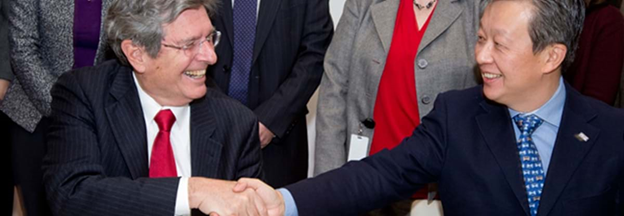
Earlier this month, The New York Academy of Sciences (the Academy) and China Center New York announced a joint mission to develop scientific collaboration between New York and Beijing.

The announcement was made during a partnership signing ceremony where Dongbai Ye, Science and Technology Counselor at the Consulate General of China in New York, delivered a formidable speech about the need for scientific partnership between the USA and China, and congratulated the Academy and China Center New York for their commitment to bringing this opportunity to both countries.

China Center New York has a unique position in the City as a hub of cultural exchange and conversation between east and west, and the Academy was honored that Charlie Jiang CEO of Vantone Holdings, Chairman of Vantone Real Estate, and CEO of China Center New York was committing to a three-year agreement to leverage the Academy’s network of members to improve scientific collaboration, business opportunities, and education initiatives.

The First Step

“This ceremony is the first step in a significant alliance that will not only create a conduit for science, technology, engineering, math, and business, but also strengthen the Academy’s global reach and China Center New York’s footprint in the US,” said Ellis Rubinstein, CEO and President at the New York Academy of Sciences.

Ellis Rubinstein (left), President and CEO of The New York Academy of Sciences and Charlie Jiang CEO of China Center New York.

Charlie Jiang thanked Dongbai Ye for his support and that of Dong Su, Deputy Mayor of Beijing Xicheng District Government, and commented that, “The partnership with the Academy shows Vantone’s commitment to promote scientific developments, especially in areas such as smart city, green building, and healthy living. Scientific communication will become an important part of China Center’s collaboration events. I’m delighted to be able to formally announce that science, technology, and business leaders from China and the USA will be able to come together to share ideas and solve global innovation and economic challenges.”

Also read: Strengthening US-China STEM Collaborations

From Successful Actor to Impactful Science Advocate

A headshot of a man smiling.

Actor and science advocate Alan Alda discusses his passion for communication — in science, in theater, and in life.

Published November 03, 2014

By Diana Friedman

Starring Alan Alda & Candice Bergen
November 9 — December 5
Use Offer Code: LIFE
lovelettersbroadway.com


Alan Alda gets uncomfortable making small talk at parties, but he is passionate about authentic, effective communication. Especially where science is concerned.

An actor, writer, and director whom many know from his Emmy Award-winning roles in The West Wing and M*A*S*H and as recurring frenemy Alan Fitch on NBC’s The Blacklist, Alda is also a lifelong science enthusiast who has spent the last 20+ years advocating for the understanding and clear communication of science. For 11 years he interviewed scientists as host of Scientific American Frontiers.

He has received numerous communications and service awards, including the National Science Board’s Public Service Award (2006) and the AAAS Kavli Science Journalism Award for The Human Spark (2010). His interest in using improvisation techniques to train scientists to communicate more effectively inspired the founding of the Alan Alda Center for Communicating Science at Stony Brook University, where he is a Visiting Professor.

Starting November 9, Alda stars with Candice Bergen in Love Letters at the Brooks Atkinson Theatre in New York, part of a rotating cast of two characters communicating through letters and notes written over five decades. He spoke recently with the Academy about how scientists can better convey their message, the importance of empathy, and his passion for making a connection. An excerpt from this interview follows.

Academy

I find it interesting that you’re returning to Broadway in a play that is fundamentally about making connections through communication. How do you think Love Letters fits into your larger body of work, especially now that you’ve become as much associated with communicating science through arts and entertainment media as for arts and entertainment media itself?

Alda

That’s a really interesting question, because I really do think that there are fundamental things about communication that affect the communication of science and the communication between lovers, between friends and enemies, among all people. That is the basis of what we put scientists through at the Center for Communicating Science at Stony Brook, which is to have a series of experiences in which you can become comfortable “reading” the mind of the person you’re working with.

The theory of mind idea. Essentially, empathy. It means that you can tell — by the clues you’re getting, by signals you’re getting — how the person is understanding what you’re saying. That’s important whether you’re communicating science or writing a love letter or responding to a love letter. If it’s as plain as the nose on your face that the person isn’t following what you’re saying, and you ignore that and are more concerned with what you have to say than how it’s being received, then you’re in trouble. Both in love and in science.

Academy

You’ve concentrated a lot on communication for scientists. Why would scientists in particular benefit from improv and communications training?

“You have emotion trained out of you when you’re writing science. But people rely on story and emotion.”

Alda

The improv games and exercises that we do are all aimed at a particular thing, which is to become habituated in reading signals from the other person. To really see the other person. So that when you turn to an audience — either a real audience in an auditorium or a virtual audience at the other end of your keypad — you’re ready to think about what they’re thinking as you communicate step-by-step with them. These improv exercises are not designed to make you quick on your feet or funny — although you are more comfortable and can be more yourself. That’s one of the big advantages, that the real “you” comes out. But the first thing we’re aiming for is for you to be connected with the people you’re trying to communicate with.

Academy

Promotion, selling, public speaking: they’re all as important in science as in acting, but many actors and many scientists both shy away from it. How do you motivate scientists beyond the communication techniques to tackling that reluctance?

Alda

Well, once you see how enjoyable it is, you want to do it. What’s enjoyable is the human contact. We often shrink from human contact because we feel naked out there sometimes. I mean, I’m not comfortable with cocktail parties.

I have to use what I’ve learned in communication to be comfortable, to realize that the person I’m talking to has probably the same uncertainty about the situation that I do. [But] if I pay attention to what they’re saying, if I ask them almost anything and listen to what they answer, we have a conversation, and it can get deeper and deeper and more interesting. I wind up talking for half an hour to the first person I bump into because they become instantly fascinating — if you make contact.

But if you stick to the weather and how long are you in town for — questions that don’t really require any connection — you don’t get anywhere. Last night at dinner I was sitting next to somebody I didn’t know, and I asked her what her passion was. And, boom, we went on for a half an hour.

Academy

It sounds like you’re less comfortable in the cocktail party than you are onstage.

Alda

Well, onstage you’re protected. If you’re doing a play, you have something that you’ve rehearsed, and you know what to expect. But, still, you can’t achieve what you’re going onstage for unless you can make real contact with the fellow players. That’s the essence of what we’ve found about communication: that connection, that awareness of the other person, immediately relaxes you. When you address the audience directly, they become your fellow players. And there’s a big difference between thinking of them as your fellow players and thinking of them as people who are judging you.

So you’re immediately more relaxed and more who you really are, and they respond to that. This was really clear to me when I was doing Scientific American Frontiers. In most interviews you already know the answer to the questions. I didn’t know what the questions were; I didn’t know what the answers were. I just wanted to understand what their work was. And if I didn’t understand it, I’d badger them until I did.

They lost all interest in talking to the camera and really wanted me, personally, to understand it. It was just me and them. Their humor came out, their curiosity. It was an intimate interaction. That’s what we want and what we work hard to get scientists to do when they communicate. We invite them to tell stories, to let themselves be in the stories. Because that’s what audiences will respond to.

You have emotion trained out of you when you’re writing science for other scientists in your field. But people like me, ordinary people, rely on story and emotion. A story of how you overcame obstacles to achieve this thing in science that you’ve achieved. We don’t want to hear the end of it first. We want to hear the story like a detective story.

Academy

Then if a reader could take away just one thing from this conversation and put it into action that day, what would it be?

“There has to be a human connection for us to listen, even when you’re talking to other scientists.”

Alda

The thing is to connect with the people you’re talking to or writing for. What are they thinking when you say the first thing you’re saying? Who are they? What do they know already? That old thing of knowing your audience — it’s not just knowing your audience; it’s connecting to your audience. To be there with them in the same room. I’ve had so many young scientists say “I overcome my fear by looking over the heads of the audience.”

[But] once you get used to the fact that they’re your playmates and not your adversaries, you overcome your fear by looking them in the eye. By enjoying their company. Then you actually can develop — it seems hard to believe — but you actually can develop a personal relationship with a group of strangers.

Even though scientists are talking about extremely rigorous subject matter, they can be just as spontaneous about the way they talk about it. If they’re not spontaneous, or if they commit that horrible sin of reading their PowerPoint deck. It’s very hard to listen to that. It’s hard to process it. It’s hard to understand it, and it’s very hard to remember it. There has to be a human connection for us to listen, and this is even when you’re talking to other scientists.

You get a little leeway if they’re exactly in your field. But sometimes not even then. I’ve heard this from mathematicians, that they can’t understand one another frequently because of special terms they use. When the Obama BRAIN Initiative was begun, the team that first met about that — before he announced the initiative — was made up of nanoscientists and neuroscientists. They spent hours wasting time because they didn’t agree on what the definition of “probe” was.

A simple thing like the use of a word can get you in trouble. But other kinds of shorthand can, and piling one concept on top of another before you really are sure that they know what you’re talking about. You can lose them so badly. You’ve got to be tracking what they’re thinking.

Academy

If scientists have such difficulty talking to each other in a common language, how do you think they can — “translate” feels like the wrong word, but — translate it for an audience completely outside themselves?

Alda

Well, that’s what we do. They have to get outside the curse of knowledge. When we train them, we put them through a process that we call “distilling your message” where we show them how hard it is to understand something that is written with inside language. First we let them try to figure out the inside language of something that has nothing to do with science, to see how difficult it is to listen to something you don’t know the terms for. It’s a very enjoyable and challenging process, and they leave it able to use everyday terms for complex things, the way [Richard] Feynman was so good at.

Academy

One last question: What’s your passion?

Alda

[laughs] I have a lot of passions. I don’t know if I could boil it down to one. I really think of acting as a kind of ecstasy. It makes me really happy when I can take off — and for days, I can have the pleasure that I had in that moment when it took off, and was unexpected, and I was swimming in the tank with the other actor.

But it’s almost the same feeling when I can see somebody I’m working with, helping them communicate better. When I see them take off and open up and become themselves in front of other people, or write in a way that has so much more clarity and vividness than it had before, it really makes me happy. They’re almost the same passion.

I was thinking of a scene I did with [James Spader] the day before yesterday. Two days ago I did it, and this morning I was thinking, Boy, that was really fun. It’s a wonderful feeling, of having got somewhere. And it doesn’t have anything to do with success or notoriety. It’s probably what some explorer feels when he finds an ocean nobody’s seen before. You just get really happy inside.

Academy

For making that connection?

Alda

Yeah. I love to see the scientists make that connection and feel that joy.

A New Effort to Promote STEM Across the Globe

Flags from various countries waving in the wind.

With a goal of reaching 1,000,000 students in over 100 countries, an unprecedented public-private partnership just launched a multi-million-dollar investment in STEM education.

Published September 24, 2014

By Diana Friedman

On September 22, 2014 at the United Nations, heads of state, leaders of UN agencies, senior executives of major multinational corporations, and major philanthropists announced the launch of the Global STEM Alliance, a collaboration of governments, companies, schools and NGOs devoted to increasing access to STEM (Science, Technology, Engineering and Math) education for students worldwide.

The Alliance is an initiative of The New York Academy of Sciences (the Academy), in partnership with over 70 governments, companies, NGOs, universities and schools and with participants and organizations in over 50 countries. The Alliance also announced that it is investing millions of dollars in order to inspire over 1,000,000 children worldwide to become STEM leaders in more than 100 countries by 2020. 

The Global STEM Alliance launches with several Founding Partners: ARM, Cisco, the Global Sustainable Development Foundation, and the PepsiCo Foundation, as well as a group of Founding Nations and Regions, including Barcelona, Benin, Bhutan, Croatia, Malaysia, New York State, Rwanda, and the United States.

The “Global STEM Paradox”

The launch event, co-hosted by UNESCO and its Director General Irina Bokova and the International Telecommunications Union and its Secretary General, Hamadoun Touré, featured Prime Minister Najib Razak of Malaysia, United States Under-Secretary of State Catherine Novelli, and representatives from UNESCO and ITU. Speakers outlined what the Alliance refers to as the “Global STEM Paradox”: while there are more STEM graduates than ever before, they aren’t in the right places, aren’t work ready and don’t represent the diversity necessary for global innovation. Meanwhile, there are too few work-ready STEM graduates in emerging nations, where innovation is needed the most.

Members of the Alliance proposed a solution to the STEM paradox: an ecosystem of enlightened government policies, strategic business incentives, and innovative Web-based and one-to-one and one-to-many mentoring approaches that, together, create the necessary incentives for students to seek, acquire, and employ STEM skills.

Mentoring, Skill Development, and Networking

The failure to engage students with talent leads to the loss of millions of high skill STEM workers in places that desperately need them. To combat that, the Alliance will focus on three strategies: intergenerational mentoring, building foundational skills and building a global network of STEM innovators.

The fulcrum on which the Global STEM Alliance rests is a remarkably successful program taking place in 8 cities around the world (soon expanding to many other countries) that trains postgraduates and young corporate scientists and engineers to act as volunteer mentors and role models. Those mentors provide hands-on science experiences and inspiration to primary school students in underserved neighborhoods.

The first major new initiative of the Global STEM Alliance will be the development and launch of the Junior Academy, a virtual learning and research platform to inspire and prepare gifted STEM students around the world. The platform will include novel talent identification mechanisms, course work and authentic virtual research experiences, access to mentors, and an online writing center-tools that are especially valuable in developing, rural or impoverished urban areas, where qualified STEM instructors can be scarce.

Advancing Gender Diversity in STEM

The Alliance also announced 1000 Girls – 1000 Futures, a new commitment with the Clinton Global Initiative (CGI) Commitment to Action, representing an investment of $2 million over three years. The effort will increase the number of women in STEM fields through a coordinated, comprehensive program that will lead to new skills, greater engagement and ultimately, the desire to enter the STEM fields.

In an effort to increase work-ready STEM graduates, especially in underrepresented populations like women and rural communities, both the heads of states and corporate executives affirmed their commitment to STEM education as a means to foster economic growth and promote scientific innovation in Southeast Asia, Africa, Europe, and the world’s developing nations.

“It gives me great pleasure to join in launching of the Global STEM Alliance,” said Prime Minister Najib Razak of Malaysia. “As we all know, Science, Technology, Engineering and Mathematics (STEM) are at the heart of modern life and provide the foundations for economic prosperity. The purpose of driving STEM education is not only to create economic opportunity for individuals; it’s to provide the fuel needed to power a science and technology driven economy. STEM and therefore STEM education – are vital to our future – the future of our country and the future of our children.”

Also read: Sustainable Development for a Better Tomorrow