The Need for Scientific Partnership in the US, China

The Chinese flag: Mostly red with yellow stars in the upper left corner.

A new partnership aims to strengthen relations between the United States and China enabling the two countries to share ideas and solve global innovation and economic challenges.

Published December 12, 2014

By Diana Friedman

Earlier this month, The New York Academy of Sciences (the Academy) and China Center New York announced a joint mission to develop scientific collaboration between New York and Beijing.

The announcement was made during a partnership signing ceremony where Dongbai Ye, Science and Technology Counselor at the Consulate General of China in New York, delivered a formidable speech about the need for scientific partnership between the USA and China, and congratulated the Academy and China Center New York for their commitment to bringing this opportunity to both countries.

China Center New York has a unique position in the City as a hub of cultural exchange and conversation between east and west, and the Academy was honored that Charlie Jiang CEO of Vantone Holdings, Chairman of Vantone Real Estate, and CEO of China Center New York was committing to a three-year agreement to leverage the Academy’s network of members to improve scientific collaboration, business opportunities, and education initiatives.

The First Step

“This ceremony is the first step in a significant alliance that will not only create a conduit for science, technology, engineering, math, and business, but also strengthen the Academy’s global reach and China Center New York’s footprint in the US,” said Ellis Rubinstein, CEO and President at the New York Academy of Sciences.

Ellis Rubinstein (left), President and CEO of The New York Academy of Sciences and Charlie Jiang CEO of China Center New York.

Charlie Jiang thanked Dongbai Ye for his support and that of Dong Su, Deputy Mayor of Beijing Xicheng District Government, and commented that, “The partnership with the Academy shows Vantone’s commitment to promote scientific developments, especially in areas such as smart city, green building, and healthy living. Scientific communication will become an important part of China Center’s collaboration events. I’m delighted to be able to formally announce that science, technology, and business leaders from China and the USA will be able to come together to share ideas and solve global innovation and economic challenges.”

Also read: Strengthening US-China STEM Collaborations

From Successful Actor to Impactful Science Advocate

A headshot of a man smiling.

Actor and science advocate Alan Alda discusses his passion for communication — in science, in theater, and in life.

Published November 03, 2014

By Diana Friedman

Starring Alan Alda & Candice Bergen
November 9 — December 5
Use Offer Code: LIFE
lovelettersbroadway.com


Alan Alda gets uncomfortable making small talk at parties, but he is passionate about authentic, effective communication. Especially where science is concerned.

An actor, writer, and director whom many know from his Emmy Award-winning roles in The West Wing and M*A*S*H and as recurring frenemy Alan Fitch on NBC’s The Blacklist, Alda is also a lifelong science enthusiast who has spent the last 20+ years advocating for the understanding and clear communication of science. For 11 years he interviewed scientists as host of Scientific American Frontiers.

He has received numerous communications and service awards, including the National Science Board’s Public Service Award (2006) and the AAAS Kavli Science Journalism Award for The Human Spark (2010). His interest in using improvisation techniques to train scientists to communicate more effectively inspired the founding of the Alan Alda Center for Communicating Science at Stony Brook University, where he is a Visiting Professor.

Starting November 9, Alda stars with Candice Bergen in Love Letters at the Brooks Atkinson Theatre in New York, part of a rotating cast of two characters communicating through letters and notes written over five decades. He spoke recently with the Academy about how scientists can better convey their message, the importance of empathy, and his passion for making a connection. An excerpt from this interview follows.

Academy

I find it interesting that you’re returning to Broadway in a play that is fundamentally about making connections through communication. How do you think Love Letters fits into your larger body of work, especially now that you’ve become as much associated with communicating science through arts and entertainment media as for arts and entertainment media itself?

Alda

That’s a really interesting question, because I really do think that there are fundamental things about communication that affect the communication of science and the communication between lovers, between friends and enemies, among all people. That is the basis of what we put scientists through at the Center for Communicating Science at Stony Brook, which is to have a series of experiences in which you can become comfortable “reading” the mind of the person you’re working with.

The theory of mind idea. Essentially, empathy. It means that you can tell — by the clues you’re getting, by signals you’re getting — how the person is understanding what you’re saying. That’s important whether you’re communicating science or writing a love letter or responding to a love letter. If it’s as plain as the nose on your face that the person isn’t following what you’re saying, and you ignore that and are more concerned with what you have to say than how it’s being received, then you’re in trouble. Both in love and in science.

Academy

You’ve concentrated a lot on communication for scientists. Why would scientists in particular benefit from improv and communications training?

“You have emotion trained out of you when you’re writing science. But people rely on story and emotion.”

Alda

The improv games and exercises that we do are all aimed at a particular thing, which is to become habituated in reading signals from the other person. To really see the other person. So that when you turn to an audience — either a real audience in an auditorium or a virtual audience at the other end of your keypad — you’re ready to think about what they’re thinking as you communicate step-by-step with them. These improv exercises are not designed to make you quick on your feet or funny — although you are more comfortable and can be more yourself. That’s one of the big advantages, that the real “you” comes out. But the first thing we’re aiming for is for you to be connected with the people you’re trying to communicate with.

Academy

Promotion, selling, public speaking: they’re all as important in science as in acting, but many actors and many scientists both shy away from it. How do you motivate scientists beyond the communication techniques to tackling that reluctance?

Alda

Well, once you see how enjoyable it is, you want to do it. What’s enjoyable is the human contact. We often shrink from human contact because we feel naked out there sometimes. I mean, I’m not comfortable with cocktail parties.

I have to use what I’ve learned in communication to be comfortable, to realize that the person I’m talking to has probably the same uncertainty about the situation that I do. [But] if I pay attention to what they’re saying, if I ask them almost anything and listen to what they answer, we have a conversation, and it can get deeper and deeper and more interesting. I wind up talking for half an hour to the first person I bump into because they become instantly fascinating — if you make contact.

But if you stick to the weather and how long are you in town for — questions that don’t really require any connection — you don’t get anywhere. Last night at dinner I was sitting next to somebody I didn’t know, and I asked her what her passion was. And, boom, we went on for a half an hour.

Academy

It sounds like you’re less comfortable in the cocktail party than you are onstage.

Alda

Well, onstage you’re protected. If you’re doing a play, you have something that you’ve rehearsed, and you know what to expect. But, still, you can’t achieve what you’re going onstage for unless you can make real contact with the fellow players. That’s the essence of what we’ve found about communication: that connection, that awareness of the other person, immediately relaxes you. When you address the audience directly, they become your fellow players. And there’s a big difference between thinking of them as your fellow players and thinking of them as people who are judging you.

So you’re immediately more relaxed and more who you really are, and they respond to that. This was really clear to me when I was doing Scientific American Frontiers. In most interviews you already know the answer to the questions. I didn’t know what the questions were; I didn’t know what the answers were. I just wanted to understand what their work was. And if I didn’t understand it, I’d badger them until I did.

They lost all interest in talking to the camera and really wanted me, personally, to understand it. It was just me and them. Their humor came out, their curiosity. It was an intimate interaction. That’s what we want and what we work hard to get scientists to do when they communicate. We invite them to tell stories, to let themselves be in the stories. Because that’s what audiences will respond to.

You have emotion trained out of you when you’re writing science for other scientists in your field. But people like me, ordinary people, rely on story and emotion. A story of how you overcame obstacles to achieve this thing in science that you’ve achieved. We don’t want to hear the end of it first. We want to hear the story like a detective story.

Academy

Then if a reader could take away just one thing from this conversation and put it into action that day, what would it be?

“There has to be a human connection for us to listen, even when you’re talking to other scientists.”

Alda

The thing is to connect with the people you’re talking to or writing for. What are they thinking when you say the first thing you’re saying? Who are they? What do they know already? That old thing of knowing your audience — it’s not just knowing your audience; it’s connecting to your audience. To be there with them in the same room. I’ve had so many young scientists say “I overcome my fear by looking over the heads of the audience.”

[But] once you get used to the fact that they’re your playmates and not your adversaries, you overcome your fear by looking them in the eye. By enjoying their company. Then you actually can develop — it seems hard to believe — but you actually can develop a personal relationship with a group of strangers.

Even though scientists are talking about extremely rigorous subject matter, they can be just as spontaneous about the way they talk about it. If they’re not spontaneous, or if they commit that horrible sin of reading their PowerPoint deck. It’s very hard to listen to that. It’s hard to process it. It’s hard to understand it, and it’s very hard to remember it. There has to be a human connection for us to listen, and this is even when you’re talking to other scientists.

You get a little leeway if they’re exactly in your field. But sometimes not even then. I’ve heard this from mathematicians, that they can’t understand one another frequently because of special terms they use. When the Obama BRAIN Initiative was begun, the team that first met about that — before he announced the initiative — was made up of nanoscientists and neuroscientists. They spent hours wasting time because they didn’t agree on what the definition of “probe” was.

A simple thing like the use of a word can get you in trouble. But other kinds of shorthand can, and piling one concept on top of another before you really are sure that they know what you’re talking about. You can lose them so badly. You’ve got to be tracking what they’re thinking.

Academy

If scientists have such difficulty talking to each other in a common language, how do you think they can — “translate” feels like the wrong word, but — translate it for an audience completely outside themselves?

Alda

Well, that’s what we do. They have to get outside the curse of knowledge. When we train them, we put them through a process that we call “distilling your message” where we show them how hard it is to understand something that is written with inside language. First we let them try to figure out the inside language of something that has nothing to do with science, to see how difficult it is to listen to something you don’t know the terms for. It’s a very enjoyable and challenging process, and they leave it able to use everyday terms for complex things, the way [Richard] Feynman was so good at.

Academy

One last question: What’s your passion?

Alda

[laughs] I have a lot of passions. I don’t know if I could boil it down to one. I really think of acting as a kind of ecstasy. It makes me really happy when I can take off — and for days, I can have the pleasure that I had in that moment when it took off, and was unexpected, and I was swimming in the tank with the other actor.

But it’s almost the same feeling when I can see somebody I’m working with, helping them communicate better. When I see them take off and open up and become themselves in front of other people, or write in a way that has so much more clarity and vividness than it had before, it really makes me happy. They’re almost the same passion.

I was thinking of a scene I did with [James Spader] the day before yesterday. Two days ago I did it, and this morning I was thinking, Boy, that was really fun. It’s a wonderful feeling, of having got somewhere. And it doesn’t have anything to do with success or notoriety. It’s probably what some explorer feels when he finds an ocean nobody’s seen before. You just get really happy inside.

Academy

For making that connection?

Alda

Yeah. I love to see the scientists make that connection and feel that joy.

A New Effort to Promote STEM Across the Globe

Flags from various countries waving in the wind.

With a goal of reaching 1,000,000 students in over 100 countries, an unprecedented public-private partnership just launched a multi-million-dollar investment in STEM education.

Published September 24, 2014

By Diana Friedman

On September 22, 2014 at the United Nations, heads of state, leaders of UN agencies, senior executives of major multinational corporations, and major philanthropists announced the launch of the Global STEM Alliance, a collaboration of governments, companies, schools and NGOs devoted to increasing access to STEM (Science, Technology, Engineering and Math) education for students worldwide.

The Alliance is an initiative of The New York Academy of Sciences (the Academy), in partnership with over 70 governments, companies, NGOs, universities and schools and with participants and organizations in over 50 countries. The Alliance also announced that it is investing millions of dollars in order to inspire over 1,000,000 children worldwide to become STEM leaders in more than 100 countries by 2020. 

The Global STEM Alliance launches with several Founding Partners: ARM, Cisco, the Global Sustainable Development Foundation, and the PepsiCo Foundation, as well as a group of Founding Nations and Regions, including Barcelona, Benin, Bhutan, Croatia, Malaysia, New York State, Rwanda, and the United States.

The “Global STEM Paradox”

The launch event, co-hosted by UNESCO and its Director General Irina Bokova and the International Telecommunications Union and its Secretary General, Hamadoun Touré, featured Prime Minister Najib Razak of Malaysia, United States Under-Secretary of State Catherine Novelli, and representatives from UNESCO and ITU. Speakers outlined what the Alliance refers to as the “Global STEM Paradox”: while there are more STEM graduates than ever before, they aren’t in the right places, aren’t work ready and don’t represent the diversity necessary for global innovation. Meanwhile, there are too few work-ready STEM graduates in emerging nations, where innovation is needed the most.

Members of the Alliance proposed a solution to the STEM paradox: an ecosystem of enlightened government policies, strategic business incentives, and innovative Web-based and one-to-one and one-to-many mentoring approaches that, together, create the necessary incentives for students to seek, acquire, and employ STEM skills.

Mentoring, Skill Development, and Networking

The failure to engage students with talent leads to the loss of millions of high skill STEM workers in places that desperately need them. To combat that, the Alliance will focus on three strategies: intergenerational mentoring, building foundational skills and building a global network of STEM innovators.

The fulcrum on which the Global STEM Alliance rests is a remarkably successful program taking place in 8 cities around the world (soon expanding to many other countries) that trains postgraduates and young corporate scientists and engineers to act as volunteer mentors and role models. Those mentors provide hands-on science experiences and inspiration to primary school students in underserved neighborhoods.

The first major new initiative of the Global STEM Alliance will be the development and launch of the Junior Academy, a virtual learning and research platform to inspire and prepare gifted STEM students around the world. The platform will include novel talent identification mechanisms, course work and authentic virtual research experiences, access to mentors, and an online writing center-tools that are especially valuable in developing, rural or impoverished urban areas, where qualified STEM instructors can be scarce.

Advancing Gender Diversity in STEM

The Alliance also announced 1000 Girls – 1000 Futures, a new commitment with the Clinton Global Initiative (CGI) Commitment to Action, representing an investment of $2 million over three years. The effort will increase the number of women in STEM fields through a coordinated, comprehensive program that will lead to new skills, greater engagement and ultimately, the desire to enter the STEM fields.

In an effort to increase work-ready STEM graduates, especially in underrepresented populations like women and rural communities, both the heads of states and corporate executives affirmed their commitment to STEM education as a means to foster economic growth and promote scientific innovation in Southeast Asia, Africa, Europe, and the world’s developing nations.

“It gives me great pleasure to join in launching of the Global STEM Alliance,” said Prime Minister Najib Razak of Malaysia. “As we all know, Science, Technology, Engineering and Mathematics (STEM) are at the heart of modern life and provide the foundations for economic prosperity. The purpose of driving STEM education is not only to create economic opportunity for individuals; it’s to provide the fuel needed to power a science and technology driven economy. STEM and therefore STEM education – are vital to our future – the future of our country and the future of our children.”

Also read: Sustainable Development for a Better Tomorrow

2014 Blavatnik National Awards Ceremony

A wide shot of a banquet room full of people.

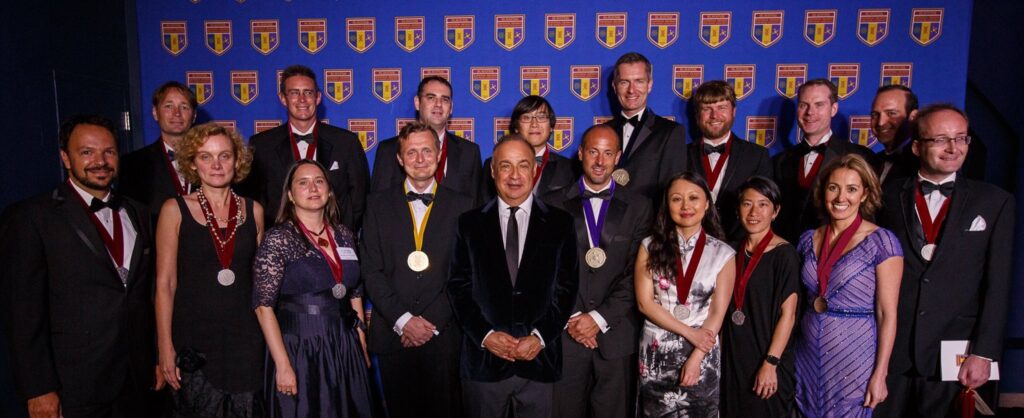
On Monday, September 15, 2014, the Blavatnik Family Foundation hosted its first annual celebration of the Blavatnik National Awards for Young Scientists, honoring the scientific excellence and innovation of 27 National Finalists and three National Laureates

Published September 15, 2014

By Diana Friedman

This event gathered over 200 guests, including members of academia, business, and media.  The guests, in black tie, were treated to an elegant evening at one of the most celebrated museums in the world, the American Museum of Natural History.  

The evening formally began as the brass ensemble of the renowned Juilliard School played a processional of Fanfare for the Common Man and New York City high school students with a passion for science served as flag holders for the grand entrance of the Finalists and Laureates into the museum’s famed Milstein Hall of Ocean Life.

Ellis Rubinstein, President and Chief Executive Officer of The New York Academy of Sciences  opened the evening with the introduction of the National Finalists and later spoke about the history of the Awards and the long-term partnership between the Academy and the Blavatnik Family Foundation.  Mr. Rubinstein then proceeded with the formal introduction of the master of ceremonies, Dr. Eric Lander, Founding Director of the Broad Institute and member of the Blavatnik Awards Scientific Advisory Council.

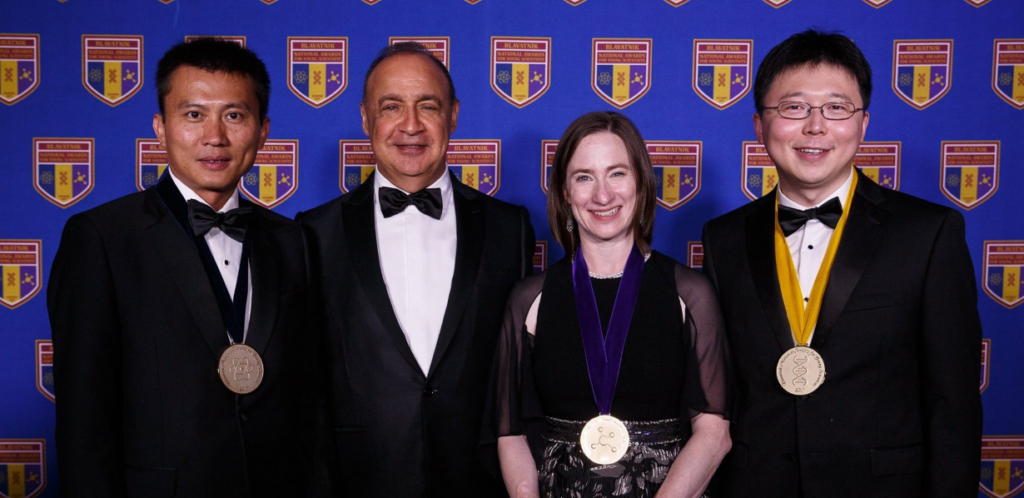
The three National Laureates: Dr. Rachel Wilson, Dr. Marin Soljačić, and Dr. Adam Cohen were introduced during the evening by Dr. Cornelia Bargmann, Dr. Robbert Dijkgraaf, and Nobel Prize Laureate, Dr. Martin Chalfie, respectively.  Each Laureate received a gold-plated custom medal from Len Blavatnik and followed with a presentation about their award-winning work.

“I am extremely happy with the success of the Blavatnik Awards for Young Scientists. We have created the support system and the selection process to recognize the best and brightest. My hope is that the awards and the Blavatnik National Laureates will make a huge impact on our society and the life of everyone in the 21st century,” said Len Blavatnik, Founder and Chairman of Access Industries and head of the Blavatnik Family Foundation.

The audience was also treated to two surprise announcements: the new Soljačić Prize for Gifted Croatian Children, established with a donation of prize money from Physical Sciences & Engineering Laureate Dr. Marin Soljačić; and a donation of prize money from Chemistry Laureate Adam Cohen to his alma mater Hunter College High School to support math and science activities.

The event was attended by Blavatnik Awards winners and finalists from previous years, members of the National Jury, and members of the Blavatnik Awards Scientific Advisory Council including Drs. Ron Breslow, Ruslan Medzhitov, and Marc Tessier-Lavigne. Other notable guests included Edgar Bronfman Jr.; Stephen Cooper, CEO of Warner Music Group; Dr. Joseph Goldstein, Nobel Prize Laureate; Ron Prosor, Israel’s Permanent Representative to the United Nations; Dr. Bruce Stillman, President and CEO of Cold Spring Harbor Laboratory; Dr. Craig Thompson, President of Memorial Sloan-Kettering Cancer Center; Dr. Jan Vilcek, Founder and President of the Vilcek Foundation, and Jeff Zucker, President of CNN.

To learn more about the Blavatnik Awards for Young Scientists, visit blavatnikawards.org.

The Critical Role of Democracy in Advancing Science

A cover shot of the publication Annals of The New York Academy of Sciences.

A look at the history and future of two groundbreaking bastions of knowledge dissemination.

Published August 1, 2014

By Gina Masullo

The cover for the September 1823 issue of Annals of the Lyceum of Natural History of New-York.

In an industry with more than 28,000 academic journals, to say that interested audiences have abundant choices for how they consume scientific information would be a gross understatement. But that wasn’t always the case. When the first issue of Annals of the New York Academy of Sciences (Annals) was published in 1823, it was one of only a handful of scientific journals, most of them unsuccessful, and it had around 100 subscribers—a number that remained stagnant for several years.

Though the interdisciplinary peer-review journal had an inauspicious start, its debut publication sparked a rich tradition of excellence and innovation in scientific publishing. Annals evolved from a resource for local scientific elites into a much respected and cited journal that’s read the world over, one of the longest continuously published scientific serials in the United States and a powerful symbol of the democratization of cutting-edge scientific information. Today, the Academy’s flagship publication, Annals has published more than 1,300 volumes over 191 years.

As the Academy began researching a variety of topics in greater detail during its first decades, its popularity grew; and, by association, so did interest in Annals. Sales of the journal quadrupled in 1939, the same year Eunice Miner was appointed executive secretary of the Academy. Miner passionately expanded the number of Academy memberships and hosted events; accordingly, Annals’ distribution increased exponentially.

By the 1960s, the Academy was sponsoring several dozen conferences a year, and distributing Annals to an audience of about 40,000. Each issue informed readers about the Academy’s conference proceedings, on topics increasingly varied and newsworthy—and a look back through its pages is a window into the challenges the scientific community has faced and overcome throughout history.

The First Large Scientific Assembly on Antibiotics

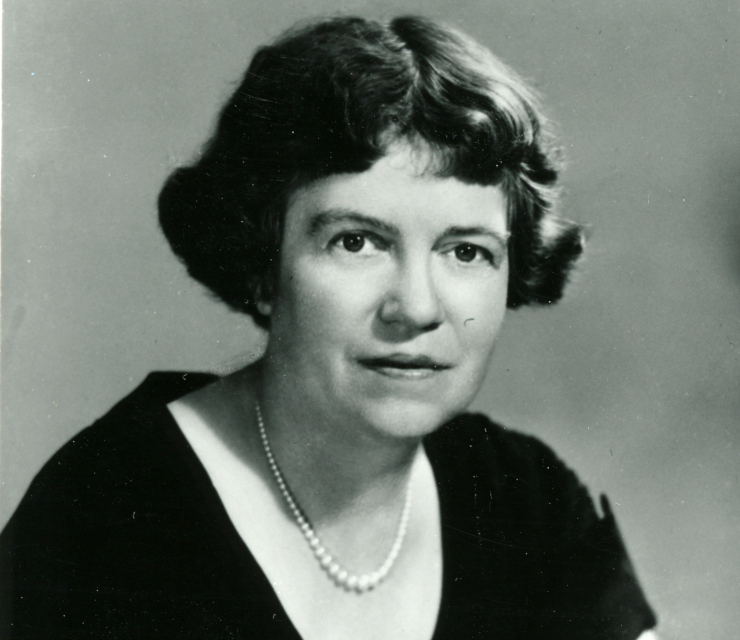
In 1946, for instance, the Academy hosted the first large scientific assembly on antibiotics, with a particular focus on combating tuberculosis. Margaret Mead published several Annals papers during her time as vice president at The New York Academy of Sciences in the 1970s; other notable contributors over the years have included Paul Ekman, Franz Boas, Edmund B. Wilson, Joshua Lederberg, and Ralph Steinman.

The Academy’s Puerto Rico survey, initiated in the early 20th century, attracted perhaps the most attention of all. Co-founder of the New York Botanical Garden (and Academy member) Nathaniel Lord Britton initiated a four-year study of the island’s geology, botany, and zoology. Starting in 1914 and including research from scientists in various sectors, the survey was the first and most comprehensive of its kind.

Reports from the island, published in Annals as well as the Journal of the New York Botanical Garden and the Bulletin of the American Museum of Natural History, were so well received that the project quickly grew in size, scope, and financial backing. By the summer of 1916, 23 research groups had visited the island to examine areas including entomology, mycology, anthropology, and paleontology. The groundbreaking project ultimately expanded to the Virgin Islands, incorporated research from an international community of scientists, and lasted more than 25 years, culminating in the publication of the multi-volume Scientific Survey of Puerto Rico and the Virgin Islands.

Expanding Scope & Reach

A cover shot of the publication Annals of The New York Academy of Sciences.

Annals has documented a large proportion of the conferences held by The New York Academy of Sciences, and, since 1981, it has covered news and discoveries from unaffiliated scientific conferences as well. With the expansion of technology and excitement for attention-grabbing efforts such as space exploration, interest in the Academy and its flagship publication continued to grow.

So, too, did the journal’s scope and reach. Annals is now available in 4,505 institutions worldwide via a partnership with the Wiley Online Library of licensed subscriptions, and in thousands of institutions in the developing world via philanthropic initiatives. During the last year (June 2013 – June 2014), Annals was the fifth-most accessed journal among Wiley’s 2,304 journals, where it received 2,283,137 visits. Google Scholar ranks the journal number 10 on its list of top health and medical science publications, in the company of esteemed publications like The New England Journal of Medicine and The Lancet.

Douglas Braaten, PhD, editor-in-chief of Annals of the New York Academy of Sciences and executive director of science publications, explains the journal’s continued relevance this way: “One of the most unique things about Annals is the ability to produce individually themed issues. We can essentially design what we publish; currently, that’s 28 individual projects per year, on varying topics—so readers really get both scope and depth into the topics.

“We also produce volumes stemming from conferences, which is one of the reasons Annals continues to be unique; we will commission papers from the invited speakers in a field from an international conference. The resulting collection of papers provides a state-of-the-art view of a topic for people who weren’t in the room. We have over a 100-year history of providing conference proceedings, the aim of which is to democratize scientific information.”

A Stellar Reputation

Also important to the publication’s stellar reputation is “a high-quality, peer-review process” and “traditional journal standards and ethics.”

Alongside its stalwart ethics, the Academy’s commitment to innovation ensures Annals’ growing influence and credibility. Within the last decade, annual reviews of specific scientific topics have become a staple of the publication.

George Uhl, PhD, chief of the Molecular Neurobiology Research Branch at the National Institute on Drug Abuse, serves as editor of the Annals series Addiction Reviews. “I don’t think there is anything like it in addiction, and I serve on several publication committees in this area,” he says. “The effort with Addiction Reviews is to try to review things that are getting to the point of being interesting rather than things that are already acknowledged by everyone as interesting, and I think that has helped the impact factor”—a statistic that calculates the average number of outside citations per article—which for this series is an impressive 13, compared to similar publications’ typical scores of two or three.

Other annual review topics include The Year in Cognitive Neuroscience, edited by Michael Miller, PhD, professor and vice chair of psychological and brain sciences at UC Santa Barbara, and Alan Kingstone, PhD, distinguished university scholar and professor of psychology at the University of British Columbia.

“Starting up an annual review in cognitive neuroscience was such an obviously brilliant idea,” explains Kingstone. “The field was nearly 20 years old, and there was a real need to provide those in cognitive neuroscience with a place to pull together key ideas on an annual basis.”

The Value of Themed Volumes

He continues, “The value of the themed volumes is evident in the impact that it has had on the field since its initial publication in 2008. As of last year, the reviews contributed to The Year in Cognitive Neuroscience have averaged 38 citations. The very first article in the 2008 edition, “The brain’s default network,” has been cited over 2,500 times. This impact rivals some of the most highly regarded journals, and demonstrates the high value the field places on these review articles to keep researchers up to date on a quickly evolving field.”

The Academy remains committed to quality of research, as well as innovation in information delivery. The number of methods the Academy uses to communicate research and ideas to the scientific community and beyond continues to grow. The 191 year-old journal has evolved from a print-only publication to a robust collection of interactive multimedia tools. Thanks to its partnership with Wiley, Academy members and institutions with Annals benefits can access every volume ever published via the Academy website; they can even read archives via a free mobile app.

eBriefings: Multimedia Science Reports

Further illustrating its commitment to bringing comprehensive, cutting-edge scientific information to a truly global audience, in 2003 the Academy introduced eBriefings: interactive, userfriendly web resources that increase the longevity and impact of Academy events. Conceived in the wake of the Academy’s interdisciplinary SARS conference, eBriefings are now a standard offering, providing the benefits of Academy events and conferences to those who are unable to attend in person.

The multimedia presentations include meeting summaries written by science writers and scientists, a selection of speakers’ slides and audio, and links to related information. Over the last decade, eBriefings have been cited by news outlets including The Wall Street Journal, US News & World Report, and Med News Today. They receive around 10,000 unique page views each month; in the last fiscal year, the presentations were accessed from more than 140 countries.

Explains Brooke Grindlinger, PhD, executive director of scientific programs at the Academy: “eBriefings offer everyone within the global scientific community access to today’s cutting-edge knowledge conveyed by world-renowned leaders in almost every discipline in science and technology. It’s your science, on your schedule, sowing the seeds for your next big idea.”

The Academy produces approximately 60 eBriefings each year; recent topics have run the gamut from Alzheimer’s disease to the use of “big data.” The online resources are presented in partnership with a global network of partners, including The Global HIV Vaccine Enterprise, The Johns Hopkins Bloomberg School of Public Health, The National Institutes of Health, and The U.S. Food and Drug Administration.

Expanding Interest in Emerging Topics

Jeanne Garbarino, PhD, director of science outreach at Rockefeller University, led an Academy panel in September 2013 titled “Crowdfunding: An Emerging Funding Mechanism for Science Research.” She explains that the eBriefing helped expand interest and research in this emerging topic: “It allowed me to connect with others who are interested in this topic, and also provided an opportunity to discuss more ways in which crowdfunding could be applied to scientific research.”

Garbarino adds, “Given the disproportionate distribution of scientific and educational resources in our nation, providing free access to high quality materials is always a good thing.”

This egalitarian approach to the dissemination of scientific knowledge is quite fitting in the context of the Academy’s history. As early as 1903, audiences filled the lecture hall at the American Museum of Natural History to hear Academy presentations on topics such as the Mount Pelée volcano on Martinique or the physical and economic aspects of Mexico. These presentations were particularly appealing because they incorporated cutting-edge technology of the time—lantern slides and stereopticon—that helped bring scientists’ invaluable research to life.

Hints Braaten, the editor of Annals: “A new contract with Wiley is reinvigorating Academy publishing and opening new avenues, such as Academy book publishing.” And as the technology and science fields continue to evolve, you can be sure that the Academy’s approach to disseminating vital information will, too, ensure that scientists and non-scientists alike will have access to globe-changing ideas and evidence for generations to come.


About the Author

Gina Masullo is a journalist in New York City.

40 Years of Advancing Science for the Public Good

A cover shot of the publication The Sciences.

The Sciences, published by the Academy for 40 years, became one of the most honored science magazines in America. The contents of the entire run of issues are now available for members to enjoy online.

Published August 1, 2014

By Peter G. Brown

A cover shot of the publication The Sciences.

In 1961, the year The Sciences was born, the Russian cosmonaut Yuri Gagarin became the first man launched into space. Roger Maris hit 61 home runs, breaking Babe Ruth’s record. Catch 22 was published. JFK and Nikita Khrushchev were in office, and one night in August the Berlin Wall was put up.

1961 was a banner year in science, too. Sydney Brenner and Francis Crick showed that the code for making the building blocks of any protein is a series of three consecutive DNA base pairs. Murray Gell-Mann and Yuval Ne’eman developed a scheme they called the eightfold way (later reformulated as the quark model) for classifying “elementary” particles. Louis and Mary Leakey discovered Homo habilis in Tanzania’s Olduvai Gorge.

In those early days, The Sciences was a modest undertaking. The first issues amounted to little more than pamphlets, four sheets of letter-size paper folded once and stapled along the spine. But The New York Academy of Sciences nurtured the project through its fledgling years, and soon major scientists realized they could communicate with the public as well as their peers by contributing to its pages. The magazine gained a reputation as a small voice of reason and authority in the world of science writing for the general public.

Early Days

My initial contact with The Sciences was a fairly typical first encounter. In 1980, fresh out of grad school, I landed in New York, where I decided to “become a science journalist.” I contacted every science magazine I could think of about “writing something.” Susan Hassler of The Sciences was the only editor kind enough to respond to my naïveté, and she took the chance of assigning me to do a brief story for the magazine’s news section. After some editorial back-and-forth, my piece was published, unsigned, but in a form still recognizable to its author. I was on my way.

Like most magazines, The Sciences developed its own “stable” of scientist-authors, artists, freelance journalists, and, of course, staff writers such as Jonathan Weiner and Robert Wright who made regular or semi-regular appearances. Among the “outsiders” (i.e., nonstaff), the most important were designated “contributing editors”—a list that included the cartoonist Roz Chast, Stephen Jay Gould, Brian Hayes, Horace Freeland Judson, Laurence Marschall, Ashley Montagu, and Hans Christian von Baeyer. Artists were drawn from every style, every era, and every culture, but favorites, at least in my day, included those who might be described as neo-surrealists, such as Fanny Brennan, Alfredo Castañeda, Odd Nerdrum, Mark Tansey, and Kit Williams.

The magazine, through the Academy, also attracted its share of noteworthy scientist-authors, among them the Nobel laureates Hans Bethe, Francis Crick, Christian de Duve, John C. Eccles, Roald Hoffmann, Leon Lederman, Peter Medawar, Norman Ramsey, Andrei Sakharov, Richard E. Smalley, and Frank Wilczek, along with such luminaries as Enrico Bombieri, Freeman Dyson, Sir Fred Hoyle, Alan Lightman, Lynn Margulis, Heinz Pagels, Oliver Sacks, Albert Sabin, Robert Sapolsky, and Edmund O. Wilson.

Assembling Eminent Scientists

Perhaps the most amazing assembly of eminent scientists associated with The Sciences gathered in fall 1996 at the Academy for a celebration of the magazine’s 35th anniversary. They included von Baeyer, the biologist and Nobel laureate Günter Blobel, the biologist Tom Eisner, the chemist and Nobel laureate Dudley Herschbach, Margulis, and the physicist/mathematician (and Fields medalist) Edward Witten. We invited these and 20 other leading scientists to list the three most important achievements of the preceding 35 years, the three advances they most expected in the next 35 years—and at least one example of their discipline’s worst mistakes.

Some responses were serious, some not so much. But what we had not expected—and what made the lists so readable—was the playful approach and sparkling wit from some of the world’s smartest people, having a very good time. You can read their responses in “A Billion Seconds of The Sciences” (November/December 1996).

The Sciences staff celebrates a National Magazine Award. Front Row, Left to Right: Emily Laber, Peter Brown, Elizabeth Meryman. Back Row, Left to Right: Levin Santos, Jeffrey Winters, Mary Beth Aberlin. Photo taken May 2000.

Amidst all the scientific royalty, the one feature for which The Sciences was perhaps best known was its use of fine art. Successful offspring have many fathers, and several former chief editors have claimed major roles in inventing or advancing what became the most brilliant design decision of the magazine’s history. In truth, though, fine art was introduced primarily to save money, not to enhance design. Commissioning original oil paintings or airbrush illustrations, as commercial magazines of the day were doing, was out of the question. Even original photography was quite expensive if it was any good. Rental fees for reproductions of paintings and sculpture, however, were quite reasonable.

Art in The Sciences

Reproductions of fine art were appearing in The Sciences by August 1966, under Samuel Burger, the first chief editor of record. Burger’s successor, Peter D. Albertson (editor, 1966–1968), introduced more sophisticated layouts, which he continued decorating with art. Subsequent editors gave an increasingly prominent role to art, until Paul T. Libassi (editor, 1981–1989)—who once held the title Fine Arts Consultant—insisted that all images come from the arts. (Even Libassi, however, found, on rare occasions, that he had to admit a diagram.) The role of art had morphed into a signature feature, chosen to complement the scientific articles rather than simply to illustrate them.      

Sometimes the interplay of science and art is straightforward yet striking, as in Rembrandt’s self-portraits from young artist to old man that accompany an article on aging in 1991 (“On Growing Old,” by Robert M. Sapolsky and Caleb E. Finch, March/April 1991). More often, though, placing artwork next to scientific text adds depth and reveals interpretive possibilities that neither the art nor the science could do alone.

The abstract patterns woven into textiles by “Anonymous,” which complement a 1996 article on the origins of the Internet (“Casting the Net,” by Katie Hafner and Matthew Lyon, September/October 1996), or Yves Tanguy’s paintings mashed up with an article on prime numbers,(“Prime Territory,” by Enrico Bombieri, September/October 1992), are two good examples of a synthesis greater than its parts.

Battle for the Bottom Line

But art, introduced as an economy, was beginning to have a substantial indirect impact on cost. Paper quality had been enhanced almost monotonically since the earliest days of The Sciences, until, by the Libassi era, the presses were running Cadillac-quality “body stock.” The paper was a fine, bright, opaque and glossy sheet, the best possible medium for reproducing art. But fine paper is costly, and it weighs more per sheet than lesser stock, which drove up postage and shipping costs as well. By the time I became editor, in late 1989, these high production values, coupled with a “book size” (the page count per issue) pushing 80, were raising red flags for the Academy’s management.

As things turned out, it was quite possible to produce a high-quality magazine with fewer pages and less luxurious materials. After a series of cuts, the issues settled in at around 48 pages each. A blue-ribbon panel of top editors and publishers, including Jacqueline Leo (at the time, the group editorial director for women’s magazines of The New York Times), the late Charles Ramond (a financial whiz with a background in advertising research), and Dick Stolley (a Time-Life wunderkind who was the founding editor of People Weekly magazine), managed to stabilize matters for several years.

But the eventual demise of the magazine never seemed in doubt. Things came to a head in early 2001, when Academy CEO Rodney W. Nichols, ever skeptical about the membership value of the magazine, cut the frequency from bimonthly to quarterly. In the end, as we now know, that lasted one issue. After nearly 40 years of publishing, the Spring 2001 issue of The Sciences rolled off the presses—with a cover story on climate change intentionally titled to convey a double meaning: “Climate of Doubt.”

There would be no summer.

More Info about The Sciences

The success of The Sciences in garnering the most prestigious awards in magazine journalism was so out of proportion to its size or budget that a year without winning or placing among the top five finalists at the National Magazine Awards was the rare exception. In the period 1985–2000 the magazine was either a finalist or a winner in the category “General Excellence (under 100,000 circulation)” in every year except 1992, 1994 and 1997. At the time of its closure in 2001, its lifetime record of seven wins put it in a four-way tie (with Business Week, Outside, and Sports Illustrated) for 11th place among all U.S. magazines

Access to ‘The Sciences’ archive is just one perk of being an Academy member. Not a member? Sign up today.


About the Author

Peter G. Brown was the editor of The Sciences from 1989 until its closure in 2001.

The Caped Crusader for Better Mental Health Outcomes

An illustration of a superhero overlooking a city skyline as his cape blows in the wind.

Andrea Letamendi, PhD, discusses the value of addressing mental health issues through the lens of beloved fictional narratives.

Published July 24, 2014

By Diana Friedman

Image courtesy of rudall30 via stock.adobe.com.

In honor of Batman’s 75th anniversary, DC Entertainment declared July 23 Batman Day. What does this have to do with science? More than you might expect, with a little imagination. For psychologist Andrea Letamendi, PhD, the Batman world, with its roster of criminally insane villains, is a fictional window onto very real issues. Her podcast series, The Arkham Sessions (named for the asylum where Batman’s enemies usually wind up after the hero thwarts their plots) analyzes characters and interactions from Batman: The Animated Series to explore subjects such as coping with trauma, mental disorders, patient treatment, and stigmatization of people with mental illnesses.

According to National Library of Medicine historian Dr. Michael Sappol, “It’s a powerful technology for forming public opinion. It [doesn’t] just reason with the audience, it recruit[s] the audience’s emotions.”  Dr. Letamendi leverages a balance between that emotional resonance and the relative security of fiction to engage her audience in consideration of challenging themes. “It’s a way to educate people about psychological science and address important topics in a way that feels safe—less threatening or less personal,” she says. “At the same time, many people feel very connected to these fictional narratives and the stories actually help us to tune in.”

Dr. Letamendi spoke with The New York Academy of Sciences (the Academy) from Comic-Con in San Diego about superheroes and psychology.

Why apply psychological analysis to fictional characters?

As a psychologist, I’m invested in broadening public knowledge about the psychological sciences. I find that one way I can do that is to speak to my passion and the passion of many others: comic books, science fiction, and fantasy. I’ve had wonderful opportunities to speak at universities and at Comic-Con and other cultural conventions to utilize these narratives that people can really relate to—the stories, heroes, and villains that people already know—to examine important health issues. It’s fun but it’s also an educational advantage.

Are there useful parallels between cartoon characters and real people?

Yes! For example, my first experience speaking on a panel was talking about how comic book heroes are actually really similar to real life heroes, specifically soldiers who have experienced combat-related trauma. I used to practice at a veterans hospital and have a lot of experience working with soldiers and veterans returning from Iraq and Afghanistan with physical and psychological injuries.

The panel was a chance to talk openly about the impact of recent wars on the people who fight in them, and how the field of psychology is struggling with how to meet the needs of the men and women coming back from those conflicts. It’s a really serious topic, but we can draw upon these fictional narratives that simulate and evoke real tensions and interests in a way that feels safe and remains relatable.

How does your series, named for the Arkham Asylum for the Criminally Insane, avoid associations between mental illness and criminal behavior?

It’s really important to us to always make that distinction. When we started the show we knew we’d be examining the psychology of a lot of villains, but we’re not just trying to come up with labels or diagnoses for them. Every episode of the Batman series has a lot of psychological elements to it. We end up talking about such a wide range of subjects—memory loss, substance abuse, anxiety, family issues, patient care and hospitalization, childhood trauma.

We speak about these issues in a way that deliberately doesn’t stigmatize, but rather helps to normalize these experiences. The result is that we’re very inclusive in a way that let’s everyone relate. We include Batman in our analyses, not just villains, and he’s a character with a lot of issues as well. My hope is that it combats the idea that people with mental health problems are villains or criminals.

Do you have a favorite character?

I like the villains who are overlooked because they’re just seen as being big and burly, like Killer Croc or Clayface. They’re like onions. When you unravel them you realize there’s a deep psychological history and trajectory there that got them to where they are [by the time you meet them in the series].

Are there lessons from Gotham City that might apply to real cities’ policies on mental health care?

There are real barriers to appropriate, evidence-based care. In big cities with diverse populations, we deal with issues of underserved populations that don’t have access to care. There are groups of people with structural and psychosocial barriers to getting care. Sometimes we struggle to provide care that’s culturally or linguistically appropriate. We need to think about all of these psychosocial elements to ensure that people have opportunities to heal.

Any parting thoughts?

It is Comic-Con week! If you’re coming, please keep in mind that you can put together a curriculum of educational panels on really interesting topics like psychology, underrepresentation, and gender equality. Comic-Con is fun and a celebration of superheroes, but it’s also an opportunity for education and to demystify and reduce some of the myth around science.

Also read: From Imagination to Reality: Art and Science Fiction

The Inaugural Blavatnik Science Symposium

Attendees listen to a lecture during an academy event.

In the eight years since its launch, the Blavatnik Awards for Young Scientists has built an exceptional collection of past and current honorees, who together represent one of the most dynamic, innovative, cross-disciplinary networks in the world – the Blavatnik Science Scholars Community.

Published July 9, 2014

By Diana Friedman

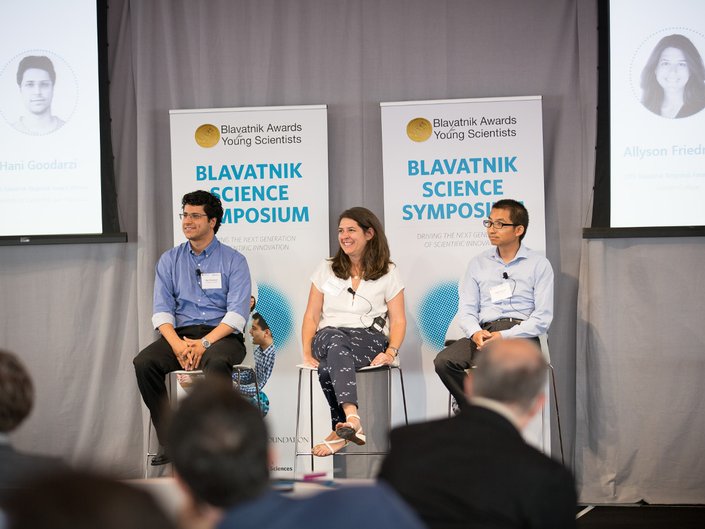
In response to Blavatnik Awards honorees interested in meeting and interacting with each other, and to showcase the high caliber of research of the Community members, the Blavatnik Family Foundation and The New York Academy of Sciences hosted the first annual Blavatnik Science Symposium to encourage networking, exchanging of ideas, and potential collaborations.

The inaugural event began with a dinner on July 8th featuring keynote speaker Dr. Marcia McNutt and was followed by a full day of presentations on July 9th.  The Symposium gathered nearly 50 members of the Blavatnik Regional Awards alumni and this year’s National Finalists. The event was attended by Len Blavatnik and other representatives of the Blavatnik Family Foundation, scientific luminaries, and representatives of the press.

Below are some of the comments from the Blavatnik Science Scholars who attended the event:

It was inspirational to learn about the breakthroughs undergoing in leading labs around the US spanning physics, chemistry biology and medicine, going from malaria to black holes, from novel technologies in energy storage and microscopes in a cell phone, to the secret codes in the cell.
—Antonio Giraldez, 2007 Blavatnik Regional Award Finalist, Professor of Genetics at Yale University.

As a young scientist, we are often too busy trying to ‘survive’ the academic life to be able to meet and discuss science with other young scientists from different fields.  In fact, such cross-fertilization of disciplines is where major discoveries are made.  The event has enabled me to discuss new collaborative projects with other attendees, which will generate new directions of research.
—Ali Khademhosseini, 2014 Blavatnik National Award Finalist, Associate Professor at the Harvard-MIT Division of Health Sciences & Technology, Harvard University.

The event was an inspiring display of scientific talent exploring some of the most important questions in the natural sciences, and a very unique opportunity to interact with peers, colleagues at the Academy, and the Blavatnik team.”
—Sarkis Mazmanian, 2014 Blavatnik National Award Finalist, Professor of Microbiology at the California Institute of Technology

Arriving at this stage of my scientific career, travel days to attend scientific conferences are a precious commodity, which are mostly spent interacting with colleagues in my own field, or even sub-field. I would never get an opportunity to spend a whole day listening to amazing talks on topics as diverse as black holes, DNA bricks and origami, materials science that is pushing limits of technology, and new frontiers of biomedicine. Being at the science symposium and interacting with colleagues I would otherwise never interact with, was like being a young science geek all over again, which is why I got into this business in the first place. I feel recharged.”
—Harmit Malik, 2014 Blavatnik National Award Finalist, Member, Basic Sciences, Fred Hutchinson Cancer Research Center.

This unique Symposium brought together an incredible constellation of top young scientists with expertise ranging from black holes to human genome. Before the meeting started, the only connection between the participants was the Blavatnik Awards. By the end of the Symposium one couldn’t help but feel to be a part of a scientific family. For me personally, it was a humbling experience to be surrounded by so much talent.”
—Ruslan Medzhitov, 2007 Blavatnik Regional Award Winner, Professor of Immunobiology at Yale University

The symposium was inspiring in terms of the depth and breadth of the presentations as well as the focus on young scientists. I was thrilled and humbled to be among such a distinguished crowd of researchers and scientists.”
—Aydogan Ozcan, 2014 Blavatnik National Award Finalist, Chancellor’s Professor in the  Electrical Engineering Department & Bioengineering Department at the University of California, Los Angeles.

I attended the Symposium to meet the Blavatnik Awards finalists and to learn about the new developments in life sciences – a field which is outside of my general research area. The reason for my interest as a physicist and mathematician in life sciences is that having progress in certain problems in this field may require combining scientific knowledge from various disciplines such as quantum mechanics, chemistry, mathematics, and biology. The symposium was most valuable because, besides the fact that all presenters were selected among most talented researchers in the field, the requirement for all was to present their results in a way that is understandable for scientists working outside of their normal domain. This goal was fully achieved.”
Alexander Pechen, 2009 Blavatnik Regional Award Winner, Academic Secretary and Leading Researcher at Steklov Mathematical Institute of Russian Academy of Sciences.

 “It was very stimulating to see so many creative and accomplished young scientists from so many different disciplines!”
—Michael Rape, 2014 Blavatnik National Award Finalist, Professor of Cell and Developmental Biology at the University of California, Berkeley.

The Blavatnik Symposium was one of the most intellectually stimulating gatherings I have attended in some time.  It was amazing fertile ground for the cross pollination of ideas. I really enjoyed it.”
—Michael Strano, 2014 Blavatnik National Award Finalist, Professor of Chemical Engineering at the Massachusetts Institute of Technology.

To learn more about the Blavatnik Awards for Young Scientists, visit blavatnikawards.org.

A Science State of Mind in the Empire State

An overhead shot of NYC.

An introduction to New York’s newest role: that of an undisputed scientific powerhouse.

Published June 1, 2014

By Sharon Begley

Image courtesy of ecst22 via stock.adobe.com.

Come, New York has long beckoned: come achieve your dreams and create what has never existed before—come build America’s first department store and largest stock exchange, her first pizzeria and first public brewery. Come make New York City the nation’s capital of finance and media and fashion, and come invent the inventions that change the way we live (air conditioning, toilet paper), the way we remember (photographic film), and the way we sing (folk rock).

Immerse yourself in neighborhoods filled with other artists and writers and thinkers who will nurture and challenge your ideas, producing the critical mass that will enable you to achieve what you cannot in isolation. Change the way an entire nation thinks, as when the abolition movement put down roots in Rochester in the mid-1800s.

Even as New York City and State have called the world’s doers and dreamers to their shores for centuries, scientists became almost an afterthought by the mid-20th century. Yes, Nikola Tesla did pioneering experiments on alternating current in lower Manhattan during the Golden Era for New York science in the late 19th century; biologists at The Rockefeller University discovered in the 1940s that DNA is the molecule of heredity; and physicists using particle accelerators at Brookhaven National Lab on Long Island in the 1960s, 1970s, and 1980s discovered some of the basic building blocks of the universe and the magical rules that govern them.

But by the post-war era, science and technology had become less central to the life, commerce, and the very identity of New York than the rising commercial behemoths of advertising, finance, law, and business.

Exulting in a Science Renaissance

Now, New York is exulting in a science renaissance. You can measure it in glass and steel, like the $350 million Advanced Science Research Center that The City University of New York is building on St. Nicholas Park in Upper Manhattan and which, when it is completed next year, will house scientists whose work will be driven by a revolutionary new way of organizing research. You can measure it in bold new collaborations, such as the New York Structural Biology Center in Harlem or the $50 million New York Genome Center in SoHo, both of which attract researchers from around the country and around the world.

You can measure it in the ways that long-established institutions are expanding their research footprint: in West Harlem, Columbia University is building an entirely new campus, allowing it to increase the size of its engineering faculty by 50%. “Never before in our city’s history has there been…so much scientific investment,” said then-Mayor Michael Bloomberg in his 2013 State of the City address.

And you can measure it in the ways that New York is hanging up “Science Wanted” signs, such as its offer of land on Roosevelt Island and up to $100 million to induce world-class institutions to build a state-of-the-art applied sciences and engineering campus. Welcome, Cornell Tech, a collaboration between the Ithaca, NY, university and Technion-Israel Institute of Technology, which has been hailed as “the most exciting economic development project our city has ever undertaken.”

“[R]eclaiming our title as the world’s capital of technological innovation.”

Only a decade ago, New York, the city as well as the state, were behind other regions with relatively well-educated populations and leading universities in attracting scientists and research funding. That began to change when Bloomberg vowed that the city would rise from the ashes of the 9/11 attacks with a more diversified economy, one in which science would take its rightful place alongside other creative, forward-looking fields. The city’s “ultimate goal,” Bloomberg said in a 2009 speech, is “reclaiming our title as the world’s capital of technological innovation.”

Just as Wall Streeters and Mad Men, as well as denizens of the diamond and garment districts, draw much of their energy and hone their competitive instincts from sheer proximity to one another in the neighborhoods where they cluster, so too have scientists formed a critical mass in New York, both upstate and downstate.

New York City is home to more students than any other city in the country. Attracted by the city’s dynamism and culture, to say nothing of the access to capital, ideas, and the growing presence of others like them, young people are streaming into New York to study, to invent, and to start technology companies; welcome, Silicon Alley. For sheer creative and intellectual energy, Paris in the 1920s has nothing on New York City in the 2010s.

In Upper Manhattan, CUNY’s Advanced Science Research Center will be welcomed to the neighborhood by the five-year old CUNY Energy Institute, the new CUNY Hub for Innovation and Entrepreneurship, and a new City College science building. A subway ride away is Columbia University’s new Mortimer B. Zuckerman Mind Brain Behavior Institute.

Spawning Science Startups

Continue downtown to the three-year-old Alexandria Center for Life Science on the East River, which has already drawn such tenants as Kadmon Pharmaceuticals, ImClone Systems, and Pfizer’s Centers for Therapeutic Innovation, and has spawned dozens of life sciences startups. With NYU Langone School of Medicine and Bellevue Hospital close by, Midtown East is as dense with biologists and physicianscientists as 6th Avenue in the 20s is with wholesale florists.

Global organizations that could have chosen headquarters in Beijing, Boston, Baltimore, or anyplace else with an abundance of science talent are lately choosing New York, including The Global Alliance for TB (tuberculosis) Drug Development and the International AIDS Vaccine Initiative’s (IAVI) AIDS Vaccine Design and Development Lab. Both leverage New York City’s status as the crossroads of the world—and the international hub of finance and communications—to carry out their ambitious missions.

New arrivals have long brought new energy and new ideas to the city, starting well before a soaring copper-and-wrought-iron lady with a torch welcomed them in its harbor. The scientific groups putting down stakes today are doing the same, igniting a research renaissance that is rejuvenating well-established institutions. The Rockefeller University, established in 1901, recently launched a Center for Genomic Medicine—which is barely two years old. And Mount Sinai Medical Center, whose roots go back to the 1850s, expanded its clinical and research space by nearly 30% last year with the completion of the Hess Center for Science and Medicine, which promotes a trans-disciplinary approach to patient-centered care.

A State-Wide Effort

The research renaissance doesn’t peter out once you leave the five boroughs. New York State, spurred in part by the need to replace lost manufacturing jobs, is making its own big bets on science and technology, and drawing national support. A dozen years after its founding in 2001, the College of Nanoscale Science and Engineering (CNSE) of the State University of New York (SUNY) has attracted more than 3,100 scientists, engineers, students, and faculty to its world-class labs, drawing researchers from IBM, Intel, Samsung, Toshiba, and many others.

Albany has not only CNSE but, as of 2010, The RNA Institute, also part of SUNY, which in turn taps the expertise of faculty at the University at Albany School of Business to develop and commercialize new biotechnology in the Capital Region. On Long Island, the Advanced Energy Research and Technology Center is leveraging $45 million from the state to bring together 14 universities, Brookhaven National Laboratory, and telecom companies—among others—to accelerate and commercialize research on solar and wind energy, fuel cells, and the efficiency and security of the electric grid.

A Scientific Powerhouse

In a collaboration that fuses upstate with downstate and medicine with engineering, the Icahn School of Medicine at Mount Sinai Medical Center in Manhattan and Rensselaer Polytechnic Institute (RPI) in Troy signed an agreement last May to build on the institutions’ respective strengths—Mount Sinai’s in biomedical research and patient care, and RPI’s in engineering and invention prototyping.

It’s clear from just a quick dive that New York has indeed reclaimed its place as a scientific powerhouse. These scientific institutions are truly astounding—and will no doubt have implications far beyond the local area.

Also read: A Region on the Verge of Discovery


About the Author

Sharon Begley is a science journalist and author in New York.

Live from New York, It’s Einstein a Go Go

A hand adjusts a knob on an audio mixing board.

Presenting science updates on Australian public radio helps to bridge the gap between continents, and spark scientific interest among people half a world away.

Published June 1, 2014

By Jennifer Henry

I am passionate about communicating science, basically to anyone who is interested. Every two months I do a call-in radio segment on a weekly science program called “Einstein A Go Go,” on public radio station 3RRR-FM in Melbourne, Australia (which happens to be my home country).

The station is not unlike The New York Academy of Sciences (the Academy)—it is a membership-based, not-for-profit organization that is supported by community sponsors and 12,000 subscribers. “Einstein A Go Go,” which airs on Sunday mornings (Melbourne time) is headed up by Dr. Shane Huntington. Huntington has a background in physics, with a specialty in photonics and imaging. The five or so other panelists on the show are equally accomplished scientists and science communicators, holding PhDs in areas spanning infectious diseases, chemistry, engineering, and quantum mechanics. The show’s aim is to discuss science and science-related issues in a friendly and accessible manner.

My brief is to cover “What’s Hot in New York Science.” I have covered such diverse topics as:

  • the fascinating ginkgo fruit, including ginkgo recipes;
  • the work of the Office of the Chief Medical examiner, particularly their analysis of the biological samples at Ground Zero;
  • the arrival of the once-every-17-years periodical cicada;
  • scientific highlights from Obama’s 2nd inauguration speech;
  • how Hurricane Sandy hit various research labs in NYC; and
  • changing pitches and frequencies in NYC’s emergency response sirens.

Preparation Is Key

When I am preparing for a show, I spend about two months looking at research breakthroughs, current affairs, or interesting presentations that I have heard at the Academy—basically seeking anything that catches my attention through the eyes of a science-interested citizen. This process starts the minute I’m off the call from the previous show. I spend a few hours researching the topic and preparing a few pages of notes, at which point I usually find I have way too much information for a 10-minute segment, then spend a while distilling it down into a page or two of bullet points.

Once show time rolls around, I tune in via streaming radio and listen to the first half hour of the show so I can be sure not to repeat any material already discussed, including breaking news stories that the other panelists may have seen in Science or Nature that week. Due to the fact that we are multiple time zones apart, the show goes to air at 11am on Sunday morning (east coast Australia time), which is either 7pm or 9pm on Saturday night in New York (depending on daylight savings).

I therefore also need to get “in tune” with the Sunday morning vibe of the show and be cognizant of any major events that took place the night before in Melbourne, such as the aftermath of a federal election, cuts to Australian science budgets, or a football grand final (equivalent to the Superbowl). If Huntington’s team (Essendon) and mine (Collingwood) have recently played each other, a few jokes usually fly…

Live from New York…

Jennifer Henry

With the words “…and after the break, we will be joined by Dr. Jennifer Henry, live from New York…,” they cut to a track, and I call in via Skype. Huntington picks up my call, we have a quick chat to test the sound quality, and he puts me on hold until the track finishes. He then says “…and joining us now on the phone from New York, we have Dr. Jennifer Henry, director of Life Sciences at the New York Academy of Sciences. What’s happening over there, Dr. Jennifer?”

And off I go. I try to make my segment as natural, chatty, and conversation-like as possible. I talk my way through the topic using my prepared bullet point notes to keep the facts straight. After a few minutes, the other panelists contribute their thoughts (which gives me the chance to catch my breath, and gives me guidance on what angles they, as representatives of the citizen-science community, find interesting about the topic). It can be rather like an exam, as the panelists throw in unexpected questions and I have to hope that my preparation was sufficiently broad to get me through this phase of the segment.

Answering the Right Questions

“How does the life span of the periodical cicada differ from those of the cicadas we see every summer in Australia?”

“How did the coroner’s office handle processing the remains of the terrorists alongside those of the victims?”

“Is there evidence that New Yorkers no longer take emergency response sirens seriously?”

This is where my notes come in handy—hopefully the panelists’ questions touch upon issues that I have researched. At times, however, I am caught by surprise if they ask an unexpected question or one from way out of left field. All I can do then is make an educated guess, or ask the panelists if they have an opinion (which they invariably do).

Advancing Science for the Public Good

We then wrap up the segment, vow to do it all again in two months, and I get off the call with a huge sigh of relief. I walk to the other end of the apartment, where my husband has usually been hiding out in the bedroom to give me some privacy on the call, and he says “How did it go?” My response is almost always “Fine…I think.” It takes at least half an hour to get over the ordeal.

So why do I subject myself to this grueling mini-exam every two months? Wouldn’t I rather spend my Saturday evening relaxing? Yes, it’s work, and it’s often difficult to find the free time to select and research a topic, but, like all things that require effort, the feeling of achievement when it’s all over makes it well worth it. I love the feeling of international science connectivity. Furthermore, I love that, even though my fellow panelists, the listeners, and I can all read the same material in Science or Nature, I can hopefully bring an extra, more personal dimension to the issues with an on-the-ground New York perspective.

I also love spreading the word about the Academy’s mission, and hope that this might propel listeners to visit our fabulous website, listen to our extensive range of eBriefings and podcasts, read our regularly-updated blog and archive of Annals, and possibly also become a member of our truly international network.