The Anthropic View of the Universe

A colorful shot of the galaxy.

According to Leonard Susskind, the universe we know might be just one crude but carefully balanced case among a host of different universes, each with its own physical laws.

Published June 9, 2006

By Sheri Fink, MD, PhD

Sponsored by: The New York Academy of Sciences and Little, Brown & Co.

Image courtesy of Maximusdn via stock.adobe.com.

Stanford University professor Leonard Susskind has had an illustrious career in theoretical physics. He is known as a “father of string theory”—the idea that everything, at its most minute scale, is made of combinations of vibrating strings. String theory began as a search for a unified theory capable of reconciling quantum field theory with general relativity, but has expanded in recent years and has caused a major shift in theoretical and experimental physics.

In his recent popular science book, The Cosmic Landscape: String Theory and the Illusion of Intelligent Design, Susskind addresses some startling recent developments in string theory, and on April 10, 2006 he took the podium as a part of the Academy’s Readers & Writers series to discuss why these ideas are making such waves in the physics community.

Susskind’s book deals with the meeting of two controversial ideas. One is the anthropic principle, which suggests that our corner of the universe is perfectly tailored to our existence—otherwise we would not be here to observe it. The other is string theory’s prediction of the “multiverse,” a giant, diverse universe with a rich landscape of “pocket universes,” each governed by its own laws of physics. The expansive possibilities of the multiverse provide a plausible explanation for the unlikely perfection of our own, relatively small, universe.

The Not-So-Elegant Universe

The array of elementary particles that determine the properties of atoms has grown in recent years. Electrons, photons, quarks, gluons, Z bosons, and neutrinos are just a few of the many elementary particles thought to exist. “It’s a rather large list,” said Susskind. “It’s hardly the kind of list that a minimalist would have invented.”

There is no particular reason known for the existence of these particles. Some of them, however, are requisites for life. For example, atoms need to contain electrons, which are held in the nucleus by the force of photons jumping back and forth from the electron to the nucleus. The nucleus, in turn, is held together by gluons jumping back and forth between quarks.

“To me the whole thing does not look like the product of an elegant mathematical theory,” said Susskind. “It doesn’t look like beautiful numbers like e or pi or √2; instead, it looks like a Rube Goldberg machine! It looks like something that was designed by a rather poor engineer for some purpose. While it works, it’s hardly elegant.”

Aside from particles, the existence of certain forces has allowed life to evolve. Some seem finely tuned such that if the values were slightly bigger, life could not exist. Take gravity, for example—a force 42 orders of magnitude weaker than the electrical force. If it were even one order of magnitude stronger, “the universe would expand and recontract in a much shorter time than it would take for evolution,” said Susskind. “Instead of being filled with galaxies, the universe would be filled with black holes. Even if an earth did form, it would not last very long. It would just have been sucked right into a black hole.”

The Puzzle of the Cosmological Constant

The weakness of gravity, the existence of just the right motley set of particles to form the building blocks of life—are these facts enough to cause physicists to abandon their quest for mathematical elegance and shift to embrace the anthropic principle? No, said Susskind, there is still the possibility that they arose by chance. “But there is one fine-tuning of nature, one accident, one conspiracy we might call it, which is so extraordinary that nobody thinks it’s an accident.”

Even the greatest of scientists have been prone to second-guessing. Einstein was not immune. He posited the existence of the “cosmological constant”—the energy density of empty space, which, if positive, gives rise to a repulsive pressure that counteracts gravity. While he later abandoned the concept, it did not disappear completely. “This is a case of Pandora’s Box,” said Susskind—once the lid had been raised on the idea, scientists could never explain it away.

The cosmological constant is also known as vacuum energy. In quantum theory, the continuous agitation of a vacuum creates energy, leading to the outward pressure that the cosmological constant describes. However, when physicists combine the theory of elementary particles with the theory of gravity and use quantum field theory to calculate the cosmological constant, they derive a gigantic value; if it existed, such a large amount of energy would conflict with astronomical observations and would be disastrous. “It would be enough not only to shatter the earth, it would be enough to shatter every atom and molecule,” said Susskind. “Every nucleus, every quark would go flying apart.”

More Mystery Around the Cosmological Constant

Nothing in known physics explains why the cosmological constant is not the size that quantum field theory predicts it to be. Physicists at first surmised that other particles and constants contributing to the calculation of vacuum energy must cancel out the large value, leading to a cosmological constant that is exactly zero.

In 1987, physicist Steven Weinberg proposed another idea. Physicists believe that gravity forced the bland early universe to differentiate into planets and galaxies by squeezing and contracting slightly denser regions of matter and sucking mass out of less dense regions. Weinberg showed that the cosmological constant must be extremely small—on the order of 10−120 units (joules/cm3)—to prevent a repulsive force from counteracting this process.

“A cosmological constant even ten times bigger than this would have been destructive and deadly to life,” says Susskind. “It would have prevented the creation of the home of life—stars, galaxies, and especially planets.” Using the anthropic principle, Weinberg made a prediction. While life depends on the cosmological constant being smaller than 10−120 units, the value does not need to be very much smaller than that. So, he predicted, if the value of the cosmological constant is determined by the existence of life, then its 121st digit will be a number other than zero.

Several years ago, the 121st decimal place of the cosmological constant was measured through cosmological observation; its value appears to be 2 instead of 0. To Weinberg and to Susskind, this confirmation of the earlier prediction is the best support for the anthropic contention that “some features of our own existence determine certain things about the laws of nature.”

Explaining the Appearance of Design

What else, besides an intelligent designer, could have tailored the universe to fit the needs of planets and people, including unlikely features that defy current mathematical prediction? Susskind’s answer lies in string theory—a mathematical model of nature to which many, if not most, physicists now subscribe.

String theory makes sense in 10 dimensions of space, not our usual three. The extra six-dimensional spaces are known as Calabi Yau or CY spaces. “These spaces control all the properties of the world in a large scale,” said Susskind.

“The (elementary) particles have to be able to fit into these spaces. If they fit, then they’re allowable particles. If they don’t, they’re not allowable. All the laws of nature and string theory are controlled by these features of these CY spaces.” There are about a million different CY spaces, or “manifolds.” Each one can be decorated with “little lines of flux that can wind around them in many, many ways,” said Susskind. “When you start counting up all the possible ways the CY manifolds can be decorated with these fluxes, the numbers are humongous.”

Thus, string theory allows for a landscape of possible universes “so rich that it appears there may be as many as 10500 different environments that can be described.” The number of possibilities is so large that it can compensate for the incredible unlikelihood of the cosmological constant being so exceptionally small.

Do these alternate universes actually exist outside of the realm of possibility, or is the universe everywhere the same as it is here, in all the places we can measure it? Nobody knows the answer yet. What is known is that the universe is far wider than the 10 billion light years across that it was once assumed to be.

Inflationary Cosmology

The school of inflationary cosmology holds that the universe is expanding at an increasing rate. An exponential and perpetual expansion would be possible if, as the universe expanded, new bits of space formed to fill interstitial spaces. The theory of eternal inflation suggests that as the universe grows, bubbles of alternate types of space appear.

“If a bubble is too small, it will melt back into the environment,” said Susskind. “If it happens to grow a little bit, it will then start to really expand.” Within that expanding bubble, more bubbles will form. “It creates this enormous diversity of different properties and in some tiny, tiny fraction of it, perhaps a comfortable little green neighborhood appears where life can exist. That’s where we are.”

Because physics has long posited a world controlled by elegant mathematics, the anthropic principle and the multiverse represent a fundamental shift in the way that many physicists and cosmologists view their fields. In fact, Susskind’s theories have drawn the ire of some prominent scientists. Stanford professor Burton Richter, winner of the 1976 Nobel Prize in Physics, has accused Susskind of having “given up” on the effort to find a theory that explains all the properties of fundamental particles and forces, bringing to an end the “reductionist voyage that has taken physics so far.”

Creationism

Religious figures, on the other hand, abhor Susskind’s views because they contradict the idea that God created the universe. The Roman Catholic cardinal archbishop of Vienna, Cardinal Christof Schonborn, wrote in The New York Times that the multiverse hypothesis was “invented to avoid the overwhelming evidence for purpose and design found in modern science.”

Susskind, for his part, seems to relish the controversy. “Paradigm shifts, serious ones, raise people’s anger, raise people’s passion. They are threatening,” he said. “The anger, the passion, the fighting spirit that goes with these questions is extremely intense.” The fact that Susskind’s ideas have aroused such emotion reflects the great attention that is being paid to this new way of looking at the universe.

About the Speaker

Leonard Susskind, PhD, grew up in the South Bronx, where he worked as a plumber and steam fitter during his early adult years. As an engineering student at the City College of New York, he discovered that physics was more to his liking than either plumbing or engineering. He later earned a PhD in theoretical physics at Cornell University.

Susskind has been a professor of physics at the Belfer Graduate School in New York City and at the Tel Aviv University in Israel. He has also been the Felix Bloch Professor in theoretical physics at Stanford University since 1978. During the past forty years he has made contributions to every area of theoretical physics, including quantum optics, elementary-particle physics, condensed-matter physics, cosmology, and gravitation.

In 1969 Susskind and Yoichiro Nambu independently discovered string theory. Later on, Susskind developed the theory of quark confinement (why quarks are stuck inside the nucleus and can never escape), the theory of baryogenesis (why the universe is full of matter but no antimatter), the Principle of Black Hole Complementarity, the Holographic Principle, and numerous other concepts of modern physics. He is a member of the National Academy of Sciences and the American Academy of Arts and Sciences.

Also read: Cosmic Chemistry and the Origin of Life


About the Author

Sheri Fink is the author of War Hospital: A True Story of Surgery and Survival (PublicAffairs, 2003). Fink obtained her MD and PhD in neurosciences at Stanford University and now, based in New York, writes about medicine, public health, and science for a range of publications.


Strategies from Successful Women Scientists

A gloved hand handles a blue liquid in a beaker in a science lab.

Author and former scientist Ellen Daniell discussed how participating in a small problem-solving group can lead to success in academic and other careers.

Published May 25, 2006

By Leslie Knowlton

Sponsored by: The New York Academy of Sciences and Yale University Press.

Image courtesy of sutlafk via stock.adobe.com.

Almost 30 years ago, Ellen Daniell, then an assistant professor of molecular biology at the University of California, Berkeley and the first woman in her department, joined a small bimonthly group of faculty, staff, and postdocs formed to reduce isolation and foster solutions to professional and other problems, including gender equity issues.

Today she credits the seven-member “Group” of high-achieving women, several of whom are well-known scientists, for seeing her through several difficult transitions, including being denied tenure at Berkeley, establishing herself in another career in business, and retiring from that to be a writer and enjoy her own interests.

In her book, Every Other Thursday: Stories and Strategies from Successful Women Scientists, Daniell tells the story of her experience with Group in an effort to help others form similar alliances. In her March 14, 2006, talk at The New York Academy of Sciences (the Academy), she explained the effect of Group on her life, saying, “I strongly believe I have made more satisfactory decisions and choices because I’ve talked out the possibilities, as well as the frequently apparent impossibilities, with Group.”

She also recommends this kind of organization to others not only in academia but also in a variety of professions, activities, and stages of life.

Common Concerns

Reading from her book’s preface, Daniell gave representative perceptions expressed by Group members, ingrained ideas and feelings that inhibit many women in many professions from achieving their full potential. They include

  • Maybe having a fulfilling personal life is incompatible with a successful career.
  • I feel like I’m an emotional cafeteria responding to what others want.
  • I feel responsible for everything but have no power to change anything.

Women also have trouble with recognizing personal achievements and taking credit for them. “It starts with forgiving mistakes … and moves from self-acceptance to self-appreciation and then to celebrating accomplishments.” This process requires developing a sense of entitlement. Group jokes that sometimes you have to say, “Maybe I AM the Queen of Sheba.”

After they learn to give themselves credit, it is important for women to take credit publicly when credit is due to them. This is important because in most pursuits, advancement and job satisfaction are affected by the image one presents to others. “We’ve worked long and hard on this while in the phase of careers when struggling to succeed and be recognized, and then found another puzzle—that of how to act as successful as we really are, without being dismissive of others.”

Another problem seen frequently in Group has been being able to make choices with a belief in the right to make them. “Change is stressful, no matter how desirable it is, and many support groups function primarily to help members through times of change and turmoil,” Daniell said. Some efforts are of the “egging-on” variety, giving encouragement to get on with a choice that’s already made. But most of the focus is on helping each other recognize when there are choices that can be made and figuring out how to make them.

How Group Works

Meetings are held evenings at homes of Group members, with the host of each session acting as facilitator. Group keeps a fixed bimonthly schedule, regardless of who can attend a particular session, and follows a set framework to ensure that everyone has an opportunity to speak, work, and listen.

First, the facilitator asks who wants to work on particular issues and how much time each person needs. The facilitator keeps track of the time requested and when that time is up, she asks if the person working wants more time. “Thinking about what you want to discuss and how long you think it might take both to describe the issue and to get feedback that you want is pretty good practice for assessing and asking for what you want outside of Group,” said Daniell.

While members, after becoming very good friends, now discuss personal issues, such as retirement, health, grandchildren, and aging parents, professional concerns still predominate. Members listen very closely, saying nothing until the speaker requests feedback, at which time other members give an honest appraisal of both the issue presented and solutions to it. “We try very hard not to make nice and not to say what it is that we think the person working wants to hear,” Daniell explained.

Eliminating Negative Self Perceptions

To help identify problems, Group raises “pig alerts” in response to certain kinds of statements. A pig is a “negative self-perception, an external judgment that you lay upon yourself and then use to defeat practically anything that you’re trying to accomplish.” They are frequently identified by the words always or never or by personal characteristics, such as being lazy or disorganized. Members attempt to replace pigs with a positive view.

For example, instead of saying, “I have so many papers lined up to be written because I’m lazy or disorganized,” one might change one’s perception by saying, “There are papers lined up because I’ve gotten so many interesting research results from my hard work.” This allows the person with the pig to overcome the negative characterization and address the problem.

After identifying a problem, Group creates a strategy to solve it. Members often make a contract, which includes a concise formulation of objectives, either immediate or long-range, to solve a problem or reach a goal. The contract should be “doable,” recognizing that it is often necessary to break large problems into the many small ones of which they are composed. A benefit of contracts is that often an apparently new issue may relate back to a previous contract. “By using this mode of thinking about something in terms of a contract,” Daniell advised, “you may find connections among various issues that at first didn’t seem connected.”

After work is done, members have refreshments and give each other strokes, positive statements about someone else. Stroke etiquette requires that in receiving a stroke one try to absorb and believe it, or just say you believe it. “It’s easier to give strokes than to get them at first, but once you get into it, they are really quite delicious.”

The Membership

Daniell noted that her book was written with the review and approval of all members, including Christine Guthrie, Carol Gross, Judith Klinman, Mimi Koehl, Suzanne McKee, and Helen Wittmer, each of whom let her struggles and fears be presented to motivate and help others. Women frequently cite isolation and marginalization as reasons that they avoid or get out of science and engineering at major research institutions, she said. They are also underrepresented relative to men in top faculty positions. Daniell sees her book as a way to help those women realize their potential.

Concluding her talk, Daniell said Group helps “alleviate the sense that you’re swimming with sharks and does so in an atmosphere of complete confidentiality—a place where everybody is truly on your side.” Along with practical support comes compassion and humor. In her experience with Group, pig images have become humorous symbols of struggles. All members have collections of ceramic, wood, and glass pigs displayed in their homes, along with pig bookends, plush stuffed pigs, pig earrings, and pig socks. “In contrast to the mental pigs that threaten our well-being, these little tangible pigs are a benign species that remind us to treat ourselves with compassion.”

About the Speaker

Ellen Daniell is a writer and consultant. She graduated from Swarthmore College in 1969 with high honors in chemistry and received her PhD, also in chemistry, from the University of California, San Diego. She was assistant professor of molecular biology at the University of California, Berkeley, and has held management positions in human resources and patent licensing in the biotechnology industry.

Also read: Supporting the NeXXt Generation of STEM

Architecture as Inquiry for the NYC Public

Corner Plot is a new public art piece that challenges the public’s perceptions of personal space, after challenging its installers.

Published May 7, 2006

By Adelle Caravanos

At first glance, it’s hard to decide whether the white-bricked corner that juts out of the sidewalk at Fifth Ave. and 60th St. represents the ruins of a building that has sunken into the earth, or a chunk of something alien that has dropped from the sky. Either way, Sarah Sze’s art installation, Corner Plot, is a piece that puzzles passers-by at Central Park’s Doris C. Freedman Plaza, at the southeast corner of the park. What does it mean? And more practically, how did it get there?

The simplest explanation of Corner Plot is that it is a replication of the corner of 785 Fifth Ave., the apartment building diagonally across the street from the site of the installation. The “corner” of the building appears to pierce the grey cobblestone of the sidewalk, revealing about five feet of brick facade, and allowing for a view inside an apartment on two sides. Through the window one can see evidence of life: books, a large leaf from a plant, an iPod, a microscope (did a scientist live here?). The disheveled collection implies that the inhabitant left in a hurry — but then, you would too, if your building was sinking into the ground.

The piece is built roughly to the scale of the original building — and it extends five feet into the ground, according to Anne Wehr, communications director of the Public Art Fund, which commissioned Sze’s work and has been sponsoring installations at that spot for more than 20 years.

Instructions for Installation

Sze began working on the bottom of the piece, or the “basin,” in her Manhattan studio. The basin is composed of fiberglass and aluminum, and is actually three separate pieces that Sze connected on site. Items inside are attached to surfaces with epoxy and tape.

The outer part of the installation, a fiberglass and aluminum frame covered by a white brick and mortar facade, was built under Sze’s supervision at an industrial plant in Philadelphia and shipped to New York last week.

The excavation of the plaza began on Tuesday, April 25th, but was delayed a day because the diggers came across an unexpected slab of concrete that their machines could not get through. “It wasn’t on anybody’s plans,” says Wehr, who thought that the slab was most likely the remnant of a former Public Art Fund project.

With the proper equipment, digging was resumed on Wednesday, and by the end of the day, there was a five-foot deep hole ready to accept a chunk of a building. Early Thursday morning, the basin pieces and the facade were delivered. Sze spent all day on site, joining the basin pieces and adjusting items inside the piece that had been jostled thanks to city potholes. By 9:00 pm, Corner Plot was lowered into the hole. Electricians from Con Edison spent the next day wiring and connecting the sunken apartment’s various light fixtures.

However you decide to interpret Corner Plot, Wehr says it’s easy to agree that the piece is about discovery. Stumbling onto the work can be like uncovering the ruins of an ancient city, or discovering a meteor that has fallen to Earth. “It raises questions about the relationship between man-made and natural processes,” says Wehr. And those are questions that resonate with scientists and artists alike.

Also read: Art and Science at the Academy

The Art of Sci-Fi: 80 Years of Movie Posters

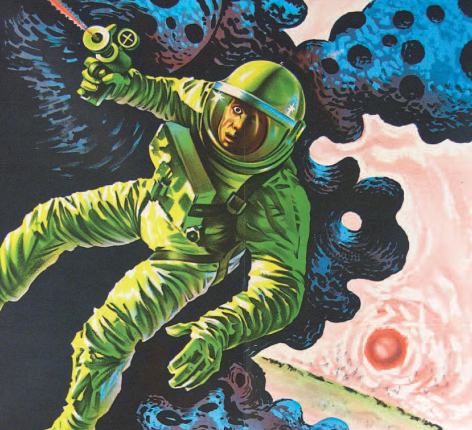
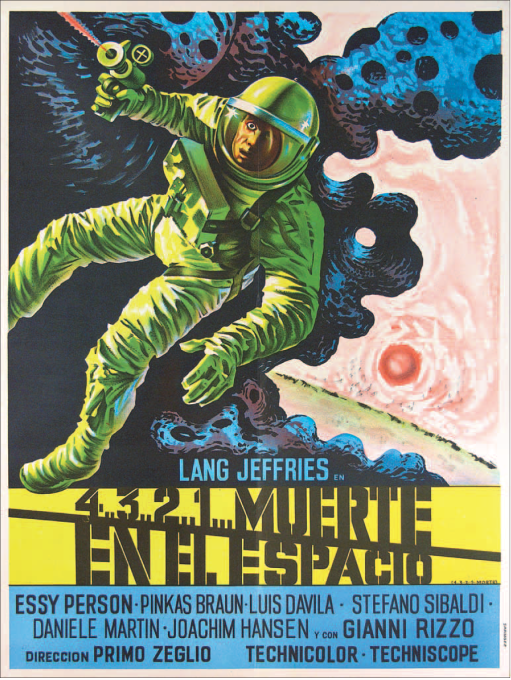
An illustration of an astronaut shooting a ray gun.

A new art exhibit combines art and science as it explores 80 years of science fiction movie posters. See the styles of different artists from Argentina and the United States to Germany and Japan.

Published May 1, 2006

By Fred Moreno

Ever since science gave birth to the cinema more than a century ago, the link between the two has often been intimate and exciting – and sometimes rather disturbing. Sort of like the relationship between Dr. Frankenstein and his creation. Countless movies have featured aspects of science and technology, both credible (or almost so) and fantastic (mostly). Just as fanciful is the varied collection of absurdly mad or strangely saintly scientist “heroes” that have populated the movies over the years.

Numerous studies have shown that movies are a major source for what the general public thinks about science and scientists. And just as the films themselves have influenced societal perceptions, so too have their movie posters. With its images of heroic sacrifice, spaceships, other worlds, and scientifically engendered creatures, the movie poster has produced some of the most iconic visual signposts of our time.

Coming Attractions! 80 Years of Cinematic Science: Movie Posters from Around the World, an exhibition in The New York Academy of Sciences’ (the Academy’s) Gallery of Art & Science through June 30, brings together posters for more than 25 movies, including examples from such countries as Argentina, Germany, Japan, Russia, Great Britain, Italy, Poland, and the U.S., among others.

The exhibit includes a British poster for the rerelease of Fritz Lang’s Metropolis; one from France for the American eco-drama, Soylent Green; and an Argentinean poster for the Italian film Mission Stardust. Also represented will be posters for such true-to-life dramas as Inherit the Wind, the thinly disguised rendition of the 1925 Scopes “monkey trial,” and a poster for the glossy American tribute to the medical profession, Not as a Stranger.

Visual Lures

All works in the exhibition come from Posteritati Movie Posters, a New York gallery specializing in international movie art. It has more than 12,000 posters in its collection. The works are used courtesy of Posteritati owner Sam Sarowitz.

“Some of the world’s most talented illustrators, painters, art directors, and graphic designers have produced movie posters,” said Tony Stinkmetal, a filmmaker and screenwriter who is serving as curator for the Academy exhibition. “They have used their fertile imaginations to give us a visual impression of both today’s world and tomorrow’s possibilities while, at the same time, luring us into the theater.”

Mr. Stinkmetal noted that the posters in the exhibition reflected a variety of styles and designs, but that similarities in approach were discernible in works from the same country.

“American and British posters tend to be more direct and traditional, such as the masked surgeon in the Not as a Stranger poster,” he said. “On the other hand, more abstract and conceptual treatments are typical of Eastern European illustrators, such as the cosmic bodywork in the poster for Innerspace of Polish artist Andrzej Pagowski or the stark metallic automaton in the Czech poster for The Terminator.”

Also read: From Imagination to Reality: Art and Science Fiction

Shining the Spotlight on Science’s Stupendous Stars

For evidence of how serious scientific themes seem to be stealthily making their way into popular entertainment, look no further than this week’s Tribeca Film Festival.

Published April 30, 2006

By Adrienne Burke

From the goofy to the grieving, scientists are major characters in seven new films at the festival this year, including romances, biographies, and documentaries. In the romantic comedy, Kettle of Fish, Gina Gershon stars as a fetching amphibian behaviorist who moves in with an aging playboy (Matthew Modine). A team of international scientists visits the desert to document the solar eclipse in House of Sand. Spanish physicist and photographer Santiago Bergson mourns his work on the Manhattan Project in The Mist in the Palm Trees. And the short film, Chicxulub, weaves a story of a family’s loss of a child around a meteor collision that wiped out 75 percent of life on Earth 65 million years ago.

Three documentaries being screened at the festival are also based on scientific themes: Who Killed the Electric Car?, Flock of Dodos: The Evolution Intelligent Design Circus, and the SciFi Boys, in which three filmmakers recall the childhood memories of Famous Monsters Magazine that influenced their adult cinematic endeavors.

Several of the science-themed films showing were made with the support of New York’s Alfred P. Sloan Foundation, which initiated a nationwide program nine years ago to encourage artists in film, theatre, and TV to create more realistic and entertaining depictions of science and scientists. House of Sand, which will make its New York premiere at Tribeca, won a $20,000 award from Sloan at the Sundance Film Festival earlier this year.

Science Screenplays

Earlier this month, Sloan and the Tribeca Film Institute announced that screenwriters Kenneth Lonergan, Dan Zeff and Nicole Perlman have been selected to participate in the Tribeca/Sloan Screenplay Development Program, which encourages the development of scripts with scientific and technological themes or characters. The writers will have the chance to consult with renowned scientists about the scientific content of their scripts, and their respective scripts will be showcased in reading events during the festival.

Perlman’s screenplay, Challenger, examines Richard Feynman’s role in the investigation into the 1986 space shuttle explosion. And Zeff’s screenplay, Project Mustard, is a comic imagining of what would have happened if the British entered into the 1960s race between Russia and the United States for the moon. At a special Sloan event, Judd Hirsch will play the role of Feynman in a dramatic reading of Challenger, and Hugh O’Conor and Aimee Mullins will read from Zeff’s script, followed by a panel discussion with CNN’s Miles O’Brien, former NASA Director Robert Frosch, and NPR’s Science Friday host Ira Flatow.

More Science Screenplays

Lonergan will adapt his play The Starry Messenger for the screen. The play, about a frustrated 43-year-old astronomy teacher who works at a non-research university in New York and teaches night classes to adults at the Hayden Planetarium, is scheduled to debut on Broadway next April.

Matthew Broderick, J. Smith-Cameron, John Gallagher Jr. and Stephanie Cannon will read excerpts from the script during a private reading during the festival. The reading will be followed by a panel discussion, moderated by journalist John Hockenberry, examining the effect the study of the cosmos has had on human culture and consciousness. Panelists include Lonergan and David Pankenier, a professor at Lehigh University and member of INSAP, a forum through which artists, historians, philosophers, and scientists discuss the diversity of astronomical inspiration.

At another Sloan-hosted event, The Biology of King Kong, ABC News correspondent Robert Krulwich moderates as animal behaviorist Roger Fouts and biologist Amy Vedder chat with 2006 Academy Award winning special effects man Joe Letteri about creating realistic animals for the big screen. With King Kong, Letteri rendered one of the most realistic monsters in cinematic history, but just how accurate was that giant gorilla?

This question and more will be answered at the festival.

Also read: The Art of Sci-Fi: 80 Years of Movie Posters

The Road to Discovery in 20th Century Science

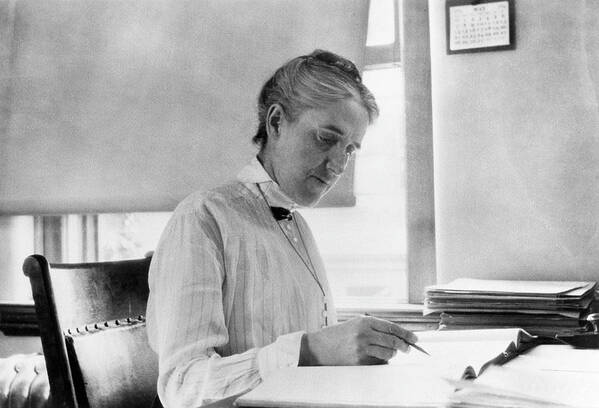
A black and white photo of a 20th century female scientist reviewing paperwork.

For author Alan Lightman, reading landmark scientific papers provides a window into the lives and intellectual adventures of the men and women behind the 20th century’s most influential ideas.

Published April 14, 2006

By Karen Hopkin

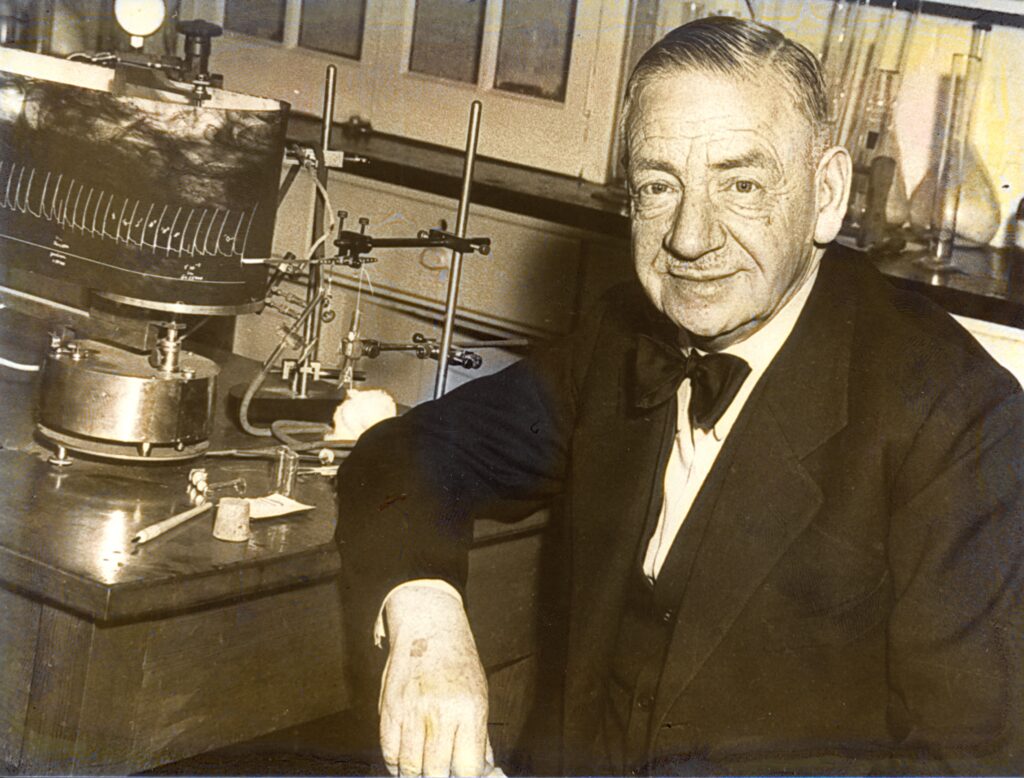
Otto Loewi. Image courtesy of Institute of Pharmacology, Graz, CC-BY-SA-3.0-DE, via Wikimedia Commons.

The key experiment came to him in a dream. It was 1921 and Otto Loewi, a German pharmacologist, was looking for a way to determine how nerve cells communicate. Was the signal conveyed from one neuron to the next—or from a neuron to a muscle or organ—electrical? Or was it chemical?

The scientist awoke, jotted down his musings on a slip of paper, and went back to sleep. “It occurred to me at six o’clock in the morning that during the night I had written down something most important,” he later recalled, “but I was unable to decipher the scrawl.”

From Dream to Nobel Prize

Fortunately, the idea returned the following night. That time, Loewi must have written more legibly, because he was able to carry out his Nobel Prize-winning experiment that day. He dissected the hearts from two frogs and placed them, still beating, into separate dishes of saline solution. Loewi then stimulated the vagus nerve he’d left attached to the first heart. As expected, the heart slowed its beating.

Now here’s the elegant part. Loewi took some of the solution bathing the first heart and poured it over the second heart, from which he’d stripped the vagus nerve. This heart, too, slowed, proving that the message transmitted by the vagus nerve was chemical in nature. The compound, which Loewi called “Vagusstuff,” turned out to be acetylcholine, a neurotransmitter found widely throughout the nervous system.

For Loewi, the experience suggested that “we should sometimes trust a sudden intuition without too much skepticism.” And for Alan Lightman, physicist and author of The Discoveries: Great Breakthroughs in 20th Century Science, the story illustrates how scientists think, and reminds us that science is a process of exploration carried out by human beings.

Hearing the Scientist’s Voice

Over the years, Lightman has come to realize that scientists rarely read original research papers, perhaps because they view science as being all about the bottom line. “If science is an explanation of the way that the world behaves, then you don’t need to know how you got to that understanding,” says Lightman. “You just need to know the facts, ma’am. And that’s all that matters.”

That view, although valid, is limited, Lightman told an audience at The New York Academy of Sciences (the Academy) on January 31, 2006. “You can read a textbook on the theory of relativity and you can understand relativity,” he says. “But you don’t understand the mind of Einstein. You don’t hear his voice.”

To remedy that loss, Lightman assembled The Discoveries, a handpicked collection of 22 of the greatest ideas and experiments in 20th century science. Lightman asked his scientist pals—physicists, chemists, astronomers, biologists—for recommendations and then winnowed down the resulting list to the two dozen stories he presents in the book. For each discovery—from Werner Heisenberg’s enumeration of the uncertainty principle to Barbara McClintock’s revelation that genes can jump from one chromosome to another—Lightman provides a guided tour to the original paper along with an essay on the life and times of the scientists involved.

Measuring the Distance of Stars

Henrietta Leavitt. Image via Wikimedia Commons.

Among Lightman’s favorite tales is that of Henrietta Leavitt’s development of a method for measuring the distance to the stars. Leavitt was hired in the late 1800s by Edward Pickering, director of the Harvard College Observatory, to pore over photographic plates and calculate the positions and brightness of thousands of stars. As one of the cadre of women that formed Pickering’s low-paid battalion of human “computers,” Leavitt was expected to “work, not think,” says Lightman. “But some of the women disobeyed him, and Henrietta Leavitt was one of those.”

Through painstaking measurements, Leavitt uncovered a relationship between the periodicity and luminosity of the Cepheids, a group of stars that brighten and dim in predictable cycles that vary between three and 50 days. Leavitt found that the longer a star’s period, the greater its intrinsic luminosity, and that knowing how bright a star is allows one to calculate how far away from Earth it lies. Thus the Cepheids, which are scattered throughout the night sky, could serve as cosmic beacons by which astronomers could gauge distances in space.

Leavitt’s work laid the foundation for many of the astronomical discoveries that would follow, including Hubble’s determination that the universe is expanding. Yet the scientist remained uncelebrated in her lifetime. “Even today there are very few people who’ve heard of her,” notes Lightman. In 1925, a representative of the Swedish Academy of Sciences wrote to Leavitt to propose nominating her for a Nobel Prize. Unfortunately, Leavitt had been dead for three years by then, rendering her ineligible for the honor.

Passion and Obsession

The most satisfying stories, Lightman says, are the ones in which the researchers’ personalities drive the discovery. Take, for example, Arno Penzias and Robert Wilson’s detection of the cosmic background radiation—the persistent hum left over from the Big Bang. “Both men were incredibly meticulous experimentalists,” says Lightman. “If they hadn’t been so anal compulsive about the details then they wouldn’t have been so certain that this residual hiss in their antenna was something worth investigating.”

But, he adds, “they were so fastidious, so picky, and so careful” that they methodically chased after the source of the noise. And after they eliminated every possible thing they could think of, Penzias and Wilson concluded “this was something worth writing about,” says Lightman. Indeed, their almost comically understated paper, entitled “A measurement of excess antenna temperature at 4080 Mc/s,” formed the basis of their 1978 Nobel Prize.

In the end, Lightman himself discovered a thing or two in putting together the book. Although he did not uncover any particular scientific temperament—scientists’ personalities run the regular human gamut—Lightman did find that, regardless of the field in which they worked or how they came to their discoveries, all the scientists he profiled “were really passionate about what they do. All loved to solve puzzles. They all loved to challenge authority. All were independent thinkers. And all were really obsessed with science.”

And though all didn’t necessarily dream about their work, they did labor tirelessly to solve their favorite puzzles, leaving behind them tales that are certainly worth telling.

About the Speaker

Alan Lightman, PhD, is adjunct professor of humanities at the Massachusetts Institute of Technology. As a novelist, essayist, physicist, and lecturer, Lightman is committed to making science accessible and understandable to a wide audience. His writings cover a range of topics dealing with science and the humanities, particularly the relationship between science, art, and literature. Lightman’s short fiction, essays, and reviews have appeared in numerous popular magazines and publications, including Discover, Harper’s, Nature, and The New Yorker.

He is the author of four novels, including the international bestseller Einstein’s Dreams, which was runner-up for the 1994 PEN New England/Boston Globe Winship Award, has been translated into 30 languages, and is the basis for more than two dozen independent theatrical and musical productions. In addition to his novels, Lightman is the author of several science books, drawing on his research in the areas of gravitational theory, accretion disks, stellar dynamics, radiative processes, and relativistic plasmas.

Lightman holds a PhD in theoretical physics from the California Institute of Technology, and an Honorary Doctorate of Letters from Bowdoin College. He served a postdoctoral fellowship at Cornell University before becoming assistant professor of astronomy at Harvard University and research scientist at the Harvard-Smithsonian Center for Astrophysics. In 1989 Lightman joined the faculty of MIT, and in 1995 was appointed John E. Burchard Professor of Humanities, a position he resigned in 2001 to allow more time for his writing.

For his contributions to physics, Lightman was elected fellow of the American Physical Society and the American Association for the Advancement of Science, both in 1989. In 1996 he was elected fellow of the American Academy of Arts and Sciences, and that same year, was recipient of the American Institute of Physics Andrew Gemant Award for linking science to the humanities.

Astrophysics is as Dramatic as Ever

A shot of a starry night sky.

A panel of some of the brightest minds in the field of physics explore the deep philosophical questions in the one universe versus multiverse debate.

Published April 1, 2006

By Adelle Caravanos

A shot of a starry night sky.

Question: How many physicists does it take to change a light bulb?

Answer: Five. One to think about how it should be done, one to tell you how it’s been done in the past, one to troubleshoot, and two to point out that the whole process might be unnecessary, because in at least one other universe, the light bulb is still on.

When five of the brightest minds in physics get together, whether they’re discussing light bulbs or parallel universes, you’re guaranteed a heated discussion. And that’s what was delivered at the annual Isaac Asimov Memorial Debate on March 29 at the American Museum of Natural History.

Moderated by Neil deGrasse Tyson, an astrophysicist and director of the Hayden Planetarium, this year’s debate, “Universe: One or Many?” brought together string theorists, inflationary cosmologists and astrophysicists to argue about the possibility that our universe might have companions, be they at unimaginably far distances from us, or hovering imperceptibly closer in alternate dimensions.

The panel featured five renowned scientists: Andrei Linde of Stanford University; Michio Kaku of the City University of New York; Lisa Randall of Harvard University; Lawrence Krauss of Case Western Reserve University; and Virginia Trimble of the University of California, Irvine.

Trying to Belong

Our “universe” by definition encompasses all that exists. And until fairly recently, modern physicists agreed on that definition. That is, until a few began thinking that the universe might actually belong to something bigger — a multiverse.

The idea of a multiverse, or a collection of multiple universes, has been postulated by two branches of physics: inflationary cosmology and string theory. Neither has evidence or proof for its set of principles, tenets and formulae. Still, some physicists have begun to argue that our universe is just one of many.

Of course, their lack of evidence rubs a few people the wrong way.

Are We Alone?

To be sure, the notion that our universe has company is not new. According to astronomer and science historian Virginia Trimble, debates about the existence of multiple worlds raged even in the time of Aristotle, who argued for just one. In the 16th century, Italian astronomer Giordano Bruno taught not only that there are more universes, but that some are better governed. Bruno, of course, was burned at the stake for these ideas.

Luckily, the panelists at the museum last week weren’t at risk of persecution, though multiverse proponents Linde and Kaku did catch some heat.

Objects in Mirror May Be Much Larger

Inflationary cosmology argues that ours is one of innumerable universes separated by unimaginably large distances. As the argument goes, at some point in the past our universe expanded exponentially in an infinitesimal fraction of a second, and now, at distances farther than physicists have ever considered the universe to reach, there exist other, for lack of a better word, universes that are completely different and separate from our own.

To package this prediction into a theory, inflationary cosmologist Andrei Linde proposed the idea of a “multiverse.” According to Linde, the multiverse is a collection of universes that branch off from each other, not unlike the fractal patterns of tree branches. Imagine one universe being a bubble out of which flows another bubble, then another, ad infinitum. Although the bubble universes are connected, they are effectively separate entities, too distant for any interaction or communication such as the exchange of photons or other electromagnetic radiation. After all, the particles and forms of energy we are familiar with in our universe might not even exist in other universes, he noted.

Trying to determine whether the other universes of inflationary cosmology exist would be akin to trying to find out what your friend in Shanghai is doing by yelling to him out of your Manhattan apartment window. Either the distance is so large that communication is impossible, or the forms of communication are so completely incompatible that a message cannot be transmitted.

But like the old philosophical question about a tree falling in the forest on deaf ears, some physicists wonder whether it’s worth debating the existence of other universes so far away from us that we would never be able to detect them.

So Close, and Yet So Far

Inflationary cosmologists aren’t the only ones proposing multiple universes, of course. Some string theorists, panelist Michio Kaku included, suggest not only that alternate universes exist, but that they are hovering imperceptibly close to us, within millimeters, in a hidden dimension.

As anyone who keeps up with the popular science literature knows, string theory is a model of physics whose starting point is a two-dimensional string or loop of energy. These strings vibrate at certain resonant frequencies to produce the wide variety of subatomic particles that make up the world we see. But string theory requires more dimensions than the ones we’re used to. In fact, some versions call for up to 26 dimensions, all imperceptible to us.

Far beyond our ordinary three dimensions of length, width, and depth, or even a temporal fourth dimension, Kaku and others suggest there are additional dimensions curled up and unable to be detected by human senses or manmade equipment. It’s in these other dimensions that they say alternate universes would exist. And Kaku said experiments can be designed to test for their existence.

Gravity Gives Weight to Things

Panelist Lisa Randall, a particle physicist and cosmologist, was willing to allow that the existence of universes predicted by inflationary cosmology could be tested by gravitational interaction. Although they might not have the same elementary particles as the universe we know, it’s feasible that they could exert some kind of gravitational force on our own universe. And if they do pull on us in some way, physicists could devise experiments to detect their effect.

But Randall said we would be better able to test for the effects of a universe that exists on a different dimension -— again using gravity as a variable.

Gravitational force follows an inverse square law — that is, as the distance between two objects doubles, the gravitational force between them decreases four-fold. Theoretically, if other dimensions exist, then some of the gravity between two objects could leak into other dimensions. This leak could show up as a deviation from the inverse square law.

A recent experiment in Colorado showed no evidence of deviation from the law, but Kaku joked that this only proved there is no parallel universe in Colorado. Experiments at the Large Hadron Collider, now under construction at CERN in Geneva, might also be used to test for this deviation.

When in Doubt, Experiment, Experiment, Experiment

Even though the Large Hadron Collider will be the world’s most advanced particle accelerator when it begins operation next year, Randall stressed that the problem with string theory and other multiverse arguments is that evidence might only be found at extremely small distances and incredibly high energies — 16 orders of magnitude away from where technology has currently reached. So far, there is no evidence to support string theory or its predictions, including multiple universes.

It is this lack of evidence that riles the more conservative physicists. Lawrence Krauss, an astrophysicist and author of such popular science books as The Physics of Star Trek, complained that the lack of hard evidence leaves the creators of these theories to speculate on what might be instead of on what probably is. It’s crucial not to mislead, he said. Physicists all agree that experimenting on these theories is important, but scientists must be careful not to confuse the public, he said.

It remains to be seen if inflationary cosmology and string theory and their respective multiple universes are falsifiable. What concerns Krauss and others is that future evidence and data could be made to fit the predictions: whatever is discovered could be manipulated to support one theory over another. Some are also concerned that all the talk about alternate dimensions and universes could give the public the impression that these theories are on as solid footing as the existence of quarks or the theory of evolution.

In the midst of the relentless search for a “theory of everything,” it can be comforting to think that there might be another place in which the laws are different. “In physics, we want to find one rule” that governs everything, said Linde. “But it may be more democratic. Until you prove that it is absolutely necessary for the universe to follow one rule, the multiverse theory will be alive.”

Also read: New Findings in our Knowledge of the Universe and A New Chapter in the History of the Universe

Teaching Evolution and the Nature of Science

A gavel inside a courtroom.

Decades after the landmark Scopes Trial, the classroom debate around evolution versus creationism continues.

Published March 25, 2006

By Jennifer Tang

Raising the topic of intelligent design in adult company is likely to instigate a lively debate about science and religion. But in a public-school science classroom, referring to “ID” as an alternative to the theory of evolution is not just controversial. It’s unconstitutional.

In December 2005, a U.S. District Court in Pennsylvania sided with a group of 11 parents in Dover, Pennsylvania, who sued the local school board over a statement it had instructed science teachers to read aloud to biology students. The statement suggested that “evolution is a flawed theory,” and presented intelligent design, which contends that life developed with help from an intelligent, creative entity, as an alternate scientific theory.

The court ruled that teaching intelligent design is akin to teaching religious creationism and violates the Establishment Clause that bars public institutions from supporting religious causes.

Among the Dover High School educators who refused to comply with the board’s instructions on the grounds that the Pennsylvania code of education bars them from presenting information they believe to be false, was biology teacher Jennifer Miller, who was called as a witness in the trial.

At a conference to be held at John Jay College of Criminal Justice in New York on April 21 and 22, Teaching Evolution and the Nature of Science, Miller will discuss her experience at the Dover trial and advise teachers and education officials on dealing with the challenges posed by intelligent design advocates. Two other trial witnesses, Kenneth Miller, co-author of the biology textbook used at Dover High School, and Robert Pennock of Michigan State University, will also speak at the event, which is sponsored by The New York Academy of Sciences.

Putting Words in Their Mouths

The controversy at Dover High School erupted when an intelligent design advocate who sat on the school board led a protest against the school’s science curriculum. Teachers there didn’t know it at the time, but organizations such as the Discovery Institute, an anti-evolution think tank, and the Thomas More Law Center, a law firm “dedicated to the defense and promotion of the religious freedom of Christians,” were trolling for a test case. “We happened to be it,” said Miller.

The school board also suggested futher reading for ninth-grade biology classes: Of Pandas and People, a book offered by a publisher of “textbooks presenting a Christian perspective.”

What Miller considered to be even more objectionable was that the school board’s requirement “did not permit students to ask me any questions about this in class — it directed them to take their questions home”— an assault on her authority as a teacher, Miller said.

Though Miller said she thought it was unfair that the students seemed caught in the middle of a battle, she added, “Ironically, most of my students didn’t understand the larger implications of including intelligent design in the science curriculum. They just heard a one-minute statement and probably thought, ‘What’s the big deal?'” she recalled.

Stress on Her Students

Nevertheless, the students did not escape the controversy. Miller said no other incident in her 13-year career as a biology teacher at Dover caused as much aggravation and conflict, and she feared that the ensuing media attention and litigation would distract her students from their studies. “The needs of students were being overlooked,” she said.

Even worse, as news about intelligent design and its advocates in Dover spread, the school itself became an object of ridicule as well as a lightning rod for the scientific community. She heard reports that students from other schools were making fun of Dover High School and that a pro-intelligent design school board member threatened to burn a painting depicting the progress of evolution. “One parent told me that her daughter was visiting a college and was embarrassed to say that she was from Dover. Our students deserve better than having to live with the stigma of intelligent design,” Miller said.

United We Stand

Miller said that perhaps the most vital lesson she took away from the trial was of the importance of having a supportive, united community of teachers and other education officials. “We were lucky at Dover to have the backing of our faculty, and we stood together as a whole science department,” she said. “If teachers face pressure, they should seek help from national organizations, such as the National Center for Science Education, National Science Teachers Association, and their local teacher associations.”

In addition, teachers can look for support from the science community. “There is no controversy in the scientific community about teaching evolution or intelligent design/creationism, so any science organization would be able to give assistance,” she said.

Teaching Other Teachers

The experience has also been a springboard for Miller, who will be addressing scores of science teachers from all levels of education nationwide at the Teaching Evolution conference here next month, not to mention state and local officials responsible for science education in New York.

“I am very enthusiastic about the conference — it will give me a great opportunity to give specific suggestions to teachers from schools all over the country who might be confronted with some of these same issues,” she said. “By the time the conference is over, I believe teachers will be well-prepared to defend evolution and lobby against intelligent design.”

Perhaps the most important part of the conference, she said, will be the Nature of Science section, which will demonstrate conclusively that “science is heavily indebted to the theory of evolution, and that it is impossible to teach science without understanding the concept.”

Also read: Evolution and Intelligent Design in the Classroom

Resolving Evolution’s Greatest Paradox

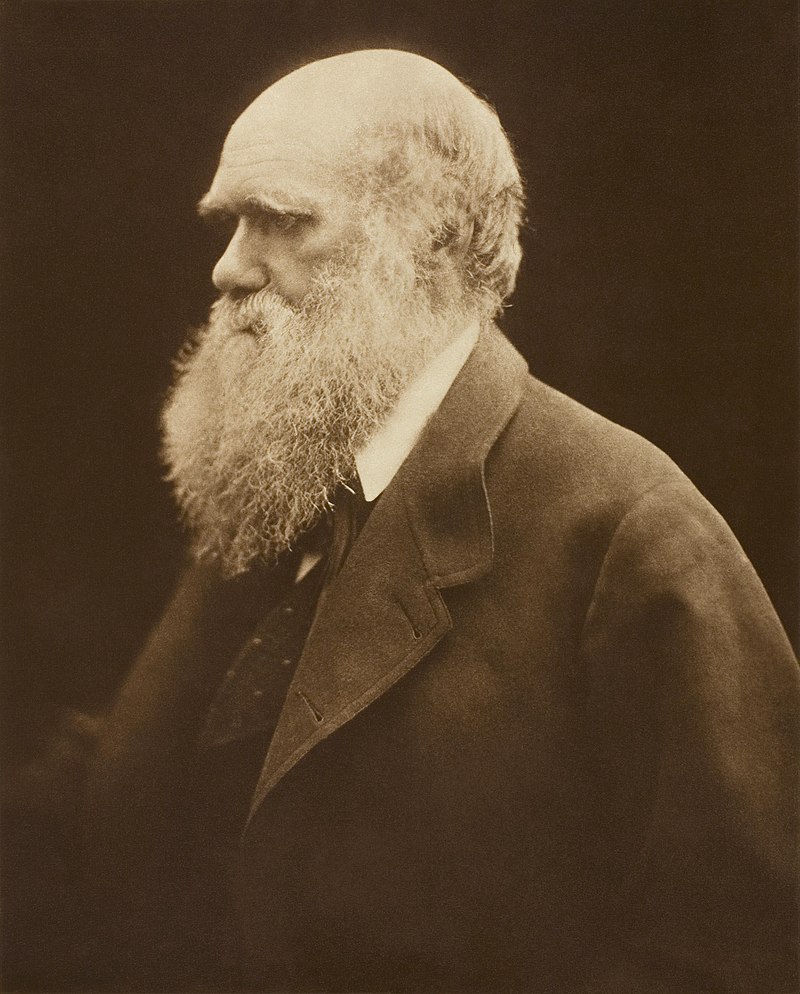
A black and white photo of an elder Charles Darwin.

Darwin’s theory of natural selection has never been very good at explaining novelty or complexity in living organisms. The new theory of “facilitated variation,” however, promises to fill in the gaps.

Published March 3, 2006

By Robin Marantz Henig

Sponsored by: The New York Academy of Sciences and Yale University Press.

Charles Darwin in 1868. Image courtesy of Wikimedia Commons.

“I came neither to praise Darwin nor to bury him,” Marc Kirschner, founder and chair of the department of systems biology at Harvard Medical School, told an overflow crowd on January 25, 2006, as part of the Readers and Writers lecture series at The New York Academy of Sciences (the Academy). Kirschner, coauthor with John Gerhart of The Plausibility of Life: Resolving Darwin’s Dilemma, said that his goal, in both the lecture and the book, was to achieve a middle ground, a way “to challenge Darwin in the name of buttressing the theory of evolution.”

Kirschner and Gerhart, a professor in the graduate school at the University of California at Berkeley, have long been plagued by a paradox in Darwin’s theory of natural selection, one that creationists and Intelligent Design proponents have used to cast doubt upon evolution as a whole: How it is that extraordinary complexity could have evolved from the accretion of tiny, supposedly random variations?

The answer, at least in part, is that the changes are not as random as they seem. “Even though science has shown that genetic variation is random,” Kirschner told his audience, “phenotypic variation cannot be random—because you can only change what already exists.” You never see a vertebrate with six limbs, he said; some mechanism limits the number of limbs to four, and the number of digits to five. “Yet these limits are hardly very constraining,” Kirschner noted, “generating everything from a whale’s flipper to Artur Rubenstein’s hand.”

The Theory of Facilitated Variation

The constraints on phenotypic variation, “rather than being limiting, greatly enable evolutionary change,” Kirschner said. In his talk, he related how he and Gerhart developed a new theory to explain complexity, which they call the theory of facilitated variation.

As background, Kirschner began by describing the two different paths that biology was taking around the time of Darwin’s publication of The Origin of Species: the fascination with variation that led to the zoos and natural history museums of the late 19th and early 20th century; and the simultaneous realization, with the growth of cell biology and embryology, that much of life is characterized not by differences, but by similarities.

“So where does this leave us?” asked Kirschner. “Two paths in science, one extolling the variety of life, the other obsessed with its universal properties. Herein lies a paradox: how can this immense variation arise from this universality?”

This is where facilitated variation comes in. Kirschner used an analogy borrowed from the kindergarten classroom to explain how his and Gerhart’s theory differs from evolutionary theory up to this point. Traditionally, he said, biologists have compared life to a lump of modeling clay, “incredibly plastic, and able—due to the accrual of many small changes—to go in any direction.” But this is the wrong metaphor, he said. In truth, life is more like a bunch of Lego blocks. As with Legos, the basic building blocks of biology are rigid and quite similar to one another, but “there is a large variety of structures that can be assembled from similar parts.”

If You Give a Monkey a Typewriter

Another way of looking at it, Kirschner said, is to try to imagine trying to get a monkey to write the word “MONKEY.” You could do so by giving the monkey a pen and paper, but that would never work—all you’d get would be “random lines and scratches.” But if you gave him a typewriter, then you might be getting somewhere.

It would take a very long time (Kirschner calculated about ten years, typing at the rate of one keystroke per second round-the-clock), but the monkey would eventually produce all six letters in the right order, because the typewriter restricts the results of his physical actions—always letters instead of scribble-scrabble. “Letters have at least a chance to be useful,” Kirschner said. “Most pen scratches to do not.”

If, instead of a typewriter, the monkey was pounding on a computer keyboard programmed with an automatic spelling corrector, the time it would take for him to type out the word “MONKEY” would be reduced dramatically, from ten years to probably less than a single day. “More constraint equals more useful outcomes,” Kirschner said.

The point is that something similar seems to be at work in nature. Facilitated variation works like that computer spell-checker, leading to “a coordination of conserved processes that are highly adaptive and facile in situations that require change.”

Consider the evolution of limbs. Among vertebrates, Kirschner said, limbs can be “as varied as the wings of an albatross, the hooves of an antelope, and the claws of a tiger.” How could such a vast array have evolved from small and random variations? By having a certain logic to the variations, said Kirschner, something “quite ingenious, simple, and forgiving.”

Gene Feedback Inhibition and Tissue Morphogenesis

Complexity in multicellular organisms—changes and refinements in beak shape, pigmentation, jaw structure, limb formation—can be explained, he said, by forces involved in “changing the time and extent of a process rather than creating a new process.” The forces are those that have been uncovered recently in the field of molecular biology, such as gene feedback inhibition, and the field of developmental biology, such as tissue morphogenesis. They help account for the surprising fact that the human genome isn’t much bigger than the genome of a frog or a fruit fly. The vast differences among these organisms are accounted for not by number of genes, he said, but by how the genes are expressed.

“In multicellular organisms, the same few genes must be reused in many different contexts,” said Kirschner. “The organism has liberated itself from a requirement that each gene has to operate in the same way in each anatomical region.” What this means for evolutionary theory is that even though the variations found in genes can be tiny, they can lead to big differences in the phenotype—and big differences in the appearance and behavior of complex organisms.

Understanding Embryonic Development

Kirschner said that the modern understanding of embryonic development can help explain how facilitated variation works. “Embryonic development is replete with cell types that have multiple options and ranges of options, such as the neural crest, that can form cartilage, nerve, and pigment,” he said. “Thus, changes in beak shape, pigmentation, or jaw structure can easily occur by changing the time and extent of a process rather than creating a new process.” In other words, the gene itself doesn’t have to be different; what changes is the timing or location of the gene’s expression.

The theory of facilitated variation, as outlined in The Plausibility of Life, is a new way of synthesizing the first two pillars of Darwin’s theory of evolution, natural selection and genetics, Kirschner said. He quoted a colleague who once told him that in the future, the only way to teach evolution would be through the explanatory lens of facilitated variation. “Any other approach,” Kirschner’s colleague told him, “would seem like an arbitrary selection of ‘Just-So Stories.'”

About the Speaker

Marc Kirschner, PhD, is founding chair of the department of systems biology at Harvard Medical School. His laboratory investigates three broad, diverse areas: regulation of the cell cycle, the role of cytoskeleton in cell morphogenesis, and mechanisms of establishing the basic vertebrate body plan.

Kirschner was elected Foreign Member of the Royal Society of London and a Foreign Member of the Academia Europaea in 1999. He was the 2001 recipient of the William C. Rose Award, presented by the American Society for Biochemistry and Molecular Biology. He received a 2001 International Award by the Gairdner Foundation of Toronto. He is a member of the National Academy of Sciences and the American Academy of Arts and Sciences, and has served on the advisory committee to the director of the National Institutes of Health and as president of the American Society for Cell Biology.

Kirschner arrived at Harvard Medical School in 1993 from the University of California, San Francisco, where he had served on the faculty as professor for fifteen years. He graduated from Northwestern University and received his PhD from the University of California, Berkeley. Following postdoctoral research at Berkeley and at the University of Oxford, he was appointed an assistant professor at Princeton University.

He and John Gerhart are coauthors of Cells, Embryos, and Evolution and The Plausibility of Life: Resolving Darwin’s Dilemma.

Also read: From the Annals Archive: How Darwin Upended the World

A Man, A Machine, and An Electric Image

Colorful painting on a canvas.

Anton Perich is “doing strange things with electricity” as he combines traditional art styles with new age technology.

Published March 1, 2006

By Adelle Caravanos

Since the ink jet printer was introduced in the late 1980s for putting words neatly onto paper, myriad scientific uses have been found for the revolutionary technology, from depositing DNA onto microarray chips to “printing” three-dimensional human organs.

But few are aware that an early predecessor to the ink-jet printer was built by a New York City artist. Anton Perich, a contemporary of Andy Warhol, invented his electric painting machine to transfer paint, line by line, onto canvas in 1977. And unlike Hewlett-Packard, he hasn’t had to improve on the technology since. Higher resolution doesn’t interest Perich, nor does perfection: stray lines and pools of ink make for interesting art, after all.

At a recent dorkbot-nyc meeting in Soho, the silver-haired Perich captivated a crowd of 100 young technologists, students, designers, and artists — and other “people doing strange things with electricity” as he described his invention and his art, and recalled his days among the Studio 54 crew. Perich has two upcoming shows in Europe, and has been re-entering the New York City art scene, having recently moved back to Manhattan from upstate.

Industrial Artist

In Perich’s bright and airy Chelsea studio, six stories above West 24th St., the walls are lined with large-scale canvases covered in thin, horizontal stripes of red, purple, blue, and yellow. From some, the image of a recognizable face or body emerges — Warhol, George W. Bush, the Mona Lisa. Others are collections of bands of varying width, color, and density, images unto themselves.

And fastened to one wall, wedged against a half-painted canvas, is an unexpectedly industrial-looking piece of equipment. The painting machine is a metal frame hung with copper wiring and roller chain supporting a printer head that rides a horizontal metal bar, gliding back and forth across the canvas, like a typewriter head moving across paper, painting as it goes.

In the late 70s Perich was already working as a painter, video artist, and photographer for Interview magazine when he began looking for a way to electrify his brushstroke, so to speak.

“Every great artist has his brushstroke,” he says. “Take out Van Gogh’s paint strokes from his paintings and you no longer have a Van Gogh. I wanted to create my own brushstroke — an electric one,” he says.

If You Make It, It Will Paint

From a collection of amplifiers, photocells, and wiring that he acquired in the electronics shops that populated Canal St. at the time, Perich assembled what was essentially a primitive ink jet printer.

A 130-square-foot metal frame supports a machine head that holds an airbrush, or can be adjusted to hold a simple marker. As the painting head runs over a canvas, it applies varying amounts of pressure during a 15-second pass. A bicycle chain supported by a counterweight controls the back and forth motion, and every two passes the head automatically drops down.

The machine applies pressure to mark the canvas, either by pushing the marker against it, or by signaling the airbrush compressor to release. The pressure can be controlled manually or automatically, as can the colors choice.

To manually control the painting, Perich uses a control panel that is a cross between a color palette and a switchboard, comprised of five buttons and a set of corresponding lights connected by wiring to the moving paint head.

But Perich creates many of his electric paintings automatically, by projecting his own photography onto a canvas and directing the machine to paint it. A photocell in the head senses gradations of light, and relays this information to the switchboard, which controls airbrush pressure. The machine can replicate the image by breaking it down into areas of shadow and light and increasing pressure correspondingly.

Everyone Makes Mistakes

As with any technology, the painting machine is not immune to breakdowns. “I’ve had to make many adjustments over the years,” Perich acknowledges, pointing to a rubber band holding the photocell in place.

But unlike users of modern ink jet printers, Perich appreciates the imperfections. For instance, the printer head has been known to drop down too far between passes. “It will drift down the canvas,” he says, which creates a visible squiggle of paint across the work. “But those are the things I love,” he says. “These mistakes, they give something extra to the painting.”

That being said, Perich is quick to point out that the machine is not part of the art. “My painting machine is an instrument, like a musician who uses a piano or an organ. The air vibrates through the airbrush in the same way that air vibrates in organ pipes. The machine is a tool for painting,” he says.

“I rather like that as everyone’s been moving towards high-resolution images, I’ve been going to the other extreme,” Perich says. “But it is important sometimes,” he says with a smile, as he points to a side table, on which sits a large, industrial-quality printer. He bought it recently, to print out the photographs that he has taken over his career.

In addition to his paintings, Anton Perich works with video, photography, and poetry. Since 1978, he has published Night, an art and culture magazine. His first showing of electric paintings was at the Tony Shafrazi Gallery in New York in 1979, and he continues to show his paintings, video, and photography in New York and Europe.

Also read: Art and Science at the Academy