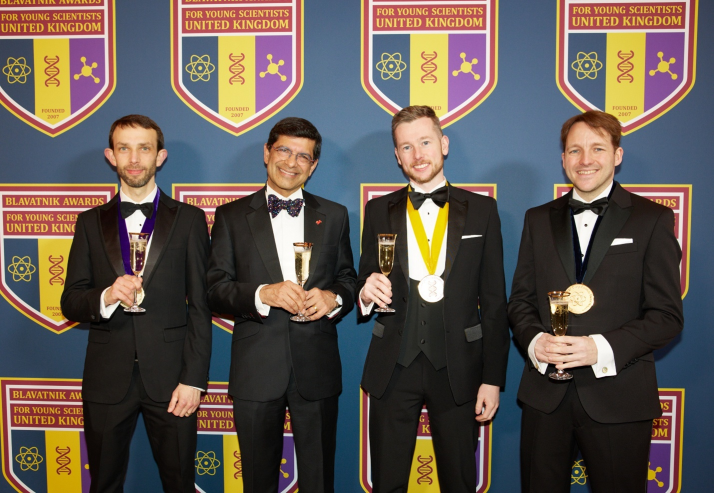
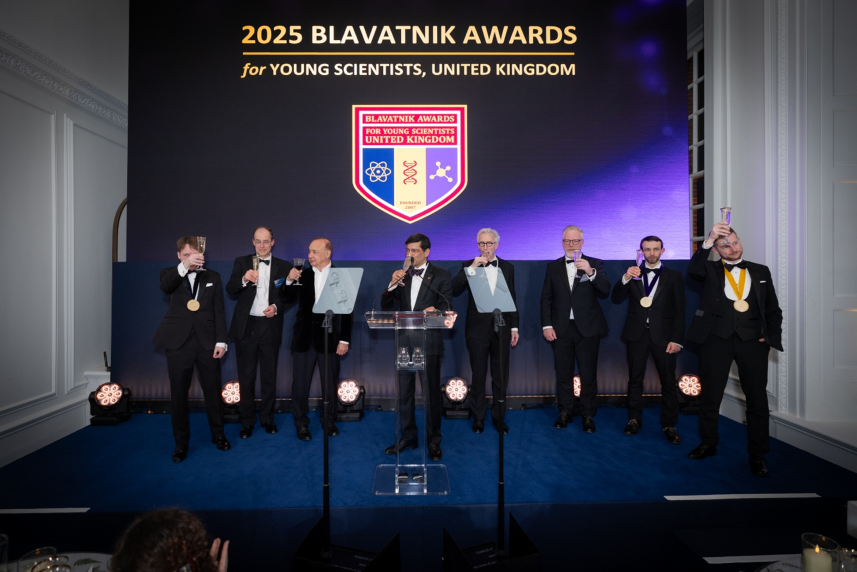
Imagining the Impossible: UK Scientists Changing Our World

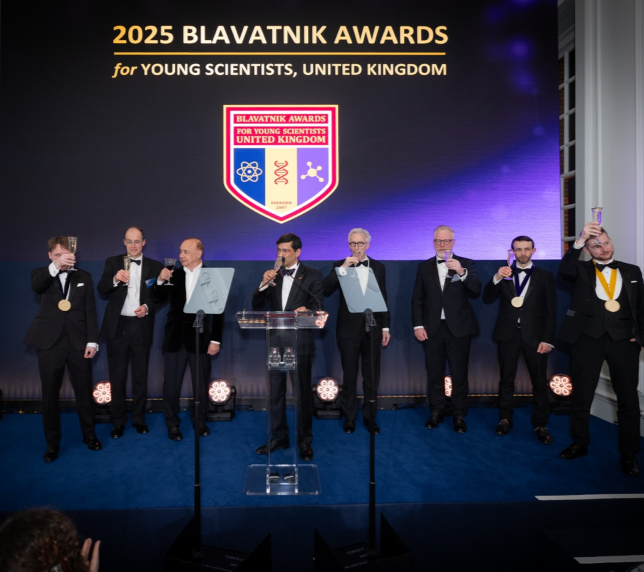
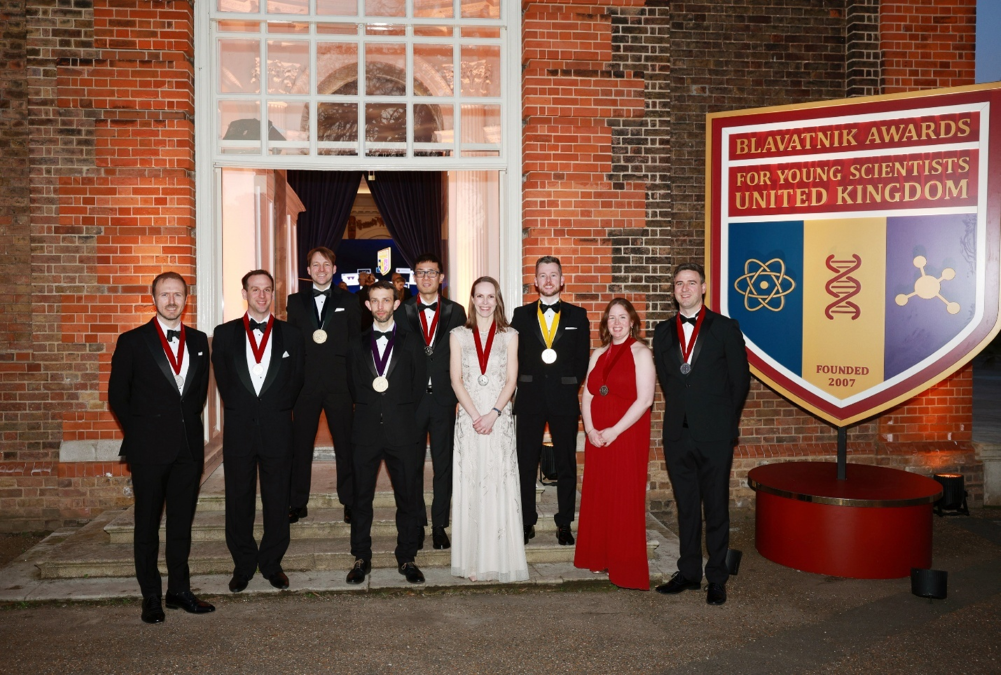
Have you ever tried to imagine physics in 4 dimensions? Or imagine what happens when chemistry meets the cosmos at a temperature of absolute zero? The Laureates and Finalists of the 2025 Blavatnik Awards for Young Scientists in the United Kingdom are helping us to imagine the impossible. 

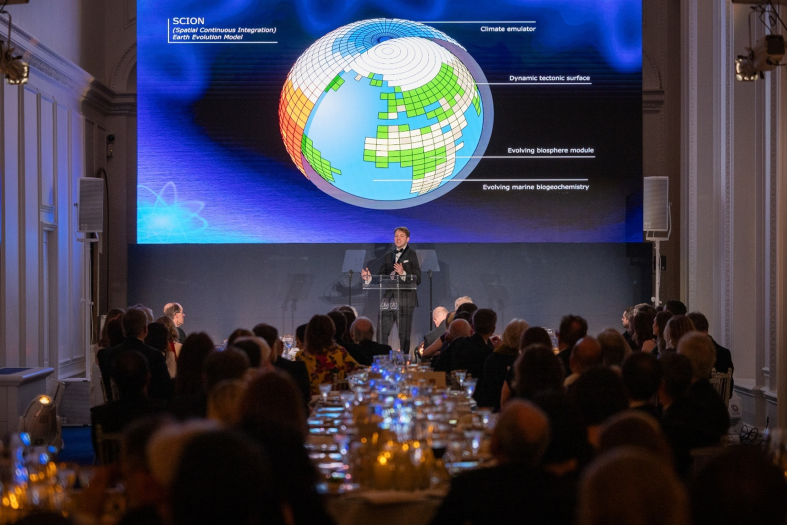
Come join us for a day of interactive lectures as we explore the infant gut microbiome and imagine universal therapeutics for devastating snakebites. We’ll meet the chemical innovations making the world healthier and greener, and use clues from Earth’s history to search for other habitable planets beyond our solar system.  

The featured speakers will take us on a tour of mathematical breakthroughs giving new insight into how crystals behave and the fundamental processes of learning. They will ask challenging questions, like what if your cells could whisper the first warnings of cancer—and we learned how to listen? 

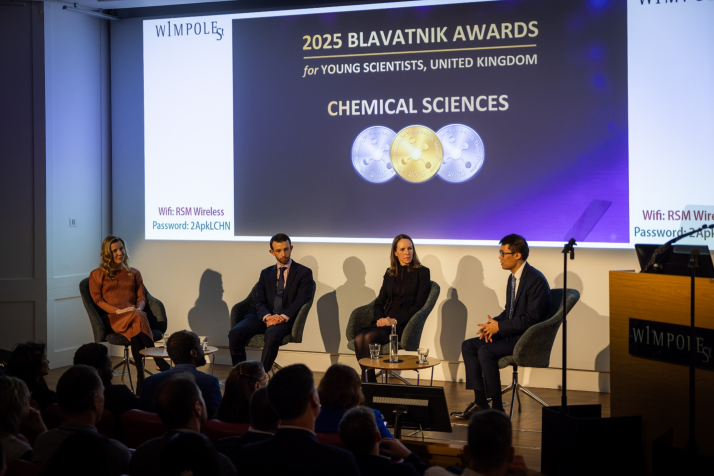
This series of nine short lectures presents cutting-edge discoveries in Life Sciences, Physical Sciences & Engineering, and Chemical Sciences. The lectures are intended for science enthusiasts of all ages—from students to adults—so everyone can get a behind-the-scenes look into how UK scientists are building a future that pushes the limits of our imagination. 

Sponsors

Presented By

The Tata Transformation Prize Celebrates the 2024 Winners in Mumbai

The New York Academy of Sciences continues its partnership with India’s Tata Group for the second annual Tata Transformation Prize.

Published January 8, 2025

By Kamala Murthy

On Friday, December 13, 2024 the Tata Group and The New York Academy of Sciences honored the 2024 Tata Transformation Prize Winners at an impressive award ceremony and dinner at the historic Taj Mahal Palace in Mumbai.

Launched in 2023, the Tata Transformation Prize identifies and supports visionary scientists in India who are developing breakthrough technologies that address India’s most significant societal challenges in Food Security, Sustainability, and Healthcare. The ceremonial event was celebrated at this famous venue for the first time.

The 2024 Tata Transformation Prize Winners, selected from 169 entries from 18 Indian states by an international jury of leading experts, included:

  • FOOD SECURITY: C. Anandharamakrishnan, PhD, CSIR – National Institute for Interdisciplinary Science and Technology has pioneered a variety of rice fortified with multiple essential nutrients that simultaneously has a low glycemic index (GI) to address micronutrient malnutrition and blood sugar management for diabetics. Watch his film HERE.
  • SUSTAINABILITY: Amartya Mukhopadhyay, DPhil, Indian Institute of Technology Bombay is working to advance Sodium (Na)-ion battery technologies. His battery prototype is approximately 30% cheaper than Lithium (Li)-ion batteries and operates in a broader temperature range. His design is safer to store by creating air- and water-stable sodium-transition metal oxide cathodes and alloy-based anodes. Prof. Mukhopadhyay’s approach replaces toxic solvents with water to reduce production costs and environmental impact. Watch his film HERE.
  • HEALTHCARE: Raghavan Varadarajan​, PhD, Indian Institute of Science is working to develop a cost-effective RSV vaccine that will allow for greater access to wide-spread deployment of vaccination programs. His scientific advances will surmount the challenges that have hindered RSV vaccine development for decades and will provide broad, longer-lasting protection against RSV infection. Watch his film HERE.

A Night of Distinguished International Guests

Harish Bhat, former brand custodian for Tata Sons and book author, served as the ceremony presenter. The evening’s Chief Guest, Prof. Ajay Kumar Sood, the Principal Scientific Adviser to the Government of India and Guest Speaker, Dr. Soumya Swaminathan, the former Chief Scientist for the World Health Organization (WHO), both gave keynote addresses.

Other distinguished guests included Noel Tata, Chairman of Tata Trusts; Prof. Désirée van Gorp, Professor of International Business and Chair of the International Advisory Board at Nyenrode Business University in the Netherlands; and AI Pioneer and Turing Award Winner, Dr. Raj Reddy of Carnegie Mellon University. Several members of the Tata Transformation Prize’s international jury attended, including Prof. José Miguel Aguilera Radic from Pontificia Universidad Catolica de Chile, Dr. Jianying Hu from IBM, Dr. Carolyn Duran from Apple, Dr. Sandra Barteit from the University of Heidelberg in Germany, Ankur Bhatnagar from Biocon, Prabhakaran Doiraraj from the Centre for Chronic Disease Control (India), and Deepanwita Chattopadhyay, founder of India’s first Life Sciences research park.

The Tata Transformation Prize, a Catalyst for Innovative Solutions

In his opening remarks, N. Chandrasekaran, Chairman of the Board of Tata Sons, said, “In a technology-first future, India needs a transformation of vision to solve the big problems at its scale. We need our scientists driving deep, fundamental research and innovators pushing beyond the margins of new technology. That is the aim of the Tata Transformation Prize: to both recognize and support breakthrough innovations, developed in research labs across India, that are ready for wide-scale deployment to address India’s challenges.”

Nicholas B. Dirks, President and CEO of The New York Academy of Sciences, followed the Chairman’s remarks: “We are excited to continue this unique collaboration with Tata Sons, which serves as a catalyst for innovative solutions to India’s most urgent challenges. The Prize addresses India’s critical societal needs by honoring India’s most outstanding scientists who genuinely want to make a difference while supporting India’s advancement as a world leader.” Dirks also recognized the jury, which included eminent scientists, clinicians, technologists, and engineers from world-renowned organizations and academic institutions across five continents, and the role of the Prize’s Scientific Advisory Council, who serve as ambassadors for the program.

Intending to drive impactful innovation and scale-up implementation of high-reward research, each Winner received INR 2 crores (approximately US$240,000) in prize money and was honored with a Tata Transformation Prize medal at the ceremony.

Roopa Purushothaman, Chief Economist for Tata, delivered closing remarks for the ceremony.

The day prior, the Tata Group and the Academy hosted a symposium featuring the previous year’s Winners at a symposium at Bombay House, the head office of the Tata Group. The 2023 Winners showcased their scientific progress and new collaborations since winning the prize last year.

Photo Gallery

Artificial Intelligence and Animal Group Behavior

By linking cognitive strategy, neural mechanisms, movement statistics, and artificial intelligence (AI) a team of interdisciplinary researchers are trying to better understand animal group behavior.

Published December 23, 2024

By Nick Fetty

A bay-breasted warbler in Central Park. Image courtesy of Rhododendrites, CC BY-SA 4.0, via Wikimedia Commons.

A new research paper in the journal Scientific Reports explores ways that artificial intelligence (AI) can analyze and perhaps even predict animal behavior.

The paper, titled “Linking cognitive strategy, neural mechanism, and movement statistics in group foraging behaviors,” was authored by Rafal Urbaniak and Emily Mackevicius, both from the Basis Research Institute, and Marjorie Xie, a member of the first cohort for The New York Academy of Sciences’ AI and Society Fellowship Program.

For this project, the team developed a novel framework to analyze group foraging behavior in animals. The framework, which bridged insights from cognitive neuroscience, cognitive science, and statistics, was tested with both simulated data and real-world datasets, including observations of birds foraging in mixed-species flocks.

“By translating between cognitive, neural, and statistical perspectives, the study aims to understand how animals make foraging decisions in social contexts, integrating internal preferences, social cues, and environmental factors,” says Mackevicius.

An Interdisciplinary Approach

Each of the paper’s three co-authors brought their own expertise to the project. Mackevicius, a co-founder and director of Basis Research Institute, holds a PhD in neuroscience from MIT where her dissertation examined how birds learn to sing. She advised this project, collected the data on the groups of birds, and assisted with analytical work. Her contributions built upon her postdoctoral work studying memory-expert birds in the Aronov lab at Columbia University’s Center for Theoretical Neuroscience.

Xie, who holds a PhD in neurobiology and behavior from Columbia University, brought her expertise in computational modeling, neuroscience, and animal behavior. Building on a neurobiological model of memory and planning in the avian brain, Xie worked along Mackevicius to design a cognitive model that would simulate communication strategies in birds.

“The cognitive model describes where a given bird chooses to move based on what features they value in their environment within a certain sight radius,” says Xie, who interned at Basis during her PhD studies. “To what extent does the bird value food versus being in close proximity to other birds versus information communicated by other birds?”

Bayesian Methods and Causal Probabilistic Programming

Urbaniak brought in his expertise in Bayesian methods and causal probabilistic programming. For the paper, he built all the statistical models and applied statistical inference tools to perform model identification.

“On the modeling side, the most exciting challenge for me was turning vague, qualitative theories about animal movement and motivations into precise, quantitative models. These models needed to capture a range of possible mechanisms, including inter-animal communication, in a way that would allow us to use relatively simple animal movement data with Bayesian inference to cast light on them,” says Urbaniak, who holds a PhD in logic and philosophy of mathematics from the University of Calgary, Canada and held previous positions at Trinity College Dublin, Ireland, and the University of Bristol, U.K.

For this project, the researchers set up video cameras in Central Park to analyze bird movements, which they then used to study behavior. In the paper, the researchers pointed out that birds are an appealing subject to study animal cognition within collaborative groups.

“Birds are highly intelligent and communicative, often operate in multi-agent or even multi-species groups, and occupy an impressively diverse range of ecosystems across the globe,” the researchers wrote in the paper’s introduction.

The paper built upon previous work within this realm, with the researchers writing that “[this work demonstrated] how abstract cognitive descriptions of multi-agent foraging behavior can be mapped to a biologically plausible neural network implementation and to a statistical model.”

Expanding their Research

For both Mackevicius and Xie, this project enabled them to expand their research from studying individual birds to groups of birds. They saw this as an opportunity to “scale up” their previous work to better understand how cognition differs within a group context. Since the paper was published in September, Mackevicius has applied a similar methodology to study NYC’s infamous rats, and she sees potential for extending this work even further.

“This research has broad implications not just for neuroscience and animal cognition but also for fields like artificial intelligence, where multi-agent decision-making is a central challenge,” Mackevicius wrote for the Springer Nature blog. “The ability to infer cognitive strategies from observed behavior, particularly in group contexts, is a crucial step toward designing more sophisticated AI systems.”

Xie says she “learned many skills on the spot” throughout the project, including reinforcement learning (an AI framework) and statistical inference. For her, it was especially rewarding to observe how all these small pieces shaped the bigger picture.

“This work inspires me to think about how we apply these tools to reason about human behavior in group settings such as team sports, crowds in public spaces, and traffic in urban environments,” says Xie. “In crowds, humans may set aside their individual agency and operate on heuristics such as following the flow of the crowd or moving towards unoccupied space. The balance between pursuing individual needs and cooperating with others is a fascinating phenomenon we have yet to understand.”

The AI and Society Fellowship is a collaboration with Arizona State University’s School for the Future of Innovation in Society. For more info, click here.

Basis AI is currently seeking Research Interns for 2025. For more info, click here.

Isolationism Will Make Science Less Effective

Increasing global scientific cooperation is fundamental to the mission of the International Science Reserve. Effective collaboration will positively impact how we solve global challenges.

Published December 23, 2024

By Mila Rosenthal, PhD

The COVID-19 pandemic was a global human disaster. But the damage done could have been even worse had the spread of the virus not been countered by vaccines, diagnostics, and therapeutics, all developed by the medical and bioscience community at breakneck speed. In that success story, the people involved in the response tend to highlight one vital but often publicly overlooked ingredient: global scientific cooperation.

Could we achieve that level of international collaboration again? There are plenty of reasons to worry that we couldn’t.  

First, over the past few years, we have witnessed intensifying economic and political competition between the United States and an increasingly assertive China. This rivalry is being played not just in tariffs, but in increased security restrictions on commercial technology exchanges and scientific collaboration.  

An article by Keisuke Okamura last year in Quantitative Science Studies, the official journal of the international association of researchers who study the metrics of science, analyzed the impact of these tensions on scientific collaboration. Using data from published papers, Okamura found that the United States and China, after rapidly moving closer together for decades, had been moving apart since 2019.

Adding to this seismic shift in global relationships will be the potential impact of the new administration and its “America First” protectionist approach to supply chains, international climate standards, and public health cooperation. This potentially threatens our collective ability to respond to new and unexpected crises, as well as those we know too well. A recent Rand Corporation assessment of Global Catastrophic Risk found higher risk levels for hazards from sudden and severe changes to Earth’s climate, nuclear war, artificial intelligence, and pandemics from natural occurrence or synthetic biology.

International Scientific Collaboration Trending Up

Whether it is climate change, the need to build ethical standards for AI, geoengineering, or gene editing— all are science-based challenges that can only be addressed by global level collaboration. Encouragingly, the Okamura paper shows that the overwhelming trend towards international scientific cooperation over the past 50 years has been positive, with scientists from many institutions and countries in multiple scientific disciplines routinely working together.

It is crucial to the future of science that we develop new ways of being proactive, operating cohesively to promote solutions, safety, and stability across borders even as official relationships between states become more difficult. At the International Science Reserve (ISR) at The New York Academy of Sciences (the Academy), we have been promoting pathways for scientific cooperation, building a community that I believe can help function as a communal safeguard in the face of the threat posed by the scientific isolationist model.

Tens of thousands of scientists from more than 100 countries have signed up to the ISR network to be ready to work together in response to future cross-border crises. We help train and prepare scientists and experts on how to handle disasters, crises, and instability—and how to identify and get access to additional resources when needed.

Doomsday Scenarios

Since it is our job to think about doomsday scenarios, let’s talk through one.

Another pandemic hits. Politics— whether institutional or governmental have blocked researchers and medical professionals from different countries from talking, collaborating, and sharing data. Such lack of collaboration results in it becoming harder for us to understand why some regions of the world are being hit harder than others, because we lack the data to understand why. Meanwhile, scientists in other regions have the answer, but they are not sharing it. Lives are lost, economies wrecked, and we are all less safe. This is obviously a scary scenario.

The ISR was developed with the express goal of circumventing the barriers to collaboration. We help researchers talk to each other to build trust and share ideas through our digital hub. We develop games and scenarios to help them better prepare for decision-making in their own contexts when crises hit.

Customized Digital Games

This year, for example, we partnered with the Center for Advanced Preparedness and Threat Response Simulation (CAPTRS) to build customized digital games to test how policymakers make decisions based on evolving scientific information during a crisis. We run scenarios on different kinds of crises—from extreme heat, mega wildfires, and floods to crop failures and new pathogen outbreaks—and we have explored and increased access to the data modelling and analysis tools that researchers need to respond to those. We also celebrate the work of ISR network members and uplift the stories of those who understand firsthand science’s role in global crisis response and help the public to better understand why this matters.

In our hypothetical scenario, the ISR is one of the spaces where scientists are communicating, generating support for each other, and sharing insights. They then can take that research and information back to their local contexts to strengthen their response. Of course, this scenario is hypothetical and high-level and perhaps idealistic. But at this moment, we need a clear vision to work together across borders to reduce harm and save lives.

We can’t predict what will happen next. Science can’t tell us what the day-to-day decisions of world leaders will be. But what we do know is global problems can only be effectively solved through sustained scientific collaboration. To achieve that we need to turn outward, not just inward.

Do you want to be part of this impactful network of scientists? Join the ISR today

The Science of Aging: Combating the Onset of Age-Related Diseases

Join leading aging research experts this May!

This upcoming symposium will explore the latest advancements in understanding the biology of aging. It will focus on metabolic processes, genetic factors, and biomarkers that regulate nutrient utilization, damage repair, and biological age.

Recent discoveries in genome methylation patterns and omics technologies have revealed critical links between aging metabolism and chronic diseases and the evolution of age-related biomarkers. This event will highlight computational approaches, biomarker discovery, and the genetics of aging and metabolism. 

Don’t miss the chance to discuss the translation of foundational models of aging into higher species and the role of multi-omics in unraveling the intersectionality of aging, chronic disease, and health.

Sponsors

Presented By

The New York Academy of Sciences
Biochemical Pharmacology Discussion Group

Sponsored By

Lead Supporters: Biochemical Pharmacology Discussion Group

The Chemical Biology Discussion Group End-of-Year Symposium

May 28, 2025 | 12:30 PM – 5:45 PM ET

This program is available to join in-person live. Not available to join us on the day of? You can register to access the recording of this event once the live event is over.

The field of chemical biology applies chemical techniques to investigate and manipulate biological systems, understand their underlying mechanisms, and address critical challenges in biotechnology and human health. By bridging chemistry and biology, this field enables researchers to develop novel tools for probing cellular processes and uncovering new therapeutic strategies.

The Chemical Biology Discussion Group End-of-Year Symposium offers a platform for dynamic discussions and collaboration between chemists equipped with cutting-edge technologies and biologists eager to apply these tools to solve complex biological problems. The program highlights two distinguished keynote speakers — Christina Schroeder, PhD, from Genentech, and Jack Taunton, PhD, from the University of California, San Francisco — and a selection of junior researchers showcasing innovative work in chemical biology. Attendees will gain insights into the latest discoveries, spanning topics such as chemical probes, drug design, and molecular therapeutics, in this rapidly expanding field.

Sponsors

Presented By

The New York Academy of Sciences
Chemical Biology Discussion Group

Sponsored By

Lead Supporter: Chemical Biology Discussion Group


Academy Friend

American Chemical Society

Winners of the 2024 Tata Transformation Prize Celebrate Bold Innovation for India and Beyond

Three rising scientific stars in India are recognized for their solutions to the nation’s urgent challenges in malnutrition and diabetes, energy storage, and a new RSV vaccine.

Mumbai, India | November 25, 2024 – Tata Sons and The New York Academy of Sciences today announced the second cohort of Winners of the Tata Transformation Prize.

The Prize recognizes and supports visionary scientists in India who are developing breakthrough technologies that address India’s most significant societal challenges in Food Security, Sustainability, and Healthcare. The goal of the prize is to drive impactful innovation and scale-up implementation of high-reward research.

Three scientists were selected from 169 entries from 18 Indian states by an international jury of leading experts. Each winner will receive INR 2 crores (approximately US$240,000) and will be honored at a ceremony in Mumbai in December 2024. The jury included distinguished scientists, clinicians, technologists, and engineers from a diverse array of industries, government, and academic institutions, including Apple, IBM Research, the Bill and Melinda Gates Foundation, the National Institute of Advanced Studies, and the Indian Institute of Management Bangalore.

The 2024 Tata Transformation Prize Winners are:

C. Anandharamakrishnan, PhD, CSIR – National Institute for Interdisciplinary Science and Technology (Food Security):

Hunger and public health are urgent challenges in India, with nearly 30% of the population lacking essential nutrients and 7% affected by diabetes. There is a pressing need for solutions that address both malnutrition and chronic disease. C. Anandharamakrishnan, PhD, has pioneered a variety of rice fortified with multiple essential nutrients that simultaneously has a low glycemic index (GI) to control blood sugar levels in diabetics. He has developed advanced food technologies such as a three-fluid nozzle spray drying process to efficiently encapsulate and deliver these nutrients in reconstituted rice. He has also engineered Asia’s first artificial gastrointestinal system, which allows his team to analyze nutrient release during digestion to ensure the rice is optimized for maximum absorption of nutrients. His strategies address the nutrient deficiencies, hunger, and metabolic dysfunction faced by India’s underserved and the 2 billion people globally affected by micronutrient malnutrition.

Amartya Mukhopadhyay, DPhil, Indian Institute of Technology Bombay (Sustainability):

With the urgent global need for sustainable energy solutions, the development of affordable, eco-friendly batteries is critical. In India, where key materials for lithium-ion (Li-ion) batteries, such as lithium and cobalt, are scarce and require foreign sources, sodium-ion (Na-ion) batteries offer a promising alternative. Amartya Mukhopadhyay, PhD is working to advance Na-ion battery technologies through recent breakthroughs in materials science. His battery prototype is approximately 30% cheaper than Li-ion batteries, operates in a broader temperature range, and is safer to store by creating air- and water-stable sodium-transition metal oxide cathodes and alloy-based anodes. Prof. Mukhopadhyay’s approach also leverages “aqueous processing” of battery electrodes, which replaces toxic solvents with water to reduce production costs and environmental impact.

Raghavan Varadarajan​, PhD, Indian Institute of Science, Bangalore (Healthcare):

Respiratory Syncytial Virus (RSV) causes severe respiratory illness in over 30 million people annually, disproportionately affecting infants, young children, and the elderly, with more than 97% of RSV-related deaths occurring in developing countries, including India. Despite the availability of new RSV vaccines, their high cost makes them inaccessible to the populations most at risk. Raghavan Varadarajan, PhD aims to develop a cost-effective RSV vaccine that addresses these challenges. Drawing upon his lab’s extensive expertise in protein structure and vaccine design, Dr. Varadarajan is developing a vaccine that will surmount the challenges that have hindered RSV vaccine development for decades and will provide broad and longer-lasting protection against RSV infection. Furthermore, by employing cutting-edge methods in protein production, Dr. Varadarajan’s team is optimizing the vaccine manufacturing process to significantly reduce costs, potentially lowering the price of each dose by up to 95%.

N. Chandrasekaran, Chairman of the Board of Tata Sons, said, “We are pleased to announce the Tata Transformation Prize Winners for the second year. By supporting pioneering Indian scientists in scaling up their pathbreaking innovations, Tata Group hopes to improve the lives of the Indian people and develop India into a world-class innovator. This prize is intended to provide these scientists with the international visibility to promote these Indian technologies to the rest of the world.”

Nicholas B. Dirks, President and CEO of The New York Academy of Sciences, said, “Congratulations to the second cohort of Winners of the Tata Transformation Prize. From addressing India’s issues such as malnutrition and diabetes, to an RSV vaccine that reduces mortality in the most vulnerable populations, to improving India’s energy storage capacity through greener, more cost-effective battery technologies – these scientists are using their innovations to bolster Indian society. Many thanks to Tata for sponsoring this visionary prize and our independent jury for volunteering their time and expertise.”

About the Tata Transformation Prize

The Tata Transformation Prize was established in 2022 by Tata Sons, is powered by the New York Academy of Sciences, to support breakthrough, innovative technologies that address India’s most significant challenges. By recognizing and supporting the implementation at scale of high-risk, high-reward research, the Prize will drive impactful innovation in scientific disciplines of importance to India’s societal needs and economic competitiveness. The Prize will leverage the exceptional potential of scientists in India to address critical national challenges in three categories—Food Security, Sustainability, and Healthcare—and generate improved life quality outcomes across India and beyond. The Tata Transformation Prize recognizes one Winner in each category, with INR 2 crores (approximately US$240,000) for each Winner. Click here for more information about the Tata Transformation Prize.

About the Tata Group

Founded by Jamsetji Tata in 1868, the Tata Group is a global enterprise, headquartered in India, comprising 30 companies across ten verticals. The group operates in more than 100 countries across six continents, with a mission ‘To improve the quality of life of the communities we serve globally, through long-term stakeholder value creation based on Leadership with Trust’.

Tata Sons is the principal investment holding company and promoter of Tata companies. Sixty-six percent of the equity share capital of Tata Sons is held by philanthropic trusts, which support education, health, livelihood generation and art and culture.

In 2023-24, the revenue of Tata companies, taken together, was more than $165 billion. These companies collectively employ over 1 million people.

Each Tata company or enterprise operates independently under the guidance and supervision of its own board of directors. There are 26 publicly listed Tata enterprises with a combined market capitalization of more than $365 billion as on March 31, 2024.

Companies include Tata Consultancy Services, Tata Motors, Tata Steel, Tata Chemicals, Tata Consumer Products, Titan, Tata Capital, Tata Power, Tata Communications, Indian Hotels, Tata Digital, Air India and Tata Electronics. Website: https://www.tata.com

Media Contact

Tata Sons
Harsha Ramachandra
harsha.r@tata.com

Peter Salovey, PhD, named Chair, Board of Governors of The New York Academy of Sciences

Former president of Yale University to assume leadership role of the Academy’s Board of Governors 

New York, NY | November 18, 2024 – Peter Salovey, PhD, a social psychologist and early pioneer in the field of emotional intelligence, has been named as Chair, Board of Governors, The New York Academy of Sciences (the Academy).   

He will oversee the governance of the Academy and its 26 Member board, and work with current President and CEO, Nicholas B. Dirks, on the future of the 200+ year old scientific society and its extensive portfolio of scientific programs.  He succeeds the Honorable Jerry MacArthur Hultin, Chair and Co-Founder, Global Futures Group, LLC, who has served in the role since 2019. 

Salovey’s scientific/academic credentials are extensive.  Prior to joining the Academy, Salovey served as the 23rd president of Yale University from 2013 to 2024, as well as past provost, Dean of Yale Graduate School of Arts and Sciences and Dean of Yale College. 

Over the course of his nearly 40 years of academic research experience, he investigated the connections among emotion, health communication, and health behavior, with a special focus on emotional intelligence. He played key roles in multiple Yale programs including the Health, Emotion, and Behavior Laboratory, which Former President Salovey founded; the Center for Interdisciplinary Research on AIDS; and the Cancer Prevention and Control Research Program. He is the author and editor of over a dozen books translated into eleven languages and published hundreds of journal articles and essays. He co-developed a broad framework called “emotional intelligence,” the theory that just as people have a wide range of intellectual abilities, they also have a wide range of measurable emotional skills that profoundly affect their thinking and action. 

“Peter Salovey’s stewardship as incoming Chair of the Academy’s Board will be an invaluable asset as we head into a critically important time for science,” said Nicholas B. Dirks, President and CEO, The New York Academy of Sciences. “In such an unsettled world, we need strong advocacy for continued investment in scientific research and leadership in shaping an enlightened role for science to help solve our global challenges.”  

In addition to teaching and mentoring scores of graduate students, former President Salovey has won the William Clyde DeVane Medal for Distinguished Scholarship and Teaching in Yale College and the Lex Hixon ’63 Prize for Teaching Excellence in the Social Sciences. He has received honorary degrees from the University of Pretoria (2009), Shanghai Jiao Tong University (2014), National Tsing Hua University (2014), Harvard University (2015), McGill University (2018), University of Haifa (2018), and Vytautas Magnus University (2019). In 2013, he was elected to the American Academy of Arts and Sciences and the National Academy of Medicine. 

“The New York Academy of Sciences and its track record of bringing widely disparate groups together to address global problems are enormously respected,” said Peter Salovey. “I’m looking forward to working with the Academy to continue its influential thought leadership and prominence in supporting the careers of young scientists.”  

Elon Magazine: Anthropology, Satire, and Collaborative Hallucination with Sentient Machines

December 2, 2024 | 6:00 PM – 8:30 PM ET

115 Broadway, 8th Floor, New York, NY 10006
or join virtually by Zoom

This presentation explores Elon Magazine, a work of design anthropology that uses parody to explore the celebrity and cultural milieu of Elon Musk. While the magazine is comprised of writing based on research and fieldwork, many of the visuals were produced via extensive collaboration with the generative artificial intelligence model, Midjourney. The talk will bring this project into dialogue with Salter and Saunier’s recent work (2023) on material encounters between humans and sentient machines. It will also include an interactive activity exploring human-AI collaboration. Dr. Campbell and his collaborators describe Elon as a “hype(r)ethnography of brometheanism in the time mass-extinction.” The lecture sets the stage for a lively discussion about design anthropology, fame, and artificial intelligence.

Speaker

Craig Campbell
Associate Professor of Anthropology
University of Texas, Austin

Pricing

All: Free

About the Series

Since 1877, the Anthropology Section of The New York Academy of Sciences has served as a meeting place for scholars in the Greater New York area. The section strives to be a progressive voice within the anthropological community and to contribute innovative perspectives on the human condition nationally and internationally. Learn more and view other events in the Anthropology Section series.

Academy’s Past – A Home to Ourselves

Unfortunately for the Lyceum, the time spent in its first standalone facility was short-lived.

Published October 29, 2024

By Nick Fetty

Lyceum Building | 563 Broadway | 1836 – 1844

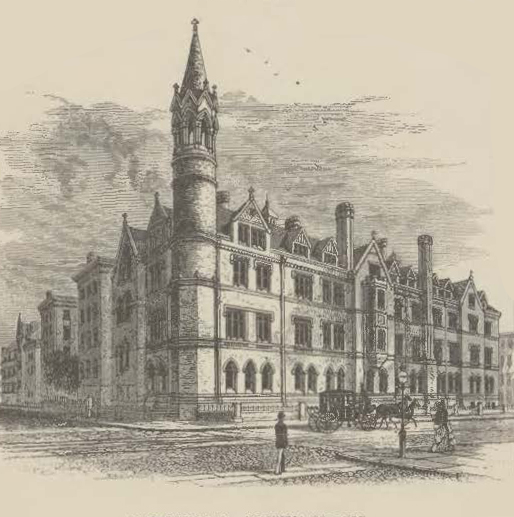
For the first time in its relatively short history, The Lyceum of Natural History in the City of New York (“the Lyceum”) had its own standalone building when it moved into 563 Broadway, south of Prince Street.

The first meeting in the new building was held on May 9, 1836, with 18 members present, “an unusually large attendance.” The front of the building was light gray in color and consisted of a granite pilaster and columns, reminiscent of ancient Greek or Roman architecture. The building had a frontage of 50 feet, with a depth of 100 feet.

Searching for Revenue Streams

The new space provided ample room for the collections and library given the standards of the time, though later historical accounts suggest that such an “edifice” would “be considered a very contracted space.” The new building also included spaces that could be rented to other entities, serving as a revenue source for the Lyceum, which would rename itself The New York Academy of Sciences in 1876.

Retail stores on the ground level were rented for an annual rate of $750. Rooms on the second and third floors were rented for $350 each year. The Lyceum leased its lecture hall for use by the New Jerusalem Church on Sundays, and the museum room at one time served as a space for the exhibition of paintings.

Despite the multiple uses of the building, the revenue streams generated were insufficient and the cachet of the Lyceum having its own building proved to be impractical. Financial inflation was common at this time which led to an economic depression, and the institute was forced to sell the property in 1844 for $37,000 (more than $1.5 million today), just enough to cover the building’s three mortgages and the accompanying interest. The Lyceum would move to its next home in 1845, a few blocks up Broadway.

This is the fourth piece in an eleven-part series exploring the Academy’s past homes. Read: