Rule Makers and Breakers in the Space Race for Off-Earth Resources

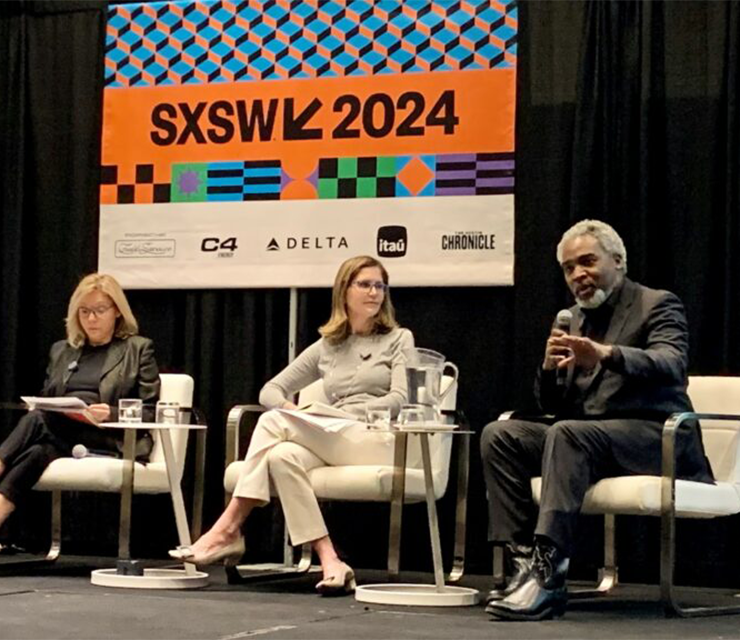
A panel discussion from the South by Southwest event.

From space junk to mining critical minerals on the Moon, this South by Southwest panel explored ambiguities in the governance of space ventures.

Published March 28, 2024
By Brooke Grindlinger, PhD

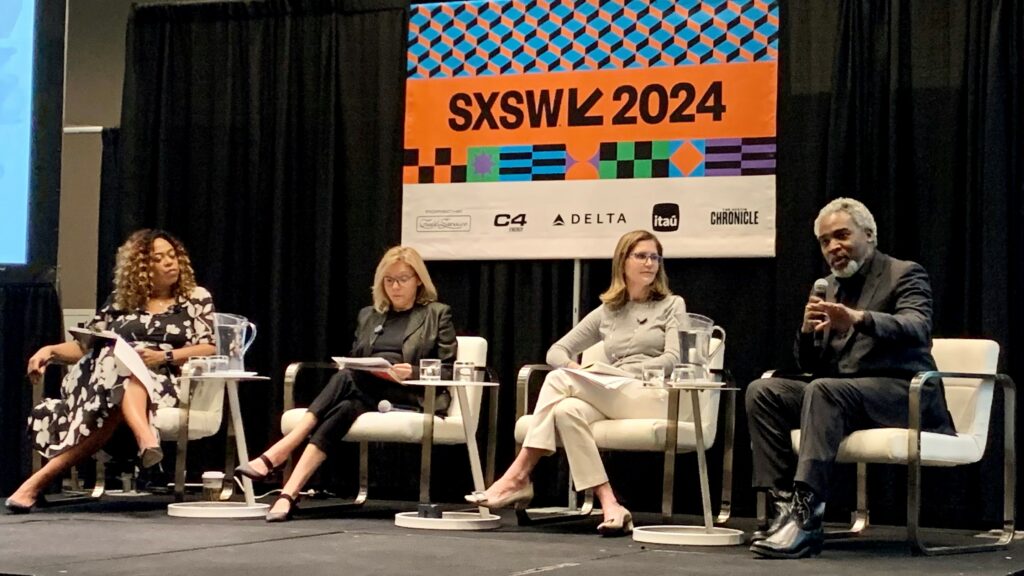
Panelists Monique M. Chism, PhD (left), Under Secretary for Education at the Smithsonian Institution; Aida Araissi, Founder and CEO of the Bilateral Chamber of Commerce; Kirsten Bartok Touw, aerospace, space, and defense tech investor and Co-Founder and Managing Partner of New Vista Capital; and A.J. Crabill, National Director of Governance for the Council of the Great City Schools; speak at SXSW on March 11, 2024. The panelists discussed the need for a cohesive and forward-looking governance approach to the business of space, to ensure equitable access and opportunity for all in this growing industry.

Space exploration not only signifies a pioneering frontier for deepening our comprehension of the universe but also serves as a pivotal gateway to unprecedented resources, technologies, and job opportunities, poised to emerge both on and beyond Earth’s bounds. What was once exclusively the domain of national governments has now evolved into a thriving commercial industry, fueled by the burgeoning participation of the private sector in space exploration. To guarantee the safety, accessibility, and positive impact of space exploration, it’s imperative to develop evolving governance mechanisms that effectively oversee resource allocation, foster international collaboration, prioritize safety and security, address ethical dilemmas, and tackle the escalating challenges of space debris and traffic management. On March 11, 2024, a diverse assembly of space investors, public and private stakeholders, ethicists, and enthusiasts congregated at Austin’s South by Southwest Conference to glean insights from the panel session titled ‘Governance Beyond Gravity: Unity & Exploration,’ helmed by Dr. Monique M. Chism, Under Secretary for Education at the Smithsonian Institution.

Satellite Superhighway: Redefining Space Access

Amid our captivation by the human presence aboard the International Space Station, the allure of Mars exploration, and the awe-inspiring vistas from the James Webb Space Telescope, it’s easy to overlook the bustling thoroughfare of satellites silently navigating Earth’s orbit. Remarkably, data from the tracking site Orbiting Now reveals a staggering count of over 9,600 satellites currently overhead, with SpaceX‘s Starlink network alone accounting for more than 6,000 of them.

The burgeoning satellite network not only amplifies global connectivity and intelligence capabilities but also signifies a democratization of space access, with over 70 nations, in conjunction with numerous private sector entities, having effectively launched satellites into low Earth orbit, endowing their operators with advanced communication and intelligence resources. The acquisition of precise Earth observation data, down to the millimeter level, fuels unmatched insights, opportunities, and competition.

Fellow panelist, Kirsten Bartok Touw, an aerospace, space, and defense tech investor and Co-Founder and Managing Partner of New Vista Capital underscored, “The concept of national security and protecting your country’s and your allies’ access to space, and all that is up there, is incredibly important.” However, Bartok Touw proposed that this unique and specialized business sector should not solely reside within the purview of governments. “We need to work with commercial companies—they iterate, they move faster, they design.” Beyond intelligence applications, Bartok Touw highlighted the numerous commercial opportunities in space, ranging from asteroid and lunar mining for rare Earth minerals to satellite monitoring for methane leaks, and even drug discovery, which can occur at an accelerated pace due to the absence of gravity in space. “This is a race for unexplored capabilities and areas. The first companies up there to lay claim are going to be the furthest and most advanced.”

Space Governance in Flux: Challenges and Opportunities

In the absence of established human settlements in space or local space governments, the space community navigates a complex web of governance policies crafted over decades. These include the foundational Outer Space Treaty of 1967, ratified by 112 nations, the 1979 Agreement Governing the Activities of States on the Moon and Other Celestial Bodies, colloquially known as the ‘Moon Agreement,’ ratified by a mere 18 nations, and the recent non-binding 2020 proposal, the Artemis Accords, which serves as an international legal framework aimed at orchestrating the peaceful exploration and utilization of space resources.

Panelist A.J. Crabill, National Director of Governance for the Council of the Great City Schools in Washington DC offered insights into the pivotal role of space, and space governance, in shaping the future of our society. “That future requires stepping out of our birthing cradle and being able to access resources beyond those that are terrestrial. However, the moment you have a lot of people doing that you’re immediately going to run into conflict. That’s when the need for systems of governance come into place. How do we protect both people and resources [and] how do we collaborate effectively around services that are needed? All of those become way more complicated outside of Earth’s atmosphere.”

Bartok Touw flagged that prior space governance policies relied on country-to-country agreements. But today, independent commercial operators like SpaceX, which launch and lease satellites for a variety of government and private entities, can limit the access that a country or corporation has in their region to space-based communications. “The state-to-state agreements that we had earlier [are] being disrupted today because now it’s not just country-to-country… it’s commercial entity-to-commercial entity. I would love to live in a world where all these nations and commercial entities could agree, but that is not the case we’re in.”

The Lack of an Enforcement Mechanism

Panelist Aida Araissi, Founder and CEO of the Bilateral Chamber of Commerce, injected some optimism into the discussion, remarking, “The countries that are at the forefront of accessing the Moon are [the United States], the Soviet Union, China, and India. It’s an exciting time.” However, as humanity’s quest to return to the Moon and journey to Mars intensifies, Araissi raised concerns about the governance of commercial activities, such as lunar mining. “Exactly whose jurisdiction is that, and how are we going to regulate that? That is the key question.” Bartok Touw echoed, “That is the problem, there isn’t an enforcing mechanism.”

Crabill adopted a pragmatic stance, invoking the satirical adage, “He who has the gold makes the rules.”  He elaborated, “Unfortunately, we see this time and time [again] when we’re looking at governance systems—school systems, states, cities, nations—whoever has the keys of authority…the access to resources, does wind up making the rules. If we want space governance to follow our values, we have to be there first in a powerful way, establish industry, and establish resources. And then our values of bringing other people in coalition can be what carries the day.”  

Reflecting on the evolution of space governance, Crabill noted that reaching consensus was easier during the theoretical discussions of the 1950s and 1960s. However, as society approaches the technological reality of widespread space access, the complexities of governance intensify. “Governing the imminent is much more complicated than governing the hypothetical.”

Learn more about the ethical, legal, and social issues relevant to space exploration and long-term human settlement in space at the upcoming event featuring a conversation with space ethicist, astrophysicist, and author Erika Nesvold: Off-Earth: Ethical Questions and Quandaries for Living in Outer Space.

Considering Context and Culture in AI

A man presents during a conference.

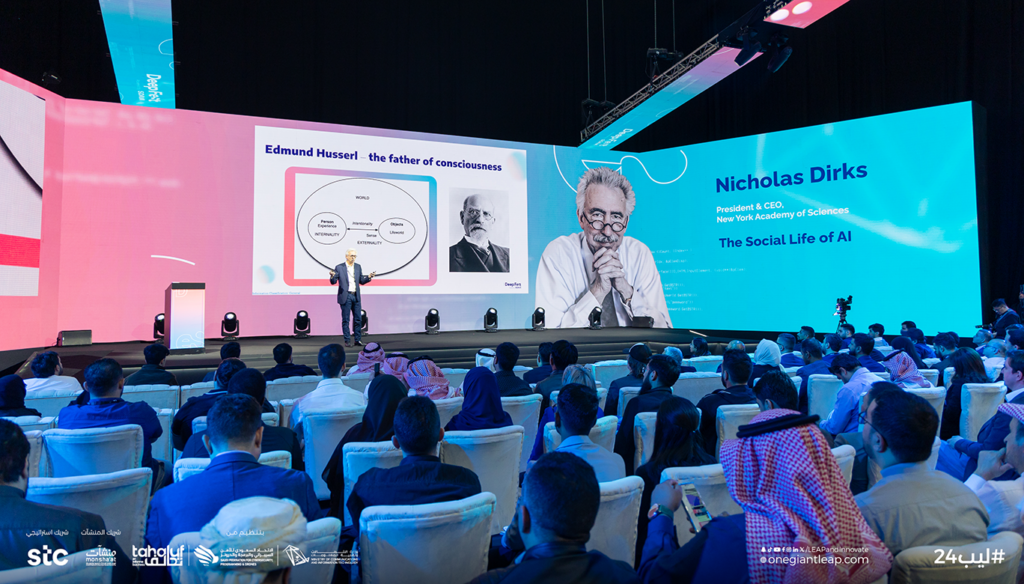
Nicholas Dirks focused on large language models, such as ChatGPT, and the importance of context and culture when developing these technologies.

Published March 13, 2024

By Nick Fetty

Nicholas Dirks, President and CEO of The New York Academy of Sciences, recently presented at what has been dubbed “the world’s most attended tech event.”

Dirks gave a lecture titled “The Social Life of AI” to LEAP conference attendees at the Riyadh Exhibition and Convention Center in Saudi Arabia’s capital city. His presentation was part of DeepFest, a section of the LEAP event focused specifically on artificial intelligence (AI), which featured more than 150 speakers and nearly 50,000 attendees.

Dirks’ presentation covered a range of AI topics from the origins of human-machine interaction during the industrial revolution to the social and cultural impacts AI will have as the technology continues to develop.

“I seek here not just to talk about benefits and dangers, nor the larger debate between techno optimists and those who worry about threats about extinction, but about how AI will impact our everyday lives in ways that will be about far more than the more obvious importance of technology in our economic and political worlds,” said Dirks.

Dirks focused on large language models, such as ChatGPT or autocomplete, which use machine learning to “predict and generate plausible language.” When developing these models, Dirks emphasized the importance of context and culture, both of which can greatly impact how AI is programmed to generate language.

“Humans live in webs that are particular to cultural and historical experience, some shared across the entire human race, others deeply specific to smaller groups and contexts,” said Dirks. “Language is thus critical, but so is the cultural context within which any language is developed, learned, and deployed.”

Creating Social Meaning

Without proper regulations and best practice guidelines, AI might change cultural contexts in negative ways, rendering it a problematic player in the symbolic game of creating social meaning. This can lead to greater autonomy for machines, and less for humans, causing people to have more faith in machines than in humans. Within just the past couple of decades, issues caused by changes in technology are being brought to the forefront, such as the loss of jobs due to automation, mental health concerns spurred on by social media algorithms, and the dissemination of misinformation and disinformation through deepfakes and other maliciously manipulated content.

To avoid these pitfalls, Dirks says experts from various disciplines, including humanists, social scientists, psychologists, and philosophers, must be brought to the table in the research and development of AI technologies. These technologies should be frontloaded with socially positive applications, such as relevant and inexpensive educational opportunities, frictionless access to financial and other transactions, entitlements, and more.

While many serious considerations must be factored into the development of AI to avoid negative outcomes, Dirks ended his presentation with an optimistic look at the positive potential of AI moving forward.

“The social life of AI need not destroy or replace our own social lives as human beings. With deliberate, cross-sectoral, and multidisciplinary engagement – we can ensure that AI augments our lives, neither replacing nor subordinating us, and that the benefits of AI are shared by all,” he said.

Learn more about The New York Academy of Sciences’ efforts into AI such as the Artificial Intelligence and Society Fellowship as well as the Tata Series on AI & Society.

Applied Animal Biomechanics

This collection of papers explores the potential applications of animal biomechanics through a series of experiments, reviews, and perspectives. These papers include a wide range of species ranging from snakes to insects and how they can inspire the creation of robots and other devices. The novel experimental findings, timely reviews, and unique perspectives will provide important contributions to advance the field of applied animal biomechanics. The virtual issue is edited by David Hu (Georgia Institute of Technology) and Frank Fish (West Chester University).

Combating COVID-19

An abstract graphic denoting COVID-19.

Overview

From March 25th to May 6th, 2020, over 2000 young innovators from 74 different countries came together to join the fight against COVID-19. In response to the coronavirus outbreak and global shutdown, the New York Academy of Sciences invited creative problem-solvers from around the world to participate in the challenge for a chance to receive a $500 travel scholarship to attend the Global STEM Alliance Summit. The winning solution, GOvid-19, is a virtual assistant and chatbot that provides users with accurate pandemic-related information. Learn more about the winning solution and the solvers who designed them.

The World Health Organization (WHO) declared the outbreak of the coronavirus disease 2019 (COVID-19) a pandemic in March 2020. As scientists and public health experts rush to find solutions to contain the spread, existing and emerging technologies are proving to be valuable. In fact, governments and health care facilities have increasingly turned to technology to help manage the outbreak. The rapid spread of COVID-19 has sparked alarm worldwide. Many countries are grappling with the rise in confirmed cases. It is urgent and crucial for us to discover ways to use technology to contain the outbreak and manage future public health emergencies.

Challenge

Consider the obstacles faced by governments, healthcare providers and/or patients and design a technology-based solution that can be deployed in response to combat COVID-19. The solution can be an improvement of an already existing technology or a new application.  Solutions should consider the following: 

  • Modes and rates of disease transmission 
  • Known preventative and protective measures against COVID-19
  • Lack of vaccine, medication, and treatment for COVID-19
  • The public health system, local healthcare infrastructure, access to technology and other relevant contexts

Winners

The winning solution, GOvid-19, is a virtual assistant and chatbot that provides users with accurate pandemic-related information about government responses, emergency resources, statistics on COVID-19 while utilizing grassroots feedback, streamlining medical supply chains with blockchain and AI techniques address potential accessibility issues among the most vulnerable groups.

Tracking Coronavirus

An abstract graphic denoting COVID-19.

Overview

From May 8th to June 19th, 2020, over 250 innovators from 21 different countries worked together to develop syndromic surveillance systems that help us better understand the current pandemic and prevent future outbreaks. The New York Academy of Sciences invited solvers from around the world to participate in the challenge for a chance to win a $5,000 USD grand prize. The winning solution, SYNSYS: Tracking COVID-19 created by Esha Datanwala, is a syndromic surveillance system that uses online data to predict outbreaks. Learn more about the winning solution and the solver who designed it.

In the last two decades three new Corinaviruses have jumped from animals to humans – called the spillover effect– causing serious illness and fatalities. Scientists and researchers in various sectors are racing to develop treatments and a vaccine while also investigating fundamental questions about the virus such as the seasonality, full range of symptoms, true fatality rate, viral latency, dose response curve of the viral load, long-term immunity, mutation rate etc.

The lack of Syndromic Surveillance for Coronavirus has grossly exposed the global and local preparedness for pandemics making us vulnerable as well as putting extreme stress on our government, healthcare facilities, medical supply demands and economies.

Challenge

Using available data from the COVID-19 pandemic and/or past outbreaks of SARS and MERS (see below for some suggestions), design an innovative syndromic surveillance system that addresses the need for improved surveillance networks to better understand the threat of future waves of COVID-19 and/or future Coronavirus outbreaks.

Winners

SYNSYS is a syndromic surveillance system designed for the public & private healthcare sectors. This system uses public domain mined data from Google Trends, various social media sites, census data, and satellite data to predict outbreaks, both before they happen and while they’re happening.

Team Member: Esha Datanwala

IoT Smart Homes Challenge

A woman using her smartphone to control IoT devices in her home.

Overview

In a two-year partnership with the Ericsson-created Center of Excellence (CoE), the Academy invited Omani youth to join the Junior Academy and participate in a series of Internet of Things (IoT) challenges and activities. Students and mentors from Omani industry and academia will participate in Challenges around the topic of ‘Internet of Things’ which will offer you opportunities to innovate and learn with peers and mentors around the globe.

Challenge

Design a smart home that integrates technology which collects, processes, and stores environmental and health information. The smart home you design should be sustainable and provide suitable feedback mechanisms for such information to promote sustainable energy use but also the physical and mental health of those living in the home. The design can include new innovations and/or alterations of existing technology.

In essence, the central challenge question you need to answer is:

How can a smart home create a healthier and more sustainable home environment?

Winners

The winning team, Smart Shelter, focused on using data—in particular, the interconnected web of computing devices and digital machines known as the Internet of Things (IoT)—to monitor energy, water and air quality/air usage and improve the efficiency of service provision in the shelters automatically. They also highlighted the use of data to enhance security, register new residents, and to keep track of unsheltered people at risk in order to direct them to shelters with available space.

Team members: Al-Zahraa A. (Team Lead) (Oman), Tahra A. (Oman), Miaad A. (Oman), Taher A. (Oman)

Mentor: Venkatesan Subramaniyan (India)

Sponsor

ericsson logo vertical

This program is made possible by a two-year partnership between the Academy and Ericsson-created Center of Excellence for Advanced Telecommunications and IoT. Throughout the program, Omani youth will build critically important 21st century skills, hone their entrepreneurial and innovation mindsets, and build their digital knowledge and leadership potential.

Cybersecurity

An abstract graphic representing cybersecurity.

Overview

The digital landscape is rapidly transforming as information, processes, and devices are increasingly connected in complex networks. Nearly everything is connected via the internet: homes, businesses, medical systems, monetary systems, infrastructure, and governments, just to name a few. At the same time, individual users of technology open themselves up to risks on a regular basis simply by using smartphones, tablets and laptops. These mobile computing devices are vulnerable to multiple types of cyber threats such as phishing, malicious apps, and ransomware. Relaxed security settings and the use of public Wi-Fi networks add on additional layers of risk. 

Thanks to our hyper-connectedness, these individual security breaches can have far-reaching consequences. With access to a singular password or social media account, cyber criminals have the potential to steal information and identities, crash networks, and even hold entire governments digitally hostage. Innovative cybersecurity solutions that address the vulnerabilities of mobile computing devices and their human users have the potential to make individuals, organizations, and the entire digital landscape more resilient and secure.

Winners

The winning team, Cybersafe, focused on developing software that enables Artificial Intelligence (AI) to interact with and enhance testing systems on smartphones, tablets, and laptops. In addition to this technological solution, the team members advocated for policy changes to better protect the public from cyberhackers.

Team members: Jessica K. (Team Lead) (United States), Ritwik D. (United States), Neha B. (United States), Bhavya D. (United States), Farah M. (Jordan)

Sponsor

NEOM is an accelerator of human progress and a vision of what a new future might look like. It is a region in northwest Saudi Arabia on the Red Sea being built from the ground up as a destination and a home for dreamers who want to be part of building a new model for exceptional livability, creating thriving businesses and reinventing environmental conservation.

NEOM will include hyperconnected, cognitive cities, ports and enterprise zones, research centers, sports and entertainment venues and tourist destinations. As a hub for innovation, entrepreneurs, business leaders and companies will come to research, incubate, and commercialize new technologies and enterprises in groundbreaking ways. Residents of NEOM will embody an international ethos and embrace a culture of exploration, risk-taking and diversity. Some of the most recent cities and destination launched by NEOM include:

  • THE LINE – A linear, cognitive city without cars that redefines urban living
  • Oxagon – An advanced manufacturing and innovation city with a floating platform
  • Trojena – A sustainable year-round mountain tourism destination

Improving Cyber Security through Research and Policy

An abstract graphic representing cybersecurity.

Winners of the Junior Academy Innovation Challenge Spring 2023: “Cybersecurity”

Published January 11, 2024

By Nicole Pope

Sponsored by NEOM

Team members: Jessica K. (Team Lead) (United States), Ritwik D. (United States), Neha B. (United States), Bhavya D. (United States), Farah M. (Jordan)

Individuals, businesses, and governments increasingly operate in a digital landscape. But as homes, medical systems, banking services, and key infrastructure connect via complex online networks, cyberattacks have increased exponentially. Developing strong protections against various forms of cyberthreats has become critical.

Enter Cybersafe, the 5-student American/Jordanian collaboration that formed the winning team in the Spring 2023 Cybersecurity Innovation Challenge.

“I’ve been thinking about two things: collaborating with cybersecurity experts and conducting user research,” says Bhavya.

A Focus on Phishing

After thorough research on various cyberthreats, the team evolved to focus on “phishing”, an illegal practice that uses fraudulent emails to manipulate recipients into divulging private information– information used for blackmail, identity theft, embezzlement, and even resale to other criminals.

Email remains the hackers’ easiest route to breaching online security and obtaining sensitive data. The scale of this cyberthreat is staggering: Every day, 3.4 billion fraudulent spam emails are sent around the world, using fake sender addresses to deceive individuals into revealing sensitive information. The consequences for victims can be devastating.

In 2022 over 300,000 phishing claims were filed in the United States alone. This is a 61% increase compared to the previous year– with costs estimated at $2.7 billion. Cybercriminals are often hard to trace, particularly because they tend to select victims carefully, focusing on vulnerable, often elderly people. Phishing perpetrators often avoid attracting attention by launching large numbers of small attacks. To coerce and deceive their victims, they keep in touch with trends and constantly adjust their messages and tactics.

A Two-Pronged Solution

Through brainstorming and effective teamwork, the students came up with a two-pronged solution to curb this global scourge.

“I gained a lot of insights from this experience and learned how to work with someone rather than under someone,” says Farah. “I took on various tasks so we could share the workload evenly and efficiently.”

First, they focused on developing software that enables Artificial Intelligence (AI) to interact with and enhance testing systems on smartphones, tablets, and laptops. These systems can automatically analyze emails and attachments in order to detect malicious content.

“One of the most valuable things I learned from this experience was the importance of open communication and collaboration,” says Neha. “I found that by working together and sharing our ideas, we were able to create a stronger end product than we could have individually.”

Advocating for Policy Changes

In addition to this technological solution, the team members advocated for policy changes to better protect the public from cyberhackers. In particular, they suggested new legislation to prevent tactics such as impersonation of co-workers or relatives in order to coerce victims into soliciting private information, clicking on malware links, or downloading harmful attachments.

The law would impose tougher penalties on cybercrime perpetrators, increasing fines and the likelihood of imprisonment. It would also require the most frequently targeted companies and organizations (in 2020: financial services, payment platforms, and webmail) to update their security protocols on a regular basis, implement two-factor authentication, and increase funding for cybersecurity research and development.

The students felt confident in their twofold solution to combat phishing and improve the security of personal devices: 1. With the help of AI, identify and filter harmful emails and alert potential victims, and 2. Enact new legislation to improve cybersecurity and impose harsher punishments on online criminals.

A Dual Approach

Developing this dual approach involved hard work for the Cybersafe team. This was particularly evident when it required coordinating the time zones of two separate continents. It also offered them opportunities to discover new fields and acquire new skills.

“Normally my project revolves around nature and ecologic science, so this was a nice time to try something new and test my recently developed skills,” says Ritwik. “Although I have a very busy schedule outside the Academy, I tried to make the best of my free time and dedicated myself to this project.“

After successfully completing the challenge, the students felt enriched by the experience and proud of their joint achievement– made even sweeter by learning they were the winning team.

“I learned a lot of collaborative skills from this project, including how to lead and participate in a team setting,” says Team Lead Jessica. “Working with this team was a wonderful experience and I look forward to future collaborations.”

Ethical Implications in the Development of AI

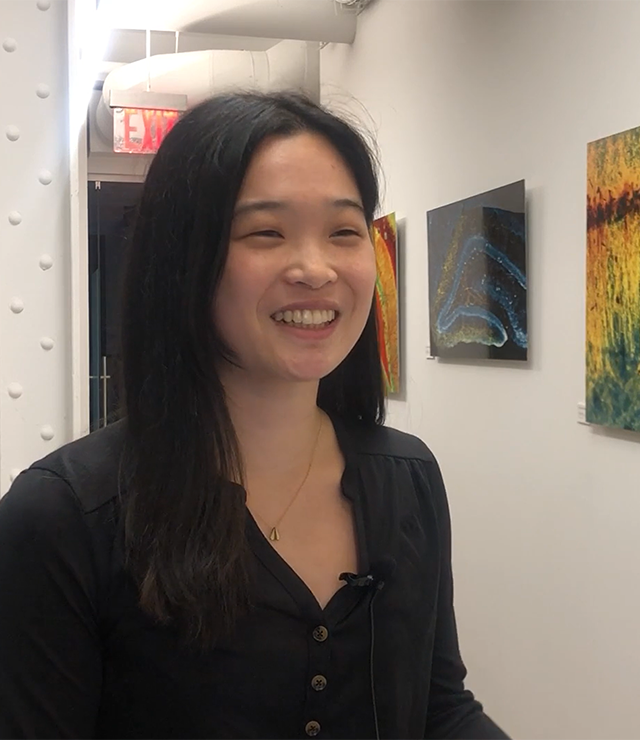
An AI researcher poses for the camera.

Published November 21, 2023

By Nick Fetty

Betty Li Hou, a Ph.D. student in computer science at the New York University Courant Institute of Mathematical Sciences, presented her lecture “AI Alignment Through a Societal Lens” on November 9 at The New York Academy of Sciences.

Seminar attendees included the 2023 cohort of the Academy’s AI and Society post-doctoral fellowship program (a collaboration with Arizona State University’s School for the Future of Innovation in Society), who asked questions and engaged in a dialog throughout the talk. Hou’s hour-long presentation examined the ethical impacts that AI systems can have on societies, and how machine learning, philosophy, sociology, and law should all come together in the development of these systems.

“AI doesn’t exist independently from these other disciplines and so AI research in many ways needs to consider these dimensions, otherwise we’re only looking at one piece of the picture,” said Hou.

Hou’s research aims to capture the broader societal dynamics and issues surrounding the so-called ‘alignment problem,’ a term coined by author and researcher Brian Christian in his 2020 book of the same name. The alignment problem aims to ensure that AI systems pursue goals that match human values and interests, while trying to avoid unintended or undesirable outcomes.

Developing Ethical AI Systems

As values and interests vary across (and even within) countries and cultures, researchers are nonetheless struggling to develop ethical AI systems that transcend these differences and serve societies in a beneficial way. When there isn’t a clear guide for developing ethical AI systems, one of the key questions from Hou’s research becomes apparent: What values are implicitly/explicitly encoded in products?

“I think there are a lot of problems and risks that we need to sort through before extracting benefits from AI,” said Hou. “But I also see so many ways AI provides potential benefits, anything from helping with environmental issues to detecting harmful content online to helping businesses operate more efficiently. Even using AI for complex medical tasks like radiology.”

Social media content moderation is one area where AI algorithms have shown potential for serving society in a positive way. For example, on YouTube, 90% of videos that are reviewed are initially flagged by AI algorithms seeking to spot copyrighted material or other content that violates YouTube’s terms of service.

Hou, whose current work is also supported by a DeepMind Ph.D. Scholarship and an NSF Graduate Research Fellowship, previously served as a Hackworth Fellow at the Markkula Center for Applied Ethics as an undergraduate studying computer science and engineering at Santa Clara University. She closed her recent lecture by reemphasizing the importance of interdisciplinary research and collaboration in the development of AI systems that adequately serve society going forward.

“Computer scientists need to look beyond their field when answering certain ethical and societal issues around AI,” Hou said. “Interdisciplinary collaboration is absolutely necessary.”

Artificial Intelligence & Engineered Tissues For Cardiac Disease Therapeutics

A scientific illustration of a human heart and chest cavity.

Developing targeted therapies for rare cardiomyopathies is challenging: difficulties identifying patients, delivering therapeutics, and accessing heart tissue results in a 50% mortality rate 5 years after diagnosis.  Early, accurate disease detection and classification can significantly improve outcomes for patients with rare cardiomyopathies. Achieving these goals requires multiple novel technologies to coalesce that will enable early patient identification, deepen our understanding of the disease process, improve modeling of human pathophysiology, accelerate testing of drug candidates, and leverage novel therapeutic modalities to target the heart specifically, safely and effectively.

This two-day conference will convene industry scientists, academics, and clinicians to understand the integration of artificial intelligence and engineered tissues for safe and effective delivery of novel therapeutics for patients with arrhythmogenic, hypertrophic, and dilated cardiomyopathies.