A Life in Defiance of Gravity

An author presents during an event at the Academy.

New book explores blackholes, massive gravity, how Einstein was ahead of his time, and learning from failure.

Published July 31, 2024

By Nick Fetty
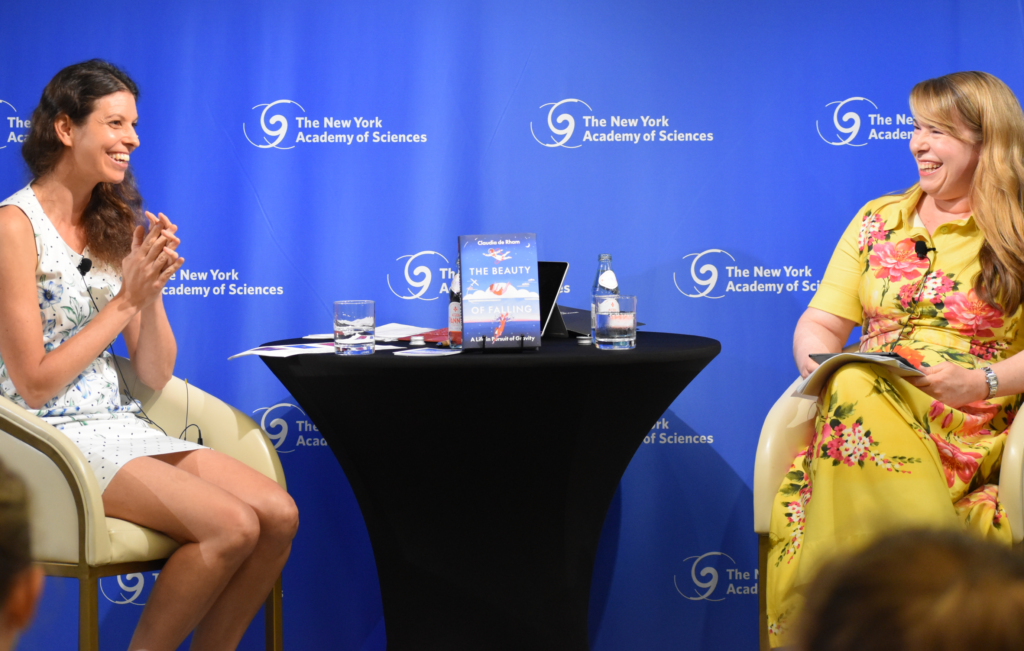
Photo by Nick Fetty/The New York Academy of Sciences

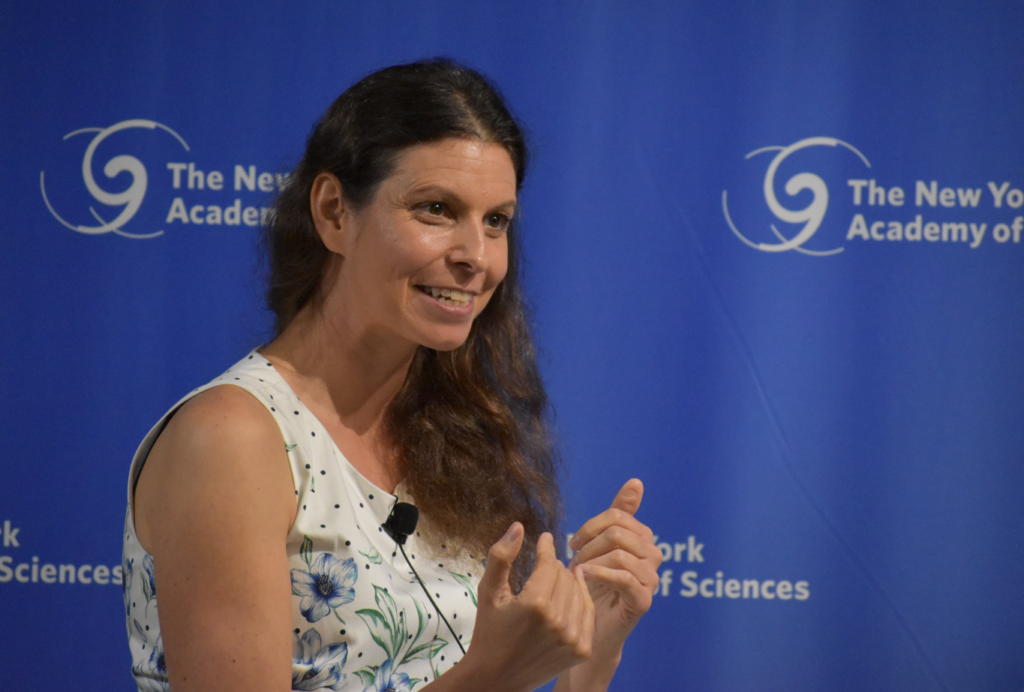
Theoretical physicist Claudia de Rham discussed her recently published book, The Beauty of Falling: A Life in Pursuit of Gravity, during the recent Authors at the Academy Series, moderated by Chief Scientific Officer Brooke Grindlinger, PhD, at The New York Academy of Sciences.

A Life in Defiance of Gravity

Professor de Rham opened the conversation by joking that she’s had to “defy gravity for most of her life in an effort to understand it.” She observed her body’s buoyancy during diving expeditions in the Indian Ocean. She gazed at Canadian waterfalls from overhead while piloting aircraft. She even endured the rigors of astronaut training. All of this, coupled with her study of theoretical physics, helped to inform her book.

“We have this playful relationship with gravity, I think from an early age you can see that. Everybody likes to defy gravity, I don’t think I’m the only one,” de Rham said with a smile.

She recalled an impactful instance from her childhood in Peru when she went on an exhibition into the Amazon jungle. Lying in her hammock, she peered up at a clear, star-filled night sky and was enveloped with feelings of serenity and blissfulness. She thought philosophically about how humankind is just one part of the greater universe. She theorized that gravity was the throughline that connected humankind to nature, to other humans, to everything in the universe.

“From that point on I realized I really want to explore the fundamental laws of nature much more,” she said.

De Rham’s life and career has taken her across the globe. In addition to Peru, her childhood included stints in Switzerland and Madagascar. She earned degrees in France, Switzerland, and England, before taking a postdoc in Canada. She’s also served as faculty at institutions in Switzerland and the United States.

The Dream of Becoming an Astronaut

Photo by Nick Fetty/The New York Academy of Sciences

De Rham currently serves as a professor of theoretical physics at Imperial College London, where her work falls at the intersection of gravity, cosmology, and particle physics. While she is now an accomplished physicist, her initial goal was to become an astronaut.

“I [knew] well the chances were very limited” she said. “I was very realistic but still, if you have a dream, you should just go for it and see what happens.”

She spent more than two decades in her pursuit, despite there being no formal school or training regimen. She said that since the selection process occurs every 15-20 years, most people only get one shot in their lifetime. “There were 10,000 people who had the same thought as me, so I wasn’t the only one.”

The process involved completing the necessary medical, flight and other training. Those who made the next stage, then underwent psychological, psychometric, intelligence, and a “battery” of other evaluations over a one-year period.

She was among roughly 200 applicants who made it to the second round of evaluations which focused more on team bonding and responding to stress. She was then one of 42, and one of the few women, to make it to the next stage, which involved “all possible medical tests that you can imagine” on “every single part of your body.”

One Step Backward, Two Steps Forward

Ultimately, it was a positive result on a newly developed tuberculosis (TB) screening that led to her being declared ineligible. The doctor explained to her that because of a past infection, the test showed that she had the TB antibodies.

“So that was that. That was the end of the dream,” she said. “The dream is still there to some extent but also it changed shape.”

Even though she was disqualified for something beyond her control, she expressed no regrets about the time and effort she spent training.

“It’s not so much about the outcome at the end of the day, it’s about the journey and the experiences you have along the way,” she said.

She emphasized that the element of “potential failure” was important in the process because that’s how people learn and make progress. She quickly found that this approach to dealing with failure was applicable to her work as a scientist.

“As a theoretical physicist, when I fail, it’s just an equation that’s wrong, [and] I start over again,” she said. “To me it’s also part of this discovery with gravity where we know [the theory] does fail, and that’s actually something very positive because it tells us there is something to explore there.”

Einstein Was Right (Sort Of)

In 1915, Einstein proposed his theory of general relativity and within a year he used this theory to predict the existence of gravitational waves, ripples within space and time. His contemporaries rejected this new theory, and even Einstein second guessed himself, wondering if gravitational waves could be detected. Roughly 20 years later, he almost published a paper with the definitive and provocative title of “Do Gravitational Waves Exist? Answer: No!”
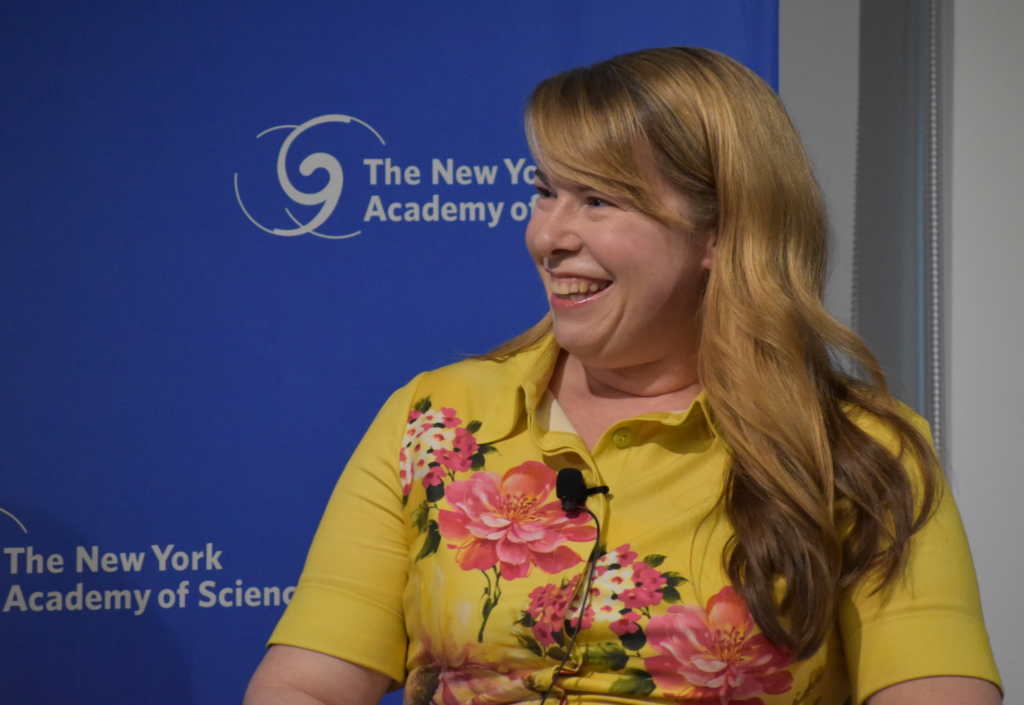
Photo by Nick Fetty/The New York Academy of Sciences

“He wasn’t satisfied not only by the fact that you couldn’t observe them but simply he wanted to claim that they were not part of reality, an illusion, a mathematical artifact,” said de Rham.

This paper was one of the first of his to undergo the peer review process. This involves fellow scientists from similar fields auditing research papers for scientific accuracy and feasibility.

Einstein did not take kindly to the referee of his paper who questioned his definitive declaration about the nonexistence of gravitational waves, however it did prod him to keep exploring. He eventually reworked his paper with the more accurate, less provocative title of “On Gravitational Waves.”

“There’s a lesson in there for all of the scientists who complain about the peer review process,” Dr. Grindlinger, the moderator, chimed in. “Even Einstein benefitted from peer review.”

In 2016, scientists from the National Science Foundation’s Laser Interferometer Gravitational-wave Observatory announced a significant breakthrough after directly detecting signals for gravitational waves in space – proving Einstein’s theory from a century prior.

The 2016 discovery involved earth-based instruments that were able to detect the gravitational waves of two merging blackholes in outer space. The ripples caused by this phenomenon traveled through space and time for millions of years until they were detected by the instruments on earth.

The Beginning of a New Era

Today’s consensus in theoretical physics suggests that Einstein’s theory of general relativity will eventually fail. One example being within Sagittarius A*, the supermassive blackhole at the center of the Milky Way galaxy.

“For the failure of Einstein’s theory of general relativity, we don’t need to have any observations to know directly where it would fail,” said de Rham. “And yet we know that we need to have a new theory that goes beyond Einstein’s theory of relativity to overcome it.”

To fill the gaps in the research, de Rham has developed her own theory of “Massive Gravity.” Though, much like Einstein, she at times second guesses her own idea.
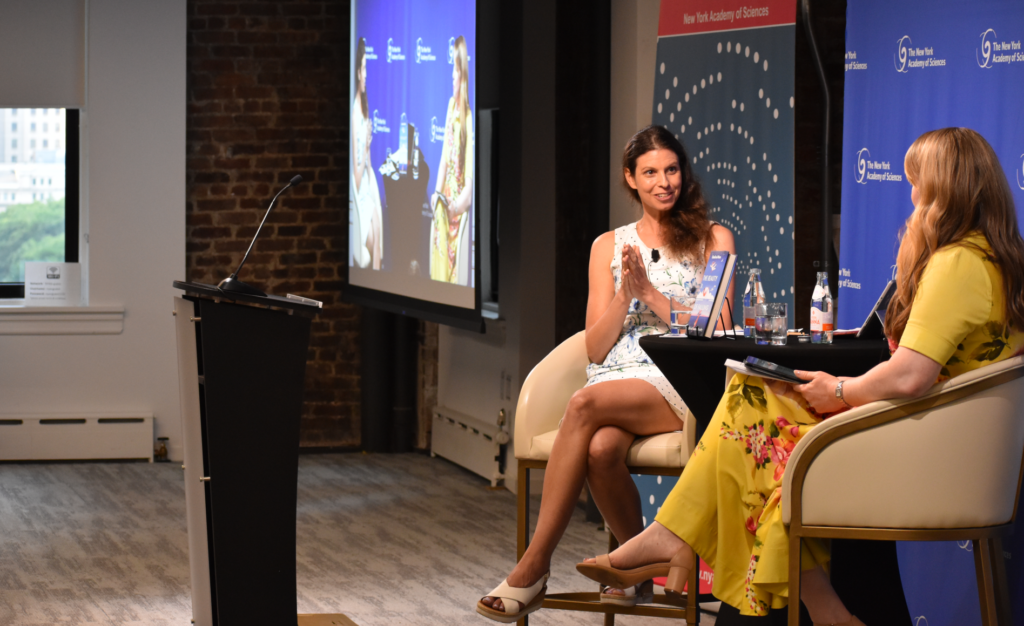
Photo by Nick Fetty/The New York Academy of Sciences

“I’m not convinced that it’s a reality, but I am convinced that we should explore it,” said de Rham. “Because that’s how we learn.”

In 2011, de Rham, Gregory Gabadadze and Andrew Tolley developed a new, groundbreaking mathematical framework for the theory of massive gravity. Her work has profound implications for the area of research now dubbed “beyond Einstein gravity”, which includes exploring new types of particles in the universe and connecting the theories of gravity with current and next-generation astrophysics experiments.

“If gravity had a very small mass, then the messenger for gravity wouldn’t have as big of a reach anymore. That’s the idea behind the theory of massive gravity. You wouldn’t need to account for all the vacuum energy present in the whole of the universe to explain the accelerated expansion. You only account for a fraction of it and it leads to a smaller rate of acceleration of the universe,” said de Rham, succinctly summarizing her complex theory.

Award-Winning Research

In recognition of her breakthrough research, de Rham was named the 2020 Blavatnik Awards for Young Scientists in the United Kingdom Laureate in the Physical Sciences & Engineering category. The support from the award enabled her to continue conducting impactful research in this field, particularly new and innovative ideas that may not be supported by other funding agencies. The award is free of restrictions and is the largest of its kind for early career researchers.

“Science is always much more fun and creative than science fiction,” de Rham said in closing.

Check out the other events from our 2024 Authors at the Academy Series

Full video of these events is available, please visit nyas.org/ondemand

The Academy’s Century-Long History with Solar Energy

Solar panels with the shining sun in the background.

What started as novel research 100 years ago is a major source of energy today, in part because of a research prize established by an Academy member.

Published July 30, 2024

By Nick Fetty

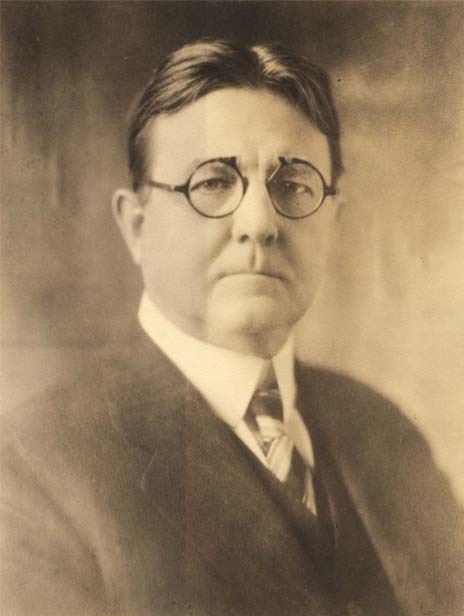
Abraham Cressy Morrison/Public Domain

While electric vehicles and solar panels are commonplace around New York these days, the city’s history with solar energy goes back at least a century.

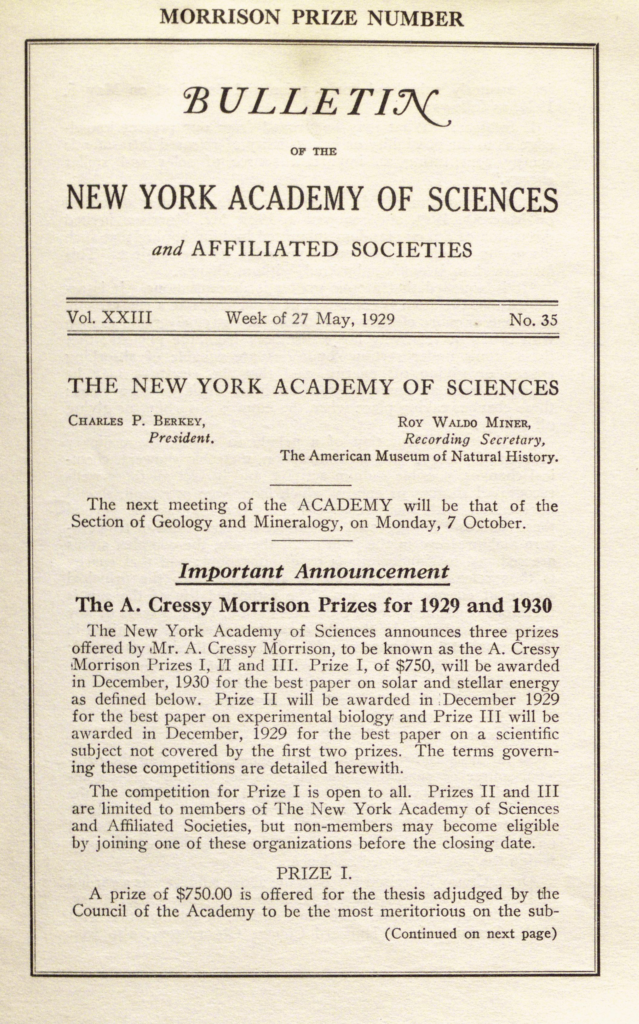
The New York Academy of Sciences has been an incubator for solar energy research and promotion since the early part of the 20th century. This is when Academy member Abraham Cressy Morrison established “a prize of $100 (the equivalent of about $1,800 today) for the best paper on the question of whether released intra-atomic energy constitutes an important source of solar and stellar energy,” according to reporting from The New York Times.

Morrison, who served as the Academy’s President from 1938 to 1939, funded various awards and prizes promoting scientific research in the first half of the 20th century.

The Early Days of Solar Energy

While solar energy research was novel at the time the award was established, within five years researchers were making advancements that helped to prove the potential of this new energy source. “This is merely an indication of the speed with which scientific research makes progress today,” The Brooklyn Daily Eagle reported in 1929.

According to that same article, Morrison pushed back at the idea that his motives were commercial, and instead emphasized his desire to advance science for sciences’ sake.

“It is of much more interest to me to know how the sun creates and continues its energy,” Morrison was quoted. “There is a gap in our knowledge of the sun and throughout the heavens there is a question mark that challenges us.”

Morrison was not the only scientist from this era to see solar as a potential energy source. The sentiment was shared by Thomas Edison, who happened to be a Fellow of the Academy. Around this time, the title of “Fellow” was bestowed upon active resident members credited with significant scientific achievements.

In a 1929 interview with Forbes magazine, Edison was asked “Do you believe that the age of electrical invention and discovery is over?” The 86-year-old Edison responded simply, “No; just started.”

Later in the interview he was asked “Do you believe the time will come when the world petroleum supply will be exhausted and man will turn to electric vehicles?” But oddly enough, he didn’t quite yet see the potential in EVs, answering “If petroleum was exhausted, we can get power for automobiles from powered coal, benzol, alcohol.”

Research Published in Annals and Transactions

The research that resulted from Morrison’s prizes would go on to be published in Annals of the New York Academy of Sciences, the Academy’s academic journal that dates back to 1823.

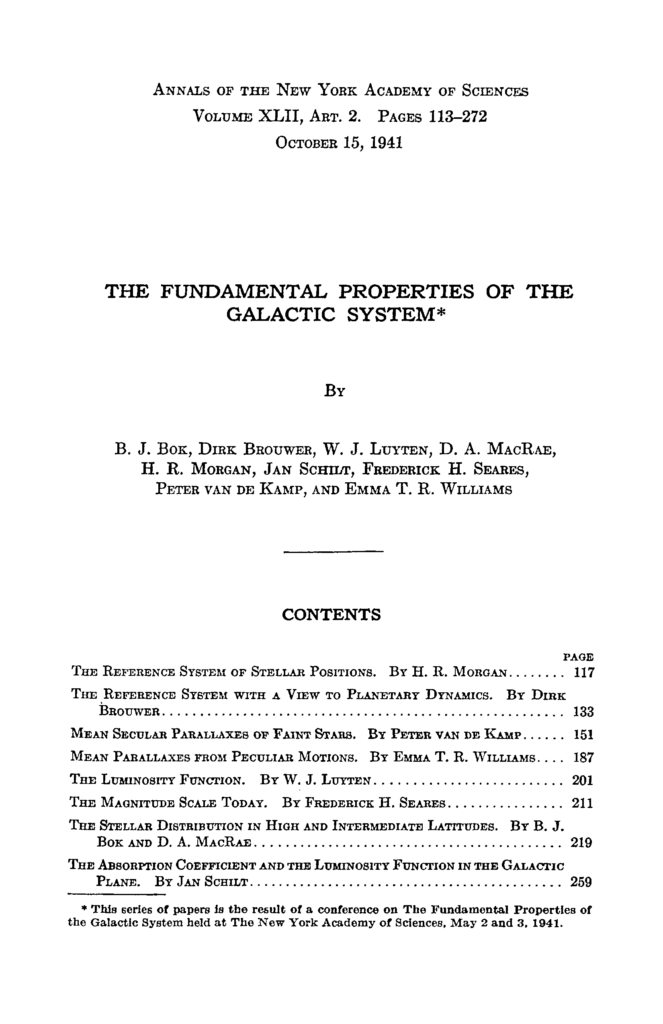
Volume XLII, Article 2 of Annals, published in 1941, focused on “The Fundamental Properties of the Galactic System.”  Academic papers published in this issue examined topics like “The Luminosity Function” and “The Stellar Distribution of High and Intermediate Latitudes.”

The issue also acknowledged Morrison directly, stating “This publication is due to the generosity of Mr. A. Cressy Morrison, who, through the establishment of the A. Cressy Morrison series of prizes in astronomy, has stimulated many noteworthy investigations on the sources of stellar energy.”

The Academy also devoted entire conferences to this line of research during this era. An astronomical conference in 1939, entitled “The Internal Constitution of the Stars,” brought in presenters from as far away as Finland and Czechoslovakia. The conference was so well-received that “[i]t was unanimously decided to follow up this meeting with a second conference to be held next fall,” according to Transactions of the New York Academy of Sciences.

Academy Awards Support Solar Energy (2018-2021)

Solar energy continues to be part of the Academy’s programming today from Awards to Education. Several recent recipients of the Blavatnik Awards for Young Scientists, sponsored by the Blavatnik Family Foundation and administered by the Academy, have made significant scientific research contributions to the field.

Henry Snaith, the 2018 Blavatnik Awards in the United Kingdom Physical Sciences & Engineering Laureate and who serves as the Binks Professor of Renewable Energy at the University of Oxford, found that metal halide perovskite materials can be employed in highly efficient solar cells. Snaith’s research aims to significantly reduce costs for “photovoltaic solar power [which] could help propel society to a sustainable future.”

Xiaoming Zhao, the 2021 Blavatnik Regional Awards Finalist in Chemistry and now on the faculty at Nanjing University of Aeronautics and Astronautics, has conducted extensive research on “perovskites,” which are less expensive and easier to produce than silicon-based solar cells. His research found “record-breaking efficiency and high stability after long-term use.”

Daniel Straus, the 2021 Blavatnik Regional Awards Winner in Chemistry and an assistant professor of chemistry at Tulane University, has advanced solar cells in two ways as a materials chemist. First, he “identified a structural instability in a promising new solar cell material, known as cesium lead iodide,” then he “also demonstrated a new technique to make chiral, or asymmetric, materials from very simple non-chiral molecules.”

Academy Awards Support Solar Energy (2022-2024)

Menny Shalom, the 2022 Blavatnik Awards in Israel Laureate in Chemistry and a professor of chemistry at Ben-Gurion University of the Negev, is developing stable, low-cost materials that “can be utilized for applications in photocatalytic and photo-electrochemical reactions and the development of solar cells, batteries, and fuel cells.”

Svitlana Mayboroda, the 2023  Blavatnik National Awards Physical Sciences & Engineering Laureate and McKnight Presidential Professor of Mathematics at the University of Minnesota, conducts research that provides “physicists with a new fundamental understanding of matter yielding improvements in crucial 21st century technologies, including LED lighting, semiconductors, and solar cells.”

Jooho Lee, the 2023 Blavatnik Regional Awards Laureate in Chemistry and an assistant professor of chemistry and chemical biology at Harvard University, studies “emergent functional materials, including solar cells, electrocatalysts for the hydrogen economy, and optoelectronics” at the microscale.

Samuel D. Stranks, the 2024 Blavatnik Awards in the United Kingdom Chemical Sciences Finalist and a professor of optoelectronics at the University of Cambridge, conducts research to make perovskite solar cells more commercially viable. His “work particularly sheds light on where efficiency losses are in perovskite materials and how they degrade over time, providing critical guidance to engineer long-lasting and high-performing commercial solar cells.”

Academy Educational Initiatives Advance Solar Energy

Renewable energy, specifically solar, was a component in the Junior Academy’s spring 2022 innovation challenge, sponsored by Ericsson. The winning team suggested utilizing solar panels as an energy source for their smart home concept.

Junior Academy member Sthuthi S. wanted to develop a solar panel that wouldn’t negatively impact wild birds. She and her team suggested using “infrared sensors and speakers [that produce] beeping noises at 3 kHz [to] deter birds from landing on solar panels.”

Fellow Junior Academy member Sharon L. expressed her optimism about future advancements in solar energy. “Finally, the development of new renewable energy sources — from paint-on solar cells to microgrids — are soon going to provide a democratization of energy to all corners of the world,” she said in 2017 for an article examining the next 100 years of scientific achievement. “It’s incredibly exciting to be living in a generation where we’ll have the opportunity to contribute to such innovative research!”

According to data from the Solar Energy Industries Association, cumulative U.S. solar installations went from less than 20,000 installed solar capacity (MWdc) in 2010, to nearly 200,000 MWdc in 2024. Similarly, data from the International Energy Agency shows that battery electric vehicles and plug-in hybrid vehicles in the U.S. rose from roughly 200,000 in 2013 to 4.8 million in 2023.

The Academy is at the forefront of new budding solar energy technologies that will help power the future. So, next time you see an EV driving down Broadway, or an array of solar panels on a rooftop, remember that technology has been a work in progress for at least a century. And the Academy has played its role in leading the “charge.”

The Complex Ecosystem of Artificial Intelligence

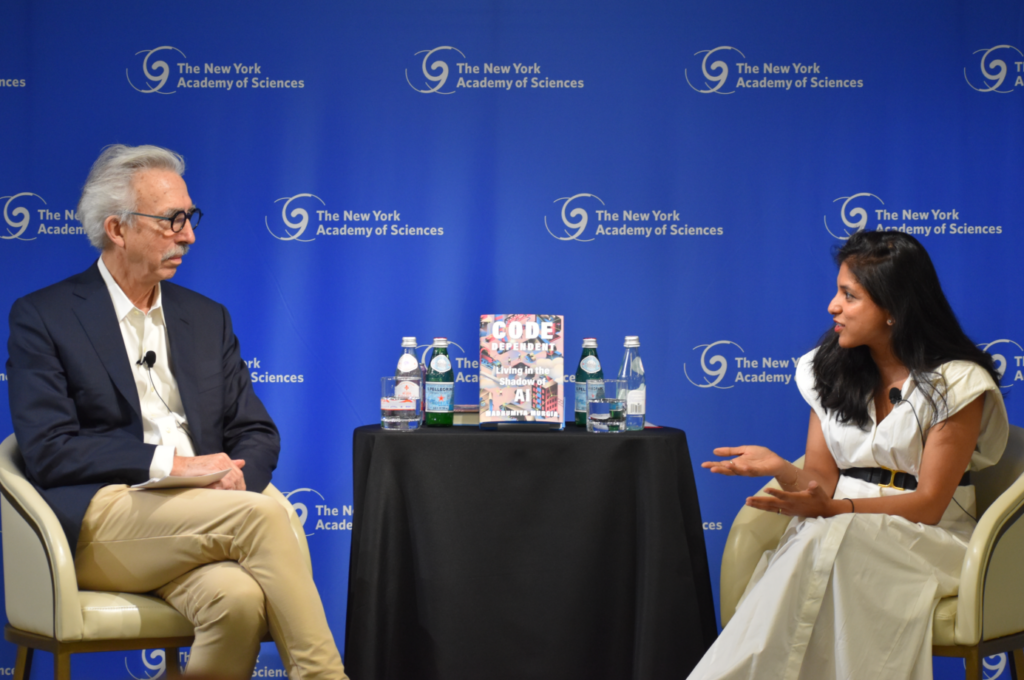
An author presents during an event at the Academy.

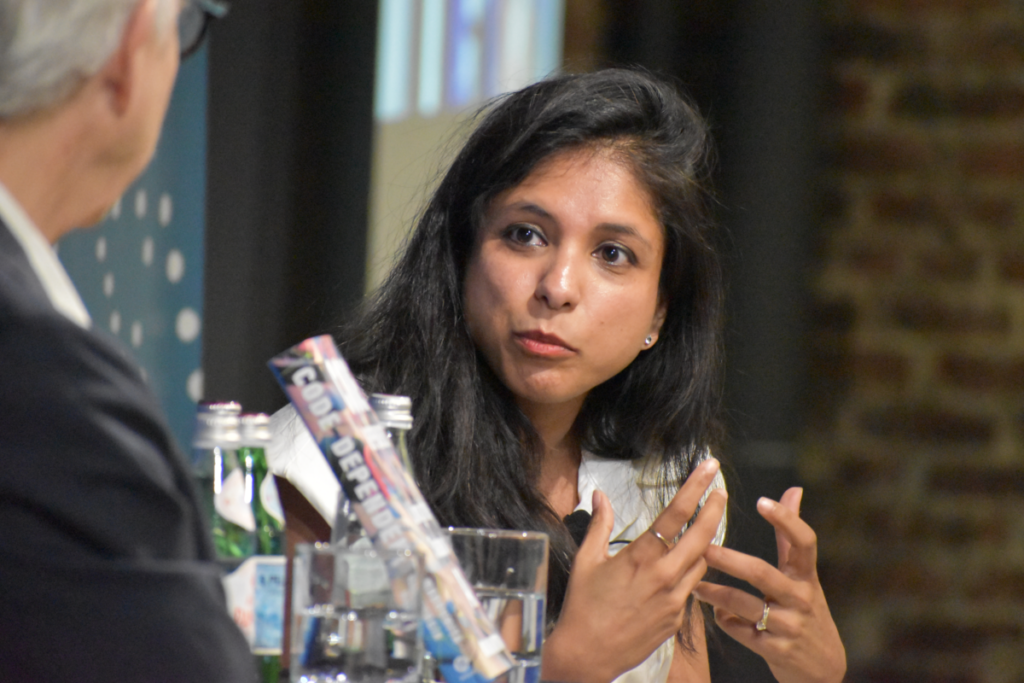
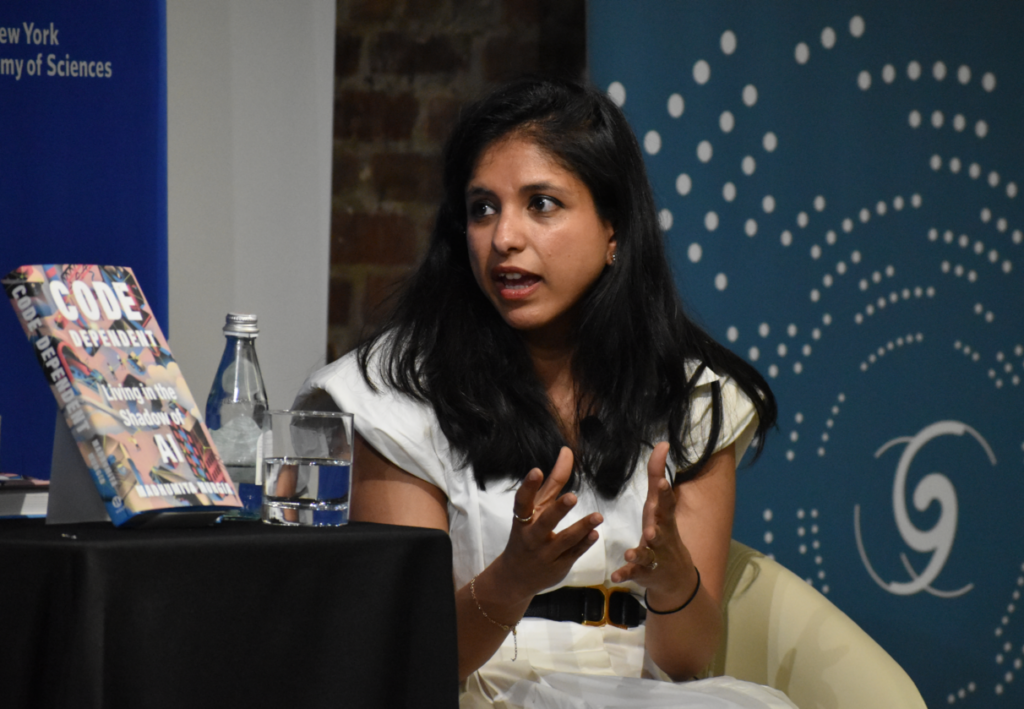
Journalist Madhumita Murgia discusses the potential impact of AI particularly on disenfranchised populations, in her new book Code Dependent: Living in the Shadow of AI.

Published July 16, 2024

By Nick Fetty

Photo by Nick Fetty/The New York Academy of Sciences

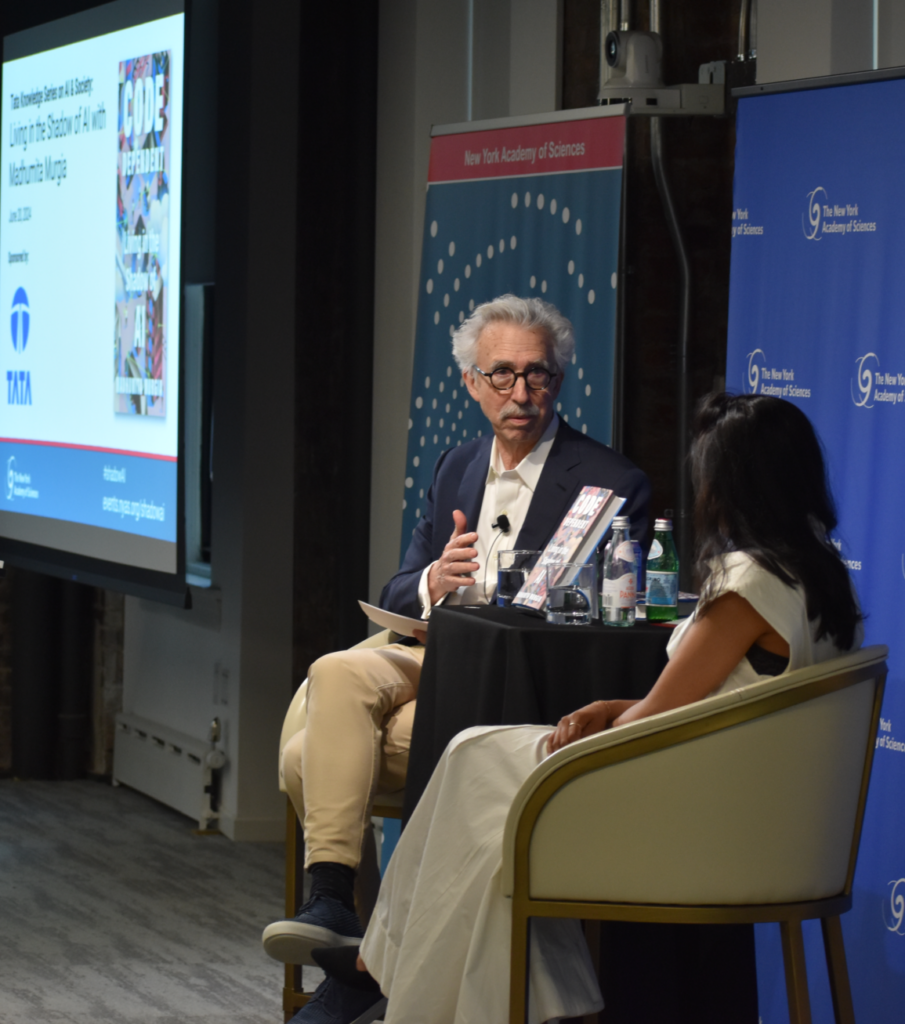
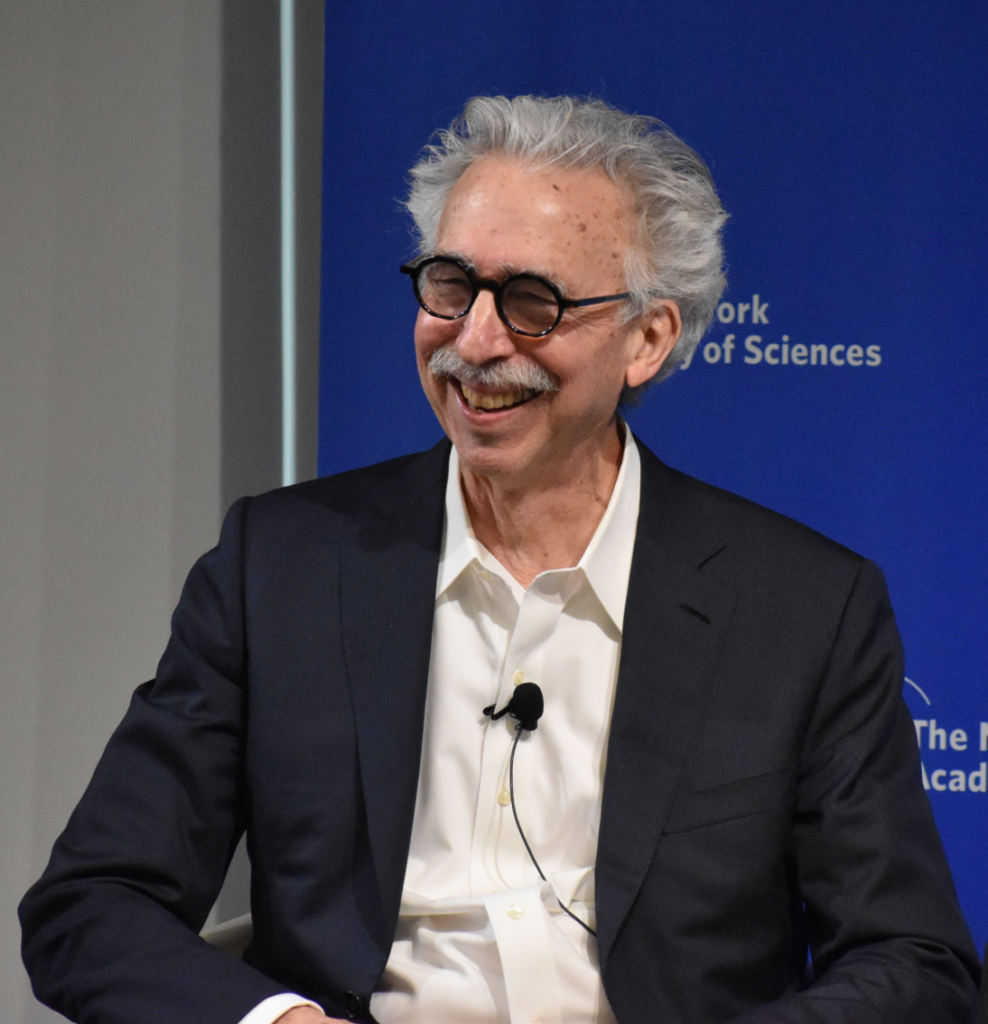
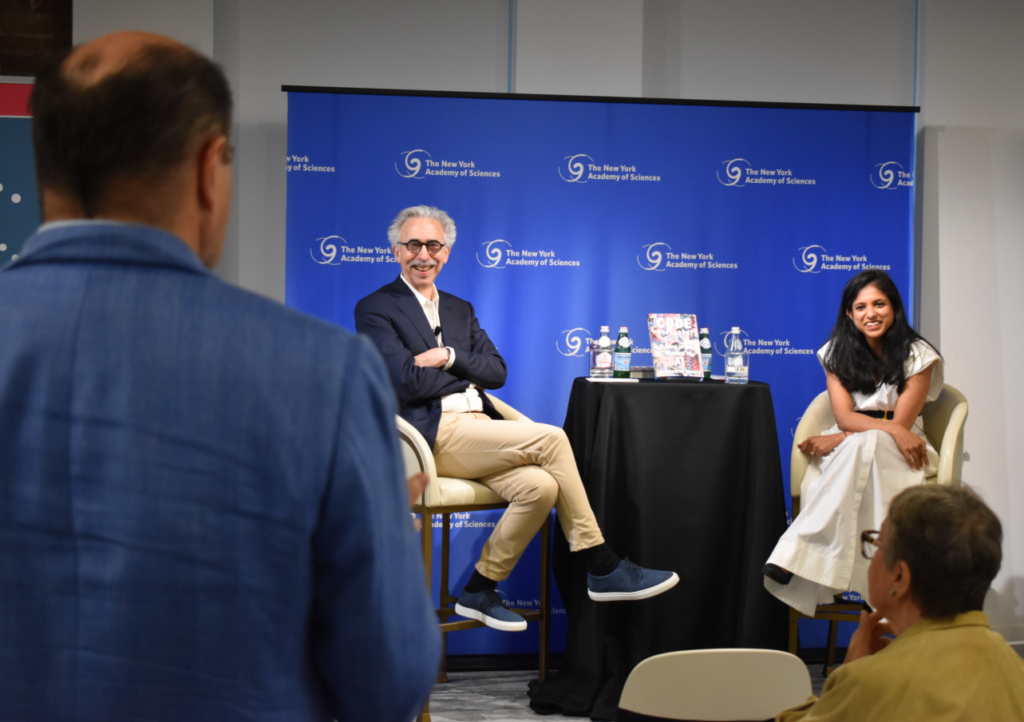
Nicholas Dirks, President and CEO of The New York Academy of Sciences, recently sat down with journalist and author Madhumita Murgia to talk about her new book,  as the latest installment of the Tata Knowledge Series on AI & Society, sponsored by Tata and Sons.

Photo by Nick Fetty/The New York Academy of Sciences

From Scientist to Journalist

The discussion kicked off with Murgia talking about her own journey, which began in Mumbai, India. When considering her major at the University of Oxford, she had to decide whether she’d pursue studies in a scientific field or English. She chose the former.

“I think I made the right choice,” said Murgia. “I learned about the scientific method, more than the facts and the research. [I developed] a deep respect for how science is done and how to analyze data.”

After graduating with her undergraduate degree in biological sciences, she remained at Oxford where she completed her master’s in clinical immunology. She was part of a team that worked on an AIDS vaccine prior to earning a M.A. in science journalism from NYU and transitioning to media.  Murgia joined the staff of the Financial Times in 2016, serving as the European technology correspondent, and in 2023 was named the newspaper’s first Artificial Intelligence Editor.

“[Journalism is about] understanding complex subjects by talking to the experts, but then distilling that and communicating it to the rest of the world,” said Murgia. “[I want to] bring these complex ideas to people to show them why it matters.”

This basis in science and journalism helped to inform Murgia’s book, which was released in June by Macmillan Publishers.

AI’s Potential in Healthcare

Photo by Nick Fetty/The New York Academy of Sciences

While much of Murgia’s book focuses on societal concerns associated with AI, she highlights healthcare as an area where AI shows positive potential. Murgia discusses an app called Qure.ai, which analyzes chest x-rays to predict the likelihood of tuberculosis (TB), a growing health issue in India. The TB infection burden impacted more than 30 percent of those over the age of 15 between 2019 and 2021, according to the National Prevalence Survey of India.

But Murgia knows that stories about people and their experiences are the most compelling way to make a point. She used the example of patients and doctors, both of whom are dependent on these emerging technologies but in different ways.

“For me, the most optimistic I ever feel about AI is when I think about it in relation to science and health,” said Murgia.

Murgia writes about Ashita Singh, MD, a physician who practices in rural western India, often serving tribal populations. According to Murgia, Dr. Singh described medicine as “an art rather than a science.”

The doctor focuses on making human connections when treating patients knowing that resources in her area are extremely limited. AI has shown potential to fill these resource shortfalls, in part because of Dr. Singh’s willingness to train, test, and implement AI technologies within her medical practice.

 “TB is a curable disease. People shouldn’t be dying from it,” said Murgia. “In places where there aren’t many [medical professionals], this is the next best option.”

The Global Infrastructure Training the AI

Photo by Nick Fetty/The New York Academy of Sciences

A consistent theme throughout the book is AI’s at-times exploitative nature on laborers, particularly those at the lower rungs of the socioeconomic ladder. Murgia tells the disturbing story of workers in Africa who are tasked with moderating content for Meta, which owns the popular social media platforms Facebook and Instagram.

While this started out as a way to empower workers, enabling them to develop tech skills while earning a paycheck, it eventually turned exploitative. Workers became traumatized because of the often sexual and violent nature of the content they were forced to view then manually decide whether it violated the platform’s terms of service.

“The more I dug into it, it became apparent that there were huge limitations in how this industry operates,” said Murgia. “The biggest one being the amount of agency these workers are allowed to exercise.”

Murgia cautioned against the technological deterministic take, which can over emphasize the societal benefits of AI. She compared it to colonialism in that the disenfranchised populations are given a small amount of power, but not enough to fight back in a meaningful way.

Empowering Agency Through AI

Photo by Nick Fetty/The New York Academy of Sciences

Murgia said the public may feel a lack of control when using AI because of its complex and fast-moving nature. Typically, the individuals building the systems have the most say.

She added that this is further complicated by the fact that the majority of research and development is done by part-time scientists within corporate environments. These scientists, some of whom continue to hold on to academic appointments, are often bound by financial obligations alongside their ethical responsibilities.

Murgia argues that independent scientists, not bound by corporate obligations, are crucial in areas like evaluation and alignment. Experts in fields like science, medicine, and education provide valuable input when developing these systems, particularly in pinpointing weak points and limitations.

One example of effective, non-corporate work within the realm of scientific research on AI is with the AI Safety Institutes in the United States and the United Kingdom. Murgia feels that these agencies are effective because they are run by computer scientists and machine learning experts rather than regulators and policymakers.

Photo by Nick Fetty/The New York Academy of Sciences

 “That gives you a sense of accountability,” said Murgia. “And I think that’s how we can all contribute as it gets implemented into the education system, into hospitals, into workplaces.” 

Murgia raised numerous other ethical concerns about AI such as apps underestimating (and therefore underpaying) distances for couriers and the legal gray area of facial recognition software. She also points out threats posed by AI-manipulated video, which often target and sexualize women. AI is also serving as a replacement for romantic human companionship, as illustrated by a Chinese company that has generated half a million AI girlfriends for lonely men.

In his closing remarks, Nicholas Dirks, thanked Murgia and set the stage for future collaboration.

“I heard a lot of encouragement for the projects and initiatives we’re doing here from you, so hopefully we can continue to get advice on how we can be a player in this incredibly complex ecosystem that we’re all now part of, whether we know it or not,” he said.

Also from the Tata Knowledge Series on AI & Society: The Promise of AI with Yann LeCun

Deepfakes and Democracy in the Age of AI

deepfakes

A recent Associated Press poll reveals that 58% of US adults across both political parties believe that AI will amplify the spread of misinformation in the 2024 presidential election.  Despite this widespread distrust, some political candidates have already leveraged deepfake ads in elections, utilizing AI-generated images and text-to-voice converters to craft highly realistic visuals that blur the line between truth and deception.

Beyond influencing public opinion with such deepfakes, AI can also skew election outcomes by deploying chatbots on a massive scale to target millions of voters with tailored political messages.While AI-enabled technologies present significant risks to elections’ integrity and societal cohesion, they also potentially enhance our democratic institutions. This technology can boost civic engagement and strengthen the electoral system by increasing accessibility and mitigating existing biases.   

Join us on September 17th for a conversation alongside a panel of experts from political consulting, social neuroscience, and deepfake technologies to explore AI’s dual potential to bolster and undermine the political system. This program is available in person and virtually, with member tickets as low as $10.

The Academy strongly recommends in-person participation to network with fellow participants and be prioritized throughout the Q+A session.

15th Annual Machine Learning Symposium

An abstract graphic.

Machine Learning, a subfield of computer science, involves the development of mathematical algorithms that discover knowledge from specific data sets, and then “learn” from the data in an iterative fashion that allows predictions to be made. Today, Machine Learning has a wide range of applications, including natural language processing, search engine optimization, medical diagnosis and treatment, financial fraud detection, and stock market analysis.

This Symposium, the fifteenth in an ongoing series presented by the Machine Learning Discussion Group at The New York Academy of Sciences, will feature:

  • Keynote Presentations from leading researchers in both applied and theoretical Machine Learning
  • Spotlight Talks: A series of short, early-career investigator podium presentations across a variety of topics at the frontier of Machine Learning; and
  • Poster Presentations

From New Delhi to New York

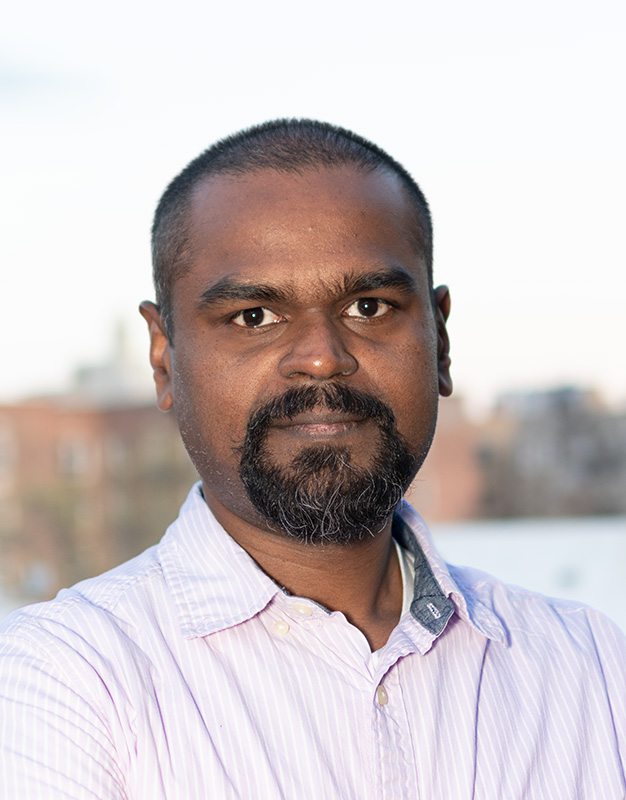
Headshot of Nitin Verma

Academy Fellow Nitin Verma is taking a closer look at deepfakes and the impact they can have on public opinion.

Published April 23, 2024

By Nick Fetty

Nitin Verma’s interest in STEM can be traced back to his childhood growing up in New Delhi, India.

Verma, a member of the inaugural cohort for the Artificial Intelligence (AI) and Society Fellowship, a collaboration between The New York Academy of Sciences and Arizona State University’s School for the Future of Innovation in Society, remembers being fascinated by physics and biology as a child. When he and his brother would play with toys like kites and spinning tops, he would always think about the science behind why the kite stays in the sky or why the top continues to spin.

Later, he developed an interest in radio and was mesmerized by the ability to pick up radio stations from far away on the shortwave band of the household radio. In the early 1990s, he remembers television programs like Turning Point and Brahmānd (Hindi: ब्रह्मांड, literally translated to “the Universe”) further inspired him.

“These two programs shaped my interest in science, and then through a pretty rigorous school system in India, I got a good grasp of the core concepts of the major sciences—physics, chemistry, biology—and mathematics by the time I graduated high school,” said Verma. “Even though I am an information scientist today, I remain absolutely enraptured by the night sky, physics, telecommunication, biology, and astronomy.”

Forging His Path in STEM

Verma went on to pursue a bachelor’s in electronic science at the University of Delhi where he continued to pursue his interest in radio communications while developing technical knowledge of electronic circuits, semiconductors and amplifiers. After graduating, he spent nearly a decade working as an embedded software programmer, though he found himself somewhat unfulfilled by his work.

“In industry, I felt extremely disconnected with my inner desire to pursue research on important questions in STEM and social science,” he said.

This lack of fulfillment led him to the University of Texas at Austin where he pursued his MS and PhD in information studies. Much like his interest in radio communications, he was also deeply fascinated by photography and optics, which inspired his dissertation research.

This research examined the impact that deepfake technology can have on public trust of photographic and video content. He wanted to learn how people came to trust visual evidence in the first place and what is at stake with the arrival of deepfake technology. He found that perceived, or actual, familiarity with content creators and depicted environments, contexts, prior beliefs, and prior perceptual experiences guide public trust in the material deemed trustworthy.

“My main thesis is that deepfake technology could be exploited to break our trust in visual media, and thus render the broader public vulnerable to misinformation and propaganda,” Verma said.

A New York State of Mind

Verma captured this image of the historic eclipse that occurred on April 8, 2024.

After completing his PhD, he applied for and was admitted into the AI and Society Fellowship. The fellowship has enabled him to further his understanding of AI through opportunities such as the weekly lecture series, collaborations with researchers at New York University, presentations he has given around the city, and by working on projects with Academy colleagues such as Marjorie Xie and Akuadasuo Ezenyilimba.

Additionally, he is part of the Academy’s Scientist-in-Residence program, in which he teaches STEM concepts to students at a Brooklyn middle school.

“I have loved the opportunity to interact regularly with the research community in the New York area,” he said, adding that living in the city feels like a “mini earth” because of the diverse people and culture.

In the city he has found inspiration for some of his non-work hobbies such as playing guitar and composing music. The city provides countless opportunities for him to hone his photography skills, and he’s often exploring New York with his Nikon DSLR and a couple of lenses in tow.

Deepfakes and Politics

In much of his recent work, he’s examined the societal dimensions (culture, politics, language) that he says are crucial when developing AI technologies that effectively serve the public, echoing the Academy’s mission of “science for the public good.” With a polarizing presidential election on the horizon, Verma has expressed concerns about bad actors utilizing deepfakes and other manipulated content to sway public opinion.

“It is going to be very challenging, given how photorealistic visual deepfakes can get, and how authentic-sounding audio deepfakes have gotten lately,” Verma cautioned.

He encourages people to refrain from reacting to and sharing information they encounter on social media, even if the posts bear the signature of a credible news outlet. Basic vetting, such as visiting the actual webpage to ensure it is indeed the correct webpage of the purported news organization, and checking the timestamp of a post, can serve as a good first line of defense against disinformation, according to Verma. Particularly when viewing material that may reinforce one’s beliefs, Verma challenges them to ask themselves: “What do I not know after watching this content?”

While Verma has concerns about “the potential for intentional abuse and unintentional catastrophes that might result from an overzealous deployment of AI in society,” he feels that AI can serve the public good if properly practiced and regulated.

“I think AI holds the promise of attaining what—in my opinion—has been the ultimate pursuit behind building machines and the raison d’être of computer science: to enable humans to automate daily tasks that come in the way of living a happy and meaningful life,” Verma said. “Present day AI promises to accelerate scientific discovery including drug development, and it is enabling access to natural language programming tools that will lead to an explosive democratization of programming skills.”

Read about the other AI and Society Fellows:

Applying Human Computer Interaction to Brain Injuries

Headshot of Akuadasuo Ezenyilimba

With an appreciation for the value of education and an athlete’s work ethic, Akuadasuo Ezenyilimba brings a unique perspective to her research.

Published April 19, 2024

By Nick Fetty

Athletes, military personnel, and others who endure traumatic brain injuries (TBI) may experience improved outcomes during the rehabilitation process thanks to research by a Fellow with Arizona State University and The New York Academy of Sciences.

Akuadasuo Ezenyilimba, a member of the inaugural cohort of the Academy’s AI and Society Fellowship, conducts research that aims to improve both the quality and the accessibility of TBI care by using human computer interaction. For Ezenyilimba, her interest in this research and STEM more broadly can be traced back to her upbringing in upstate New York.

Instilled with the Value of Education

Growing up in Rochester, New York, Ezenyilimba’s parents instilled in her, and her three younger siblings, the value of education and hard work. Her father, Matthew, migrated to the United States from Nigeria and spent his career in chemistry, while her mother, Kelley, grew up in Akron, Ohio and worked in accounting and insurance. Akuadasuo Ezenyilimba remembers competing as a 6-year-old with her younger sister in various activities pertaining to their after-school studies.

“Both my mother and father placed a strong emphasis on STEM-related education for all of us growing up and I believe that helped to shape us into the individuals we are today, and a big reason for the educational and career paths we all have taken,” said Ezenyilimba.

This competitive spirit also occurred outside of academics. Ezenyilimba competed as a hammer, weight, and discus thrower on the track and field team at La Cueva High School in New Mexico. An accomplished student athlete, Ezenyilimba was a discus state champion her senior year, and was back-to-back City Champion in discus as a junior and senior.

Her athletic prowess landed her a spot on the women’s track and field team as an undergraduate at New Mexico State University, where she competed in the discus and hammer throw. Off the field, she majored in psychology, which was her first step onto a professional path that would involve studying the human brain.

Studying the Brain

After completing her BS in psychology, Ezenyilimba went on to earn a MS in applied psychology from Sacred Heart University while throwing weight for the women’s track and field team, and then went on to earn a MS in human systems engineering from Arizona State University. She then pursued her PhD in human systems engineering at Arizona State, where her dissertation research focused on mild TBI and human computer interaction in regard to executive function rehabilitation. As a doctoral student, she participated in the National Science Foundation’s Research Traineeship Program.

“My dissertation focused on prototype of a wireframe I developed for a web-based application for mild traumatic brain injury rehabilitation when time, finance, insurance, or knowledge are potential constraints,” said Ezenyilimba. “The application is called Ụbụrụ.”

As part of her participation in the AI and Society Fellowship, she splits her time between Tempe, Arizona and New York. Arizona State University’s School for the Future of Innovation in Society partnered with the Academy for this Fellowship.

Understanding the Societal Impacts of AI

The Fellowship has provided Ezenyilimba the opportunity to consider the societal dimensions of AI and how that might be applied to her own research. In particular, she is mindful of the potential negative impact AI can have on marginalized communities if members of those communities are not included in the development of the technology.

“It is important to ensure everyone, regardless of background, is considered,” said Ezenyilimba. “We cannot overlook the history of distrust that has impacted marginalized communities when new innovations or changes do not properly consider them.”

Her participation in the Fellowship has enabled her to build and foster relationships with other professionals doing work related to TBI and AI. She also collaborates with her fellow cohort postdocs in brainstorming new ways to address the topic of AI in society.

“As a Fellow I have also been able to develop my skills through various professional workshops that I feel have helped make me more equipped and competitive as a researcher,” she said.

Looking Ahead

Ezenyilimba will continue advancing her research on TBI. Through serious gamification, she looks at how to lessen the negative context that can be associated with rehabilitation and how to better enhance the overall user experience.

“My research looks at how to increase accessibility to relevant care and ensure that everyone who needs it is equipped with the necessary knowledge to take control of their rehabilitation journey whether that be an athlete, military personnel, or a civilian,” she said.

Going forward she wants to continue contributing to TBI rehabilitation as well as telehealth with an emphasis on human factors and user experience. She also wants to be a part of an initiative that ensures accessibility to and trust in telehealth, so everyone is capable of being equipped with the necessary tools.

Outside of her professional work, Ezenyilimba enjoys listening to music and attending concerts with family and friends. Some of her favorite artists include Victoria Monet and Coco Jones. She is also getting back into the gym and focusing on weightlifting, harkening back to her days as a track and field student-athlete.

Like many, Ezenyilimba has concerns about the potential misuses of AI by bad actors, but she also sees potential in the positive applications if the proper inputs are considered during the development process.

“I think a promising aspect of AI is the limitless possibilities that we have with it. With AI, when properly used, we can utilize it to overcome potential biases that are innate to humans and utilize AI to address the needs of the vast majority in an inclusive manner,” she said.

Read about the other AI and Society Fellows:

Women’s Health 2.0: The Artificial Intelligence Era

A panel discussion from the South by Southwest event.

Charting the evolution of women’s healthcare in the AI era, illuminating the promise and challenges of predictive tech to close the health gender gap.

Published April 12, 2024

By Brooke Grindlinger, PhD

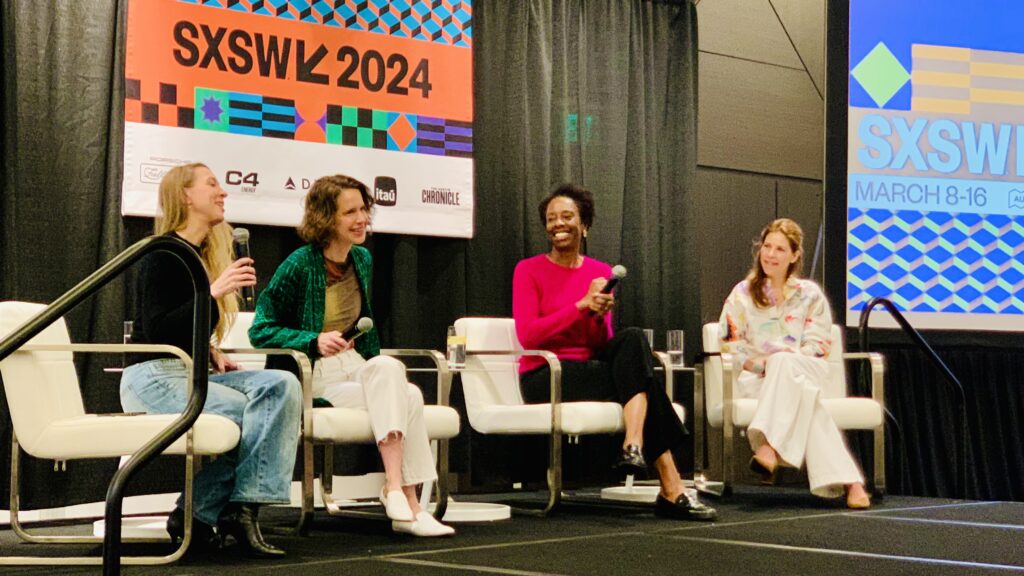
Panelists Sara Reistad-Long (left), Healthcare Strategist at Empowered; Alicia Jackson, PhD, Founder and CEO of Evernow; Christina Jenkins, MD, General Partner at Convergent Ventures; and Robin Berzin, MD, Founder and CEO of Parsley Health speak at SXSW on March 9, 2024. The panelists discussed the promise and risks that AI and predictive tech carry as a path to closing the healthcare gender gap.

Less than 2% of global healthcare research and development is dedicated to female-specific conditions beyond cancer, as was starkly revealed in the January 2024 World Economic Forum and McKinsey Health Institute report, “Closing the Women’s Health Gap: A $1 Trillion Opportunity to Improve Lives and Economies.” Rectifying this disparity holds the potential to inject over $1 trillion annually into the global economy by 2040 through bolstered female workforce participation.

In February 2024, America’s First Lady Jill Biden unveiled a $100 million federal funding initiative for women’s health research, marking a significant milestone for the White House Initiative on Women’s Health Research intended to fundamentally change how the US approaches and funds research in this area. On March 9, 2024, the South by Southwest Conference hosted a pivotal panel discussion titled “Can AI Close the Health Gender Gap?” moderated by Sara Reistad-Long, a Healthcare Strategist at Empowered. This gathering of clinicians, digital health tech executives, and investors delved into the transformative potential of artificial intelligence (AI) and predictive technology in mitigating gender disparities in healthcare.

Women’s Health Beyond Reproduction

The panelists began by establishing a shared definition of ‘women’s health.’ Historically, women’s health has been narrowly defined as reproductive health, primarily concerning the female reproductive organs such as the uterus, ovaries, fallopian tubes, and to some extent, breasts. Yet, as panelist Christina Jenkins, MD, General Partner at Convergent Ventures, aptly pointed out, the scope of women’s health transcends this narrow scope.

“There’s so much more to women’s health than that,” she emphasized, advocating for a broader understanding. “We consider ‘women’s health’ as a specific practice… focused on things that are unique to women, which are those reproductive organs and [associated conditions], but also conditions that disproportionately… or differently affect women.” She elaborated with examples ranging from autoimmune diseases to conditions like migraine, colon cancer, and variances in women’s reactions to asthma medications.

Overlooked and Underserved: Women’s Health Blind Spots

The historical exclusion of women from health research and clinical trials has perpetuated the flawed assumption that women’s bodies and health outcomes mirror those of men, neglecting their unique biological and medical complexities. “Women were not included in medical research until 1993. Women are diagnosed later in over 700 conditions. Some of our most pressing chronic conditions that are on the rise take 5-7 years to be diagnosed—like autoimmune conditions—and 80% of them occur in women,” observed panelist Robin Berzin, MD, Founder and CEO of digital health company Parsley Health.

AI’s Promise in Closing the Research to Practice Gap

Alicia Jackson, PhD, Founder and CEO of digital health company Evernow, which is focused on women’s health at ages 40+, has spearheaded groundbreaking research that has yielded one of the most extensive and diverse datasets on menopause and perimenopause. This dataset encompasses a multifaceted understanding, ranging from the manifestation of bodily symptoms during these life stages to the impact of variables such as race, ethnicity, income levels, hysterectomy status, and concurrent medications on patient outcomes.

Furthermore, Jackson and her team have identified treatment protocols associated with both short-term relief and long-term health benefits. Despite possessing this wealth of information, Jackson posed a critical question: “I now have this massive dataset, but how do I actually get it into clinical practice to impact the woman that I am seeing tomorrow?” “There’s a huge opportunity for us to leverage clinical data in new ways to give us insights to personalize care,” added Berzin.

From Data Deluge to Personalized Care

Despite the increasing availability of rich research data on women’s health, significant challenges persist in promptly translating this data into effective patient care. With over a million new peer-reviewed publications in biomedicine added annually to the PubMed database, the sheer volume overwhelms individual healthcare providers. “That’s an impossible sum of research for any individual doctor…to digest and use,” observed Berzin. “New information takes 17 years to make its way from publication into medical education, and then even longer into clinical practice,” she lamented. “What I’m excited about when it comes to AI and closing the gender gap is the opportunity for us to close the research gap.

What AI will let all of us do is take in a lot of the data sets that have been unwieldy in the past and leverage them to personalize care. The rapidity and pace at which we can begin to gain insights from the data, which is otherwise like drinking from a fire hose, represents an opportunity for us to catch up [on] that gender gap.” Jackson added, “AI gives me a time machine…to immediately take those results and apply them and impact women today.”

AI Nurse Anytime, Anywhere

The conversation shifted to AI’s potential to address the critical shortage of healthcare providers in the United States. Berzin highlighted the systemic issues, stating, “We don’t have enough doctors. We are not training enough doctors. Nor are we importing enough doctors. We have really big disparities in terms of where the doctors are.” Jackson expanded on the role of AI beyond tackling the provider shortfall and fast-tracking diagnostic processes, emphasizing its potential to facilitate culturally sensitive care.

She emphasized that AI could go beyond delivering data and outcomes; it’s about understanding the nuances of cultural preferences in healthcare delivery. Jackson noted that women want more than just symptom discussion; they want to delve into the emotional and relational impacts of navigating the healthcare system. “Right now, no traditional healthcare system has time beyond that 15-minute appointment to listen and to understand.” However, AI offers the possibility of unlimited time for patients to share their experiences.

With the assistance of AI, patients can access personalized care on their terms, allowing for a more enriching and fulfilling healthcare experience. Jackson continued, “If you have a $9 per hour AI nurse that can take that entire [patient] history, that [the patient can] call up in the middle of the night, on your commute to work, and just continue to add to that [history]…now you’ve created this very, very rich experience. Suddenly, it’s healthcare on your terms.”

Women’s Patient Empowerment Through AI

In addition to its potential to enhance healthcare accessibility and availability, AI emerged as a catalyst for empowering women to take charge of their healthcare journey. Jackson underscored a prevalent issue in women’s healthcare: the need for multiple doctor visits before receiving a correct diagnosis. She highlighted AI’s transformative potential in bridging this gap by empowering women to input their symptoms into AI platforms like ChatGPT, potentially integrating data from wearable devices, and receiving informed guidance—such as urgent care recommendations—immediately. This represents a significant stride in patient empowerment.

AI’s Achilles’ Heel

However, Jenkins cautioned against the pitfalls of AI, citing the case of Babylon Health, a UK-based digital health service provider. She recounted a troubling incident where the Babylon Health AI platform, during a system test, misdiagnosed a woman experiencing symptoms of a heart attack as having an anxiety attack, while advising a man with the same symptoms and medical history to seek immediate medical attention for a heart attack.

“This is what happens when you build something well-meaning on top of bad data,” cautioned Jenkins. She went on to emphasize the critical need to use real-world evidence to mitigate gender biases entrenched in clinical research data. “There is an imperative, not just for the algorithms to eliminate bias, but to make sure that the data sources are there. That’s why we have to use real-world evidence instead of clinical research.”

Learn more about the opportunities and challenges surrounding the integration of AI-driven technologies into the healthcare system at the upcoming Academy conference: The New Wave of AI in Healthcare 2024, May 1-2, 2024 in New York.

Innovations in AI and Higher Education

Two authors discuss their books during an Academy event.

From the future of higher education to regulating artificial intelligence (AI), Reid Hoffman and Nicholas Dirks had a wide-ranging discussion during the first installment of the Authors at the Academy series.

Published April 12, 2024

By Nick Fetty

Photo by Nick Fetty/The New York Academy of Sciences

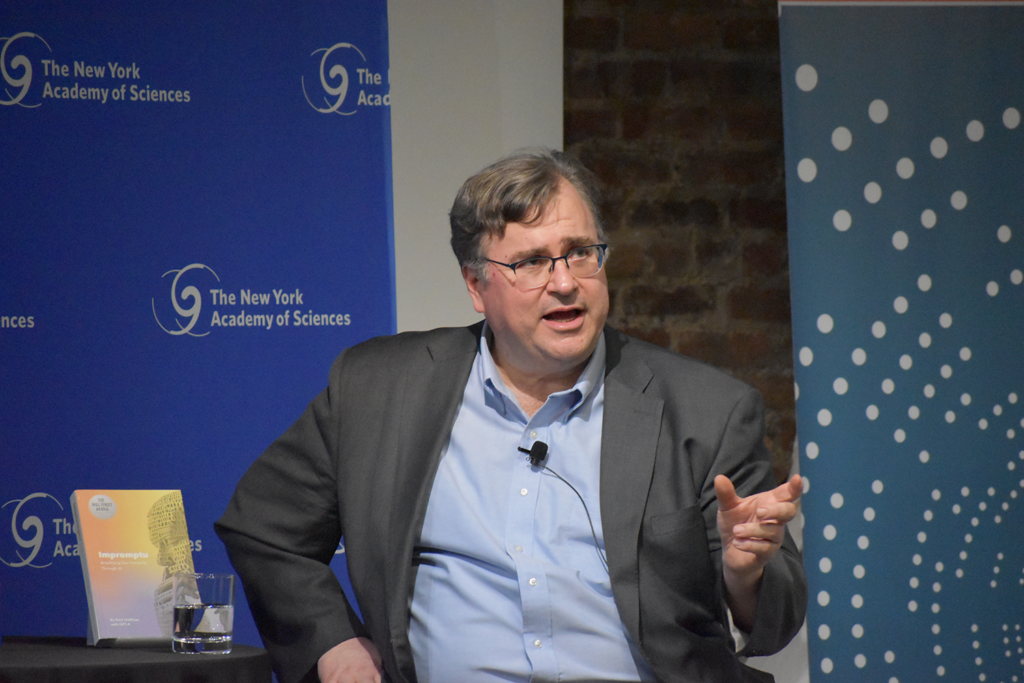
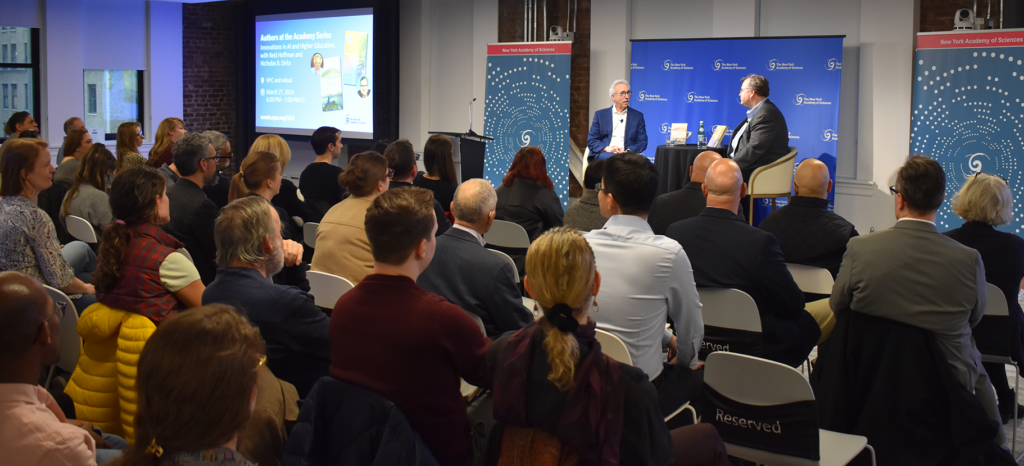
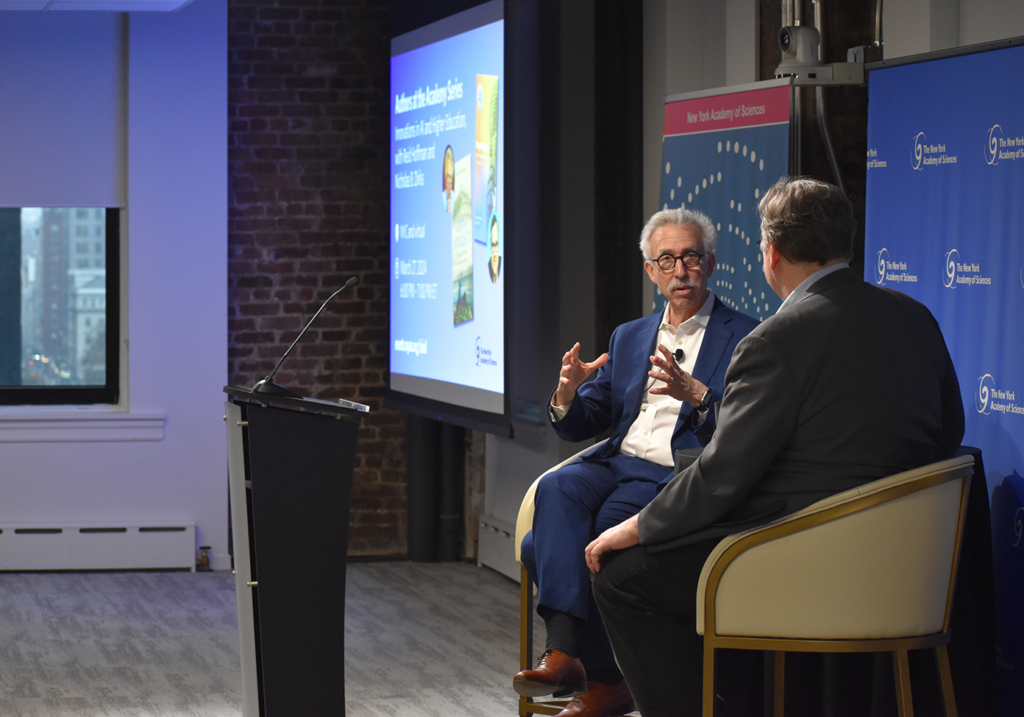
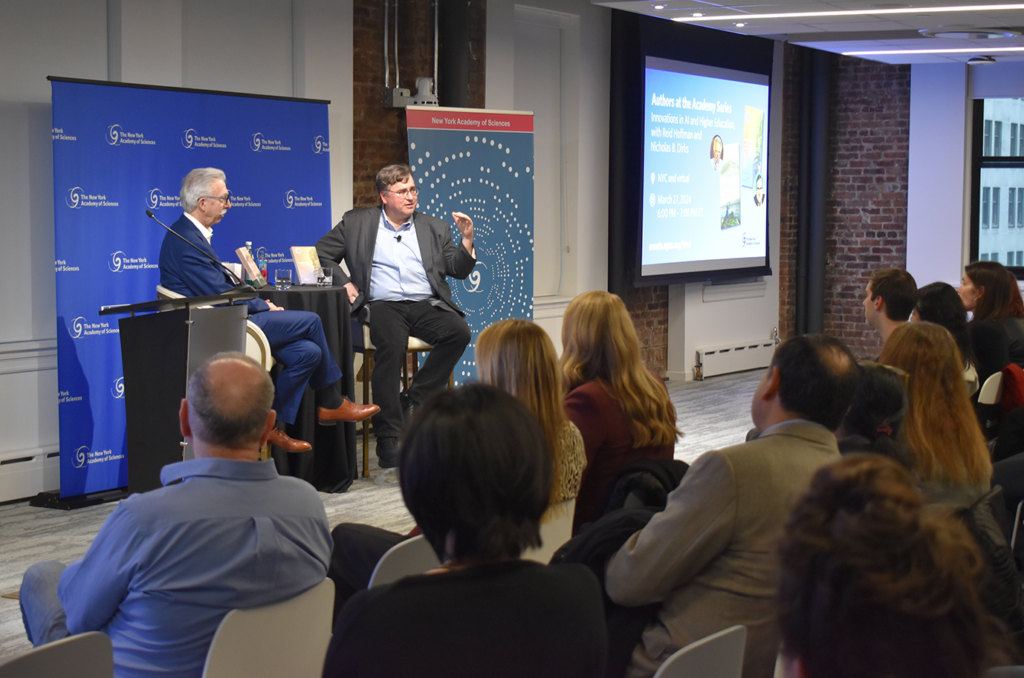
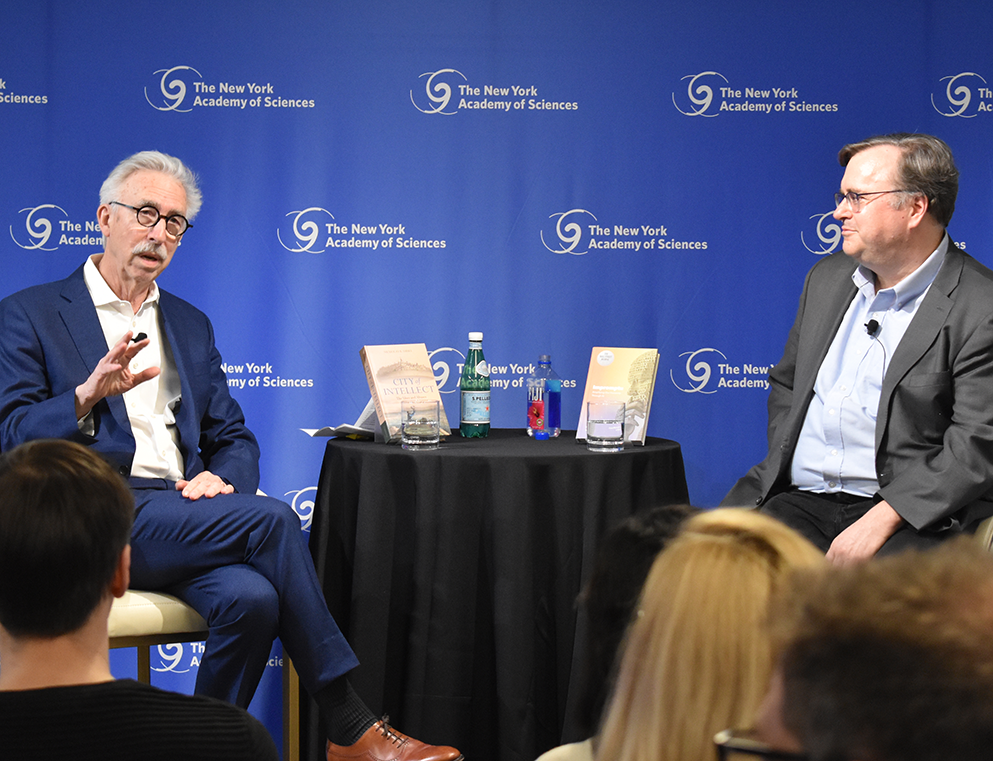
It was nearly a full house when authors Nicholas Dirks and Reid Hoffman discussed their respective books during an event at The New York Academy of Sciences on March 27, 2024.

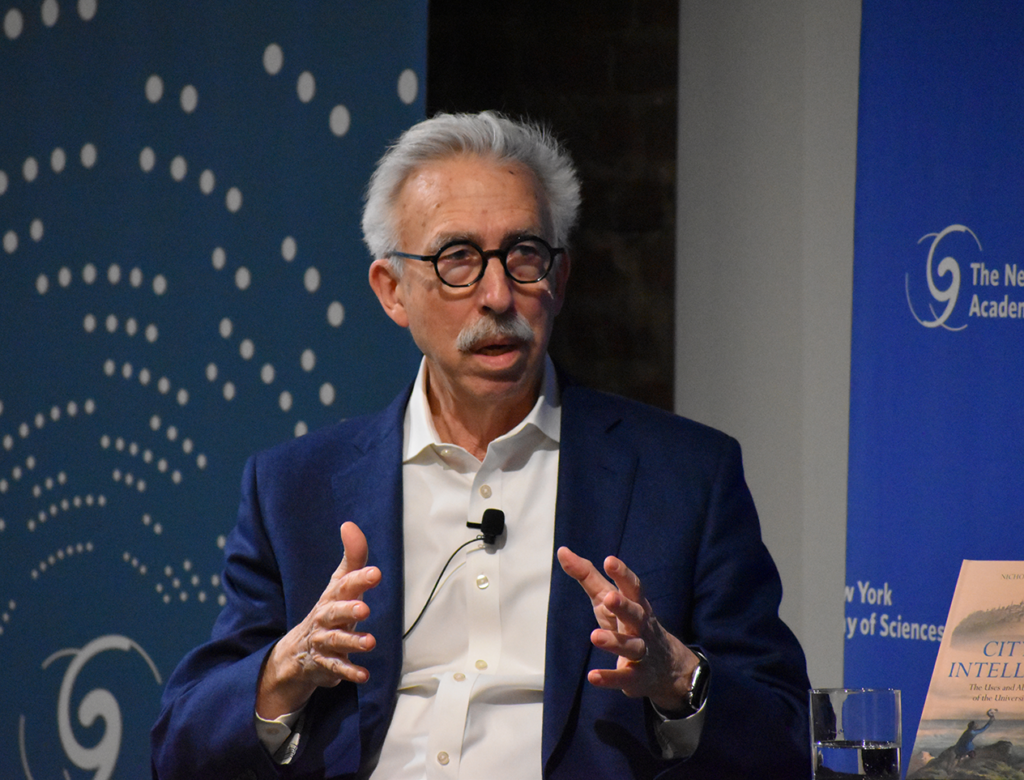
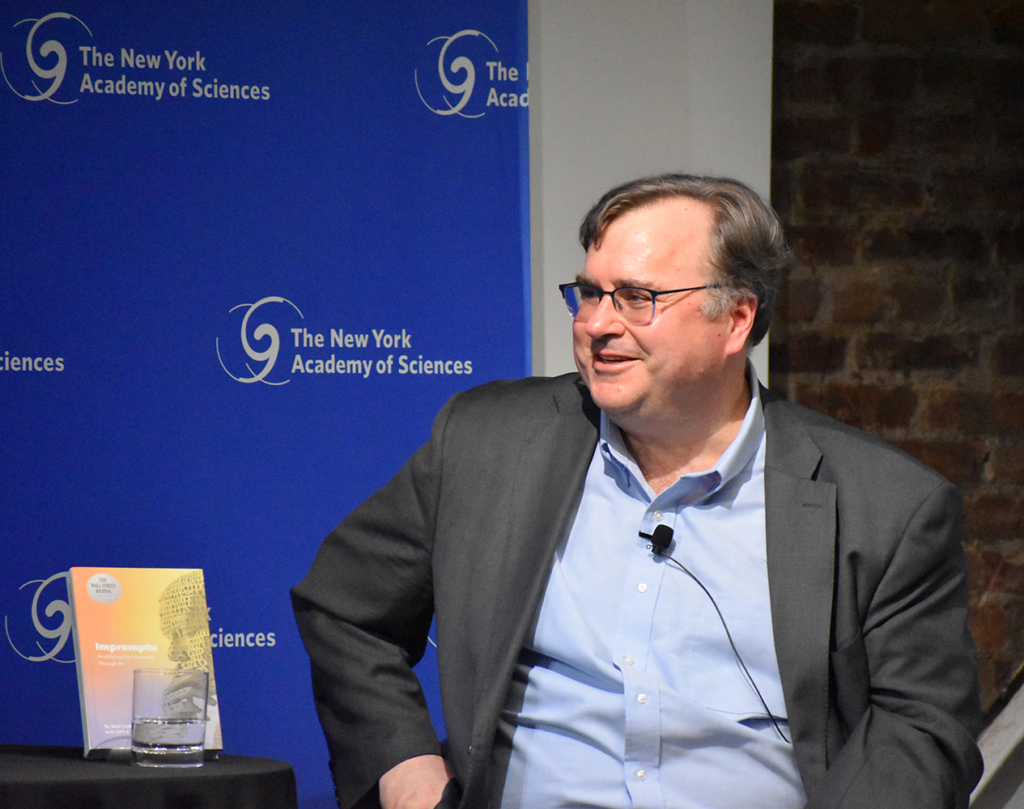
Hoffman, who co-founded LinkedIn as well as Inflection AI and currently serves as a partner at Greylock, discussed his book Impromptu: Amplifying Our Humanity Through AI. Dirks, who spent a career in academia before becoming President and CEO of the Academy, focused on his recently published book City of Intellect: The Uses and Abuses of the University. Their discussion, the first installment in the Authors at the Academy series, was largely centered on artificial intelligence (AI) and how it will impact education, business and creativity moving forward.

The Role of Philosophy

Photo by Nick Fetty/The New York Academy of Sciences

The talk kicked off with the duo joking about the century-old rivalry between the University of California-Berkeley, where Dirks serves on the faculty and formerly served as chancellor, and Stanford University, where Hoffman earned his undergraduate degree in symbolic systems and currently serves on the board for the university’s Institute for Human-Centered AI. From Stanford, Hoffman went to Oxford University as a Marshall Scholar to study philosophy. He began by discussing the role that his background in philosophy has played throughout his career.

“One of my conclusions about artificial intelligence back in the day, which is by the way still true, is that we don’t really understand what thinking is,” said Hoffman, who also serves on the Board of Governors for the Academy. “I thought maybe philosophers understand what thinking is, they’ve been at it a little longer, so that’s part of the reason I went to Oxford to study philosophy. It was extremely helpful in sharpening my mind toolset.”

Public Intellectual Discourse

He encouraged entrepreneurs to think about the theory of human nature in the work they’re doing. He said it’s important to think about what they want for the future, how to get there, and then to articulate that with precision. Another advantage of a philosophical focus is that it can strengthen public intellectual discourse, both nationally and globally, according to Hoffman.

“It’s [focused on] who are we and who do we want to be as individuals and as a society,” said Hoffman.

Photo by Nick Fetty/The New York Academy of Sciences

Early in his career, Hoffman concluded that working as a software entrepreneur would be the most effective way he could contribute to the public intellectual conversation. He dedicated a chapter in his book to “Public Intellectuals” and said that the best way to elevate humanity is through enlightened discourse and education, which was the focus of a separate chapter in his book.

Rethinking Networks in Academia

The topic of education was an opportunity for Hoffman to turn the tables and ask Dirks about his book. Hoffman asked Dirks how institutions of higher education need to think about themselves as nodes of networks and how they might reinvent themselves to be less siloed.

Dirks mentioned how throughout his life he’s experienced various campus structures and cultures from private liberal arts institutions like Wesleyan University, where Dirks earned his undergraduate degree, and STEM-focused research universities like Cal Tech to private universities in urban centers (University of Chicago, Columbia University) and public, state universities (University of Michigan, University of California-Berkeley).

While on the faculty at Cal Tech, Dirks recalled he was encouraged to attend roundtables where faculty from different disciplines would come together to discuss their research. He remembered hearing from prominent academics such as Max Delbrück, Richard Feynman, and Murray Gell-Mann. Dirks, with a smile, pointed out the meeting location for these roundtables was featured in the 1984 film Beverly Hills Cop.

Photo by Nick Fetty/The New York Academy of Sciences

An Emphasis on Collaboration in Higher Education

Dirks said that he thinks the collaborative culture at Cal Tech enabled these academics to achieve a distinctive kind of greatness.

“I began to see this is kind of interesting. It’s very different from the way I’ve been trained, and indeed anyone who has been trained in a PhD program,” said Dirks, adding that he often thinks about a quote from a colleague at Columbia who said, “you’re trained to learn more and more about less and less.”

Dirks said that the problem with this model is that the incentive structures and networks of one’s life at the university are largely organized around disciplines and individual departments. As Dirks rose through the ranks from faculty to administration (both as a dean at Columbia and as chancellor at Berkeley), he began gaining a bigger picture view of the entire university and how all the individual units can fit together. Additionally, Dirks challenged academic institutions to work more collaboratively with the off-campus world.

“A Combination of Competition and Cooperation”  

Dirks then asked Hoffman how networks operate within the context of artificial intelligence and Silicon Valley. Hoffman described the network within the Valley as “an intense learning machine.”

“It’s a combination of competition and cooperation that is kind of a fierce generator of not just companies and products, but ideas about how to do startups, ideas about how to scale them, ideas of which technology is going to make a difference, ideas about which things allow you to build a large-scale company, ideas about business models,” said Hoffman.

Photo by Nick Fetty/The New York Academy of Sciences

During a recent talk with business students at Columbia University, Hoffman said he was asked about the kinds of jobs the students should pursue upon graduation. His advice was that instead of pinpointing specific companies, jobseekers should choose “networks of vibrant industries.” Instead of striving for a specific job title, they should instead focus on finding a network that inspires ingenuity.

“Being a disciplinarian within a scholarly, or in some case scholastic, discipline is less important than [thinking about] which networks of tools and ideas are best for solving this particular problem and this particular thing in the world,” said Hoffman. “That’s the thing you should really be focused on.”

The Role of Language in Artificial Intelligence

Much of Hoffman’s book includes exchanges between him and ChatGPT-4, an example of a large language model (LLM). Dirks points out that Hoffman uses GPT-4 not just an example, but as an interlocutor throughout the book. By the end of the book, Dirks observed that the system had grown because of Hoffman’s inputs.

In the future, Hoffman said he sees LLMs being applied to a diverse array of industries. He used the example of the steel industry, in areas like sales, marketing, communications, financial analysis, and management.

“LLMs are going to have a transformative impact on steel manufacturing, and not necessarily because they’re going to invent new steel manufacturing processes, but [even then] that’s not beyond the pale. It’s still possible,” Hoffman said.

AI Understanding What Is Human

Photo by Nick Fetty/The New York Academy of Sciences

Hoffman said part of the reason he articulates the positives of AI is because he views the general discourse as so negative. One example of a positive application of AI would be having a medical assistant on smartphones and other devices, which can improve medical access in areas where it may be limited. He pointed out that AI can also be programmed as a tutor to teach “any subject to any age.”

“[AI] is the most creative thing we’ve done that also seems to have potential autonomy and agency and so forth, and that causes a bunch of very good philosophical questions, very good risk questions,” said Hoffman. “But part of the reason I articulate this so positively is because…[of] the possibility of making things enormously better for humanity.” 

Hoffman compared the societal acceptance of AI to automobiles more than a century ago. At the outset, automobiles didn’t have many regulations, but as they grew in scale, laws around seatbelts, speed limits, and driver’s licenses were established. Similarly, he pointed to weavers who were initially wary of the loom before understanding its utility to their work and the resulting benefit to broader society.

“AI can be part of the solution,” said Hoffman. “What are the specific worries in navigation toward the good things and what are the ways that we can navigate that in good ways. That’s the right place for a critical dialogue to happen.”

Regulation of AI

Photo by Nick Fetty/The New York Academy of Sciences

Hoffman said because of the speedy rate of development of new AI technologies, it can make effective regulation difficult. He said it can be helpful to pinpoint the two or three most important risks to focus on during the navigation process, and if feasible to fix those issues down the road.

Carbon emissions from automobiles was an example Hoffman used, pointing out that emissions weren’t necessarily on the minds of engineers and scientists when the automobile was being developed, but once research started pointing to the detrimental environmental impacts of carbon in the atmosphere, governments and companies took action to regulate and reduce emissions.

“[While] technology can help to create a problem, technologies can also help solve those problems,” Hoffman said. “We won’t know they’re problems until we’re into them and obviously we adjust as we know them.”

Hoffman is currently working on another book about AI and was invited to return to the Academy to discuss it once published.

For on-demand video access to the full event, click here.

Check out the other events from our 2024 Authors at the Academy Series

Full video of these events is available, please visit nyas.org/ondemand
Yann LeCun Emphasizes the Promise of AI

A man presents to a full house during an Academy event.

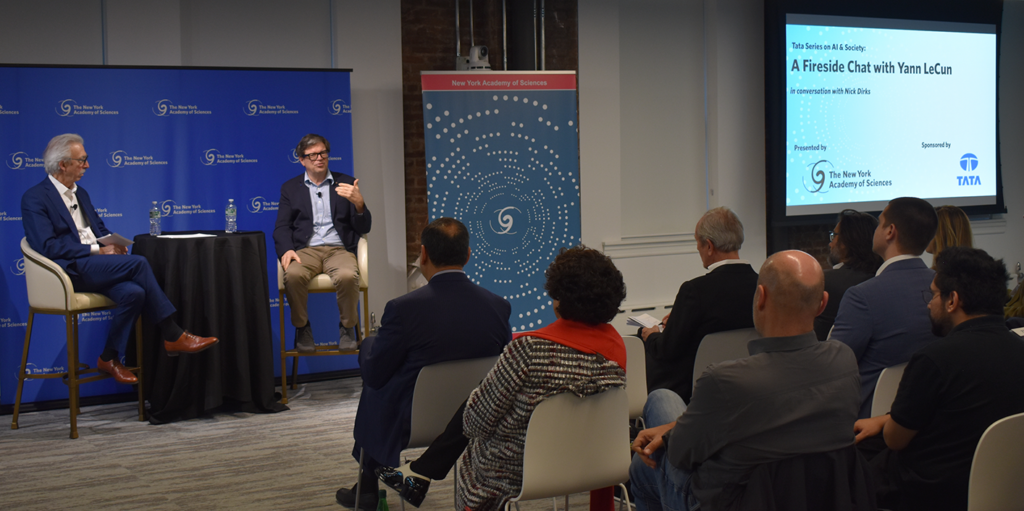
The renowned Chief AI Scientist of Meta, Yann LeCun, discussed everything from his foundational research in neural networks to his optimistic outlook on the future of AI technology at a sold-out Tata Knowledge Series on AI & Society event with the Academy’s President & CEO Nick Dirks while highlighting the importance of the open-source model.

Published April 8, 2024

By Nick Fetty

Photo by Nick Fetty/The New York Academy of Sciences

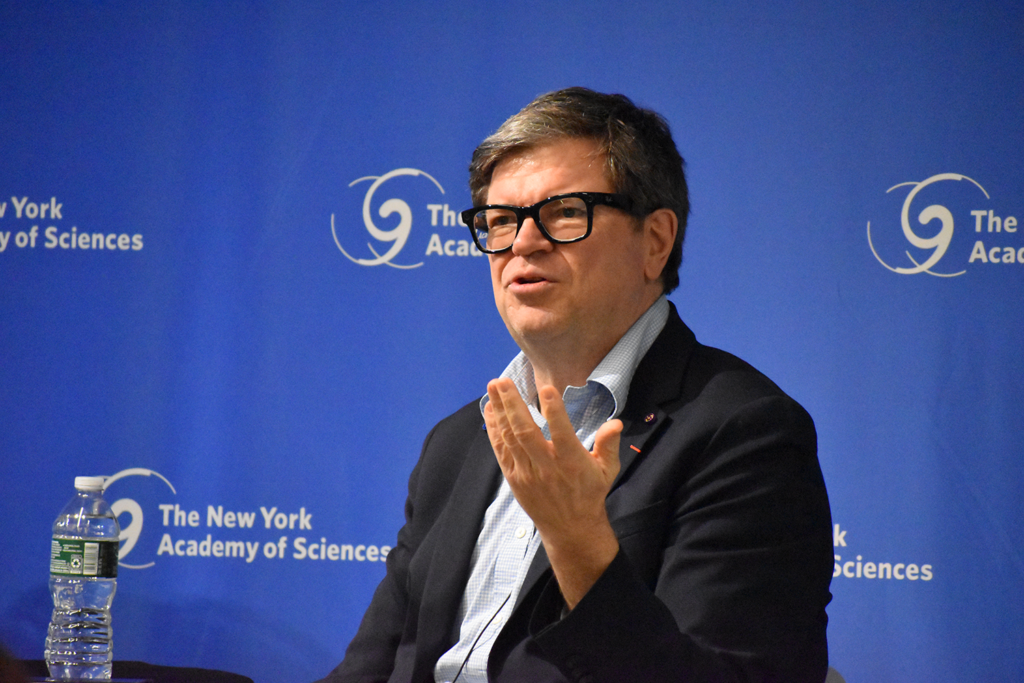
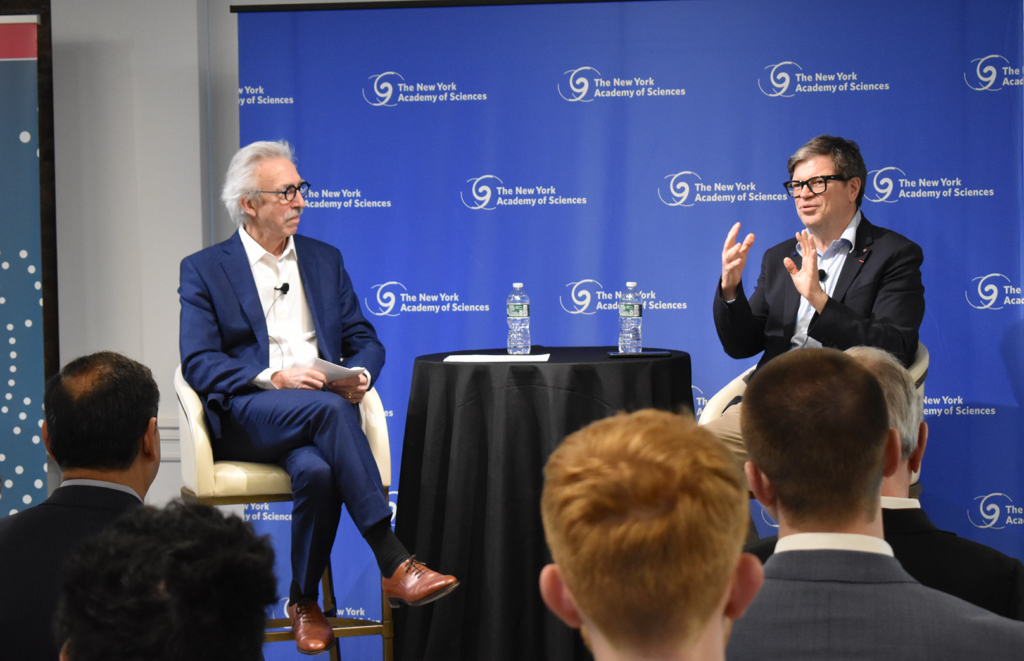
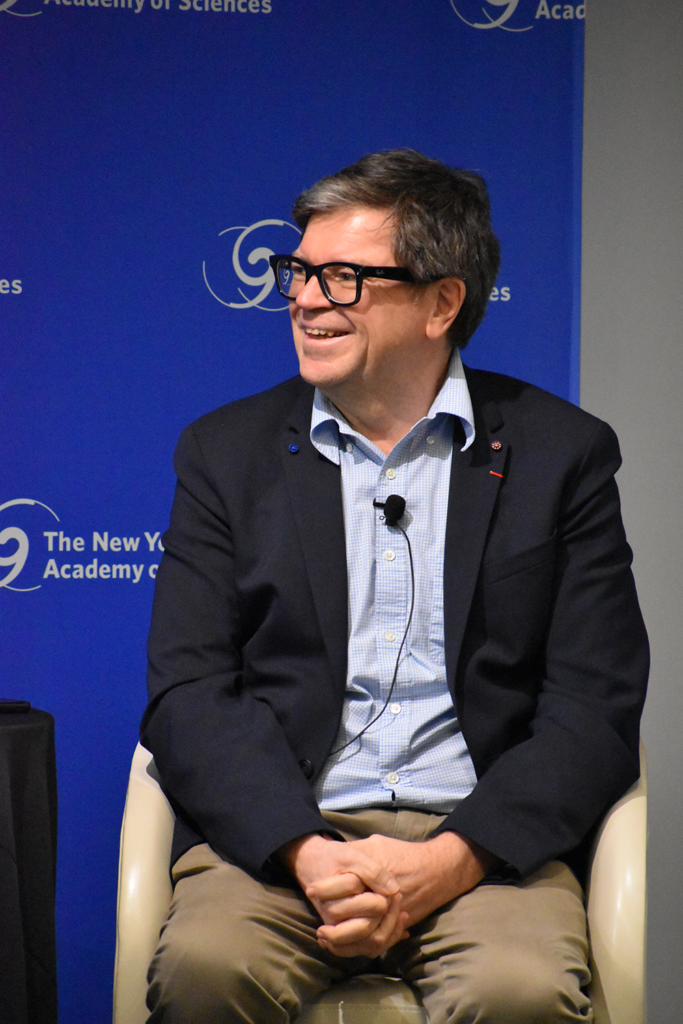
Yann LeCun, a Turing Award winning computer scientist, had a wide-ranging discussion about artificial intelligence (AI) with Nicholas Dirks, President and CEO of The New York Academy of Sciences, as part of the first installment of the Tata Series on AI & Society on March 14, 2024.

LeCun is the Vice President and Chief AI Scientist at Meta, as well as the Silver Professor for the Courant Institute of Mathematical Sciences at New York University. A leading researcher in machine learning, computer vision, mobile robotics, and computational neuroscience, LeCun has long been associated with the Academy, serving as a featured speaker during past machine learning conferences and also as a juror for the Blavatnik Awards for Young Scientists.

Advancing Neural Network Research

Photo by Nick Fetty/The New York Academy of Sciences

As a postdoc at the University of Toronto, LeCun worked alongside Geoffrey Hinton, who’s been dubbed the “godfather of AI,” conducting early research in neural networks. Some of this early work would later be applied to the field of generative AI. At this time, many of the field’s foremost experts cautioned against pursuing such endeavors. He shared with the audience what drove him to pursue this work, despite the reservations some had.

“Everything that lives can adapt but everything that has a brain can learn,” said LeCun. “The idea was that learning was going to be critical to make machines more intelligent, which I think was completely obvious, but I noticed that nobody was really working on this at the time.”

LeCun joked that because of the field’s relative infancy, he struggled at first to find a doctoral advisor, but he eventually pursued a PhD in computer science at the Université Pierre et Marie Curie where he studied under Maurice Milgram. He recalled some of the limitations, such as the lack of large-scale training data and limited processing power in computers, during those early years in the late 1980s and 1990s. By the early 2000s, he and his colleagues began developing a research community to revive and advance work in neural networks and machine learning.

Work in the field really started taking off in the late 2000s, LeCun said. Advances in speech and image recognition software were just a couple of the instances LeCun cited that used neural networks in deep learning applications.  LeCun said he had no doubt about the potential of neural networks once the data sets and computing power was sufficient.

Limitations of Large Language Models

Large language models (LLMs), such as ChatGPT or autocomplete, use machine learning to “predict and generate plausible language.”  While some have expressed concerns about machines surpassing human intelligence, LeCun admits that he takes an unpopular opinion in thinking that he doesn’t think LLMs are as intelligent as they may seem.

LLMs are developed using a finite number of words, or more specifically tokens which are roughly three-quarters of a word on average, according to LeCun. He said that many LLMs are developed using as many as 10 trillion tokens.

While much consideration goes into deciding what tunable parameters will be used to develop these systems, LeCun points out that “they’re not trained for any particular task, they’re basically trained to fill in the blanks.” He said that more than just language needs to be considered to develop an intelligent system.

Photo by Nick Fetty/The New York Academy of Sciences

“That’s pretty much why those LLMs are subject to hallucinations, which really you should call confabulations. They can’t really reason. They can’t really plan. They basically just produce one word after the other, without really thinking in advance about what they’re going to say,” LeCun said, adding that “we have a lot of work to do to get machines to the level of human intelligence, we’re nowhere near that.”

A More Efficient AI

LeCun argued that to have a smarter AI, these technologies should be informed by sensory input (observations and interactions) instead of language inputs. He pointed to orangutans, which are highly intelligent creatures that survive without using language.

Part of LeCun’s argument for why sensory inputs would lead to better AI systems is because the brain processes these inputs much faster. While reading text or digesting language, the human brain processes information at about 12 bytes per second, compared to sensory inputs from observations and interactions, which the brain processes at about 20 megabytes per second.

“To build truly intelligent systems, they’d need to understand the physical world, be able to reason, plan, remember and retrieve. The architecture of future systems that will be capable of doing this will be very different from current large language models,” he said.

AI and Social Media

As part of his work with Meta, LeCun uses and develops AI tools to detect content that violates the terms of services on social media platforms like Facebook and Instagram, though he is not directly involved with the moderation of content itself. Roughly 88 percent of content removed is initially flagged by AI, which helps his team in taking down roughly 10 million items every three months. Despite these efforts, misinformation, disinformation, deep fakes, and other manipulated content continue to be problematic, though the means for detecting this content automatically has vastly improved.

Photo by Nick Fetty/The New York Academy of Sciences

LeCun referenced statistics stating that in late 2017, roughly 20 to 25 percent of hate speech content was flagged by AI tools. This number climbed to 96 percent just five years later. LeCun said this difference can be attributed to two things: first the emergence of self-supervised, language-based AI systems (which predated the existence of ChatGPT); and second, is the “transformer architecture” present in LLMs and other systems. He added that these systems can not only detect hate speech, but also violent speech, terrorist propaganda, bullying, fake news and deep fakes.

“The best countermeasure against these [concerns] is AI. AI is not really the problem here, it’s actually the solution,” said LeCun.

He said this will require a combination of better technological systems, “The AI of the good guys have to stay ahead of the AI of the bad guys,” as well as non-technological, societal input to easily detect content produced or adapted by AI. He added that an ideal standard would involve a watermark-like tool that verifies legitimate content, as opposed to a technology tasked with flagging inauthentic material.

Open Sourcing AI

LeCun pointed to a study by researchers at New York University which found that audiences over the age of 65 are most likely to be tricked by false or manipulated content. Younger audiences, particularly those who grew up with the internet, are less likely to be fooled, according to the research.

One element that separates Meta from its contemporaries is the former’s ability to control the AI algorithms that oversee much of its platforms’ content. Part of this is attributed to LeCun’s insistence on open sourcing their AI code, which is a sentiment shared by the company and part of the reason he ended up at Meta.

“I told [Meta executives] that if we create a research lab we’ll have to publish everything we do, and open source our code, because we don’t have a monopoly on good ideas,” said LeCun. “The best way I know, which I learned from working at Bell Labs and in academia, of making progress as quickly as possible is to get as many people as possible contributing to a particular problem.”

LeCun added that part of the reason AI has made the advances it has in recent years is because many in the industry have embraced the importance of open publication, open sourcing and collaboration.

“It’s an ecosystem and we build on each other’s ideas,” LeCun said.

Avoiding AI Monopolies

Photo by Nick Fetty/The New York Academy of Sciences

Another advantage is that open sourcing lessens the likelihood of a single company developing a monopoly over a particular technology. LeCun said a single company simply does not have the ability to finetune an AI system that will adequately serve the entire population of the world.

Many of the early systems have been developed using English, where data is abundant, but, for example, different inputs will need to be considered in a country such as India, where 22 different official languages are spoken. These inputs can be utilized in a way that a contributor doesn’t need to be literate – simply having the ability to speak a language would be enough to create a baseline for AI systems that serve diverse audiences. He said that freedom and diversity in AI is important in the same way that freedom and diversity is vital to having an independent press.

“The risk of slowing AI is much greater than the risk of disseminating it,” LeCun said.

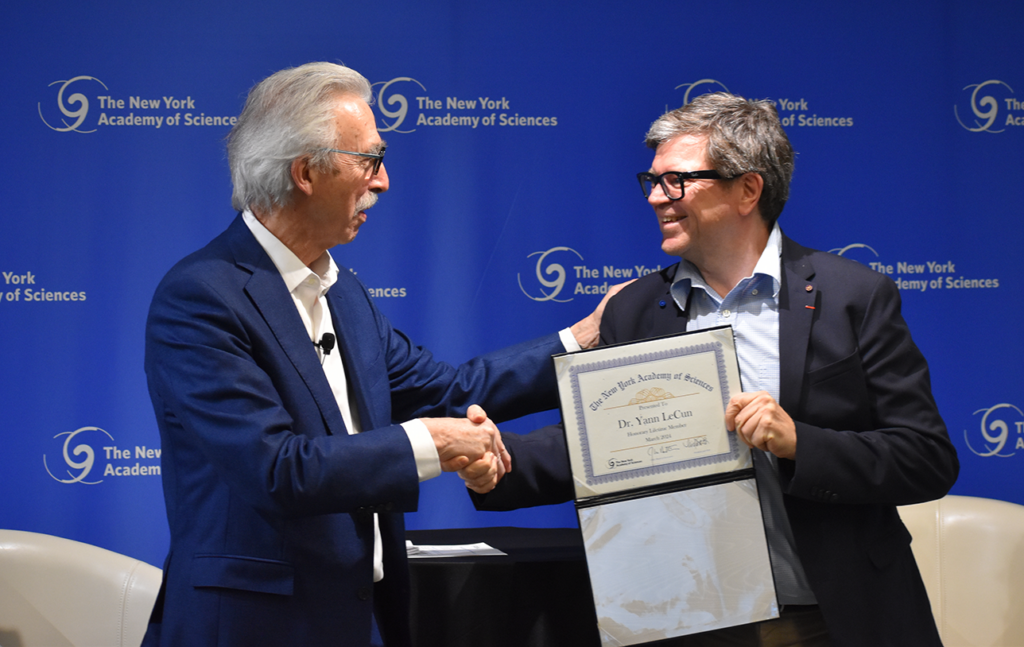
Following a brief question and answer session, LeCun was presented with an Honorary Life Membership by the Academy’s President and CEO, Nick Dirks.

“This means that you’ll be coming back often to speak with us and we can all get our questions answered,” Dirks said with a smile to wrap up the event. “Thank you so much.”

Also from the Tata Knowledge Series on AI & Society: The Complex Ecosystem of Artificial Intelligence with Madhumita Murgia.