New Paper Highlights Urgent Need for “Attention Sanctuaries”

The logo for The New York Academy of Sciences.

Concern about increasing screen time on mental health calls for creating “digital-free” spaces to mitigate rising levels of anxiety, depression and social isolation.

New York, NY | March 20, 2025 – With more school districts now implementing no cell-phone policies in their classrooms to refocus students’ attention on their schoolwork, a new study by leading scholars Professor D. Graham Burnett of Princeton University and Eve Mitchell of the Strother School of Radical Attention calls for the creation of “attention sanctuaries”. 

Their article, Attention Sanctuaries: Social Practice Guidelines and Emergent Strategies in Attention Activism,” published today in Annals of the New York Academy of Sciences, explores the profound impact of networked screen media on mental health, particularly among youth. It proposes innovative, community-driven solutions to reclaim our collective focus from the growing crisis of digital distraction and the commodification of human attention.

The authors broadly define an attention sanctuary as a wide range of already existing spaces and places such as libraries, churches, museums and school classrooms. Nationally, 77% of U.S. schools say they prohibit cellphones at school for non-academic use, according to the National Center for Education Statistics.

Drawing on the latest research and grassroots “Attention Activism”, the authors argue that the pervasive use of digital devices has led to unprecedented erosion of social and civil life, contributing to rising levels of anxiety, depression, and social isolation.

Key Findings and Recommendations:

  • The Attention Crisis: The article highlights the urgent need to address the harmful effects of the “attention economy,” where human attention is increasingly commodified by tech platforms through addictive design and data extraction, or “Human Fracking.”
  • Attention Activism: The authors introduce the concept of “attention activism,” a growing movement that seeks to resist the exploitative practices of the digital economy through education, organizing, and the creation of sanctuary spaces.
  • Attention Sanctuaries: The paper provides a detailed framework for establishing “attention sanctuaries”—spaces where communities can collectively cultivate and protect their attention. These sanctuaries, which can be implemented in schools, workplaces, and homes, are designed to foster meaningful human connection and reflection, free from the distractions of digital devices.

The authors emphasize that addressing the attention crisis requires a multi-pronged approach, combining grassroots activism, policy interventions, and community-driven initiatives. They argue that attention sanctuaries offer a practical and scalable solution to mitigate the negative effects of digital overload, promoting mental well-being and social cohesion.

“This is not just about limiting screen time,” says Burnett. “It’s about a participatory movement to create spaces where we can reconnect with ourselves and each other, free from the constant pull of digital distractions. Attention sanctuaries are a way to reclaim our humanity in an increasingly fragmented world.”

Eve Mitchell adds, “Attention activism is about more than individual self-control—it’s about collective action. By working together to create these sanctuaries, we can build a culture that values and protects our attention as an essential aspect of our individual and shared lives.”

The authors call for increased collaboration between researchers, policymakers, and community leaders to develop strategies that address the root causes of the attention crisis.

Abstract

While scientific consensus on the nature and extent of the harms attributable to increased use of networked screen media remains elusive, widespread expressions of acute concern among first-responders to the commodified-attention crisis (teachers, therapists, caregivers) should not be overlooked. This paper reviews a series of emergent strategies of collective attention activism, rooted in social practices of community action, deliberation, and consensus-building, and aimed at the creation of novel sanctuaries for the cultivation of new shared norms and habits regarding digital devices. Evidence suggests that such attention sanctuaries (and the formalization of the conventions for convening such spaces) will play an increasingly important role in addressing/mitigating the public health-and-welfare dimensions of societal-scale digital platforms. A copy of the full paper may be downloaded here.

About Annals of the New York Academy of Sciences

Annals of the New York Academy of Sciences is a 200+ year-old multidisciplinary journal publishing research in all areas of science. Each issue advances our understanding of the natural, social, and physical world by presenting novel and thought-provoking original research, reviews, and expert opinions.  We encourage cross disciplinary submissions, with particular interest in neuroscience, organismal biology, material sciences, cell and molecular biology, psychology, medicine, quantum science, renewable energy, and climate science. Please visit us online at www.nyas.org.

About the Authors

D. Graham Burnett is a professor at Princeton University and a leading voice in the study of attention and its role in contemporary society. Eve Mitchell is a psychotherapist and a facilitator at the Strother School of Radical Attention, an innovative institution dedicated to exploring the science, history, and practice of attention.

Contacts

Peter Schmidt – peter@sustainedattention.net
Donica Bettanin – donica@sustainedattention.net
Doomers, Bloomers, and Zoomers: Clinton & Hoffman Weigh in on AI’s Future

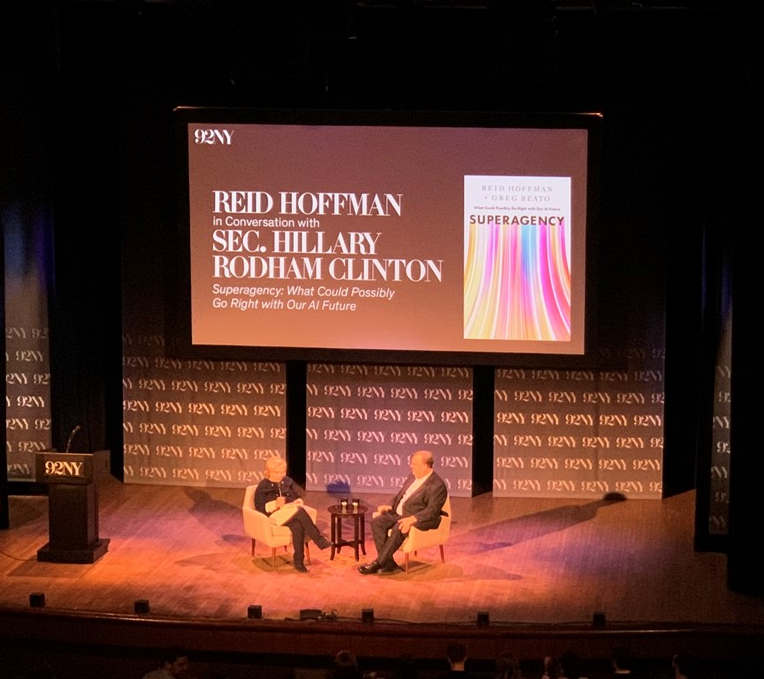
Two individuals on a stage during a book event in NYC.

Where do you stand on AI—optimist or skeptic? A high-stakes conversation on AI’s promise, risks, and the global race for leadership in this game-changing technology.

Published January 31, 2025

By Brooke Grindlinger, PhD

LinkedIn co-founder and bestselling author Reid Hoffman (right) in conversation with former Secretary of State Hillary Rodham Clinton (left) at 92NY in New York City on January 28, 2025, discussing his new book Superagency: What Could Possibly Go Right with Our AI Future.

The emergence of artificial intelligence (AI) is reshaping nearly every aspect of human life. From medicine to transportation, education to industry, AI is not just a tool; it’s an evolving partner in human progress. But what does this transformation mean for individuals, society, and the growing geopolitical tensions between nations vying for dominance in AI technology? These questions were at the heart of a recent conversation between former US Secretary of State Hillary Rodham Clinton and Reid Hoffman, co-founder of LinkedIn and co-author—with tech writer Greg Beato—of the new book Superagency: What Could Possibly Go Right with Our AI Future.

At its core, Superagency presents an optimistic vision of AI as a general-purpose technology that amplifies human agency. This concept was brought to life for the evening’s audience through a video appearance by Reid AI—Hoffman’s digital twin—who, with the enthusiasm of a tireless press agent, championed Superagency and its vision. “Superagency describes not only how we as individuals get these superpowers from technology, but also how we benefit from a society in which millions of others have these superpowers.” This perspective challenges alarmist narratives around AI, instead framing it as a transformative force, much like past technological revolutions such as the printing press and the automobile.

AI as an Opportunity: Learning from the Past

History teaches us that every major technological advancement—from the steam engine to the internet—has been met with both excitement and trepidation. AI is no different. Hoffman pointed out that skepticism surrounding AI today mirrors historical anxieties: “When, for example, you go back to the printing press, the dialogue around the printing press was actually very similar to the dialogue around AI. It was things like ‘This will spread a lot of misinformation. This will destroy our institutions and our ability to discern truth.’” And yet, despite the upheavals they caused, these innovations propelled society forward. The challenge, Hoffman argues, is to navigate AI’s development thoughtfully, ensuring its benefits reach the many rather than the few.

The AI Spectrum: Doomers, Gloomers, Bloomers, and Zoomers

In Superagency, Hoffman describes a spectrum of attitudes toward AI. On one end are the Doomers, who believe AI is an existential threat that could bring about catastrophic consequences. Next are the Gloomers, who are skeptical and advocate for stringent regulatory controls but stop short of outright rejection. The Zoomers, by contrast, are those who champion rapid AI expansion without much concern for potential risks and are often anti-regulation. Finally, Hoffman identifies himself among the Bloomers, a group that believes AI, when properly guided by intelligent risk management, can be an overwhelmingly positive force for humanity. “One of the things that we argue for, as part of the case for optimism—being Bloomers—is to say you don’t expect perfection in the beginning,” Hoffman explained.

During their conversation, Hoffman asked Secretary Clinton where she saw herself on this spectrum. Her response was thoughtful: “Well, I think I’m a Boomer who is somewhere between a Bloomer and a Gloomer, because on the one hand, I really appreciate the optimism. I find that very attractive. We should learn as we do, learn as we go, make adjustments…Although I do worry about all the people who don’t see the curb and drive off over the cliff.” Her remark underscores the need for both enthusiasm and caution—embracing AI’s potential while ensuring that adequate safeguards are in place to prevent harm. Clinton continued, “We know a lot now. We don’t know anywhere near what we’re going to know, and maybe there are some kinds of guardrails that we would want without losing the optimism, because I want this country to dominate AI.”

Guardrails for Progress: The Role of Regulation

While AI’s potential is vast, so are the risks. Secretary Clinton raised a crucial concern: “If you look at the aggregate, is it going to be more difficult, given our political and social and economic environment, to say, ‘Hey, wait a minute, we’ve learned enough that maybe we should put on this guardrail. Maybe this should be a certain standard we try to meet.’”

Hoffman acknowledged the difficulty of balancing innovation with regulation but emphasized that responsible AI development requires ongoing assessment rather than outright restriction. “The attempt to hold any kind of large system to zero error is an attempt to stop the future,” he noted. Instead, he advocates for an iterative approach—adjusting regulations as AI evolves, rather than stalling progress in the name of perfection.

Hoffman compared this process to the development of the automobile. Early cars lacked essential safety features, but over time, society introduced refinements—first bumpers, then seatbelts, then airbags—to make vehicles safer without halting progress. We have to start driving before we realize what safeguards we need. AI, he argued, should follow the same evolutionary path, improving with real-world use and responsive adjustments.

The Global AI Race: Maintaining US Leadership

One of the most urgent topics in the conversation was the global competition in AI development, particularly between the United States and China. Secretary Clinton emphasized that the US cannot afford to fall behind: “I do worry that if we don’t have an optimistic, full speed ahead approach to it, that we will get outmaneuvered, that we will find ourselves in a subordinate position and that subordinate position could be one of great risk and potential danger. I still would rather have us struggling to try to make the right decisions than seeding ground to rogue states, to highly organized states, to criminal organizations, to rogue technologists.”

Hoffman echoed this sentiment, stressing that America’s strength lies in its innovative culture and entrepreneurial spirit. “We do it by the American entrepreneurial networks and the creativity, but we have to go at that, and we have to be saying that’s what we want.”

Recent developments highlight the stakes of this competition. Just days before this conversation, Chinese AI company DeepSeek made headlines with its advancements in large language models, demonstrating China’s accelerating capabilities in AI development. The rise of DeepSeek underscores the urgency for the US to not only invest in cutting-edge AI research but also establish ethical frameworks that ensure responsible deployment of the technology. This competition is not just about economic dominance; it’s about setting standards for ethical AI use worldwide. The key to maintaining leadership, Hoffman argued, is to ensure that AI development remains aligned with democratic values and responsible governance. If the US leads with innovation and responsibility, it can shape AI’s trajectory for the benefit of society at large.

AI as a Catalyst for Global Stability

Beyond economic and technological dominance, AI could play a significant role in shaping global stability. Hoffman suggested that AI-driven economic and educational advancements could reduce geopolitical tensions by fostering growth in underdeveloped regions. “When people think their future is likely to be better than their present, in terms of building things, they tend to go to war less,” he noted. If AI can be harnessed to improve healthcare, education, and job opportunities in struggling economies, it has the potential to serve as a stabilizing force rather than a disruptive one. This approach shifts the conversation from AI as a competition to AI as a tool for global peace and cooperation.

In contrast, during the discussion, an audience member raised concerns about AI’s potential use in warfare. Secretary Clinton acknowledged the risks, stating, “A lot of weapons of war are becoming more and more autonomous. And so we’re going to see all kinds of very dangerous weapons in the hands of all kinds of people that may or may not have the values that they should to be entrusted with that kind of destruction.” Hoffman reinforced this point, cautioning that AI’s offensive capabilities could be destabilizing: “One of the challenges with AI is that it’s inherently a little bit more of an offensive weapon and has the tendency to say ‘use it or lose your advantage’”, which is most worrisome in terms of a potential arms race dynamic. The exchange highlighted the delicate balance of leveraging AI for progress while preventing its potential misuse in global conflicts.

A Call to be AI “Curious”

As AI continues to evolve, engagement and understanding are critical. Rather than passively observing its impact, scientists, policymakers, and the public must take an active role in shaping AI’s future. As Hoffman puts it: “Move to being AI curious. It doesn’t matter if you are also at the same time AI uncertain, AI skeptical, AI fearful—but add AI curiosity into it.” The AI revolution is here. The question is not whether AI will change our world, but how we choose to participate and shape that change. By fostering curiosity, implementing smart regulations, and ensuring equitable opportunities, we can make AI a tool for empowerment rather than disruption.

For those eager to deepen their understanding of AI technologies in the healthcare sector, including leveraging AI for drug discovery, medical imaging, mental health, equity, and affordability, we invite you to join us at the HealthNext AI Summit 2025, March 3-4, 2025 in New York City. Register now with promo code HLTHNXTNYAS for 10% off!

Interested in hearing more from Reid Hoffman? Tune in to Hoffman’s March 2024 conversation with Academy President and CEO Nicholas Dirks about Hoffman‘s prior book, ‘Impromptu: Amplifying Our Humanity Through AI‘. Available On-Demand until March 27, 2025.

From Tools to Metahumans: Talking to AI

The logo for The New York Academy of Sciences Anthropology Section.

April 7, 2025 | 6:00 PM – 8:30 PM ET

115 Broadway, 8th Floor, New York, NY 10006
or join virtually by Zoom

AI and AI-endowed robots are celebrated as useful tools.  But the dramatic utopian and dystopian responses they can provoke suggest something far more, as many users probe them for signs of agency, sentience, and intelligence.  At this point, AI is no longer just a tool, it can start to resemble something near human.  But we have always lived with near humans and super humans, or what Marshall Sahlins called “metahumans.”  We call them spirits, ancestors, gods.  Ethnographic attention to the interaction brings out the common features of AI and other metahumans.  One feature metahumans share is their ties to power.  Much as a prophet embodies and legitimates the power of divinity, so AI can mystify and justify to users the power of its corporate masters, endowing mundane profit-seeking with supernatural aura.

Speakers

Speaker

Webb Keane

George Herbert Mead Distinguished University Professor
Department of Anthropology,
University of Michigan

Discussant

Headshot of Danilyn Rutherford
Danilyn Rutherford

President,
The Wenner-Gren Foundation

Discussant

Headshot of Omri Elisha
Omri Elisha

Associate Professor of Anthropology,
Queens College, CUNY

Pricing

All: Free

About the Series

Since 1877, the Anthropology Section of The New York Academy of Sciences has served as a meeting place for scholars in the Greater New York area. The section strives to be a progressive voice within the anthropological community and to contribute innovative perspectives on the human condition nationally and internationally. Learn more and view other events in the Anthropology Section series.

From Neural Networks to Reinforcement Learning to Game Theory

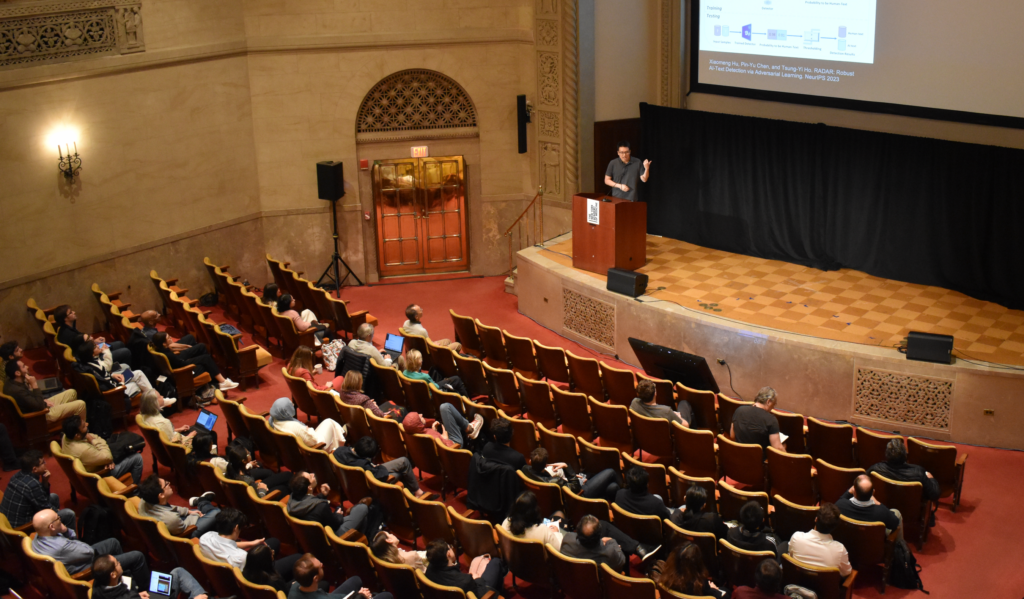
An overhead shot of a man giving a presentation with dozens of attendees.

Academics and industry experts shared their latest research and the broader potential of AI during The New York Academy of Sciences’ 2025 Machine Learning Symposium.

Published November 14, 2024

By Nick Fetty

Pin-Yu Chen, PhD, a principal research scientist at IBM Research, presents during the Machine Learning Symposium at the New York Academy of Medicine on Oct. 18, 2024. Photo by Nick Fetty/The New York Academy of Sciences.

The New York Academy of Sciences (the Academy) hosted the 15th Annual Machine Learning Symposium at the New York Academy of Medicine on October 18, 2024. This year’s event, sponsored by Google Research and Cubist Systematic Strategies, included keynote addresses from leading experts, spotlight talks from graduate students and tech entrepreneurs, and opportunities for networking.

Exploring and Mitigating Safety Risks in Large Language Models and Generative AI

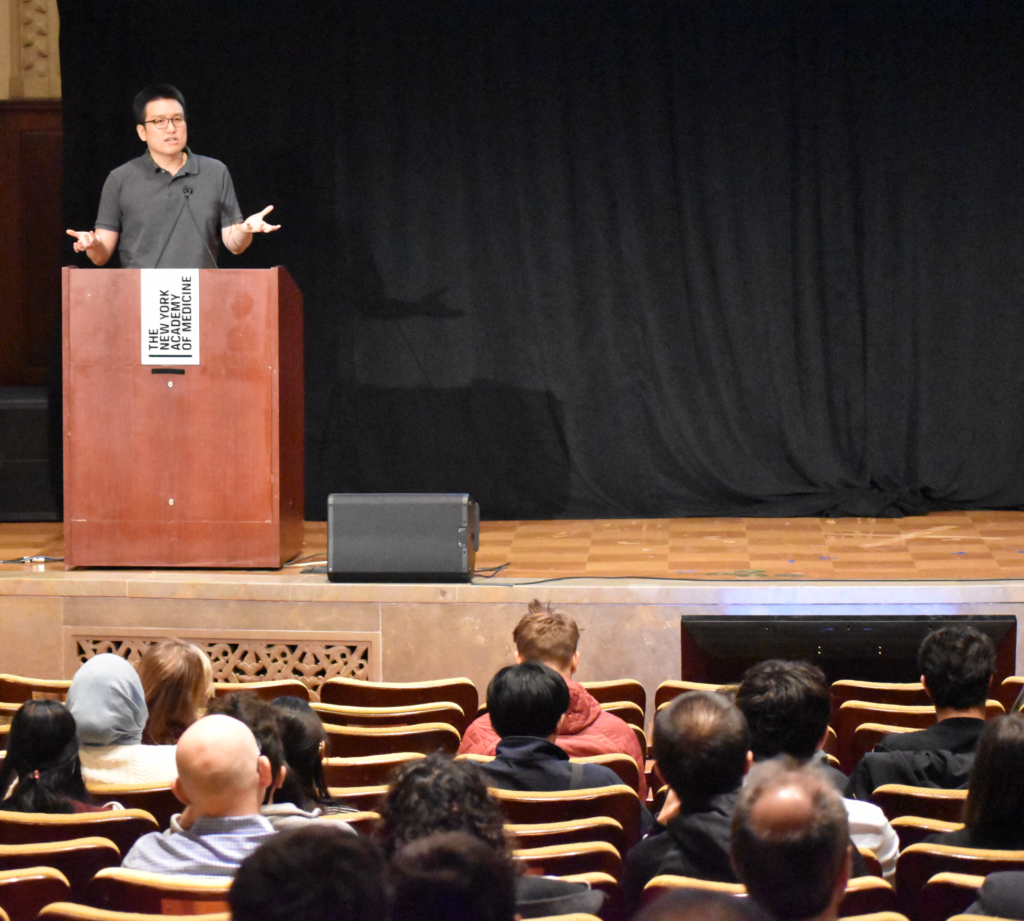
Pin-Yu Chen, PhD, a principal research scientist at IBM Research, opened the symposium with a keynote lecture about his work examining adversarial machine learning of neural networks for robustness and safety.

Pin-Yu Chen, PhD. Photo by Nick Fetty/The New York Academy of Sciences.

Dr. Chen presented the limitations and safety challenges facing researchers in the realm of foundation models and generative AI. Foundation models “mark a new era of machine learning,” according to Dr. Chen. Data sources, such as text, images, and speech, help to train these foundation models. These foundation models are then adapted to perform tasks ranging from answering questions to object recognition. ChatGPT is an example of a foundation model.  

“The good thing about foundation models is now you don’t have to worry about what task you want to solve,” said Dr. Chen. “You can spend more effort and resources to train a universal foundation model and fine-tune the variety of the downstream tasks that you want to solve.”

While a foundation model can be viewed as an “one for all” solution, according to Dr. Chen, generative AI is on the other side of the spectrum and takes an “all for more” approach. Once a generative AI model is effectively trained with a diverse and representative dataset, it can be expected to generate reliable outputs. Text-to-image and text-to-video platforms are two examples of this.

Dr. Chen’s talk also brought in examples of government action taken in the United States and in European Union countries to regulate AI. He also discussed “hallucinations” and other bugs occurring with current AI systems, and how these issues can be further studied.

“Lots of people talk about AGI as artificial general intelligence. My view is hopefully one day AGI will mean artificial good intelligence,” Dr. Chen said in closing.

Morning Short Talks

The morning session also included a series of five-minute talks delivered by early career scientists:

  • CoLoR-Filter: Conditional Loss Reduction Filtering for Targeted Language Model Pre-training
    David Brandfonbrener, PhD, Harvard University
  • On the Benefits of Rank in Attention Layers
    Noah Amsel, BS, Courant Institute of Mathematical Sciences
  • A Distributed Computing Lens on Transformers and State-Space Models
    Clayton Sanford, PhD, Google Research
  • Efficient Stagewise Pretraining via Progressive Subnetworks
    Abhishek Panigrahi, Bachelor of Technology, Princeton University
  • MaxMin-RLHF: Towards Equitable Alignment of Large Language Models with Diverse Human Preferences
    Souradip Chakraborty, PhD, University of Maryland

Revisiting the Exploration-Exploitation Tradeoff in the Era of Generative Sequence Modeling

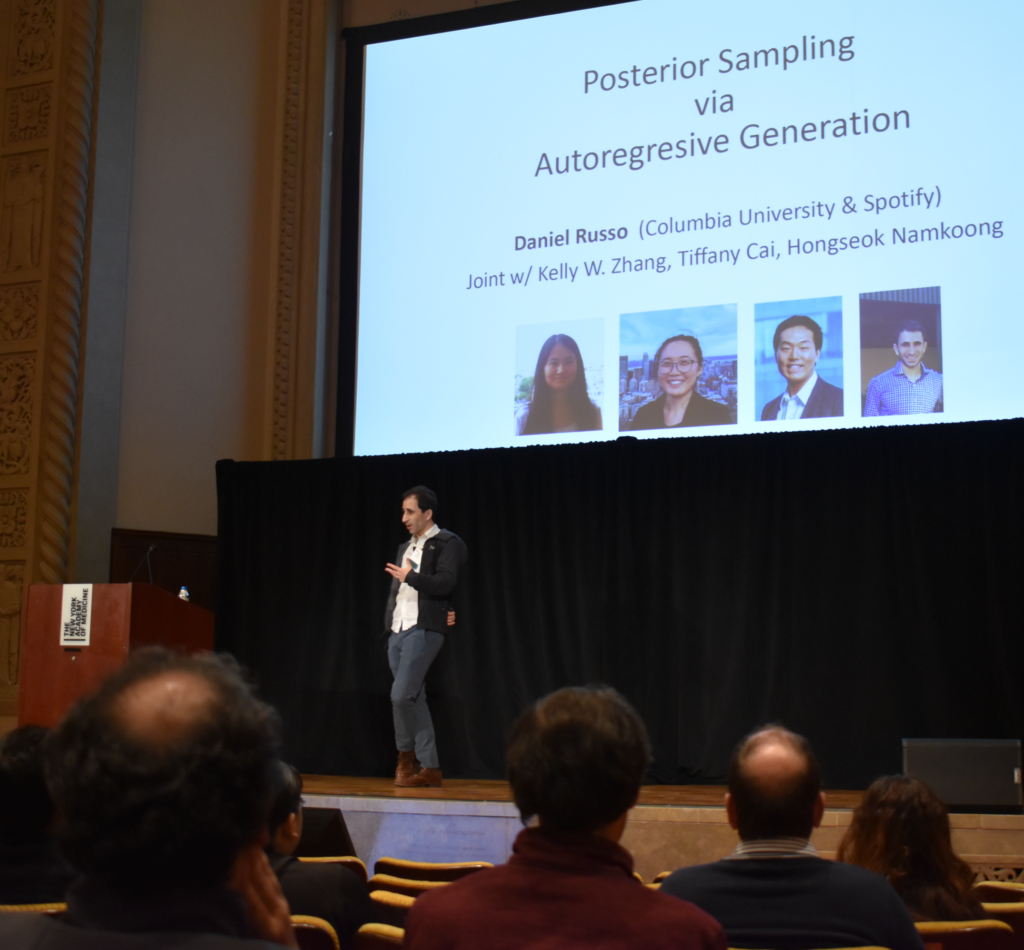
Daniel Russo, PhD. Photo by Nick Fetty/The New York Academy of Sciences.

Daniel Russo, PhD, the Philip H. Geier Jr. Associate Professor of Business at Columbia University, delivered a keynote about reinforcement learning. This field combines statistical machine learning with online decision-making. Prof. Russo covered the work that has taken place in his lab over the past year.

He pointed out that today, “humans have deep and recurring interactions with digital services that are powered through versions of AI.” This includes everything from platforms for dating and freelance work, to entertainment like Spotify and social media, to highly utilitarian applications such as for healthcare and education.

“The thing I deeply believe is that decision making among humans involves information gathering,” said Prof. Russo. “It involves understanding what you don’t know about the world and figuring out how to resolve it.”

He said medical doctors follow a similar process as they assess what might be affecting a patient, then they decide what tests are needed to better diagnose the issue. MDs must weigh the costs versus the benefits. Prof. Russo pointed out that in their current state, it’s difficult to design machine learning agents to effectively make these assessments.

He then discussed major advancements in the field that have occurred over the past decade and did a deep dive into his work on generative modeling. Prof. Russo closed his talk by emphasizing the difficulty of quantifying uncertainty in neural networks, despite his desire to be able to program them for decision-making.

“I think what this [research] is, is the start of something. Definitely not the end,” he said. “I think there’s a lot of interesting ideas here, so I hope that in the years to come this all bears out.”

Award-Winning Research

Researchers, ranging from high schoolers to industry professionals, shared their projects and work with colleagues during the popular poster session. Graduate students, postdocs, and industry professionals delivered a series of spotlight talks. Conference organizers assessed the work and presented awards to the most outstanding researchers. Awardees include:

Posters:

  • Aleksandrs Slivkins, PhD, Microsoft Research NYC (his student, Kiarash Banihashem, presented on his behalf)
  • Aditya Somasundaram, Bachelor of Technology, Columbia University
  • R. Teal Witter, BA, New York University

Spotlight Talks:

  • Noah Amsel, BS, Courant Institute of Mathematical Sciences
  • Claudio Gentile, PhD, Google
  • Anqi Mao, PhD, Courant Institute of Mathematical Sciences
  • Tamalika Mukherjee, PhD, Columbia University
  • Clayton Sanford, PhD, Google Research
  • Yutao Zhong, PhD, Courant Institute of Mathematical Sciences
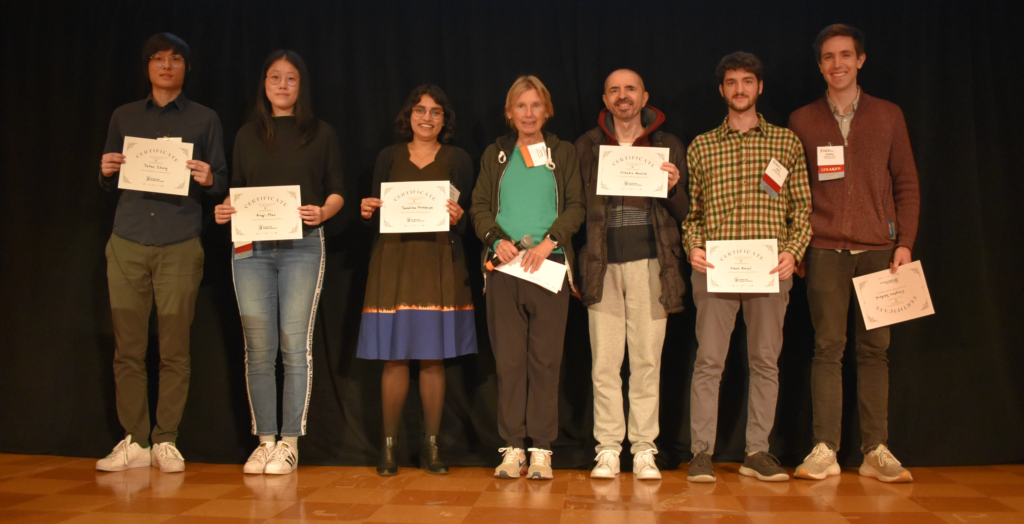
The Spotlight talk award winners. From left: Yutao Zhong, PhD; Angi Mao, PhD; Tamalika Mukherjee, PhD; Corinna Cortes, PhD (Scientific Organizing Committee); Claudio Gentile, PhD; Noah Amsel, BS; and Clayton Sanford, PhD.

Playing Games with Learning Agents

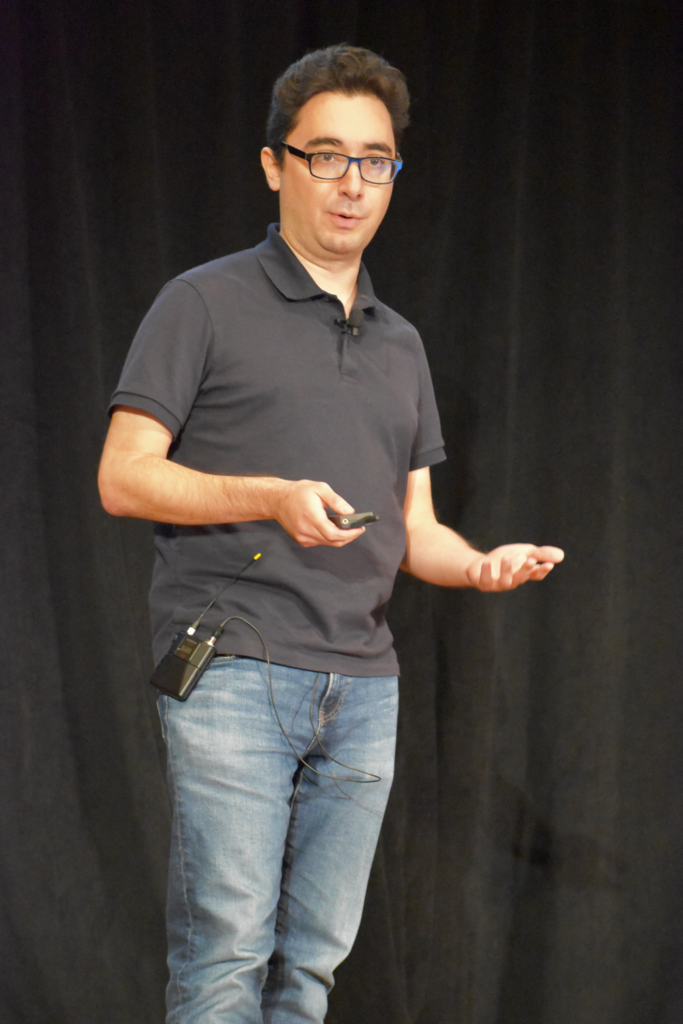
Jon Schneider, PhD. Photo by Nick Fetty/The New York Academy of Sciences.

To start the afternoon sessions, Jon Schneider, PhD, from Google Research New York, shared a keynote covering his research at the intersection of game theory and the theory of online learning.

“People increasingly now are offloading their decisions to whatever you want to call it; AI models, learning algorithms, automated agents,” said Dr. Schneider. “So, it’s increasingly important to design good learning algorithms that are capable of making good decisions for us.”

Dr. Schneider’s center of expertise and research involves decision-making in strategic environments for both zero-sum (rock-paper-scissors) and general-sum games (chess, Go, StarCraft). He shared some examples of zero-sum games serving as success stories for the theories of online learning and game theory. In this realm, researchers have observed “tight connections” between the economic theory and the theory of learning, finding practical applications for these theoretical concepts.

“Thinking about these convex objects, these menus of learning algorithms, is a powerful technique for understanding questions in this space. And there’s a lot of open questions about swap regret and the manipulative-ability of learning algorithms that I think are still waiting to be explored,” Dr. Schneider said in closing.

Afternoon Short Talks

Short talks in the afternoon by early career scientists covered a range of topics:

  • Improved Bounds for Learning with Label Proportions
    Claudio Gentile, PhD, Google
  • CANDOR: Counterfactual ANnotated DOubly Robust Off-Policy Evaluation
    Aishwarya Mandyam, MS, Stanford University
  • Cardinality-Aware Set Prediction and Top-k Classification
    Anqi Mao, PhD, Courant Institute of Mathematical Sciences
  • Cross-Entropy Loss Functions: Theoretical Analysis and Applications
    Yutao Zhong, PhD, Courant Institute of Mathematical Sciences
  • Differentially Private Clustering in Data Streams
    Tamalika Mukherjee, PhD, Columbia University

Towards Generative AI Security – An Interplay of Stress-Testing and Alignment

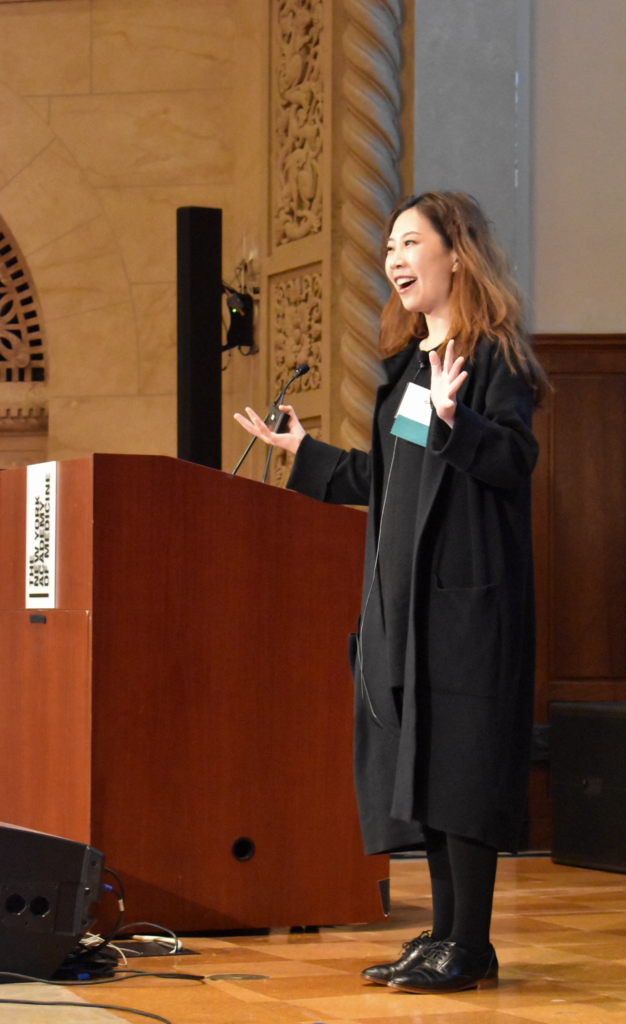
Furong Huang, PhD. Photo by Nick Fetty/The New York Academy of Sciences.

The event concluded with a keynote talk from Furong Huang, PhD, an associate professor of computer science at the University of Maryland. She recalled attending the Academy’s Machine Learning symposium in 2017. She was a postdoctoral researcher for Microsoft Research at the time, and had the opportunity to give a spotlight talk and share a poster. But she said she dreamt of one day giving a keynote presentation at this impactful conference.

“It took me eight years, but now I can say I’m back on the stage as a keynote speaker. Just a little tip for my students,” said Prof. Huang, which was met by applause from those in attendance.

Her talk touched on large language models (LLMs) like ChatGPT. While other popular programs like Spotify and Instagram took 150 days and 75 days, respectively, to gain one million users, ChatGPT was able to achieve this benchmark in just five days. Furthermore, Prof. Huang pointed out the ubiquity of AI in society, citing data from the World Economic Forum, which suggests that 34% of business products are produced using AI, or augmented by AI algorithms.

AI and Public Trust

Despite the ubiquity of the technology (or perhaps because of it), she points out that public trust of AI is lacking. Polling shows a strong desire from Americans to make AI safe and secure. She went on to explain that for public trust to be gained, LLMs and visual language models (VLMs) need to be better calibrated to avoid behavioral hallucinations. This happens when the AI misreads situations and infers behaviors that aren’t actually occurring. Prof. Huang concluded by emphasizing the utility of stress-testing when developing AI systems.

“We use stress-testing to figure out the vulnerabilities, then we want to patch them. So that’s where alignment comes into play. Using the data we got from stress-testing, we can do training time and test time alignment to make sure the model is safe,” Prof. Huang concluded, adding that it may be necessary to conduct another round of stress-testing after a system is realigned to further ensure safety.

Want to watch these talks in their entirety? The video is on-demand for Academy members. Sign up today if you aren’t already part of our impactful network.

15 Years of Advancing Machine Learning Research

A colorful illustration of an abstract mathematical concept.

The New York Academy of Sciences has been at the forefront of machine learning and artificial intelligence since hosting the first Machine Learning Symposium nearly two decades ago.

Published September 16, 2024

By Nick Fetty

In today’s digital age, an abundance of reliable data is readily available at our fingertips. This is, in part, because of significant advances in the field of machine learning in recent years.

The New York Academy of Sciences (the Academy) has long played a role in advancing research in this subfield of artificial intelligence. In machine learning, researchers develop mathematical algorithms that extract knowledge from specific data sets. The machine then “learns” from the data in an iterative fashion that enables predictions to be made. It has a wide range of disparate practical applications from natural language processing and search engine function to stock market analysis and medical diagnosis.

The first Machine Learning Symposium was hosted by the Academy in 2006. Collaborators included experts from Google, Rutgers University, Columbia University, and NYU’s Courant Institute of Mathematical Sciences.

Continuing a Proud Tradition

This proud tradition will continue when the Academy hosts the 15th annual Machine Learning Symposium at the New York Academy of Medicine (1216 5th Avenue, New York, NY 10029) on October 18, 2024. This year’s keynote speakers include:

  • Pin-Yu Chen, PhD, IBM Research: Dr. Chen’s recent research focuses on adversarial machine learning of neural networks for robustness and safety. His long-term research vision is to build trustworthy machine learning systems.
  • Furong Huang, PhD, University of Maryland: Dr. Huang works on statistical and trustworthy machine learning, foundation models and reinforcement learning, with specialization in domain adaptation, algorithmic robustness, and fairness.
  • Daniel Russo, PhD, Columbia University: Dr. Russo’s research lies at the intersection of statistical machine learning and online decision making, mostly falling under the broad umbrella of reinforcement learning.
  • Jon Schneider, PhD, Google Research New York: Dr. Schneider’s primary research interests include problems in online learning, game theory, and convex optimization/geometry. His recent work focuses on designing strategically robust algorithms for learning in game-theoretic environments.

The symposium’s primary goal has always been to develop an active community of machine learning scientists. This includes experts from academic, government, and industrial institutions who can exchange ideas in a neutral setting.

Graduate students and representatives from tech startups will also deliver a series of “Spotlight Talks.” Others will share their research during an interactive poster session.

Promoting Impactful Machine Learning Applications

Over its history, the symposium has highlighted several mainstream machine learning applications. This includes simulation, learning and optimization techniques for IBM Watson‘s Jeopardy! game strategies, the role big data played in the 2012 U.S. presidential election, and a trainable vision system for off-road mobile robots.

Corinna Cortes, PhD, VP of Google Research, Mehryar Mohri, PhD, Professor at NYU and a Research Director at Google Research, and Tony Jebara, PhD, VP of Engineering and Head of Machine Learning at Spotify, have been involved since the event’s inception. They continue to guide the event’s programming through their roles on the Scientific Organizing Committee. This year’s sponsors include Google Research and Cubist Systematic Strategies.

Register today to secure your spot at this year’s event!

The Ethics of Developing Voice Biometrics

A writer conducts an interview with an AI researcher.

Various ethical considerations must be applied to the development of artificial intelligence technologies like voice biometrics to ensure disenfranchised populations are not negatively impacted.

Published August 29, 2024

By Nitin Verma, PhD

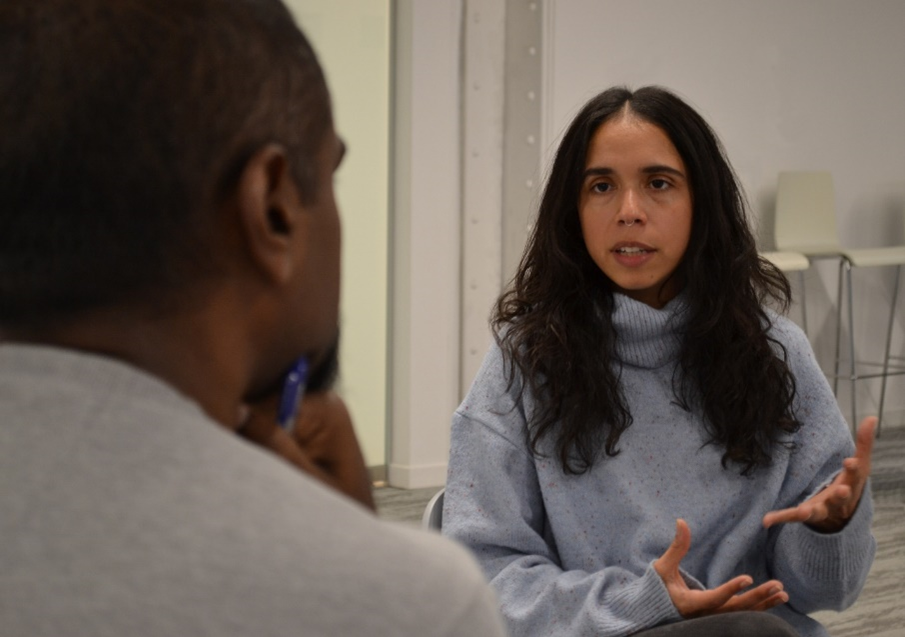
Nitin Verma, PhD, (left) conducts an interview with Juana Caralina Becerra Sandoval at The New York Academy of Sciences’ office in lower Manhattan.
Photo by Nick Fetty/The New York Academy of Sciences.

Juana Catalina Becerra Sandoval, a PhD candidate in the Department of the History of Science at Harvard University and a research scientist in the Responsible and Inclusive Technologies initiative at IBM Research, presented as part of The New York Academy of Sciences’ (the Academy) Artificial Intelligence (AI) & Society Seminar series. The lecture – titled “What’s in a Voice? Biometric Fetishization and Speaker Recognition Technologies” – explored the ethical implications associated with the development and use of AI-based tools such as voice biometrics. After the presentation, Juana sat down with Nitin Verma, PhD, a member of the Academy’s 2023 cohort of the AI & Society Fellowship, to further discuss the promises and challenges society faces as AI continues to evolve.

*Some quotes have been edited for length and clarity*

Tell me about some of the big takeaways from your research so far on voice biometrics that you covered in your lecture?

I think some of the main takeaways from the history of the automation of speaker recognition are, first, really trying to understand what are the different motivations or incentives for investing in a particular technology and a particular technological future. In the case of voice biometrics, a lot of the interesmyt is coming from different sectors like the financial sector, or the security and surveillance sector. It’s important to keep those interests in mind and observe how they inform the way in which voice biometrics get developed or not.

The other thing that’s important is that even though we have a notion of technological progress, some of the underlying ideas and assumptions are very old. This includes ideas about the body, about what the human body is, and how humans have the ability to change, or not, their body and the way they speak. In the case of voice biometrics, these ideas date back to 19th-century eugenic science, and they continue informing research, even as we have new technologies. We need to not just look at this technology as new, but ask what are the ideas that remain, or that sustain over time, and in which context did those ideas originate.

So, in your opinion, what role does, or would, AI play in your historical accounting of voiceprint technology?

I think, in some way, this is the story of AI. So, it’s not a separate story. AI doesn’t come together in the abstract. It always comes along in relation to a particular application. A lot of the different algorithmic techniques we have today were developed in relation to voice biometrics. Really what AI entails is a shift in the logic of the ontology of voice where you can have information surface from the data or emerge from statistical methods, without needing to have a theory of what the voice is and how it relates to the body or identity and illness. This is the kind of shift and transformation that artificial intelligence ushers.

What would you think is the biggest concern regarding the use of AI in monitoring technologies such as voice biometrics?

Well, I think concerns are several. I definitely think that there’s already inscripted within the history of voice biometrics an interest in over-policing, and over-surveilling of Black and Latinx communities. There’s always that inherent risk that technology will be deployed to over-police certain communities and voice biometrics then enter into a larger infrastructure where people are already being policed and surveilled through video with computer vision or through other means.

In the security sector, I think my main concern is that there’s a presumption that the relationship between voice and identity is fixed and immutable, which can create problems for people who want to change their voice and or for people whose voice changes in ways outside of their control, like from an injury or illness. There are numerous reasons why people might be left out of these systems, which is why we want to make sure we are creating infrastructures that are equitable.

Speaking to the other side of this same question, in your view, what would be some of the beneficial or ethical uses of this technology going forward?

Rather than starting from the point of ‘what do corporations or institutions need to make their job easier or more profitable?’, we should instead focus on ‘what are the kinds of tools and techniques that people want for themselves and for their lives?’, and ‘in what ways can we leverage the current state of the art towards those ends?’. I think it’s much more about the approach and the incentive.

There’s nothing inherent to technology that makes it cause irreparable harm or be inherently unethical. It’s more about: what is the particular ontology of voice?; what’s the conception of voice that goes into the system?; and towards whose ends is it being leveraged? I’m hopeful and optimistic about anything that is driven by people and people’s desires for a better life and a better future.

Your work brings together various threads of research or inquiry, such as criminology, the history of technology, inequality, and the history of biometric technology as such. What are some of the challenges and benefits that you’ve encountered on account of this multidisciplinary approach to studying the topic?

I was trained as a historian, and originally my idea was to be a professor, but once I started working at IBM Research and the Responsible and Inclusive Tech team, I think I got much closer to the people who very materially and very concretely wanted to make technology better, or, more specifically, to improve the infrastructures and the cultures in which technology is built.

That really pushed me to take a multidisciplinary approach and to think about things not just from a historical lens, but be very rooted in the technical, as well as present day politics and economic structures. I think of my own immigrant background. I’m from Colombia and I naturally already had this desire to engage with humanities and social science scholarship that was critical of these aspects of society, but this may not be the same for everyone. I think the biggest challenge is effectively engaging different audiences.

In the lecture you described listening as a political process. Can you elaborate on that?

I’m really drawing on scholars in sound studies and voice studies. The Sonic Color Line, Race as Sound, and Black Linguistics, are three of the main theoretical foundations that I am in conversation with. The point they try to make is that when we attend to listening, rather than voice itself as a sort of thing that stands on its own, we can see and almost contextualize how different voices are understood, described, interpreted, classified, and so on.

The political in listening is what makes people have reactions to certain voices or interpret them in particular ways. Accents are a great example. Perceptions of who has an accent and what an accent sounds like are highly contextual. The politics of listening really emphasizes that contextuality and how we’ve come to associate things like being eloquent through particular ways of speaking or with how particular voices sound, and not others.

Is there anything else you’d like to add?

Well, I think something that strikes me about the story of voice biometrics and voiceprints is how little the public knows about what’s happening. A lot of decisions about these technologies are made in contexts that are not publicly shared. So, there’s a different degree of awareness in the kind of different public discourses around the ethics of AI and voice. It’s very different from facial recognition, computer vision, or even toxic language.

Also read: The Ethics of Surveillance Technology

Have We Passed the Turing Test, and Should We Really be Trying?

A black and white headshot of computer scientist Alan Turing.

The 70th anniversary of Turing’s death invites us to ponder: can we imagine AI models that will do well on the Turing test?

Published August 22, 2024

By Nitin Verma, PhD

Alan Turing (1912-1954) in 1936 at Princeton University.
Image courtesy of Wikimedia Commons.

Alan Turing is perhaps best remembered by many as the cryptography genius who led the British effort to break the German Enigma codes during WWII. His efforts provided crucial information about German troop movements and helped bring the war to an end.

2024 has been a noteworthy year in the story of Turing’s life as June 7th marked 70 years since his tragic death in 1954. But four years before that—in 1950—he kickstarted a revolution in digital computing by posing the question “can machines think?” and proposing an “imitation game” to answer it.

While this quest has been the holy grail for theoretical computer scientists since the publication of Turing’s 1950 paper, the public launch of ChatGPT in November 2022 has brought the question to the center stage of global conversation.

In his landmark 1950 paper, Turing predicted that: “[by about the year 2000] it will be possible to programme computers… [that] play the imitation game so well that an average interrogator will not have more than 70 per cent. chance of making the right identification after five minutes of questioning.” (p. 442). By “right identification”, Turing meant accurately distinguishing between human-generated and computer-generated text responses.

This “imitation game” eventually came to be known as the Turing test of machine intelligence. It is designed to determine whether a computer can successfully imitate a human to the point that a human interacting with it would be unable to tell the difference.

We’re much past the year 2000: Are we there yet?  

In 2022, Google let go of Blake Lemoine, a software engineer who had publicly claimed that the company’s LaMDA (Language Model for Dialogue Applications) program had attained sentience. Since then, the closest we’ve come to seeing Turing’s prediction come true is, perhaps, GPT-4, deepfakes, and OpenAI’s “Sora” text-to-video model that can churn out highly realistic video clips from mere text prompts.

Some researchers argue that LLMs (Large Language Models) such as GPT-4 do not yet pass the Turing test. Yet some others have flipped the script and argued that LLMs offer a way to assess human intelligence by positing a reverse Turing Test—i.e., what do our conversational interactions with LLMs reveal about our own intelligence?

Turing himself made a noteworthy remark about the imitation game in the same 1950 paper: “… we are not asking whether all digital computers would do well in the game nor whether the computers at present available would do well, but whether there are imaginable computers which would do well.” (Emphasis mine; p. 436).

Would Turing have imagined the current crop of generative AI models such as GPT-4 as ‘machines’ capable of “doing well” on the Turing test? I believe so, but we’re not quite there, yet. As an information scientist, I believe that in 2024 AI has come closer than ever to passing the Turing test.

If we’re not there yet, then should we strive to get there?

As with any other technology ever invented, as much as Turing may have only been thinking of the public good, there is always the potential for unforeseen consequences.

Technologies such as deepfake apps and conversational agents such as ChatGPT still need human creativity to be useful and usable. But still, the advanced AI that powers these technologies carries the potential of passing the Turing test. That potential portends a range of consequences for society that deserve our serious attention.

Leading scholars have already warned about the consequences of the ability of “fake” information to fuel distrust in public institutions including the judicial system and national security. The upheaval in the public imagination caused by ChatGPT even prompted US President Biden to issue an Executive Order on the Safe, Secure, and Trustworthy Development and Use of AI in the fall of 2023.

We’ll never know what Turing would have made of the spurt of AI advances in light of his own foundational work in theoretical computer science and artificial intelligence. His untimely death at the young age of 41 deprived the world of one of the greatest minds of the 20th century and the still more extraordinary achievements he could have made.

But it’s clear that the advances and use of AI technology have brought society to a turning point that he anticipated in his seminal works.

It remains difficult to say when—or whether—machines will truly surpass human-level intelligence. But more than 70 years after Turing’s death we are at a point where we can imagine AI agents that will do well on the Turing test. And if we can imagine it, we can someday build it too.

Passing a challenging test can be seen as a marker of progress. But would we truly rejoice in having our AI pass the Turing test, or some other benchmark of human–machine indistinguishability?

Improving Classroom Accessibility with AI

A photo of a city skyline with an over-imposed graphic denoting different AI applications.

Winners of the Junior Academy Innovation Challenge Fall 2023: “Cognitive Classrooms”

Published August 14, 2024

By Nicole Pope

Sponsored by NEOM

Team members: Dawik D. (Team Lead) (Qatar), Atharv K. (India), Anoushka T. (India), Abhay B. (India), Asmit B. (India), Jefferson L. (United States)

Mentor: Aryan Chowdhary (India)

250 million children worldwide lack access to a decent education due to extreme poverty, child labor, or discrimination, according to data from the United Nations. A shortage of teachers, lack of resources and logistical constraints further undermine countless children’s educational outcomes.

This talented international team, comprising students from India, Qatar, and the United States, tackled this massive disparity with their project AI4Access. Tasked with devising innovative ways of harnessing the power of immersive technologies like artificial intelligence/machine learning (AI/ML) and virtual reality/augmented reality (VR/AR) to create a more inclusive, fair, and efficient environment in classrooms and improve students’ learning experience, the team more than met the challenge.

The team members learned that students respond to different learning styles (visual, auditory, and kinesthetic), but traditional teaching favors read/write learner types. 1 in 59 students, according to the UN, is affected by learning disabilities such as dyslexia, ADHD, dyscalculia and dyspraxia, which undermine their academic success in a rigid, one-size-fits-all education system. This is the aspect that the AI4Access team chose to focus on.

Advancing Education Through Digital Technology

The team developed an AI-led application designed to diversify the education experience, give students access to new visualized learning styles, and enable teachers to monitor individual students’ performance and provide support when needed.

The tool analyzes the students’ learner profile and enables teachers to provide them with a personalized teaching plan that considers their strengths and weaknesses. By providing visual learning features, such as 3D models and live simulations using VR/AR, the app enhances the learning experience and supports students with learning difficulties. The teacher can more easily track individual students’ progress, track their response, and identify when individuals need additional attention.

The team drew on individual members’ skills to build their app. “I’ve enjoyed working with the team, capitalizing on our respective strengths for the best possible outcome,” explains Anoushka. “This journey helped me truly appreciate the power of collaboration and teamwork!” Their end product—an elegant app that uses OpenAI API, Python and Eleven Labs API to improve the classroom experience for both students and teachers—won praise from the judges.

Their already impressive achievement is made even more outstanding by the difficulties they overcame to reach their solution. For six intense weeks, the team worked across time zones and at odd hours of the night to create their prototype app. “Even though we all had various commitments, whatever time I had spare, it would be dedicated to this even if it was midnight at my time!” explains Jefferson.

Sharpening Practical Skills

“Working countless hours at awkward times in the morning, just to meet up with your friends from halfway across the globe and work on something that truly motivates you is a feeling I cannot describe,” says Team Lead Dawik. “This project has taught me how to lead better, how to work with my peers and manage my time as well as the importance of meeting deadlines and staying committed to your work.”

Through the challenge, the team members were able to sharpen skills that will be essential in future endeavors, like teamwork and critical thinking. “My journey with this team has proven to be incredibly enriching. The team’s diverse skills and backgrounds, coupled with our unwavering unity, created an environment of continuous learning and personal growth,” believes Abhay. “We tackled challenges head-on, demonstrating resilience and innovative problem-solving.”

The Cognitive Classroom challenge was a wonderful learning opportunity for the members of the team and it left them hungry for more creative discoveries. “From late-night discussions to constructing prototypes and presentations, this environment taught me many things and opened new paths I never dreamed could exist,” explains Asmit.

His teammate Atharv concurs: “The diversity, unwavering support, and commitment to excellence of team members have pushed me to grow professionally and personally. I’m grateful to be part of this remarkable team, and I eagerly look forward to our next adventures.”

Read about other winners from the Fall 2023 Junior Academy Innovation Challenge:

A More Scientific Approach to Artificial Intelligence and Machine Learning

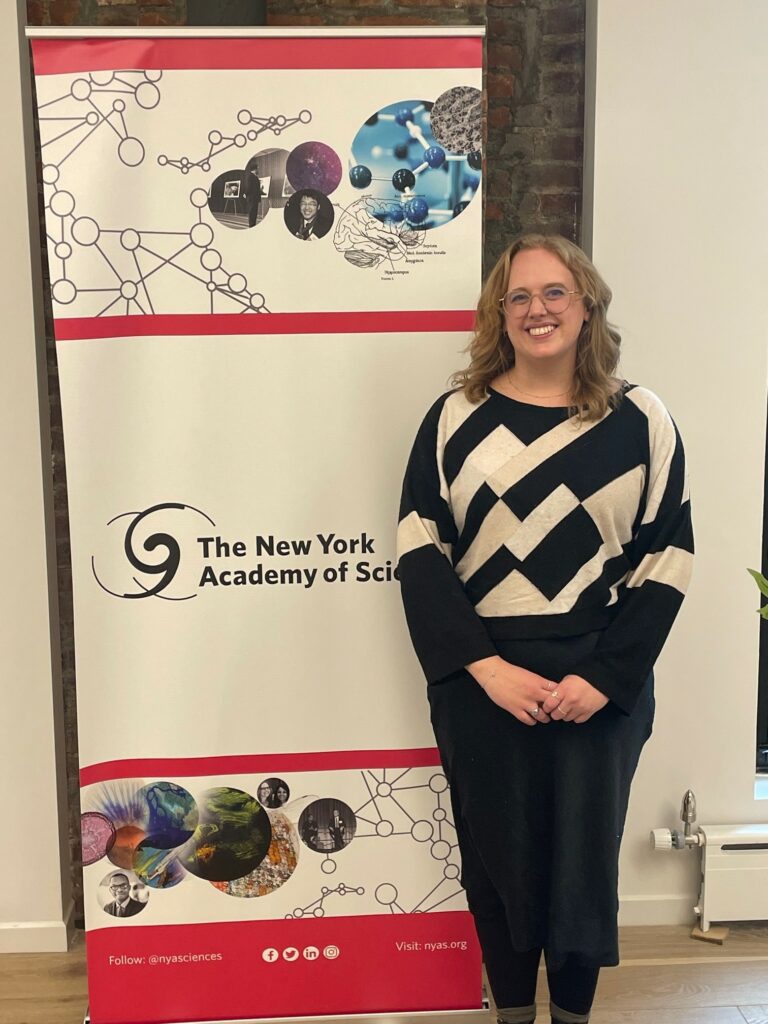
A researcher poses next to a vertical banner with the text "The New York Academy of Sciences."

Taking a more scientific perspective, while remaining ethical, can improve public trust of these emerging technologies.

Published August 13, 2024

By Nitin Verma, PhD

Savannah Thais, PhD, is an Associate Research Scientist in the Data Science Institute at Columbia University with a focus on machine learning. Dr. Thais is interested in complex system modeling and in understanding what types of information is measurable or modelable and what impacts designing and performing measurements have on systems and societies.

*This interview took place at The New York Academy of Sciences on January 18, 2024. This transcript was generated using Otter.ai and was proofread for corrections. Some quotes have been edited for length and clarity*

Tell me about the big takeaways from your talk?

The biggest highlight is that we should be treating machine learning and AI development more scientifically. I think that will help us build more robust, more trustworthy systems, and it will help us better understand the way that these systems impact society. It will contribute to safety, to building public trust, and all the things that we care about with ethical AI.

In what ways can the adoption of scientific methodology make models of complex systems more robust and trustworthy?

I think having a more principled design and evaluation process, such as the scientific method approach to model building, helps us realize more quickly when things are going wrong, and at what step of the process we’re going wrong. It helps us understand more about how the data, our data processing, and our data collection contributes to model outcomes. It helps us understand better how our model design choices contribute to eventual performance, and it also gives us a framework for thinking about model error and a model’s harm on society.

We can then look at those distributions and back-propagate those insights to inform model development and task formulation, and thereby understand where something might have gone wrong, and how we can correct it. So, the scientific approach really just gives us the principles, and a step-by-step understanding of the systems that we’re building. Rather than, what I see a lot of times, a hodgepodge approach where the only goal is model accuracy, in which something goes wrong, we don’t necessarily know why or where.

You have a very interesting background, and your work touches on various academic disciplines, including machine learning, particle physics, social science, and law. How does this multidisciplinary background inform your research on AI?

I think being trained as a physicist really impacts how I think about measurements and system design. We have a very specific idea of truth in physics. And that isn’t necessarily translatable to scenarios where we don’t have the same kind of data or the same kind of measurability. But I think there’s still a lot that can be taken from that, that has really informed how I think about my research in machine learning and its social applications.

This includes things like experimental design, data validation, uncertainty, propagation in models. Really thinking about how we understand the truth of our model, and how accurate it is compared to society. So that kind of idea of precision and truth that’s fundamental physics, has affected the research that I do. But my other interests and other backgrounds are influential as well. I’ve always been interested in policy in particular. Even in grad school, when I was doing a physics PhD, I did a lot of extracurricular work in advocacy in student government at Yale. That impacted a lot how I think about understanding how systems affect society, resource access, and more. It really all mixes together.

And then the other thing that I’ll say here is, I don’t think one person can be an expert in this many things. So, I don’t want it to seem like I’m an expert at law and physics and all this stuff. I really lean a lot on interdisciplinary collaborations, which is particularly encouraged at Columbia. For example, I’ve worked with people at Columbia’s School of International and Public Affairs as well as with people from the law school, from public health, and from the School of Social Work. My background allows me to leverage these interdisciplinary connections and build these truly collaborative teams.

Is there anything else you’d like to add to this conversation?

I would reemphasize that science can help us answer a lot of questions about the accuracy and impact of machine learning models of societal phenomena. But I want to make sure to emphasize at the same time that science is only ever going to get us so far. And I think there’s a lot that we can take from it in terms of experimental design, documentation, principles, model construction, observational science, uncertainty, quantification, and more. But I think it’s equally important that as scientific researchers, which includes machine learning researchers, we really make an effort to both engage with other academic disciplines, but also to engage with our communities.

I think it’s super important to talk to people in your communities about how they think about the role of technology in society, what they actually want technology to do, how they think about these things, and how they understand them. That’s the only way we’re going to build a more responsible, democratic, and participatory technological future. Where technology is actually serving the needs of people and is not just seen as either a scientific exercise or as something that a certain group of people build and then subject the rest of society to, whether it’s what they actually wanted or not.

So I really encourage everyone to do a lot of community engagement, because I think that’s part of being a good citizen in general. And I also encourage everyone to recognize that domain knowledge matters a lot in answering a lot of these thorny questions, and that we can make ourselves better scientists by recognizing that we need to work with other people as well.

Also read: From New Delhi to New York

Tata Knowledge Series on AI & Society: 100 Years of AI with Dr. Alok Aggarwal

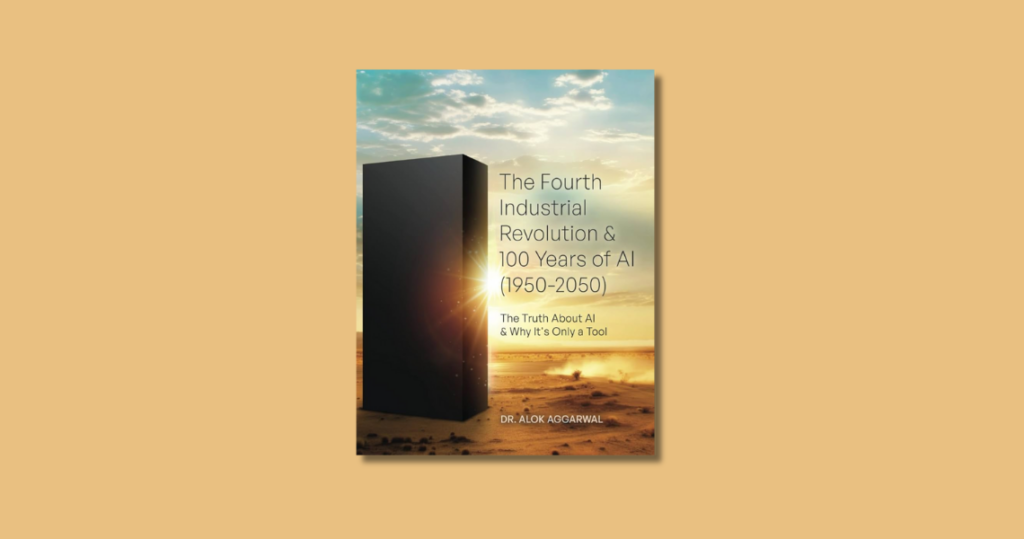
The cover of the book: The Fourth Industrial Revolution & 100 Years of AI by Dr. Alok Aggarwal

Join Dr. Alok Aggarwal as he discusses the science behind the mystical and magical world of Artificial Intelligence and his new book The Fourth Industrial Revolution & 100 Years of AI (1950-2050): The Truth About AI & Why It’s Only a Tool.

Artificial Intelligence is ushering in a wave of change that will touch every aspect of our daily lives. Dr. Alok Aggarwal—one of the early innovators and developers in this field—sets out to demystify Artificial Intelligence by explaining its history, capabilities, and limitations. Aggarwal will explain the science and engineering behind AI in non-technical terms, catering to a diverse audience, including product managers, program leaders, business leaders, consultants, students, aspiring entrepreneurs, and decision-makers Aggarwal will explain numerous applications of AI that are already being used in vital inventions of the current and the Fourth Industrial Revolution, including the Internet of Things (IoT), Blockchains, Metaverse, Robotics, Autonomous Vehicles, Three-Dimensional Printing, inventions related to predicting, mitigating, and adapting to rapid climate change, and innovations related to gene editing, protein folding, and personalized healthcare. Explore the transformative capabilities of AI to drive innovations in this accessible discussion.

Sponsor

Lead Sponsor

The blue and white logo for the Tata Transformation Prize.